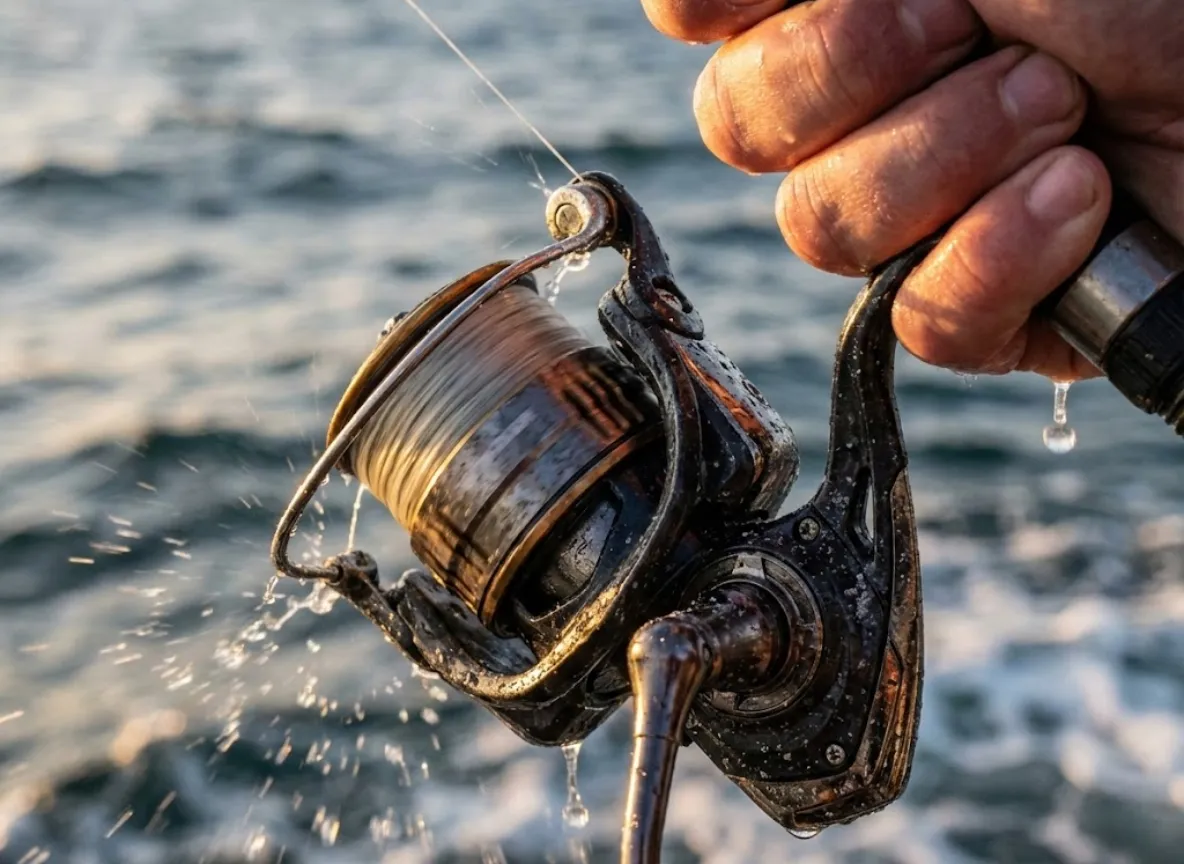
Saltwater dries into abrasive crystals inside a gearbox in less than 24 hours. When a bull redfish makes a searing run on a budget spinning reel, that hidden corrosion turns drag washers into sandpaper and seizes bearings mid-fight. A well-built spinning reel is not just a line holder; it is a mechanical transmission that must manage torque, friction, and environmental assault simultaneously.
I have spent decades guiding clients through estuaries where gear failure isn’t an option, and I’ve seen popular Amazon brands and “bargain” reels explode under pressure. In the sub-$100 “Volume Segment,” manufacturers cannot afford the magnesium body or titanium internals found in an expensive spinning reel like the Shimano Exsence. Therefore, the “Best” reel is defined strictly by how intelligently the engineers balanced cost against the specific structural weaknesses of cheaper materials. This commercial investigation identifies which flagship models and technologies—like Hagane gearing or Zaion V composites—have successfully migrated down to the budget tier.
How to Choose the Right Spinning Reel
Box specifications like “10 ball bearings“, high gear ratios, or “30lbs max drag” are often marketing noise designed to distract you from the mechanical reality of the tool. To make a confident choice, you need to look at the engineering trade-offs rather than just comparing a Piscifun Carbon X against a Lew’s Speed Spin on paper.
Start-Up Inertia vs. Sealing: The Friction Equation
Start-up inertia is the static force required to get the rotor moving from a dead stop. Low inertia equates to high sensitivity, essential for finesse fishing where you must feel a subtle bite on slack line. However, protecting a fishing reel from the elements comes at a rotational cost. Heavy rubber seals and gaskets create physical contact friction on the main shaft, which increases that inertia.
It is a classic engineering compromise found in even the perfect spinning reel. “Air-Light” rotation usually requires an “Open” body design that is vulnerable to water intrusion. Conversely, fully sealed, water-resistant reels often feel “stiff” or “heavy” to turn. You must decide if you need the protection of a tank or the sensitivity of a sports car. For deeper insight into these trade-offs, Shimano’s technical documentation on CoreProtect details why water-tight seals inevitably create rotational friction.
Pro-Tip: If you are fishing a crystal-clear trout stream, prioritize low inertia. If you are wading in the surf, ignore the stiffness and prioritize the seal.
The primary function of a reel’s chassis is to hold gears in perfect alignment under load. When you hook a heavy fish, the torque tries to twist the reel foot and body. If the body material flexes, the gears separate slightly. This misalignment causes the teeth to grind against each other—the dreaded “coffee grinder” effect that destroys gearboxes.
In terms of material hierarchy, standard graphite body construction is the most flexible and least desirable for heavy loads. Carbon composites like Zaion V or CI4+ offer significantly better stiffness, while aluminum (Hagane) remains the gold standard for rigidity. Legendary reel analyst Alan Hawk has extensively documented how body flex is the silent killer of budget reels.
Pro-Tip: If you feel the reel stem twisting in your hand while fighting a fish, back off the pressure immediately or risk stripping the main gear.
This structural failure is often exacerbated by user error. Learning the nuance of properly setting your fishing drag can reduce the peak stress on a flexible composite body, extending the lifespan of a budget reel significantly.
Our Selection Process: How We Built This Guide
This isn’t another generic best-of listicle. We are committed to objectivity. We ignore “box specs” like claimed max drag, which is often hyperbole, and focus on usable performance. Every candidate in this guide—from the Shimano Nasci FC to the Daiwa Regal LT—was audited against six weighted criteria: Rotational Refinement, Structural Rigidity, Sealing, Drag Smoothness, Line Management, and Long-Term Durability.
We filtered hundreds of models, including challengers like the KastKing Megatron and 13 Fishing Axum, down to specific use-cases to ensure we aren’t recommending a delicate trout fishing reel for a pier angler. While we may earn a commission if you purchase through our links, our analysis remains independent of manufacturer influence.
The Best Spinning Reels of 2026: Our Top Recommendations for Every Need
Whether you are looking for specific spinning reels for bass fishing or a saltwater tank for the surf, these are the top picks that survived our audit.
Our Top Picks for The Hard-Use Professional (Saltwater/Inshore)
Penn Pursuit IV
$$$$
The Pursuit IV is the definitive entry-level saltwater tank. Penn has stripped away almost every luxury feature to focus entirely on survivability. It feels undeniably heavy in the hand and lacks the refined, airy rotation of its Japanese competitors, but that mass serves a purpose. It houses the legendary HT-100 carbon drag system, which offers stopping power that punches well above its weight class. While I wouldn’t recommend it for casting light lures all day due to the fatigue factor, if you need a reel that can survive accidental dunks and months of neglect in a salt spray environment, this is the only option in this price bracket that won’t seize up on you.
Overall
Rotational Refinement
Structural Rigidity
Sealing & Protection
Drag System Consistency
Long-Term Durability
Gear Ratio6.2:1 (3000 size)
Max Drag12 lbs (HT-100 Carbon)
Weight11.8 oz (3000 size)
Bearings4+1 Sealed Stainless Steel
You Should Buy This If…
You fish primarily in saltwater environments (surf, pier, kayak).
Stopping power is more important to you than silent operation.
You want a reel that can survive accidental dunks and neglect.
You Should Reconsider If…
You need a lightweight reel for casting lures all day (it is heavy).
You are fishing exclusively for freshwater finesse species.
The Nasci FC is the most successful example of trickle-down technology on this list. It serves as a bridge between budget constraints and high-performance engineering by integrating the cold-forged Hagane Gear and CoreProtect water resistance. Ideally suited for inshore anglers targeting redfish or speckled trout, it offers a retrieval smoothness that rivals freshwater reels while maintaining legitimate saltwater barriers. The trade-off is in the exterior durability; the spool lip is softer than Penn’s heavy metals, meaning one drop on a jetty rock can create a burr that shreds braided line. However, if you treat it with care, the internal gearing will remain buttery smooth for seasons, not just weekends.
Overall
Rotational Refinement
Structural Rigidity
Sealing & Protection
Drag System Consistency
Long-Term Durability
Gear Ratio5.0:1 / 6.2:1
Max Drag20 lbs (2500/3000 size)
Weight8.5 oz (2500 size)
Bearings5+1 Shielded Stainless Steel
You Should Buy This If…
You target inshore species like Redfish and Speckled Trout using artificial lures.
You prioritize a silent, smooth retrieval feel.
You want “trickle-down” tech like Hagane gearing at a sub-$100 price.
You Should Reconsider If…
You abuse your gear heavily (spool lip is softer than Penn’s).
You never clean your gear (line roller needs rinsing).
Targeting the modern wading angler, the Axum brings aggressive styling and impressive spec-sheet features like a fully sealed rotor and Black Seal bearings to the table. It offers excellent water resistance for the price, providing peace of mind for those who fish chest-deep in the surf. The Coolstop drag system handles heat well during long runs. However, the long-term refinement of the gearing doesn’t quite match the Japanese legacy brands; you may notice a slight ‘gear feel’ developing after a season of heavy use that you wouldn’t find in a Hagane-equipped reel. It’s a robust tool for the price, but it sacrifices some finesse for that sealed protection.
Overall
Rotational Refinement
Structural Rigidity
Sealing & Protection
Drag System Consistency
Long-Term Durability
Gear Ratio6.2:1
Max Drag15 lbs
Weight~8.0 oz
Bearings9 (Black Seal + CZB)
You Should Buy This If…
You are a wading angler concerned about splashes and dunks.
You want high bearing counts and modern aesthetics.
You value heat-dissipating drag systems (Coolstop).
You Should Reconsider If…
You expect the gearing to stay “silky smooth” for 5+ years.
You prefer the classic feel of Shimano/Daiwa gearing.
Our Top Picks for The Budget-Conscious Beginner (General Freshwater)
Daiwa Regal LT
$$$$
The Regal LT is arguably the ‘Value King’ of the entire segment. By utilizing a Zaion V carbon composite body, Daiwa has achieved an unmatched rigidity-to-weight ratio that makes this reel feel nearly weightless on the rod. With 9 ball bearings, the rotation is shockingly airy, mimicking the performance of reels costing twice as much. It is a joy to fish with, provided you stay dry. The open body design that makes it so light also makes it highly susceptible to grit and water intrusion. If you drop this in the sand, it’s game over until a full teardown. But for pure freshwater performance per dollar, nothing beats it.
Overall
Rotational Refinement
Structural Rigidity
Sealing & Protection
Drag System Consistency
Long-Term Durability
Gear Ratio5.2:1 / 6.2:1
Max Drag22 lbs
Weight7.2 oz (2500 size)
Bearings9+1
You Should Buy This If…
You fish exclusively in freshwater (Bass, Walleye, Panfish).
“Smoothness” is your #1 priority.
You want a reel that feels weightless on the rod.
You Should Reconsider If…
You fish in sandy or saltwater environments (Open design).
You are rough on bail arms (Springs can be delicate).
The President XT improves upon a legendary platform by adding a lighter aluminum main shaft and cork handle knobs, delivering a consistent and ‘connected’ feel that anglers have trusted for over a decade. It is the safe, reliable choice for freshwater generalists who want a reel that disappears during the experience. The cork knobs provide excellent tactile feedback even when wet. However, long-time fans should note that recent models no longer include a spare spool, a value-add that defined the previous generation. While it lacks the cutting-edge tech of the Daiwa LT series, its proven track record for longevity makes it a solid investment.
Overall
Rotational Refinement
Structural Rigidity
Sealing & Protection
Drag System Consistency
Long-Term Durability
Gear Ratio6.2:1
Max Drag10 lbs (30 size)
Weight~7 oz
Bearings10 Stainless Steel
You Should Buy This If…
You appreciate proven longevity over cutting-edge tech.
You prefer the tactile feel of cork handle knobs.
You need a reliable drag system for light to medium lines.
You Should Reconsider If…
You require a spare spool (removed in recent models).
You need extreme structural rigidity for heavy cover.
For the absolute beginner, the Max SX is a feature-rich entry point. Its standout feature is the Rocket Line Management system, which does a genuinely excellent job of controlling line coming off the spool, helping novices avoid the frustration of wind knots and tangles. It packs a modern aesthetic into a very affordable package. The downside is the graphite frame; under heavy load, you can feel the body flex significantly more than the Zaion or aluminum competitors. It’s a fantastic ‘loaner’ reel or a starter tool, but serious anglers will find the lack of rigidity limits its lifespan when targeting larger fish.
Overall
Rotational Refinement
Structural Rigidity
Sealing & Protection
Drag System Consistency
Line Management
Gear Ratio5.2:1 / 6.2:1
Max Drag~14 lbs
WeightLightweight Graphite
Bearings6+1
You Should Buy This If…
You are a beginner prone to wind knots and tangles.
Budget is your primary constraint.
You want a versatile “do-it-all” reel for a loaner rod.
You Should Reconsider If…
You need absolute reliability (Anti-reverse issues reported).
Our Top Picks for The Ultralight Specialist (Finesse/Trout)
Daiwa Exceler LT
$$$$
Sharing the rigid Zaion V body with the Regal, the Exceler LT distinguishes itself with one critical upgrade: a machined aluminum screw-in handle. In the world of ultralight finesse fishing, handle play is the enemy of sensitivity. By screwing directly into the drive gear, the Exceler eliminates that wobble, allowing you to detect the faintest nibble on a slack line. It is a precision instrument. The compromise? It lacks the MagSeal technology found on the Japanese domestic models, meaning it is still vulnerable to the elements. But for a dedicated freshwater finesse setup, the stability it offers is unmatched at this price point.
Overall
Rotational Refinement
Structural Rigidity
Sealing & Protection
Drag System Consistency
Line Management
Gear Ratio5.2:1 / 6.2:1
Max Drag22 lbs
Weight7.2 oz (2500 size)
Bearings5+1
You Should Buy This If…
You demand zero back-play in your handle.
You use very light braided lines (6-10lb).
Sensitivity is more important to you than bearing count.
You Should Reconsider If…
You want MagSeal technology (not on US models).
You prefer a higher bearing count for “free spinning” feel.
The Sedona FJ update is all about silence. By integrating SilentDrive technology, Shimano has tightened tolerances at the microscopic level to reduce gear noise and vibration. For ultralight anglers targeting spooky fish in clear water, this silence is golden—it is arguably the quietest reel available under $80. It also features the durable Hagane gear. However, it feels noticeably heavier than the Daiwa LT series, and with only 3+1 bearings, it relies on bushings in the handle knobs. You lose that ‘free-spinning’ sensation, but gain a gear system that feels solid and deliberate.
Overall
Rotational Refinement
Structural Rigidity
Sealing & Protection
Drag System Consistency
Long-Term Durability
Gear Ratio5.0:1 / 6.2:1
Max Drag7-20 lbs
Weight8.6 oz (2500 size)
Bearings3+1
You Should Buy This If…
You fish clear water where gear noise can spook fish.
You want Hagane gear durability in a UL package.
You use fluorocarbon lines (Propulsion Spool manages them well).
You Should Reconsider If…
You need a back-reel switch (removed).
You dislike bushings in handle knobs (only 3 bearings).
The Sharky III occupies a unique niche: Power Finesse. It is designed for pulling bass out of heavy weeds with smaller tackle. With a massive advertised max drag and a sealed spool, it offers capabilities usually absent in the budget category. It allows you to fish heavy cover without fear of water intrusion or drag slippage. The catch is the weight and refinement; it is significantly heavier than its peers, making it a poor choice for balancing a featherweight trout rod. Additionally, quality control can vary, meaning one unit might feel perfect while another has a gritty bearing right out of the box.
Overall
Rotational Refinement
Structural Rigidity
Sealing & Protection
Drag System Consistency
Long-Term Durability
Gear Ratio5.2:1
Max Drag33 lbs (Claimed)
Weight9.1 oz (2000 size – Heavy)
Bearings10+1
You Should Buy This If…
You need a “winch” for pulling bass out of weeds on a budget.
You are worried about water intrusion in the spool/drag.
You want maximum drag pressure for the size class.
You Should Reconsider If…
You are balancing a featherweight trout rod (Too heavy).
You need low start-up inertia (Heavy grease/seals).
As your angler’s value auditor, we can distill this entire report down to three factual propositions. If you fish in saltwater, you must prioritize corrosion-proof bearings and carbon drag systems like those found in the Penn Pursuit IV, even if it means sacrificing some smoothness.
For freshwater reel applications, the priority shifts to low start-up inertia and rigid bodies for maximum sensitivity, making the Daiwa Regal LT or Exceler LT the superior tools. Finally, materials matter. Cold-forged gears will outlast zinc die-cast gears by seasons, not just trips.
Stop buying “general purpose” reels. Audit your primary fishing environment, choose the compromise that favors your longevity, and invest in the perfect spinning reel engineered for that specific reality.
FAQ – Frequently Asked Questions
Felt vs. Carbon drag washers: Which is better?
Felt washers are superior for light lines (under 8lb) because they have lower start-up friction, which prevents sudden jerks that snap light leaders. Carbon washers are essential for heavy loads and heat dissipation in saltwater, but they can be sticky at very low settings.
Does bearing count actually matter?
Quality beats quantity every time. A reel with 5 high-quality, shielded bearings (like a Shimano) often outperforms a reel with 10 cheap, unshielded ones. Focus on where the bearings are placed—specifically on the line roller and pinion gear—rather than the total number on the box.
Can I use a freshwater reel in saltwater if I rinse it?
You can, but it is a ticking clock. Unsealed magnesium body or standard graphite frames will allow salt to penetrate and corrode internals over time, regardless of rinsing. If you must use one reel for both, choose a model like the Shimano Nasci which has CoreProtect to bridge the gap.
Why does my reel feel stiff when I first turn it?
This is Start-Up Inertia, often caused by heavy water-proofing seals or thick grease. While it reduces sensitivity for finesse fishing, it usually indicates better weather sealing. A stiff reel like the Penn Pursuit IV is often better protected against the elements than a free-spinning one.
Risk Disclaimer: Fishing, boating, and all related outdoor activities involve inherent risks that can lead to injury. The information provided on Master Fishing Mag is for educational and informational purposes only. While we strive for accuracy, the information, techniques, and advice on gear and safety are not a substitute for your own best judgment, local knowledge, and adherence to official regulations. Fishing regulations, including seasons, size limits, and species restrictions, change frequently and vary by location. Always consult the latest official regulations from your local fish and wildlife agency before heading out. Proper handling of hooks, knives, and other sharp equipment is essential for safety. Furthermore, be aware of local fish consumption advisories. By using this website, you agree that you are solely responsible for your own safety and for complying with all applicable laws. Any reliance you place on our content is strictly at your own risk. Master Fishing Mag and its authors will not be held liable for any injury, damage, or loss sustained in connection with the use of the information herein.
Affiliate Disclosure: We are a participant in the Amazon Services LLC Associates Program, an affiliate advertising program designed to provide a means for us to earn advertising fees by advertising and linking to Amazon.com. As an Amazon Associate, we earn from qualifying purchases. We also participate in other affiliate programs and may receive a commission on products purchased through our links, at no extra cost to you. Additional terms are found in the terms of service.