In this article
Picture yourself in the tackle aisle holding two rods that both say “Medium” on the label, and they flex nothing alike. One bows deep toward the middle, the other barely bends past the tip. That single moment is where rod power and rod action get tangled up for most anglers, and mixing them up is the number one reason people walk out with the wrong rod. Power and action are two separate dials, and once you can read both, every rod on the rack starts making sense. Here is what each one actually controls, how to check it with your own hands, and a straight technique-to-combo list so you grab the right stick for the way you fish.
Here is the fastest way to keep the two straight before we get into the weeds.
| What It Tells You | Rod Power | Rod Action |
|---|---|---|
| The question it answers | How much force it takes to bend the rod | Where the rod bends and how fast it springs back |
| Rating scale | Ultra-Light to Extra-Heavy | Slow to Extra-Fast |
| What it sets on the water | Lure weight and fish size you can handle | Hookset speed and which hook types stay pinned |
Power and Action Aren’t the Same Spec
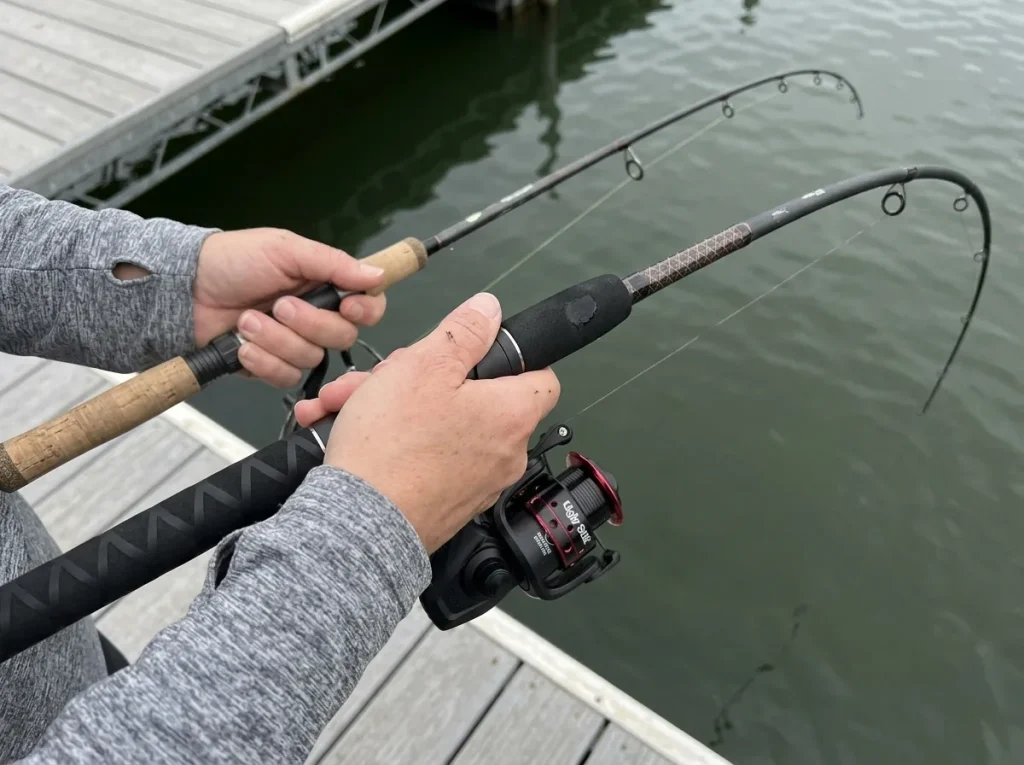
Grab those two “Medium” rods again and bend them against your palm. The difference you feel is the whole lesson: one word on the label, two completely different tools. Power is how hard the rod fights back when you bend it. Action is where along the blank that bend shows up and how fast it snaps straight again. Get those two ideas separated in your head and you have already beaten most of the people standing in that same aisle.
What Rod Power Actually Measures
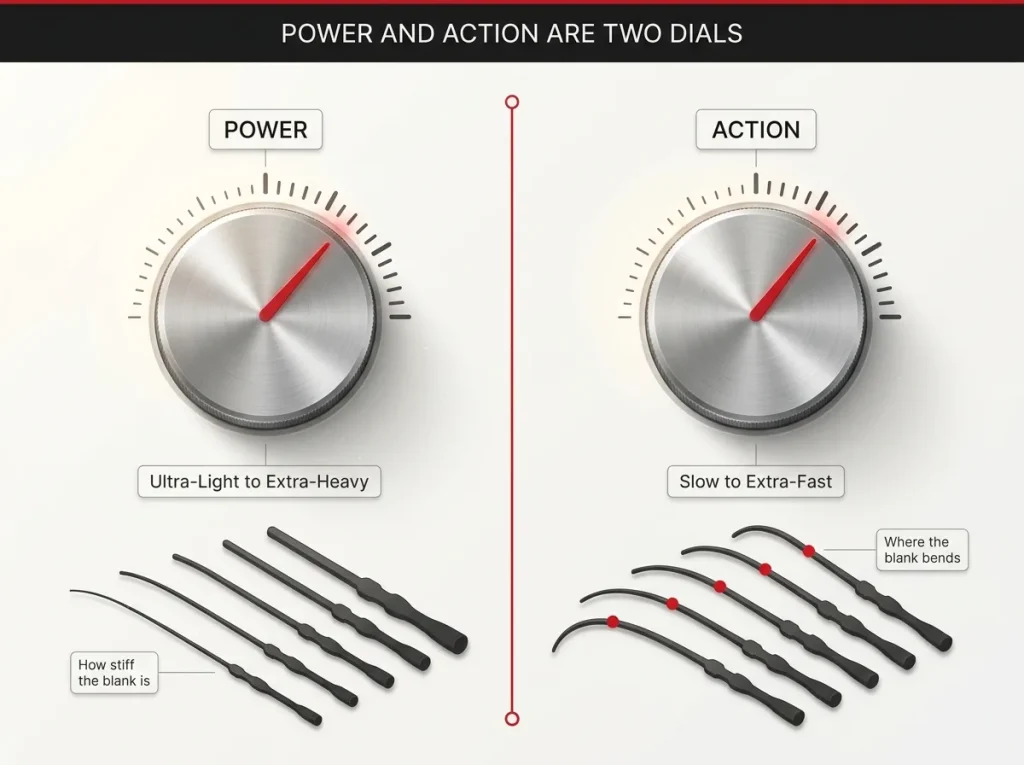
Rod power is the rod’s backbone, how much force it takes to bend the blank at all. It runs from Ultra-Light up through medium power to Extra-Heavy, and each step ties to a printed lure weight rating and line weight rating.
An ultralight is built for tiny jigs and thread-thin line, roughly 1/64 to 1/16 ounce lures on 1 to 4 pound line. A medium-heavy handles 3/16 to 1/2 ounce and 8 to 14 pound line, and a heavy leans into an ounce and a half or more on 15 to 25 pound line. Power is really a strength rating, nothing more.
The rod blank is the part that actually does the bending, so it pays to know that basic anatomy before you start judging rods. Once you have it, power stops being a mystery word and becomes what it is: how much fish and how much lure the rod can lift without folding.
What Rod Action Actually Measures
Rod action answers a different question entirely: where does the blank bend, and how fast does it recover? A fast action loads in the top third of the rod or less and springs back almost instantly. A moderate action bends through roughly the top half. A slow action flexes way down into the lower third and into the handle, taking its time to straighten out. Action is really about the blank’s taper, the flex point it creates, and recovery speed, not strength.
That recovery speed is the part people never feel until it costs them a fish, and we will get to exactly why in a minute. Even a state agency’s angler-education booklet traces the terminology back to basics, so you are not behind for finding it confusing. The terms have always described two different things.
Why They’re Two Separate Dials
Here is the part that unlocks the whole topic: any power can pair with any action. You can buy a Light-power rod with a fast action and a Heavy-power rod with a fast action, and they will share a bend point while having wildly different backbones. Power sets what you can throw and what you can drag out of cover. Action sets how the tip behaves the instant a fish bites. What the blank is built from changes how it feels too, but that is a separate rabbit hole our graphite versus glass rod science piece handles on its own.
How to Check Power and Action Without Trusting the Label
Labels lie, or at least they disagree with each other. The good news is you do not need the label, because your hands can read a rod in about three seconds once you know the move.
The Floor Flex Test, Step by Step
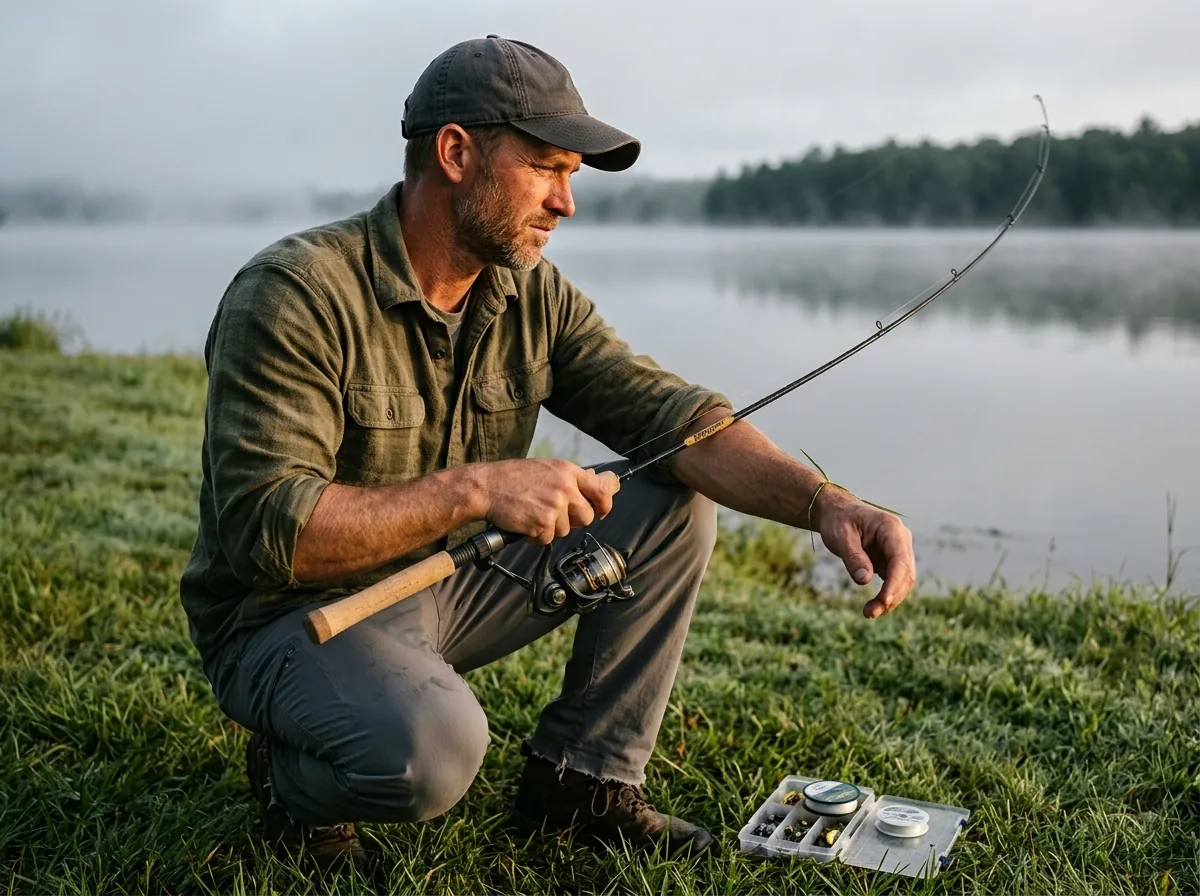
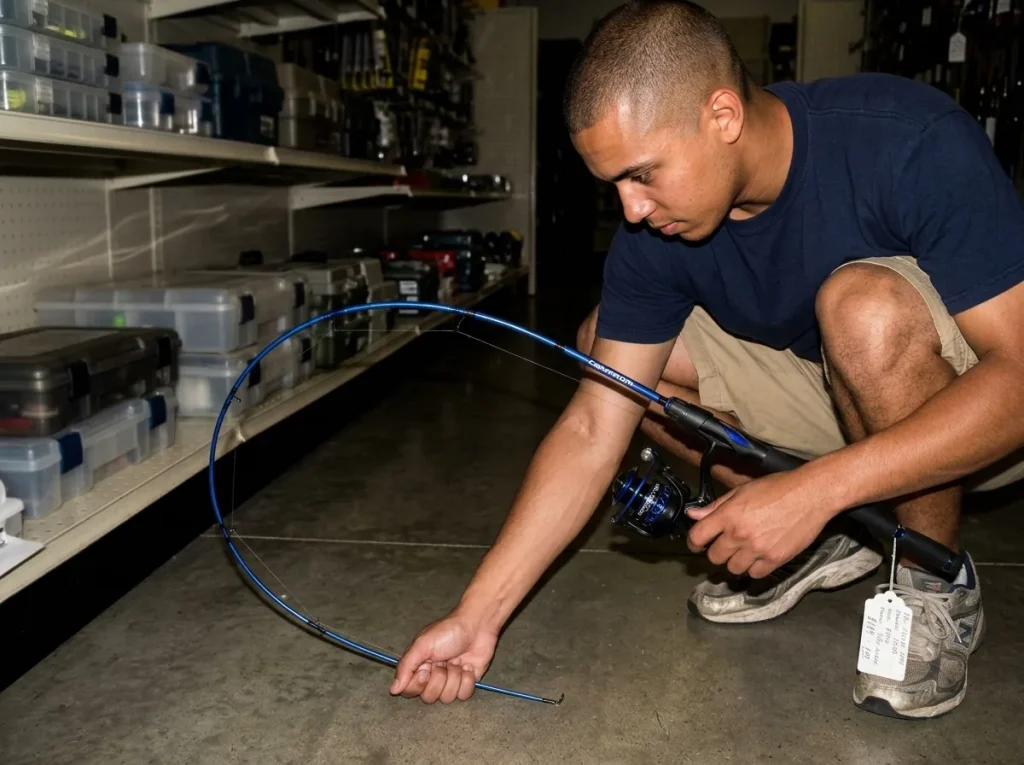
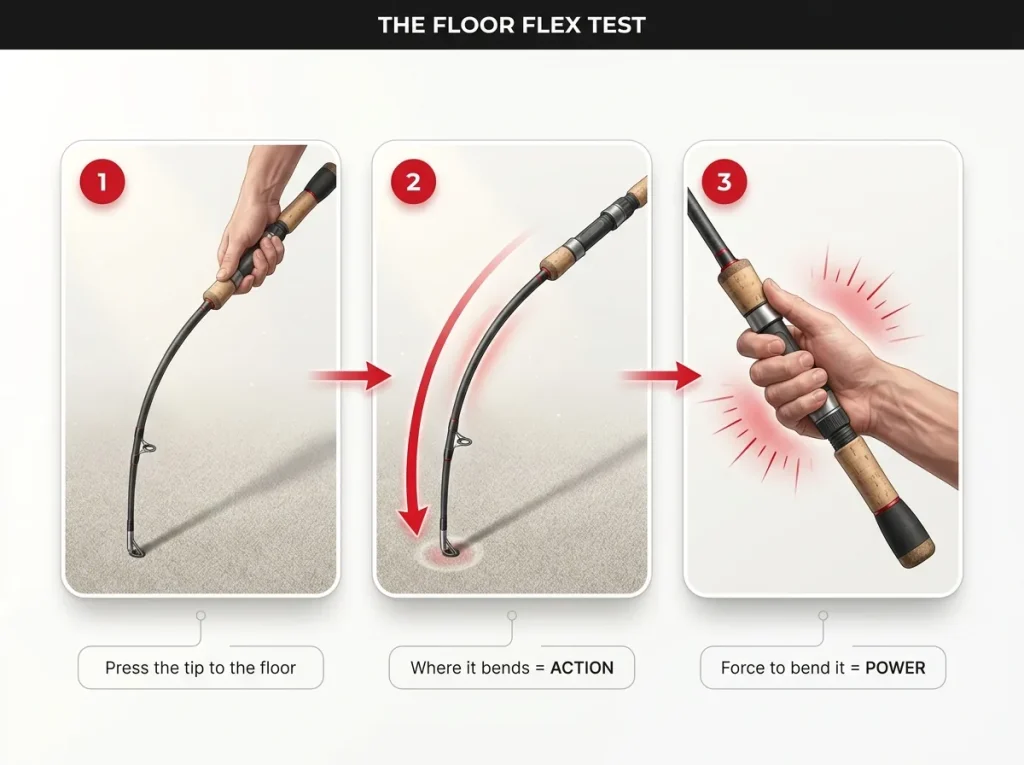
The floor flex test, sometimes called the carpet test, is the one trick every experienced angler does without thinking. Press the rod tip straight down against the floor or carpet, then watch and feel. Where the bend starts tells you the action: high up near the tip is fast, deep toward the middle is moderate or slow. How hard you have to lean to make it bend tells you the power. One smooth press gives you both numbers at once, no label required.
Do the floor test in the store before you buy, not after. Bring the reel you plan to pair it with if you can. A rod that feels crisp bare in your hand loads differently once there is a loaded reel hanging off the seat, and that combined feel is what you will actually fish.
Why the Label Alone Lies
There is no industry-wide standard for these ratings, and there has not been one through the last several seasons. A Medium from one brand can flex like another brand’s Medium-Light, because each company writes its own scale. That is why two rods with the same word on the label feel like different animals in your hands. Trust the flex, not the adjective.
The One Number on the Blank Worth Trusting
If you are going to believe anything printed on the rod, believe the lure-weight and line-weight range, not the power word. That range is a real spec tied to how the blank was built, and it tells you exactly what the rod wants to throw. Everything else stamped on the blank, from the guide count to the line ratings, gets decoded in our guide to reading a rod label, but the weight range is the honest one. Match your lure to that window and the rod loads the way it was designed to.
Why a Fast Rod Rips Treble Hooks Free
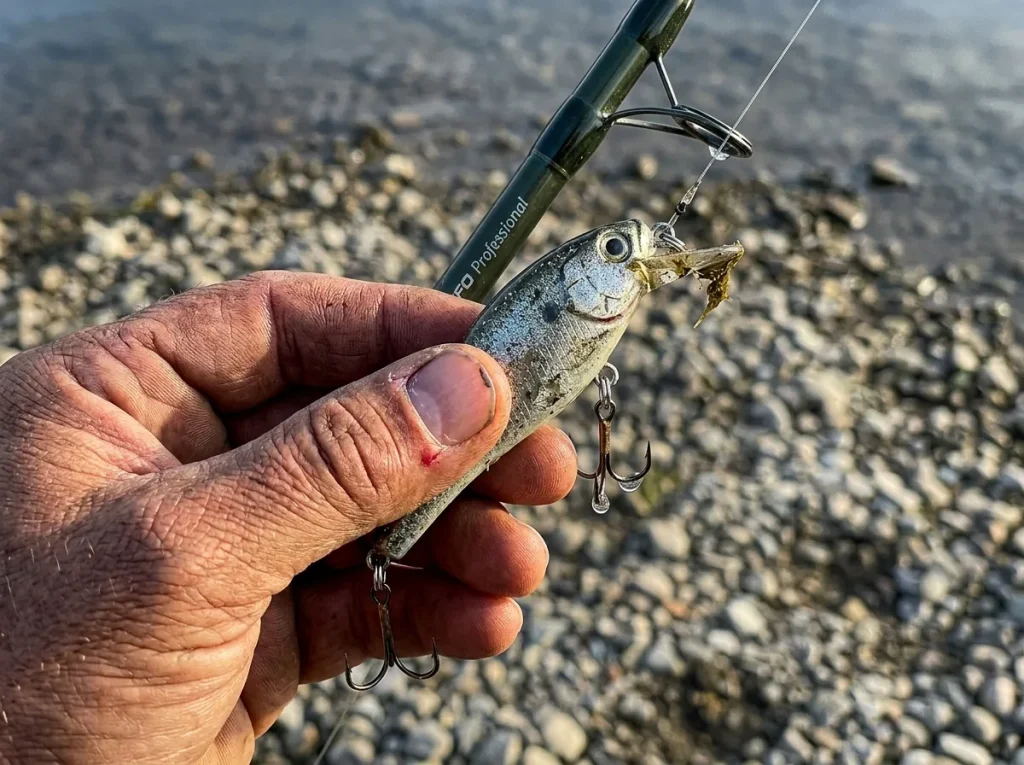
Every article you have read says “use a softer action for crankbaits” and then stops, like it is a rule handed down from the fishing gods. Nobody explains why. Here is the actual mechanism, and once you understand it you will never mismatch a treble bait again.
How a Treble Hook Actually Bites
A treble hook on a crankbait, jerkbait, or topwater plug is made of thin wire and it grabs shallow. It bites into the skin and membrane around a fish’s mouth, not down into bone or cartilage the way a thick single hook on a jig or worm rig does. That shallow, fine-wire grip is fragile by nature. It holds fine once the fish has fully turned on the bait, but in the first split second it is barely hanging on.
The Tear-Out Timing Problem
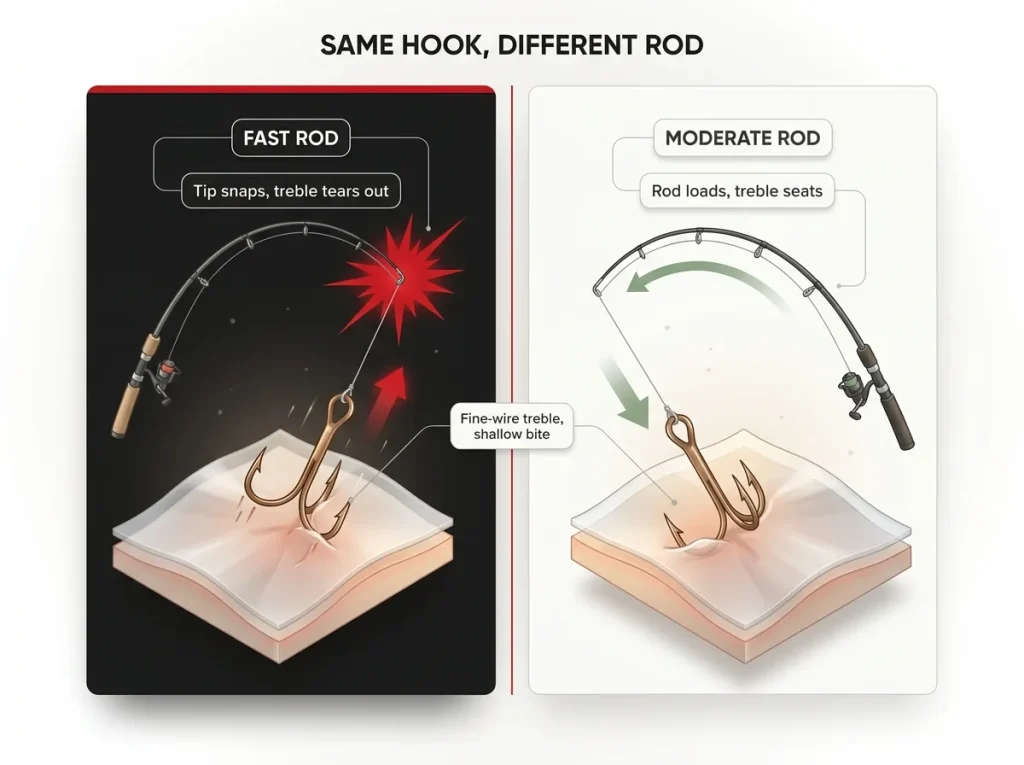
Now add a fast action rod. The tip snaps back almost instantly, and that instant recovery spikes the line tension before the fish has loaded the hook. The thin treble wire, sitting shallow in soft tissue, gets yanked straight back out. Anglers call this the tear-out, and it feels exactly like a good bite that just vanished. A moderate action loads slower, giving the fish’s headshake a beat to seat those trebles before tension ever peaks. Understanding how the hookset actually transfers force is the difference between blaming bad luck and fixing the rod. Topwater strikes miss for their own reasons too, but a torn treble is on your gear, not the fish.
If you keep losing crankbait fish at the boat, stop setting the hook hard. With treble baits on a moderate rod, just keep reeling and let the rod load into the fish. A hard, fast snap is the exact motion that pops those thin trebles loose.
Why Single Hooks Want the Opposite
Flip it around for single hooks and the fast tip becomes your friend. A jig, a Texas rig, or a worm hook is a thick single point that needs real force for hook penetration past the barb, and it needs that force right now. A fast action delivers an instant, direct hookset that buries the point before the fish spits it. Same tip speed that tears a treble out drives a single hook home. The hook geometry decides which behavior you want.
The Technique-to-Combo Cheat List
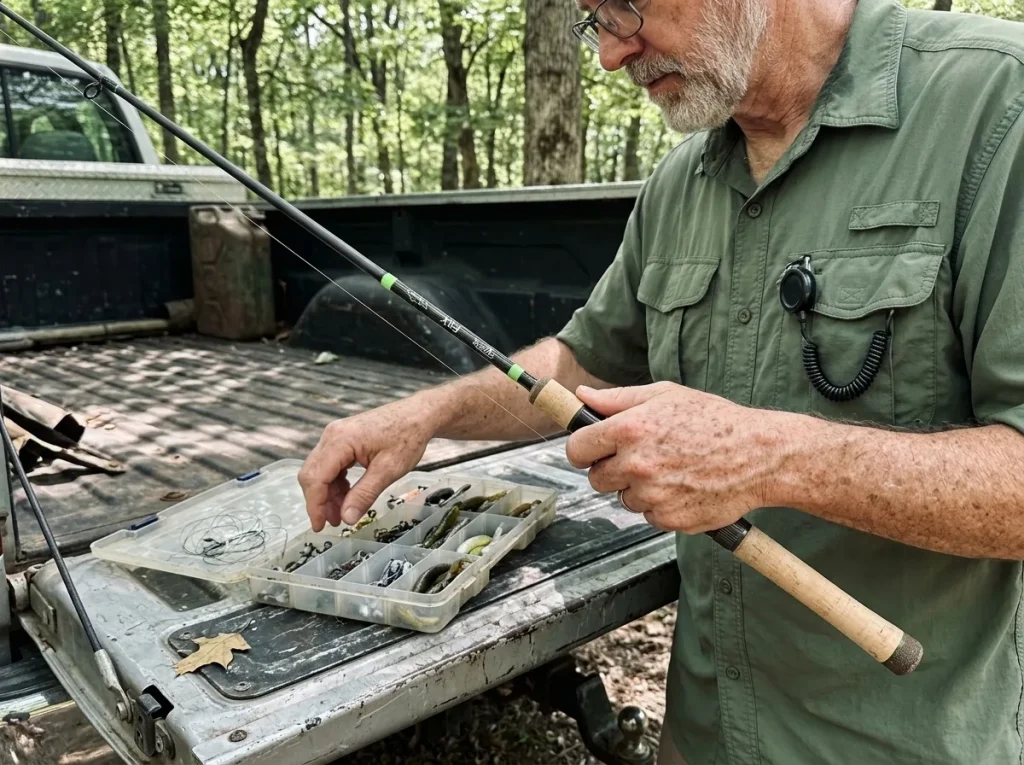
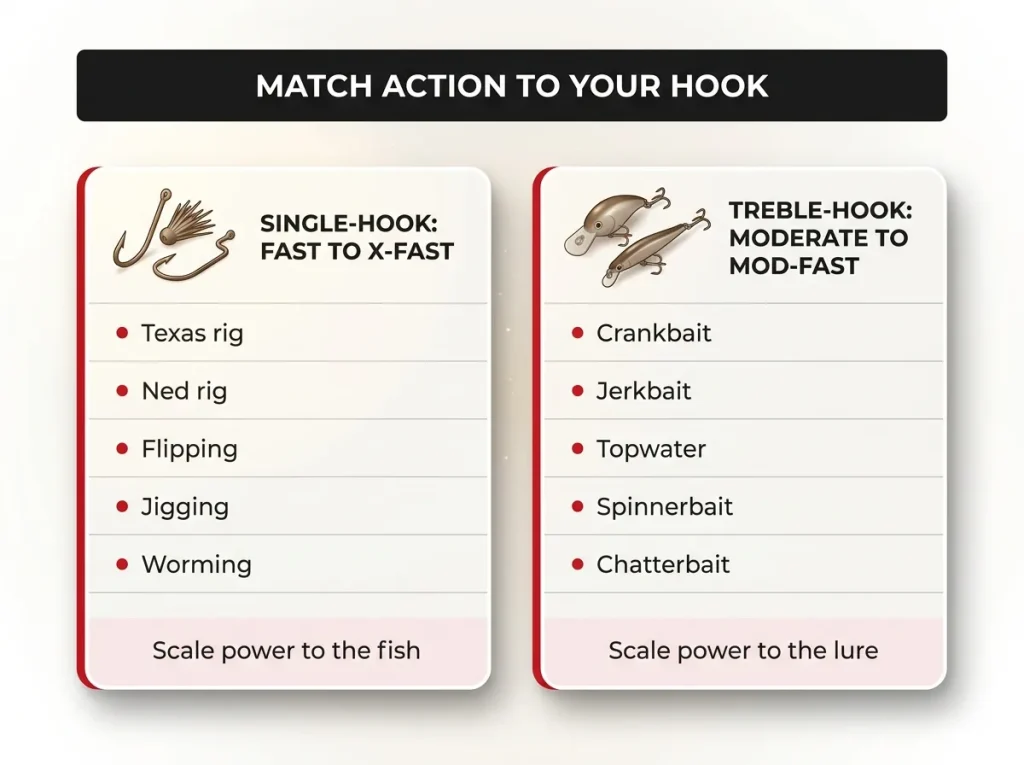
You did not come here to memorize two charts and cross-reference them at the shop. So here is the straight answer, the way a guide would rattle it off at the ramp: match your action to your hook type first, then scale your power to what you are throwing.
Single-Hook Techniques Want Fast to Extra-Fast
Anything with a bare single hook and bottom contact wants a fast action or extra-fast action tip for that instant hookset. That covers the Texas rig, the Ned rig, flipping, jigging, and plain worming. Scale the power to the fish: Light to medium power for bass, trout, and panfish, medium-heavy or heavy for pike, muskie, and catfish. For a light finesse setup on a Ned rig or drop-shot, a rod like the St. Croix Triumph 6’6″ Light Fast lands right in that light-power, fast-action pocket where a small single hook still drives home on thin line. Our jig-rod picks go deeper if jigging is your main game.
The Premium Jigging Upgrade
When one technique becomes your whole season, a dedicated rod earns its keep. A premium build like the G. Loomis E6X 752S in a 6’3″ Medium/Fast is the same fast-action, single-hook recipe as the budget-friendly options, just executed with a lighter, more sensitive blank that telegraphs a walleye’s soft tap you would miss on a cheaper rod. It is a splurge, not a starting point, and that is exactly how to treat it.
Flipping and pitching are the extra-fast outliers. You are not casting with the rod’s bend, you are swinging the bait like a pendulum, so you want the stiffest, most direct tip you can get. That is the one place extra-fast beats everything, single hook or not.
Treble-Hook Techniques Want Moderate to Moderate-Fast
Now back off the action for anything throwing trebles. Crankbait, jerkbait, topwater, spinnerbait, and chatterbait retrieves all want a moderate action or moderate-fast tip so those thin trebles seat instead of tearing out. Scale power to the lure size, not the fish, since a big deep-diving crankbait needs more backbone just to work it. The Temple Fork Outfitters Professional Series in a moderate-fast is a clean example of the compromise tip built into a rod you can actually find, and pairing rod length to your fishing situation fine-tunes it further. Match the action to the hook and half your lost fish come back.
Throwing Braid Changes the Right Combo
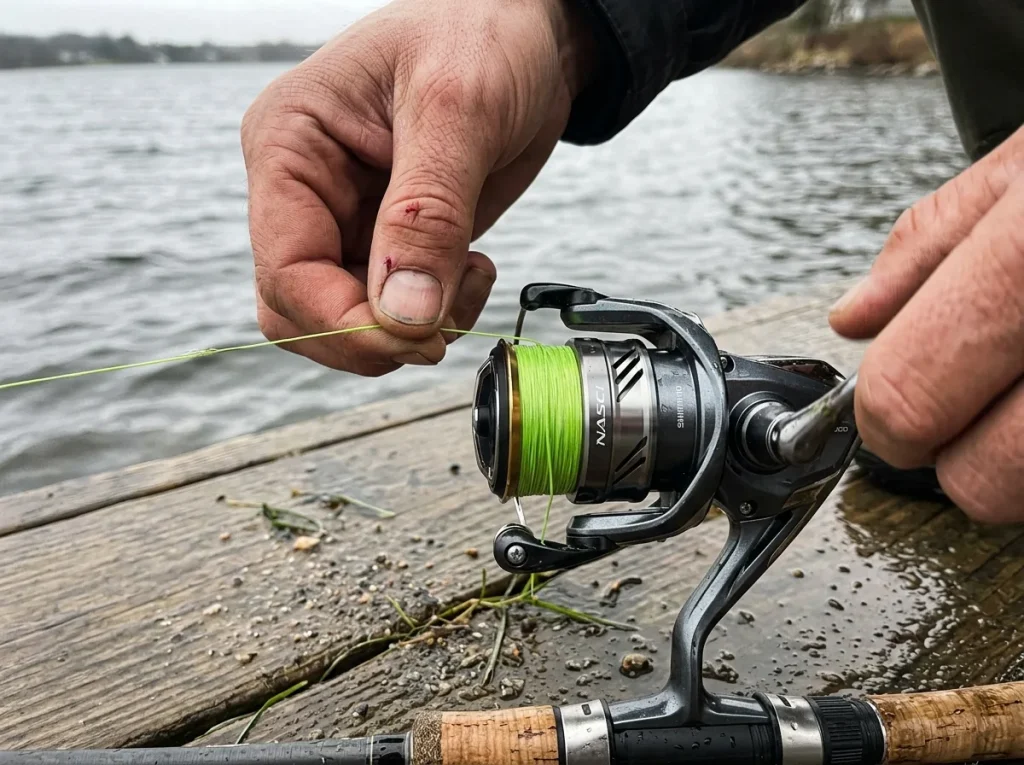
Here is the gotcha nobody in the search results mentions: your line changes how a given rod behaves. You can dial in a perfect rod on monofilament, switch to braided line (also sold as PE line) for the sensitivity, and suddenly start pulling hooks for no reason you can see.
Why Braid Removes the Rod’s Safety Margin
Braid stretches almost nothing, under roughly 3 to 4 percent in real fishing, while monofilament stretches somewhere around 2 to 9 percent depending on how hard you load it. The old story that mono stretches 25 percent is a myth, as our full breakdown of monofilament line stretch lays out, but braid still stretches far less than any mono. That near-zero stretch means braid sends your hookset straight through with almost no cushioning. On a fast action rod with fine-wire trebles, braid effectively doubles down on the tear-out problem from the last section, because now neither the rod nor the line is absorbing the shock.
The One-Notch-Softer Fix for Braid and Trebles
The fix is simple. If you are throwing braid on a treble technique, back off one notch somewhere. Drop to a moderate-fast action, or drop one power grade, so the rod absorbs what the line no longer will. This is not an ironclad law, it is a rigging adjustment grounded in how little braid gives, and it saves the fish that braid would otherwise rip free.
What a Mismatch Actually Feels Like
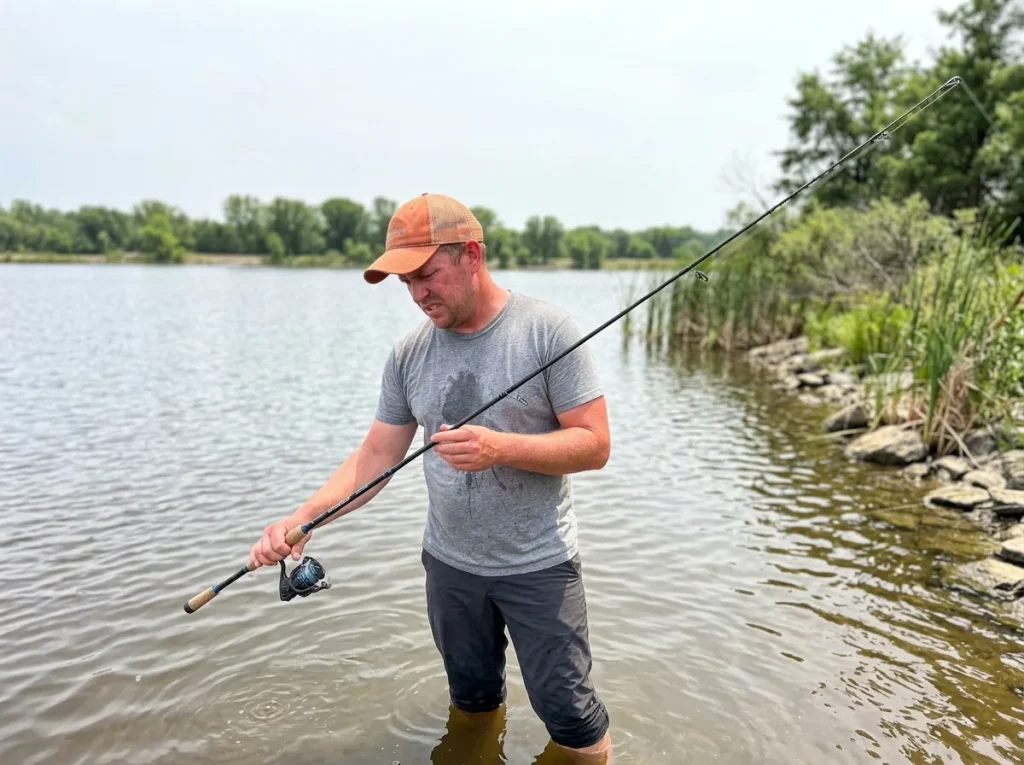
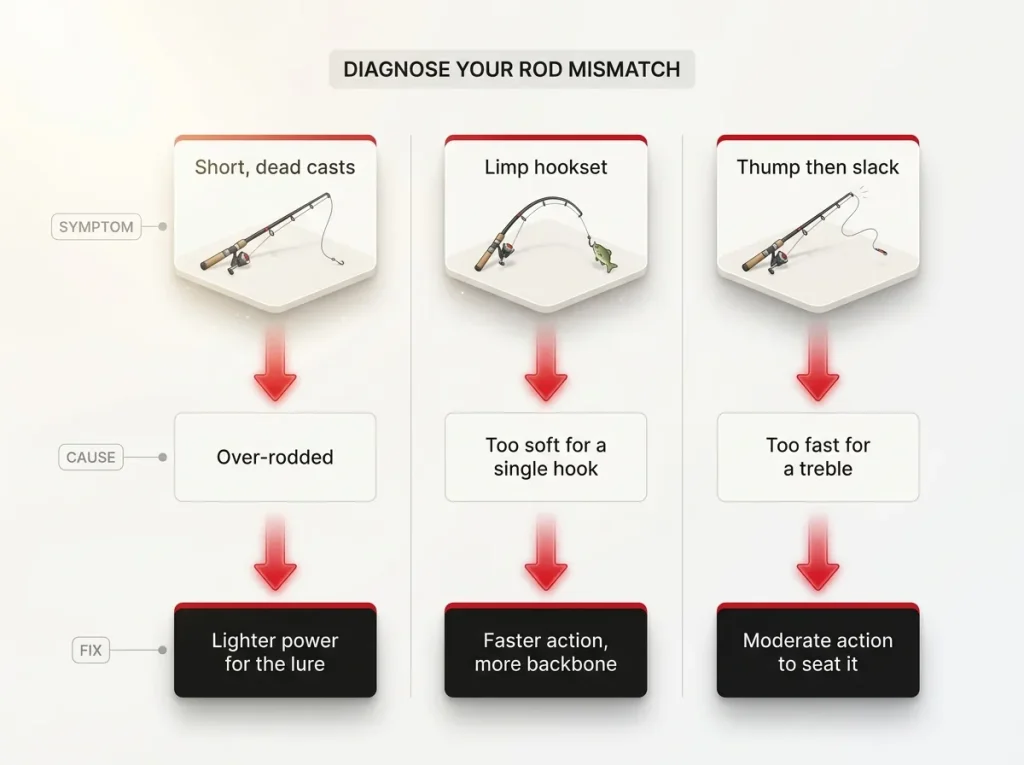
Charts tell you the ratings. They never tell you what getting it wrong feels like in the moment, which is the knowledge that actually saves a trip. There are two very different “something is wrong” days, and once you can name them you can re-rig on the spot instead of guessing.
Over-Rodding, the Cast That Dies Short
Over-rodding means pairing a rod too stiff or too powerful for the lure you are throwing. The blank never loads, so your casts fall short and feel dead in your hand, like the rod is a broomstick with no life in it. This has nothing to do with hooksets. It is purely a casting problem, and it happens the second you clip a light lure onto a heavy rod. If your distance suddenly stinks and the rod feels lifeless, you are probably over-rodded.
The Limp Hookset, Too Soft for a Single Hook
The opposite failure is the limp hookset. You set the hook on a jig or worm, the rod folds instead of driving, and you get that sinking “felt nothing, moved the tip an inch, and the fish was still on” moment. A too-soft or too-slow rod cannot transfer enough force fast enough to bury a thick single hook. Reading a bite you can barely feel helps, but if the rod itself will not load into a firm set, the hook never gets past the barb.
The Tear-Out, Too Stiff for a Treble
The third one you already know: the tear-out. Solid thump, quick hookset, then slack line half a second later. That is a too-fast rod ripping a thin treble back out, not a bad hookset and not a soft-mouthed fish. Feel the cast and feel the hookset together, and you can diagnose all three of these without ever looking at a chart.
The Beginner Default and When to Move Past It
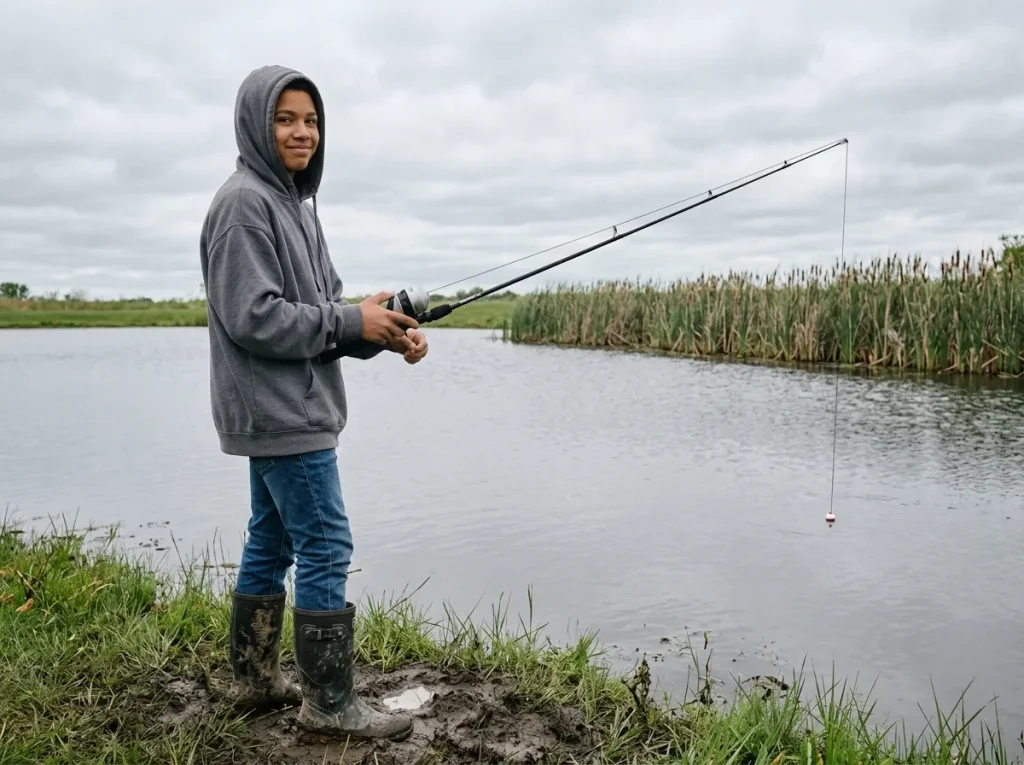
If you are staring at a wall of rods with no single technique in mind yet, there is a boring, correct answer. And then there is a moment, later, when you outgrow it. Both are worth knowing before you spend a dollar.
The One Combo to Start With, and the Budget Floor
Start with medium power and a fast action. It is the versatile all-around rod nearly every guide points beginners toward, forgiving enough to learn on and capable across most of the techniques you will try first. A complete combo like the KastKing Centron 7′ Medium/Fast gets you the matched rod and reel in one budget-friendly package, and the famously tough Ugly Stik GX2 in a 6’6″ Medium-Light is the near-indestructible alternative if you would rather have a rod that shrugs off a truck door. If you want the true budget floor with zero backlash risk, a push-button Zebco 33 spincast combo gets a first-timer fishing today. Our full guide to picking a fishing rod without overpaying walks the whole decision if you want the deeper version, and a few more beginner spinning rods worth a look are rounded up separately.
Why Spincast Still Makes Sense for a True Beginner
There is no shame in starting with spincast. As Texas A&M’s AgriLife Extension guide for new anglers points out, tackle choice is one of the first things that decides whether a beginner sticks with the sport, and a frustrating first reel ends more fishing careers than bad luck ever will. Spincast is the easiest tackle to learn on, a baitcasting rod is better saved for once you have some reps in, and there is no rule that says you have to skip the easy step.
The Second-Rod Upgrade
The upgrade sneaks up on you. Once you start fishing one technique seriously, that all-around rod starts feeling like a compromise, because it is one. That is the moment a second, purpose-built rod earns its place: a moderate-fast stick dedicated to your treble baits, or a fast finesse tip for your single-hook work. The jump is about specialization, not spending more for its own sake, and once your combo is picked you can get on the water and start figuring out what you actually like to throw.
Conclusion
Power and action are two separate dials, so check both with your own hands instead of trusting a label two brands wrote differently. Match your action to your hook first, fast for single hooks and moderate for trebles, then scale your power to what you actually throw. And if you run braid, back off a notch, because the line quietly removed the cushion your setup was leaning on.
Next trip, before you tie on a thing, press the rod you already own against the floor and watch where it bends. You will finally know what you have been fishing all this time, and you will read every rod on the rack differently after that.
Frequently Asked Questions
01What is the difference between rod power and rod action?
Power is how much force it takes to bend the rod, its backbone, rated Ultra-Light to Extra-Heavy. Action is where along the blank it bends and how fast it recovers, rated Slow to Extra-Fast. They are two separate specs, not two names for the same thing.
02Can a rod be fast action but only medium power?
Yes, and it is one of the most useful combos there is. Power and action are independent, so a Medium/Fast rod has moderate backbone with a tip that bends in the top third and snaps back fast. It is the default all-around pick for good reason.
03What power and action should I use for crankbaits?
Use a moderate to moderate-fast action, with power scaled to the lure size. The softer action loads slowly enough to let a fish seat the fine-wire treble hooks before tension spikes, where a fast rod tends to rip those thin trebles back out.
04What is the best all-around rod power and action for a beginner?
Medium power, fast action. It handles most beginner techniques, forgives mistakes while you learn, and gives you a baseline feel for both dials before you ever specialize into a second rod.
05Does switching to braid change what rod power and action I need?
It can. Braid stretches far less than mono, so it removes the cushion your combo was relying on. If you are throwing braid on treble baits, back off one notch, a softer action or one lower power grade, to keep from pulling hooks.
Risk Disclaimer: Fishing, boating, and all related outdoor activities involve inherent risks that
can lead to injury. The information provided on Master Fishing Mag is for educational and informational purposes
only. While we strive for accuracy, the information, techniques, and advice on gear and safety are not a substitute
for your own best judgment, local knowledge, and adherence to official regulations. Fishing regulations, including
seasons, size limits, and species restrictions, change frequently and vary by location. Always consult the latest
official regulations from your local fish and wildlife agency before heading out. Proper handling of hooks, knives,
and other sharp equipment is essential for safety. Furthermore, be aware of local fish consumption advisories. By
using this website, you agree that you are solely responsible for your own safety and for complying with all
applicable laws. Any reliance you place on our content is strictly at your own risk. Master Fishing Mag and its
authors will not be held liable for any injury, damage, or loss sustained in connection with the use of the
information herein.
Affiliate Disclosure: We are a participant in the Amazon Services LLC Associates Program, an
affiliate advertising program designed to provide a means for us to earn advertising fees by advertising and linking
to Amazon.com. As an Amazon Associate, we earn from qualifying purchases. We also participate in other affiliate
programs and may receive a commission on products purchased through our links, at no extra cost to you. Additional
terms are found in the terms of service.