In this article
Picture yourself in front of the rod wall at the tackle shop. A hundred blanks standing shoulder to shoulder, each one with a little printed code near the handle that nobody ever taught you to read, and a salesperson already drifting toward the most expensive one. It feels like you need a degree to choose, so you either freeze or you grab whatever looks nice and hope for the best.
Here is the thing guides notice beginners get wrong on repeat: they buy by length alone, and they assume a bigger price tag means a better rod for them. Once you can read that printed code and you know which three specs actually matter, you can walk that entire wall in ten minutes and skip everything you do not need.
The Rod Types and What Each One Is Built For
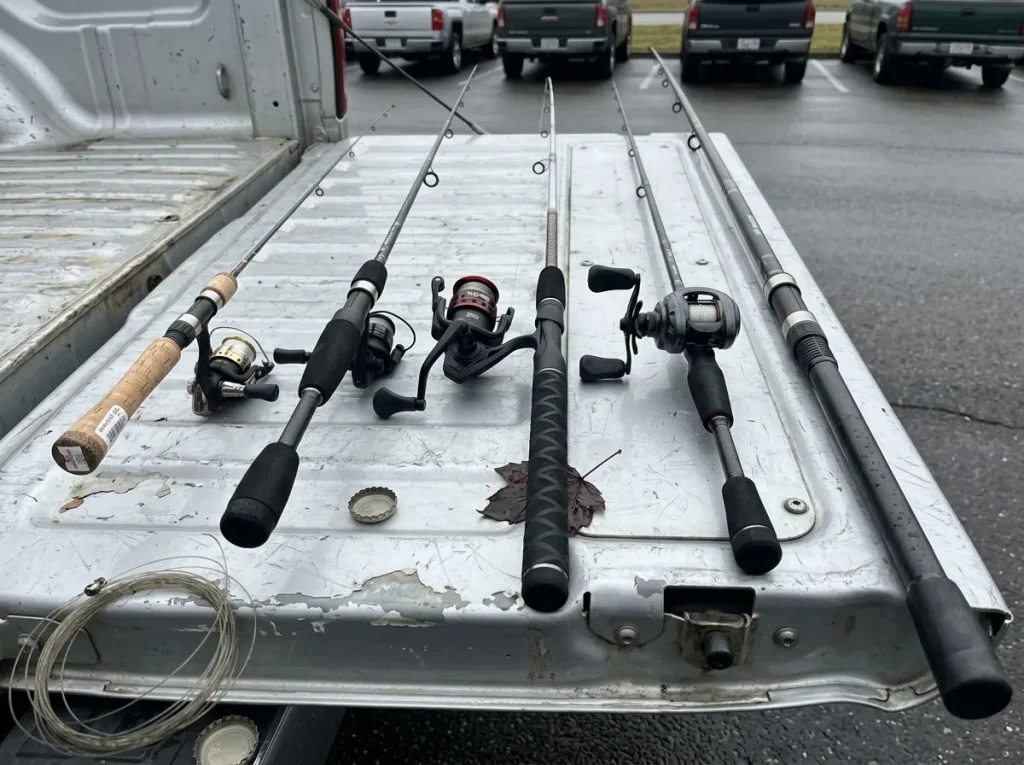
That wall of rods is not random. Every type on it exists because a real fishing situation demanded something the others could not do. Trolling behind a boat, casting off a beach into the surf, dropping a jig through a hole in the ice: each one shaped a rod.
So before you get lost in specs, figure out which family fits the fishing you actually do. Most people only ever need one or two of these, and buying a specialty rod before you own a good all-rounder is the classic first mistake.
If you started fishing before smartphones, odds are your first rod was a spincast combo like the old Zebco 202, the pushbutton one your uncle handed you at the pond. That is still where a lot of kids begin, and there is nothing wrong with it. But once you are choosing your own gear, here is the honest rundown of what each type is built for.
Spinning Rods
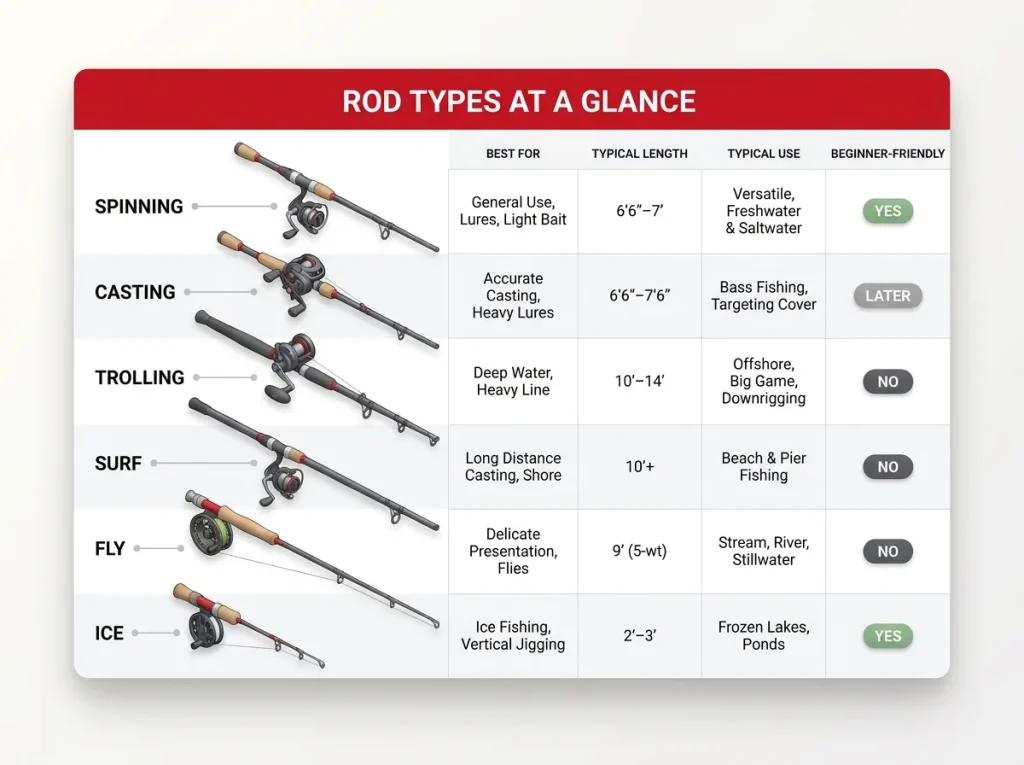
The spinning rod is the do-everything starting point, and for good reason. The reel hangs under the blank with the guides facing down, which makes it easy to cast light lures without a backlash. If you are buying one rod to learn on, buy this. A well-regarded example of what a solid all-around spinning rod feels like is the St. Croix Triumph 6’6″ Light Fast, light enough for panfish yet quick enough to set a hook on a bass. If your budget is tight and you want something that survives car doors and tackle-box abuse, the Ugly Stik GX2 spinning combo is close to indestructible and comes matched with a reel out of the box. When you are ready to compare specific models, our guide to the best spinning rods for beginners goes deeper.
Casting and Baitcasting Rods
A casting rod (or baitcasting rod) flips the setup: the reel sits on top with the guides pointing up, and the rod usually has a small trigger under the grip. This layout gives you more power and pinpoint accuracy, which is why bass anglers throwing heavy cover love it. The catch is the learning curve, because a baitcaster will backlash into a bird’s nest until your thumb learns the reel. An easy-cast system like the Abu Garcia Black Max combo softens that curve and makes a good first step up from spinning. Once you are dialed in, the casting rods built for jig work are worth a look.
Trolling Rods
A trolling rod is built to drag baits behind a moving boat for hours, so it is long, has a slower bend to absorb strikes, and usually breaks down for storage. It is a purpose-built tool, not a first rod. Something like the B’n’M Capps & Coleman 14-foot trolling rod shows how different the design gets when the job is spreading lines wide off the back of a boat for walleye or crappie instead of casting and retrieving.
Surf Rods
A surf rod trades everything for casting distance and saltwater toughness. These run long, often ten feet or more, with hardware built to shrug off salt. You give up the light, sensitive feel of a freshwater rod to launch bait past the breakers. The PENN Squadron III 10-foot surf spinning rod is a solid example of that trade, with corrosion-resistant components and the backbone to throw heavy sinkers into the wind.
Fly Rods
A fly rod works on a completely different principle: you cast the weight of the line, not the lure. That makes it its own world, and a 9-foot 5-weight is the classic all-around entry point that handles trout and panfish without fuss. A complete beginner outfit like the Redington Crosswater 9′ 5-weight gets you rod, reel, and line in one box so you are not guessing at matching parts. If fly fishing pulls you in, we break down a full beginner setup in our guide to the beginner fly rod and reel.
Ice Rods
An ice rod is the oddball of the group, short enough to fish sitting over a hole in the ice, usually two to three feet long with an ultralight tip that shows the lightest bite. You are not casting, you are dropping straight down, so length works against you. A budget combo like the Berkley Cherrywood HD ice rod covers the basics if hard-water fishing is on your list.
Power and Action the Two Specs People Mix Up
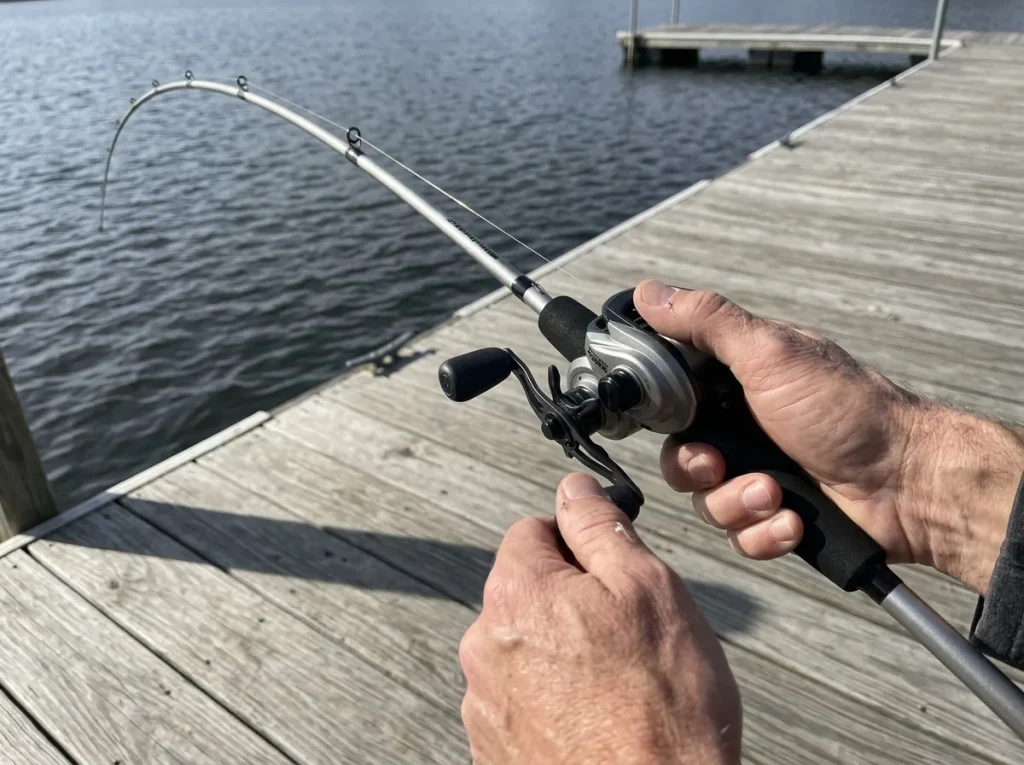
Here is where more first rods get bought wrong than anywhere else. Rod power and rod action sound like the same thing, people swap the words constantly, and that mix-up is exactly what snaps a rod on a hookset. Get these two straight and you have cleared the biggest hurdle in choosing a rod.
Power the Weight Rating
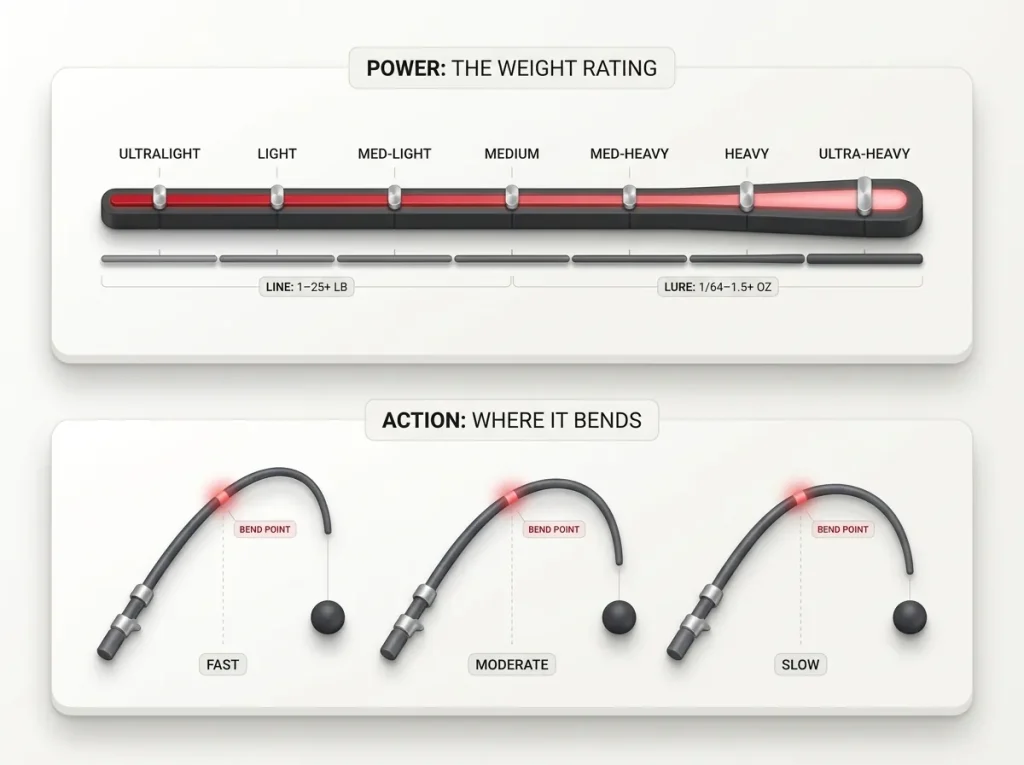
Power is how much force it takes to bend the blank at all. It runs on a scale from ultralight (rated for tiny 1/64 to 1/16 ounce lures and 1 to 4 pound line) all the way up to ultra-heavy (1.5 ounce lures and 25 pound line and beyond), with light, medium-light, medium, medium-heavy, and heavy steps in between. The rule is simple: match the power to the lure weight and line weight you actually plan to throw. Too light a rod cannot handle the load; too heavy a rod will not even flex enough to cast a light lure.
Action Where the Blank Bends
Action is a different question entirely. It describes where along the blank the rod bends. A fast action rod bends only near the tip, which gives you a lightning-quick hookset and works great with single hooks. A slow action rod bends through its whole length, which is more forgiving and better with treble hooks and light line that a stiff tip would tear out. This is the part that trips people up: two rods both labeled medium power can behave completely differently depending on their action. One loads at the tip, the other loads all the way to the grip. That bend profile is the rod’s taper, baked into how the blank is built, so it is not something you can adjust later.
Why Mixing Them Up Costs You Fish
Now the part that actually matters on the water. When you mismatch power to your line and lure, the rod becomes the weak link in the system. Spool 30 pound braid on an ultralight rod, swing hard on a hookset, and the rod snaps on a fish the line itself would have handled with room to spare. The backbone, the stiffness reserve in the lower half of the rod that does the real fighting, was never there to begin with. A whippy blank with no backbone bends into a useless noodle the moment a decent fish turns. For the full picture of how these two specs interact, our breakdown of rod action versus power is worth the read.
Length, Material, and How a Rod Is Built
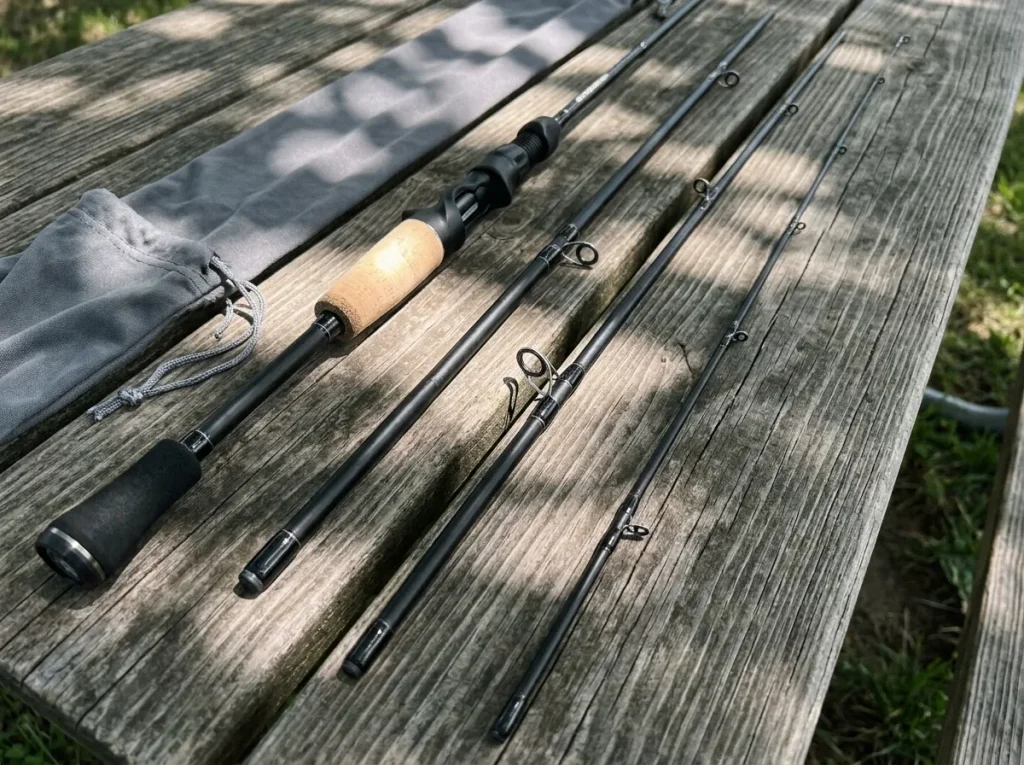
Type, power, and action get you most of the way there. The rest of the spec sheet fills in the details, and it is also where a lot of the “premium” price quietly hides. Here is the plain version of length, blank material, the small parts, and how many pieces a rod comes in.
Length and the Distance-vs-Control Trade-off
Length is a straight trade-off. A longer rod casts farther and gives you more leverage on a hookset; a shorter rod gives you more control and accuracy in tight spots. That is really it. If you are not sure, a rod in the 6’6″ to 7′ range covers the widest set of situations, which is why so many all-around rods land right there. Standard lengths cluster where they do partly because of decades of manufacturing defaults that trace back to the tournament rulebook. Under the International Game Fish Association’s official tackle rules, record-eligible gear needs at least a 40-inch tip and a butt no longer than 27 inches, and those numbers shaped the commercial norms everyone inherited. Our guide to matching rod length to where you fish digs into the specifics.
Graphite, Fiberglass, or Composite
Blank material is the big one. Graphite is lighter, stiffer, and far more sensitive, so you feel every tick, but it is more brittle and cracks easier on impact. Fiberglass is heavier and more flexible, but it is tougher and cheaper, which is why beginner and kid rods still lean on it. A composite blank splits the difference. As the Recreational Boating and Fishing Foundation’s own angler-education guide puts it, durability often beats ultimate sensitivity when a rod is getting dropped, stepped on, and slammed in a car door.
This is also where the marketing gets loud. You will see blanks rated IM6, IM7, and IM8 modulus, with higher numbers implying a stiffer, lighter, more sensitive rod. Some of that is real, but it is worth knowing those are the blank maker’s own trade figures, not an independent industry standard, and a higher modulus is also more brittle. Higher is not automatically better for you. If you want to understand what IM6, IM7, and IM8 actually mean, we cover it without the sales pitch.
Guides, Handle, and Reel Seat
The small parts change feel and price more than people expect. The guides, those rings the line runs through, come in different insert materials, and ceramic or aluminum-oxide inserts resist saltwater line-groove wear far better than plain stainless steel. The tip-top, the guide at the very end of the rod, takes the most abuse of all, so it is worth a look to make sure it sits straight and smooth. The handle is mostly personal feel: cork is warm, light, and classic, while EVA foam is grippier when wet and shrugs off dirt, and some newer blanks use a carbon fiber grip that shaves a little more weight. Neither one catches more fish. If you are weighing them, we compare cork versus EVA foam handles and go deeper on how guide materials compare.
One-Piece, Two-Piece, or Travel
A one-piece rod is the most sensitive and the strongest, since there is no joint to interrupt the blank, but it is a pain to transport. A two-piece splits at a ferrule joint for easier storage with almost no loss in feel. Multi-piece and telescoping travel rods break down small enough for a backpack or a carry-on, trading a little sensitivity for packability. A four-piece like the KastKing Spartacus Passage travel rod fits in a suitcase and still fishes well enough for a trip. If portability matters to you, weigh the one-piece versus two-piece trade-off and see how telescoping travel rods actually hold up.
How to Read the Label on the Blank
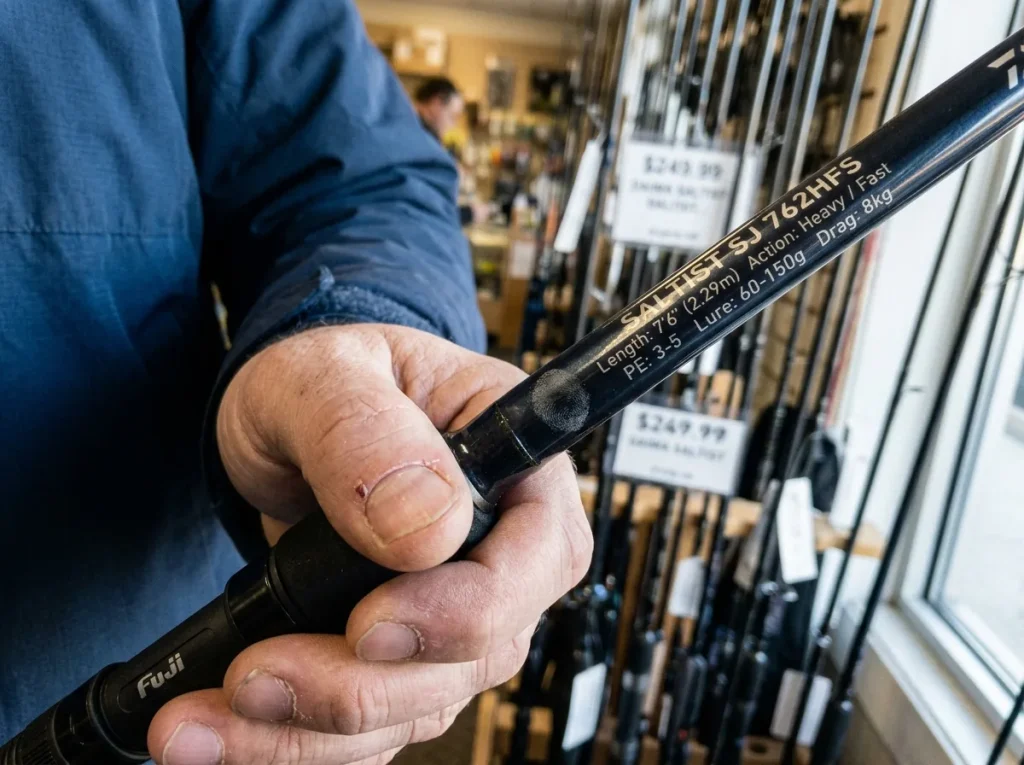
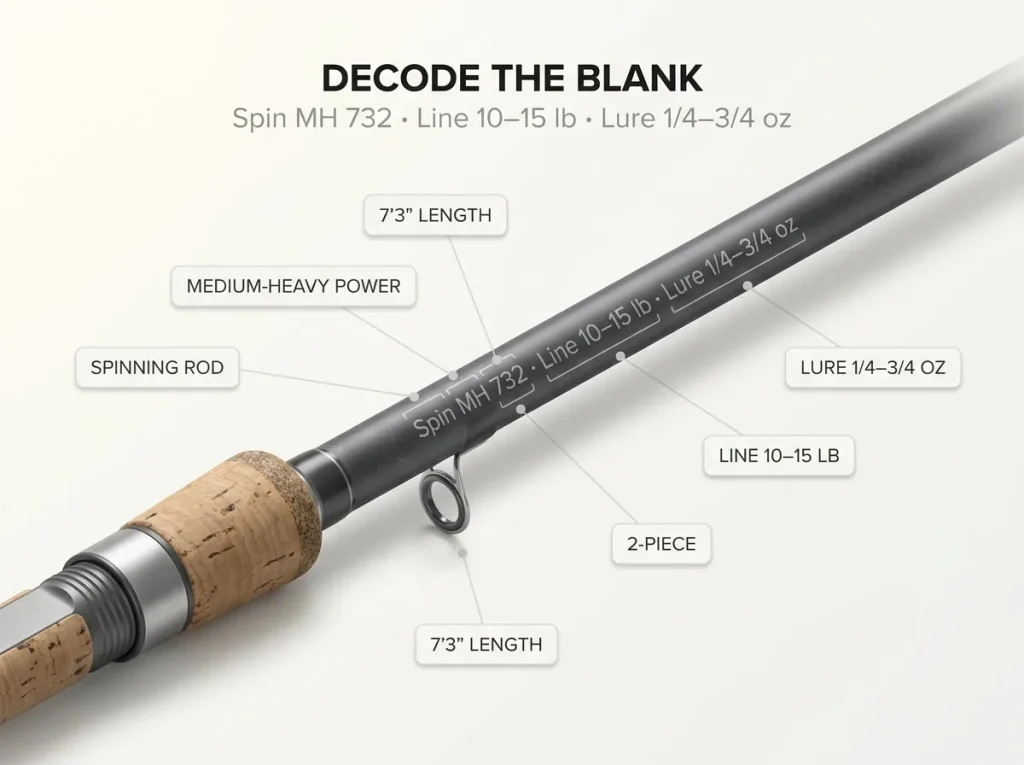
This is the ten-second superpower nobody hands you. The single line printed just above the grip tells you the rod’s type, power, action, length, and line and lure range, if you know how to read it. Learn this and you never need a salesperson or a wall chart again, because you read the rod itself.
Take a real example stamped on a blank: “Spin MH 732, Line 10 to 15 lb, Lure 1/4 to 3/4 oz.” Break it down and it says spinning rod, medium-heavy power, seven feet three inches long, and two pieces (the 73 is the length in inches, the 2 is the piece count). The line rating tells you it wants 10 to 15 pound line, and the lure rating tells you it throws quarter-ounce to three-quarter-ounce baits best. That one line just told you everything the salesperson would, and it does not have a commission. Cross-check that line rating against what your reel is spooled with so the rod is never the weak link. Our full guide to decoding rod label specs walks through more examples.
Never judge a rod off the rack. Flex it with a reel actually mounted and line loaded, because an unweighted rod feels whippy on the shelf and behaves completely differently once it is carrying a reel. That in-hand load is the only way to feel what the action really does.
Watching someone read a label in a shop makes it click faster than any written breakdown.
Matching the Rod to Your Reel, Technique, and Species
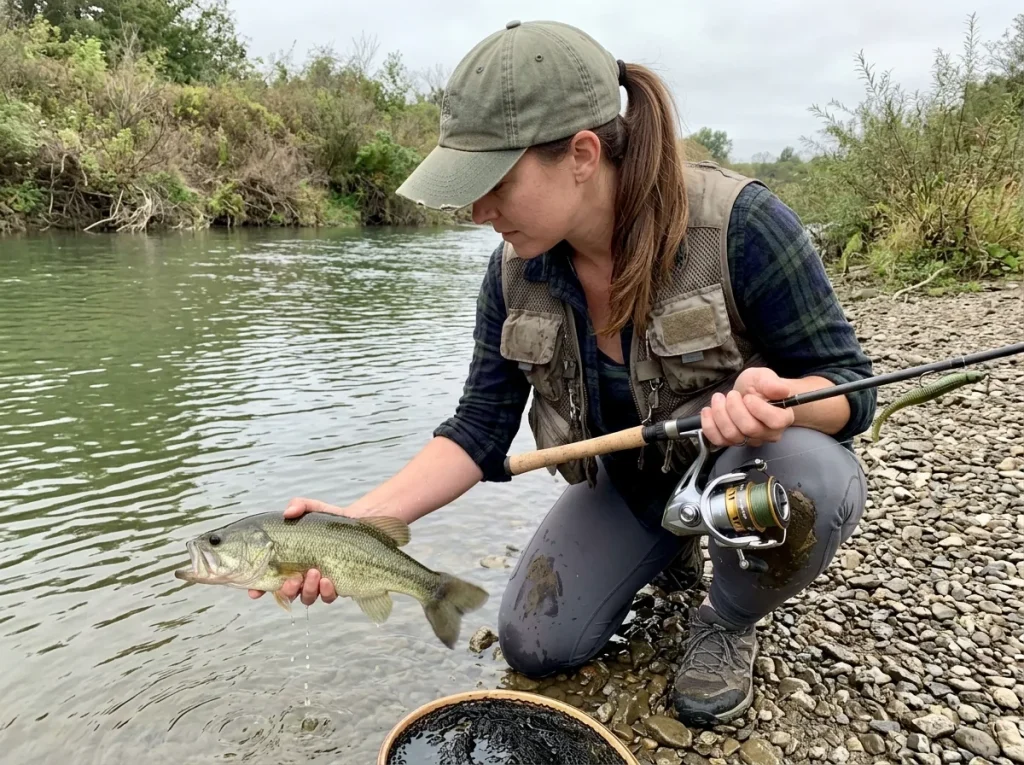
A rod is never bought in a vacuum. The reel it pairs with, the technique you throw, and the fish you chase all point toward the same answer if you let them. Get one wrong and the whole setup feels off, no matter how good the rod is on its own.
Start with the reel. The rod’s line-weight range should roughly match the reel’s spooled line and drag, so a rod rated for 6 to 12 pound line wants a reel loaded with 8 to 10 pound line, not 30 pound braid. Whether you run monofilament, a fluorocarbon leader, or braid, the rating printed on the blank is the ceiling you work under. Rod type points straight to reel type too: a spinning rod takes a spinning reel, a casting rod takes a baitcaster, and they are not interchangeable. If you are still sorting out the reel side, we explain why your first reel is not always a spinning reel. Technique and species handle the rest. Finesse tactics with light line want a lighter power and a faster tip; hauling a big catfish or bass out of heavy cover wants more backbone.
A balanced rod-and-reel fights fatigue as much as it fights fish. A setup that is tip-heavy or butt-heavy wears out your wrist over a full day on the water, long before the fish do. Balance the combo across your finger at the reel foot before you commit to it.
The mistake here is buying the rod and reel separately without checking they belong in the same line class. Two good pieces that do not match make a bad combo. If you want the two chosen together, our guide to a matched rod-and-reel combo and the fundamentals of how to balance a rod and reel cover the pairing.
What You’re Actually Paying For as the Price Climbs
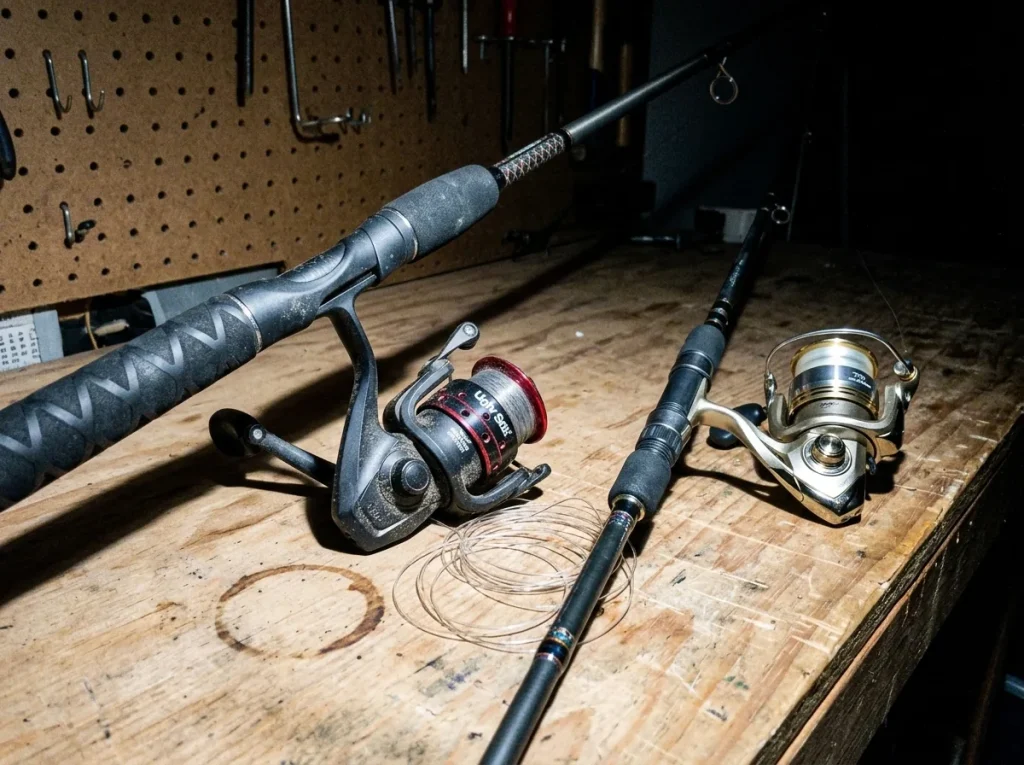
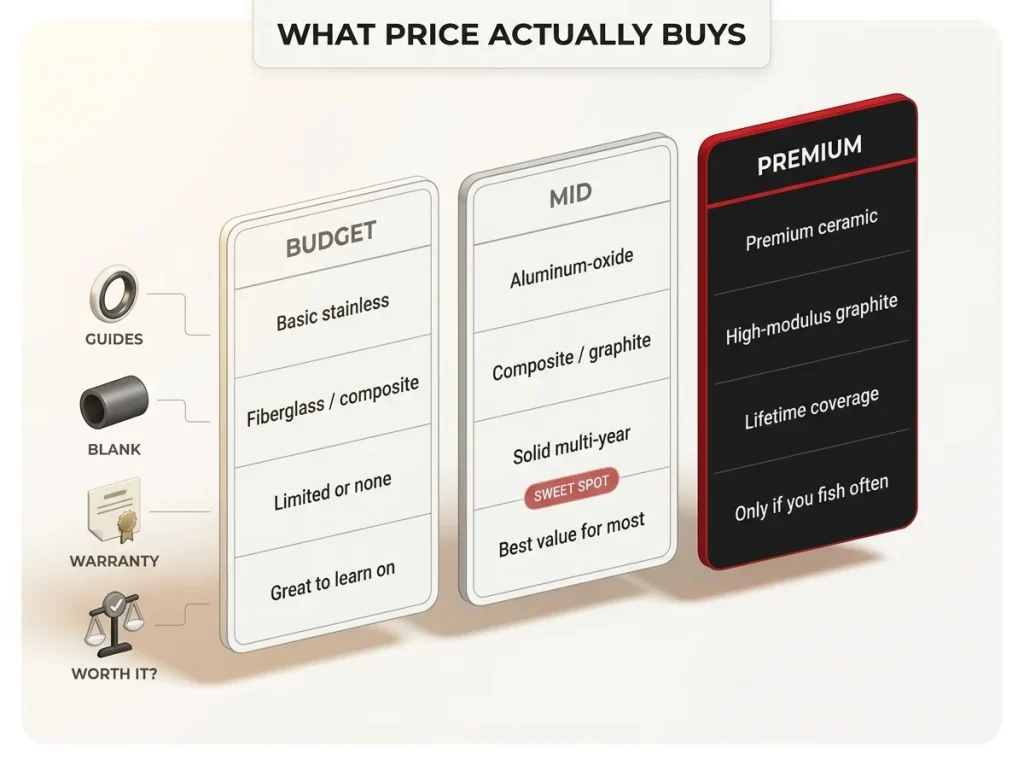
This is the part the retailer pages skip, because they have an incentive to. As the price climbs, some of what you get is real and some of it is a bigger number stamped on the blank. Here is the honest split, since knowing the difference is the whole point of not overpaying.
What genuinely improves with money: guide quality, which means better corrosion resistance and less line wear over years of use; more consistent blanks with fewer weak spots; better warranty coverage; and real durability that survives a decade instead of a season. Those are worth paying for if you fish often. What is mostly marketing: chasing the highest modulus number as a weekend angler. A top-tier IM8 blank is more brittle, costs a lot more, and delivers sensitivity most people will never feel the difference from. You are paying for a spec sheet, not a better day of fishing.
Warranty is a real part of the premium too, and it is worth knowing what it actually covers before you assume the expensive rod is protected. Plenty of “lifetime” warranties do not cover the things that break rods most often. We lay out what actually voids a rod warranty so the coverage does not surprise you later. The bottom line: assume higher price means “better for a specific trade-off,” not “better for me,” until you can name the trade-off you are buying. For the wider view, our honest spend-versus-save verdict on budget gear applies straight to rods.
The Two-Rod Starter Quiver That Covers Almost Everything
Most guides quietly dodge this question, gesturing at “you’ll build a collection over time.” Here is the straight answer for someone starting today. You do not need a rod per species, and you almost certainly do not need six rods. You need two.
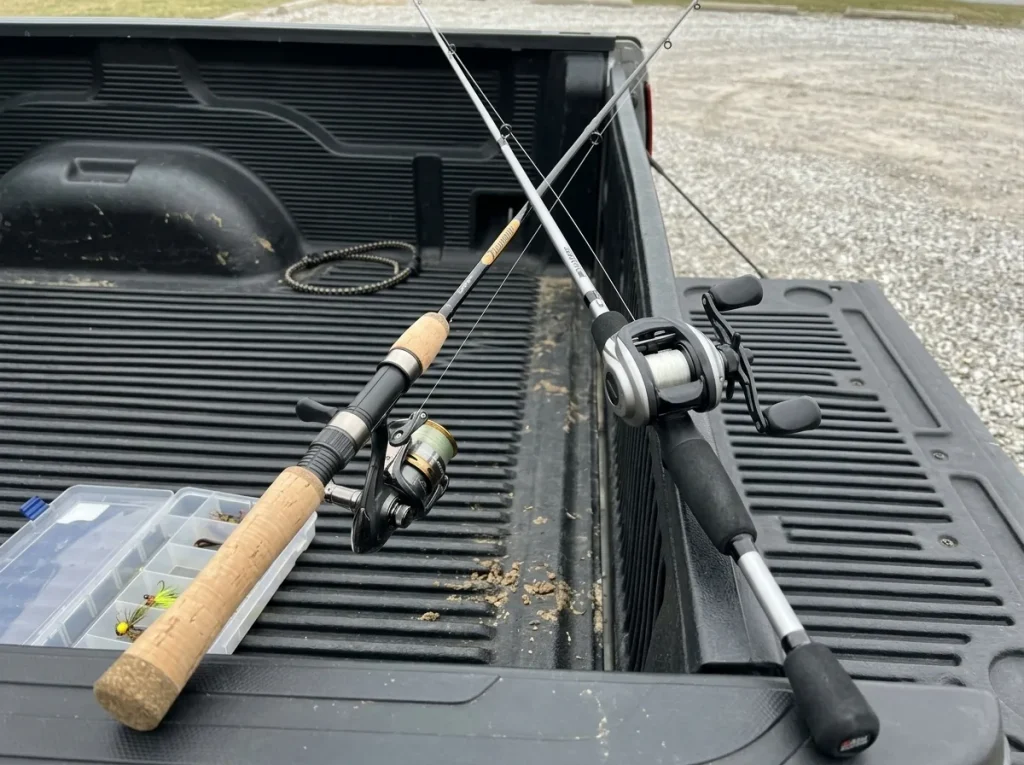
The setup that covers roughly ninety percent of freshwater situations is a medium-power, fast-action spinning rod for your all-around work, paired with a medium-heavy baitcaster for heavier cover and bigger lures. That is the working quiver, which is just the fishing word for the rod collection you actually use. Two well-chosen, versatile rods beat a rack of specialty sticks for a weekend angler, and they cost far less. The more common and more expensive path is buying one rod for every technique you read about, most of which sit in the garage.
Add a third rod only when a real, repeated need shows up. If you find yourself driving to the beach every other weekend, buy the surf rod then. If ice season becomes a thing you do, grab the ice combo then. Let the fishing tell you what to buy next instead of the tackle shop. When you are ready to assemble the whole kit, our guide to building your first full setup the smart way puts the rods, reels, and line together.
Keeping Your Rod Alive Care Storage and Transport
You just spent real money, so here is the five-minute stuff that keeps a rod alive for years instead of ending early. None of the competitor guides bother with this, which is a shame, because more good rods get wrecked in garages and car doors than on fish.
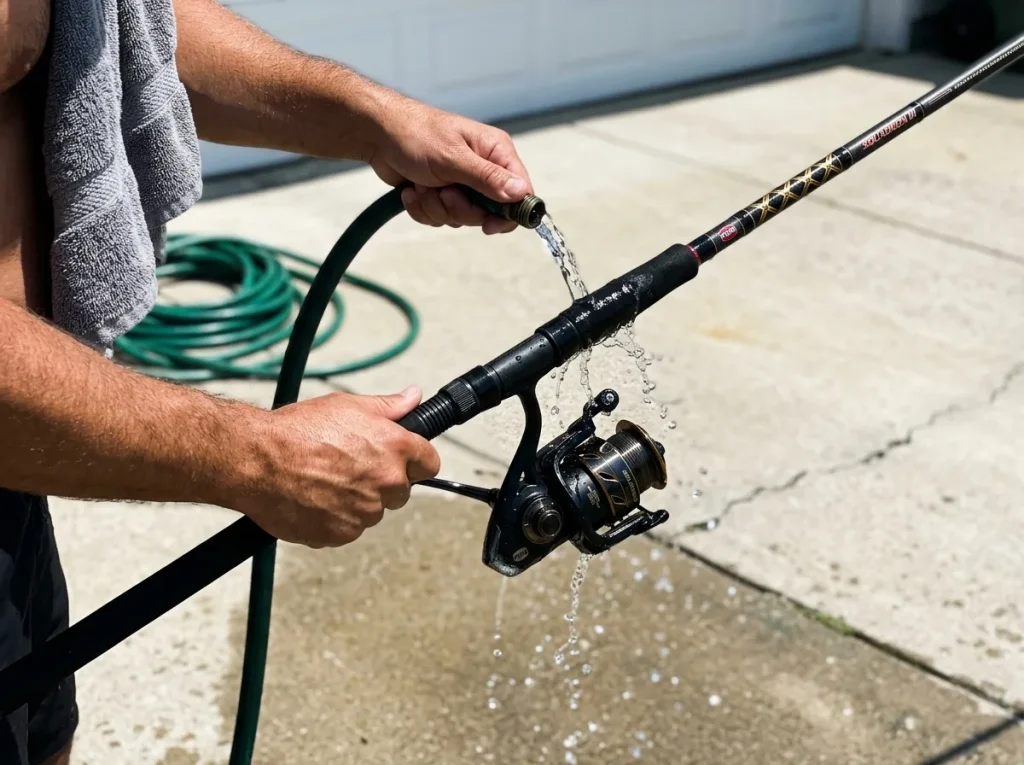
If you fish salt, rinse the guides and reel seat with fresh water after every trip. Leftover salt crystals keep corroding the hardware even after the rod looks dry, and you lose guide and reel-seat life in days, not months. It is the single highest-return habit in rod care. For storage, keep rods vertical in a rack or laid flat, never leaning bent against a wall for months, which puts a permanent set in the blank. Transport is where the real carnage happens: use a rod tube or a ceiling rack, and respect the classic car-door snap, which is probably the most common avoidable break there is.
Do not store a rod with a hook tensioned against a guide. People hook the lure into the nearest ring and crank the line tight, and over time that constant pressure damages the guide insert and puts a memory bend in your line. Use the hook keeper down by the handle instead.
While you are at it, learn to spot trouble early. A hairline crack or a spot of delamination in the blank will let go mid-fight if you miss it, usually on the best fish of the day. Our guide to catching a cracked blank before it snaps shows the tap test and the visual cues that give it away.
The Bottom Line on Buying a Rod
Choosing a rod comes down to three moves. Match type, power, and action to the lure and fish you actually target, and stop buying by length or price alone. Learn to read the label on the blank, and you will never again depend on a salesperson pointing at the priciest option. Start with two versatile rods that cover almost everything, and add a specialty rod only when a real need earns it.
Before you buy anything, go read the label on the rod you already own. There is a good chance it is more capable than you gave it credit for, and that is the cheapest upgrade in fishing.
Frequently Asked Questions
01What is the difference between a spinning rod and a casting rod?
A spinning rod hangs the reel under the blank with the guides facing down; a casting rod sits the reel on top with guides up. Spinning is easier to learn and better for light lures, while casting gives more power and accuracy once you get past the backlash learning curve.
02What length fishing rod should a beginner use?
A rod in the 6 foot 6 inch to 7 foot range with medium power is the most forgiving all-around starting length. Longer casts farther and shorter gives more control, but that middle range covers the widest set of what a new angler does.
03Is graphite or fiberglass better for a beginner?
For a first rod, fiberglass or a composite usually makes more sense. It is more durable and cheaper, and it survives the drops and car doors that come with learning. You trade some sensitivity for a rod that forgives mistakes.
04How many rods do you actually need to start?
Two. A medium-power fast-action spinning rod plus a medium-heavy baitcaster cover the large majority of freshwater situations. Buying one rod per species is the more common and more expensive mistake beginners make.
05What does the code printed on my fishing rod mean?
It is the rod’s spec sheet in shorthand, listing type, power, length, and line and lure range. For example, Spin MH 732 means a spinning, medium-heavy, 7 foot 3 inch two-piece rod. Learn to read it and you can size up any rod on the shelf in seconds.
Risk Disclaimer: Fishing, boating, and all related outdoor activities involve inherent risks that
can lead to injury. The information provided on Master Fishing Mag is for educational and informational purposes
only. While we strive for accuracy, the information, techniques, and advice on gear and safety are not a substitute
for your own best judgment, local knowledge, and adherence to official regulations. Fishing regulations, including
seasons, size limits, and species restrictions, change frequently and vary by location. Always consult the latest
official regulations from your local fish and wildlife agency before heading out. Proper handling of hooks, knives,
and other sharp equipment is essential for safety. Furthermore, be aware of local fish consumption advisories. By
using this website, you agree that you are solely responsible for your own safety and for complying with all
applicable laws. Any reliance you place on our content is strictly at your own risk. Master Fishing Mag and its
authors will not be held liable for any injury, damage, or loss sustained in connection with the use of the
information herein.
Affiliate Disclosure: We are a participant in the Amazon Services LLC Associates Program, an
affiliate advertising program designed to provide a means for us to earn advertising fees by advertising and linking
to Amazon.com. As an Amazon Associate, we earn from qualifying purchases. We also participate in other affiliate
programs and may receive a commission on products purchased through our links, at no extra cost to you. Additional
terms are found in the terms of service.