
In this article
Hand a new angler a high-end setup and a cheap combo, then watch a guide outfish both with the cheap one. It happens on guided trips constantly, and it tells you something the tackle-shop wall never will. Most of what you pay for in budget fishing gear has nothing to do with whether you catch fish.
The hard part isn’t finding cheap stuff, it’s knowing which corners are safe to cut and which ones quietly cost you the best fish of the day. This is the honest spend-versus-save verdict on where cheap gear wins, where it fails, and the combos that punch above their price.
The Budget Fishing Gear Rule — Where to Spend and Where to Save
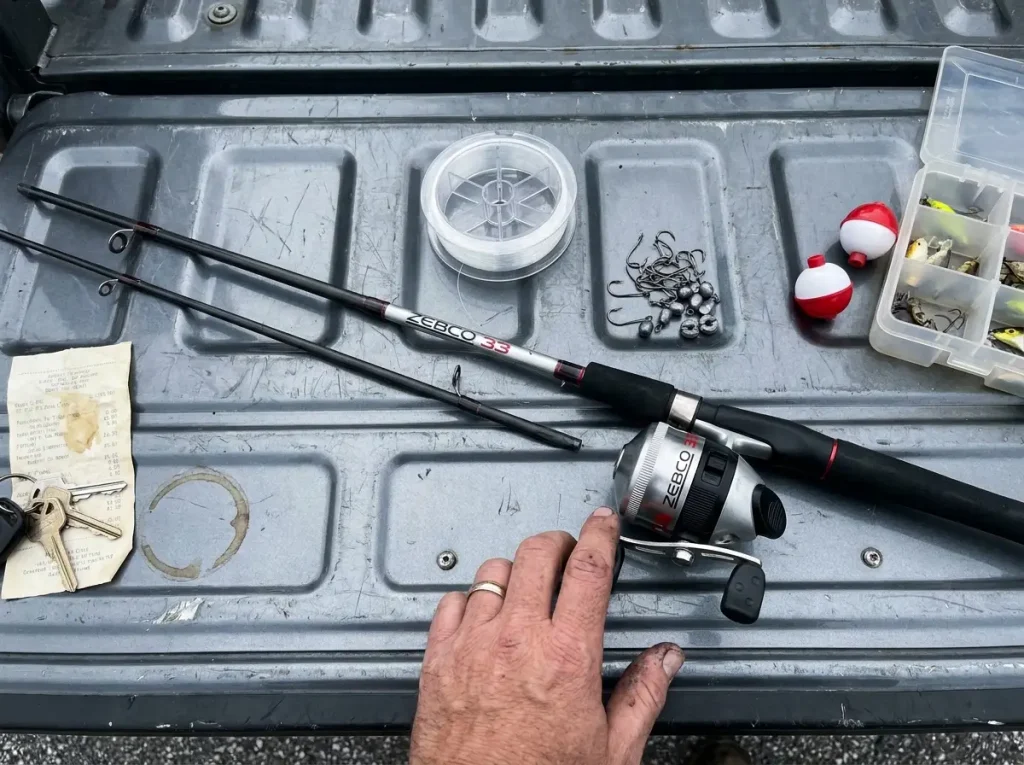
The whole game comes down to one idea. A cheap combo lands the same fish as a setup costing six times more. The extra money buys sensitivity, lighter weight, and longer life, not a higher catch rate. Once you believe that, budget fishing gear stops being a compromise and starts being a strategy.
So where does the money actually matter? Spend it in the few places where cheap fails on the water. That means the reel’s drag smoothness, the quality of your hooks, and a short length of good fluorocarbon leader. If you fish salt, add a corrosion-resistant reel to that list, because that is the one place the math flips hard.
Everywhere else, go cheap and don’t feel bad about it. The rod blank, your lures, your tackle storage, and your monofilament mainline are all fine at the bottom of the price range. A new angler spending more there is buying comfort and bragging rights, not fish. If you want the basic shopping list before you sort spend from save, the full starter-gear checklist covers what actually goes in the bag.
The price reality is friendlier than the forums suggest. A fishable combo costs about what you’d drop on a nice dinner out, and a full beginner kit isn’t much more. The sneaky line item is the license. It is often the single biggest cost of getting started, and it swings widely from one state to the next, so check your state’s resident license fee before you budget.
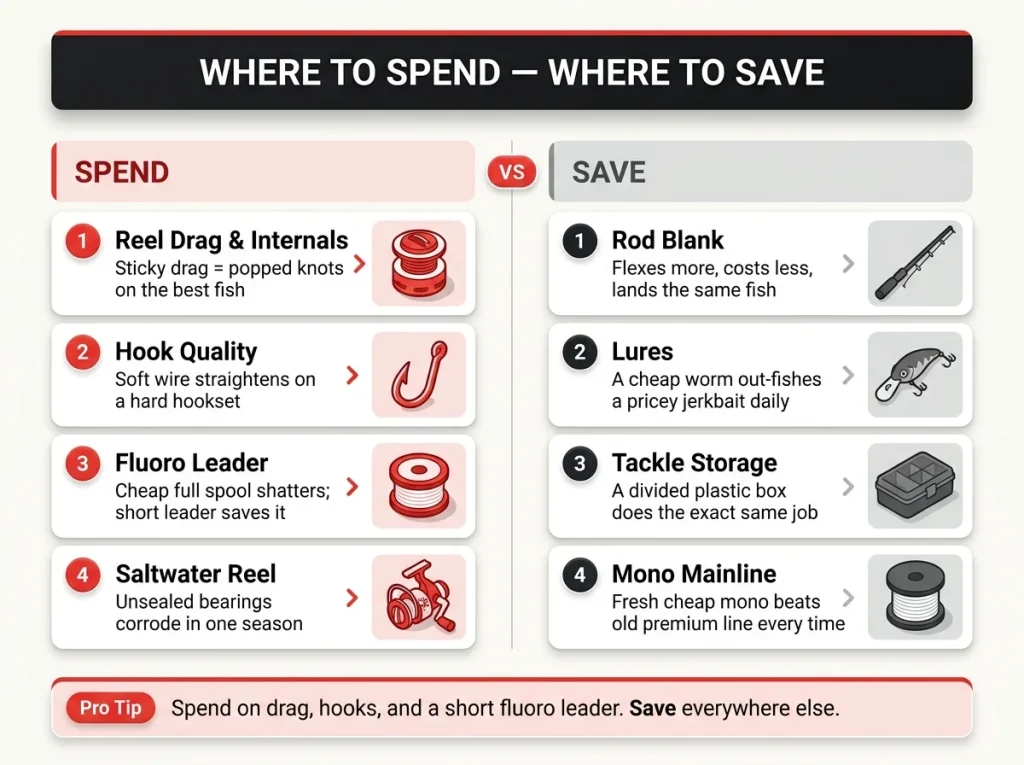
The cheap-versus-premium truth, and what the extra money buys
Pick up a premium rod and you feel the difference instantly. It is lighter, it telegraphs a light bite straight into your hand, and it will outlast three cheap rods. None of that puts more fish in the net for a beginner who is still learning to set the hook. The expensive rod rewards a skill you don’t have yet.
That is the honest framing. You are not buying worse odds when you buy cheap, you are buying fewer luxuries. Spend the gap on a license, gas, and time on the water instead, because hours fishing beat dollars spent every single time.
Where cheap is totally fine
Rods top this list of cheap fishing gear that performs. A budget graphite blank flexes a little more and weighs a little more, but it casts a lure and fights a fish. Storage is next, since a plastic box with dividers does the same job at any price. And your mainline mono is genuinely fine cheap, because fresh budget line outperforms old premium line every time.
Where going cheap quietly costs you fish
The failures cluster in small, boring parts. A sticky reel drag, a soft hook that straightens, a cheap full spool of fluoro that breaks at the worst moment. These are the places a few extra dollars protect the fish of the day, and the rest of this guide walks through each one.
Reading a Cheap Reel Like a Guide — The Specs That Matter
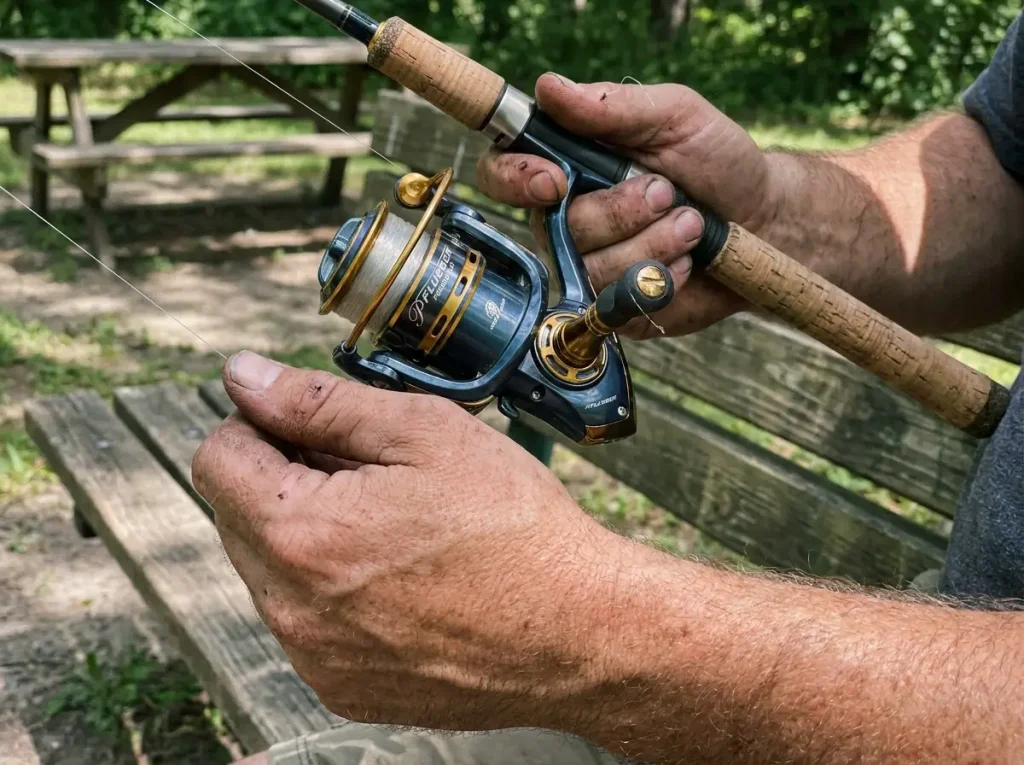
Two reels on the rack look identical and cost wildly different amounts. The difference lives in three things, and none of them is the bearing number printed on the box. Learn to read these and you can pull the one good reel out of a wall of mediocre ones. Before you even get to specs, which reel type fits how you plan to fish narrows the rack down fast.
The first and most important is the drag. A sealed drag blocks the grit that turns a smooth pull into a jerky one, while an open stack lets sand and dust work their way in.
Felt washers pay out smoothly for smaller species, and a carbon-fiber drag or ceramic washers shrug off the heat of a long run from a big fish. Budget brands like KastKing have closed much of this gap, but you still have to feel the smooth drag and even drag pressure for yourself. When a reel gives line in stutters instead of a steady hiss, that is sticky drag, and it is the number one reason cheap reels lose the best fish.
Next come the ball bearings, where the marketing gets loudest and matters least. A reel screaming about twelve bearings on a budget price tag is selling you a number. Bearing quality beats bearing count every time, and four good ones outperform a dozen rough ones. Don’t let the sticker decide for you.
Last is gear ratio, which sounds technical but is simple. A 5.2:1 ratio is the right do-everything speed for a beginner, fast enough to pick up slack and slow enough to crank with power. The 6.2:1 burner ratios are built for specific techniques you won’t reach for yet, so skip the upsell.
There is one hard exception to all of this, and it is water. A budget reel in saltwater is a ticking time bomb, because corrosion eats unsealed drags and bearings inside a single season.
Set and feel the drag before you ever cast. Pull line straight off the spool by hand and watch how it comes. A good drag hisses out steady; a cheap one jerks and stutters. That stutter is exactly what pops a big fish off, so test it in the parking lot, not on the fish of the year.
When you do decide to spend up on a reel, the Pflueger President is the reference point for what smooth should feel like. The Pflueger President XT Spinning Combo pairs that reel with a matched rod, and the reel feels sealed and refined in a way budget models don’t. It is the first reel most anglers buy that they actually want to keep. If you already have a rod you like, the Pflueger President reel on its own drops onto almost any budget blank and instantly upgrades how the whole setup behaves under a fighting fish.
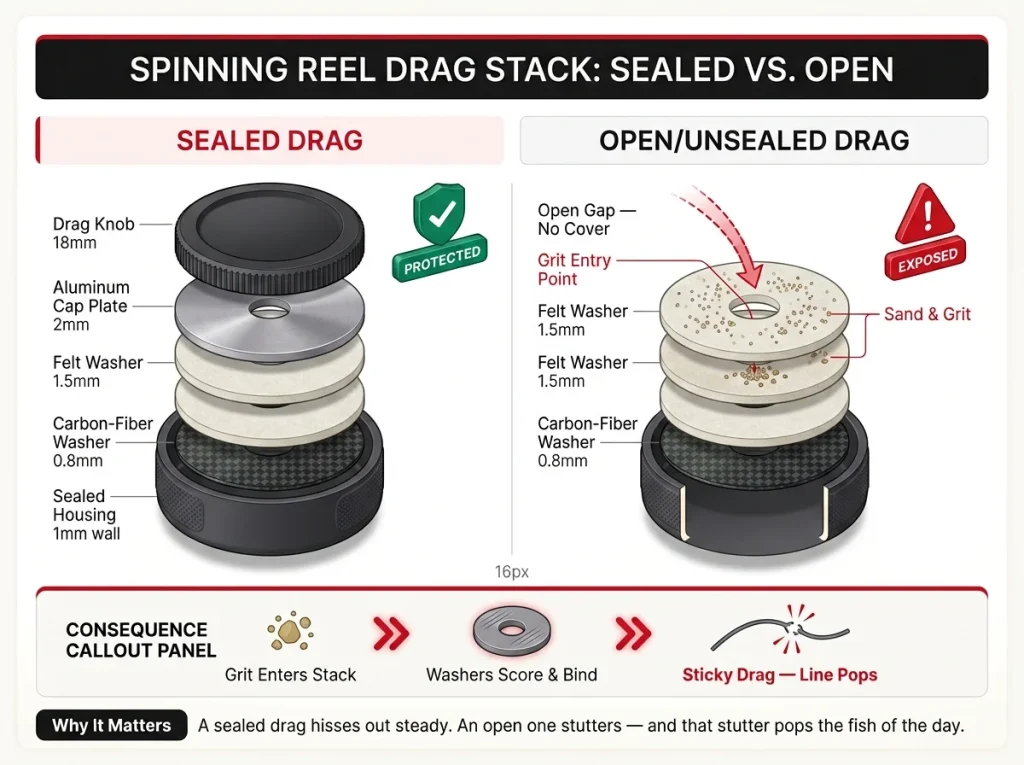
Drag, sealed vs open, and why sticky loses the big one
Think of the drag as the reel’s shock absorber. A big fish surges, the drag slips line to keep the knot from snapping, and a smooth slip keeps steady pressure the whole way. A sticky drag releases in lurches, and every lurch is a moment of slack or a spike of pressure that the hook hole can’t survive.
Bearings, and why count is a marketing number
Bearings reduce friction so the reel turns smoothly. More cheap bearings just stack up more rough spots. A reel with four well-machined bearings spins cleaner than one crammed with a dozen budget ones, so feel the handle instead of reading the box.
Gear ratio, why 5.2:1 is all a beginner needs
Gear ratio is how much line the spool gathers per handle turn. The 5.2:1 standard covers almost everything a beginner throws, from a slow worm crawl to a steady spinnerbait. Chase a faster ratio later, when a specific technique actually asks for it.
Cheap Line, Hooks and Terminal Tackle — What’s Fine and What’s a False Economy
This is the aisle where beginners burn money in exactly the wrong spot. They spool a whole reel with premium fluorocarbon, then skimp on the hooks that bend on the first solid hookset. The smart split is the opposite of what the packaging pushes. Sorting which line type a beginner should actually start on saves you the most common opening mistake.
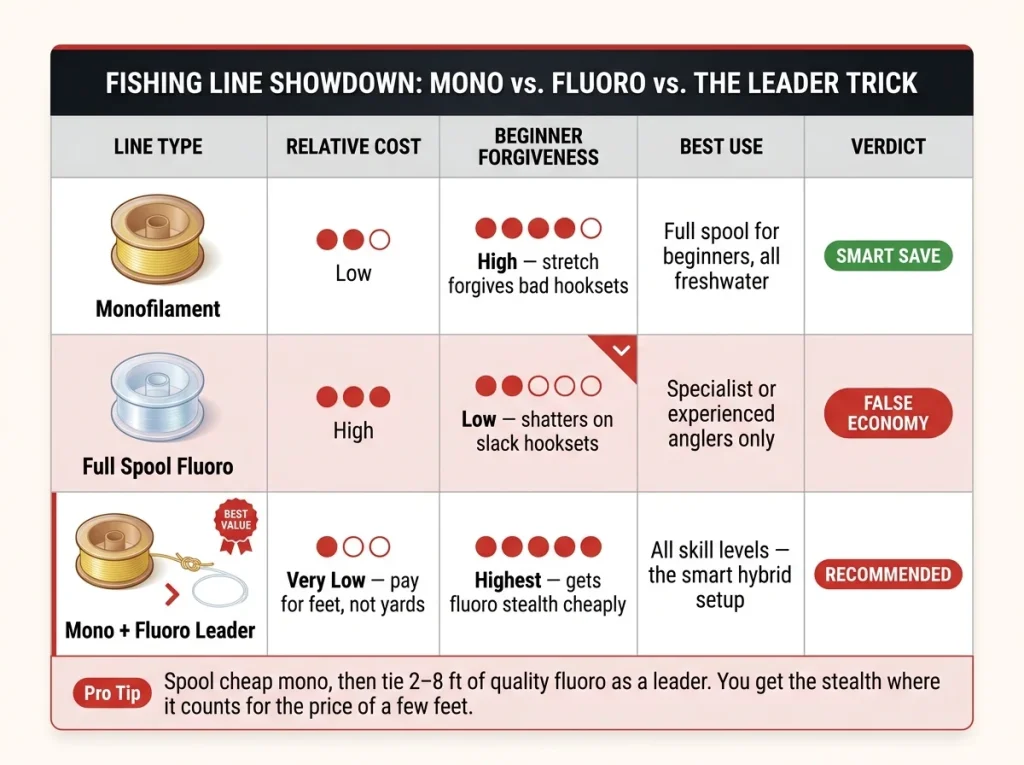
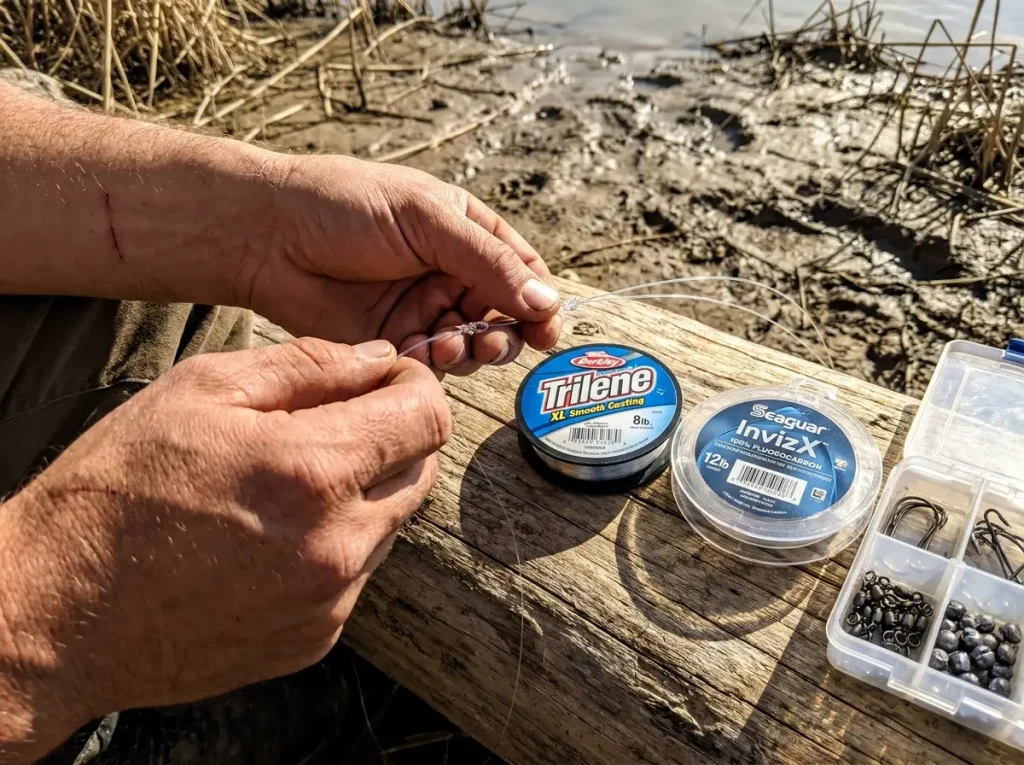
Cheap monofilament is genuinely fine, and for a beginner it is better than fine. Its stretch is forgiving, swallowing the over-eager hooksets and lunging runs that snap stiffer line. It costs a fraction of fluoro, and fresh cheap mono beats tired expensive line on any day. A spool of Berkley Trilene XL monofilament in 8 lb test is the honest save here, low memory and forgiving on the cast.
Full-spool fluorocarbon is the classic money burn. It runs many times the price of mono, and it punishes beginner habits hard. Cheap fluoro shatters on a slack-line hookset, and it fails outright if you cinch a knot dry instead of wetting it first. That brittleness at the worst possible moment is the textbook false economy.
The fix is the move experienced anglers quietly use. Spool cheap mono or braided line, then tie on a short two-to-eight-foot leader of quality fluoro like Seaguar InvizX. You get the invisibility down where the fish actually looks, and you pay for a few feet instead of two hundred yards.
Before you blame your combo for bad casting or constant tangles, change your line. Nine times out of ten the line was the problem, not the rod or reel. A few dollars of fresh mono fixes what beginners try to fix by replacing the whole setup.
On hooks and terminal tackle, split price from quality. Don’t go cheap on hook quality, because a soft wire hook straightens under a hard hookset and the fish swims off. You can absolutely go cheap on price, though.
An assorted kit like the AGOOL 223-piece tackle kit covers hooks, split shot, swivels, and bobbers for very little, and it gets a beginner rigged for nearly any situation. Just pull a hook and flex it against the table first to make sure it holds its shape.
Mono vs fluoro, where the price gap is and isn’t worth it
Mono floats, stretches, and forgives. Fluoro sinks, resists abrasion, and nearly disappears underwater. For a full spool, the forgiving mono wins for beginners. The fluoro advantage only earns its price in the last few feet near the hook.
The mono-mainline plus fluoro-leader trick
Tie a uni-to-uni or a double-uni knot to join your cheap mainline to a short fluoro leader. It takes two minutes and a phone video to learn. After that you get fluoro’s stealth for the cost of a few feet, which is the best value move in the whole tackle bag.
Hooks, weights and bobbers, cheap price but not cheap hooks
Weights and bobbers are dumb metal and foam, so buy them as cheap as you can find. Hooks are the exception, where the wire has to be hard enough to hold its bend. Test a hook before you trust it, and replace any that flex too easily.
Budget Combos That Actually Work, by Fishing Situation
Here is the clearance-rack secret. The cheap combo and the mid-price combo on the same shelf often share the same rod blank and differ only in the reel internals.
So you don’t buy by price tag, you match the combo to how you’ll actually fish. For most freshwater a graphite blank with medium action handles largemouth bass and walleye, a fast action helps drive hooks on a long cast, and an ultralight is the specialist for bluegill and crappie. Seeing how the whole first setup fits together makes choosing fishing gear for beginners obvious, and reading what the blank, guides and action actually do lets you judge a rod with your hands instead of the sticker.
All-around bass and panfish, the do-everything spinning combo
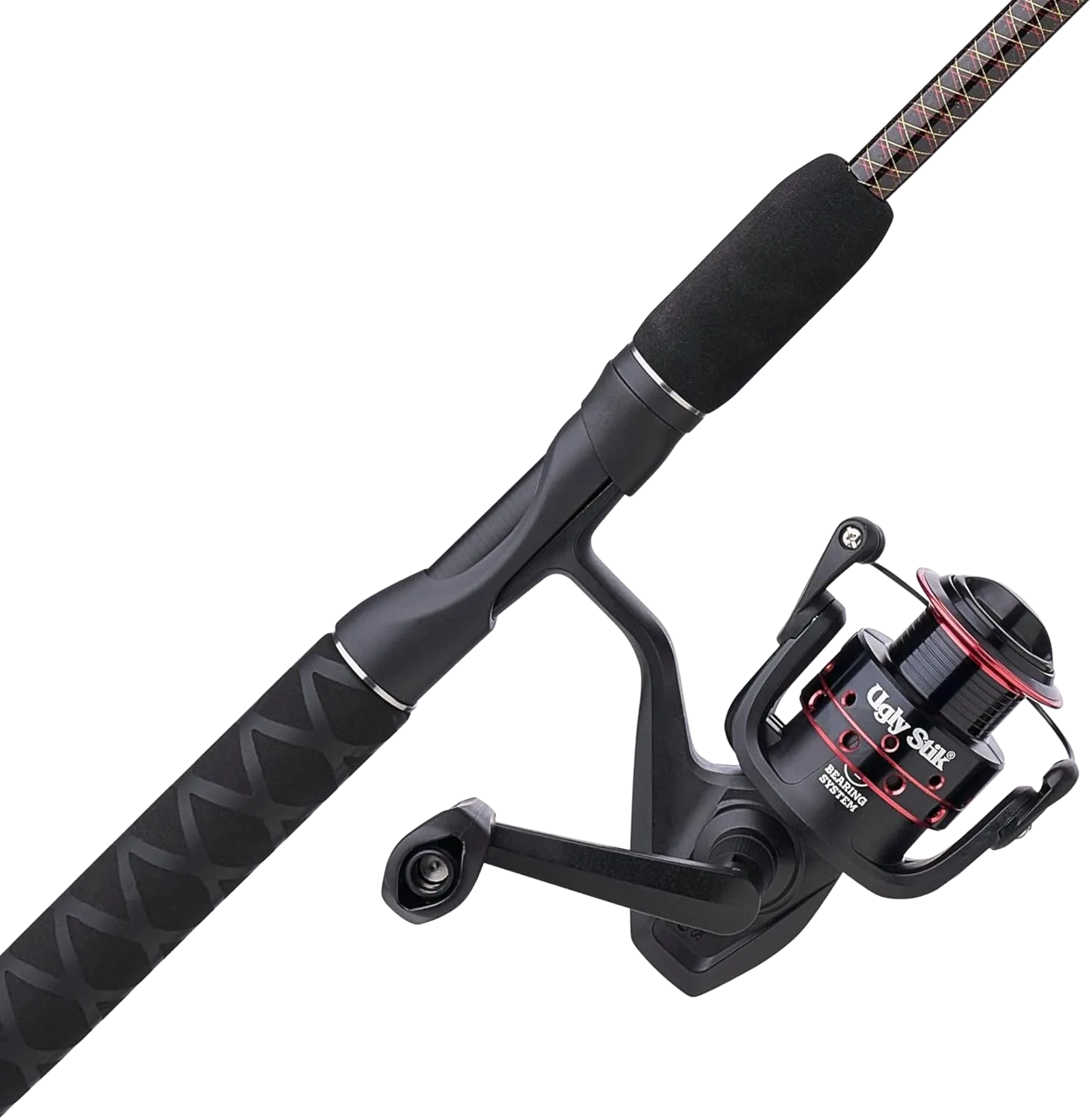
If you buy one combo to learn on, make it the Shakespeare Ugly Stik GX2. Its medium-light rod power and forgiving rod action handle bass, panfish, and stocked trout without feeling like a broomstick, and the blank takes car-door slams and tackle-box abuse that would crack a fussier rod. It arrives pre-spooled, so you skip two of the things beginners get wrong out of the gate.
Kids, ponds and absolute beginners, spincast simplicity
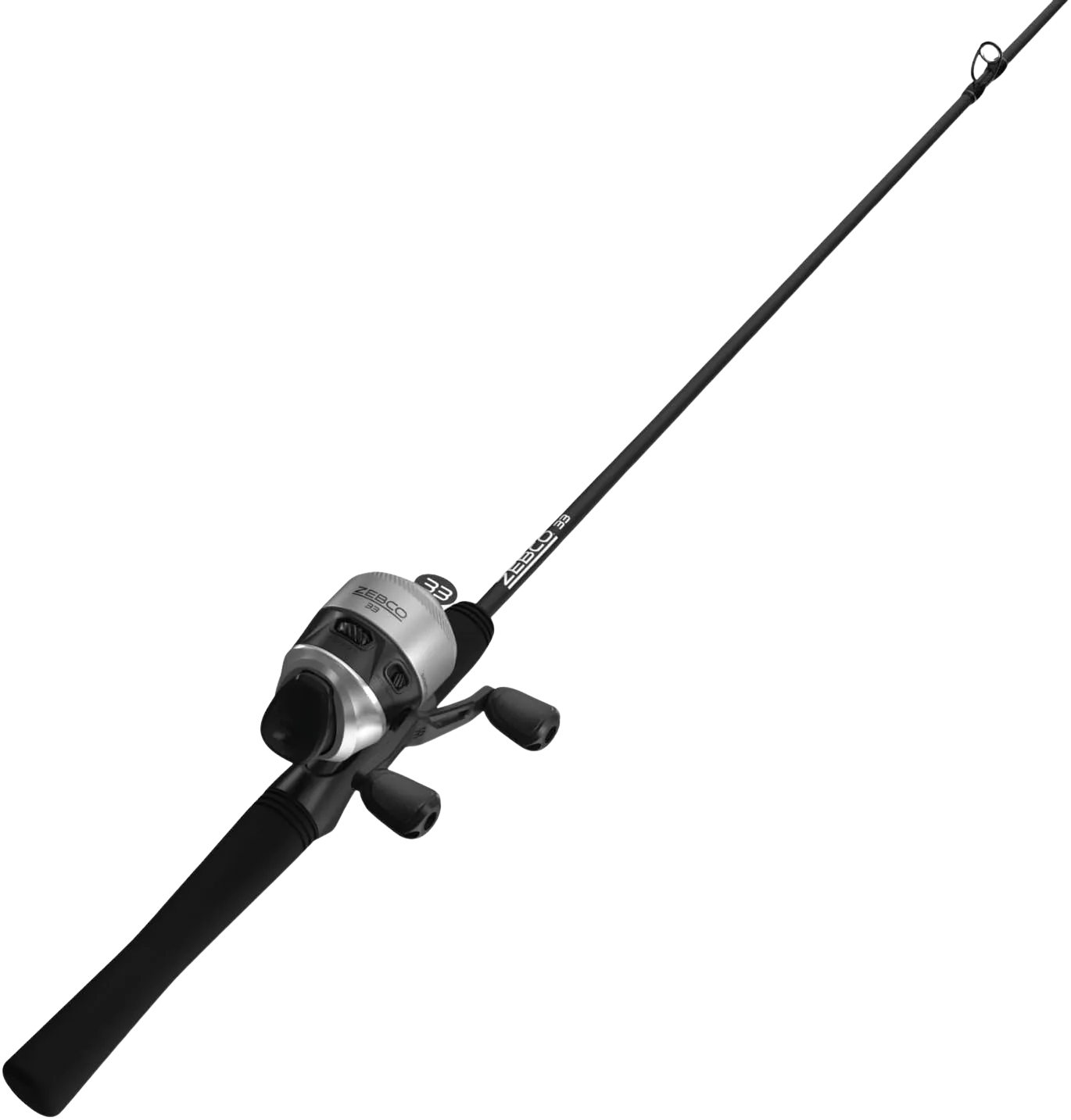
For a young kid, a nervous first-timer, or a grab-and-go pond rod, the Zebco 33 spincast combo is hard to beat. The spincast design hides the line under a cover and casts with a thumb button, which means no wind knots and no tears. It will not win a casting-distance contest, but it gets a bobber out and a fish in, which is the whole point on day one.
Buy a pre-spooled combo for your first rod. It quietly solves the two things beginners get wrong on their own, matching reel size to the rod and spooling line at the right tension. You skip both headaches and start the day actually fishing.
Your first baitcaster, and why not yet is the honest answer
Every beginner eventually eyes a baitcaster or a flashy baitcasting combo, and the honest advice is to wait. Baitcasters backlash into a bird’s nest until your thumb learns the feel, and that learning curve frustrates people off the water entirely. Start on spinning gear, get confident, then graduate. When you do make the jump, look for adjustable magnetic braking, because that is the feature that forgives the thumb mistakes every new baitcaster user makes.
Cheap Lures That Catch as Well as Expensive Ones
Lures are the clearest win in all of budget gear. A cheap bait catches the same fish as one costing three or four times as much, and the wall of pricey hard baits at the shop is mostly there to catch anglers, not bass. Two cheap baits cover most freshwater situations a beginner will meet.
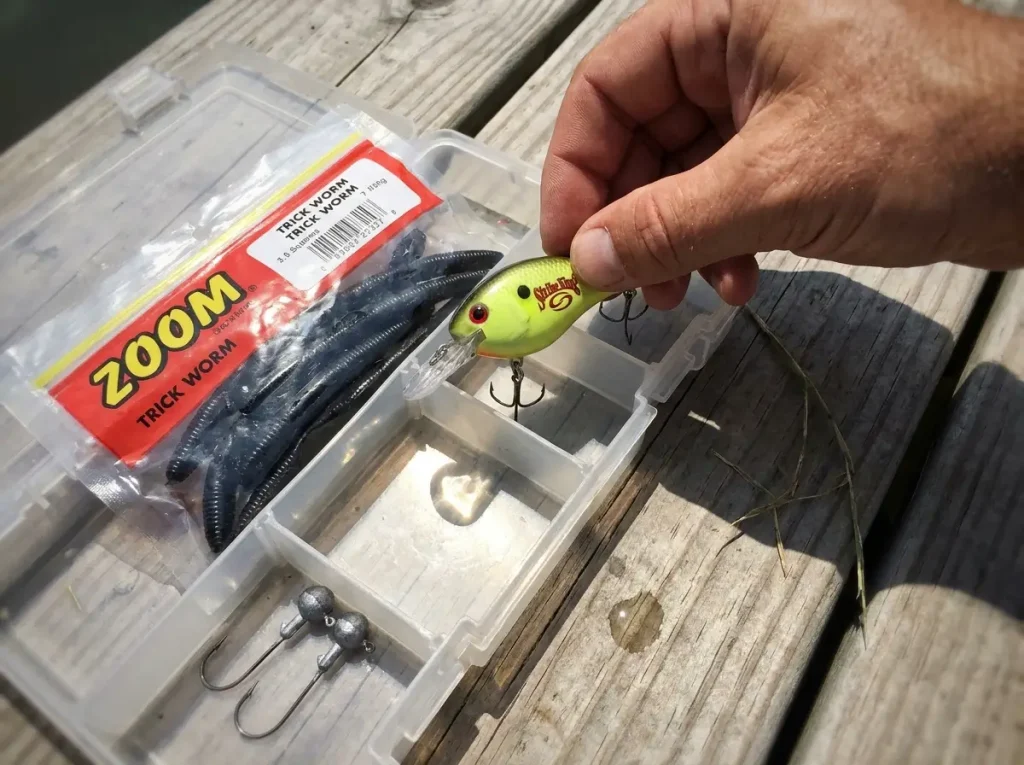
The first is a squarebill crankbait. The Strike King KVD 1.5 squarebill bumps and deflects off cover, triggering reaction strikes, and it has put more bass in boats than baits costing three times as much. The second is a finesse soft plastic. A bag of Zoom Trick Worms rigged weightless or on a light jighead out-fishes most of the expensive stuff, and it does it for pocket change.
There is a second reason cheap lures win, and it is snags. You will lose lures to trees, rocks, and submerged wood, that is just fishing. Losing a cheap worm barely registers, while watching a premium jerkbait stay stuck in a laydown ruins an afternoon. If you fish where lures hang up, knowing what to do when a lure hangs up and you can’t get it back saves both baits and patience.
The real mistake here isn’t buying cheap, it is buying too much. Beginners stockpile a tackle box of lures before they own pliers or a license, then fish three of them all season. A small, focused spread you actually throw beats a big expensive collection sitting unused. Confidence in the bait on your line catches more than the price on its package.
The two budget baits that cover most freshwater
A squarebill for covering water and a soft-plastic worm for slowing down will handle the large majority of beginner days. Add a jighead and a couple of colors and you are set. Everything past that is refinement, not necessity.
Why losing cheap lures barely hurts
Snags are a cost of doing business near cover, and cover is where the fish live. Cheap baits let you fish that cover aggressively without flinching. That willingness to throw into the gnarly stuff is what actually puts fish in the net.
Confidence over price tag
The bait you trust gets fished well, with attention and good presentation. The expensive one you are scared to lose gets babied and produces nothing. Confidence is free, and it out-fishes a premium price tag every time.
Beginner Money Traps and How to Stretch a Tight Budget

Most early gear problems are really money problems, and the best fixes cost nothing. Four traps catch nearly everyone. Buying gear before a fishing license, over-buying lures, replacing a whole combo when only the line failed, and chasing electronics you don’t need from a bank or a kayak.
Avoid those four and your budget stretches twice as far. A clear sense of how much gear you actually need to start keeps the over-buying trap shut.
You can also test the entire hobby before spending a dime. Most states set aside a few license-free fishing days each year, and some agencies go further and run tackle loaner programs that lend you a rod and reel for free. Borrow gear, fish a free day, and find out whether you love it before you buy anything at all.
Shop the off-season. The same combos sit on clearance racks in late fall and winter when nobody else is buying, and that is when the cheap combo and the mid-price one land closest together. Buy your gear when the fish aren’t biting and you’ll pay the least for it.
When it comes to organizing all of it, storage is another safe place to go cheap. A Plano 3600 StowAway tackle box with adjustable dividers holds everything a beginner owns and costs almost nothing. There is no performance reason to spend more on a box. Pair cheap storage with bank fishing and inexpensive live bait like nightcrawlers, and your cost per trip drops close to zero while you learn to read water.
The four money traps beginners fall into
Watch for the license skipped, the lures over-bought, the combo blamed for a line problem, and the fish finder bought for a bank you can walk. Each one wastes money that buys nothing. Name them and you’ll feel yourself reaching for the wallet at the wrong moment.
Fish for free first, with license-free days and loaner gear
Free fishing days let you legally skip the license for a weekend, and loaner programs hand you a working setup at no cost. Together they let you sample the hobby for nothing. It is the lowest-risk way to find out if fishing sticks for you.
Stretch every dollar with clearance timing, cheap storage and bank fishing
Time your buys to the off-season, keep your tackle in a cheap divided box, and fish from the bank with simple bait while you learn. None of that costs much, and all of it puts you on the water more often. More trips, not more gear, is what turns a beginner into an angler.
Conclusion
Budget fishing gear isn’t about being cheap, it is about being precise. Spend on the handful of things that actually lose fish when they fail, the drag, the hooks, a short fluoro leader, and a sealed reel if you fish salt. Save everywhere else, because a humble combo and good habits out-fish expensive gear used poorly.
The fastest way to prove it to yourself costs nothing. Borrow or buy one simple combo, spool fresh mono, and go read water on a free fishing day before you spend another dollar. The fish don’t know what your gear cost, and after a season neither will you.
Frequently Asked Questions
01Is a cheap fishing rod and reel combo any good?
Yes, for freshwater. A budget combo lands the same fish as a setup costing far more, since the extra money buys sensitivity and weight, not catch rate. A pre-spooled combo like the Ugly Stik GX2 is all most beginners ever need.
02Should you spend more on the rod or the reel?
Spend more on the reel. The drag and internals are where cheap parts fail and lose fish, while a budget rod blank casts and fights just fine. Put your dollars into a smooth, sealed-feeling drag first.
03How much does it cost to get started fishing on a budget?
About the price of a nice dinner out for a basic combo and tackle. The bigger variable is a resident license, which swings widely by state and is often the biggest single cost of starting.
04Where should you not go cheap on fishing gear?
Drag smoothness, hook quality, and a short fluorocarbon leader. Add a corrosion-resistant reel if you fish saltwater. These few parts are where cutting corners quietly costs you the best fish of the day.
05Is expensive fishing line worth it for beginners?
Not as a full spool. Cheap monofilament is forgiving and ideal for learning, while premium fluorocarbon is best used only as a short leader. Spool cheap mono and tie on a few feet of quality fluoro near the hook.
Risk Disclaimer: Fishing, boating, and all related outdoor activities involve inherent risks that
can lead to injury. The information provided on Master Fishing Mag is for educational and informational purposes
only. While we strive for accuracy, the information, techniques, and advice on gear and safety are not a substitute
for your own best judgment, local knowledge, and adherence to official regulations. Fishing regulations, including
seasons, size limits, and species restrictions, change frequently and vary by location. Always consult the latest
official regulations from your local fish and wildlife agency before heading out. Proper handling of hooks, knives,
and other sharp equipment is essential for safety. Furthermore, be aware of local fish consumption advisories. By
using this website, you agree that you are solely responsible for your own safety and for complying with all
applicable laws. Any reliance you place on our content is strictly at your own risk. Master Fishing Mag and its
authors will not be held liable for any injury, damage, or loss sustained in connection with the use of the
information herein.
Affiliate Disclosure: We are a participant in the Amazon Services LLC Associates Program, an
affiliate advertising program designed to provide a means for us to earn advertising fees by advertising and linking
to Amazon.com. As an Amazon Associate, we earn from qualifying purchases. We also participate in other affiliate
programs and may receive a commission on products purchased through our links, at no extra cost to you. Additional
terms are found in the terms of service.