
In this article
Walk into any tackle shop and the line aisle will try to sell you the most expensive spool on the wall. Most beginners reach for braid because it casts far and it’s what the pros throw, then spend their first trip picking knots out of the reel instead of catching fish. The boring answer you’ll hear at any boat ramp is the right one: for your first setup, the best fishing line is monofilament, and it isn’t close. This guide covers what mono, fluorocarbon, and braid actually do, why mono wins as one piece of your first starter kit, and the exact pound test to spool before your first cast.
Meet the Three Fishing Lines on the Shelf
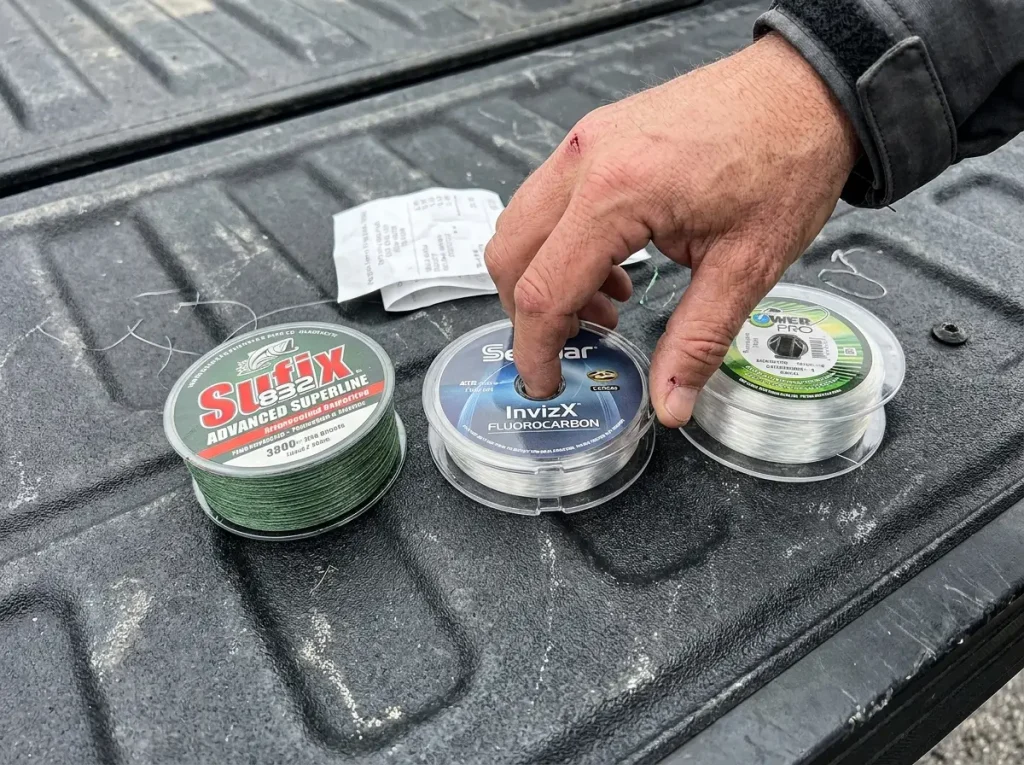
You’re standing in the line aisle staring at three walls of spools that all promise more fish. Before any recommendation makes sense, here’s what each one actually is, in the time it takes to read a spool label.
Monofilament — the stretchy, cheap one
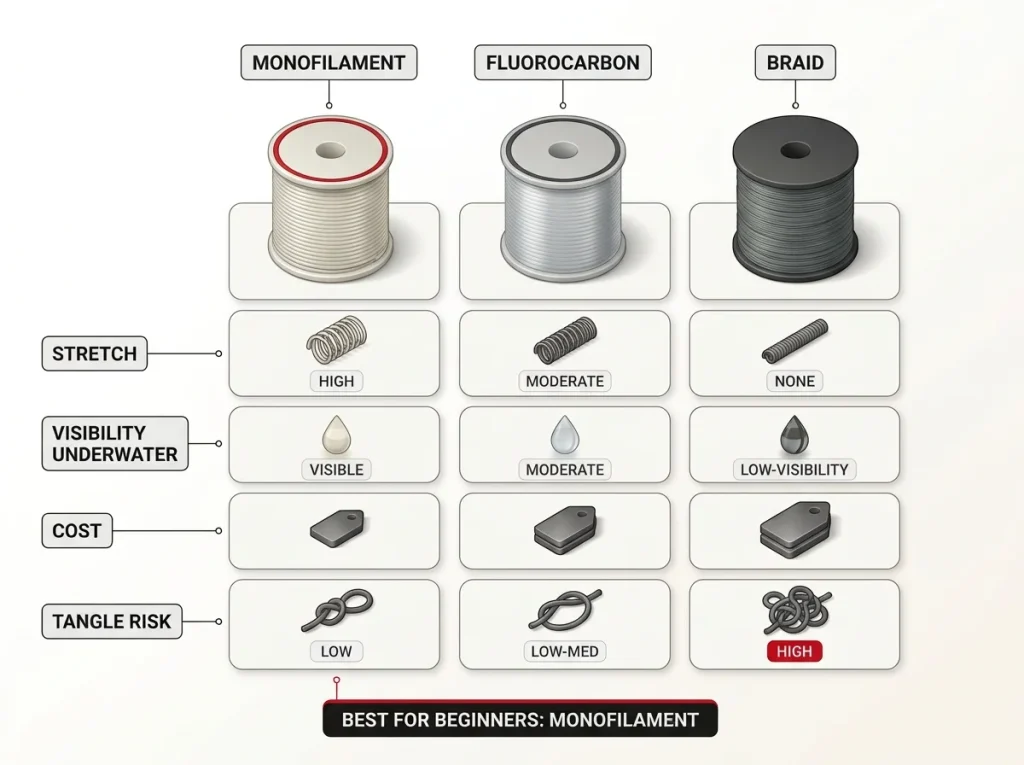
Monofilament is a single strand of nylon. The thing that matters most for a beginner is that it stretches 15 to 30 percent before it breaks, which makes it a built-in shock absorber. It’s also the cheapest line on the shelf and the easiest to tie. That combination is why it has been the default starter line for generations.
Fluorocarbon — the invisible, stiff one
Fluorocarbon is also a single strand, but it bends light almost the same way water does, so it nearly disappears underwater. It sinks faster than mono, it’s stiffer, and it’s the priciest of the three. Those traits make it excellent for one specific job and frustrating for another, which we’ll get to.
Braid — the no-stretch, no-mercy one
Braided line is several strands of polyethylene fiber woven together. It has almost zero stretch, a thin slick diameter, and incredible strength for its size. Anglers love it for sensitivity and casting distance. On a beginner’s reel, that same slick limpness is exactly what turns into a tangle, and we’ll cover why in detail.
The honest version of this whole article lives in the difference between those three on four things a beginner cares about: stretch, visibility, cost, and how easily the line tangles. If you want the full side-by-side later, the deeper head-to-head on braid, fluoro, and mono walks through every spec. For now, watching all three in hand makes the limpness-versus-stiffness difference click faster than any paragraph can.
Why Monofilament Is the Beginner’s Line
The boring answer is the right one. Mono forgives the exact mistakes a beginner makes, and its so-called flaws are quietly some of its best features.
Stretch is forgiveness (the shock-absorber effect)
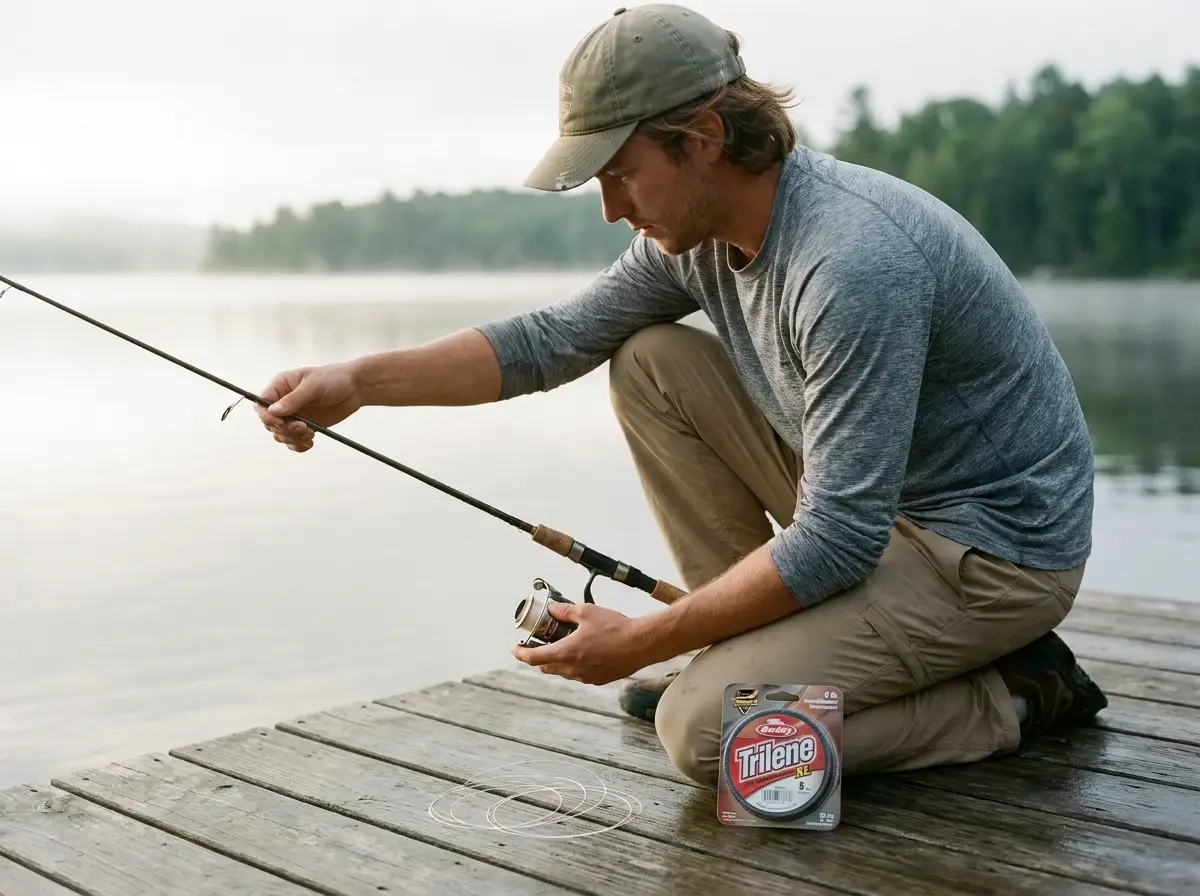
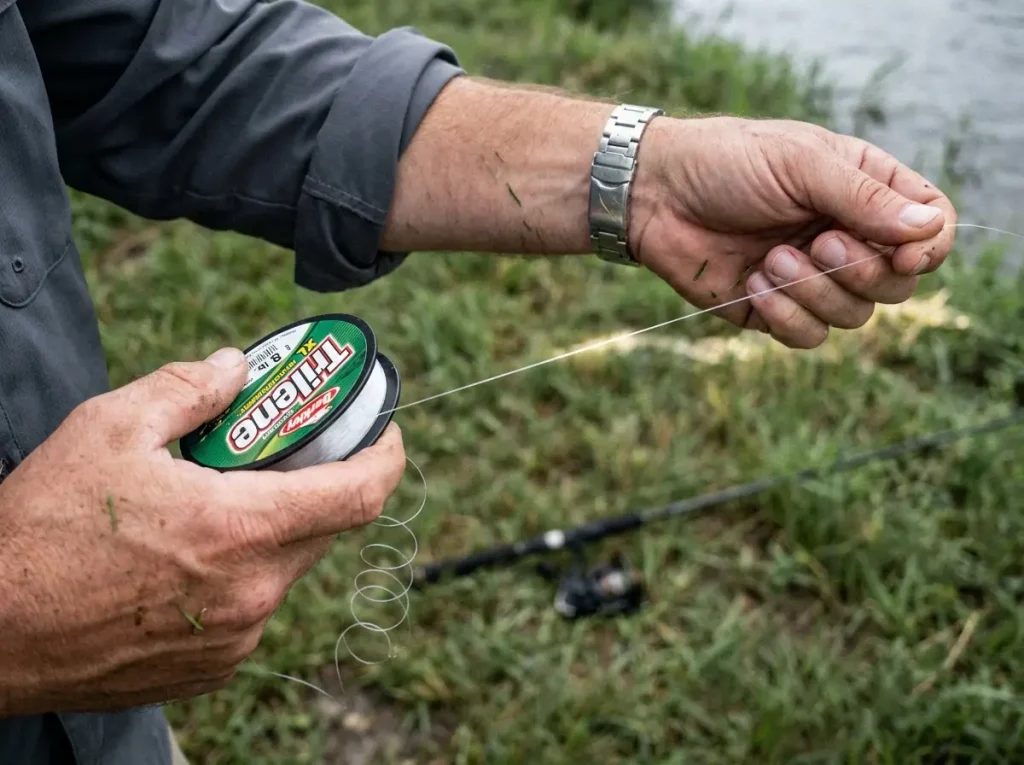
That 15 to 30 percent stretch is doing real work. When a fish headshakes right at the boat, the line gives instead of snapping, so you lose fewer fish to a rough hookset or a drag you set too tight. Braid, with its zero stretch, punishes every one of those mistakes by popping off or pulling the hook. New anglers don’t need a more sensitive line. They need one that covers for them while their timing catches up, and mono does that better than anything. The Berkley Trilene XL in 8 pound is the classic pick here: low memory for a mono, smooth casting, and knot strength that holds.
The cheapest line is also a consumable
A 330 yard spool of mono costs less than a single crankbait. That price tag matters more than it looks, because mono is a consumable. It develops line memory, the coils that set into the line from sitting on the spool, and it breaks down faster than the other two under UV light. Old mono comes off in springs and casts badly. The good news is that re-spooling costs almost nothing, so a beginner can keep fresh line on the reel without a second thought. If you want a schedule, here’s how often mono actually needs swapping out. And when you do cut it off, the old coils aren’t trash. National conservation groups run monofilament recycling bins at boat ramps and marinas so that lost line doesn’t end up wrapped around wildlife.
Before your first cast with fresh mono, pull a long length off the reel by hand and stretch it between your fingers. That knocks the memory coils flat so the line lies down instead of springing off the spool in corkscrews. Veteran anglers do it without thinking; beginners almost never get told to.
Knots that hold without the fuss
Mono ties clean. A basic improved clinch or Palomar knot grabs and holds, no leader, no FG knot, none of the slick-line tricks braid demands. On day one you want your knot to be the last thing you worry about, and straight mono delivers that. The national beginner-fishing nonprofit Take Me Fishing also points new anglers to monofilament first for the same reasons. Once your reel is loaded, the only thing left is spooling that fresh mono onto your reel the right way.
Fluorocarbon — What It’s Actually For
Someone will tell you fluoro is invisible, so you’ll catch more. That’s true enough, and also the wrong reason to spool it as your only line. Here’s where it actually earns its keep.
Why fluoro disappears underwater
Fluorocarbon has a refractive index close to water, so light passes through it instead of bouncing off. To a fish, it nearly vanishes. It also sinks, which keeps your bait down and your line out of sight. For clear water and spooky, line-shy fish, that invisibility is a genuine edge.
Why it fights you as a main line
The problem is everything else. Fluoro is stiffer than mono, so on a light beginner spinning reel it holds coils, jumps off the spool, and casts poorly. It also costs the most of the three. Spooling a whole reel with it because it’s “invisible” is one of the most common beginner mistakes, and it trades a small stealth gain for a lot of casting headaches.
The clear-water leader job it’s built for
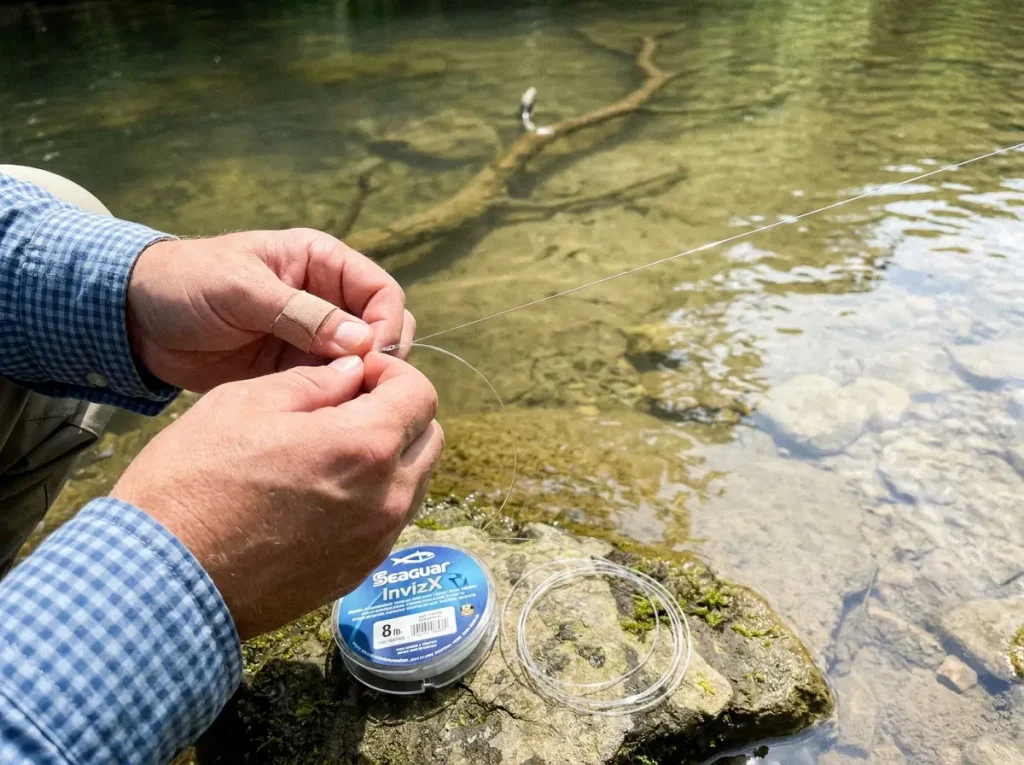
Where fluoro shines for a beginner is as a short leader, a length of clearer, tougher line tied to the end of your main line for clear water or finicky fish. That’s a later upgrade, not a day-one need. When you get there, the Seaguar InvizX is a quality 8 pound fluoro, and the Berkley Vanish does the same job for less. If you want the full rundown on where each line fits, the complete fishing line guide lays it all out.
Braid — Why It Backlashes on You
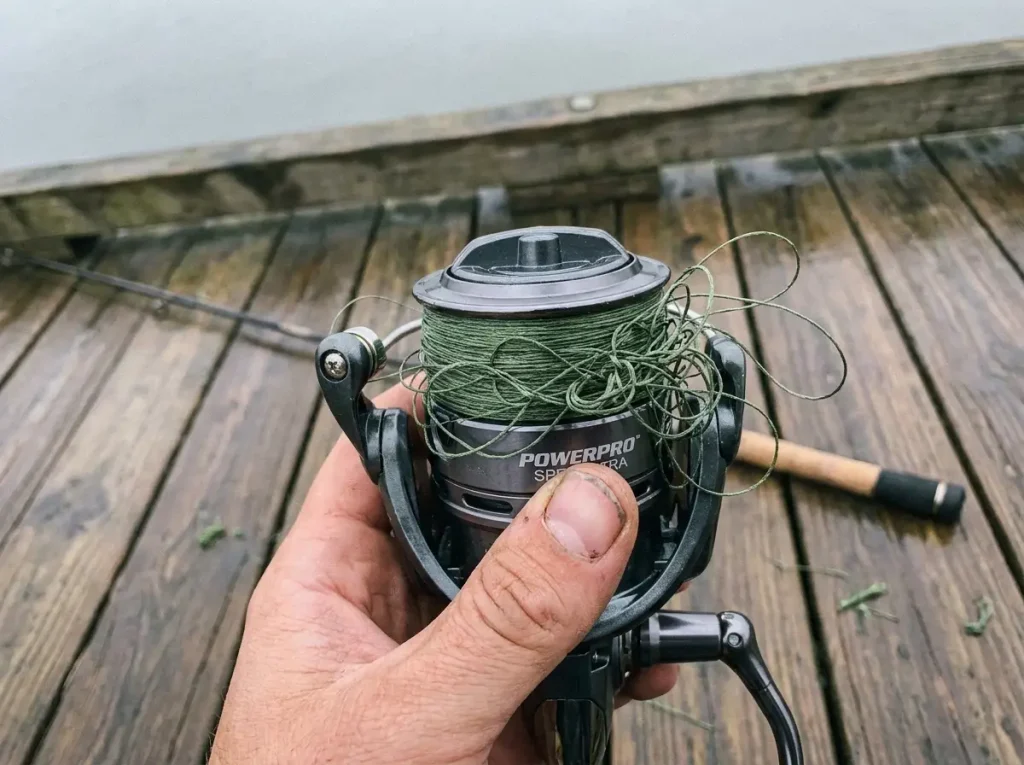
Braid isn’t bad line. It’s the wrong first line. The reason is mechanical, and once you see it, the “save it for later” advice finally makes sense.
What a bird’s nest actually is
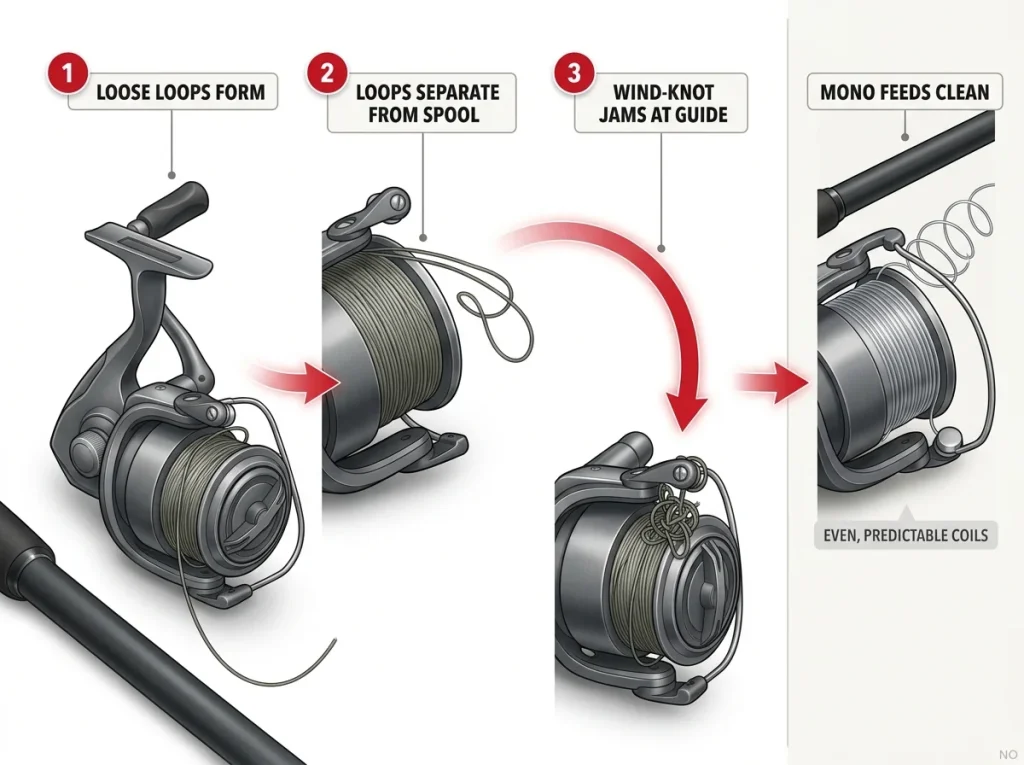
A backlash, or bird’s nest, happens when the spool feeds line faster than the line actually leaves the reel. The slack folds back on itself into a snarl of loops. On a baitcaster it’s the spool overrunning. On a spinning reel, limp loops can still fall off the stationary spool and wind-knot on the next cast. Either way, you’re standing there picking at a tangle while the bite window closes.
Why slick limp braid tangles (and mono doesn’t)
This is the part nobody explains. Braid’s thin, slick, limp diameter digs into the spool and sheds loose loops that catch and knot. Mono’s stiffness and slight memory make it spring off the spool in controlled coils that feed predictably and clear easily when something does go wrong. Here’s the reframe that ties the whole topic together: spinning reels rarely backlash in the first place, because the spool is stationary and the line peels off the lip past the bail. That’s exactly why a spinning reel is the beginner-friendly choice. So the reel already solved most of your tangle problem. The one variable left is the line you put on it, and limp braid is the worst offender. The same logic is why tangle-free combos built to dodge this exact headache lean on simple spincast and mono setups for kids.
When braid finally earns a spot on your reel
Braid has a real home, just not on a beginner’s first reel. In heavy cover and thick vegetation, that zero stretch rips fish up and out of the salad before they bury you. It also holds knots poorly because it’s so slick, so braid usually needs a leader knot tied on, which is more complexity than a first trip should carry. When you do graduate to it, the PowerPro Spectra is a mainstream workhorse, and the Sufix 832 is just as good. Save it for the day a specific situation asks for it.
The story that comes up over and over in fishing forums is the same one: a new angler upgrades to braid, casts once, and spends 20 minutes clearing a bird’s nest while everyone else is catching fish. The line wasn’t the problem. The choice was. Get a season of casting under your belt on mono first, and braid will treat you a lot better when you switch.
What Pound Test to Actually Start With
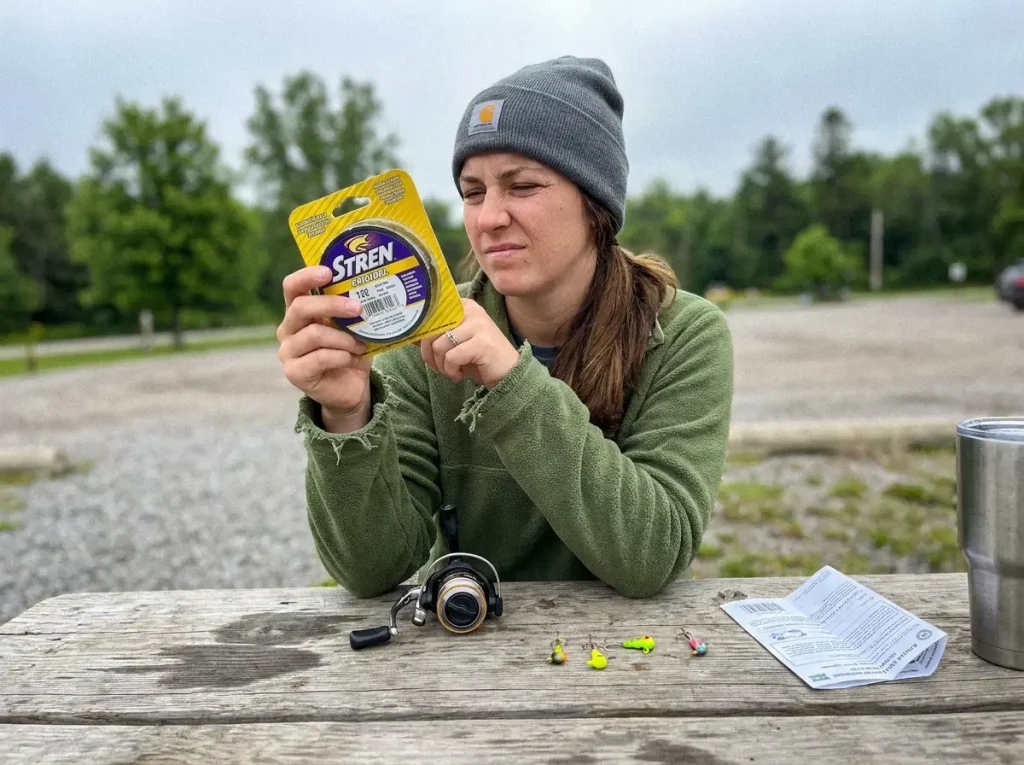
Search this question and you’ll get 6, 8, 10, 12, 15, 17, every number stated with total confidence and zero context. Here’s the answer that actually fits your fishing instead of a random spool label.
The one number that covers most beginners
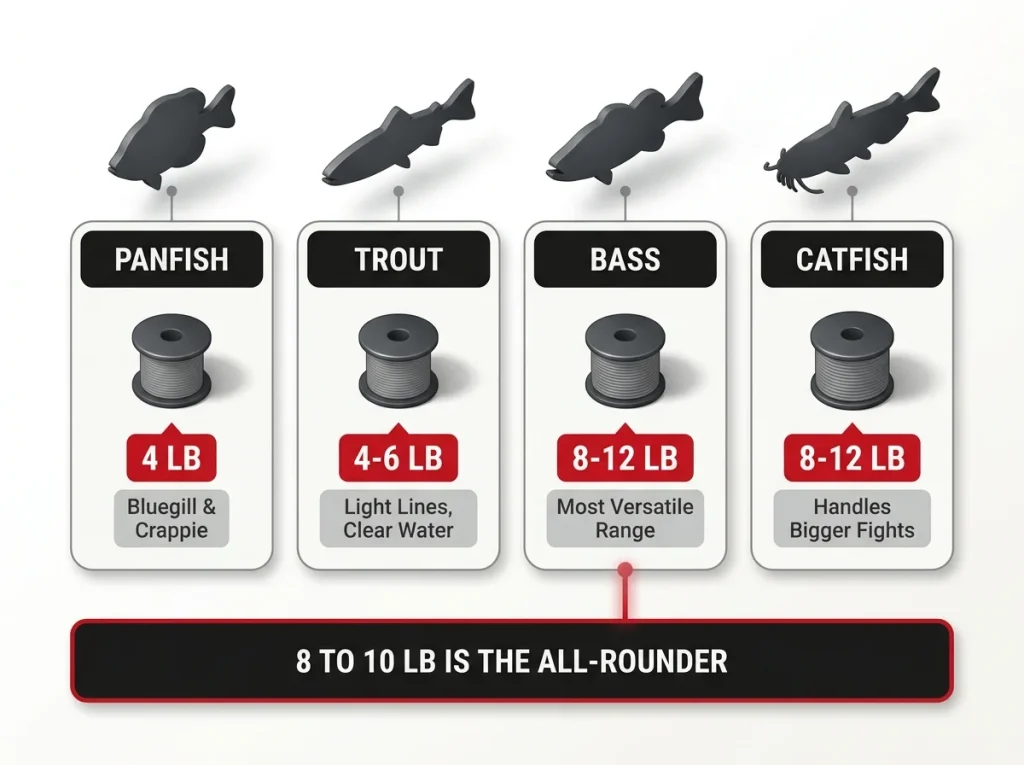
If you fish a mix of freshwater and want a single do-everything spool, 8 to 10 pound test mono is the answer. It handles bass, catfish, and bigger panfish on a typical spinning combo without feeling like rope. That’s the number a buddy would hand you if you only got to own one spool.
Matching pound test to your target species
The number is about the fish, not bravado. Chasing bluegill and crappie? Drop to 4 pound. Trout? 4 to 6 pound. Bass and catfish? 8 to 12 pound, with 10 to 12 being the most versatile. If you want the deeper version of what pound test really means once you get past the spool label, it’s worth ten minutes. Pound test is just a measure of line strength, a dry lab rating of breaking strength, not a fish-weight limit, and your drag and rod do most of the work fighting a big one anyway.
Why your reel size caps the line
There’s a ceiling, too. Cramming 17 or 20 pound mono onto a small spinning reel built for panfish casts terribly and is overkill for the fish you’re chasing. Heavy line is thicker, fills the spool faster, and flies off in stiff coils. Match the line to the reel and the species, and ignore the urge to go heavier “just in case.”
If you bought a pre-spooled combo, fish what came on it for the first season before you buy line at all. Plenty of guides say the factory mono works fine to learn on, and you’ll know a lot more about what you actually need by the time it’s worn out.
Your One-Line Setup (and When to Add a Leader)
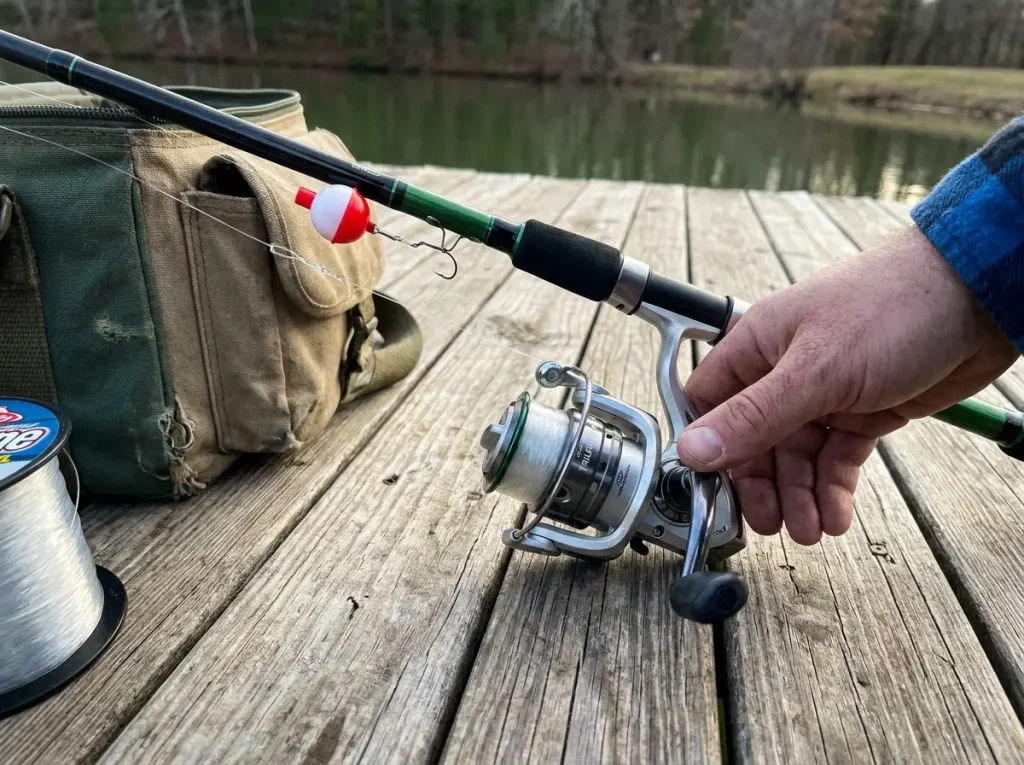
Here’s the part the tackle shop won’t lead with. You don’t need three lines. You need one spool of mono and a real, specific reason before you add anything else.
One spool of mono does almost everything
Own one spool of 8 to 10 pound mono and fish it for everything until the water gives you a reason not to. This is the same own-one, not-seventy logic that keeps a beginner from getting buried in gear, and it applies to the rest of your kit too. Spool it onto a balanced spinning combo and you’ve got a setup that catches 90 percent of what you’ll target your first year. If you want to see how the line fits with the rod, reel, and rig as one package, build it into a complete first fishing setup that actually balances.
The two reasons to ever add a second line
There are really only two. The first is heavy cover: thick vegetation, timber, or docks where you need braid’s zero stretch to winch a fish out fast. The second is gin-clear water with finicky fish, where a short fluorocarbon leader buys you bites a visible main line would scare off. Until one of those shows up on the water in front of you, the upgrade is just spending money to add tangles.
How a leader works (and when it’s worth the knot)
A braid-to-mono leader, or a fluoro leader, is just a short length of stronger or clearer line tied to the end of your main line. It’s genuinely useful in those two cases above and pure complication everywhere else. It also means learning an extra connection knot, a double-uni to start, then maybe an FG knot later. That’s a skill to grow into, not a hoop to jump through on your first trip. Start straight, add a leader when the fishing earns it.
After a snag or a hard fight, cut off the last few feet of line and re-tie. Abrasion weakens that final stretch even when the rest of the spool is perfect, and it’s where most break-offs at the worst possible moment actually start.
Conclusion
Spool 8 to 10 pound monofilament and go fishing. It forgives the mistakes you’re going to make, it costs almost nothing, and it ties knots that hold while your skills catch up. Fluorocarbon is a clear-water leader and braid is for heavy cover, and both of those are “later,” not “first.” And because mono is cheap and wears out, re-spool it without overthinking, then drop the old coils in a recycling bin on your way off the water.
Grab one spool, load your reel, and go catch something this weekend. No upgrade required.
Frequently Asked Questions
01Is monofilament or braided line better for beginners?
Monofilament, for almost everyone starting out. It’s cheaper, it stretches so it forgives bad hooksets, and it tangles far less than slick braid on a spinning reel. Braid is a great line once your casting is dialed in.
02What pound test fishing line should a beginner start with?
Start with 8 to 10 pound monofilament as an all-rounder for bass, catfish, and bigger panfish. Drop to 4 to 6 pound if you’re mainly chasing trout or panfish. Match the line to the fish, not to how big you hope they’ll be.
03Can you use braided line on a spinning reel as a beginner?
You can, but limp braid wind-knots more easily and usually needs a leader knot tied on. Most beginners have an easier first season on straight mono and switch to braid later once their casting timing is solid.
04Do I need fluorocarbon line as a beginner?
No. Fluorocarbon is a clear-water leader you add later, not a starter main line. As a full main line it’s stiff, pricey, and casts poorly on a light spinning reel, which is the opposite of what a beginner wants.
05How often should you replace monofilament fishing line?
About once a season for a casual angler, sooner if the line comes off the spool in stiff coils, looks cloudy, or feels brittle. Mono is cheap and a consumable, so fresh line is the easiest upgrade there is.
Risk Disclaimer: Fishing, boating, and all related outdoor activities involve inherent risks that
can lead to injury. The information provided on Master Fishing Mag is for educational and informational purposes
only. While we strive for accuracy, the information, techniques, and advice on gear and safety are not a substitute
for your own best judgment, local knowledge, and adherence to official regulations. Fishing regulations, including
seasons, size limits, and species restrictions, change frequently and vary by location. Always consult the latest
official regulations from your local fish and wildlife agency before heading out. Proper handling of hooks, knives,
and other sharp equipment is essential for safety. Furthermore, be aware of local fish consumption advisories. By
using this website, you agree that you are solely responsible for your own safety and for complying with all
applicable laws. Any reliance you place on our content is strictly at your own risk. Master Fishing Mag and its
authors will not be held liable for any injury, damage, or loss sustained in connection with the use of the
information herein.
Affiliate Disclosure: We are a participant in the Amazon Services LLC Associates Program, an
affiliate advertising program designed to provide a means for us to earn advertising fees by advertising and linking
to Amazon.com. As an Amazon Associate, we earn from qualifying purchases. We also participate in other affiliate
programs and may receive a commission on products purchased through our links, at no extra cost to you. Additional
terms are found in the terms of service.