In this article
You’re ten minutes into your kid’s first trip, the bluegill are popping the surface right off the dock, and the line is already a wadded bird’s nest while a six-year-old melts down beside you. Ask anyone who’s spent a Saturday picking loops out of a kid’s reel instead of fishing: the pole is only half the story, and the fix every veteran knows is the reel type, not the cartoon printed on the rod. A closed-face push-button reel covers the spool so the line physically can’t balloon off it. This guide walks through the seven combos that actually pull that off, matched to your kid’s age, plus the part nobody else explains and a few tricks for keeping a young kid hooked long enough to land one.
What Makes a Kids’ Fishing Pole Truly Tangle-Free
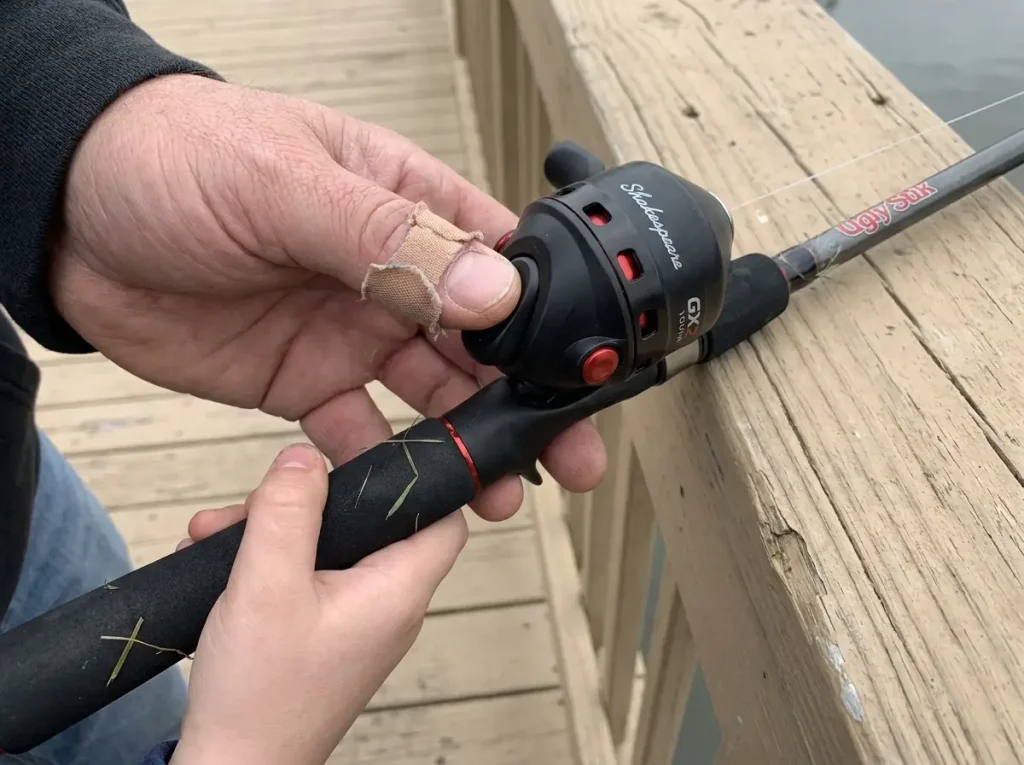
Forget the color, forget the character on the blank, and look at the reel first. That’s where a kid’s pole is won or lost, and it’s the first thing worth sorting out when you’re putting together a kid’s very first fishing setup. The whole tangle problem comes down to one question: is the spool covered or open?
Closed-Face (Spincast): The Push-Button Reel That Covers the Line
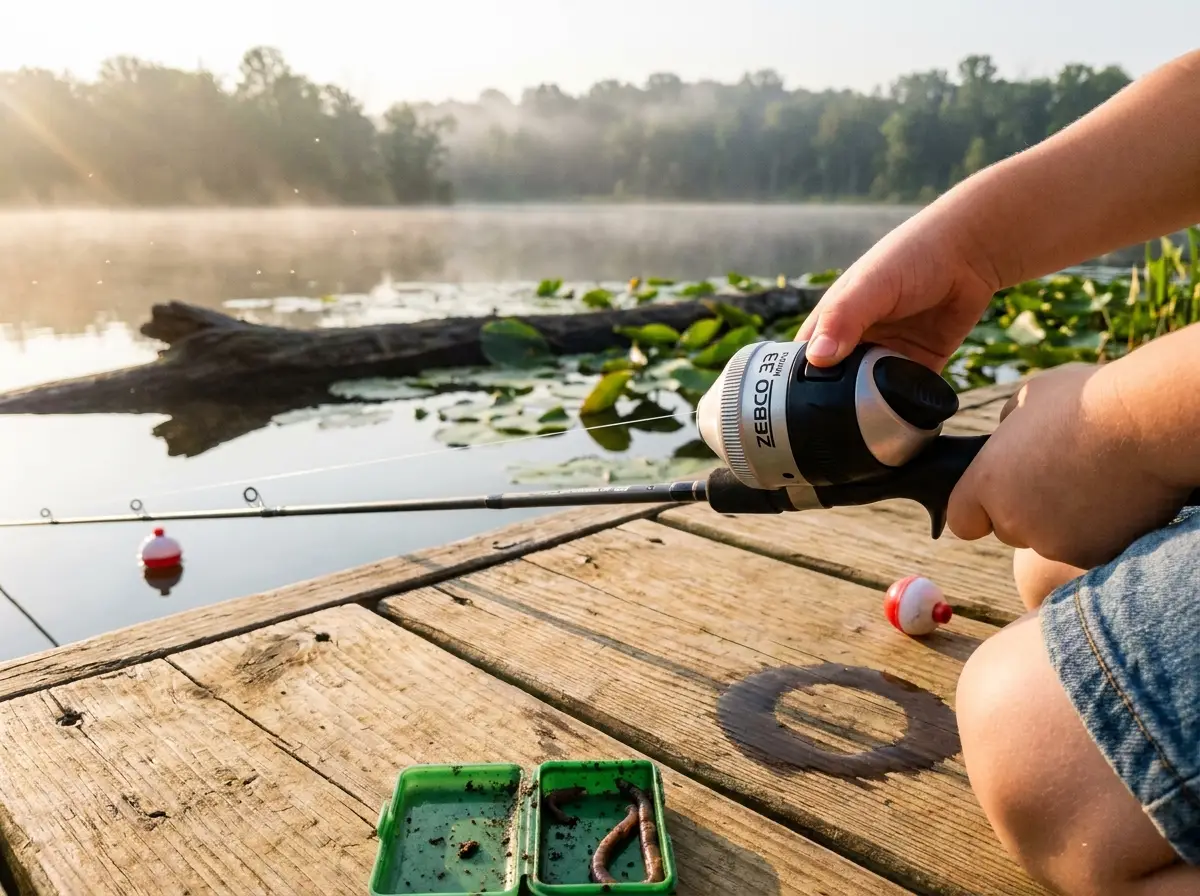
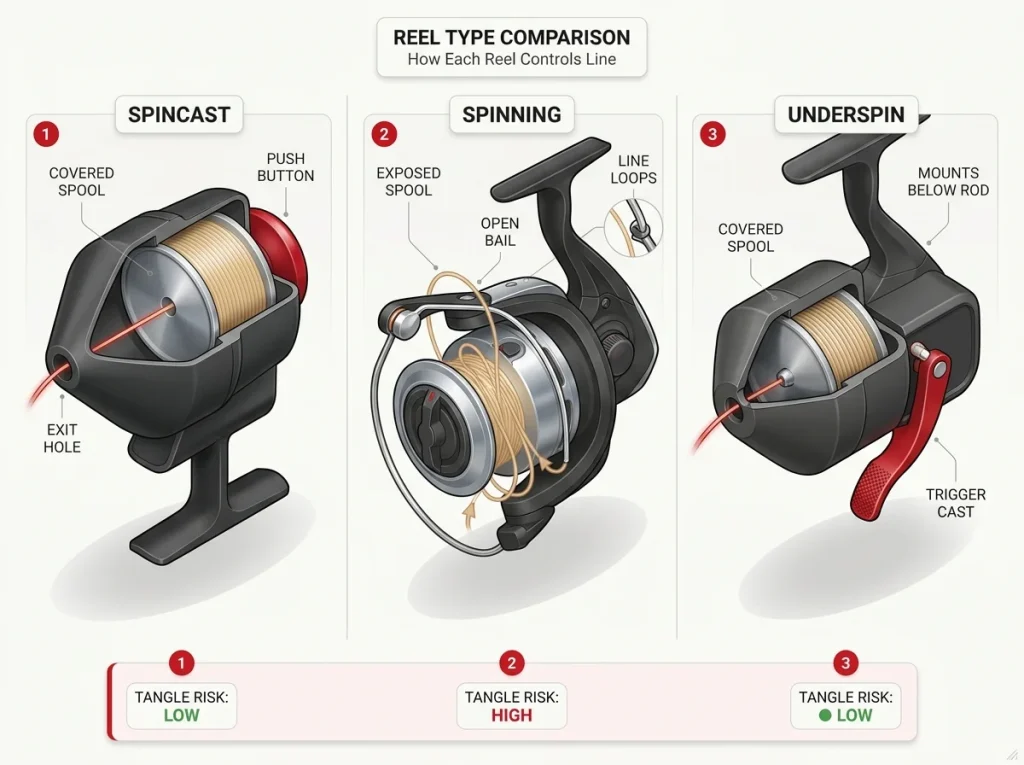
A spincast reel, the closed-face kind with the button on the back, hides the spool inside a cone. The line exits through one small hole in the nose cap, so it can’t jump off the spool the way exposed line does. Press the button, swing the rod, let go: that’s the entire cast. A kid can botch the timing badly and still not pay for it with a tangle, which is exactly why it’s the beginner answer. Parents have a name for a rigged push-button combo a kid can’t mess up. They call it the Magic Pole.
Underspin: The Smooth-Pull Step Up
An underspin reel is the same covered-spool idea, just mounted under the rod with a trigger instead of on top with a button. The line pulls off a little smoother, which helps once a kid starts casting for distance instead of just dropping a bobber straight down. It’s a fine graduation step for a seven or eight-year-old who has outgrown the simplest button reels but isn’t ready for open-face gear.
Why Open-Face Spinning Tangles a Beginner Every Time
Open-face spinning reels are what most grown-up combos use, and they’re the single biggest reason a beginner ends up with a bird’s nest. The spool sits exposed, the bail has to be flipped by hand, and slack line peels off in loops the second the timing is off. Skip it for a first pole. If you want the full breakdown of how spincast stacks up against spinning for a first reel, that comparison is its own rabbit hole, but the short version for a kid is simple: covered spool, every time.
Why “Tangle-Free” Poles Still Tangle (And the 30-Second Fix)
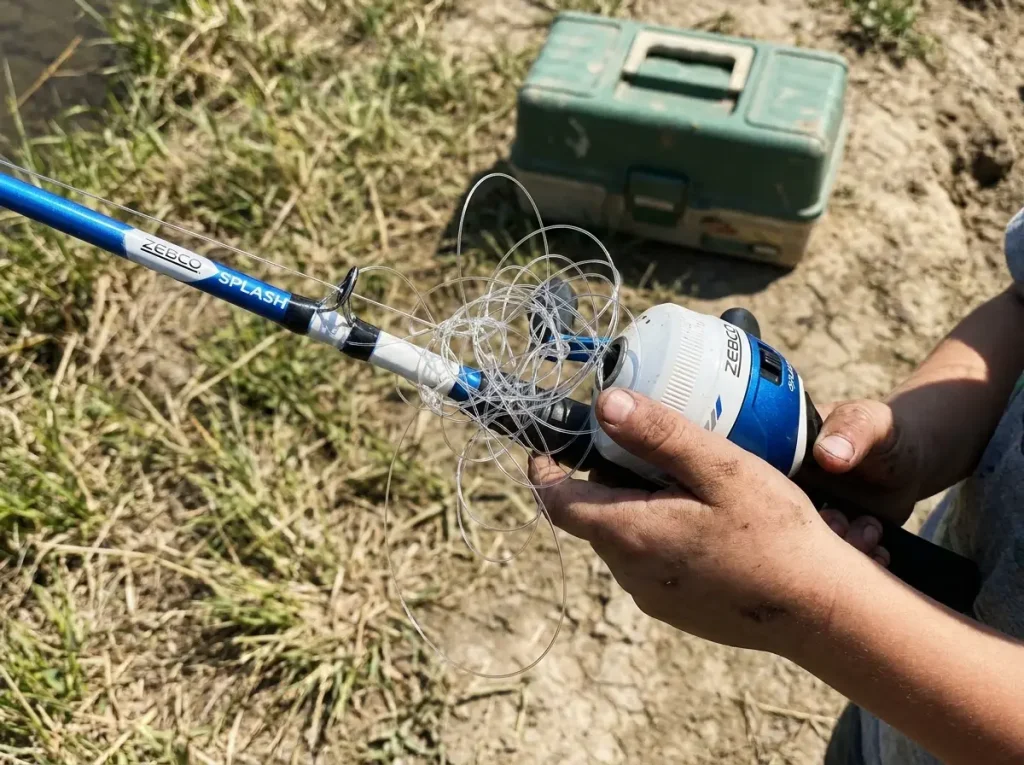
Here’s the part the listicles skip. A closed-face reel is tangle-resistant, not tangle-proof, and if you hand one to a kid expecting it to be hands-off, you’re going to be picking loops out of it by noon. The reel almost never fails on its own. The tangle gets created, usually in one of three ways, and once you understand the mechanism you can stop nearly all of it before you ever leave the driveway.
The Slack-Line Trap: Cranking After the Lure Stops
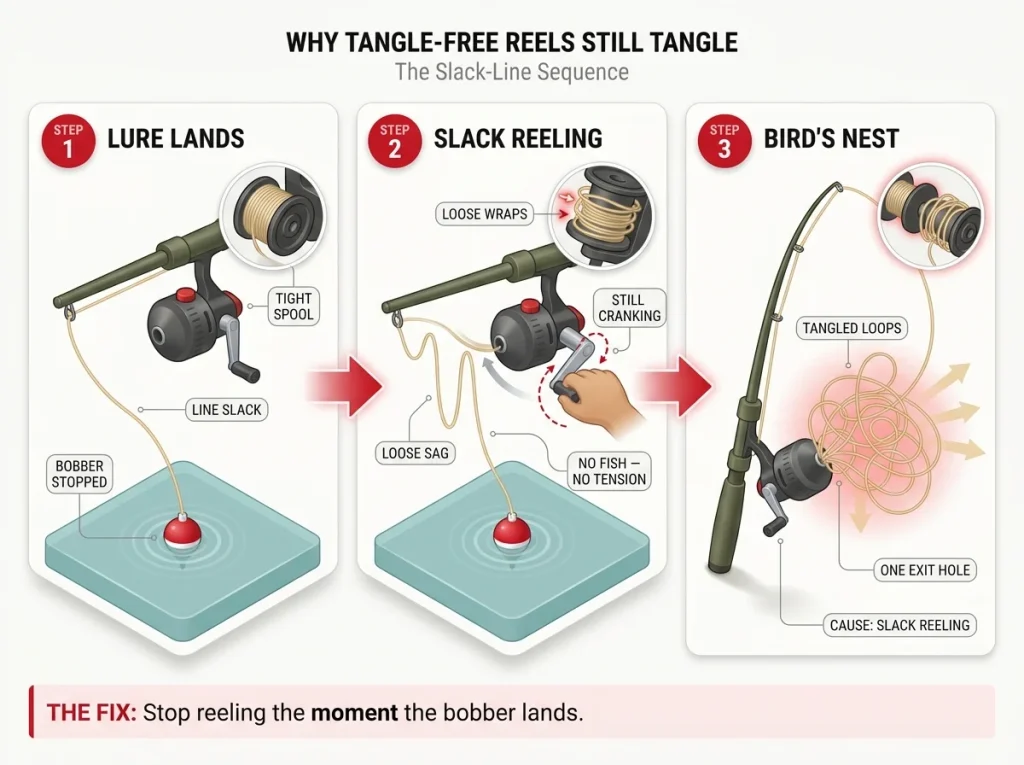
The number one cause is the kid cranking the handle after the bobber has already landed. When there’s no tension on the line, the reel wraps loose, lazy coils onto the spool. They sit there fine until the next cast, when one of those loose wraps catches and the whole thing balloons out the nose cap. The kid didn’t cast wrong. They reeled slack, and the reel did exactly what slack line does.
Teach one rule and it prevents most of the meltdowns: stop reeling the second the bobber lands. Reeling is for bringing a fish in or starting the next cast, never for fidgeting while you wait. Give a six-year-old that one sentence and you’ll cut the tangles in half on day one.
Overfilled and Old Line: The At-Home Causes
The other two causes live in your garage, not at the dock. An overfilled spool throws loops the moment the kid casts, so the line should sit roughly an eighth of an inch below the spool lip, never crammed to the top. And stiff, old monofilament from a hand-me-down combo holds its coils like a spring, which is the same thing as starting the day with a tangle already half-built. Fresh mono is the cheapest tangle insurance there is, and it’s worth understanding why fresh monofilament forgives a beginner’s mistakes before you spool anything up.
The 30-Second Pre-Trip Check
Before every trip, pull about ten feet of line off, look for the loose coils and kinks that signal old or overfilled line, and crank it back under light finger tension. That’s it. Thirty seconds in the driveway prevents the bird’s nest that would otherwise cost you twenty minutes on the dock while the fish move off and the kid loses interest.
Matching Pole Size to Your Kid’s Age
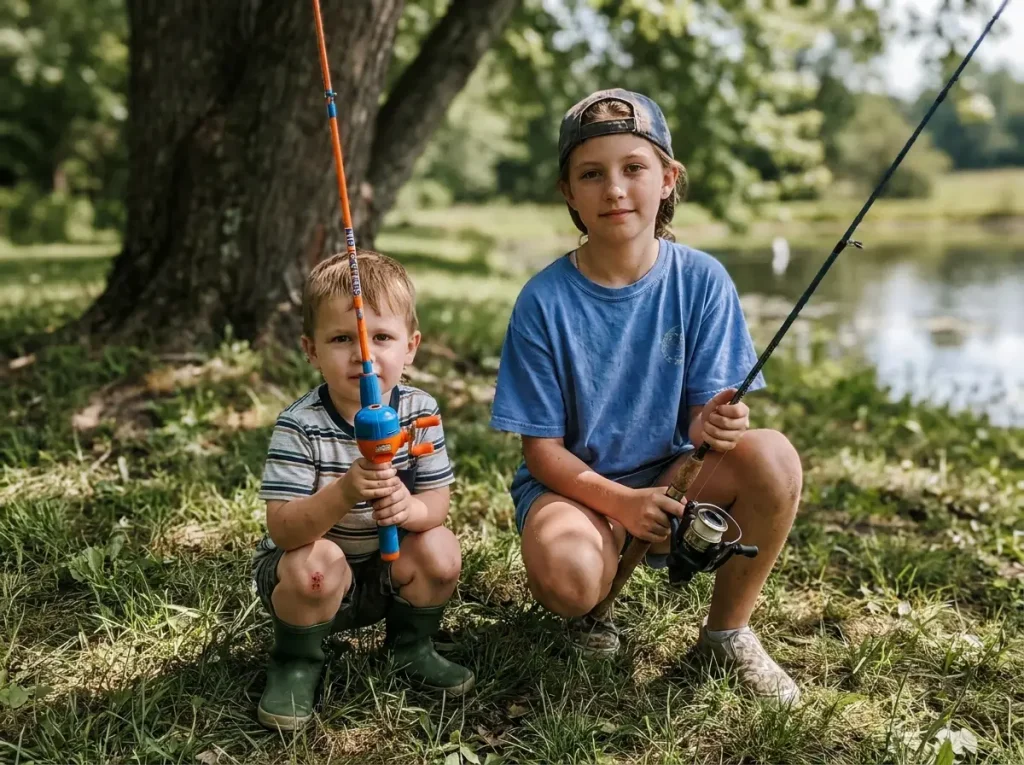
A too-long rod is the tangle cause nobody points at. Parents buy a five-and-a-half-foot “real” rod so the kid looks grown-up, the kid can’t load it or control the tip, every cast flubs, and the flubbed casts throw slack that turns into loops. Match the rod to the kid, not to what looks impressive in your hands.
The Age-to-Length Ladder (3 to 5, 6 to 9, 10 to 14)
The rough ladder most guides and gear shops land on goes like this: a 2 to 3-foot rod for ages 3 to 5, a 4 to 5-foot rod for ages 6 to 9, and 5 feet or longer for 10 to 14. A four-year-old waving a five-foot rod is fighting the lever the whole time. Drop the length so the rod tip is something little arms can actually point and stop.
Drop-Proof Beats Featherweight: Blank Material
Kids drop rods, step on them, and use them as swords on the walk back to the car. Fiberglass and composite blanks shrug all of that off, while a light carbon blank rewards a careful adult and punishes a careless kid. Drop-proof beats featherweight at this age, full stop.
Grip and Weight for Little Hands
A shorter grip, a lighter overall rod, and a soft light-action tip let a kid actually feel the take instead of just watching the bobber. The handle material matters more than people think for small hands too, and a grip sized right makes a real difference once a kid is holding the thing for an hour. The proof that cheap, well-sized gear works: plenty of grandparents have watched a kid land a bass or even a stray walleye on a cheap combo that fit their hands right.
The Best Tangle-Free Pole-and-Reel Combos
These are the straight-up “here’s what I’d hand your kid” picks. Every one is a closed-face or underspin combo, so the covered spool from the first section is doing its job, and several come pre-spooled so a parent who has never touched a reel can tie on a hook and fish. They’re sorted by use case: best overall, best budget, best for toddlers, and best for older kids.
Best Overall: Zebco 33 Micro Spincast Combo
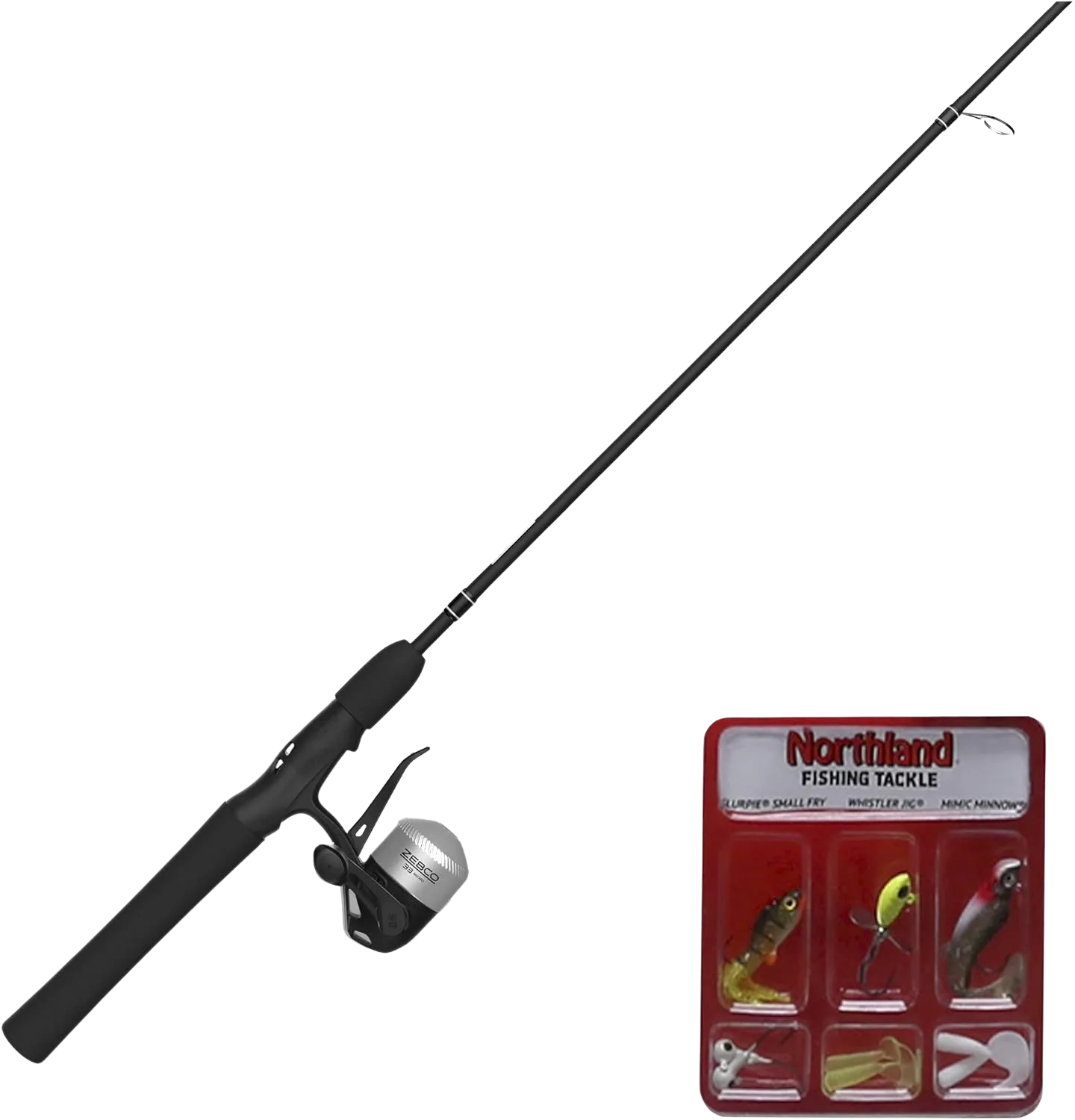
The Zebco 33 Micro is the pole most veterans would put in a beginner’s hands without a second thought. The size-10 spincast reel is small enough for a kid’s grip, the two-piece rod packs down for the car, and the pre-spooled line means you skip the one step that intimidates non-fishing parents. It isn’t fancy. It’s the reliable, boring, works-every-time pick, and at this age boring is the whole point.
Best Budget: Zebco Splash Spincast Combo
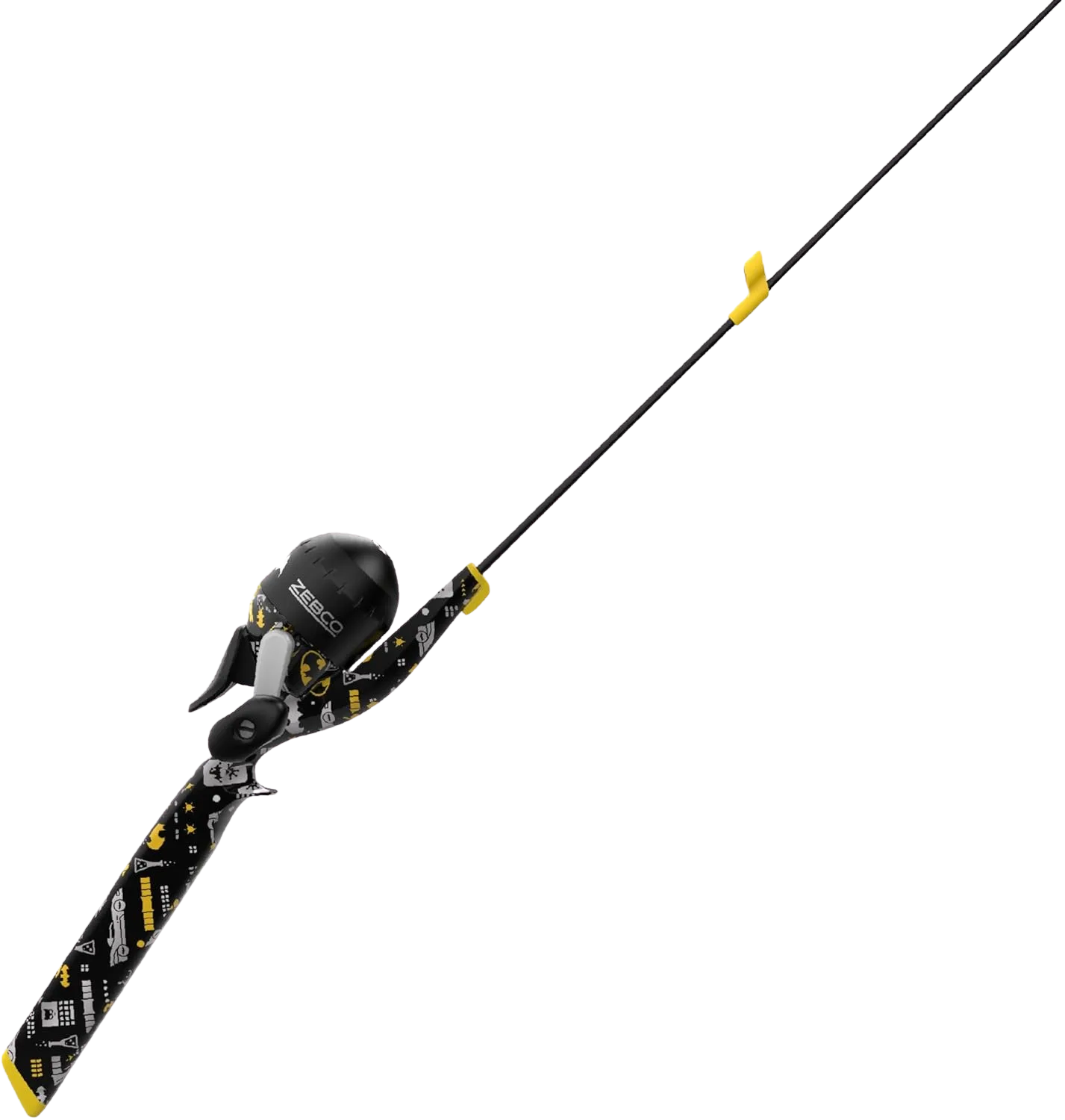
When you’re not sure the hobby will stick, the Zebco Splash is the smart bet. The floating rod is a genuinely useful trick on a dock, where the first thing a four-year-old does is set the rod down too close to the edge. It’s pre-spooled, it’s push-button simple, and it costs little enough that a broken one isn’t a tragedy. Spend the money you save on a tub of worms and a free afternoon.
Best for Toddlers: Zebco Dock Demon Spincast Combo
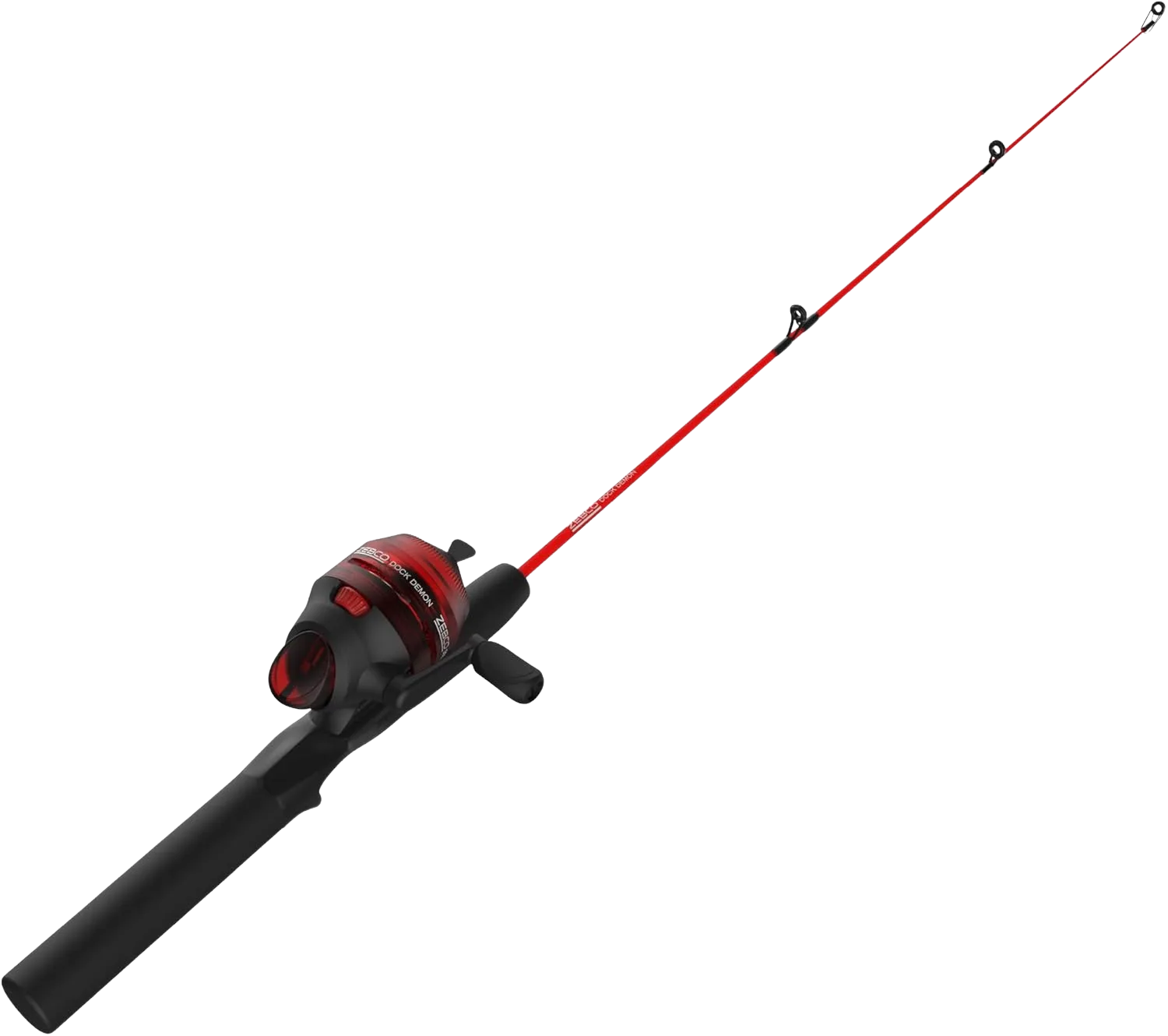
For the 3 to 5 crowd, length is everything, and the Zebco Dock Demon gets it right at a stubby 30 inches. A toddler isn’t casting anyway, so the short rod is a feature: they drop the bait straight down off a dock, watch the bobber, and that’s the whole game. It’s tough enough to survive being dragged across the parking lot, which it will be. Pair it with a dock full of bluegill and you’ve got a winner.
Best for Older Kids: Shakespeare Ugly Stik GX2 Youth Spincast Combo
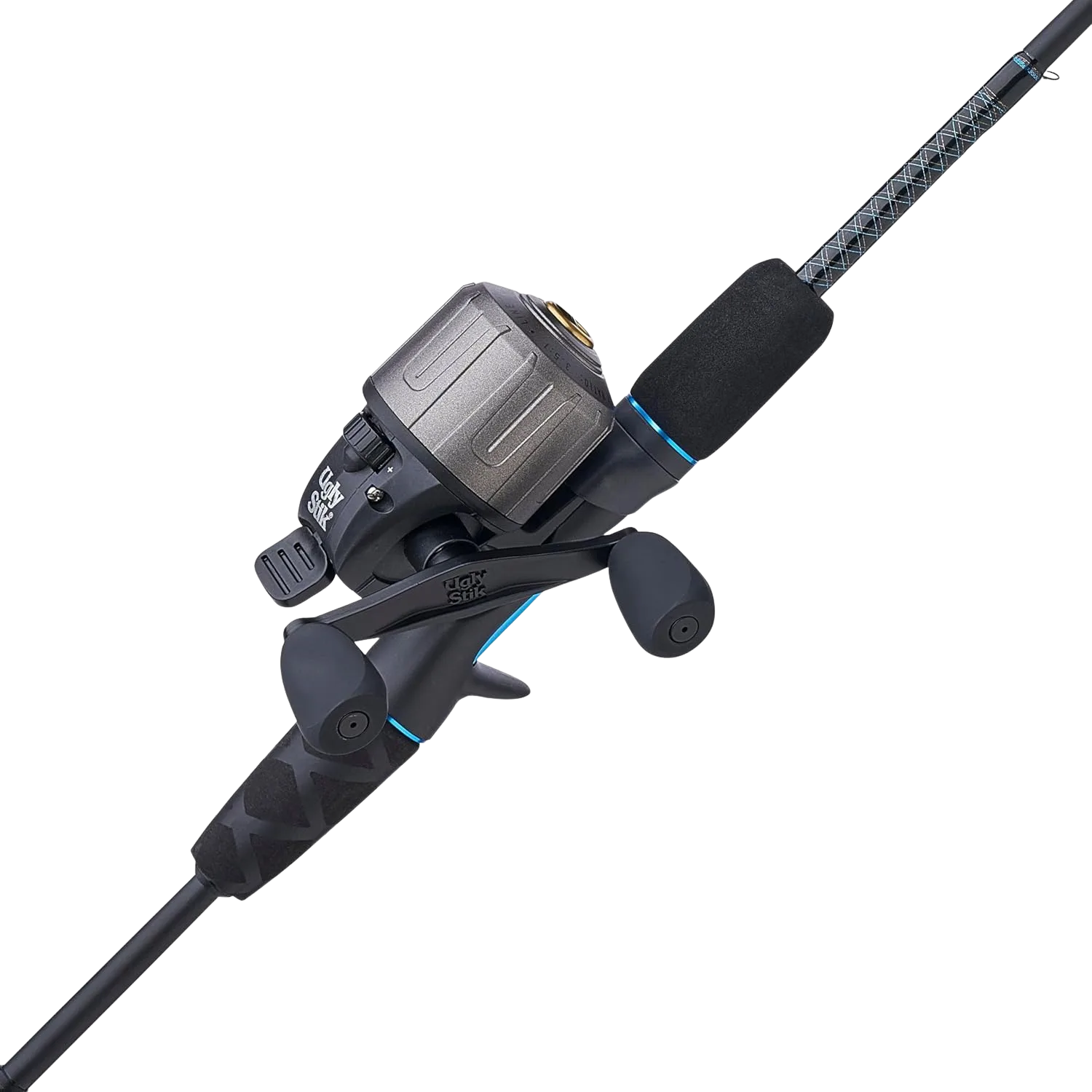
Once a kid is 8 or older and casting with intent, the Ugly Stik GX2 Youth is the one that lasts. The blank is the same legendarily tough fiberglass-graphite mix that made Ugly Stik a household name, so it survives car doors, rock piles, and the occasional brother. The youth spincast reel keeps tangles in check while the kid’s casting catches up to their ambition. When they eventually outgrow push-button reels, a light spinning combo is the natural next rung.
The Best Tangle-Proof and All-in-One Kits
Two different buyers shop this section. One wants the most foolproof design money can buy, with no guides for the line to snag on at all. The other owns nothing and wants a single box with a rod, tackle, and a bag so they can get out the door this weekend. Here’s the honest take on both.
Best Tangle-Proof Design: Kid Casters Tangle-Free Youth Combo
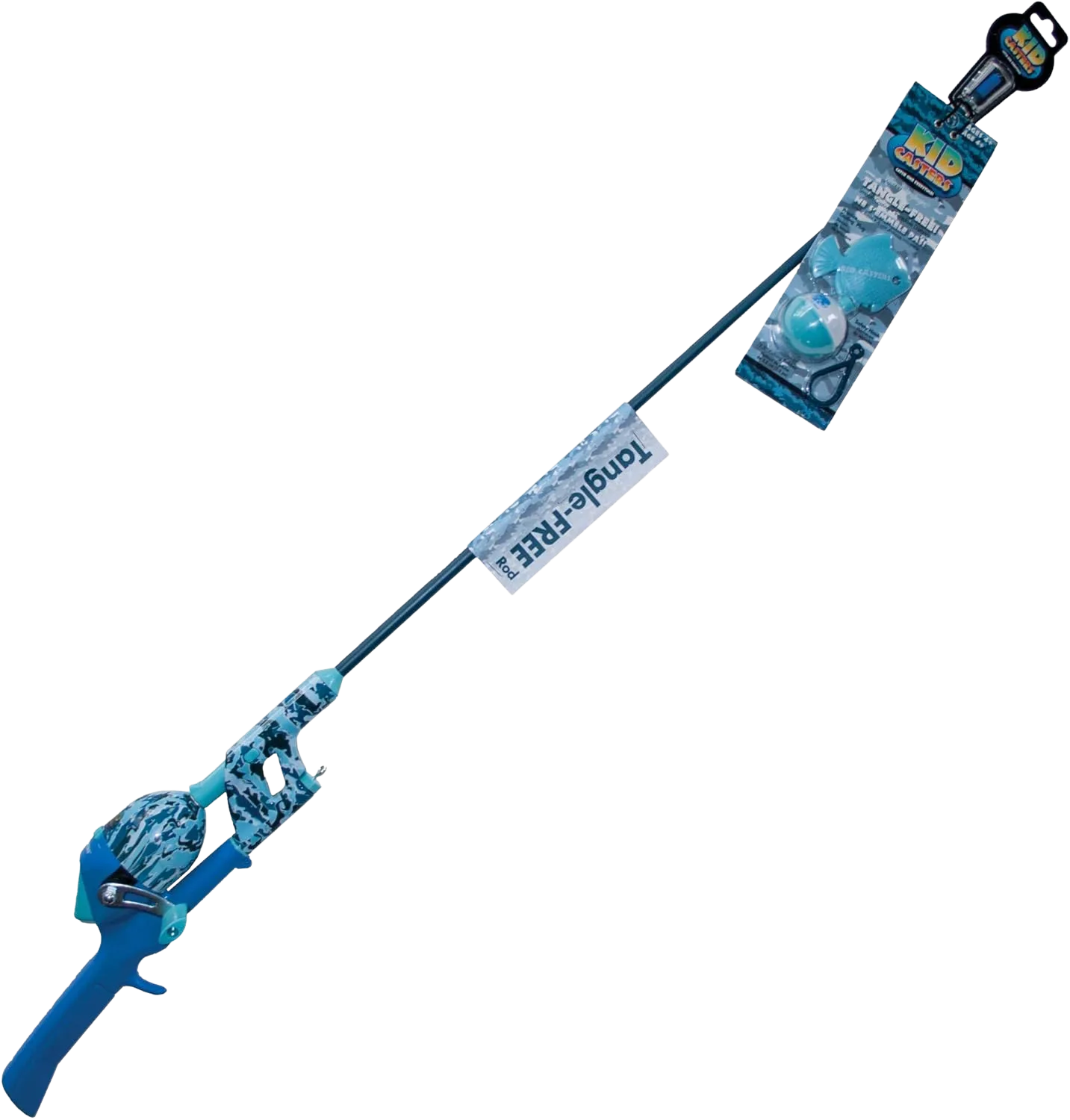
The Kid Casters Tangle-Free combo is the one design that earns the word tangle-proof instead of tangle-resistant. By running the line through the center of the 34-inch rod, it removes the guides entirely, and the guides are where most line snags start. It also ships with a practice casting plug, which is genuinely useful for backyard reps before any hooks come out.
Now the honest downside, because no competitor mentions it. With no guides and a covered path, there’s nothing stopping a kid from cranking the line fully into the shaft, and when that jams, you’re not picking a loop off an open spool, you’re fishing line out of the inside of the rod. One over-eager kid can turn a five-second fix into a ten-minute one. It’s still the most snag-proof option on this list, just know what you’re trading for it.
Best Complete Travel Kit: ODDSPRO Kids Fishing Starter Kit
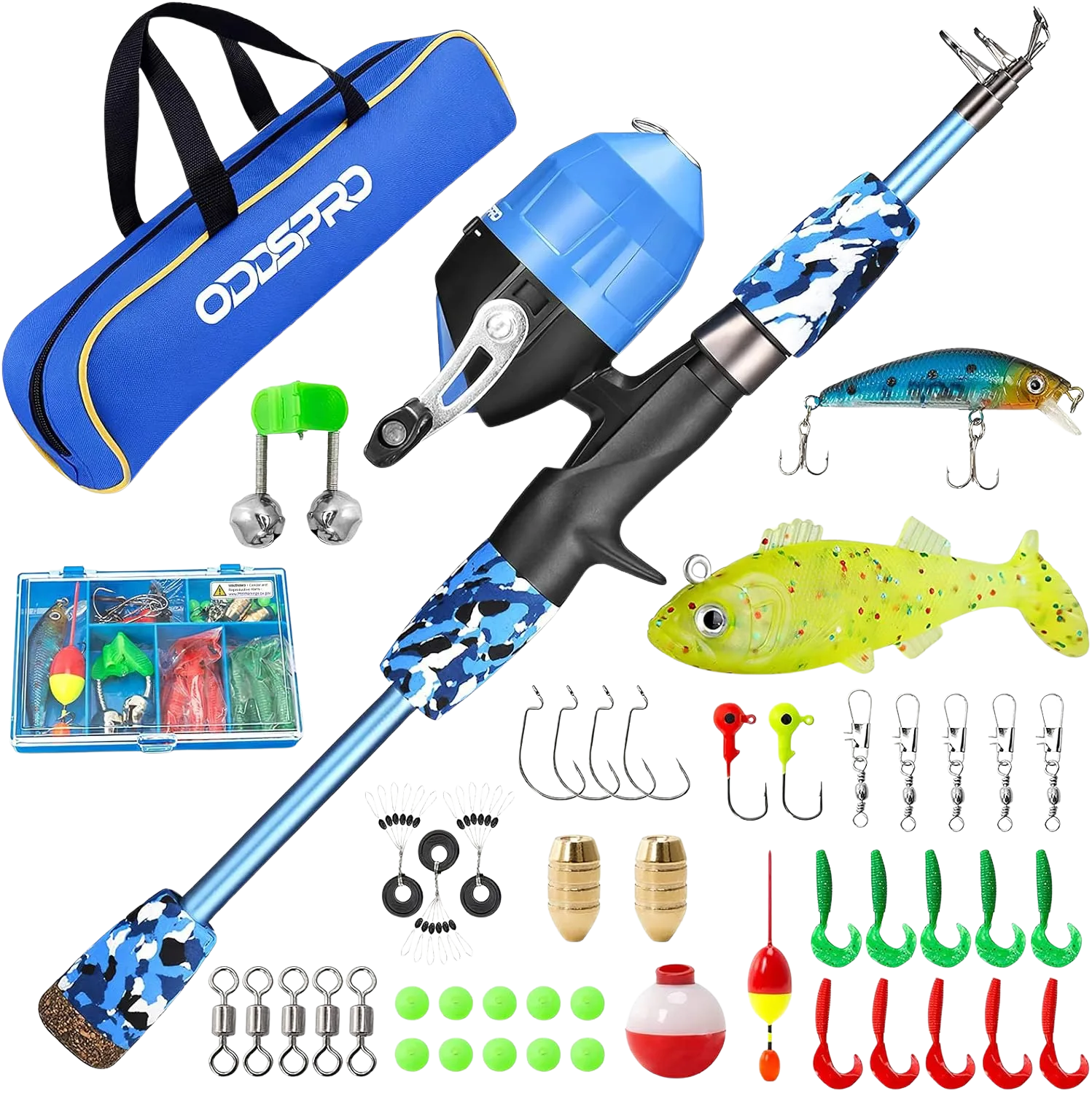
If you’re starting from zero, the ODDSPRO kit gets a kid fishing without a separate trip for hooks, bobbers, and a tackle box. The telescopic rod collapses down small enough for a daypack or a glovebox, which makes it the easy answer for travel and camping. A collapsible rod never feels quite as solid as a one-piece, so don’t expect miracles, but for occasional trips it’s hard to beat. Treat the rod and reel as the purchase and the extra tackle as a bonus, not the reason to buy.
Best Budget Kit: Plusinno Kids Fishing Kit
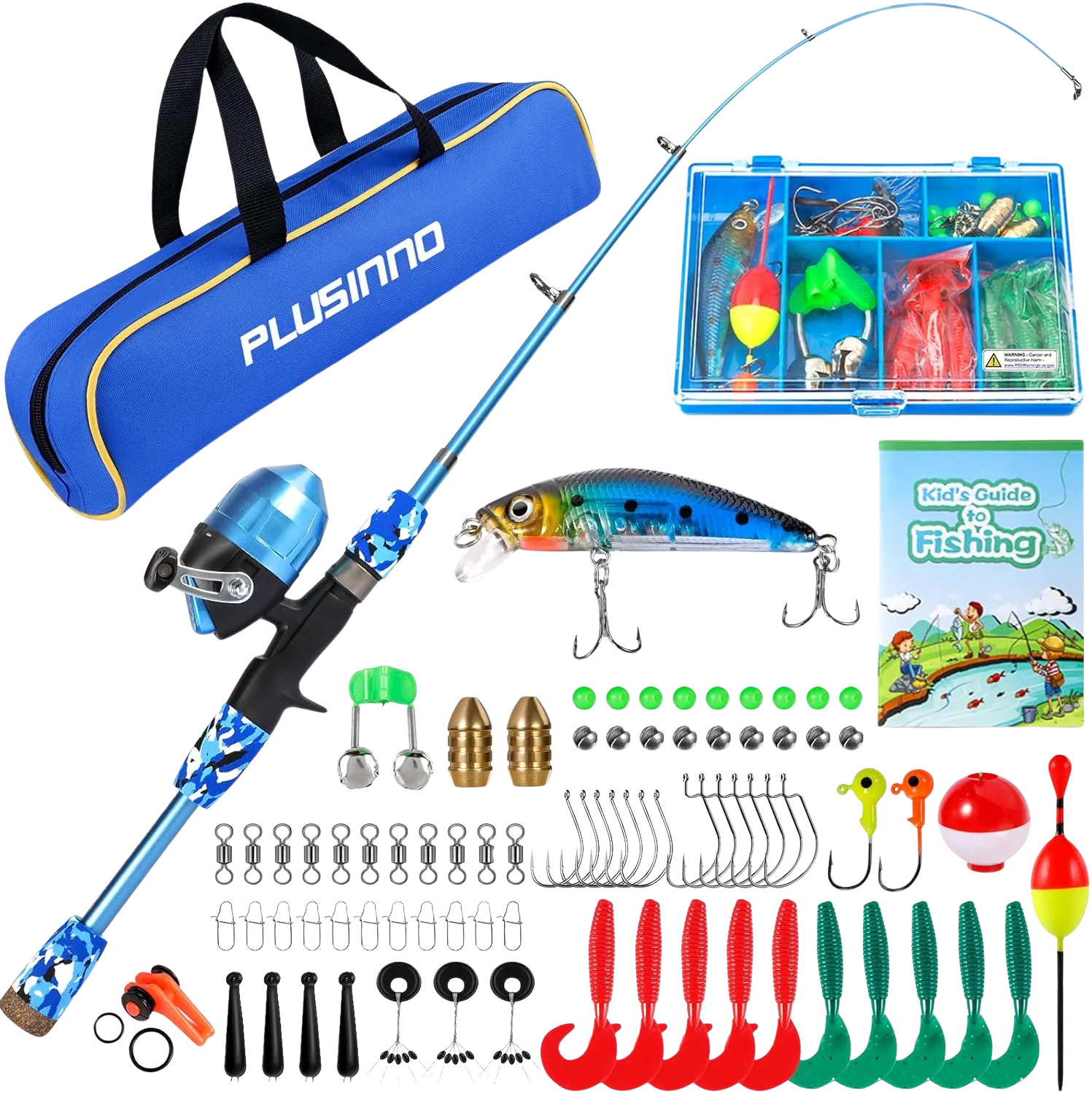
The Plusinno kit is the budget version of the all-in-one approach, and it’s honest about what it is. You get a pre-spooled telescopic rod and the basic tackle to start, for a price low enough that a hobby that doesn’t stick won’t haunt your wallet. It’s not the rod a kid keeps for ten years, but it’ll put a panfish on the line this weekend, and that’s the only job that matters on day one.
The 60-Second Setup That Stops Most Tangles
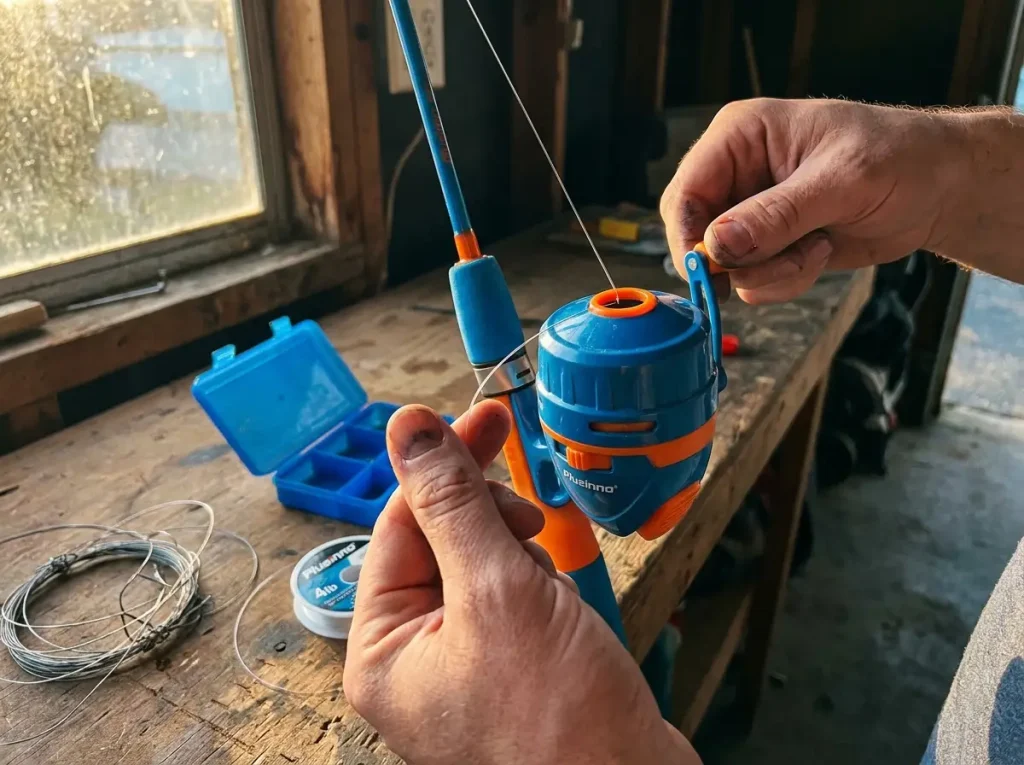
Most parents buying a kid’s pole have never spooled a reel, and that’s fine, because this is the easiest skill in fishing once someone shows you. Do it at home, in the garage, the night before. Almost every first-trip meltdown is prevented in the driveway, not solved at the dock.
Spooling a Push-Button Reel (or Skipping It With Pre-Spooled)
To spool a spincast reel, feed the line through the hole in the front cap, tie it to the spool, then reel slowly while pinching the line for light tension, and stop about an eighth of an inch below the spool lip. That’s it. If that already sounds like one step too many, this is the entire argument for pre-spooled combos like the Zebco Splash or 33 Micro: you skip it completely and just tie on a hook. For the full walkthrough, the step-by-step on putting line on a reel covers every reel type.
The Simplest First-Trip Rig: Hook and Bobber
Keep the rig stupid simple. Tie a small hook with a clinch knot, clip a bobber 18 to 24 inches up the line, and pinch on a split shot if you want the bait to sit still. That’s the whole setup that catches a kid’s first fish. Six-pound line is the sweet spot for a kid’s reel, light enough to behave and tough enough for panfish.
Two safety habits are worth a sentence here. Pinch the barb down or tie on a barbless safety hook so an unhooking fumble on a wiggly kid is no big deal, and keep an adult within arm’s reach of the rod tip. Panfish are also the easy catch-and-release fish, so a quick photo and a gentle release teaches good habits from the first trip.
Backyard Casting Practice Before the Hooks Go On
A practice plug, the rubber weight that comes with the Kid Casters combo, lets a kid learn the push-button-release timing on the lawn with zero hooks in play. Twenty minutes of backyard reps does more for a first trip than any gear upgrade.
Rig the rod the night before, in the light, at the kitchen table. Tying a clinch knot for the first time while a four-year-old asks “is it ready yet” on a windy dock is its own kind of misery. Show up with the hook and bobber already on, and the first cast happens in thirty seconds instead of fifteen frustrated minutes.
Pick the Right First Fish, Not Just the Pole
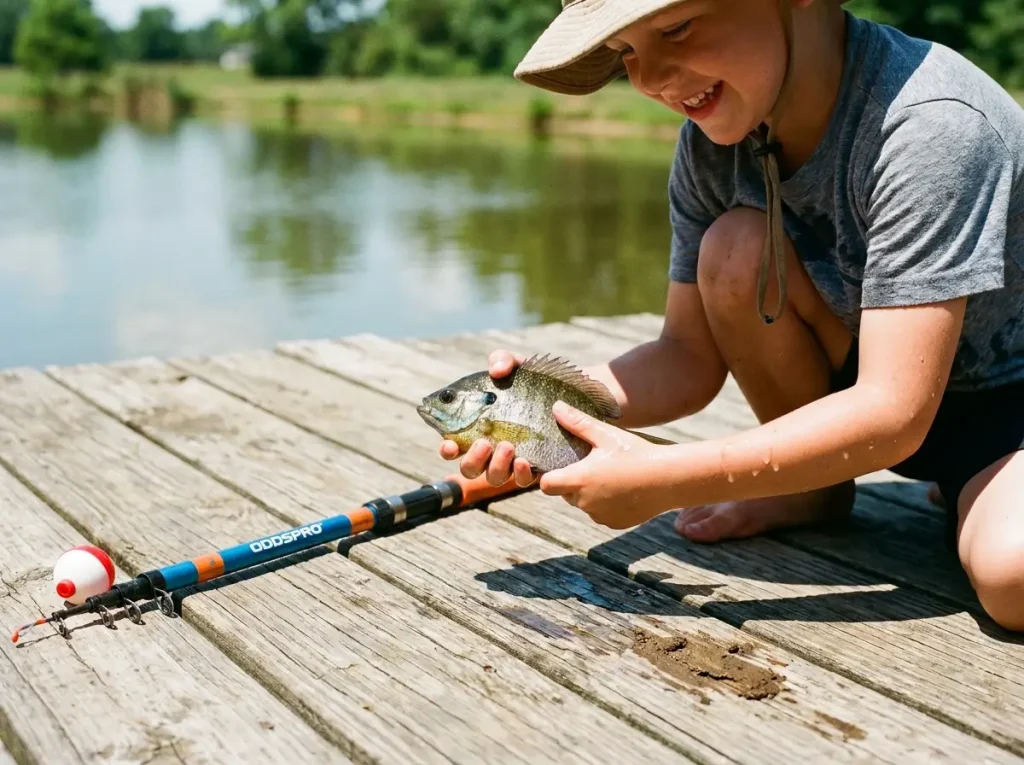
Here’s the half of the equation nobody connects to tangles: where you fish and what you fish for. The right target turns casting into dropping, and dropping doesn’t tangle. Get this right and the gear almost stops mattering.
Why Panfish Are the Perfect First Target
Panfish, the catch-all for bluegill, sunfish, crappie, and perch, are the ideal first fish for a reason. They’re everywhere, they’re hungry, and they bite worms, crickets, small jigs, and even corn all day long. According to Pennsylvania’s fish and boat commission, bluegill rarely top ten inches but bite all day on worms and small jigs, which is exactly the steady action a kid needs. Michigan’s DNR makes the same point, that panfish are abundant, easy to catch, and fun for anglers of every age.
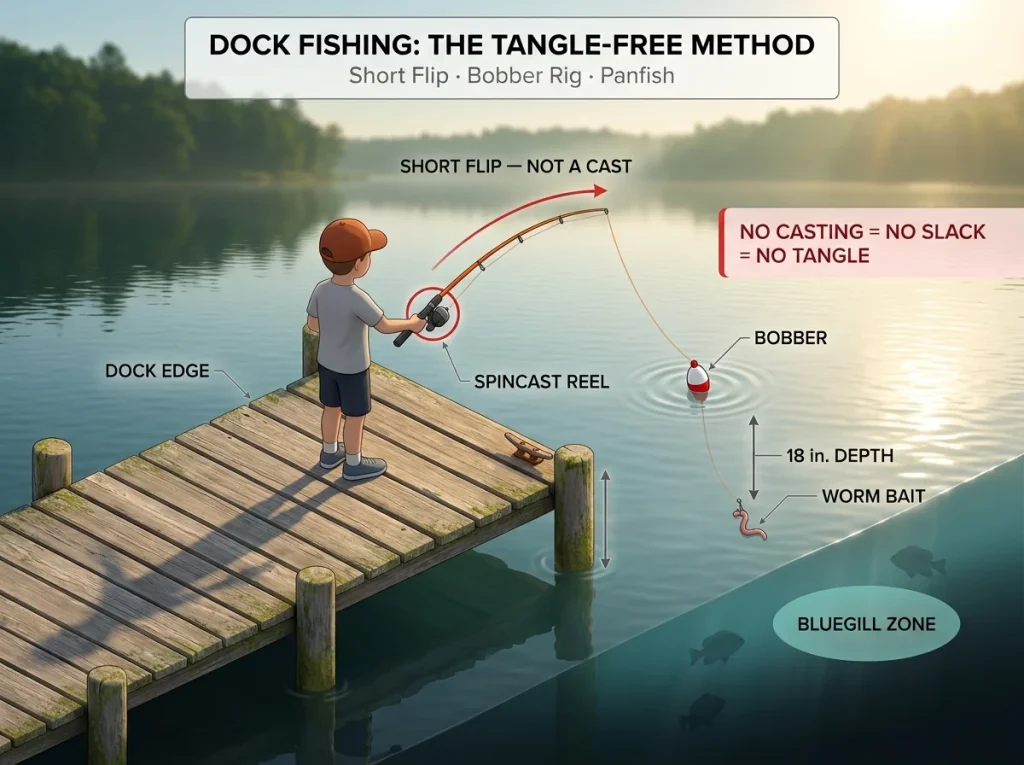
Dock and Bank Fishing: Short Flips, No Casting
Fish a dock or a bank and the whole casting problem shrinks. A kid flips the bait out a few feet or just drops it straight down, the bobber sits there, and a fish takes it. No long cast means no slack loop, no slack loop means no bird’s nest. It’s the gear-free tangle fix, and it happens to be how panfish want to be caught anyway. The other half of the magic is the bite rate: constant little takes keep a six-year-old locked in where a slow cast-and-wait session loses them in ten minutes.
Find a dock with bluegill on a summer evening and you’ve basically guaranteed a first fish. The bluegill stack in the shade under the boards, they’re aggressive, and a kid can see them take the bait. Nothing builds a young angler’s confidence like watching the bobber go under on the second drop.
The Bobber Rig That Lands a First Fish
A bobber rig does two jobs at once: it holds the bait at the right depth and it gives the kid an obvious signal when a fish bites. Set the bobber so the bait hangs a foot or two down, where the panfish are, and tell the kid to watch it like a hawk. The deeper dive on a simple bobber rig that drops the bait at the right depth and where to find them in a local pond will have you set up in minutes.
Which Kids’ Kits Are Worth It (And Which Are Junk)
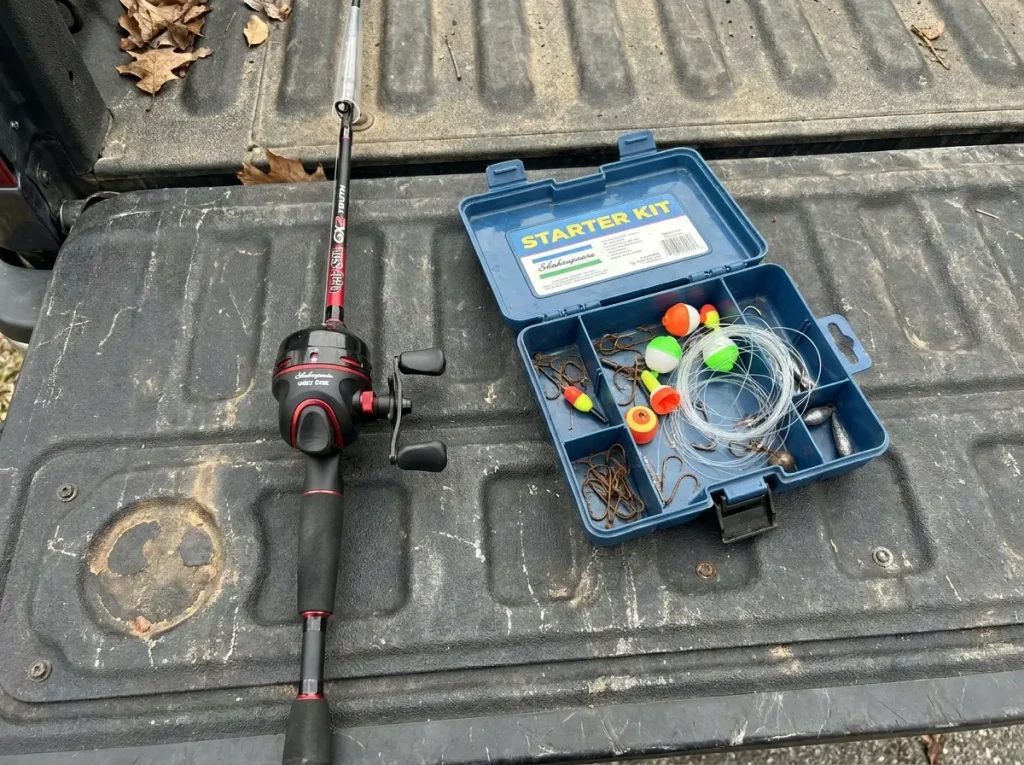
Time for the talk a straight-shooting buddy gives you before you spend money: most of what’s on the endcap is selling you a cartoon, not a pole that casts. Knowing the difference saves you cash and saves your kid a frustrating afternoon.
What a Kid’s Pole Should Actually Cost
A good kids’ combo lands in the budget-friendly range, and once you climb past that you’re usually paying for a brand name or a license, not better casting or durability. The picks in this guide cover the whole sensible range without anyone needing to splurge.
Padded Kits and Character Rods: What You’re Really Paying For
Two traps eat beginner money. The first is the padded kit, the one with a fat box of tackle that looks like value but is mostly undersized hooks and flimsy floats you’ll never use. A simple pre-spooled combo often outfishes the stuffed box. The second is the themed character rod, the one with the movie hero on the blank, which tends to cast poorly and snap early because you paid for the picture instead of the pole. A kid needs a handful of gear, not a tackle shop, and the short list in the gear a beginner actually needs is shorter than the marketing wants you to believe.
Try It Free Before You Buy
Before you spend a dime, you can test the whole thing for nothing. Most states run free fishing days, and Oregon’s wildlife agency notes that most states hold Free Fishing Days where you can borrow loaner gear and have staff set up the reel for you. You find out if your kid likes it, and an expert spools the reel correctly the first time. That’s the lowest-risk way to start there is.
Conclusion
The tangle-free fix is the reel type: a closed-face push-button combo covers the spool so the line can’t bird’s-nest, and the Zebco 33 Micro nails it for most kids. Even the right reel tangles if a kid reels slack or the line’s old, so teach them to stop cranking when the bobber lands, keep fresh mono, and run the thirty-second check at home. And match the pole to your kid’s age, then fish panfish off a dock, because short flips beat long casts for both fewer tangles and more bites.
So pick the combo that fits your kid, find a local dock on a free fishing day, and put a bluegill on the line in the first ten minutes. That first fish does more to hook a kid than any gear upgrade ever will.
Frequently Asked Questions
01What kind of fishing pole is best for a kid?
A closed-face push-button (spincast) combo, because the covered spool keeps it from tangling. The Zebco 33 Micro is the best all-around pick for ages 6 to 10. Drop to the Dock Demon for toddlers and step up to the Ugly Stik GX2 Youth for older kids.
02What size fishing rod does my child need by age?
Roughly 2 to 3 feet for ages 3 to 5, 4 to 5 feet for ages 6 to 9, and 5 feet or longer for 10 to 14. Match the rod to the kid’s height. A too-long rod flubs casts and causes more tangles.
03Are push-button (spincast) reels really tangle-free?
They’re tangle-resistant, not foolproof. The covered spool can’t balloon off like open-face line, but it still jams if a kid reels slack line or the mono is old. Technique and fresh line matter as much as the reel itself.
04How much should a good kids fishing pole cost?
A quality pre-spooled combo sits in the budget-friendly range, not the premium one. Past that you’re usually paying for a brand or a character print, not better casting or durability. The reel type matters far more than the price tag.
05Is a kids fishing pole a real rod or just a toy?
The good ones are real, scaled-down rods that catch real fish, and kids land bass and even walleye on cheap Zebco combos. The themed character rods are the ones that lean toward toy and tend to cast poorly and break.
Risk Disclaimer: Fishing, boating, and all related outdoor activities involve inherent risks that
can lead to injury. The information provided on Master Fishing Mag is for educational and informational purposes
only. While we strive for accuracy, the information, techniques, and advice on gear and safety are not a substitute
for your own best judgment, local knowledge, and adherence to official regulations. Fishing regulations, including
seasons, size limits, and species restrictions, change frequently and vary by location. Always consult the latest
official regulations from your local fish and wildlife agency before heading out. Proper handling of hooks, knives,
and other sharp equipment is essential for safety. Furthermore, be aware of local fish consumption advisories. By
using this website, you agree that you are solely responsible for your own safety and for complying with all
applicable laws. Any reliance you place on our content is strictly at your own risk. Master Fishing Mag and its
authors will not be held liable for any injury, damage, or loss sustained in connection with the use of the
information herein.
Affiliate Disclosure: We are a participant in the Amazon Services LLC Associates Program, an
affiliate advertising program designed to provide a means for us to earn advertising fees by advertising and linking
to Amazon.com. As an Amazon Associate, we earn from qualifying purchases. We also participate in other affiliate
programs and may receive a commission on products purchased through our links, at no extra cost to you. Additional
terms are found in the terms of service.