
In this article
The “thunk” of my tackle box hitting the wooden dock echoed across the two-acre pond, and instantly, a school of bluegill hovering near the overflow pipe vanished into the depths. After twenty years guiding on small water systems, I have seen this mistake ruin countless trips before a single cast is even made. Successfully targeting trophy-class panfish in small water systems requires moving beyond general fishing folklore and applying a rigorous understanding of hydroacoustics, thermal biology, and ultralight gear engineering. Here is exactly how to stop spooking fish and start pulling massive slabs from pressured local ponds.
⚡ Quick Answer: To consistently catch large panfish in small ponds, you must eliminate bank-side vibrations and manage your shadow profile before casting. Target thermal refugia and localized current breaks created by man-made structures like overflow pipes. Downsize to a 2-pound test fluorocarbon line paired with 1/64-ounce tungsten jigs to maintain lure hang time, and practice selective harvest by releasing dominant bull bluegills to prevent population stunting.
The Bio-Acoustics of Pond Stealth
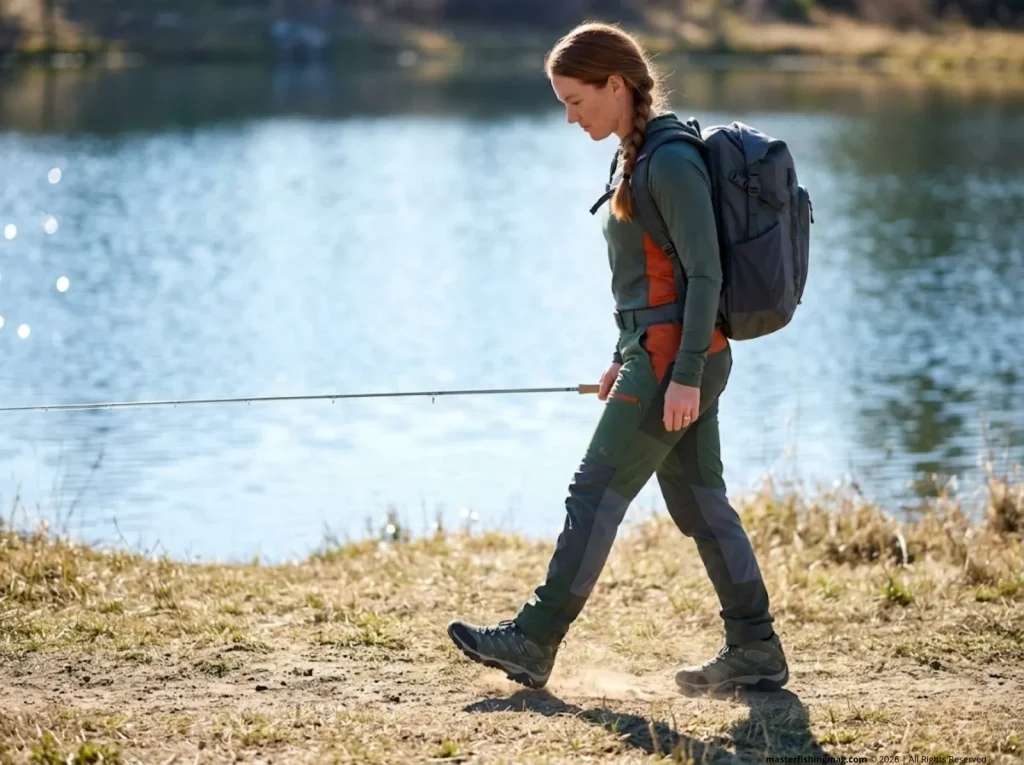
Acoustic vibration triggers predatory avoidance. Sound travels much faster in water than in air. When you drop a pair of pliers on an aluminum johnboat or stomp heavily on the muddy bank, it sounds like a sledgehammer ringing directly against the fish’s lateral line.
Micro-water panfishing demands absolute vibration control. Terrestrial vibrations from footsteps create surface acoustic waves that transfer energy straight into the shallow water column. A panfish’s lateral line has specialized cells that detect tiny pressure changes in the water, registering low-frequency thumps as immediate threats. Human voices can also breach the air-water interface if the volume is high enough. Whispering on the bank isn’t folklore; it is a necessary acoustic discipline for the stealth bank-angler.
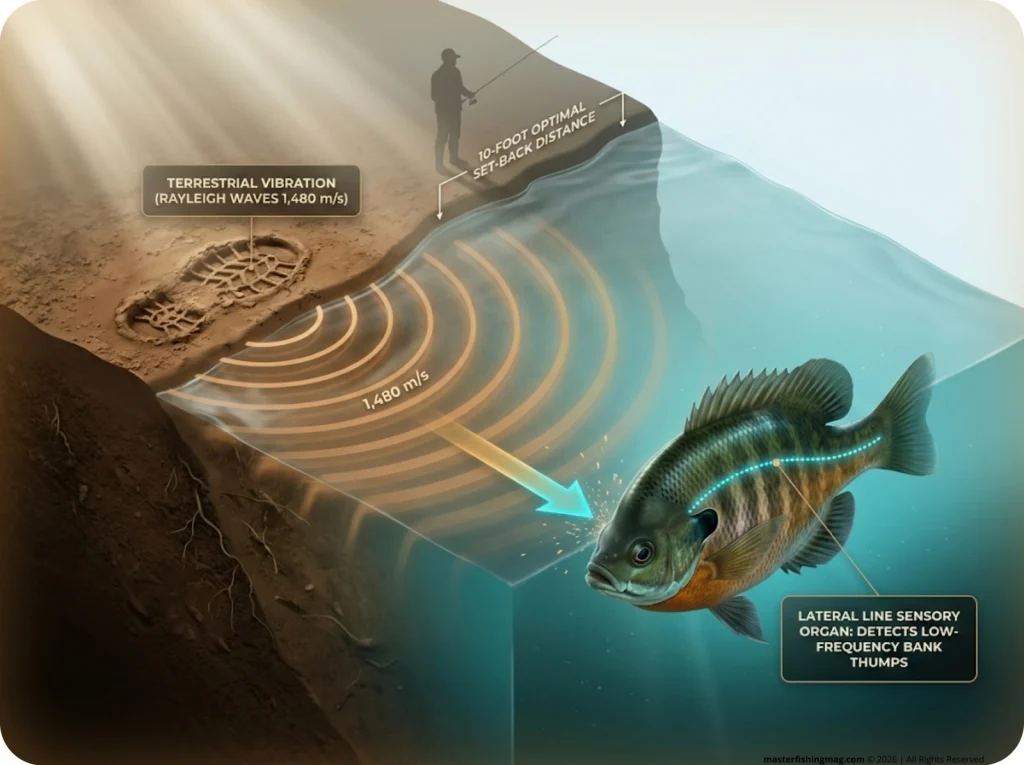
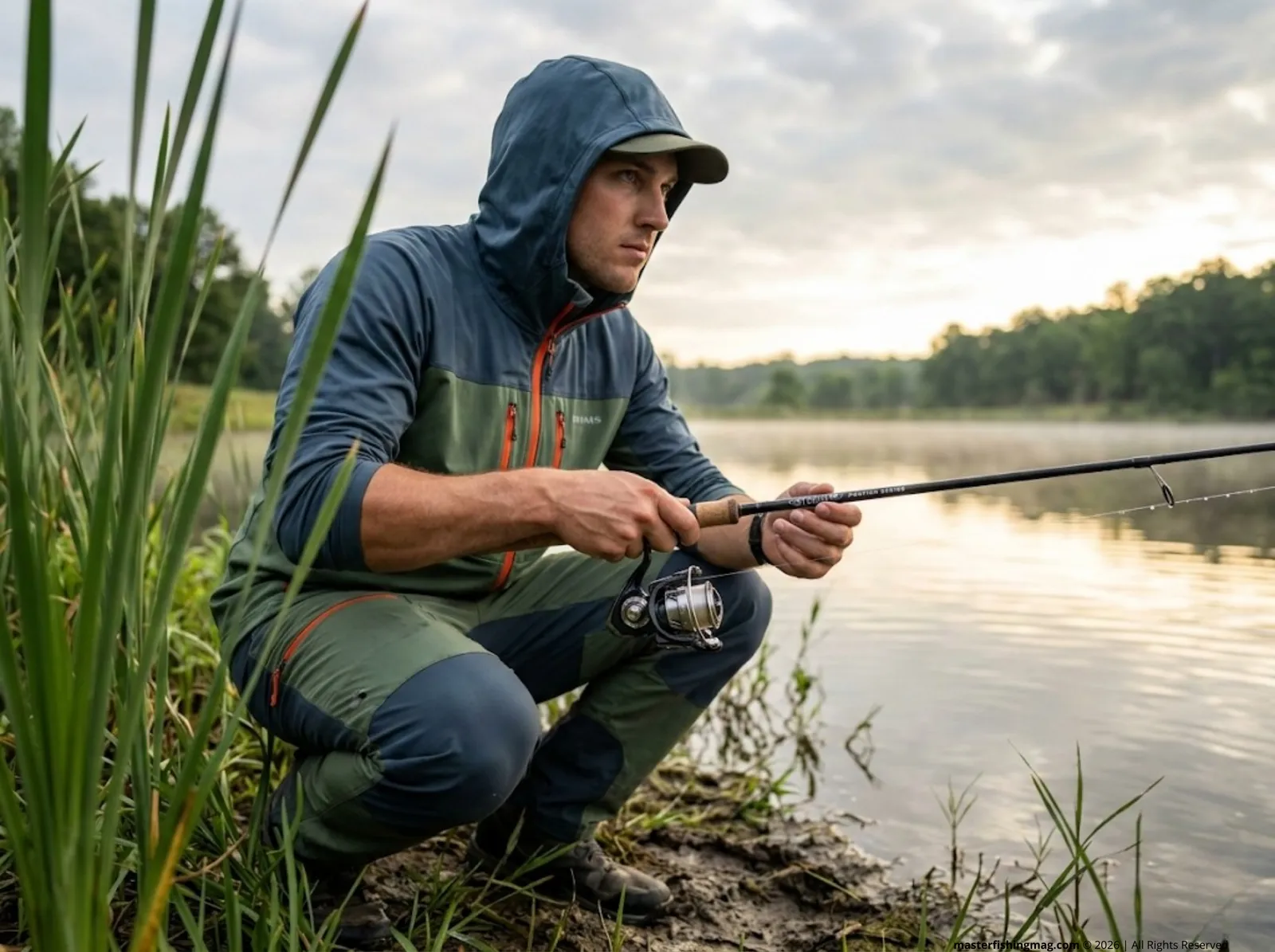
Pro-Tip: The “Bank Stalking” approach requires stopping 10 feet back from the water’s edge. Do your rigging and tying away from the water. Only step forward when you are ready to make a cast.
Why Panfish Hear You Before They See You
Water transmits energy with brutal efficiency. Even if the water is murky, a panfish knows you are there based entirely on displacement. Many anglers rely on heavy boots and heavy gear, creating a massive shoreline footprint. To counter this, deliberate bank stalking stealth is mandatory. You must monitor your approach vector.
Managing Your Shoreline Vibration Footprint
When you approach a structural hotspot, manage your shadow management carefully. Most panfish have evolved to fear overhead shadows, equating them to avian predators like herons. Position the sun in front of you so your silhouette does not stretch out over the water. Establishing proper tactical protocols for how to fish from shore requires treating the bank as a highly sensitive acoustic drum. Step lightly.
The Pool Noodle Hack for Dampening Noise
If you are fishing from a canoe or a small aluminum boat, chine slap—the sound of water hitting the hull—will betray your position instantly. Take a standard foam swimming noodle, slice it lengthwise, and fit it over the exposed metal boat gunwales. This deadens impacts from stray paddles and dropped pliers. As an added bonus, creating a pool noodle float section on your rod handle provides a cheap insurance policy for your expensive ultralight rods.
Thermal Stratification and Locating Slabs
Because panfish are cold-blooded, fundamental processes like egg development and immune response are entirely dictated by water temperature. A fish’s metabolic rate is an energy equation.
The 60-80°F Spawning Threshold Matrix
Spawning triggers are completely species-specific. Crappies initiate spawning in the cooler 58-68°F water window, while Bluegills require a warmer 65-75°F window. Monitoring the water temperature gives you a massive advantage over anglers casting blindly. During the early season, utilizing a yearly pond calendar helps anticipate this seasonal movement.
Finding Deep Water Refugia and Saturated Seeps
In extreme summer heat, small ponds lack the wind-driven mixing found in larger lakes. This creates a dangerous anoxic zone at the pond’s bottom, choked of dissolved oxygen. This dynamic forces fish into an anoxic squeeze, pushing them up from the dead bottom while they simultaneously dodge 90°F surface temperatures, which exceed the federal water temperature criteria for freshwater fish. Big fish need specific reading water temperature surface vs depth tactics to survive.
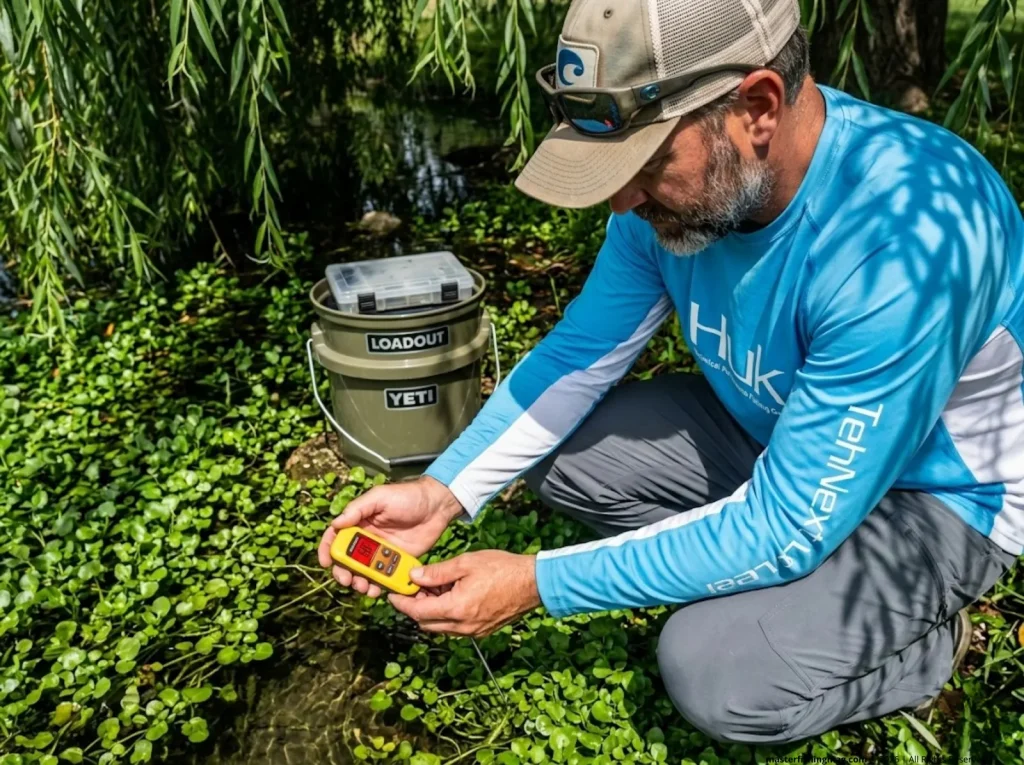
Pro-Tip: Locate summer thermal refugia by scanning the banks for vivid green watercress. This plant indicates cold (55°F) groundwater seeps entering the pond’s saturated zone. Fish will stack tightly on these micro-location targets.
Surviving the Summer Anoxic Squeeze
Finding these cold-water seeps allows you to pinpoint “slab” crappie and big bluegills holding tight to the thermal edges. The fish will concentrate in these extremely narrow bands of oxygenated, cool water. If you can measure temperature columns using a digital thermometer, you bypass hours of wasted fan casting.
Leveraging Man-Made Micro-Structures
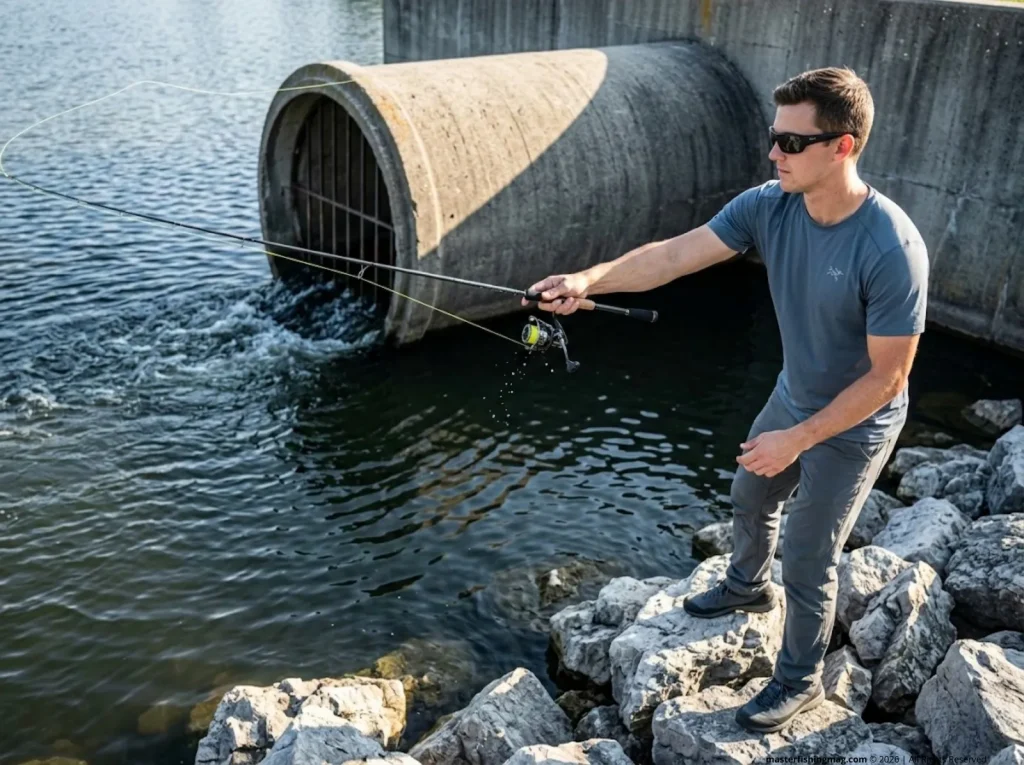
Ponds are engineered basins. They utilize overflow standpipes, culverts, and drain grates that create localized vortices. Structure types matter deeply because they influence flow.
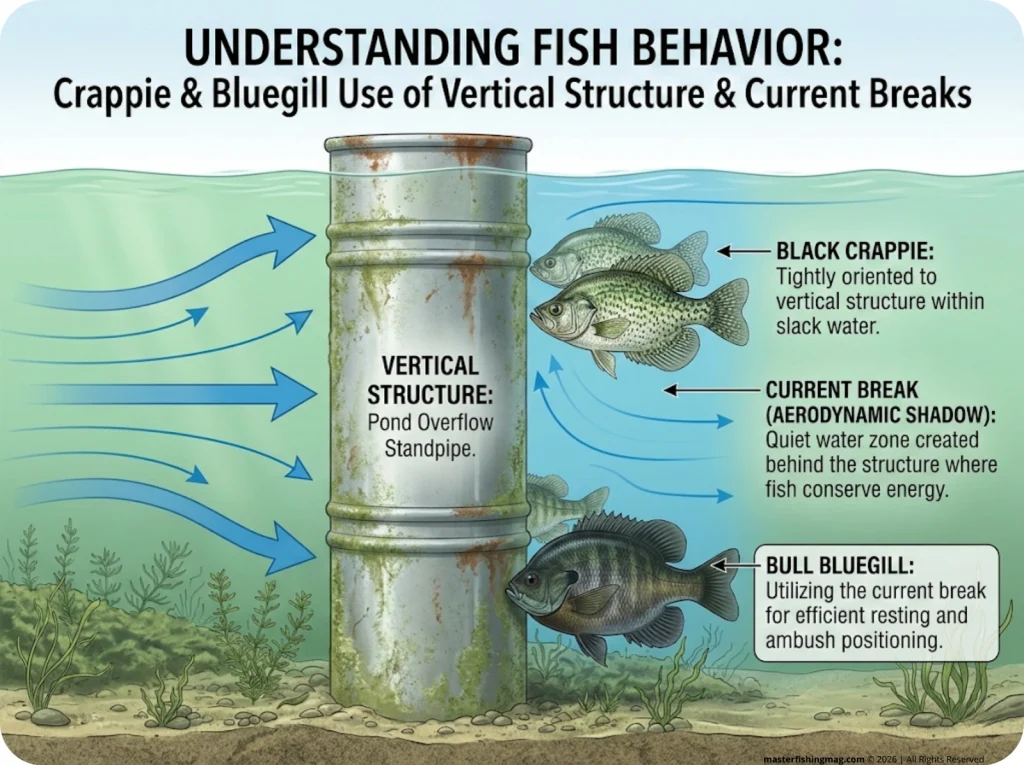
The Hydrodynamics of Overflow Standpipes
Man-made culverts create distinct changes in current speed. Black Crappie utilize these vertical submerged structures for rapid depth adjustment without moving sideways. Target the downstream side of a standpipe, where fish hold in the aerodynamic shadow to minimize swimming effort. Throwing a tandem popper-dropper rig near these vertical faces can yield aggressive surface strikes from fish competing for position.
Rip-Rap and Interstitial Complexity
Rip-rap banks have a high roughness factor, known as Manning’s n. In practical terms, this means the jagged rocks create vast gaps and crevices that harbor crayfish and juvenile minnows. When applying fishing structure points to rip-rap, use a strict bottom-scrounging retrieve, a tactic often highlighted by authorities on fish habitat structures. Allow your highly-sensitive jig weights to fall slightly into rock crevices where big bluegill pick off hiding forage.
Cedar Cribs vs. Hardwood Peripheries
Cedar cribs are incredibly dense. They serve strictly as juvenile refuge. The dominant adult slabs instead patrol the looser periphery of hardwood structures to ambush prey. You do not need to punch baits deep into the thickest cedar brush to find big fish; cast just outside the perimeter to the feeding zones.
Ultralight Gear Mechanics & Rigging
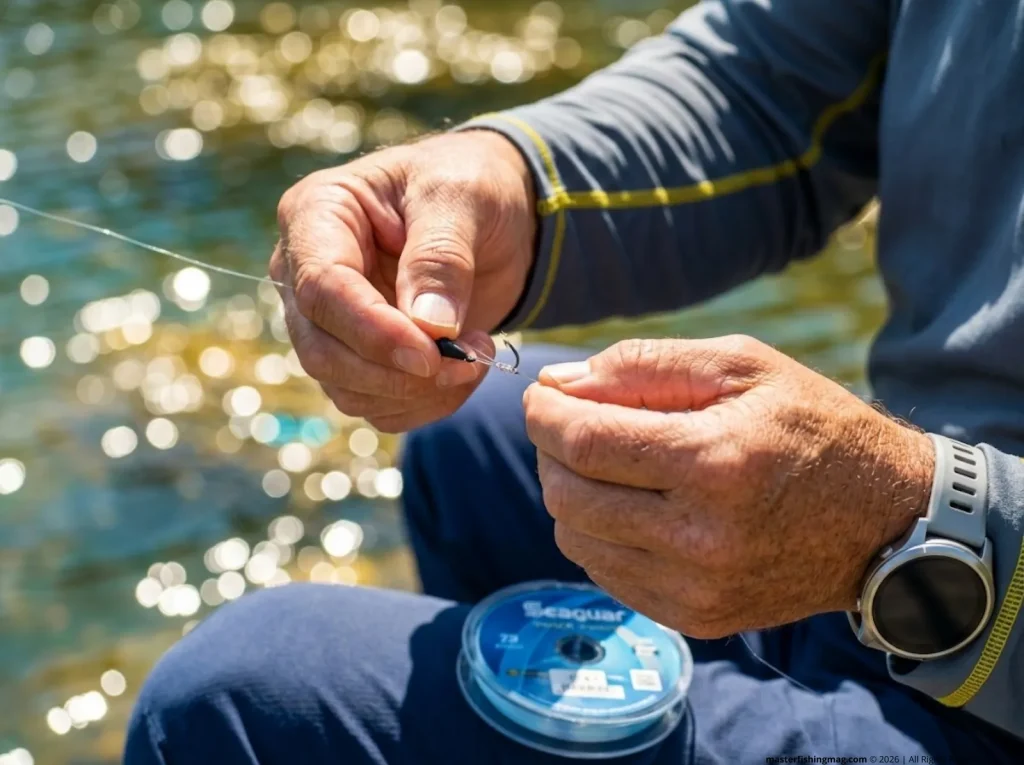
For small water panfishing, gear precision matters more than sheer power. Elite panfish specialists run highly calibrated systems using brands like St. Croix or Daiwa.
The Physics of the 2lb Fluorocarbon Advantage
Transitioning from standard 6-pound monofilament down to a 2-pound line test radically reduces surface tension drag. Dropping line diameter directly increases your casting distance with tiny baits. Fluorocarbon leaders sink faster and remain practically invisible in clear water, letting your bait perform naturally without the stiff resistance of heavier line.
When you need help choosing the right ultralight spinning combo, focus on sensitivity over backbone.
Micro-Jig Terminal Velocity and “Hang Time”
Professional micro-jiggers utilize tungsten weights as low as 1/100 ounce. Tungsten offers higher density than lead, giving you better sonar returns and a direct bottom contact feel. Using fluorocarbon line increases lure hang time. A 1/64 ounce jig paired with 2-pound fluorocarbon drops with a 35% slower terminal velocity compared to heavier lines. This maximizes the crucial hang time in the strike zone, putting your bait squarely in the fish’s face during the slow fall. Keep your seasonal rigging simple and light, favoring small jigs, marabou jigs, and size 10 aberdeen hooks or a classic Little Nipper.
The Bank-Parallel Casting Geometry System
Typical anglers waste 90% of their retrieve pulling lures through empty central water. Instead, employ bank-parallel casting. Casting parallel to the grassy edge keeps your lure in the highly productive littoral zone for 100% of the retrieve. You can effectively work the entire bank line with a Minn Kota trolling motor or by slowly walking the edge, keeping your variable depth control locked in.
Bio-Mimicry and Visual Strike Triggers
Highly pressured ponds create neurotic fish. Throwing bulky bass lures will just send them running.
The “Anemic Strike” in Pressured Ponds
In heavily fished ponds, bluegill develop an anemic strike. They just inhale the bait without swimming away, making the strike physically imperceptible through the rod blank. If you wait to feel the tug, you have already missed the fish. This requires a shift from tactile fishing to purely visual detection.
Tightlining for Visual Strike Detection
To counter the anemic strike, employ the tightlining method, heavily borrowed from the ice fishing community. Watch the loops of line floating on the water for microscopic shivers or slight horizontal jumps. Practicing visual line watching techniques allows you to set the hook the absolute millisecond the bait is inhaled.
Do not impart chaotic action to your lure. Panfish are visual particulate feeders that hyper-analyze stationary forage. Using a Wobble Bobber or high-visibility slip bobbers helps monitor subtle takes. Dead-sticking a lure—letting it sit motionless—often produces better results as it mimics the natural, slow descent of stunned prey.
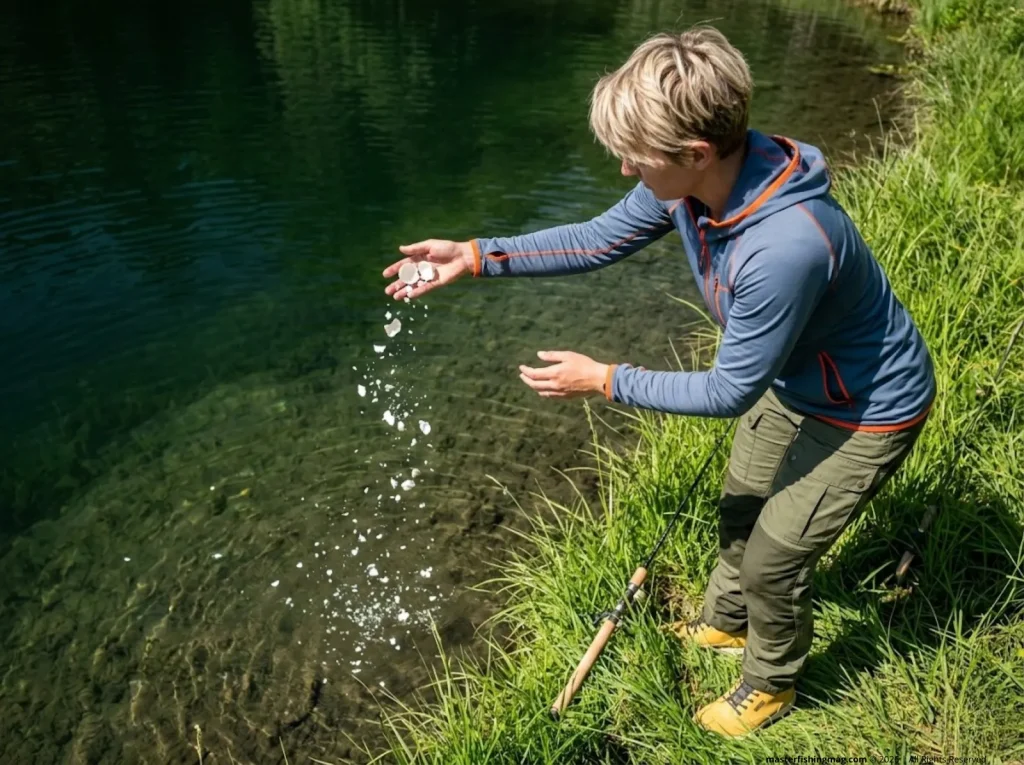
The Eggshell Chumming Visual Hack
Chumming with egg shells mimics predator scale flash. Crushing unwashed eggshells and tossing them directly into the water simulates the iridescent flash of falling scales from a recent bass strike. The bluegills recognize this visual trigger immediately, swarming the area looking for scraps. Once they are concentrated, drop a tiny Berkley Gulp minnow, a classic Panther Martin spinner, or a Lindy rig directly through the sinking shells to force aggressive reaction strikes with varying retrieve styles.
Pro-Tip: Use the eggshell chumming hack to ignite a feeding frenzy. Stop throwing bread.
The Ethics of Selective Harvest
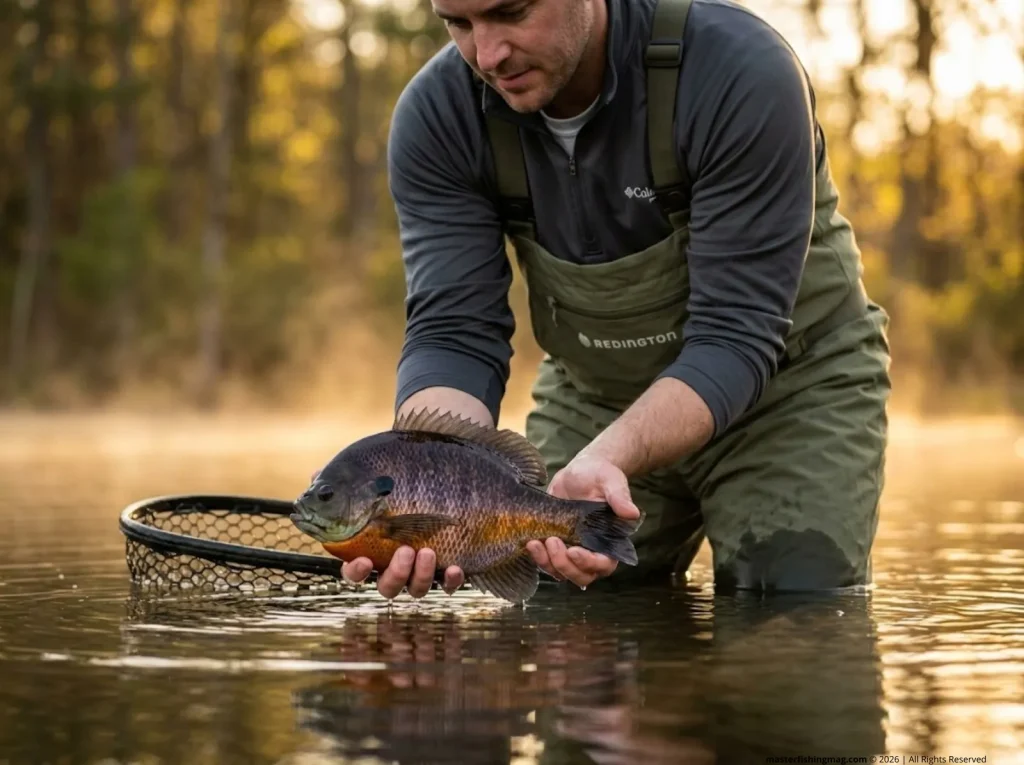
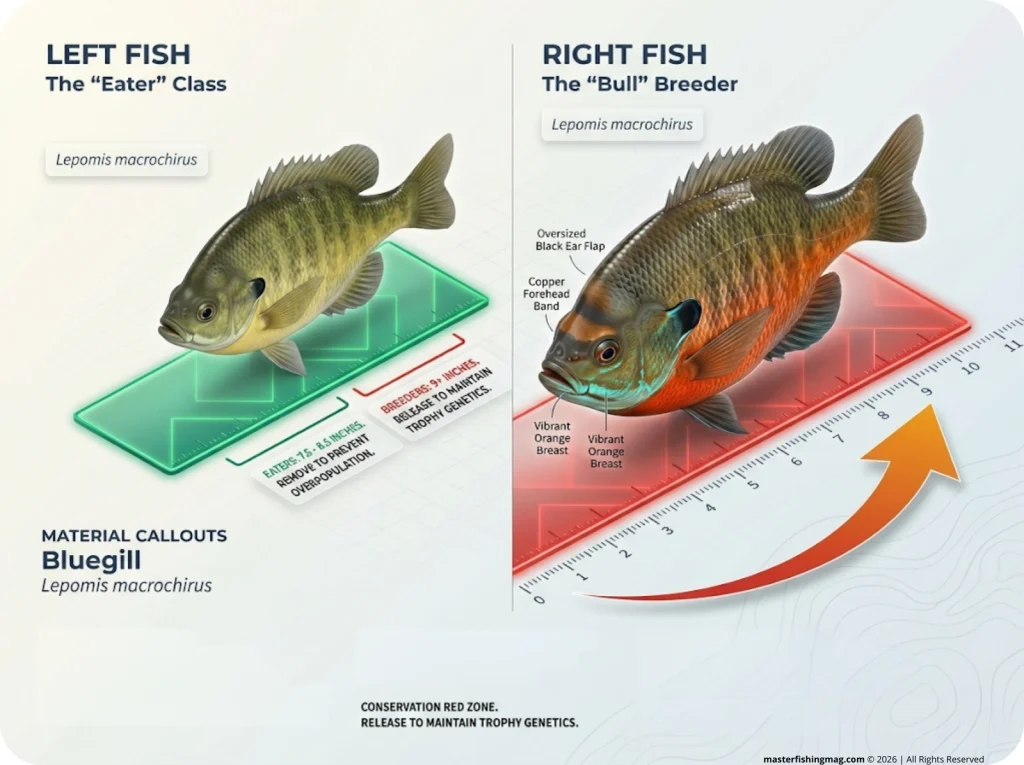
Ponds are fragile, enclosed ecosystems. Managing the carrying capacity requires actual harvest, but you must take the right fish. The social hierarchy of a pond is anchored by dominant “Bull” Bluegill males, which are responsible for guarding the densely packed nesting colonies. Studies on reproductive biology and spawning behaviors prove that these massive males dictate the genetic ceiling for the entire pond.
The Genetic Importance of Bull Bluegill
When you remove a bull bluegill, you allow smaller, inferior sneaker males to fertilize the eggs. This rapidly degrades the pond’s top-end genetic potential and immediately causes severe stunting.
Defining the 7.5 to 8.5-Inch “Eater” Class
Selective harvest maintains trophy genetics. Practice the Plate rule: only harvest fish in the 7.5 to 8.5-inch class for eating. Release absolutely everything over 9 inches. Removing a few mid-sized fish is physically necessary to prevent overpopulation and starvation, but harvesting the bulls destroys the pond’s future.
Mucus Layer Protection and Safe Handling
For the big fish going back into the water, use thoroughly wet hands. Dry hands strip the vital protective slime coat off the fish’s flank, exposing it to severe bacterial infections. Treat the science of fish slime coat handling seriously to ensure the giant slabs survive to spawn another year.
Conclusion
The pursuit of massive slab panfish in small, pressured ponds demands strict acoustic discipline and analytical bait presentation. You cannot stomp down to the muddy bank, chunk a heavy bobber out to the middle, and expect to catch the biggest fish in the system. By scaling down to 2-pound fluorocarbon, applying bank-parallel casting, and managing your vibration footprint, you engineer a massive tactical advantage. Grab your ultralight gear, implement these stealth mechanics, and start pulling giants from your overlooked neighborhood pond.
FAQ
Do I need to buy an expensive ultralight rod for small ponds?
No, but you do need the right action. While high-end rods offer elite sensitivity for detecting anemic strikes, a budget setup paired with 2-pound fluorocarbon and a visual tightlining technique will heavily out-fish a heavy rod spooled with thick monofilament.
Why are all the bluegill in my local pond so tiny?
The pond is likely experiencing a stunted population dynamic. When anglers harvest the dominant 9-inch bull males, smaller sneaker males take over reproduction, and the resulting high fish density leads to severe food competition that stalls growth.
Does scent actually matter for panfish in clear water?
Yes, particularly to mask negative human scents. Even in highly visual environments, panfish are cautious inspectors; natural attractants or simply removing bug spray and sunscreen from your hands can turn a hesitant follower into a confirmed strike.
How do you unhook deeply swallowed micro-jigs safely?
Prevention is vastly superior to extraction. Using a highly visible line and keeping a tight connection prevents the fish from inhaling the bait entirely, but if a deep hook occurs, use long-reach hemostats to gingerly back the hook out without tearing gill rakers.
Risk Disclaimer: Fishing, boating, and all related outdoor activities involve inherent risks that
can lead to injury. The information provided on Master Fishing Mag is for educational and informational purposes
only. While we strive for accuracy, the information, techniques, and advice on gear and safety are not a substitute
for your own best judgment, local knowledge, and adherence to official regulations. Fishing regulations, including
seasons, size limits, and species restrictions, change frequently and vary by location. Always consult the latest
official regulations from your local fish and wildlife agency before heading out. Proper handling of hooks, knives,
and other sharp equipment is essential for safety. Furthermore, be aware of local fish consumption advisories. By
using this website, you agree that you are solely responsible for your own safety and for complying with all
applicable laws. Any reliance you place on our content is strictly at your own risk. Master Fishing Mag and its
authors will not be held liable for any injury, damage, or loss sustained in connection with the use of the
information herein.
Affiliate Disclosure: We are a participant in the Amazon Services LLC Associates Program, an
affiliate advertising program designed to provide a means for us to earn advertising fees by advertising and linking
to Amazon.com. As an Amazon Associate, we earn from qualifying purchases. We also participate in other affiliate
programs and may receive a commission on products purchased through our links, at no extra cost to you. Additional
terms are found in the terms of service.