
In this article
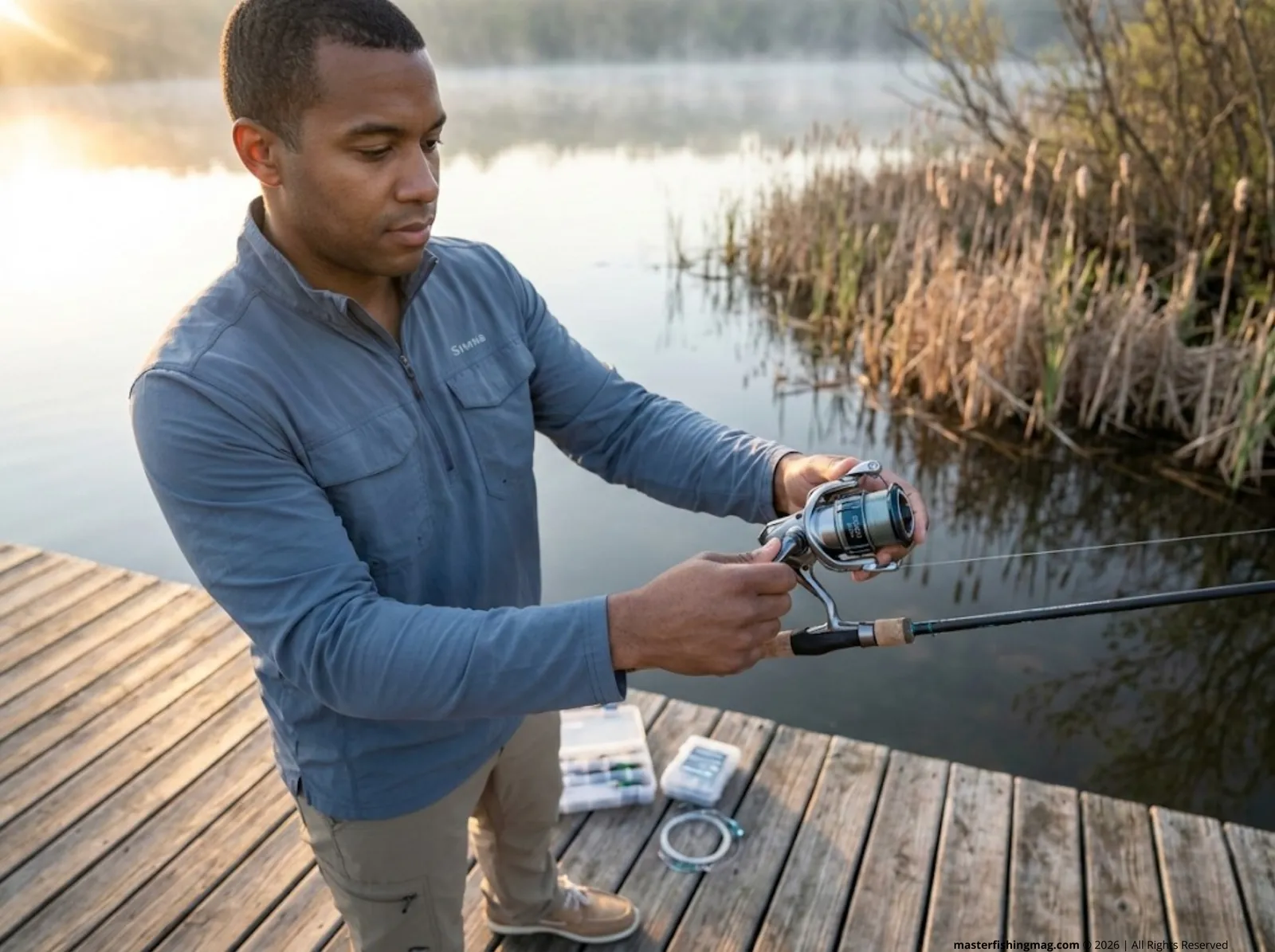
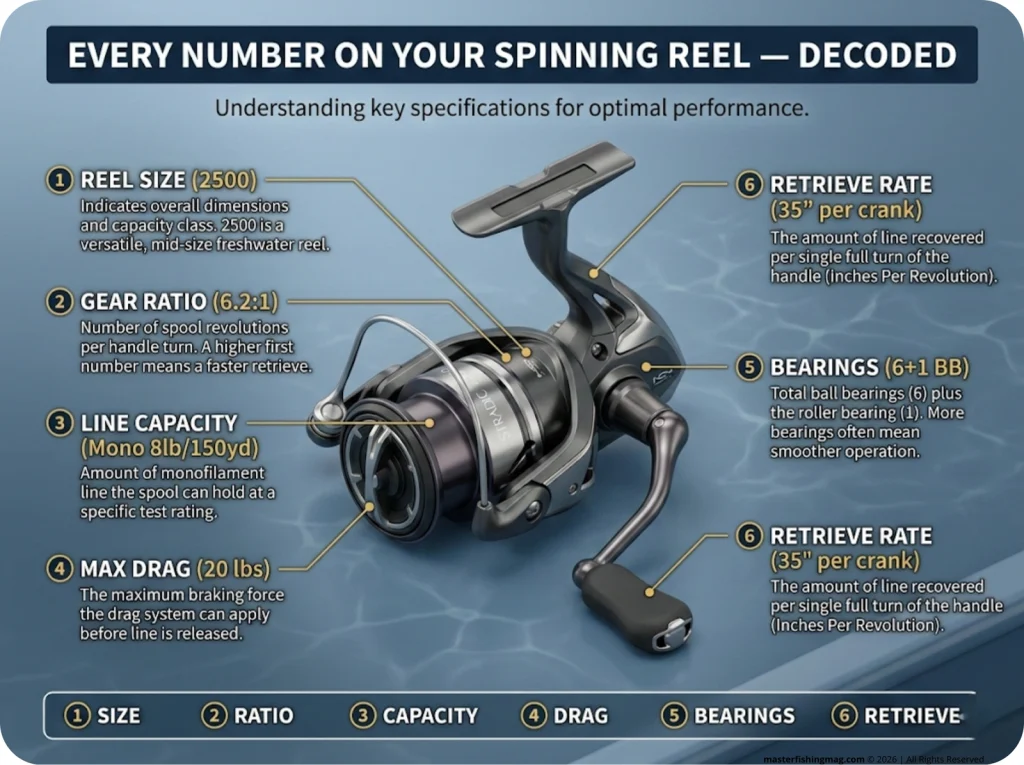
You’re standing in the tackle shop, turning a spinning reel over in your hands. The tag reads “2500 / 6.2:1 / 8lb-150yd / 20lb drag / 6+1.” Might as well be a license plate number. You glance at the guy behind the counter, but he’s already helping someone else test a baitcasting reel, so you grab the one your buddy recommended, swipe your card, and walk out hoping for the best.
After two decades of rigging rods on docks, charter boats, and muddy riverbanks, I’ve watched hundreds of anglers do exactly this. And I’ve watched just as many come back frustrated because the reel they bought didn’t match the fish they were chasing.
That guessing game ends here. Every number printed on your fishing reel exists for a reason, and once you know what each one means, you’ll pick the right reel every single time — no guessing, no wasted money, no lost fish.
⚡ Quick Answer: The six core reel specifications are size (physical scale and spool capacity), gear ratio (retrieve speed), line capacity (how much line the spool holds), max drag (maximum braking pressure — not your working setting), ball bearings (smoothness), and retrieve rate (actual inches per crank). A 2500-size reel with a 6.2:1 gear ratio and 6+1 ball bearings covers most freshwater fishing for beginners.
| Fishing Reel Specifications | ||
|---|---|---|
| Spec | What It Means | Beginner Sweet Spot |
| Size (e.g., 2500) | Spool dimensions and overall line capacity | 2500 for freshwater all-purpose |
| Gear Ratio (e.g., 6.2:1) | How many spool turns per handle crank | 6.0:1 to 6.2:1 versatile |
| Line Capacity (e.g., 8lb/150yd) | Maximum line at a given pound test | Match to target species |
| Max Drag (lbs) | Ceiling on braking pressure — not your working setting | 10-15 lbs for freshwater |
| Ball Bearings (e.g., 6+1) | Smoothness of internal rotation | 6+1 sealed stainless |
| Retrieve Rate (inches) | Actual line recovered per handle turn | 28-35 inches per crank |
Reel Size Numbers and What They Actually Tell You
The 1000-to-5000 Scale Decoded
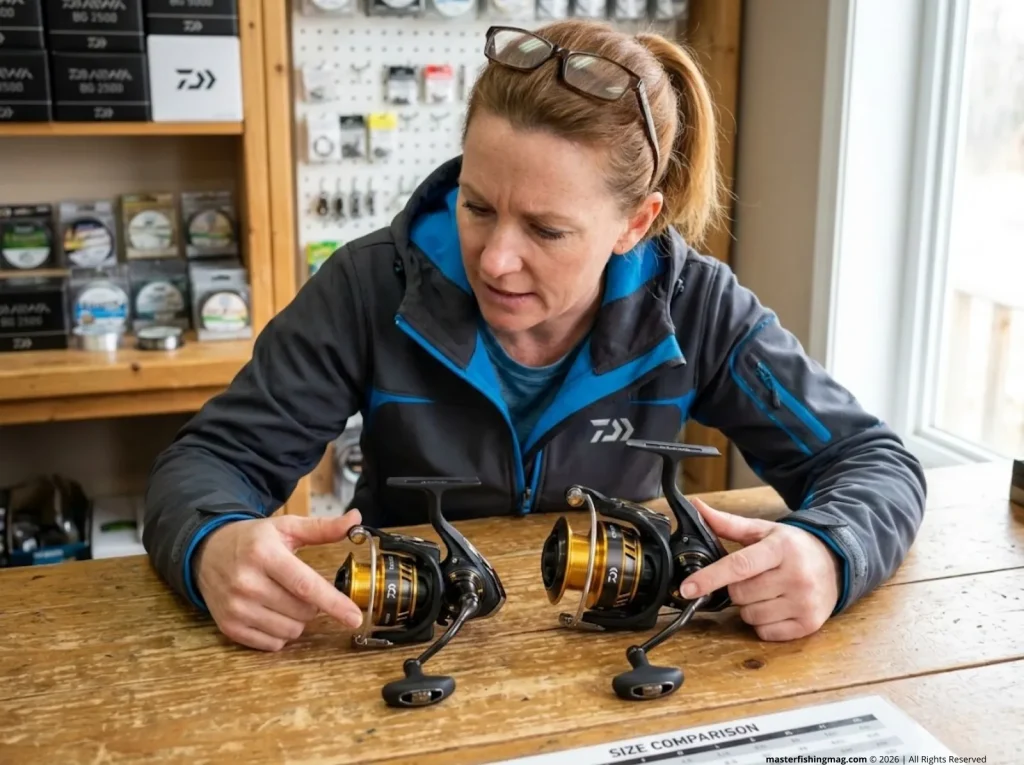
Every spinning reel carries a number — 1000, 2500, 4000, 5000 — and that number is your first clue about what the reel was built to do. The higher the number, the bigger the spool, the more line capacity it holds, and the heavier the reel sits in your hand.
A 1000-size reel holds roughly 150 meters of PE1 line — we’re talking panfish, small trout, creek fishing where you need something light and nimble. Step up to a 2500 and you’ve got the freshwater all-rounder. Rapala calls this spinning reel size “all-purpose for freshwater and light saltwater,” and they’re right. It handles bass, walleye, and even light inshore saltwater without breaking a sweat.
Jump to the 3000-4000 range and you’re into pike, inshore saltwater species, and heavier freshwater applications. Anything marked 5000 or above is built for offshore work — big redfish, stripers, the kind of fish that peel line like it’s free.
Why a Shimano 2500 Isn’t a Penn 2500
Here’s something no other guide will tell you straight: reel sizes are NOT standardized across manufacturers. A Shimano 2500 and a Penn 2500 do not hold the same amount of line. Period.
Shimano’s sizing system traces back to the Japanese “E” numbering convention, which originally represented reel line capacity in meters. Daiwa follows a similar logic but actual capacities differ by 10-15%. Penn reels use their own conventions entirely, and their model numbers don’t map cleanly to either Japanese brand.
Pro tip: Don’t trust the reel size number alone. Flip the box over and read the actual line capacity in lb/yds. That’s the number that matters at the water.
Matching Reel Size to Your Target Species
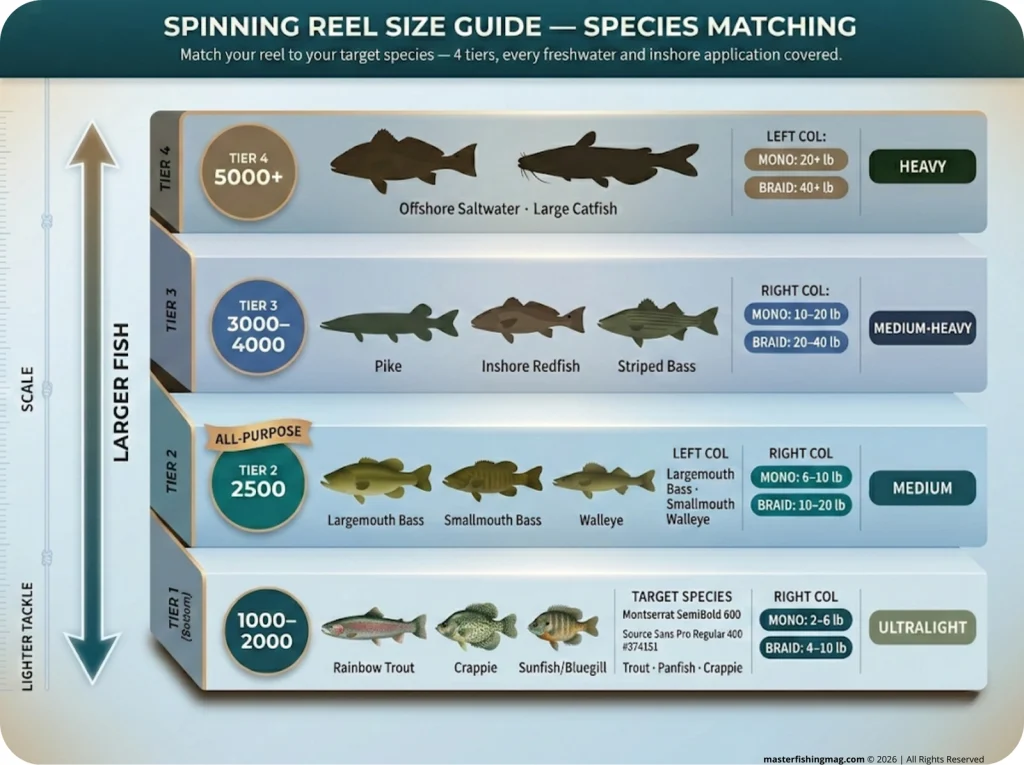
Picking the right spinning reel comes down to one question: what are you fishing for? The table below breaks it down by species-to-size matching so you can walk into the shop knowing exactly which number to grab.
| Fishing Reel Size Guide | ||||
|---|---|---|---|---|
| Reel Size | Target Species | Rod Power | Mono Range | Braid Range |
| 1000-2000 | Trout, panfish, crappie | Ultralight | 2-6 lb | 4-10 lb |
| 2500 | Largemouth bass, smallmouth, walleye | Medium | 6-10 lb | 10-20 lb |
| 3000-4000 | Pike, musky, redfish, striped bass | Medium-Heavy | 10-20 lb | 20-40 lb |
| 5000+ | Offshore saltwater, large catfish | Heavy | 20+ lb | 40+ lb |
Once you’ve matched the reel size to your species, the next step is matching your rod’s power and action to the reel. A 2500 reel on a heavy power rod creates a mismatch that will cost you sensitivity and rod-reel balance.
Gear Ratio Explained Without the Math Headache
What 6.2:1 Actually Means on the Water
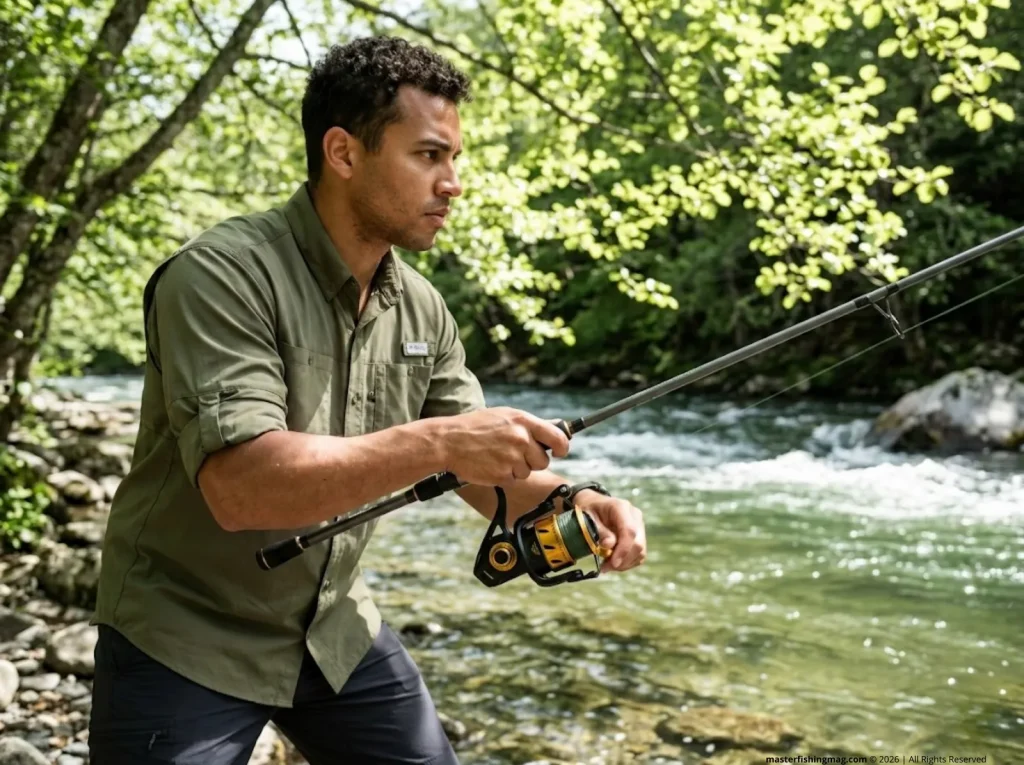
The gear ratio on your reel tells you one simple thing: how many times the spool rotates for each complete turn of the handle. A reel marked 6.2:1 spins the rotor 6.2 times every time you make one full crank. More spool turns per handle crank means more fishing line coming back to you, faster.
Spinning reels typically run between 5.2:1 and 7.0:1. Anything above 7.0:1 is rare in spinning configurations because the torque demands go up and line twist becomes a problem. For most anglers, the sweet spot sits between 6.0:1 and 6.2:1 — fast enough for topwater and spinnerbaits, strong enough for slower bottom presentations.
Slow vs Fast Gear Ratios and When Each Wins
Think of gear ratios like bicycle gears. Low gear (5.0:1 to 5.4:1) gives you cranking power — ideal for deep crankbaits, heavy lures, or any time you need torque over speed. High gear (6.2:1 to 7.0:1) gives you retrieve speed — perfect for burning spinnerbaits, picking up slack on hooksets, or working topwater across a flat.
A medium ratio (5.5:1 to 6.1:1) sits in the versatile middle ground and covers the widest range of fishing techniques. If you’re buying one reel to do everything, that’s your range.
For a deeper look at how gear ratios translate to lure speed across reel types, including baitcasting reels, check our technical breakdown.
The Gear Ratio Trap Most Beginners Fall Into
Here’s where most beginners get burned: they assume a higher gear ratio always means more line coming in per crank. It doesn’t.
Two reels with identical 6.2:1 ratios can have completely different retrieve rates because the spool size is different. A Shimano Stradic 5000 at 6.2:1 retrieves 40 inches per crank. That same Stradic in a 2500 size at the same ratio? Only 27 inches. Same gears, different spool — different speed.
The spec you actually want is the retrieve rate, sometimes listed as IPR (Inches Per Revolution). That’s the real-world number telling you how much fishing line lands back on the spool per handle turn.
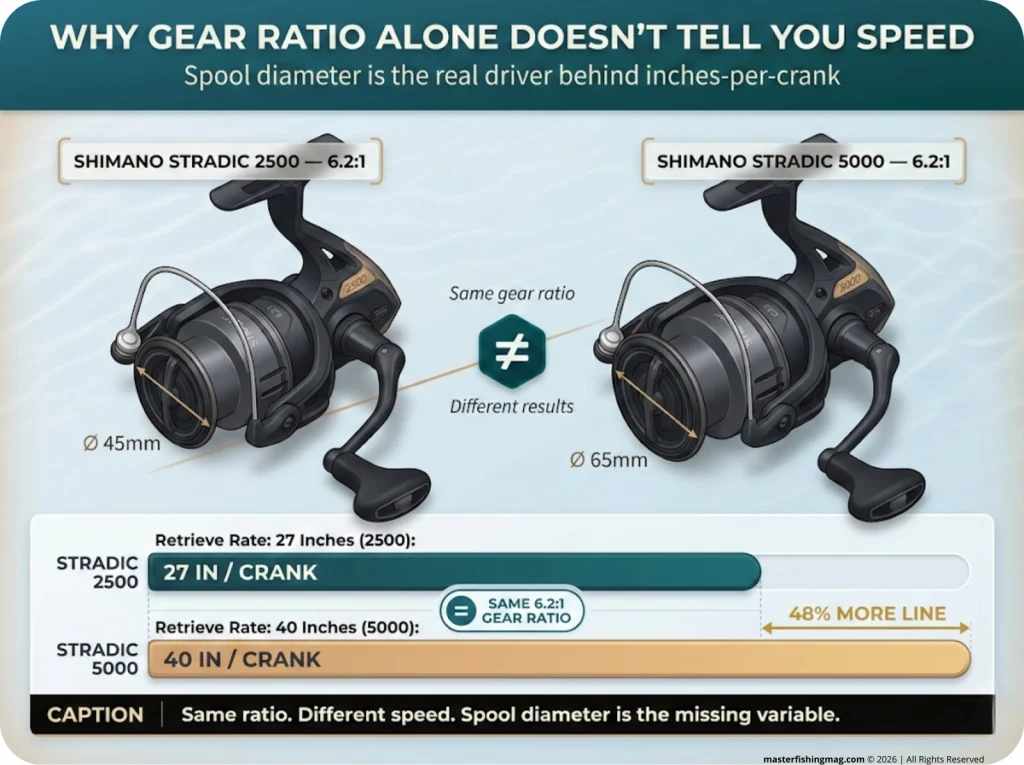
Pro tip: When comparing reels, ignore the gear ratio and look at the line retrieve per crank in inches. Two reels at 6.2:1 can pull in very different amounts of line.
Line Capacity and Retrieve Rate — The Specs That Prevent Lost Fish
Reading the Line Capacity Numbers on Your Spool
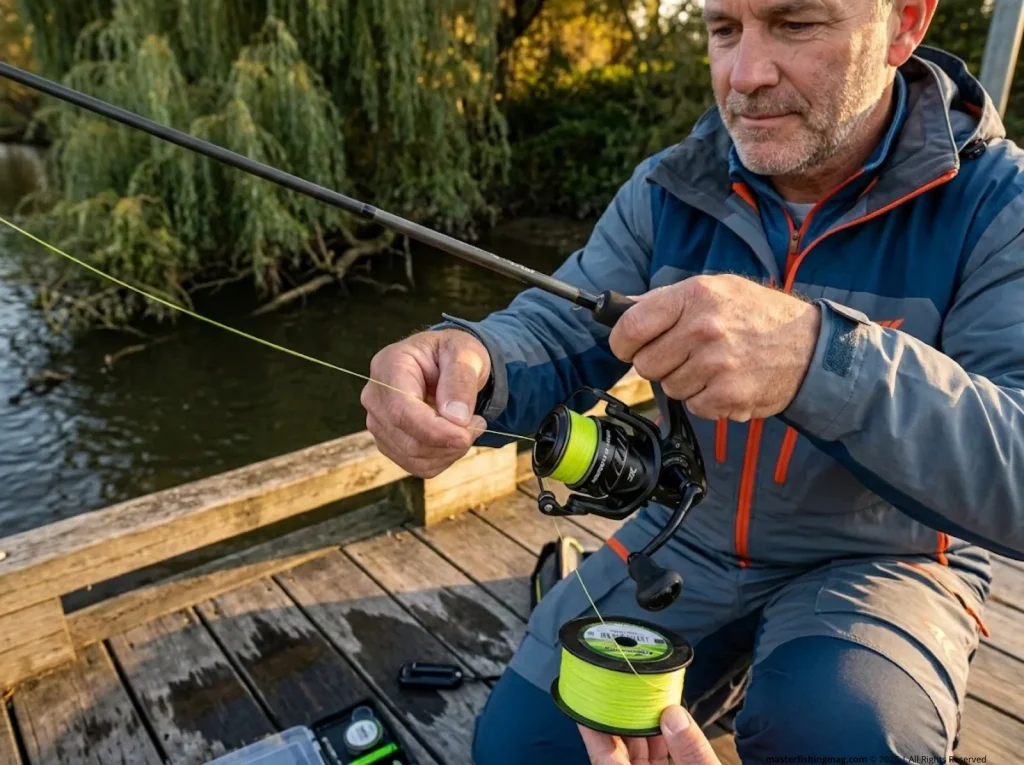
Flip your spinning reel upside down and look at the inside edge of the spool. You’ll see something like “8lb/150yds” or “0.25mm/200m.” That’s the line capacity — the maximum amount of fishing line the spool can hold at a specific line test.
Most manufacturers list monofilament capacity first and braid capacity below it. Braid is thinner at the same strength, so you’ll always fit more on the spool. A 2500 reel might hold 150 yards of 8lb mono or 200 yards of 10lb braid. That extra yardage matters when a redfish decides to run for the channel marker.
Match your spool capacity to the fish you’re chasing. A trout in a mountain creek won’t pull 30 feet of line. A bull redfish on a saltwater flat can peel 200 yards before you even think about turning him. Buy accordingly.
If you’re running braid, one common issue eats into your usable capacity before you even make the first cast. Preventing line twist that eats into your usable capacity saves you real frustration on the water.
Retrieve Rate — The Number That Actually Tells You Speed
The retrieve rate is the spec most beginners skip, and it’s the one that tells you the most about real-world performance. It measures actual inches per crank — how much line winds back onto the spool with one complete handle turn.
The legendary reel technician Alan Tani puts it simply: spool size times 3.14 times gear ratio equals your retrieve rate. Most spinning reels fall between 25 and 40 inches per crank, depending on spool diameter and gearing.
This is the number that matters when you need to burn a lure past a bedded bass or pick up slack for a hookset at distance. The gear ratio alone won’t tell you — but the retrieve rate will.
Max Drag — Why the Biggest Number on the Box Is Misleading
What Max Drag Really Measures
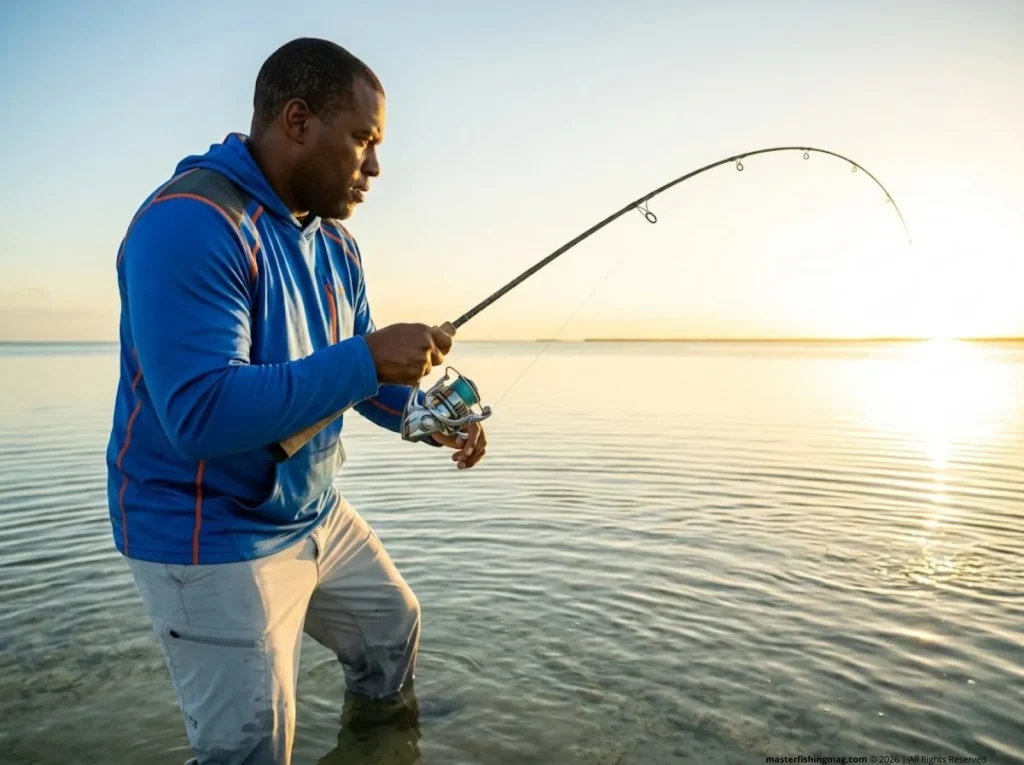
Max drag is the most misunderstood number on every reel box. It’s the maximum drag pressure the system can apply before the line starts slipping — the absolute ceiling, not the working floor.
Ratings range from about 6 lbs on ultralight freshwater reels to 25+ lbs on heavy saltwater reels. The drag system itself is built from friction discs — called drag washers — sandwiched inside the reel body. Tighten the knob and the washers press harder against the spool, adding resistance.
A Penn Authority 2500 pushes 20 lbs of max drag with IPX8 waterproofing and 13+1 bearings. Impressive on paper. But if you fish it anywhere near that ceiling, you’ll snap your line on the first hard run.
Front drag systems give you finer adjustment but leave the mechanism more exposed to water. Rear drag provides better sealing for saltwater use, but with less precision on the adjustment. Most serious anglers prefer front drag for the control it offers during a fight.
The 20-30% Rule That Saves Fish and Line
Here’s the number the box doesn’t print: your working drag should sit at 20-30% of your line’s pound test. On 10lb line, that means 2-3 lbs of actual drag pressure — nowhere near the reel’s 15lb max rating.
Professional guides and publications like Wired2Fish agree on this range. It gives the fish enough resistance to tire without enough force to snap the line on a sudden run.
There’s a conservation angle here that nobody in the tackle industry talks about. Proper drag settings reduce fish fight time. Shorter fights mean lower stress hormones in the fish. Lower stress means better survival rates for catch-and-release. Setting your drag right isn’t just smart fishing — it’s fisheries conservation science on minimizing fight-related stress, applied at the reel. This is what sustainable drag use actually looks like.
Pro tip: Set your drag to about one-third of your line’s pound test. On 10lb line, you want roughly 3 lbs of resistance. That keeps the fish buttoned without risking a break-off — and the fish recovers faster after release.
For the hands-on method of dialing this in correctly, our complete guide to setting drag with or without a scale walks you through it step by step.
Ball Bearings — When More Isn’t Always Better
What the 6+1 Actually Means
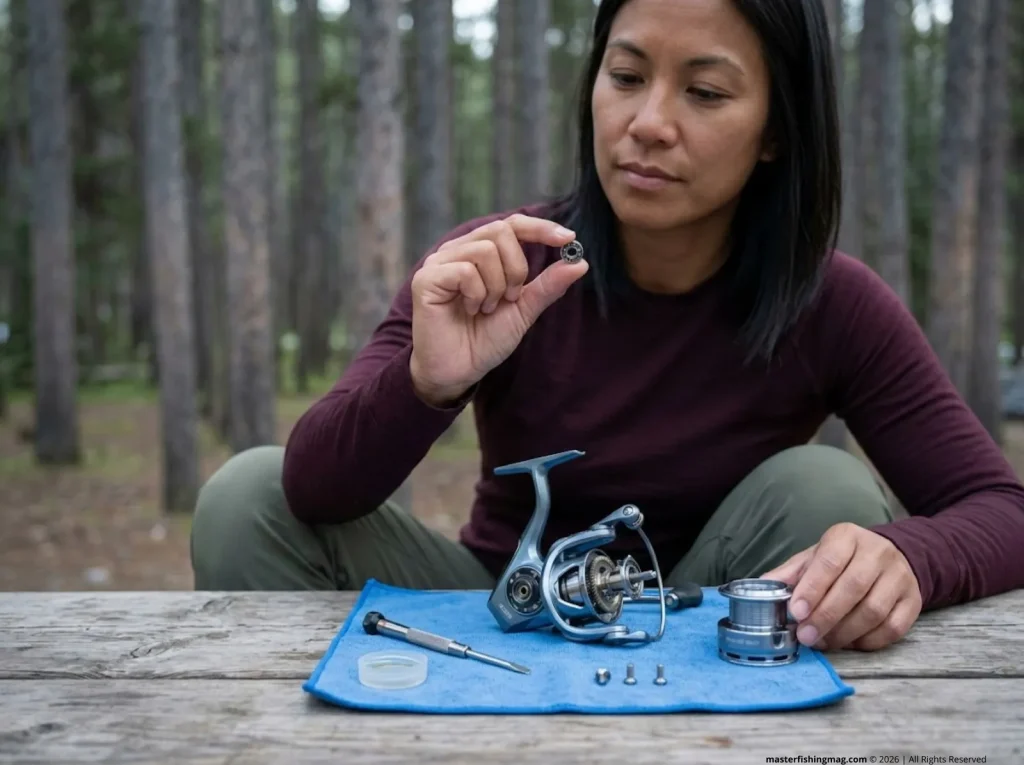
The bearing count on a spinning reel box reads something like “6+1” or “10+1.” The first number is the count of ball bearings — small metal spheres inside races that reduce friction between moving parts. The “+1” is a roller bearing at the reel handle shaft, built to handle heavier loads at slower speeds than ball bearings can.
That roller bearing explanation is the part every other guide skips. The “+1” isn’t just another ball bearing — it’s a different type entirely, designed to keep the handle stable under heavy cranking load.
A KastKing Sharky III runs 10+1 bearings while a Shimano Stradic FL runs 6+1. The Shimano is still smoother on the water because bearing quality and placement matter more than raw count. Six precision-machined, properly seated stainless bearings will always outperform thirteen loose-tolerance budget ones.
Open vs Shielded vs Sealed — The Real Quality Indicator
There are three bearing types you’ll find inside fishing reels: open bearings (exposed metal balls), shielded bearings (metal or plastic cover), and sealed bearings (rubber gaskets around the entire race).
Open bearings spin the fastest but collect grit, sand, and salt within a few trips. Fine for a pond-only budget reel, but they’ll corrode inside a season near saltwater. Shielded bearings offer a middle ground — decent spin with better contamination resistance. They handle most freshwater conditions without issue.
Sealed bearings are the standard for any reel headed near salt spray. The rubber seals keep water and particulates out entirely, giving you the best corrosion resistance available. Saltwater reels from Penn, Daiwa, and Shimano use sealed stainless bearings as baseline material.
When those bearings eventually wear down — and they will — knowing the signs saves you from a ruined trip. Learn more about diagnosing when your bearings need cleaning or replacement before your next season starts.
Putting It All Together — Reading a Real Reel Label in 60 Seconds
The Label Walkthrough
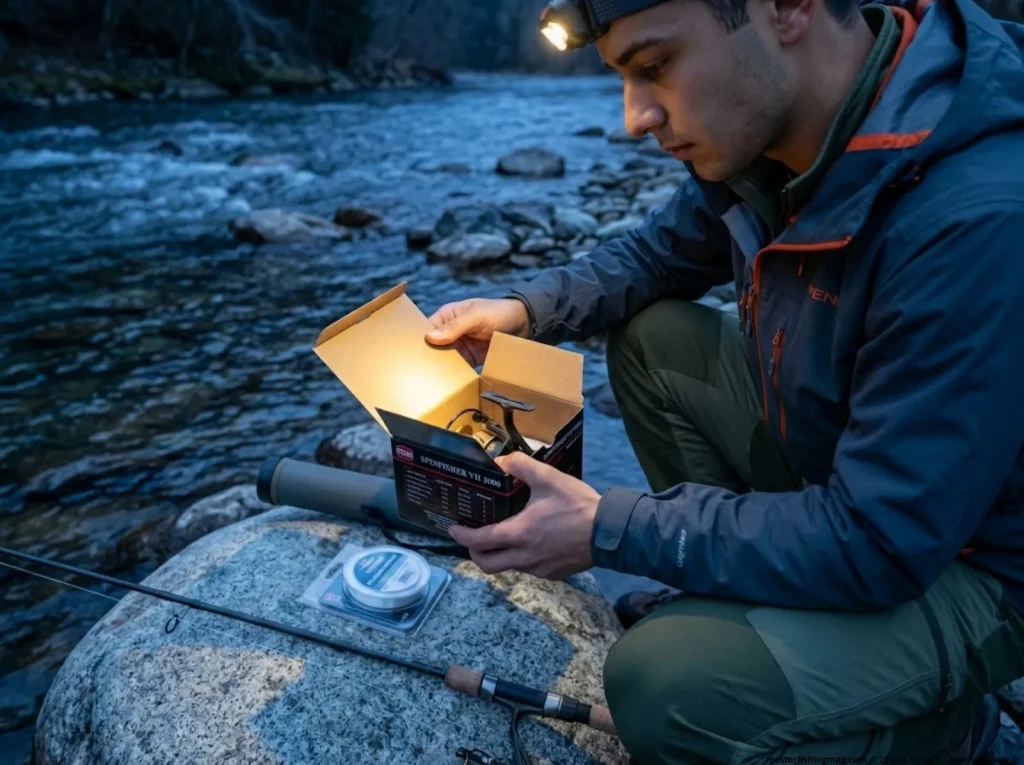
Pick up any spinning reel off the shelf and you can decode it in under a minute. Here’s the sequence:
Start with the reel size — usually embossed on the spool or the reel foot. That tells you which species-to-size tier you’re in. Next, find the gear ratio printed on the reel body or box. That’s your retrieve speed category: slow, medium, or fast.
Now flip to the spool lip and read the line capacity in lb/yds format. This tells you exactly how much line fits at what strength — and remember, braid capacity is usually listed separately below mono. Check the max drag on the box or spec sheet, then mentally calculate 20-30% of your planned line test for your actual working drag pressure setting.
Note the bearing count and — more importantly — look for whether the spec sheet mentions sealed or shielded. If it doesn’t say, assume open bearings. Finally, find the retrieve rate in inches if the reel manufacturer lists it. That’s your real-world speed metric, not the gear ratio alone.
The 5-Question Spec Check Before You Buy
Before you hand over your credit card, run through these five questions:
Is the reel size right for your target species? A 2500 for bass and freshwater panfish, a 4000 for pike and inshore salt. Is the gear ratio suited to your primary technique? Slow presentations want 5.2:1, versatile work wants 6.2:1, speed fishing wants 7.0:1.
Does the line capacity hold enough for your longest expected fish run? Always check braid capacity for maximum yardage. Is the max drag sufficient? You need at least three times your working drag pressure as headroom. And are the bearings quality or just quantity? Six sealed bearings in stainless beat thirteen open bearings every time.
If your specs check out and you’re ready to see where the numbers perform in the real world, take a look at our field-tested picks for spinning reels under $100 — every reel on that list was chosen using exactly these criteria.
Conclusion
Every number on your spinning reel exists for a reason. Reel size tells you scale. Gear ratio tells you speed. Line capacity tells you range. Max drag tells you the ceiling — not the target. And bearings tell you smoothness, but only if you look past the count to the seal type.
Don’t compare numbers across brands without checking actual reel specifications. A 2500 from one manufacturer is not the same as a 2500 from another. Flip the box, read the line capacity, and trust the printed specs over the model number.
Next time you’re standing in that tackle shop, flip the reel box over. You speak the language printed on it now. Match the specifications to your water, your target species, and your fishing technique. That’s how you stop guessing and start fishing with intent.
FAQ
What size spinning reel should a beginner buy?
A 2500-size reel is the best starting point for most freshwater beginners. It handles bass, trout, walleye, and panfish comfortably while pairing with medium power rods in the 6’6″ to 7′ range. You can also use it for light inshore saltwater.
What gear ratio is best for a spinning reel?
A 6.0:1 to 6.2:1 gear ratio covers the widest range of fishing techniques. It retrieves fast enough for topwater and spinnerbaits yet still has cranking authority for deeper presentations with crankbaits or jigs.
How many ball bearings does a good spinning reel need?
Quality beats quantity. Six sealed bearings in stainless steel with a roller bearing (6+1) outperform thirteen cheap open bearings. Look for the seal type — sealed or shielded — rather than the total count.
What does max drag mean on a fishing reel?
Max drag is the maximum drag pressure the system can exert before line slips. It is a ceiling, not a target. Set your working drag to 20-30% of your line’s pound test for proper fish control and healthier catch-and-release outcomes.
Do spinning reel sizes mean the same thing across all brands?
No. A Shimano 2500 and a Penn 2500 have different actual line capacities. Always check the specific reel specifications in lb or yds rather than relying on the reel size number alone. Brand sizing conventions trace back to different engineering origins.
Risk Disclaimer: Fishing, boating, and all related outdoor activities involve inherent risks that
can lead to injury. The information provided on Master Fishing Mag is for educational and informational purposes
only. While we strive for accuracy, the information, techniques, and advice on gear and safety are not a substitute
for your own best judgment, local knowledge, and adherence to official regulations. Fishing regulations, including
seasons, size limits, and species restrictions, change frequently and vary by location. Always consult the latest
official regulations from your local fish and wildlife agency before heading out. Proper handling of hooks, knives,
and other sharp equipment is essential for safety. Furthermore, be aware of local fish consumption advisories. By
using this website, you agree that you are solely responsible for your own safety and for complying with all
applicable laws. Any reliance you place on our content is strictly at your own risk. Master Fishing Mag and its
authors will not be held liable for any injury, damage, or loss sustained in connection with the use of the
information herein.
Affiliate Disclosure: We are a participant in the Amazon Services LLC Associates Program, an
affiliate advertising program designed to provide a means for us to earn advertising fees by advertising and linking
to Amazon.com. As an Amazon Associate, we earn from qualifying purchases. We also participate in other affiliate
programs and may receive a commission on products purchased through our links, at no extra cost to you. Additional
terms are found in the terms of service.