
In this article
The gill net stretched thirty yards across the cove mouth, tangled with dead crappie floating belly-up in the last copper light of evening. I’d been fishing this pocket since I was twelve. My hands were shaking — not from anger, but from not knowing what to do next.
After two decades on the water, I’ve watched poachers work more times than I’d like to admit. Gill nets in recreational coves. Coolers packed three times over the bag limit. Guys keeping shorts and bragging about it at the cleaning station. For years, I did what most of us do — shook my head and kept casting.
Then a game warden told me something that changed how I think about it. Only 4% of poaching incidents are ever detected. Every violation I ignored was a vote for fewer fish next season. Here’s exactly how to report fishing violations anonymously, protect your identity, and actually get results — without putting yourself at risk.
⚡ Quick Answer: Call the NOAA Fisheries Enforcement Hotline at 1-800-853-1964 for federal marine violations, or the FWS TIPs line at 1-844-FWS-TIPS for federal wildlife crimes. For state freshwater violations, call your state’s Turn In a Poacher hotline — the number is printed on the back of your fishing license. All calls can be made anonymously, and your identity is protected by law.
How to Recognize a Fishing Violation When You See One
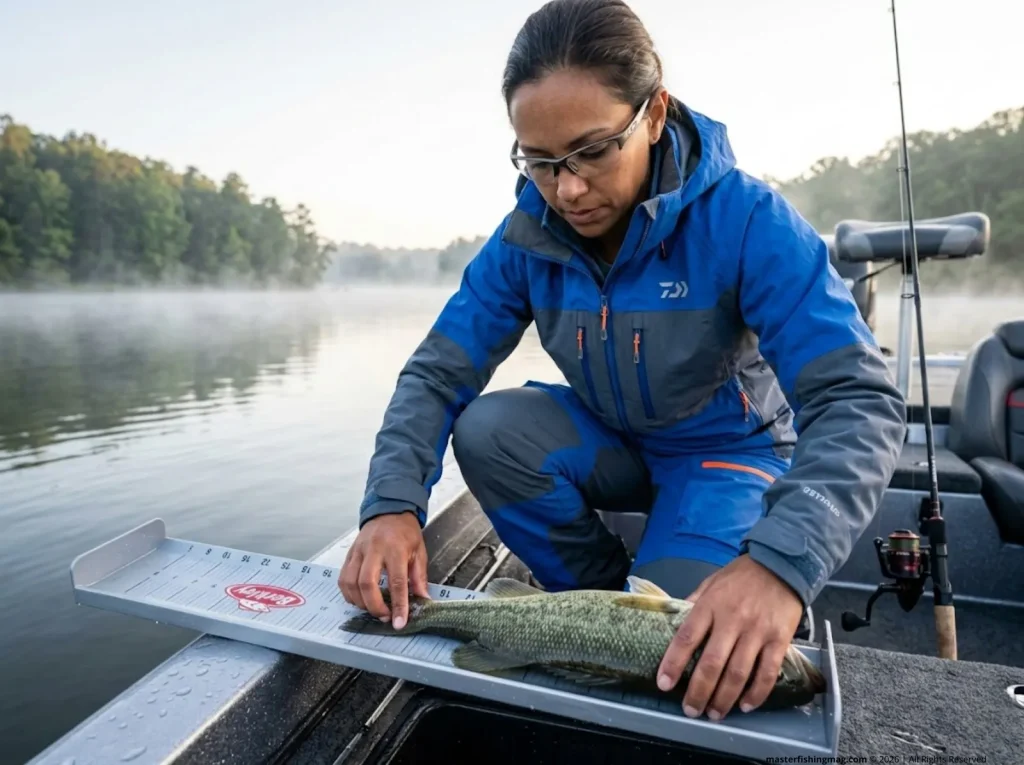
Most anglers assume they’d know a fishing violation when they see one. But the truth is, a lot of unlawful activity looks routine from thirty yards away. Knowing what crosses the line is the first step in making a report that actually leads somewhere.
Size and Bag Limit Violations You’ll See Most Often
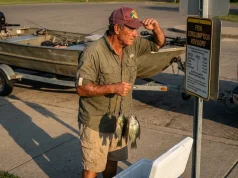
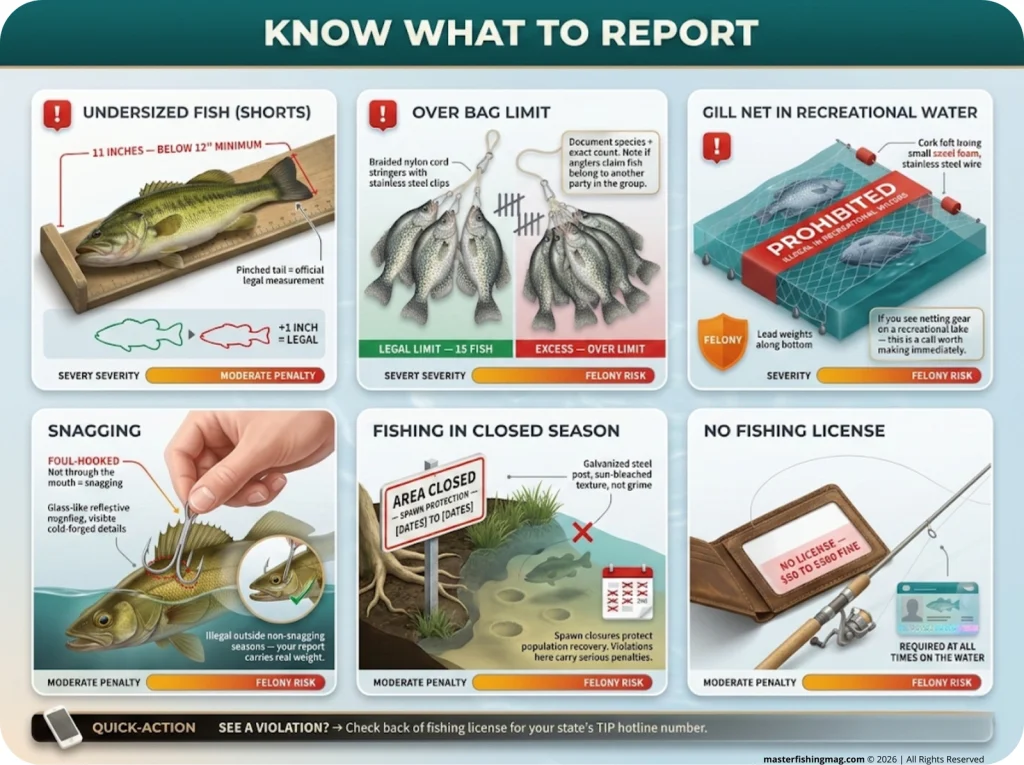
Keeping fish below minimum size limits — what most of us call “shorts” — is the most common violation report witnesses file. It happens constantly at cleaning stations, where a cooler full of undersized fish is easy to spot if you know what you’re looking at.
Bag limit violations are trickier. A guy with two stringers might be fishing for a buddy who stepped away, or he might be doubling his legal take. The difference matters to a conservation officer, so note exactly what you see — how many fish, what species, and whether anyone else is claiming part of the catch.
Slot limit violations are the hardest to spot from a distance. Keeping fish within the protected slot directly undercuts the population recovery that understanding how slot limits and bag limits actually work is designed to protect. If something looks off, trust your instincts.
Pro tip: The reporting hotline number is printed on the back of your fishing license. Most anglers have never flipped their license card over. Do it right now and save the number in your phone.
Prohibited Gear and Methods That Cross the Line
Gill nets in recreational waters, electrofishing devices, and cast nets in restricted areas are high-severity violations that typically result in felony charges. If you see netting gear on a recreational lake, that’s a call worth making.
Snagging — intentionally foul-hooking fish — is illegal in most states during non-snagging seasons. It’s one of the hardest violations to prove without a witness, which means your report carries real weight.
Trotlines, limb lines, and jug fishing are legal in many states but heavily regulated. Lines often require tags, and limits are frequently exceeded when nobody’s watching. These are the kinds of eligible violations that state Turn In a Poacher programs were built to catch.
Out-of-Season and Closed-Water Violations
Fishing during closed seasons, particularly spawn closures, is a serious offense that directly damages population recovery. If you see someone keeping fish during a clearly posted closure, the game warden wants to know about it.
Fishing in Marine Protected Areas without understanding the specific rules can lead to $1,000+ fines. The same goes for night fishing restrictions, which vary by state and target species. Any suspected violation on protected waters is worth reporting.
What to Document Before You Make the Call
A good tip is specific. A great tip gets someone caught. The difference is usually five minutes of careful observation before you pick up the phone.
The 5-Point Observation Checklist
Conservation officers need five things from you to respond effectively. Get as many as you can without drawing attention to yourself.
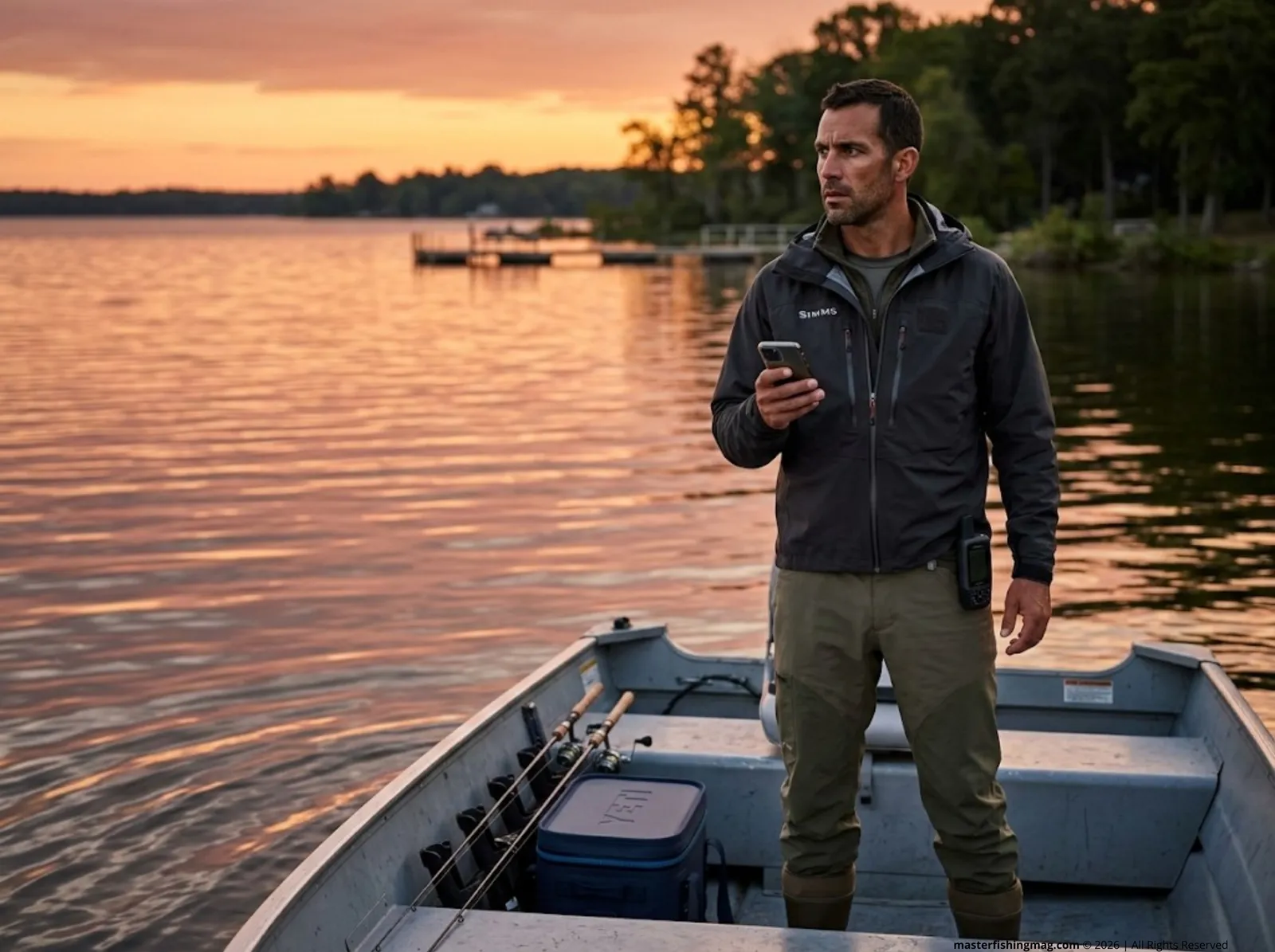
Location comes first. GPS coordinates from your phone are ideal — drop a pin in Google Maps. If you can’t, name the nearest boat ramp, landmark, or mile marker. Game wardens cover huge territories, and a vague “somewhere on the north end” doesn’t help.
Time matters more than you think. Law enforcement uses timestamps to correlate patrol schedules and other reports. Note the exact time on your phone.
People and vehicle descriptions are where tips become actionable. Number of individuals, what they’re wearing, general build. But the single most valuable piece of information is the boat registration number or vehicle license plate. If you get nothing else, get that.
Finally, describe the violation in plain terms. “Keeping undersized fish” is better than “poaching.” Specificity helps the officer understand what they’re walking into.
How to Photograph Evidence Safely From a Distance
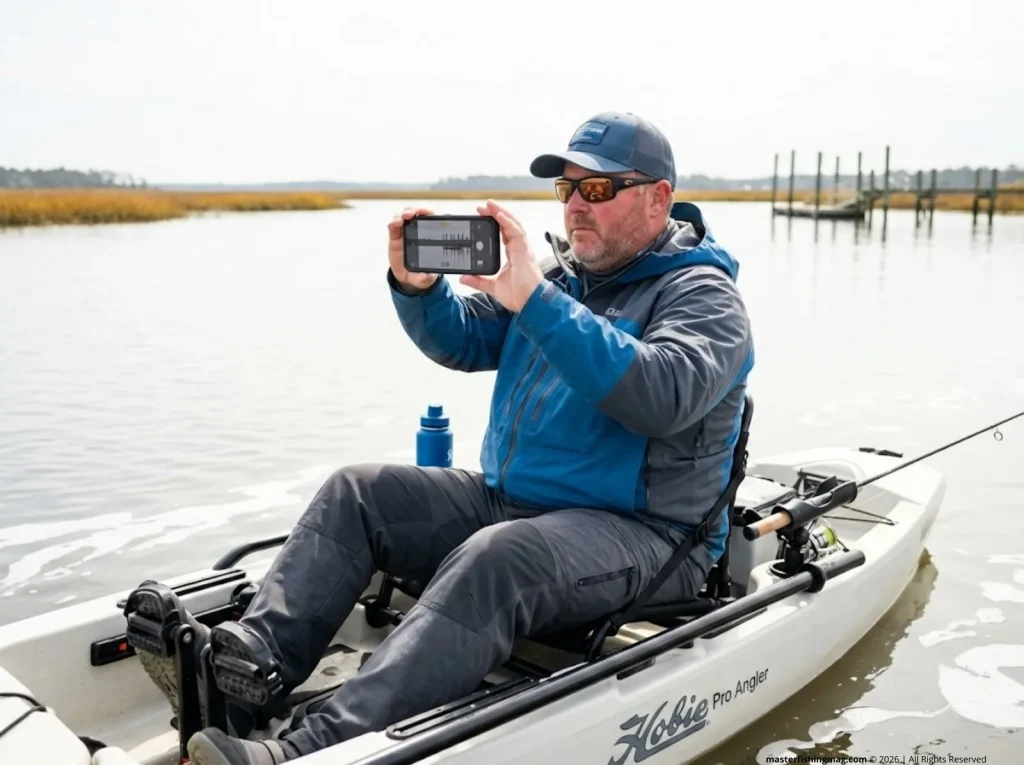
Use your phone’s zoom. Even a grainy photo of a license plate or boat registration number from 100 yards away is worth gold to a game warden running a criminal investigation.
Stay at least 50-100 yards away. Never let the violator see you documenting. Photograph the scene, the gear — nets, extra stringers, anything unusual — and any identifying marks on the boat. Your phone automatically timestamps and geotags every photo, which gives enforcement metadata they can use.
According to the U.S. Fish and Wildlife Service reporting guidelines, providing detailed descriptions plus photographs dramatically increases the chance of a successful enforcement response.
Pro tip: If you’re still within earshot of the violator, switch your phone to silent before you start taking photos. The fake shutter sound on most smartphones carries across water.
Who to Call — Federal vs. State Jurisdiction Explained
This is where most anglers freeze. You saw something wrong — but who do you actually call? The answer depends on where the possible violation happened and what kind of fish are involved.
Federal Agencies and When They Step In
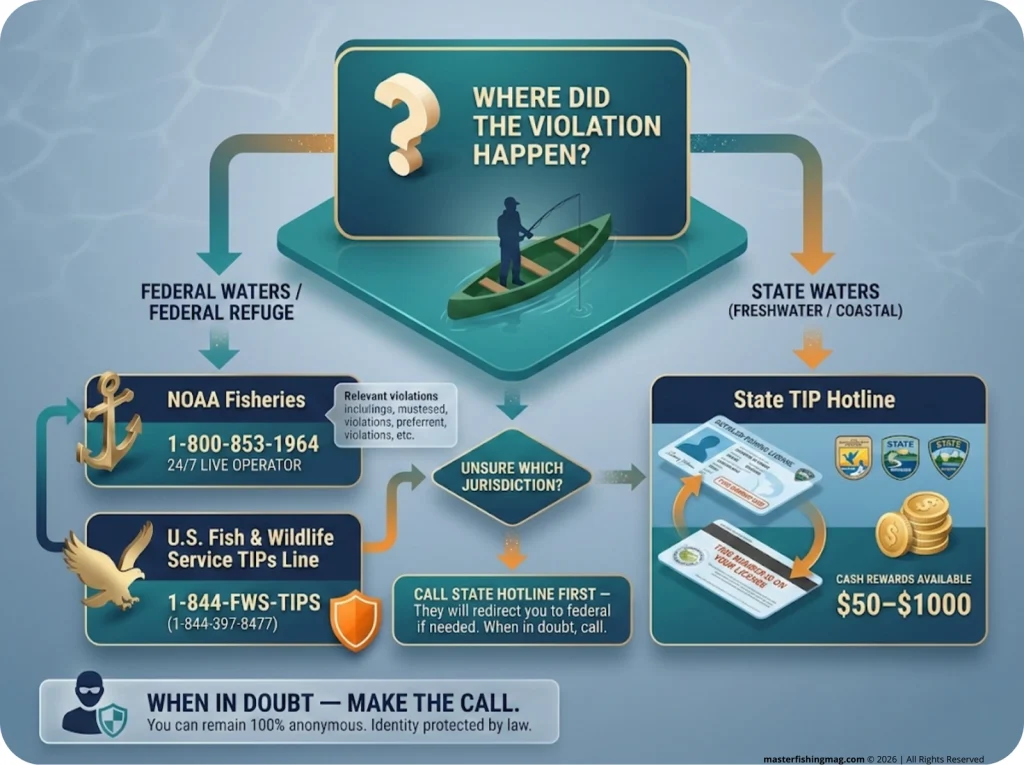
NOAA Fisheries runs a 24/7 live operator hotline at 1-800-853-1964. They handle all federal marine resource violations — illegal harvest on commercial scales, seafood mislabeling, Marine Mammal Protection Act violations, and IUU fishing (illegal, unreported, and unregulated fishing in federal waters).
The U.S. Fish and Wildlife Service operates the FWS TIPs line at 1-844-FWS-TIPS (1-844-397-8477). They handle wildlife crime on federal refuges, Lacey Act violations — which covers transporting illegally caught fish across state lines — and endangered species cases. Lacey Act penalties can reach $250,000 and 5 years imprisonment for felony violations.
When to go federal: If the violation involves saltwater commercial operations, interstate transport of fish, or takes place on federal land or waters.
Your State’s TIP Hotline
Every state runs a Turn In a Poacher or Operation Game Thief program. These are your state game warden’s direct line, and they handle the vast majority of freshwater violations.
Cash rewards range from $50 at the base to $1,000 in Texas and Louisiana, depending on the severity. Oregon recently doubled its fishing violation reward tiers to $400 in 2025. Some states also offer text-to-tip — text CALTIP to 847411 in California, or use the TIP411 system in Arkansas and Texas.
If you’re not sure whether your violation is federal or state, call the state hotline. They’ll redirect you if needed. The important thing is to call, period.
If the violation is near the water and you’ve also witnessed environmental damage, you might find knowing when and how to call authorities during a fish kill useful for the same reporting framework.
How Anonymous Reporting Actually Works
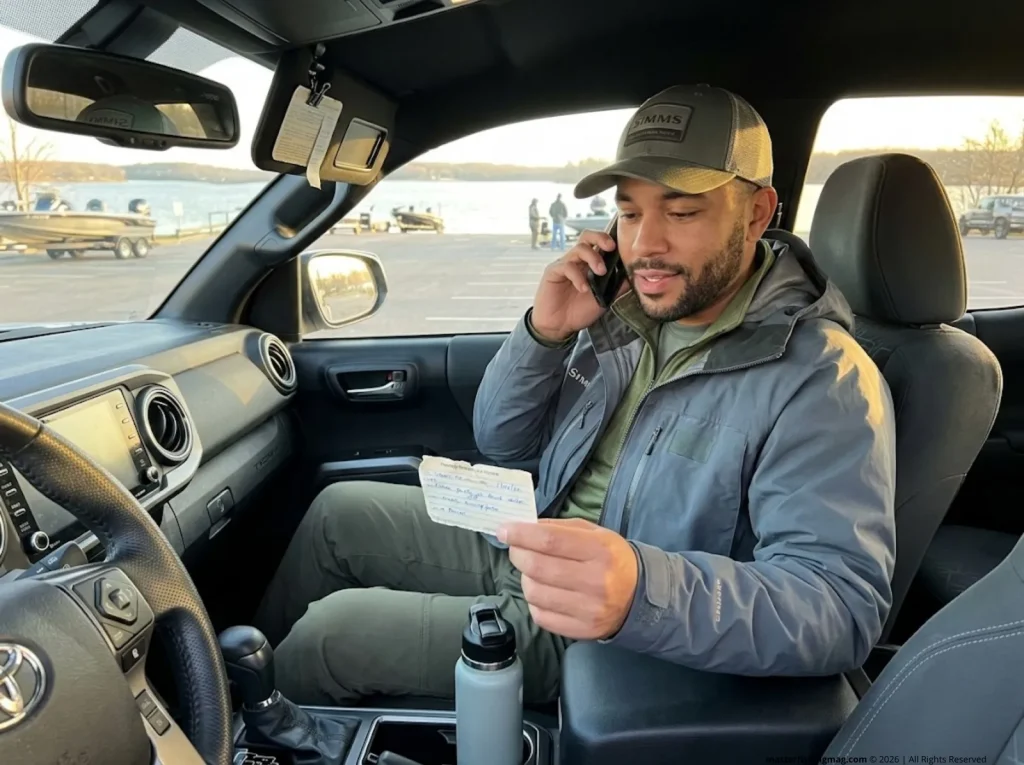
The number one reason anglers don’t report violations is fear. Fear that the poacher will find out who called. Fear of retaliation. Fear of getting dragged into a legal process. Here’s why those fears, while understandable, don’t hold up.
Legal Protections for Anonymous Tipsters
Under most state TIP programs, your identity is protected by law. In many jurisdictions, fisheries and wildlife law enforcement cannot disclose who filed the tip — even under subpoena. Florida’s Wildlife Alert program has statutory protections that guarantee full anonymity for every caller.
Both federal hotlines — NOAA’s enforcement line and the FWS TIPs line — offer full anonymous reporting with no requirement to provide your name. You do not need to appear in court. You do not need to write a statement. Your anonymous tip alone initiates the investigation.
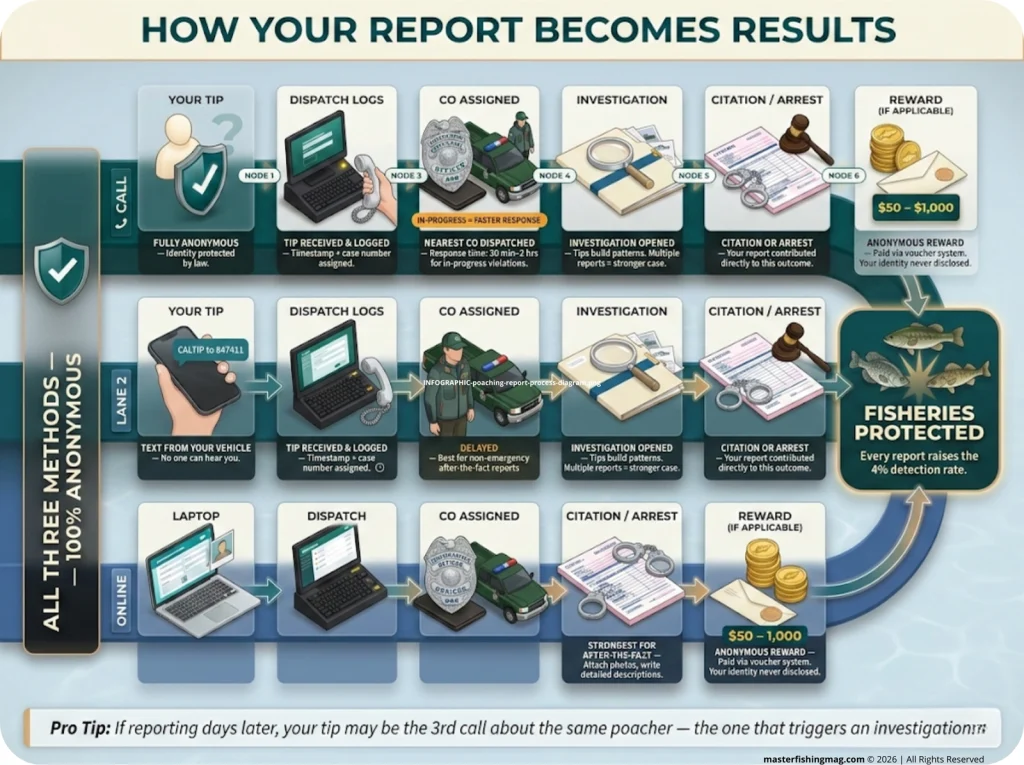
Phone, Text, Online — Which Method Works Best
Phone calls go to live operators 24/7 and are the fastest option for in-progress violations where minutes matter. If the poacher is still on the water right now, call.
Text-to-tip is the most discreet option if you’re still within sight of the violator. States like California, Texas, Arkansas, and Florida support it through the 847411 shortcode. You can send a text from behind your steering wheel at the boat ramp without anyone noticing.
Online forms let you submit detailed written descriptions with photo attachments. They’re best for after-the-fact violation reports when you’ve already left the scene and have time to write it up properly.
What Happens After You Report
A dispatcher logs your tip and assigns it to the nearest conservation officer. Response time varies — in-progress violations may get a warden on the water within 30 minutes to 2 hours. After-the-fact tips feed into ongoing law enforcement investigations and build a pattern for future action.
If your tip leads to a citation or arrest, you may be eligible for a cash reward — anywhere from $100 to $1,000 depending on your state and the severity of the violation. According to Florida’s Wildlife Alert program, reward tiers are tied to the type of violation, with saltwater finfish offenses earning around $300 and trap robbery cases reaching $600.
You can remain anonymous throughout the entire process. Many states pay rewards through anonymous voucher systems — similar to a secret witness program — so you never need to reveal your identity.
Pro tip: If you’re reporting something you witnessed days ago, don’t assume it’s too late. Multiple violations reported on the same location or individual build an enforcement case. Your report might be the third call about the same poacher — and the one that triggers an investigation.
If you’re wondering about the broader rules that shape where and how enforcement operates, understanding the specific rules inside Marine Protected Areas gives you context for violations in protected waters.
Mistakes Smart Anglers Avoid When They Witness Poaching
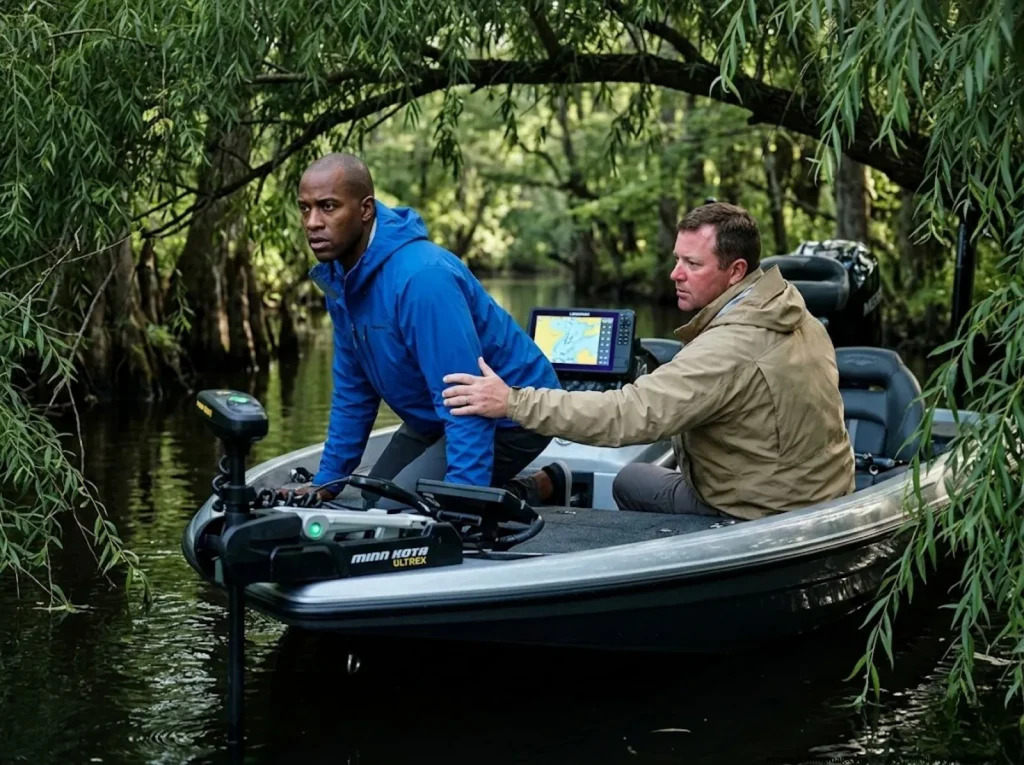
You saw the violation. Your blood is up. This is the moment where good intentions turn dangerous if you don’t think clearly.
Never Confront the Poacher Directly
This is the most important sentence in this article. Do not confront the poacher. Period.
Poachers working at night or in remote areas may be armed. They may be running a commercial operation worth thousands of dollars. Confrontation can escalate fast, and you are not a deputy. Your job is to be a witness and a reporter — let trained conservation officers handle enforcement.
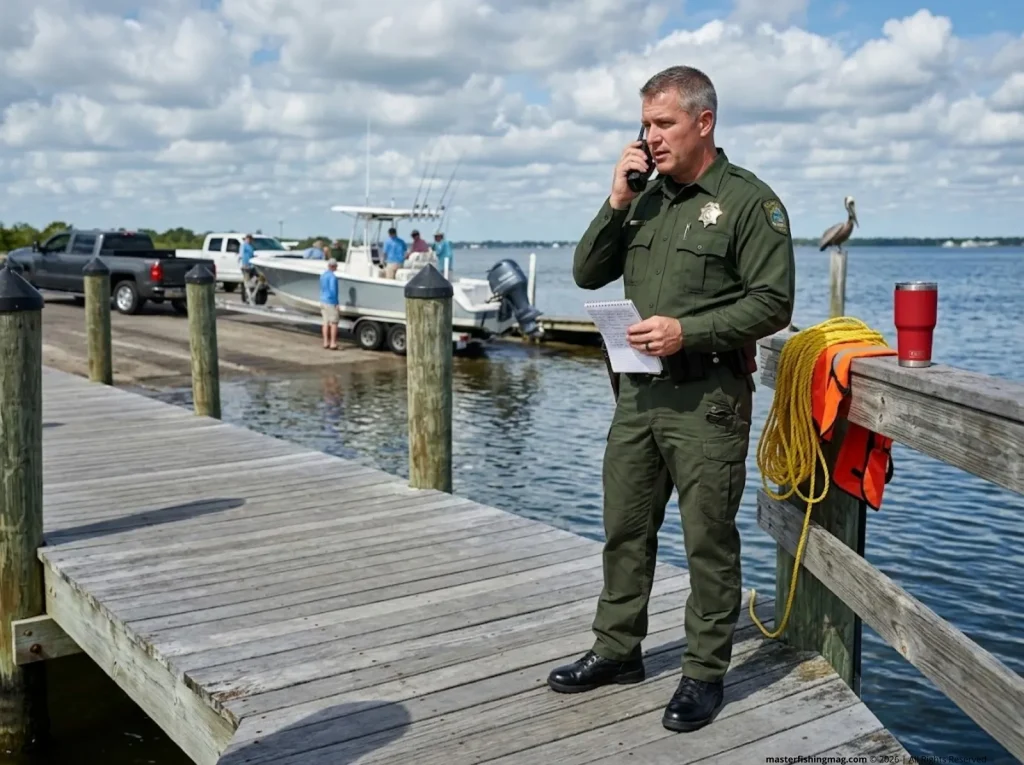
If the violation is in progress and you feel unsafe, call 911 first. Then call the wildlife alert hotline from your vehicle.
Don’t Wait — Report in Real Time
Waiting until you get home dramatically reduces the chance of enforcement success. The violator is long gone by then, the evidence has moved, and the game warden has lost the window.
Call from the water if you can safely do so. Use text-to-tip if you need to be discreet. The faster you report suspicious activity, the more likely a warden can intercept — and that’s the single biggest factor in successful recreational angling enforcement.
When you do report, correctly identifying the fish species before filing your report strengthens your tip. Saying “they were keeping undersized largemouth” is far more actionable than “they were keeping small fish.”
Don’t Post on Social Media Before Reporting
Posting photos of the violation on Facebook or Reddit before filing an official report can alert the violator and compromise the investigation. Report first, post later — if at all. Let law enforcement handle it, and don’t risk tipping off the person you’re trying to report.
Why Your Report Matters More Than You Think
It’s easy to shrug it off. One guy keeping a few shorts doesn’t feel like a crisis. But the math doesn’t work in our favor.
The 4% Problem
According to research from the Boone and Crockett Club, only 4% of poaching incidents are ever detected. That means 96% of violations go completely unreported.
The financial damage is staggering. Poaching costs an average of $6.1 million in lost fines and $22.7 million in replacement costs per state, every year. Every unreported violation chips away at the fisheries you depend on — the same waters you’re teaching your kids to love.
Conservation officers rely on angler tips as their most effective enforcement tool. They can’t be everywhere. But you already are.
From One Tip to Real Consequences
Individual tips lead to real outcomes. Indiana’s Turn In a Poacher program processed 1,025 anonymous tips in 2024 alone. Texas Operation Game Thief distributes paid rewards up to $1,000 for information leading to arrests.
Even if your single tip doesn’t immediately result in a citation, it joins a pattern. Three tips about the same boat ramp, the same stretch of river, the same truck at dawn — that’s what builds a case and gets a warden assigned to watch.
Understanding why some waters are catch-and-release only puts the stakes in perspective. Those regulations exist because fisheries biologists determined the population needs protection. Every poacher undermines that science. Every report defends it.
Pro tip: Save your state’s TIP hotline as a contact in your phone right now — labeled “Game Warden TIP” so it’s fast to find when you need it. The 30 seconds it takes today could save you 10 minutes of fumbling when it matters.
Conclusion
Three things to take away from this. First — if you see something on the water that doesn’t sit right, your instincts are probably correct. Trust your gut and document what you can safely.
Second — one phone call, anonymous and protected by law, is all it takes to put a conservation officer on the trail. You never need to give your name. You never need to testify.
Third — the fisheries you love are only as strong as the community that protects them. That 4% detection rate rises every time an angler picks up the phone instead of shaking their head.
Save the number. Make the call. The fish that depend on clean, legal waters are counting on ethical anglers who care enough to act.
FAQ
Can I report a fishing violation anonymously?
Yes. Every state TIP program and both federal hotlines (NOAA and FWS) allow fully anonymous reporting. Your identity is protected by law in most jurisdictions, and you never need to appear in court or provide a written statement.
What number do I call to report poaching?
For federal marine violations, call NOAA at 1-800-853-1964. For federal wildlife crimes, call FWS at 1-844-FWS-TIPS. For state freshwater violations, call your state’s Turn In a Poacher hotline — the number is printed on the back of your fishing license.
Do you get a reward for reporting fishing violations?
Many states offer cash rewards through their TIP or Operation Game Thief programs. Amounts range from $50 to $1,000 depending on the state and severity. Oregon doubled fishing violation rewards to $400 in 2025.
What information should I provide when reporting a poacher?
Five things matter most — exact location (GPS or landmark), time, description of the violator(s), vehicle or boat registration number, and a clear description of the violation. Photos with timestamps help tremendously.
Is it safe to report poaching while I’m still on the water?
Yes, if you maintain a safe distance. Use text-to-tip for discretion, or call from your vehicle at the boat ramp. Never confront the violator directly. If you feel threatened, call 911 first, then the wildlife hotline.
Risk Disclaimer: Fishing, boating, and all related outdoor activities involve inherent risks that
can lead to injury. The information provided on Master Fishing Mag is for educational and informational purposes
only. While we strive for accuracy, the information, techniques, and advice on gear and safety are not a substitute
for your own best judgment, local knowledge, and adherence to official regulations. Fishing regulations, including
seasons, size limits, and species restrictions, change frequently and vary by location. Always consult the latest
official regulations from your local fish and wildlife agency before heading out. Proper handling of hooks, knives,
and other sharp equipment is essential for safety. Furthermore, be aware of local fish consumption advisories. By
using this website, you agree that you are solely responsible for your own safety and for complying with all
applicable laws. Any reliance you place on our content is strictly at your own risk. Master Fishing Mag and its
authors will not be held liable for any injury, damage, or loss sustained in connection with the use of the
information herein.
Affiliate Disclosure: We are a participant in the Amazon Services LLC Associates Program, an
affiliate advertising program designed to provide a means for us to earn advertising fees by advertising and linking
to Amazon.com. As an Amazon Associate, we earn from qualifying purchases. We also participate in other affiliate
programs and may receive a commission on products purchased through our links, at no extra cost to you. Additional
terms are found in the terms of service.