In this article
You pull a fat largemouth from a creek bed and look up just in time to see the sign. “CATCH AND RELEASE ONLY — ALL FISH MUST BE RETURNED IMMEDIATELY.” The fish is dripping in your hands, and you’re standing there wondering who decided you can’t keep it—and why. Ten years guiding on regulated waters across the country, and I still see anglers stand at that sign, shrug, and comply without understanding a single thing behind it. That’s a mistake. The science behind catch-and-release only designations is more nuanced—and more interesting—than any sign has room to explain.
⚡ Quick Answer: Waters get designated catch and release only when fisheries biologists determine that the population cannot withstand harvest pressure—because of low recruitment, stressed genetics, or unique ecological value. Proper catch and release fishing techniques push survival rates above 97%. But the “always release everything” rule isn’t universal: in over-recruited, unproductive lakes, selective harvest of small fish can actually build a healthier fishery. The designation is a prescription, not a moral absolute.
Why Certain Waters Get Locked to Catch and Release

Population Recovery and Stressed Fisheries
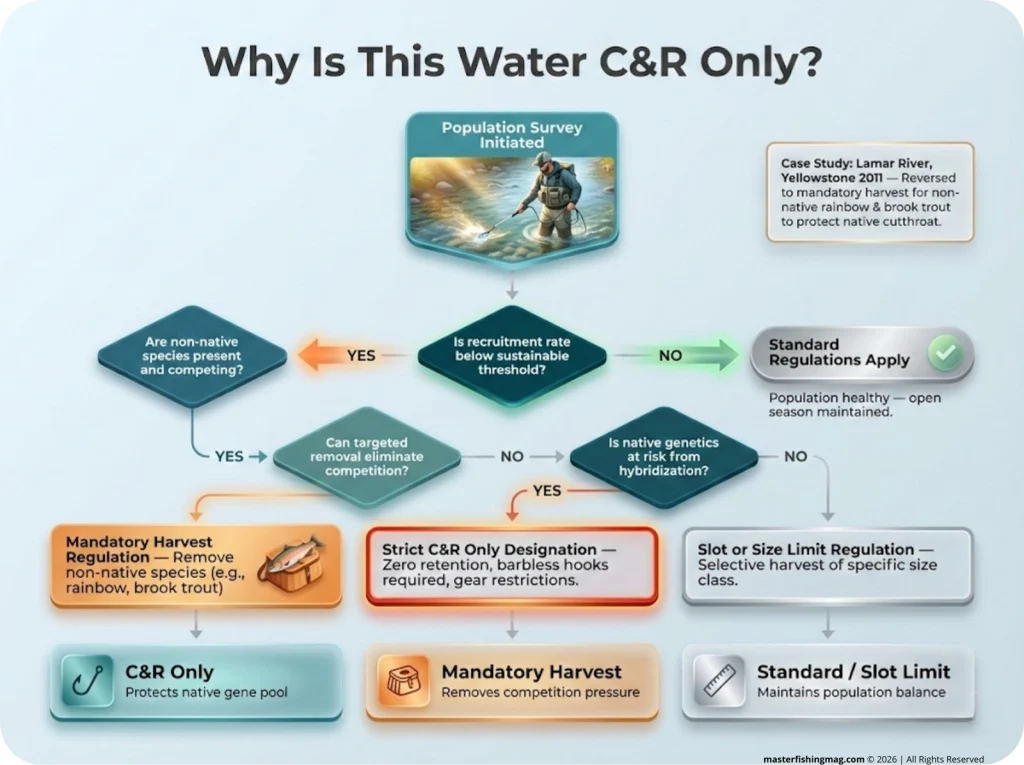
The decision to designate a catch-and-release only stretch of water doesn’t happen because a bureaucrat felt like it. It happens because a fisheries biologist ran the numbers—creel data, electrofishing surveys, age-class distribution—and found a population in trouble. When recruitment is low (meaning few young fish are surviving to maturity), every adult you pull out and keep is one less fish contributing to the next generation.
NOAA Fisheries catch-and-release guidelines document that properly handled lure-caught fish achieve 97% or higher post-release survival. That number matters because it’s the foundation of the math. If releasing fish works that well, then protecting a stressed population by enforcing mandatory release is a legitimate tool in a biologist’s kit. The problem is most anglers never see the data—they just see the sign.
Take brook trout and their shrinking native range. Brook trout have lost roughly 80% of their native habitat across the eastern United States. The remaining wild populations in Appalachian headwater streams are genetically irreplaceable. Mandatory catch and release on those streams isn’t bureaucratic overreach—it’s triage.
Pro tip: If you see a C&R-only sign on a small stream, there’s almost certainly a biologist upstream with a reason. Find out what it is. Your state wildlife agency’s fisheries division publishes population surveys online, and reading one will change how you look at that water forever.
Unique or Native Species Protection
Some waters carry C&R designations not because the fish are scarce, but because they’re irreplaceable. National parks are the clearest example. Yellowstone has some of the most tightly managed recreational fisheries in North America, built around protecting native cutthroat trout from genetic contamination.
Here’s the twist most anglers don’t know: in 2011, Yellowstone reversed its regulations on the Lamar River drainage. Instead of catch-and-release for everything, they went to mandatory kill regulations for non-native rainbow and brook trout. The goal was to protect the native cutthroat by eliminating the competition. The National Park Service catch-and-release guidance makes clear that catch and release is a management tool—and sometimes the right tool is mandatory harvest instead. The regulation follows the data, not the sentiment.
Size Structure and Trophy Management
Lee Wulff said it in 1936: “Game fish are too valuable to be caught only once.” That principle became the philosophical backbone of catch and release in the United States. By the 1970s, tournament circuits led by Ray Scott were preaching fish population recovery through voluntary release, and by the 1980s, biologists had the data to back it up.
Waters like Purtis Creek State Park in Texas became model catch-and-release only lakes. With every largemouth returned, the size distribution shifted upward measurably over a few seasons. It’s the same principle as how slot limits and bag limits actually work—the regulation shapes the population by controlling which fish stay in the water and which ones don’t. C&R-only designations are essentially a full slot-limit ecosystem: put them all back, always.
The Myth That Releasing Everything Always Helps
When Too Many Fish Is the Problem
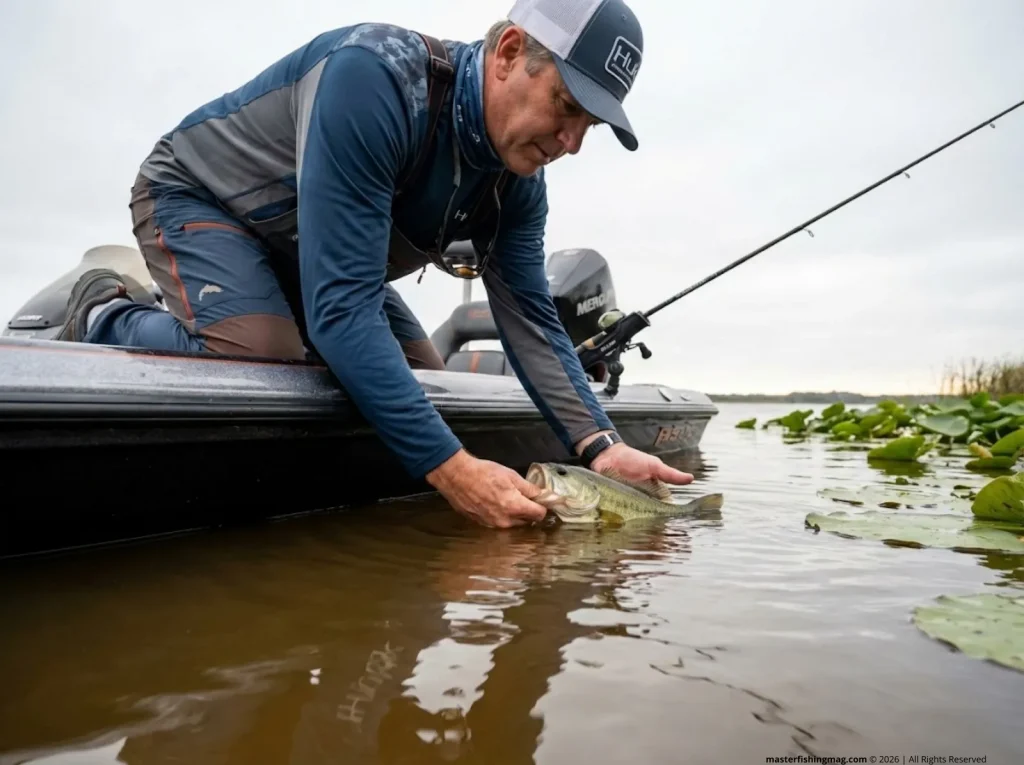
John Tibbs is a fisheries biologist with Texas Parks & Wildlife, and he said something that should be printed on every fishing license: “The concept that releasing all the fish you catch is always the best thing to do is just wrong.”
That’s not contrarian—it’s backed by hard data. Texas Parks & Wildlife selective-harvest research ran creel and electrofishing studies on Lake Limestone, a reservoir in central Texas. What they found was that natural mortality exceeded 50% per year even with zero angler harvest. More than half the fish were dying of natural causes before anyone ever touched them. The release-everything mandate had no measurable net benefit because the population’s limiting factor wasn’t anglers—it was food competition among too many stunted fish.
Statewide bass populations in Texas show natural mortality rates of 30 to 60 percent per year. In an over-recruitment lake, where crowded fish compete for limited food and nobody grows past 12 inches, keeping small bass isn’t harming the fishery. It’s helping it.
Pro tip: If your favorite lake is full of skinny 10-inch bass that never seem to grow larger, the fishery might actually need you to keep a few. Check your state agency’s specific water data before assuming the “release everything” default is right.
The Selective Harvest Alternative
Liz Thorndike, a fisheries resource biologist with Maine Inland Fisheries & Wildlife, frames it cleanly: “A healthy fishery depends on anglers and biologists working together—designing regulations with public input, anglers following regulations, and biologists monitoring the effects.” The point is that regulations are water-specific prescriptions, not universal commandments. Maine biologist’s breakdown of harvest versus release decisions walks through exactly how that per-water analysis works.
In over-recruited lakes, biologists increasingly recommend releasing trophy fish and harvesting smaller ones. The logic is straightforward: remove competition, let survivors grow. Some states now issue explicit selective harvest recommendations alongside C&R-only designations on adjacent waters in the same system. Same watershed, different rules per cove—because the population dynamics differ that much at the local level.
The European Counter-Argument
There’s an ethical dimension here that American anglers almost never encounter: Switzerland and Germany have banned catch and release outright as inhumane. Their position is that if you’re going to stress a fish, you must kill it for food; otherwise, the suffering serves no purpose. This isn’t a fringe view—it has legal standing in multiple European countries and represents a genuinely different cultural interpretation of angler compliance with fish welfare.
The takeaway isn’t that European law should apply on Texas reservoirs. It’s that catch and release is a management tool, not a moral absolute. The rightness of any regulation depends on what the population data says, not on how philosophically satisfying it feels to watch a fish swim away.
What Actually Kills Released Fish (And How to Prevent It)
Air Exposure and Handling Stress
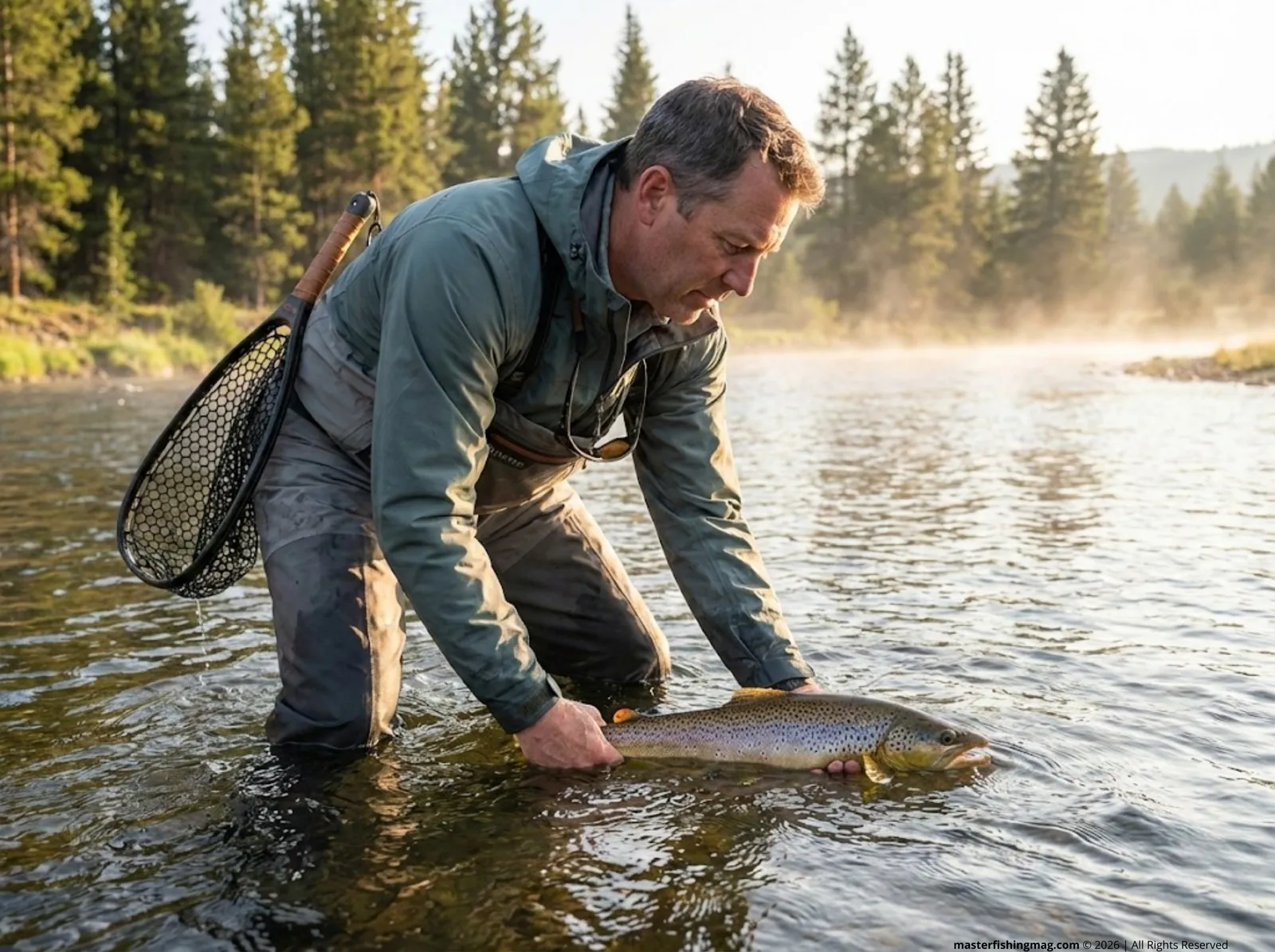
The single biggest killer of released fish isn’t the hook—it’s time out of water. NOAA puts the number at 60 seconds maximum. Not 90. Not “as long as you hurry.” Sixty seconds is where survival probability starts dropping, and beyond 90 seconds for most species, you’re dealing with compounding mortality risks from cortisol accumulation, oxygen debt, and slime coat damage.
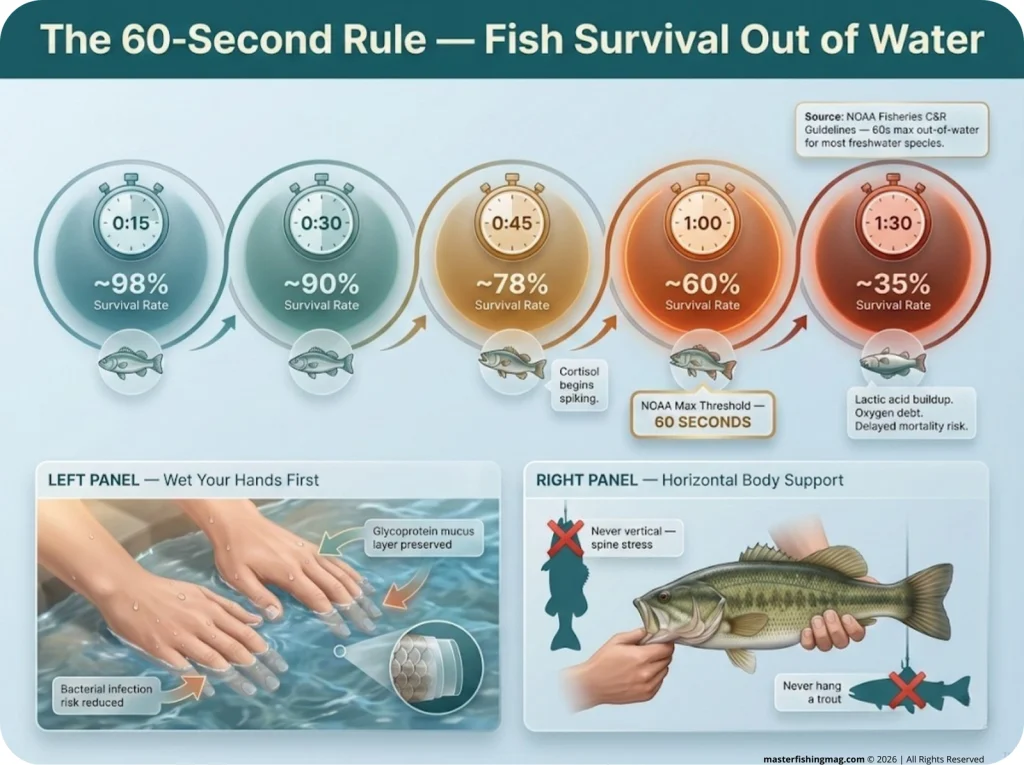
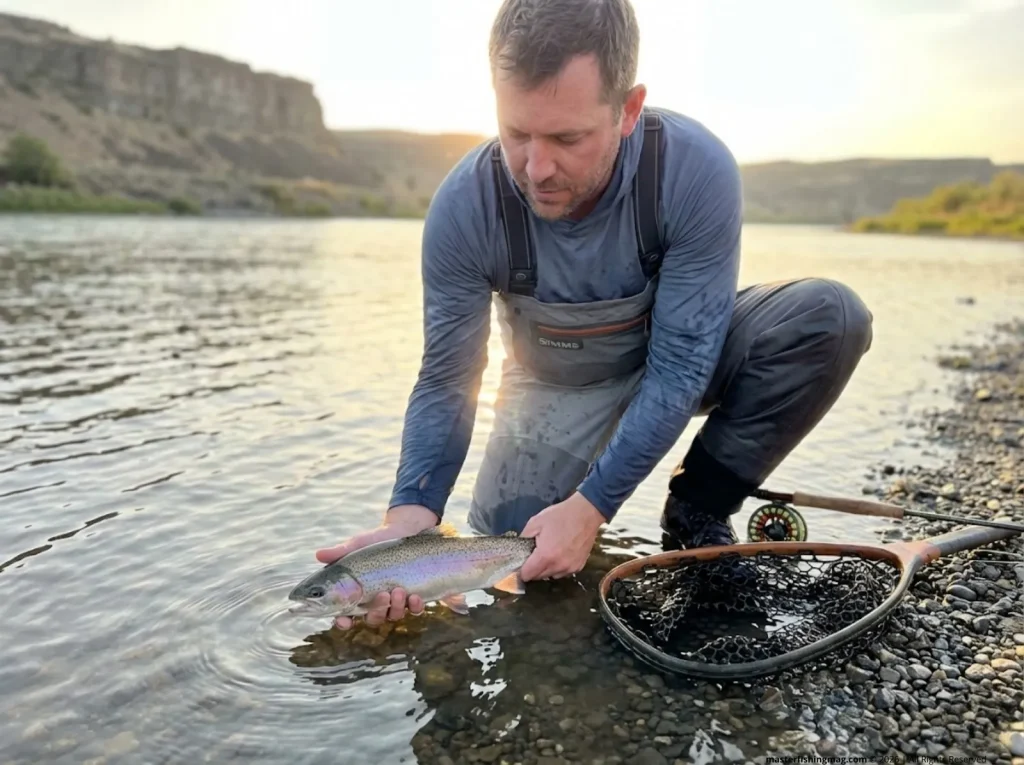
Your hands matter as much as your clock. The science behind fish slime coat protection explains why dry hands strip the glycoprotein mucus layer that shields the fish against bacterial infection. Wet your hands before you touch the fish. Every time. Hold the fish horizontally, supporting the body weight—never lip-hang a bass vertically for a photo without belly support, and never hang a trout at all.
Playing a fish to total exhaustion before landing it is the invisible mistake. The fight itself builds lactic acid in the muscle tissue and spikes cortisol. A fish that can barely swim when you release it may look like a successful release to the Instagram algorithm, but it’s often a delayed kill.
Barotrauma in Deep-Water Catches
Deep-water fish don’t play by the same rules. When you pull a fish from beyond 30 feet, the pressure change causes the swim bladder to expand faster than the fish can compensate. The result is barotrauma: bulging eyes, a stomach protruding from the mouth, and an inability to submerge. If you’ve ever watched a reef fish float at the surface unable to dive, you’ve seen it.
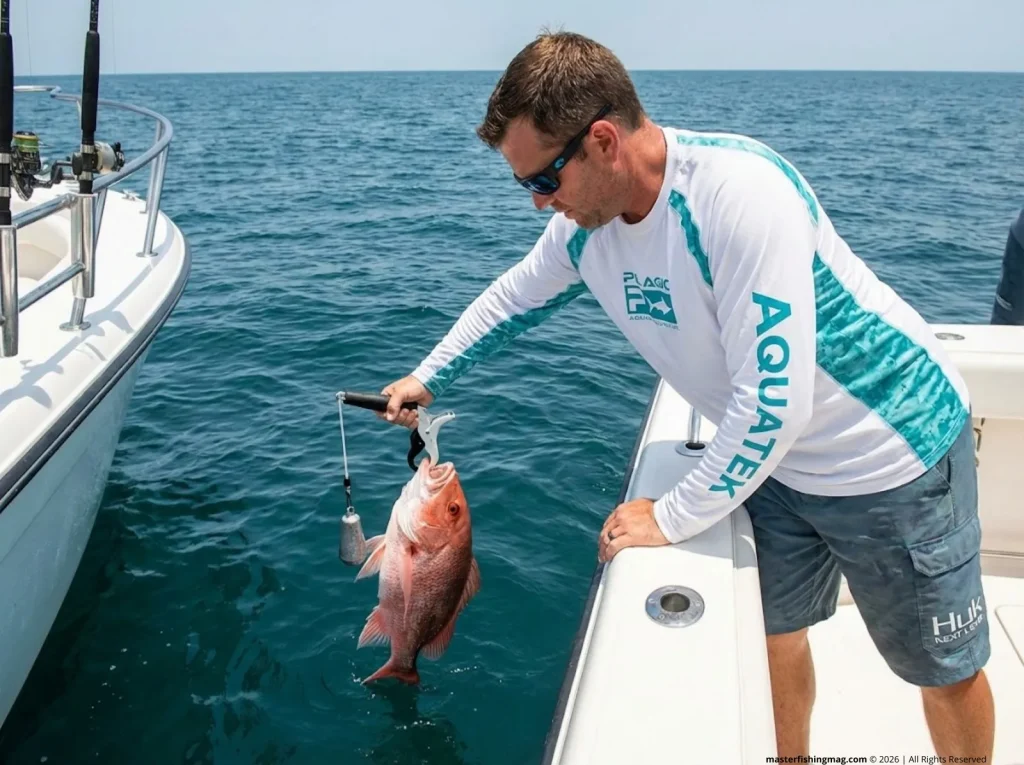
NOAA’s data is stark: barotrauma venting produces 100% survival in tested fish from 30-meter depth. Leave the same fish unvented and survival drops to 67%. A descender device—like the SeaQualizer or similar weighted clip-and-release systems—is the preferred method today, walking the fish back down to capture depth on the line rather than puncturing the swim bladder with a venting needle. Our field test of the top descending devices covers exactly how these tools work in practice.
Pro tip: Keep a descender weight pre-clipped and ready on your rod before you start fishing in deep water. When barotrauma strikes, you have seconds to act—fumbling in a tackle box while a fish floats belly-up wastes the survival window.
Water Temperature Thresholds
Temperature is the invisible variable that most anglers ignore. Wild trout—particularly Atlantic salmon and brook trout—face dramatically elevated delayed mortality in warm water. Studies show mortality rates as high as 80% for Atlantic salmon released in water above 18°C (64°F), dropping to less than 12% below that threshold. That’s not a small margin; it’s the difference between conservation and a slow kill. The National Park Service catch-and-release guidance specifically flags temperature as the top variable anglers should monitor before targeting coldwater species.
For bass fishing and warm-water species, the math is better. Massachusetts Division of Marine Fisheries 2025 data shows striped bass release mortality at less than 4% when using artificial lures in moderate temperatures. The takeaway: when water temperatures spike in summer, consider your target species carefully. On a trout stream during a heatwave, the most conservation-minded thing you can do is stay home.
Gear That Makes C&R Waters Easier to Fish
Hooks Built for Quick Release
Barbless hooks are the simplest gear change you can make on a catch-and-release only water, and they cut handling time in half. A barbless hook removes cleanly with light finger pressure—no pliers, no working the barb back through tissue, no fish lifted out of water for extended surgery. Many designated C&R waters require them. Even where they don’t, barbless hooks favor the fish without meaningfully reducing your hookup rate if your technique is solid.
Circle hooks take this further. By design, they rotate toward the corner of the jaw on the hookset rather than driving into the soft tissue of the gut or gills. The penetration physics of barbless hooks breaks down why the geometry matters—the short version is that circle hooks require less force to set, less force to remove, and produce far fewer deep-hooking fatalities. Flatten your barbs with pliers before you hit the water on any designated C&R stretch. It takes ten seconds per hook and costs nothing.
Nets, Dehookers, and Revival Tools
A knotted nylon net is a slime-coat removal machine. Every second a fish spends grinding against rough mesh is a second of protective coating being stripped away. Rubber mesh nets keep the fish wet, protect the slime layer, and reduce fin damage. This isn’t optional premium gear—it’s basic equipment for any serious catch and release fishing.
In-water dehookers allow you to remove the hook without lifting the fish at all. The fish stays in the water, hung near the surface, while you work the tool. For most small to medium species, it’s a 3-second operation. Pair that with a rubber mesh net and you have a handling system that gives every released fish the best odds, regardless of water designation.
Pro tip: “Keep ’em wet” isn’t just a slogan—it’s the single most impactful habit you can build. A fish that never fully leaves the water has a dramatically higher survival rate than one briefly held up for photos. If you need a quick shot, keep the fish in the net, in the water, and shoot from above.
How C&R-Only Waters Make You a Better Angler
Forced Efficiency and Technique Refinement
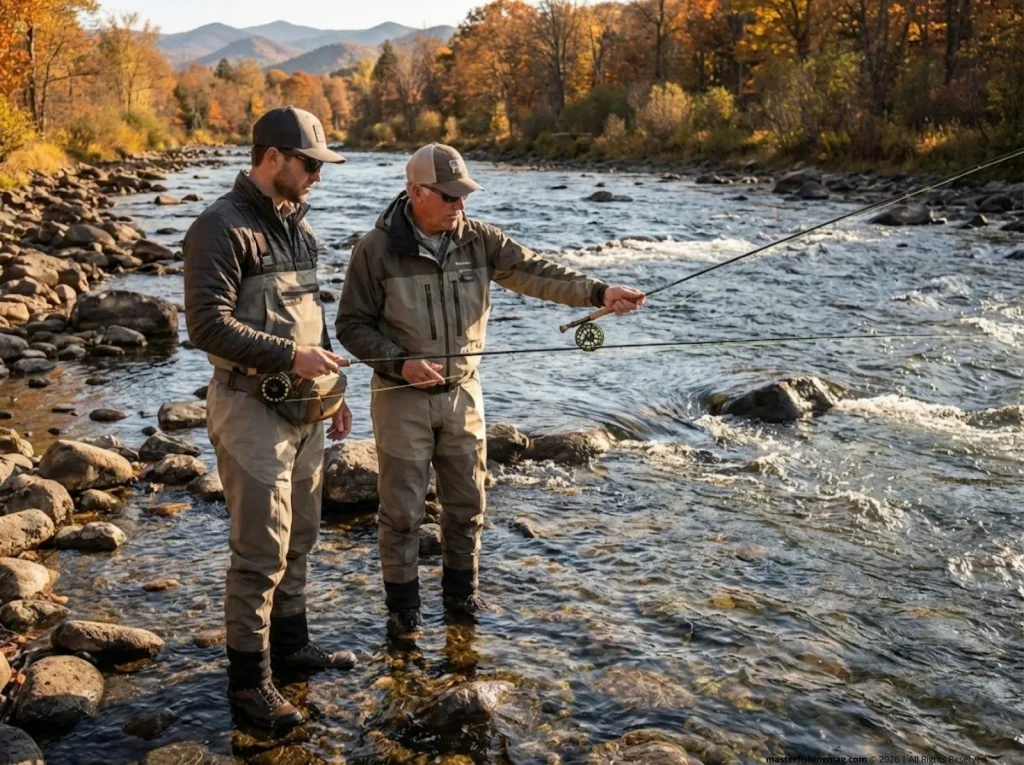
There’s a skill development angle to C&R-only waters that nobody writes about. When you can’t keep fish, you stop fishing for meat and start fishing for craft. Your benchmarks shift from “how many did we keep” to “how short was the handling time” and “how cleanly did that fly drift through the seam.” Fly anglers on trophy potential streams consistently report higher catch rates over multiple seasons—not because the fish multiply faster, but because the fish get smarter, and that pressure makes the angler sharper in response.
The muscle memory for proper release techniques—wet hands, horizontal hold, immediate return—becomes automatic. After a season on a dedicated catch-and-release only stream, you’ll find yourself doing it correctly on open-harvest water without thinking. The habit sticks. And when a water that didn’t used to have a C&R sign finally gets one, you’ll already be fishing it the right way.
Conservation Mindset That Follows You Home
Anglers who regularly fish C&R-only waters tend to show measurably different behavior everywhere else. Voluntary release rates climb. They check water temperatures before targeting cold-water species in summer. They start recognizing stressed fish populations by feel rather than waiting for a regulation sign to tell them.
That’s the deeper value of these waters. They’re not just fisheries management tools—they’re classrooms. If you’ve spent serious time fishing a regulated stretch of a sea trout river or a brook trout headwater, you leave that water with a biological intuition that no YouTube video can give you.
Conclusion
Three things worth keeping from this article. First, catch-and-release only designations are population-specific prescriptions built on real data—they’re not arbitrary restrictions. Second, releasing every fish isn’t always the right call; in over-recruited, unproductive lakes, selective harvest of small fish can build a healthier fishery than blanket no-kill does. Third, technique matters more than most anglers realize: wet hands, 60 seconds maximum air exposure, barbless hooks, and a descender device for deep fish push post-release survival above 97%.
Next time you see that “Catch and Release Only” sign, you won’t just comply—you’ll understand exactly what the water needed to earn it. Fish it with the right gear, land and handle every fish like it matters, and you’ll leave that fishery better than you found it.
FAQ
What does catch and release only mean?
Catch and release only means every fish of the designated species must be returned alive to the water immediately after landing—no possession, no transport, no harvest. Most C&R-only designations also include gear restrictions like barbless hooks or artificial-lure-only rules; always check your state agency’s current regulations for the specific water.
Do fish survive being caught and released?
Yes—survival rates reach 97% or higher when anglers use correct proper release techniques: wet hands, horizontal body support, less than 60 seconds of air exposure, and barbless hooks to minimize handling time. Mortality climbs sharply with prolonged handling, high water temperatures, or deep-hooking with bait.
Is catch and release good or bad for fish populations?
It depends entirely on the water. Catch-and-release only regulations protect stressed or genetically unique populations effectively. But in over-recruited lakes with stunted fish populations, blanket C&R can lock in poor growth dynamics—selective harvest of smaller fish sometimes produces a healthier fishery than releasing everything does.
What are the rules for catch and release fishing?
Rules vary by state and specific water body. Common requirements on designated C&R waters include barbless hooks, single-hook artificial lures only, no bait, and immediate release. Check your state wildlife agency’s regulations for the exact water—and know that rules on adjacent sections of the same river can differ.
When is keeping fish better than releasing them?
When your state’s biologists have identified over-recruitment—a condition where too many small, stunted fish are competing for limited food in an unproductive lake. In those waters, harvesting smaller fish removes competition and gives survivors room to grow. Some states publish per-lake selective harvest guidance specifically for this scenario.
Risk Disclaimer: Fishing, boating, and all related outdoor activities involve inherent risks that
can lead to injury. The information provided on Master Fishing Mag is for educational and informational purposes
only. While we strive for accuracy, the information, techniques, and advice on gear and safety are not a substitute
for your own best judgment, local knowledge, and adherence to official regulations. Fishing regulations, including
seasons, size limits, and species restrictions, change frequently and vary by location. Always consult the latest
official regulations from your local fish and wildlife agency before heading out. Proper handling of hooks, knives,
and other sharp equipment is essential for safety. Furthermore, be aware of local fish consumption advisories. By
using this website, you agree that you are solely responsible for your own safety and for complying with all
applicable laws. Any reliance you place on our content is strictly at your own risk. Master Fishing Mag and its
authors will not be held liable for any injury, damage, or loss sustained in connection with the use of the
information herein.
Affiliate Disclosure: We are a participant in the Amazon Services LLC Associates Program, an
affiliate advertising program designed to provide a means for us to earn advertising fees by advertising and linking
to Amazon.com. As an Amazon Associate, we earn from qualifying purchases. We also participate in other affiliate
programs and may receive a commission on products purchased through our links, at no extra cost to you. Additional
terms are found in the terms of service.