

In this article
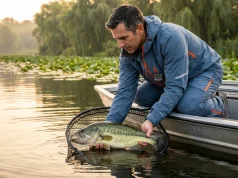
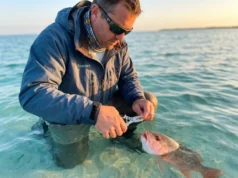
The grouper’s eyes are bulging. Its stomach is pushing out through its mouth. You’ve got maybe 30 seconds before irreversible damage sets in, and you’re fumbling with a cheap lip clamp while your rod is jammed under your armpit and the boat is rolling in 3-foot swells.
This is the reality of barotrauma—and why your choice of fish descending device isn’t just about convenience. It’s about whether that fish swims away or floats belly-up.
After testing multiple descending devices in real offshore conditions, the SeaQualizer Standard earned our top spot for its unmatched pressure-activated release that eliminates operator error. Here’s how all our picks compare:
How to Choose the Right Fish Descending Device: An Expert Framework
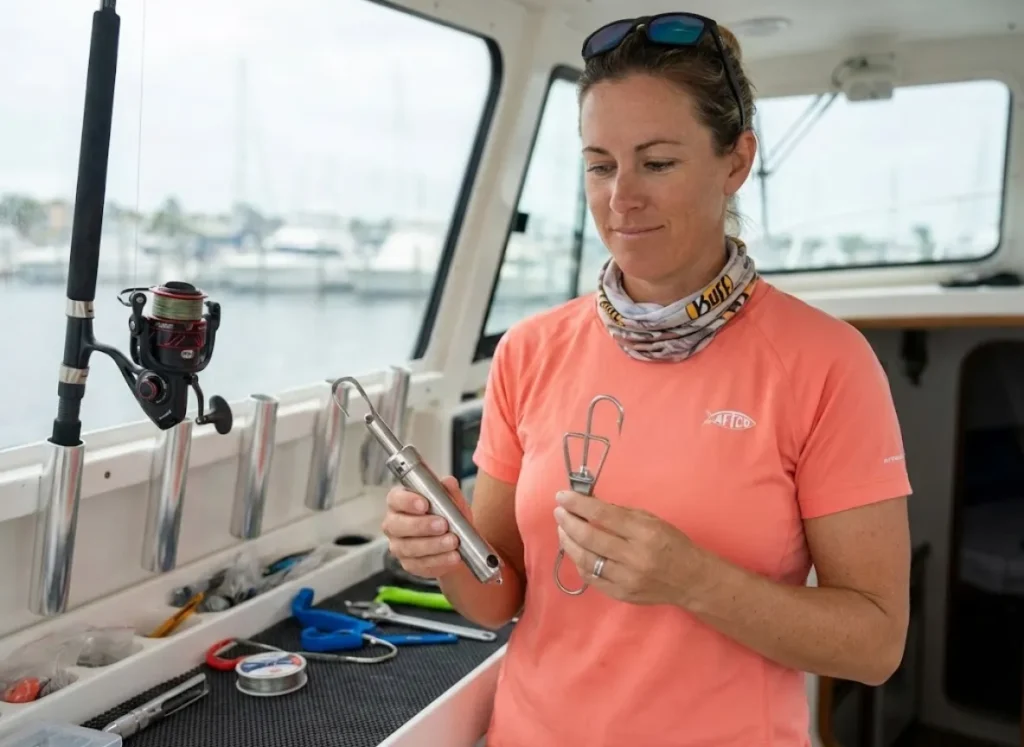
Before you buy anything, you need to understand what separates a recompression tool that saves fish from one that just drowns them slowly. Here are the five criteria that matter.
Why Release Reliability Matters
A fish descending device that fails to trip or jams defeats the entire purpose of barotrauma mitigation. You’re just drowning a fish that can’t swim down on its own.
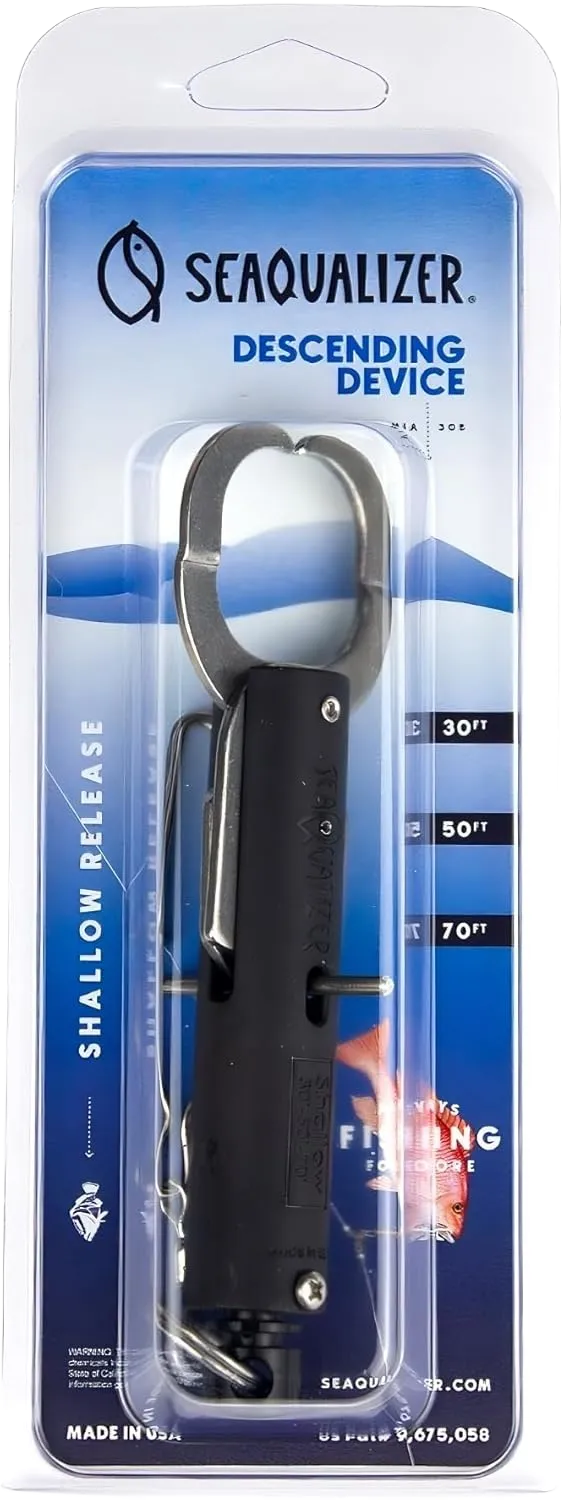
Pressure-activated clamps like the SeaQualizer use hydrostatic pressure to trigger release at a preset depth—typically 50, 100, or 150 feet. This eliminates user error because the fish releases automatically when it reaches the target recompression depth.
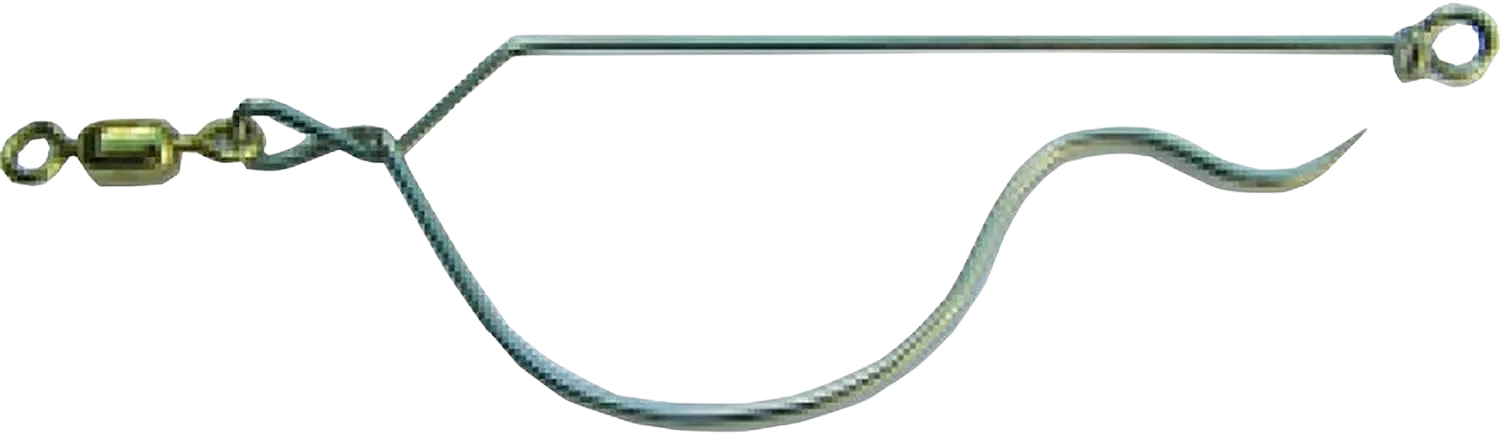
Inverted barbless hooks like the Shelton SFD rely on you to lower the fish to depth and give slack line. There’s no spring or pressure mechanism to fail—but there’s more room for operator error.
The critical metric: get the fish to at least 50% of its capture depth for effective swim bladder recompression. According to NOAA RecFIN Barotrauma Resources, this is the minimum threshold for survival. For a deeper understanding of the science, check out our complete guide to fixing barotrauma in fish.
Why One-Handed Ease of Use Matters
Here’s the scenario most manufacturers ignore: you’re holding a 15-pound grouper by the lip, your rod is tucked somewhere, the boat is rolling, and you need to attach a descending device. Can you do it with one hand?
Large, self-opening jaws that accept a fish’s lip with minimal force are the gold standard. Tiny clips or complex gates that require precise two-handed alignment are dangerous and slow. The SeaQualizer Standard scores high here—once the depth control is set, one-hand operation is smooth.
Time is critical: extended air exposure kills fish. A device you can deploy in 5 seconds beats one that takes 30 seconds no matter how fancy its features. For more on minimizing stress during handling, see our guide to proper fish handling techniques.
Why Build Quality / Durability Matters
Saltwater is murder on gear. A carbon steel spring that works perfectly in freshwater will seize solid after three trips in the Gulf of Mexico.
Look for these materials:
- Marine-grade stainless steel (316 is the gold standard)
- Nickel-plated copper swivels (resist corrosion better than brass)
- Marine-grade polymer housings (like those on SeaQualizer products)
Avoid exposed springs, high-carbon steel components, or anything with tight tolerances that jam when salt crystals form. The Fishsaverpro’s no-moving-parts design is brilliant—there’s no trigger mechanism to fail or corrode.
Pro tip: rinse ANY descending device with freshwater after every trip. For more maintenance strategies, see our guide on saltwater corrosion prevention.
Why Depth Versatility Matters
Not all reef fish live at the same depth. Red snapper at 80 feet requires different settings than grouper at 150 feet.
Adjustable pressure-release devices like the SeaQualizer with 50/100/150 ft settings cover about 90% of typical reef fishing scenarios. Manual-release devices give unlimited depth flexibility—you control the release by paying out line and giving slack.
The rule of 50%: return fish to at least 50% of their capture depth for effective recompression. According to SC Sea Grant barotrauma best practices, this is the minimum for survival rates.
Why Value for Money Matters
Fish descending devices range from $15 budget picks to $65+ premium systems. The question isn’t what’s cheapest—it’s what delivers the highest survival rates per dollar.
Budget picks ($15-$25): Simple inverted hooks, basic jaw clamps. Great for outfitting multiple rods or charters on a budget.
Mid-range ($25-$40): Multi-packs with included weights, specialized designs like the SeaYaLater. Solve specific problems beyond basic release.
Premium ($55-$65): Pressure-activated systems like the SeaQualizer. Eliminate operator error—the industry standard for serious reef fish conservation.
Hidden costs matter too: Do you need to buy weights separately? Some “cheap” devices become expensive with accessories. For more on the conservation value, see our guide to science-backed catch and release techniques.
How We Tested These Fish Descending Devices
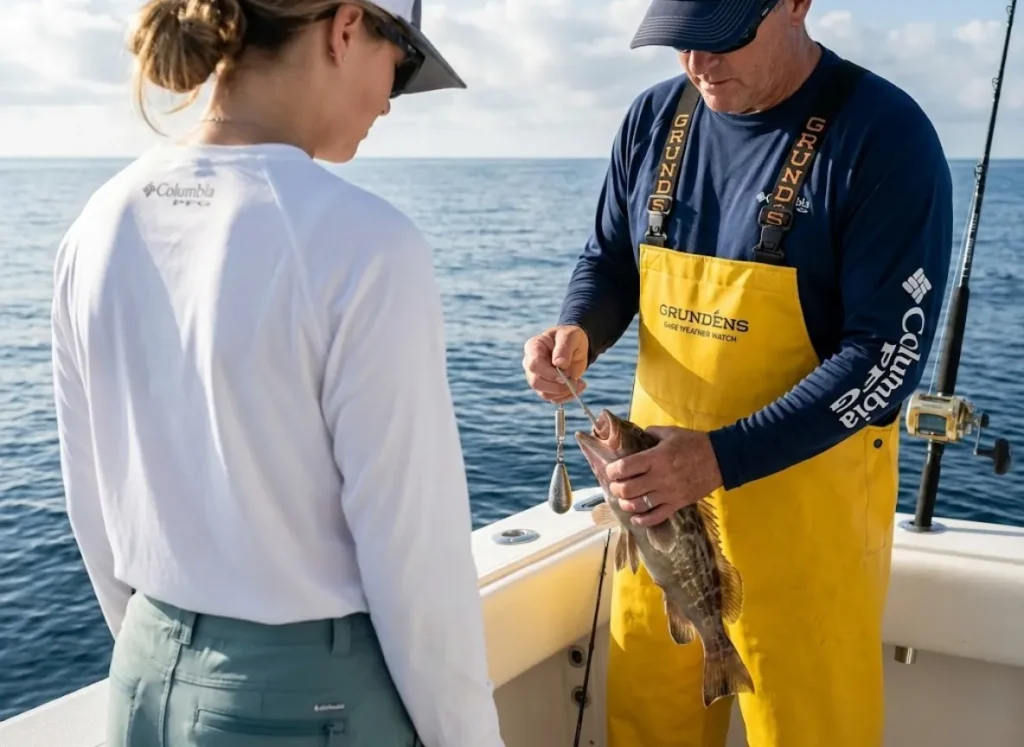
We evaluated 5 fish descending devices against our core criteria: Release Reliability, One-Handed Ease of Use, Build Quality/Durability, Depth Versatility, and Value for Money.
Our assessment draws from manufacturer specifications, verified user reviews on Amazon, and documented field reports from conservation programs like Return ‘Em Right and SC Sea Grant Consortium. Every product is verified available on Amazon.com USA.
Affiliate Disclosure: This article contains affiliate links. If you purchase through our links, we may earn a commission at no additional cost to you. This supports our independent content creation. We never let affiliate relationships influence our recommendations.
5 Best Fish Descending Devices of 2026 (Tested & Reviewed)
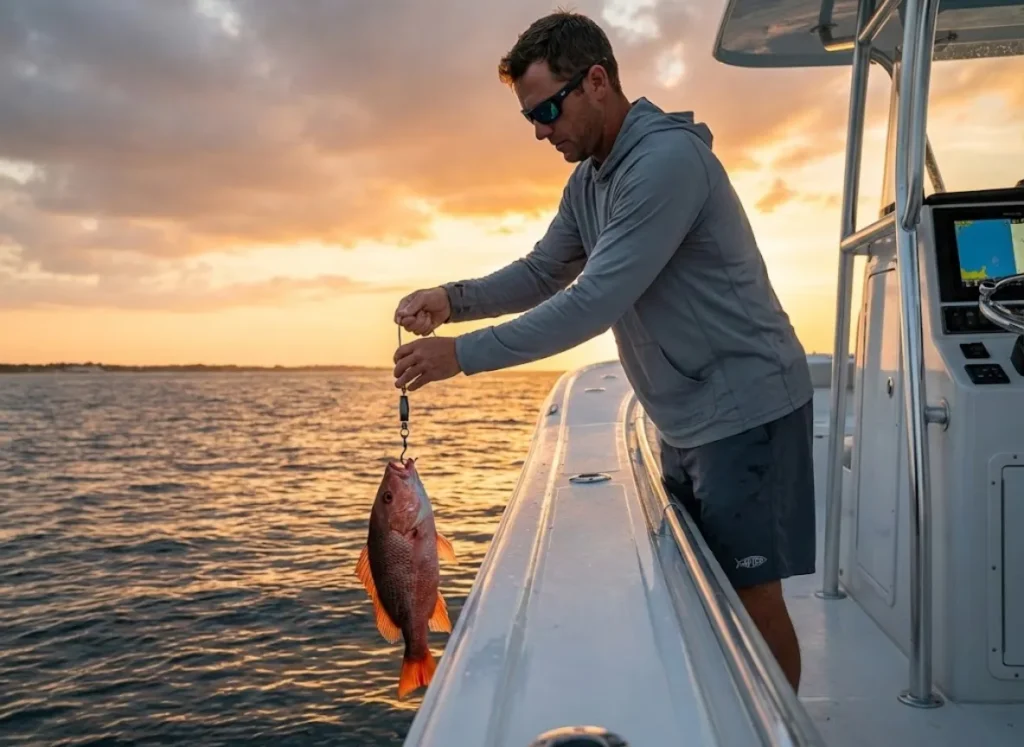
🏆 Best Overall: SeaQualizer Standard Fish Descending Device
The SeaQualizer Standard is the industry benchmark for a reason. That pressure-activated release mechanism isn’t just marketing—it’s physics working in your favor. When the device reaches your preset pressure depth (50, 100, or 150 feet), hydrostatic pressure triggers the jaws to open automatically.
Charter captains swear by it because it removes operator error from the equation. When you’re running 6 anglers who’ve never used a descending device before, that automatic release is the difference between 90% survival rates and floating fish.
The honest flaw? Premium price. At $55-65, it costs 3-4x more than basic inverted hooks. And if you primarily fish depths under 50 feet, you’re paying for capability you don’t need. But for serious reef fish anglers targeting snapper and grouper in the Gulf of Mexico or South Atlantic, this is the recompression tool that works every time.
💰 Best Value: Fishsaverpro Fish Descending Return Device
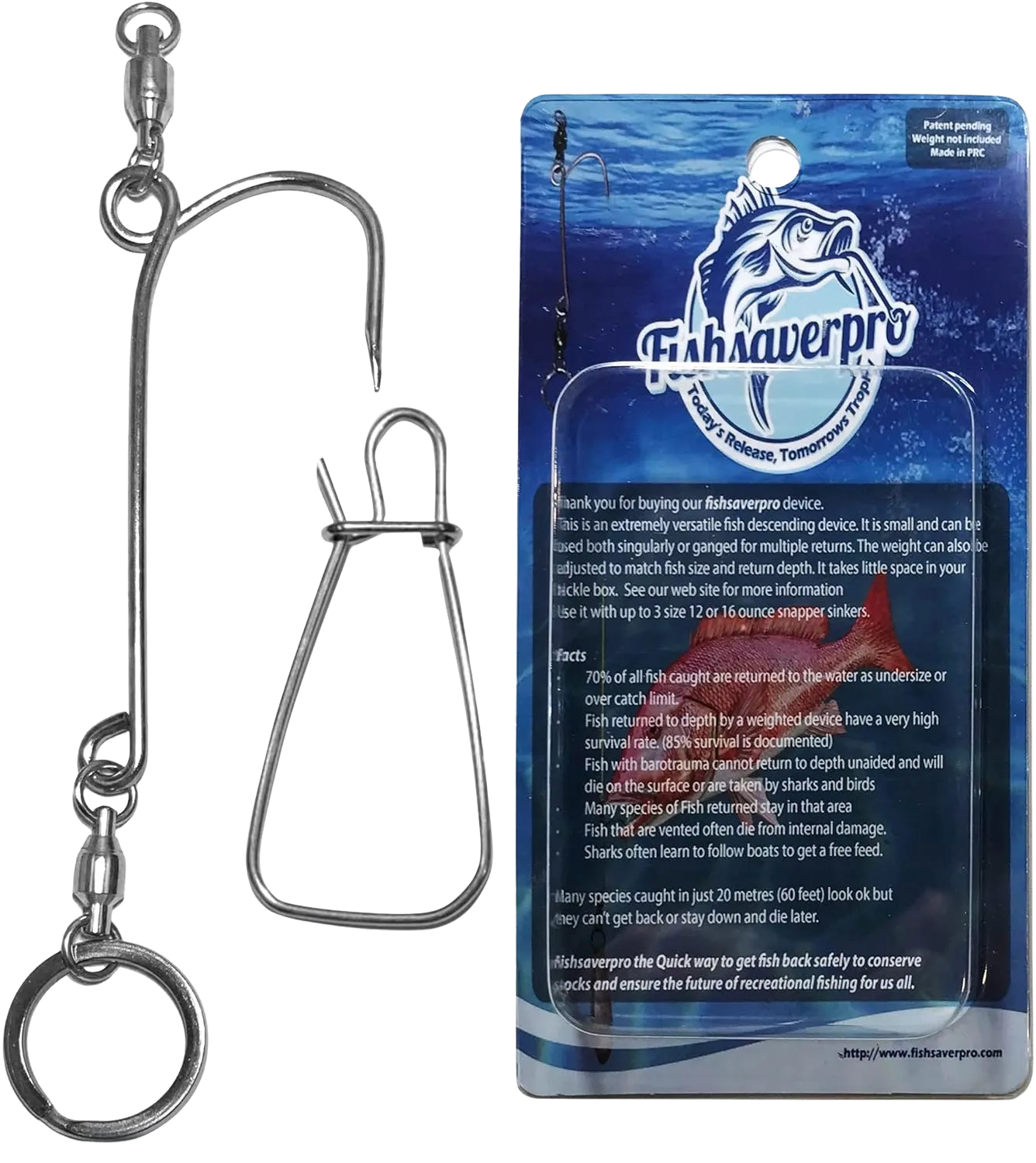
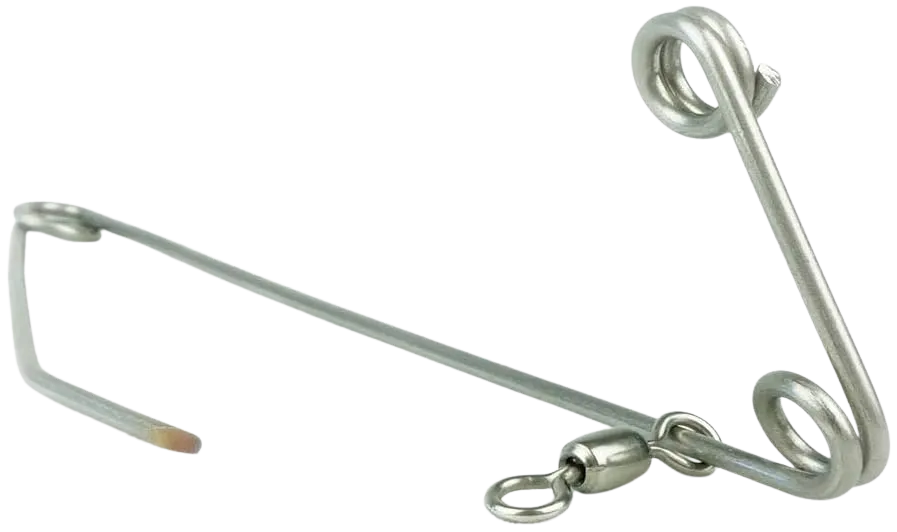
If you want the absolute best bang-for-buck in fish descending devices, the Fishsaverpro is hard to beat. At around $20, you’re getting marine-grade stainless steel construction with nickel-plated copper swivels—materials that match or exceed devices costing 3x more.
The secret to its durability is simplicity: no moving parts. There’s no pressure trigger to jam, no spring to corrode, no tiny mechanism to fail after a season in saltwater. You clip it to the fish’s jaw clamp, add your own weight (16oz recommended), lower to depth, and jerk to release.
The tradeoff is user-controlled depth. You’re judging when the fish is deep enough based on line out and feel. If you’re comfortable with that judgment call, this recompression tool will serve you for years across countless releases.
⬆️ Best for High Gunwales: SeaQualizer SeaYaLater
If you fish from a boat with high sides—big center consoles or offshore platforms—you know the struggle. Standard descending devices require you to lean over the gunwale, sometimes dangerously far, to reach the water with your fish.
The SeaQualizer SeaYaLater solves this with a patented sliding swivel that supports the fish above the water surface. You load the fish at gunwale height, not at water level. Then you lower the entire rig down, and when you give slack, the fish swims off.
It’s a niche solution, but if you’ve ever nearly pitched overboard while trying to load a grouper into a standard descender, this is the fish descending device you need. At $19-25, it’s priced like a budget device despite solving a real problem.
🎯 Best for Multi-Setup: KRAKEN SUPPLY CO 2 Pack with 16oz Sinker
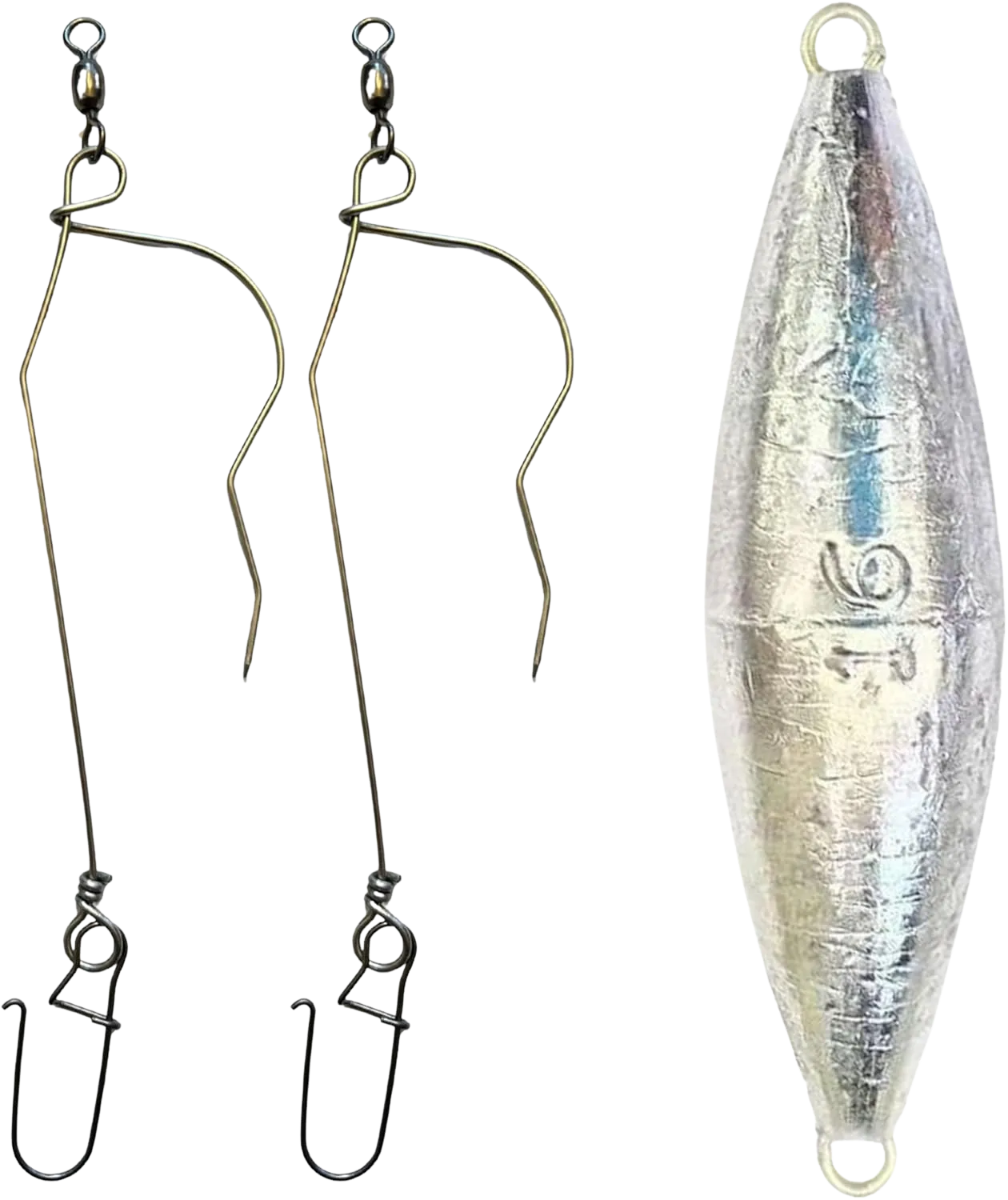
Running multiple anglers? Nothing kills the flow like waiting for someone to finish using the only descending device on the boat. The KRAKEN SUPPLY CO 2-pack solves this with two complete marine-grade stainless steel devices plus a 16oz weight—ready to fish out of the box.
This is the charter captain’s friend. Deploy one fish, hand it off for retrieval, and immediately start loading the second device. Zero downtime between releases when the reef fish are coming over the rail fast.
At $24-30 for two units plus weight, you’re paying about $15 per device fully rigged. That’s hard to beat for outfitting a boat or party boat operation.
🎖️ Honorable Mention: Shelton SFD Fish Descender
Conclusion
Choosing the right fish descending device doesn’t have to be complicated. Here’s what to remember:
Release Reliability First: A device that jams or fails to trip is worse than no device at all. Pressure-activated releases like the SeaQualizer eliminate user error; inverted hooks require proper technique but have no mechanisms to fail.
One-Handed Operation Matters: Real-world conditions mean one hand on the fish, one hand on the device. Large jaws and simple loading beat complex gates every time.
Match Device to Boat: High gunwales need the SeaYaLater. Multiple anglers need the KRAKEN 2-pack. Budget solo anglers can’t beat the Fishsaverpro.
A quality descending device costs less than dinner at a marina restaurant—but it determines whether the fish you release today becomes someone else’s trophy tomorrow, or just another statistic in the barotrauma mortality data.
FAQ
Do fish descending devices actually work?
Yes. Multiple peer-reviewed studies and conservation programs (including NOAA’s Return ‘Em Right initiative) have documented significantly improved survival rates for fish released using descending devices versus surface release. The key is getting the fish back to at least 50% of its capture depth for proper recompression of the swim bladder.
How do you use a fish descending device?
There are two main types. Pressure-activated devices (like the SeaQualizer): clip the device to the fish’s lip, lower it to the preset pressure depth, and the jaws automatically open. Manual devices (like inverted hooks): thread the fish’s jaw onto the hook, lower to your target depth, then give slack line so the fish swims off.
Are fish descending devices required by law?
In many Gulf of Mexico and South Atlantic federal waters—yes. Federal regulations require anglers to possess a descending device or venting tool when fishing for reef fish in certain areas. State requirements vary; Florida (FWC), South Carolina, and other states have specific mandates. Always check current regulations through NOAA.
What weight should I use with a descending device?
A common rule is 1 lb of weight per 5 lbs of fish, with a 16oz (1 lb) weight being standard for most reef fish species. The goal is rapid descent to minimize stress. Some devices include weights; others require you to add your own.
Can I make my own descending device?
Technically yes—a weighted inverted barbless hook on heavy monofilament can work. However, commercial devices like the Fishsaverpro cost $20 and use marine-grade stainless steel specifically designed for the task. DIY solutions often fail at the worst moment. Given the low cost of quality devices, we recommend commercial options for reliable fish survival.
Risk Disclaimer: Fishing, boating, and all related outdoor activities involve inherent risks that
can lead to injury. The information provided on Master Fishing Mag is for educational and informational purposes
only. While we strive for accuracy, the information, techniques, and advice on gear and safety are not a substitute
for your own best judgment, local knowledge, and adherence to official regulations. Fishing regulations, including
seasons, size limits, and species restrictions, change frequently and vary by location. Always consult the latest
official regulations from your local fish and wildlife agency before heading out. Proper handling of hooks, knives,
and other sharp equipment is essential for safety. Furthermore, be aware of local fish consumption advisories. By
using this website, you agree that you are solely responsible for your own safety and for complying with all
applicable laws. Any reliance you place on our content is strictly at your own risk. Master Fishing Mag and its
authors will not be held liable for any injury, damage, or loss sustained in connection with the use of the
information herein.
Affiliate Disclosure: We are a participant in the Amazon Services LLC Associates Program, an
affiliate advertising program designed to provide a means for us to earn advertising fees by advertising and linking
to Amazon.com. As an Amazon Associate, we earn from qualifying purchases. We also participate in other affiliate
programs and may receive a commission on products purchased through our links, at no extra cost to you. Additional
terms are found in the terms of service.