
In this article
You hoist what feels like the catfish of the year, the scale swings, and the number looks huge. A week later you realize you never zeroed the gripper, so a pound and a half of that “personal best” was the tool itself. It is the most common weigh-in story at any boat ramp, and it points at the real truth about buying a digital fish scale grip: the brand on the housing matters far less than whether it lets you weigh fast and put the fish back breathing. Ask anyone who runs a lot of catch and release, and the advice lands the same way every time, get the number honestly, and get the fish back in the water. Here is what actually separates a scale worth owning from a screen full of features you will never touch, plus the category picks that earn the money.
Why the Grip Matters More Than the Number on the Screen
The fish you plan to release does not care what brand your scale is. It cares how long it stays out of the water and whether its jaw and gills survive the handshake. That is the part every gear roundup skips, and it should drive the whole buying decision.
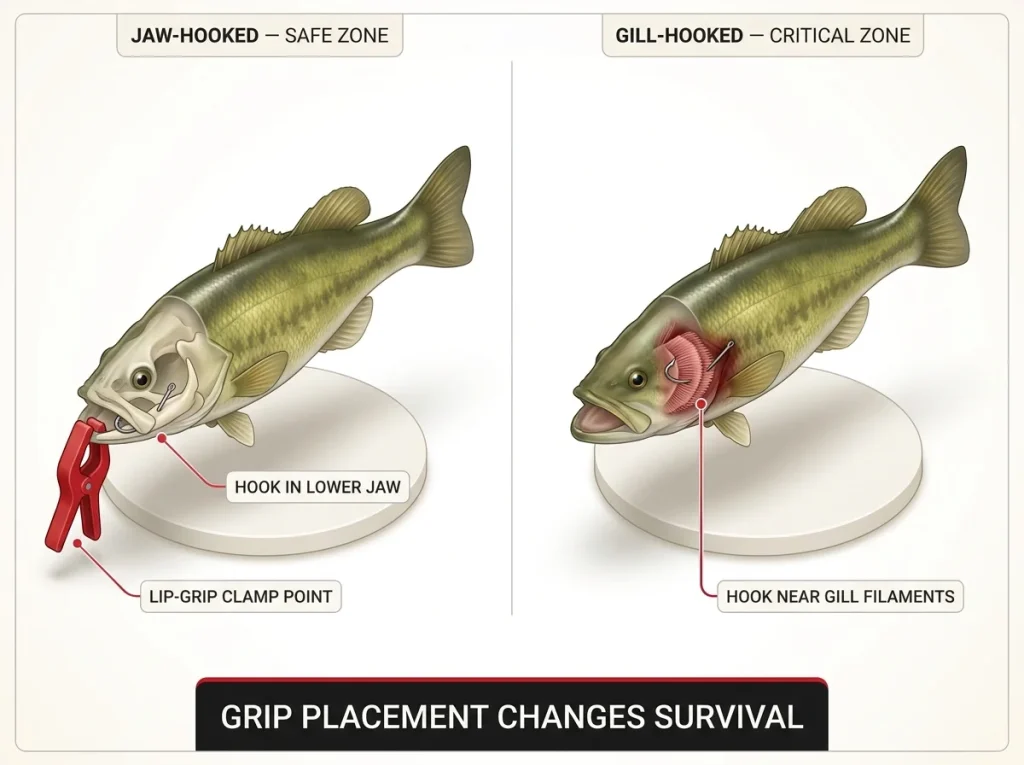
The gill-hook failure mode most anglers never think about
A lip gripper uses a no-puncture jaw clamp on the hard lower jaw, which is bone and cartilage the fish can afford to have pinched for a few seconds. A hook-style hanging scale run through the gill plate does the opposite. It puts pressure and steel right where the fish is most easily wounded.
Deep-hooked fish, the ones stuck in the gills or gut, are lost at far higher rates than jaw-hooked fish. In one controlled bluegill study, all but one of seventeen deep-hooked fish did not survive, against zero of four hooked cleanly in the jaw. A peer-reviewed study on deep-hooking mortality put hard numbers on what guides already knew.
A torn gill is an injury a fish rarely recovers from, even after it swims off looking fine. That is the mechanism behind “handle it gently.” It is a real wound, not a slogan.
Why holding a fish vertical for the photo is the real damage
Here is where most people get it wrong, and it has nothing to do with the scale. Hanging a fish straight up by the jaw for a hero shot loads the fish’s full weight onto the jaw joint. A 2007 Cape Eleuthera Institute study on bonefish found that every fish held vertically in the air took jaw or tissue injury, including fish held with lip grippers, against a lower rate for fish kept in the water.
The community even has a name for the habit, “gripping and ripping,” and you have probably watched someone do it, the bass swinging by its lip while a buddy fumbles for a phone, the jaw visibly stretching. NOAA Fisheries is blunt about it, never suspend a fish by its lip or mouth alone. If you want the deep version of this, the lip-grip mistake that injures fish you plan to release is worth reading before your next trip.
What a fast lip-grip weigh actually buys the fish
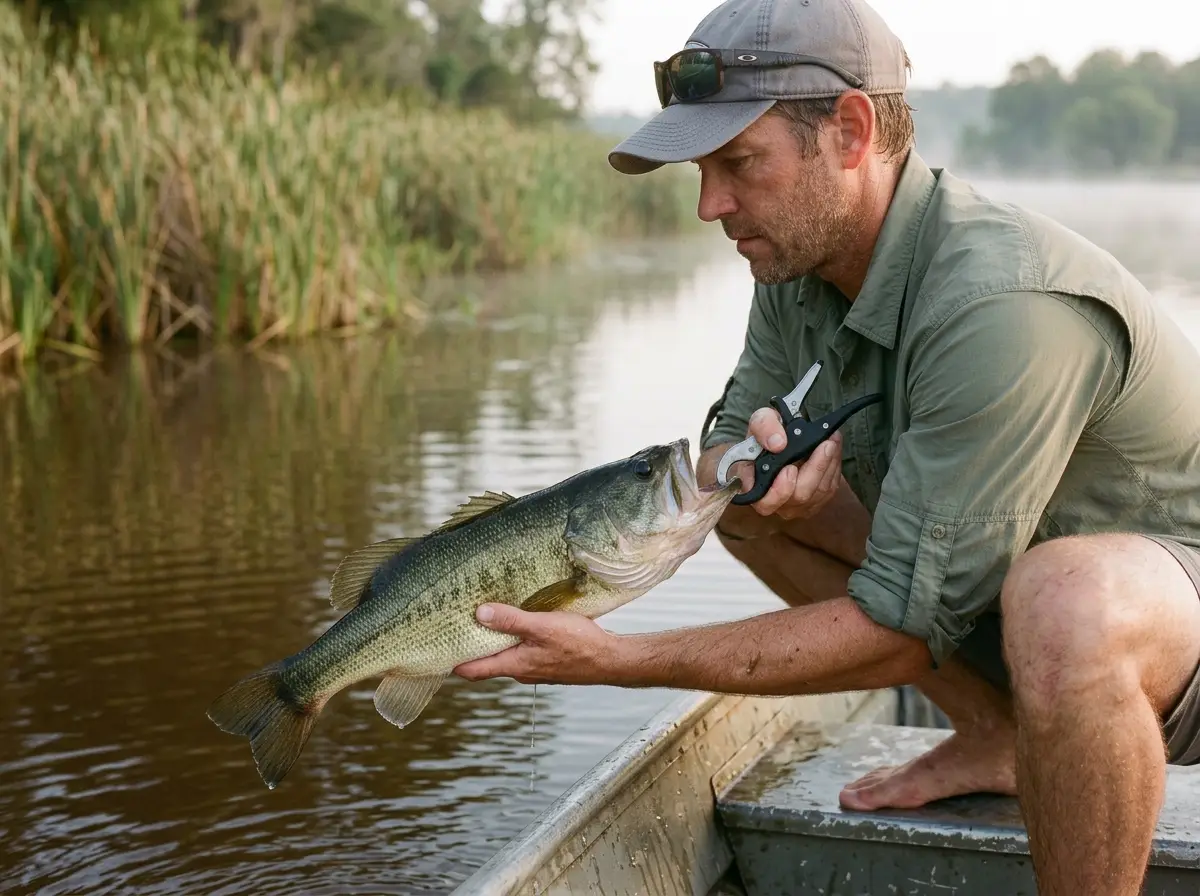
A gripper is not a hanging hook and it is not a sling. Clamp the jaw, weigh horizontally and low over the water, cradle the belly, and the fish is back swimming before it knows what happened. Do the same job with a rubber landing net under it first and you cut air exposure even more. If you are still choosing one, a rubber landing net that protects the slime coat belongs in the same handling kit as the scale.
Keep your free hand under the belly even when the gripper is locked on. The gripper holds the jaw, your hand takes the fish’s weight off the joint. A fish supported that way comes off the line with a lot less damage than one hanging by its face.
Digital vs Mechanical, and Matching Capacity to Your Catch
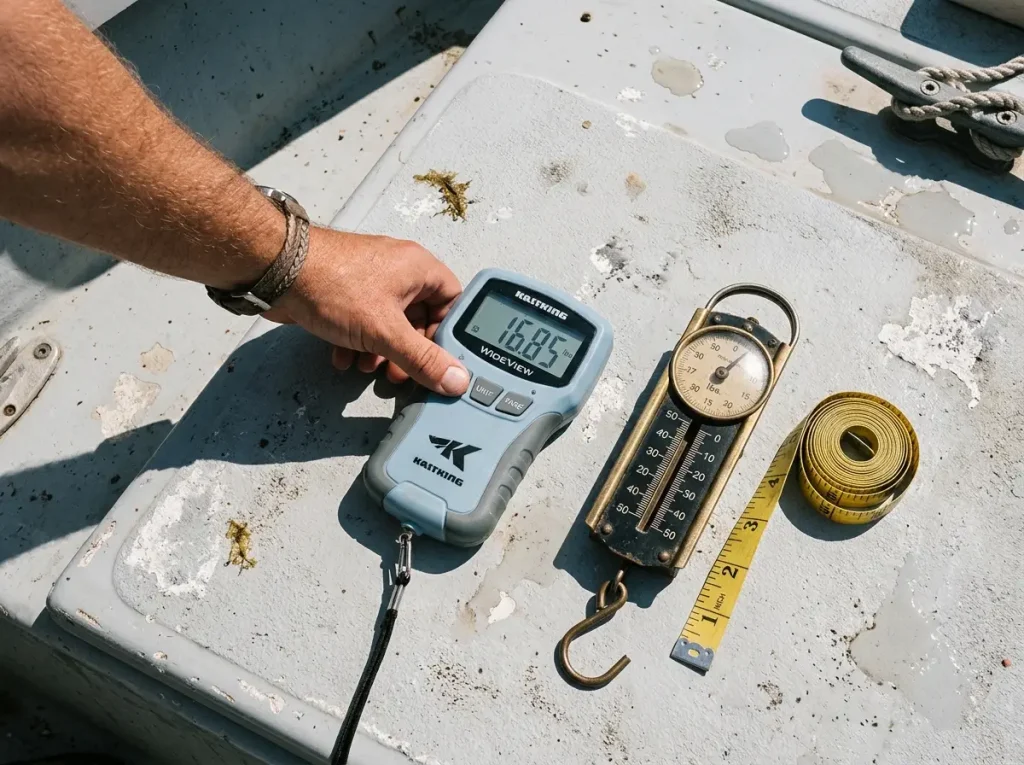
Before you compare feature lists, settle two questions that most buyers get backwards, what type of scale you need and how much capacity. A scale is one tool in a system, and it helps to see where a scale fits in a complete kit of fishing tools and accessories before you spend.
Digital or mechanical, how each one actually fails
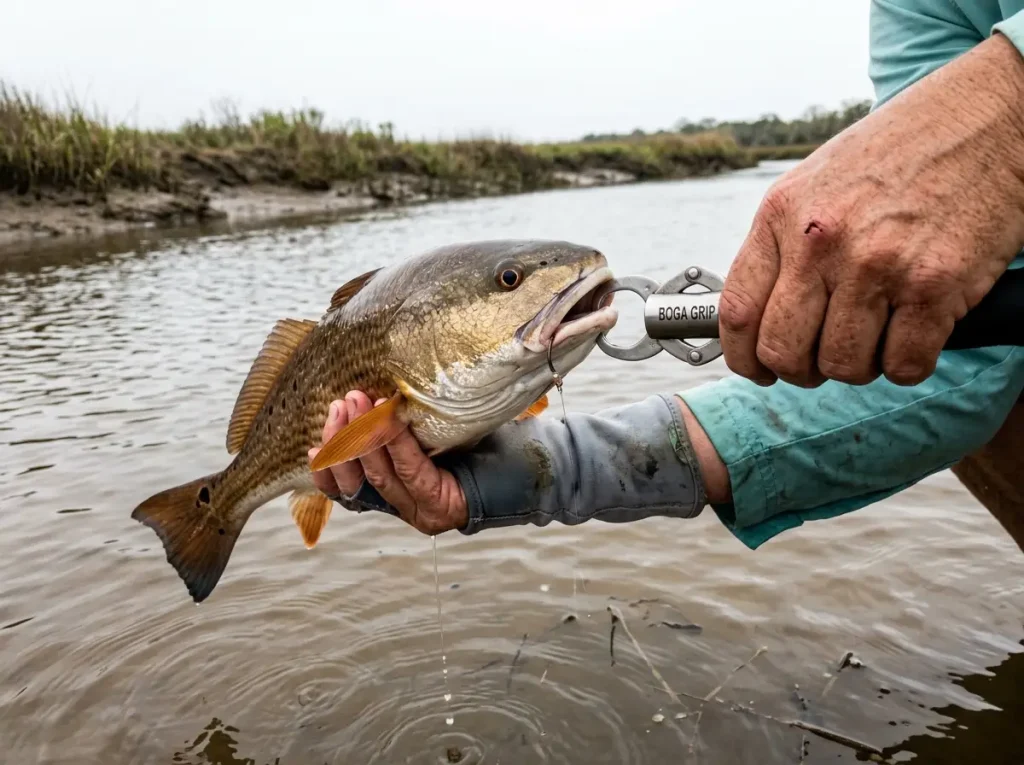
A digital fish scale reads to the ounce or the hundredth of a pound, tares instantly, and stores weights for culling. It also quits the moment the battery runs flat. A mechanical or spring scale, the Boga-style tools, has nothing to run flat and famously outlasts everything in the boat, but it reads in coarser increments and you cannot zero out a net. That is the honest tradeoff. Digital for precision and memory, mechanical for durability and simplicity. Neither is better until you name the fish and the conditions.
Why the 110-lb scale lies about your crappie
Capacity is not bragging rights. It is a precision tradeoff. Most scales are accurate to about one percent of their maximum, so a 50-pound scale can be off by half a pound near the top of its range, and a 110-pound scale is genuinely bad at weighing a three-pound crappie. That is the “the reading jumps around” complaint you see in reviews, and it is almost always someone who bought maximum capacity for a “someday” fish and lost everyday accuracy. Match the tool to what you actually catch. Roughly, 15 pounds for panfish and trout, 50 to 60 pounds for bass and most freshwater fishing, and 110 pounds only if you chase catfish or big game.
Reading accuracy specs without the marketing gloss
Premium models tighten to a tenth of a percent, which matters for records and cull decisions and almost nowhere else. The number to trust is the increment, how finely it actually reads, not the headline capacity. And waterproofing is oversold too. An IPX7 rating means the unit survives a dunk, roughly a meter for half an hour, not that it lives in bilge water all day. Buy for the splash the scale will actually take, not for a rating you will never test.
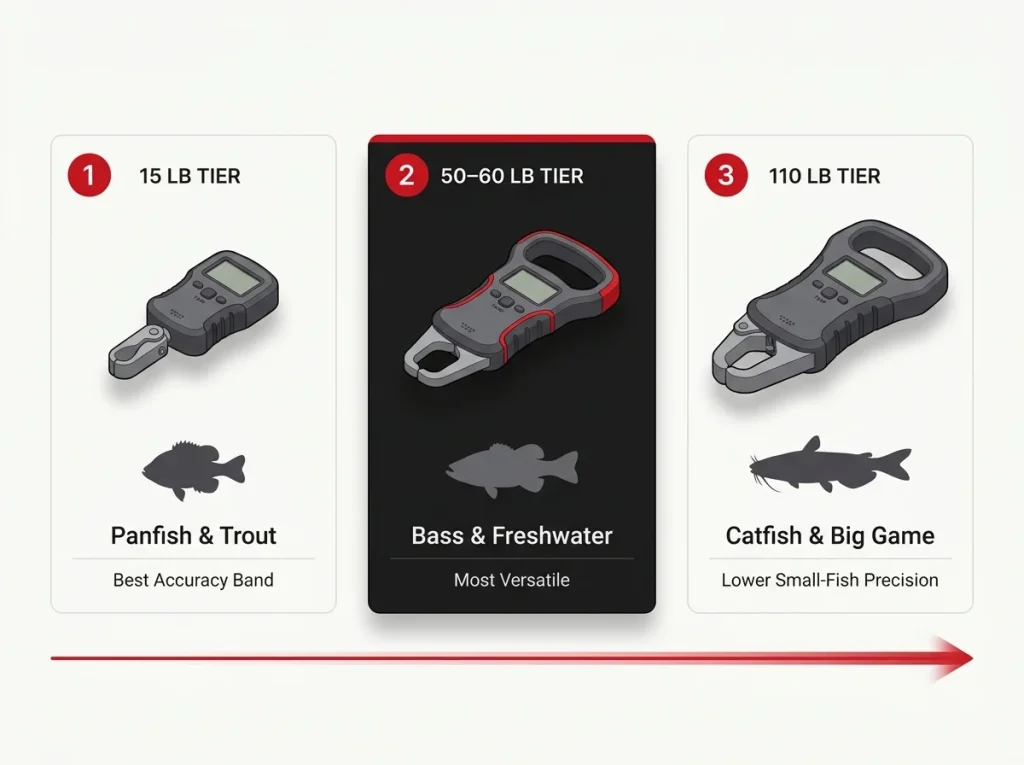
How to Tare and Weigh a Fish in Under 15 Seconds
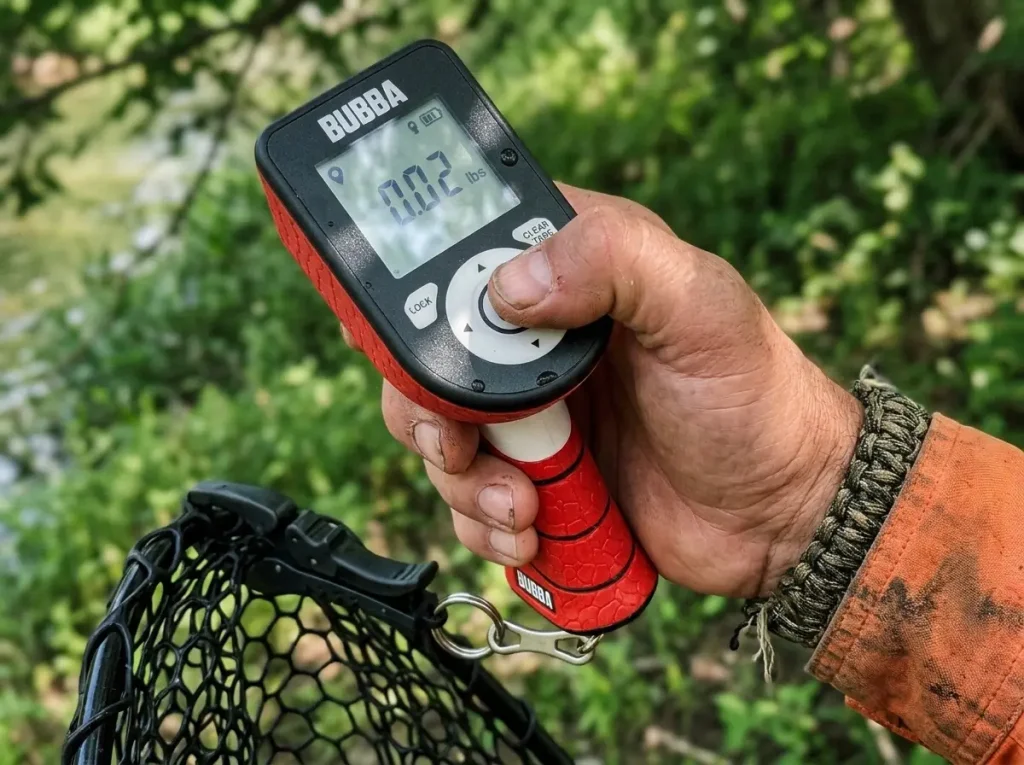
Every competitor mentions “tare first” as a footnote and moves on. The actual on-the-water sequence is where personal bests are won or faked, so it is worth doing slowly once so you can do it fast forever.
The pre-trip test-tare and battery check
Good guides check the scale on the dock before the boat ever leaves, the same way they check knots. Power it on, run a test tare, confirm the battery is strong. Ten seconds on the trailer beats a dead screen when the fish of the season is dripping in your hand.
The clamp-tare-weigh-release sequence step by step
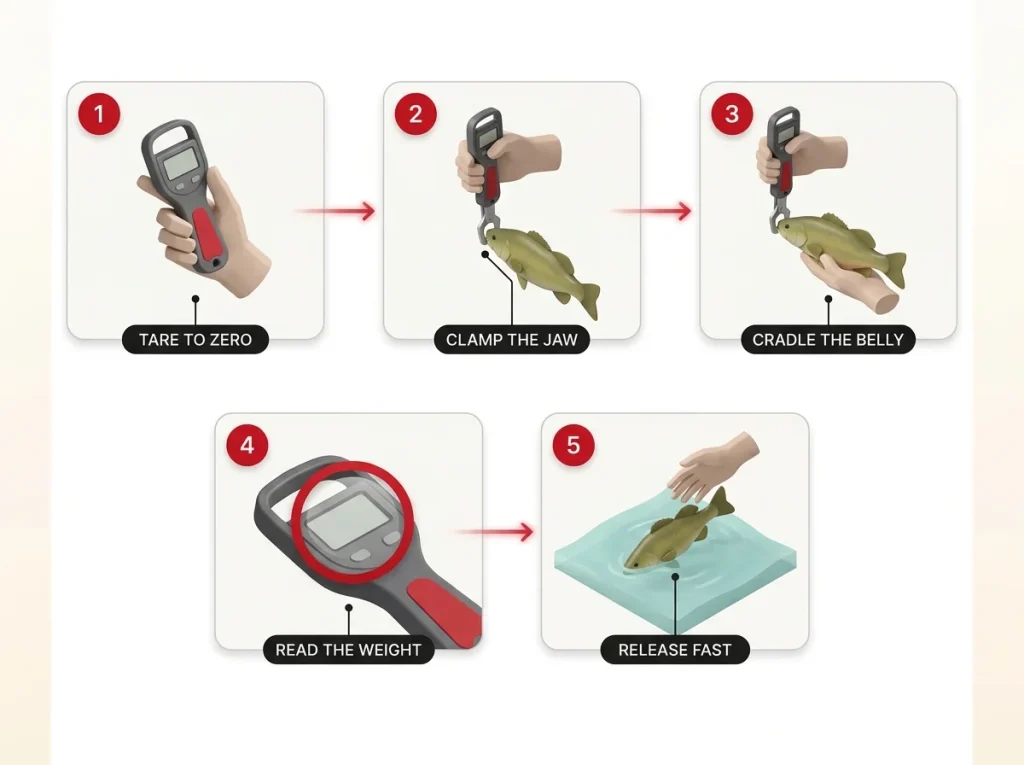
The order is the whole game. Do it like this:
- Power on the scale and let it settle.
- Clamp the gripper onto your empty hand or the net first.
- Hit tare or zero so the tool weighs nothing.
- Clamp the fish’s lower jaw and lift, cradling the belly.
- Read the weight, then release, all inside about 15 seconds.
Tare is the single feature that turns “close enough” into a real number, because it subtracts the gripper, net, or sling weight before the fish is ever on the tool. Grab the quick photo in the same window if you want one, and treat an ethical, quick-release photo routine as part of the weigh, not a separate posing session.
The mistake that fakes a personal best
Skip the tare and your gripper’s weight rides along with the fish, which is exactly how a twelve-pound catfish becomes a “fourteen-pounder” in the group chat. Research on barramundi handling also found that fish supported under the belly took far fewer jaw injuries than fish held by the jaw alone. Tare for the honest number, cradle for the fish. Both habits live in the same fifteen seconds.
Carry a spare set of the batteries your scale takes, or top off a rechargeable one the night before. A dead scale on a big fish is the kind of regret you only earn once before you start packing spares.
Best Overall and the Truth About Bluetooth Scales
If you want one scale that does almost everything and you will actually use the extras, this is the pick. If you just want a number and a fast release, read the caveat before you pay for the connected version.
Best Overall: Bubba Pro Series Smart Fish Scale
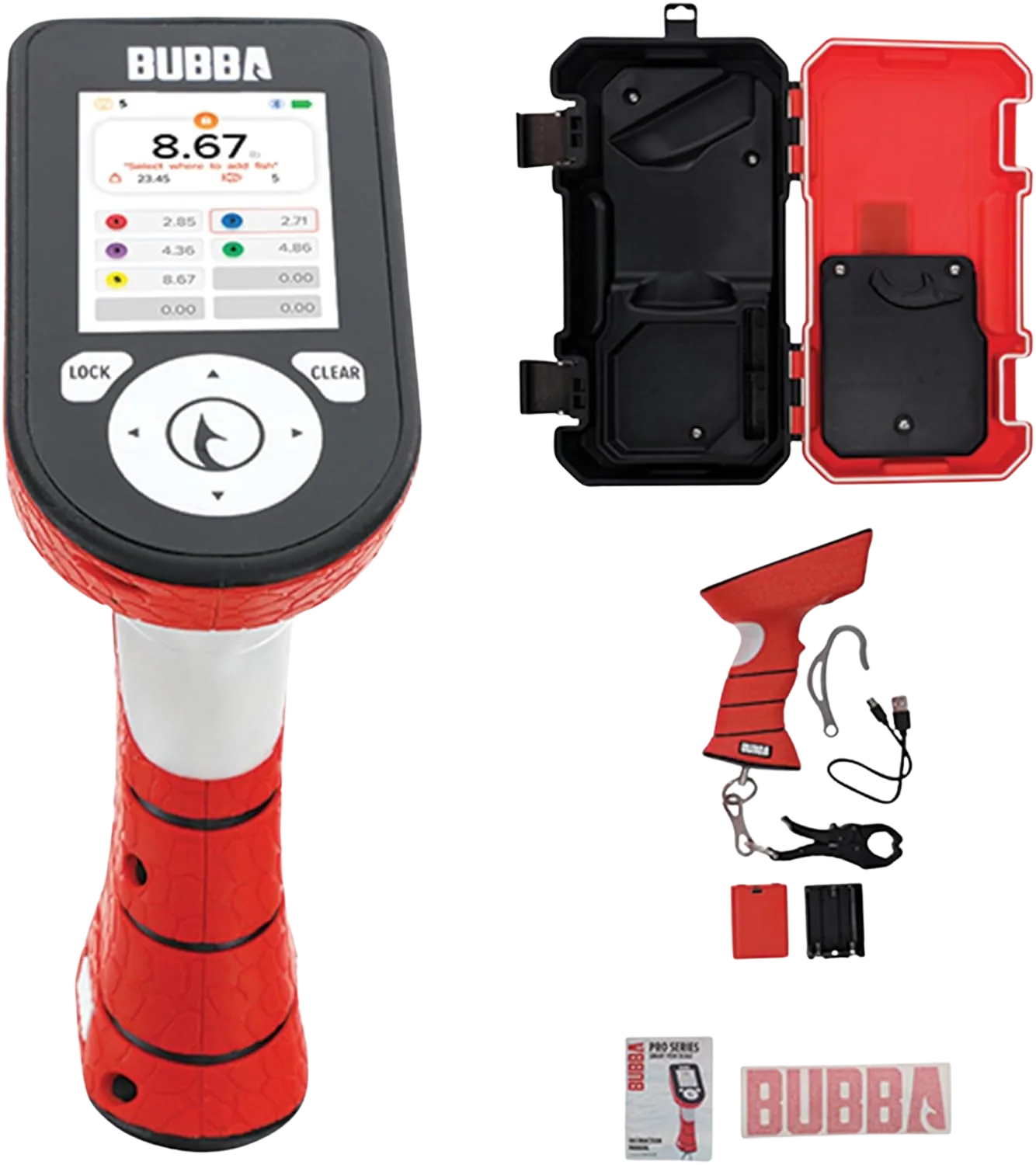
The Bubba Pro Series Smart Fish Scale earns the overall spot on build and comfort alone. The grip is easy to hold for a full day, the display reads in low light, and the tare works cleanly. It is a beginner-friendly pick that will not feel like a downgrade as you get more serious.
When the app is worth it, and when it is noise
Here is the part the marketing skips. The Bluetooth sync is very nearly the only thing separating the Pro Series from Bubba’s cheaper non-connected scale. So the premium is the app. If you already log catches on your phone, the sync is genuinely useful and worth it. If you do not, you will not start logging because a scale nagged you to, and you are paying for a feature you will never open. Worth noting too, an app-connected scale only helps if the phone survives the boat, so a dry, mounted phone is part of the real cost of going connected.
The Best Grip for Wet, Cold, and Gloved Hands
A grip that feels fine in the store slips right out of a cold, wet hand on the water. This is the gap nobody compares head to head, so here it is. One honest flag first, no independent lab test ranks these three for wet-hand performance, so this is manufacturer design plus real-world reasoning, and it is fair to say so.
Best Wet Grip: Piscifun Fish Lip Gripper
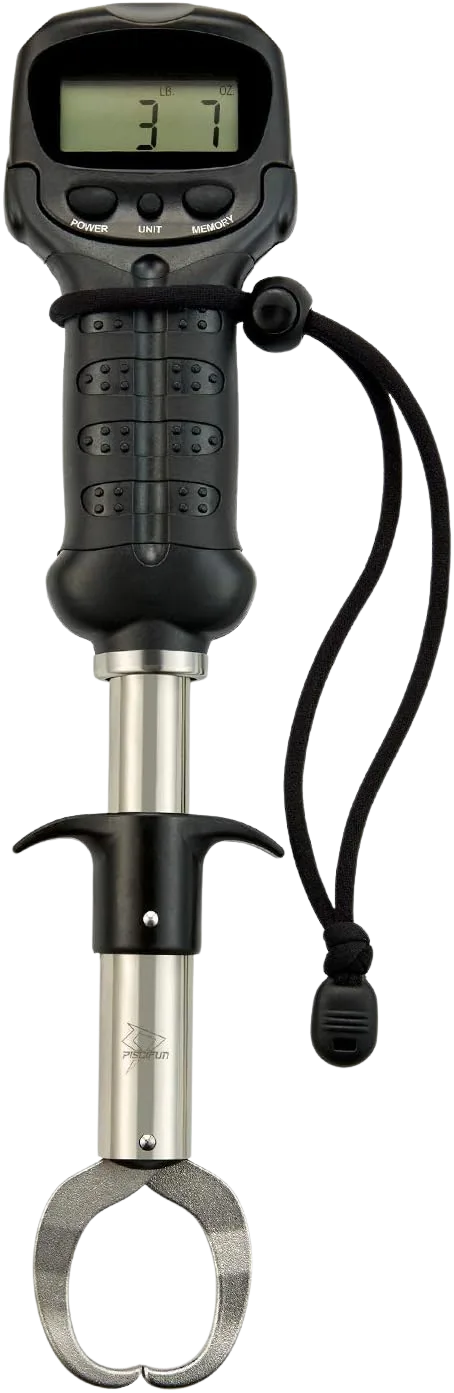
The Piscifun Fish Lip Gripper solves an ergonomics problem the spec sheets ignore. The rotating handle lets the tool follow a thrashing fish instead of forcing your wrist to. On a cold morning that is the difference between a clean weigh and a dropped scale.
Best Mid Tier: Berkley Big Game Lip Grip
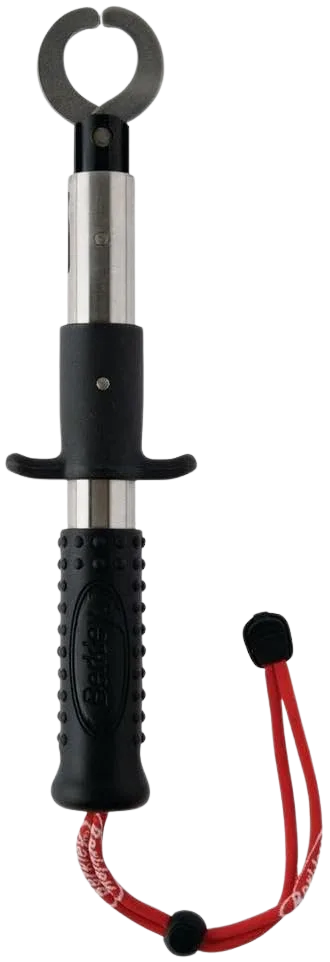
The Berkley Big Game Lip Grip is the safe recommendation when someone asks for one tool that just works. It combines the gripper and the scale, locks one-handed, and comes from a brand that has to stand behind its name. A dependable all-rounder for the core weigh-and-release job.
Best Big Display: KastKing WideView
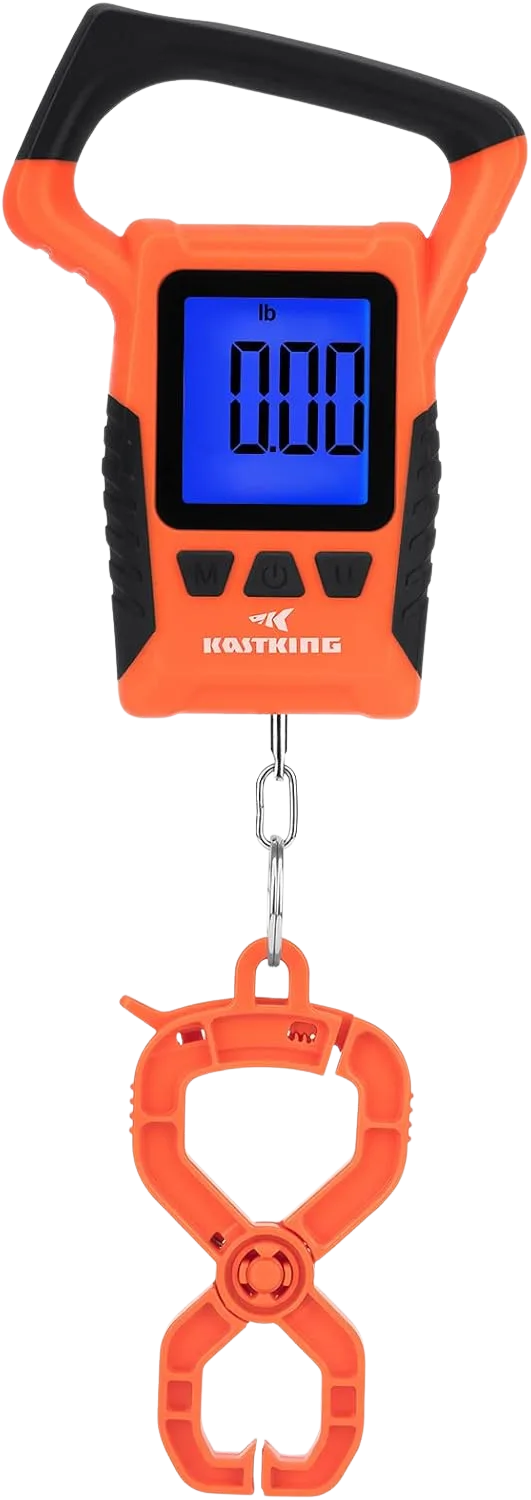
The KastKing WideView is the pick for anyone who has squinted at a tiny screen in the sun or watched a scale sink. The big display and the floating housing are practical answers to on-the-water headaches, and the oversized housing is genuinely easier to manage with gloves on. If you fish bare-handed for catfish or run gloves in the cold, the notes on what actually protects your hands pair well with this section.
Once your hands are cold and wet, a rotatable or oversized grip matters more than an extra decimal of accuracy. You cannot read a number you dropped in the lake. Buy the grip you can hold in February, not the one that looks best on a bench.
Best for Big Fish and Toothy Species
Pike, snook, big flatheads, the fish that chew up cheap plastic and put your hand near a mouth full of teeth. This is where mechanical durability and real capacity earn their keep.
Best Toothy Pick: Boga Grip 30
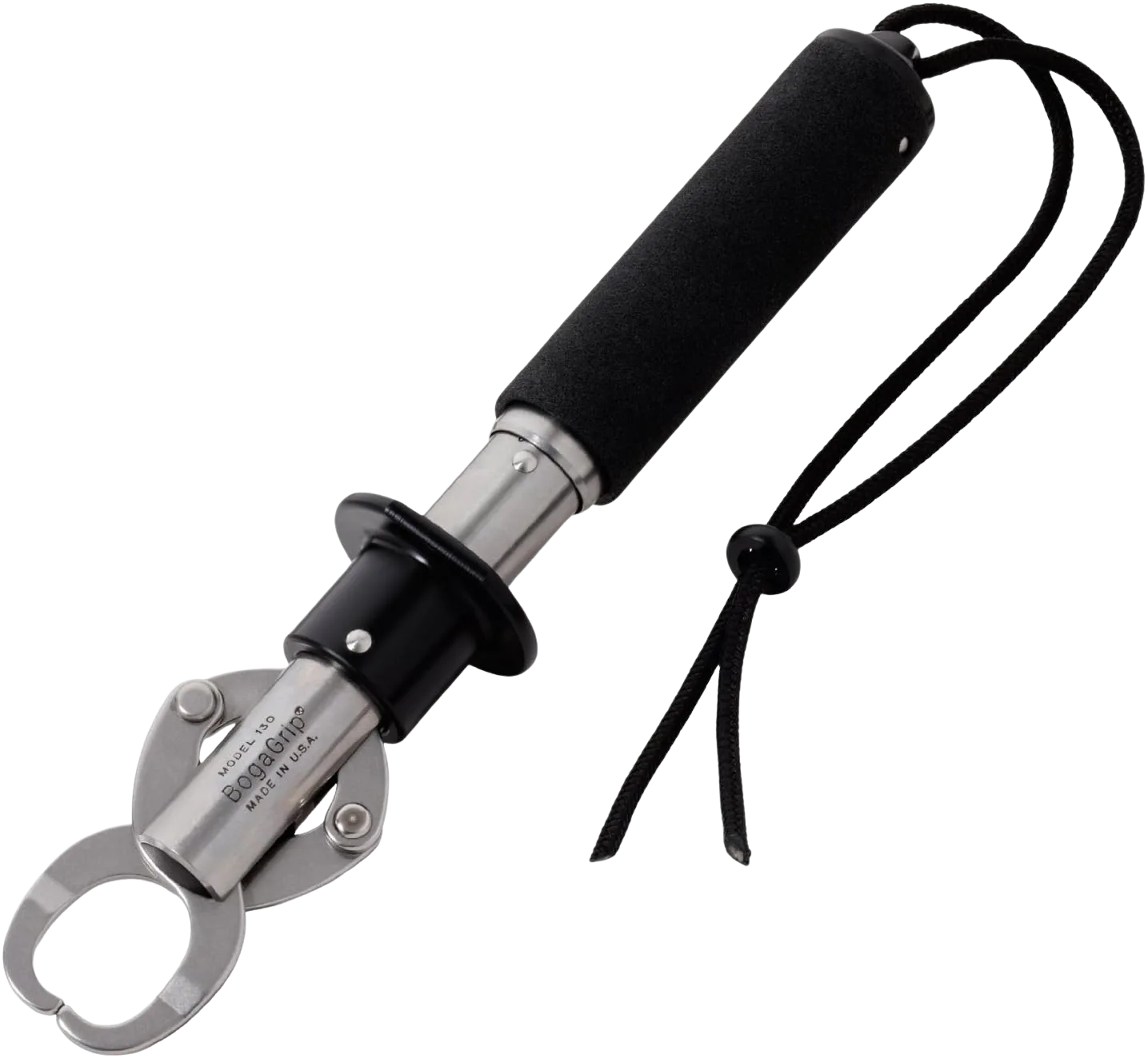
The Boga Grip 30 is not digital, and that is exactly the point. For toothy species you want metal jaws, mechanical simplicity, and a tool that shrugs off saltwater and abuse. It reads in coarser half-pound steps, so it is a control-and-durability pick more than a precision one, but it is the tool that will still be working in a decade.
Best High Capacity: Accu-Cull Digital Scale with Mini Grip
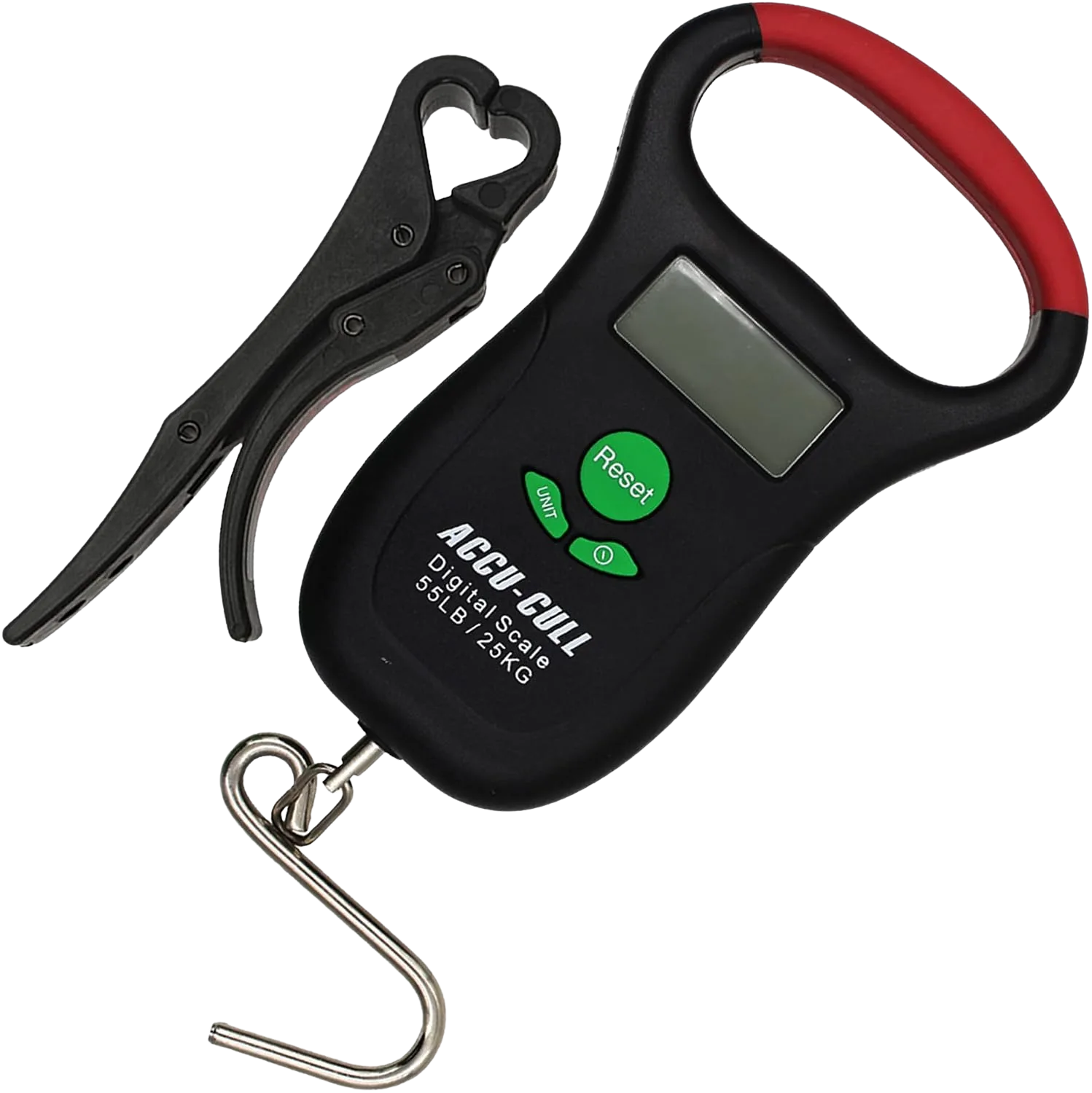
The Accu-Cull Mini Grip covers the top of the capacity ladder for catfish and big-game anglers who genuinely land fish past the range of a 55-pound scale. It is the digital counterpart to the Boga’s mechanical toughness, when you need the exact number on a real bruiser.
Matching the grip to the species’ mouth
A soft-mouth lip-grip technique that works on a bass is the wrong move on a thrashing toothy fish, and it is a common way to end up with a treble in your hand. Control first, precision second. Keep the mouth away from your fingers and let the tool do the holding, and keep a set of long, rust-proof pliers to unhook toothy fish safely within reach for the part after the weigh.
Best Budget Grips Without the Gimmicks
You can weigh a fish honestly and release it fast for the price of a couple of crankbaits. You do not need a screen full of icons to do it. Here is the honest budget verdict.
Best Budget: Googan Squad Digital Scale
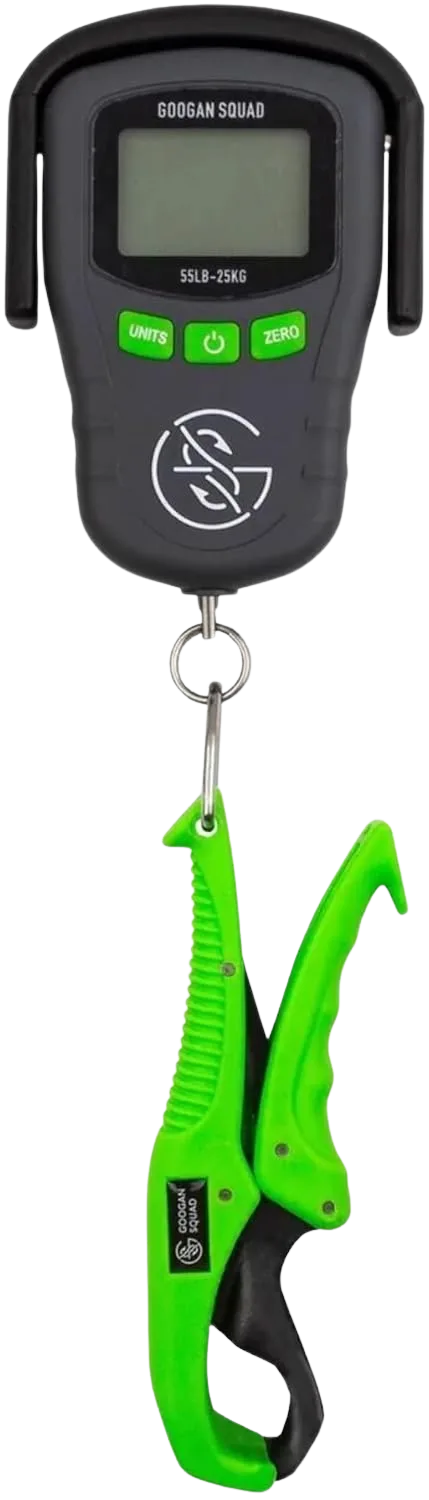
The Googan Squad Digital Scale is the one to hand a buddy who wants a straight answer. Fifty-five pounds of capacity, an integrated gripper, batteries in the box, and nothing you have to charge or pair. For the vast majority of anglers, this is all the scale they will ever need.
Budget Floor: Entsport Fish Lip Gripper
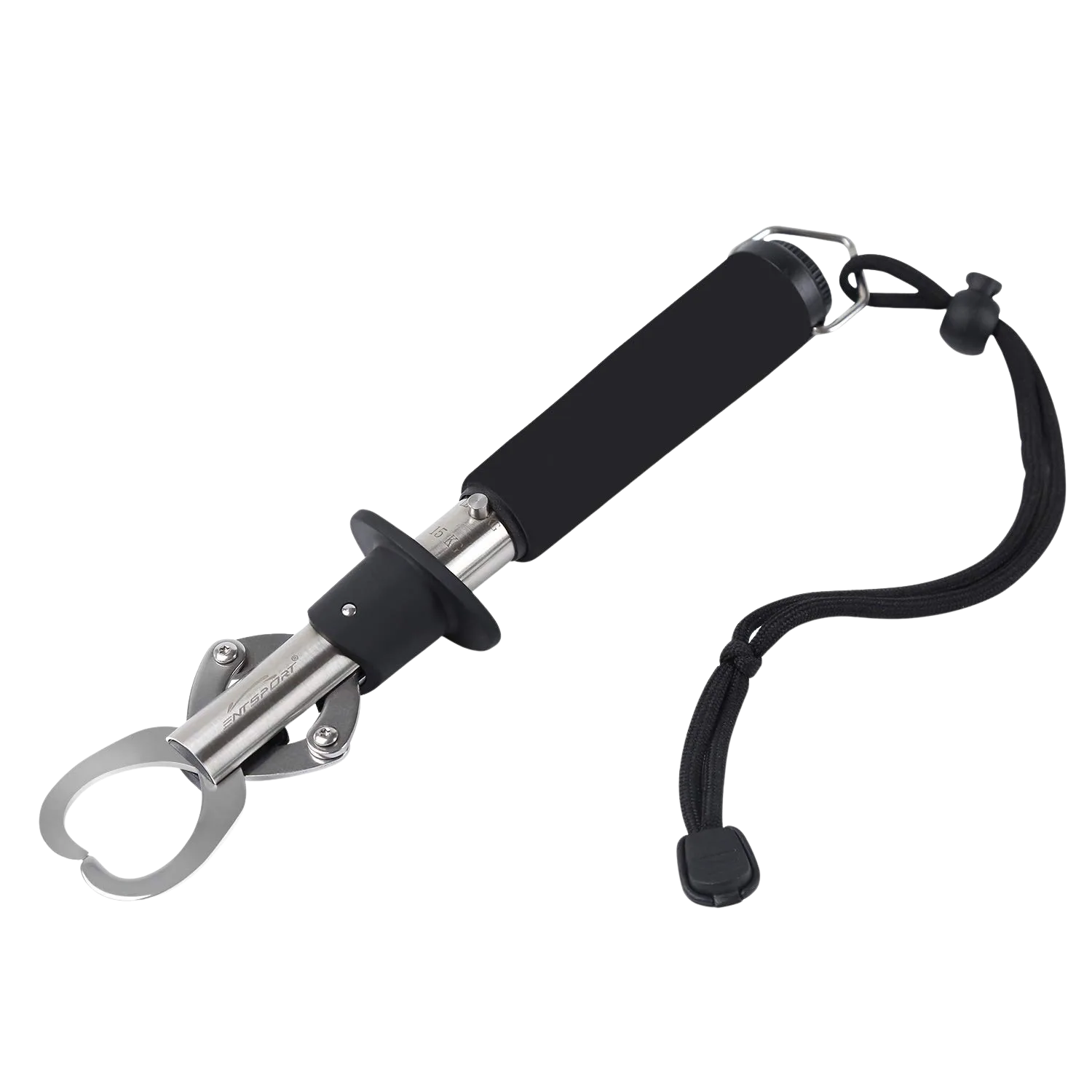
The Entsport Fish Lip Gripper is here because someone always wants the cheapest thing that still works, and this is it. It will not read as tight as the Googan or the Brecknell, and it is not pretending to. As a first scale or a backup in the truck, it beats guessing by feel.
What you can safely skip to save money
The features you actually use are a working tare, a display you can read, and a jaw that holds. Everything past that is optional. App sync, GPS logging, memory slots you never scroll through, those are nice to have, not need to have. If you are just starting out, it is worth asking honestly whether a beginner even needs a dedicated scale yet before spending on one at all.
Spend your budget on the display and the jaw first. A scale you can read in the sun and trust to hold a fish beats a cheaper one loaded with an app you will open exactly once. Features do not land fish, a solid grip does.
The Tournament-Grade Accuracy Pick
For most catch and release, within a few ounces is plenty. But if you cull, chase records, or just want a number nobody can argue with, this is the tier where precision earns its price.
Best Accuracy: Brecknell ElectroSamson
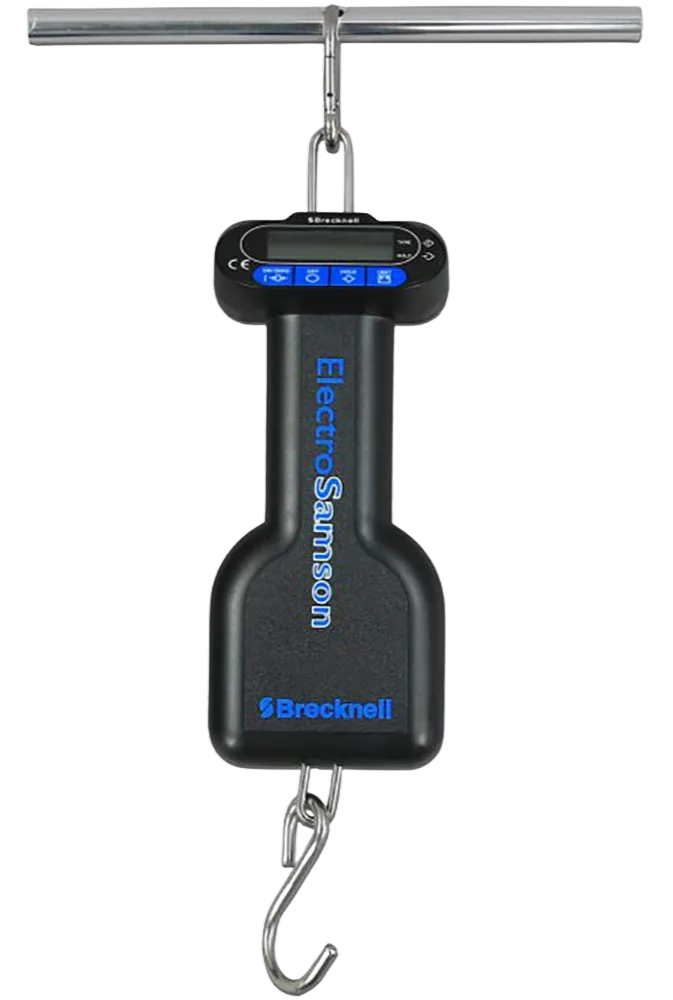
The Brecknell ElectroSamson is what people mean when they ask what the pros use. It reads finer than anything else here, remembers weights for culling, and has the tournament pedigree to back the claim. Buy it if you compete or chase line-class fish. If you only weigh the occasional bass for a photo, it is more precision than the moment calls for.
What tournament-grade accuracy actually requires
Precision is not just a tight number, it is a disciplined process. The IGFA’s own world-record rules require a certified scale, the gripper or sling weight deducted, and readings between the graduation lines rounded down instead of up in the angler’s favor. That is the same tare habit from earlier, just formalized. A test-tare on the dock before weigh-in, so the number is never in question, is a page worth stealing from tournament anglers. It is one habit in the larger kit, alongside the rest of the tools that earn a spot in a serious setup.
Bringing It Together
Three things decide whether a scale is worth owning. First, the grip and a fast, tared weigh protect the fish more than any brand name on the housing. Second, you match capacity to the fish you actually catch, and you tare every single time. Third, you buy the features you will use, a readable display, a jaw that holds, a working tare, and you skip the rest.
On your next trip, run one clean test-tare on the dock and then time a real weigh-and-release. Get it under fifteen seconds, cradle the belly, and keep the fish low over the water. Do that, and both the fish and your numbers come out better than they did the trip before.
Frequently Asked Questions
01Does weighing a fish with a lip gripper hurt it?
Not if you use it right. Clamp the hard lower jaw, weigh the fish horizontally and low over the water, and support the belly with your free hand. The real damage comes from hanging a fish vertically by the jaw for a photo, which research links to a high rate of jaw injury.
02What is the most accurate digital fish scale?
The Brecknell ElectroSamson reads to 0.05 lb and is associated with Major League Fishing, making it the tightest pick here. Remember accuracy is relative to capacity, so a scale sized close to your fish always reads truer than an oversized one.
03What fish scale do tournament anglers use?
Many tournament setups lean on certified, high-precision hand-held scales like the Brecknell ElectroSamson, with a mechanical Boga Grip common for controlling toothy fish. The shared habit matters more than the brand, they tare before every weigh.
04How accurate does a fish scale really need to be for catch and release?
For bragging rights and a photo, within a few ounces is plenty. You do not need record-grade precision to know you beat your personal best. Spend on a readable display and a good jaw first, and save the fine precision for culling or chasing records.
05Are Bluetooth fish scales worth it?
Only if you already keep a digital catch log on your phone. The app sync is often the single feature separating a premium scale from its cheaper sibling, so if you just want a number and a fast release, you are paying for something you will not open.
Risk Disclaimer: Fishing, boating, and all related outdoor activities involve inherent risks that
can lead to injury. The information provided on Master Fishing Mag is for educational and informational purposes
only. While we strive for accuracy, the information, techniques, and advice on gear and safety are not a substitute
for your own best judgment, local knowledge, and adherence to official regulations. Fishing regulations, including
seasons, size limits, and species restrictions, change frequently and vary by location. Always consult the latest
official regulations from your local fish and wildlife agency before heading out. Proper handling of hooks, knives,
and other sharp equipment is essential for safety. Furthermore, be aware of local fish consumption advisories. By
using this website, you agree that you are solely responsible for your own safety and for complying with all
applicable laws. Any reliance you place on our content is strictly at your own risk. Master Fishing Mag and its
authors will not be held liable for any injury, damage, or loss sustained in connection with the use of the
information herein.
Affiliate Disclosure: We are a participant in the Amazon Services LLC Associates Program, an
affiliate advertising program designed to provide a means for us to earn advertising fees by advertising and linking
to Amazon.com. As an Amazon Associate, we earn from qualifying purchases. We also participate in other affiliate
programs and may receive a commission on products purchased through our links, at no extra cost to you. Additional
terms are found in the terms of service.