
In this article
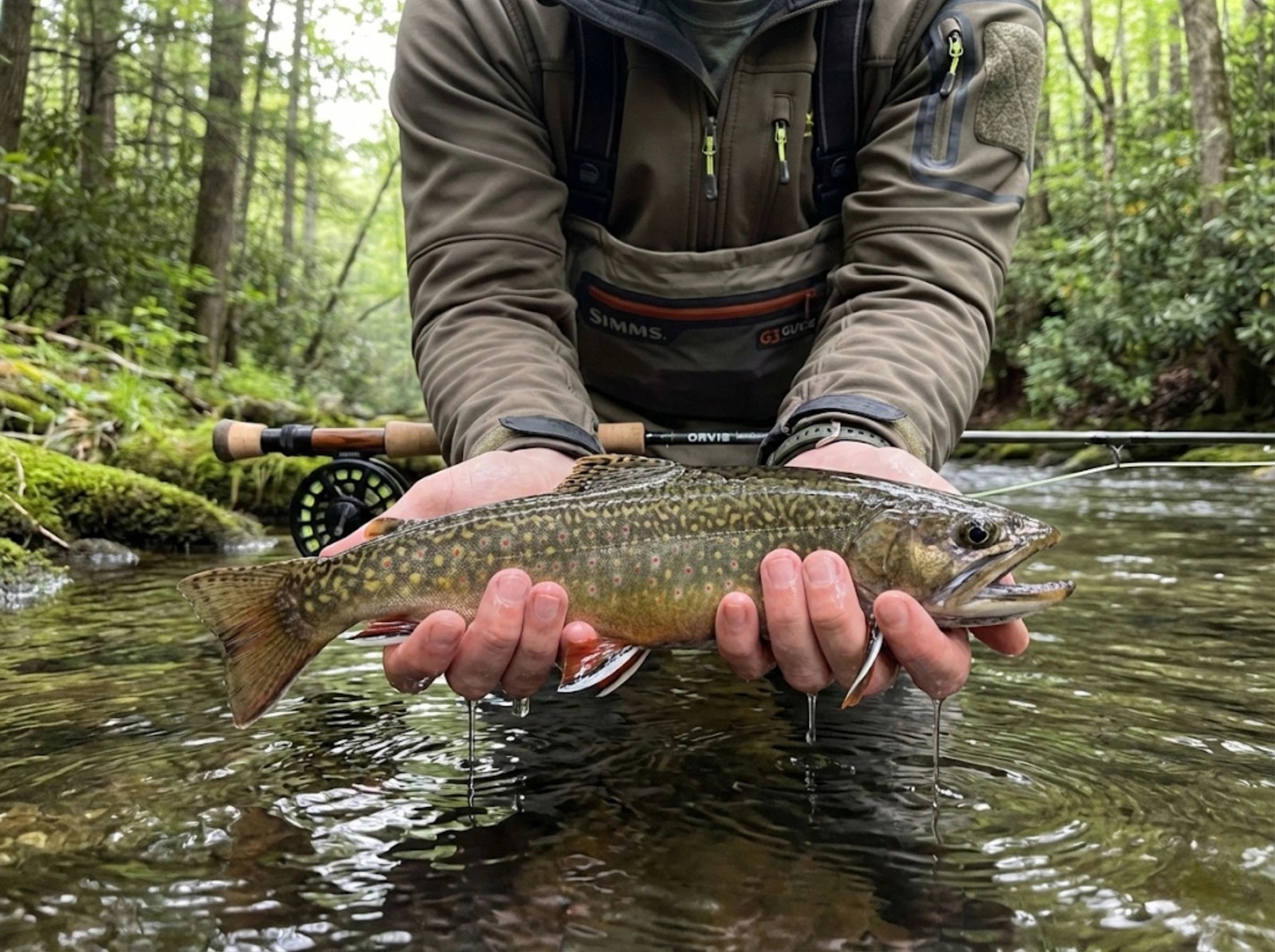
The creek looked perfect—cold water tumbling over granite, hemlock shadows cooling the pool below. But when I flipped a rock to check for caddis, I found bleached sediment instead of the dark, oxygen-rich gravel brook trout need to spawn. Another headwater stream surrendered to the century-long squeeze that has pushed the “Saint of the East” to the edge of survival.
After two decades chasing native brook trout from Maine to Georgia, I’ve watched this story unfold in real time. Streams that held wild brookies in the 1990s are now empty—or worse, thick with brown trout that shouldn’t be there. The numbers confirm what my eyes have seen: only 8% of historic subwatersheds remain intact for brook trout. The rest are either degraded or completely extirpated.
This guide breaks down exactly what happened—from the logging era impacts that stripped thermal buffers to the brown trout competition that locks brook trout out of downstream refugia—and shows you how to fish ethically for the populations that remain.
⚡ Quick Answer: Brook trout have lost approximately 80% of their native habitat since 1900, with only 8% of historic Eastern subwatersheds currently classified as “intact.” The primary drivers are habitat fragmentation from culverts and dams, thermal pollution from forest loss, competition with non-native brown and rainbow trout, and agricultural siltation that smothers spawning gravel. Anglers can help by fishing ethically (no fishing above 68°F), supporting barrier removal projects, and targeting catch-and-release in wild trout waters.
The Char That Defined Eastern Streams
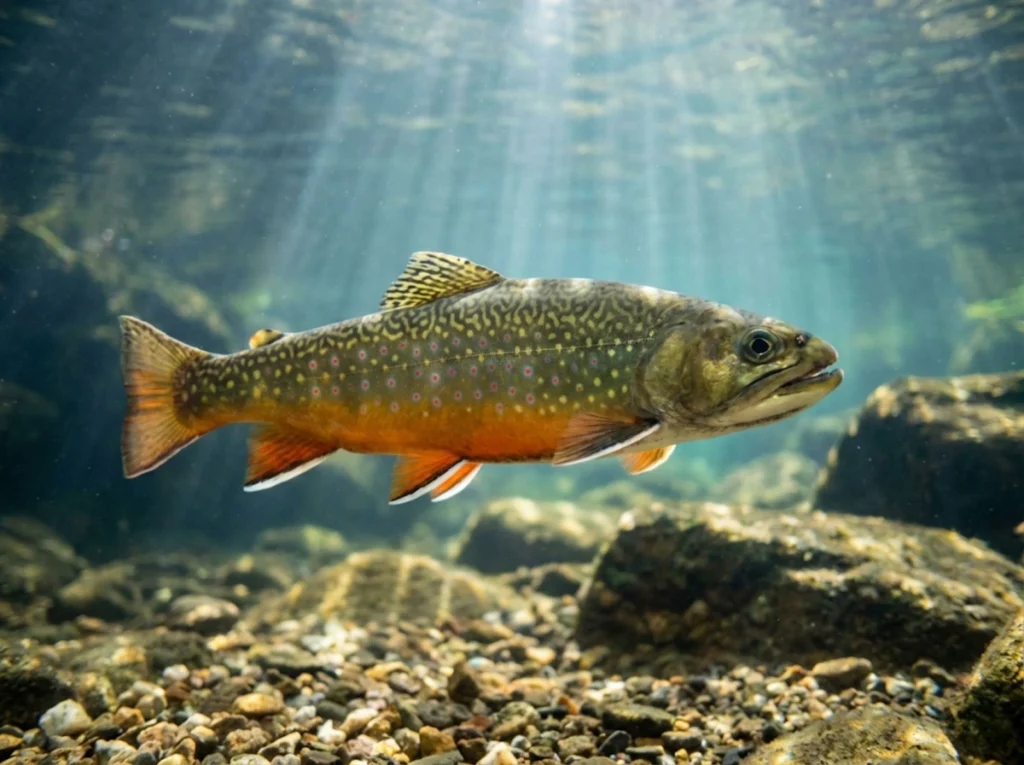
First, let’s get the taxonomy straight: Salvelinus fontinalis isn’t actually a trout. It’s a char—a member of the genus Salvelinus, which includes lake trout and Arctic char. The easy tell? Chars have light spots on dark backgrounds; true trout have dark spots on light backgrounds.
The Latin name means “of a spring”—and that etymology reveals everything about why this species is in trouble. Brook trout evolved in cold clean water, specifically groundwater-fed systems that maintain stable temperatures year-round. When those springs warm up or get choked with sediment, the fish disappear.
Why “Trout” Is the Wrong Name
The speckled trout (one of its dozens of folk names) is the only salmonid native to most of the Eastern United States, particularly the Southern Appalachian mountains. That makes it a keystone species—when brook trout vanish from a watershed, it signals broader ecosystem collapse.
Old-timers in the Smokies called them “specks.” In Maine, they’re “squaretails.” Each name describes a specific adaptation: the vermiculate patterns on their backs provide camouflage against dappled stream bottoms, while the square tail helps them maneuver through tight headwater channels.
Pro tip: If you want local intel on where the natives still swim, use the local name. Ask about “specks” in Appalachia, and doors open that stay closed to outsiders asking about “brook trout.”
Thermal Tolerances That Seal Their Fate
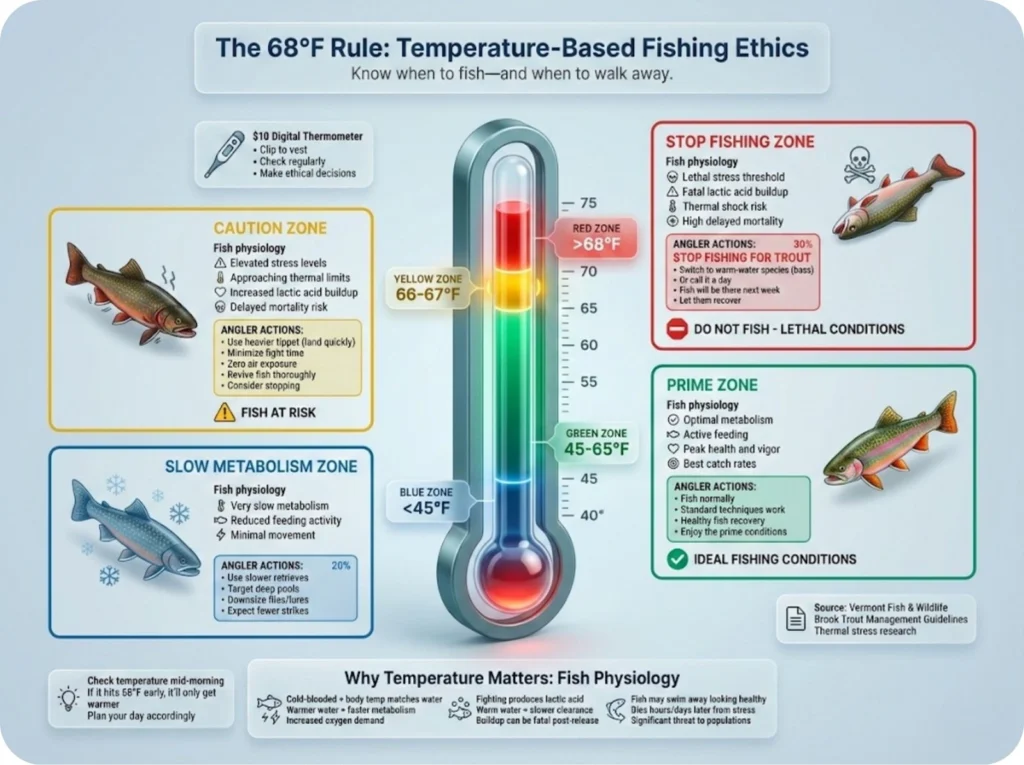
Here’s the critical number every ethical angler needs to memorize: 68°F. That’s the line. Above it, dissolved oxygen drops below 7 ppm, and brook trout enter metabolic stress.
Optimal growth happens between 57-61°F. At 75°F, you’re looking at fatal conditions within hours. This narrow thermal requirement is why brook trout are always the first species to disappear when a watershed degrades—the Maine Department of Inland Fisheries brook trout management standards confirm that streams exceeding 68°F for extended periods cannot support reproducing populations.
If you want to understand how brown trout thermal tolerances compare, the difference is stark. Salmo trutta can handle significantly warmer water, which creates the displacement problem we’ll cover later.
Mapping the 80% Collapse
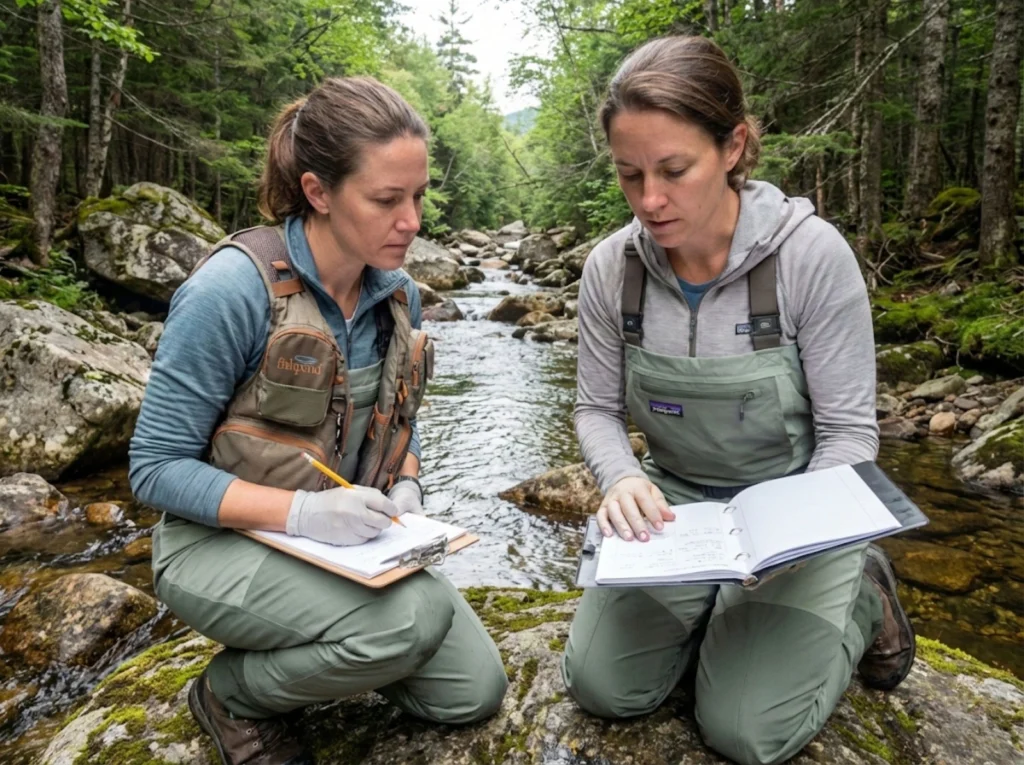
The “80% loss” figure comes from range-wide assessments by the Eastern Brook Trout Joint Venture (EBTJV), first published in 2006 and refined in 2015. They surveyed every HUC 12 subwatershed across 17 eastern states and found a disaster in slow motion.
The EBTJV Assessment: What the Numbers Mean
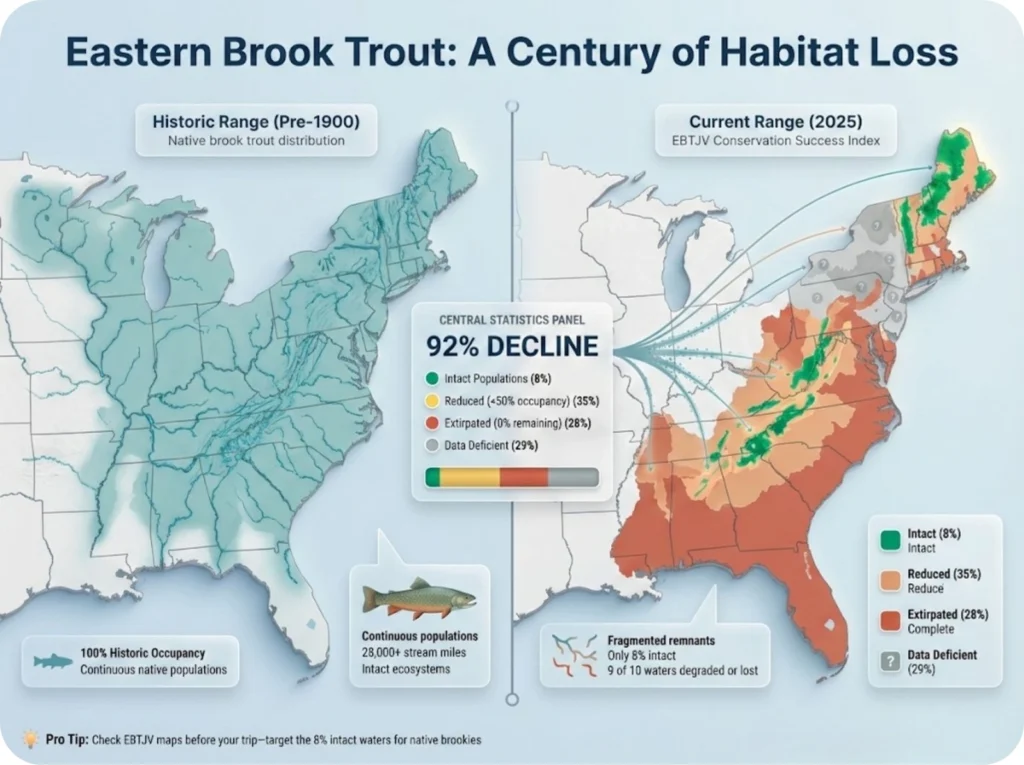
Here’s the breakdown from Trout Unlimited’s Conservation Success Index data:
- 28% of historic subwatersheds are completely extirpated—no wild brook trout remain
- 35% are reduced to less than half their historic population occupancy
- Only 8% qualify as “Intact” (50%+ catchments still supporting wild fish)
- 29% are data-deficient, primarily in NY, PA, and New England
That 8% figure is the headline. Nine out of ten waters that once held brook trout either have none or have severely degraded populations.
Pro tip: EBTJV maps are free online. Before you plan a trip for native brookies, check if your target stream is in the 8% or the 28%—it’ll save you a wasted day and help you direct your efforts toward waters that still have something worth protecting.
The Fragmented Archipelago Problem
Remaining native brook trout populations are confined to high elevation streams—often above 3,000 feet—creating isolated “islands” of fish that were once part of continuous riverine systems. This habitat fragmentation prevents the genetic exchange necessary for long-term resilience.
When a drought or pollution event hits an isolated headwater population, there’s no recolonization source. That population is gone forever, taking its unique genetics with it.
The geographic distribution of intact habitat is also lopsided. Maine and the Adirondacks retain significant strongholds. The Southern Appalachian brook trout populations—genetically distinct and evolutionarily critical—are hanging on in tiny fragments. States like New Jersey have seen over 55% extirpation, resulting in Species of Greatest Conservation Need designations.
The Four Forces That Drove the Collapse
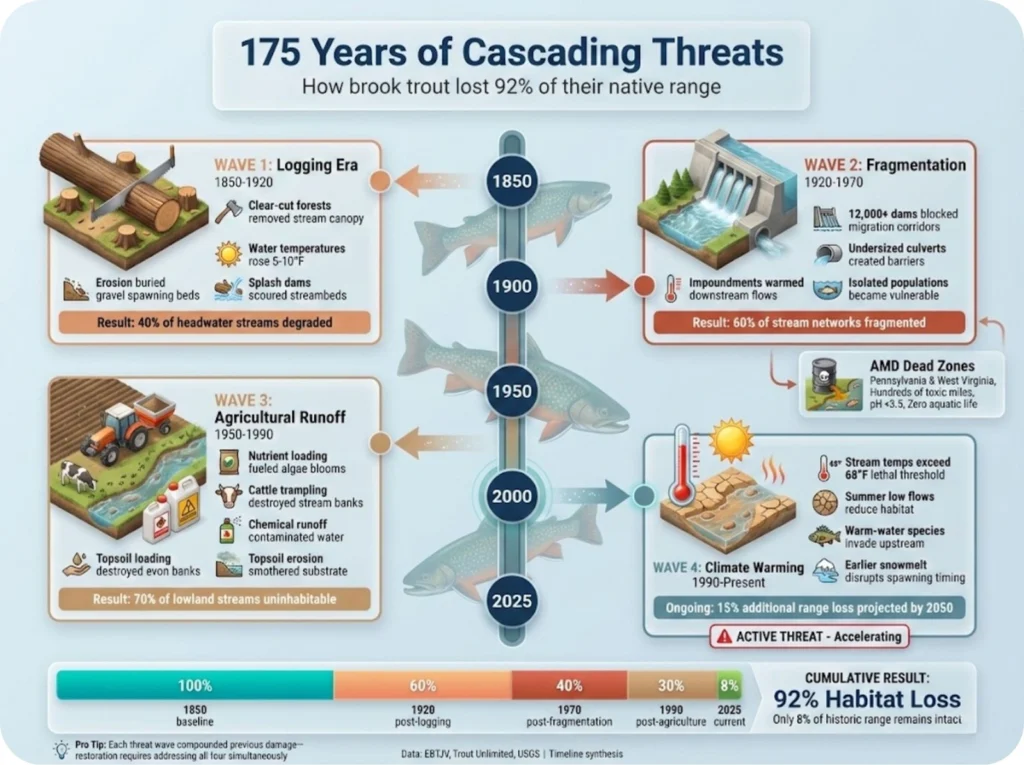
The 80% loss didn’t happen overnight. It accumulated across four distinct waves of destruction, each compounding the previous.
Logging’s Thermal Legacy
In the late 1800s and early 1900s, loggers clear-cut the Eastern forests, removing the canopy cover that shaded headwater streams. Direct sunlight heated the water. The removal of forest duff reduced the land’s ability to absorb rainfall, leading to more frequent and more severe floods.
But the real killer was the splash dams—log drives that physically scoured stream beds, destroying spawning gravel and removing the large woody debris that juvenile brook trout need for survival cover. In Lake Superior tributaries, these drives decimated coaster brook trout runs that once numbered in the hundreds of pounds per day during spawning season.
The Culvert Crisis: 10,000 Barriers
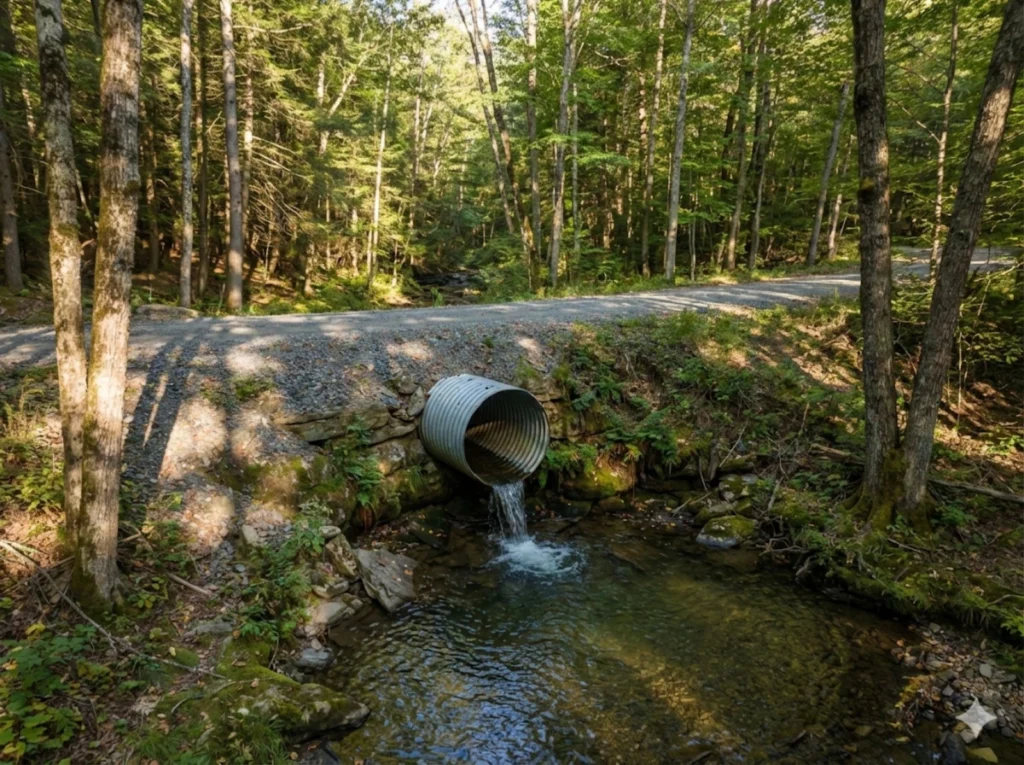
Road-stream crossings are everywhere—and most of them block fish passage. A culvert becomes a barrier when it’s “perched” above the water level or when it creates a high-velocity “fire hose” that fish can’t swim against.
These barriers prevent upstream spawning migrations in fall and block summer access to cold-water refugia. The barrier removal work happening now is critical: Green Mountain National Forest in Vermont replaced 50 culverts in a decade, reopening over 200 miles of habitat.
If you want to know how anglers can support barrier removal projects, Trout Unlimited chapters often organize volunteer days and advocacy campaigns.
Siltation and Agricultural Runoff
Agriculture removed riparian vegetation and introduced massive sediment loads to streams. Siltation fills the interstitial spaces in spawning gravel, preventing oxygenated water from reaching developing eggs. The fry suffocate before they hatch—reproductive failure without visible mortality.
Fertilizer runoff compounds the problem. Algal blooms deplete dissolved oxygen, creating dead zones that push brook trout further and further upstream.
Abandoned Mine Drainage: The Toxic Dead Zones
In Pennsylvania and West Virginia, abandoned mine drainage (AMD) has rendered hundreds of stream miles toxic to all aquatic life. The combination of low pH and heavy metal loading creates conditions no brook trout can survive.
Even outside mining regions, acid rain impacts from midwestern industrial emissions lowered mountain stream pH for decades. Brook trout can tolerate pH as low as 3.5 in laboratory settings, but in the wild, chronic acidity decimates the invertebrate prey base they depend on.
The Brown Trout Problem: Competition at the Thermal Edge
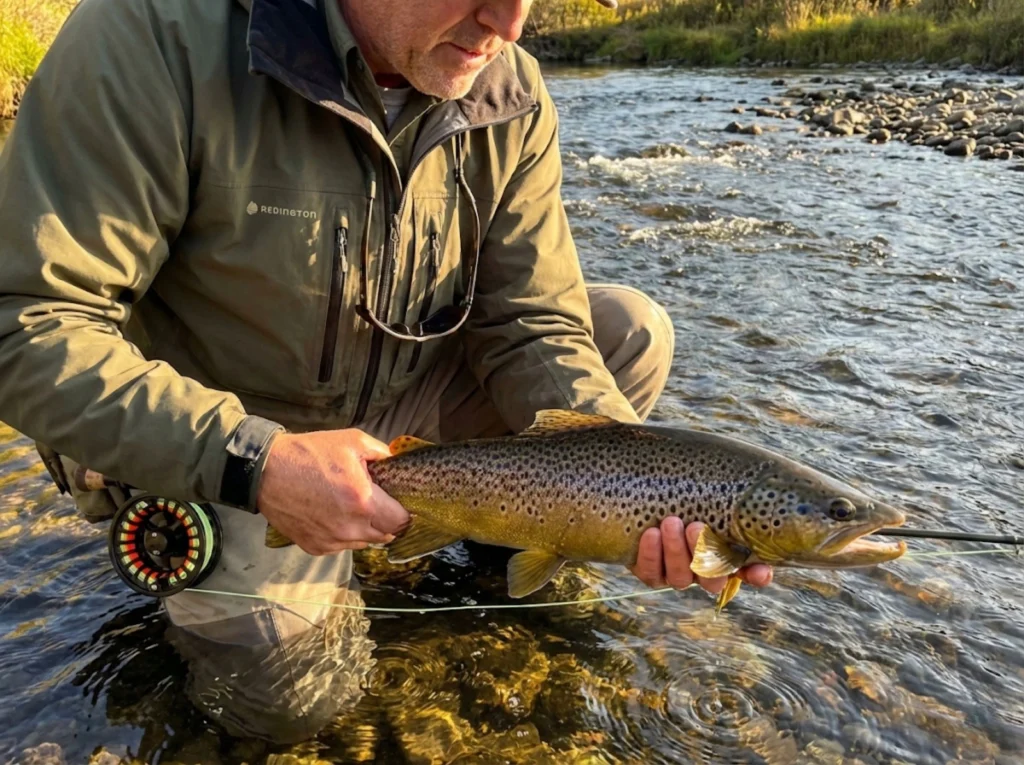
Here’s the part that makes my blood boil: we did this to ourselves. State fisheries management agencies stocked European brown trout and Western rainbow trout into Eastern waters for over a century, often right on top of existing native trout populations.
Thermal Refugia Lockout
Brown trout competition isn’t just about aggression—it’s about who controls the cold spots.
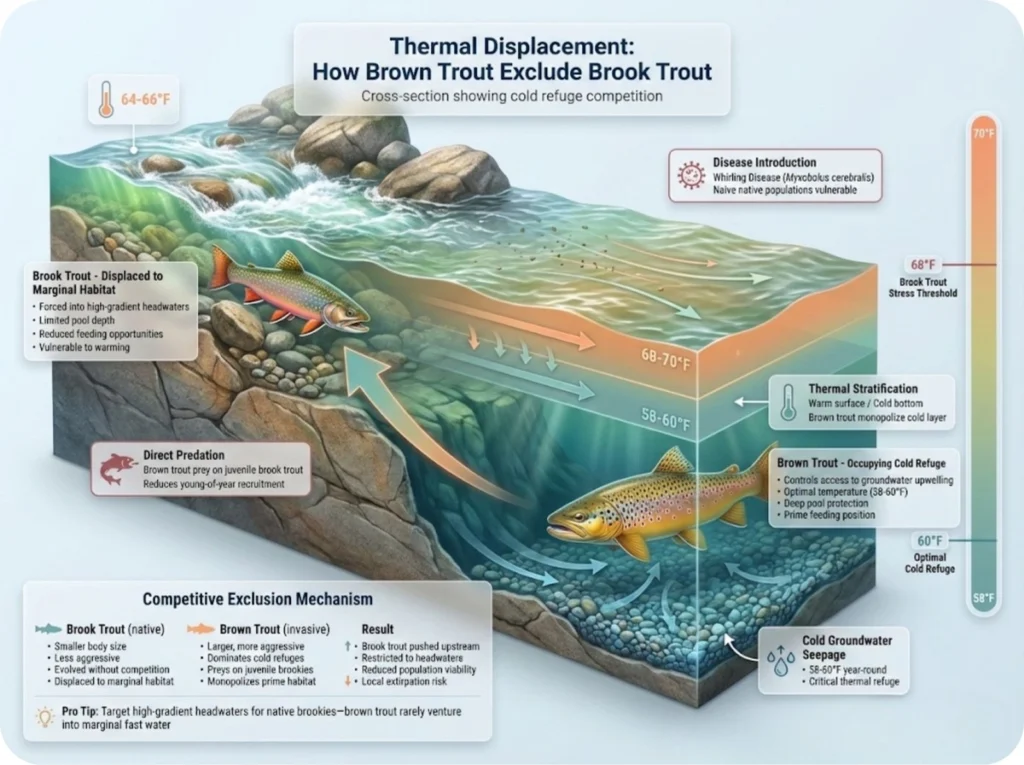
During summer, water temperature in a stream varies dramatically by location. Groundwater upwellings create isolated pockets of cold water called thermal refugia. Research from the EBTJV shows that brook trout cannot compete successfully with brown trout for access to these refugia.
Brown trout are bigger, faster-growing, and more aggressive. They dominate the feeding lanes and deep-water cover. Brook trout get pushed into marginal high-gradient headwaters where the larger browns can’t navigate. This creates what I call a “thermal lid”—brook trout can’t access cooler downstream water even when it exists because brown trout guard the door.
Pro tip: If you find brook trout in a stream that also holds browns, the brookies are almost certainly above a natural barrier—a waterfall or steep cascade the browns can’t climb. That barrier is their only protection.
Beyond Competition: Predation and Disease
Larger non-native salmonids also prey directly on juvenile brook trout, reducing young-of-year recruitment. And Oncorhynchus mykiss (rainbow trout) creates similar displacement pressure, particularly in stocked waters.
The disease vector matters too. Introduction of pathogens like Myxobolus cerebralis (Whirling Disease) caused significant mortality in naive native populations that had no evolutionary exposure to these organisms.
To understand rainbow trout biology and non-native impacts, recognize that these species didn’t evolve alongside brook trout. There’s no established equilibrium—just ongoing displacement.
Removal Works: The Maryland Evidence
The good news: when brown trout are removed, brook trout bounce back immediately.
Studies in Maryland and North Carolina demonstrate that electrofishing or chemical treatment to remove brown trout results in surging brook trout survival within one season. Adults begin utilizing warmer, more productive downstream waters they’d previously avoided. Young-of-year recruitment explodes.
This is the science behind isolation management—creating predator-free headwater refugia by maintaining natural or artificial barriers. It’s a band-aid, not a cure, but it’s keeping some populations alive.
The Southern Strain: Genetic Diversity Under Siege
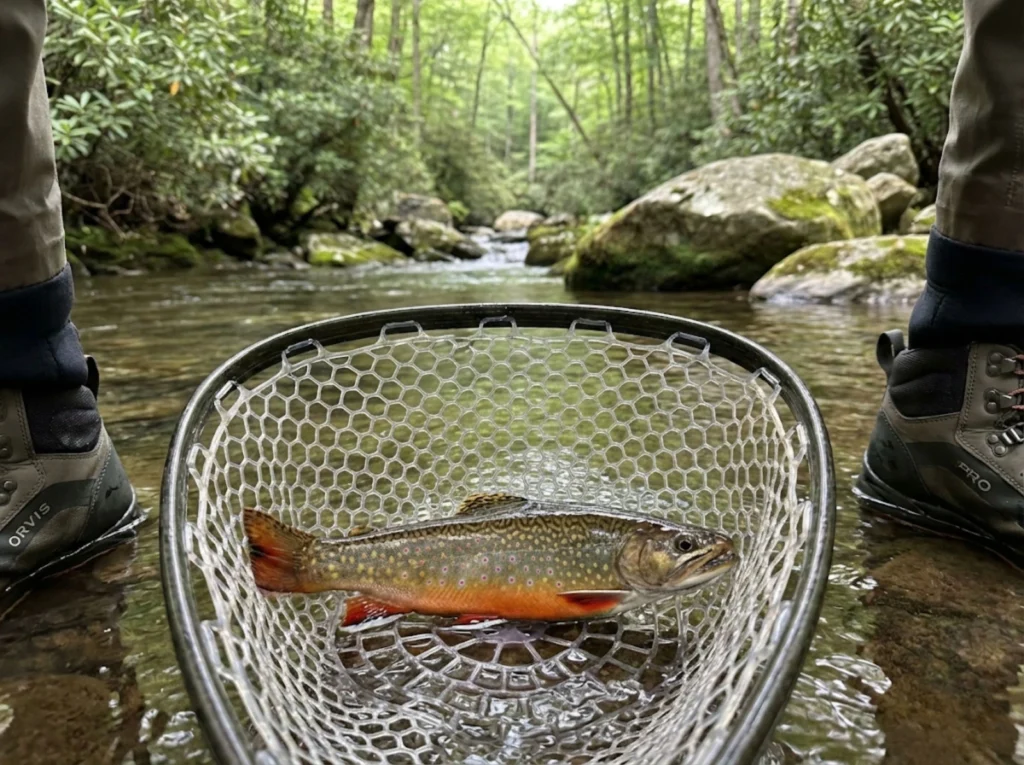
Not all brook trout are created equal. The populations that survived Pleistocene glaciation in the Southern Appalachians are genetically distinct from their northern relatives—and that genetic purity is under threat.
Rear-Edge Populations and Pleistocene Refugia
Southern Appalachian brook trout are “rear-edge” populations, existing at the extreme southern limit of the species’ thermal tolerance. They’re almost entirely confined to streams above 3,000 feet elevation, where waterfalls act as barriers keeping non-native fish out.
These fish carry unique genetic markers—specifically, CK-A2100, compared to the Northern/hatchery CK-A278 allele. That genetic distinctiveness represents thousands of years of adaptation to local parasites, water chemistry, and thermal regimes.
The Introgression Threat
For decades, state agencies stocked northern-strain brook trout into southern waters, completely unaware they were destroying something irreplaceable. The resulting hybridization diluted local gene pools and potentially stripped away the adaptations that make southern fish viable in their extreme environment.
Conservation geneticists now use “Effective Number of Breeders” (Nb) as a population health metric. In many fragmented headwater streams, the Nb is so low that populations face immediate risk of inbreeding depression. The solution—called “genetic rescue”—involves translocating individuals from nearby source populations to boost diversity.
If you want gear and tactics for conservation-minded angling, the principles are the same whether you’re targeting southern natives or northern populations: minimize handling, respect thermal limits, and practice proper catch-and-release.
The Angler’s Role: Ethics in a Warming World
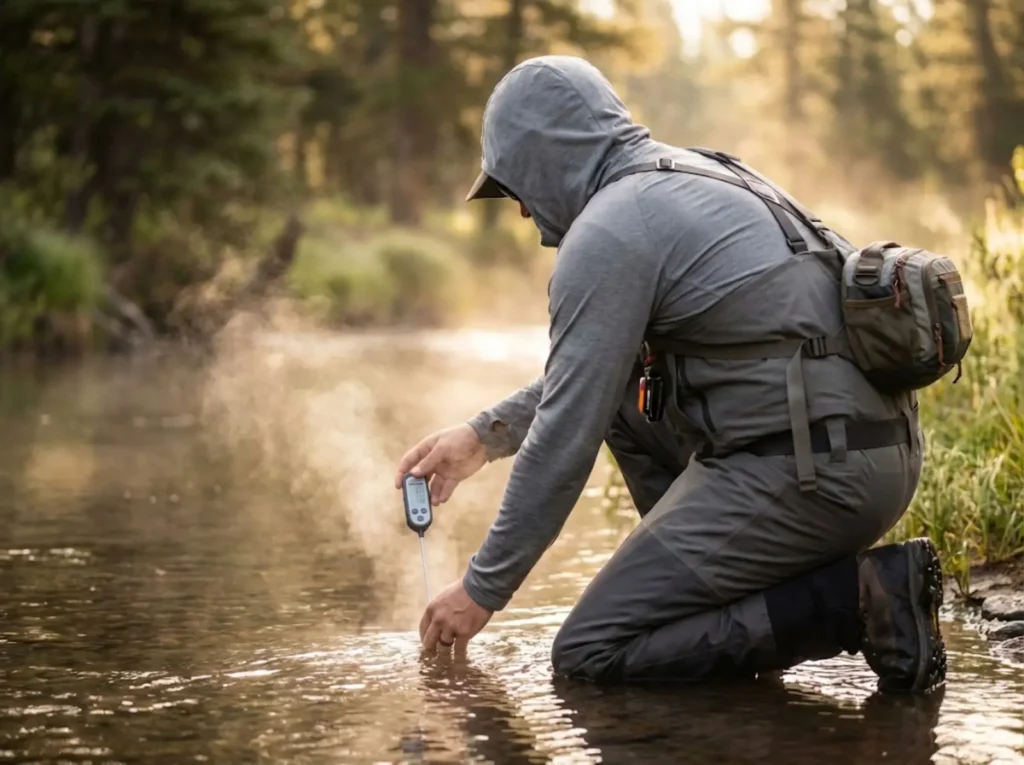
Everything in this article leads to one practical question: how should you fish for brook trout given everything they’re facing?
The 68°F Rule: When to Walk Away
I carry a $10 digital thermometer clipped to my vest. If I hit 68°F mid-morning, I switch to bass or call it a day. The fish will be there next week—but only if we let them recover.
Here’s the breakdown:
- Below 45°F: Very slow metabolism. Use slower retrieves, target deep pools.
- 45-65°F: Prime zone. Fish normally.
- 66-67°F: Caution zone. Use heavier tippet, land fish quickly, minimize air exposure.
- Above 68°F: Stop fishing for trout. Period.
Fighting a fish in warm water creates lactic acid buildup that can be fatal even if the fish swims away looking healthy. According to Vermont Fish & Wildlife brook trout guidelines, delayed mortality from warm-water capture is a significant threat to stressed populations.
Handling for Survival
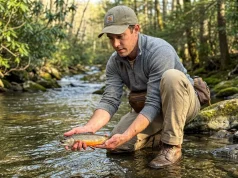
Use rubberized nets—they don’t strip the protective slime coat (glycoproteins that regulate immune function). Wet your hands before any contact. Barbless hooks are standard among ethical angling practitioners because they minimize handling time and injury.
Air exposure beyond 60 seconds significantly increases delayed mortality risk. Support the body horizontally; never hold a fish vertically by the jaw alone. For the full methodology, see the science of catch-and-release survival.
Blue-Lining Gear: Minimizing Impact
The specialized pursuit of native brook trout in overgrown headwater streams—”blue-lining”—calls for minimalist gear that protects both fish and the delicate environment:
- Rods: 6’0″ to 7’6″ fiberglass or graphite in 0wt to 3wt. Fiberglass offers deep flex that protects light tippets and small fish from overload.
- Lines: DT or specialty creek lines that optimize short-range roll casts under dense canopy.
- Leaders: 3x to 5x tippet. Small stream fish rarely require finer due to limited visibility in broken water.
Short rods allow maneuvering under vegetation. Light lines protect fragile populations. It’s sustainable fishing through gear selection.
Conclusion
The 80% collapse of native brook trout habitat is a quantifiable disaster with specific causes. The logging era impacts stripped thermal buffers. Culverts fragmented populations. Siltation smothered reproduction. And brown trout competition locked brookies out of downstream refugia they desperately need.
But the data also reveals a path forward. Barrier removal projects are reopening hundreds of stream miles. Genetic rescue is rebuilding Southern Appalachian populations. And anglers who understand the 68°F threshold can fish ethically in a warming world.
Next time you string up your 3-weight for a headwater blue-line, check the EBTJV Conservation Success Index first. Know whether your target is in the 8% that remains intact or the 28% that needs your advocacy more than your flies. The “Saint of the East” survived ice ages. Whether it survives this century depends on what we do with the science.
FAQ
Are brook trout actually endangered?
Brook trout are classified G5 (Globally Secure) by NatureServe, but this masks severe regional declines. Twenty-eight percent of Eastern subwatersheds are completely extirpated, and only 8% remain intact. Many states list them as Species of Greatest Conservation Need.
What is the ideal water temperature for brook trout?
The optimal water temperature is 57-61°F (14-16°C). Above 68°F (20°C), dissolved oxygen drops and metabolic stress begins. At 75°F, brook trout face fatal conditions within hours.
Why do brown trout outcompete brook trout?
Brown trout are more aggressive, grow faster, and tolerate warmer water. They dominate thermal refugia during summer heat, pushing brook trout into marginal headwaters. They also prey on juvenile brookies and may introduce diseases.
Should I stop fishing for brook trout in summer?
Carry a stream thermometer. Between 45-65°F, fish normally. At 66-67°F, use heavy tippet and land fish quickly. Above 68°F, stop fishing for trout—the lactic acid buildup from fighting can be fatal even if the fish swims away looking fine.
How can anglers help brook trout conservation?
Target streams in the intact category for catch-and-release only. Support barrier removal projects through Trout Unlimited or state fish agencies. Use barbless hooks, wet hands, and rubberized nets. Avoid fishing above 68°F. Report any sightings of wild brook trout to state biologists—data gaps remain in 29% of the historic range.
Risk Disclaimer: Fishing, boating, and all related outdoor activities involve inherent risks that
can lead to injury. The information provided on Master Fishing Mag is for educational and informational purposes
only. While we strive for accuracy, the information, techniques, and advice on gear and safety are not a substitute
for your own best judgment, local knowledge, and adherence to official regulations. Fishing regulations, including
seasons, size limits, and species restrictions, change frequently and vary by location. Always consult the latest
official regulations from your local fish and wildlife agency before heading out. Proper handling of hooks, knives,
and other sharp equipment is essential for safety. Furthermore, be aware of local fish consumption advisories. By
using this website, you agree that you are solely responsible for your own safety and for complying with all
applicable laws. Any reliance you place on our content is strictly at your own risk. Master Fishing Mag and its
authors will not be held liable for any injury, damage, or loss sustained in connection with the use of the
information herein.
Affiliate Disclosure: We are a participant in the Amazon Services LLC Associates Program, an
affiliate advertising program designed to provide a means for us to earn advertising fees by advertising and linking
to Amazon.com. As an Amazon Associate, we earn from qualifying purchases. We also participate in other affiliate
programs and may receive a commission on products purchased through our links, at no extra cost to you. Additional
terms are found in the terms of service.