
In this article
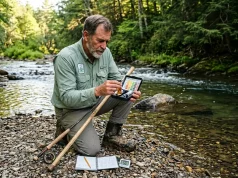
The thermometer in the riffle reads 72°F. For the cutthroat trout holding in the shadow of the bank, this isn’t just uncomfortable; it is a lethal threshold. This isn’t just a bad day of fishing; it is a systemic failure of the watershed’s immune system.
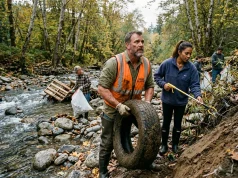
For generations, the angler’s role was defined by extraction. We focused on mastering the cast, the drift, and the net to remove fish from the water. Today, that definition is obsolete. Facing the compounding threats of habitat fragmentation and invasive pressure, the modern angler must evolve from a harvester into a habitat engineer.
I have spent decades on the water, moving from a mindset of conquest to one of caretaking. I’ve learned that true environmental stewardship isn’t just about catching what’s there, but rebuilding what’s missing. This guide bridges the gap between intention and impact. We will explore the strategic framework of fisheries conservation, detail specific techniques for restoring streams and reservoirs, and navigate the essential regulatory permissions required to ensure your work is legal and lasting.
The Diagnosis: Why Are Our Fisheries Failing?
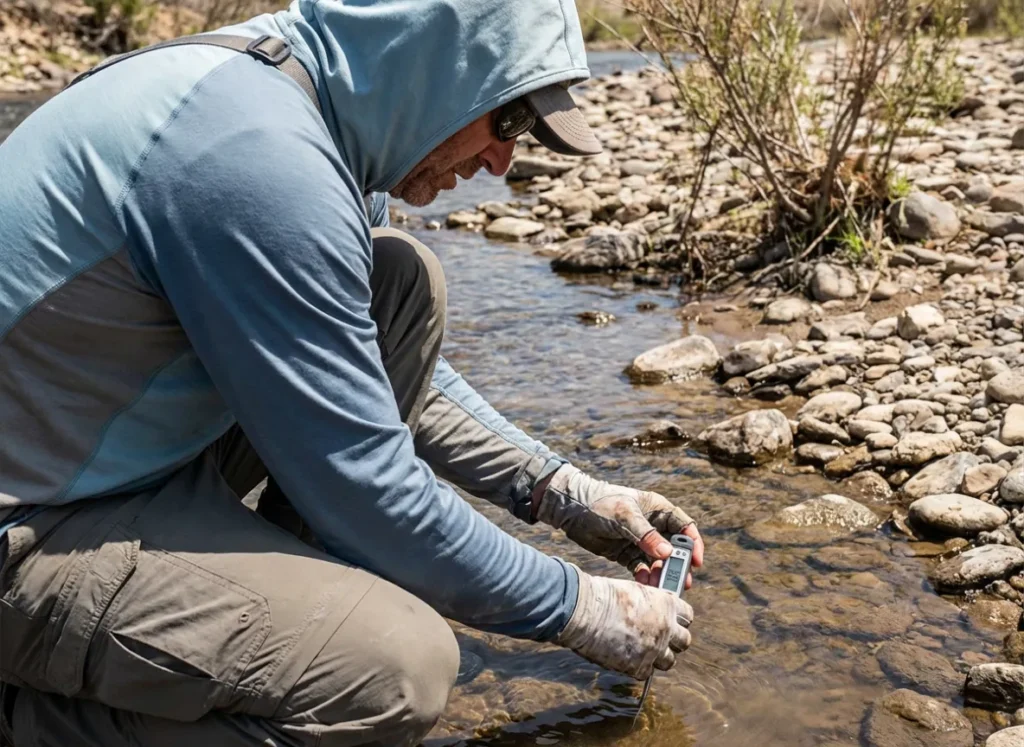
To fix a river, you must first understand what is breaking it. Biologists at NOAA Fisheries and Trout Unlimited utilize a foundational framework known as the “Four Hs” to categorize constraints on fish populations: Habitat (degradation of physical space), Hatcheries (genetic dilution and competition), Harvest (mortality from fishing), and Hydropower (dams blocking migration).
Understanding this acronym is the first step in “reading the water” for restoration. It allows an angler to look at a struggling river and identify whether the issue is a lack of structure (critical habitat) or a blocked culvert disrupting connectivity. These factors rarely act in isolation. They create a synergistic downward spiral where a failure in one area, like a dam blocking cold-water access, exacerbates the mortality caused by harvest pressure.
Heat as a Threat Multiplier
Recently, a fifth element has overshadowed the others. Heat—driven by climate change—is now classified as a “threat multiplier” that lowers the threshold for failure across all categories. For example, warm water increases a fish’s metabolic rate, making food competition from hatchery fish lethal rather than just stressful.
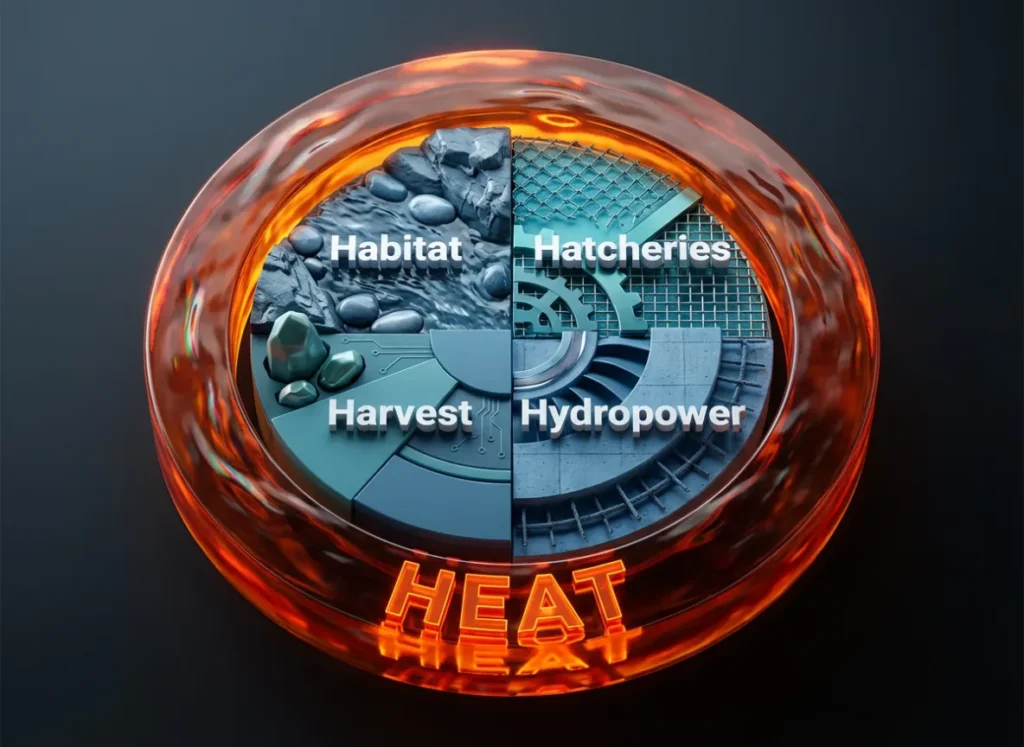
A degraded riparian zone transforms a stream into a solar collector. This pushes water temperatures past the 18°C (64°F) physiological limit for native parr and wild steelhead, causing “thermal blockages” that function exactly like physical dams. A rigorous analysis of heat as a threat multiplier provides the specific framework used to categorize these threats.
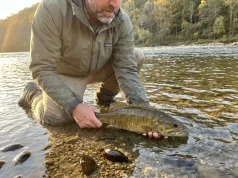
Consequently, restoration strategies must be “climate-resilient.” We must focus on interventions that lower water temperatures to buffer against this thermal threat. This directly influences our approach to minimizing delayed mortality in warm water, linking recreational angling sustainability to how we handle fish.
Lotic Restoration: Engineering Flow and Connectivity
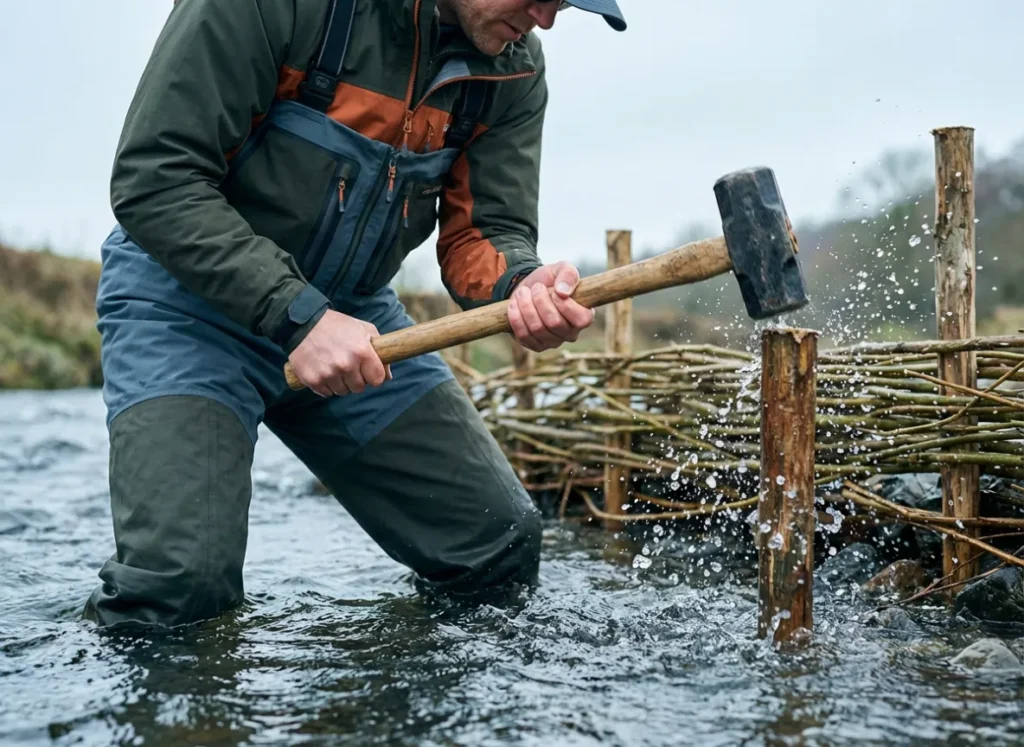
When we step into running water systems, or lotic environments, we are dealing with energy. The water wants to move, and our job is to guide how it expends that energy.
Process-Based Restoration vs. Traditional Engineering
Traditional river engineering often relies on “static” fixes like rip-rap rock walls or concrete channels to lock a river in place. This rigid approach disconnects the water from its floodplain and destroys habitat complexity.
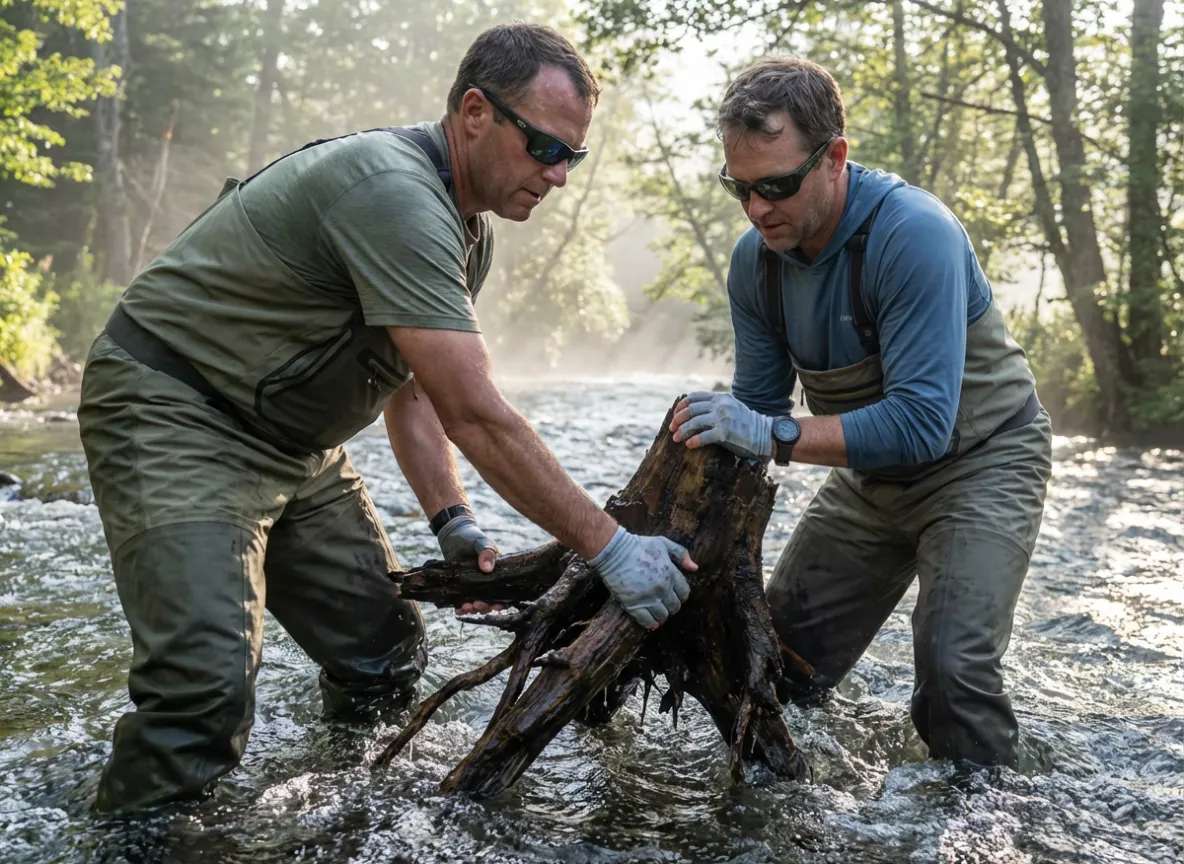
Process-Based Restoration (PBR) flips this paradigm. It works with the river’s energy to restore the natural physical processes—like flooding, sediment transport, and wood accumulation—that create and maintain habitat over time.
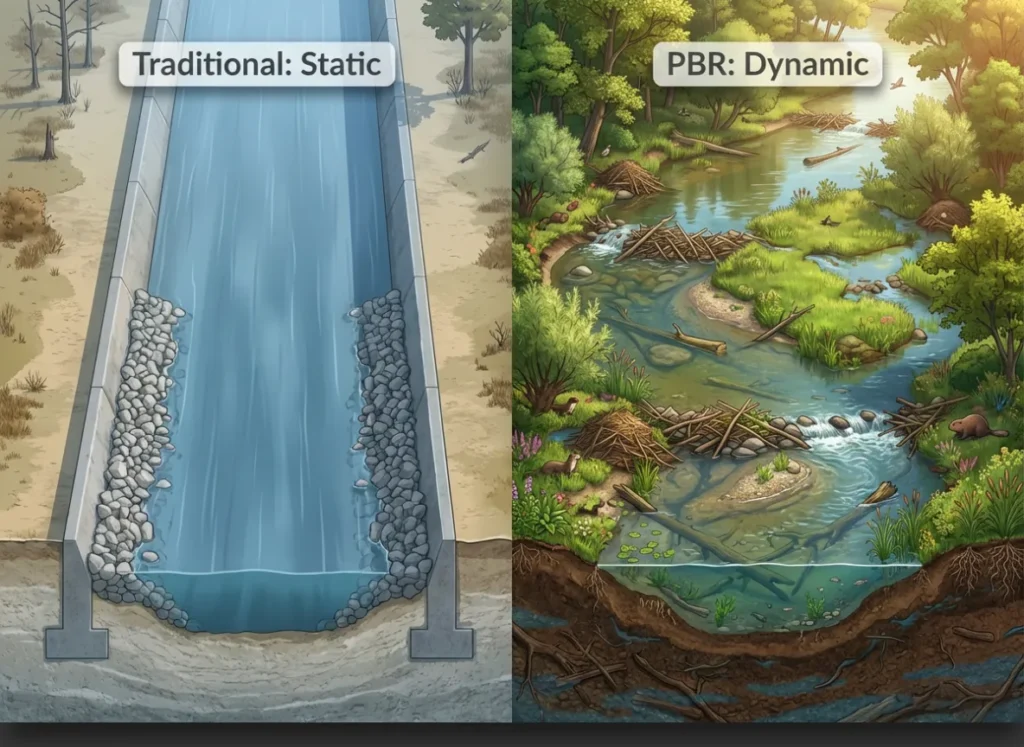
The goal is not to build a “finished” habitat, but to kickstart the river’s ability to heal itself. A prime example is the dam removal on the Elwha River, where restoring the process of sediment transport allowed the river to rebuild its own estuary. Volunteers can apply these principles on a smaller scale by installing Beaver Dam Analogs (BDAs). These mimic natural wood jams to slow water velocity, trap sediment, and raise the water table.
Recent data from the Fraser Flats project and studies on the spatial patterns of fish response to dam removal demonstrate how quickly species can recolonize these areas once natural processes are restored. Restoring these migratory pathways leads to massive biological gains, proving that “messy” rivers are healthy rivers. This aligns directly with the angler’s skill of identifying riffle-run-pool sequences, as these are the very features restoration aims to recreate.
The Willow Staking Technique
While restoring flow is critical, stream bank stabilization requires a different set of tools. Willow staking is a high-impact riparian habitat restoration technique where dormant willow cuttings are harvested and planted directly into eroding stream banks to create a living root matrix.
The process begins with harvesting straight, healthy stems (1/2 to 3/4 inch diameter) during the dormant season, typically late fall to early spring when the leaves are off.
Pro-Tip: Your willow stakes must be soaked in water for 5 to 7 days prior to planting. This hydration jumpstarts the vascular system and triggers the auxins (rooting hormones) essential for survival. Planting dry stakes is a waste of labor.
Installation requires driving the stake deep enough to reach the lowest summer water table. If the water level drops below the bottom of the stake in August, the plant will desiccate and die. Once established, the canopy provides the essential shade needed to create thermal refugia for brook trout and brown trout.
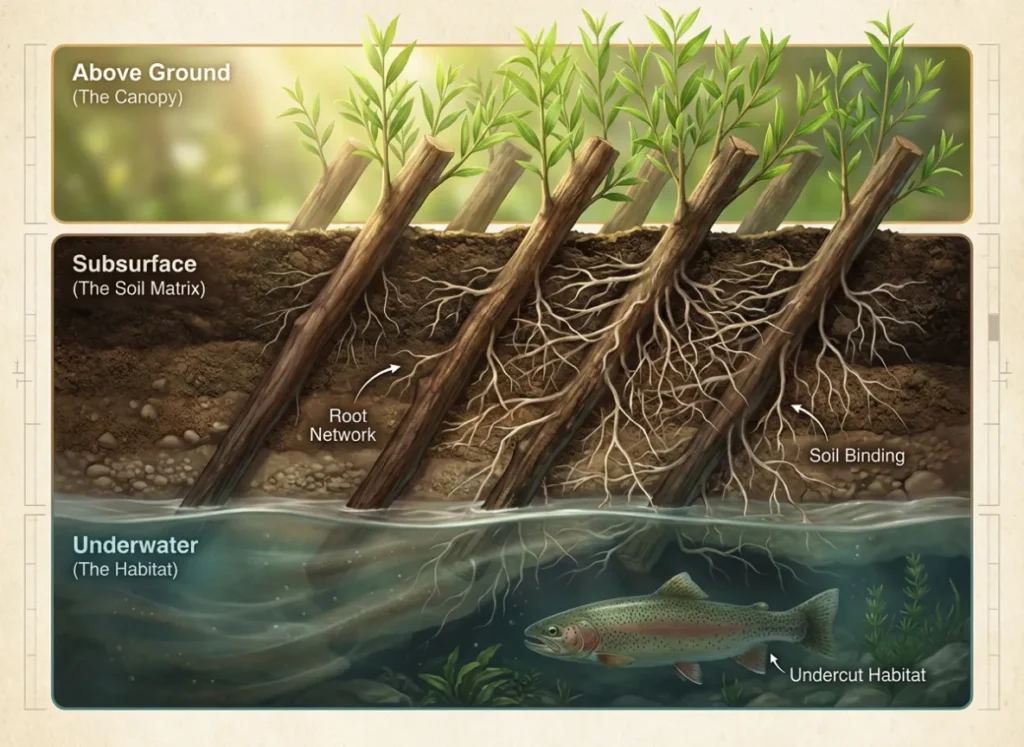
Specific using live willow stakes for bank stabilization protocols are available to guide you through the technical harvesting details. This technique directly impacts how river hydrology affects fish holding spots by securing the undercut banks where trophy fish often hide.
Lentic Restoration: Structure and Recruitment in Reservoirs
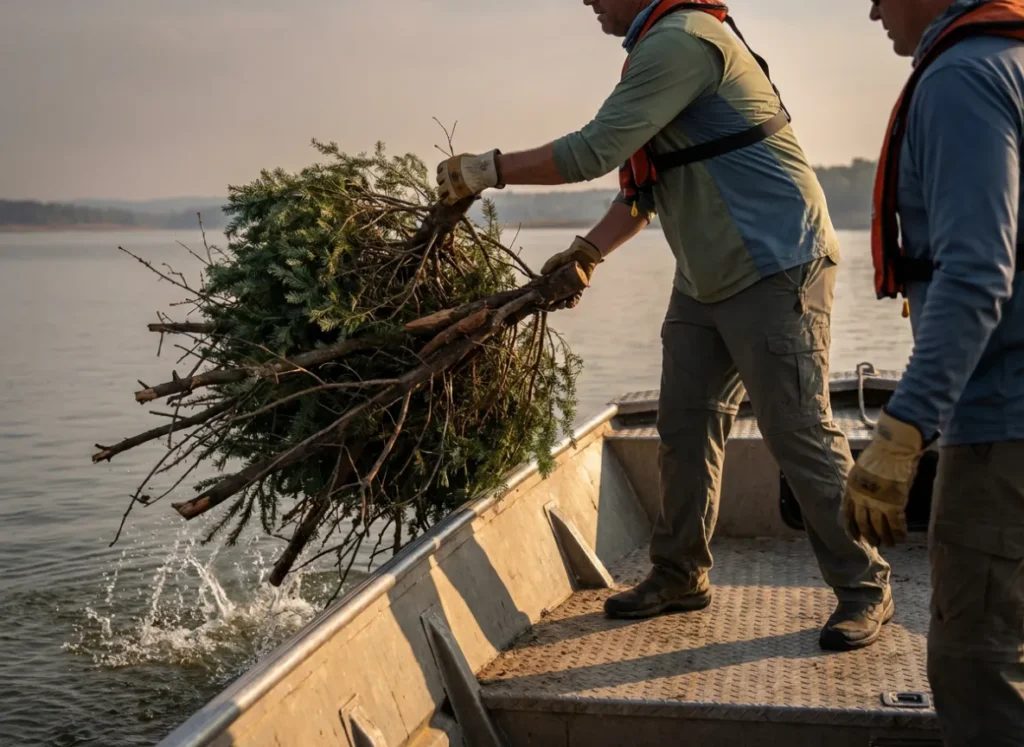
Leaving the current behind, we must address the unique challenges of lakes and reservoirs like Lake Ontario or Sutton Lake. Here, the aging process works differently, and protection cover is often the limiting factor.
Attraction vs. Production Habitat
A fundamental stewardship concept is distinguishing between Attraction and Production. Attraction habitat aggregates existing adult fish for easier harvest—think of a brush pile at the end of a dock. While fun to fish, these structures can lead to localized depletion if harvest isn’t managed.
Production habitat, conversely, focuses on “Recruitment.” This involves providing the dense, complex juvenile fish habitat needed to survive predation during their first year of life. Effective nursery habitat requires tight interstices (small gaps) that exclude large predators while harboring the zooplankton and macroinvertebrates that fry eat.
The Angler-Steward should prioritize building these complex “breeding grounds” over simple “fishing spots” to genuinely increase the lake’s carrying capacity. This distinction is supported by scientific reports on habitat enhancement for recreational fish which highlight the difference between concentrating fish and growing them. Understanding these needs also helps in identifying habitat preferences for largemouth bass throughout their lifecycle.
Selecting the Right Materials
Material selection is a trade-off between Longevity (how long it lasts underwater) and Biological Complexity (how well it supports the food chain).
Habitat Material Matrix
Comparison of longevity, biological complexity, and cost efficiency for restoration materials.
Longevity Score: 2/10
Rots in 2-3 years. Needs annual replenishment.
Biological Complexity: 9/10
Dense needles/limbs ideal for fry protection.
Cost Efficiency: 10/10
Free/Recycled materials.
Best Use Case
Best for Recruitment. The dense complexity is unmatched for protecting fry. Best used in shallow “nursery” zones.
Longevity Score: 5/10
Lasts 5-10 years. Offers better longevity than pine/softwood.
Biological Complexity: 8/10
Good complexity; excellent substrate for periphyton (algae) which feeds invertebrates.
Cost Efficiency: 7/10
Labor intensive collection.
Best Use Case
The Balanced Choice. Excellent all-around habitat that holds epiphytes and supports the food chain.
Longevity Score: 10/10
Indefinite lifespan (Plastic).
Biological Complexity: 7/10
Features textured surfaces to promote growth.
Cost Efficiency: 4/10
High upfront cost.
Best Use Case
Best for Structure. V-shaped limbs reduce snagging while promoting algae. Ideal for permanent deep-water structure.
Longevity Score: 10/10
Indefinite lifespan.
Biological Complexity: 6/10
Variable complexity.
Cost Efficiency: 6/10
Moderate cost.
Best Use Case
Eco-Friendly Artificial. Made from reclaimed PVC siding. Flat, flexible limbs mimic vegetation. Good for transition zones.
Longevity Score: 10/10
Indefinite lifespan.
Biological Complexity: 5/10
Low verticality.
Cost Efficiency: 8/10
Low cost.
Best Use Case
Foundation Material. Best used to anchor brush or create bottom complexity. Rock holds heat in winter and provides crayfish habitat.
Longevity Score: 10/10
Indefinite lifespan.
Biological Complexity: 4/10
Smooth surface resists algae.
Cost Efficiency: 7/10
Materials cost.
Best Use Case
Lowest Biological Value. Smooth PVC takes a long time to grow bio-film. Needs to be roughed up with sandpaper to be effective.
Natural Brush (Christmas trees, hardwoods) offers the highest biological value. As the wood decays, it feeds the detritivores that feed the fish. However, it requires annual replenishment. Artificial habitat enhancement structures like Mossback trophy trees or reef balls offer infinite longevity and are snag-free, making them excellent permanent “skeletons.”
The optimal strategy is often a Hybrid Approach: establishing a permanent foundation of rock or artificial structure and annually packing it with fresh natural brush. When using artificial materials, surface texture is key. Roughened surfaces recruit algae faster than smooth PVC.
You must also consider depth. Placing structure in the deep anoxic zone (below the thermocline) creates a “dead zone” trap. Always consult guidelines for fish attractor construction to ensure safety and effectiveness. This knowledge is directly transferable when locating brush piles for crappie, as the best fishing spots are often the best-constructed habitats.
Estuarine Restoration: The Oyster Imperative
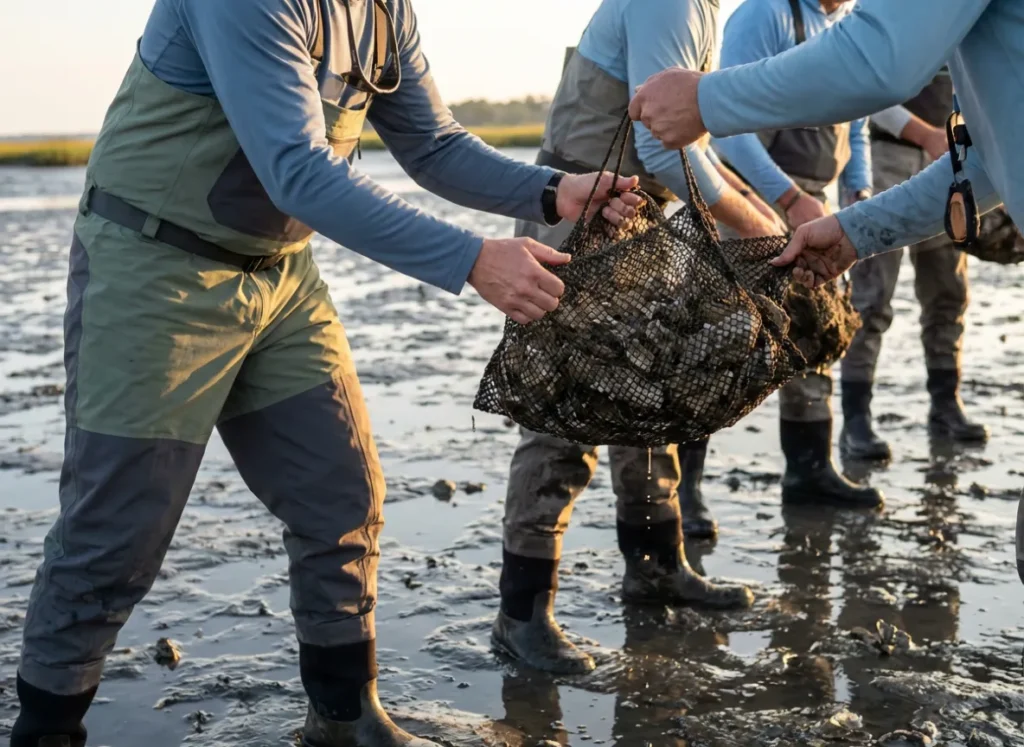
In the salt marsh, the structure itself is a living organism. Oysters are the temperate equivalent of coral; a single adult filters up to 50 gallons of water daily, clarifying the water to allow seagrass beds to thrive.
The “Restaurant to Reef” Cycle
The “Restaurant to Reef” model, championed by groups like the NC Coastal Federation and the Atlantic Coastal Fish Habitat Partnership, addresses a critical resource gap. Oyster larvae (spat) are free-swimming plankton that require a hard, calcium-rich surface to settle and metamorphose. Old shells are the chemically perfect substrate.
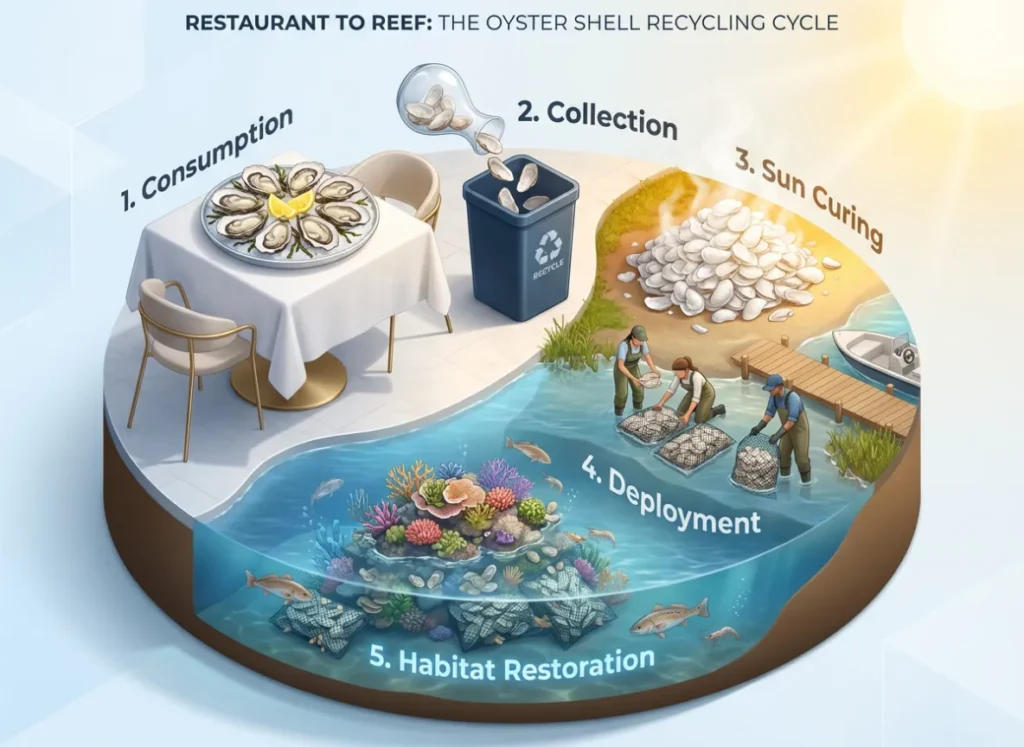
Instead of discarding shells into landfills, these oyster shell recycling programs collect, cure (sun-bleach to kill pathogens), and return the shells to the estuary. The economic and ecological ROI is massive. Data suggests that economic benefits of oyster restoration can generate over $4 for every $1 invested.
Volunteers in places like Stump Sound or Alljoy Landing participate by bagging cured shells and deploying them in intertidal zones. This creates immediate habitat for crabs, shrimp, and juvenile gamefish like Red Drum, Black Drum, Flounder, and Gag Grouper. It closes the loop on consumption, turning the waste from a seafood dinner into the nursery for tomorrow’s catch. This restoration work directly improves the grounds for reading oyster reefs for redfish.
The Guardian’s Code: Compliance and Biosecurity
Before you drop a single shell or plant a single stake, you must navigate the complex web of permissions that protects our public waters. Unauthorized restoration is illegal and can be damaging.
The Permission Matrix
Placing structure in public waters is classified as “fill” under federal law and usually requires a Section 404 permit from the U.S. Army Corps of Engineers (USACE). In specific regions, regulations like the TVA Section 26a regulations require approval for any obstruction.
State regulations vary wildly. Some states criminalize the unauthorized stocking of any aquatic plant to prevent invasives. The “Golden Rule” is to start by contacting the state agency’s “Private Lands Biologist” or the Natural Resources Conservation Service (NRCS). Legitimacy is the difference between a vandal and a steward. Always start by checking state fishing regulations and legal jurisdiction before attempting any project.
Check, Clean, Dry
We must also exercise extreme discipline to ensure we don’t unknowingly destroy the habitats we visit. Invasive species like New Zealand Mudsnails (NZMS) and Didymo (“Rock Snot”) can render high-quality habitat useless.
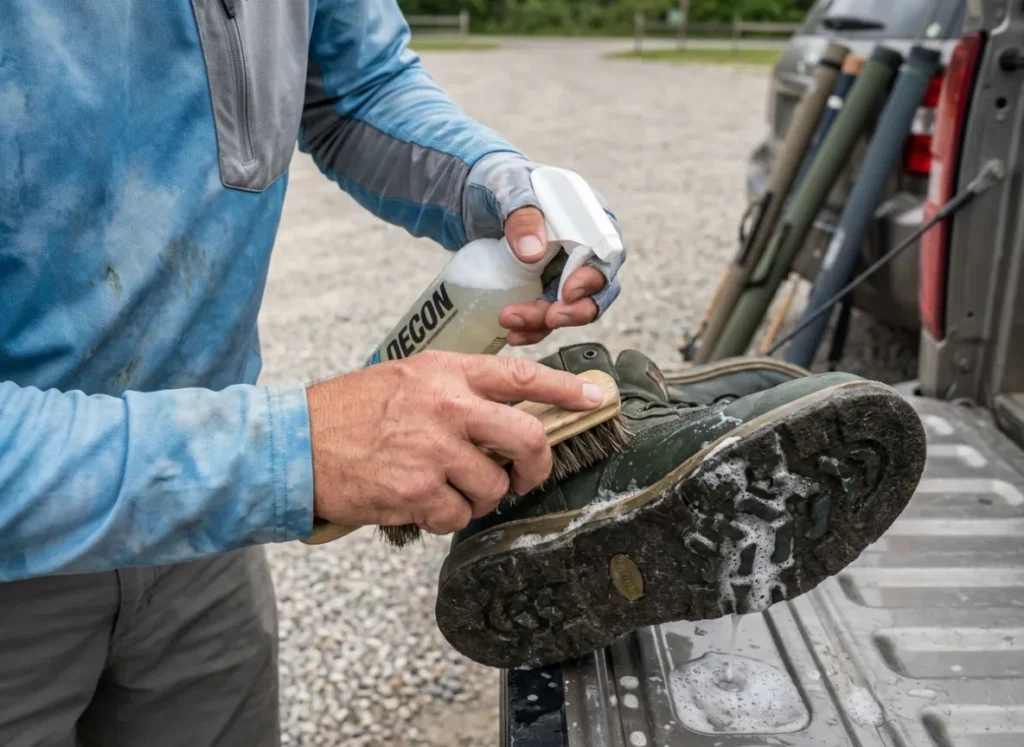
The only defense is the “Check, Clean, Dry” protocol. Visually inspect gear, chemically treat waders, and dry gear completely.
Pro-Tip: Desiccation is powerful. The standard is “Bone Dry” plus 48 hours. This ensures that even resilient organisms are non-viable before your boots enter a new watershed.
Many stewards are switching to rubber soles or carrying separate boots for different watersheds to aid in wader sterilization. Specific New Zealand mudsnail decontamination protocols outline the chemical treatments required. This discipline is essential for preventing the spread of aquatic invasive species.
Conclusion
Restoration works. Case studies from Kenai Peninsula to West Virginia prove that physical interventions can drive biomass increase. However, our focus must shift from just attracting fish to producing them, prioritizing nursery habitat over honey holes. Whether removing a dam or fixing a culvert, restoring connectivity is the most powerful tool in the box.
Remember that effective stewardship is always performed within the legal framework of state and federal agencies. Contact your local conservation districts, B.A.S.S. Nation chapter, or state fisheries biologist today to ask about citizen science and volunteer tacklebox opportunities.
FAQ – Frequently Asked Questions
Do Christmas trees actually help fish populations?
Yes, specifically for recruitment. Their dense branches provide excellent cover for fry, but they rot quickly (2-3 years) and must be replenished to maintain their biological value.
Is it legal to sink my own brush piles in a public lake?
Generally, no. Most public waters require a permit from the state DNR or the Army Corps of Engineers; unauthorized dumping is considered illegal fill and can result in fines.
What is the best way to stabilize an eroding stream bank?
Willow staking is the gold standard for volunteers. It uses live cuttings to create a root matrix that binds soil while providing shade to cool the water.
How can I help if I don’t have heavy equipment or a boat?
Participate in citizen science data collection. Apps like NOAA’s CrowdMag or state tagging programs allow you to contribute valuable data just by fishing and observing.
Risk Disclaimer: Fishing, boating, and all related outdoor activities involve inherent risks that
can lead to injury. The information provided on Master Fishing Mag is for educational and informational purposes
only. While we strive for accuracy, the information, techniques, and advice on gear and safety are not a substitute
for your own best judgment, local knowledge, and adherence to official regulations. Fishing regulations, including
seasons, size limits, and species restrictions, change frequently and vary by location. Always consult the latest
official regulations from your local fish and wildlife agency before heading out. Proper handling of hooks, knives,
and other sharp equipment is essential for safety. Furthermore, be aware of local fish consumption advisories. By
using this website, you agree that you are solely responsible for your own safety and for complying with all
applicable laws. Any reliance you place on our content is strictly at your own risk. Master Fishing Mag and its
authors will not be held liable for any injury, damage, or loss sustained in connection with the use of the
information herein.
Affiliate Disclosure: We are a participant in the Amazon Services LLC Associates Program, an
affiliate advertising program designed to provide a means for us to earn advertising fees by advertising and linking
to Amazon.com. As an Amazon Associate, we earn from qualifying purchases. We also participate in other affiliate
programs and may receive a commission on products purchased through our links, at no extra cost to you. Additional
terms are found in the terms of service.