
In this article
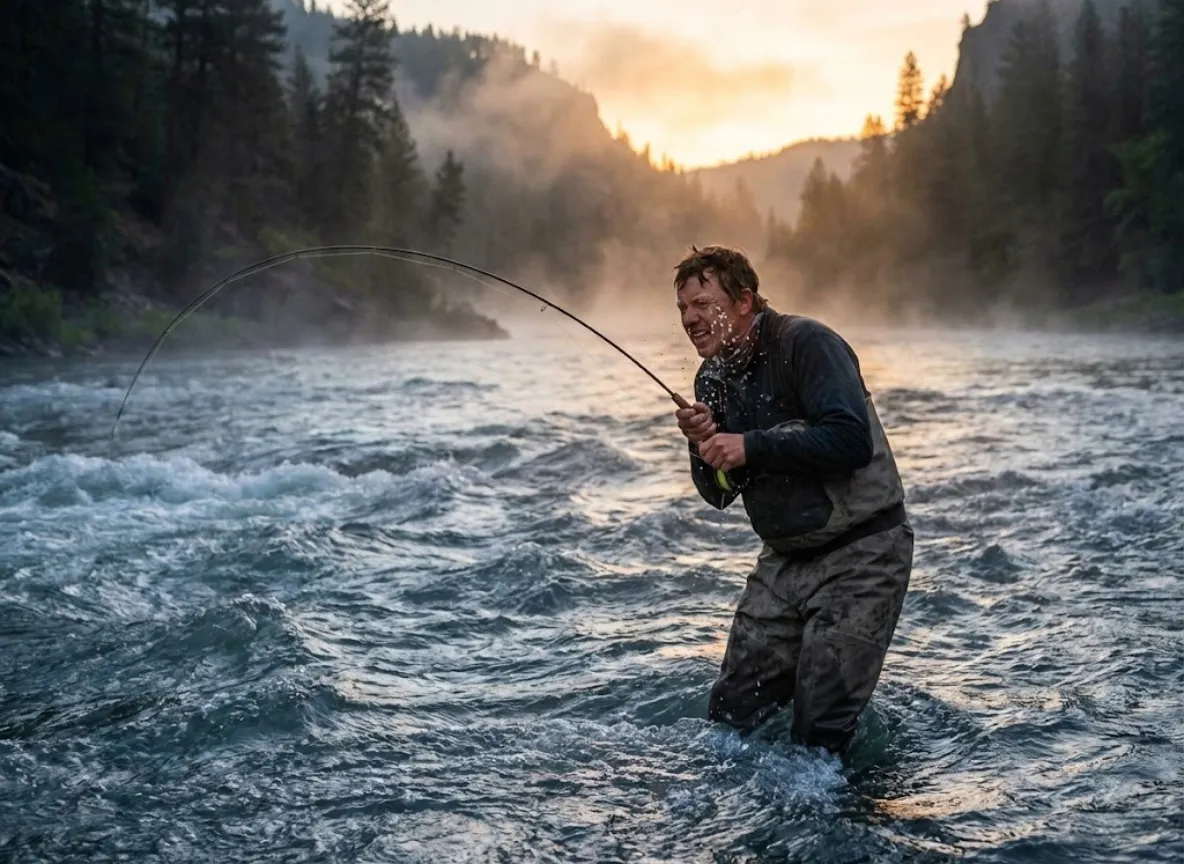
A river does not negotiate. When you stand waist-deep in a rushing stream during a fishing trip, you can feel the raw power pushing against your legs. To a beginner, it looks like a chaotic wall of white water and noise. It feels impossible that anything could live comfortably in there, let alone eat.
But fish aren’t fighting that main current constantly. If they did, they would burn more calories than they could ever catch.
I’ve spent years guiding clients who cast right into the hardest, fastest part of the flow, assuming that’s where the “action” is. They usually come up empty. The secret isn’t luck, and it isn’t just about having the best fishing gear. It’s realizing that the river is full of hidden slow lanes, eddies, and quiet pockets.
The difference between a master of sport fishing and a novice is the ability to ignore the surface noise. You must visualize the quiet room where the trout, walleye, or catfish are actually hiding. This guide is about learning the art of reading the water so you can stop battling the river and start fishing it.
What Governs the Movement of Water and Fish?
Before you open your tackle box or select your lure, you need to understand two simple truths: water slows down when it hits stuff, and fish are inherently lazy regarding energy conservation.
How does the “Boundary Layer” create a sanctuary for fish?
The “Boundary Layer” is just a fancy term from hydrology for the cushion of slow water that hugs the bottom of the river.
Imagine lying down in a tall grassy field on a windy day. Standing up, the wind might blow your hat off. But down low, close to the dirt, the grass blocks the wind, and the air is calm. Water works the same way.
The current speed is fastest near the surface because nothing is stopping it. But as you go deeper, the water rubs against the rocks, sand bottom, and logs. This friction acts like a brake, altering the flow dynamics.
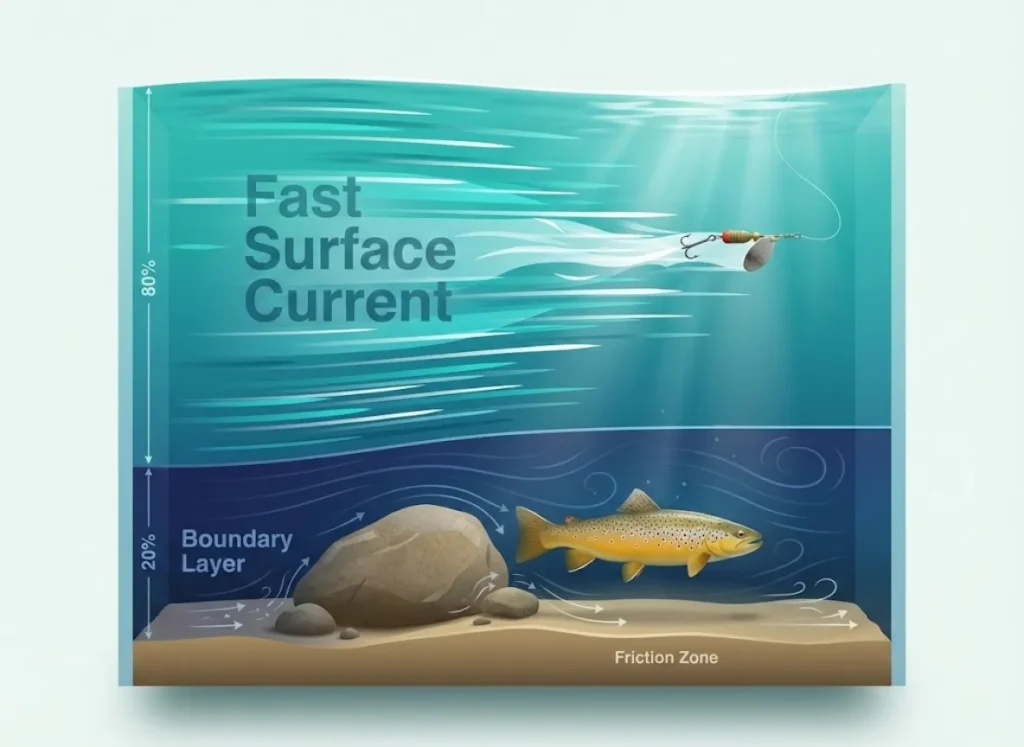
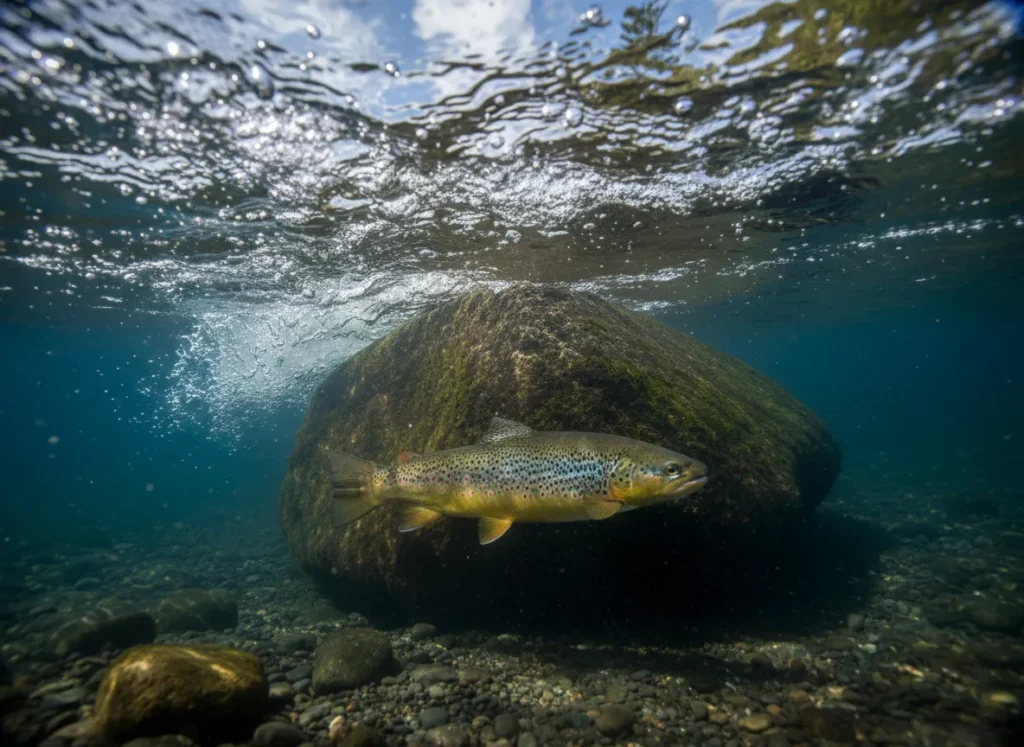
According to the principles of fluid friction and boundary layer mechanics, the water right against the bottom—where the smallmouth bass and brown trout live—is barely moving, even if the surface looks like a washing machine.
This creates a “carpet” of soft water. Fish tuck themselves into this carpet regardless of bottom composition. They aren’t swimming for their lives; they are parking in the garage. Most anglers fish too high, drifting their flies or swimbaits in the fast lane while the fish are watching from the slow lane below. You need a field guide to reading a river that focuses on getting your bait down through the fast water and into that bottom cushion.
Why do fish strictly adhere to “Optimal Foraging Theory”?
Fish are calculated eaters. They follow a simple rule: never work harder for a meal than the meal is worth. This is the core of bioenergetics.
Think of it like a treadmill. If you had to sprint at full speed on a treadmill to catch a single peanut, you would starve to death. You would burn more energy running than the peanut provides. Fish know this.
This is the “Optimal Foraging Theory.” A fish will only sit in a current if the food coming toward it is worth the effort of holding that spot. This is why nutritional bioenergetics in fish suggests they seek the “Seam”—the edge where fast water meets slack water.
Drift feeders, like rainbow trout, park in the slow water (the cheap seats) and watch the fast water (the food conveyor belt). They only move when they see prey like crayfish or intermediate-sized baitfish. Ambush predators, like Snook or Largemouth, hide entirely behind a log in undercut banks and wait for the current to push food right into their strike zone.
Pro-Tip: In fast water, fish don’t have time to inspect your lure. They have split-seconds to decide “eat” or “pass.” This “Reaction Bite” works in your favor. If you get the lure in their face, they often bite out of instinct.
If you follow a systematic trout fishing blueprint, you’ll learn to stop casting into the dead-calm pools (no food) or the raging rapids (too much work). Start fishing the current breaks where the two meet.
How Do You Decode Surface Clues to Find Fish?
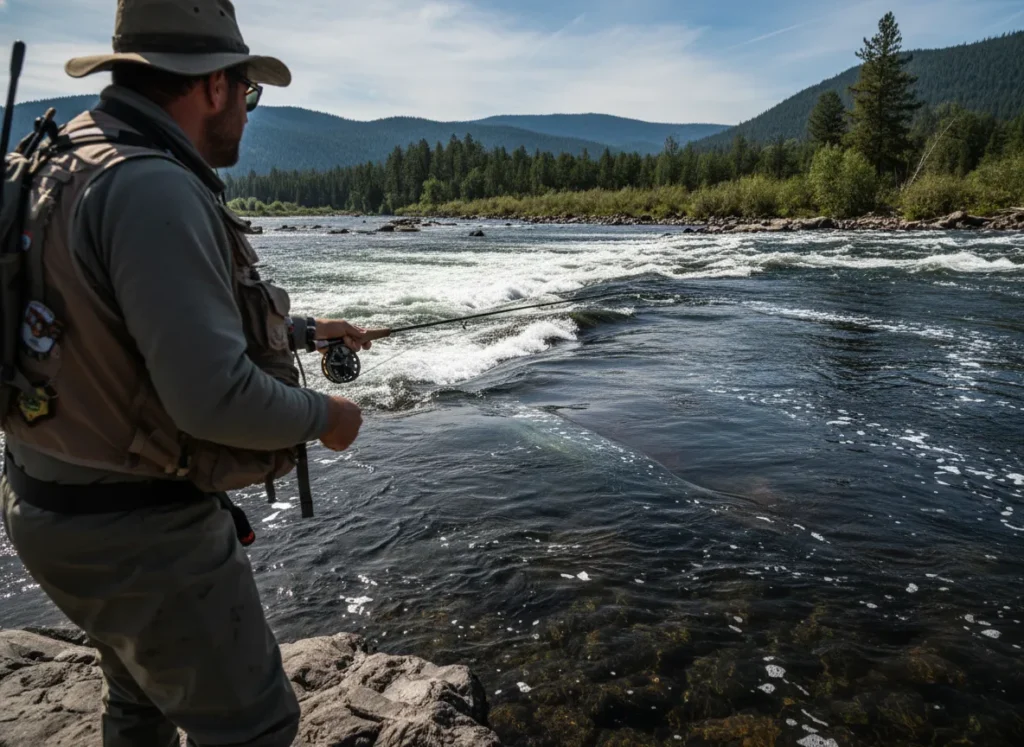
You can’t see the bottom of a muddy river or a deep inlet, and often water clarity is poor. But the surface tells you everything you need to know about the fishing environment if you know what to look for.
What are the five distinct zones of a midstream boulder?
When water hits mid-stream boulders, it creates five predictable feeding zones. If you can identify these, you can predict exactly where the fish are sitting.
- The Pillow: This is the cushion of water pushing up against the front of the rock. It looks like a bubble. Believe it or not, trophy fish will sit right in front of the rock here, because the water pressure pushes back against the current, creating a dead spot.
- The Shears: The water speeds up as it whips around the sides of the rock. Fish rarely sit here—it’s too much work—but they watch these lanes for nymphs or minnows.
- The Slick: Look behind the rock. You’ll see a patch of smooth, glassy water. This is the prime resting spot and a classic ambush point. It’s protected from the flow.
- The Merger: Way behind the rock, the two fast currents meet again. This creates a “V” shape. This funnel concentrates all the food into one lane, and the biggest fish often claim this spot.
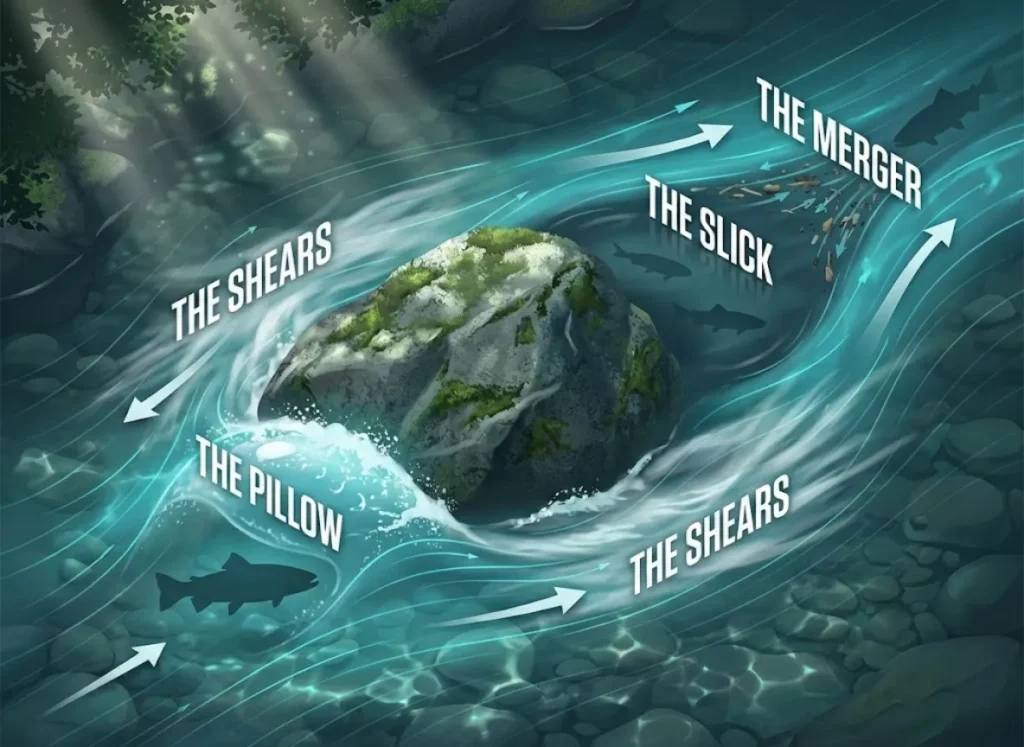
If you understand open channel hydraulics and flow separation, you know that a fish in the quiet “Slick” isn’t going to dart out into the ripping “Shear” just to chase your crankbaits or spoons. You have to be accurate with your upstream casting. Use this knowledge when applying a method for choosing high-probability fishing spots. Even a small stone creates a tiny micro-seam that a fish will use.
How do tidal inlets and surf zones differ from rivers?
Inlets and beaches are just rivers that change direction. The tides are the pump that moves the water.
At a bridge or dock, look for the “Shadow Line” at night. The lights cast a shadow on the water. Predators like Snapper or Grouper hide in the dark shadow and look out into the light. It’s a tactical ambush wall.
On the beach, look for the “Cut” or “Rip.” Waves push water onto the beach, and that water has to go back out somewhere. It finds a deep channel and rushes back to sea. This is a rip current. It looks like a gap in the white waves where the water is darker and flatter.
According to NOAA’s guide on rip current dynamics and identification, these currents suck sand, crabs, and bait balls out to sea. Big fish, including Striped Bass and Tarpon, sit at the end of the rip, just waiting for the buffet. This is the “Zone of Inevitability.” When navigating dynamic brackish water zones, find the moving water that is carrying the food, and you find the predators.
How Does Gear Physics Defeat Hydrodynamic Drag?
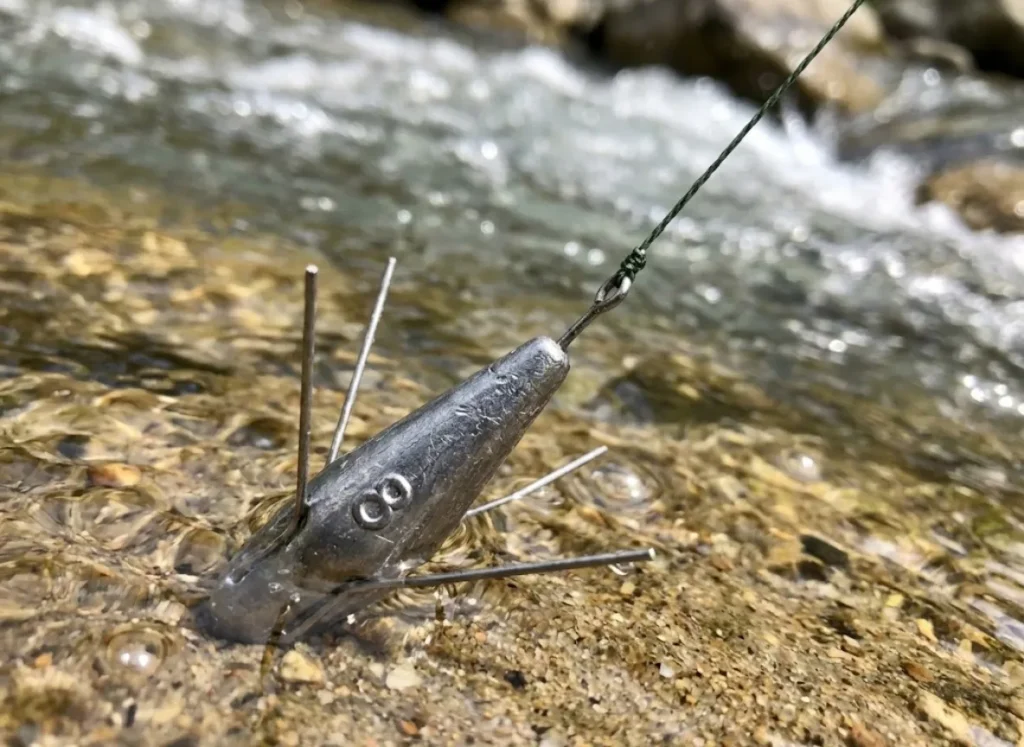
You’ve found the spot. Now you have to get your bait down there. The problem is that the hydrodynamics of the current want to lift your line and sweep it away.
Which sinker shape offers the best holding power per ounce?
If you are fishing in strong currents, the shape of your weight matters more than how heavy it is.
A Sputnik (Spider) Sinker is the best anchor for surf fishing. It has wire arms that dig into the sand like a grappling hook. You can hold the bottom with a 3oz Sputnik where a 5oz pyramid sinker would roll away.
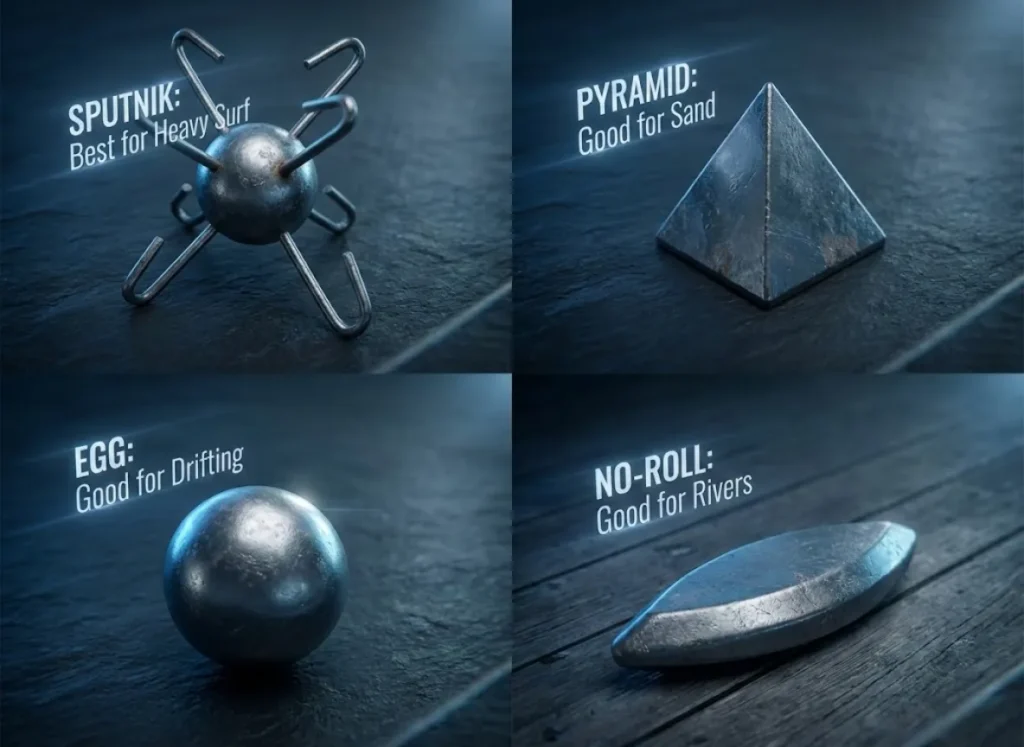
Round weights, like Egg Sinkers or split shot, are designed to roll. We use these for drift fishing or bottom bouncing when we want the bait to move naturally along the bottom. But if you want to stay put in a Wolf River rig or Santee Cooper rig setup, avoid round shapes.
For river fishing, the No-Roll Sinker is flat like a pancake. It lies flat on the bottom, slipping under the fast-moving waters. NASA studies on drag coefficients of geometric shapes confirm that flat shapes fight the wind (and water) less than tall shapes. For a full breakdown of what to use, including a sinker selection matrix, check our modern guide to fishing weights.
How do line diameter and “High Sticking” alter presentation?
Think of your fishing line like a sail on a boat. The thicker the line, the more water hits it, and the more it gets pushed downstream.
This is why high vis braid is a vital tool in current. It is much thinner than monofilament of the same strength. Thin line cuts through the water like a knife, helping your jig heads or heavy lures sink faster and stay deep.
You can also help yourself by “High-Sticking.” This means holding your rod tip up high. By lifting the line out of the water, the river can’t push against it. If you lay your line on the water, the current grabs it and drags your lure unnaturally fast, ruining the natural presentation.
Scientists studying forces on submerged lines call the bow in your line a “catenary curve,” but we just call it a “belly.” A big belly in the line ruins your sensitivity and line tension. You won’t feel the bite until it’s too late to set the hook. This is a key factor when comparing braid vs fluorocarbon vs monofilament. Sinking lines (Fluorocarbon leader) help get under the current, while floating lines (Braid or specific fly line buoyancy) help you start mending line and manage the drift.
Pro-Tip: If you are drifting a worm or lure, try to keep your rod tip pointed at the bait as it moves downstream. This keeps the line straight and lets you set the hook instantly.
Conclusion
Success in fishing in current isn’t about expensive gear. It’s about energy. The fish are hiding where they can save energy, and they are eating where the current delivers the food.
The river bottom is a refuge. The rocks are break-walls. The seams are buffet lines.
The next time you walk up to a fast river or a ripping tide, don’t just start casting. Stop. Look for the slick water behind the rock. Look for the darker channel in the surf. Read the water, find the quiet spots, and that is where you will find the fish.
FAQ – Frequently Asked Questions
How much weight do I need for heavy current?
A good rule of thumb is 1 ounce for every 10-15 feet of depth, but it depends on the current speed. If your weight is rolling, go heavier or switch to a gripper shape like a Sputnik or Pyramid sinker to keep bait on bottom.
What is the best way to fish a river seam?
Cast upstream into the fast water and let your lure drift down into the slower edge of the seam. Keep your rod tip high to keep the line off the water so the current doesn’t drag your bait too fast. This is crucial for drift speed control.
Why do fish sit in fast water riffles?
In the summer, riffles (choppy shallow water) add oxygenation to the water, which fish love. The choppy surface also acts like a roof, hiding them from birds and anglers, so they feel safe in shallow water.
How do I identify a rip current for fishing?
Look for a gap in the breaking waves. If you see a spot where the waves aren’t breaking and the water looks calm or dark, that’s the rip. It’s carrying food out to sea, and big fish will be waiting at the end of it.
Risk Disclaimer: Fishing, boating, and all related outdoor activities involve inherent risks that
can lead to injury. The information provided on Master Fishing Mag is for educational and informational purposes
only. While we strive for accuracy, the information, techniques, and advice on gear and safety are not a substitute
for your own best judgment, local knowledge, and adherence to official regulations. Fishing regulations, including
seasons, size limits, and species restrictions, change frequently and vary by location. Always consult the latest
official regulations from your local fish and wildlife agency before heading out. Proper handling of hooks, knives,
and other sharp equipment is essential for safety. Furthermore, be aware of local fish consumption advisories. By
using this website, you agree that you are solely responsible for your own safety and for complying with all
applicable laws. Any reliance you place on our content is strictly at your own risk. Master Fishing Mag and its
authors will not be held liable for any injury, damage, or loss sustained in connection with the use of the
information herein.
Affiliate Disclosure: We are a participant in the Amazon Services LLC Associates Program, an
affiliate advertising program designed to provide a means for us to earn advertising fees by advertising and linking
to Amazon.com. As an Amazon Associate, we earn from qualifying purchases. We also participate in other affiliate
programs and may receive a commission on products purchased through our links, at no extra cost to you. Additional
terms are found in the terms of service.