
In this article
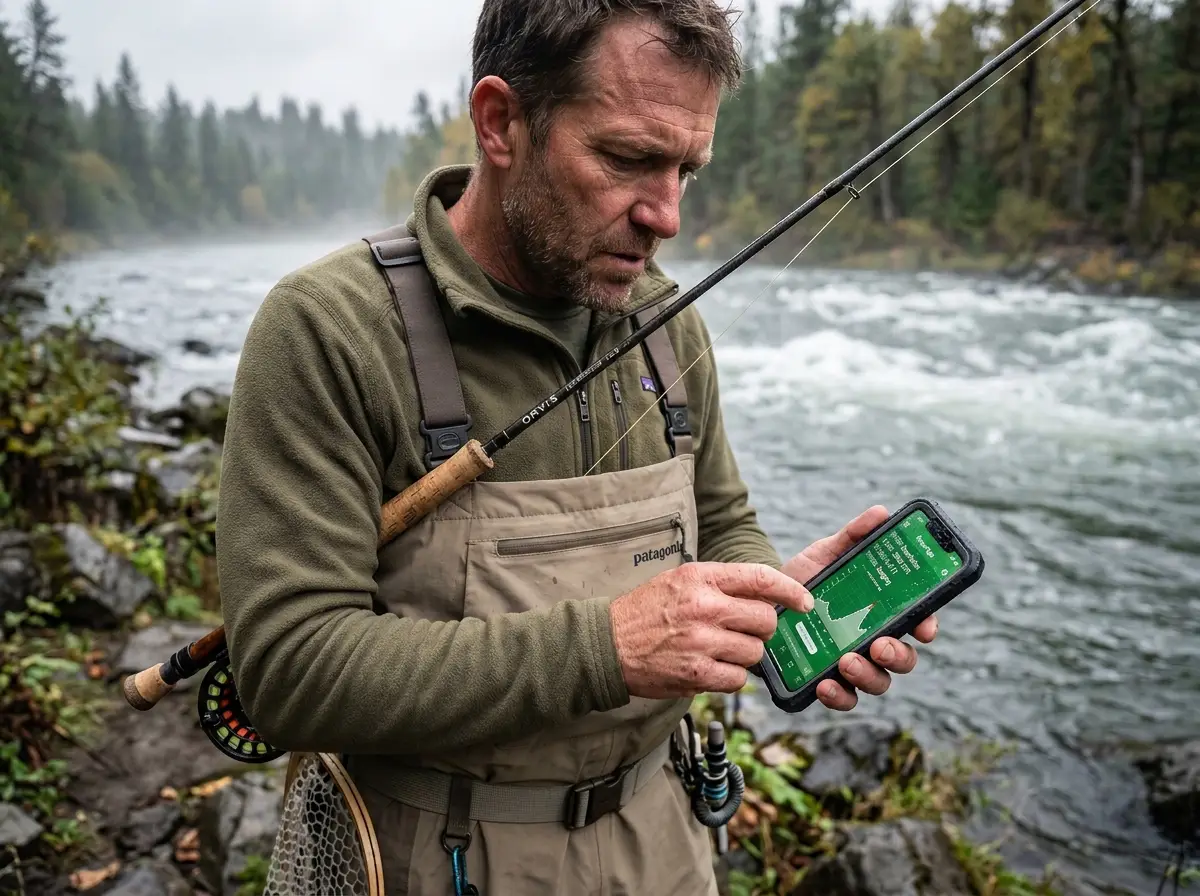
The first time a sudden tailwater release nearly swept me off my feet, I wasn’t watching the river—I was completely focused on a brown trout sipping small BWO emergers in a tight seam. The gravel bank beneath my boots started shrinking fast, and the hum of the current dropped an octave into a low, threatening roar. I broke off the fish and scrambled to the main bank. A quick glance at my phone confirmed what I should have known before stepping into the water: the dam had flushed, and the discharge had spiked by 800 cubic feet per second in under ten minutes.
Learning exactly how to read a united states geological survey stream gauge isn’t just about finding feeding trout. It is the fundamental difference between a safe, tactical approach and risking a hazardous tumble in blown-out currents. This guide strips away the academic noise, translating raw data into actionable fish behavior patterns. When you master analyzing river fishing in dynamic conditions, your success rate directly depends on interpreting this telemetry rather than staring blindly at the water.
⚡ Quick Answer: You read a USGS stream gauge by tracking two primary metrics: gage height (surface elevation against a baseline) and cfs (discharge volume). Monitoring the national water dashboard prevents you from getting caught in rapidly rising tailwater releases and identifies the clearing window when the river drops. Combine these readings with turbidity levels to pinpoint exactly when fish stop feeding by sight and switch to tracking vibration.
| River Metrics and Safety Guidelines | |||
|---|---|---|---|
| CFS (Discharge) | Gage Height (Stage) | NTU Turbidity Thresholds | Wading Limit (Rule of 10) |
| Volume of water moving per second; use to compare rivers. | Surface elevation from an arbitrary datum, NOT actual depth. | 0-5 is gin clear; 8-10 drops success; 25+ requires large/dark lures. | Velocity (ft/s) × Depth (ft) must remain below 10 for safe wading. |
The Mechanics of the Hydrograph: What USGS Data Actually Measures
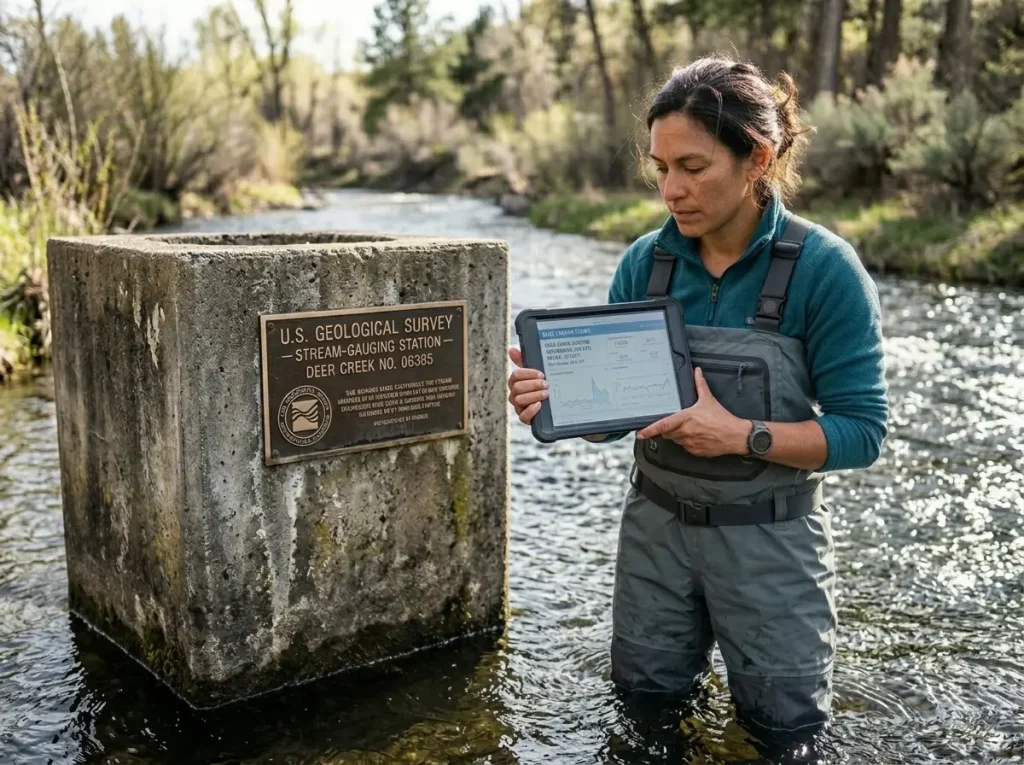
To fish dynamically, you have to break down what the sensors are actually telling you. The federal priority streamgages network acts as the backbone for flood forecasting, but it also gives us a cheat code for understanding the hydrodynamics of fluvial systems. According to the USGS Streamgaging basics, these stations use pressure transducers to measure the water depth relative to a calibrated datum, logging the pressure on strict 15-minute intervals. It helps to look at this data as a mechanical heartbeat.
The information pushes rapidly to satellite systems and hits your phone as real-time data. Always remember the system operates on a one to four-hour transmission lag.
Decoding Gage Height vs. Actual Water Depth
The most common mistake you see at the boat ramp is guys assuming a 4.0 gage height means the river is exactly four feet deep. Gage height measures surface elevation against an arbitrary baseline set below the lowest expected water level. A 4.0 reading could easily mean the river is two feet deep near the bank and ten feet deep in the main channel.
You absolutely cannot take your experience on one river and blindly apply those raw numbers to another system. A reading of 5.0 on a steep mountain stream might mean hazardous, unfishable conditions, while a 5.0 on a wide valley tailwater means perfect wading depth. Tracking the gauge height mean depth variations only works if you measure it against that specific watershed. Logging the height manually before gearing up builds a personalized map of fishability perfectly tailored to your local runs.
The Stage-Discharge Relationship
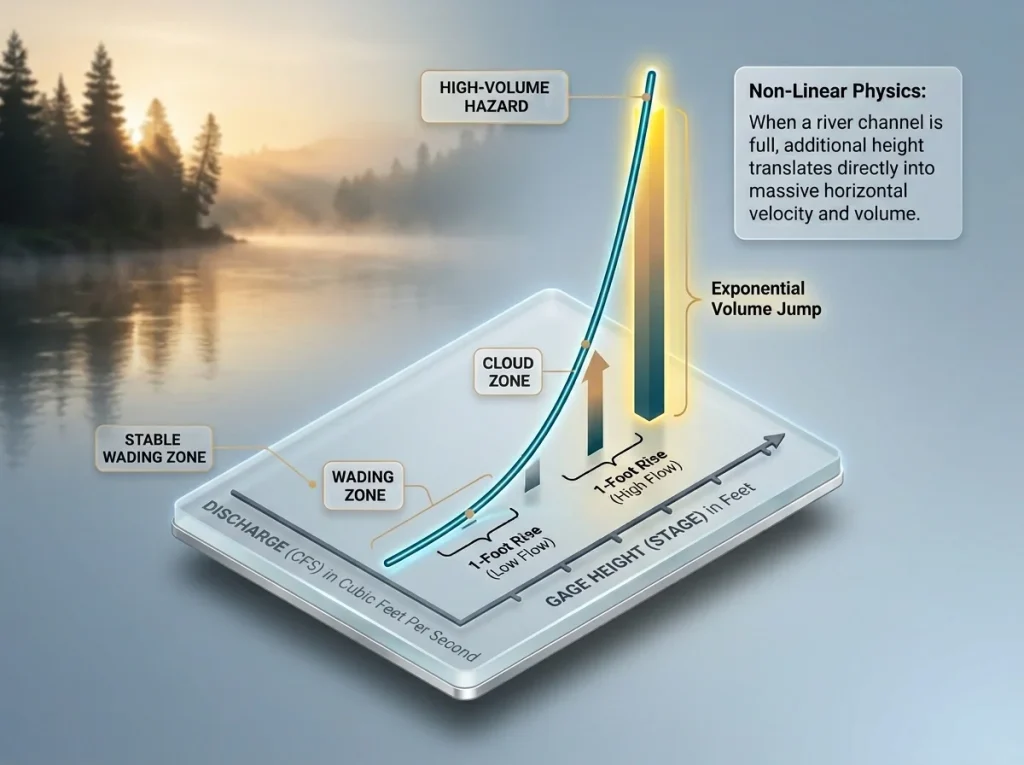
If you really want to know how much water is physically pushing against your waders, you have to look at discharge. Technicians convert the arbitrary stage numbers into a measurement of volume using a mathematical formula called the stage-discharge relationship. This calculates the cross-sectional area of the water multiplied by the average velocity of the flow.
This relationship shifts over time. A heavy spring flood will alter the physical shape of the streambed entirely, washing out the gravel and shifting immense boulders. When this morphology shifts, the old rating curve becomes useless until technicians recalibrate the system.
Once you grasp how gage height and discharge work together, applying that knowledge in real time becomes the next critical step. Checking the metrics before you leave the house is good, but interpreting the live trends on your phone while standing on the riverbank is what keeps you ahead of rising water and focused on actively feeding fish.
Navigating the Next-Generation Water Dashboard
When you open the dashboard on your phone, ignore the exact decimal points during extreme weather events. What you are looking for is aggressive trend prediction. The system logs this initial wave as provisional data, meaning a technician hasn’t manually verified it yet.
Look closely for small gold triangles plotted on the graph. That symbol represents the median daily statistic for the past thirty years. If today’s flow chart sits dramatically above that gold triangle, you instantly know the water is running uniquely heavy for the season.
Pro tip: Never wait for the exact moment water peaks to decide where to drive. Check upstream and downstream gauges to calculate transit time. You can often cut south and stay ahead of a mud plug that just blew out the upper river.
By consistently matching Dashboard predictions with what you physically experience on the banks, you build an intuition for how water moves. That instinct directly dictates where fish are forced to relocate when the current pushes past their physical limits.
Current Friction and Fish Behavior
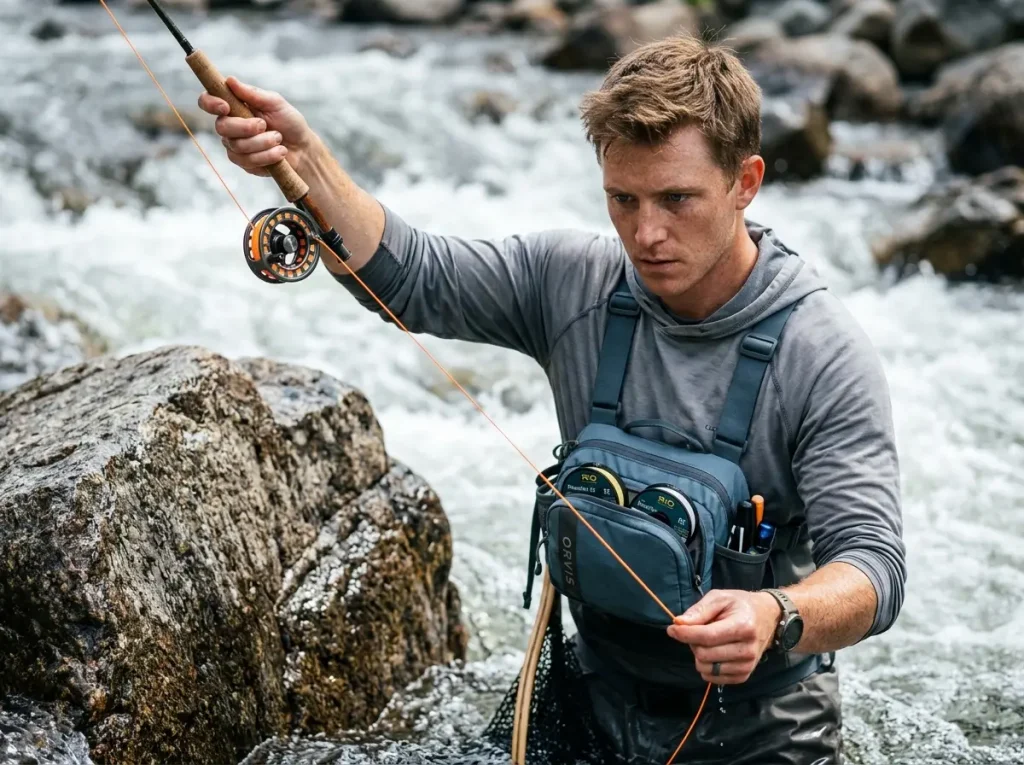
Understanding the raw telemetry gets you to the river safely. Now you have to connect that massive volume of water to the specific friction edges where fish go to survive. This requires mastering current seam hydrodynamics, translating abstract numbers into physical holding areas that cut the heavy current down to manageable speeds.
Finding Velocity Shelters using Manning’s N
The speed of the water shifts based on what it runs over. Hydrologists calculate this friction by figuring out exactly how much drag the channel applies to the flow, a metric known as manning’s n. A high roughness coefficient matters immensely to anglers because grassy banks and irregular rocky ledges dramatically increase friction, significantly slowing down the water compared to the smooth center channel.
When a hydrograph spikes, fish cannot hold in the main thrust. They shoot sideways to heavily textured areas. Submerged logs, bridge pylons, and rock points create highly protective velocity shelters. If you bypass these friction points in high water, you are throwing flies into empty space.
I spent two seasons ignoring the shallow, slack water behind bridge supports because it looked too dead. Once I finally dropped a weighted nymph directly into that heavy friction zone during a 1,200 CFS flush, I pulled three thick rainbows out of a spot the size of a bathtub. Now it’s the first place I cast when the gauge spikes.
Scouring and Benthic Resting Locations
A massive surge of current totally strips the river bottom. The high flow scours away the silt and small pebbles, leaving behind the heaviest, most stable boulders locked directly into the bedrock floor. This forceful process creates premium benthic resting locations—bottom-holding spots for trout and bass looking to pin themselves flat out of the flow.
You must get your presentation all the way down, aggressively bouncing off these large rocks. The fish absolutely will not rise off the bottom through the fast boundary layer to chase a passing lure. If your rig sweeps freely without occasionally hanging up or ticking rocks, you are fishing miles above the strike zone.
Pinpointing those deep boulder fields is only half the equation when a river completely blows out. Even if you manage to drift your presentation right past their noses, you have to account for the severe physiological toll that fighting a roaring current takes on their willingness to eat.
Metabolic Reprogramming and Lethargy
Heavy water physically changes how a fish processes energy. A trout fighting a heavy thirty body-lengths-per-second current undergoes metabolic shock. They down-regulate their cellular energy production, causing severe lethargy.
This shuts down their aggressive hunting instincts entirely. They refuse to chase anything out of their tiny strike window. You cannot expect a fish in this state to slash at a fast-moving crankbait. You must drift your bug directly onto their nose. Properly measuring the flow rate makes or breaks your success when targeting fish shut down by heavy runoff.
Pro tip: When fishing heavy pocket water behind boulders, drop your rig into the slack water right in front of the rock face, not just the eddy behind it. The hydraulic cushion pushing off the front creates a slow-churning feeding station most guys cast right over.
While forcing your presentation down to lethargic fish covers the depth component, surging water brings another massive complication. Pushing flows immediately pull thick sediment off the banks, completely erasing visual cues and forcing you to rethink your entire color and profile strategy.
Turbidity and the “Chocolate Milk” Filter
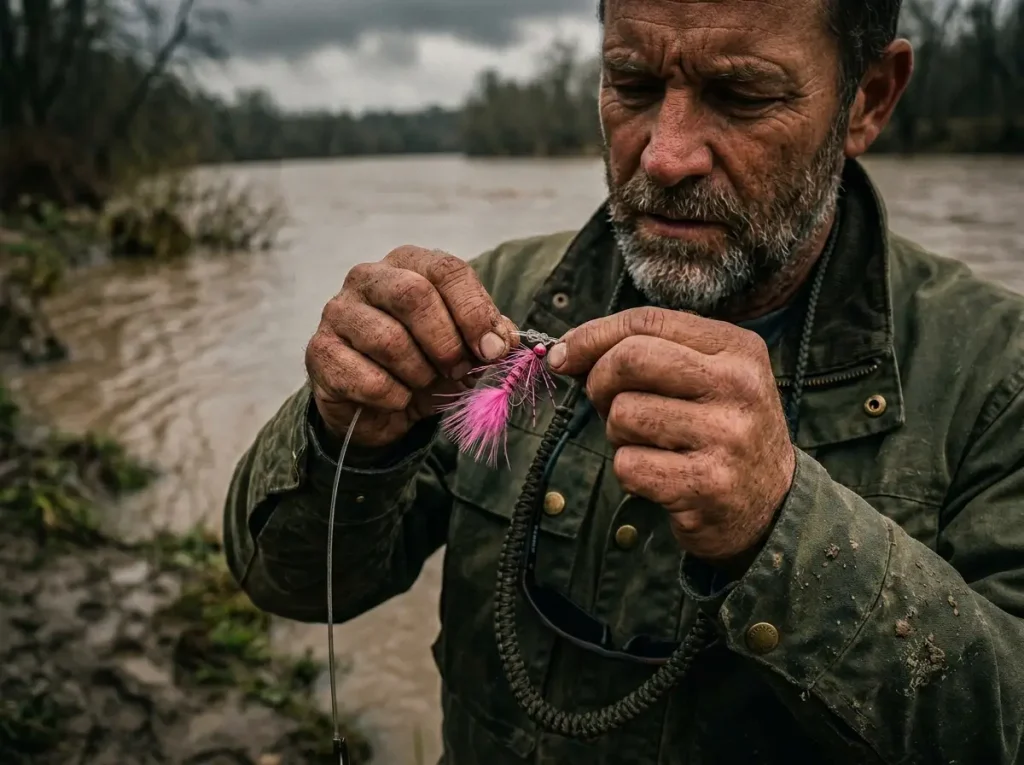
Surging discharge triggers a rapid drop in water clarity. Fish rely heavily on sight first. When vision fails, their foraging behavior physically shifts. If you want to keep bending rods while everyone else heads to the diner, prioritize executing a safe and effective muddy water protocol right as the turbidity thresholds get crossed.
The Visibility Window
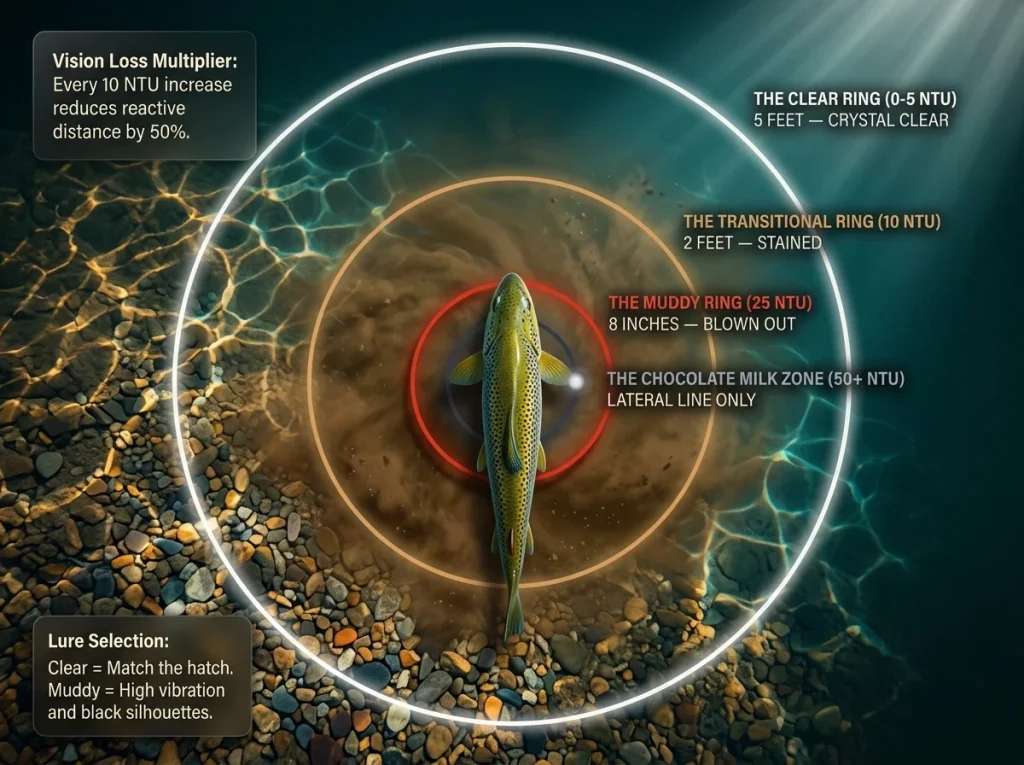
Fish possess a specific reactive cone of vision determining exactly when they detect your lure traversing the water column. In perfect zero to five NTU water, that cone stretches for feet. As soon as you hit the eight to ten NTU mark, success drops completely off a cliff because the fish simply cannot track natural imitations passing quickly.
When you push strictly past twenty-five NTU, a predator loses over half of its reactive distance. You are no longer imitating natural insects; you are throwing massive profiles completely reliant on outline and contrast. Matching the hatch in thick mud is a waste of time. Focus entirely on creating a stark silhouette against the stained background.
Why High CFS Causes Rapid Turbidity Spikes
The sudden force of a hydrograph spike rips sediment, decaying algae, and agricultural mud straight out of the upper watershed. This creates a fast-moving block of debris typically called a mud plug. The hardest part of the spike carries a thick concentration of suspended particles, blocking almost all light penetration.
Always remember these spikes eventually settle out. Once the hardest push of water passes your location, suspended sediment drops into the gravel fast. Finding clearer water often means sitting on the tailgate and waiting out the initial pulse for a few critical hours.
Once the worst of the mud plug passes, you’re still left fishing in water that looks more like coffee than a trout stream. To capitalize on the remaining low-visibility conditions, you have to abandon natural presentations entirely and focus strictly on creating noise and pushing water.
Triggering the Lateral Line in Low Visibility
When you cross deep into 50+ NTU territory, the river looks exactly like chocolate milk. Visual hunting shuts down immediately. Fish transition strictly to their lateral line and olfactory senses. Drop the tiny patterns and tie on heavily weighted, bulky flies or thumping, vibrating reaction baits.
A massive articulated streamer pushes a high volume of water. That acoustic displacement gives the fish a physical, pulsing target to track. Focus entirely on the shallow edges near flooded grass where the mud naturally settles fastest. Fish aggressively pin bait against the bank when they cannot see in the main channel.
Pro tip: Never use clear or translucent plastic lures in muddy water. Solid chartreuse, hot pink, or pure black provide the strongest profiles a fish can detect against a thick sediment backdrop.
Adapting your lure profile keeps you in the game when conditions degrade, but the elite anglers take it a step further. They don’t just react to the mud hitting the gauge—they predict the wave hours in advance to ensure they are on the water exactly when clarity begins to return.
Forecasting Flows: Diurnal Fluctuations and Tailwaters
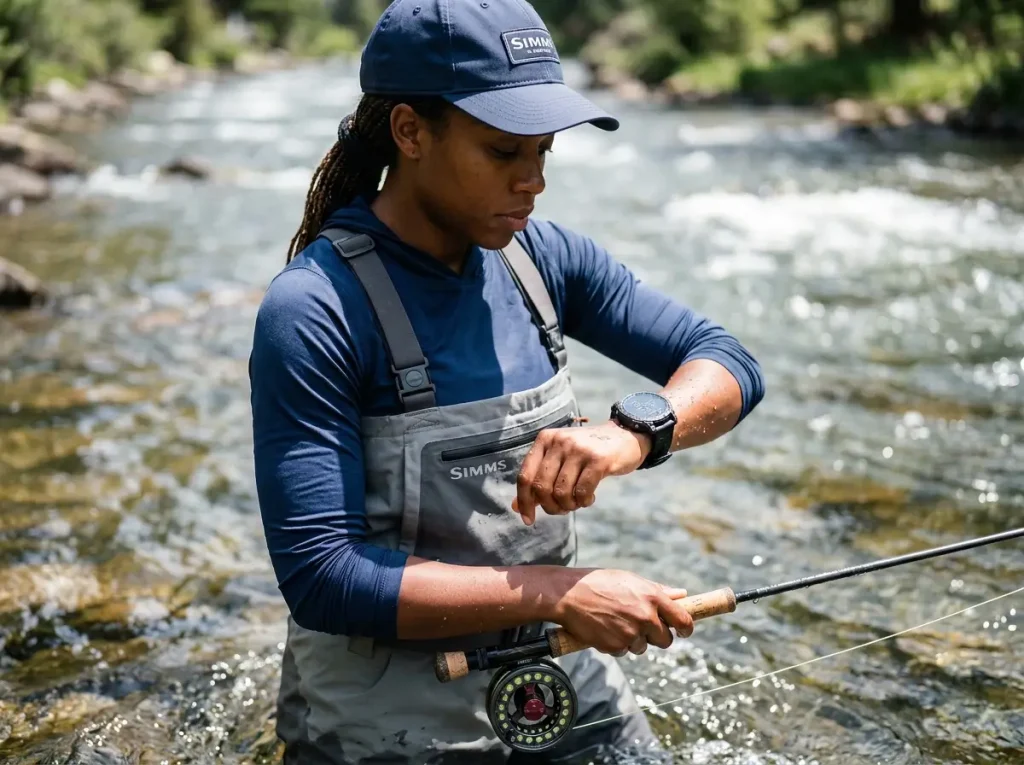
Real success consistently happens hours before you back the truck down the ramp. By reading the chart, you can forecast flow trends dynamically and bypass hazardous situations. Nailing exact timing via real-time usgs telemetry is the critical secret to locating biting fish in terrible conditions.
Timing the Mountain Snowmelt Pulse
In early summer, freestone rivers fed heavily by high country snow exhibit massive diurnal fluctuations—predictable daily cycles where high daytime temperatures melt the mountain snowpack, pushing a huge flush of water downstream every single day. This creates a melt-flush-recede wave tracking with the sun.
This transit time lag means the peak water level could hit your favorite pool at midnight, or stretch out until dawn. Keep your eye on the amplitude of the wave graphing on the dashboard. When the dramatic peaks start to shrink and flatten out significantly, the easy snow has effectively melted. That declining trend is exactly your green light.
Surviving Tailwater Ramp Rates
Fishing below dams forces you to respect an artificial environment. Unlike natural systems, tailwaters show structured hydrographs triggered entirely by municipal power schedules. A calm fifty cfs trickle can jump to a hazardous 2,000 cfs wall of water via dam releases in under fifteen minutes. If you want to stay safe, mastering tailwater trout tactics below dams is mandatory.
Fast down-ramping when the dam cuts the flow is equally treacherous. A sudden cut blocks off shallow side channels and creates isolated varial zones where water recedes and leaves stranded pools. Massive fish get trapped constantly in these pockets, locked away miles from the main river. The trout become highly stressed in these low conditions, further dropping dissolved oxygen levels as the hot sun bakes the stranded water.
I once watched a river drop 600 CFS in twenty minutes on the Bighorn. Half a dozen nice browns got trapped in a shallow gravel depression that was a fast run just an hour earlier. Always have an exit path mapped out in your head when fishing regulated water.
Whether you are waiting for a snowmelt crest to pass or a dam release to stabilize, the strategy remains essentially identical. You are looking for the precise transitional moment on the hydrograph when the river stops throwing water at you and begins returning to equilibrium.
Identifying the Post-Peak “Fishable Window”
The golden hour of high-water fishing occurs squarely on the distinct drop. As hydrograph plateaus and finally begins to fall, you get receding water. This dropping level drastically improves the situation for feeding predators. The heavy discharge lowers, dropping grit and silt down to the floor, radically increasing water clarity.
Instead of constantly checking your phone, set a third-party application on your device to ping you when the gauge actually drops past your personal trigger number. As calculating cfs numbers aggressively fall below the blown-out threshold, you immediately know the heavy mud plug has passed. Nailing timing the drop flawlessly means stepping into the river exactly as the water clears.
Predicting the perfect clearing window gets you tight lines while everyone else stays home. However, stepping into those heavy receding flows demands a strict, non-negotiable approach to physical limitations and wading preparation.
Hydrodynamics and Wading Safety Limits
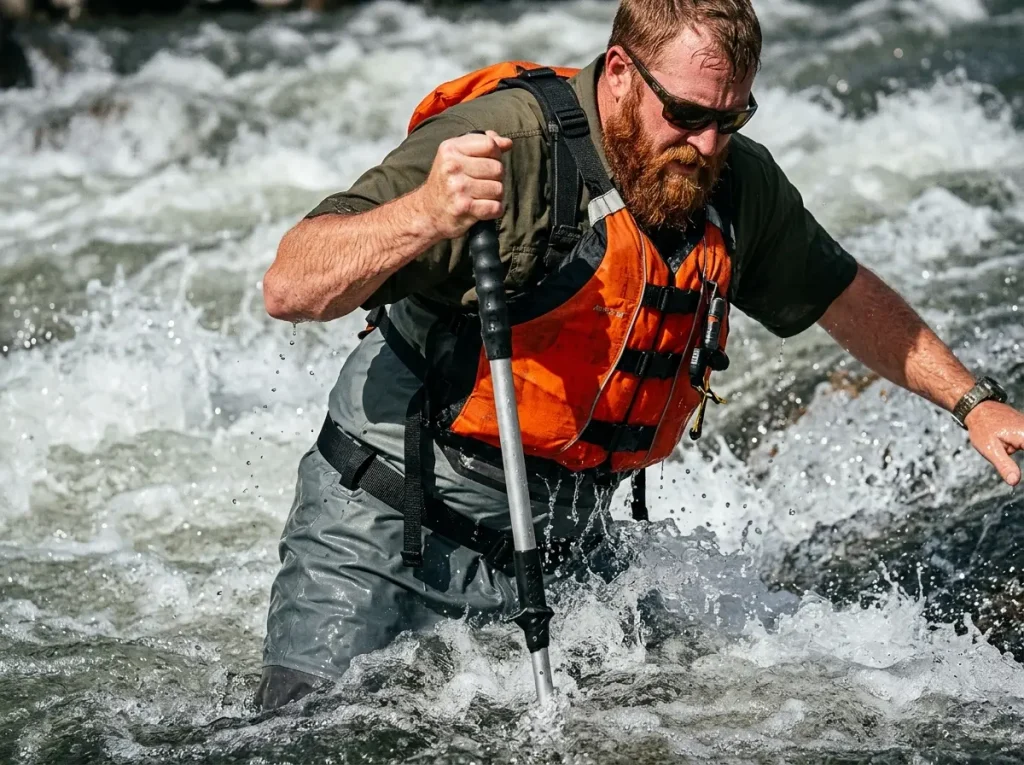
Translating stream velocity metrics directly into a stark numerical safety protocol is the single most important part of this guide. Nobody expects to take a swim in fifty-degree runoff. You must convert abstract discharge readouts into a practical field defense against punishing laminar flow and extreme hydrostatic pressure capable of sweeping you off a gravel bar. Your tactical gear setup and situational awareness are the only things keeping you upright.
Calculating the In-Stream “Rule of 10”
Hydrologists utilize a strict numerical boundary determining exactly when a river stops being a playground and becomes a severe hazard. This is universally called the Rule of 10. You multiply the current water depth in feet by the velocity of the water in feet-per-second. If that calculated number hits ten or shoots higher, the river is undeniably unsafe to cross.
If water pushes at five feet per second, an angler stepping into two feet of depth hits the absolute limit. Stepping into three feet of that same heavy water guarantees you will lose your footing. For older anglers, the physical safety limit drops drastically closer to eight. Do not attempt to cross a heavy run just because you crossed it successfully during low flows last August.
Recognizing Substrate Traction Hazards
When discharge cranks up, you face the completely invisible threat of extreme loss of bottom traction. The sheer force of the heavy water continually strips away the microscopic algae normally providing solid grip. This aggressive flow heavily destabilizes the underlying riverbed, washing out the firm gravel patches you normally rely on. What gets left behind are incredibly slick, bare, bowling-ball sized cobbles that frantically shift the moment you put weight on them.
Your physical walking technique has to change instantly. The worst thing you can do is walk completely perpendicular across the heaviest current, which positions your body to absorb the maximum possible drag vector. Instead, turn and angle yourself slightly downstream or upstream to cut through water resistance. Shuffling your studded boots, rather than taking high stepping strides, keeps you firmly planted.
Changing your stride is only a partial solution when navigating scoured, bowling-ball cobble in heavy turbulence. Relying solely on your own balance is a losing wager; surviving the crossing requires a specialized gear approach that guarantees stability when your feet inevitably slip.
Critical High-Flow Safety Equipment
Surviving heavy spring runoff requires an entirely different technical gear loadout. Taking a swim without the right precautions turns a bad drop into a fatal outcome. The absolute priority is employing a high-quality wading belt. You must properly cinch the heavy belt tightly around your upper waist. If freezing water breaches your chest waders, a tight belt instantly eliminates the massive sea-anchor effect attempting to drag you straight to the bottom.
In incredibly fast water, you also need a rigid aluminum wading staff. A stout staff acts solidly as your necessary third point of contact, giving you the critical ability to slowly probe massive drop-offs entirely hidden by muddy water. Additionally, never trust standard rubber soles in active runoff conditions. Submerged rocks are glazed over with biomatter. You must run extremely aggressive carbide-studded boots or heavy felt soles to reliably bite straight through the slick biological coating.
Pro tip: If you lose your solid footing and blow out into the main current, do not panic and do not try to stand up immediately. Dropping your feet completely risks severe foot entrapment between submerged boulders. Kick aggressively onto your back, point your boots straight downstream, and ferry yourself toward a slow eddy.
Mastering the safety limits ensures you actually get back to the truck after outsmarting the current. Applying these physical boundaries to your gauge research creates a complete, closed-loop system for high-water success.
Conclusion
Pulling up the real-time chart and intensely practicing physics-based river reading strips the amateur guesswork out of dynamic weather fishing. First, locking in the fact that gage height is an artificial calibration absolutely prevents you from making devastating location misjudgments in the truck. Second, acknowledging that high runoff forces current shock immediately allows you to bypass the heavy center channel to accurately target the slow friction zones where massive fish are actually stacked up avoiding the flow.
Respecting the rigid biological limits dictated by the sharp eight to ten NTU mark and strictly abiding by the numeric boundaries of the standard wading index prioritizes safety squarely alongside actual success. Never back the truck down the public ramp without checking the current curve intently. Pull up the graph, identify the heavy spikes, actively anticipate the drop, and let the real data tell you exactly where you need to cast next.
FAQ
What is a good CFS for fishing?
A good CFS is absolutely specific to the distinct geological shape of the individual river you are fishing. A perfectly calm, easily wadable flow on a wide tailwater system might read at 1,500 CFS. Take that exact same metric and apply it directly to a narrow mountain stream, and the river becomes a blown-out hazard. You must correlate the exact gauge numbers to your personal historical logs for that specific stretch of water.
Does gage height mean the actual depth of the river?
No, gage height strictly measures the surface water elevation against an arbitrary, pre-calibrated baseline set previously by field technicians. A reading of 4.0 feet does not definitively tell you the river is four feet deep where you want to fish. It simply means the water level sits four feet vertically above that station’s baseline sensor.
How long after rain does a river clear up?
Clarification timing relies entirely on the watershed’s geological composition and the distance of the downstream transit time. Solid rocky freestone systems typically drop their heavy sediment load cleanly in twenty-four to forty-eight hours after a hydrograph spike hits. However, rivers densely surrounded by agriculture running thick with loose topsoil silt will predictably suffer from awful low visibility for solid weeks after a major local rain event.
How does water temperature affect these hydraulic readings?
Temperature dictates exactly how targeted fish physiologically respond to surging current. Drastic plummets in water temperature trigger immediate metabolic down-regulation, forcing fish tightly to bottom structure where they refuse to chase large lures through fast water. While severe temperature shifts slightly alter water density, the true angling impact strictly concerns fish metabolism radically slowing down in heavy runoff environments, massively impacting their oxygenation levels in deep cuts.
What exactly does Provisional Data mean on the USGS dashboard?
Provisional data tells you that the raw numbers beamed instantly from the automated river sensors straight to your phone have not been manually verified yet. This raw telemetry acts highly accurately under normal daily conditions but carries a strict warning flag. This flag exists purely because human technicians have not manually cross-referenced the automated data against potential mechanical equipment fouling, dead batteries, or sensor errors in the field.
Risk Disclaimer: Fishing, boating, and all related outdoor activities involve inherent risks that
can lead to injury. The information provided on Master Fishing Mag is for educational and informational purposes
only. While we strive for accuracy, the information, techniques, and advice on gear and safety are not a substitute
for your own best judgment, local knowledge, and adherence to official regulations. Fishing regulations, including
seasons, size limits, and species restrictions, change frequently and vary by location. Always consult the latest
official regulations from your local fish and wildlife agency before heading out. Proper handling of hooks, knives,
and other sharp equipment is essential for safety. Furthermore, be aware of local fish consumption advisories. By
using this website, you agree that you are solely responsible for your own safety and for complying with all
applicable laws. Any reliance you place on our content is strictly at your own risk. Master Fishing Mag and its
authors will not be held liable for any injury, damage, or loss sustained in connection with the use of the
information herein.
Affiliate Disclosure: We are a participant in the Amazon Services LLC Associates Program, an
affiliate advertising program designed to provide a means for us to earn advertising fees by advertising and linking
to Amazon.com. As an Amazon Associate, we earn from qualifying purchases. We also participate in other affiliate
programs and may receive a commission on products purchased through our links, at no extra cost to you. Additional
terms are found in the terms of service.