

In this article
The warning siren cuts through the valley fog. Moments later, you hear the deep, mechanical groan of turbines spinning up inside the concrete wall upstream. Within minutes, the lazy riffle barely covering your ankles transforms into a dangerous, sweeping torrent.
This isn’t a normal river governed by rain or snowmelt. It is a machine. To succeed in tailwater trout fishing, you are fishing the output of an industrial engine.
I have spent years standing in these currents, from the White River below Bull Shoals Dam to the technical glides of the South Holston. I can tell you that catching fish here isn’t about luck. It requires you to stop treating these waters like natural streams. Instead, you need to learn the artificial rhythm of the dam.
Your journey starts with three simple skills. First, you need to learn how to predict water levels. Second, you must understand why regulated hydraulic fisheries make trout grow so big. Finally, you need to master what I call the “Tippet-to-Turbine” scale. This is just a fancy way of saying you need to switch from tiny hooks to big lures depending on the flow rate.
What Distinguishes a Tailwater Fishery from a Freestone Stream?
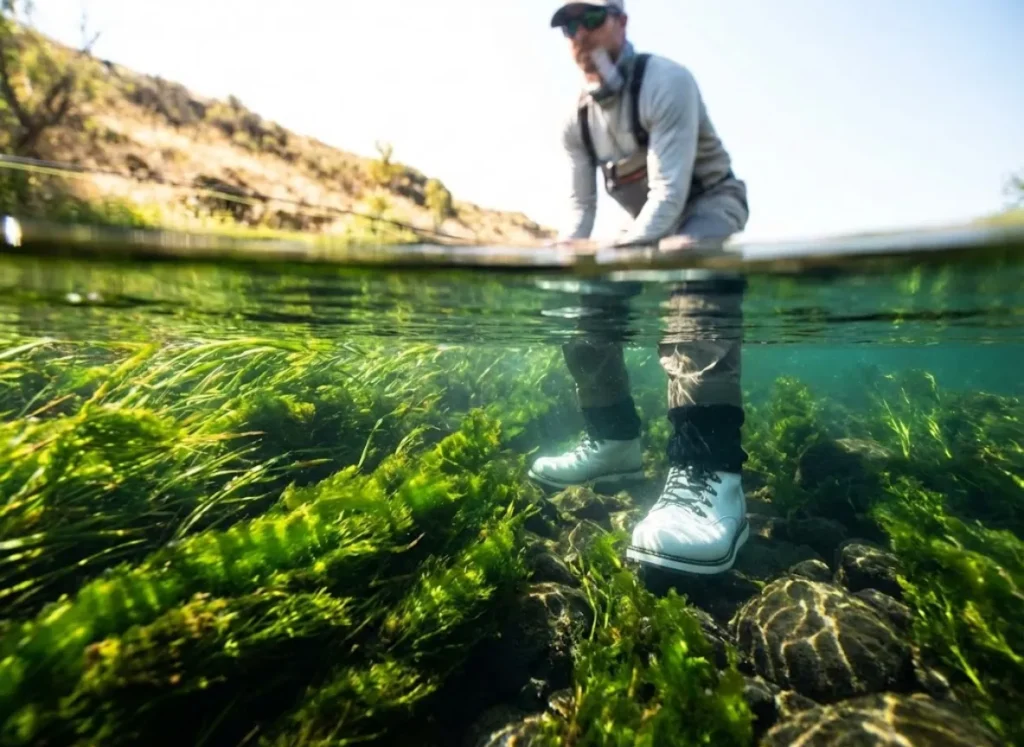
To master these waters, you have to change how you look at the river. The water you are standing in is essentially the bottom drain of a massive lake.
How does the “Hypolimnial Release” alter trout biology?
Natural rivers get hot in the summer and freeze in the winter. This stresses the fish. Tailwaters are different because they rely on what scientists in ichthyology call a hypolimnial release. That just means water is released from the bottom of the deep reservoir.
Because the water comes from the deep, it is cold. It stays roughly 40°F to 55°F all year long, regardless of the air temperature. This creates a “perpetual spring” with constant thermal regimes. The trout metabolism stays active, and they remain hungry every single day. In fact, declines in prey production during reservoir changes are rare here compared to natural rivers.
This stability is why winter trout fishing on tailwaters remains productive even when other rivers are locked in ice. Since the river rarely freezes or floods naturally, aquatic plants grow wild. These plants are home to millions of scuds (tiny freshwater shrimp) and sowbugs.
On famous Blue Ribbon waters like the Green River below Flaming Gorge Dam or the Frying Pan River, this biomass is incredible. In some places, you even find nutrient-rich mysis shrimp. The trout eat these bugs constantly and grow very fast. The trade-off is that there isn’t always a wide variety of bugs. There are just millions of the same ones. This forces you to match your fly to the hatch perfectly.
How Do You Decode the Dam’s Generation Schedule?
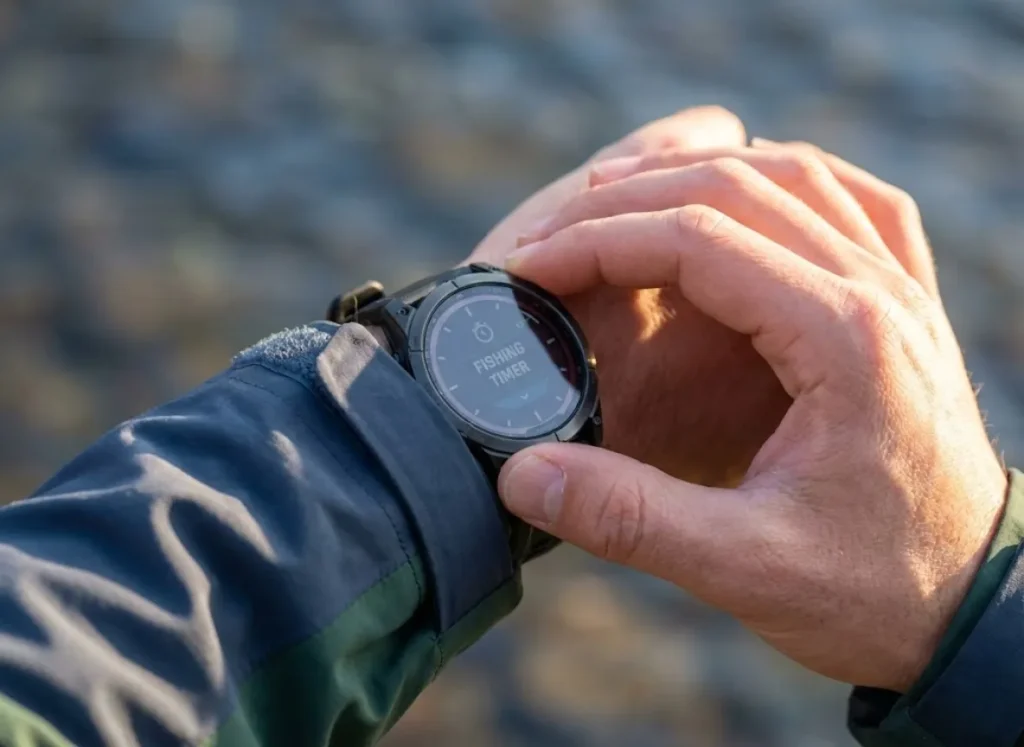
Understanding the biological hydrological layer is useless if you get washed away by the current. You must learn to read the dam release schedule.
What is the difference between “Hydropeaking” and “Load Following”?
Rivers below dams aren’t driven by gravity. They are driven by electricity demand. Hydropeaking happens when dam operations release a massive amount of water quickly to create power. This usually happens in the mornings when people wake up, or in the evenings when they get home.
Load Following is different. This is a gradual adjustment to keep the power grid stable. It creates smaller changes in water depth.
The effects of hydropeaking on riverine ecosystems are huge. The river can go from a trickle to a flood in under an hour. These changes create artificial “tides.”
When the water is low, fish stack up in the deep channels. When the water is high, they get pushed to the banks. This happens everywhere, from the Missouri River to the Caney Fork River.
Pro-Tip: The published schedule is a projection, not a promise. Real-time grid emergencies can trigger releases without warning. Always pick a landmark rock near the bank; if the water starts creeping up its side, move to higher ground immediately.
These artificial tides present the same challenges of fishing in current during high-flow events that you might face during a storm runoff, but here it happens every day.
How do you interpret a USACE hydrograph to predict the “Leading Edge”?
Most trout fishing enthusiasts make a mistake here. They forget about “lag time.” It takes time for the water released at the dam to reach where you are fishing.
You must find the specific gauge nearest your fishing spot on apps from the TVA (Tennessee Valley Authority) or USACE (Army Corps of Engineers), not just the data from the dam itself. The “Leading Edge” is the front wave of rising water. Fishing just ahead of it can be amazing, but it is also the most dangerous place to be wading.
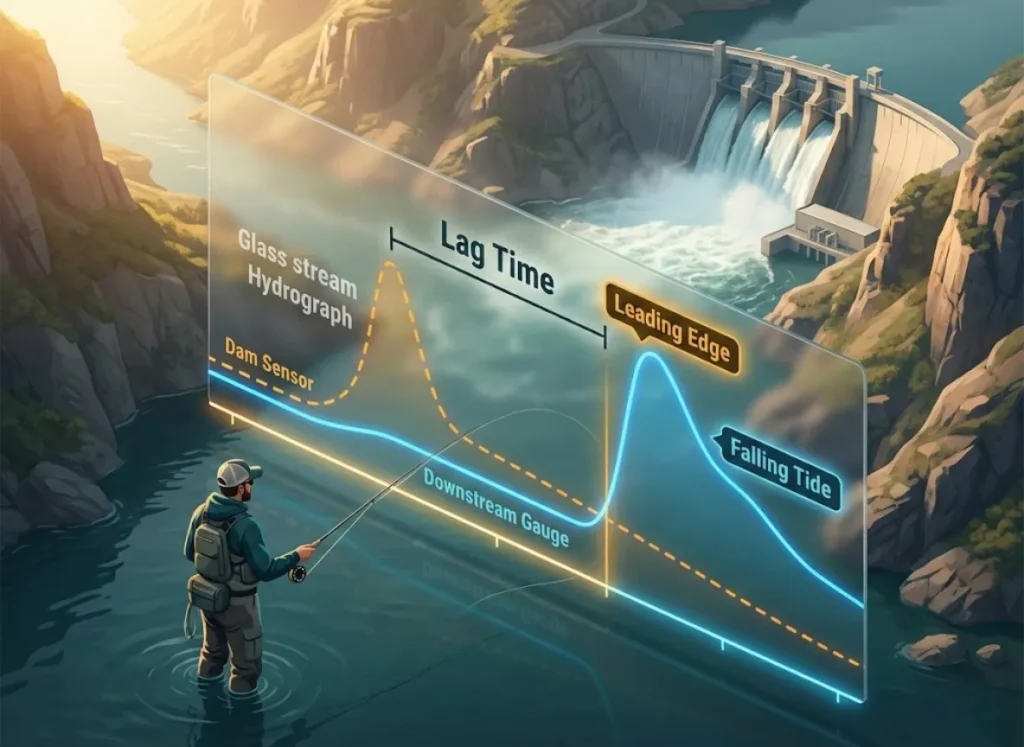
If you see a vertical spike on the graph, that means the water is rising fast and dangerous. A gentle slope means a slow ramp-up. The “Falling Tide”—when they turn the water off—is often the best time to fish. It forces scattered trout populations back into specific holes.
You need to check the projected generation schedules against the real-time gauge height. This ensures you satisfy the official hydrologic engineering requirements for reservoir releases regarding safety and awareness.
This is effectively a master class in learning how to read a river as water levels fluctuate. It helps you guess where the calm spots will form before the water even arrives.
The “Tippet-to-Turbine” Scale: How Should Tactics Shift with Flow?
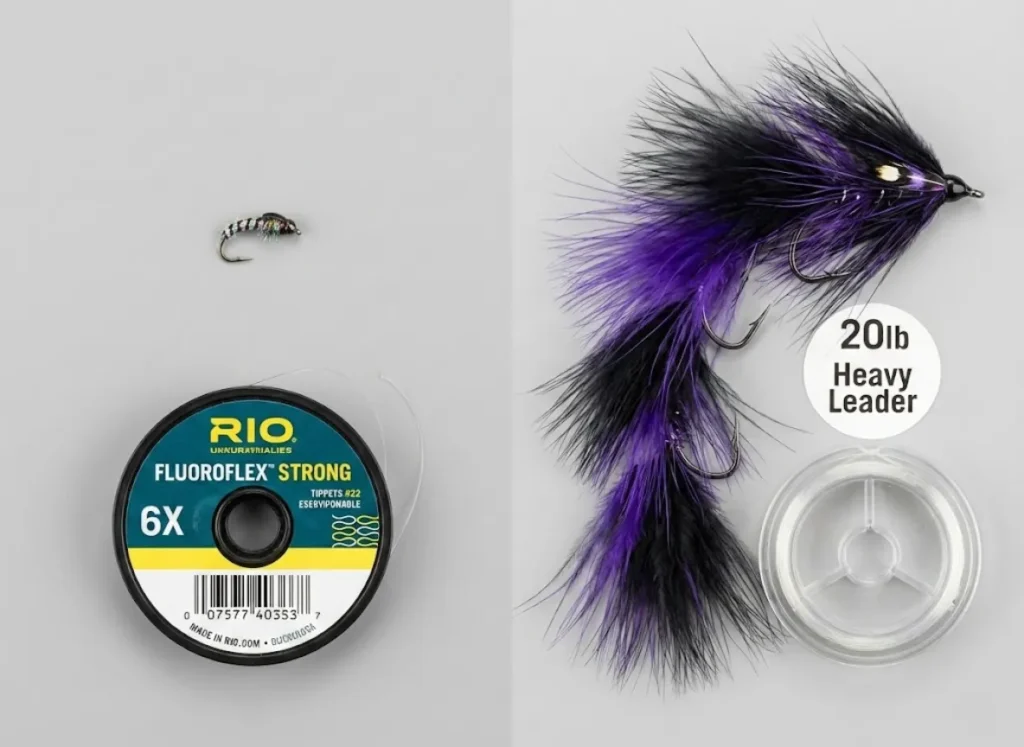
One rod and reel does not do it all here. I use a simple sliding scale to pick my gear. It matches your tackle to the amount of water flowing, measured in CFS (cubic feet per second).
What are the essential strategies for “Phase 1: The Microscope” (Low Flow)?
This phase happens when the generators are off. The water is clear, slow, and looks like glass. The water clarity is high, so the trout can see everything.
Scientific data on rainbow trout recruitment and abundance trends shows that these rivers have tons of fish. That means competition is high, and the fish are smart. You must use very thin line, like 6x tippet or even 7x tippet fluorocarbon.
Your flies should be size 20-26 midges or small BWO (Blue Winged Olives). The main enemy here is “micro-drag.” Since the water is so smooth, any unnatural movement of your fly will spook the fish.
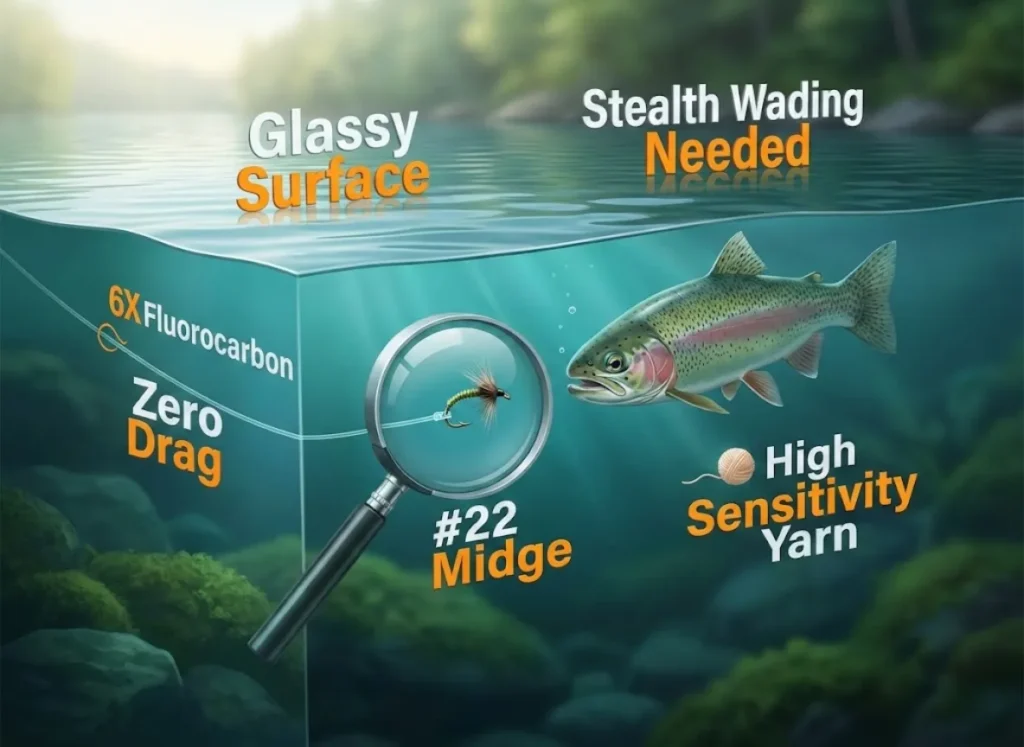
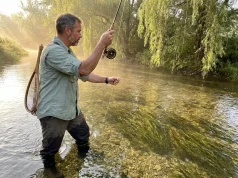
You often have to look for the fish before you cast. This makes wearing the best fishing sunglasses for your water type critical. You aren’t looking for the whole fish, but rather the white wink of a mouth opening. Move slowly and practice stealth wading. If you make waves, the fish will stop eating.
For indication, ditch the heavy plastic. Use yarn indicators or small plastic indicators to increase indicator sensitivity. You might even need tungsten putty to get the fly down without the splash of a split shot.
How do you fish “Phase 2: The Transition” and the “Leading Edge”?
This phase covers the ramp-up. The water starts to rise and move faster. It scrubs the riverbanks.
The rising water knocks bugs, dirt, and worms into the flow. It creates a “drifting buffet.” You should target the edges of the river using San Juan Worms, egg patterns, or large scuds. This works on the Watauga River, the Tuckasegee River, and almost every other tailwater.
This is a high-risk, high-reward window known as pulse feeding. The fish lose their caution to feed on the debris. Studies have even documented spikes in brown trout immigration during experimental floods. Large predators, including native cutthroat and non-native brown trout, move in to eat the displaced bugs and baitfish.
The water gets dirty due to siltation quickly. This is when selecting the best lures for trout fishing in stained water—or flies with flash—becomes vital. The tiny flies you used earlier won’t be seen in the murk.
What gear dominates “Phase 3: The Heavyweight” (High Generation)?
When the river hits full power, it becomes a deep, fast-moving belt. Put away the light rods. You need a heavy 7-weight or 8-weight rod. You also need heavy sinking lines to get down deep into the water column.
The target now is trophy brown trout. They move to the banks to ambush baitfish and crayfish that got pushed out of the main channel.
We call this “Pounding the Banks.” You cast articulated streamers or even jerkbaits right at the bank and strip them back fast. The dirty water helps you here. Use heavy line (12lb-20lb). The fish react to the vibration and shadow, so they won’t see the thick line.
The “slap” of the fly hitting the water actually attracts them. It sounds like a struggling baitfish in the high flows often associated with river forecast and flood management events.
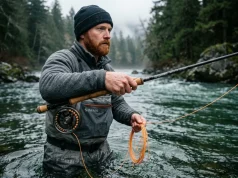
Pro-Tip: High water is deadly. Ensure you are equipping yourself with the best fly fishing waders for safety. You need a wading belt cinched tight to prevent cold-water immersion. If you fall in during high water without a belt, your waders can fill instantly. This makes getting back to the boat or shore nearly impossible.
Final Thoughts
Tailwaters are not just rivers. They are biological factories driven by bottom-release water. This creates year-round growth and massive amounts of bug life.
Success here isn’t about luck. It relies on reading the lag time on charts to know when the water is coming. This applies whether you are fishing the Deschutes River in Oregon or Prettyboy Dam in Maryland.
Remember the scale: low water requires finesse and tiny midges. High water demands heavy line and aggression. Safety is your top priority. Understand how fast the water rises so you don’t get stranded by the artificial tide. Master the flow before you cast.
FAQ – Frequently Asked Questions about Tailwater Trout Fishing
Why do trout grow so fast in tailwaters compared to other rivers?
Tailwater fisheries provide a stable water temperature (40°F–55°F) all year. This prevents the fish from slowing down in winter or stressing out in summer heat. They can eat and grow 365 days a year.
What is the Leading Edge in tailwater fishing?
The Leading Edge is the first wave of rising water released from the dam. As it moves downstream, it knocks bugs and dirt loose. This creates a feeding frenzy, but it also means the water is getting dangerous very fast.
Do I really need 6X or 7X tippet for tailwater trout?
Yes. During low water, the river is clear and smooth. Thick line is easy for the fish to see. If you use heavy line, the current will also drag your fly unnaturally, and the fish will refuse it.
How do I know when the dam will release water?
You must look at the generation schedules provided by the agency that runs the dam (like the TVA or Army Corps of Engineers). However, treat these as guesses. Real-time power needs can change the flow without warning.
Risk Disclaimer: Fishing, boating, and all related outdoor activities involve inherent risks that
can lead to injury. The information provided on Master Fishing Mag is for educational and informational purposes
only. While we strive for accuracy, the information, techniques, and advice on gear and safety are not a substitute
for your own best judgment, local knowledge, and adherence to official regulations. Fishing regulations, including
seasons, size limits, and species restrictions, change frequently and vary by location. Always consult the latest
official regulations from your local fish and wildlife agency before heading out. Proper handling of hooks, knives,
and other sharp equipment is essential for safety. Furthermore, be aware of local fish consumption advisories. By
using this website, you agree that you are solely responsible for your own safety and for complying with all
applicable laws. Any reliance you place on our content is strictly at your own risk. Master Fishing Mag and its
authors will not be held liable for any injury, damage, or loss sustained in connection with the use of the
information herein.
Affiliate Disclosure: We are a participant in the Amazon Services LLC Associates Program, an
affiliate advertising program designed to provide a means for us to earn advertising fees by advertising and linking
to Amazon.com. As an Amazon Associate, we earn from qualifying purchases. We also participate in other affiliate
programs and may receive a commission on products purchased through our links, at no extra cost to you. Additional
terms are found in the terms of service.