

In this article
The water surface tells you nothing right now. It looks cold, gray, and flat. But below that chop, the fish are moving. This isn’t happening by random chance. It is driven by nature’s rigid set of rules—a techno-biological roadmap that dictates survival.
The pre-spawn migration is one of the best times of the year for freshwater bass fishing. It can feel chaotic because the air temperature goes up and down, but the bass are actually on a steady march. This vernal migration sees them moving from their winter homes to shallow ground.
To catch them, you have to stop casting blindly at the bank. You need to visualize the “underwater highway.” This guide helps you navigate that road. We will look at why 46°F is the magic number for early-season bass, how to find the ditches they travel through, why they suddenly crave crawfish, and how to handle the inevitable cold fronts.
What Bio-Energetic Drivers Trigger the Migration?
Many bass anglers wait for the water to hit a magic number, usually around 48-55°F, before they start fishing hard. Science tells us we should start sooner. This section explains the physical metabolic triggers and nutritional needs that force active bass to get moving.
How Does Water Temperature Dictate Movement Velocity?
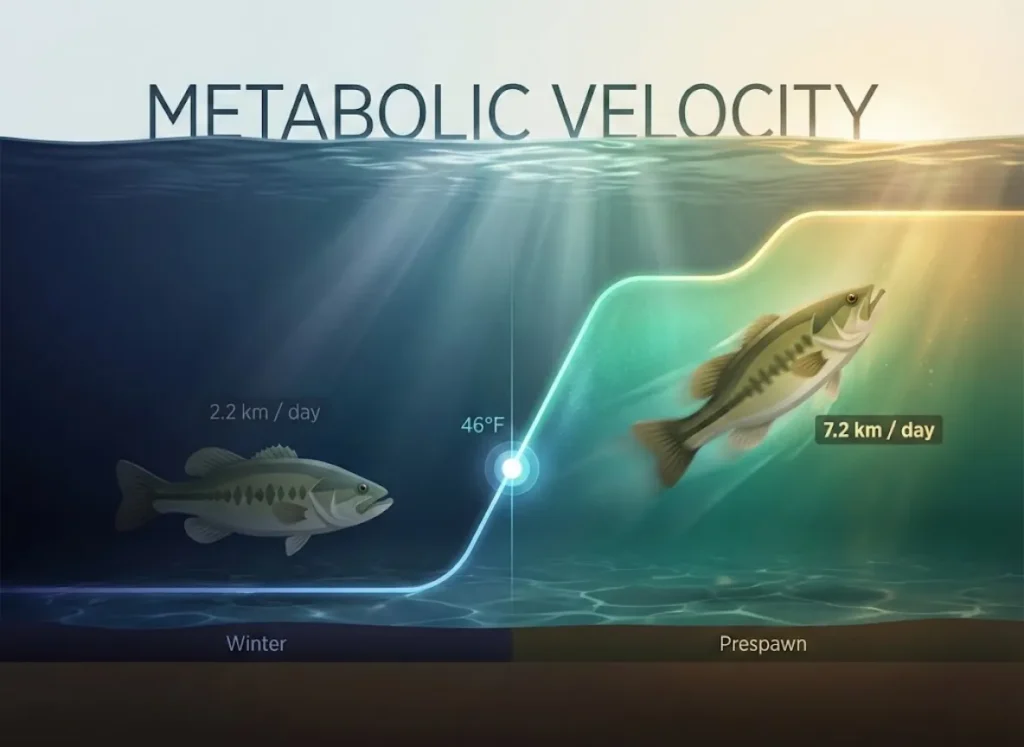
There is a common belief that late winter bass are lazy until the water gets warm. That isn’t quite true. Research indicates a massive spike in activity once water hits just 46°F (7.7°C).
Think of this as an alarm clock. Before this temperature, fish are resting. But once the water hits that mark, they wake up. We see travel distances jump from about 2.2 km per day in winter to nearly 7.2 km per day. This marks the shift from winter to the early prespawn stage.
This data comes from monitoring movement rates via whole-lake telemetry, which proves that movement speed triples at this specific temperature.
When they start moving this fast, they burn a lot of energy. This creates a problem: they get hungry. They have to switch from resting to hunting to support this seasonal bass behavior.
Remember, the water doesn’t warm up in a straight line. Transitional bass will push shallow on sunny days and pause on cold ones. But once they wake up, they rarely go all the way back to the deep basin. This movement is their way of staying comfortable, governed by the Q10 temperature coefficient and metabolic rates, while they look for warm water to develop their eggs.
Why Do Pre-Spawn Bass Prioritize Crawfish?
Once the fish are moving, they need the right fuel. Female bass need more than just food; they need minerals. Specifically, they require calcium for egg development, along with Magnesium and Iron.
This need changes their diet. They move away from eating baitfish, which are fatty, and start hunting crawfish, which are mineral-rich forage. Because of this, finding bass is really about finding crawfish homes—hard bottom, chunk rock, and pea gravel.
Pro-Tip: Pay close attention to the bottom material. If you are fishing a bank that changes from soft clay to chunk rock, fish the rock. The bass are there because the crayfish are there.
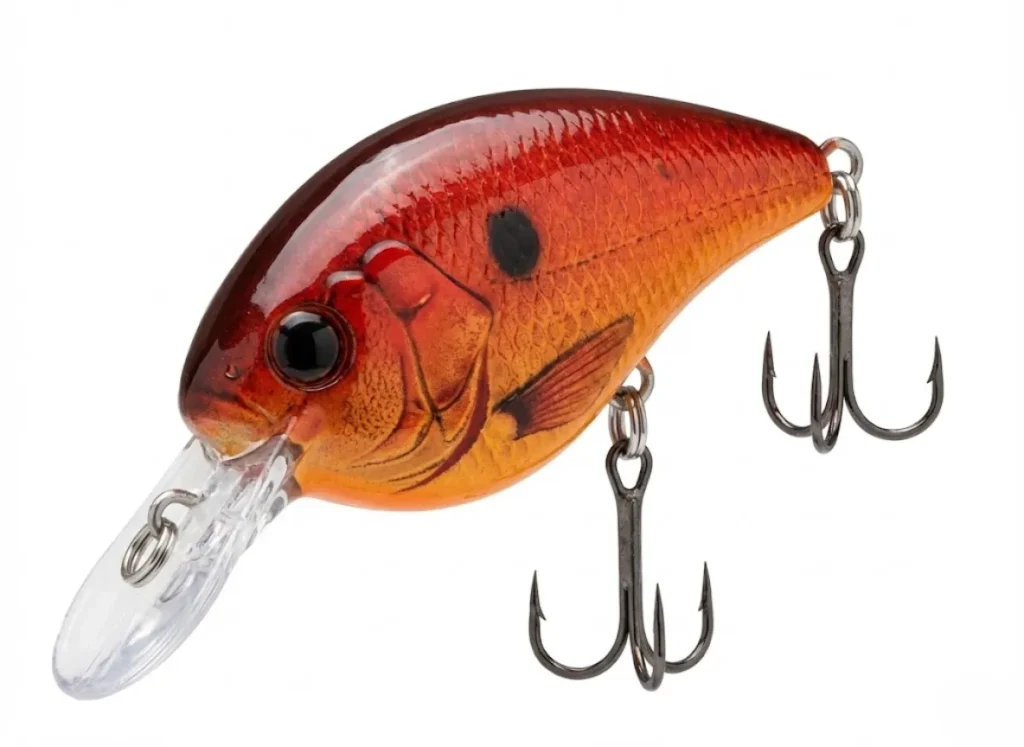
Fecundity studies on largemouth bass nutrition confirm that bass fed a diet of crustaceans produce healthier eggs than those fed only fish. This also explains the situational versatility of red squarebill crankbaits in early spring. Red and orange crankbaits work well not just because they are bright, but because they look like molting crawfish.
Where is the “Migration Highway” Located?
Now that we know why they move, we need to know where they go. We need to map the migration highways—ditches, creek channels, and points—that take them from deep water to the bank.
What Role Do Drains and Ditches Play?
Think of drains as the on-ramps to the spawning flats. These are subtle V-shaped or U-shaped dips in the lake floor. They are often old creek beds pointing uphill from the main lake towards shallow spawning flats.
Bass use these dips as “covered walkways.” They allow the fish to swim toward shallow water while staying lower than the bottom around them. On a map, look for contour lines that make a “V” shape pointing toward the shore.
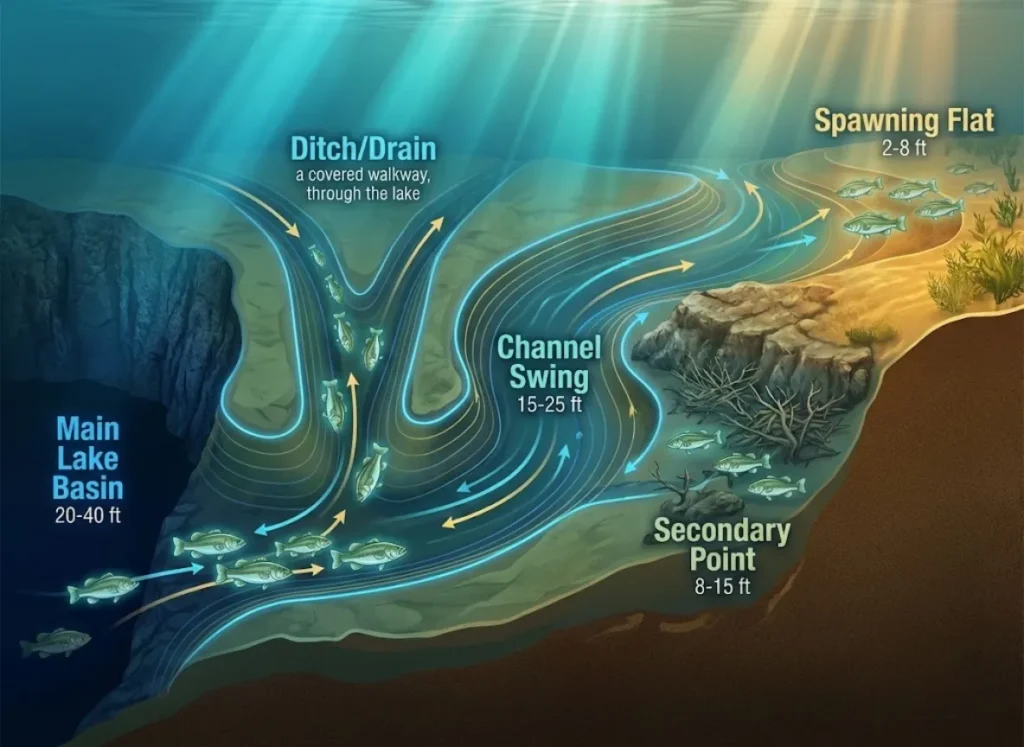
Drains also help control temperature. On warm days, they bring warm surface water down. On cold days, they offer quick access to deeper water. Delineating watershed contours and flow paths helps us see how water moves through these shapes. Where the water flows, the fish follow.
The best spot is usually where the drain meets the flat. This is the “end of the road” where schools of fish group up before spreading out to secondary points or brush piles. Identifying these spots is a proven, data-backed method for finding spots that hold potential bass.
Why Are Channel Swings Critical for Staging?
Ditches are the road, but bass also need a place to hide from spring storms. This is where “Channel Swings” come in.
A Channel Swing happens where a creek channel bends very close to a steep bank or bluff walls. This creates a quick drop in depth, often referred to as a vertical break. It works like an elevator. Bass can change depth to get comfortable without swimming far.
Reading the species profile regarding habitat verticality confirms that bass like these areas because they offer stability. During a cold front, a bass on a flat has to swim hundreds of yards to find safety. A bass on a channel swing just has to sink 10 feet.
These are the main staging areas for large females. Understanding these largemouth bass seasonal movement patterns keeps you from wasting time on empty water during a cold snap.
How Does Technology Confirm the Route?

Modern on-water electronics let us see the highway, but we have to understand what we are looking at. We also need to know the difference between “Resident” and “Migratory” fish.
How Does Side Imaging Reveal Bottom Composition?
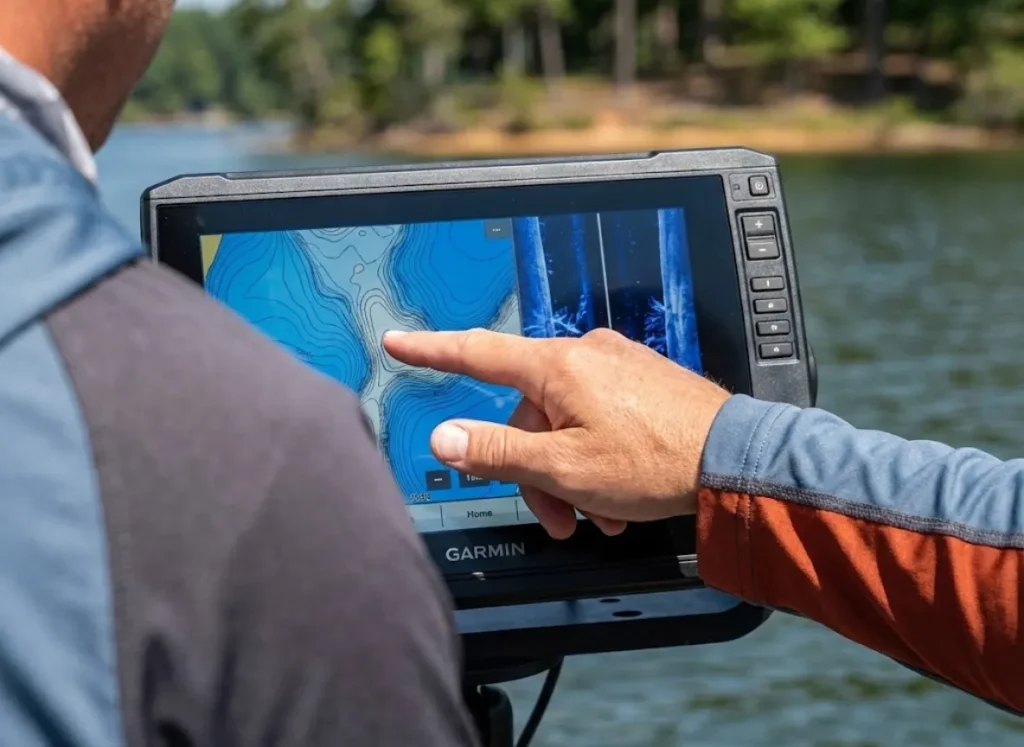
Your goal is to find the line where the bottom composition changes. Hard bottoms, like rock or gravel, reflect sound well. They show up as bright white or amber on your screen. Soft bottoms, like mud, absorb sound and look dark.
The best clue is the acoustic shadow. This is the dark patch behind a hard object, like a rock. It proves the object is solid and standing up off the bottom. You want to find the transition zones where the rock meets the mud. Tools like Humminbird Mega 360 or Lowrance side-imaging are essential for this.
However, not all bass follow the highway. Telemetry tracking of resident bass populations shows that up to 41% of bass are “Resident bass”. These fish stay in the main lake or offshore all year.
Side-imaging helps you tell the difference. You can decide to hunt the “Migratory” fish in the creeks or the resident fish on main lake points and vertical breaks. You need to be good at interpreting traditional 2D sonar and side imaging to pick the right target.
What Happens When the Weather Breaks?
Technology can show you the fish, but it can’t fix the weather. We need to understand what happens to pre-spawn bass during a cold front, often called “Lockjaw,” and how long it takes them to recover.
How Does Cold Shock Impact Bass Physiology?
When a cold front hits, the water temperature drops. This stresses the fish. Their bodies release cortisol and glucose, which is a “fight or flight” reaction. Survival becomes more important than eating.
This stress can actually change their blood chemistry, making it physically hard for them to chase fast-moving baits. The “lockjaw” isn’t a mood; it’s a physical shutdown. They stop feeding to save energy.
Studies on metabolic rate stabilization following temperature shock measure this impact. The first 12 hours are the worst. Fish will bury themselves in brush piles, submerged vegetation, or just float in deep water near those channel swings.
During this time, you have to remember the physiological impacts of water temperature. They won’t eat because they are hungry. You have to trigger a reaction bite or use a small-profile bait that sits perfectly still, like a suspending jerkbait.
How Long Does Recovery Take?
Recovery takes time. While their breathing might go back to normal in an hour, it usually takes 24 to 48 hours for their hormones to settle and for them to want to eat again.
This is the 48-hour rule. The high barometric pressure that comes after a storm usually clears up right when this recovery window opens. This often means bright, sunny skies (“Bluebird” days) which push fish into the shade of docks or grass.
Pro-Tip: If a cold front passed through on Friday night, Sunday afternoon is often when the bite turns back on. Watch the clock to predict your success.
High levels of cortisol as a physiological stress indicator confirm that this stress is real. If the water warms up a little, they recover faster. If it gets cold again, the clock resets.
You can use this to your advantage. Try predicting a pre-frontal feeding frenzy right before the storm hits, and then use slow crawling techniques with finesse baits during the recovery time.
Bass Fishing Lure Selector
Expert recommendations based on water temperature, clarity, and bass activity levels.
Recommended Lure
Megabass Vision 110
Technical Rationale
Neutral buoyancy mimics dying shad; visual trigger in clear water.
Recommended Lure
Rapala Shad Rap
Technical Rationale
Tight, subtle vibration; balsa buoyancy avoids snags in slower retrieve.
Recommended Lure
JackHammer
Technical Rationale
High vibration for lateral line detection; deflects off cover.
Recommended Lure
Vision 110+1
Technical Rationale
Reaches deeper staging fish (8-10ft); suspension triggers bites.
Recommended Lure
KVD 1.5
Technical Rationale
Aggressive wide wobble; deflection triggers reaction strikes.
Recommended Lure
Z-Man TRD / Finesse Jig
Technical Rationale
Small profile; bottom contact; minimal movement matches metabolic low.
Conclusion
To succeed in the pre-spawn, you have to fish the conditions, not your memories. We know that the 46°F trigger starts the movement earlier than most people think. We know the need for minerals forces them to hard-bottom areas to hunt crawfish. We understand that telemetry proves some bass never leave the main lake, and that the 48-hour reset tells us when they will bite again after a storm.
Use the 48-hour rule on your next pre spawn trip. Trust the map more than your gut. The bass migration code is solvable; you just have to drive the highway.
FAQ – Frequently Asked Questions
What water temperature triggers the pre-spawn migration?
Research shows that while many bass anglers wait for 50°F, heavy movement begins as early as 46°F (7.7°C). At this temp, daily travel distance triples. This is your signal to move from winter spots to the ditches and drains.
Why do bass suspend after a cold front?
Bass suspend to save energy and handle Cold Shock Stress. The cold causes a spike in stress hormones. Suspending allows them to stay stable without burning calories while they recover.
How do I find hard bottom for pre-spawn bass?
Use side-imaging sonar. Look for bright white or amber returns on the screen. Most importantly, look for the dark shadow behind objects. Largemouth bass go to these rocky areas to eat crawfish for the calcium they need to grow eggs.
Do all bass go to the backs of creeks to spawn?
No. Studies show that a large number (up to 40% in some lakes) are Resident fish. They stay in the main lake points or offshore areas to spawn. You can catch these fish on deep ridges when the shallow spots are crowded.
Risk Disclaimer: Fishing, boating, and all related outdoor activities involve inherent risks that
can lead to injury. The information provided on Master Fishing Mag is for educational and informational purposes
only. While we strive for accuracy, the information, techniques, and advice on gear and safety are not a substitute
for your own best judgment, local knowledge, and adherence to official regulations. Fishing regulations, including
seasons, size limits, and species restrictions, change frequently and vary by location. Always consult the latest
official regulations from your local fish and wildlife agency before heading out. Proper handling of hooks, knives,
and other sharp equipment is essential for safety. Furthermore, be aware of local fish consumption advisories. By
using this website, you agree that you are solely responsible for your own safety and for complying with all
applicable laws. Any reliance you place on our content is strictly at your own risk. Master Fishing Mag and its
authors will not be held liable for any injury, damage, or loss sustained in connection with the use of the
information herein.
Affiliate Disclosure: We are a participant in the Amazon Services LLC Associates Program, an
affiliate advertising program designed to provide a means for us to earn advertising fees by advertising and linking
to Amazon.com. As an Amazon Associate, we earn from qualifying purchases. We also participate in other affiliate
programs and may receive a commission on products purchased through our links, at no extra cost to you. Additional
terms are found in the terms of service.