

In this article
The water clarity in your local reservoir shifts overnight. Heavy spring rains have turned the shallows into stained water, rendering your expensive, translucent ghost minnow patterns completely invisible. You check your tackle box, but the store-bought “firetiger” crankbaits are too loud and look unnatural. This is where you stop buying and start building.
Custom painting fishing lures isn’t just about making art; it’s about catching more fish. It stops you from relying on what stores decide to sell and puts the control in your hands. When you pick up an airbrush, you aren’t just coloring plastic. You are creating a specific tool to solve a specific problem on the water, whether you are targeting largemouth bass or hunting big trout.
In this guide, we will walk through selecting the right airbrushes, understanding how fish see color, and applying a durable clear coat. By the end, your tackle box will be ready for whatever the water throws at you.
Why Master the Art of Custom Lure Painting?
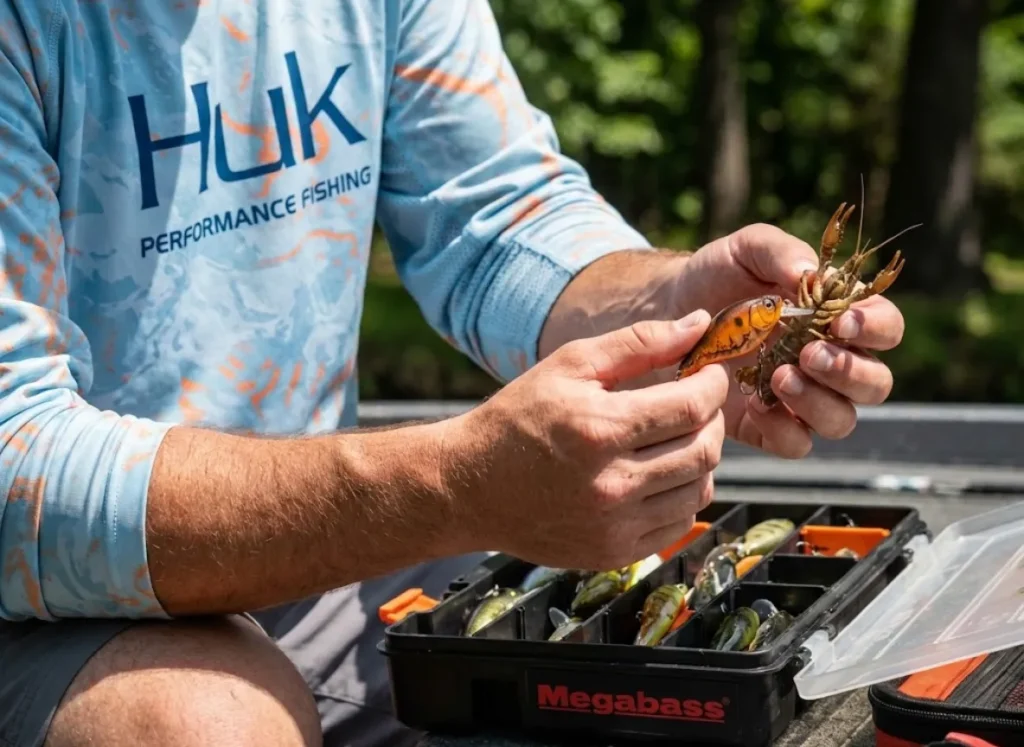
Painting fishing lures gives you an edge because you can copy the exact colors of the baitfish in your lake. It also saves you money by letting you fix up old, beaten-up lures.
How does custom painting provide a tactical advantage over store-bought tackle?
Commercial lures are designed to catch fishermen first and fish second. They are painted to look good on a shelf at Walmart or Hobby Lobby, which means they use average colors that work “okay” everywhere. Fishing tackle customization allows you to catch fish right where you stand. You can match the exact violet shine of an emerald shiner in your home lake or the specific clay-orange of a crawfish in the spring.
The U.S. Fish & Wildlife Service highlights the importance of matching artificial lures to local aquatic biodiversity, and painting your own baits is the best way to do exactly that.
On lakes where everyone throws the same lures, bass fishing gets tough. Fish get smart. They learn to avoid common colors like “Sexy Shad.” A custom “Ghost” pattern creates something new that they haven’t seen before, which triggers bites from pressured fish.
Plus, this saves you money. Instead of throwing away expensive glidebaits or jerkbaits when the paint chips, you can strip them down and repaint them. You can also buy unpainted blanks—often knock-offs of famous Norman Lures, Bomber Lures, or Smithwick designs—for a fraction of the price. This makes your fishing gear last forever and keeps plastic out of the trash.
Pro-Tip: Before creating custom patterns, it is vital to understand the baseline effectiveness of commercial best lures for largemouth bass to identify the specific color gaps you need to fill in your arsenal.
What Equipment Do You Need to Build a Professional Airbrush Studio?
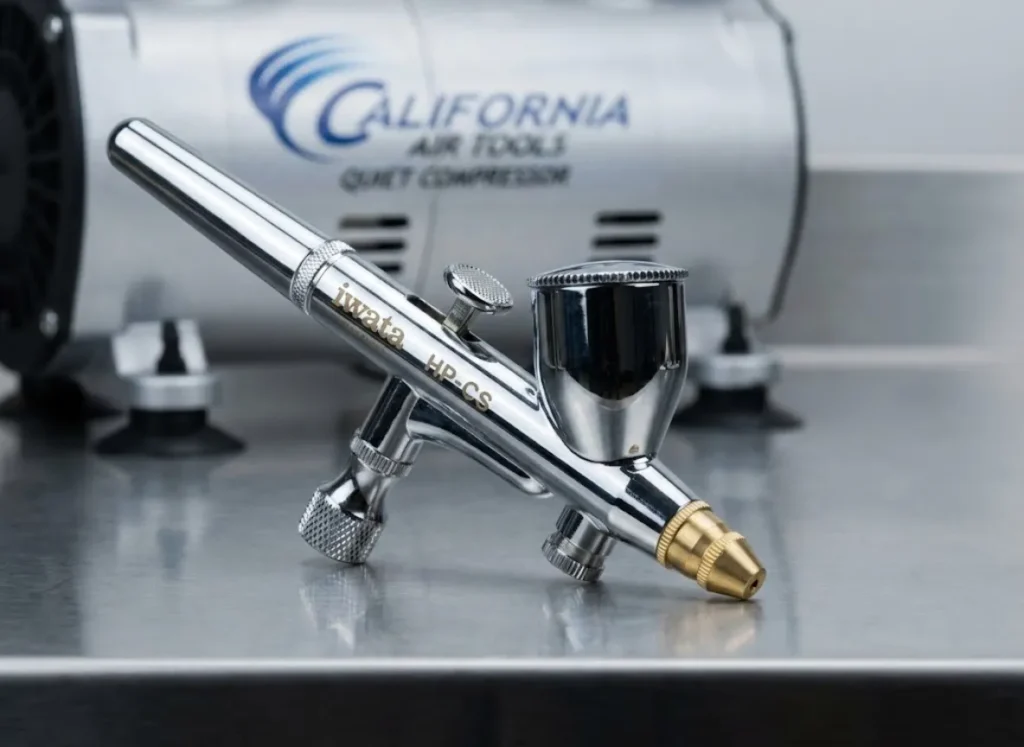
You don’t need a factory to start DIY lure crafting, but you do need the right air supply. This prevents the paint from spitting and ensures a smooth finish on your swim baits.
Which airbrush and compressor setup offers the best performance for lure crafting?
You need a double-action airbrush paired with a single-piston compressor that has a 3-liter tank.
Avoid the cheap single-action airbrush kits or tankless compressors often found in starter packs. They pulse with every pump of the piston, causing an uneven spray that ruins fine details on scale patterns. A compressor with a tank holds a reserve of air, giving you a smooth, steady stream at a consistent PSI (compressor pressure).
For the brush itself, look for a model like the Iwata Eclipse HP-CS or Harder & Steenbeck Ultra. These double-action tools let you press down for air and pull back for paint. This precision control is what allows you to fade colors perfectly.
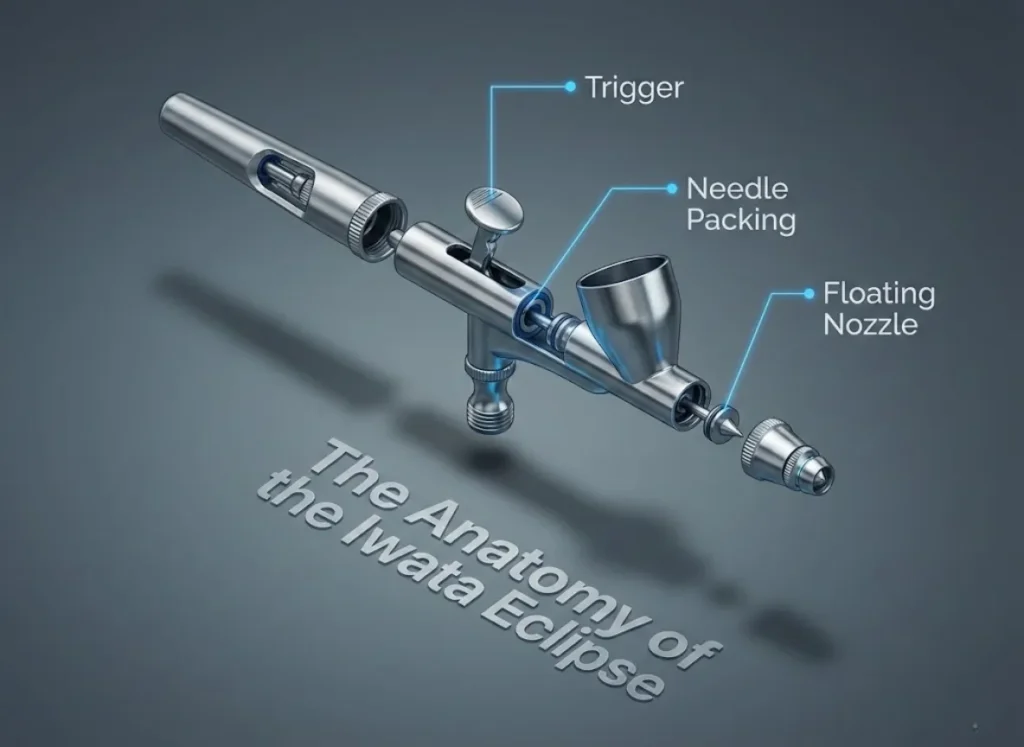
Just as you would carefully pick essential fishing tools for your fishing boat, your studio needs the right gear. A 0.35mm to 0.5mm nozzle and matching airbrush needles are the perfect size for lures. It is big enough to spray thick pearl paints without clogging, but small enough to paint details like gill plates on a bluegill pattern.
Finally, stay safe. OSHA standards regarding ventilation are there for a reason. Atomized paint and cleaners like acetone are bad for your lungs. You need a spray booth with a filter and a proper respirator mask.
How Do You Prepare the Canvas for Maximum Adhesion?
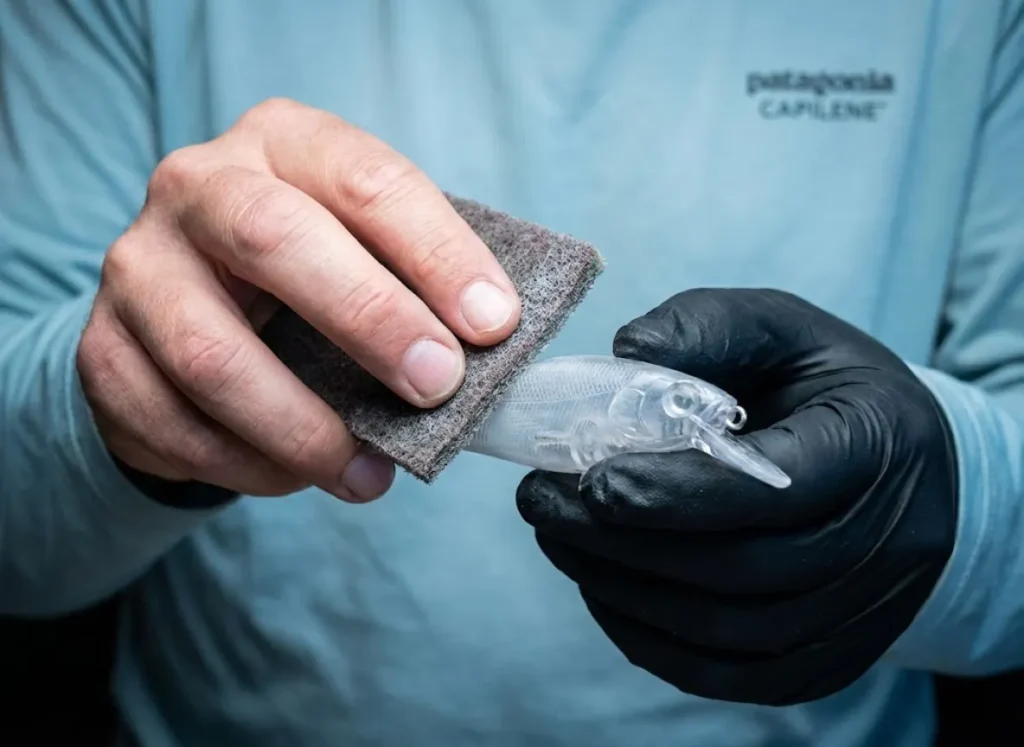
If you don’t prep the lure blanks correctly, the paint will peel off the first time it hits the water. Proper prep makes the paint stick for good.
What are the essential steps for prepping plastic blanks and refurbishing old lures?
First, remove all split rings and hooks. The essential step is scratching the surface. Plastic is smooth, which makes it hard for paint to hold on. You must scuff the blank with 400 grit sandpaper or 600 grit sandpaper. This roughness gives the base primer something to grab onto.
After sanding, wipe the lure down with isopropyl alcohol. This removes oils from your fingers or the factory that can cause “fish-eyes,” which are spots where the paint refuses to stick.
The process of stripping and repainting old lures is a huge part of sustainable fishing gear maintenance. It keeps waste out of our waterways. If you are fixing an old Heddon spook or a beaten-up crankbait, use a soda blaster or stripping discs to get the old paint off down to the plastic lure blanks.
Once it’s clean, apply a sealer like AutoBorne Sealer or an opaque white primer. The National Institute of Standards and Technology (NIST) discusses the principles of adhesion, confirming that these sealers act like a bridge. They bond the hard plastic to the flexible paint so it doesn’t chip.
Pro-Tip: Always mask the lure’s diving lip (bill) with precision masking tape. Paint on the bill changes how water flows over it and can ruin how deep the lure dives.
How Do You Engineer Color Schemes Based on Predator Biology?
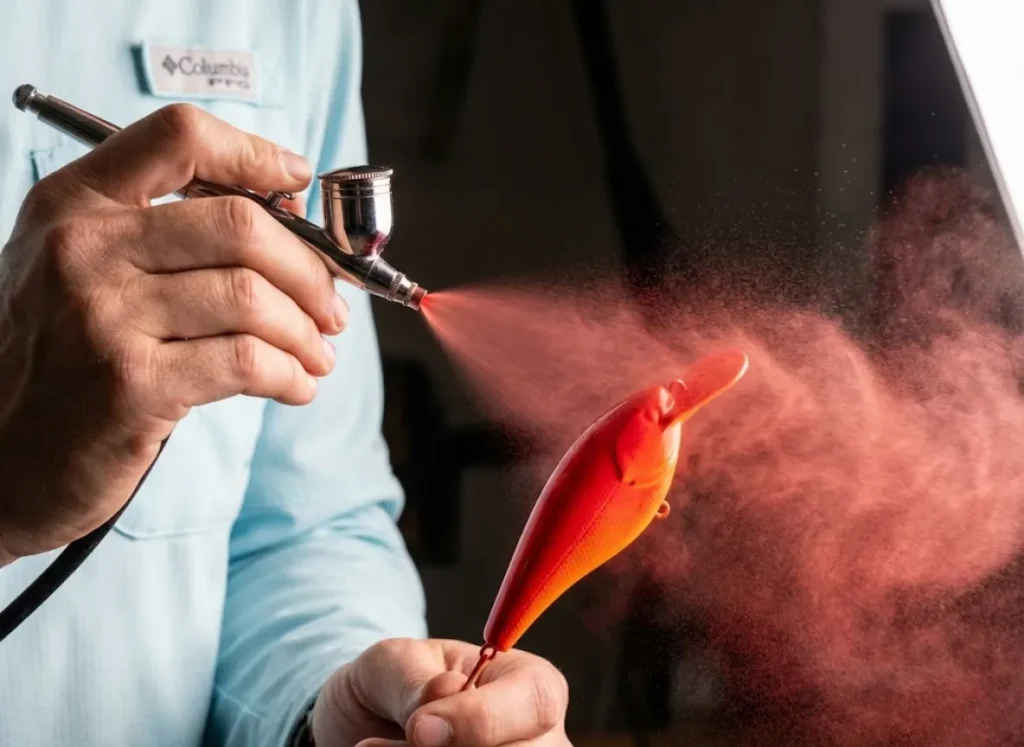
Good airbrush artistry isn’t about guessing; it’s about biological matching. You look at what the fish eat and copy it using color theory.
How do seasonal shifts and water clarity dictate color choices?
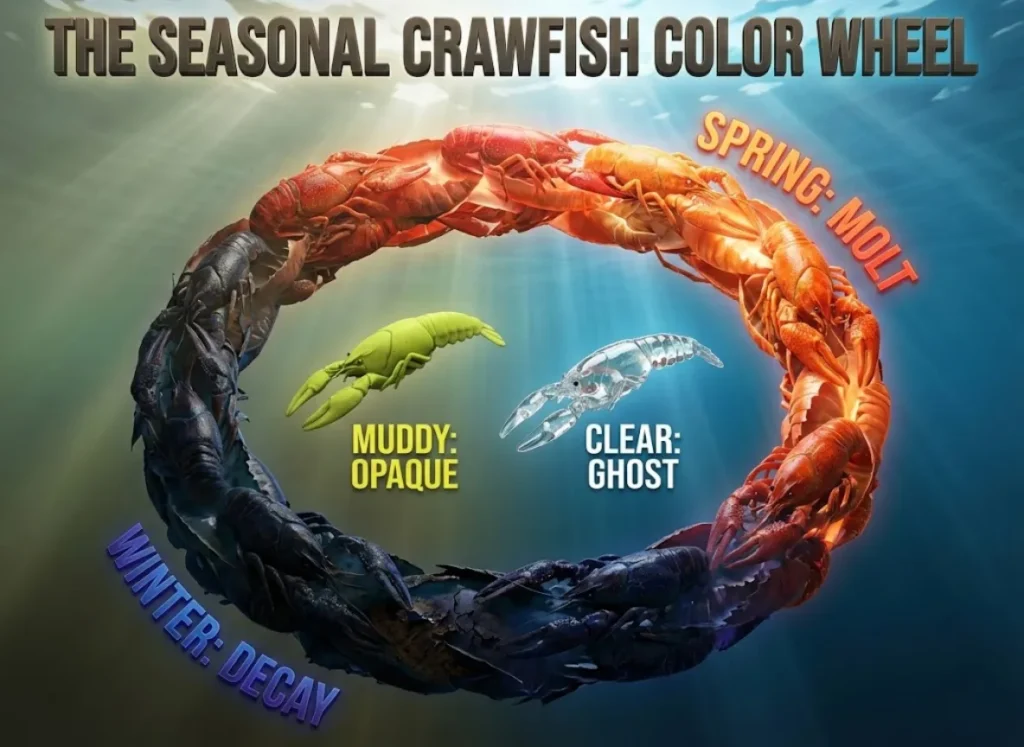
Your paint colors should match the time of year. In spring, crawfish shed their shells (molt), turning bright orange or red. Largemouth bass love this because the crawfish are soft and easy to eat. Painting lures with “Delta Red” or “Rayburn Red” during spring warming trends takes advantage of this forage imitation.
Later in the year, as vegetation dies in the fall, crawfish turn dark blue or black. This is why “Black and Blue” jigs work so well for winter bass fishing.
Water clarity also matters. The Arkansas Department of Energy and Environment monitors water quality metrics like turbidity (muddiness), which changes how light travels underwater.
In stained or muddy water, use solid opaque paints like White and Chartreuse to make the lure stand out. In clear water, keep the lure body see-through (“Ghost” patterns) using transparent paints. This lets light pass through it naturally. To really understand this, it helps to learn the science of fish vision.
How Do You Protect Your Work with a Tournament-Grade Finish?
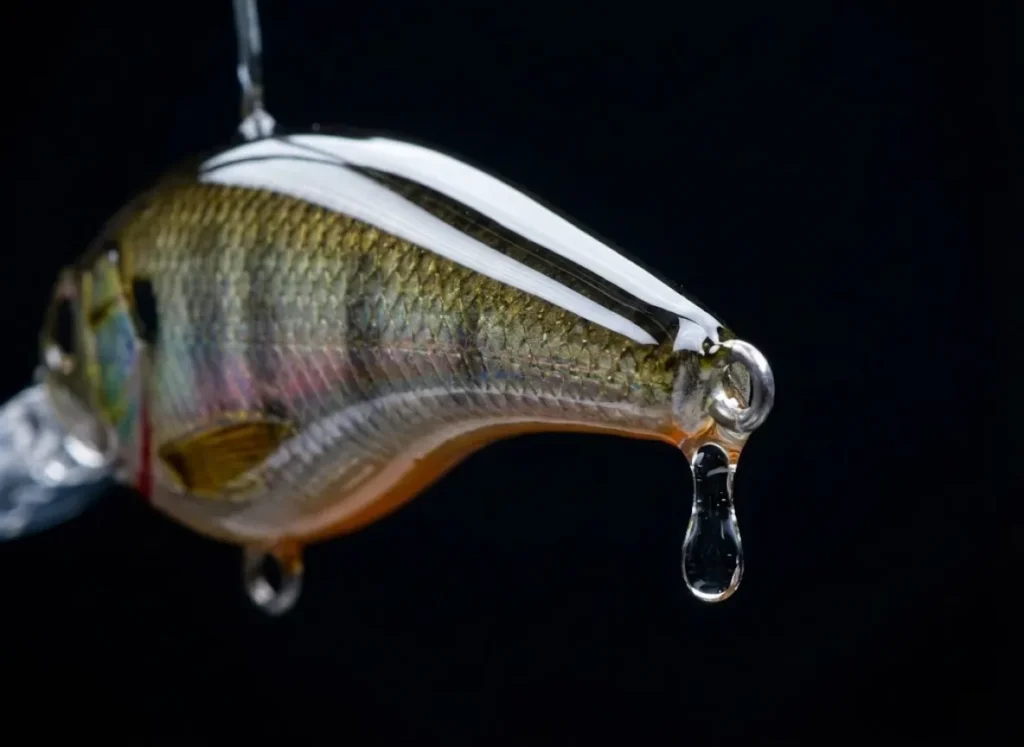
A custom paint job is useless if a fish’s teeth scrape it off. You need a clear coat that acts like armor for your custom baits.
Which clear coat system provides the best balance of durability and cure time?
Moisture Cured Urethane (MCU), like KBS Diamond Finish, is the toughest option. It dries harder than a rock. You apply it by dipping the lure and hanging it to dry. This lets the clear coat settle perfectly smooth over the fish scale pattern created by your mesh stencils (like those from Anarchy Stencils).
However, MCUs are strong chemicals. PubChem provides safety data for polymeric isocyanates used in these coatings. This means you must wear a good mask and have good airflow in your room.
| Comparison of Coating Types | |||
|---|---|---|---|
| Coating Type | Cure Time | Hardness & Durability | Required Equipment |
| Moisture Cured Urethane (MCU) | 24 Hours (Dependent on humidity) | Superior / Ceramic-like Creates an exceptionally hard, cross-linked polymer network armor. |
Dip Storage System Requires airtight jars and Argon gas (Bloxygen) for storage to prevent curing in the container. |
| UV Resin | 2–4 Minutes (Immediate handling) | Moderate / Brittle Generally more brittle than MCU; offers rapid polymerization but less structural armor. |
UV Lamp Requires a strong light source (36W minimum recommended) to cure effectively. |
| Epoxy (Two-Part) | 12–24 Hours (30–60 min set time) | High / Thick Provides a deep, durable finish that magnifies paint, though heavy application can dampen lure action. |
Lure Turner (Rotisserie) Mandatory to rotate the lure continuously while curing to prevent sagging/dripping. |
If you want to fish sooner, UV Resin cures in minutes under a UV lamp (UV curing). It is fast but not quite as hard as MCU. Traditional epoxies give a nice thick finish but require a “lure turner” for epoxy curing to spin the lure for hours so the finish doesn’t drip.
Just remember, adding a thick clear coat adds weight. You might need to adjust the lure afterwards, so master tuning fishing lures to ensure they still swim straight.
Conclusion
Custom painting turns you from a shopper into a gear creator. It allows you to match the hatch better than any factory lure ever could. By getting the right airbrush setup and looking at biology for your color choices, you gain a real advantage on the water.
Don’t be intimidated. Start small. Fix up one old crankbait this weekend using these tips. The first time you catch a fish on a lure you painted yourself, you’ll never look at fishing success the same way again.
FAQ – Frequently Asked Questions about Custom Lure Painting
What kind of paint do you use on fishing lures?
Water-based acrylics made for hard surfaces are the standard. Brands like Createx Wicked Colors or Auto Air Colors are great because they are durable and non-toxic while liquid. You just need to heat them up using heat-setting techniques to make them permanent.
Do I need to sand the lure before painting?
Yes. You must scuff the surface with 400 grit sandpaper or a scuff pad. This creates a scratchy surface that helps the paint stick. If you skip this, the paint will likely peel off when it hits the water.
How do I fix tip dry on my airbrush?
Tip dry happens when paint dries on the very tip of the needle. To stop it, thin your paint with a reducer (like 4011 Reducer) or paint thinner to check the paint viscosity. Keep a damp brush nearby to wipe the needle tip every so often while you spray.
Can I use a regular hair dryer to heat set the paint?
Yes, a regular hair dryer works well to dry the paint between coats. A heat gun is better for the final setting step because it gets hotter, but be careful not to melt your plastic lure blanks.
Risk Disclaimer: Fishing, boating, and all related outdoor activities involve inherent risks that
can lead to injury. The information provided on Master Fishing Mag is for educational and informational purposes
only. While we strive for accuracy, the information, techniques, and advice on gear and safety are not a substitute
for your own best judgment, local knowledge, and adherence to official regulations. Fishing regulations, including
seasons, size limits, and species restrictions, change frequently and vary by location. Always consult the latest
official regulations from your local fish and wildlife agency before heading out. Proper handling of hooks, knives,
and other sharp equipment is essential for safety. Furthermore, be aware of local fish consumption advisories. By
using this website, you agree that you are solely responsible for your own safety and for complying with all
applicable laws. Any reliance you place on our content is strictly at your own risk. Master Fishing Mag and its
authors will not be held liable for any injury, damage, or loss sustained in connection with the use of the
information herein.
Affiliate Disclosure: We are a participant in the Amazon Services LLC Associates Program, an
affiliate advertising program designed to provide a means for us to earn advertising fees by advertising and linking
to Amazon.com. As an Amazon Associate, we earn from qualifying purchases. We also participate in other affiliate
programs and may receive a commission on products purchased through our links, at no extra cost to you. Additional
terms are found in the terms of service.