
In this article
The surface erupted. What looked like boiling chaos—fins slashing, bunker scattering like shrapnel—was actually a calculated pincer movement. From the beach, you’d swear it was random violence. But watching drone footage later, you could trace each striper spiraling, flanking, compressing the bait ball against the only barrier they couldn’t escape: the sky.
After two decades chasing these fish from the Chesapeake to Montauk, I’ve learned that moments like these aren’t about luck. They’re about understanding what makes Morone saxatilis tick—the temperature triggers, the metabolic math, the sensory systems firing in the murk. That biological intelligence is what separates anglers who find fish from those who stumble into them.
This guide translates the biological imperatives of striped bass into practical angling wisdom: where they must be based on spawning requirements, when they’re metabolically primed to strike, and how their sensory arsenal can be exploited to put more fish on the line.
⚡ Quick Answer: Striped bass are creatures of temperature, turbulence, and contrast. They spawn in flowing rivers (requiring 60-68°F water and specific current velocities), migrate along the Atlantic coast following thermal comfort zones (55-68°F), and hunt primarily using their lateral line system in low-light conditions. Understanding their anadromous life cycle, feeding patterns, and sensory adaptations lets you predict where they’ll be and when they’ll bite—rather than hoping for a blitz.
Understanding Striped Bass: More Than Just Another Bass
The Temperate Bass Family Tree
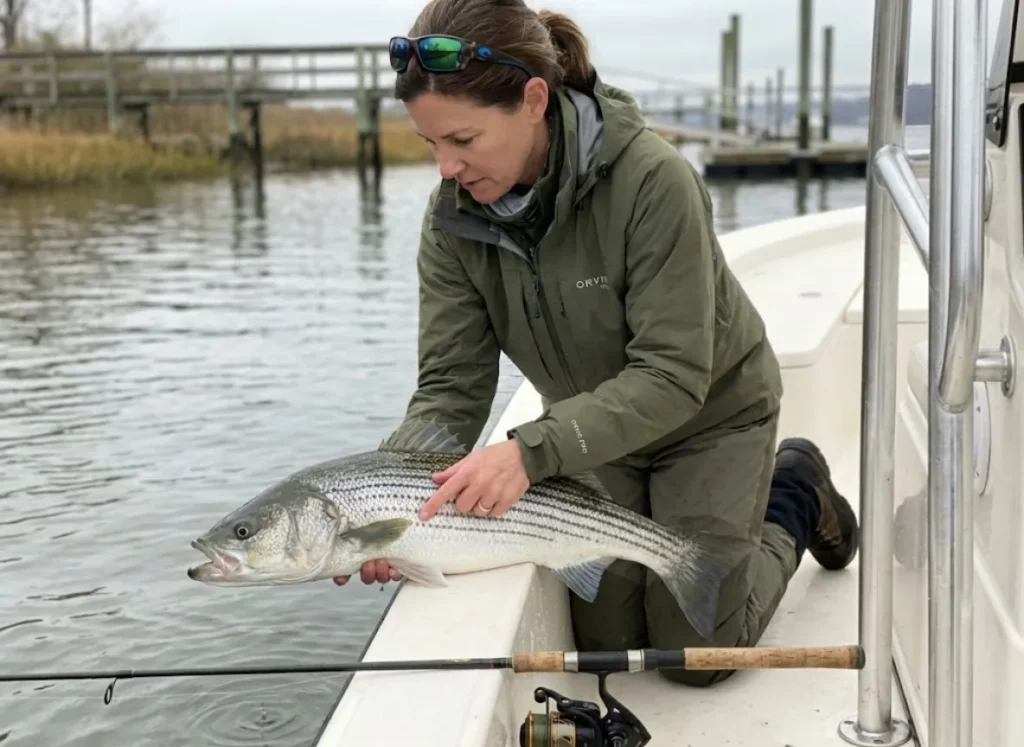
If you’re approaching striper water like you’d fish a largemouth pond—tight to cover, finesse presentations—you’ve already lost. Striped bass belong to the temperate bass family Moronidae, completely distinct from the largemouth bass and smallmouth bass in the sunfish family Centrarchidae.
This evolutionary divergence created fundamentally different behavioral instincts. Black bass evolved as creatures of structure, orienting around physical cover like timber, vegetation, and docks. Stripers? They’re open-water rovers. They relate to hydrodynamic structure—current seams, temperature breaks, turbulence—rather than woody debris. Think current, not creek channels.
The genus Morone includes the white bass, white perch, and yellow bass—all open-water species preferring current to cover. Stripers are the largest and most marine-adapted of this group, capable of growing to 60 inches and exceeding 125 pounds historically.
The Euryhaline Advantage
What makes striped bass remarkable is their euryhaline nature—the physiological ability to regulate internal salt balance across the full salinity spectrum. They can survive from freshwater (less than 0.5 ppt) to full-strength ocean water (over 30 ppt).
This adaptability enables their anadromous life cycle: living in saltwater but migrating into freshwater rivers to spawn. It also explains why landlocked striped bass fisheries thrive in reservoirs like Lake Texoma and the Santee-Cooper system—provided specific hydrological conditions for reproduction exist.
Here’s a practical implication: catch-and-release mortality is significantly lower in saltwater (approximately 1%) compared to freshwater (up to 34% for deep-hooked fish). Osmotic stress in freshwater compounds the physiological burden of the fight. If you’re releasing fish in a tributary during the spawn, work quickly.
Open Water Predator vs. Structure-Oriented Bass
Trophy stripers position themselves in rips and current edges to let the river deliver their prey—that’s energy-efficient ambush predation. A 40-pound female doesn’t chase bait through open water when she can hold in a seam and intercept stunned forage tumbling through the current.
Pro tip: When scouting new water, look for hydrodynamic structure first. Where does fast water meet slow? Where does the tide rip create turbulence? Those are your starting points—not the obvious rock piles everyone else is casting to.
The Spawning Equation: Why Flow Determines Everything
The Physics of Egg Suspension
Unlike salmonids that bury eggs in gravel nests, striped bass are broadcast spawners. They release semi-buoyant eggs directly into the water column, and survival depends entirely on the river’s mechanical energy.
Research shows eggs require approximately 30 cm/sec current velocity to remain suspended. Drop below that threshold, and eggs sink to the bottom—suffocating in sediment or succumbing to fungal infection. But too much turbulence is equally deadly. According to research on shear stress mortality in striped bass eggs, excessive shear destroys the vast majority of eggs within minutes.
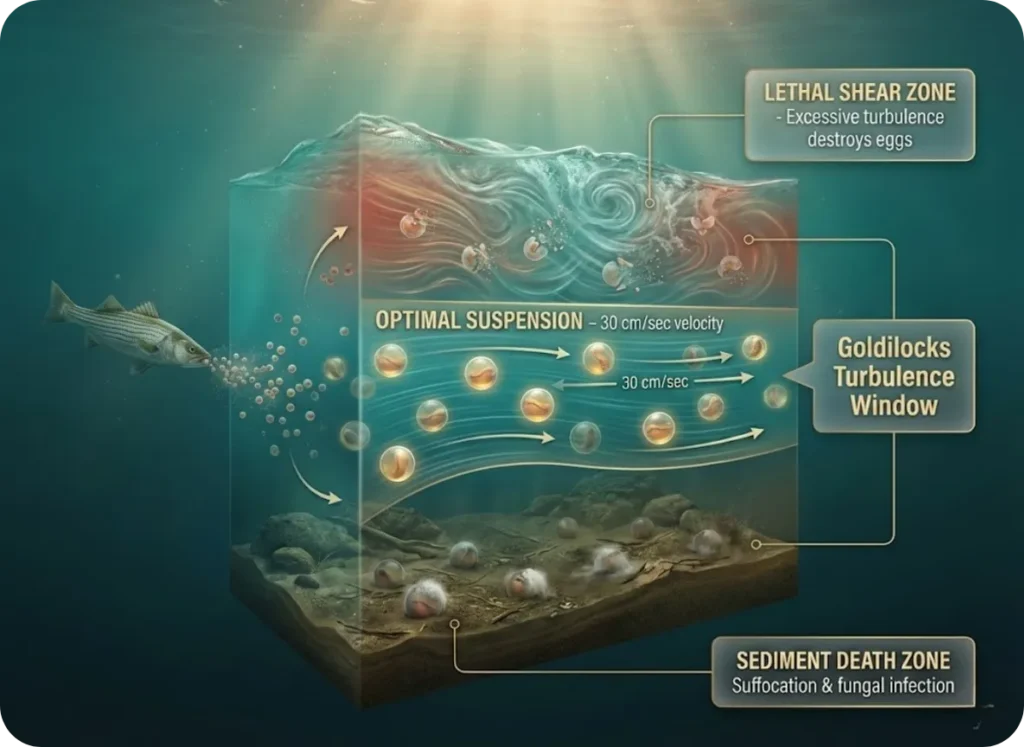
This narrow window of ideal turbulence explains why successful spawning is limited to specific river reaches: the Roanoke River, Delaware River, Hudson River, and reservoir inflows like the Red and Washita Rivers feeding Lake Texoma.
Temperature as the Master Conductor
Spawning timing is governed primarily by thermal cues, extending generally from April through June. Spawning initiates when water reaches 50-60°F (10-15.5°C), but peak egg production occurs at an optimum of 65°F (18.3°C).
Incubation speed is temperature-dependent: 48 hours at 64°F, compressing to roughly 30 hours at 70°F. Faster development means less time vulnerable to predation and sinking, but it also places larvae in a metabolically demanding environment sooner.
The angling implication? During the spawn window, fish concentrate in upper river reaches—and they’re highly vulnerable. Understanding how temperature drives fish metabolism helps you predict when and where the action peaks. Ethical catch and release matters most during this critical period.
Fecundity and the “Rock Fight”
Mature females (typically age 4-8) produce between 500,000 and 3 million eggs per season. High fecundity compensates for massive early-life mortality—you need those numbers when survival resembles a lottery.
The spawning act, often described by anglers as a “rock fight,” involves a large female flanked by multiple smaller males. They drive her to the surface where eggs and milt are released simultaneously into the current, creating a visible “slick” on the water’s surface.
This twilight, surface-oriented spawning behavior in high-velocity water means spawning fish are catchable—but also extremely vulnerable to harvest pressure. That 40-pound cow you’re deciding whether to keep represents millions of potential recruits.
Early Life Bottlenecks: Why Year Classes Fail
The Critical Period and Larval Transport
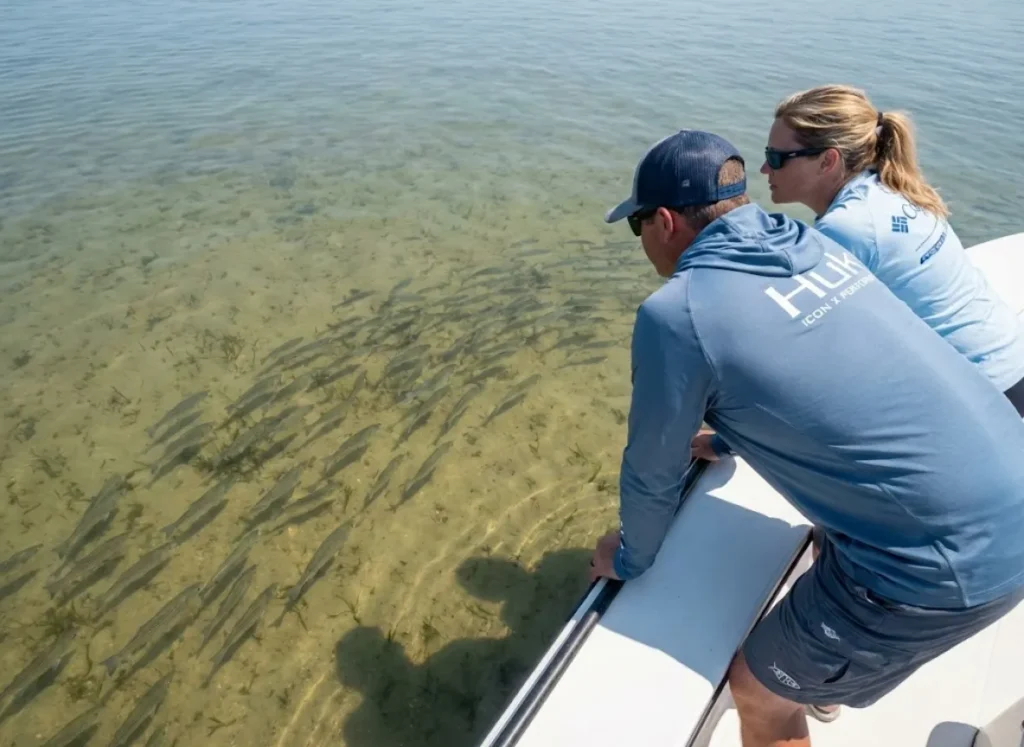
Once hatched, larvae initially survive on their yolk sac. As they transition to exogenous feeding, they rely on zooplankton. The availability of this prey is dictated by the same river flows that transport the larvae.
If larvae reach nursery grounds (like the Chesapeake Bay estuaries) out of sync with zooplankton blooms, you get mass mortality. Year-class strength is often determined within the first few weeks of life—before the fish are even an inch long.
For anglers, this explains why trophy bass seem to disappear and return in cycles. A weak year-class creates fishing “dead zones” 3-5 years later. When locals complain that “the big ones are gone,” the culprit is often a recruitment failure nobody noticed when it happened.
Surviving the First Winter
Young-of-year (YOY) stripers face size-dependent winter mortality. Fish must accumulate sufficient lipid reserves to survive the metabolic slowdown when feeding ceases. Research highlights a critical threshold: juveniles below approximately 100mm often have insufficient caloric density to survive winter starvation.
A late spawn or a summer of poor forage produces undersized YOY—a lost generation regardless of how many eggs were produced. When anglers report “nothing but schoolies,” it often reflects a dominant year class of survivors from a good spawn year, with few large fish because previous year classes failed.
Understanding ectothermic metabolic constraints helps contextualize these boom-bust population dynamics.
The Striper’s Sensory Arsenal: How They Hunt
Mechanoreception and the Lateral Line
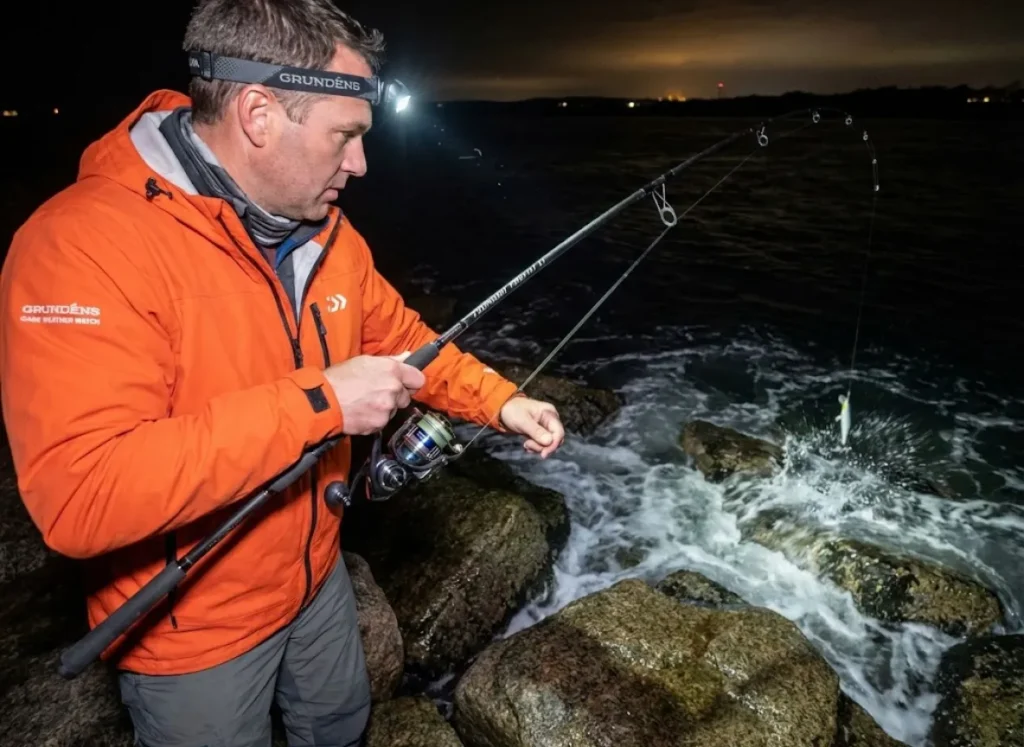
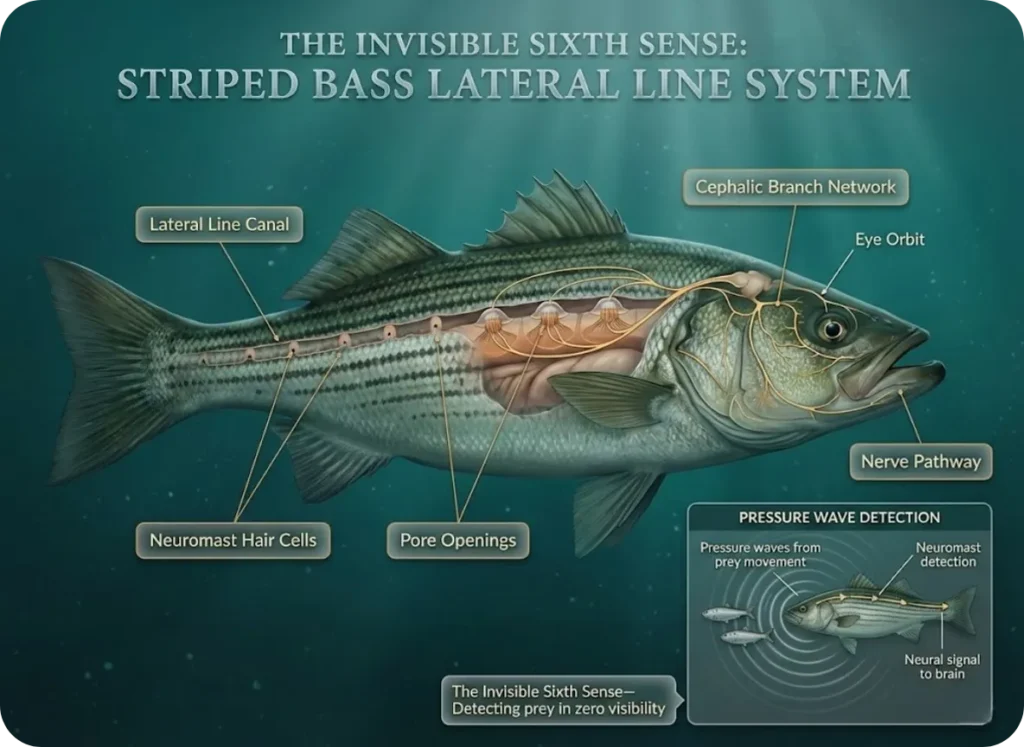
The lateral line system of striped bass is a sophisticated array of neuromasts (sensory hair cells) detecting pressure gradients in water. This isn’t just for schooling—it’s a primary hunting tool in turbid estuaries and night tides.
Studies reveal that juvenile stripers have approximately 11 superficial neuromasts, increasing to over 150 in adults. This development correlates with enhanced ability to feed in darkness, as documented in research on striped bass neuromast development.
The lateral line detects the “pressure wake” of fleeing prey, stunned baitfish, or the wobble of your plug. In zero-visibility conditions, the bass “feels” the lure before it sees anything.
Pro tip: In coffee-colored water or on new moon nights, go big and loud. High-displacement lures like paddle-tail swimbaits and metal-lip plugs create the “thump” that stripers hunt by. They’re reading your lure’s vibration signature, not its color.
Vision and the Photophobia Factor
The visual system of striped bass is adapted for estuarine optics—often green-stained and particulate-laden water. Lacking eyelids for rapid pupil constriction, they exhibit distinct photophobia: avoidance of intense, direct sunlight.
This drives their crepuscular (dawn/dusk) and nocturnal behavior patterns. In bright conditions, they retreat to depth or shade—the classic vertical migration where fish go deep during the day and shallow at night.
For lure selection in low-light conditions, contrast matters more than color accuracy. In the green water of the Northeast coast, dark silhouettes—black, purple, dark blue—provide maximum contrast against the moonlit or starlit surface.
Understanding nocturnal feeding strategies becomes essential when you’re targeting the biggest fish in the population. Night fishing for stripers isn’t just preference—it’s biology.
Diet Ontogeny and the Art of Matching the Hatch
The Trophic Ladder: From Plankton to Piscivore
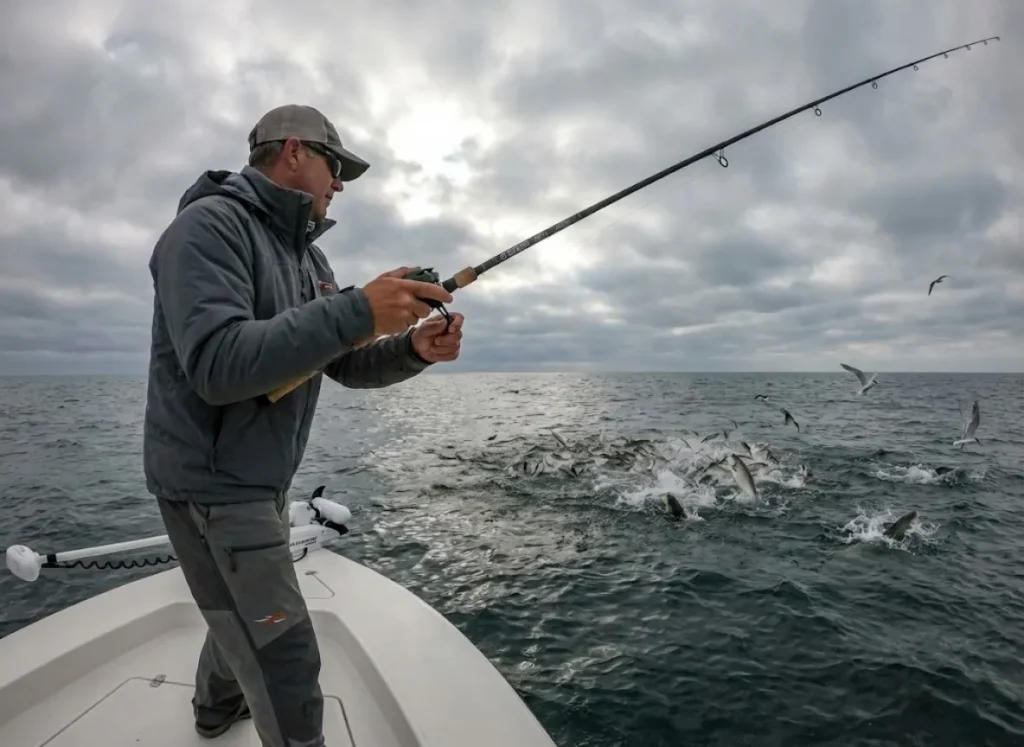
Striped bass diet follows a strict ontogenetic shift—changing as they grow. Larvae eat zooplankton. Juveniles target insect larvae, mysid shrimp, and small crustaceans. Adults turn primarily piscivorous, focusing on schooling forage: Atlantic menhaden (bunker), river herring, sand lance, bay anchovies, and shad.
This progression dictates lure size. Schoolie-sized lures for schoolie-sized fish is efficient, but trophy hunters need trophy-sized presentations that match the caloric investment a big female expects.
Knowing what the local forage looks like is half the battle. Fishing the shad spawn puts you on concentrated bait and the predators that follow.
Trophy Class Benthivory: Why Cows Eat Lobsters
Here’s an insight most anglers miss: stable isotope analysis reveals that very large females (over 40 pounds) often shift to benthivory—bottom feeding. Trophy fish frequently target American lobster, crabs, and winter flounder.
Why? Capturing a slow-moving, calorically dense lobster requires less energy than chasing a school of fleeing menhaden. According to feeding ecology research on striped bass ontogeny, the bio-energetics favor sitting on the bottom and ambushing benthic prey.
The tactical translation: for trophy stripers, think bottom-bouncing jigs, large soft plastics dragged deep, and slow sweeps in the current. As legendary trophy hunter Alberto Knie puts it: “Find structure, find big fish… It’s all about the sweep, it’s all about the bounce, bounce, bounce.”
The Blitz Decoded: Cooperative Hunting Mechanics
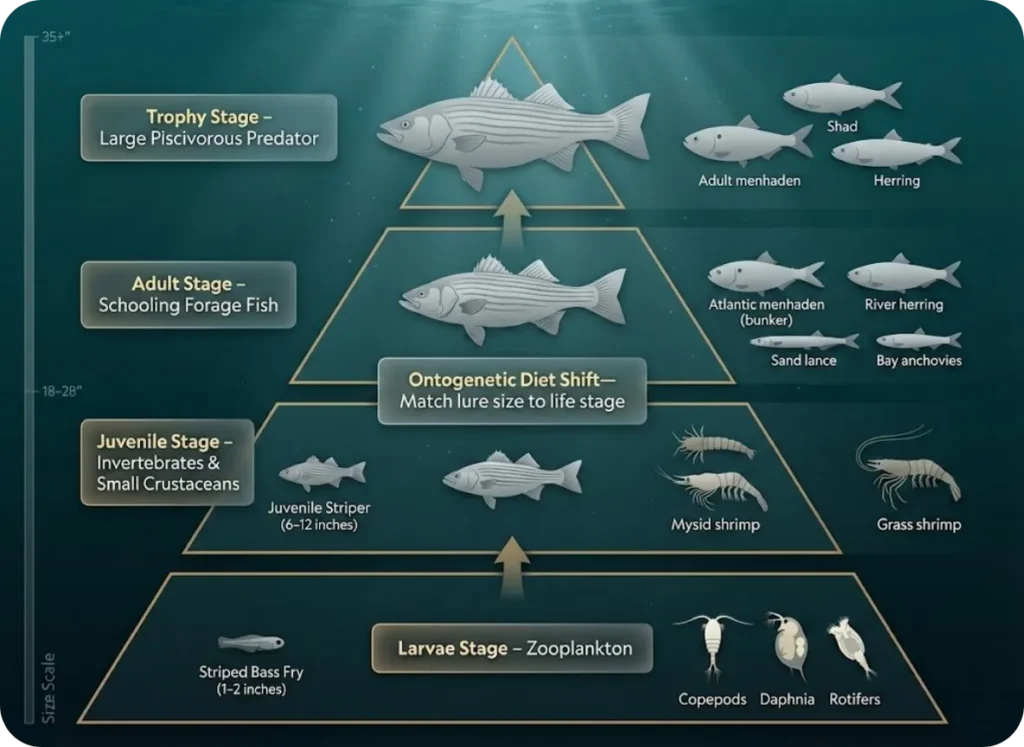
The blitz is not chaos—it’s coordinated hunting. Bass drive bait schools against the surface, using the air-water interface as a physical barrier to prevent escape. Drone observations reveal spiraling formations and maintained spacing within the school—tactical precision disguised as frenzy.
The symbiotic relationship with diving birds intensifies the compression. Bass push bait up; terns and gulls push bait down. The bait ball shrinks with nowhere to go.
Surface lures—poppers, walking plugs like the Spook—are effective during blitzes because they mimic bait trapped at the barrier. Match the panic, and you’ll get crushed.
Migration Patterns and Stock Structure
The Chesapeake Engine
The Chesapeake Bay produces the overwhelming majority of the Atlantic coastal stocks—70-90% by most estimates. The Hudson River and Delaware River contribute secondary but significant components. When Chesapeake spawn success is poor, the entire Atlantic fishery feels it 4-6 years later.
Understanding fishing brackish water systems becomes critical when targeting fish in these productive estuarine nurseries.
The Spring Push and Size-Structured Migration
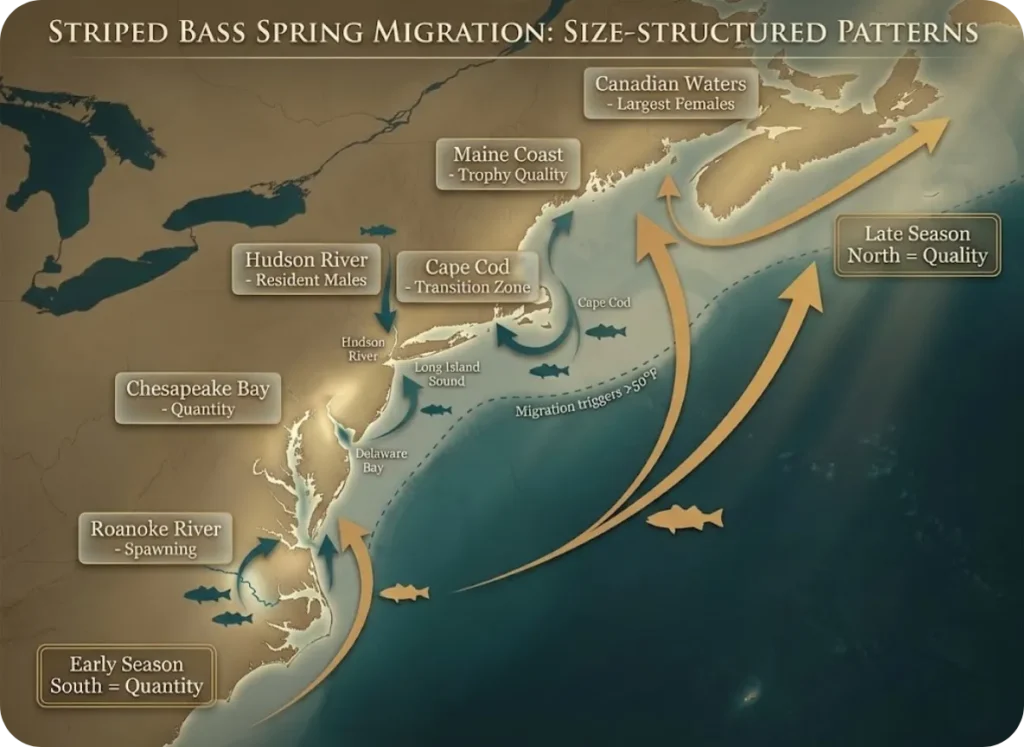
The coastal migration pattern triggers when water temperature exceeds 50°F. Post-spawn fish move north and east, following the coastline. But here’s what matters: migration is size-structured.
Larger, older females travel furthest north—reaching Maine and Canadian waters. Smaller males often remain resident in estuaries closer to their natal rivers like the Hudson or the Roanoke River. This explains regional differences: early-season Chesapeake fishing offers quantity, while late-season Maine fishing offers quality.
Summer Thermal Refuges
Large stripers prefer water temperature between 55°F and 65°F. They become stressed above 70°F. When coastal waters exceed thermal comfort, big fish congregate in refuges: Block Island, deep water off Montauk Point, cold upwellings in the Gulf of Maine.
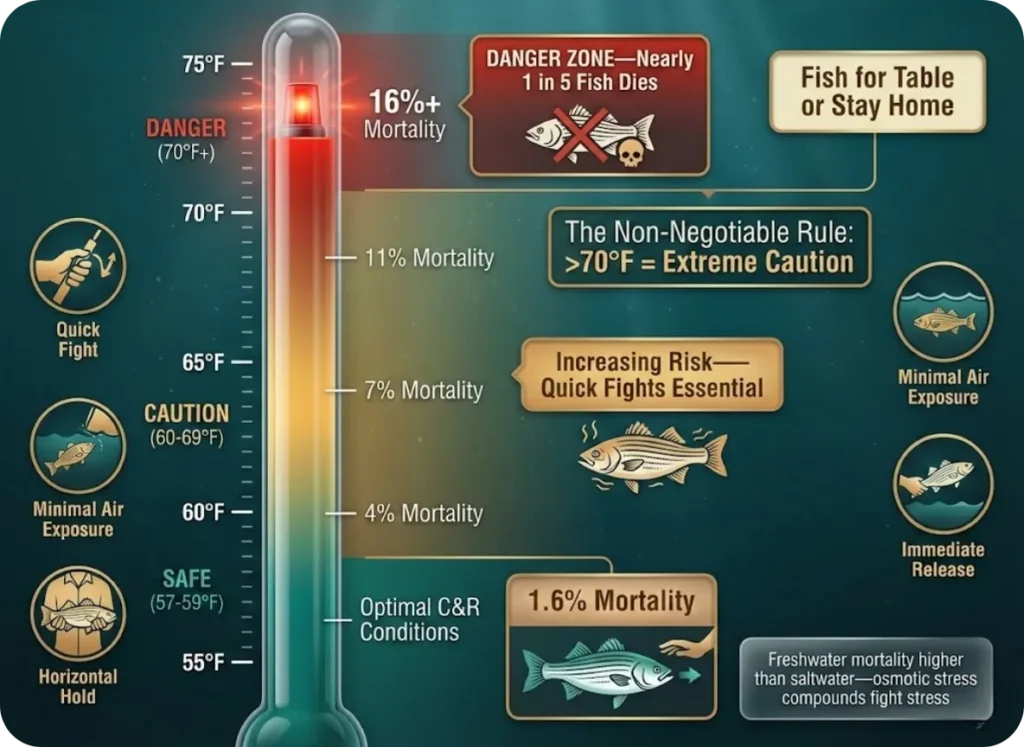
Midsummer trophy bass hunting means targeting deep, cooler structure—not the surf. According to Maryland DNR catch-and-release mortality research, release mortality sits around 1.6% at 57-59°F but can exceed 16% above 70°F. Fish the cool water or fish early/late to give them a fighting chance.
Conservation-Minded Handling: Protecting the Resource
The Thermal Mortality Curve
Release mortality is not random—it’s environmental. In cool water (57-59°F), mortality sits around 1.6%. In warm water exceeding 70°F, it can exceed 16%. Nearly one in five released fish dies in high summer heat.
The non-negotiable rule: if water temps exceed 70°F, either fish for table fare within regulations or stay home. Quick fights, minimal air exposure, horizontal holds, and immediate release become critical when conditions are warm.
The salinity factor matters too. Mortality is significantly higher in freshwater compared to saltwater—osmotic stress compounds fight stress. If you’re fishing the spawn in a river system, handle fish with extreme care using science-based catch-and-release handling.
Gear Choices That Reduce Harm
Circle hooks are mandatory when bait fishing for stripers in most jurisdictions—and for good reason. They reduce gut-hooking dramatically compared to J-hooks, which translates directly to survival rates.
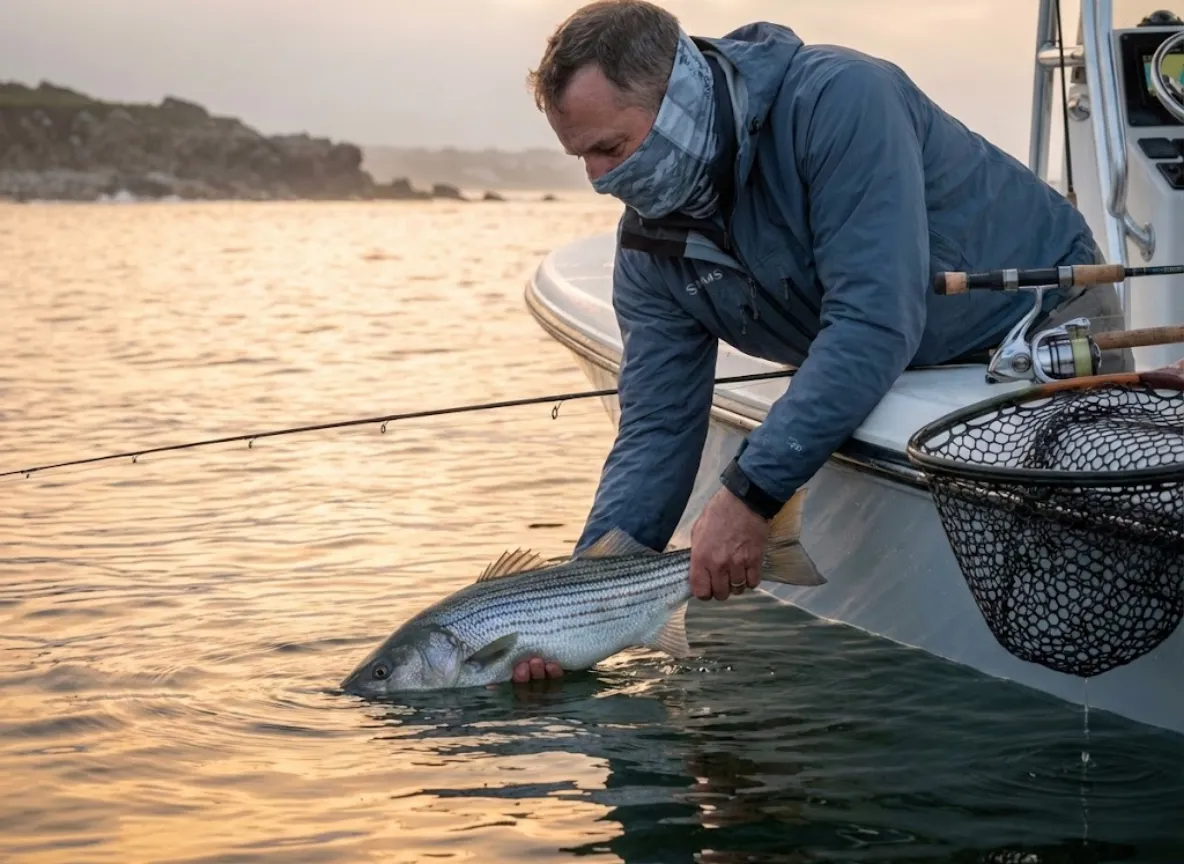
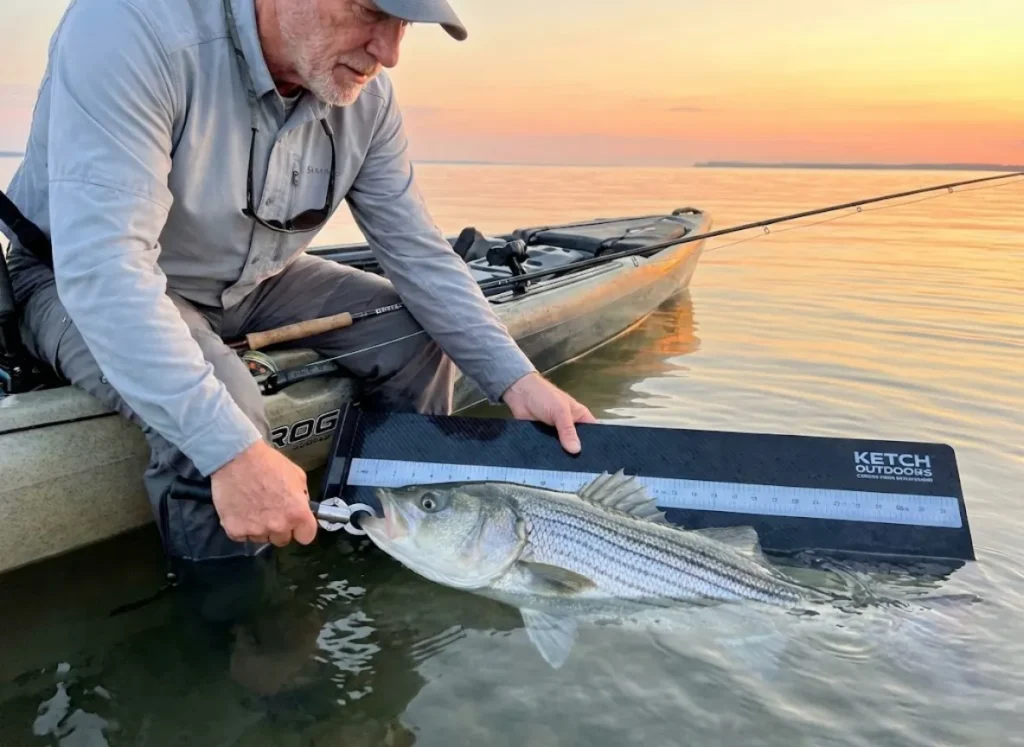
Fish with enough rod and sufficient drag to shorten fight times. Exhaustion compounds physiological stress. Use rubber-mesh fishing nets to protect the slime coat. Avoid the “bogagrip” vertical hold—it causes spinal and jaw stress.
Pro tip: The community increasingly shames harvest of large females (40+ lbs) with hashtags like #BreedersBack. Consider what that cow represents: millions of eggs and the engine of future year classes. The grip-and-grin photo isn’t worth what that fish contributes alive. Keep smaller fish if you want to eat—let the big breeders go.
The Mycobacteriosis Factor
Chesapeake Bay stocks suffer from high prevalence of mycobacteriosis, a chronic wasting disease causing visceral lesions and external skin ulcers. This contributes to increased natural mortality and complicates stock recovery through the ASMFC management process.
Inspect fish for lesions. Handle with care—wash hands after touching affected fish. If you harvest an obviously diseased fish, do not consume it. The disease transmission vector remains unclear, but the population impact is measurable through NOAA Fisheries stock assessments.
Conclusion
Striped bass are not random targets—they’re biological machines tuned for specific environmental parameters.
They are creatures of turbulence, requiring flow for egg survival and relying on lateral line hunting in the murk. They are creatures of temperature, with metabolic engines that hum at 65°F and stall above 75°F. They are creatures of contrast, silhouetting prey against the night sky with primitive but effective vision.
The path to consistent success isn’t about lucky casts. It’s about systematically applying biological knowledge: seeking the rips where current creates the vibration their lateral line craves, fishing the night tides when photophobic predators hunt shallow, and respecting the fragility of the resource. The release of a 40-pound female today plants millions of eggs in the currents of the Roanoke or Hudson tomorrow.
FAQ
What water temperature is best for striped bass fishing?
Striped bass are most active in water between 55°F and 68°F. At these temperatures, their metabolism is optimal for aggressive feeding. Above 70°F, they become lethargic and stressed—and catch-and-release mortality increases significantly.
Do striped bass feed at night?
Yes—striped bass are primarily crepuscular and nocturnal feeders. They’re photophobic (light-averse) due to lacking eyelids for rapid pupil adjustment. Dawn, dusk, and dark tides are often the most productive fishing windows, especially for larger fish.
What do trophy striped bass eat?
While menhaden and herring dominate the diet of mid-sized stripers, research shows trophy-class fish (40+ lbs) often shift to benthic prey: American lobster, crabs, and winter flounder. These slow-moving, calorically dense meals are more energy-efficient for large females.
Why are some years better for striped bass fishing than others?
Striped bass populations fluctuate due to spawning success and juvenile survival. Eggs require specific current velocities to survive, and young-of-year fish must reach approximately 100mm before winter to avoid starvation. A single bad spawn year creates a gap in the population 4-5 years later.
Is catch-and-release harmful to striped bass?
It can be—especially in warm water. Mortality is low (approximately 1.6%) in cool water (57-59°F) but can exceed 16% above 70°F. Using circle hooks, minimizing fight time, keeping fish in the water, and avoiding vertical holds all reduce release mortality.
Risk Disclaimer: Fishing, boating, and all related outdoor activities involve inherent risks that
can lead to injury. The information provided on Master Fishing Mag is for educational and informational purposes
only. While we strive for accuracy, the information, techniques, and advice on gear and safety are not a substitute
for your own best judgment, local knowledge, and adherence to official regulations. Fishing regulations, including
seasons, size limits, and species restrictions, change frequently and vary by location. Always consult the latest
official regulations from your local fish and wildlife agency before heading out. Proper handling of hooks, knives,
and other sharp equipment is essential for safety. Furthermore, be aware of local fish consumption advisories. By
using this website, you agree that you are solely responsible for your own safety and for complying with all
applicable laws. Any reliance you place on our content is strictly at your own risk. Master Fishing Mag and its
authors will not be held liable for any injury, damage, or loss sustained in connection with the use of the
information herein.
Affiliate Disclosure: We are a participant in the Amazon Services LLC Associates Program, an
affiliate advertising program designed to provide a means for us to earn advertising fees by advertising and linking
to Amazon.com. As an Amazon Associate, we earn from qualifying purchases. We also participate in other affiliate
programs and may receive a commission on products purchased through our links, at no extra cost to you. Additional
terms are found in the terms of service.