

In this article
Fire on open water does not behave like fire on land. There is no shoulder to pull over onto. There is no fire department three minutes away. If the fiberglass starts to melt, you have nowhere to run.
A fire on a boat is a simple, scary situation. You either put it out in the first thirty seconds, or you get off the boat.
For a dedicated angler, a fire extinguisher isn’t just paperwork for recreational boating compliance. It is the main tool you have to protect your life and your vessel. This is the foundation of marine safety and emergency preparedness.
In this angler-specific safety guide, we will walk through the 2022 USCG updates and explain why regular dry chem extinguishers can ruin your electronics. We will also look at the specific risks of modern lithium-ion battery fires in trolling motors.
What Are the Current Coast Guard Regulations for Fire Extinguishers?
The most confusing part of boating safety is often the federal laws. In 2022, the regulations changed significantly. These updates were designed to make sure the red canisters on our boats actually work when we need them.
How Did the 2022 Rule Changes Impact Your Boat?
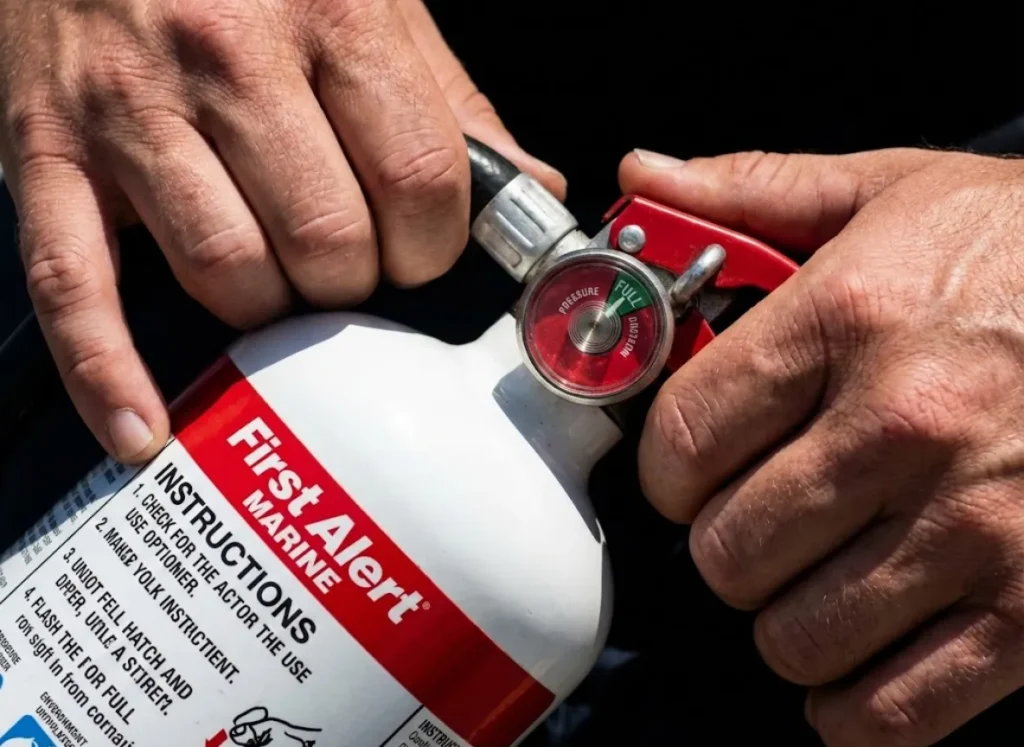
The biggest change is the 12-year expiration rules found in 33 CFR Part 175. Any disposable fire extinguisher—the kind you can’t recharge—is now legally expired 12 years after it was made. It does not matter if the pressure gauge status is still in the green.
In the past, many boaters thought that if the needle showed “full,” they were safe. That is no longer true. You need to find the date of manufacture stamped on the bottom of the cylinder or the UL label. It is usually a two-digit or four-digit year. If a Kidde Mariner or First Alert unit is stamped “2012,” it expired on December 31, 2024.
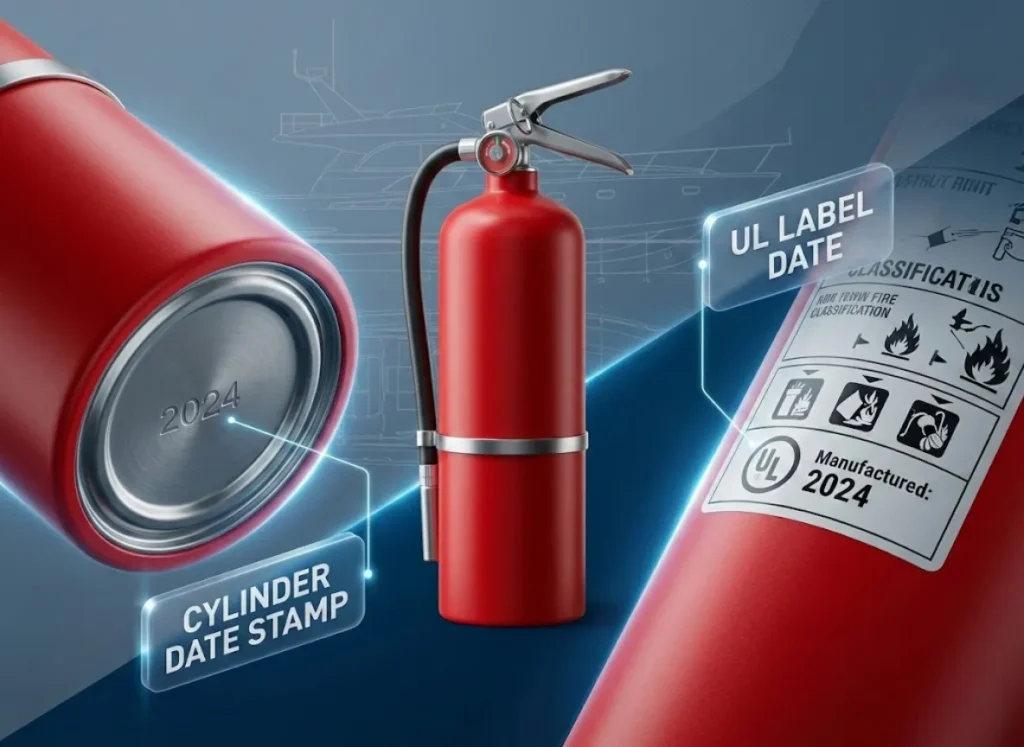
Beyond the date, the unit must be ready to use. This means checking serviceability: the gauge is in the green, the safety pin is intact, and the mounting bracket type is secure. The nozzle must also be clear of any blockage. This check should be a standard part of auditing your vessel’s safety equipment before the season starts.
There is also a change in how these tools are labeled. The United States Coast Guard (USCG) and Underwriters Laboratories (UL) are moving away from the old weight ratings (B-I ratings, B-II ratings). They are switching to new performance fire extinguisher ratings like 5-B ratings and 20-B ratings. “5-B” simply means the unit can put out 5 square feet of burning liquid.
Pro-Tip: If your boat is model year 2017 or older, you fall under a “grandfather” clause. You can keep using older B-I/B-II units until they expire or fail inspection. However, vessels model year 2018 or newer must carry units with the new 5-B or 20-B labels.
For the exact wording on when to remove an extinguisher, you can read the USCG boating safety division guidelines.
How Many Extinguishers Do You Legally Need Based on Length?
Knowing the expiration date saves you from a fine. Knowing how many units you need saves you during a crisis. The federal code dictates exactly what to carry based on your boat length requirements.
If you have a <26′ boat length (common for skiffs), an outboard engine, open build, and no permanent fuel tanks, you might technically be exempt. However, most modern fishing boats will require at least one portable fire extinguisher with a 5-B (or B-I) rating.
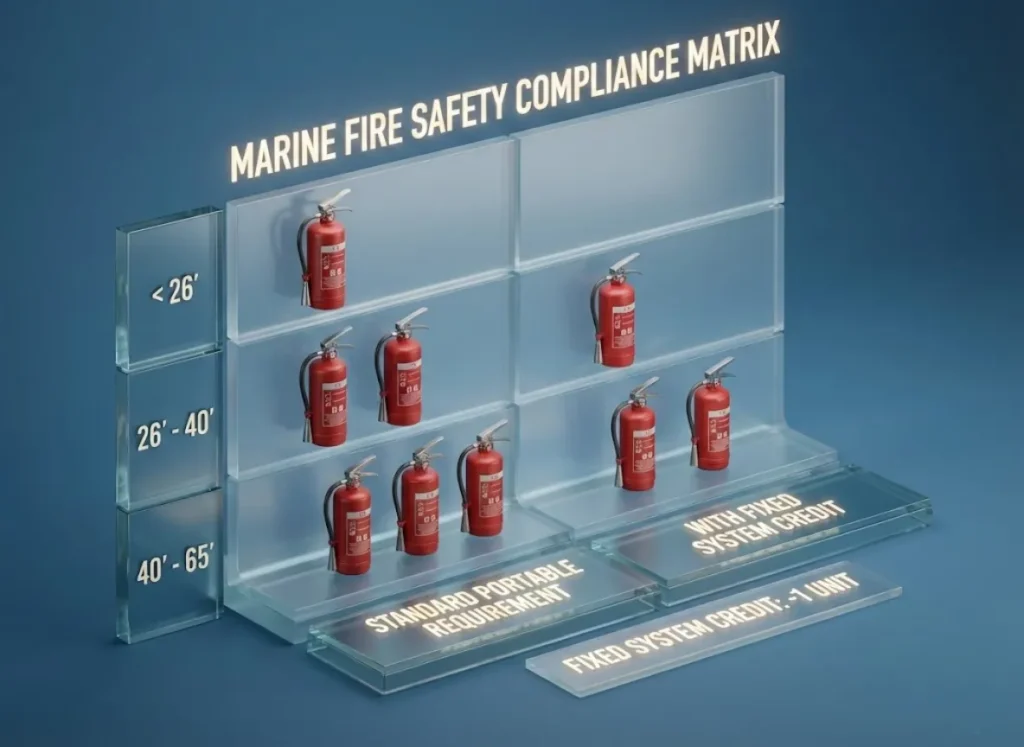
When outfitting your specific hull design, look at the length. For a 26-40′ boat length, you need two 5-B units (or one larger 20-B unit). This is standard for center consoles and offshore boats. For a 40-65′ boat length, you must carry three 5-B units (or one 20-B plus one 5-B).
There is a “Fixed System Credit” to keep in mind. If your boat has a fixed fire extinguisher system (like Fireboy-Xintex or Sea-Fire) in the engine compartment type, you usually need one less portable unit.
But remember, legal minimums are just a baseline. Relying on a single extinguisher leaves no room for error. Smart planning means mounting backup units in the cockpit and cabin, even if the law doesn’t force you to.
Which Extinguishing Agent Is Best for Your Specific Setup?
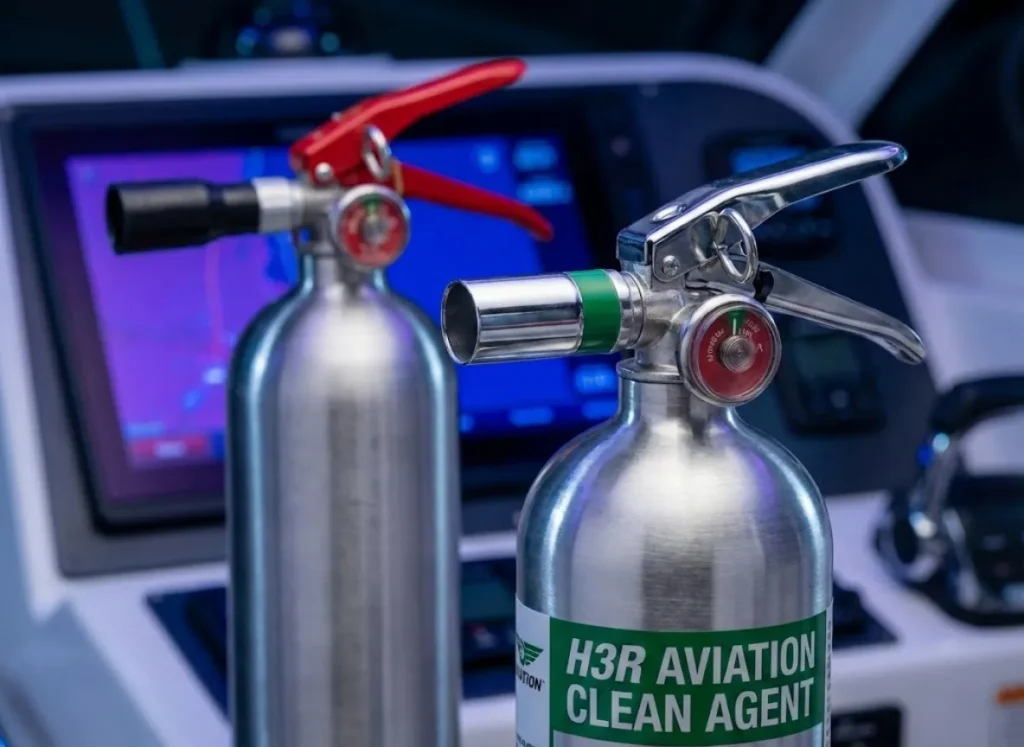
Once you have the right number of canisters, you need to choose what’s inside them. This choice can save your expensive electronics from being ruined.
Why Should You Avoid Dry Chemical Extinguishers at the Helm?
Standard “ABC” or “BC” extinguishers use a fine powder to put out fires. This is usually Monoammonium Phosphate or Sodium Bicarbonate. While this powder works well on common fires, it makes a terrible mess. The Centers for Disease Control (CDC) notes that when this powder mixes with moisture—which is everywhere on a boat—it turns into a sticky paste that eats metal.
If you spray a dry chemical unit into a console full of chart plotters and radios, you will likely destroy them. The fire might not touch your gear, but the powder will. It gets into every crack of the wiring and causes electrical failures months later due to poor corrosion resistance.
To make matters worse, dry chemical extinguishers create a giant cloud of dust. In a small cabin or behind a console, this can blind you. You won’t be able to see if you are actually destroying sensitive marine GPS units or if you have successfully put out the fire.
Is It Worth Investing in Halotron or Clean Agent Units?
To avoid ruining your electronics, many anglers are switching to clean agents. These include Halotron, Halotron-1, FE-241, FM-200, or Novec 1230.
Clean Agents spray out as a liquid but turn into gas instantly. They leave absolutely zero residue level behind. They are also electrically non-conductive. This means you can spray them directly into a live fuse panel or the back of a sonar unit without causing a short circuit. This is vital for protecting high-resolution sonar screens and other expensive sonar rigs.
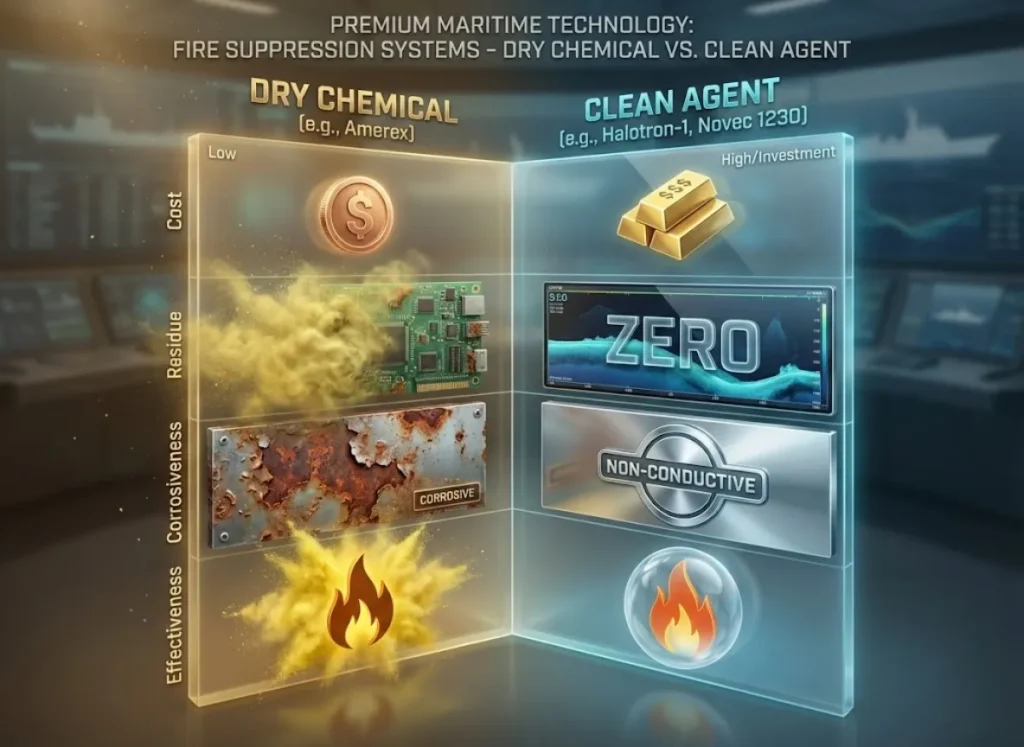
Because they evaporate, they don’t block your vision. You can see the flames while you fight them. A Clean Agent unit (like a premium Amerex model) costs more than a standard one—often four times the price—but think of it as insurance for your dashboard.
The EPA lists these modern agents as approved substitutes. They are safer for the environment than the old CO2 or Halon systems and still work very well on fires.
How Do You Protect Against Modern Lithium-Ion Battery Fires?
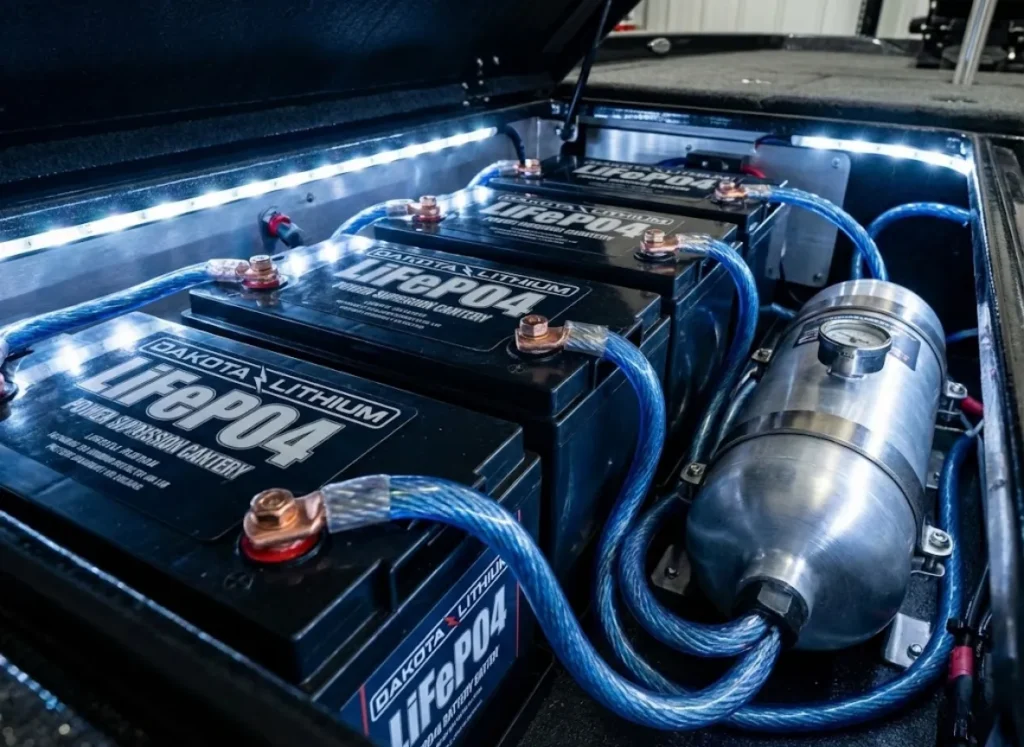
Electronics are expensive, but modern batteries pose a different kind of threat. The high-energy power sources on fishing boats carry risks that standard fire classes can’t always handle.
Why Do Standard Class B Extinguishers Fail on Trolling Motor Batteries?
Lithium-ion battery fires are not normal fires. They undergo a reaction called thermal runaway. In this state, the battery heats itself up and creates its own oxygen.
To understand why this is bad, look at the fire triangle: heat, fuel, and oxygen. Standard extinguishers work by smothering a fire to cut off the oxygen. Since a trolling motor battery in thermal runaway makes its own oxygen, smothering it doesn’t work well. You might knock down the flame, but the battery is still hot inside. It will likely catch fire again seconds later.
The only way to stop this reaction is to cool the battery down significantly. The United States Coast Guard issued Marine Safety Alert 14-25 to warn boaters about this. If you run modern LiFePO4 trolling motor batteries, you need a plan to cool them down with water or a specialized agent.
Pro-Tip: Do not buy a Class D (metal fire) extinguisher for marine lithium-ion batteries. Most marine batteries use lithium salts, not raw metal. Class D powder traps the heat, which can actually make the battery explode faster.
How Should You Mount and Maintain Your Equipment?
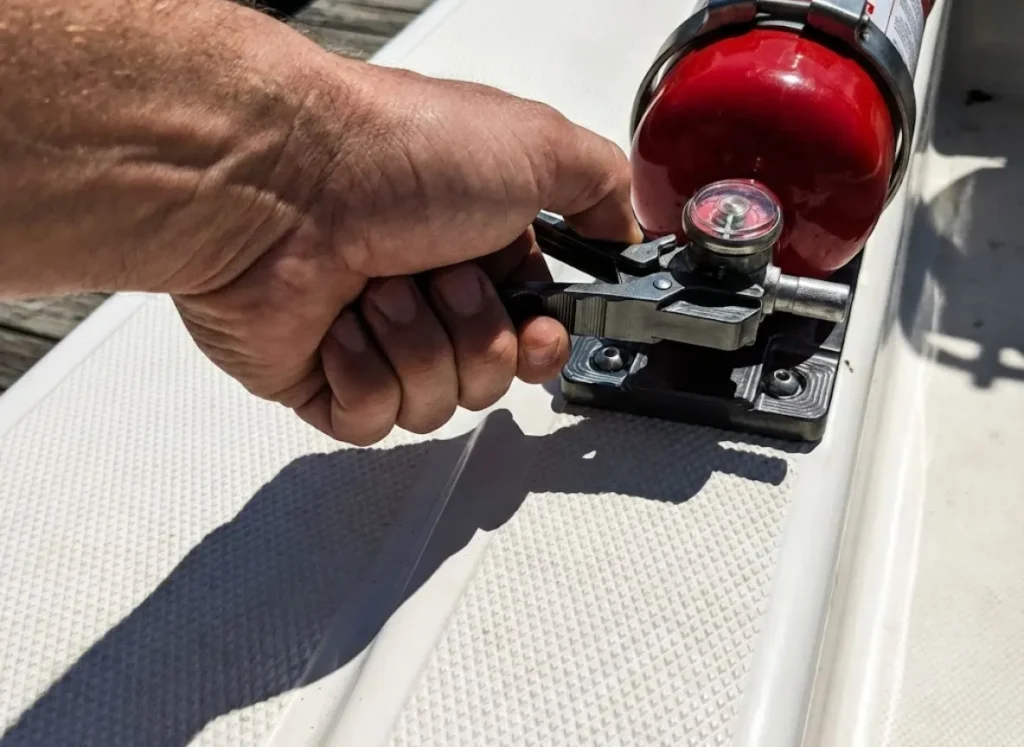
Even the perfect extinguisher is useless if it has been shaken to pieces by the time you need it.
Why Is the Standard Plastic Bracket a Safety Hazard?
Fishing boats take a beating. High-speed bass boats and skiffs deal with constant engine vibration and the impact of hitting waves. The cheap plastic brackets that come with most consumer units get brittle in the sun. If you hit a big wave, these brackets can snap. This turns a heavy steel cylinder into a dangerous missile flying around your boat.
To prevent this, upgrade to metal marine brackets. Look for USCG approved mounts with double straps or quick-release designs made for vibration-proof mounting.
Vibration causes another problem called “powder compaction.” The vibration packs the dry powder down into a solid cake at the bottom of the can. If the tube gets stuck in this cake, the unit will spray gas but no powder when you attempt the discharge technique. The Oregon State Marine Board recommends checking this monthly.
Fixing this is easy. Once a month, take the extinguisher out of its bracket. Turn it upside down and hit the bottom with a rubber mallet. This loosens the powder and keeps it ready to flow. Make this a habit when adding to your seasonal gear maintenance checklist.
Conclusion
A fire aboard your vessel is a test you cannot afford to fail.
To ensure you are ready, check the date on every unit. Make sure they are under 12 years old to meet coast guard requirements. Put the right extinguisher in the right place: use Clean Agents at the helm electronics to save your screens, and Dry Chemical in the back for fuel fires.
Respect your lithium batteries. Understand that you need cooling to stop them from burning. Finally, get rid of those plastic brackets and use marine-grade hardware to hold everything down.
Go to your boat today. Pull every extinguisher out and look at the date stamp on the bottom. If it is expired, replace it before you launch again.
FAQ – Frequently Asked Questions about Marine Fire Extinguishers
Where do I find the expiration date on my fire extinguisher?
Look at the bottom of the cylinder or the UL label. You are looking for a stamped 2-digit or 4-digit year (like 21 or 2021). Some brands use a code. For example, a 10-digit Kidde code might hide the year in the middle digits.
What is the difference between a B-I and a 5-B rating?
B-I ratings are the old Coast Guard standard based on weight. 5-B ratings are the new UL standard based on performance. 5-B means the unit can put out 5 square feet of fire. Newer boats (2018+) must use the 5-B labeling. Older boats can use B-I until the unit expires.
Can I use a standard automotive or home fire extinguisher on my boat?
Only if the label specifically says Marine Type – USCG Approved. Standard home fire safety units usually don’t have the special paint to stop rust, the saltwater rating, or the strong brackets required for boats.
How do I safely dispose of an expired marine fire extinguisher?
Do not throw pressurized units in the trash. Contact your local hazardous waste facility or fire department. Some recycling centers or retailers like West Marine or Fisheries Supply may have information on local disposal options.
Risk Disclaimer: Fishing, boating, and all related outdoor activities involve inherent risks that
can lead to injury. The information provided on Master Fishing Mag is for educational and informational purposes
only. While we strive for accuracy, the information, techniques, and advice on gear and safety are not a substitute
for your own best judgment, local knowledge, and adherence to official regulations. Fishing regulations, including
seasons, size limits, and species restrictions, change frequently and vary by location. Always consult the latest
official regulations from your local fish and wildlife agency before heading out. Proper handling of hooks, knives,
and other sharp equipment is essential for safety. Furthermore, be aware of local fish consumption advisories. By
using this website, you agree that you are solely responsible for your own safety and for complying with all
applicable laws. Any reliance you place on our content is strictly at your own risk. Master Fishing Mag and its
authors will not be held liable for any injury, damage, or loss sustained in connection with the use of the
information herein.
Affiliate Disclosure: We are a participant in the Amazon Services LLC Associates Program, an
affiliate advertising program designed to provide a means for us to earn advertising fees by advertising and linking
to Amazon.com. As an Amazon Associate, we earn from qualifying purchases. We also participate in other affiliate
programs and may receive a commission on products purchased through our links, at no extra cost to you. Additional
terms are found in the terms of service.