


In this article
The water sliding beneath your boat looks peaceful, but it can be dangerous. Water steals body heat twenty-five times faster than air does. If a wave hits or you slip, you might go overboard unexpectedly.
At that moment, the difference between a funny story and a commercial investigation often depends on a small mechanism on your chest. Choosing the right personal flotation device (PFD) isn’t just about USCG compliance. It is about picking marine safety gear that will actually work when you need it.
I’ve seen many anglers treat these vests like simple accessories, ignoring the maintenance complexity involved. They don’t realize the inflation trigger inside decides if they float face-up or struggle. This guide will break down the auto vs manual PFD debate. We will help you pick a system that fits your specific recreational angling gear setup.
The Core Mechanism: How Do These Machines Actually Work?
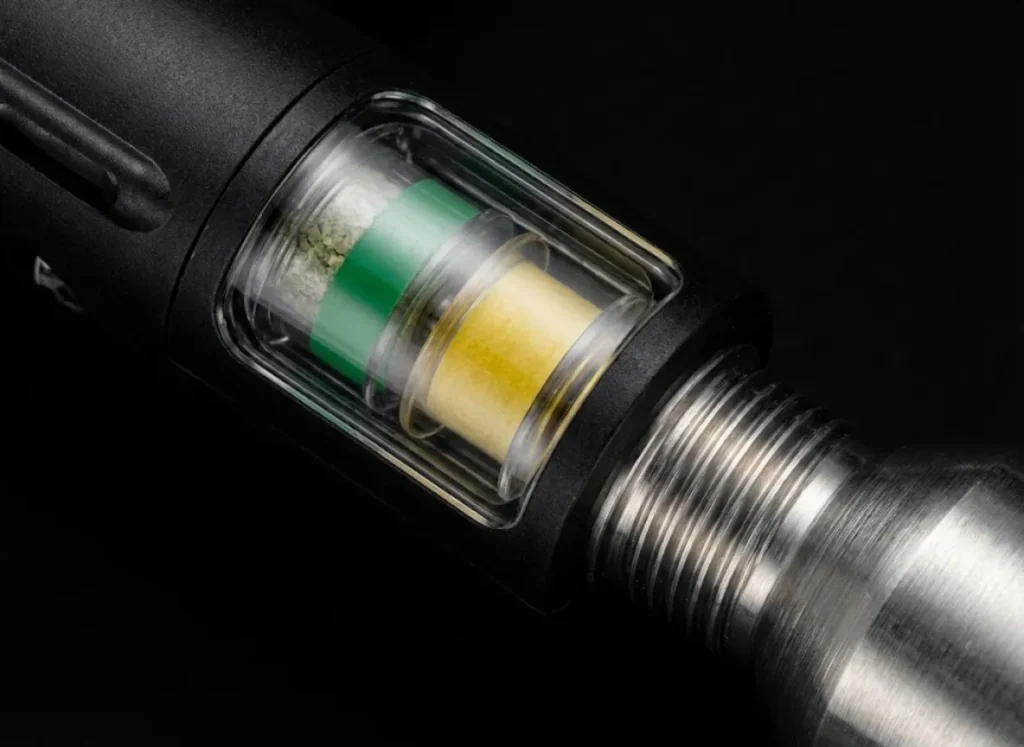
To trust your boating equipment, you need to know what happens inside it. Let’s look past the label on the box and understand the firing pin mechanism.
What is the difference between chemical solubility and hydrostatic pressure?
The main difference is how the inflator “feels” the water. One uses a water-soluble pellet, and the other uses water pressure.
The “Standard Auto” mechanism (often a Halkey-Roberts V85000 or United Moulders Limited system) relies on a water-soluble bobbin. Think of this like a small aspirin pill inside the plastic housing. When water hits it, the pill dissolves. Once it melts, a spring pops a needle into the CO2 cartridge, filling the vest.
This system is very sensitive. The problem is that it can’t chemically tell the difference between falling in a lake and getting soaked by a heavy rainstorm.
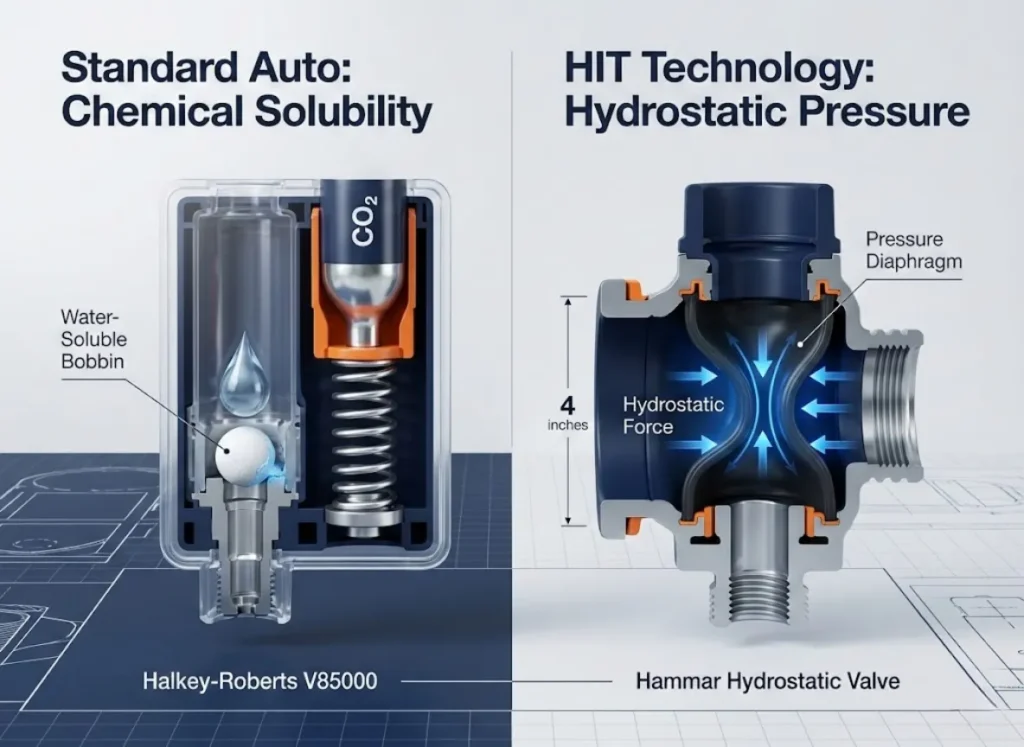
On the other hand, Hydrostatic Inflator Technology (often called a HIT inflator) works on pressure. It uses a sealed valve and pressure switch that only opens when it is about 4 inches (10 cm) underwater.
Because of this seal, rain and spray cannot set it off. It only fires when you are actually submerged. While the Coast Guard standards for inflation devices say both inflatable PFDs work for safety, the Hydrostatic version costs more to buy and refill. However, as we mention in our definitive guide to fishing safety gear, the higher upfront cost often saves you money later by preventing accidental inflation.
How does the manual activation system work as a backup?
Manual PFds inflate relying entirely on you. You have to pull a yellow jerk tab or pull cord that hangs from the vest.
When you pull that tab, it drives a pin into the CO2 cylinder instantly. It bypasses all the water sensors. Every approved inflatable PFD has this manual backup. Most also have an oral inflation tube you can blow into with your mouth.
Pro-Tip: Learn where the oral inflation tube is. If your CO2 cylinder fails or wasn’t installed right, blowing into this tube is the only way to stay afloat while treading water.
Manual vests create a bit of a paradox. They are very reliable because they never go off by accident, so people like wearing them. But, they assume you are awake and calm enough to find the handle.
If you hit your head and get knocked out, you cannot pull the tab. Life jacket wearability statistics show that comfortable manual models are worn more often. But, the vest you are most likely to wear might be the least likely to save you if you are unconscious.
This trade-off is why many serious anglers are moving away from the best fishing vest for sustainable angling styles that use bulky foam. Instead, they are choosing hybrid PFD options or high-end automatic models.
The Physiological Risk: Dealing with the “Gasp Reflex”
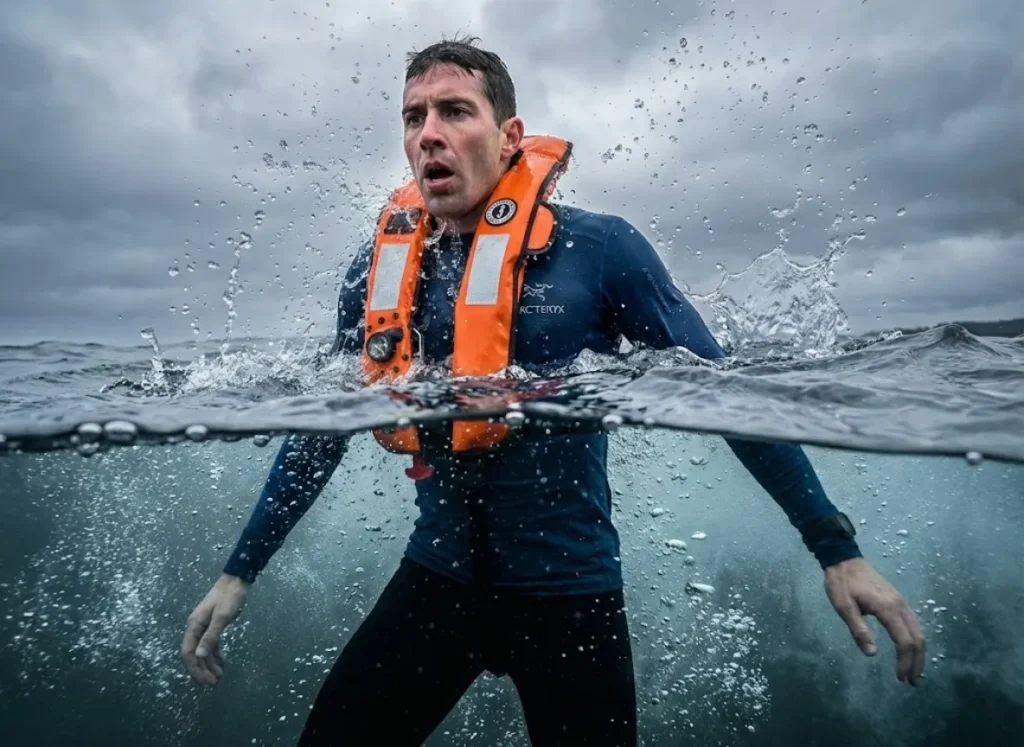
You have to balance the risk of drowning against the risks of the gear. The right PFD depends on how your body reacts when it hits the water.
Why is Cold Water Shock the main reason to choose Automatic?
If you fall into water colder than 59°F (15°C), your body goes into Cold Water Shock.
The first thing that happens is the “Gasp Reflex.” You will uncontrollably suck in a huge breath of air. If your head is underwater when this happens, you will inhale water. This causes panic and a racing heart.
| Activity-Based Life Jacket Risk Assessment | ||
|---|---|---|
| Activity | Risk Profile | Recommended Tech |
| Bass / Walleye Boat (High Speed) | Primary: Trauma/Unconsciousness (Ejection) Secondary: Nuisance Inflation (Rain/Spray at 60mph) | Hydrostatic (HIT): Must auto-inflate if knocked out, but must not fire due to rain speed. |
| Offshore / Solo | Primary: Man Overboard (MOB) with long rescue times Secondary: Cold Water Shock | Level 150+ Auto: Maximum buoyancy needed to keep head high in waves; auto-inflation mandatory due to shock reflex. |
| Kayak / Canoe | Primary: Entrapment (Pinned under hull) Secondary: Nuisance Inflation (Constant splashing) | Manual or Hybrid: Avoids accidental firing; allows user to perform a “wet exit” from the hull before inflating. |
| Wading / Fly Fishing | Primary: Foot Entrapment in current Secondary: Benign Immersion (Dunking) | Manual: Auto-vest firing in a current can be dangerous as it makes fighting the current more difficult. |
| Duck Hunting | Primary: Hypothermia Secondary: Nuisance Inflation (Rain/Wet Dog) | Manual: Prevents accidental inflation from rain or dogs, which could flare birds or impede shooting. |
During this panic, it is hard to think clearly. Finding a small manual switch is nearly impossible when you are fighting for air.
An automatic PFD thinks for you. It inflates in 3 to 5 seconds. This lift gets your mouth above the water before you gasp, effectively providing unconscious wearer safety.
Physiological responses to cold water immersion confirm that this quick floatation is a lifesaver. This is especially true in extreme cold, like the scenarios in our definitive guide to first ice fishing safety, where that shock response is guaranteed.
When is Manual inflation actually safer?
There are times when automatic PFDs inflate at the wrong time, becoming dangerous.
For kayakers, flipping over often means you are stuck upside down. You have to push out of the kayak to escape. If an auto-inflate model blows up instantly, 35 lbs of air can pin you against the kayak or trap you inside.
The same applies to anglers inside a boat cabin. If the boat capsizes and you are inside, a full vest can pin you to the ceiling, making it hard to swim out.
In these specific cases, a manual PFD is the safer choice. It lets you swim free of the boat first, and then pull the tab to float.
Proper inflatable life jacket care and use suggests kayak fishing enthusiasts should stick to manual activation to aid kayak re-entry. This is a key safety tip for anyone buying one of the best fishing kayaks under $1,000, as beginners are the most likely to flip over.
The Angler’s Dilemma: Stopping Accidental Inflation
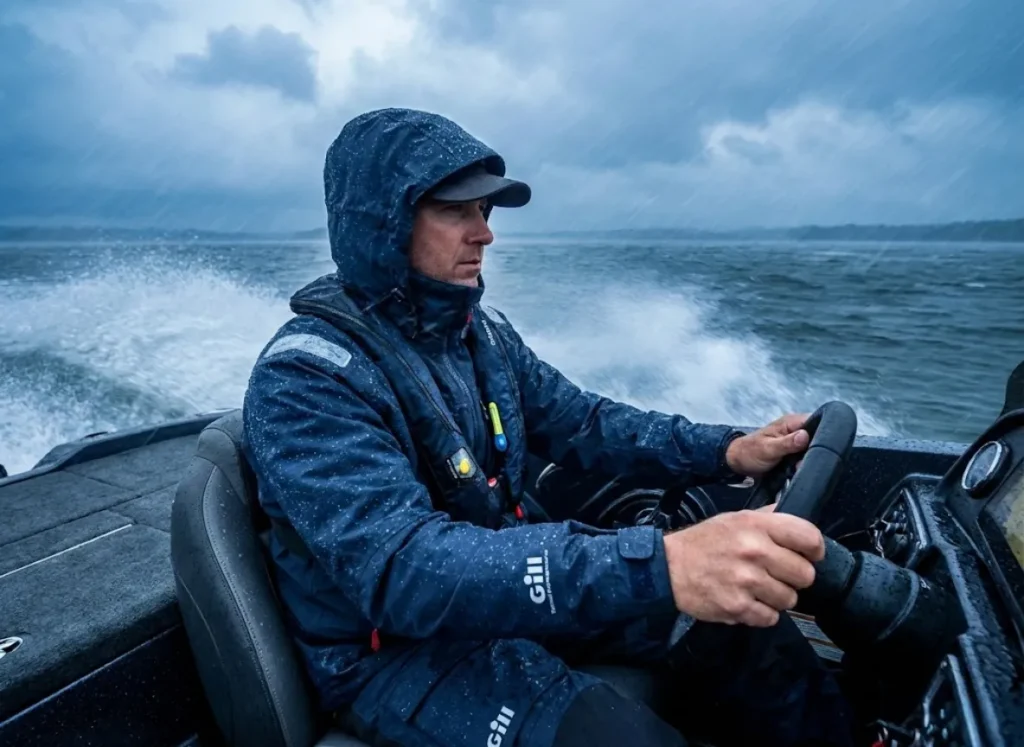
Once you decide on the safety type, you have to deal with the biggest annoyance: nuisance inflation (the gear going off when you don’t want it to).
Can humidity and rain really trigger an automatic vest?
Yes. The standard “pill” triggers like the UML Pro Sensor are sensitive to damp air, not just water.
If you store a bobbin-based vest in a boat locker or a hot car trunk, the humidity can melt the pill over time. This leads to “Ghost Inflation,” where the vest fires by itself inside your tackle locker storage. This costs you money for a re-arming kit and makes you trust the gear less.
Rain usually isn’t enough to trigger them, but speed is. A bass boat running at 60mph in a storm hits the rain hard. The water pressure from that speed, or heavy paddle spray, can trick the pill into thinking you fell in.
To stop this, high-speed boaters should use Hydrostatic (Hammar) technology. It is physically immune to spray and damp air, solving the humidity gap.
Resources on cleaning and storing life jackets stress that keeping your gear dry is essential. This fits with choosing the best rain gear for fishing; staying dry keeps you comfortable, but keeping your inflator dry saves you money.
How do I understand the new labels?
The Coast Guard is changing from the old USCG Type III and USCG Type V system to new “Performance Levels” ahead of the 2026 labeling transition.
- Level 70 (70N): This replaces the old Type III. It provides about 16 lbs of floatation. It helps you float, but it won’t turn you face-up if you are passed out.
- Level 150 (150N): This provides about 34 lbs of floatation. It is designed to turn a face-down person face-up. This is better for offshore solo fishing.
Most inflatable PFDs are approved “Only When Worn.” Foam vests can be legal just sitting in a box on the boat, but an inflatable usually has to be on your body to count as legal.
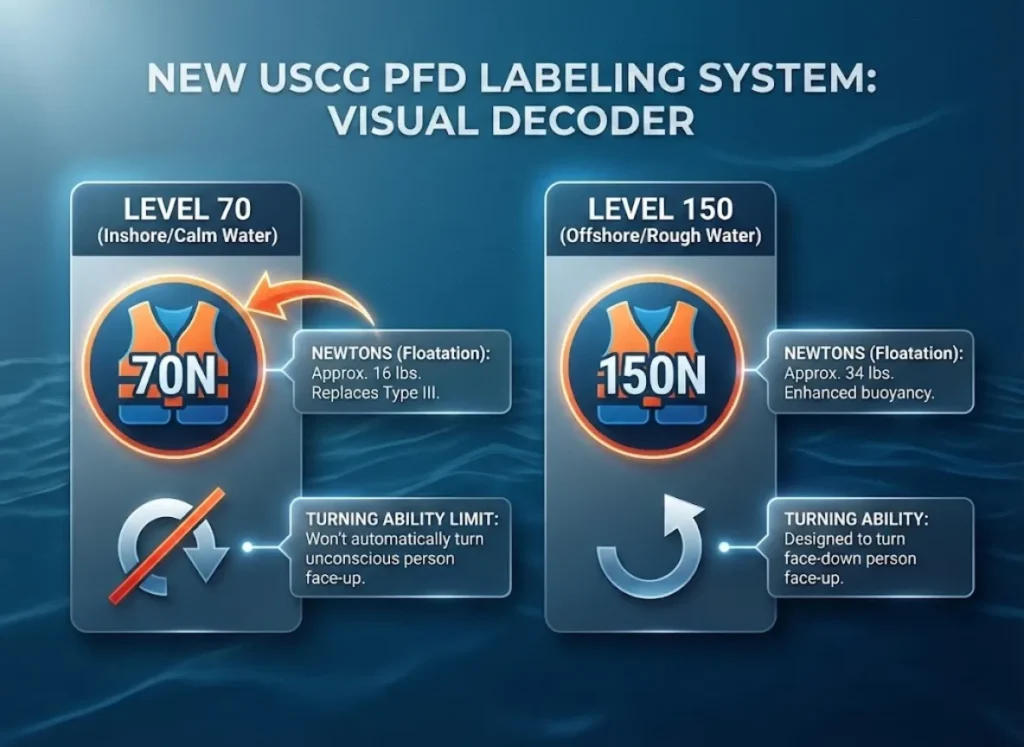
Check the label for a “Turn Limit” icon. It looks like a curved arrow. If it has a line through it, the vest won’t turn you over automatically.
You can look at this explanation of new life jacket labels to stay legal. Also, always check your gear against our state fishing regulations checklist to make sure you are compliant locally.
Final Thoughts
The choice between automatic models and manual inflate vests isn’t about what looks cool. It is about matching the engineering to where you fish using a smart situational recommendation matrix.
- Hydrostatic (HIT) is the only sure way to stop rain and humidity from firing your vest. It’s best for fast boats.
- Automatic Inflation is the smart choice for solo anglers. It protects you from Cold Water Shock.
- Manual Inflation is required for entrapment risks, like kayaking or being inside a cabin.
- Level 150 gives you the best chance of floating face-up if you get knocked out.
Check the date on your bobbin or the shelf-life indicator today. If it is older than three years, replace it before you go out again. Your life vest is only as good as the chemistry inside it.
FAQ – Frequently Asked Questions about Inflatable PFDs
Do automatic life jackets go off in the rain?
Standard vests can activate in heavy rain or high-speed spray. Modern covers help, but it happens. HIT inflator vests will not go off in the rain. They only fire when they are 4 inches underwater.
Can I convert my automatic PFD to manual-only?
Yes, many convertible PFD models like the Onyx A or M-24 let you take out the dissolving bobbin. You can then put on a Manual Only safety cap. This is recommended for kayaking, wading, or duck hunting.
How often do I need to replace the bobbin or re-arm the vest?
You should replace water-soluble bobbins every 3 years, even if you never use them. If you live in a humid place, change them sooner. Hydrostatic inflator technology units usually last 5 years, but you have to replace the whole unit.
What is the difference between Level 70 and Level 150 PFDs?
Level 70 has less floatation (about 16 lbs). It is for calm water and probably won’t turn you face-up. Level 150 has a higher buoyancy rating (about 34 lbs). It is designed to flip an unconscious person face-up, making it safer for big water.
Risk Disclaimer: Fishing, boating, and all related outdoor activities involve inherent risks that
can lead to injury. The information provided on Master Fishing Mag is for educational and informational purposes
only. While we strive for accuracy, the information, techniques, and advice on gear and safety are not a substitute
for your own best judgment, local knowledge, and adherence to official regulations. Fishing regulations, including
seasons, size limits, and species restrictions, change frequently and vary by location. Always consult the latest
official regulations from your local fish and wildlife agency before heading out. Proper handling of hooks, knives,
and other sharp equipment is essential for safety. Furthermore, be aware of local fish consumption advisories. By
using this website, you agree that you are solely responsible for your own safety and for complying with all
applicable laws. Any reliance you place on our content is strictly at your own risk. Master Fishing Mag and its
authors will not be held liable for any injury, damage, or loss sustained in connection with the use of the
information herein.
Affiliate Disclosure: We are a participant in the Amazon Services LLC Associates Program, an
affiliate advertising program designed to provide a means for us to earn advertising fees by advertising and linking
to Amazon.com. As an Amazon Associate, we earn from qualifying purchases. We also participate in other affiliate
programs and may receive a commission on products purchased through our links, at no extra cost to you. Additional
terms are found in the terms of service.