
In this article
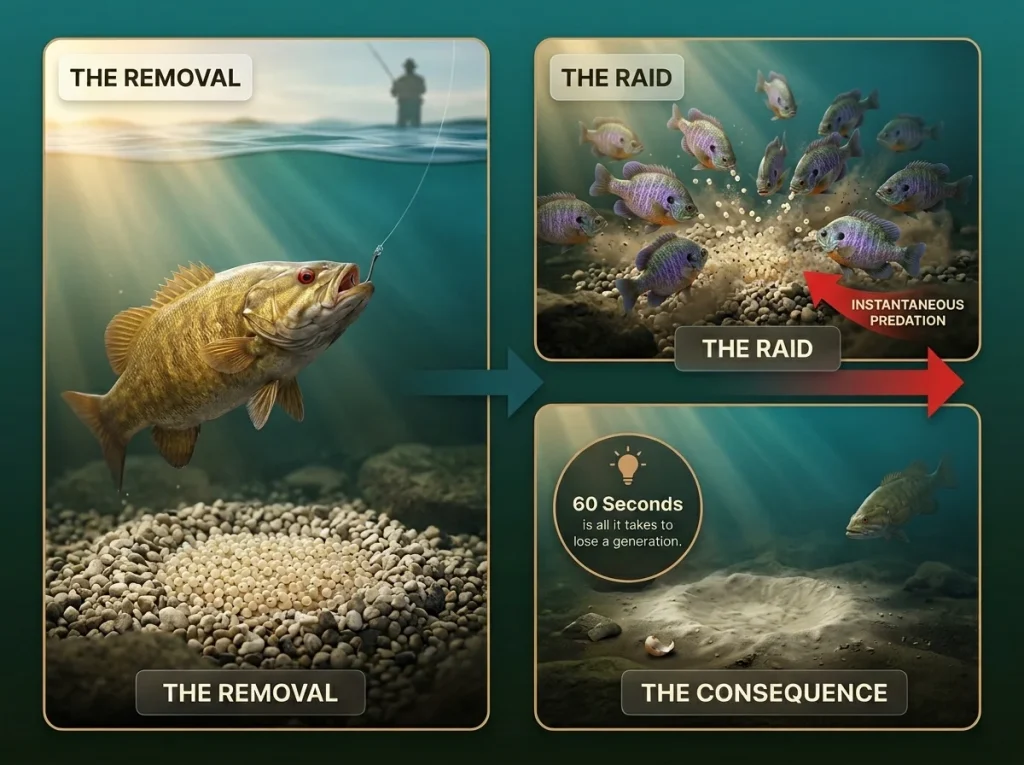
The 6-pound smallmouth was locked onto its gravel bed in three feet of crystal-clear water, aggressively chasing anything that drifted near the nest. It took less than ten seconds to hook and land him from the bank. But in the sixty seconds it took the angler next to me to remove a treble hook and snap a quick photo, a massive swarm of bluegill descended and consumed the unguarded eggs entirely. Every single one was gone before the bass hit the water again. Here at masterfishingmag.com, we have watched this exact scenario play out on countless riverbanks and reservoirs across the country. You register the immediate thrill of a heavy catch, but you miss the invisible ripple effect that follows below the surface in the minutes afterward. Deciding whether it is right to cast at bedding fish requires looking past the surface action entirely. You need to understand the severe physiological toll of reproduction, the immediate risk of nest predators waiting in the wings, and the major biological differences between wild native populations and put-and-take fisheries managed by state agencies. This guide breaks down exactly how fisheries biology works during the reproductive cycle so you can handle your time on the water without reducing the resource for next season.
⚡ Quick Answer: Hooking fish during their spawn requires already-depleted animals to burn critical survival energy, leading to delayed mortality even after a seemingly clean release. Furthermore, when nest-guarding males are pulled away, opportunistic scavengers consume the unprotected fry in seconds. The ethics depend heavily on your exact location: targeting native populations during the spawn is highly damaging, while targeting stocked put-and-take species or harvesting invasive predators is a widely accepted practice.
The Biological Cost of Spawning for Game Fish
When evaluating the sheer physical cost of reproduction, looking at striped bass migration patterns and spawning flows illustrates exactly how much fuel a fish burns before it ever drops a single egg. The entire cycle demands an extreme caloric expenditure that leaves game fish running on empty before they even see your topwater bait dragging overhead. They are not feeding out of hunger during this window. They strike out of pure territorial aggression while running a systemic internal deficit.
Metabolic Depletion and Caloric Deficits
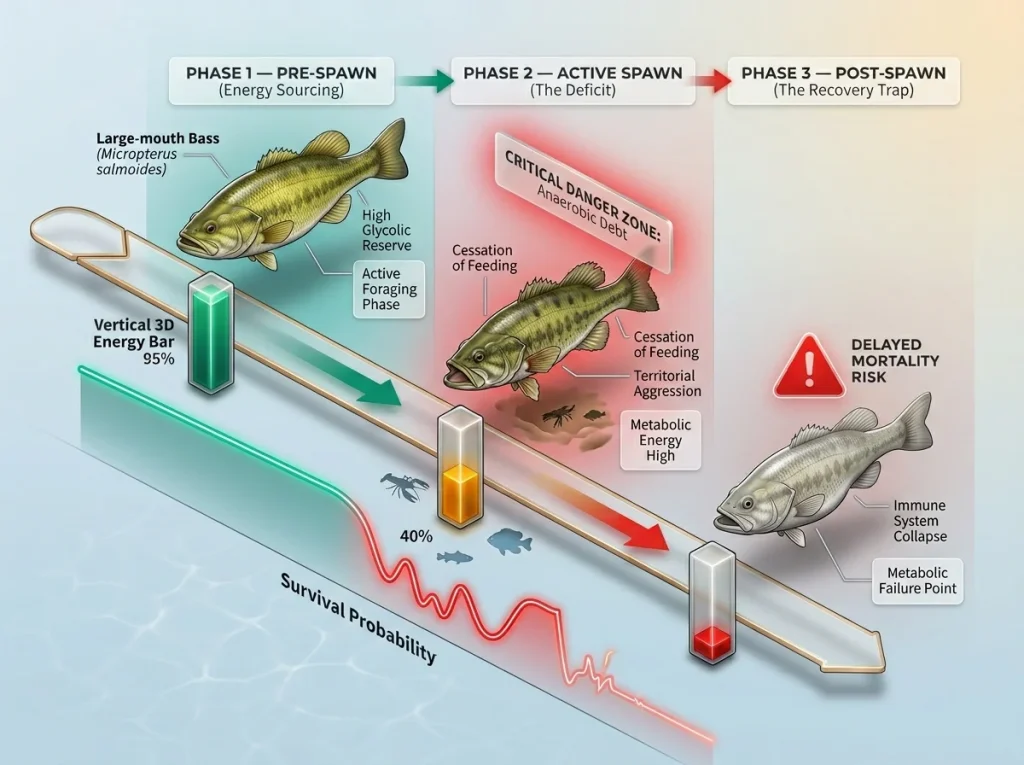
By the time water temperatures hit the exact marks required for reproduction to begin, most target species have completely stopped their standard feeding patterns. They stop looking for forage and rely exclusively on stored metabolic resources to carry them through the weeks-long process of staging, bedding, and dropping eggs. This internal shift means any additional physiological demand cuts straight into the primary fuel they need simply to survive the month. The U.S. Fish & Wildlife Service data on reproductive stress repeatedly confirms that metabolic costs during this phase push these animals to the absolute brink of starvation naturally.
When you hook a pre-spawn or spawning fish, you push it into immediate anaerobic debt. A fish that strikes out of frustration rather than genuine hunger is burning reserves it cannot replace until the cycle fully concludes. Throwing angling exhaustion on top of a depleted metabolic state severely lowers its survival probability compared to landing that same fish in late October. Even high-end tournament pros see this firsthand on the scales. Post-spawn bass are the weakest fish handled all year, requiring non-stop livewell management just to keep them upright until weigh-in finishes.
The Exhaustion of Nest Defense
For nest-guarding species like bass and sunfish, the physical toll stretches far beyond the brief act of producing and dropping eggs. The males bear the brunt of the daily abuse. They burn tremendous energy fighting off nest raiders continuously for weeks on end. They patrol a tiny, strictly defined perimeter, rushing at crawfish, salamanders, and smaller fish without pausing to eat a single sustaining meal.
Every time they charge an intruder—which includes your heavy dragging jig—they burn a fraction of the very limited fuel keeping their organs functioning correctly. That aggressive bite is a survival mechanism to pass on their genetics, not a feeding response meant to sustain them. You know those raw tails and torn fins you see on bedding males every spring? That damage does not exclusively come from fanning the hard gravel bed. It comes from weeks of non-stop, violent defense against every passing threat. Stripping them of their final energy reserves for an Instagram photo often means they never see the post-spawn recovery phase.
This sustained aggression drains them completely, pushing them right to the edge of physical collapse as the season progresses. When you understand the sheer exhaustion involved in maintaining that perimeter against endless predators, you realize how risky any further interference can be to their immediate survival.
Thermal Windows that Trigger Spawning
The entire reproductive process is governed strictly by water temperature ranges that act like biological alarm clocks. In rivers and lakes across the entire country, specific degree marks dictate exactly when fish move shallow into highly vulnerable positions. This creates a dangerous concentration of fish in predictable areas that anyone with a flat-bottom boat can find easily.
When you closely track the spawning behavior of your target species, you realize how stacked the deck gets against them. They group up in localized shallows and become hyper-aggressive defending their specific plots. This combination makes them far easier to catch than at any other time of the entire year. This manufactured efficiency is exactly why natural reproduction takes a massive hit when immense fishing pressure concentrates on these specific thermal windows. The fish are biologically hardwired to be in the exact spot you throw, doing the exact thing that gets them hooked. This predictability sets the stage for the intense physical consequences of handling them once they strike.
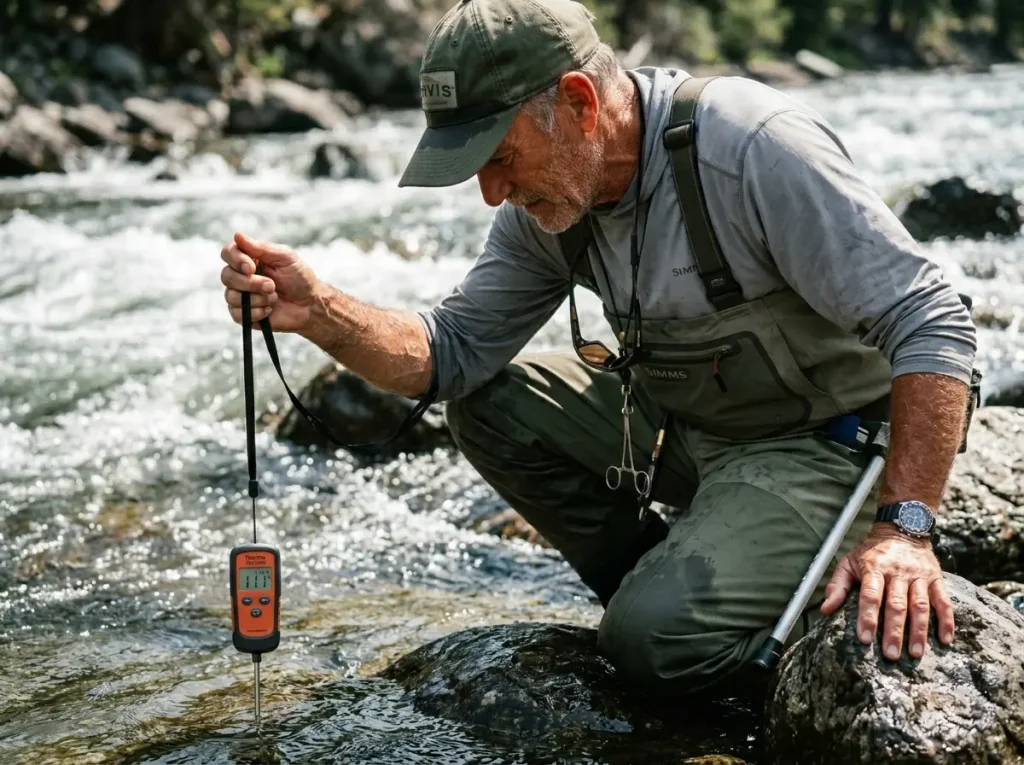
Pro-Tip: Check the actual water temperatures with a reliable digital gauge rather than guessing by the wall calendar. A warm spring season can pull the spawn forward by two full weeks. You might be casting right into bedding fish before the local tackle shop even mentions the season has started.
The Hidden Impact of Catch-and-Release on Spawners
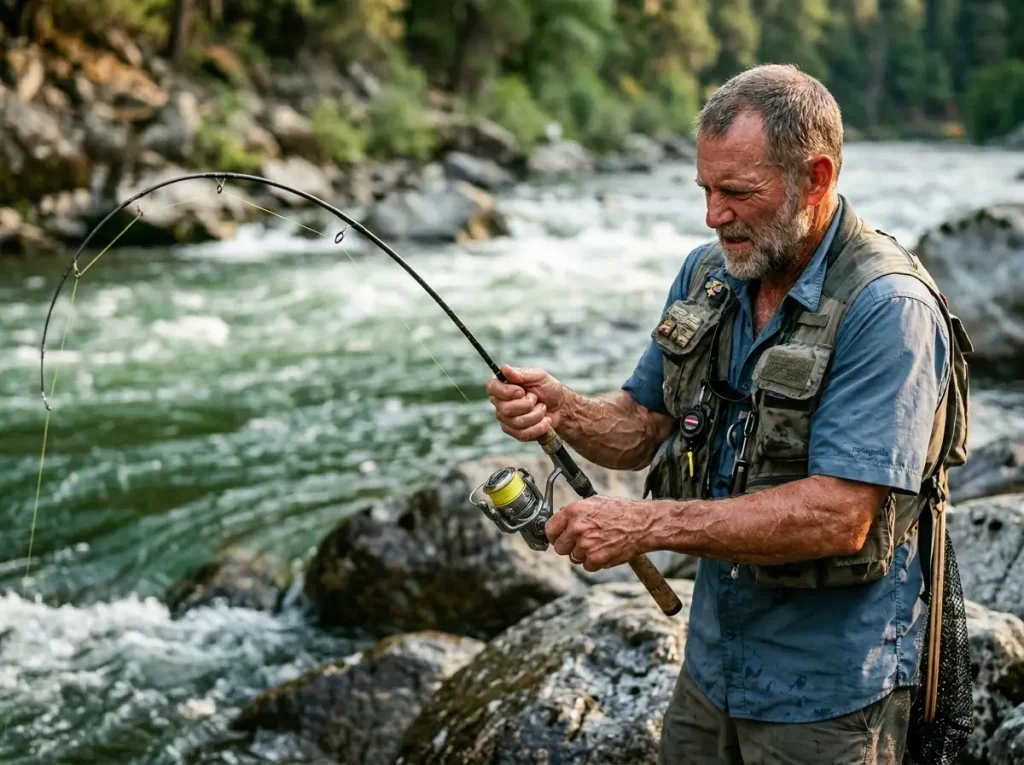
When a spawning fish inhales your presentation, the primary threat is not the actual puncture wound in its top jaw. The real hazard lies in the physiological impact of cortisol on fight stress that forces the animal to abandon its redd permanently. Throwing a fish back with wet hands does not magically undo this invisible damage. Often, the hidden stress response is what finishes them off two days later.
The Fight Stress and Cortisol Spike
Fight time introduces heavy lactic acid buildup and spikes blood cortisol instantly, putting the fish into a severe oxygen debt. Under normal conditions during the summer or fall feeding frenzies, a healthy fish processes this acid within a few hours. During the spawn, their systems simply lack the surplus metabolic energy required to process those stress hormones efficiently. The NOAA catch and release survival metrics show a stark increase in delayed mortality when fish are fought in this heavily depleted condition.
They swim off looking totally fine. You watch them kick away with a strong splash, thinking you did everything right, but their internal chemistry is completely crashing out of sight. Prolonged air exposure while you dig out a buried treble hook makes this dramatically worse. The longer they stay out of the water, the higher the cortisol spike climbs past the point of no return. Once that specific chemical threshold is crossed, they simply lose the basic biological drive to resume their reproductive duties.
The Immediate Threat of Nest Predation
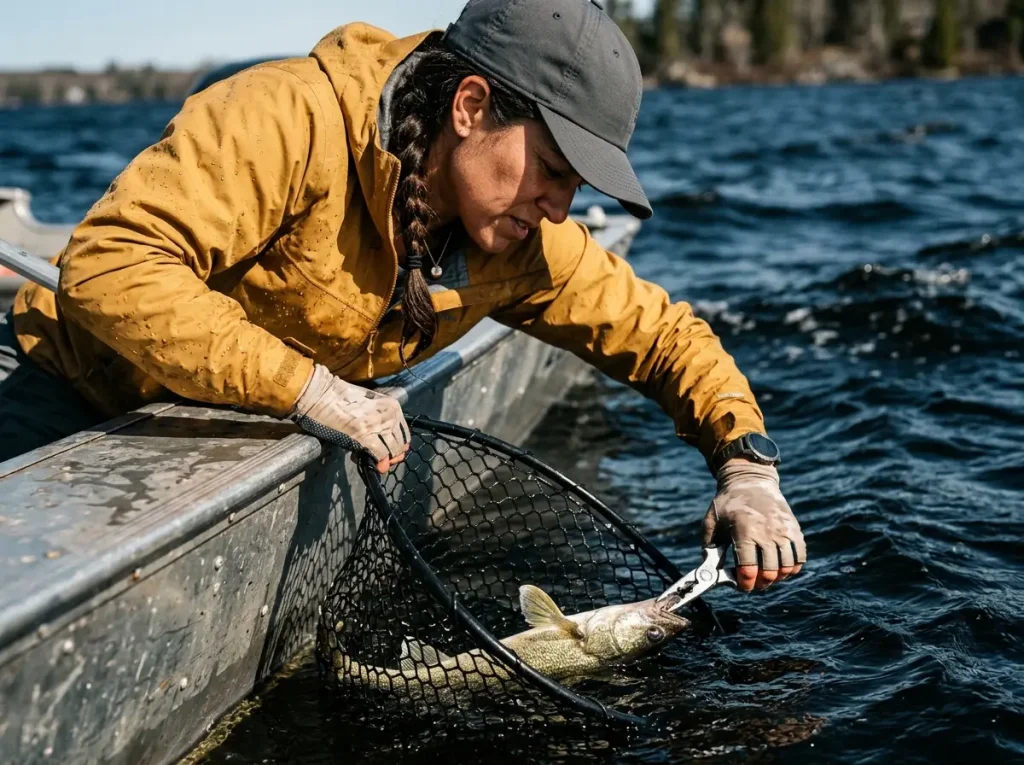
The most pressing danger of catching a bedding fish happens in the water right behind you. While you unhook a protective male on the deck of your boat, nest raiders have completely free reign over the unguarded eggs. Every crawfish, bluegill, and smaller opportunistic fish in the vicinity monitors these nests around the clock. They sit just outside of the male’s striking distance, waiting patiently for a major mistake.
The exact moment you lift that bass from the water, the swarm moves in without hesitation. A heavy nest of eggs can be completely eliminated in less than forty-five seconds on a busy lake. By the time you get your digital scale zeroed and take a quick picture, you have facilitated the destruction of thousands of potential fry. Even if the male survives the release and swims directly back down, he returns to a completely empty crater. The entire reproductive cycle for that individual fish is ruined for the year. This is the unseen consequence that most casual anglers completely overlook.
I learned this lesson the painfully hard way on a clear-water reservoir in Arkansas. I pulled a beautiful 4-pound male off his bed, took exactly 30 seconds to remove the hook, and tossed him back. Watching him swim down to a bed completely swarmed and picked clean by bluegills changed how I fish the spring season forever.
The destruction is completely instantaneous, and it happens while you are looking the other way at your phone. You have to consider not just the single fish you are holding, but the massive vulnerability you created in its localized absence.
Egg Resorption from Excessive Handling
For pre-spawn females loaded with roe, heavy handling poses a completely different but equally damaging threat to the fishery. When a female carrying mature eggs experiences severe physical trauma, extended air exposure, or extreme fight stress on light tackle, her system hits the panic button. She reacts to the crisis by prioritizing her own life over her offspring.
Instead of laying the eggs normally on a suitable flat, the physiological shock triggers massive fish stress across her system. She responds by resorbing the eggs back internally to salvage the calories for her own immediate survival. Alternatively, she may simply drop them randomly in deep, unsuitable water where they will never receive enough sunlight or oxygen to hatch properly. The prolonged fight and rough handling literally cancels the reproductive cycle for that specific female for the entire calendar year. But this harsh physical reality applies differently depending on whether you are standing on a pristine native river or a paved local reservoir.
Native Populations vs. Stocked Fisheries: The Ethical Divide

When analyzing whether your local spring season fishing is harmful, you must clearly understand why most fish stocking programs fail and how hatchery-raised fish fit into the reproductive landscape compared to native species. Not all aquatic systems operate on the same biological principles across the board. The ethics of the situation change entirely based on where your boat is parked at dawn.
Why Self-Sustaining Populations Are Vulnerable
Native vs stocked populations represent entirely different sets of management rules and conservation goals. In secluded native trout streams or fragile inland lakes with wild bass, the population relies completely on natural reproduction to maintain its active numbers year after year. Every single successful nest matters heavily to the ecosystem. Interrupting the spawn directly harms the future fishing quality of that specific water.
If you hammer the spawning beds on a self-sustaining wild river every spring, you are stealing from the future density of that exact water supply. It is biologically damaging in the most literal, direct sense possible. These specific fisheries cannot bounce back through hatchery truck intervention when numbers fall. Their long-term survival depends entirely on the exact fish you are targeting in the shallows right now. Taking a wild fish off its redd in these fragile environments crosses the hard line of responsible angling ethics and conservation stewardship.
The “Put-and-Take” Exemption for Stocked Fisheries
Switching contexts completely, the rules vary drastically on man-made local reservoirs. In stocked, put-and-take waterways, the local fish cannot physically reproduce anyway regardless of their efforts. Many state wildlife agencies stock sterile hybrid species or dump fish into habitats strictly unsuitable for successful spawning, even if the fish aggressively go through the biological motions out of pure instinct.
In these precise scenarios, fishing during the spawn is completely harmless to the future of the population. The fish exist in that specific water purely for recreational catch and immediate harvest. They will age out at a calculated rate and be systematically replaced by the local hatchery truck next spring. Recognizing this difference is exactly where situational ethics come heavily into play for the informed angler. It is perfectly fine to target these fish when they push shallow because there is absolutely no biological future to protect in that basin.
There is a clear separation between a wild river that sustains itself organically and an artificial basin reliant on state stocking funds. Once you understand this separation, the decision to cast a line becomes much simpler.
Invasive Species Management During the Spawn
Sometimes, fishing the exact spawn is not just ethically acceptable; it is practically mandatory for system health. Removing invasive spawning fish is actively encouraged by fisheries biologists everywhere to protect native strain populations.
Take Northern Pike in vulnerable western trout waters, or Snakeheads scattered across eastern tidal drainages. When these predators push shallow to breed rapidly, management agencies rely heavily on private anglers to remove as many as physically possible to protect the native ecosystem. I routinely target spawning carp in local rivers—an action that benefits the local ecosystem dramatically, whereas I would absolutely never cast a weighted jig toward a spawning native brook trout. The ethical angler knows precisely what species belong in the water and which ones desperately need to be harvested during their most vulnerable seasonal window.
Pro-Tip: If you see local biologists out netting and actively removing a specific species during the spring season, take detailed notes on what they target. That is your green light from the state to target those exact invasives hard during the spawn. You are actively doing the water a favor by thinning them out. Knowing exactly which fish to keep and which to protect requires navigating a complex web of local regulations before you ever back down the ramp.
Understanding Spawning Closures and Regulations
State agencies do not typically rely on total seasonal bans across the board; understanding the conservation logic behind slot limits vs bag limits is essential for knowing how biologists protect prime breeding females while allowing some measure of smaller fish harvest legally. Navigating the modern rulebook requires looking far past the printed date ranges on a static calendar.
The Biological Logic Reshaping Seasonal Closures
Wildlife agencies draw up precise seasonal closures specifically to shield fish when they are concentrated and most exposed to heavy recreational pressure. These specific closure dates are not pulled out of thin air by bureaucrats. They are firmly based on decades of hard tracking data monitoring water temperatures, daily light cycles, and highly localized behavior patterns.
These closures are legally binding and heavily enforced, but the most responsible anglers often rack their rods voluntarily even before or after the legal dates based on existing environmental conditions. If an unseasonably warm April pushes the spawn two weeks early, stopping your pressure before the official closure rules begin is the mark of a true steward. The published law sets the bare minimum standard for acceptable behavior; your personal ethics should dictate the rest of the margin. Performing reliable regulatory lookups before every single spring trip is totally non-negotiable for anyone who cares about the resource.
Protecting the “BOFFFF”: Why Slot Limits Matter
During the critical pre-spawn and spawn phrases, you will frequently see rigid slot limits heavily enforced by game wardens sweeping the water. These strict regulations protect the “BOFFFF”—the Big, Old, Fat, Fecund, Female Fish that anchor the entire population base.
These massive females produce exponentially more eggs, and significantly higher quality eggs, than younger fish forced onto the exact same beds. A ten-pound pre-spawn female carries the precise genetic superiority that keeps your favorite local fishery thriving over grueling decades. Slot limits are engineered specifically to ensure these exact fish survive the aggressive spring pressure completely intact. When you see a local slot limit demanding the immediate release of any fish caught between 16 and 22 inches, you are looking at a targeted biological shield tailored to protect the prime reproductive class exclusively.
The slot limit strategy actively prevents anglers from keeping the most valuable breeding stock while giving them the clear legal option to catch and keep smaller, considerably less vital fish.
Navigating Complex State Boundaries and Zones
If you run a powerboat on major river systems or border lakes, managing closure rules turns into an absolute tracking maze quickly. A single river channel can transition widely from a completely open harvest zone, right to a strict catch-and-release area, and directly into a closed spawning wildlife sanctuary all within a five-mile stretch of current.
Agencies partition these vast waters based on exactly where the primary spawning habitat naturally lies according to their surveys. The shallow gravel bars earn strict state protection while the deep transit channels stay completely open to normal fishing operations. Ignorance of these boundaries will automatically earn you a massive fine and potential confiscation of your expensive gear by wardens. You have strictly to know precisely where your boat sits on the GPS grid. You absolutely cannot rely on broad statewide assumptions when complex fisheries are managed on a block-by-block basis.
A GPS mapping chip in your fish finder pays for itself the very first time a warden pulls up to your gunwale. I have watched guys get written $400 tickets because they drifted exactly fifty yards past a bridge piling that marked the invisible start of a protected spawning sanctuary. “I didn’t know” is not a valid defense on the water.
Once you master the legal boundaries for your home water, your next responsibility is adjusting the tackle directly in your hands to minimize stress on the fish you do catch legally.

Ethical Angling Practices During the Spawn
When fishing anywhere near the active spawn, analyzing the physical mechanics of barbless hook penetration improves your hookup ratio and guarantees you can slip the iron out in seconds to protect the fish’s critical slime coat. If you actively choose to fish the pre-spawn or post-spawn periods, you must deliberately adapt your methods to reduce unnecessary harm.
Upsizing Tackle to End Fights Quickly
This situation is exactly where the light-tackle crowd gets it entirely wrong every spring. If you fish near the spawn, your gear choices dictate actual survival rates heavily. Fighting a fish to total physical exhaustion on a 4-pound test line is a guaranteed loss in the early spring months.
Upsizing your tackle—running heavier braided line, much stiffer rods, and locked-down drag systems—reduces total fight times drastically across the board. You want to winch that fish in, unhook it cleanly, and get it swimming again before lactic acid completely saturates its weakened muscle tissues. It feels far less sporting in the moment, but the fundamental goal here is fish preservation, not feeling every single head shake for your own enjoyment. You are actively managing their reproductive success metrics by keeping them strong enough to actually spawn successfully after the release.
The Mandatory Transition to Barbless Hooks
If you are going to intentionally fish for spawners where local regulations deem it fully lawful, pinching your hook barbs completely flat is the absolute baseline of respect you owe to the resource.
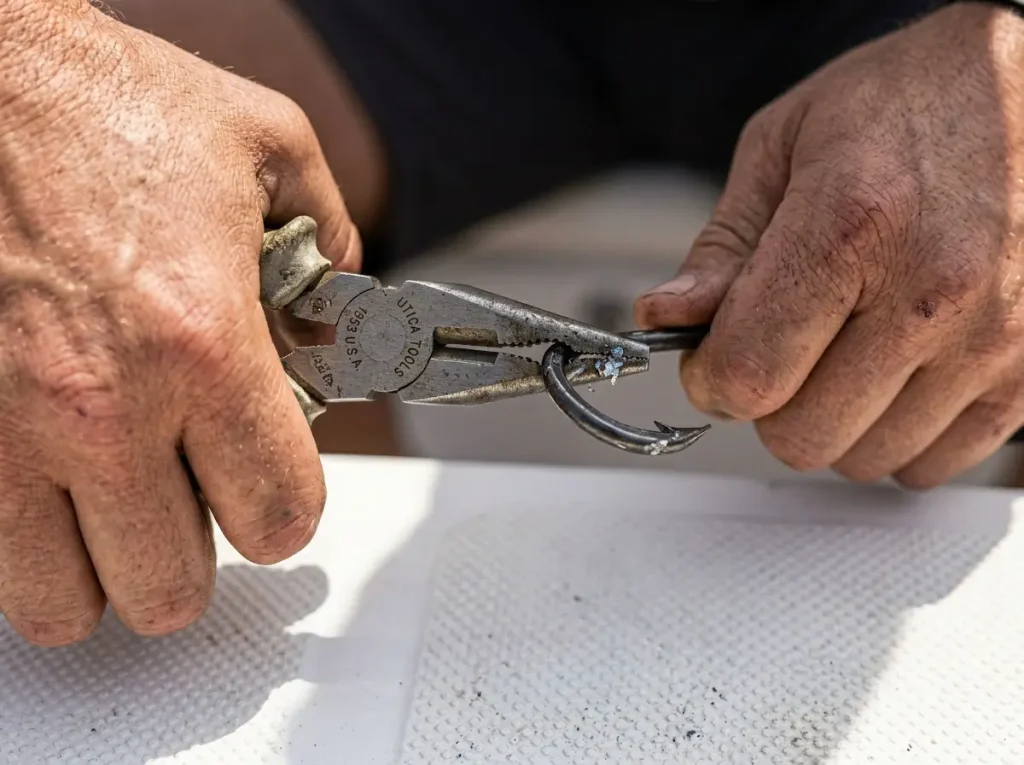
Barbless hooks easily allow for rapid releases, often without ever rotating the fish fully out of the water column. When a large bass engulfs a heavy jig near a bed, a barbed hook requires deep leverage, heavy steel pliers, and totally wasted time on the deck. A barbless hook slides right out the exact moment line tension drops slack. The difference is literally thirty seconds of dry air exposure versus three seconds. For an animal operating right on empty metabolic reserves, those twenty-seven seconds alone dictate whether they live to feed during the peak summer heat.
The rapid transition to barbless gear requires absolutely no specialized equipment from the store; a standard pair of pliers can permanently modify any factory hook on your boat in just seconds of effort.
In-Water Release Protocols and Tools
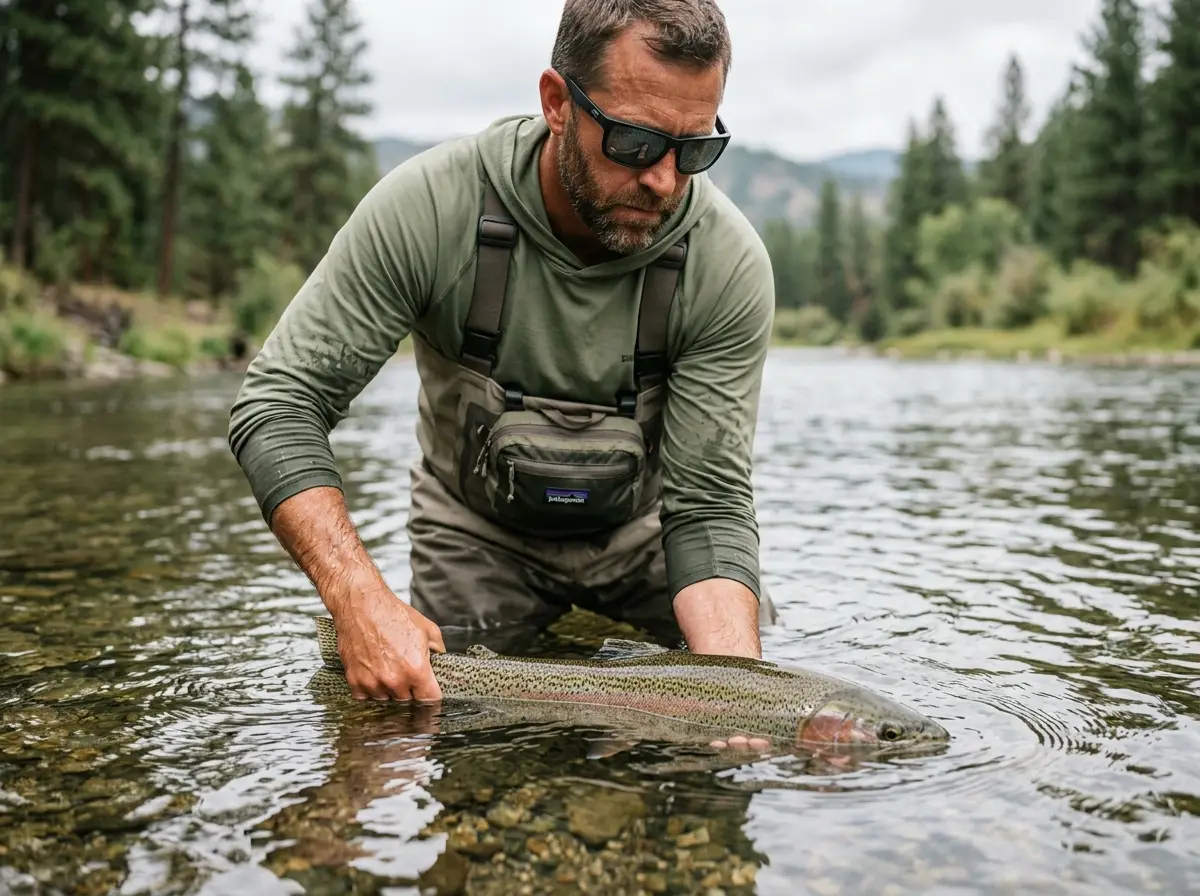
The outer slime coat acts as a target species’s primary immune system against the elements. Wiping it off aggressively on your dry jeans or dropping the wriggling fish onto your hot boat carpet exposes them to severe bacterial infections almost immediately upon release. You must intentionally keep the fish hovering right over the water at all times.
Use long-reach pliers or rigid hook-out tools to work the hardware while the fish is still fully submerged along the gunwale. If you absolutely must lift them for a photograph, support the belly fully with your free wet hand, hold your breath, and get them right back in the water before you deeply need to exhale again. Biological impact studies show unequivocally that severe long-term air exposure heavily limits survival. The faster the turnaround time from catch to release, the better the overall fishery holds up and recovers into the summer months.
Pro-Tip: Adopt the strict “60-second rule.” If you cannot successfully land, completely unhook, and fully release a fish within 60 total seconds during the spawning window, your tackle is far too light or your handling technique is way too slow for the conditions.
Conclusion
The severe ongoing metabolic cost of the reproductive cycle makes prized game fish incredibly fragile each spring, and the immediate threat of heavy nest predation during catch-and-release handling can literally eliminate an entire future generation in mere minutes. Handling these totally exhausted fish improperly guarantees delayed mortality. However, the exact ethics during the spawn depend completely on the specific context of your location. Targeting vulnerable native bass directly on their shallow beds is biologically damaging, while actively removing invasive predators or fishing an artificial put-and-take stocked reservoir is a perfectly sound management practice accepted nationwide. Next spring, closely monitor the real water temperatures, master your local regulatory boundaries, and consider giving those bedding native fish the true break they firmly need to keep the resource thriving for years.
FAQ
Is it lawful to fish during spawning season?
It depends entirely on your local state and specific water regulations. Many states enact strict seasonal closures for highly vulnerable species like trout, bass, and walleye, but where it remains fully lawful, the choice becomes a pressing question of personal angler ethics rather than the written law.
Can you legally harvest a spawning fish if the season is open?
Yes, if the specific fishery is currently open and you remain firmly within your established state bag limits. However, harvesting prime reproductive females directly damages the long-term health and mature growth potential of irreplaceable self-sustaining wild fisheries.
Do male bass always return to their nest immediately after being caught?
Sometimes they return to guard the bed, but certainly not always. If the fight was overly exhausting or the rough handling caused severe physical damage, the highly stressed male may abandon the nest entirely, leaving the remaining eggs completely vulnerable to immediate predation from scavengers.
Why do some managed lakes openly encourage fishing pressure during the spawn?
Lakes managed solely as put or take fisheries rely exclusively on state hatchery stocking rather than natural reproduction, meaning spawning fish never actually contribute to the long-term future population. Biologists also frequently encourage the intense harvest of invasive species everywhere during the spawn to maximize local population control efforts.
Risk Disclaimer: Fishing, boating, and all related outdoor activities involve inherent risks that
can lead to injury. The information provided on Master Fishing Mag is for educational and informational purposes
only. While we strive for accuracy, the information, techniques, and advice on gear and safety are not a substitute
for your own best judgment, local knowledge, and adherence to official regulations. Fishing regulations, including
seasons, size limits, and species restrictions, change frequently and vary by location. Always consult the latest
official regulations from your local fish and wildlife agency before heading out. Proper handling of hooks, knives,
and other sharp equipment is essential for safety. Furthermore, be aware of local fish consumption advisories. By
using this website, you agree that you are solely responsible for your own safety and for complying with all
applicable laws. Any reliance you place on our content is strictly at your own risk. Master Fishing Mag and its
authors will not be held liable for any injury, damage, or loss sustained in connection with the use of the
information herein.
Affiliate Disclosure: We are a participant in the Amazon Services LLC Associates Program, an
affiliate advertising program designed to provide a means for us to earn advertising fees by advertising and linking
to Amazon.com. As an Amazon Associate, we earn from qualifying purchases. We also participate in other affiliate
programs and may receive a commission on products purchased through our links, at no extra cost to you. Additional
terms are found in the terms of service.