
In this article
The red on my bump board stopped at 27 and a quarter inches. One quarter-inch over the upper slot. I stared at that red drum for a solid ten seconds, heart hammering against my ribs, before sliding her back into the Indian River. That quarter-inch was the difference between dinner and a $500 citation. And it taught me a lesson most anglers learn too late: if you don’t understand the difference between a slot limit and a bag limit, the water will educate you—expensively.
After two decades of guiding on everything from East Texas reservoirs to Florida salt marshes, I’ve watched more anglers fumble this than any other topic in fishing regulations. They confuse the two, assume the rules from one lake apply to another, or measure a fish with its mouth gaping open and end up short when the game warden pulls out the certified board.
Here’s the clear breakdown of how both tools work, why biologists use them, and how real data from Lake Fork, Florida, and Lake Mille Lacs proves these aren’t arbitrary rules—they’re the reason trophy fisheries still exist.
⚡ Quick Answer: A daily bag limit caps the number of fish you can keep per day. A slot limit restricts which sizes you can keep, protecting either spawning-class adults (protected slot) or juveniles and trophy breeders (harvest slot). Both work together: the bag limit controls how many, and the slot limit controls which ones. Violating either can mean citations, gear confiscation, and loss of your fishing license.
What a Bag Limit Actually Controls (And What It Doesn’t)
How Daily Limits Reset (And When They Don’t)
The daily bag limit—also called a creel limit—is the simplest regulation in your handbook. It’s the maximum number of one species a single licensed recreational angler can harvest per calendar day, midnight to midnight. That’s per person, not per boat, and definitely not per trip.
Most anglers get this right. Where they trip up is assuming the limit works like a refilling tank. Your bag resets every 24 hours, but the fish in your cooler don’t vanish at midnight.
That’s where the possession limit steps in—a separate cap on the total number of a species you can have in your control at any time. Your truck, your campsite, your freezer at home. In Minnesota and Texas, fish stored at your permanent residence count toward your possession limit.
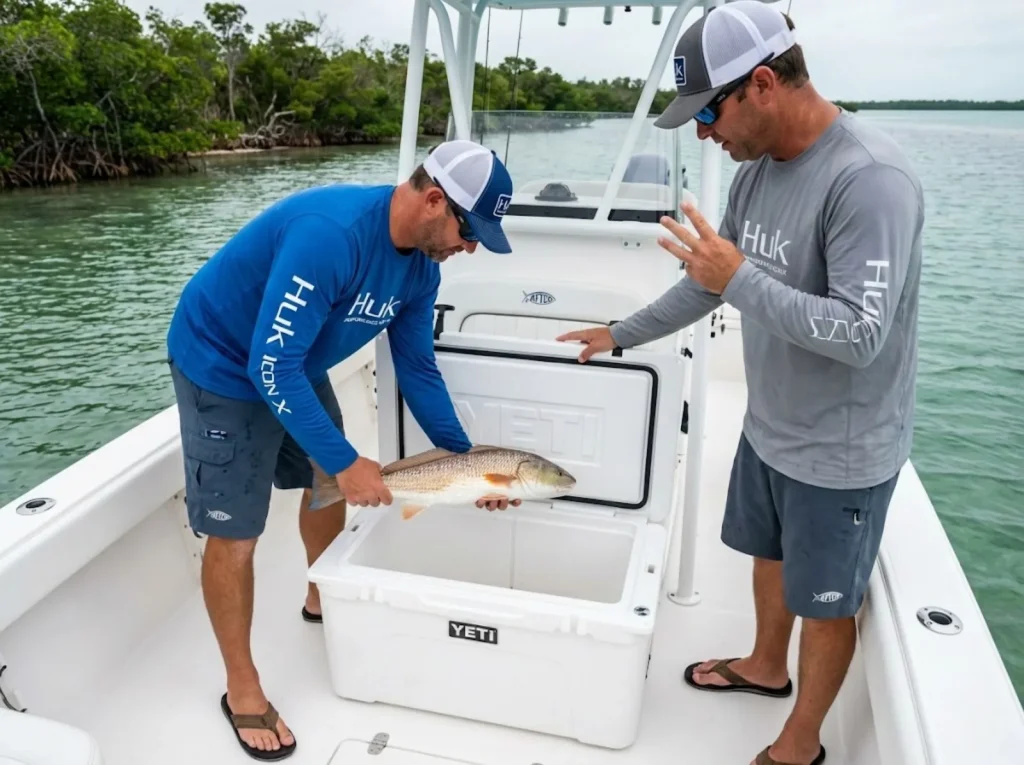
And here’s where group trips get messy. If you’re fishing with a buddy and you hit your limit first, you stop harvesting. Period. You can’t keep casting “for their limit” while they eat lunch. The Florida Fish and Wildlife Conservation Commission takes this further: on charter boats, the captain and crew are prohibited from contributing their own limits to the client’s total.
Pro tip: 67% of surveyed Minnesota anglers support reducing walleye bag limits from six to four fish. If the anglers themselves say the limits need tightening, that tells you something about the pressure modern technology puts on a fishery.
Possession Limits: The Rule That Follows You Home
The mistake I see most often? Anglers treating the possession limit like it’s just twice the daily bag. In many states, it is—but not everywhere. Wisconsin sets it equal to the daily bag for certain species. California has different rules depending on whether you’re on the water or heading home.
The critical thing to understand is that possession limits aren’t just about what’s in your live well right now. They include every fish of that species in your control: cooler, truck bed, campsite, and yes, your home freezer.
Aggregate and Vessel Limits: The Rules Within the Rules
Some regulations go another layer deeper. Aggregate limits group related species under a single count—ten total Snappers regardless of species mix, for example. This prevents anglers from hammering one vulnerable species within a family group.
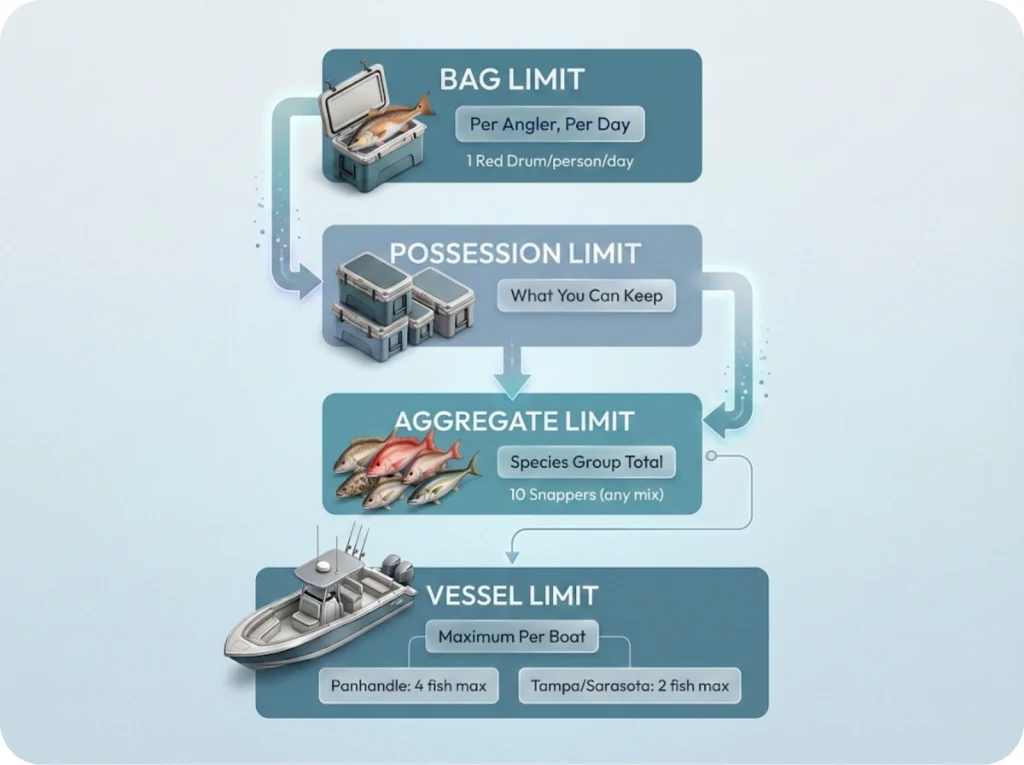
Then there are vessel limits, which cap the total harvest aboard a boat regardless of how many licensed anglers are on board. Florida Red Drum is a perfect case: most regions allow one fish per person but cap the vessel limit at four in the Panhandle and just two per boat in the Tampa/Sarasota region. If you’ve ever wondered why fishing legally in marine protected areas feels like reading tax code, this layered structure is why.
How Slot Limits Protect the Spawning Engine
Protected Slot vs Harvest Slot: Two Tools, Different Goals
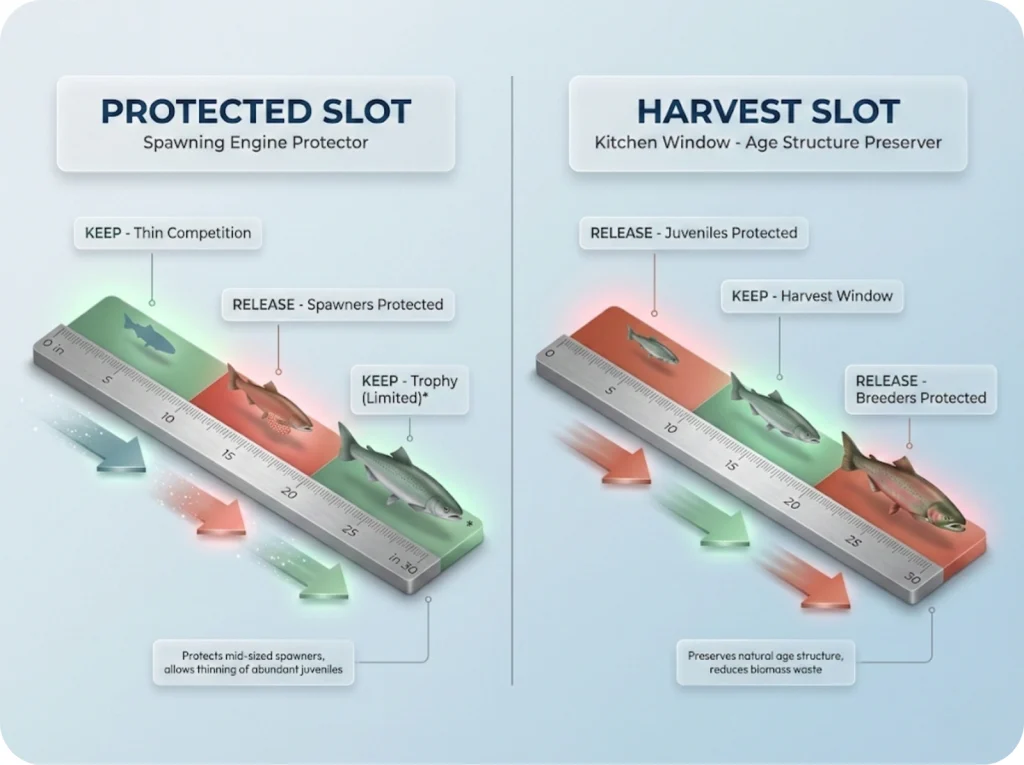
A slot limit is where fisheries management gets surgical. Instead of just counting fish, biologists target specific size classes for protection. There are two configurations, and most articles online blur them into one. That’s a problem, because they work in opposite directions.
A protected slot limit means fish inside the defined size range must be released. You can keep fish smaller than the lower threshold or larger than the upper one (usually with extra quantity restrictions on the big ones). This is the “spawning engine” protector—it shields the mid-sized females pumping out the most eggs while letting anglers thin out smaller, abundant fish.
That thinning actually matters. Reducing competition for forage accelerates growth rates in the remaining population, pushing more fish through the slot and into catchable size faster.
A harvest slot limit—sometimes called a “kitchen window”—flips the script. Only fish inside the range can be kept. Both juveniles and large breeders stay protected. Research from D.C. Gwinn and colleagues shows this configuration produces less biomass waste than traditional minimum-size limits and does a better job of preserving the natural age structure.
The BOFFFF Principle: Why Big Fish Matter More Than You Think
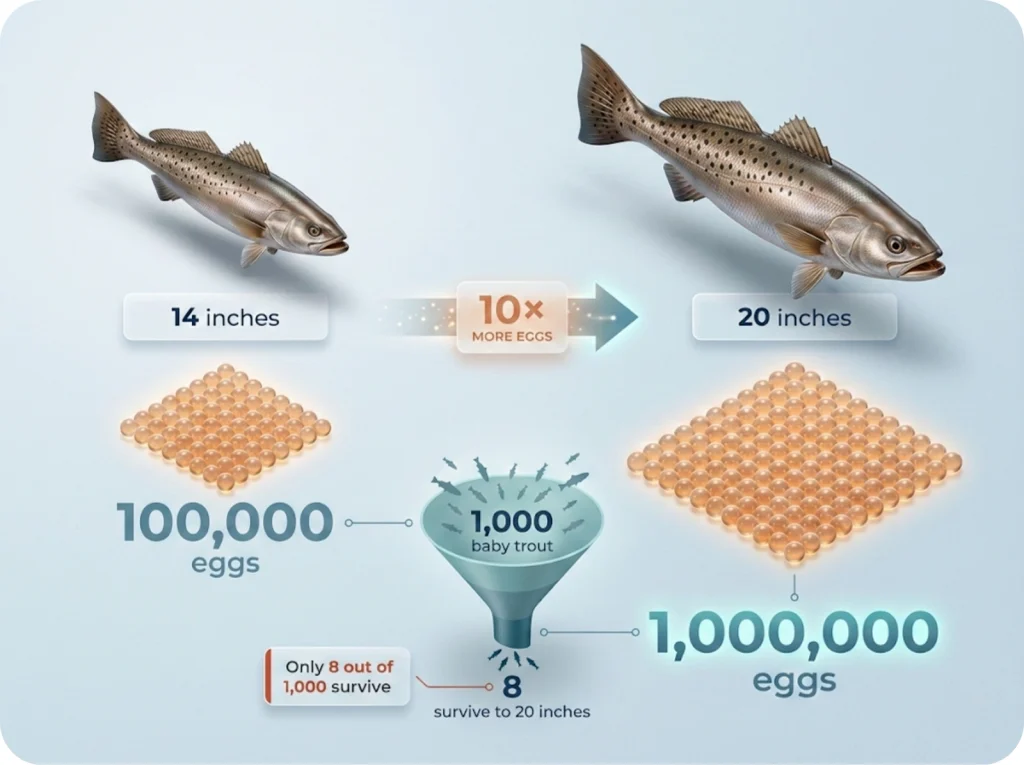
Here’s the biological argument that changed how I think about releasing big fish. Fisheries scientists use the term BOFFFF—Big Old Fat Fecund Female Fish—to describe why protecting large individuals matters exponentially more than protecting small ones.
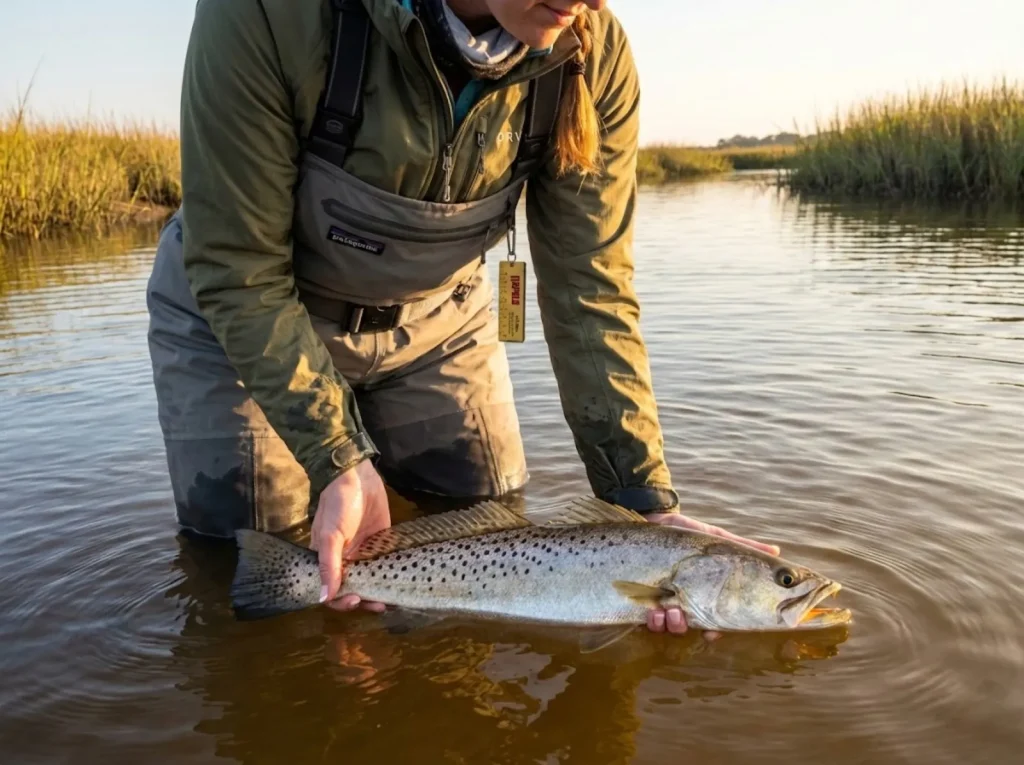
A 14-inch spotted seatrout produces roughly 100,000 eggs per season. A 20-inch female of the same species? Up to one million. That’s a 10× differential from just six more inches of growth. She spawns every four to five days from May through September. Over a full season, a single 20-inch trout can release approximately 20 million eggs.
Only eight out of every thousand baby trout survive to reach that critical 20-inch mark. That survival funnel is why every large female you release carries outsized weight for the population’s future.
Large female cod at 120 cm produce 13 times the eggs of one half that size. In Tautog, the scaling is even more extreme—a 50 cm fish produces 24 to 86 times more eggs than a 25 cm individual, according to NOAA research on harvest slot limits and spawning stock biomass.
Dave Fladd, founder of the Release Over 20 movement, put it plainly: “Even though the law allows it doesn’t mean I couldn’t make my own upper-slot and follow it as if it were the law.” That voluntary conservation stewardship has tracked over 326 billion potential eggs returned to the population through voluntary releases.
Why Minimum Size Limits Alone Fall Short
The traditional “spawn-at-least-once” approach to minimum length limits assumed that reproduction scales proportionally with body mass. That assumption is wrong for most species.
Most fish produce eggs at an exponential rate as they grow—not a linear one. Removing one 28-inch fish removes the spawning equivalent of eight 14-inch fish. That’s not a rounding error. That’s gutting the fish population dynamics in a single cast.
Rod Fujita at the Environmental Defense Fund has documented something even more troubling: evidence that minimum-size limits alone can drive genetic shifts over generations. When you consistently remove every fish that reaches a certain length, you’re selecting for individuals that mature earlier and stay smaller. The population literally shrinks itself to survive your regulations.
This is one reason understanding hooking mortality rates by location matters—even released slot-sized fish need proper handling to survive.
Pro tip: If your state only has a minimum size limit for a species, consider setting your own voluntary upper slot. The BOFFFF science is clear: one big female is worth dozens of minimum-keepers in terms of population health.
Real Examples: How Slot Limits Built Trophy Fisheries
Lake Fork, Texas: The 16–24 Inch Trophy Factory
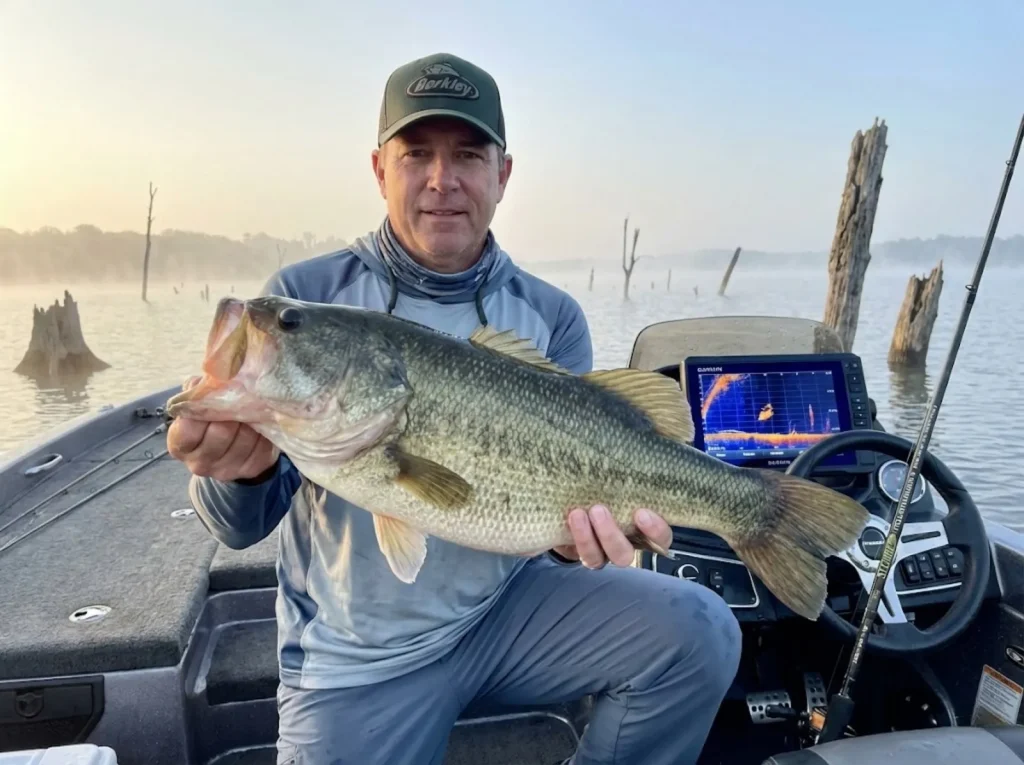
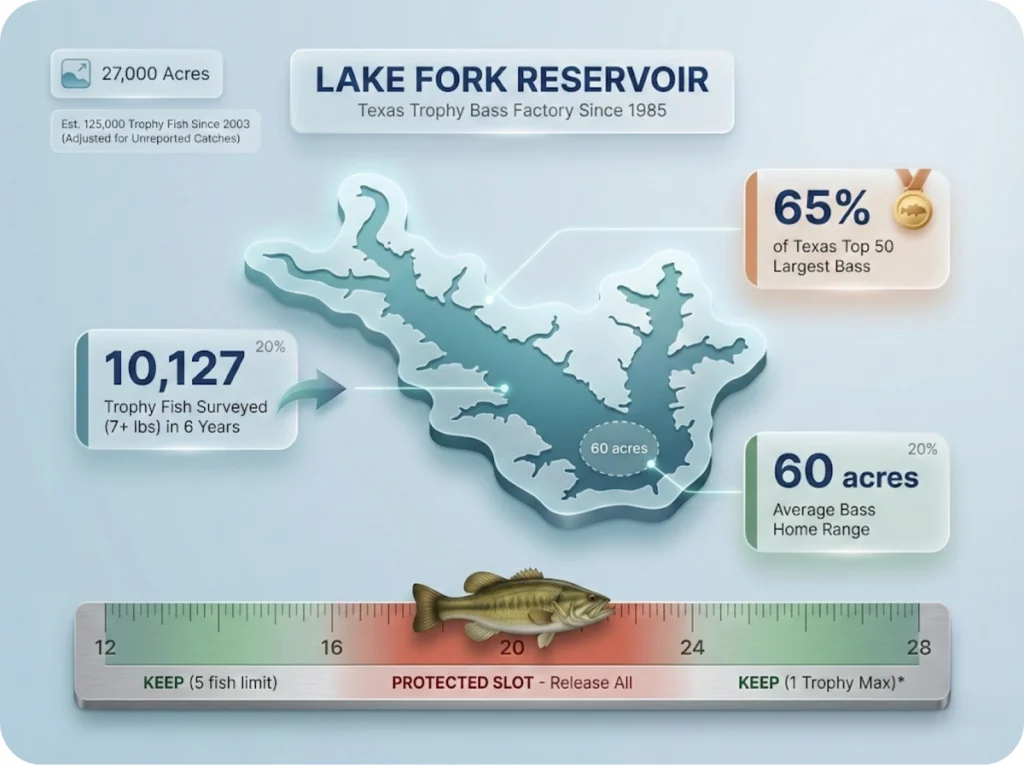
Lake Fork is the proof of concept. This 27,000-acre East Texas reservoir has been managed with a protected slot limit of 16–24 inches for largemouth bass since 1985. Anglers can keep a daily bag of five bass, but only one fish over 24 inches per day.
The results speak louder than any regulation handbook. Over 65% of the Top 50 largest bass in Texas history came from Lake Fork. The Trophy Bass Survey recorded 10,127 fish over seven pounds in just six years.
But here’s the kicker: Texas Parks and Wildlife Department biologists estimate only 8.1% of trophy catches were actually reported. The real number is closer to 125,000 trophy fish landed since 2003.
Kevin Storey, TPWD biologist: “The slot limit is producing impressive numbers of fish above the slot, as it was intended to do. No other lake in Texas comes close.”
Radio transmitter studies revealed something else that changes how you think about pressure: Lake Fork bass have remarkably small home ranges, averaging just 60 acres. That means localized fishing pressure on one cove or point has outsized impacts, even on a lake this big. If you’re planning a trip, understanding fishing Lake Fork for trophy bass requires knowing these movement patterns.
Florida Red Drum: Regional Management That Works
Florida’s Red Drum recovery is a global success story built on slot limits. In the late 1980s, the “blackened redfish” culinary craze nearly wiped out the coastal population. Emergency closures and an 18–27 inch protected slot enacted in 1989 turned the tide.
The Florida Fish and Wildlife Conservation Commission now manages Red Drum across nine separate regions—tripled from three in 2022—because these fish exhibit natal homing behavior. They return to their specific birthplace to spawn, creating isolated sub-stocks. A single statewide rule can’t account for that biological reality.
The FWC Red Drum management framework targets a 40% escapement rate—meaning 40% of the fish survive to age four compared to an unfished state. Current regulations exceed this goal in most regions. Indian River Lagoon is catch and release only. Other areas allow one fish per person with vessel caps varying by region.
Large female Red Drum produce up to 2 million eggs per spawn every two to seven days during fall. That kind of spawning biology is exactly why the slot protects them.
Minnesota Walleye: The Co-Management Experiment
Lake Mille Lacs walleye management is a different kind of case study. Here, regulations shift annually based on fall netting data and co-management agreements with the Mille Lacs Band and Fond du Lac Band of Ojibwe.
Current winter rules: three-fish daily limit, 17-inch minimum, only one over 20 inches. Brad Parsons of the Minnesota DNR: “Mille Lacs’ walleye population is trending in a good direction for both adult and juvenile fish.”
But the bigger story is statewide. The DNR is proposing a reduction in the general walleye limit from six to four combined fish—a direct response to how forward-facing sonar has changed the game.
How to Measure a Fish and Stay Legal
The Total Length Method: Step by Step
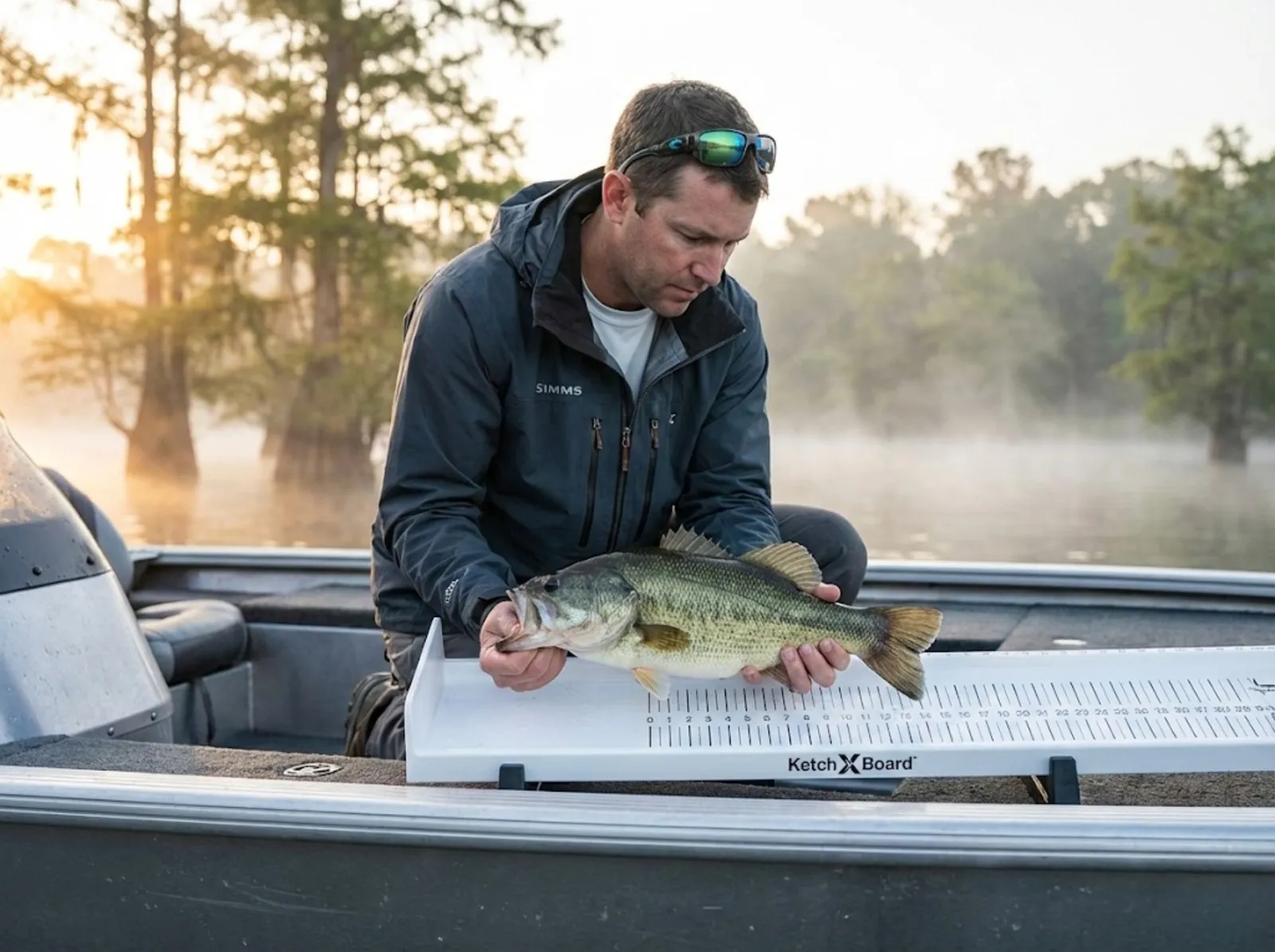
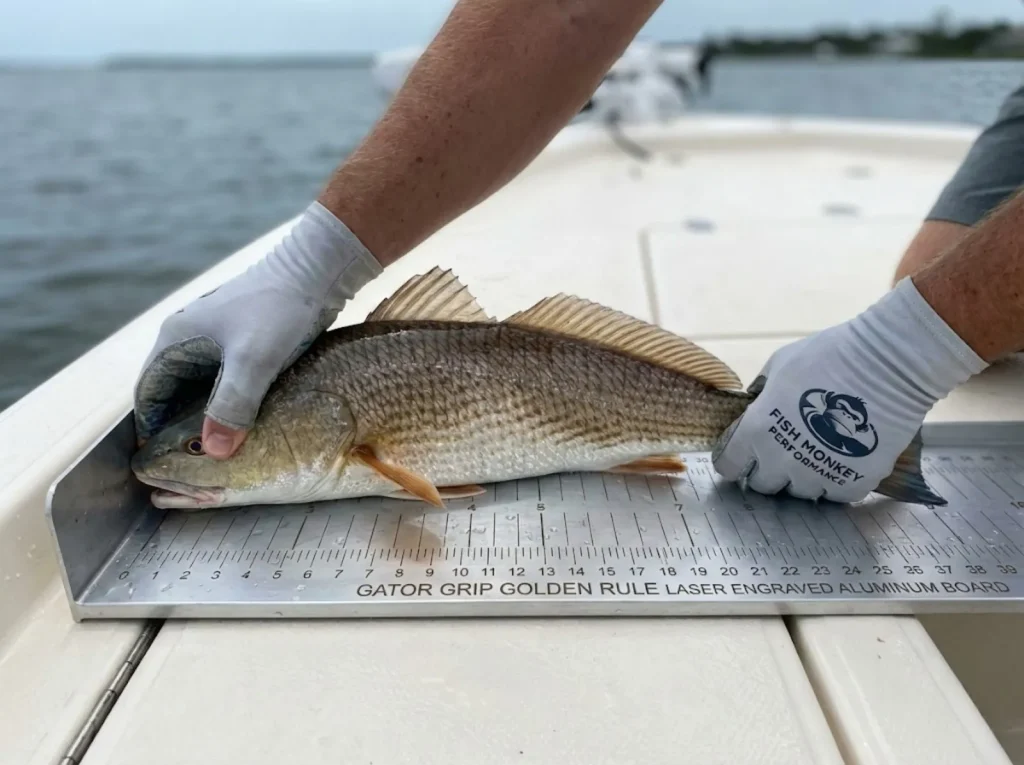
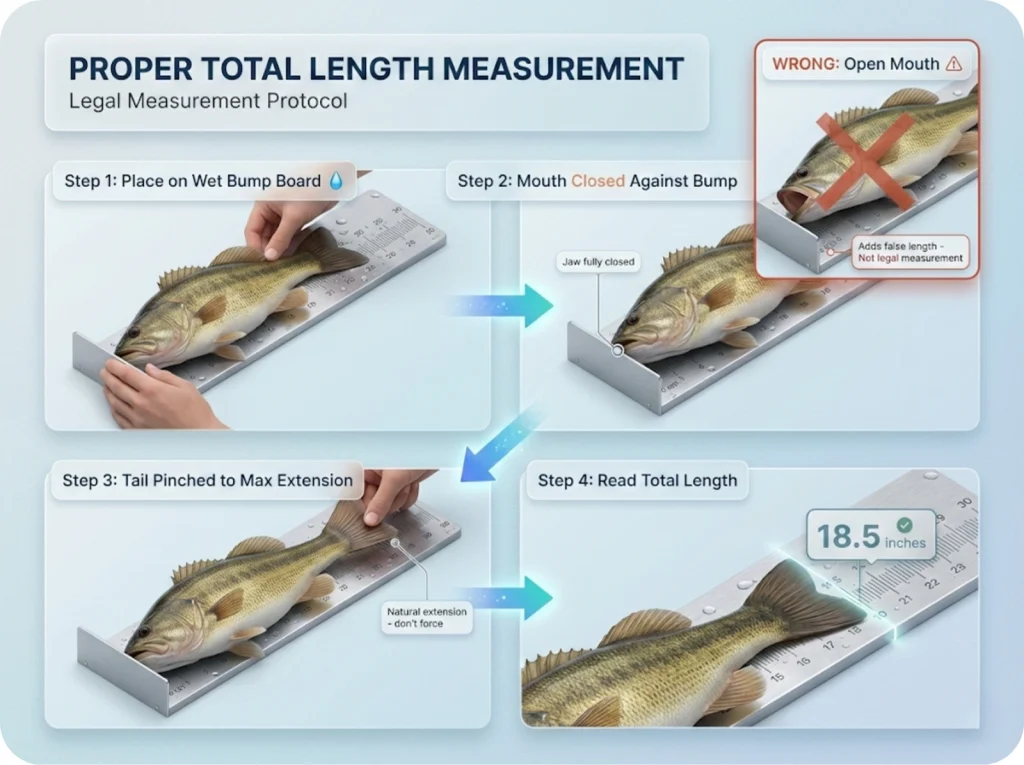
The difference between legal and illegal often comes down to how you hold a fish on a board. The snout to tail measurement using total length is the standard in most U.S. jurisdictions. Here’s the procedure that keeps you clean:
- Place the fish on a flat, wet measuring board (a bump board). Dry surfaces destroy the protective slime coat.
- Close the fish’s mouth completely. Non-negotiable.
- Press the snout firmly against the bump stop.
- Pinch the tail together to reach maximum extension.
- Read the measurement at the tip of the compressed tail.
The most common mistake: measuring with the mouth open. That alone adds a quarter to half an inch—enough to turn a legal keeper into a citation. A game warden’s certified fish ruler won’t lie.
Pro tip: Mark your rod with nail polish at legal size thresholds—15 inches, 18 inches, 20 inches. It gives you a quick in-water estimate without having to stress the fish on a board. Reserve the bump board for borderline fish.
Fork Length vs Total Length: Know Your Species
Some species—typically large pelagics like tuna and wahoo—use fork length instead: nose to the center fork of the tail. If you’re a saltwater angler who also fishes freshwater, don’t make the “Wicked Tuna” mistake. Freshwater measurement almost always requires tail compression, which fork length doesn’t account for.
The Identifiable-and-Intact Rule
It is illegal in most states to fillet game fish on the water when slot limits or size limits apply. Species identification and legal length can’t be verified by law enforcement once the head and tail are removed.
Even if the fish was originally legal, filleting processed fish on board can result in a violation. Keep fish whole until you’re at your final destination ashore. If you’ve never handled a catch before, knowing what to do when you catch your first fish covers the full process from hook to cooler.
Why Technology Is Forcing Tighter Regulations
The Forward-Facing Sonar Effect
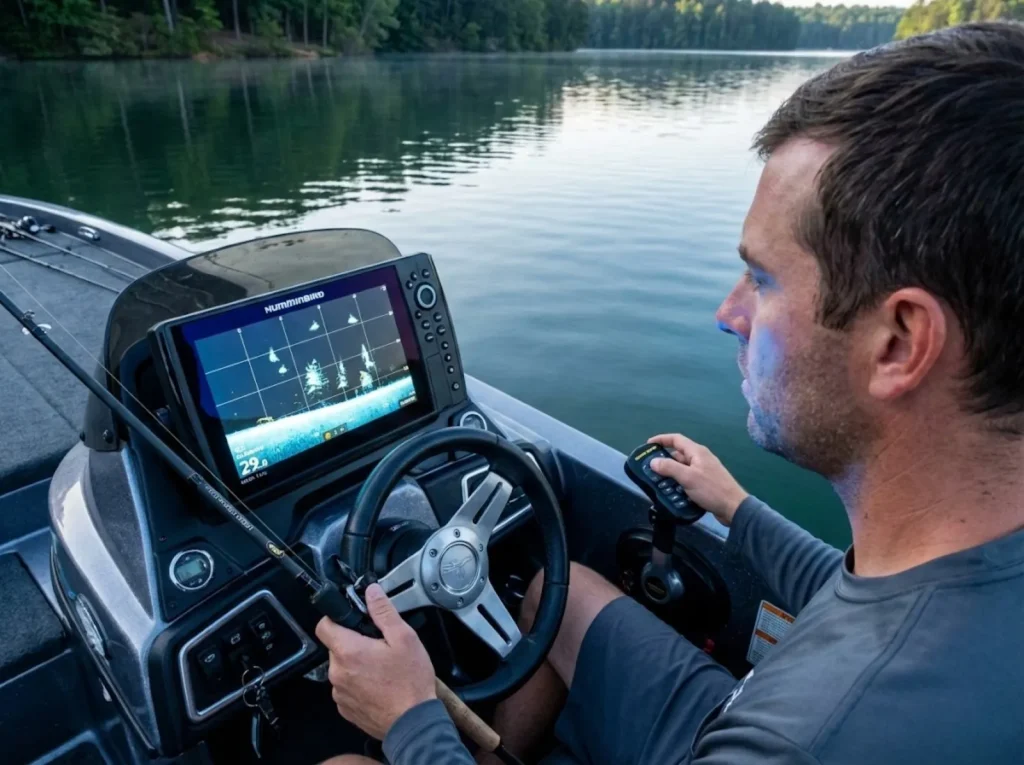
Forward-facing sonar—LiveScope, MEGA Live, ActiveTarget—has changed the relationship between anglers and fish in ways nobody expected. What used to require decades of on-water intuition now shows up on a screen in real time. Educated bass that once survived by holding tight to deep structure are now visible targets.
This isn’t hypothetical. Minnesota’s proposed statewide walleye limit reduction from six to four fish is explicitly driven by this “technological multiplier.” Traditional bag limits set decades ago assumed a baseline level of angler difficulty. That baseline no longer exists.
Tournament Formats and Delayed Mortality
Here’s a number that should change how you think about tournament fishing: a TPWD study on tournament bass mortality found that delayed six-day harvest mortality for weigh-in fish in slot-exempt tournaments reached 38.2%. Compare that to immediate catch and release mortality of just 2.5%. The handling, the live-well stress, the weigh-in process—that’s what kills them.
This data drove the widespread adoption of Catch-Photo-Release (CPR) tournament formats. Culling restrictions—rules that forbid swapping a fish in your live well for a bigger one caught later—target the same problem. Every exchange cycle adds stress.
If you compete in tournaments, understanding tournament fish care mistakes that cost you thousands isn’t optional—it’s your responsibility as an ethical angler.
Pro tip: If you’re running a live well during warm months, add ice to keep water below 80°F and run a recirculating aerator. Those two steps cut delayed mortality nearly in half.
How to Stay Compliant Anywhere You Fish
Apps and Tools That Keep You Legal
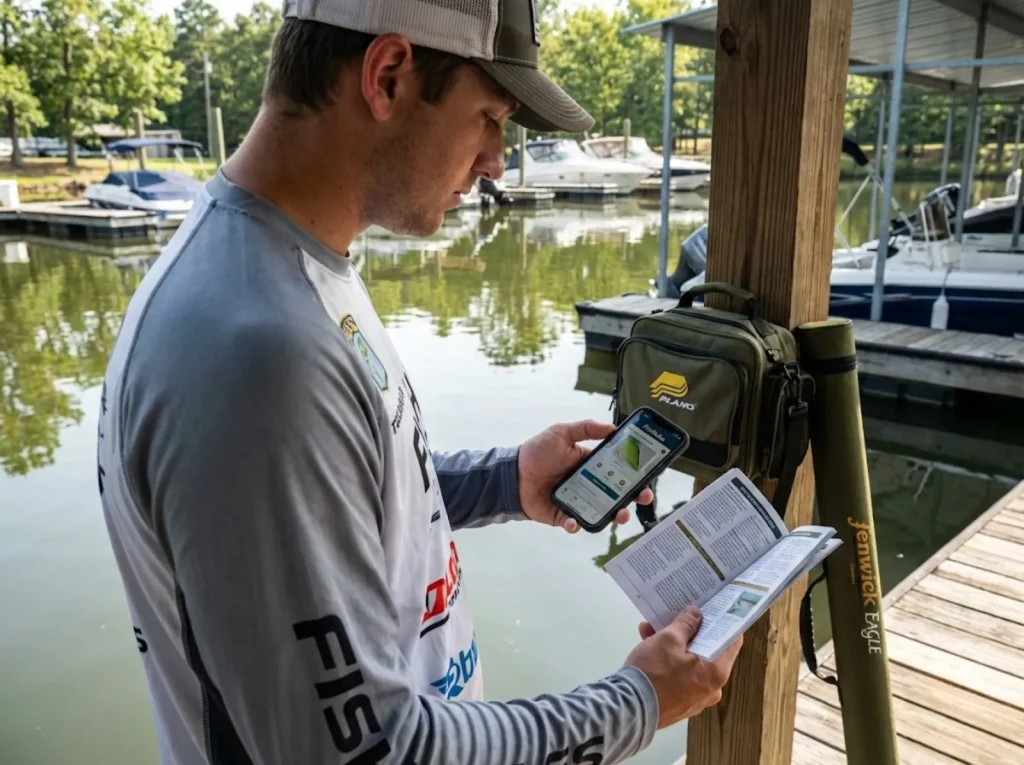
The FishRules app is the closest thing to a universal answer for state-specific regulations. It uses GPS to pull up location-specific rules automatically—bag limits, slot limits, seasonal closures, measuring tools, the works. But apps can have update delays, so always cross-reference with the official fishing regulations booklet from your state agency.
For measurement, tournament-legal boards from Ketch Products (the X Board and Karbonate) and the Gator Grip Golden Rule are the standard. A Rapala folding ruler works for portability if you’re bank fishing or kayaking.
The 5-Point Pre-Trip Regulation Check
Before you launch, run through this:
- Confirm the specific water body regulations—not just the statewide rule. Lakes like Fork and Mille Lacs have unique slot length limits.
- Check for seasonal closures or temporary spawning restrictions.
- Verify your measurement method (total length vs fork length) for the target species.
- Note vessel limits if fishing with a group.
- Confirm possession limit rules for multi-day trips, including transport and storage.
The Bottom Line
Three things worth remembering every time you put a fish on a board:
Bag limits manage the breadth of harvest (how many). Slot limits manage the depth and future potential (which ones). And real data from Lake Fork, Florida Red Drum, and Minnesota walleye proves these tools rebuild depleted fisheries when properly enforced and respected.
Technology is outpacing old regulations faster than agencies can update them. That makes it more important than ever to understand the rules—and voluntarily exceed them when the biology supports it.
Next time you lay a fish on your bump board and it falls inside the slot, remember: that one fish may carry a million eggs. Releasing it isn’t losing a meal. It’s investing in every trip you’ll take for the next decade.
FAQ
What happens if my fish is right at the slot limit boundary?
If there’s any doubt, the fish goes back. Enforcement officers measure with a certified board, mouth closed, tail compressed. A borderline fish measured improperly by even a quarter-inch can result in a citation you can’t contest.
Do slot limits apply to catch-and-release fishing?
You can catch and release fish of any size, but you must release slot-sized fish immediately and handle them with wet hands on a wet surface. The slot only restricts what you keep, not what you hook.
Can I fillet my fish on the boat to save cooler space?
In most states with slot limits or size limits, no. Fish must remain whole and identifiable until landed at your final destination ashore. Filleting on the water eliminates the ability for wardens to verify species identification and legal length.
Why does my lake have different rules than the statewide regulation?
High-pressure water bodies receive custom fishing regulations based on localized population data—electrofishing surveys, netting assessments, and escapement calculations. A lake producing trophy fish gets a protected slot to shield breeders. A stunted lake might get a relaxed minimum size to thin the population.
Is the possession limit the same as the bag limit?
No. The daily bag limit resets every 24 hours. The possession limit is the total number of a species you can have under your control at any time—including fish in your freezer, vehicle, or campsite. In many states, possession is set at double the daily limit, but always verify locally.
Risk Disclaimer: Fishing, boating, and all related outdoor activities involve inherent risks that
can lead to injury. The information provided on Master Fishing Mag is for educational and informational purposes
only. While we strive for accuracy, the information, techniques, and advice on gear and safety are not a substitute
for your own best judgment, local knowledge, and adherence to official regulations. Fishing regulations, including
seasons, size limits, and species restrictions, change frequently and vary by location. Always consult the latest
official regulations from your local fish and wildlife agency before heading out. Proper handling of hooks, knives,
and other sharp equipment is essential for safety. Furthermore, be aware of local fish consumption advisories. By
using this website, you agree that you are solely responsible for your own safety and for complying with all
applicable laws. Any reliance you place on our content is strictly at your own risk. Master Fishing Mag and its
authors will not be held liable for any injury, damage, or loss sustained in connection with the use of the
information herein.
Affiliate Disclosure: We are a participant in the Amazon Services LLC Associates Program, an
affiliate advertising program designed to provide a means for us to earn advertising fees by advertising and linking
to Amazon.com. As an Amazon Associate, we earn from qualifying purchases. We also participate in other affiliate
programs and may receive a commission on products purchased through our links, at no extra cost to you. Additional
terms are found in the terms of service.