
In this article
The bobber vanishes. Your heart jumps. The rod bends and your hands start trembling. You reel, stumble toward the bank, and suddenly there it is—flopping on the grass, hook still buried, slime everywhere. Now what?
The fish is suffocating. You’re bleeding from a spine you didn’t see coming. And somewhere in the back of your mind, you remember reading that you have 60 seconds before something goes very wrong.
After twenty years of guiding anglers through exactly this moment, I can tell you the panic is normal. The good news? You’re about to learn the science-backed protocol that will transform you from a fumbling beginner into someone who handles their first fish with confidence and respect.
⚡ Quick Answer: When you land your first fish, work fast—every second of air exposure damages the gills. Wet your hands before touching it, secure a firm but gentle grip based on species, and make your decision: release it properly facing into current, or dispatch and chill it immediately if you’re keeping it. The 60-second window is real, and everything you do in that minute determines whether the fish lives or dies.
The 60-Second Rule: Why Every Second Counts
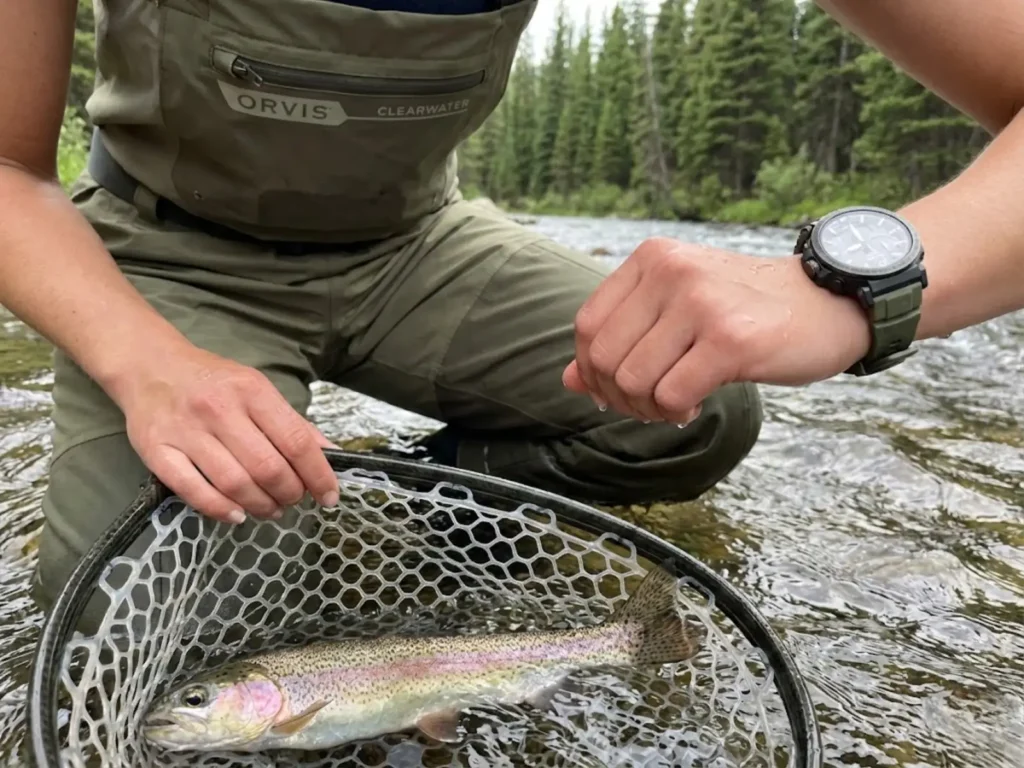
Here’s what’s happening inside that flopping fish the moment it leaves the water: the lamellae—those delicate, feather-like structures in the gills where gas exchange occurs—are collapsing. Water provides buoyancy that keeps these structures separated. In air, surface tension pulls them together like wet pages of a book, and oxygen uptake drops to nearly zero.
This isn’t folklore. Research published by Ontario’s catch-and-release program documented the cardiac effects precisely: a 30-second exposure triggered bradycardia (heart rate slowing), and those fish needed two full hours to recover. Fish exposed for 180 seconds? Four hours of cardiac stress before returning to normal.
Why Fish Can’t Breathe in Air
The real danger is what you can’t see. While that fish swims away looking perfectly fine, cortisol and lactic acid are still flooding its system. Plasma stress hormone levels don’t peak immediately—they often hit their maximum four hours after the catch. This explains delayed mortality: the fish that kicked away strong but floats belly-up in a cove hours later.
I’ve watched tournament anglers high-five over a “successful release” only to find that same bass dead at the weigh-in dock. The fish looked fine. The damage was invisible. Understanding the cortisol clock in fish gives you the context for why speed matters more than photo opportunities.
Water temperature compounds everything. If you’re fishing warm water above 65°F, the stakes rise dramatically. Warm water holds less dissolved oxygen, and stressed fish struggle to extract what little remains.
The Three Zones: Green, Yellow, Red
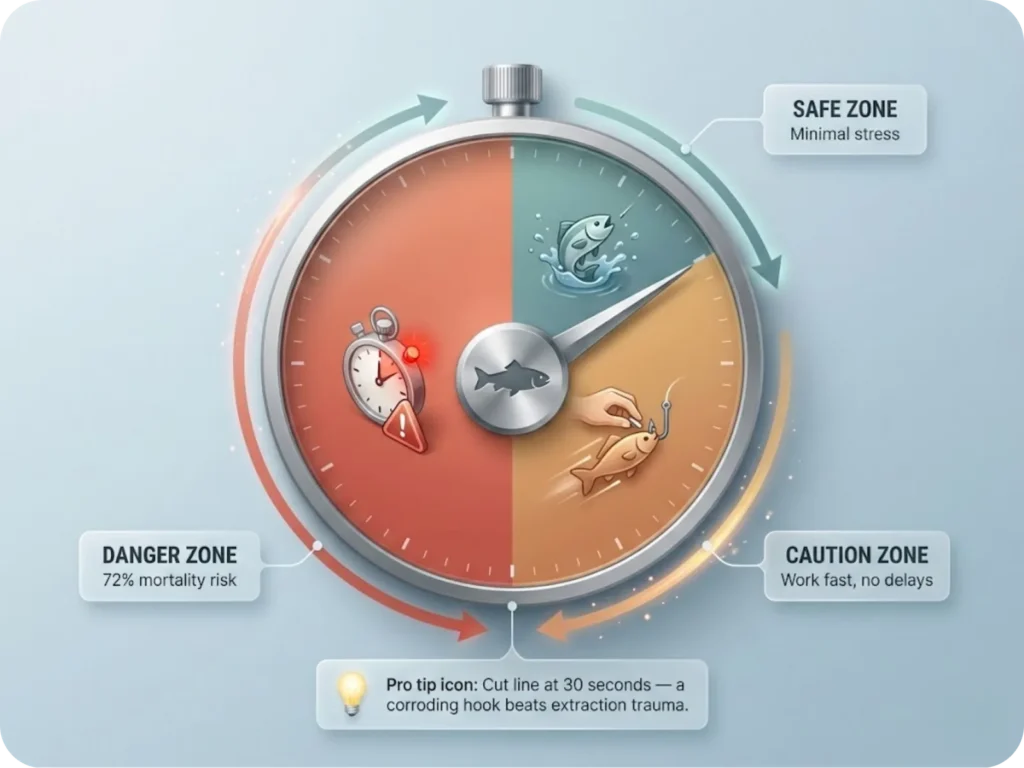
Think of air exposure like a countdown timer with three color zones.
Green Zone (0-10 seconds): This mimics what happens when a fish naturally breaches the surface chasing prey. Minimal lamellar collapse. Target this range whenever possible.
Yellow Zone (10-60 seconds): Stress accumulates quickly here. You can still remove hooks and snap a quick photo, but every second counts. Work with purpose. No fumbling for your phone.
Red Zone (60+ seconds): Mortality probability spikes exponentially. Studies on exhausted rainbow trout observed 72% mortality at this exposure level. Field studies show better outcomes when anglers follow protocol, but the message is clear: past one minute, you’re gambling with the fish’s life.
Pro tip: If you can’t extract the hook in 30 seconds, cut the line. A corroding hook in the jaw is far less lethal than the trauma of prolonged digging. Gut-hooked fish released with hooks intact have significantly higher survival rates than those subjected to extraction attempts.
Land It Right: Tools and Techniques That Protect You Both
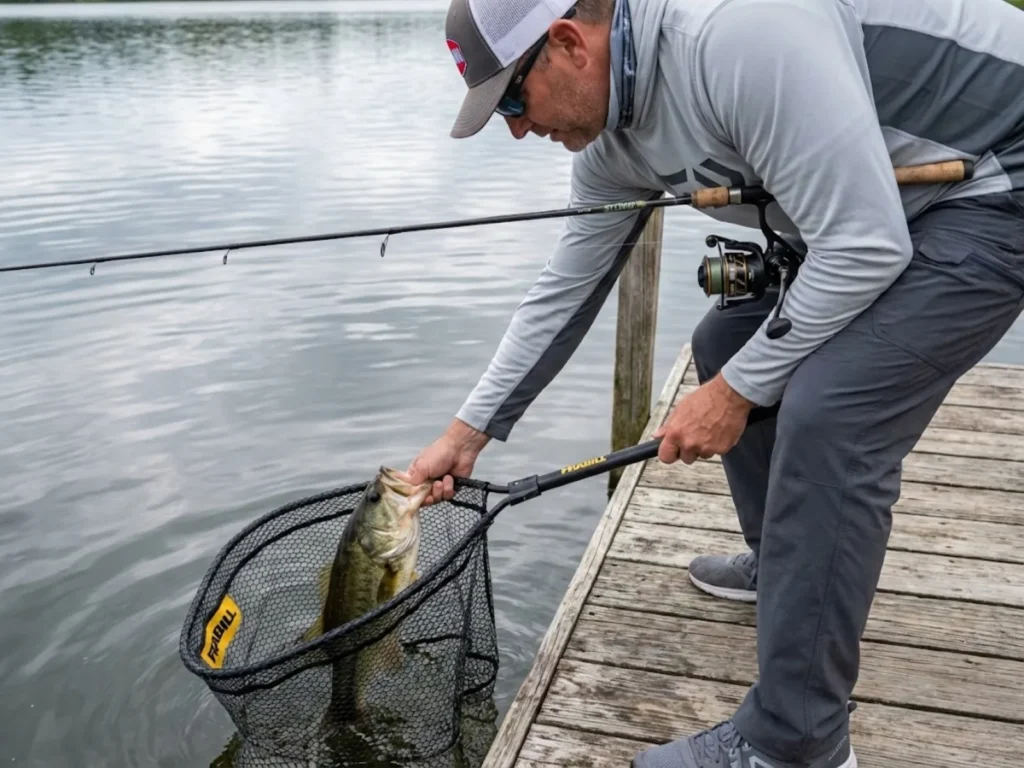
The moment you land that fish sets the tone for everything that follows. Do it wrong, and you’ve already started the damage clock before your hands touch scales.
Your Landing Kit (Under $30)
You don’t need a tackle shop’s worth of fishing tackle. A rubber-mesh landing net with knotless construction prevents scale damage and fin tears—the $5 bargain nets with knotted nylon are fish killers in disguise. Add needle-nose pliers or hemostats for hook extraction, and you’re 90% equipped.
The most critical tool costs nothing: wet hands. The salt, oils, and dirt on dry human skin strip away the slime coat—that protective mucus layer that shields fish from bacteria and fungal infections. Before you ever touch a fish, dip your hands in the water. Every time. No exceptions.
Understanding the glycoprotein science behind slime transforms this from a “nice to remember” tip into a non-negotiable protocol.
Pro tip: Keep a small spray bottle clipped to your vest. One squirt on your palms, even when you’re sweating through your shirt in summer heat, keeps hands wet without fumbling for lake water.
The Correct Landing Sequence
Net the fish head-first. Swipe against its direction of travel. Tail-first netting chases the fish and creates exhaustion and potential injury.
If possible, keep the fish submerged in the net while you work. This buys you unlimited time—the 60-second clock only starts when gills hit air. Unhook while the fish’s body remains in water, and you’ve eliminated the primary stress factor entirely.
When you must lift, wet your hands first, then establish a secure grip before raising the fish. A flopping fish on land gets dropped, injured, or spikes you. Control first, always.
How to Hold Your Catch: Species-Specific Safe Grips
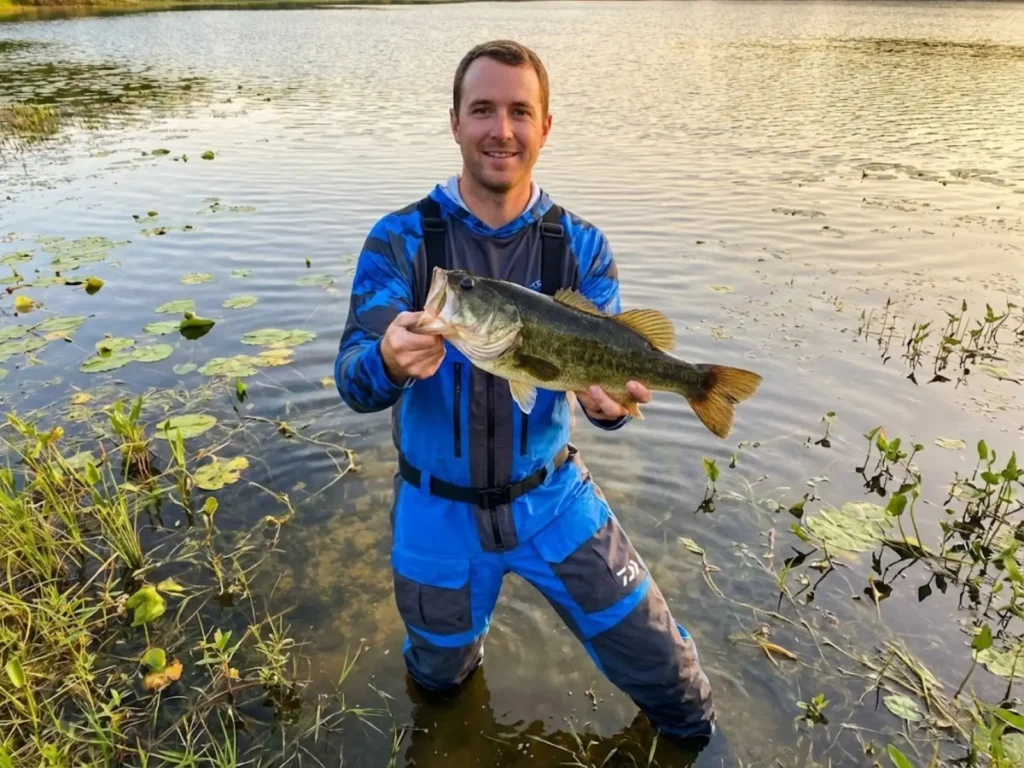
Every species has evolved different defensive anatomy. What works for bass causes catastrophic injury to catfish. What’s safe for panfish gets you bloodied by pike. Know the fish before your fingers touch it.
Bass: The “Lip Grip” Done Right
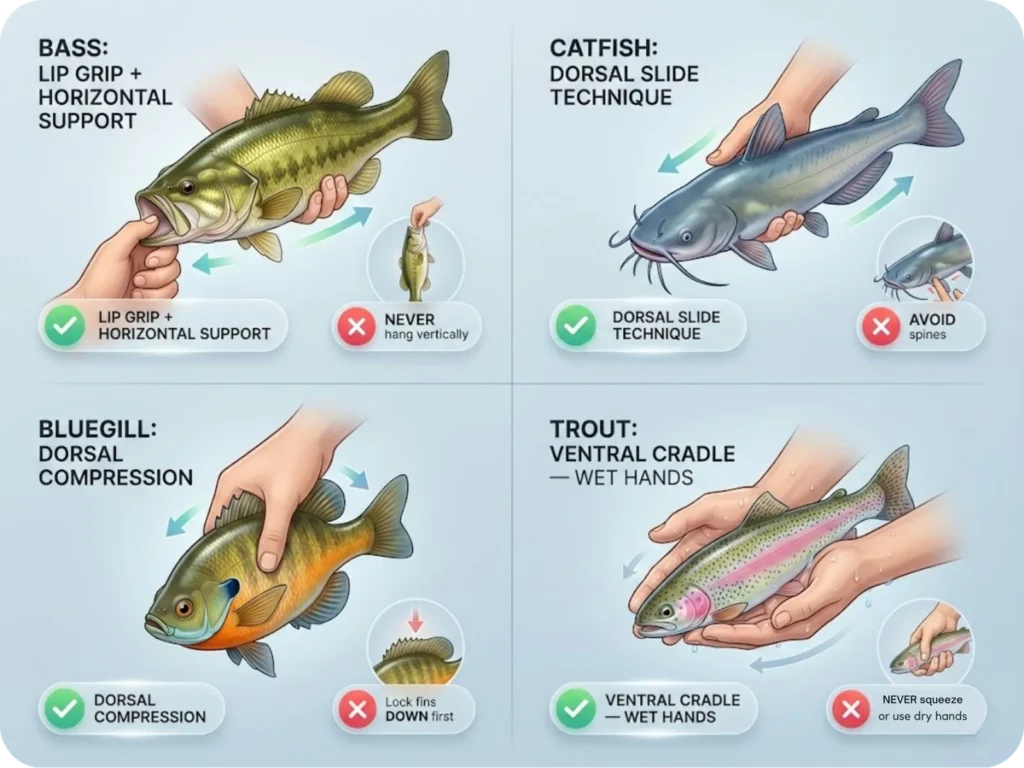
Largemouth bass have sandpaper-like teeth on their lips and tongue, but no sharp puncture risk. For fish under 5 lbs, the classic lip grip—thumb in the lower jaw, fingers curled underneath—works well.
Here’s where beginners cause real damage: on heavy fish over 5 lbs, holding the bass vertically by the jaw creates torque on the temporomandibular joint. That fish’s body weight can rupture the isthmus (the connection between throat and jaw) or dislocate the jaw entirely. A bass with a damaged jaw can’t create the suction needed to feed. It starves to death.
The solution is the supported horizontal hold: one hand on the lip, second hand cradling the belly. This distributes weight and eliminates stress on the jaw joint. Check out our full fish holding safety matrix for species-by-species guidance.
Catfish: Avoiding the Spines
Channel catfish and their relatives present the dual challenge of spiny fins and slippery skin. Those dorsal and pectoral spines aren’t merely sharp—they lock into an erect position when the fish feels threatened, and they’re coated with a mild venom that causes intense, throbbing pain lasting hours.
The dorsal slide technique keeps you safe: approach from the head, slide your hand back over the fish’s face, pressing down on the dorsal spine to flatten it, then wrap your hand behind the pectoral spines. You’ve essentially locked the weapons in the safe position.
If you get spined, the pain is not medically dangerous, but clean the wound immediately—bacteria thrive in warm freshwater and can cause nasty infections.
Bluegill & Sunfish: Flattening the Dorsal
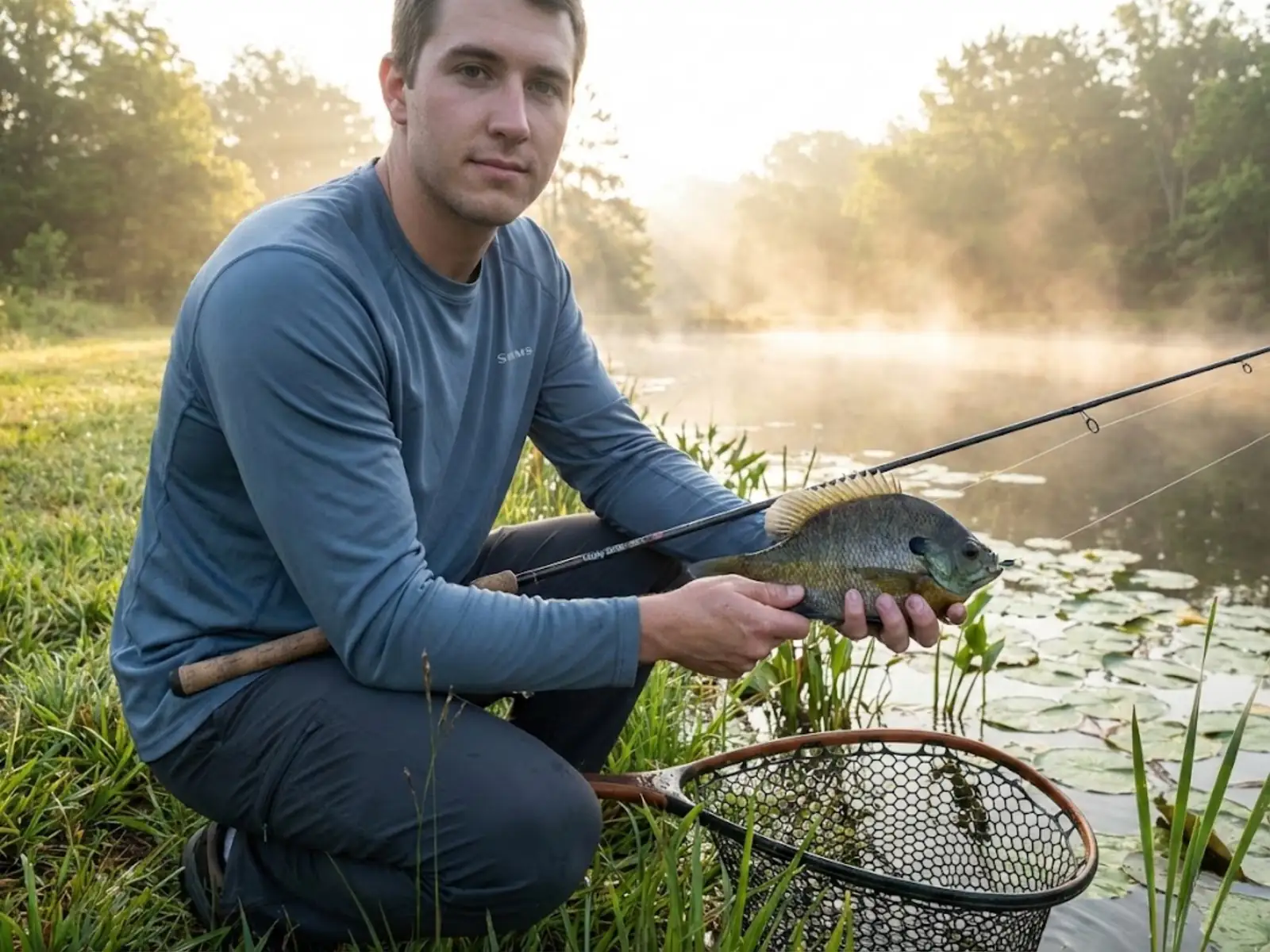
These common “first fish” species have sharp dorsal fins that draw blood but carry no venom. Slide your wet hand from head to tail, using palm pressure to flatten the dorsal fin against the body. Wrap fingers around the belly, but remember: these fish are small and fragile. Squeezing damages internal organs. Use a light cradling grip.
Trout: The Most Fragile of All
The slime coat on trout is extremely sensitive. Dry hands, rough handling, or prolonged air exposure doesn’t just stress them—it causes bacterial and fungal infections that kill them days later.
Always wet hands. Cradle the fish ventral-side (belly) up if possible—this can induce tonic immobility, a calming trance-like state that reduces thrashing. Never squeeze. Internal organs are easily crushed.
Water temperature creates additional risk. If you’re fishing water above 65°F, reduce handling time to the absolute minimum. Warm water holds less dissolved oxygen, compounding physiological stress. Science-based catch-and-release protocols can mean the difference between a fish that recovers and one that doesn’t.
Hook Removal: Fast, Safe, and Pain-Free (For Both of You)
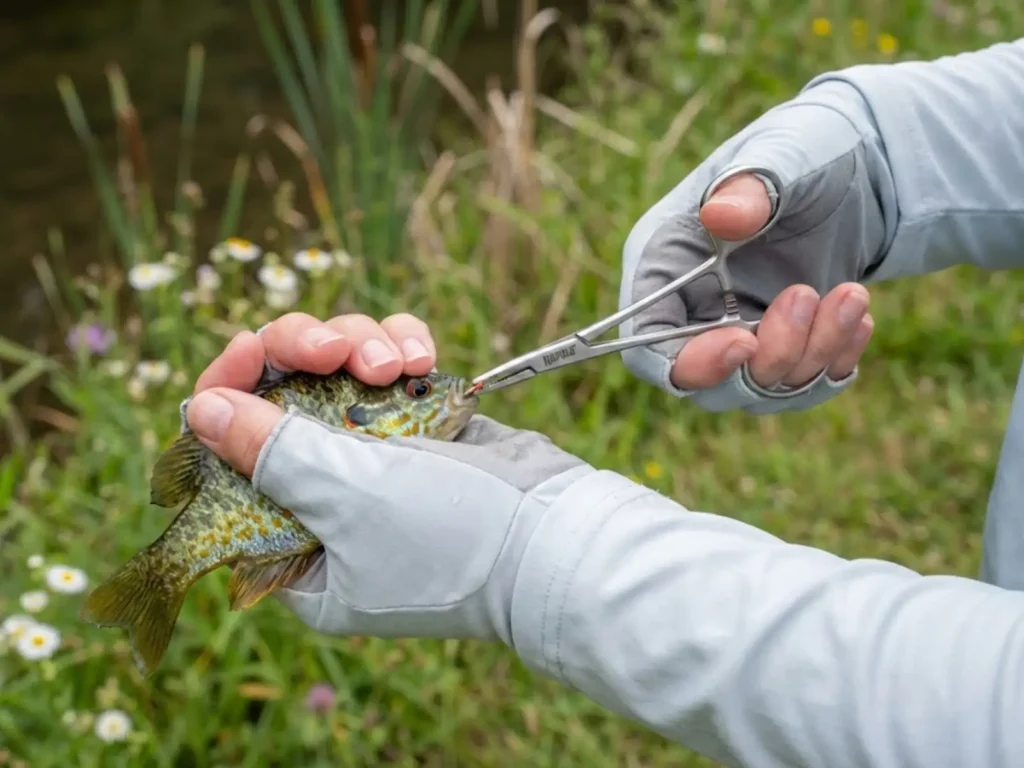
The hook comes out, or the fish goes back with it still attached. There is no third option. Understanding when to extract and when to cut separates ethical anglers from well-meaning fish killers.
Lip-Hooked Fish: The Easy Case
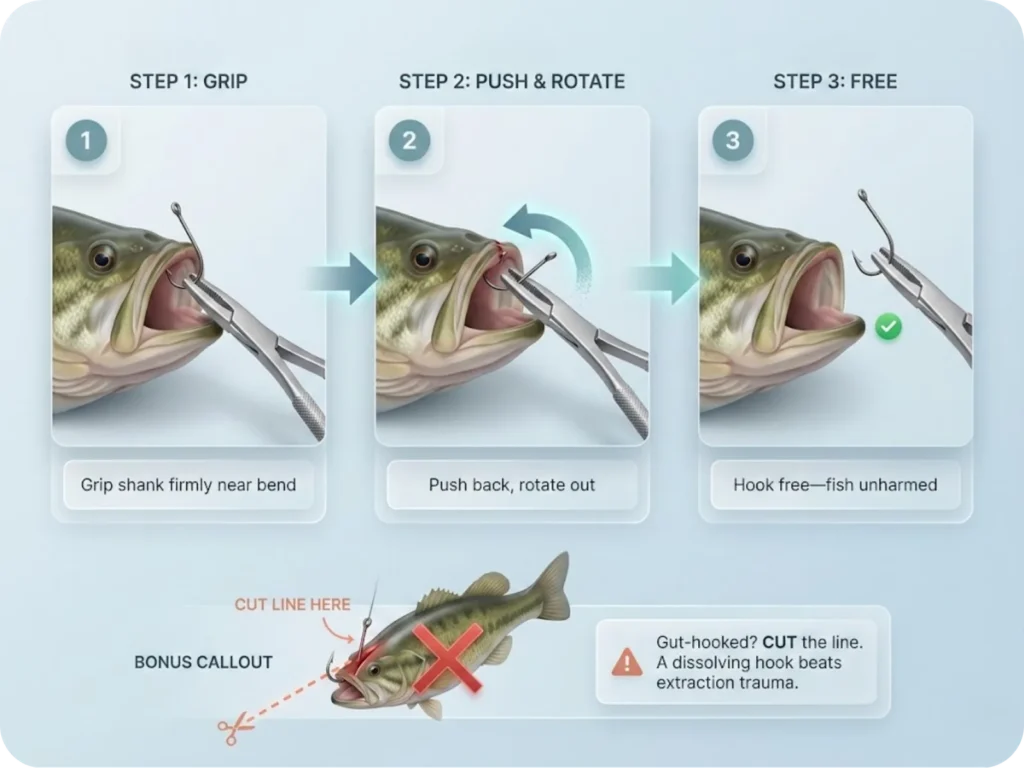
If the hook is visible in the lip or corner of the mouth, extraction takes seconds. Use needle-nose pliers or hemostats. Grip the hook shank—not the eye—push backwards opposite the entry angle, and rotate slightly to clear the barb.
The trick most beginners miss: pinch your hook barbs flat before you fish. A crushed barb using your pliers at the truck takes five seconds. It makes releases instant and reduces tissue damage dramatically. Or simply buy barbless hooks from the start.
Gut-Hooked Fish: When to Cut the Line
Here’s where instinct misleads you. A fish has swallowed the hook into its throat or stomach. Your gut says “save the fish”—dig out that $0.50 hook.
Don’t. If you can’t see the hook, cut the line as close to the eye as possible. Hooks corrode over time. The fish’s body encapsulates them or passes them. The trauma of extraction—hemorrhaging, organ damage, prolonged handling—is far more lethal than leaving the hook behind.
This isn’t intuition. This is data. Gut-hooked fish released with hooks intact have significantly higher survival than those subjected to forcible extraction. Refer to the National Park Service safe handling guidelines for the official position on this.
Calming a Thrashing Fish
A panicking fish is dangerous—those spines, that hook still attached—and it injures itself with every flop. Scale loss, spine damage, mucus stripped off.
Tonic immobility works remarkably well on freshwater species. Gently turn the fish belly-up. The inversion triggers a trance-like calm in many species—trout respond particularly well. Covering the eyes with a wet (never dry) cloth also reduces panic.
The Decision: Keep It or Release It?
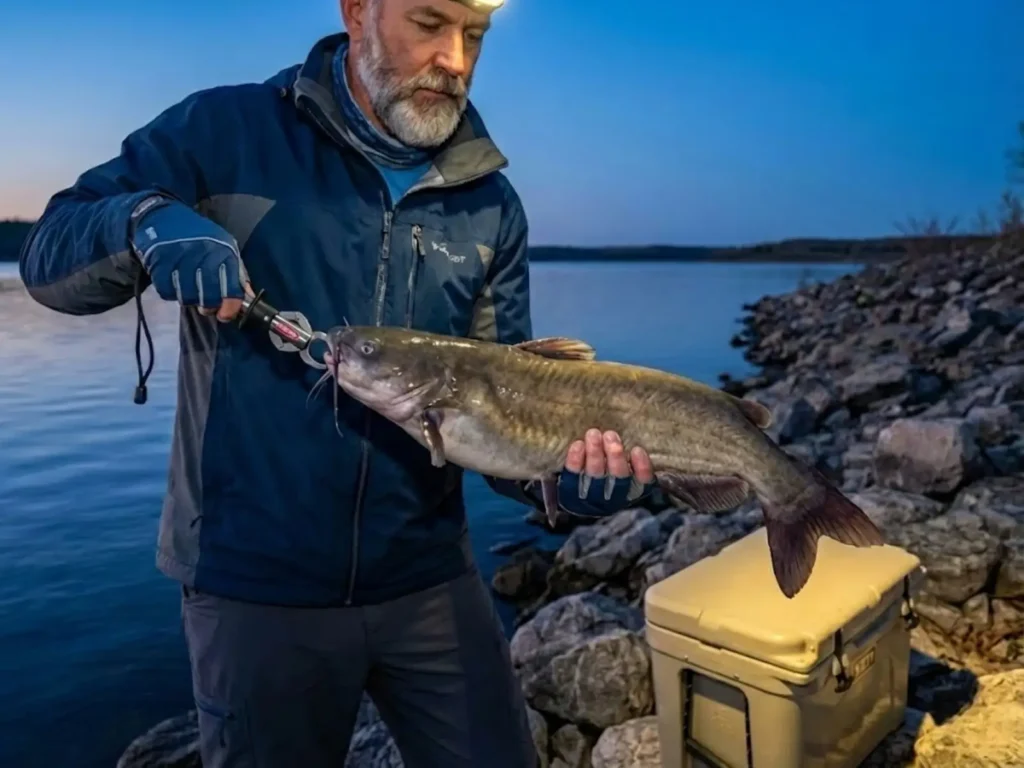
Within that 60-second window, you need to make one of two clear choices. Both are ethical when done correctly. Hesitation is what kills fish.
Quick Legal Check
Before anything else: do you have a fishing license? Most states require one for anglers 16 and older. Many offer inexpensive one-day options. Some designate license-free fishing days for beginners—check your state’s wildlife agency website or our complete fishing license guide for specifics.
Is this fish legal to keep? Size limits and daily bag limits vary by species and location. A measuring device marked on your fishing rod works quietly. Know the regulations before you cast.
Releasing Your Fish the Right Way
In moving water, face the fish upstream and hold it gently in the current. Moving water forces oxygenated flow over the gills—let physics do the revival work. Wait until the fish kicks free under its own power.
In still water, use a figure-8 motion to simulate flow across the gills. Do not toss the fish. The impact damages organs and amplifies stress you just worked to reduce.
You’ll know the fish is ready when the dorsal fin erects and it swims away strongly—not just floats limply in the direction you pushed it.
Keeping Your Fish: The First 60 Seconds of Quality
If you decide to keep your catch, those same 60 seconds determine whether you eat quality protein or something disappointing.
Dispatch immediately. Percussive stunning—a firm strike to the head—is fast and humane. Ike Jime (brain spiking) is the Japanese method that preserves flesh quality by preventing the thrashing that depletes ATP in muscles.
Bleed immediately. Sever the gill arches. Blood left in flesh oxidizes, creating rancidity and that metallic off-taste you’ve probably experienced with poorly handled fish.
Chill immediately. An ice slurry—2 parts ice to 1 part water, with a handful of salt for supercooling—drops core temperature in minutes rather than hours. Fish on top of ice, surrounded by air gaps, cool slowly. Fish submerged in slurry cool three times faster. Choosing the right fillet knife matters for processing, but chilling matters more for eating quality.
Pro tip: Prepare your ice slurry in the cooler before you start fishing. Add salt to freshwater ice to lower the freezing point. When that first keeper hits the cooler, it should hit liquid cold, not dry cubes.
Common First-Timer Mistakes (And How to Avoid Them)
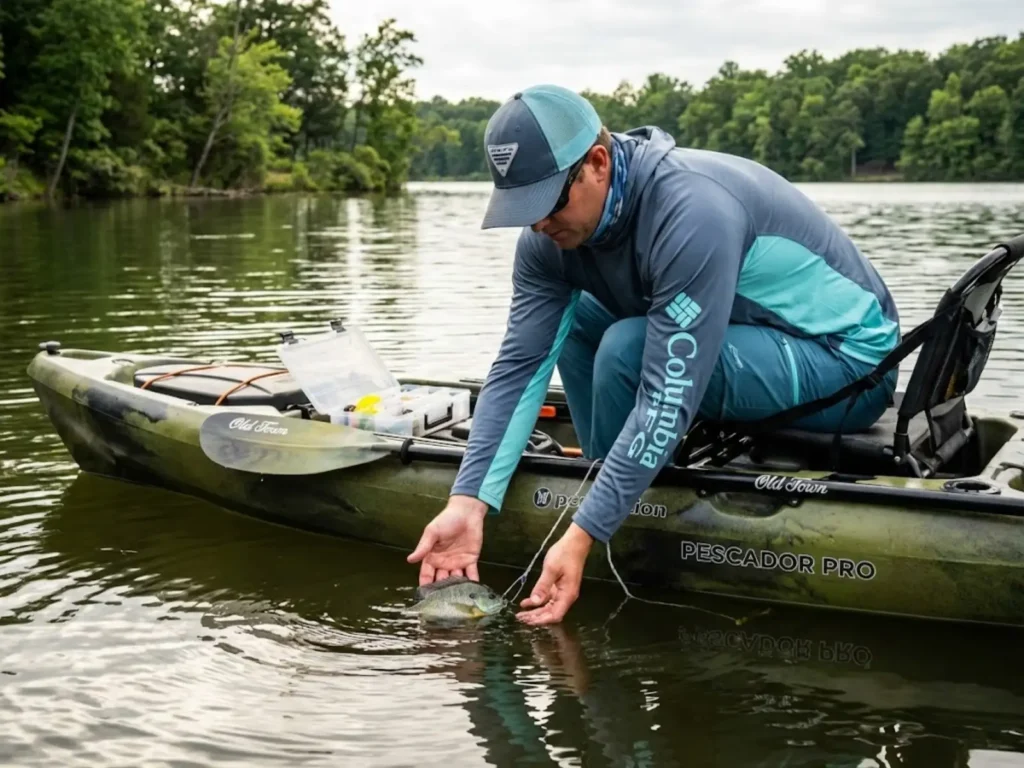
Every experienced angler made these errors. The goal isn’t perfection on day one—it’s recognizing mistakes when they happen and correcting course.
Mistake #1: Handling with Dry Hands
This remains the most common fish killer. Dry hands strip the mucus layer, exposing the fish to infection that kills it days later. The fix is free and takes two seconds: dip your hands in the water first.
Mistake #2: Playing the Fish Too Long
“Playing out” a fish until it’s completely exhausted feels sporting but depletes glycogen reserves and floods muscles with lactic acid. The result is metabolic acidosis—the fish can barely swim, making it easy prey for predators even if you release it carefully.
Use tackle appropriate to your target species. Ultralight rods and hair-thin fishing line extend fights unnecessarily. Understanding how temperature affects fish metabolism puts this in biological context.
Mistake #3: Setting the Fish on Dry Ground
Concrete, gravel, carpet, and boat decks abrade scales and strip slime. If you must set the fish down, choose wet grass or keep it in the net. Never lay a fish on a hot, dry surface.
Mistake #4: Digging for a Deep Hook
Your instinct says save the hook. The data says save the fish. If you can’t see it, cut the line. Every time.
Conclusion
Your first fish will be chaotic, exhilarating, and probably a little terrifying. That’s the beauty of it.
What separates the anglers who become stewards from those who remain hazards is simple: wet your hands, work fast, and know when to cut the line. If you’re releasing, face the fish into current and wait for the kick. If you’re keeping, dispatch, bleed, and chill in that first minute.
Next trip, time yourself. From the moment the fish hits the net to the moment it swims away—or hits the ice—can you beat 60 seconds? Make it a personal challenge. The fish will thank you, and so will the waters you fish for years to come.
FAQ
Can you remove a fish hook yourself or do you need to go to the ER?
Most superficial hook injuries can be managed in the field using the push-through or string-yank method. If the hook is embedded near eyes, joints, or deep tissue—or if you see signs of infection—seek medical attention. For simple skin barbs, advance the hook point through, cut off the barb, and back the hook out.
Do I need a fishing license for my first trip?
In most states, anglers 16 and older require a valid fishing license. Many states offer inexpensive one-day or short-term options, and some designate license-free fishing days specifically for beginners. Check your state wildlife agency website before you fish.
What should I do if my fish is bleeding from the gills?
If you accidentally damaged the gill rakers during hook removal, survival chances drop significantly. If you’re legally allowed to keep the fish, harvesting it immediately may be more ethical than releasing it to die slowly. This is one argument for learning proper hook removal before it happens.
How do I know if my fish is big enough to keep?
Every state publishes size limits by species—minimum lengths you must meet before legal harvest. Carry a measuring device (marks on your rod work well) and know the regulations before you fish. When in doubt, release.
What’s the best bait for catching my first fish?
Live worms and nightcrawlers are nearly universal for bluegill, catfish, and bass. For ultra-budget options, canned corn works on carp and panfish, and hot dogs catch catfish reliably. PowerBait is excellent for stocked trout in ponds and lakes.
Risk Disclaimer: Fishing, boating, and all related outdoor activities involve inherent risks that
can lead to injury. The information provided on Master Fishing Mag is for educational and informational purposes
only. While we strive for accuracy, the information, techniques, and advice on gear and safety are not a substitute
for your own best judgment, local knowledge, and adherence to official regulations. Fishing regulations, including
seasons, size limits, and species restrictions, change frequently and vary by location. Always consult the latest
official regulations from your local fish and wildlife agency before heading out. Proper handling of hooks, knives,
and other sharp equipment is essential for safety. Furthermore, be aware of local fish consumption advisories. By
using this website, you agree that you are solely responsible for your own safety and for complying with all
applicable laws. Any reliance you place on our content is strictly at your own risk. Master Fishing Mag and its
authors will not be held liable for any injury, damage, or loss sustained in connection with the use of the
information herein.
Affiliate Disclosure: We are a participant in the Amazon Services LLC Associates Program, an
affiliate advertising program designed to provide a means for us to earn advertising fees by advertising and linking
to Amazon.com. As an Amazon Associate, we earn from qualifying purchases. We also participate in other affiliate
programs and may receive a commission on products purchased through our links, at no extra cost to you. Additional
terms are found in the terms of service.