In this article
You feel the friction before you see the damage. It might be the rough drag of a dry hand against the flank of a rainbow trout (Oncorhynchus mykiss) or the abrasive rasp of a nylon net. In that split second of mechanical abrasion, an invisible biological seal breaks, and a countdown begins.
The “slime” isn’t just a byproduct of the fish. It is a sophisticated, viscous colloid nature organ that acts as a shield. In the field of ichthyology and aquatic biology, this barrier is known as the fish epidermal mucus. As someone who has spent decades studying both the water and the biology of what lives beneath it, I can tell you that understanding this barrier is what separates a casual angler from a true conservationist.
Knowing how this works changes every release from a gamble into a calculated act of preservation. This guide creates a simple roadmap for sustainable angling. We will look at why the slime coat glycoproteins explode like a “Jack-in-the-Box” when they hit water and how removing them causes the fish to lose vital fluids through osmotic stress.
We will also look at the physics behind why knotless rubber mesh nets are a biological necessity. By mastering these principles of the science of slime, you prevent the invisible damage that happens long after the fish swims away.
What is the biological function of the “slime coat” beyond lubrication?
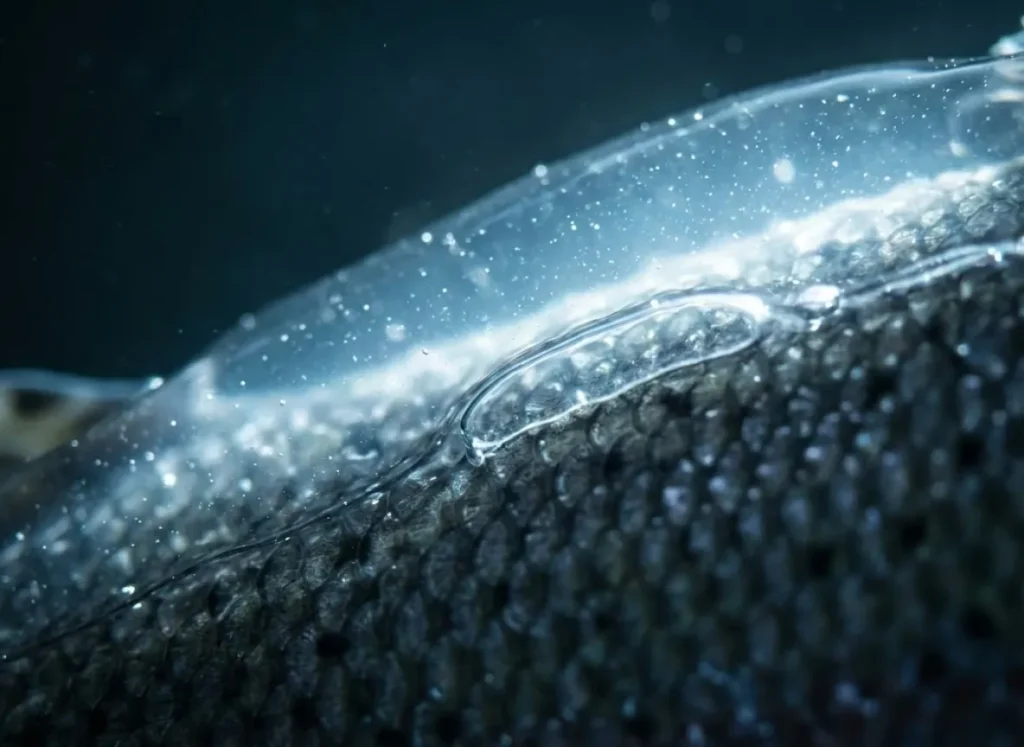
The slime coat is much more than just a lubricant to help a fish swim by reducing hydrodynamic friction. It is an engineered system that is essential for fighting off fish pathogens and keeping the fish’s internal ionic balance stable.
How does the “Jack-in-the-Box” mechanism create the protective barrier?
The protective power of fish mucus comes from a rapid physical change. This coat is made mostly of special macromolecules called mucin glycoproteins. These are stored inside specialized cells—primarily goblet cells, but also club cells and sacciform cells—deep in the fish’s epidermis.
Inside these cells, the mucins are packed tight. They are “shielded” by a high amount of Calcium, which keeps the molecules stable. This “Calcium Lock” allows the molecule to be packed down 1,000 times smaller than its active state. It’s like a spring compressed in a box, waiting to pop.
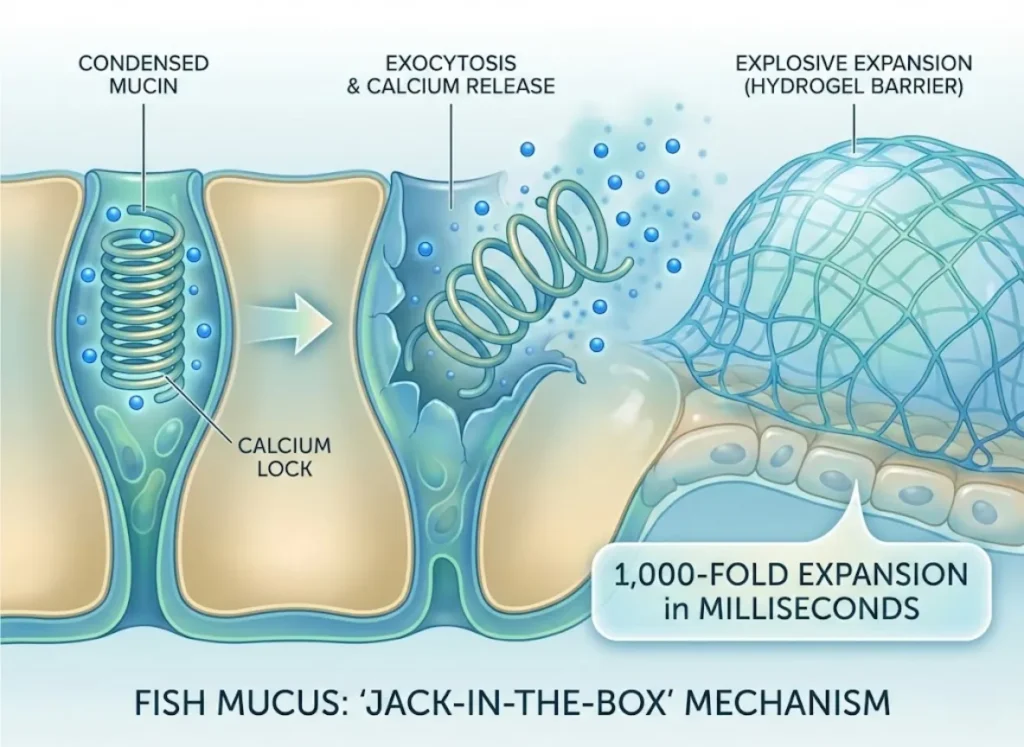
When the fish is stressed or the skin is agitated, the cells release these packages via exocytosis. The calcium shield falls away, and the negative charges on the protein strands violently push away from each other. This triggers an explosive expansion, often called the “Jack-in-the-Box” effect.
According to biophysical data on mucin expansion, these proteins absorb water and swell into a thick gel in milliseconds. This explains why a bony fish instantly becomes slippery when it thrashes—it is a real-time chemical reaction to stress. This biological reality is why proper fish handling techniques focus so heavily on not disturbing this reaction.
How does the slime matrix function as an external immune system?
Once this actual gel layer forms, it acts like a sticky trap. It is full of biological defense agents that fight off sickness. It functions as a mucus barrier, constantly peeling off into the water to carry away trapped bacteria, protozoans, trematodes, and dirt.
This continuous shedding process prevents infection susceptibility by stopping colonization on the fish skin surface. It acts as a perpetual self-cleaning mechanism.
Pro-Tip: If you see a fish with a “milky” or cloudy patch on its skin, do not touch that area. That is an active immune response where the mucus production has ramped up to fight a localized infection.
Specific germ-fighting proteins within the mucus, such as lysozymes, lectins, and antimicrobial peptides (AMPs), can actually punch holes in the cell walls of invading bacteria, destroying them on contact. A review on skin mucus immunity details how these agents form the first line of defense.
Disrupting this layer leaves the skin exposed to water molds like Saprolegnia, which are often the visible cause of death days after a fish is released. However, during a long fight, the fish’s physiological stress response releases hormones that can temporarily weaken these immune factors. This makes preserving the existing natural slime coat even more critical.
Why does handling damage trigger a lethal “Osmotic Audit”?
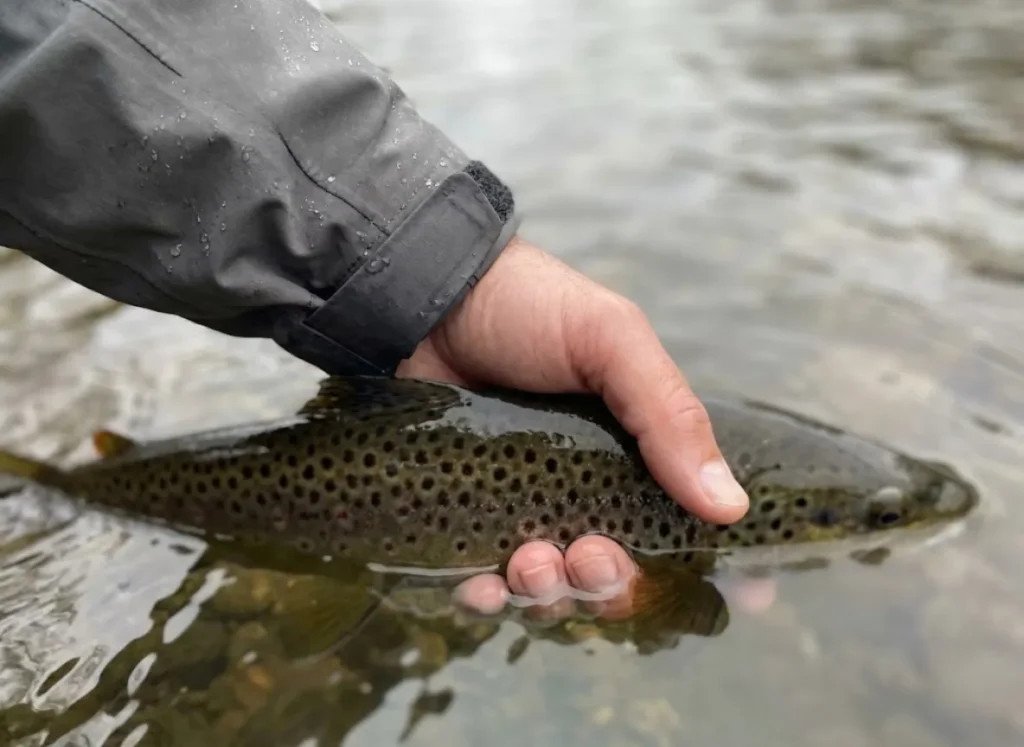
Mechanical damage strips the waterproofing from the fish. This causes an invisible “electrolyte bleed” that forces the animal to burn its backup energy just to stay alive.
What happens to a fish’s salt balance when the slime barrier is broken?
Fish exist in a constant battle of osmoregulation to balance their fluids. Freshwater fish, like trout or bluegill sunfish, are saltier than the river, while saltwater fish are less salty than the ocean. The slime coat acts as a strict “dam” that controls the movement of water and salt across the skin.
When this dam is broken by a dry human skin hand or net, the “Osmotic Audit” begins. In freshwater fish, river water floods into their body, diluting their blood (hemodilution), while vital electrolytes leak out.
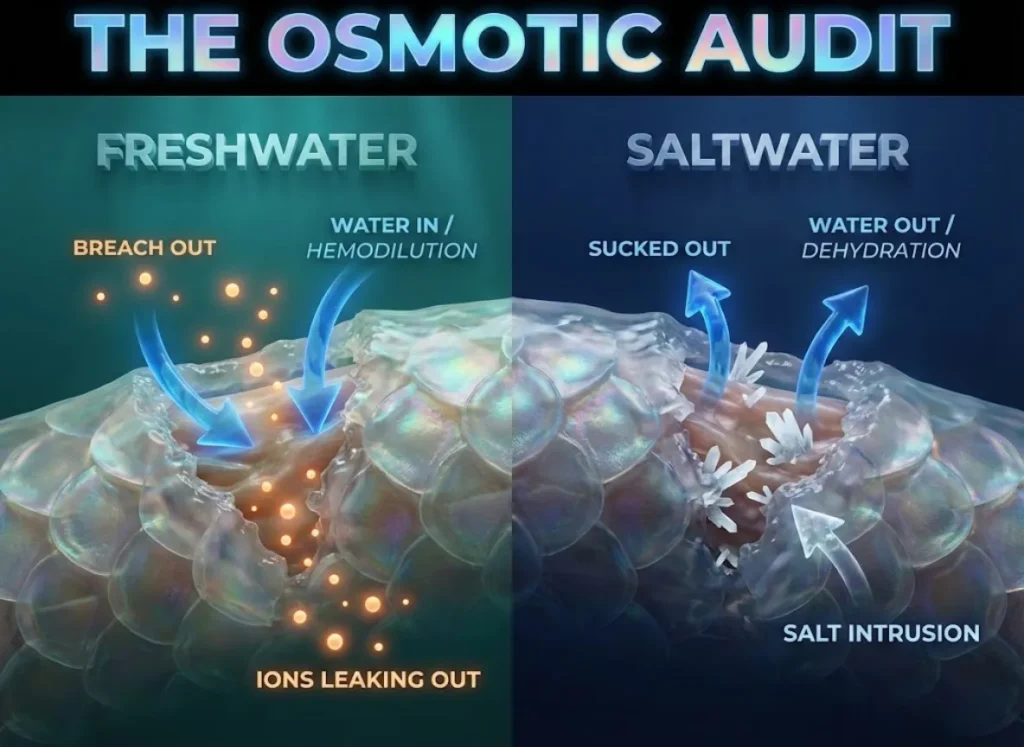
To survive this breach, the fish must turn on special active transport pumps in its gills to push salts back into the body. This repair process burns energy at a massive rate. It depletes the fuel reserves the fish needs to recover from the fight.
Research on mucosal barriers confirms that a fish may swim away looking strong, only to die days later from exhaustion. It essentially spent its energy budget fixing the “leak” regarding its osmolality rather than recovering from the exercise. This mechanism is a main reason for delayed post-release mortality.
Why is the “30-second chemistry lab” of air exposure so critical?
The proteins in fish slime are hydrophilic—they love water. Air exposure causes the gel to physically collapse and dry out rapidly. Research indicates that just 30 seconds of air exposure is a tipping point where survival rates drop significantly.
At the same time, the delicate filaments under the operculum (gill cover)—which need water to stay floating and open—collapse in the air. This stops them from breathing and creates a massive oxygen debt.
While the fish is held out of water, a chemical chain reaction occurs. Stress hormones spike and lactic acid builds up in the muscles. It takes a long time for the heart to recover from this. A fish held in air for just 30 seconds may need 2 to 4 hours for its heart rate to return to normal.
The Ontario Ministry catch-and-release guidelines emphasize that the best practice is to keep the fish’s head submerged at all times. You should lift the fish only for seconds if absolutely necessary. This prevents the gel from drying into a useless crust. It protects the gill surfaces and maintains dissolved oxygen levels in the blood.
Which gear and tactics scientifically preserve the slime coat?
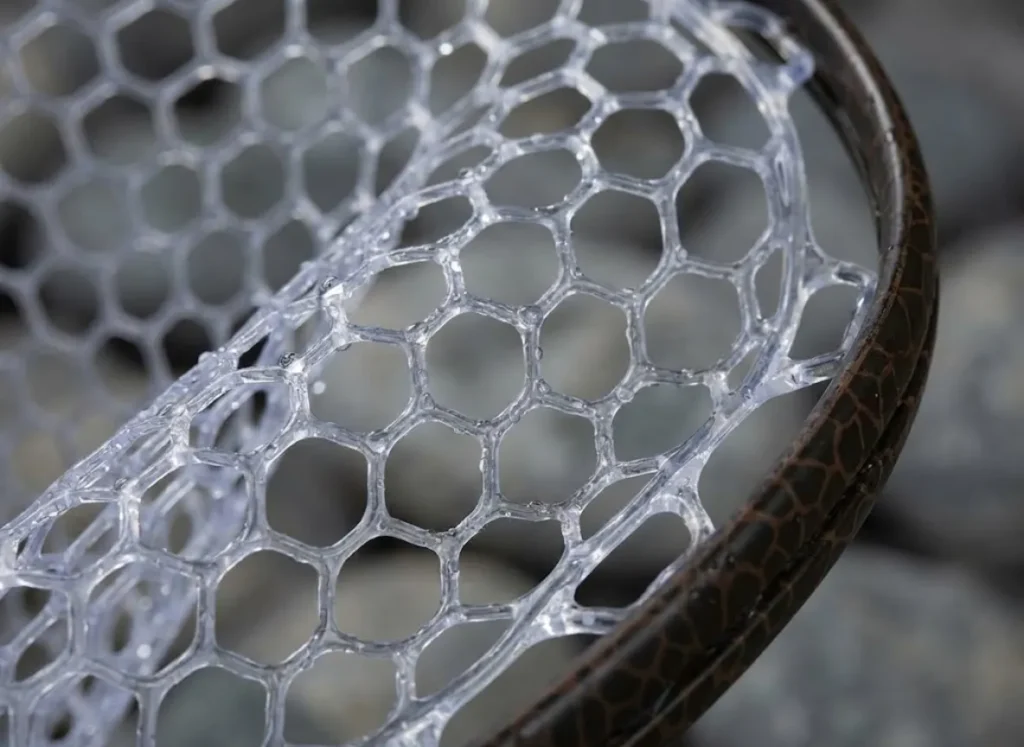
We can rate fishing gear based on whether it absorbs the slime or leaves it alone. Knotted nylon fails this test, while rubber passes due to its hydrophobic properties.
Why do knotted nylon nets fail the safety test?
Knotted nylon acts like sandpaper. The knots create high-pressure points that physically tear through the skin as the fish thrashes. Even “knotless” nylon mesh presents a problem because the fibers act like a sponge. They absorb water and slime.
When a fish is lifted in a nylon net, the fabric actively soaks the mucus off the fish, effectively “towel drying” the protective slime layer. Studies on landing net injury rates show much higher rates of fin damage and scale loss in bony fishes landed with nylon versus rubber.
Landing Net Material Comparison
Scientific analysis of material impact on fish health, slime coat preservation, and abrasion risk.
Abrasion Risk
Critical. Knots act as mechanical rasps, creating high-pressure points that tear the epidermis and cause scale loss.
Mucus Absorption
High. Nylon fibers are hydrophilic and absorb mucus, stripping it away via friction and capillary action.
Drying Properties
High Retention. Fibers absorb water and slime, remaining wet and susceptible to bacterial growth.
Scientific Verdict
Avoid. Causes fin fraying, scale loss, and severe mucus stripping.
Abrasion Risk
Moderate. Smoother weave reduces mechanical tearing compared to knots, but the abrasive texture remains significant.
Mucus Absorption
High. The material remains porous and hydrophilic, effectively “wiping” the fish dry by wicking away the hydrogel.
Drying Properties
Moderate Retention. Porous weave holds water and contaminants; requires significant drying time.
Scientific Verdict
Acceptable only if thoroughly wet prior to use; significantly inferior to rubber for conservation.
Abrasion Risk
Minimal. Smooth, continuous molded surface eliminates abrasion points and friction, acting as a gentle cradle.
Mucus Absorption
None. Hydrophobic surface repels water and slime; non-porous material prevents adhesion of the mucin layer.
Drying Properties
Instant / Low. Hydrophobic nature repels fluids, allowing for immediate shedding of water and slime.
Scientific Verdict
The Standard. The only material that effectively minimizes scale loss and preserves the critical Mucin Hydrogel integrity.
On top of that, old nylon nets harbor bacteria deep within the fibers. This can introduce infection directly into the fresh scratches the net creates. Nylon is a tool that solves the landing problem but creates a survival crisis. This is why modern fish-safe landing nets have largely abandoned nylon mesh in favor of slime-safe gear.
How does hydrophobic rubber gear protect the slime?
Rubber and silicone nets possess hydrophobic properties, which simply means they repel water. Because they repel water, they also repel the water-based slime coat.
The smooth, molded surface lacks the rough texture of nylon. This eliminates the abrasion points that strip fish scales and slime during the landing process. A rubber net functions as a soft cradle rather than a grater. It allows the fish to lie in its natural slime coat without the adhesion sticking to the mesh.
Clear rubber nets offer the added tactical advantage of being less visible to fish, which can reduce spooking and fight time. High-quality rubber nets are also resistant to UV light, preventing the material from breaking down into a sticky surface.
The Keep Fish Wet movement outlines that implementing a “wet gear policy” reduces damage further. This means ensuring hands, weigh slings, and even remembering to wet the measuring board before contact. This prevents dry surfaces from soaking up the slime. This logic extends to using dehooking tools for ethical catch-and-release that allow you to release the fish without the net ever leaving the water.
How do environmental factors compound the physics of handling?
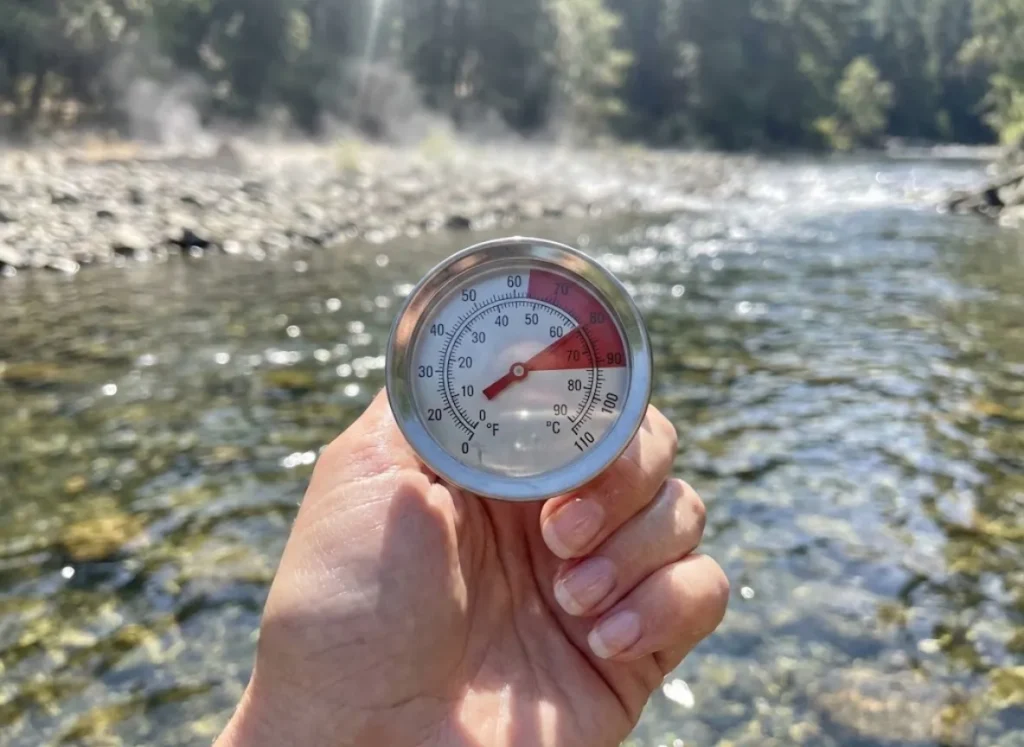
Water temperature acts as a multiplier for stress. The warmer the water, the smaller the margin for error becomes regarding catch-and-release survival rates.
Why does water temperature increase the cost of slime loss?
Fish are cold-blooded, so their metabolism is controlled by water temperature. In warm water, a fish’s engine runs hot. This creates a massive demand for oxygen just as the water’s ability to hold dissolved oxygen goes down.
Handling stress in these conditions triggers a rapid buildup of acid in the muscles. Basic chemistry dictates that heat speeds up reactions. For every 10°C rise in temperature, chemical reaction rates double. This includes the rate at which salts leak out through damaged skin.
Analysis on temperature and fish reflexes shows that the mix of warm water and slime coat degradation can be lethal. A minor handling error that is survivable at 50°F becomes fatal at 70°F. Responsible anglers must recognize that water temperature governs fish metabolism. You should voluntarily stop fishing when waters get too warm to prevent the fish from dying later.
What is the correct protocol for reviving a fish?
Recovery is about clearing waste from the muscles and paying back the oxygen debt. This requires maximum water flow over the gill flap.
Hold the fish facing into the current (in rivers) or propel it gently forward (in still water). This forces oxygenated water through the mouth and over the gills. Do not pump the fish back and forth. The gills are designed for one-way flow, and backward movement is inefficient and stressful.
Pro-Tip: Watch the dorsal fin. When the fish can hold its dorsal fin upright and clamp its tail firmly against your grip, its balance has returned.
Wait for strong, independent tail kicks. Ensure the fish can stay upright on its own before releasing. Research on heart rate recovery shows that extensive recovery time may be necessary if a fish has lost significant slime or touched the air.
The goal is to ensure the fish has enough energy to escape predators immediately. Using barbless hooks can significantly reduce the initial handling time. This minimizes the oxygen debt that requires such revival in the first place.
Final Thoughts
The “slime coat” is a sophisticated shield that relies on an explosive hydration mechanism to function. Handling damage forces the fish into an “Osmotic Audit,” where it burns vital energy reserves trying to stop an invisible bleed of fluids.
Transitioning to rubber nets and observing the 30-second air exposure limit are the single most effective changes an angler can make to maintain elite handling standards. Recovery is a chemical process, not just a physical one. Patience during the release phase is critical, especially as water temperatures rise.
Upgrade your net, wet your hands, and share this knowledge with your fishing partner. The future of our fishery depends on the catch-and-release ethics we leave behind.
FAQ – Frequently Asked Questions
Does touching a fish with dry hands actually kill it?
It can lead to death later on. Dry skin acts like a sponge, instantly stripping the protective slime layer. This exposes the fish to infection and fluid loss. While the fish may swim away, the energy cost of repairing the barrier can lead to death days later.
How long does it take for a fish’s slime coat to grow back?
Regeneration takes a lot of energy and is slow. It often takes 24 to 48 hours to fully restore the protective layer. During this window, the fish is highly vulnerable to parasites like water mold and bacterial infections.
Are rubber nets really better than knotless nylon?
Yes. Rubber nets are scientifically better because they repel water and are non-porous. Knotless nylon is smoother than knotted nylon, but it still absorbs viscous mucus, effectively wiping the fish dry.
What is the best way to hold a fish to protect the slime?
The best way is to not hold it at all. Keep the fish in the water in a rubber net or sling. If you must lift it, ensure your hands are thoroughly wet. Support the fish horizontally under the belly and avoid touching the gill plate entirely.
Risk Disclaimer: Fishing, boating, and all related outdoor activities involve inherent risks that
can lead to injury. The information provided on Master Fishing Mag is for educational and informational purposes
only. While we strive for accuracy, the information, techniques, and advice on gear and safety are not a substitute
for your own best judgment, local knowledge, and adherence to official regulations. Fishing regulations, including
seasons, size limits, and species restrictions, change frequently and vary by location. Always consult the latest
official regulations from your local fish and wildlife agency before heading out. Proper handling of hooks, knives,
and other sharp equipment is essential for safety. Furthermore, be aware of local fish consumption advisories. By
using this website, you agree that you are solely responsible for your own safety and for complying with all
applicable laws. Any reliance you place on our content is strictly at your own risk. Master Fishing Mag and its
authors will not be held liable for any injury, damage, or loss sustained in connection with the use of the
information herein.
Affiliate Disclosure: We are a participant in the Amazon Services LLC Associates Program, an
affiliate advertising program designed to provide a means for us to earn advertising fees by advertising and linking
to Amazon.com. As an Amazon Associate, we earn from qualifying purchases. We also participate in other affiliate
programs and may receive a commission on products purchased through our links, at no extra cost to you. Additional
terms are found in the terms of service.