In this article
The sonar was screaming—a cloud of bait suspended 35 feet over 60 feet of clear Georgia water—and every cast I made with my ¾-oz jig sank straight to the bottom while the fish scattered above. Three tournament hours on Lake Lanier, and my livewell sat bone dry. A local leaned across the dock later: “You’re fishing for largemouth bass, but those are Spots. Different game entirely.”
That sentence reshaped my entire approach to black bass fishing. After a decade targeting largemouth across the Southeast, I had to unlearn almost everything to catch spotted bass consistently. The Micropterus punctulatus and its larger cousin, the Alabama bass (Micropterus henshalli), aren’t simply smaller versions of the fish you know. They’re evolutionary masterpieces adapted for current, depth, and pack-hunting—demanding a fundamentally different tactical system.
This guide breaks down exactly where your largemouth bass anglers instincts fail you and how to recalibrate for consistent spotted bass success.
⚡ Quick Answer: Spotted bass differ from largemouth in three critical ways that change how you fish them: they have smaller mouths (requiring downsized lures), they prefer deeper water and current (not shallow cover), and they school aggressively rather than holding solitary ambush positions. Switch to 6-8lb fluorocarbon, finesse presentations, and focus on offshore structure to stop forcing largemouth tactics on a different species.
The Biology That Changes Everything
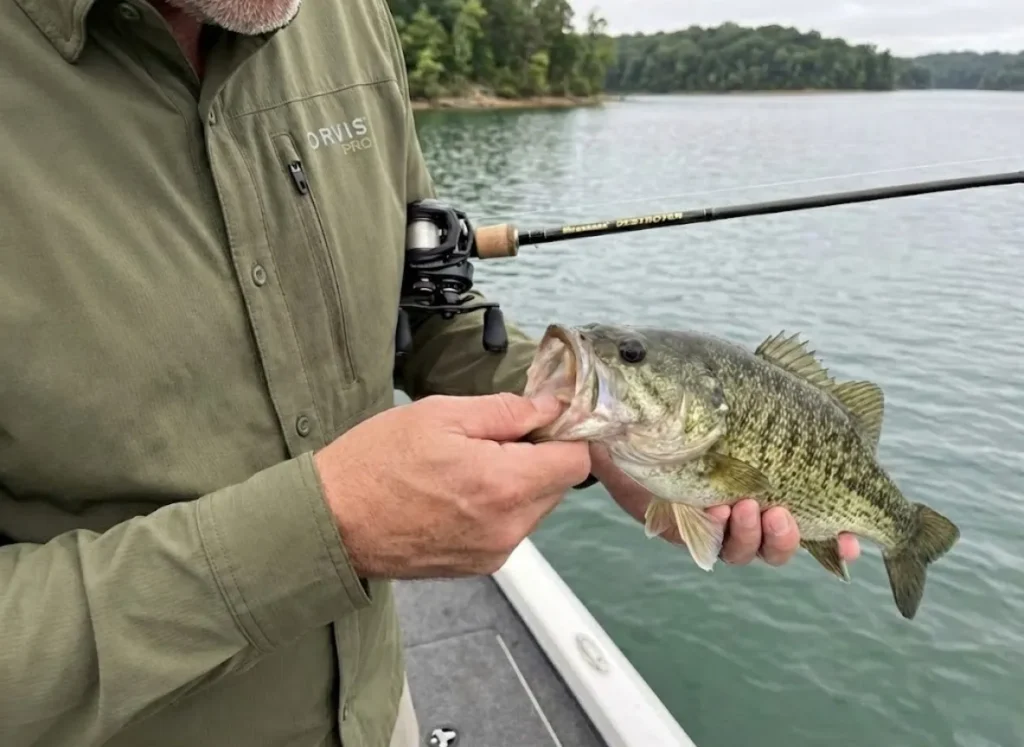
The physical differences between spotted bass and largemouth aren’t academic trivia—they dictate feeding mechanics, habitat preference, and why your confidence baits get ignored.
The Jaw Test: Why Your Lure Size Is Wrong
Here’s the field test that matters: on a largemouth bass, the upper jaw (maxilla) extends well past the rear margin of the eye. On a spotted bass, it stops at or before the eye’s back edge. This anatomical difference controls everything about how these fish feed.
Largemouth use suction feeding mechanics that define Largemouth strikes—they vacuum large prey in a single explosive strike. That ¾-oz jig with the bulky creature trailer? A largemouth inhales it. A spotted bass sees a meal that won’t fit its gape and refuses.
Spotted bass rely on pursuit-and-grasp mechanics for smaller forage, which means compact profiles win: 3-4″ straight tail worms, 2.8″ swimbaits, and jigs at ¼-⅜ oz. If you’re getting short strikes or fish coming unbuttoned at the boat, you’re probably fishing too big.
Pro tip: Whatever largemouth bait you’d normally throw, reduce it by about 30%. Your Largemouth confidence bait probably won’t work here—leave your ego and your big jigs in the truck.
The Tongue Patch: Your Definitive Field ID
When species identification matters—and it does for regulations and expectations—run your thumb across the fish’s tongue. Spotted bass possess a rectangular tongue patch texture on the center of the tongue (glossohyal) that feels like coarse sandpaper. Largemouth have a smooth tongue. The Alabama Department of Conservation confirms this tactile test as the definitive field identification method.
This rough patch isn’t random. It helps Spots grip hard-shelled prey like crayfish before swallowing, which explains why they often “peck” at soft plastics rather than engulfing them. They’re testing texture before committing. That “short strike” you blamed on the fish? It was a species mismatch, not a missed hookset.
Dorsal Fin Connectivity and Hydrodynamics
Check the dorsal fin connection: spotted bass have a continuous fin with a shallow notch between the spiny and soft sections. Largemouth show a deep notch, fins appearing nearly separate. This difference reveals how these fish relate to water movement.
The continuous fin acts as a stabilizer, letting Spots hold position in current seams that concentrate gamefish that would exhaust a largemouth. While largemouth hide from wind and current behind cover, spotted bass thrive in it. That windswept main lake point where you’d never throw for largemouth? That’s exactly where the Spots are stacked.
Where Largemouth Instincts Lead You Astray
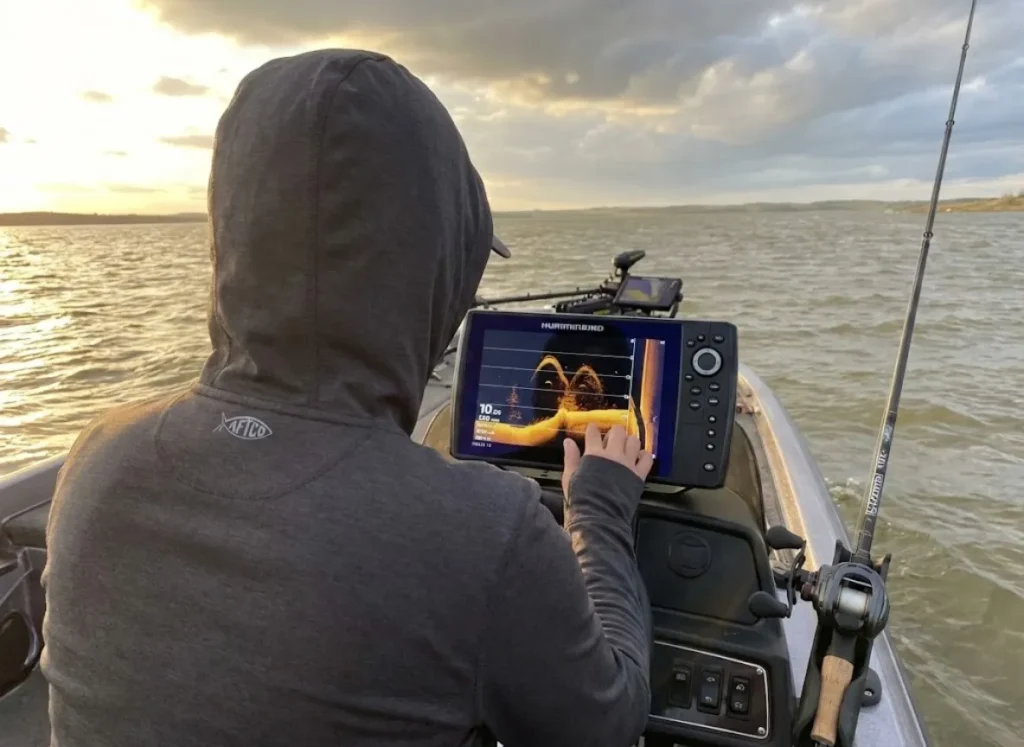
The locations that feel right for largemouth bass are often completely wrong for spotted bass. Unlearning these instincts is half the battle.
The Bank-Beating Bias That Empties Your Livewell
Largemouth anglers are conditioned to cast at visible shoreline cover—laydowns, docks, grass lines. Textbook stuff. But spotted bass are structure-oriented and depth biased. They relate to that same point, but they’re positioned on the drop-off in 25 feet of water, not in the shallows.
When you fish a crankbait diving 10 feet over a 20-foot bottom, you’re missing the Spots pinned to the substrate. The error isn’t your cast—it’s your target. You’re fishing the “top” of the cover when bass tend to hold at the base.
On Blueback Herring reservoirs like Lake Lanier and Lake Hartwell, this gets extreme. Spotted bass often position 50 yards offshore, suspended 20 feet down over 60+ feet of open water. Good luck finding them with a spinnerbait.
Ignoring the Suspension Phase (The “Limbo Zone” Problem)
Largemouth anglers are comfortable fishing bottom (jigs, worms) or top (frogs, buzzbaits). The middle of the water column—what I call the “limbo zone”—is foreign territory. And it’s exactly where spotted bass spend most of their lives.
In Blueback Herring lakes especially, Spots decouple from traditional structure entirely. They roam open basins chasing baitfish, behaving more like striped bass than their largemouth cousins. Fish looking up at suspended bait will never see your bottom-contact jig. You need sonar interpretation skills for suspended fish and techniques that work the water column: count-down swimbaits, spybaiting, underspins.
Pro tip: If the conditions would make you uncomfortable power fishing for largemouth—hard wind, exposed points, deep current—that’s exactly where the Spots are stacked.
The Current Misconception: They Thrive Where Largemouth Hide
Largemouth seek refuge from current, tucking into eddies behind cover to conserve energy. Spotted bass thrive in the current. Their streamlined bodies and connected dorsals let them hunt actively in flow, which means on reservoir systems, Spots dominate main lake points, channel swings, and high-flow areas while largemouth retreat to creek backs.
The Gear Translation: Downsizing Without Giving Up Fighting Power
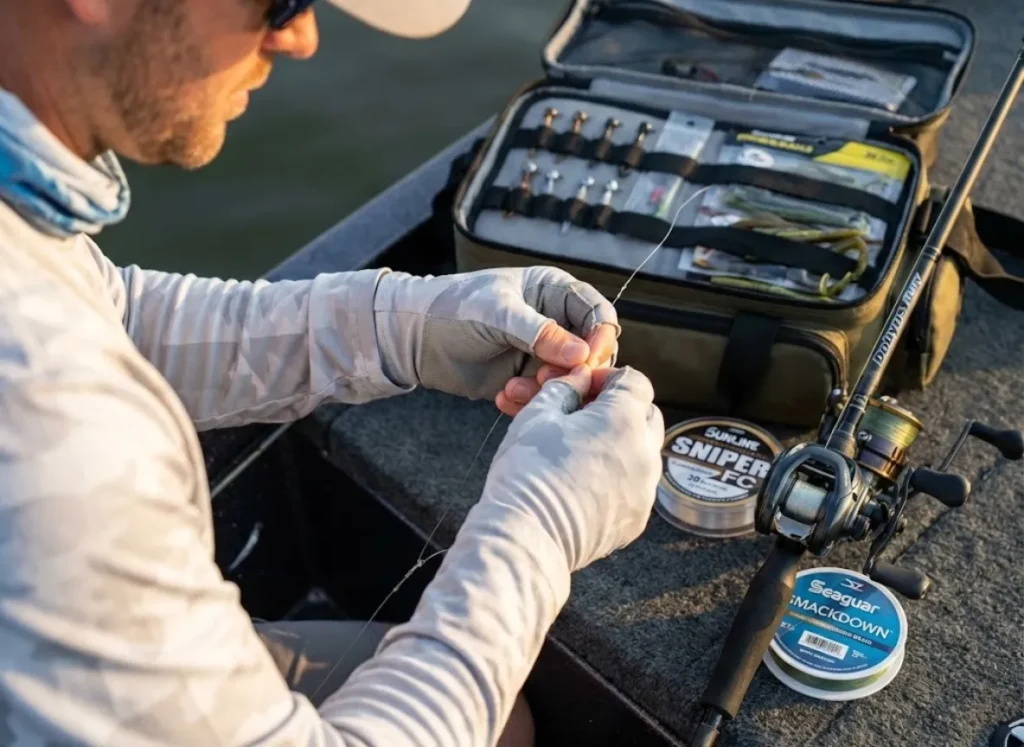
Your largemouth tackle will actively work against you targeting Spots. The required adjustments are significant but non-negotiable.
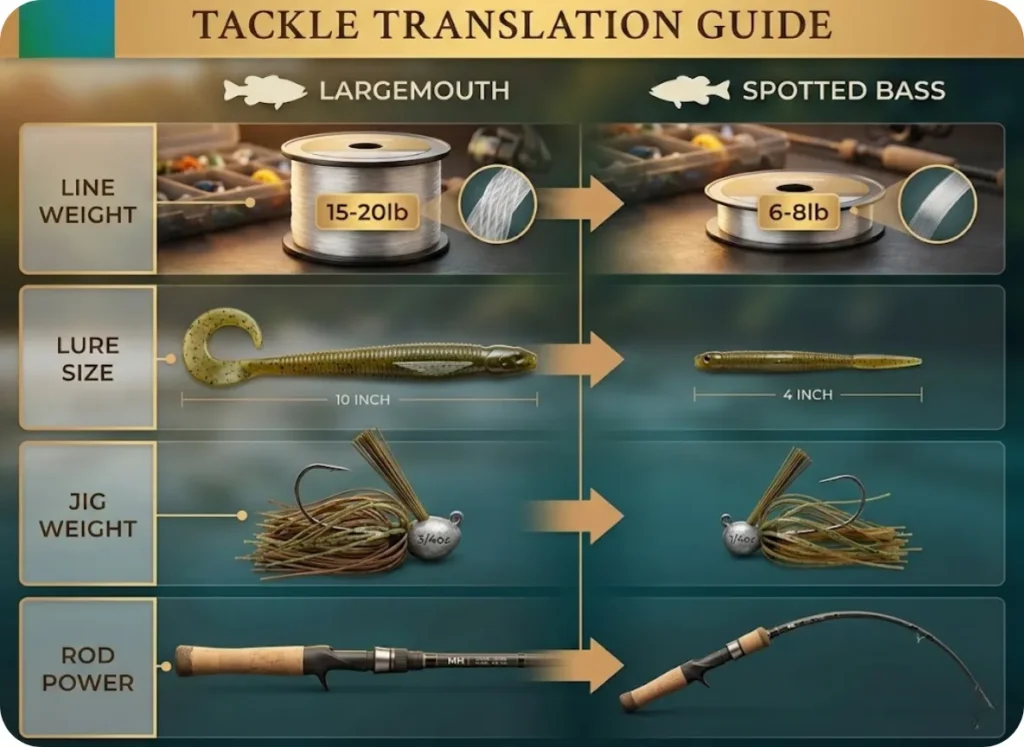
Line Choice: Why Your 50lb Braid Is Getting Refused
Spotted bass inhabit clearer water than most largemouth populations. Their visual acuity in these high-visibility environments makes heavy line extremely detectable. The standard for consistent success is 6-8lb test fluorocarbon with superior refractive properties—not preference, necessity.
Fluorocarbon’s refractive index sits closer to water than monofilament, making it nearly invisible in clear conditions. The added density helps light lures reach deep strike zones where Spots hold. Most spotted bass specialists run a hybrid setup: braid main line connected to a fluorocarbon leader via FG Knot, combining sensitivity with invisibility.
Lure Profile: The 30% Reduction Rule
The smaller mouth gape of spotted bass demands compact profiles. Colors matter more in clear water too—natural baitfish patterns and translucent profiles outperform the black-and-blue standbys of largemouth fishing.
Finesse hooks are essential. The EWG worm hooks sized for 5″ plastics will leverage spotted bass right out of their mouths. Match your wire gauge to the downsized presentation, or expect to lose fish consistently. Remember: larger bait and lures work better for largemouth—Spots need the opposite approach.
Rod Action: Parabolic Beats Power
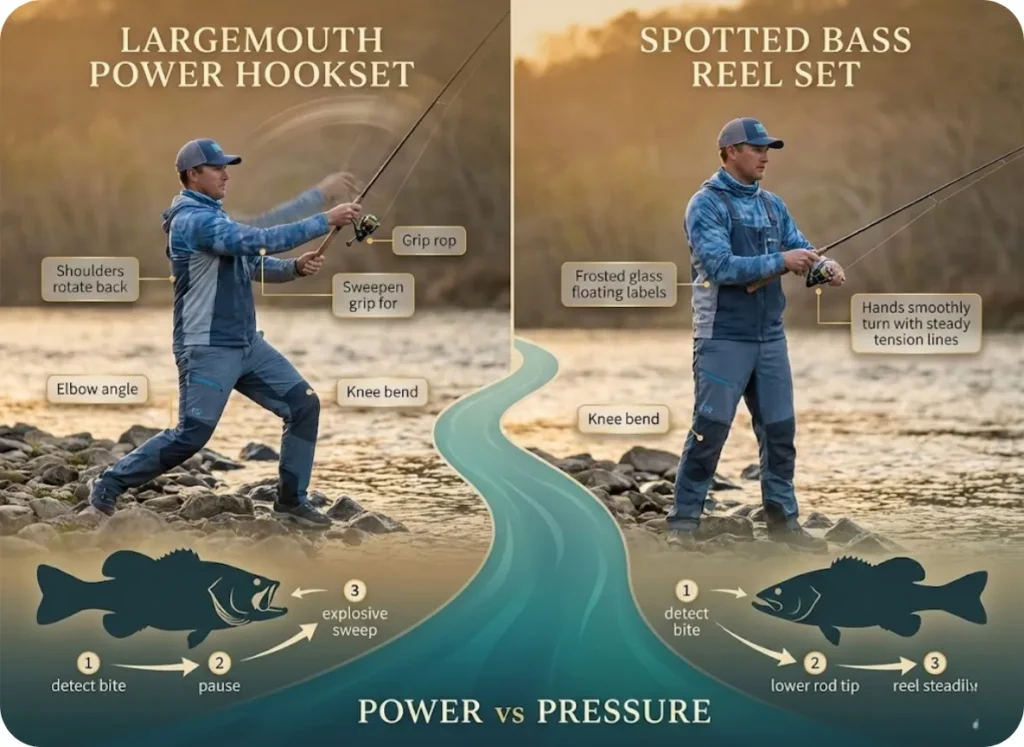
Spotted bass fight harder pound-for-pound than largemouth—deep digging surges and sustained runs rather than explosive violent airborne escape behavior. Stiff, fast-action rods create a pivot point that tears hooks out during those bulldogging runs.
Rods with parabolic bend or softer tip sections (Medium-Light power) absorb shock and keep small treble hooks pinned. The hookset changes too: replace the violent “slack line” sweep with a “reel set”—reeling rapidly until the rod loads. This is critical with the lighter wire hooks that rod taper and hookset dynamics finesse presentations demand.
Finesse Techniques That Outfish Power Tactics
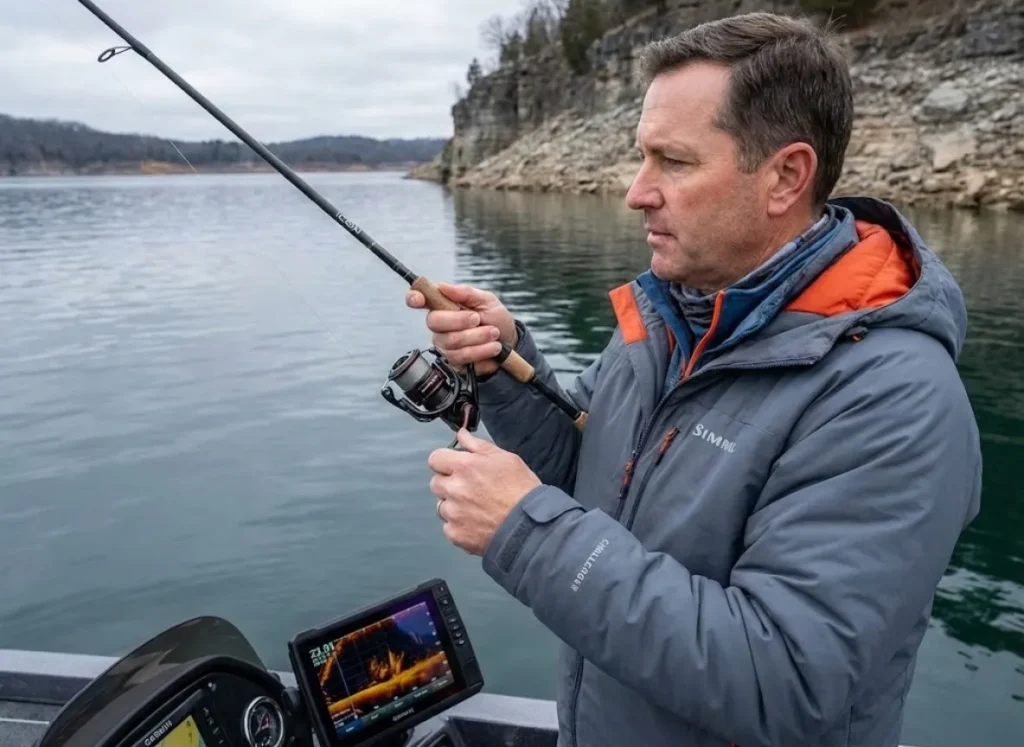
When power tactics fail—and they will—these finesse systems produce bass when nothing else works.
The Shakey Head: Dead-Sticking for Pecking Fish
Spotted bass examine baits closely rather than inhaling them. A straight-tail worm on a round-ball jighead (⅛-⅜ oz) standing vertical on rocky bottom gives them what they want to see.
The technique requires restraint: “dead stick” the bait or shake the slack line without moving the lead head. You’re mimicking oblivious forage, not triggering reaction strikes. Largemouth anglers habitually over-work this presentation; for Spots, less is dramatically more. Use a high-sensitivity rod to detect subtle intake—you’re feeling light taps, not freight-train hits.
The Drop Shot: Vertical Precision for Suspended Fish
The drop shot rigging and technique guide separates weight from hook (12-18″ leader), achieving weightless action at the exact eye level of bass holding just off bottom. In deep clear water (30+ feet), this maintains bottom contact while keeping your presentation in the strike zone.
Extra-Fast action rod tips allow fish to inhale without feeling resistance before you set. Color selection matters here: Pro Blue and natural translucent patterns outperform dark colors in the clear water spotted bass prefer.
Spybaiting: The Silent Weapon for Pressured Suspension
When Spots suspend but won’t commit—post-frontal, gin-clear, tournament pressure—spybaiting produces when everything else fails. A sinking prop-bait retrieved ultra-slowly creates micro-pulse waves rather than aggressive displacement, mimicking thermally stressed or dying baitfish.
This requires 4-6lb fluorocarbon and long casts. The shimmy on the fall triggers hesitant followers that won’t chase faster presentations. Largemouth anglers reel spybaits too fast, destroying the subtle action that makes them work. Patience is the technique.
Pro tip: Spybaiting is your winter ace on deep clear lakes. When water temps drop and nothing else gets bit, slow down even more and let the bait do the work.
The Alabama Bass Factor: When “Spotted Bass” Breaks All the Rules
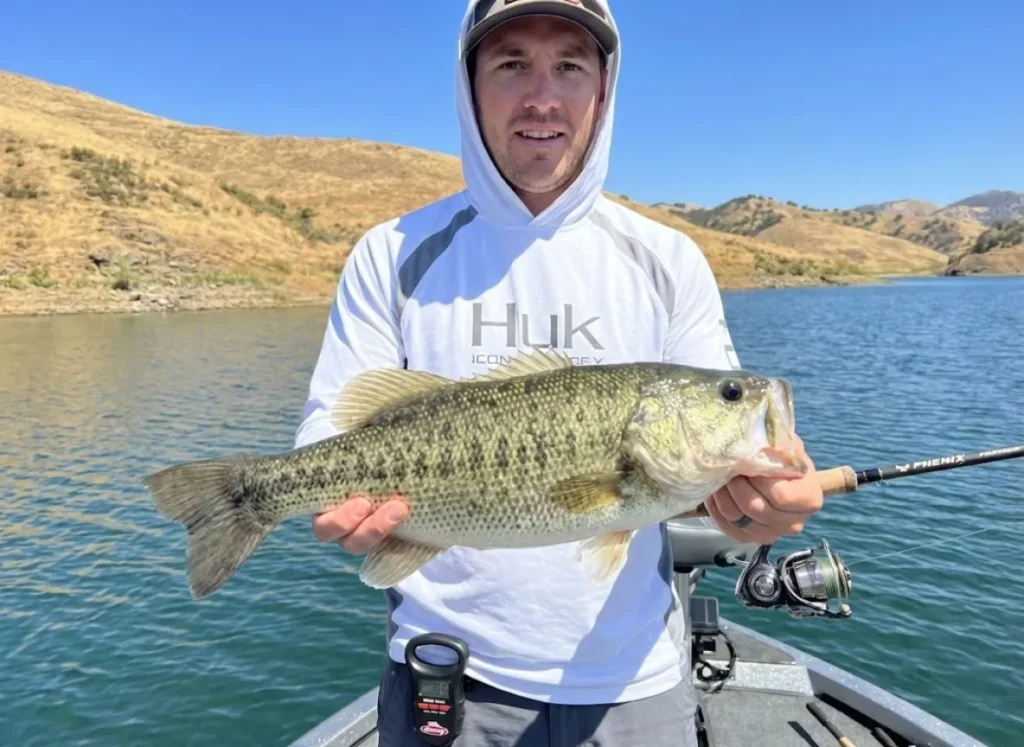
The trophy spotted bass you’re seeing on social media? Most aren’t actually Micropterus punctulatus. Understanding this distinction changes your expectations and destinations.
Genetic Hierarchy and Record-Breaking Implications
In 2008, taxonomists elevated the subspecies to full species status: Alabama bass (Micropterus henshalli). This matters because Alabama Bass grow significantly larger—10+ pounds documented versus the 4-5 lb trophy ceiling for Kentucky spotted bass—and exhibit more aggressive behavior.
The “spotted bass” in modern world records from California reservoirs (Bullards Bar, Pine Flat) are almost exclusively Alabama Bass. Cody Meyer’s 10.80 lb catch from Bullards proved these fish rival Florida largemouth bass growth potential. Your trophy benchmarks need geography adjustment: a 4-lb fish in Kentucky represents a lifetime achievement; the same fish at Lake Lanier is merely “quality.”
The Invasion Problem: Genetic Swamping of Native Fisheries
Alabama bass introduced outside their native Mobile River basin threaten native smallmouth bass and complicate species identification through hybridization through “genetic swamping.” Reproductive barriers between black bass species are weak, and Alabama Bass males aggressively outcompete native spawners. Peer-reviewed research on reservoir species turnover documents this process in detail.

The resulting hybrids (“Meanmouth bass“) backcross with parental populations, eventually diluting native gene pools to functional extinction. Lake Chatuge, Lake Norman, Lake Keowee—once-diverse fisheries now dominated by Alabama Bass genetics. In waters where they’re invasive, some states encourage catch-and-harvest to protect natives.
Deep Water Survival: Fizzing and Release Ethics
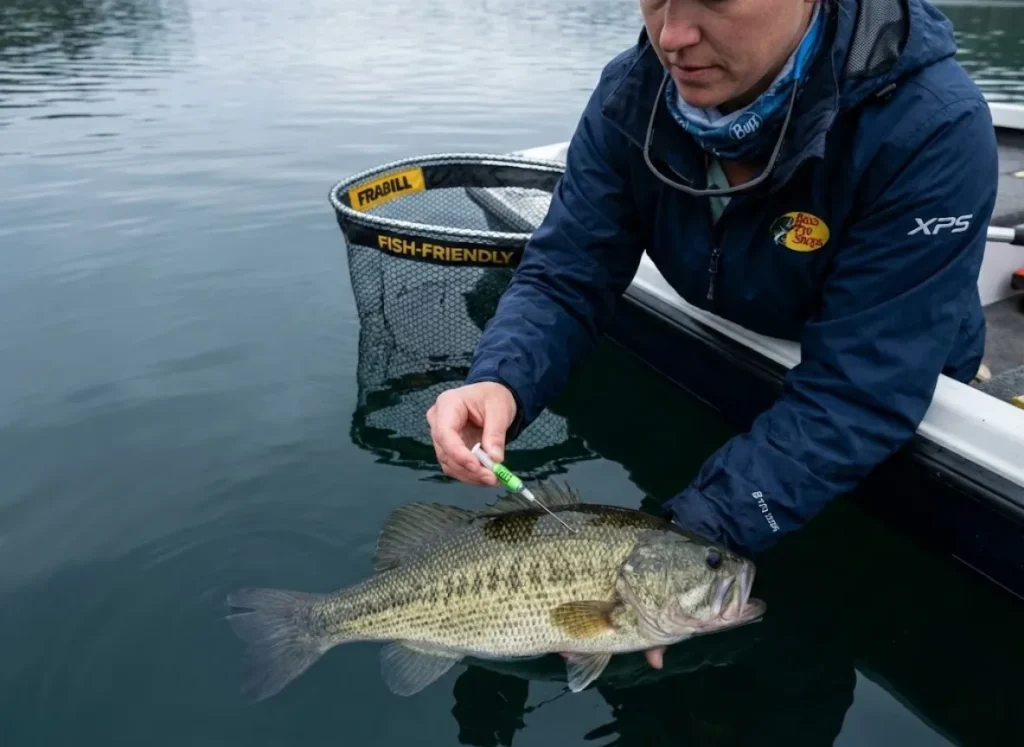
Spotted bass caught from depth require special handling. Skip this step, and your released fish dies anyway.
Recognizing Barotrauma Symptoms
Fish pulled from 30+ feet experience rapid swim bladder expansion from pressure change—barotrauma. Symptoms include floating belly-up, bulging eyes, and stomach protruding from the mouth. Released immediately without treatment, these fish cannot submerge. They die from exposure or predation within hours.
In fishing tournaments on deep lakes, fizzing is often mandatory for weighing live limits. If you’re pulling fish from 25 feet or deeper, assume you need to address this.
The Fizzing Procedure
Fizzing involves inserting an 18-gauge hypodermic needle into the swim bladder to vent excess gas. Entry points: behind the pectoral fin (lateral) or through the crush plate in the mouth. Understanding barotrauma and swim bladder mechanics is straightforward once you know the anatomy.
Alternatively, descending devices for deep water release return fish to depth without venting. If you’re not prepared to treat barotrauma, you shouldn’t be fishing that deep—period.
Pro tip: Carry a fizzing kit or descending device every time you target deep water Spots. The few minutes spent treating barotrauma means your released fish actually survives.
Conclusion
The spotted bass isn’t a consolation prize or a “smaller largemouth.” It’s a fundamentally different predator demanding a fundamentally different approach. The bass anglers who keep forcing largemouth tactics will keep underperforming.
Three recalibrations that matter:
- Downsize everything: Line to 6-8lb fluorocarbon, lures by 30%, hooks to finesse wire
- Think depth, not bank: Spotted bass suspend, school, and hunt in the water column—not against the shoreline
- Embrace finesse: Shakey heads, drop shots, and spybaits outfish power tactics in clear, pressured fisheries
The next time your sonar lights up with suspended fish over deep structure and your instinct reaches for a crankbait—pause. That’s your Largemouth brain talking. Tie on a Ned rig, count down a spybait, and meet the spotted bass on its own terms.
FAQ
Do spotted bass fight harder than largemouth?
Yes, pound-for-pound most anglers fishing for both species consider spotted bass fight harder. Their deep, sustained runs and bulldogging resistance contrast with the explosive but shorter surface battles of largemouth bass. Expect a grinding, stamina-based fight rather than aerial acrobatics.
What is the best bait for spotted bass?
Finesse presentations consistently outperform power tactics. The shakey head with a 4-5 straight-tail worm, drop shot with 3 finesse baits, and spybait are top producers. Remember that larger bait and lures work better for largemouth—Spots need the opposite approach.
How deep do you fish for spotted bass?
Spotted bass routinely hold in 25-60 feet of water at greater habitat depth than largemouth in the same reservoirs. In clear Blueback Herring lakes, targeting fish suspended over 100 feet is common. Electronics and forward-facing sonar interpretation become essential for locating these offshore schools.
What is the difference between spotted bass and Alabama bass?
Alabama Bass (Micropterus henshalli) were elevated to full species status in 2008. They grow significantly larger (10+ lbs versus 4-5 lb trophy ceiling for Kentucky spotted bass), exhibit more aggressive feeding behavior, and represent the genetics behind modern world-record largemouth class expectations in certain waters.
Can you eat spotted bass?
Yes, spotted bass are edible with firm, white flesh similar to other black bass. However, in many areas—especially where Alabama bass are invasive—catch-and-release of trophy fish is encouraged to protect genetics. Check local fishing regulations regarding harvest.
Risk Disclaimer: Fishing, boating, and all related outdoor activities involve inherent risks that
can lead to injury. The information provided on Master Fishing Mag is for educational and informational purposes
only. While we strive for accuracy, the information, techniques, and advice on gear and safety are not a substitute
for your own best judgment, local knowledge, and adherence to official regulations. Fishing regulations, including
seasons, size limits, and species restrictions, change frequently and vary by location. Always consult the latest
official regulations from your local fish and wildlife agency before heading out. Proper handling of hooks, knives,
and other sharp equipment is essential for safety. Furthermore, be aware of local fish consumption advisories. By
using this website, you agree that you are solely responsible for your own safety and for complying with all
applicable laws. Any reliance you place on our content is strictly at your own risk. Master Fishing Mag and its
authors will not be held liable for any injury, damage, or loss sustained in connection with the use of the
information herein.
Affiliate Disclosure: We are a participant in the Amazon Services LLC Associates Program, an
affiliate advertising program designed to provide a means for us to earn advertising fees by advertising and linking
to Amazon.com. As an Amazon Associate, we earn from qualifying purchases. We also participate in other affiliate
programs and may receive a commission on products purchased through our links, at no extra cost to you. Additional
terms are found in the terms of service.