In this article
Three spools sit on the bench, each one promising more fish, and there’s only one reel to fill. Braided line, fluorocarbon line, and monofilament line each do something the other two can’t, which is exactly why picking one feels harder than it should. Here’s the part most line debates skip: for a lot of anglers the right answer isn’t a single line at all, it’s a braid mainline with a short fluoro or mono leader. Before we get to that setup, here’s what each line does on the water, laid side by side, and which one to spool up for your water and your baits.
Here’s the one-glance version before we break down each line.
| Line | Stretch & Sensitivity | Visibility & Buoyancy | Best For |
|---|---|---|---|
| Braided | Zero stretch, top sensitivity | Highly visible, floats | Heavy cover, long casts, mainline |
| Fluorocarbon | Low stretch, sensitive | Nearly invisible, sinks | Clear water, leaders, bottom baits |
| Monofilament | High stretch, forgiving | Moderately visible, floats | Topwater, treble baits, beginners |
Braid Gives You the Most Strength in the Thinnest Line
Braid changed how people fish cover, and once you feel the bottom change through it, going back to anything else is hard. It’s the high-performance mainline of the three, with one specific weakness that sends most anglers straight to a leader.
What Braid Does Best
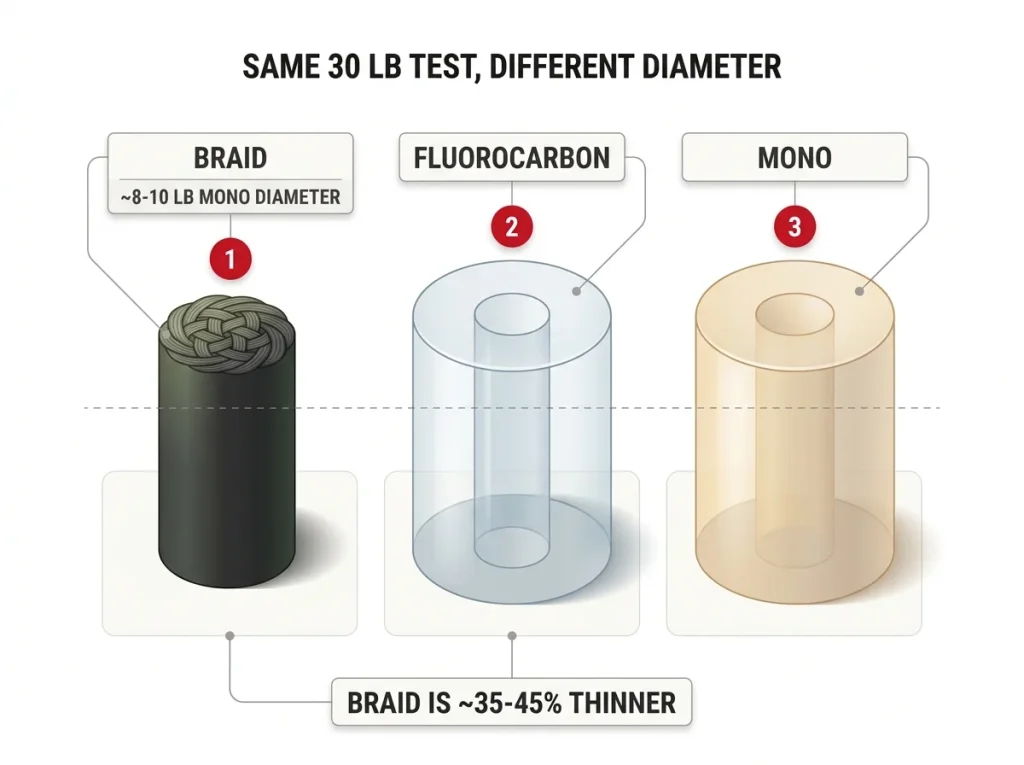
Braid is woven, not extruded, which is why modern braid is spun from Spectra and Dyneema gel-spun polyethylene fibers into a line with almost no give. That construction buys you three things at once. First, strength-to-diameter: braid runs roughly 35 to 45 percent thinner than mono or fluoro at the same breaking strength, so 30 lb braid is about the line diameter of 8 to 10 lb mono. You fit far more line on the spool and you cast a thinner line farther.
Second, zero stretch. There’s no spongy cushion between your rod tip and the hook, so you feel everything and the hookset is instant. That raw sensitivity is why finesse anglers and cover anglers both love it. Third, braid holds almost no line memory, so it lies flat off a spinning reel and helps your casting distance instead of fighting it.
Where Braid Lets You Down
Braid is the most visible of the three in the water, and it’s the worst against abrasion by a wide margin. In one abrasion test, braid kept only about 5 percent of its rated strength after light sanding and failed almost immediately. Ask anyone who’s lost a good fish to bare braid dragged across an oyster bar or a rock: that’s the moment most people become leader converts. The fix isn’t to abandon braid, it’s to tie a short leader of fluoro or mono to the end, which we’ll cover below.
When the business end of your braid starts looking fuzzy, strip it off and respool it backward so the fresh end is now your working line. Flipping braid end-for-end doubles its life for free, and it’s the one line you can actually get away with doing that to.
The Braid Worth Spooling
If you want a deeper roundup of which braid actually holds up for bass and saltwater, that’s its own conversation, but two picks cover almost everyone. The all-around choice is a round, quiet 8-strand braid, and the value choice has been proven on more reels than anything else on the shelf. A third option some anglers like, the Fitzgerald Vursa, slots in around the same range if you want to compare.
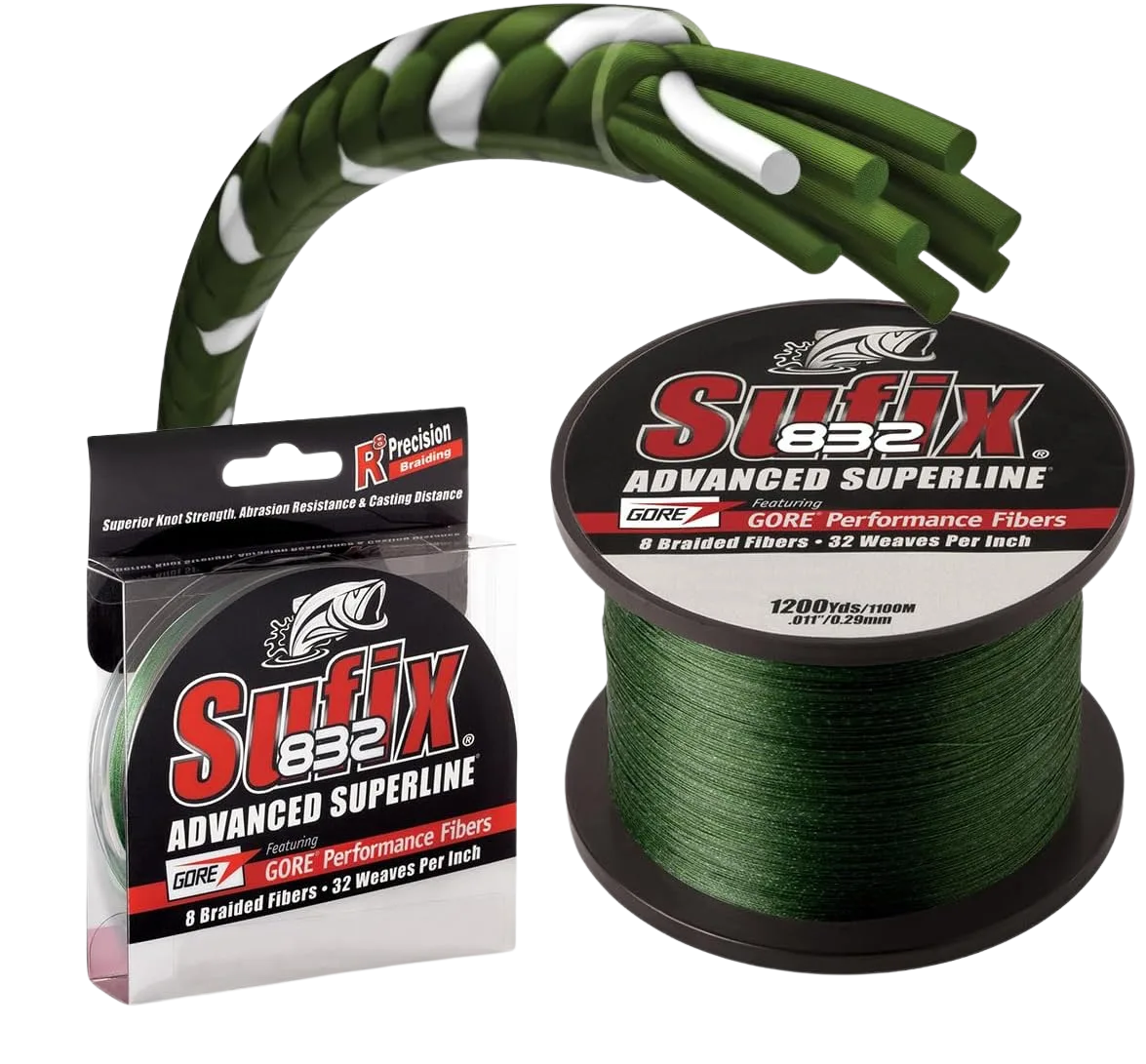
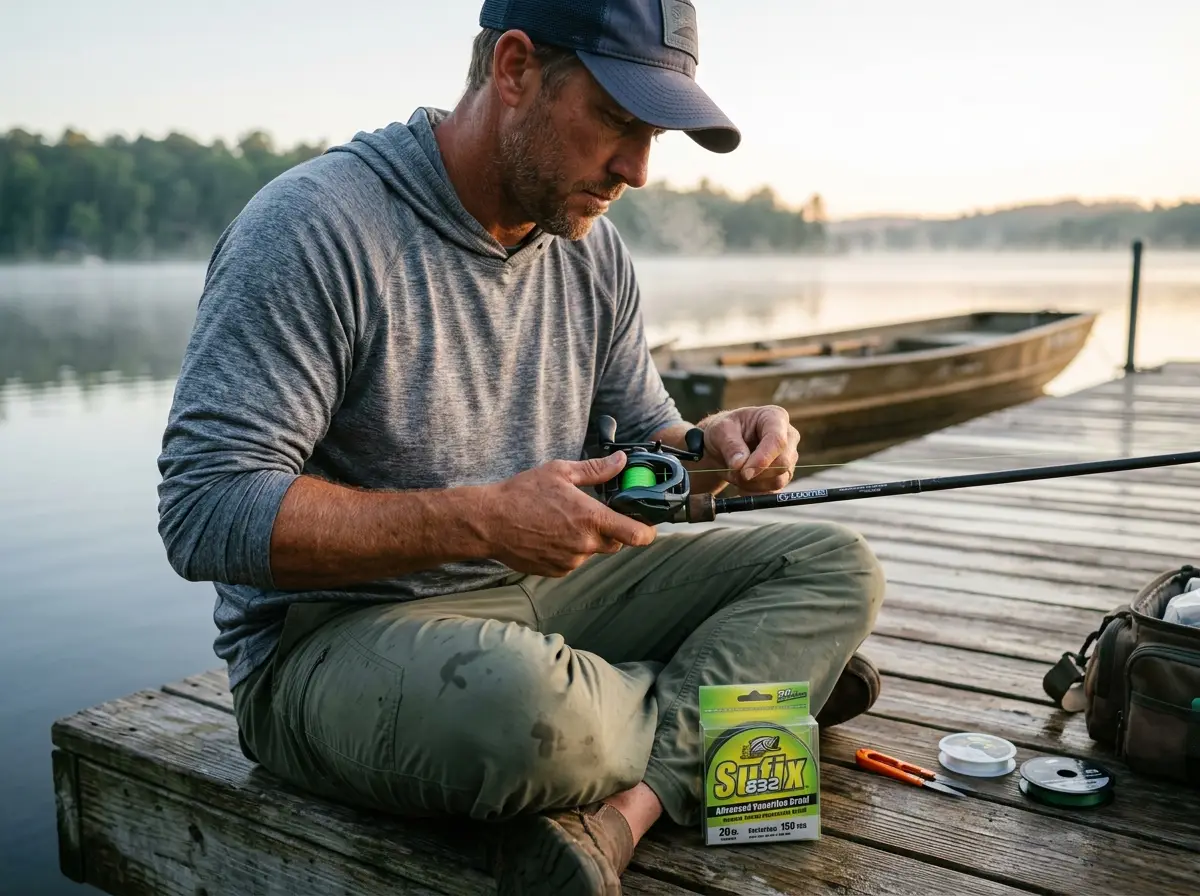
The Sufix 832 earns the all-around badge because it does nothing badly. The round 8-strand build casts farther and noticeably quieter through the guides than a cheaper 4-strand, and it resists the digging-in that turns a hard hookset into a buried loop. Spool it in 20 to 30 lb for a baitcaster you’re throwing into grass and wood, and it becomes the line you stop thinking about.
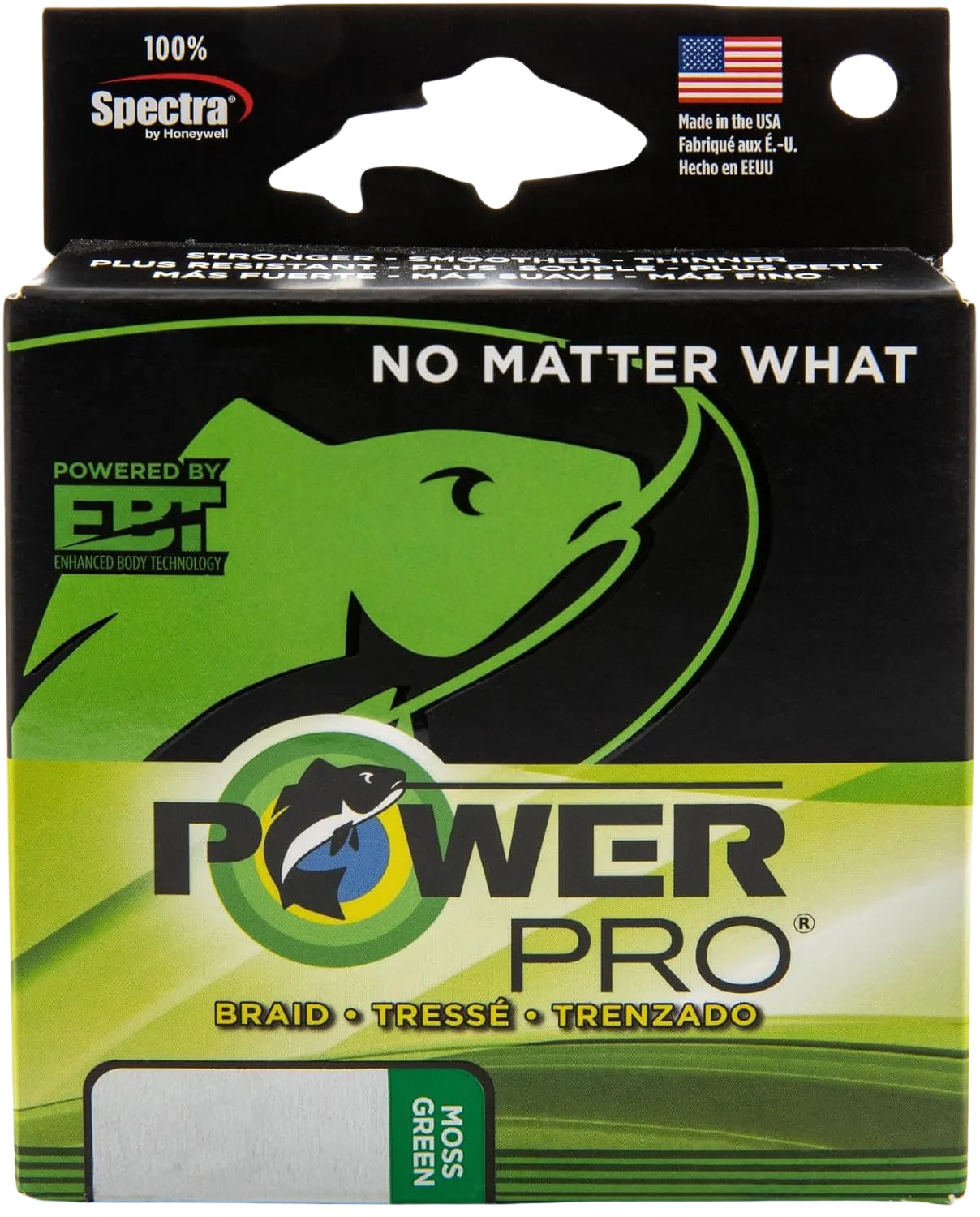
PowerPro is the line a lot of anglers learned braid on, and the 500-yard spool is the reason it’s such a value. You can fill a couple of reels off one spool, or flip and refill a single reel for a long time before you’re out. It’s a hair stiffer than the Sufix, but for the price it’s hard to argue against.
Fluorocarbon Nearly Disappears Underwater and Sinks
Fluoro is the line you reach for when the water is clear, the fish are pressured, or your bait needs to get down and stay down. It carries a “magic invisible line” reputation that’s half true and worth understanding before you pay up for it.
Why Fluorocarbon Disappears Underwater
The honest version: fluorocarbon, technically a PVDF polymer, has a refractive index of about 1.42, and water sits at 1.33, while nylon mono runs around 1.53 to 1.62. Fluoro bends light closer to the way water does, so it’s genuinely harder for a fish to see, but it is not truly invisible. In stained water the gap between fluoro and mono shrinks to almost nothing, which is the part the marketing leaves out. If you want the full optics breakdown, here’s why fluorocarbon isn’t actually invisible once it’s in the water.
The other two facts matter more day to day. Fluoro sinks, with a specific gravity around 1.8, so it pulls jigs, dropshot rigs, and cranks down and keeps a tight line to the bottom. And at a given diameter it’s the most abrasion resistance of the three, which is exactly why it makes the toughest leader when you’re fishing rock or shell.
Fluoro’s Trade-Offs
Fluorocarbon is stiffer than mono, holds more memory, and costs the most of the three. That combination is why most experienced anglers run it as a leader or a clear-water mainline rather than spooling a full reel of it for everything. It’s a specialist that’s worth every penny in the right spot and a frustration in the wrong one. Two premium lines further up the range, the Seaguar AbrazX for abrasion and the Tatsu for an ultra-supple feel, exist if you want to chase the top end, but the two picks below cover the jobs that matter.
Two Fluoros Worth Spooling
One supple, low-visibility option for clear-water mainline and finesse leaders, and one honest budget pick that puts brand-name fluoro on your leader spool without the premium sting.
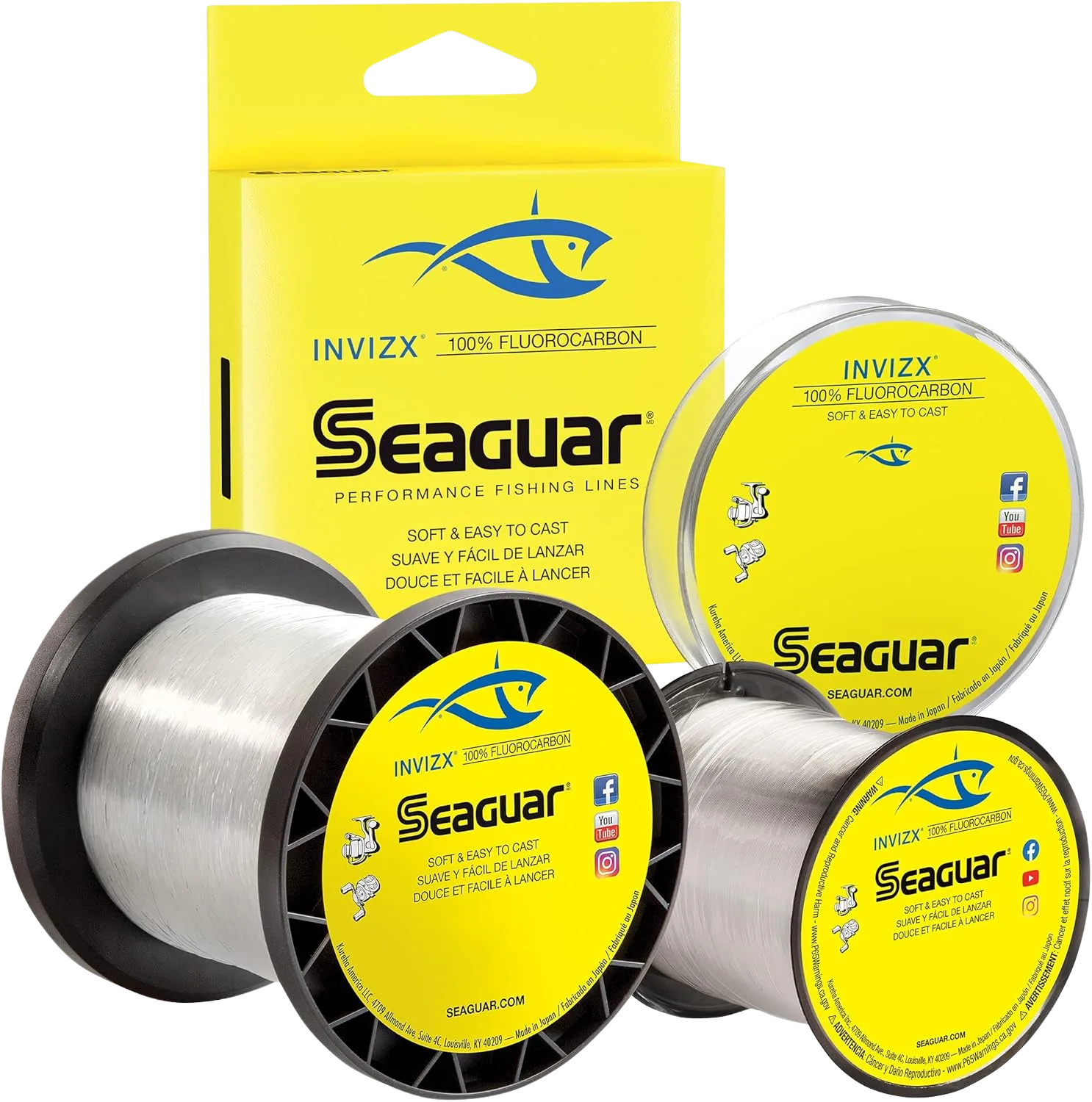
The InvizX is the fluoro to reach for when you want one spool that does double duty. It’s supple enough to behave on a spinning reel, which most fluorocarbons are not, and that same softness makes it a forgiving leader. In clear water for pressured bass or spooky trout, on a dropshot or a small jig, this is the line that quietly out-fishes a heavier, more visible setup.
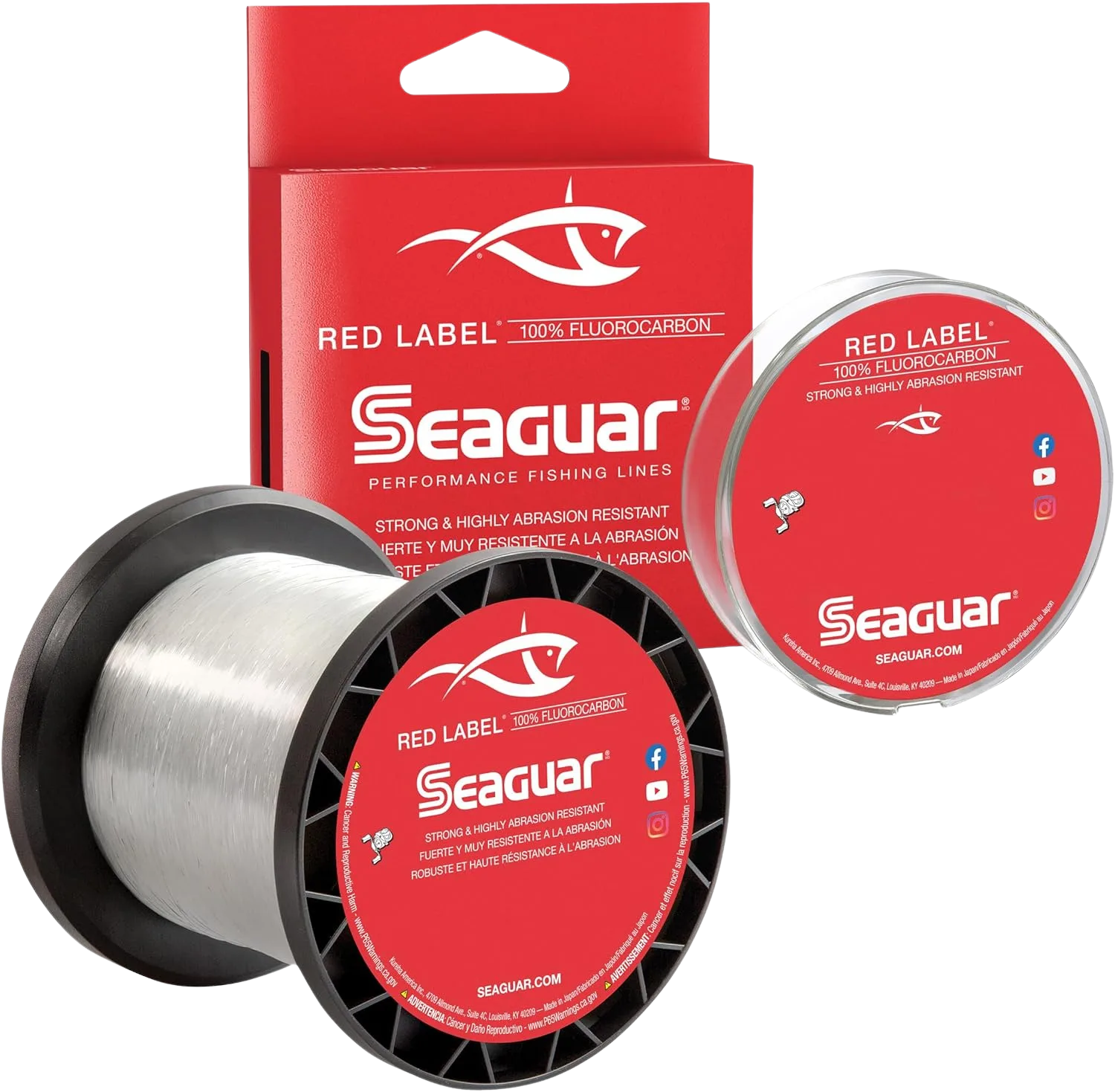
Red Label is the line that makes the braid-plus-leader argument easy on the wallet. You get real Seaguar fluorocarbon for your leaders without paying the premium-tier price, and the knot strength is a clear step up from generic fluoro. For most anglers building leaders off a braid mainline, this is all the fluoro you need.
Monofilament Forgives, Floats, and Costs the Least
Mono is the line everyone started with, and the reason plenty of veterans still keep a spool on the shelf. Here, stretch isn’t a flaw, it’s the feature, and the low price tag means you can respool guilt-free.
What Mono Brings to the Water
Monofilament has the most line stretch of the three, and that stretch is forgiving shock absorption. It cushions a hard hookset, and it keeps treble hooks pinned when a fish is thrashing boatside instead of tearing a hole and throwing the bait. Mono also floats, which makes it the natural match for topwater walking baits and poppers that you want riding high. Add in the lowest cost per yard and the easiest handling of the three, and you have a line that ties simple knots, casts smooth, and asks nothing of a beginner.
Mono’s Weak Spots
Two real downsides keep mono from being the answer to everything. It holds line memory, so it comes off the spool in coils after sitting, and it degrades in sunlight. This UV degradation strips roughly 20 percent of mono’s strength per 100 hours of direct sun, which is why a spool left on the deck all summer is measurably weaker by fall and why mono is a consumable you respool about once a year.
Anything with treble hooks belongs on mono or a mono leader. The stretch is what keeps those small hooks from levering out when a fish headshakes at the boat, and it’s the reason guides hand topwater and crankbait rods to clients spooled with mono instead of braid.
The Value Mono Worth Keeping on Hand
For a tough, cheap, do-it-all mono, one spool has been the standard for decades.
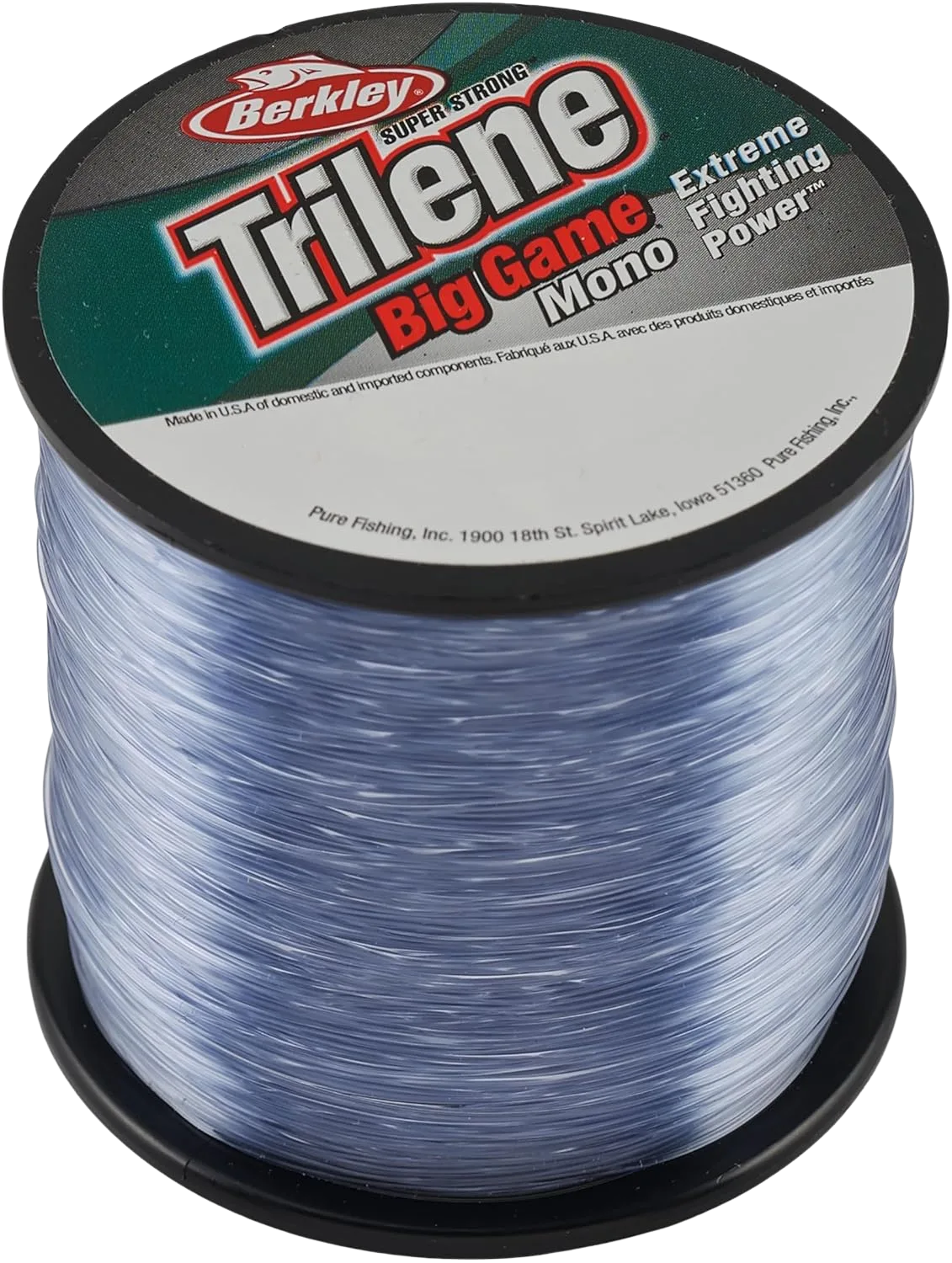
Big Game is the mono you buy on a big spool and stop worrying about. It absorbs shock, shrugs off abrasion better than most cheap mono, and costs little enough that respooling every season doesn’t sting. Run it 12 to 20 lb for topwater, catfish, snook, or any situation where a forgiving stretch beats raw sensitivity.
How the Three Compare, Spec by Spec
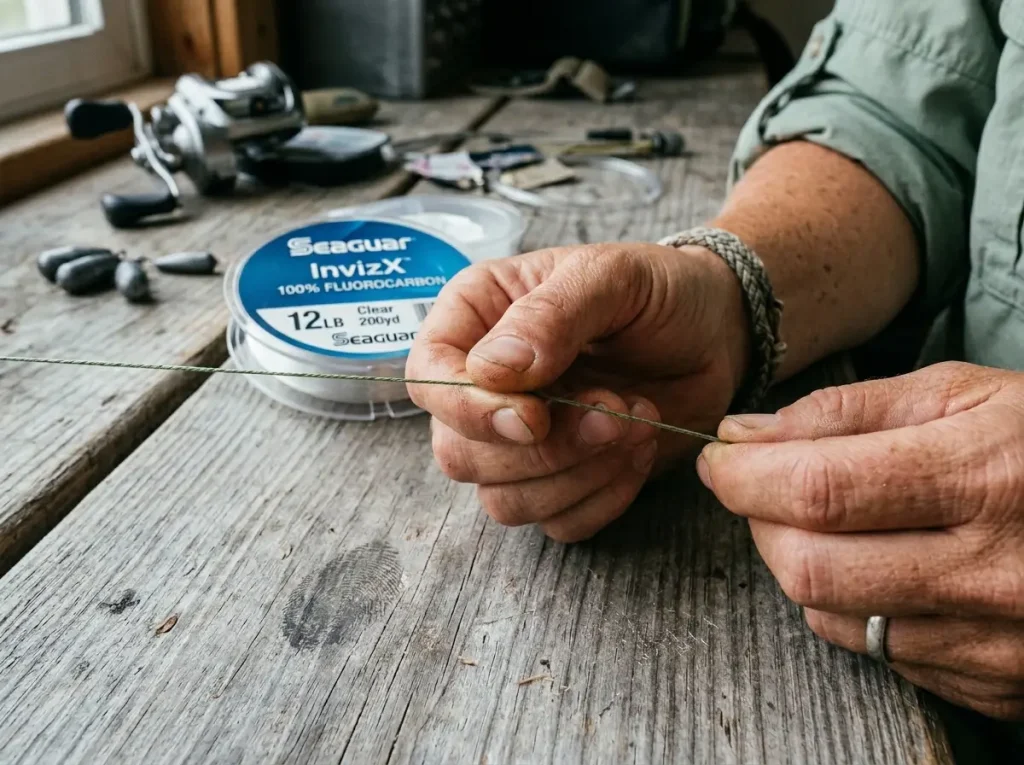
The table up top gives you the verdict. This is the why behind it, the bench-test version most anglers never run, because the numbers explain every recommendation that follows.
Diameter and Strength
The headline number is diameter. At the same pound test, braid runs about a third to a quarter the thickness of mono or fluoro, which is why 30 lb braid casts and handles like much lighter line. That thin-line advantage is real, but it cuts both ways, because the same pound test doesn’t mean the same toughness. Pound test only promises straight-pull breaking strength, not abrasion or knot strength, and it’s worth knowing what a pound-test rating really promises and what it doesn’t before you trust the number on the spool.
Stretch, Sensitivity, and Abrasion
Here’s a detail that surprises people. In standardized stretch testing, fluorocarbon actually measured more ultimate stretch than mono, around 32 inches to mono’s 25, but fluoro stretches later and harder while mono gives early, easy stretch. So at the hookset fluoro still feels sensitive and direct, mono feels forgiving and spongy, and braid feels like a wire because it has near zero stretch.
For abrasion it flips: fluoro is toughest at a given diameter, mono is in the middle, and bare braid is the weakest, holding roughly 5 percent of its strength after abrasion. That single fact is the whole argument for a leader.
Visibility, Buoyancy, and Cost at a Glance
Visibility ranks fluoro lowest, mono middle, braid highest, though clear versus stained water narrows that gap fast. Buoyancy is the spec that quietly picks your bait more often than visibility does: braid and mono float, fluoro sinks, so the line itself helps a topwater stay up or a jig get down. Cost runs the other direction, with mono cheapest, braid in the middle but longest-lived, and fluoro the priciest per yard. We’ll turn that into real money math in the last section.
When to Use Each Line
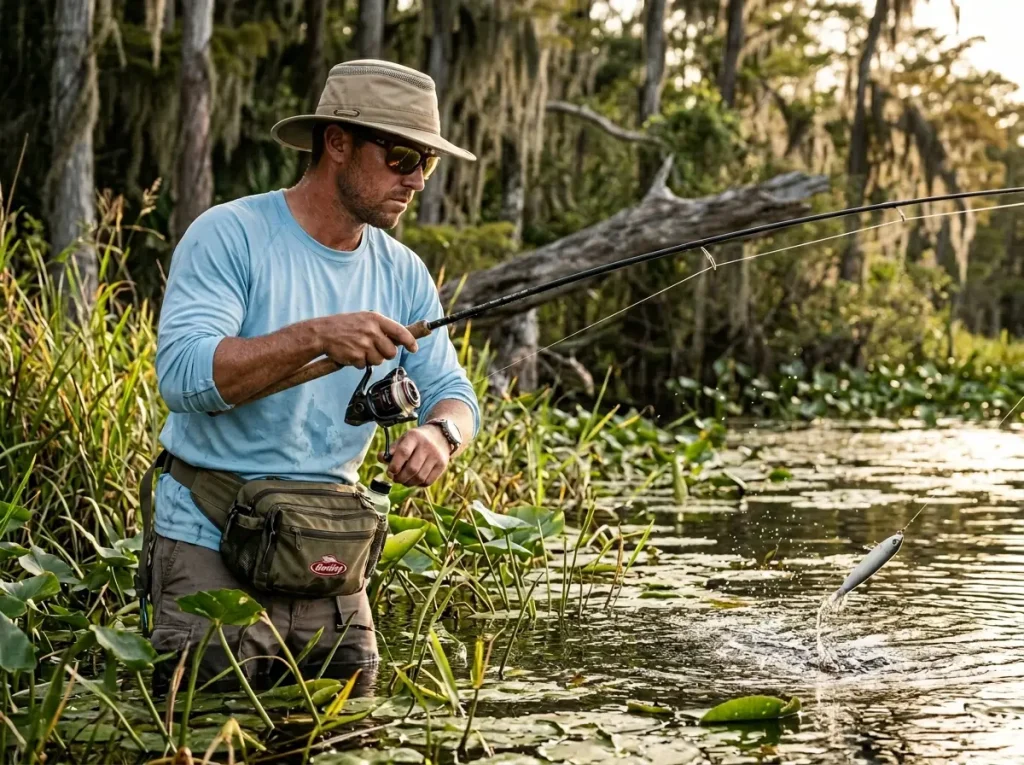
Forget brand loyalty for a second. The right line is the one that matches today’s water, today’s cover, and today’s bait. Here’s how to decide before you ever tie on.
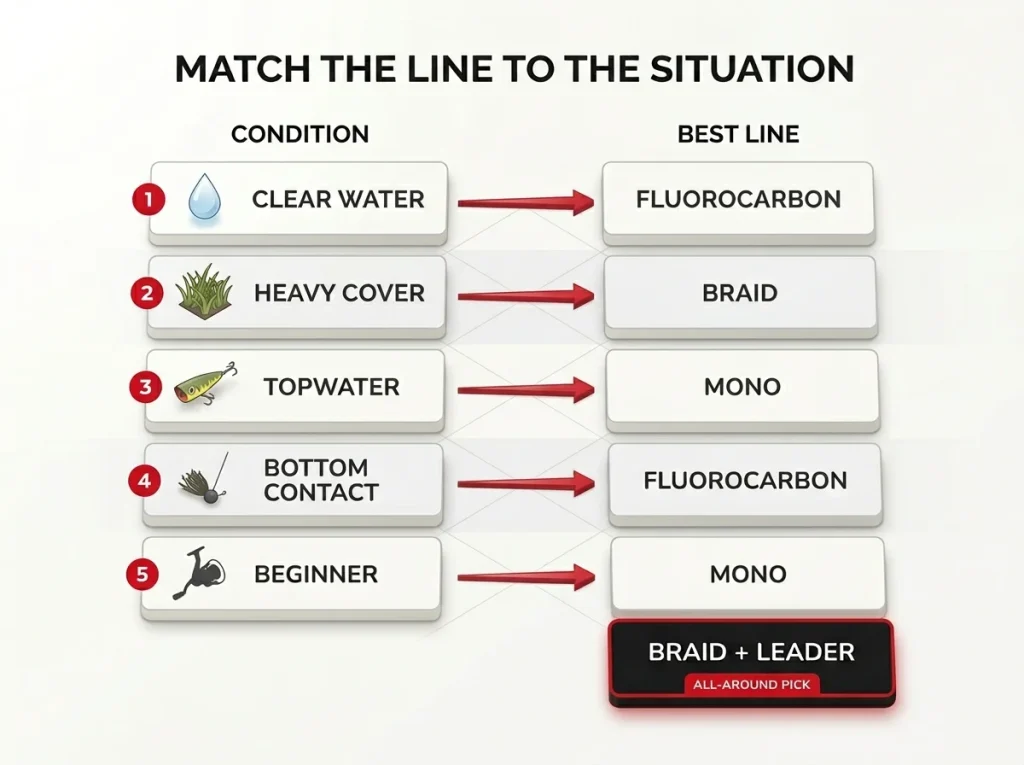
Match the Line to the Water
In clear water with pressured fish, low visibility wins, so a fluoro mainline or a fluoro leader is the call. In stained or muddy water the fish can’t scrutinize your line anyway, so visibility stops mattering and you fish whatever suits the cover and the bait. This is also where high-vis braid earns its keep: you can watch the line for the subtle twitch of a bite while the fish only ever sees the leader.
Match the Line to the Bait
Buoyancy makes this easy. Topwater walking baits, poppers, and treble-hook jerkbaits go on mono, because it floats and its stretch keeps trebles pinned. Bottom-contact baits like jigs, a Texas rig, dropshot rigs, swimbaits, and crankbaits go on fluoro, because it sinks and resists the abrasion of dragging structure.
Anything you’re pulling through heavy cover, punching mats or frogging through grass and vegetation, goes on braid for the backbone to move a fish out. For light-line finesse work where fluoro really earns its place, a fluoro leader on a spinning reel is the difference-maker.
Match the Line to the Reel
Spinning reels prefer limp line, so braid or a supple mono behaves best, with a fluoro leader added for clarity. Baitcasting reels handle all three comfortably, which is why the braid-mainline-plus-leader setup lives mostly on baitcasters. If you’re still sorting out which line belongs on which reel for your whole arsenal, step back to the bigger picture of matching line to your whole setup and build from there. The video below walks through the braid-plus-leader rig on the water and frames the beginner decision well.
The Braid-Plus-Leader System and the Knots That Connect It
This is the setup most experienced anglers actually run, and it’s the part the top guides on every comparison page mention but never teach. Braid mainline, short leader, one knot to join them. Get the knot right and you get the best of all three lines. Get it wrong and you lose fish at the worst possible moment.
Why You Run a Leader
A leader fixes braid’s two weaknesses in one tie. The braid gives you casting distance and sensitivity on the mainline, and the short leader adds what braid lacks: invisibility and abrasion resistance from a fluoro leader, or float and shock absorption from a mono leader. It also hides the bare braid that fails on abrasion, so you stop losing fish on rock and shell.
Tie braid straight to a lure and you need a Palomar knot to stop the slick line from slipping, and even then you are fishing visible, abrasion-prone braid right at the bait. The leader is usually 3 to 8 feet, matched in diameter rather than by the number on the spool, because a thin braid can cut into a too-thick leader under load and the knot fails.
Double Uni Knot, Learn This One First
The Double Uni knot is the knot to start with. It’s fast, it’s reliable, it joins braid to fluoro and braid to mono equally well, and you can retie it with cold hands in the dark. It seats a touch bulkier than the alternative, but that bulk is a fair trade for a knot you can actually tie under pressure. If you only learn one braid-to-leader connection this season, make it this one.
Lubricate every fluorocarbon knot before you cinch it. Fluoro builds heat as it tightens, and a dry, fast pull burns the line and weakens the knot right where it counts. A little spit or water and a slow, steady seat is the difference between a knot that holds and one that pops on the hookset.
FG Knot, Graduate to This for Distance
The FG knot is the one to grow into. It tested around 111 percent of line strength and seats to the smallest profile of the braid-to-leader knots, so it slides through the guides cleanly on every cast, ahead of the Alberto knot and well ahead of the bulkier Double Uni for sheer casting distance. That makes it the knot for long leaders and distance casting, where a bulky connection slaps the guides and kills your cast.
The catch is that it’s fiddly to tie, best learned under constant rod-tip tension, and a slow walkthrough is worth watching before you try it on the water. When you want the full set, here are the line-to-leader connection methods worth trusting, step by step.
The Leader Material Worth Keeping
A dedicated leader spool is cheap insurance, and it’s the budget-smart half of the braid-plus-leader play.
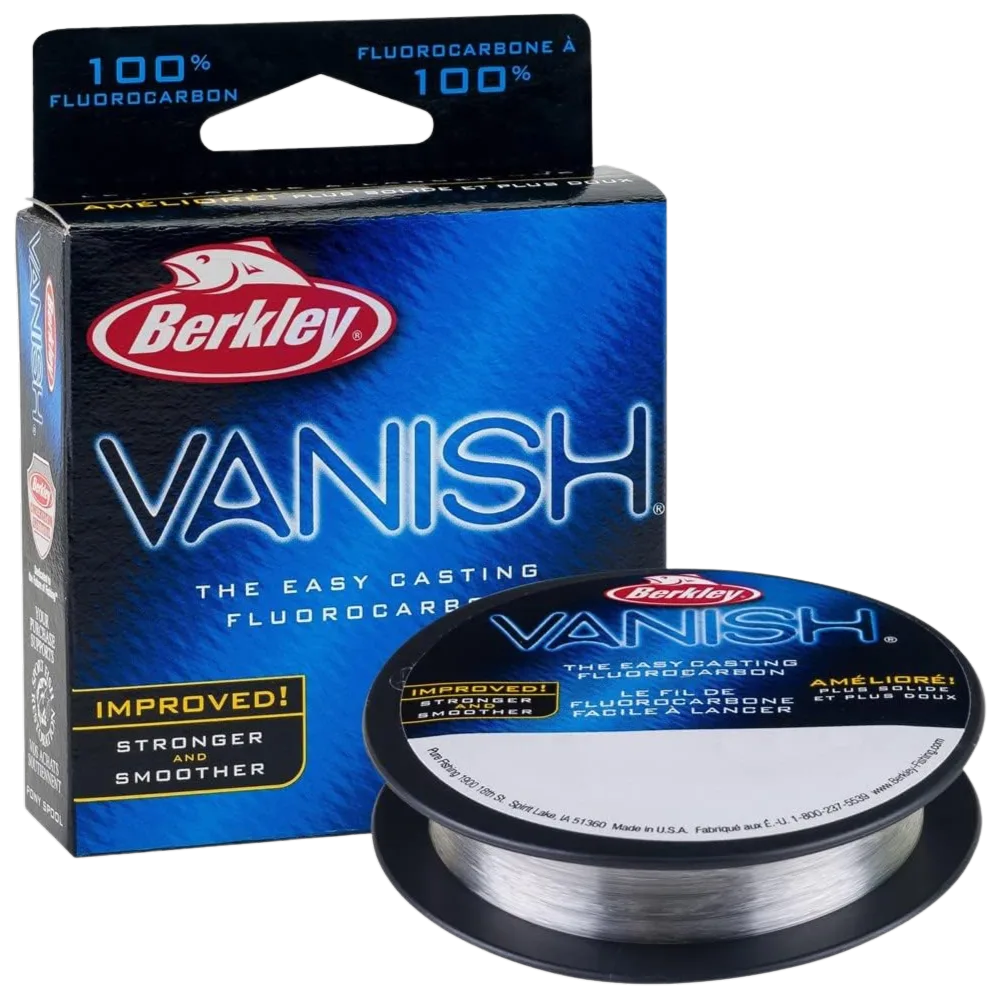
Vanish is the leader spool that makes the math work. You tie a whole season of leaders off one inexpensive spool, your braid mainline lasts for years, and the only consumable you’re feeding is a few feet of cheap fluoro at a time. That’s the budget-smart version of running fluoro without spooling a full reel of it.
Line Management, Real Cost, and the Beginner Spool-Up
This is the section the competition skips, and it’s where the real headaches and the real savings live. Why your line tangles, what each setup actually costs over a season, and exactly what a brand-new angler should put on the reel.
Taming Memory, Wind Knots, and the Loop-Off
Picture the angler who spools fresh braid, casts once, and reels back a bird’s nest, confused because the line is brand new. Here’s the mechanism. Braid’s zero stretch plus its limp, memory-free nature means any slack on the cast forms loose loops, and those loops bury themselves into the spool and become wind knots on the next cast. Worse, the whole braid slug can spin on a bare arbor, the dreaded loop-off, because slick braid has nothing to grip.
The fixes are simple once you know the cause. Don’t overfill the spool, leaving about an eighth of an inch below the lip. Don’t close the bail by hand with slack in the line.
Use proper drag and a leader to keep tension, and a shot of line conditioner keeps mono supple and cuts the coil. Mono holds more line memory than braid and coils worse off the spool, and that coil is what shows up as line twist on a spinning reel, so if you fish mono or fluoro, a quick rundown of what causes line memory and how to keep it from coiling saves you a frustrating morning.
Put a few wraps of mono backing on the bare spool before you add braid. The braid grips the mono instead of slipping on the slick arbor, and that one trick kills the loop-off where the whole line slug spins under a hookset. It costs a few feet of cheap mono and saves you a ruined trip.
The Honest Cost-Per-Use Math
Nobody on the top pages does the real money math, so here it is. Mono needs replacing about yearly because UV strips roughly 20 percent of its strength every 100 sun hours, and fluoro degrades slower but still ages. Braid lasts multiple seasons and flips end-for-end for a second life.
So an all-fluoro reel is the wallet trap: you pay the most up front and you replace it on a schedule. A braid mainline you buy once, plus a few feet of cheap leader you retie as needed, catches just as many fish for a fraction of the running cost. Berkley’s own line-science breakdown of why respooling matters and how UV ages your line backs up the replacement cadence, and if you want a schedule, here’s how often each line type actually needs replacing.
One safety note that isn’t really optional. The knot is almost always the weak point, well below the line’s rated strength, so inspect the last foot or so of line for nicks before a big fish and retie after every snag or rock contact. That last 12 to 18 inches takes all the wear, and it’s what parts when a good fish loads it up.
If You’re Just Starting Out, Spool This
For a brand-new angler the answer is simple: low-memory mono on a spinning combo. It’s cheap, it’s forgiving, it casts smooth, and it needs no leader knot, so you can fish the day you spool it. Braid plus a leader is worth learning early, but it’s the upgrade, not the starting point. When you’re ready to understand exactly why mono is the gentle on-ramp, here’s the line that forgives almost every beginner mistake.
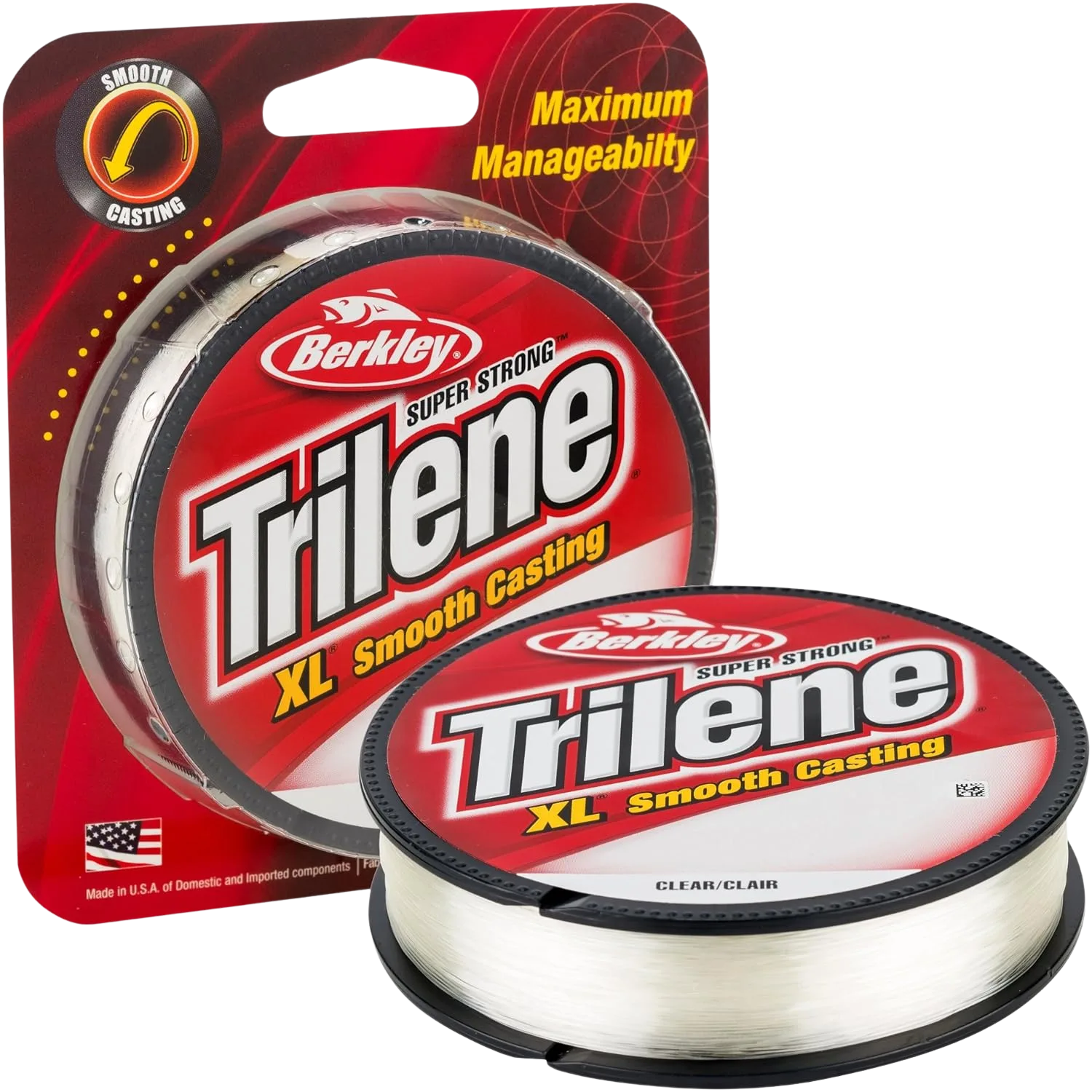
Trilene XL is the line to hand a beginner because it does the one thing that matters most early on: it stays out of the way. Low memory means fewer tangles, smooth casting means fewer backlashes, and the forgiving feel means a missed hookset doesn’t snap off. Spool it 8 to 10 lb on a spinning combo and go fish.
Spool the Line Your Next Trip Actually Needs
Braid earns its place where you need casting distance and the backbone to fish heavy cover. Fluoro is the clear-water and leader line that sinks your baits and resists abrasion. Mono is the forgiving, floating, budget pick for topwater and for anyone just starting out. The honest all-around answer for most anglers is a braid mainline with a short fluoro or mono leader, because it borrows the best of all three.
Pick the one line your next trip actually calls for instead of spooling all three by reflex. Learn the Double Uni knot this week, tie on a leader that matches your water, and check that last foot of line before you set the hook on the fish of the day. The line on your reel matters less than the knot at the end of it.
Frequently Asked Questions
01Which is better, braided, fluorocarbon, or monofilament line?
None is best overall; each wins a job. Braid is best for heavy cover, casting distance, and sensitivity, fluorocarbon for clear water and leaders, and monofilament for topwater, shock absorption, and beginners. Most anglers end up running a braid mainline with a short leader.
02When should you use fluorocarbon instead of monofilament?
Use fluorocarbon in clear water, for bottom-contact baits, and where abrasion is a risk, since it is low-visibility, sinks, and resists rubbing on structure. Choose monofilament for topwater and treble baits, shock absorption, and a lower price.
03Do you need a leader with braided line?
In clear water or around abrasion, yes. Bare braid is highly visible and loses most of its strength after rubbing rock or shell. A short fluorocarbon or monofilament leader fixes both the visibility and the abrasion problem at once.
04What is the best knot to connect braid to a fluorocarbon leader?
The FG knot is strongest and slimmest, around 111 percent of line strength, so it passes through the guides cleanly on long casts. The Double Uni is easier and very reliable. Learn the Double Uni first, then graduate to the FG.
05Is braid or mono better for beginners?
Monofilament is more forgiving to start with: it is cheap, low-memory, casts smooth, and needs no leader knot. Braid is worth learning early once you can tie a leader, but mono lets a new angler fish on day one without fuss.
Risk Disclaimer: Fishing, boating, and all related outdoor activities involve inherent risks that
can lead to injury. The information provided on Master Fishing Mag is for educational and informational purposes
only. While we strive for accuracy, the information, techniques, and advice on gear and safety are not a substitute
for your own best judgment, local knowledge, and adherence to official regulations. Fishing regulations, including
seasons, size limits, and species restrictions, change frequently and vary by location. Always consult the latest
official regulations from your local fish and wildlife agency before heading out. Proper handling of hooks, knives,
and other sharp equipment is essential for safety. Furthermore, be aware of local fish consumption advisories. By
using this website, you agree that you are solely responsible for your own safety and for complying with all
applicable laws. Any reliance you place on our content is strictly at your own risk. Master Fishing Mag and its
authors will not be held liable for any injury, damage, or loss sustained in connection with the use of the
information herein.
Affiliate Disclosure: We are a participant in the Amazon Services LLC Associates Program, an
affiliate advertising program designed to provide a means for us to earn advertising fees by advertising and linking
to Amazon.com. As an Amazon Associate, we earn from qualifying purchases. We also participate in other affiliate
programs and may receive a commission on products purchased through our links, at no extra cost to you. Additional
terms are found in the terms of service.