
In this article
You set the hook on the best fish of the day, the rod loads up, then everything goes slack. You reel in a limp curl with a little pigtail where your knot used to be, and it wasn’t the fish that beat you. It was the fishing line that had been baking on your reel since last summer, and ask around any boat ramp and you’ll hear the same story on repeat.
The cheapest part of your whole setup is the part that loses you the most fish, so getting it right matters more than the reel you hang it on. This guide covers the three types of line, how to read pound test and diameter, which line to put on your reel, the knots that hold, and how to tell when your line has quietly died.
Here’s the whole category in one look before we get into the why behind each choice.
| Line Type | Stretch | Visibility | Sinks or Floats | Best For |
|---|---|---|---|---|
| Monofilament | High (shock absorber) | Moderate | Near-neutral, slow sink | Beginners, topwater, treble baits |
| Fluorocarbon | Low | Nearly invisible | Sinks fastest | Clear water, leaders, finesse |
| Braided | None | High (opaque) | Floats | Heavy cover, distance, sensitivity |
What Your Fishing Line Actually Does (and Why It Matters More Than Your Reel)
The Cheapest Part of Your Setup, and the First to Fail
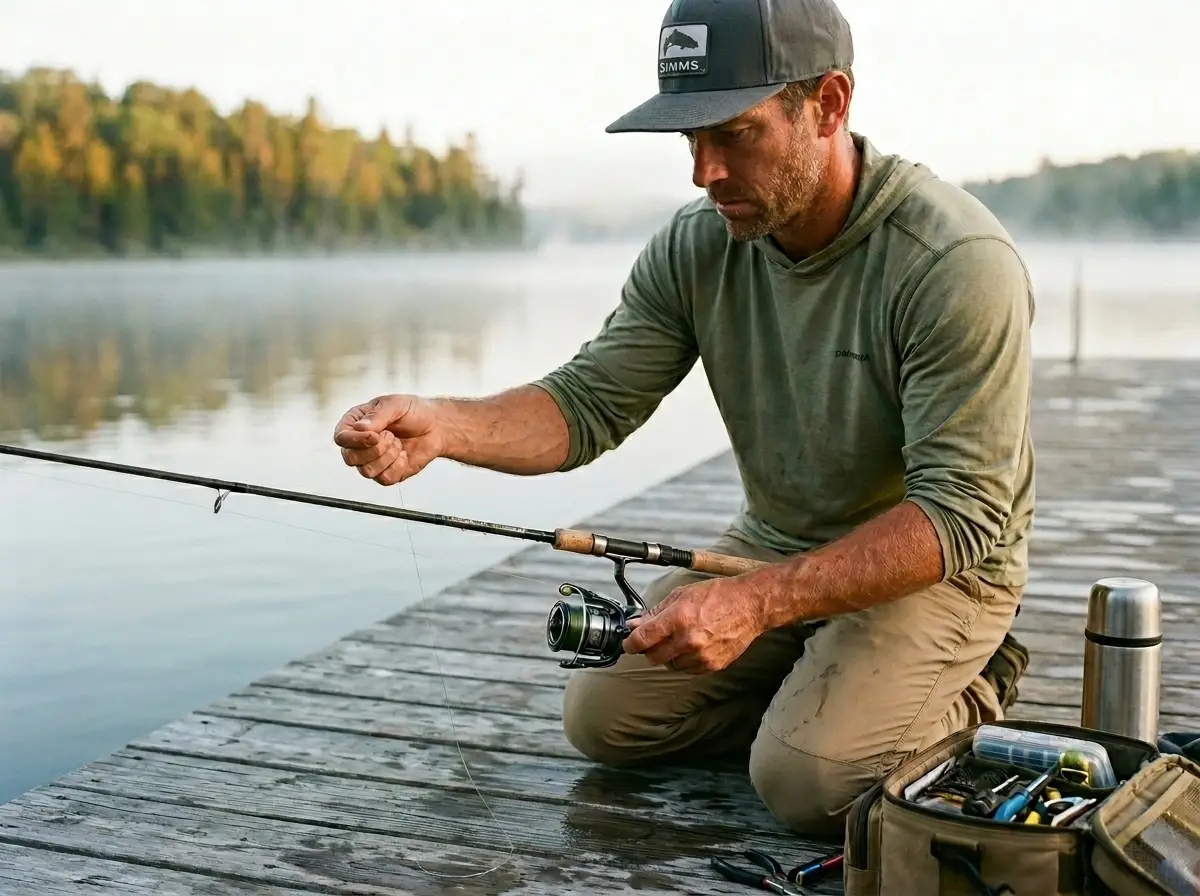
Think about how anglers spend money. The rod gets a budget, the reel gets a bigger one, and the line gets whatever is on sale by the register. Then the one component actually touching the fish is the one nobody thinks about until it fails.
That backwards math is why so many “the big one got away” stories end the same way. The fish didn’t snap a perfectly good line. The line was already half-dead from sun and age, and the breaking strength printed on the spool stopped being true a long time ago.
Line Is the Only Thing Touching the Fish
Your drag, your rod’s backbone, your knot, your hookset, all of it reaches the fish through one thin strand. If that strand is wrong for the job or worn out, nothing upstream can save you.
That’s the whole reason line choice deserves real thought. Pick the right type for the water you fish and keep it fresh, and you quietly land more of what you hook.
Why “Good Enough” Line Quietly Loses Fish
The frustrating part is that bad line rarely fails in an obvious way. It doesn’t snap on the cast where you’d notice. It lets go on the hookset or during a hard run, at the exact moment you have a fish on.
Two things steal more strength than anglers expect, and both come up later in this guide: a knot can shed close to a third of your line’s rating, and drag set too tight finishes the job. Get those right and your “good enough” line suddenly performs a lot better.
Monofilament, Fluorocarbon, or Braid? The Three Types Compared
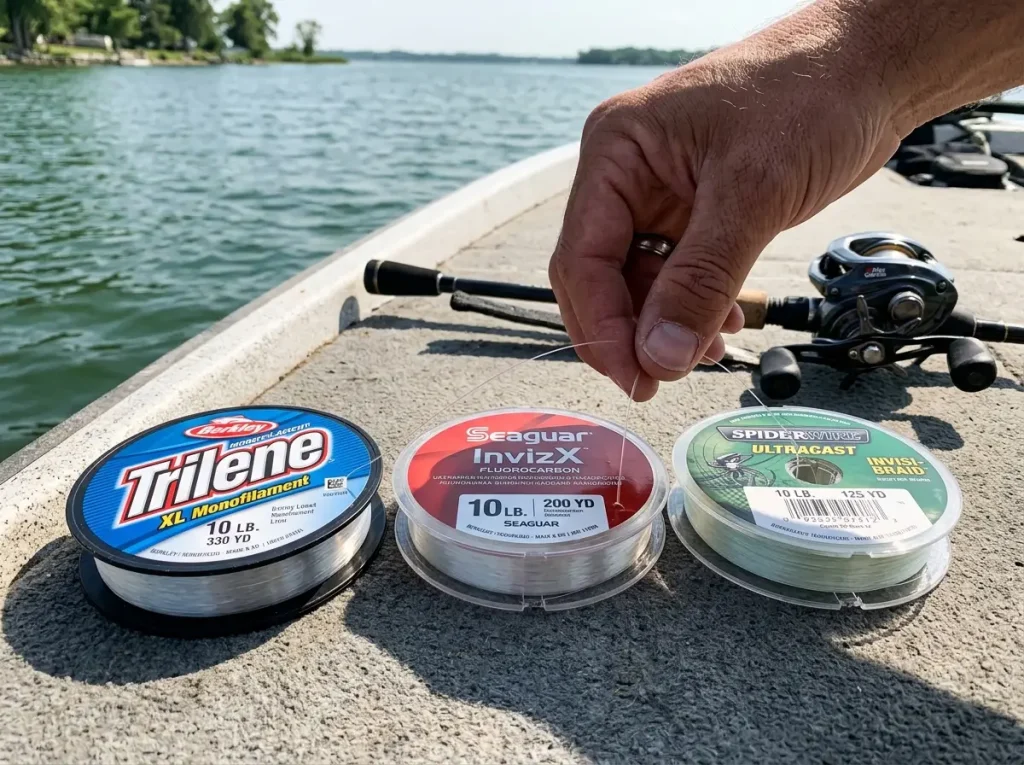
Three materials cover almost everything you’ll ever tie on. They behave so differently that picking the wrong one is like showing up to a job with the wrong tool. If you want the full head-to-head, our braided vs fluorocarbon vs monofilament breakdown goes deeper, but here’s what separates them on the water.
Monofilament, the Forgiving All-Rounder
Monofilament is a single strand of nylon, and its superpower is stretch. That stretch acts like a shock absorber, forgiving a heavy-handed hookset and keeping treble-hook lures pinned when a fish thrashes. It floats or sinks slowly, ties easy, and costs less than anything else on the shelf.
The catch is that mono is the most vulnerable to sun. Ultraviolet light breaks it down faster than the other two, which is why it’s the line that quietly goes bad on you. For a beginner or for topwater fishing, though, it’s hard to beat, and a spool of Berkley Trilene XL in 8-pound is the kind of honest, low-memory mono that just works.
Fluorocarbon, the Invisible Sinker
Fluorocarbon, technically a PVDF polymer, is built to disappear. Its refractive index sits close to water’s, so light passes through it almost the way it passes through water, which is the whole reason a fluoro leader earns its keep in clear conditions. If you want the deeper science, the physics of why fluorocarbon nearly vanishes underwater is genuinely worth a read.
Fluoro also sinks faster than the others, which makes it the pick for jigs, drop shot, and deep cranks where you want the bait to get down. It stretches less than mono, so you feel more. A clear, low-memory option like Seaguar InvizX in 8-pound is a solid representative of what good fluoro mainline feels like.
Fluoro doesn’t stretch and warn you before it goes. Once you push past its breaking point it lets go fast, with none of the rubber-band give mono offers. Don’t fish it at the ragged edge of its rating, and bump up a size if you’re working rock or hard cover.
Braided, the Thin, Strong, Zero-Stretch Workhorse
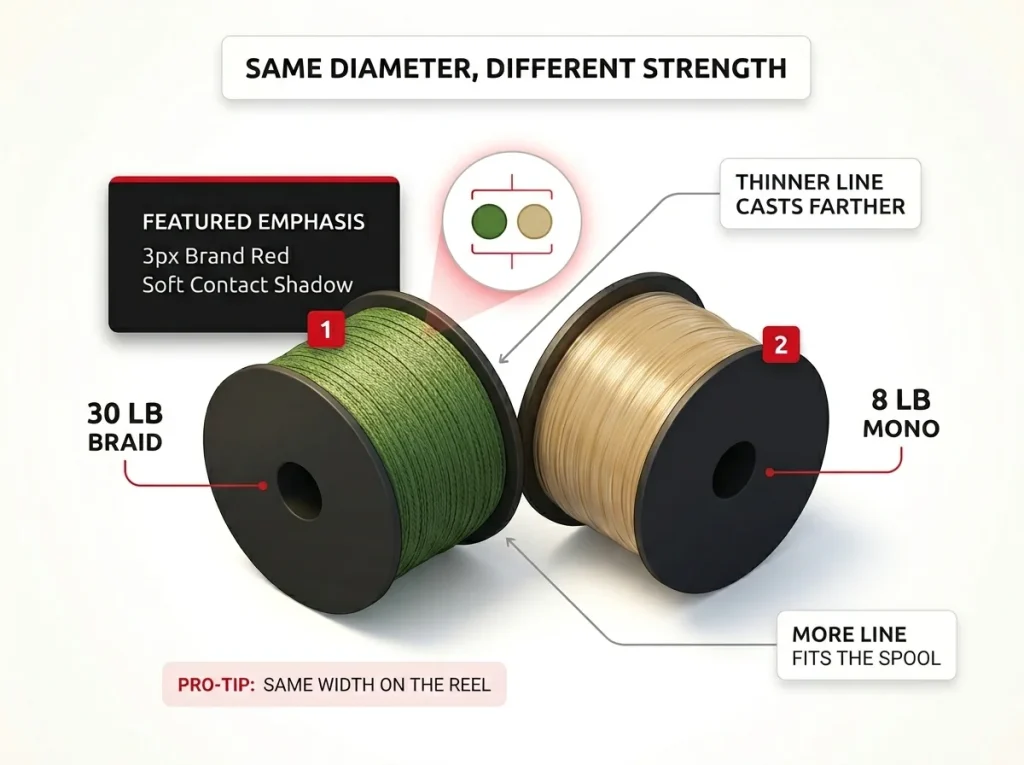
Braided line is woven from polyethylene fibers, the same Spectra and Dyneema family used in high-strength sailing lines and cut-resistant gear. That construction makes it roughly a third to a quarter the diameter of mono at the same pound test, so 30-pound braid is about as thin as 8-pound mono. Thinner line casts farther and packs way more onto the spool.
It also has essentially zero stretch, so every tick and tap telegraphs straight up the rod. That sensitivity is a gift for feeling the take, but it punishes a heavy hand because there’s no give to protect the hook hold. Braid floats, and it’s opaque, so a fish sees it best of the three, which is exactly why so many anglers run braid as a main line and add a leader. A thin, low-visibility option like SpiderWire Ultracast Invisi-Braid in 15-pound softens that line visibility weakness.
Line color matters here too. Plenty of anglers fish a hi-vis line in bright green or yellow to watch for the bite, then tie on a clear leader so the fish never sees the connection.
One more honest note: line choice is situational, not a religion. A 52-year angler fishing gin-clear water for spooky fish will out-fish the “just throw braid everywhere” crowd, and the angler flipping heavy cover will do the opposite. Match the line to the water, not to a brand loyalty.
Pound Test, Diameter, and Line Capacity, Explained
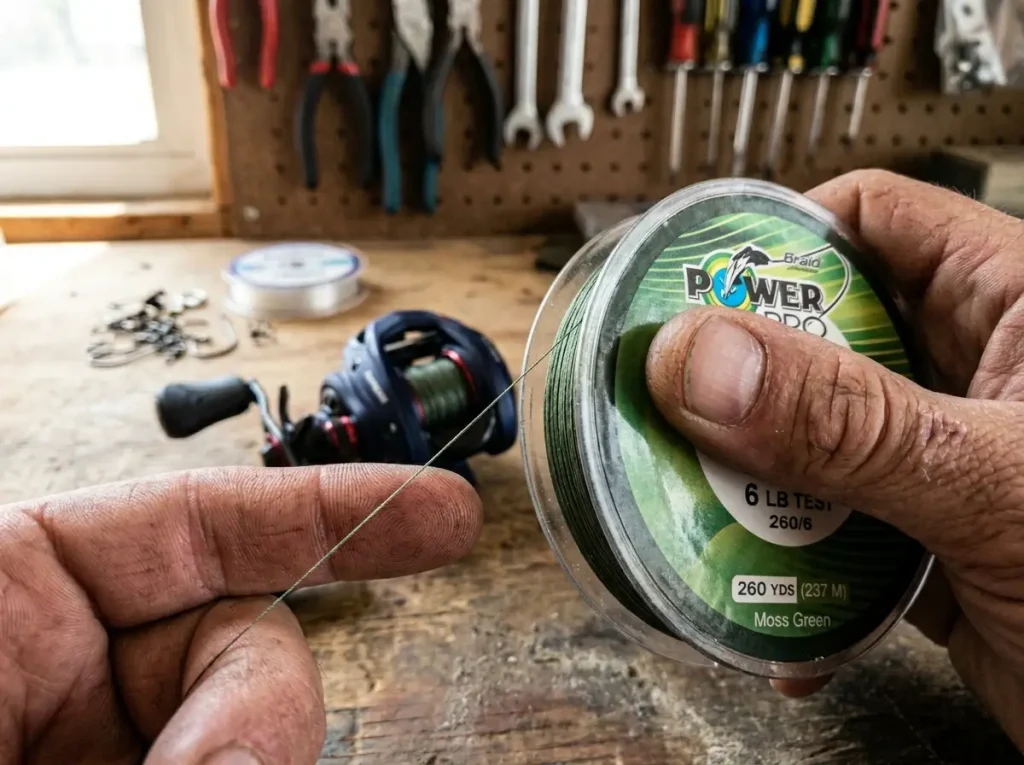
The numbers on a spool look simple until you actually try to use them to make a decision. Here’s what they really tell you, and what they don’t.
What Pound Test Really Means (and What It Doesn’t)
Pound test is the rated breaking strength of the line, the force it takes to snap a clean piece in a lab. It is not the size of fish you can land. You fight fish with drag, rod, and angles, and people land tarpon on 15-pound line every day.
It also isn’t the strength you actually fish with, because your knot lowers that number before the fish ever shows up. That’s worth understanding in its own right, which is why why a 10-pound line is not a 10-pound fish is a rabbit hole worth going down. The short version: size up rather than fishing the bare minimum.
Set your drag to about a third of your line’s pound test. On 12-pound line, that’s roughly 4 pounds of drag. It sounds light, but it keeps a sudden surge from snapping you off at the knot, and your rod and reel handle the rest of the fight.
Diameter vs Test, and Why Thinner Usually Wins
Two lines rated for the same pound test can have very different line diameter, and thinner almost always fishes better. A thinner line cuts the water and wind for longer casts, fits more yardage on the spool, and gives a stealthier presentation in clear water.
This is braid’s whole advantage in one sentence: same strength, a fraction of the width. It’s also why you can load a small reel with serious braided strength and still have room to spare.
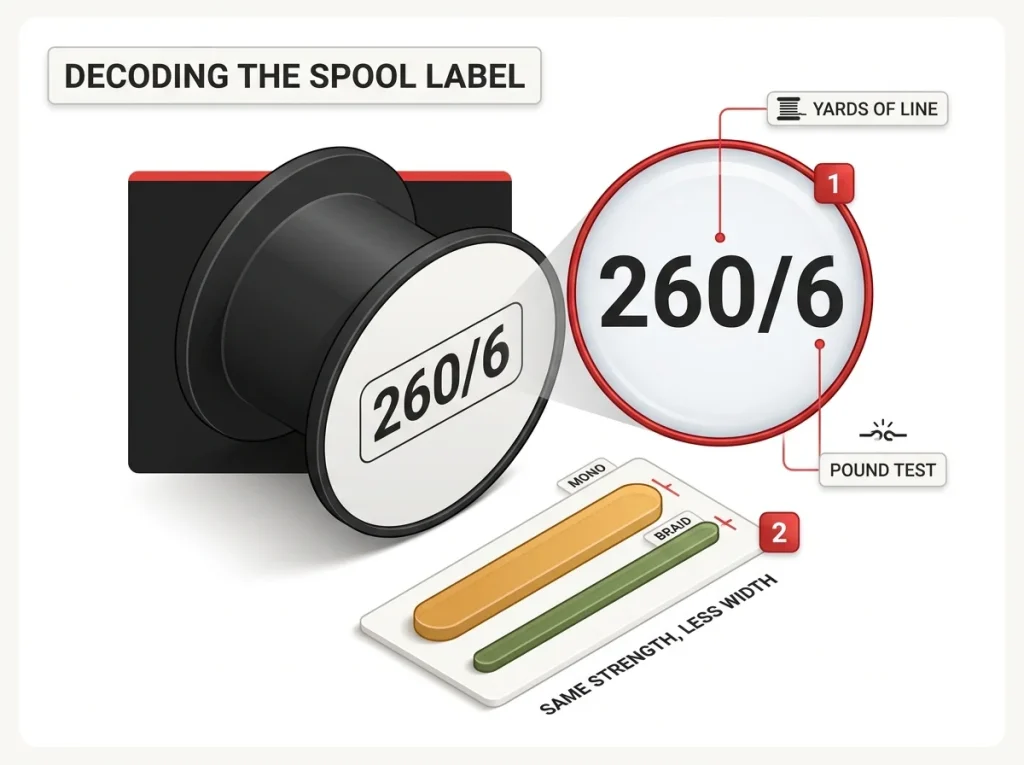
Reading Line Capacity (That “260/6” on the Spool)
That little fraction stamped on a reel or spool is line capacity, and it trips up a lot of new anglers. “260/6” simply means the spool holds 260 yards of 6-pound test. Bump the pound test up and the yardage drops, because thicker line eats more room.
Because braid is so thin, its capacity numbers look almost unreal next to mono, and that’s real, not marketing. It’s how anglers fit hundreds of yards of strong line onto a compact spinning reel.
How to Choose the Right Line for Your Situation
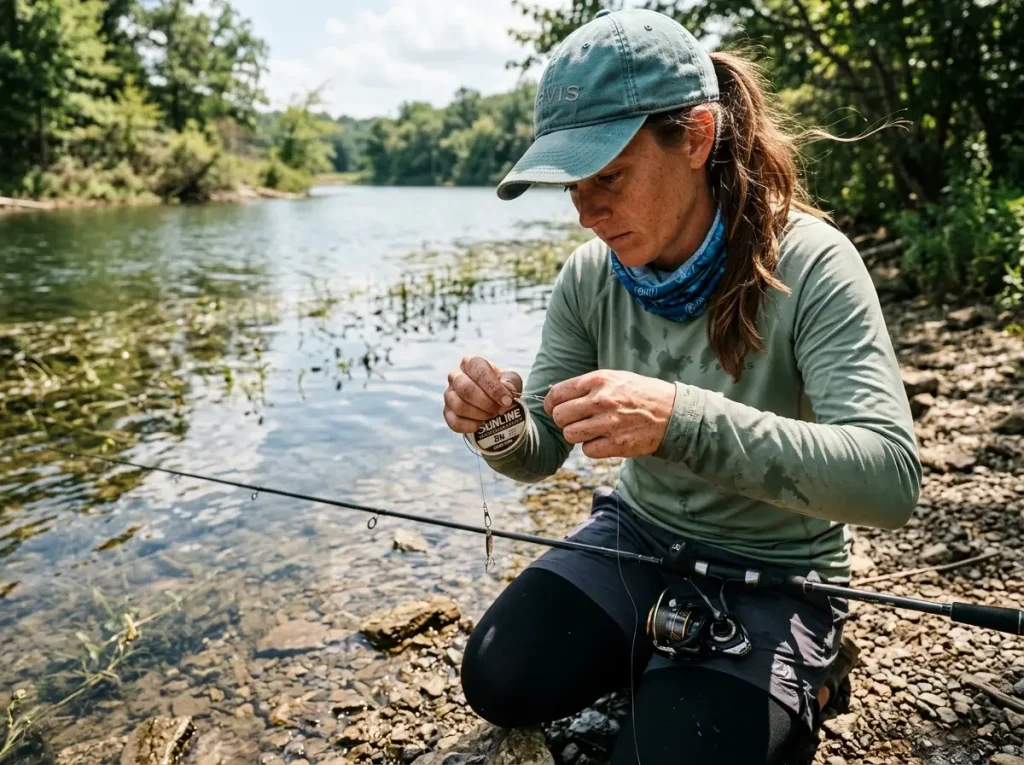
Here’s where most guides bail out and just list pros and cons, leaving you to do the math at the tackle shop. We’ll commit to actual answers instead.
The Honest Beginner Default (If You Don’t Know, Start Here)
If you’re standing in the aisle staring at a wall of spools and your eyes are glazing over, stop overthinking it. Put 6 to 8-pound monofilament on the reel and go fishing. It’s cheap, it’s forgiving, it ties easy, and it catches everything from panfish and trout to largemouth and smallmouth bass.
Rarely do you need to go above 10-pound mono in freshwater unless you’re chasing something big or fishing heavy cover. For saltwater inshore species like snook and redfish, or for surf fishing, bump that default up to around 12 to 15-pound. If you want the longer version of this answer, the line that forgives almost every beginner mistake walks a new angler through it, but honestly, 8-pound mono and a tank of gas will teach you more than any chart.
Match the Line to the Water and the Cover
Once you’ve got a season or two in, you start matching line to water clarity and cover instead of using one spool for everything. Clear or pressured water and finesse presentations call for fluorocarbon, because the fish get a good look and you want to disappear. Heavy cover, flipping, and frog fishing are power fishing, and they call for 30 to 50-pound braid on a baitcasting reel that can winch a fish out before it buries you.
Temperature matters too. Cold stiffens line and adds memory, and because line behaves differently in cold water than the spec sheet admits, a setup that casts like a dream in July can coil like a spring in February. Match your line to the rod and reel rating as well, not just the species.
The Modern Setup, Braid Main and Fluoro Leader
The setup most experienced anglers land on combines the best of two materials. You spool braid as your main line for distance and sensitivity, then tie on a few feet of fluorocarbon leader for the invisible business end near the bait.
It works because each line does what it’s best at. The braid telegraphs the take and casts a mile, and the fluoro leader keeps a wary fish from seeing the connection. In clear water, a leader of six feet or more can genuinely raise your catch rate over straight braid.
The Best Knots for Each Line, Plus the Braid-to-Fluoro Leader System
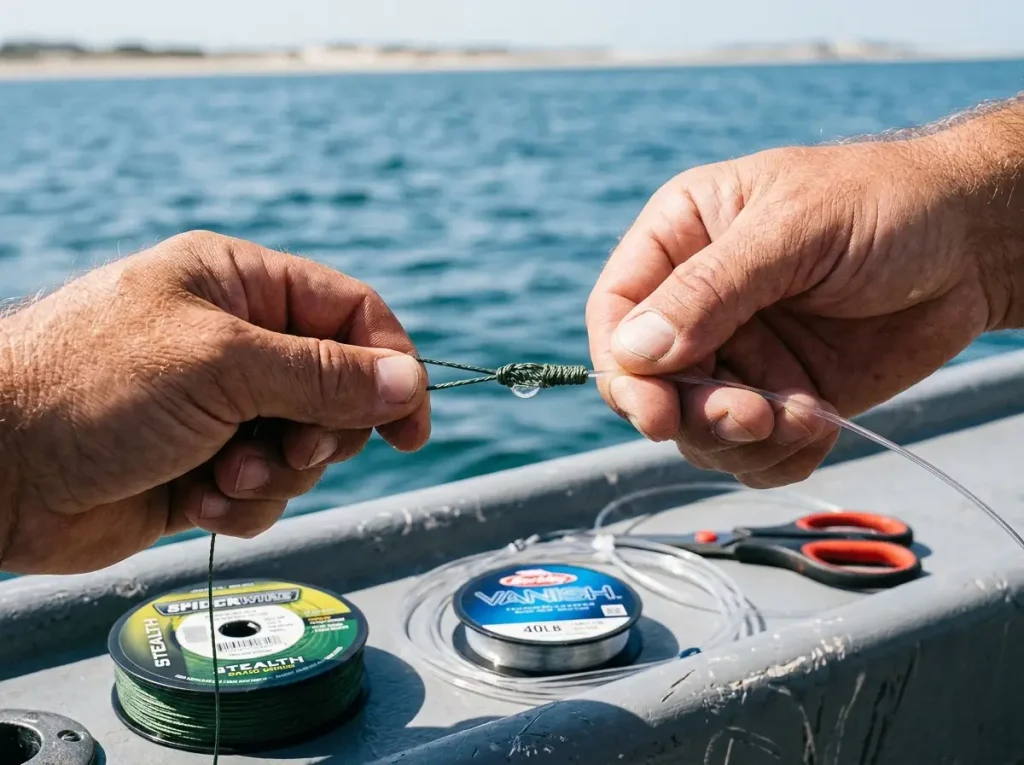
Here’s where a lot of break-offs are actually born. The line gets blamed, but the knot was the weak link the whole time, and braid is the worst offender.
The Knots That Actually Hold (Palomar, FG, Improved Clinch)
You don’t need a hundred knots. For braid tied straight to a hook or lure, the Palomar knot is hard to beat for strength and simplicity. For joining braid to a leader, the FG knot is the gold standard, because it’s thin enough to pass through the rod guides and retains close to full line strength. For mono and fluoro tied to terminal tackle, the Improved Clinch and a Non-Slip Loop cover almost everything, and a Double Uni knot handles a quick line-to-line joint.
The mistake to name first: a slick braid tied with a lazy knot can shed 30 to 50 percent of its strength before you ever set the hook. Learn two or three knots well instead of ten knots badly.
Why You Lose Strength at the Knot (and How to Keep It)
Every knot is a compromise. Cinching a knot bends the line against itself, and a dry, sloppy knot can burn off a third to half of your rated strength right there. That loss of knot strength is the single most overlooked source of break-offs.
The fix costs nothing. A well-tied, lubricated knot holds nearly all of the line’s rating, and the connections worth trusting are fewer than you’d think, as line-to-leader connections worth trusting lays out. Lay some mono backing under braid too, so the slick line doesn’t spin on the spool.
Wet every knot before you cinch it. A little spit or a dip in the water cuts the friction that burns line, and it can save you up to a third of your strength on that connection. It’s the cheapest upgrade in fishing, and it’s free.
Building a Braid-to-Fluoro Leader
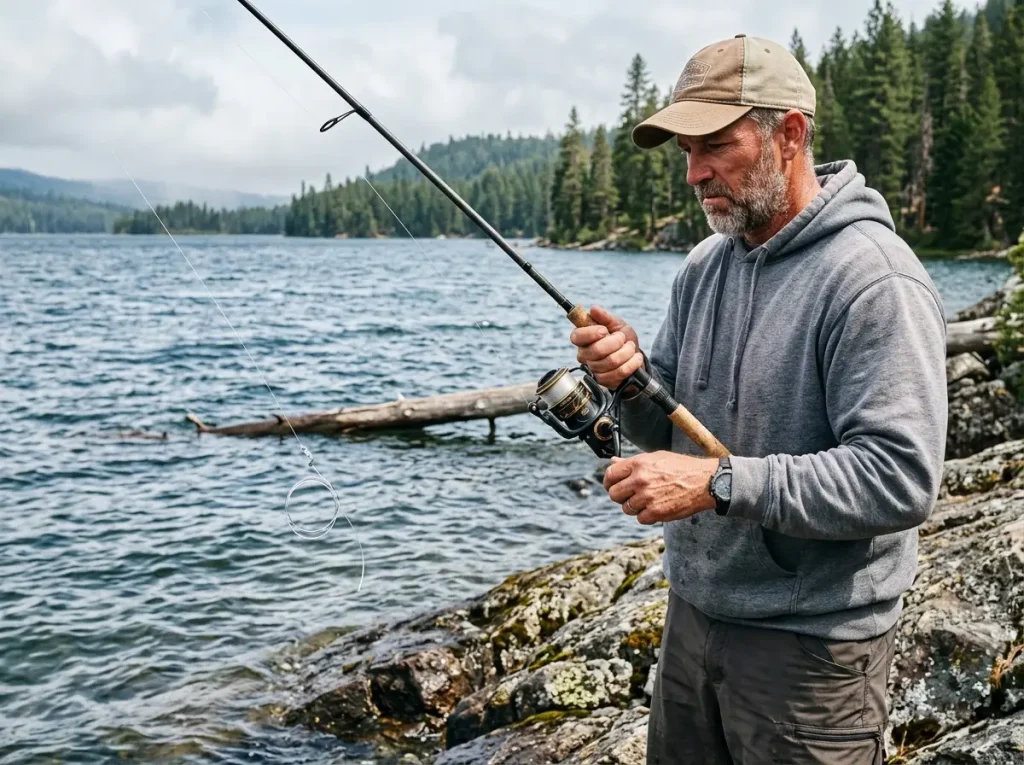
Building the leader system is simpler than it looks. Spool your braid, tie on three to six feet of fluorocarbon with an FG knot, then tie your hook or lure to the fluoro end. That’s the whole rig.
A budget-friendly spool of fluoro made for this job, like Berkley Vanish leader material, handles easily and ties clean for someone still learning the connection. One warning from the field: most leader headaches are really “wind knots,” the slack bird’s-nests braid throws when your casting form gets sloppy. Smooth technique beats power with bad form, the same way it does in golf.
When to Replace Your Line (and How to Tell It’s Already Dead)
This is the part almost nobody covers, and it’s where the quiet fish-losses live. Line has a lifespan, and mono especially dies long before you’d guess.
How Often Each Type Actually Needs Replacing
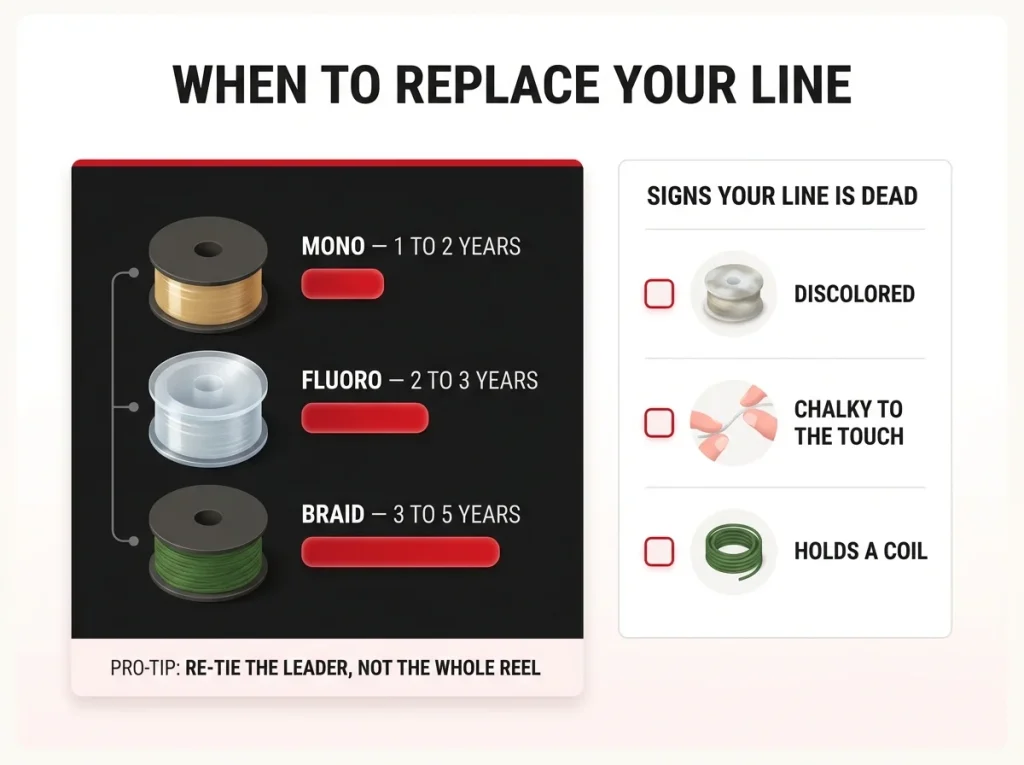
Rough cadence looks like this. Monofilament wants replacing once or twice a year, more if you fish hard every weekend. Fluorocarbon holds up for two to three years, and braid can go three to five years on the reel.
The honest secret is that for braid and fluoro you mostly just re-tie the leader instead of stripping the whole reel. Most anglers re-spool far more often than they need to, and there’s a real cost to changing it too rarely on mono, which the field notes in how to know when to change your line spell out well.
Don’t strip a full reel of braid every trip. Cut back a few feet, re-tie your leader, and you’re good. Save the frequent full re-spools for monofilament, the one line that genuinely wears out on a season’s timeline.
The Tell-Tale Signs Your Line Is Done
Old line tells on itself if you know the signs. Mono goes brittle, takes on a cloudy or discolored look, and feels chalky between your fingers. The clincher is line memory: if it holds a tight coil and won’t lay straight off the reel, it’s done, and what causes line memory and how to fix it explains why.
Sunlight, and the slow UV degradation it causes, is the real culprit. A spool that baked in a hot truck for two summers is already weakened before your first cast, even if it looks fine. When in doubt, strip a few feet and run it through your fingers.
Don’t Trash It, Recycle Old Mono
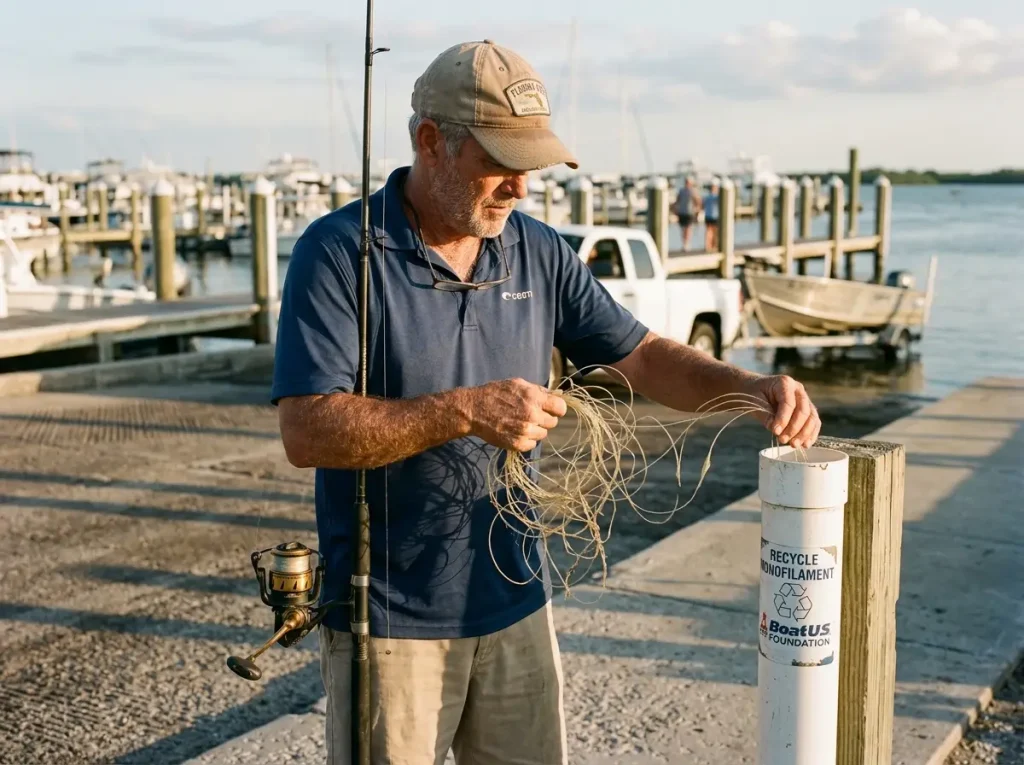
Old line shouldn’t go in the water or the regular trash, where it tangles props and harms birds and turtles. The easy move is to drop your old mono in one of the 15,000-plus monofilament recycling bins the BoatUS Foundation has placed at boat ramps nationwide, where it gets melted down and turned into artificial fish habitat.
It costs you nothing and keeps line out of the places it does harm. If you’re dealing with braid or a mixed pile, the right way to dispose of old line, even braid covers the details, since braid doesn’t go in the same bin.
Specialty and Budget Lines, What’s Worth It and What’s Hype
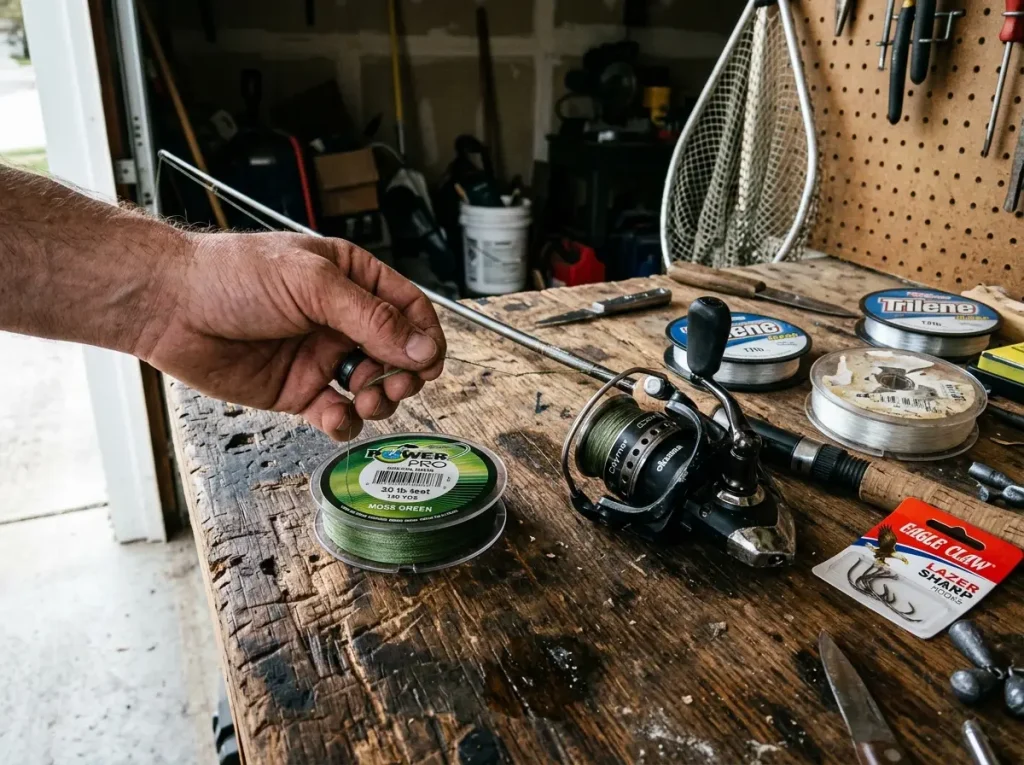
Time for the honest money talk, because the tackle industry would love you to believe more expensive line catches more fish. Mostly, it doesn’t.
The Budget Truth, You Don’t Need Premium Line
Plain monofilament is cheap and badly underrated. You do not need the priciest fluorocarbon on the shelf to catch fish, and a beginner buying premium leader material before they can tie a clean knot is lighting money on fire.
Premium fluorocarbon earns its price in specific spots: clear, pressured water and finesse fishing where invisibility genuinely matters. Everywhere else, the gap between premium and mid-priced line is mostly hype. The same goes for braid, where a proven value spool like PowerPro Spectra in 30-pound does the heavy-cover job for less than the premium options.
Braid has weaker abrasion resistance than people assume. Around rock, oyster bars, or dock pilings, a fluoro leader isn’t a luxury, it’s what keeps a good fish from sawing you off. Spend there before you spend on a premium main line.
Copolymer and Hybrid, the Smart Middle Ground
If you want most of fluoro’s stealth with mono’s forgiveness at a friendlier price, look at copolymer and hybrid lines. Options like P-Line Floroclear and Yo-Zuri Hybrid blend the qualities new anglers actually want without the premium sticker.
It’s the honest middle path for someone who has outgrown straight mono but isn’t ready to spool a whole reel with top-shelf fluoro. When you’re ready to commit to a braid instead, how to choose a braid narrows the field.
Specialty Lines (Wire, Lead-Core) and When You Actually Need Them
A few lines exist for jobs the big three can’t do, and you’ll know when you need them. Wire line resists the teeth of pike, muskie, and bluefish that would slice through mono or fluoro. Lead-core line sinks your trolling presentation to depth without adding weights.
Treat both as “only when the fishing demands it” tools, not everyday line. And since every line in this category is still plastic, being a tidy angler matters, which is part of what labs found about microplastics in fishing gear and worth keeping in mind.
The Bottom Line on Picking Your Line
Three things carry the whole topic. Your line is the cheapest part of the setup and the most common reason you lose fish, so even if you fish on a budget, never cheap out on attention. Match the type to the water, and when you genuinely don’t know, put 8-pound mono on the reel and go. Old line dies quietly, so check it, re-tie it, and recycle it.
Before your next trip, strip a few feet off your reel and run it between your fingers. If it’s chalky or holds a coil, re-spool it. That one habit lands more of the fish you hook than any upgrade you can buy.
Frequently Asked Questions
01What is the difference between monofilament, fluorocarbon, and braided fishing line?
Mono stretches and forgives mistakes, fluorocarbon nearly disappears underwater and sinks, and braid is thin, strong, and has zero stretch for maximum sensitivity. Most anglers end up using more than one depending on the water and technique.
02What pound test fishing line should I use for bass?
For most freshwater bass, 6 to 10-pound mono or fluoro covers it, while heavy cover and flipping call for 30 to 50-pound braid. Match the test to the cover you are fishing, not just the size of the fish.
03How often should I replace my fishing line?
Replace mono about once or twice a year, fluorocarbon every 2 to 3 years, and braid every 3 to 5 years. With braid and fluoro you mostly just re-tie the leader instead of re-spooling the whole reel.
04Is braid or fluorocarbon better for a leader?
Fluorocarbon is the standard leader because it nearly vanishes underwater and resists abrasion better than braid. Braid stays on the reel as your main line, and the fluoro leader is the invisible business end near the bait.
05Can fish see my fishing line?
Braid is opaque and the most visible, mono sits in the middle, and fluorocarbon is the hardest for fish to see because its refractive index is close to water’s. In clear, pressured water a fluoro leader can make a real difference.
Risk Disclaimer: Fishing, boating, and all related outdoor activities involve inherent risks that
can lead to injury. The information provided on Master Fishing Mag is for educational and informational purposes
only. While we strive for accuracy, the information, techniques, and advice on gear and safety are not a substitute
for your own best judgment, local knowledge, and adherence to official regulations. Fishing regulations, including
seasons, size limits, and species restrictions, change frequently and vary by location. Always consult the latest
official regulations from your local fish and wildlife agency before heading out. Proper handling of hooks, knives,
and other sharp equipment is essential for safety. Furthermore, be aware of local fish consumption advisories. By
using this website, you agree that you are solely responsible for your own safety and for complying with all
applicable laws. Any reliance you place on our content is strictly at your own risk. Master Fishing Mag and its
authors will not be held liable for any injury, damage, or loss sustained in connection with the use of the
information herein.
Affiliate Disclosure: We are a participant in the Amazon Services LLC Associates Program, an
affiliate advertising program designed to provide a means for us to earn advertising fees by advertising and linking
to Amazon.com. As an Amazon Associate, we earn from qualifying purchases. We also participate in other affiliate
programs and may receive a commission on products purchased through our links, at no extra cost to you. Additional
terms are found in the terms of service.