

In this article
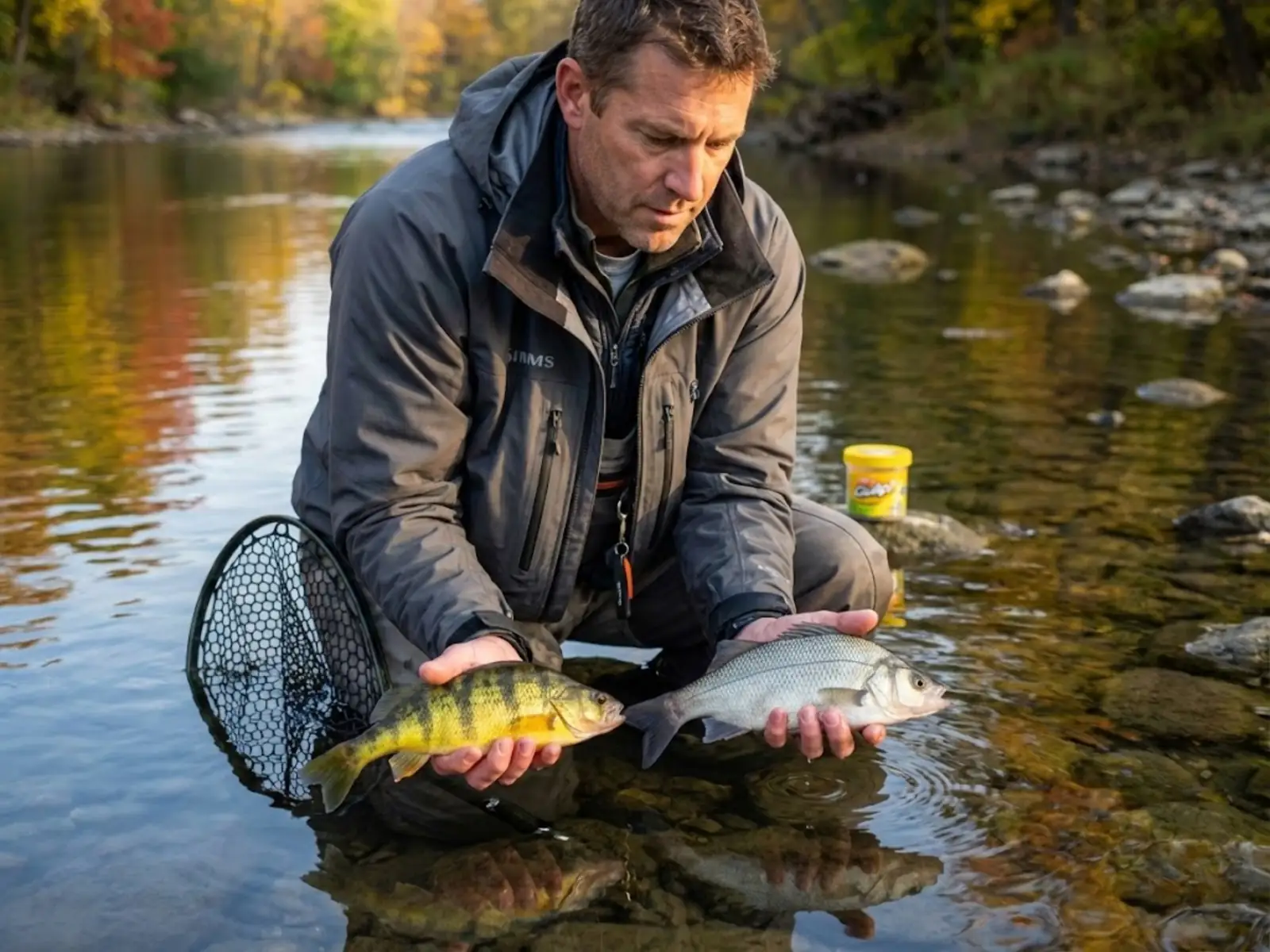
The fish hit on the second twitch, a solid thump that telegraphed through my ultralight. Three cranks later, I was staring at a silvery shape against the net mesh—and honestly, I wasn’t sure what I had. Yellow perch? White perch? In the cloudy waters where these two species overlap, that uncertainty can cost you a citation or release an invasive egg predator back into waters where it’s decimating walleye recruitment.
After two decades of guiding anglers on Great Lakes tributaries and running fishery surveys, I’ve watched this confusion play out hundreds of times. The good news? Three anatomical checks—taking roughly 30 seconds total—will give you definitive identification every single time.
Here’s exactly how to tell these species apart, why it matters beyond regulation compliance, and what to do with what you’ve caught.
⚡ Quick Answer: Yellow perch have two completely separated dorsal fins, 6-8 vertical dark bars, and 2 anal fin spines. White perch have dorsal fins connected by membrane, solid silver coloration with no vertical bars, and 3 anal fin spines. Yellow perch are native game fish with bag limits; white perch are invasive species with no limit in most states.
The Taxonomic Truth: These Are Not Related Fish
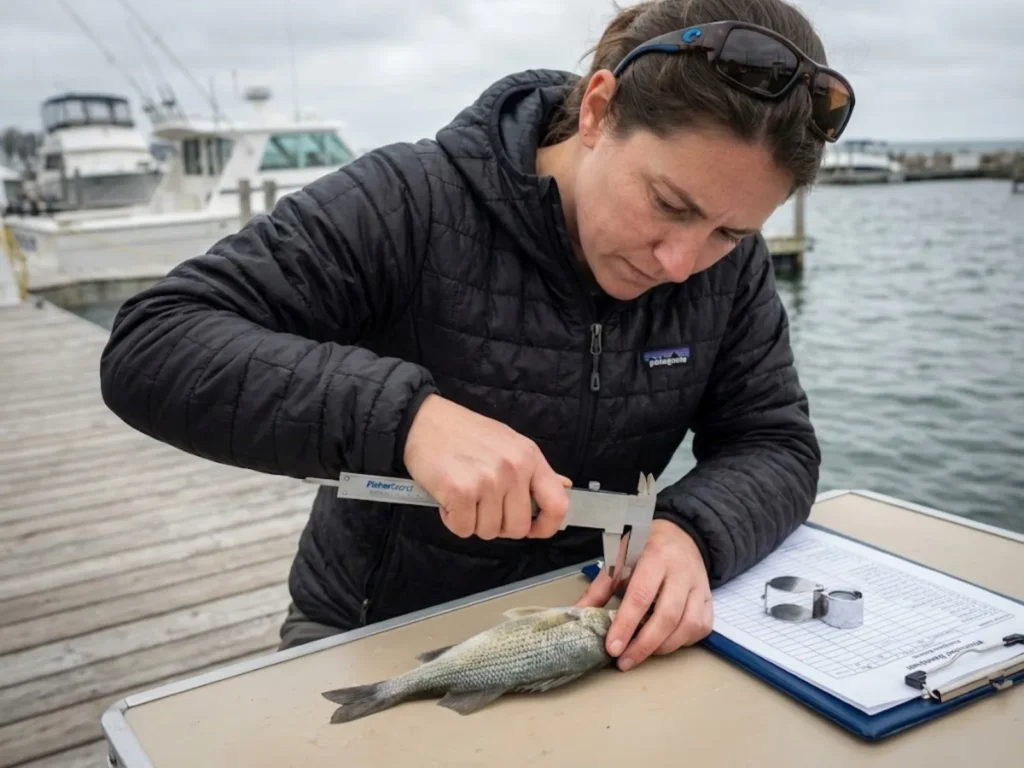
Here’s what most guides get wrong: calling both of these “perch” implies they’re closely related. They’re not. These fish belong to completely different families with separate evolutionary histories.
Why the Name “White Perch” Is Biologically Wrong
Yellow perch (Perca flavescens) belongs to the Percidae family—true perches. Their relatives include walleye and sauger, all cool-water specialists that evolved in northern freshwater systems. The Wisconsin DNR and other state agencies classify them as premier native sport fish.
White perch (Morone americana) belongs to the Moronidae family—temperate basses. That’s right, they’re related to striped bass and white bass, not perch at all. The name is a historical accident that stuck.
Why does this matter? Family-level differences drive physiological traits that affect everything from salinity tolerance to spawning behavior. White perch can thrive in environments ranging from full-salinity ocean water to completely fresh inland reservoirs—a flexibility that makes them devastatingly successful invaders. Yellow perch lack this adaptability.
Pro tip: When state regulations say “perch,” they almost always mean yellow perch. White perch typically fall under separate “invasive species” or “nuisance species” categories—check before you fish.
If you want to avoid costly identification errors entirely, understanding this fundamental split is step one.
The Invasion Timeline: How White Perch Reached Your Water
Native white perch range: Atlantic coastal plain, from South Carolina to Nova Scotia—brackish estuaries, not freshwater lakes. So how did they end up in Lake Michigan?
The Erie and Welland Canals provided the corridor. These engineering projects bypassed the natural barrier of Niagara Falls, allowing white perch to colonize Lake Ontario and spread through the remaining Great Lakes. Today, established populations exist as far west as Nebraska and Utah.
The primary spread mechanism now? Bait bucket transfers. Anglers fish new waters, accidentally transport small white perch mistaken for other baitfish, and inadvertently establish new populations. White perch survive in livewells far longer than yellow perch, making them more likely to reach new waters alive.
This is why preventing invasive species spread starts with accurate identification. You can’t follow the rules if you don’t know what you’re holding.
Step 1: Read the Dorsal Fin Architecture
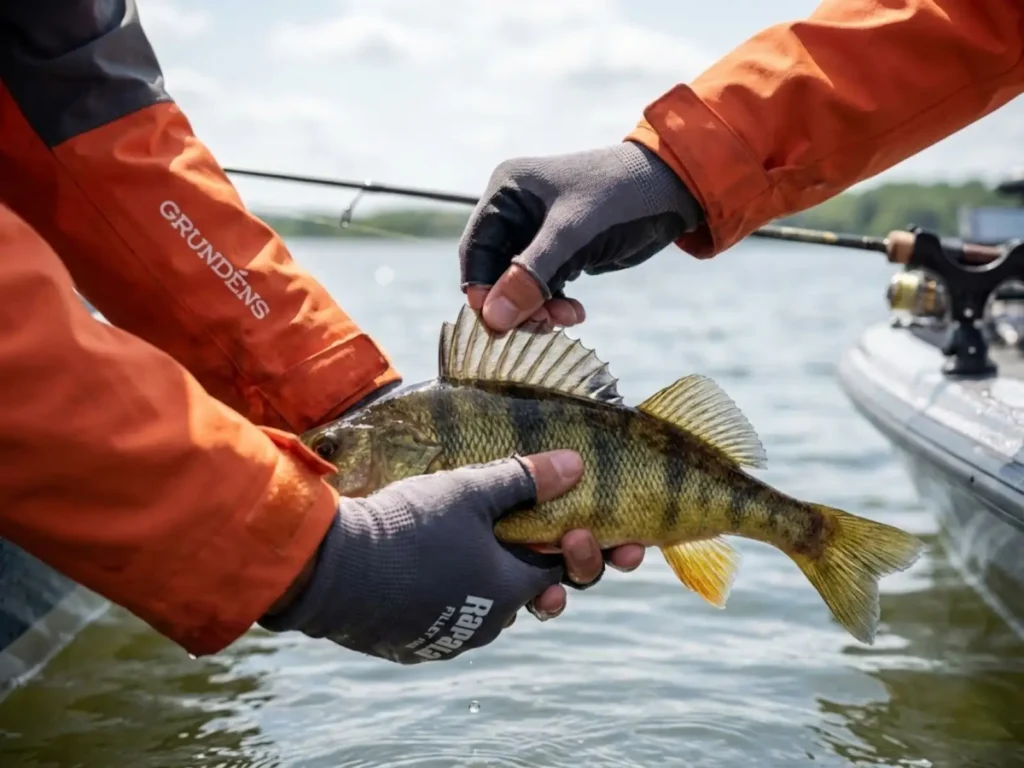
The definitive diagnostic feature distinguishing these families is the structure of the dorsal fins. This is an anatomical fact—it doesn’t change with water clarity, diet, or season.
The Yellow Perch: Two Fins, One Clear Gap
Yellow perch have two dorsal fins that are anatomically distinct and widely separated. The first (anterior dorsal fin) sits forward and contains 12-14 rigid, sharp spines. The second sits behind it and contains primarily soft rays.
The key: there’s a visible gap of naked skin between these fins. No membrane connects them. They operate independently.
Field test: Press the spiny dorsal down with your thumb. Does the second fin move? If no—if it stays put independently—you’re holding a yellow perch.
The White Perch: Connected Fins, Membrane Present
White perch have two dorsal portions that are connected by a membrane. A notch exists between the spiny and soft sections, but that membrane makes them function as one continuous unit.
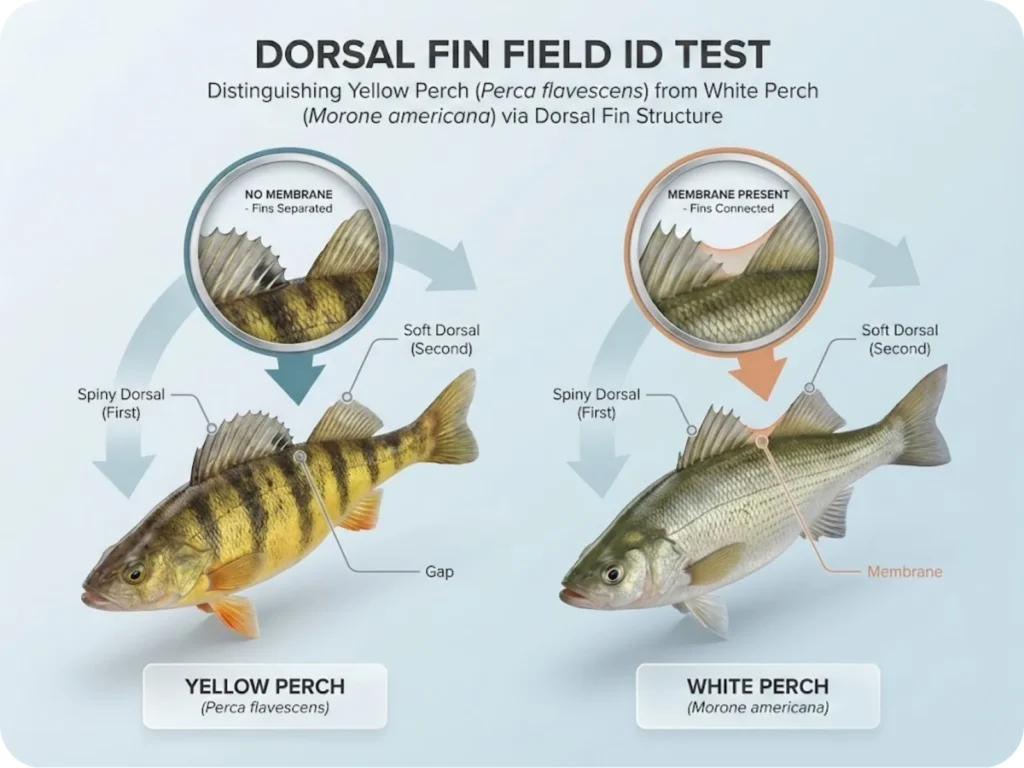
Field test: Lift the spiny anterior dorsal. Does the membrane pull taut and draw the soft fin upward? If yes, you’re holding a Morone—white perch or white bass.
This check works even on stressed fish with depressed fins, even in murky water, even on specimens that lack obvious coloration. It’s anatomical, not visual.
Step 2: Analyze the Chromatic Pattern
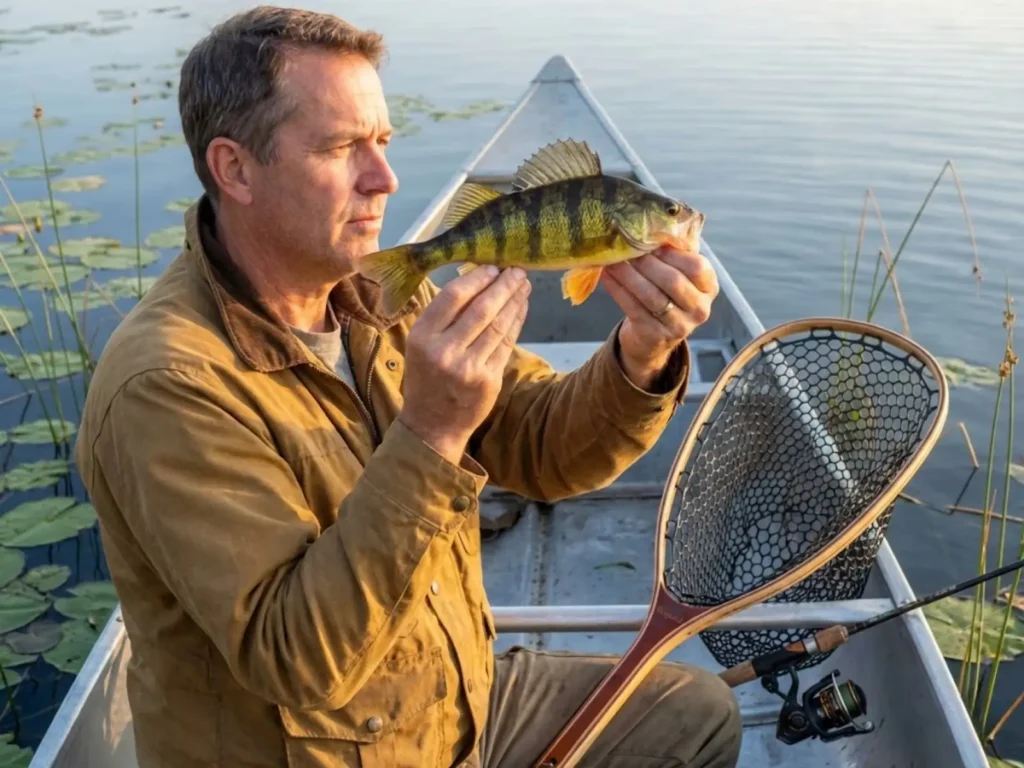
Coloration varies with habitat and diet, but the fundamental patterning of these species is genetically fixed. Here’s what to look for.
Yellow Perch: The Tiger Stripes
The defining feature: 6-8 distinct, dark vertical dark bars running the body length. These bars are broad at the dorsal ridge and taper toward the belly—the classic “tiger stripe” pattern.
Ground color ranges from golden-yellow coloration to brassy-green depending on water clarity and forage. But here’s the critical point: even in tannic or turbid waters where that yellow color fades to pale gray or brown, the bars remain visible. Their orientation—vertical—doesn’t change.
Fins often show orange fins or red pigmentation, especially the pelvic and anal fins. This is less reliable than the bars but provides additional confirmation.
Once you know seasonal yellow perch patterns, you’ll find them in predictable locations year-round.
White Perch: Silver, Solid, Stripeless
White perch lack vertical bars entirely. Their body pigmentation runs uniform—silver body on the sides transitioning to olive-gray or brassy-black on the back.
Juvenile white perch may show faint horizontal markings, but these are never the distinct vertical bars of yellow perch. The absence of vertical bars is diagnostic.
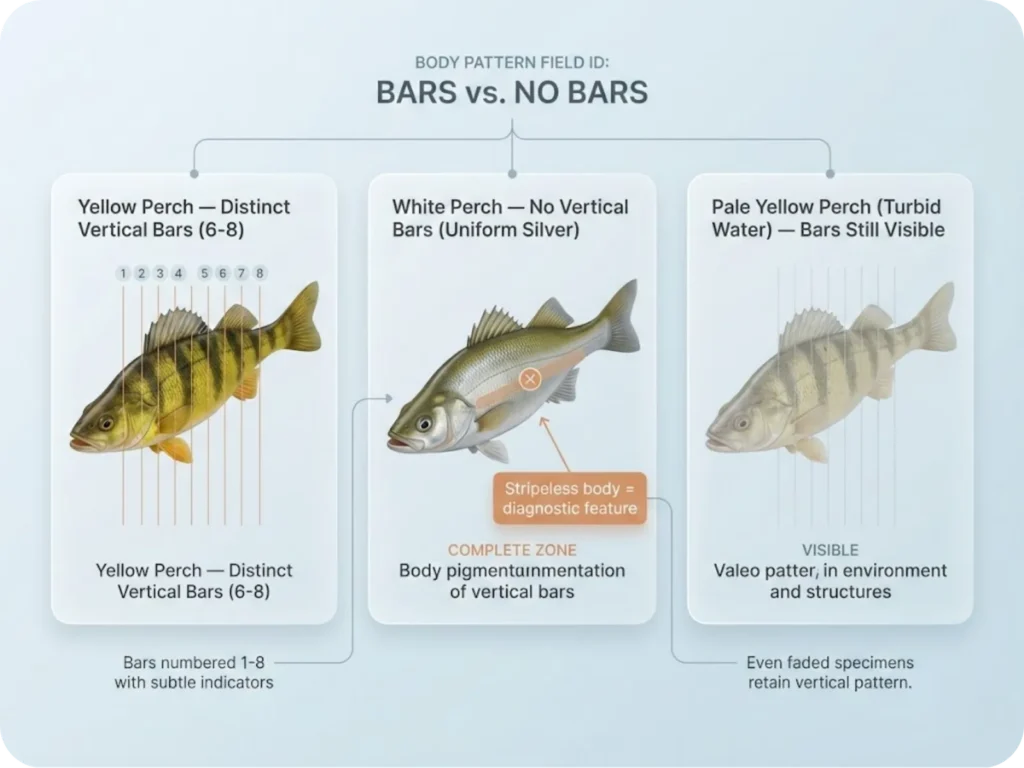
The rule: If you see vertical bands, it is not a white perch. Period.
Pro tip: In low-light conditions, run your thumb across the flank. You can sometimes feel a slight texture difference at bar margins on yellow perch—a tactile confirmation when visual ID is difficult.
Step 3: Examine Cranial Osteology and Fin Counts
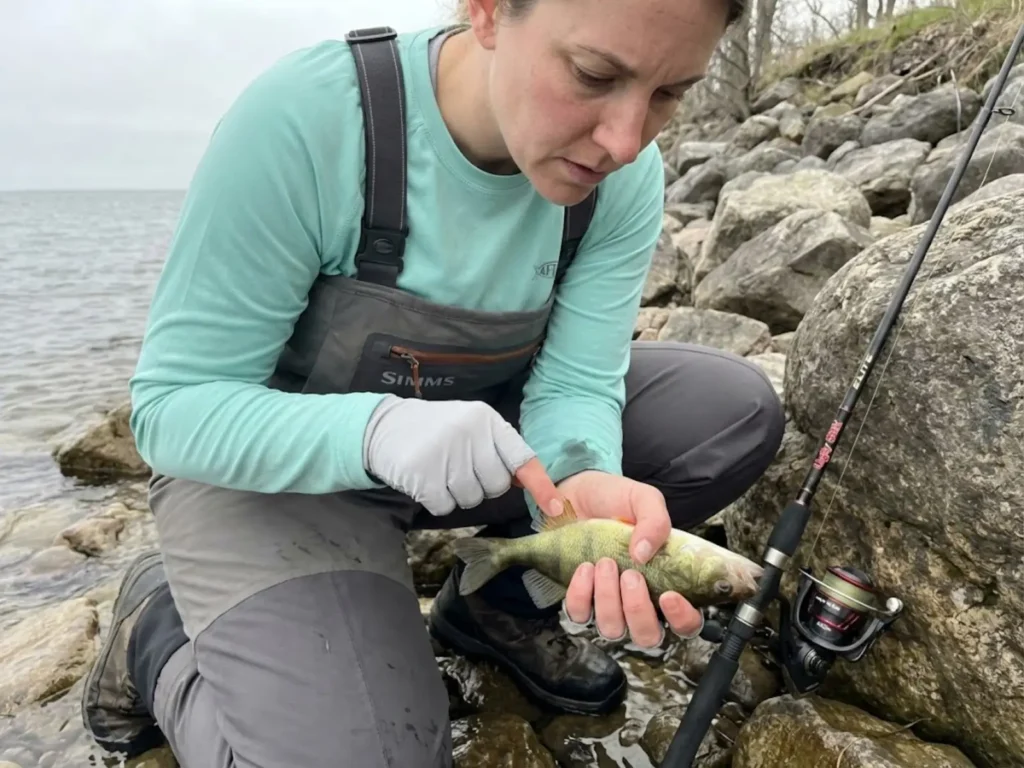
When you need absolute confirmation—when the water’s murky, the fish is stressed, or you’re just not sure—the fin spine count provides definitive proof.
Anal Fin Spine Count: The Definitive Marker
This is a countable, meristic trait that eliminates environmental variability entirely.
Yellow perch: 2 anal fin spines preceding the soft rays.
White perch: 3 anal fin spines, with the second and third roughly equal in length.
Field technique: Locate the anal fin (ventral, behind the pelvic fins). Press your thumb along the anterior edge to feel the spines. Count them.
In low-visibility conditions, this count is often faster than inspecting dorsal fin membranes. It takes three seconds.
Opercular Spine: The Tactile Confirmation
The white perch operculum (gill cover) has a sharp, rigid spine on its posterior margin. This thing is sharp enough to slice your hand open if you’re careless.
Yellow perch have a serrated preopercle but lack that single prominent razor-like spine.
Field test: Run your finger gently along the posterior edge of the gill cover. Sharp prick? White perch. Serration without a single dominating spine? Yellow perch.
This is why experienced anglers can identify by handling alone—the spine safety protocols you’d use for catfish apply here too.
Beyond ID: The Consequences of Your Catch
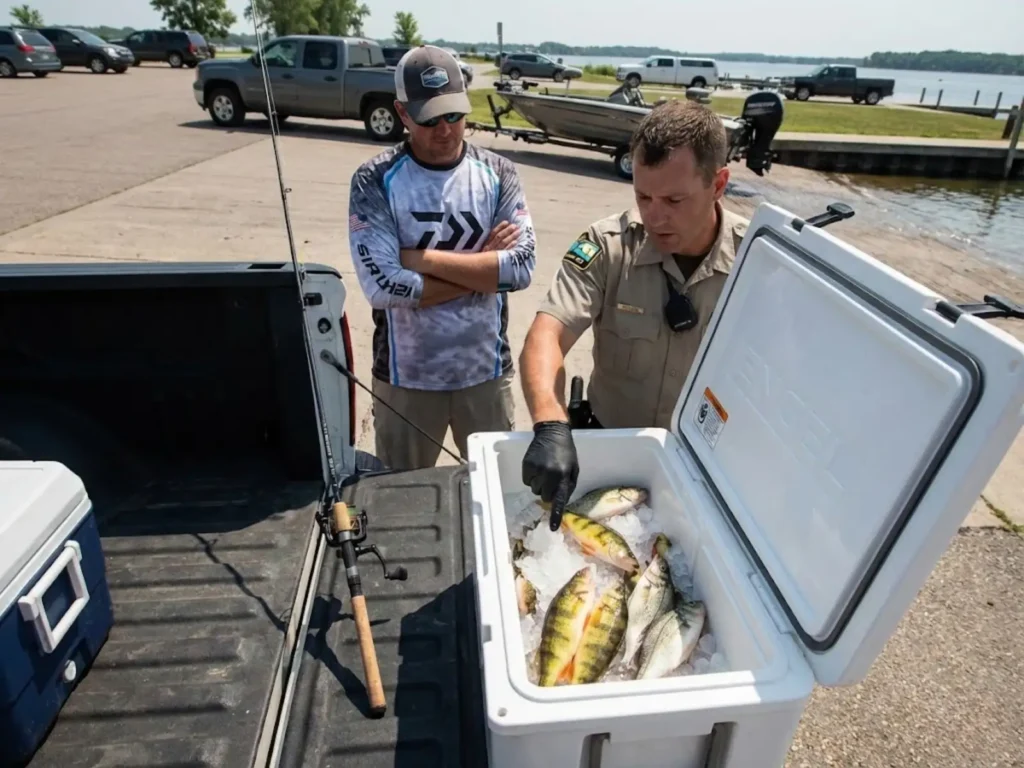
Proper identification isn’t just about intellectual satisfaction. It carries regulatory, ecological, and culinary implications.
Regulatory Reality: From No Limit to Mandatory Kill
Yellow perch regulations vary by state but typically include daily bag limits—25 or 50 fish in Michigan, for example. These limits protect spawning populations to ensure sustainable fisheries.
White perch? No daily bag limit. No size limit. In most states where they’re established, agencies encourage maximum harvest. Utah has implemented “catch and kill” orders at specific reservoirs. In Kansas, it’s illegal to possess live white perch at all—violation results in fines.
The liability: keeping over-limit yellow perch because you thought they were white perch equals a citation. Releasing white perch because you thought the regulations were the same as yellow perch means putting reproductive invasive species back in the water.
The Ecological Stakes: Egg Predation and Fishery Collapse
White perch are documented predators of walleye eggs and white bass eggs in Great Lakes waters. Research from the Bay of Quinte in Lake Ontario found that during spawning season, walleye eggs comprised up to 100% of white perch diet.
Think about that: adult walleye survive, but their eggs get eaten before they hatch. Year after year. This creates a recruitment bottleneck that collapses the fishery over time—even when adult populations look healthy.
White perch also compete directly with yellow perch for zooplankton. Studies show white perch consume 27% more food than sympatric yellow perch in the same habitat, effectively outcompeting them for available resources.
Understanding walleye biology and behavior helps explain why this egg predation is so devastating. And invasive fish species management is becoming every angler’s business.
The Morone Confusion: White Perch vs. White Bass
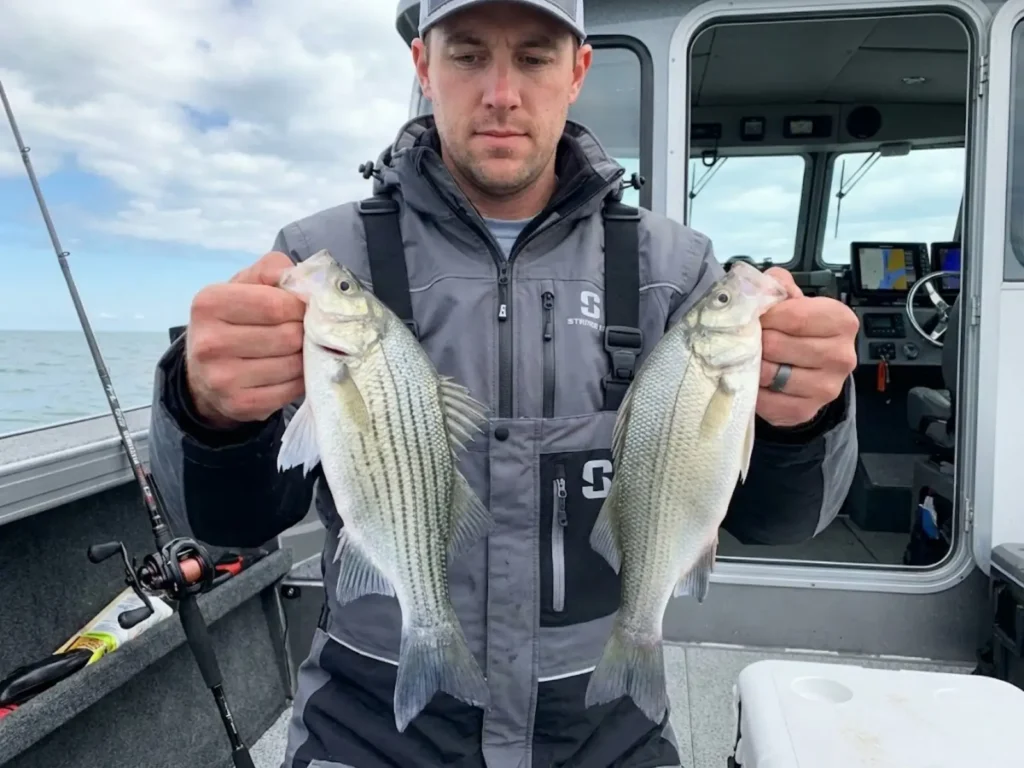
White perch aren’t the only Morone in these waters. White bass (Morone chrysops) are native, valued, and protected by bag limits. Confusing them with white perch creates its own problems.
Stripe Analysis: The Primary Differentiator
White bass: Distinct, dark horizontal stripes running the body length. At least one stripe typically extends all the way to the tail.
White perch: No continuous stripes. Silver to gray, maybe faint markings, but nothing distinct.
This is the fastest field identification method for separating these two Morone species. It takes about two seconds in good light.
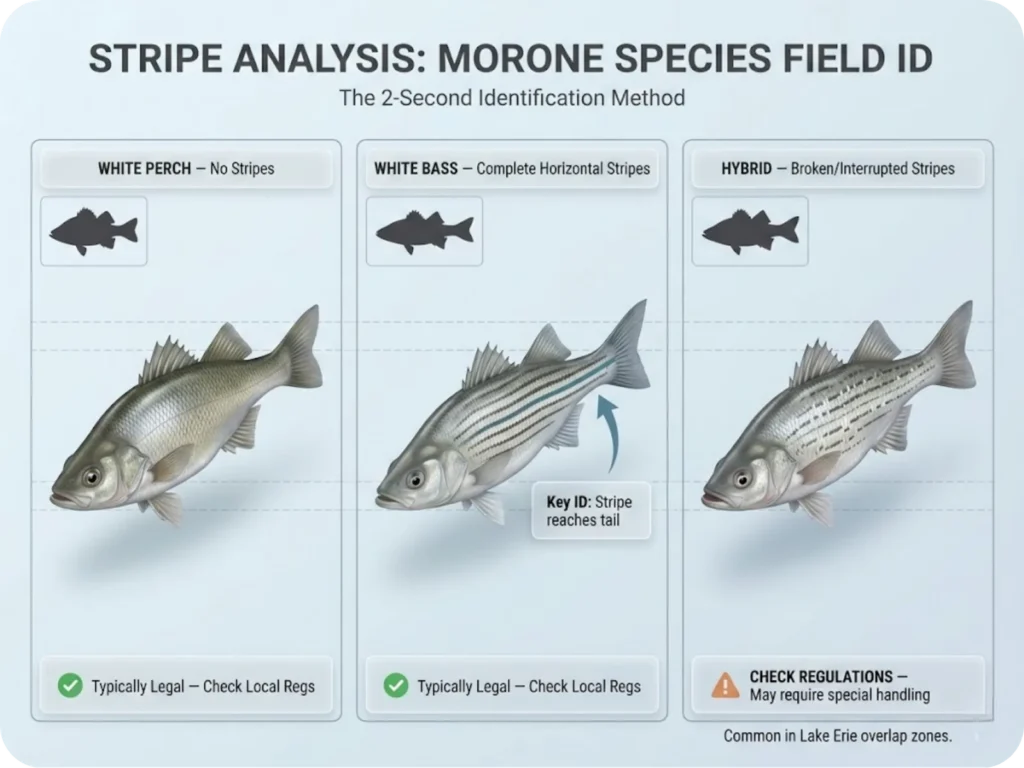
Hybrid warning: White perch and white bass hybridize in overlapping ranges (Lake Erie, notably). These hybrids show intermediate “broken” stripes and intermediate anatomy. If stripes look interrupted or irregular, you may be looking at a hybrid—check regulations carefully.
For more on separating look-alikes, the guide on hybrid fish identification challenges covers wipers and other common confusions.
From Water to Table: Culinary Considerations

What you do with your catch after identification matters too. These fish eat differently—and require different handling.
Yellow Perch: The Gold Standard of Panfish
Yellow perch have a well-deserved reputation. Mild sweet flavor, firm white flaky meat, extremely lean (around 1% fat). Yellow perch fillets are considered among the finest freshwater table fare available.
Preparation is straightforward. The skin crisps nicely and adds flavor, so most anglers keep it on. A 100g serving delivers approximately 91 calories and 19g of protein.
Market value often exceeds $20 per pound for fillets—which explains why restaurant fraud is rampant.
White Perch: The Red Meat Problem
White perch can be excellent eating—but only with proper technique. The issue is a pronounced band of red meat running along the lateral line. This tissue is lipid-rich and oxidizes quickly, creating the “muddy” or “fishy” taste profile that gives white perch a bad reputation.
The solution: Remove that red meat entirely. Fillet the fish, skin it completely (unlike yellow perch), then use a V-cut to excise the dark strip running down the center. What remains is mild white meat comparable to striped bass.
Pro tip: Process white perch immediately after catching. Delayed processing amplifies off-flavors. If you can’t clean them within an hour, put them on ice immediately and process as soon as possible.
A good fillet knife selection makes lateral line removal much easier—especially on smaller fish.
The “Lake Perch” Fraud
High yellow perch prices plus low white perch prices equals fraud incentive. Restaurants frequently substitute cheaper white perch (or European Zander) for yellow perch on menus, labeling it generically as “Lake Perch” or just “Perch.”
Once battered and fried, the difference is nearly impossible for consumers to detect. DNA barcoding studies have confirmed this mislabeling is widespread throughout the Great Lakes region.
White perch fillets tend to be thicker and lack the distinctive “V” shape of yellow perch rib structure. If you’re ordering perch at a restaurant, knowing your source—or catching your own—is the only real protection.
Conclusion
Three checks. That’s what separates confident identification from expensive uncertainty.
Dorsal fins: Separated means yellow perch. Connected by membrane means Morone.
Body pattern: Vertical dark bars mean yellow perch. Silver uniformity means white perch.
Anal fin spines: Two means yellow perch. Three means white perch.
These markers don’t change with water clarity, diet, or season. They’re anatomical facts. And once you’ve run through them a few times, the process becomes automatic—thirty seconds, absolute certainty.
The stakes are real. Releasing invasive white perch perpetuates egg predation on native walleye. Misidentifying yellow perch as white perch and keeping too many results in citations. And trusting restaurant “lake perch” labels without question means paying premium prices for substitute species.
Next time you boat something silvery that makes you hesitate, run through the three-tier confidence system. Dorsal fins. Color pattern. Fin spines. You’ll know exactly what you’re holding—and exactly what to do with it.
FAQ
Can yellow perch and white perch hybridize?
No—they belong to different families (Percidae vs. Moronidae) and cannot interbreed. However, white perch can hybridize with white bass since both are Morone species. These hybrids display intermediate characteristics and complicate field identification.
Are white perch good to eat?
Yes, when processed correctly. The key is removing the red meat along the lateral line and skinning the fillet entirely. Without this step, the meat tastes muddy. With proper lateral line removal, the remaining flesh is mild and comparable to striped bass.
Why are white perch invasive in some states but native in others?
White perch are native to Atlantic coastal brackish water from South Carolina to Nova Scotia. They invaded the Great Lakes via canal systems in the mid-20th century. In native range (Maryland), they’re managed as game fish. In invaded waters (Great Lakes, Midwest), they’re classified as invasive species due to impact on native walleye and yellow perch.
What’s the fastest way to tell white perch from white bass?
Look for stripes. White bass have distinct horizontal stripes with at least one reaching the tail. White perch are solid silver without continuous striping. This takes about two seconds.
Do I need to kill white perch if I catch them?
Regulation varies by state. Some states mandate catch and kill. Others simply remove bag limits to encourage harvest. Check your state’s invasive species regulations before fishing any new water body.
Risk Disclaimer: Fishing, boating, and all related outdoor activities involve inherent risks that
can lead to injury. The information provided on Master Fishing Mag is for educational and informational purposes
only. While we strive for accuracy, the information, techniques, and advice on gear and safety are not a substitute
for your own best judgment, local knowledge, and adherence to official regulations. Fishing regulations, including
seasons, size limits, and species restrictions, change frequently and vary by location. Always consult the latest
official regulations from your local fish and wildlife agency before heading out. Proper handling of hooks, knives,
and other sharp equipment is essential for safety. Furthermore, be aware of local fish consumption advisories. By
using this website, you agree that you are solely responsible for your own safety and for complying with all
applicable laws. Any reliance you place on our content is strictly at your own risk. Master Fishing Mag and its
authors will not be held liable for any injury, damage, or loss sustained in connection with the use of the
information herein.
Affiliate Disclosure: We are a participant in the Amazon Services LLC Associates Program, an
affiliate advertising program designed to provide a means for us to earn advertising fees by advertising and linking
to Amazon.com. As an Amazon Associate, we earn from qualifying purchases. We also participate in other affiliate
programs and may receive a commission on products purchased through our links, at no extra cost to you. Additional
terms are found in the terms of service.