In this article
The spine went in clean—one quick stab through the web of my hand between thumb and forefinger. The pain wasn’t like a normal puncture. It arrived in waves, throbbing up through my wrist like I’d grabbed a live wire instead of a two-pound channel catfish. My thumb swelled to twice its size before we made the boat ramp.
That night at urgent care, the doctor asked me if I knew catfish were venomous. I didn’t. Most anglers don’t—until they learn the hard way. After twenty-plus years chasing whiskers from farm ponds to the Tennessee River, I’ve been finned more times than I care to admit. Every single one was preventable.
This guide breaks down catfish spine safety by fish size—from “danger zone” juveniles to trophy-class bruisers—so you’ll know exactly how to grip, when to use tools, and what to do if you get finned by catfish.
⚡ Quick Answer: Catfish have three venomous spines: one dorsal (on the back) and two pectoral (on the sides). Smaller catfish under 16 inches pose the greatest danger due to needle-sharp spines and potent venom. The safest grip places your hand behind the dorsal spine with fingers locked behind both pectoral spines. If stung, immerse the wound in hot water (113°F) for 20-30 minutes—this is 87% effective at reducing pain, compared to just 33% for ice.
The Anatomy of a Catfish Sting: What You’re Really Up Against
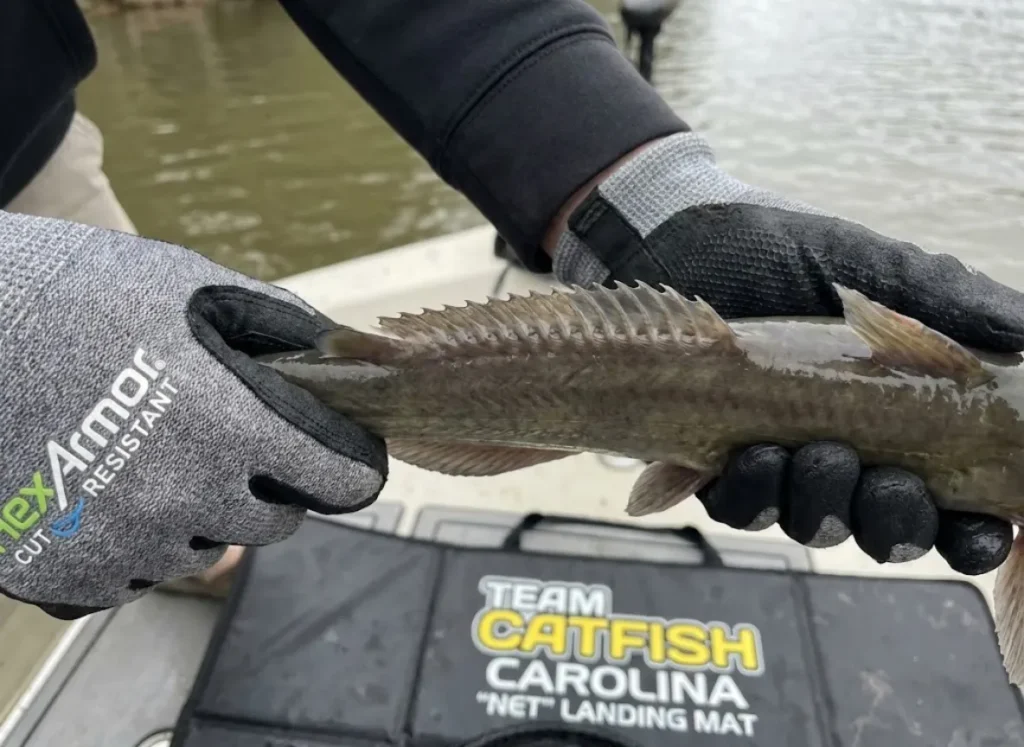
Understanding what makes catfish spines dangerous starts with knowing you’re not dealing with simple thorns. These are ossified fin rays—hardened into bone—capable of deep puncture wounds and venom delivery.
The Friction Lock: Why You Can’t Just Push the Spine Down
Here’s something most anglers learn the hard way: you can’t just force a catfish’s fins down. The pectoral spines connect to the fish’s skeleton through a friction-locking mechanism. When threatened, the catfish rotates the spine forward and sets this lock like a ratchet.
Once engaged, the spine won’t budge. Trying to crush it down usually ends with the spine driving into your palm—or snapping off inside the wound, which is worse. According to SciELO research on catfish venom gland morphology, this locking mechanism is specifically evolved for defense.
If you want to understand the broader biology behind these fish, check out our Channel Catfish biological profile for the complete species breakdown.
Pro tip: Never attempt to press down a thrashing catfish’s fins. Wait for the fish to calm, or rotate the spine slightly at its base to disengage the friction lock—though this is tricky under pressure.
Serration Profiling: The Barbs That Make Extraction Brutal
The spines aren’t smooth. Under magnification, you’ll see two types of serrated barbs: smaller anterior serrations on the front edge that ease entry, and larger retrorse serrations (backward-facing) on the rear edge.
Those rear serrations function like a mechanical ratchet. In a predator’s throat, they prevent the fish from being swallowed. In your hand, they act as barbs. Pulling a spine out tears more tissue than the entry wound created, dramatically increasing venom exposure.
Madtom and Hardhead catfish have the most pronounced retrorse serrations—a catfish sting from either species means significantly more tissue trauma during extraction.
The Venom Gland Complex: No Fangs, Just Shredded Skin
Unlike a rattlesnake with its hollow fangs and venom sacs, catfish deliver venom through a crude but effective system. Glandular cells sit between the bony spine and an outer skin layer. When the spine penetrates, this skin gets pushed back or torn, rupturing those fragile cells and dumping venom directly into the wound track.
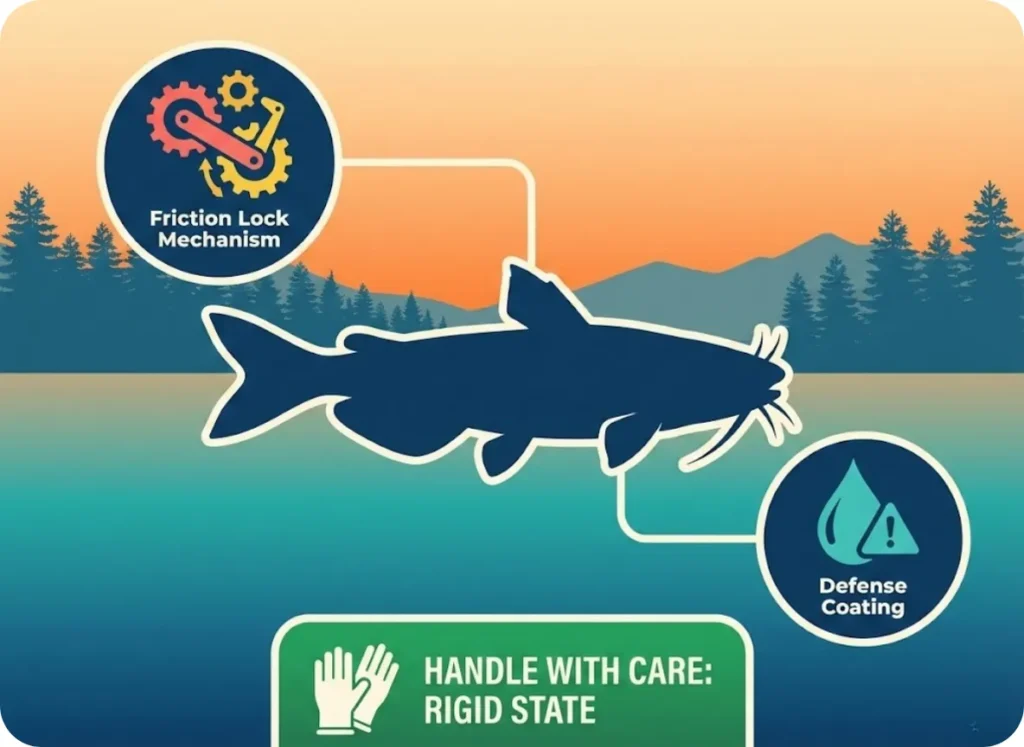
The deeper the puncture, the more cells rupture, and the more hemolytic venom floods the wound. This is exactly why small, needle-sharp spines on juvenile fish cause dramatically more pain than the blunt spines on trophy cats.
The Inverse Danger Law: Why Smaller Fish Hurt More
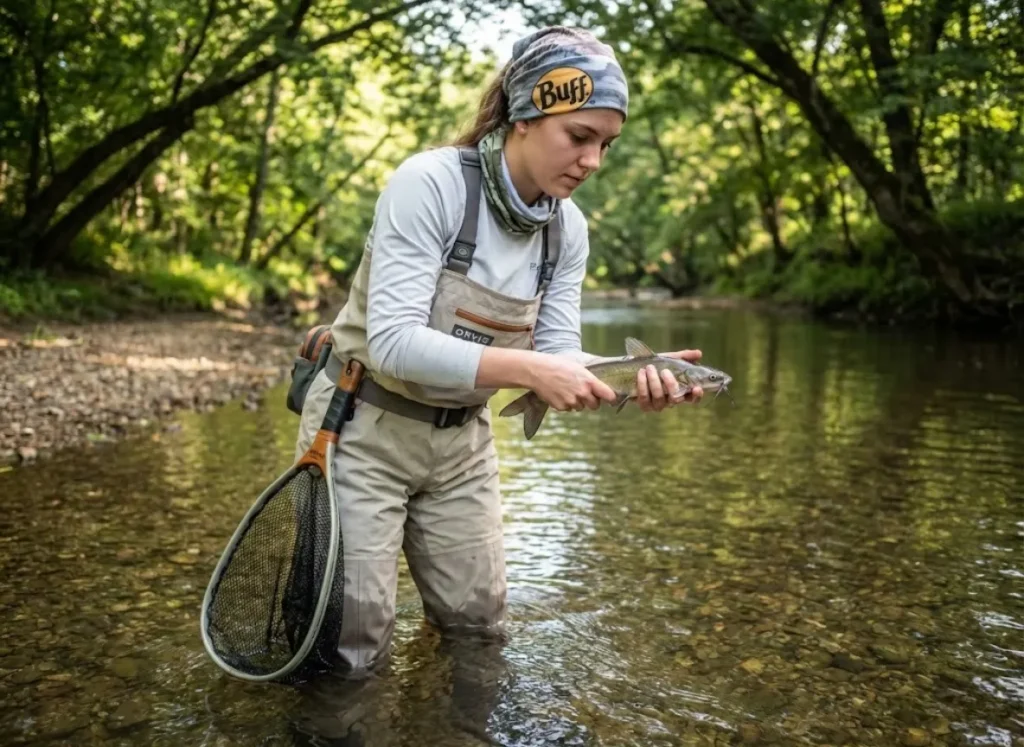
Here’s the counter-intuitive reality of catfishing: safety risks decrease as the fish grows larger. I call this the “Inverse Danger Law,” and it should dictate every handling decision you make.
The Danger Zone: Under 16 Inches (<2 lbs)
Juvenile catfish are in their prime defensive condition. Dorsal spines and pectoral fins are needle-sharp, perfectly serrated, and covered with a full complement of venomous spines. The venom itself is often more potent than in adults—it’s a primary survival tool for small fish preyed upon by bass, pike, and bigger catfish.
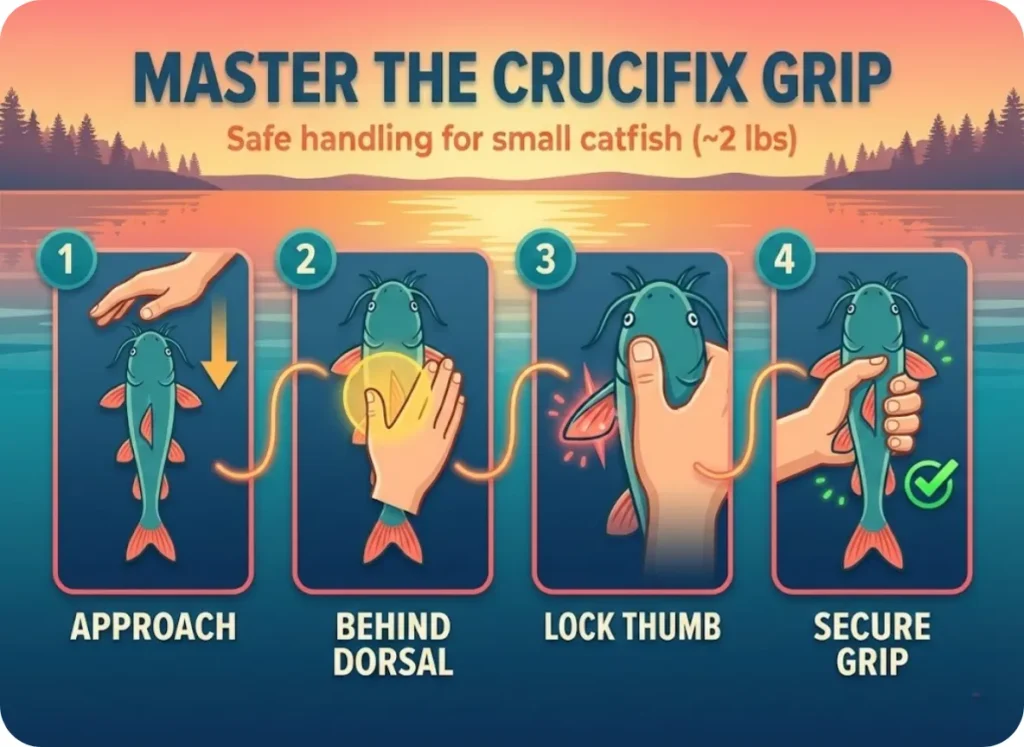
Fish in this size class demand the “Crucifix Grip” with your hand locked behind all three spines. A momentary lapse ends with a deep, painful puncture.
Madtom species—rarely exceeding 6 inches—carry some of the most potent venom of any North American freshwater fish. A catfish sting from a 4-inch Madtom feels like a hornet sting magnified ten times. According to NIH research on catfish venom potency and fish size, toxicity is largely inversely proportional to fish size.
The Transition Zone: 16-24 Inches (2-10 lbs)
As fish grow, spines thicken. They’ll still puncture skin, but they lose that needle-like quality. The risk shifts from sharpness to power—a thrashing 5-pound channel cat can twist with enough force to drive the spine through a weak grip.
The “Belly Cradle” grip becomes viable here, but only with calm fish. Lip grips offer safer control for medium-sized catfish in this size range.
This is also the catfish knuckles zone. The cardiform tooth patches inside the mouth act like coarse sandpaper, shearing skin off your fingers and thumb during lip grips if you’re not careful.
The Trophy Zone: Over 24 Inches (>10 lbs)
Large catfish like Blue Catfish and Flathead Catfish often have blunt, worn spines from years of living in current and rocky habitat. The venom glands may be atrophied or functionally insignificant relative to body size.
But the danger shifts to the mouth. Jaw pressure from a 40-pound Flathead can bruise bone. Those tooth patches cause severe mouth abrasion when the fish clamps and rolls. Use heavy-duty lip grips or protective gloves. If barehanding, grip deep to minimize the fish’s leverage on your knuckles.
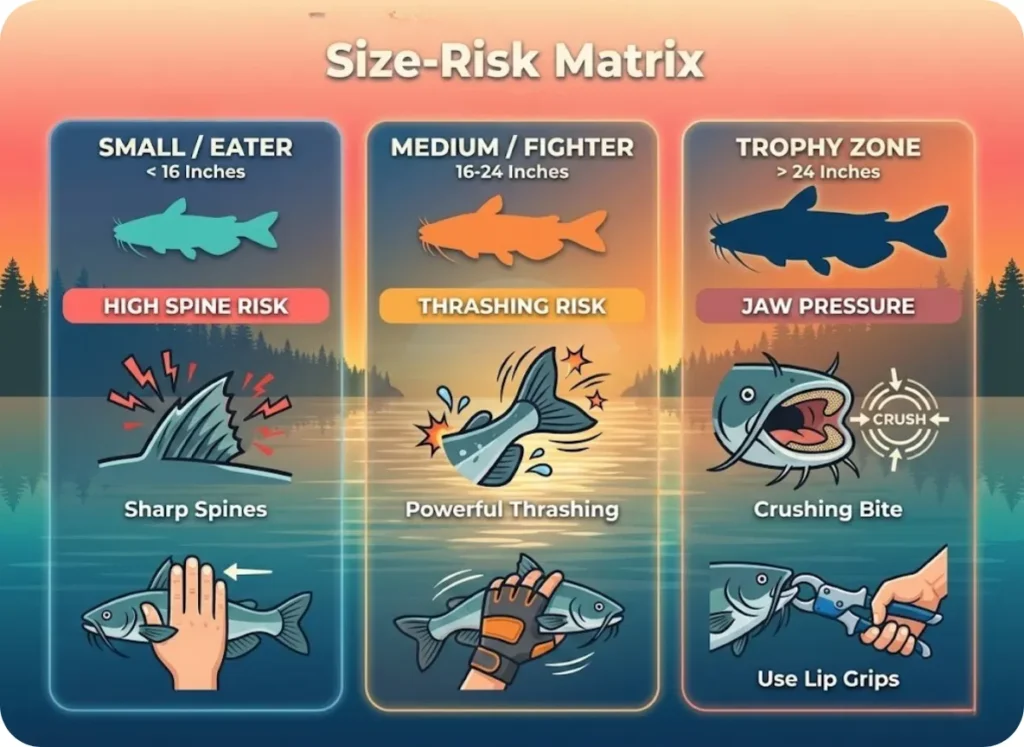
For proper technique on supporting fish welfare during the process, see our guide on proper fish handling techniques.
Species Risk Profiles: Know What You’re Catching
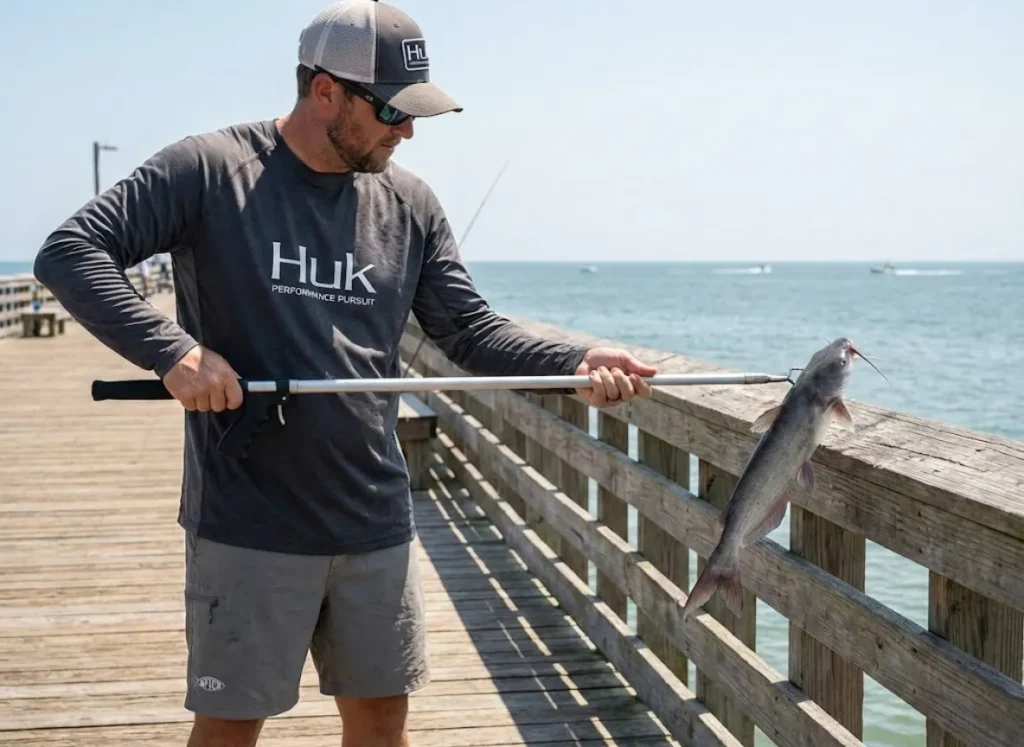
Not all catfish species are created equal. Identifying what’s on your line determines your handling approach.
The Freshwater “Big Three”
Channel Catfish (Ictalurus punctatus) are the most common catch. Forked tail, often spotted, curved anal fin. The 1-5 pound range is particularly dangerous—very sharp fin spines and active thrashing behavior.
Blue Catfish are the giants. Forked tail, no spots, straight anal fin with 30-35 rays, slate blue to white coloration. High risk in juveniles; moderate in adults. Large Blues are incredibly strong and can roll violently, risking wrist injury or severe abrasion.
Flathead Catfish are the pit bulls of the river. Squared or notched tail (never forked), mottled brown/yellow, protruding lower jaw. Risk is primarily mechanical—they bite hard and don’t let go. Their dorsal fin spines are often less sharp than Channels, but aggression is higher.
The “Venomous Little Devils”: Bullheads and Madtom
These small species (rounded tails, usually under 12 inches for Bullheads, under 6 inches for Madtom) carry extreme risk. According to PubMed Central research on venomous catfish diversity, Madtom venom is among the most potent in North American freshwater fish.
A Madtom sting is medically significant—treat it like a severe bee sting. If possible, use puncture-resistant noodling gloves or simply cut the line rather than risk hand contact.
The Saltwater Hazards: Hardhead and Gafftopsail
Hardhead Catfish (three barbels under chin, grayish-green, bony head plate) present severe risk. Hidden spines are serrated, covered in toxic slime harboring aggressive bacteria. Aeromonas infection and Vibrio infection rates are high.
Gafftopsail Catfish are deceptive. That long, flowing dorsal “sail” hides a rigid, serrated dorsal spine at its base. Anglers fishing for other species who grab the soft portion often get impaled by what they didn’t see.
Pro tip: When targeting redfish or speckled trout in the Gulf, keep a long-handled dehooker rigged and ready. Hardheads show up uninvited on almost every trip.
Safe Grip Techniques: The Size-by-Size Protocol
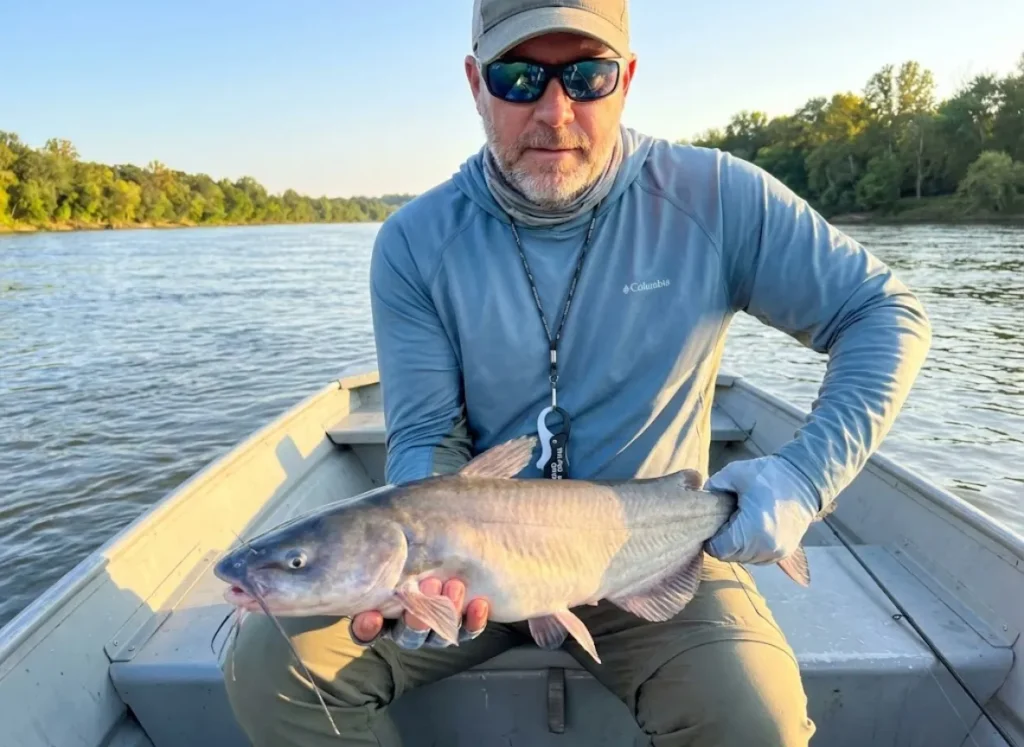
Proper hand positioning is everything. The grip must control the fish’s propulsion (tail) and its weapons (spines).
Technique A: The Dorsal “Crucifix” (Small to Medium Fish: Under ~4 lbs)
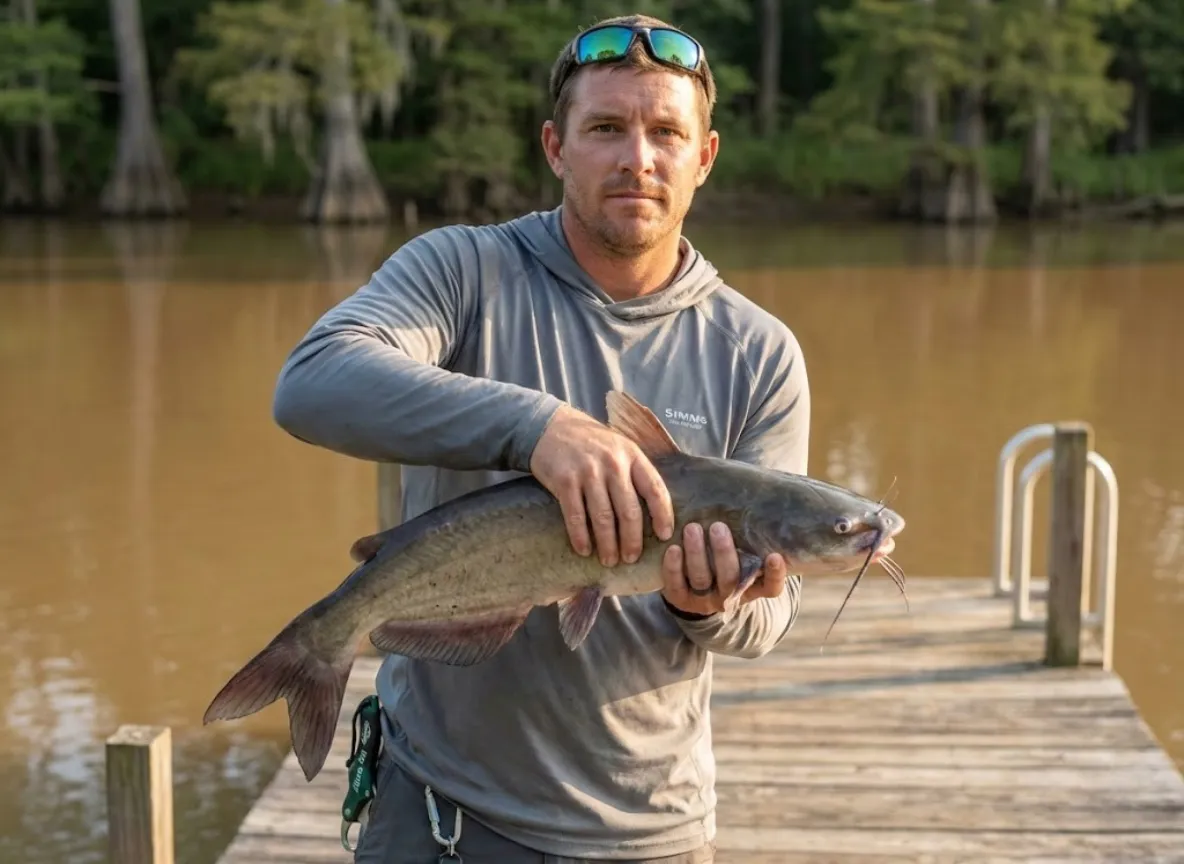
Approach from the top. Place your hand directly behind the pectoral and dorsal spines—specifically, position the web between your thumb and index finger snugly behind the dorsal spine. Slide your thumb down one side, locking it behind one pectoral spine. Slide your index and middle fingers down the opposite side, locking them behind the other.
Squeeze firmly. The spines are now physically blocked from rotating backward into your hand. If you can see the spine tips in front of your grip, you’re positioned correctly.
Pro tip: One smooth motion. Hesitation creates gaps the fish can exploit. Commit to the grip the moment you touch the fish.
Technique B: The Belly Cradle (Medium Fish: 2-10 lbs)
Invert your hand—palm facing up. Slide it under the fish’s belly, supporting the weight. Let the pectoral fins rest between your fingers, one spine between thumb and index, the other outside your pinky.
This grip requires a calm fish. If it catfish squirm or thrash, spines can drive downward into your palm. Wet your hands first to protect the slime coat and improve grip.
Technique C: The Gloved Lip Grip (Large Fish: Over 10 lbs)
Control the head, control the body. Put on a protective glove for abrasion resistance. Insert your thumb into the mouth, gripping the lower jaw. Curl fingers under the chin. Lift vertically, or support the belly with your other hand for horizontal photos.
When the big catfish clamps down—and it will—freeze. Don’t yank your hand out. Those teeth are like Velcro; pulling shreds the skin. Wait for the fish to relax before removing your hand slowly.
For weigh-ins, consider fish lip grippers with integrated scales to avoid contact entirely.
Tools of the Trade: Mechanical Advantages That Save Skin
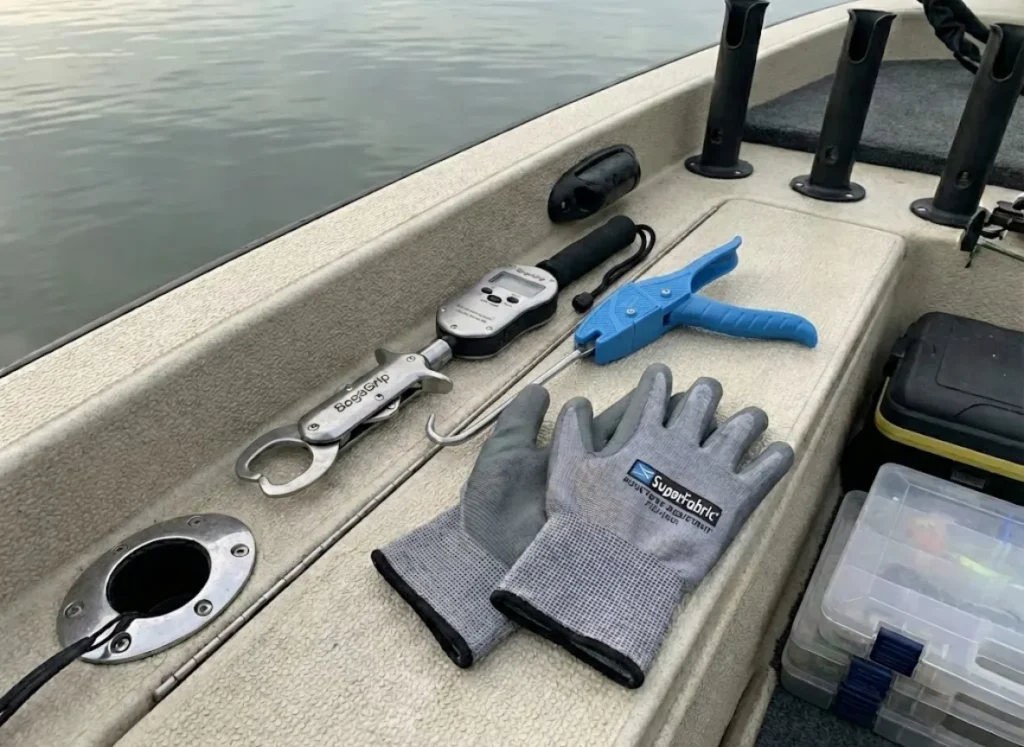
Technology provides a barrier between you and the hazard. Use it.
Dehookers: Keeping 8-10 Inches Between You and the Hazard
Pistol grip dehooker tools (like the Baker Hookout) let you clamp onto the hook shank and twist out while maintaining distance. Arc dehookers slide down the line to pop the hook—efficient but require practice. For a complete breakdown, see our full dehooking tool guide.
These tools are essential for Bullheads, Madtom, and Hardhead—species where even experienced fishermen avoid hand contact.
Lip Grippers: Control Without Contact
Plastic floating grippers like The Fish Grip or fish grips are inexpensive, lightweight, and float if dropped. Wide jaws minimize tissue damage to the fish. Metal scale grippers like BogaGrip are extremely durable with rotating heads that prevent wrist torque, but they’re expensive and sink.
Team Catfish Lip Grips and Berkley Big Game Lip Grip offer solid middle-ground options for dedicated catfish anglers.
Gloves: The Puncture Protection Spectrum
Cotton fishing gloves offer grip, not protection. Latex and nitrile offer hygiene only. Nitrile-dipped knit gloves provide abrasion resistance—enough for catfish knuckles prevention but won’t stop a pointed spine.
For true puncture wound protection, Kevlar or HexArmor needle-stick gloves are required. Trade-off: reduced dexterity for bait rigging.
First Aid Protocols: When Prevention Fails
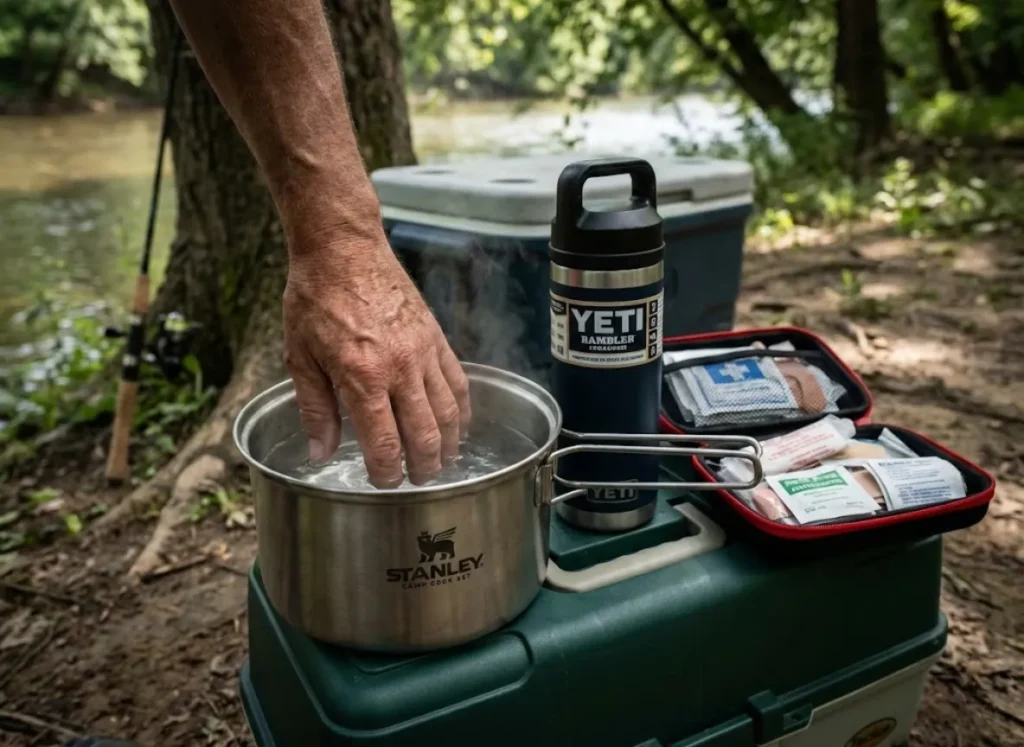
Despite best efforts, punctures happen. Your response in the first 30 minutes determines the outcome.
The Hot Water Immersion Protocol
Immerse the wound in water at 113°F (45°C)—hot bath temperature. Hot enough to be uncomfortable, not hot enough to scald. Hold for 20-30 minutes or until pain subsides.
According to the Medical Journal of Australia study on hot water immersion efficacy, this achieves 87% pain reduction at 20 minutes. Ice packs? Just 33%—and they often make pain worse.
The mechanism is protein denaturation. Heat breaks down the hemolytic venom proteins, rendering them unable to cause pain or tissue damage.
Infection Control: The Silent Secondary Threat
Catfish live in waters rich with Aeromonas bacteria, Edwardsiella tarda, and (in saltwater) Vibrio species. These pathogens love puncture wounds.
Forcefully irrigate the wound with clean water or saline. Apply antiseptic like Betadine. DO NOT seal the wound with superglue or tight bandages—puncture wounds sealed too early trap bacteria and breed infection.
Keep a waterproof first aid kit stocked with irrigation supplies and antiseptic as standard gear.
Red Flags: When to Seek Medical Attention
Retained spine fragments are common with Madtom stings. If the spine snapped off inside, it needs medical removal—catfish spines are radiopaque and show up on X-rays. Left inside, they cause granulomas and chronic infection requiring surgical debridement.
Red streaks radiating up the arm indicate lymphangitis—infection spreading to the lymphatic system. This is a medical emergency.
Fever, chills, nausea, or swelling extending beyond the wound site suggest systemic involvement. And if your tetanus shot is outdated (over 5-10 years), get a booster. These are dirty wounds.
The Rope Dehooking Method: The No-Touch Release
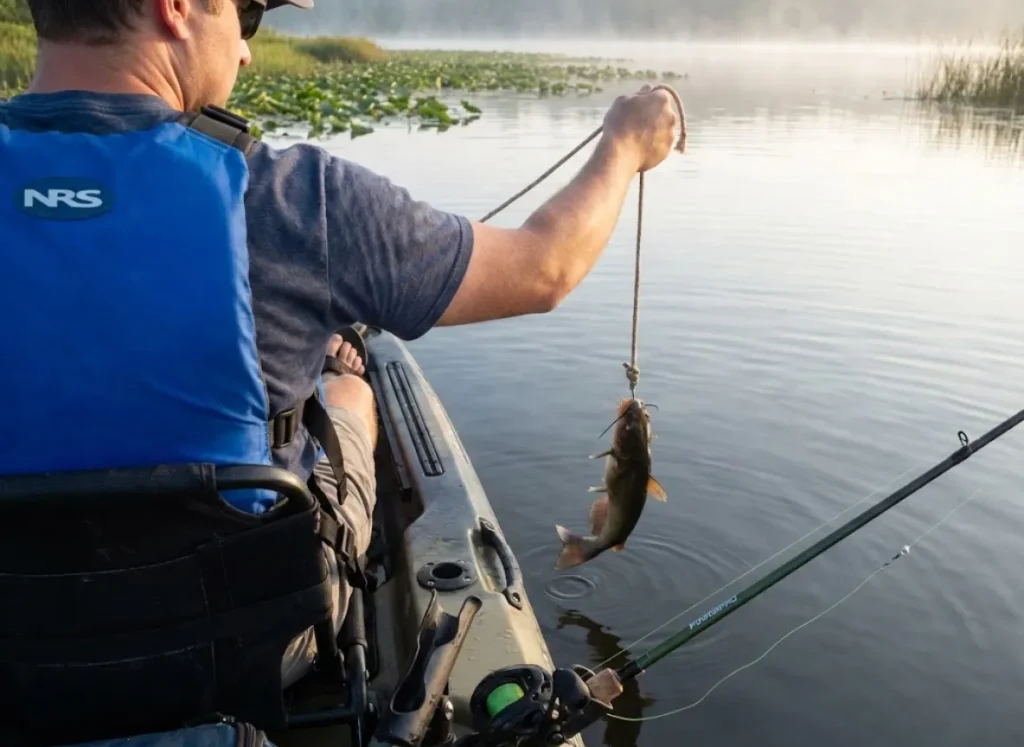
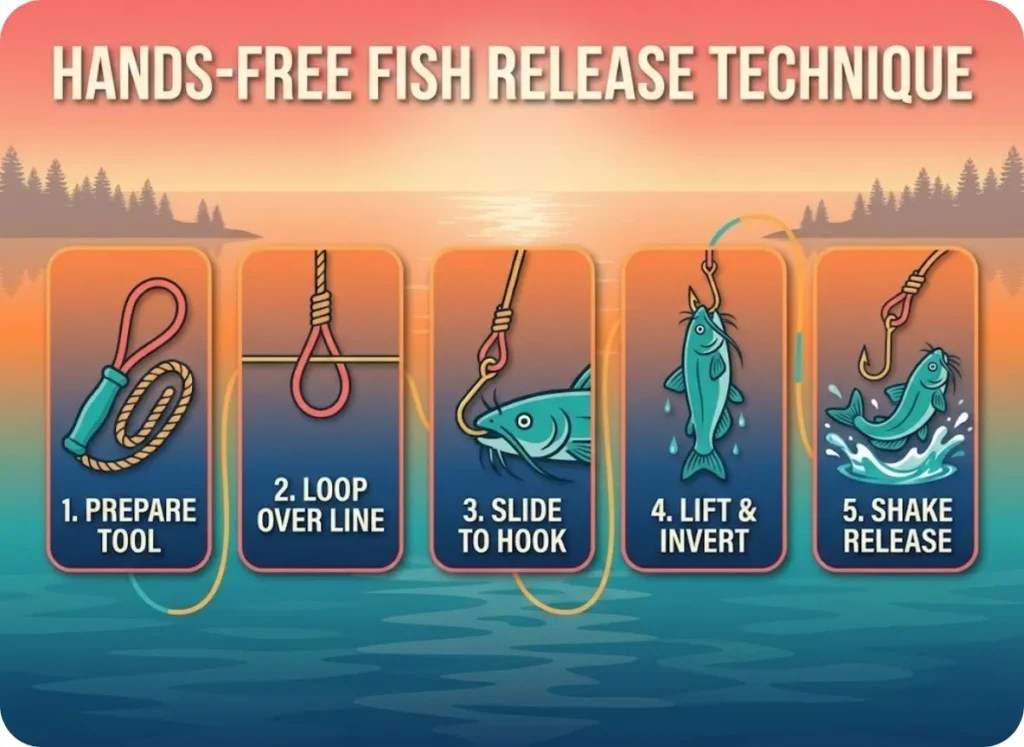
For high-volume “trash fish” catches—Hardhead, Gafftopsail, small Bullheads—this rope dehooking method eliminates contact entirely.
When to Use This Method
Ideal for saltwater fishing safety situations where you’re catching catfish while targeting other species. It eliminates spine contact, slime transfer, and handling stress. As explained in our guide on ethical catch-and-release practices, reducing handling stress improves fish survival rates and protects the slime coat.
Step-by-Step Execution
Take a 2-foot section of thick rope (¼” or greater) or stiff monofilament with a handle. Loop it over the taut fishing line holding the suspended fish. Slide the rope down until it contacts the hook bend. Pull the rope handle vertically—the fish inverts, hook point facing down.
A sharp shake allows the fish’s own weight to slide it off the barb. The fish drops directly into the water—a true hands-free release without touching spines or slime.
Conclusion
Three things will keep your hands intact:
Size dictates strategy. Sub-16-inch catfish demand the Crucifix Grip and heightened awareness. Trophy cats require lip control and gloves—not spine avoidance.
The venom is heat-labile. If you get stung, hot water treatment at 113°F for 20 minutes delivers 87% pain relief. Ice makes it worse.
Tools aren’t optional. Dehookers and lip grips aren’t convenience gadgets—they’re injury prevention systems for species that evolved weapons.
Practice the Crucifix Grip on your next three small catfish catches—consciously, deliberately, until the hand positioning becomes muscle memory. When the moment comes that you’re tired, rushed, or distracted, that memory is what stands between you and a night of throbbing pain.
FAQ
Do catfish spines have poison or venom?
Venom, not poison. Poison is passively ingested; venom is actively injected. Catfish spines deliver crinotoxin through glandular cells that rupture when the spine penetrates tissue. You can eat catfish fish safely—you just can’t let them stab you safely.
Can you hold a catfish by the mouth?
Yes, for fish over ~10 lbs where the Crucifix Grip is impractical. But catfish mouths contain cardiform tooth patches—hundreds of tiny backward-facing teeth that function like sandpaper. This causes catfish knuckles if the fish clamps and you pull away. Use gloves and freeze if clamped—wait for the fish to release.
What happens if a catfish spine breaks off inside the wound?
Retained spine fragments cause chronic infection and granulomas. Catfish spines are radiopaque, so they show up on X-rays via fluoroscopy localization. Seek emergency medical treatment for removal—home extraction often drives fragments deeper.
Does rubbing catfish belly slime on the wound really help?
This belly slime remedy appears in many angler communities but lacks scientific validation. While the slime contains antimicrobial glycoproteins, relying on it delays proven hot water treatment. Use 113°F water immersion first; try the folk remedy afterward if you’re curious.
At what size do catfish spines become safe to ignore?
Around the 16-18 inch threshold (10+ lbs) for Channel and Blue Catfish, spines are often worn blunt from habitat contact. However, a blunt spine driven by a thrashing 30-lb fish can still puncture. Shift your concern from venom to mechanical force and mouth abrasion from those catfish whiskers and tooth patches.
Risk Disclaimer: Fishing, boating, and all related outdoor activities involve inherent risks that
can lead to injury. The information provided on Master Fishing Mag is for educational and informational purposes
only. While we strive for accuracy, the information, techniques, and advice on gear and safety are not a substitute
for your own best judgment, local knowledge, and adherence to official regulations. Fishing regulations, including
seasons, size limits, and species restrictions, change frequently and vary by location. Always consult the latest
official regulations from your local fish and wildlife agency before heading out. Proper handling of hooks, knives,
and other sharp equipment is essential for safety. Furthermore, be aware of local fish consumption advisories. By
using this website, you agree that you are solely responsible for your own safety and for complying with all
applicable laws. Any reliance you place on our content is strictly at your own risk. Master Fishing Mag and its
authors will not be held liable for any injury, damage, or loss sustained in connection with the use of the
information herein.
Affiliate Disclosure: We are a participant in the Amazon Services LLC Associates Program, an
affiliate advertising program designed to provide a means for us to earn advertising fees by advertising and linking
to Amazon.com. As an Amazon Associate, we earn from qualifying purchases. We also participate in other affiliate
programs and may receive a commission on products purchased through our links, at no extra cost to you. Additional
terms are found in the terms of service.