In this article
The surface blew up sixty yards off the bow. White water, shad flying in every direction, gulls screaming and diving into the chaos. I had the trolling motor cranked to full and a Rat-L-Trap tied on, and by the time I got within casting range, the boil was gone. The school had sounded. Nothing but flat water and the faint smell of baitfish slime in the air.
That was the first time I chased hybrid striped bass, and the lesson cost me an entire morning. Wipers don’t wait. They feed in violent, coordinated bursts, then vanish into the water column like they were never there. After fifteen years of chasing these fish across Kansas reservoirs, Oklahoma tailraces, and one unforgettable week at Oregon’s Ana Reservoir, I can tell you the difference between catching wipers and watching them disappear comes down to three things: reading the water before you approach, matching your presentation to the depth and season, and releasing fish fast enough that they survive the fight.
This guide covers all three. By the end, you’ll know how to locate wiper schools before they move, which rig to throw based on conditions, and how to handle these hard-fighting fish so they swim away strong.
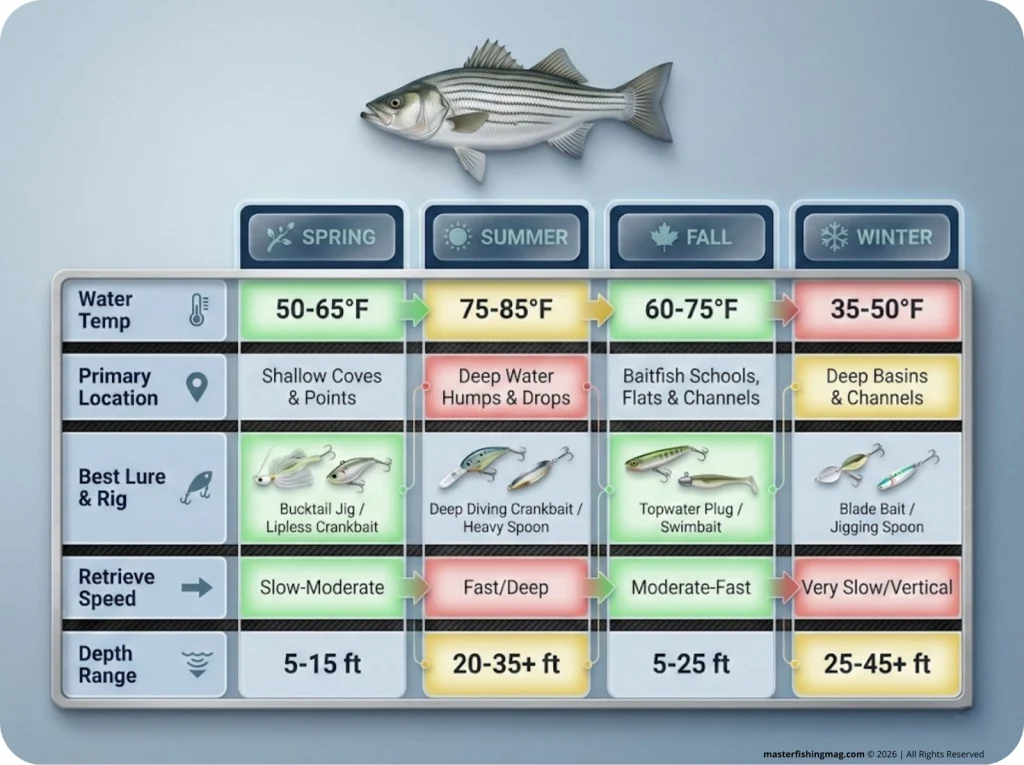
⚡ Quick Answer: Wipers school around shad and attack upward, so finding the baitfish is step one. Use birds, surface boils, and sonar to locate schools without running over them. Throw topwater lures (walk-the-dog style) when fish are busting on the surface. Switch to vertical jigging with swimbaits or heavy spoons when they’re deep. In warm water above 75°F, minimize fight time and air exposure to keep post-release mortality low.
What Makes Wipers Different From Every Other Bass
The Palmetto vs. Sunshine Bass Distinction
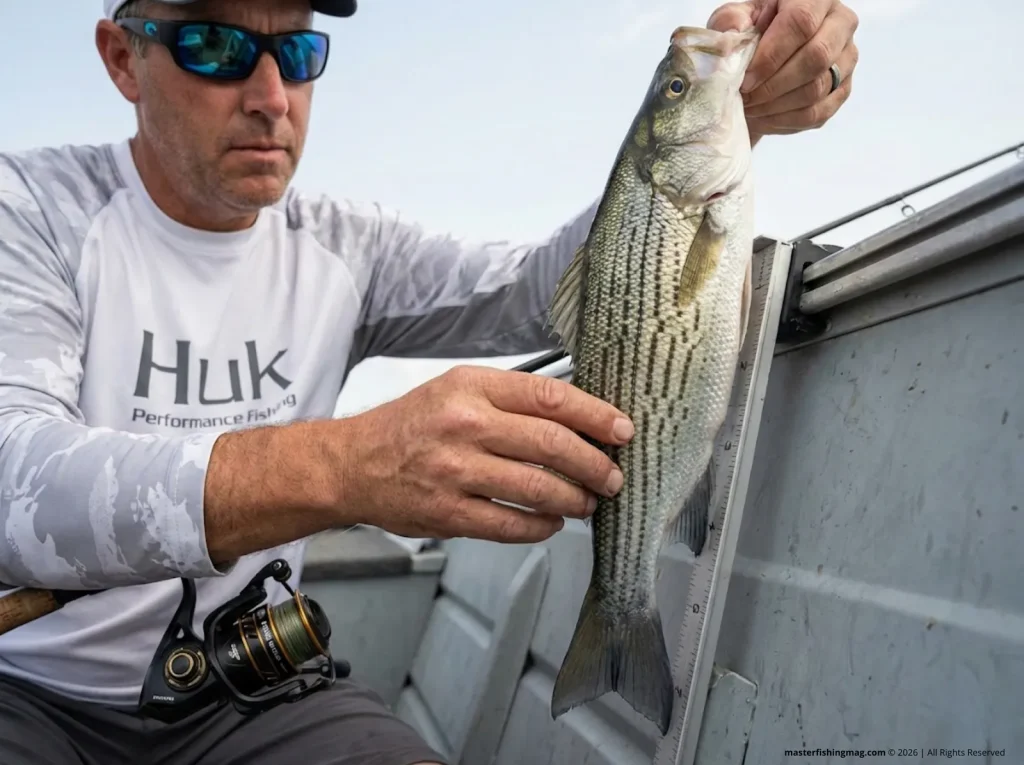
A wiper isn’t just another bass. It’s a sterile fish — a cross between striped bass (Morone saxatilis) and white bass (Morone chrysops), engineered in hatcheries to stock reservoirs where neither parent species can sustain a natural population. Two varieties exist. Palmetto bass come from a striper egg fertilized by white bass sperm and tend to grow larger. Sunshine bass flip that parentage and often show more aggression in shallower water early in the season.
Both share the same field ID marker: broken stripes that look like dashes instead of the continuous lines you see on a purebred striper. If you’re unsure what you’re holding, our hybrid fish ID guide walks through the side-by-side comparisons with tiger musky and other hybrids. Getting this right matters because regulations vary by state and misidentifying a protected species can mean a serious fine.
Why Sterility Makes Them Eat More Aggressively
Because wipers can’t reproduce, all the energy that fertile fish spend on spawning gets redirected into muscle and fat. The result is a fish that feeds more often, grows faster, and hits harder than either parent species. A two-year-old wiper typically weighs 2 to 3 pounds, and the world record sits at 27 pounds 5 ounces.
This also explains the false spawn phenomenon. Every spring, wipers run upstream into tributaries and tailraces during their false-spawn runs, mimicking the drives of their striped bass ancestors despite being completely sterile. It’s one of the most predictable patterns of the year and a prime window for catching fish stacked in predictable locations. Brian Ondrejka of Kansas Angling Experience calls them a “Frankenstein fish” because just when you think you have them figured out, they do something different.
The Thermal Envelope
Wipers are prisoners of water temperature and dissolved oxygen. Optimal feeding happens between 68°F and 78°F. Below 50°F, they slow down considerably. Above 86°F, digestion fails entirely, a condition biologists call “bloat.”
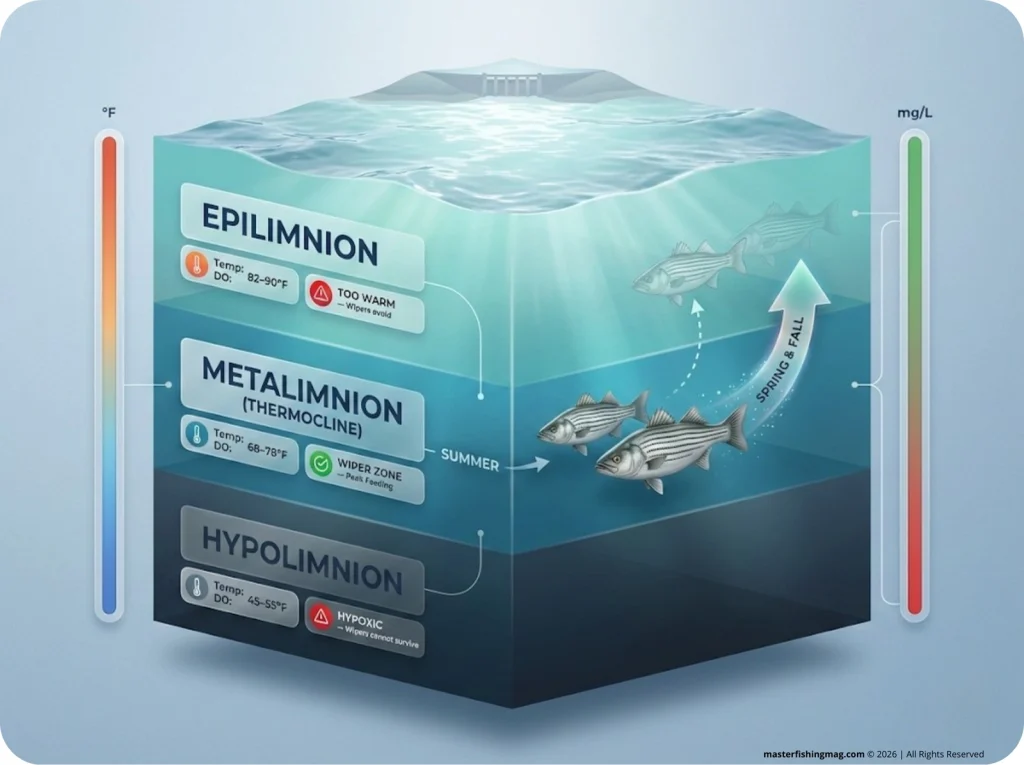
During summer stratification, the warm water on top and the oxygen-poor water on the bottom squeeze wipers into a narrow band in the middle of the water column, often between 20 and 40 feet. Understanding how thermoclines form and where they sit is the single most valuable sonar tracking skill you can develop for summer wiper fishing. The NCRAC’s hybrid striped bass biology report documents the specific DO thresholds — wipers need at least 4 mg/L to survive and 6 to 12 mg/L to actively feed.
Reading the Water: How to Find Schools Before They Move
Visual Cues: Birds, Boils, and Bait Dimples
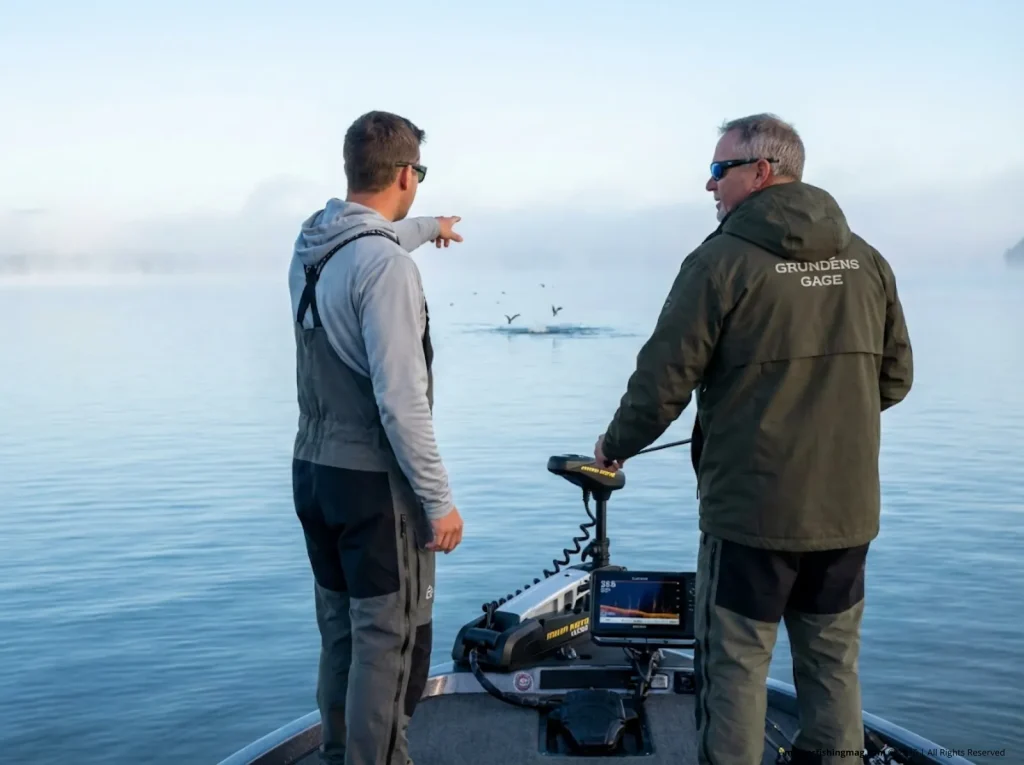
Diving birds are the best long-range indicator you’ll ever get. Gulls, terns, and cormorants can spot bait balls from a hundred feet up, long before you see any surface boils. When you spot tight clusters of diving birds, you’ve found active busting schools. The mistake most anglers make is running the boat straight into the boil. That scatters the shad and the wipers sound — they drop deep and go silent.
Instead, cut the big motor at least a hundred yards out. Approach on the trolling motor only. Position yourself for a long cast ahead of the moving school, not into the center of it. In calm conditions, listen for the popping sound of baitfish being pushed to the surface. Wipers are often just below before the full boil erupts.
Pro tip: In the fall, watch the shoreline for ravens or crows. Birds on the bank often mean wipers have pushed a shad school against the shore. These “bait dimples” are easy to miss if you’re only scanning open water.
Electronics: Using Sonar to Find the Ceiling
Wipers are visual feeders that attack upward. A lure presented below their line of vision is invisible to them. This single fact changes everything about how you use your fish finder. Find the top of the school on sonar, then fish 3 to 5 feet above that depth. If you’re learning to read your fish finder, look for suspended arches in the 15 to 40 foot range during summer.
Forward-facing sonar like LiveScope and Garmin Panoptix lets you track schooling behavior in real time. Watch for fish that “nose” the bait without committing. That’s your signal to slow down the pump frequency from one pull per second to one every three seconds. The pause triggers the strike almost every time.
Environmental Triggers That Predict Activity
Water temperature 55°F with a south wind is the peak prespawn trigger. Post-frontal conditions with clear skies and a north wind shut the bite down hard — fish deeper and slower when that happens. Tailraces below dams produce feeding windows tied to turbine discharge — check USGS stream gauge data for your specific tailrace before the trip.
The Seasonal Tactical Blueprint
Spring: The False Spawn Window
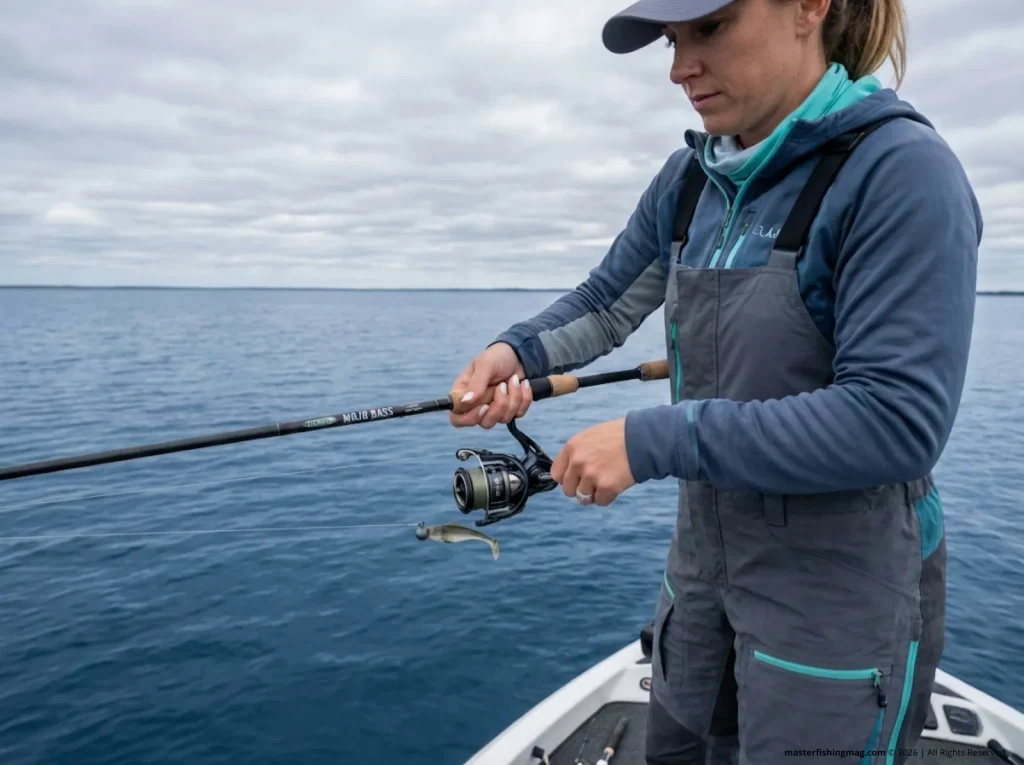
As water climbs from 50°F toward 60°F, wipers stage in tributary arms, river channels, and tailrace areas. This is the most predictable window of the year. Vertical jigging with 3-3.5 inch swimbaits or flukes on 3/8-1/2 oz jigheads is the primary tactic. Position over old river channel ledges and drop straight down — this is what Kansas guides call the Kansas Method.
Lipless crankbaits burned through the upper water column work for active prespawn wipers that won’t commit to a vertical presentation. Ondrejka says a strong south wind on a 55°F day is the single best trigger for prespawn tactics.
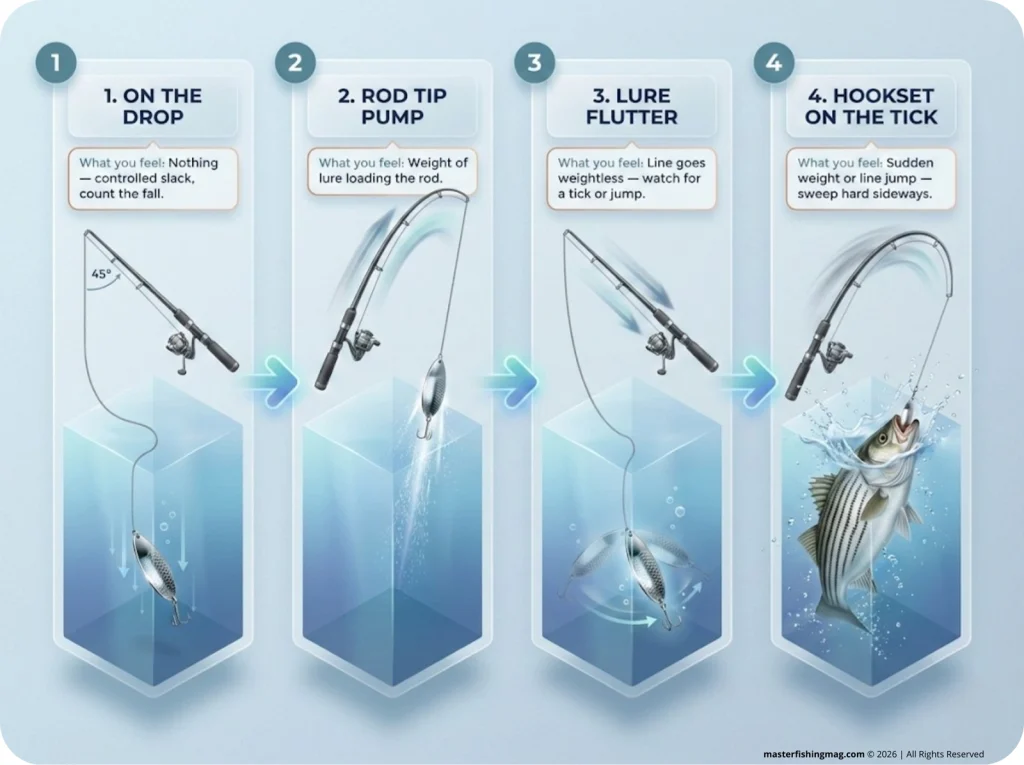
Pro tip: Use the count-down method — count your lure down on a slack line. Wipers often intercept it on the fall before it ever reaches the school. If you’re always waiting until the lure hits bottom, you’re missing the fish that struck ten seconds ago.
Summer: Fishing the Squeeze
Find the thermocline on sonar. Wipers will be compressed just above the hypoxic zone, often at 20 to 40 feet on summer deep humps. Heavy spoons like a Kastmaster or Bink’s Pro Series (3/4 to 1 oz) dropped vertically to the school ceiling work well here. Let the spoon flutter on the fall — strikes often come during that flutter, not on the upward pump. Understanding how water temperature controls feeding cadence helps you dial in the right retrieve speed.
Surface boils still happen at first light and dusk. Walking the dog with topwaters like a Heddon Zara Spook or Rebel Jumpin’ Minnow thrown beyond the school and retrieved through it produce explosive strikes. Cast past the chaos and work your lure through it from the far side.
Fall: The Gorge Period
Cooling surface temps trigger aggressive feeding as wipers pack on weight. They follow threadfin shad into windblown points, rip-rap, and coves. Lipless crankbaits and blade baits cast parallel to the bank at medium depth cover water fast. Watch for diving birds in calm coves — fall boils can last longer and cover more area than summer’s brief windows. Understanding the shad spawn cycle helps predict where wipers stack up as forage concentrates in coves.
Winter: Precision Deep Jigging
Metabolism slows. Fish move to the deepest available structure — channel humps at 30 to 50 feet. Small tail-spinners (1/4 oz) or drop-shot rigs with live minnows fished slowly are the play. Wipers hit softer in cold water. Use a sweep set instead of a hard snap. In spring-fed systems like Ana Reservoir, constant water temperature keeps winter surface schools active even when air temps dip below freezing — crankbaits still produce there when everything else shuts down.
Rigs and Gear That Actually Work
Vertical Jigging Setup
Your rod matters more than your lure. A 7 to 7.5 foot medium-heavy rod with an extra-fast tip gives you the sensitivity to feel the subtle “tick” of a strike on the fall while the backbone handles the fight. Pair it with a solid reel — a 3000-series spinning reel loaded with 10-20 lb braid and a 2 to 4 foot fluorocarbon leader at 12 lb test. The braid telegraphs strikes from 40 feet down. The fluoro adds stealth in clear reservoirs.
For lures, start with a 3-3.5 inch swimbait on a 3/8 to 1/2 oz jighead for spring and fall. Upgrade to heavier Kastmaster spoons for summer depths. Pump the rod tip 6 to 12 inches and let the lure flutter back. Maintain contact with the line at all times.
Topwater Setup
Walking the dog needs a rod tip pointed down and rhythmic wrist twitches with slack between each pull. Keep the lure moving — wipers lose interest in anything stationary. Burning a Rat-L-Trap just below the surface also works when fish are busting but won’t commit to a true topwater fishing presentation.
Live Bait and Bottom Rigs
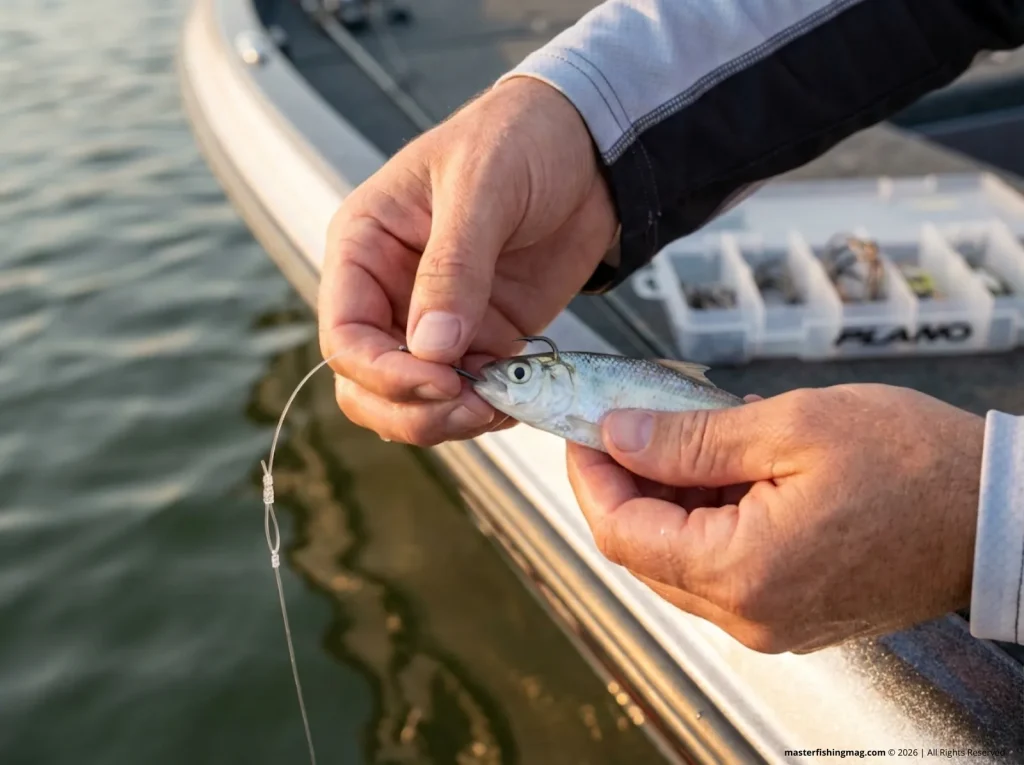
Fresh threadfin shad with the nose-hooking shad technique — punching through the upper lip on a Carolina rig with a 1 oz egg sinker and 18-inch leader — is the gold standard for tailrace fishing. Chicken liver on a simple bobber rig or bottom rig is underrated — Oregon DFW documents it as one of the most consistent baits at Ana Reservoir. Circle hooks in the 2/0 to 3/0 range reduce gut-hooking and let the fish self-hook in the corner of the mouth. If you’re running live shad, keeping your bait alive in the livewell makes the difference between fresh presentations and dead shiners on the hook.
The Catch-and-Release Protocol That Actually Saves Fish
Fighting the Fish Right
These are hard-fighting fish that build lactic acid fast. Combined with warm water and low dissolved oxygen, that stress can kill a fish even if it swims away looking strong. Modern acoustic tagging from the Massachusetts DMF puts catch and release mortality for striped bass relatives at 4.2 to 4.6 percent, but 79.4 percent of post-release deaths happen within 72 hours. A fish that kicks free isn’t necessarily a fish that survives.
Use the rod’s backbone to apply side pressure. Pulling a wiper sideways exhausts it faster than straight-up lifting and cuts fight time in half. Set your drag at roughly 25 to 30 percent of line test and let it work. The goal is a short fight using quick-release protocols, not a spectacle.
Handling and Release
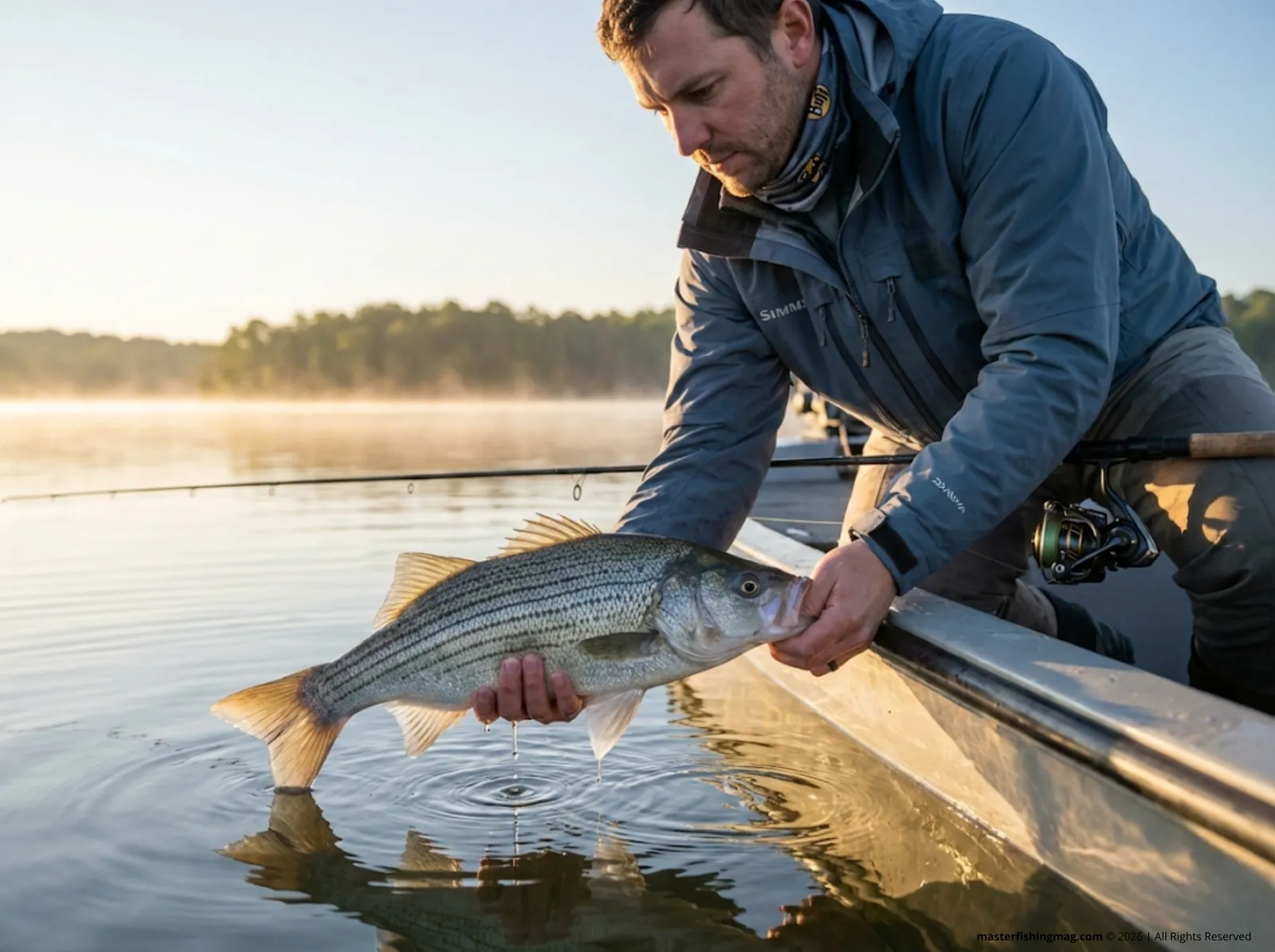
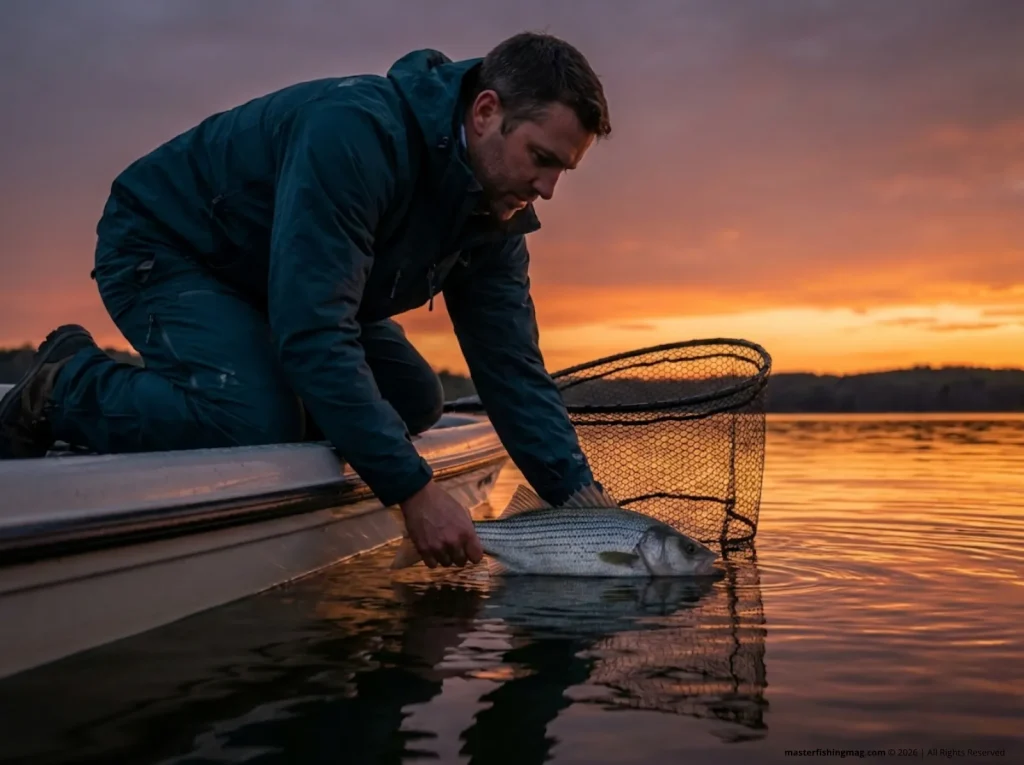
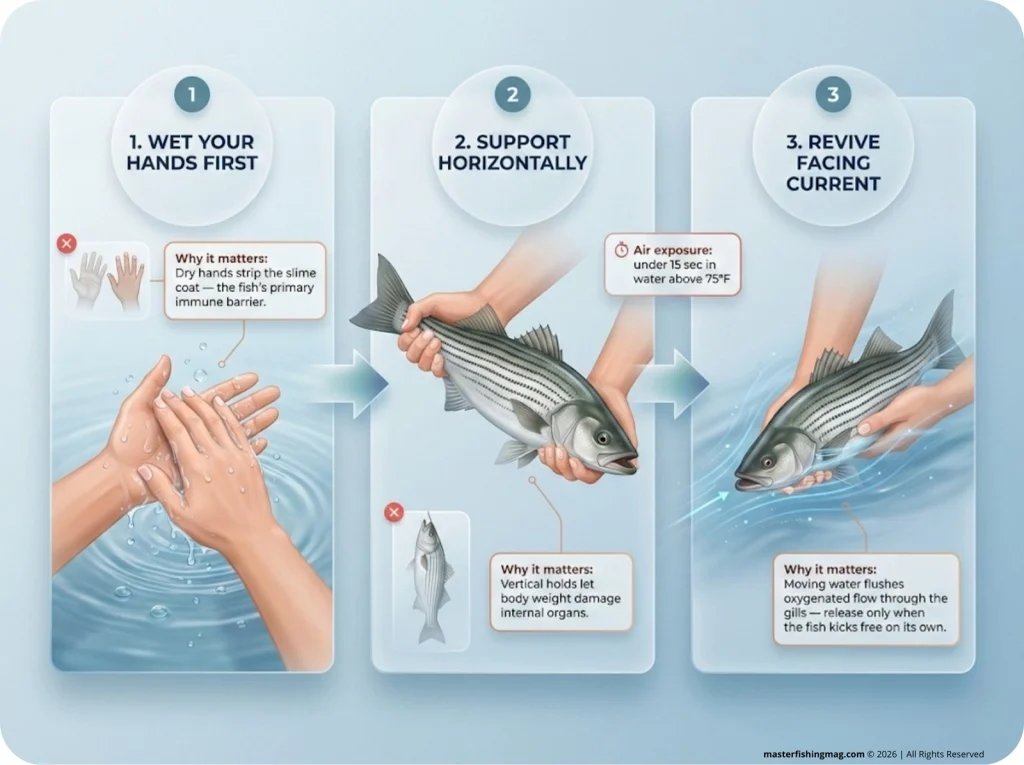
Wet your hands before touching any fish. Dry hands strip the slime coat, which is a wiper’s primary immune barrier. Support the body horizontally — never hold these fish vertically by the jaw. The weight of the body damages internal organs.
In water above 75°F, keep air exposure under 15 seconds. If the fish can’t right itself after 60 seconds of revival, it’s unlikely to survive. At that point, keeping it within your legal limit is the responsible choice. Switching to circle hooks — or better yet, barbless hooks — cuts deep hooking rates dramatically and gives your released fish a real chance.
Pro tip: The “No-Cull Ethic” matters here. In summer, keep your first legal fish and stop. Swapping a stressed wiper in the livewell for a bigger one is almost always fatal for the first fish. Wipers are stocked with the expectation that anglers harvest some — keeping fish within your limit is part of the management design.
Night Fishing and Advanced Tactics Most Anglers Miss
Night Fishing: The Shore Angler’s Edge
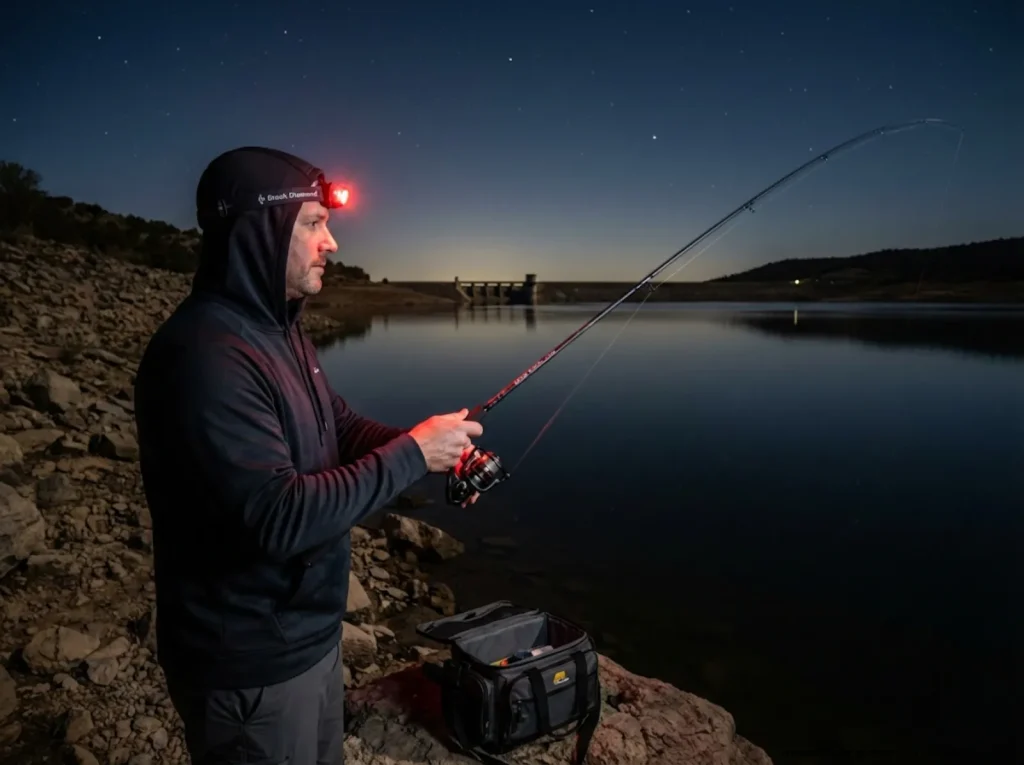
Most anglers don’t realize that wipers can be legally targeted at night fishing windows in certain jurisdictions. Oregon’s Ana Reservoir explicitly allows it, and the after-dark bite produces some of the largest fish of the year from the bank. At night, wipers shift from open-water schooling behavior to near-shore bottom feeding. Chicken liver, sand shrimp, and prawns on a simple bottom rig outperform every artificial after sunset. For a complete breakdown of low-light fishing tactics and safety protocols, including dark adaptation and navigation lights, check our night fishing guide.
Pro tip: Bring a red-light headlamp for retying knots and handling fish. White light kills your dark adaptation and spooks fish in shallow water. Red preserves night vision and keeps the casting zone quiet.
The Splash Effect and School Management
When you find a school, resist the urge to catch multiple fish at once. Work the edges first. When you hook one, keep it in the water for an extra minute before landing it. The splashing keeps the rest of the school fired up and close to the boat. If the school sounds, move 50 yards away and wait ten minutes. Wipers often resurface in the same area once the pressure drops.
Fly Fishing for Wipers
An 8-weight fly rod with a Type III or IV sinking fly line and a short 20 lb fluorocarbon leader gets the fly into the strike zone fast. Tie on a Clouser Minnow in chartreuse and white (size 2) or a 4-inch streamer mimicking threadfin shad. The fly stripping cadence is everything: three fast strips, pause two seconds, repeat. Wipers hit on the pause almost exclusively. Spring tributary runs are the best fly fishing for wipers window — fish are concentrated, aggressive, and holding in shallow enough water that a sinking line can reach them without a full countdown delay.
Conclusion
Three things decide whether you catch wipers or watch them vanish. First, find them before you approach — diving birds, sonar, and structural knowledge beat blind casting every time. Second, match your presentation to the depth and season: topwater when they’re busting, vertical jigs when they’re deep, bottom rigs when they’re feeding after dark. Third, end the fight fast and get those fish back in the water breathing.
Next time you’re out and you see birds working a flat, cut the motor at a hundred yards. Approach on the trolling motor. Make your first cast count. That single adjustment — patience over speed — will put more wipers in the net than any lure swap ever will.
FAQ
What is the best bait for hybrid striped bass?
Live shad or fresh-cut threadfin shad is the top producer across all seasons and conditions. When live shad isn’t available, chicken liver on a bottom rig is a consistent alternative, particularly effective at night and in tailraces where wipers feed near the bottom.
How do you find wiper schools in a large reservoir?
Start with birds. Diving birds locate surface boils faster than any electronics. Without bird activity, run main lake humps and channel ledges with sonar, looking for suspended arches in the 15 to 40 foot range. Windblown points and dam structures are reliable secondary spots.
What rod and line setup works best for vertical jigging wipers?
A 7 to 7.5 foot medium-heavy rod with an extra-fast tip, paired with 10-20 lb braid and a 2 to 4 foot fluorocarbon leader. The braid gives you direct contact at depth, and the extra-fast tip telegraphs the subtle tick of a strike on the fall. A 3000-series spinning reel handles most presentations.
Do wipers fight harder than largemouth bass?
Pound for pound, yes. A 5 lb wiper runs harder and longer than a 5 lb largemouth bass because wipers are pelagic hard-fighting fish built for sustained speed, not short-burst power. They also school, so one hookup can turn into multiple fish if you manage the school correctly by keeping that first fish splashing near the boat.
Can you catch wipers from shore?
Yes. Early spring wipers push into tributary arms and tailraces, making spring the best shore window. Night fishing works in jurisdictions that allow it, using bottom rigs with chicken liver or sand shrimp. Spillway areas below dams are the most consistent bank fishing locations year-round because the current concentrates baitfish in predictable spots.
Risk Disclaimer: Fishing, boating, and all related outdoor activities involve inherent risks that
can lead to injury. The information provided on Master Fishing Mag is for educational and informational purposes
only. While we strive for accuracy, the information, techniques, and advice on gear and safety are not a substitute
for your own best judgment, local knowledge, and adherence to official regulations. Fishing regulations, including
seasons, size limits, and species restrictions, change frequently and vary by location. Always consult the latest
official regulations from your local fish and wildlife agency before heading out. Proper handling of hooks, knives,
and other sharp equipment is essential for safety. Furthermore, be aware of local fish consumption advisories. By
using this website, you agree that you are solely responsible for your own safety and for complying with all
applicable laws. Any reliance you place on our content is strictly at your own risk. Master Fishing Mag and its
authors will not be held liable for any injury, damage, or loss sustained in connection with the use of the
information herein.
Affiliate Disclosure: We are a participant in the Amazon Services LLC Associates Program, an
affiliate advertising program designed to provide a means for us to earn advertising fees by advertising and linking
to Amazon.com. As an Amazon Associate, we earn from qualifying purchases. We also participate in other affiliate
programs and may receive a commission on products purchased through our links, at no extra cost to you. Additional
terms are found in the terms of service.