
In this article
The line on your reel is the only thing between you and the fish, and the calendar is the worst way to decide whether it can still be trusted. Ask anyone who’s lost the fish of the day to a sudden break off: it’s almost never the knot, it’s two inches of line that went bad where they couldn’t see it. The honest answer to how often to change fishing line depends on what you’re running, mono, fluoro, or braid, and on how hard the sun and salt have worked it. Below is the straight by-type frequency, the five-minute check that beats any schedule, and when to just cut and retie instead of burning a whole spool.
Here’s the quick version by line type, then we’ll get into how to read the line in your hand.
| Line Type | Typical Replacement | Replace Sooner If |
|---|---|---|
| Monofilament | 6 months to 1 year | Milky color, tight coiling, stiff or brittle feel |
| Fluorocarbon | 1 to 2 years (inspect yearly) | Cloudy or milky spots, nicks you can feel, abrasion near the leader |
| Braided | Several seasons (10+ years reported) | Fuzz or fraying, low spool volume, wind knots (not faded color) |
How Often Should You Actually Change Fishing Line
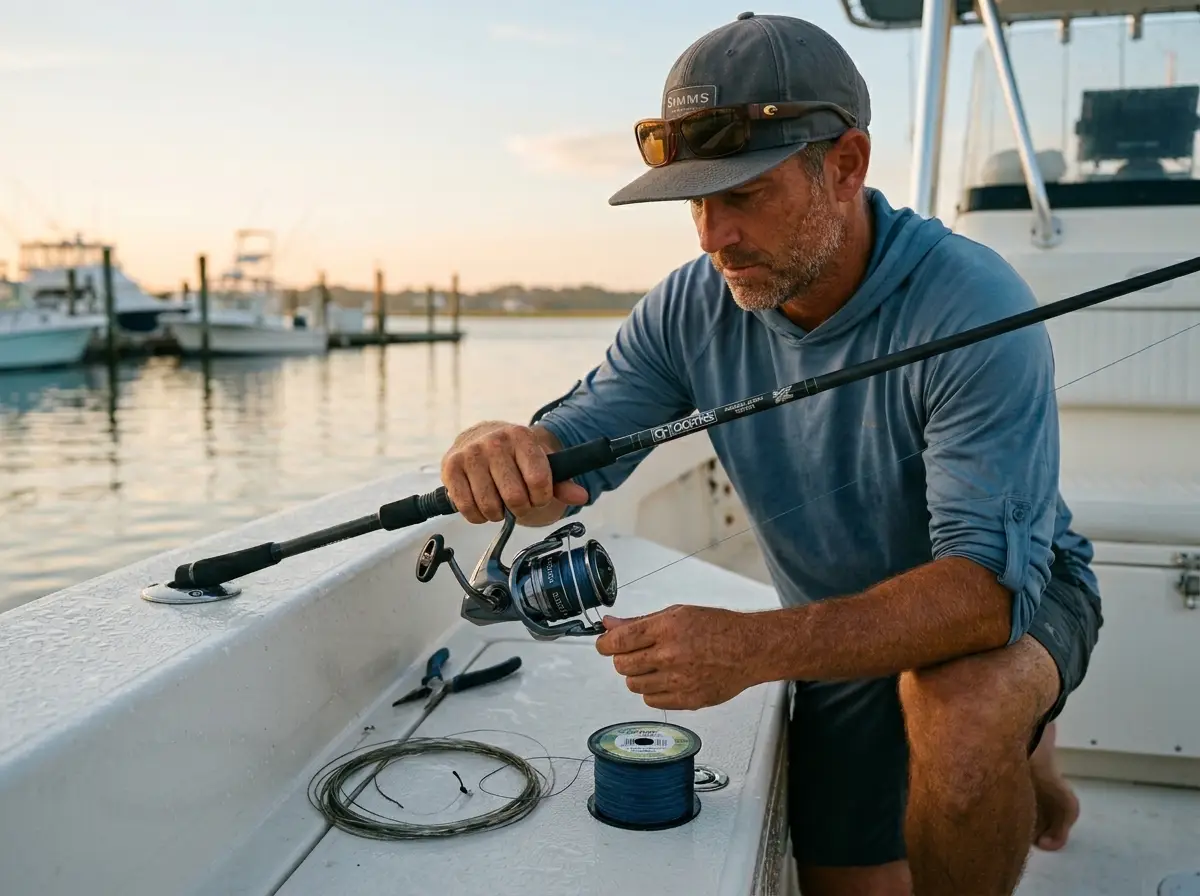
Knowing when to change fishing line starts with one honest rule. If you can’t remember the last time you respooled, you’re already overdue, and that holds for everybody. Changing your fishing line at least once a season is the floor, not the goal, and the right number above that floor comes down to three things: the line type, the water, and how many trips it has taken.
The once-a-year baseline (and who needs more)
For the average weekend angler fishing freshwater a handful of times a month, once a year is usually plenty. The line spends most of its life in a cool tackle bag out of the sun, and freshwater is gentle on it. If that’s you, a spring respool before the warm-water season covers you.
The trouble starts when you treat that once-a-year number as a hard rule for every reel you own. A tournament stick that fishes fifty days a season and a backup rod that comes out twice are not on the same clock. For everything that goes into picking the right line in the first place, the pillar guide breaks it down, but for replacement timing, start with how often the line actually gets wet.
Heavy, moderate, and weekend-angler tiers
Think in three tiers. Heavy and tournament anglers who fish weekly run line through the guides constantly, picking up nicks and abrasion, and they’ll often respool mono or fluoro a few times a season. Moderate anglers who get out a couple times a month land in the middle, usually once or twice a year depending on line type. The weekend crowd can ride a season on braid and a year on mono without thinking hard about it.
None of these are wrong. They just reflect how much work the line has done, and the mistake is borrowing someone else’s number instead of matching it to your own reel.
If you want to see how the three line types stack up before you decide, how mono, fluoro, and braid actually differ is worth a read.
Saltwater vs freshwater changes the clock
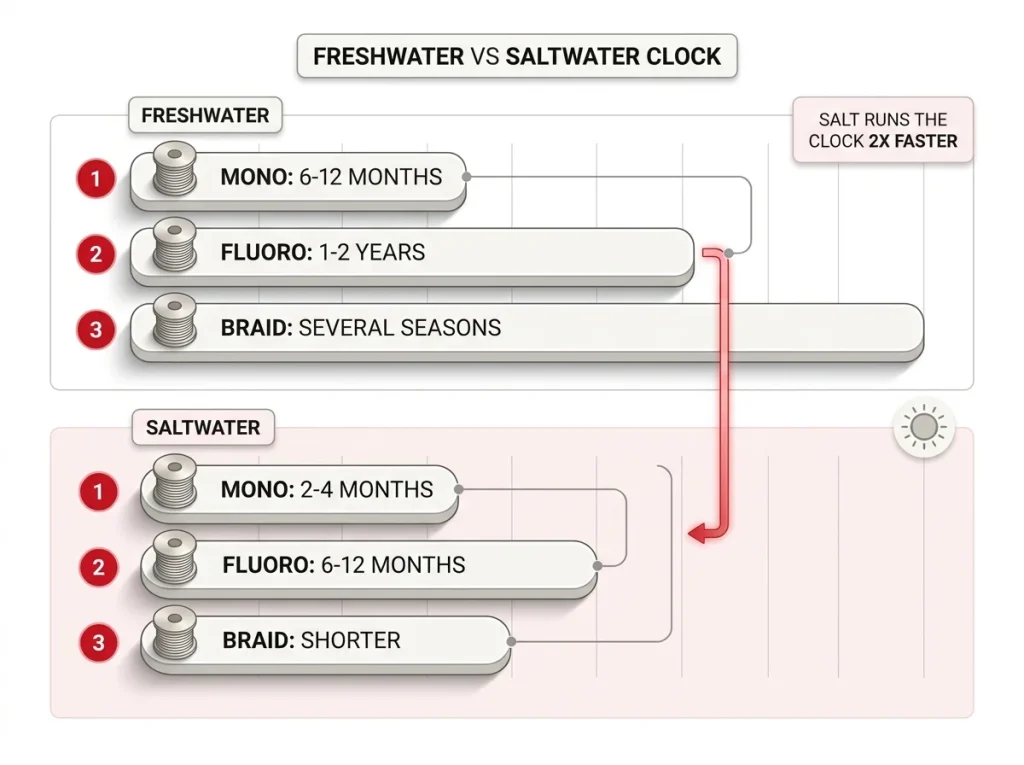
Here’s the split most articles skip: saltwater runs the clock about twice as fast. Salt is absorbed into monofilament, then dries into tiny crystals inside the line that chew up its stretch, so it snaps under load instead of giving. Inshore and surf anglers who’d get a year out of mono on a lake should think in months on the salt. Even braided line isn’t immune, because salt works into the coating and grinds at it over time.
The takeaway is two numbers, not one. Someone bass fishing a lake and an inshore fishing buddy can spool the identical line on identical reels and be on completely different fishing line replacement schedules. If your water is salty, move every frequency in this article earlier.
Respool, or at least retie your leaders, in spring before the first warm-water trip. The line sat all winter taking a set, and starting the season fresh means the cast-of-the-day break-off happens to the other guy.
Monofilament, the Six-Month to One-Year Line
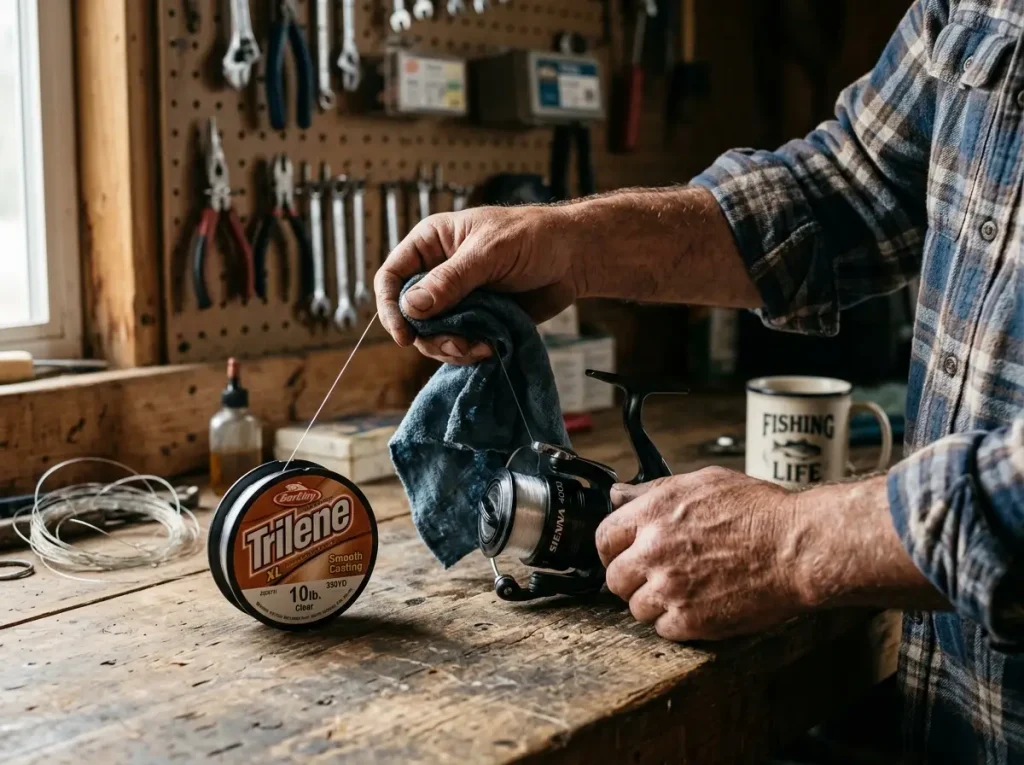
Monofilament is the line most of us learned on, and it’s still the cheapest, most forgiving stuff you can spool. That low price is exactly why anglers leave it on too long. Mono looks fine right up until it fails, because it rots from the inside where you can’t see it.
How long mono lasts (in use vs on the shelf)
In regular use, mono line is worth replacing about every six months to a year, and it loses strength faster than it looks like it should. Sitting unused on the shelf, a spool is good for roughly two to four years if you keep it cool and dark, though heat and sun shorten that fast. So the spool aging in your sunny garage is on a faster clock than the calendar suggests. The practical move is to buy what you’ll fish in a couple of seasons, not a giant economy spool that goes brittle before you reach the end of it.
Why mono goes bad (UV, salt, memory)
Three things ruin mono. UV degradation breaks down the polymer chains, costing strength and flexibility. Saltwater destroys the stretch. And the line takes a set from sitting on the spool, which shows up as line memory, the stiff coiling that throws loops off your reel and tangles your cast.
The most common mistake at the ramp is trusting old mono because it still looks clear. It doesn’t warn you. It just lets go on the hookset. If coiling is your main complaint, why line develops memory and how to keep it from coiling digs into the fixes.
The mono worth respooling without guilt
The upside of cheap line is that replacing it doesn’t hurt. A classic low-memory pick is Berkley Trilene XL, the kind of budget-friendly mono you can swap every year without a second thought, and a great line to build the inspection habit on. It’s also the most forgiving option for newer anglers, the kind of line you can backlash, nick, and abuse while you learn the ropes, then replace for pocket change.
Spool it, fish it, replace it next spring. That’s the whole relationship.
Fluorocarbon, Inspect Before You Respool
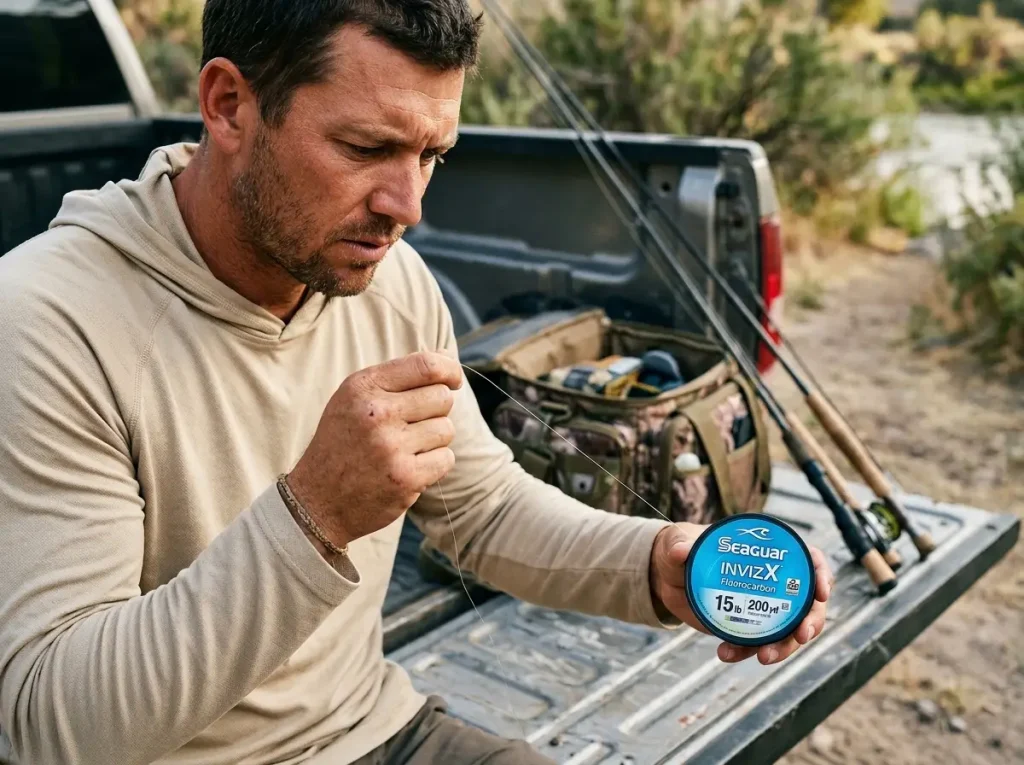
Fluorocarbon is the pricey, nearly invisible line a lot of anglers run as leader or as a full spool for clear water. Because it costs more, the smart play isn’t replacing it on a schedule. It’s checking it, retying the working end, and squeezing more life out of the spool.
How long fluorocarbon really lasts
Fluoro holds up longer than mono, often a couple of seasons, but it still earns a yearly look. It’s stiffer than mono and prized for its abrasion resistance, but the wear still concentrates near your knot and leader. The line deeper on the spool is usually fine long after the top few feet are shot, which is the whole reason a full respool is rarely your first move with fluoro.
The milky discoloration tell
The clearest warning sign is color. Good fluoro is clear; tired fluoro goes cloudy and milky, especially in the spots that have taken abrasion. That haze is the line telling you the surface is breaking down. If you fish fluoro and want to understand why it disappears underwater in the first place, what makes fluorocarbon nearly disappear underwater explains the optics behind it.
Why you retie fluoro before you replace it
Here’s the field move veterans repeat: before you strip a whole spool of expensive line, run the suspect section slowly through your bare fingers. You’ll feel nicks and rough spots a milky tint hides. If the damage is in the last stretch near the bait, cut it off and retie.
A premium spool like Seaguar InvizX is exactly the kind of line you inspect and retie rather than toss, because full replacement adds up fast. Save the respool for when the damage runs deeper than a retie can reach.
Braided Line, Built to Last Seasons
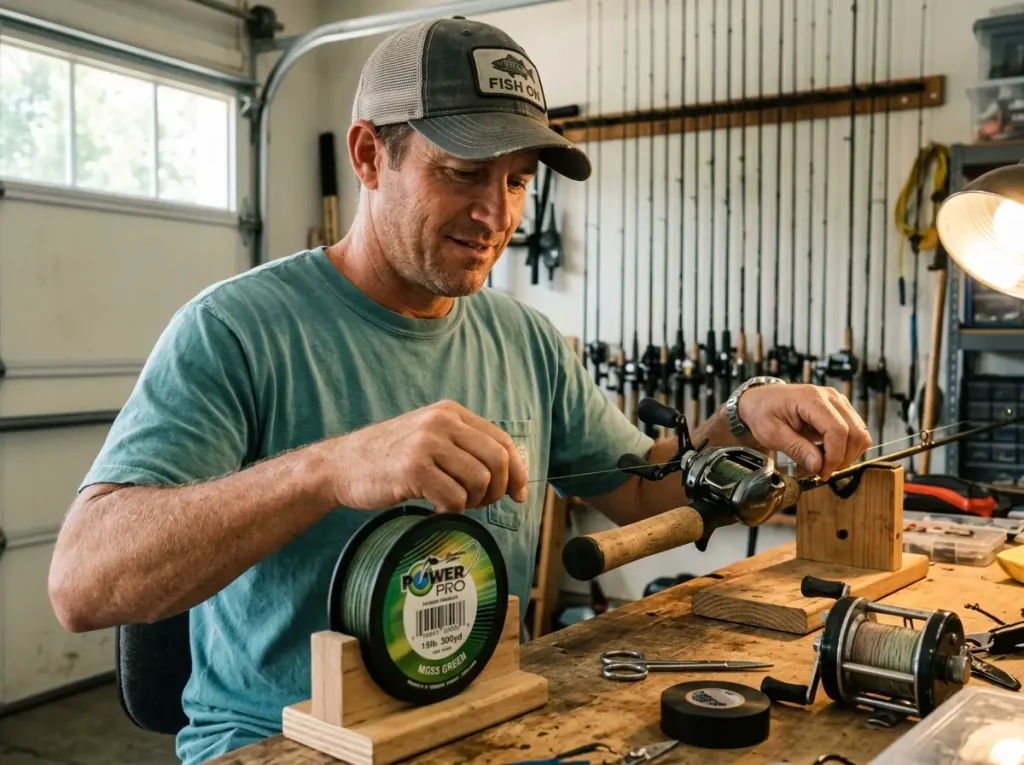
Braided line is the marathon runner of the spool. Where mono and fluoro count their life in months, braid counts it in seasons. The mistake anglers make with braid isn’t keeping it too long. It’s throwing out perfectly good line because the color washed out.
How many seasons braid actually gives you
Good braid routinely fishes for several seasons, and it’s not unusual to hear anglers report ten-year-old braid still pulling like new. It doesn’t absorb water, it doesn’t take a hard set the way mono does, and it holds its strength far longer at a smaller line diameter than mono of the same rating. The reference braids that get named again and again are PowerPro Spectra and the smoother, rounder Daiwa J-Braid Grand 8X, both built to ride out that kind of multi-season life.
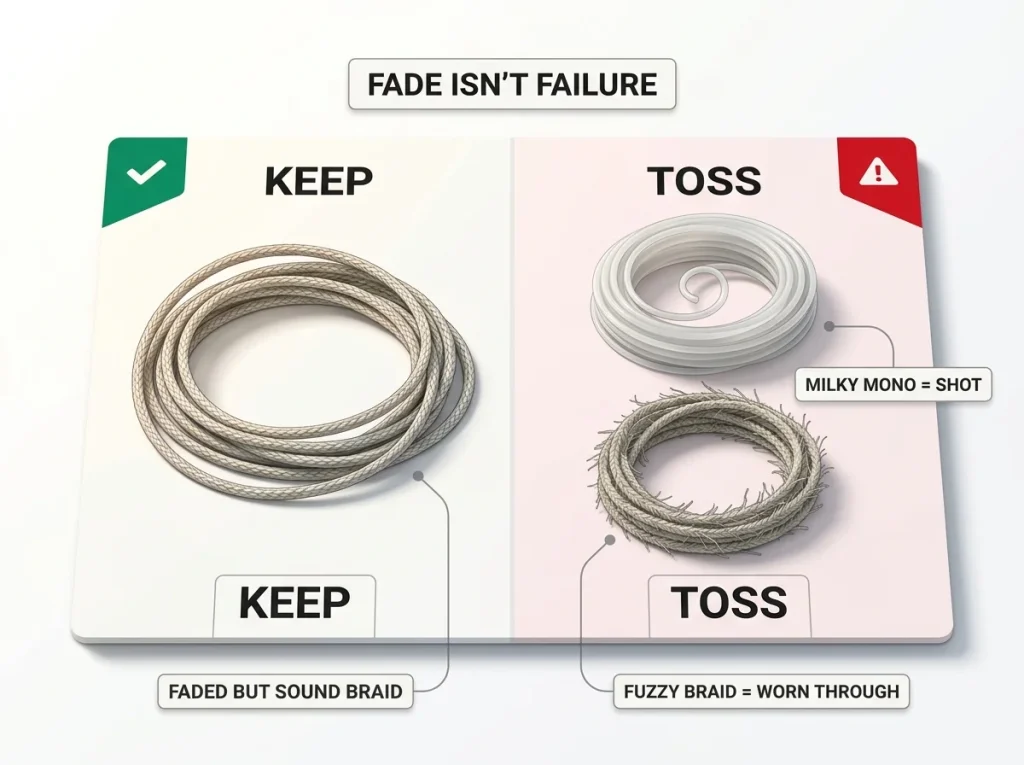
Fade isn’t failure
This is the one that costs anglers money: faded braid is not dead braid. The color is just a coating, and it wears off long before the line loses any real strength. Meanwhile, milky mono or cloudy fluoro is genuinely shot.
So the instinct most people have is exactly backwards. They toss good braid because it looks washed out, and they trust bad mono because it still looks clear. Color tells you nothing about braid’s strength. What it’s doing under load tells you everything.
Reverse it end-for-end for a second life
When the top of your braid finally does wear, you usually don’t need a new spool. The working end takes all the abuse while the bottom half has barely fished. Strip it, flip it, and respool it backwards to get another season or two out of line you already paid for. When braid is genuinely done and you’re ready to start fresh, the braids worth respooling with when yours is finally done rounds up the picks.
When the front end of your braid gets fuzzy, don’t buy a new spool yet. Strip it off, swap it end-for-end, and wind it back on backwards. The half that lived deep on the spool has barely seen a fish, and you just bought another season for free.
The Five-Minute Garage-Floor Line Check
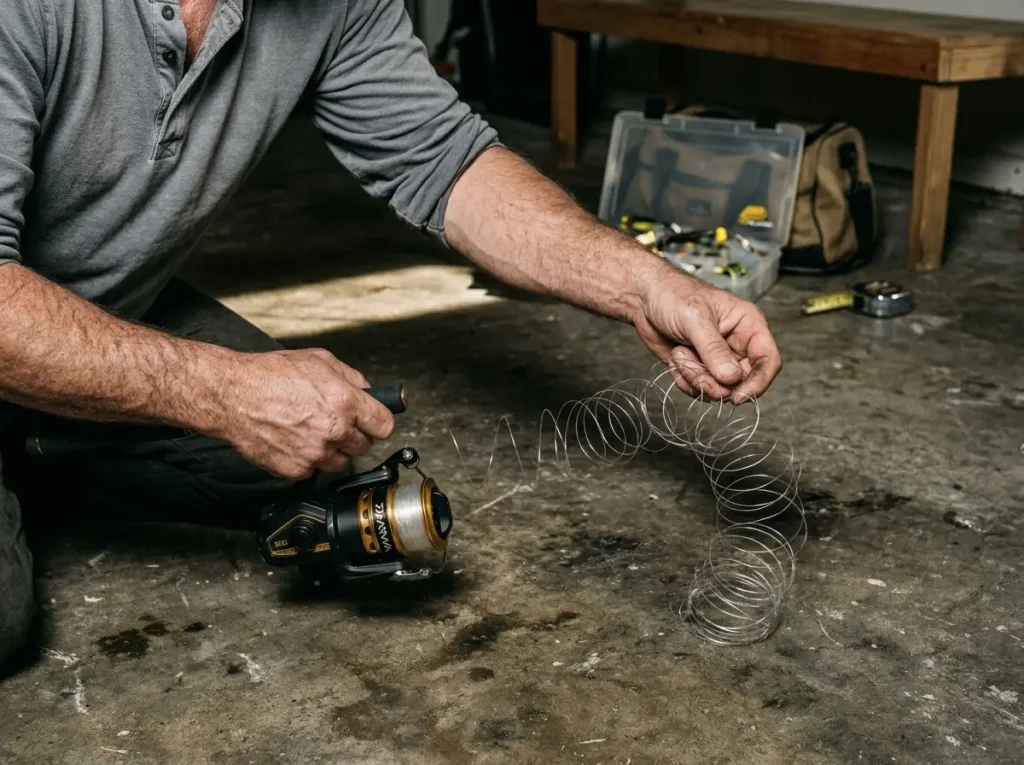
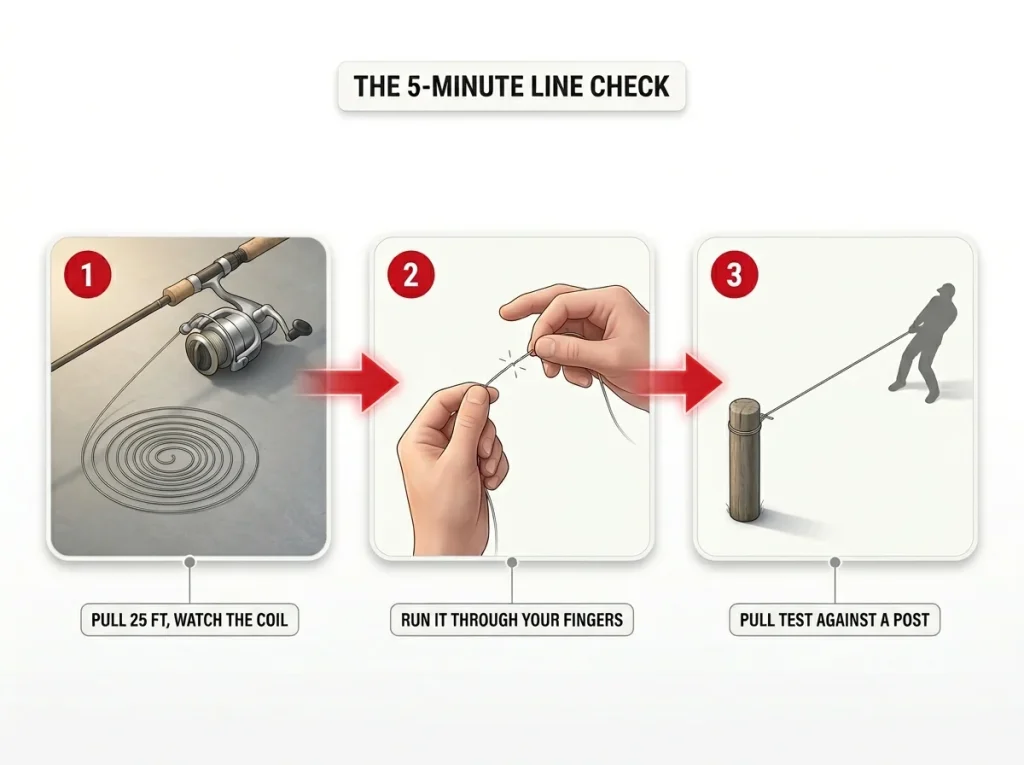
Every schedule in this article is a guess. The only way to actually know whether the line on your reel can be trusted is to look at it. Here’s a five-minute check you can run on the garage floor before you load the truck, a quick read on line integrity that saves the lost fish of the day.
Pull 25 feet and watch for the coil
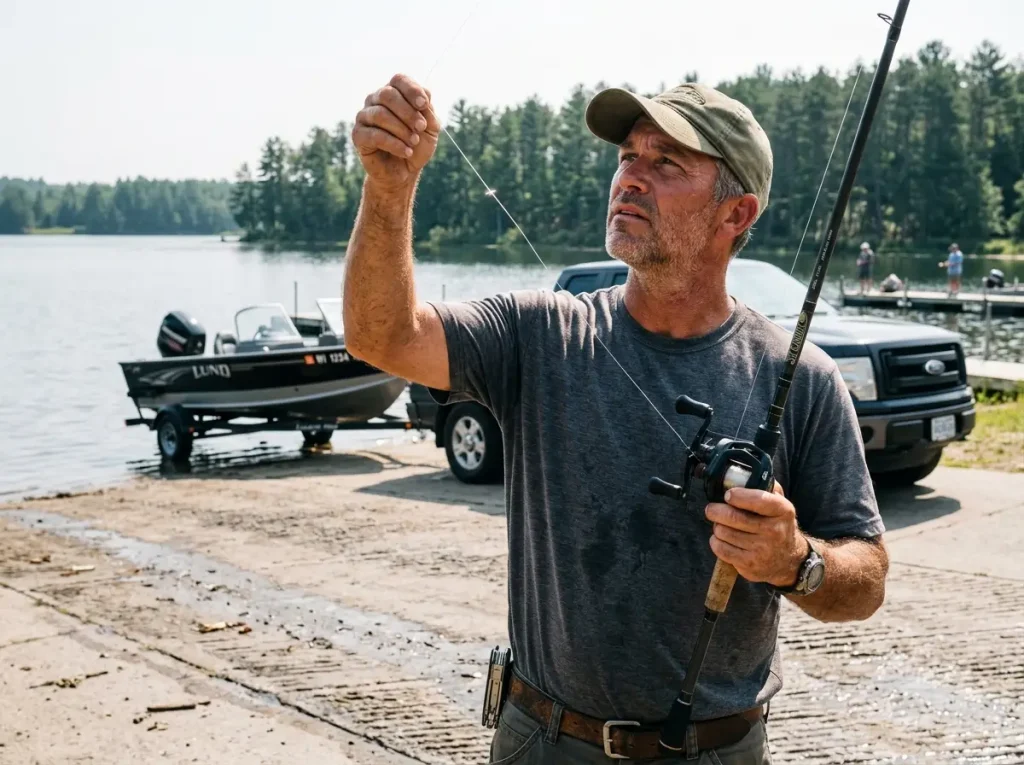
Pull twenty to twenty-five feet of line off the reel and let it fall to the floor. Good line lies in loose, lazy loops. Tired line springs into tight, spiraling coiling, holding the exact curl of the spool.
That’s memory, and on mono it means the line has taken a set and lost its manners. A little coil is normal on a cold morning. Line that looks like a phone cord is telling you it’s time.
Run it through your fingers
Now pinch the line lightly and pull it through your bare fingertips, slowly, the full twenty-five feet. You’re feeling for nicks, flat spots, and fraying you will never catch with your eyes. On braid, you’re feeling for fuzz, the unraveling outer fibers that mean the line is wearing through. This is the single most useful thing you can do, and it costs you nothing but a minute.
Your fingers out-read your eyes every time. A line can look clean and still hide a rough spot that parts on a hard hookset. Run the last thirty feet through your fingertips before every serious trip, and retie the moment you feel a catch.
The pull-test that doesn’t lie
The last step is the pull test, a rough check of the line’s real tensile strength. Tie about twenty-five feet to a fixed object, a fence post or a trailer hitch, back up, and lean into it steadily. Line in good shape holds near its rated strength. Line that’s gone bad snaps well below what the box promised, and now you know before a fish does.
If you’ve ever wondered what that number on the spool actually guarantees, what your line’s pound-test rating really promises is worth a look. A line that breaks under its own pound test in the driveway was never going to land the big one.
If you’d rather see it than read it, this short clip shows the coil curl and the gap between line and spool in real time, which is the part a checklist can’t quite capture.
Storage and Shelf Life, Making Line Last Longer
Half the life of your line is decided when you’re not even fishing. The spool aging fastest isn’t the one on your favorite rod. It’s the one cooking on the boat deck or the back-window shelf, baking in the sun between trips. Storage is free lifespan, and most anglers throw it away.
Cool, dark, dry (and off the boat deck)
The rule is simple: keep line cool, dark, and dry. UV is the silent threat, and it works on your line whether or not you ever tie a knot. A reel that lives in a hot truck cab or a sun-blasted deck is on a much faster clock than one in a tackle bag in the closet. Get your rods out of the sun between trips and you’ve already added months of life.
Does unused line expire?
Yes, shelf life is real. Unused mono is good for roughly two to four years, less if it’s stored warm; fluoro lasts a bit longer; and braid is the most storage-stable of the three. This is why buying a lifetime supply of cheap mono is a false economy. It ages on the shelf before you ever spool it, and the discount never makes up for line that’s brittle by the time you reach it.
A conditioner that buys you time
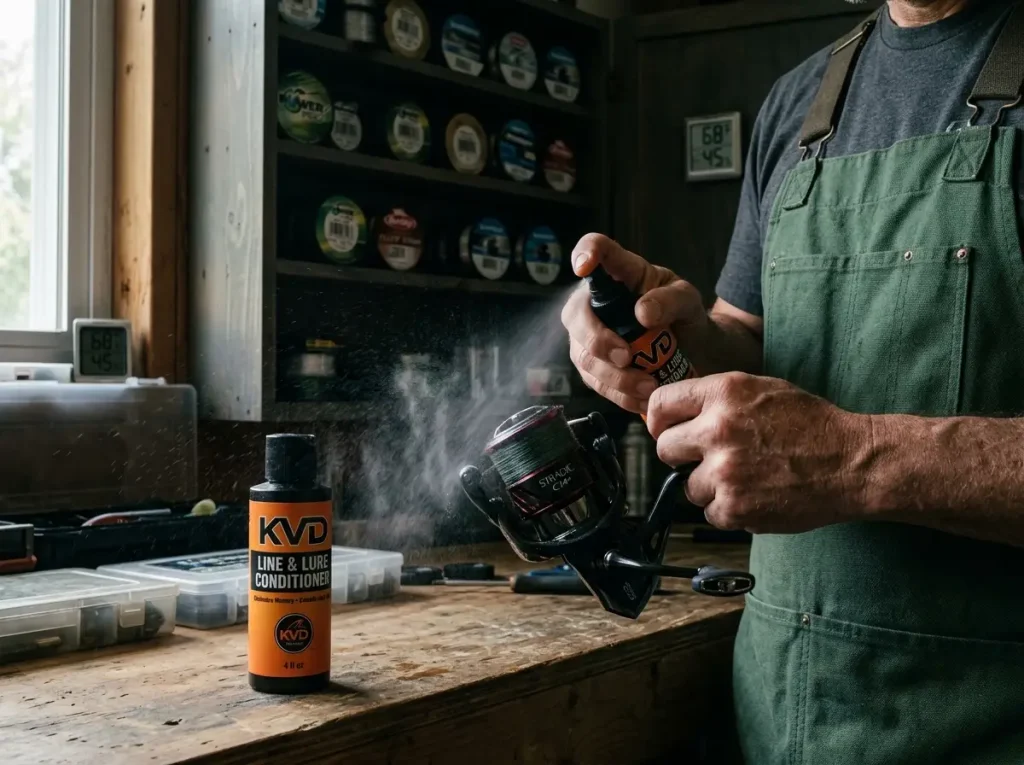
You can slow the clock a little. A line conditioner like KVD Line & Lure Conditioner cuts memory, softens the coil, and lays down a protectant layer that helps against sun and grime between respools. It won’t resurrect dead line, and it’s no substitute for replacing line that’s truly shot. But a quick spray on a reel that’s been sitting takes the worst of the coil out and keeps good line behaving longer.
Respool Smart, Cut-and-Retie vs Full Respool
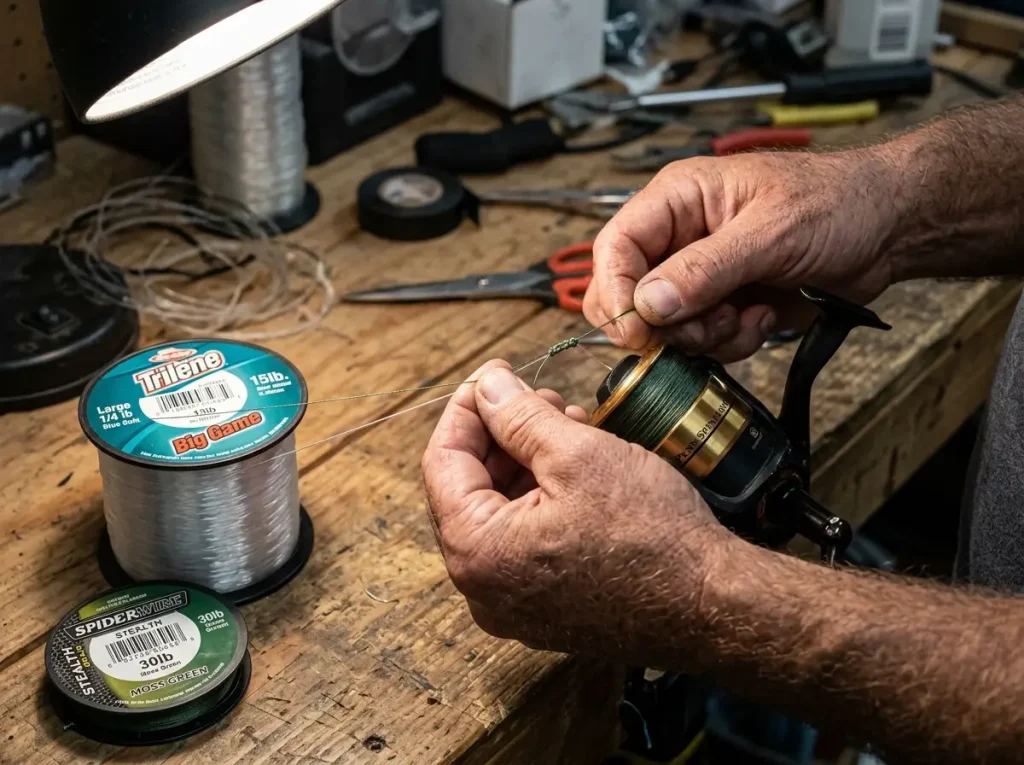
The most expensive habit in fishing is stripping a whole spool of premium line over two feet of damage near the bait. Most of what looks like bad line is a two-minute fix, not a full respool. Knowing which is which is the single biggest money-saver in line maintenance.
When to just cut and retie
Here’s the clean rule. Check the last twenty to twenty-five feet, the part that takes all the abuse. If the fray, nicks, or abrasion are shallow and near the bait, cut the damaged section off and retie.
That’s it. Cut and retie handles the large majority of in-season line problems, and it costs you a foot of line and two minutes instead of a whole spool.
When the damage means a full respool
You respool when the damage runs deep into the spool, past where a retie can reach. The classic case is a bad backlash that splits the braid fibers down in the pack. Once the line is compromised below the working section, retying just leaves the weak part in play, so it’s time to strip it.
When you do, don’t cut the old line loose. Mono can persist over 600 years in the environment, so drop your old spools at a BoatUS Foundation fishing-line recycling bin instead of trashing it.
Back the spool cheap, top-shot the good stuff
Here’s the trick that makes respooling painless: only the top fifty to eighty feet of line ever touches a fish. So there’s no reason to pack an entire spinning reel or baitcasting reel with premium braid or fluoro. Back the spool with cheap bulk mono, or even a few wraps of electrical tape on the arbor, then add a top shot of the good stuff on top.
A bulk spool of Berkley Trilene Big Game is the go-to mono backing for exactly this. You get a full spool with plenty of fresh yards of line where it counts, and you respool for a fraction of the cost.
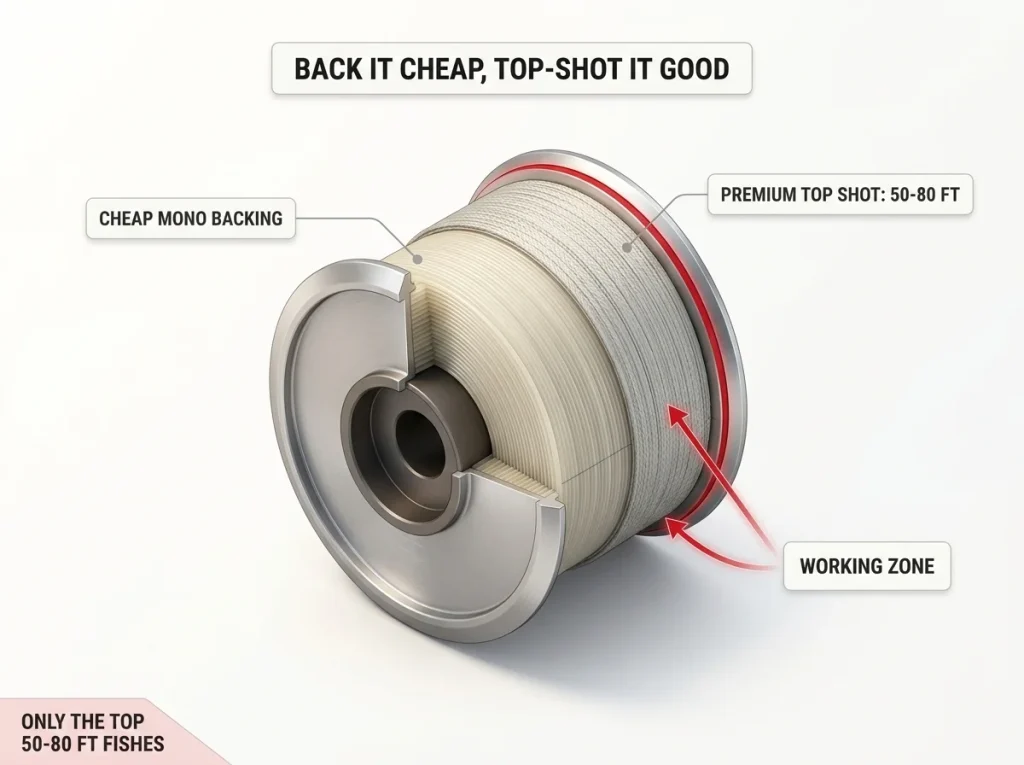
Before you fill a whole baitcaster with forty-dollar braid, put down a base of cheap mono backing first. Only the top fifty to eighty feet does any fishing. Back it cheap, top-shot it good, and your premium spool lasts twice as many reels.
The Bottom Line on Changing Your Line
Strip away the folklore and it comes down to three moves. The by-type table is your shortcut, but the five-minute garage-floor check is the truth, so run it before the trips that matter. Remember that faded braid still fishes while milky mono is already gone, and stop letting color fool you in either direction. And when the line is genuinely worn, retie the shallow stuff, respool the deep stuff, and back your spool cheap so a fresh top shot never costs much.
Do that and you’ll stop losing fish to line you couldn’t see, and stop wasting money on line that was still fine. One last thing when you do strip old line off: recycle it. Many state agencies run monofilament recycling programs, and here’s the right way to get rid of old line, braid included.
Frequently Asked Questions
01How often should you change your fishing line?
Change fishing line at least once a season as a baseline. Replace monofilament every 6 months to a year, fluorocarbon every 1 to 2 years, and braided line every several seasons. Swap any line sooner if it is discolored, frayed, or coiling off the spool.
02Does unused fishing line expire in storage?
Yes. Unused monofilament lasts about 2 to 4 years, less in heat and sunlight, while braided line is the most storage-stable. Keep spools cool, dark, and dry, and buy only what you will fish within a couple of seasons.
03How long does braided line last compared to mono and fluorocarbon?
Braided line far outlasts both, often several seasons and sometimes a decade, because it does not absorb water or take a set. Monofilament lasts 6 months to a year and fluorocarbon 1 to 2 years. Faded braid color is cosmetic, not failure.
04Can you cut and retie line instead of respooling the whole reel?
Yes, for shallow damage near the bait. Check the last 20 to 25 feet, cut off any frayed or nicked section, and retie. Only respool when the damage runs deep into the spool, like split braid after a bad backlash.
05Does saltwater make you change fishing line more often?
Yes. Salt is absorbed into mono and fluorocarbon and destroys their stretch, and it grinds at braid coatings too. Inshore and surf anglers should replace line noticeably sooner than freshwater anglers running the identical line.
Risk Disclaimer: Fishing, boating, and all related outdoor activities involve inherent risks that
can lead to injury. The information provided on Master Fishing Mag is for educational and informational purposes
only. While we strive for accuracy, the information, techniques, and advice on gear and safety are not a substitute
for your own best judgment, local knowledge, and adherence to official regulations. Fishing regulations, including
seasons, size limits, and species restrictions, change frequently and vary by location. Always consult the latest
official regulations from your local fish and wildlife agency before heading out. Proper handling of hooks, knives,
and other sharp equipment is essential for safety. Furthermore, be aware of local fish consumption advisories. By
using this website, you agree that you are solely responsible for your own safety and for complying with all
applicable laws. Any reliance you place on our content is strictly at your own risk. Master Fishing Mag and its
authors will not be held liable for any injury, damage, or loss sustained in connection with the use of the
information herein.
Affiliate Disclosure: We are a participant in the Amazon Services LLC Associates Program, an
affiliate advertising program designed to provide a means for us to earn advertising fees by advertising and linking
to Amazon.com. As an Amazon Associate, we earn from qualifying purchases. We also participate in other affiliate
programs and may receive a commission on products purchased through our links, at no extra cost to you. Additional
terms are found in the terms of service.