
In this article
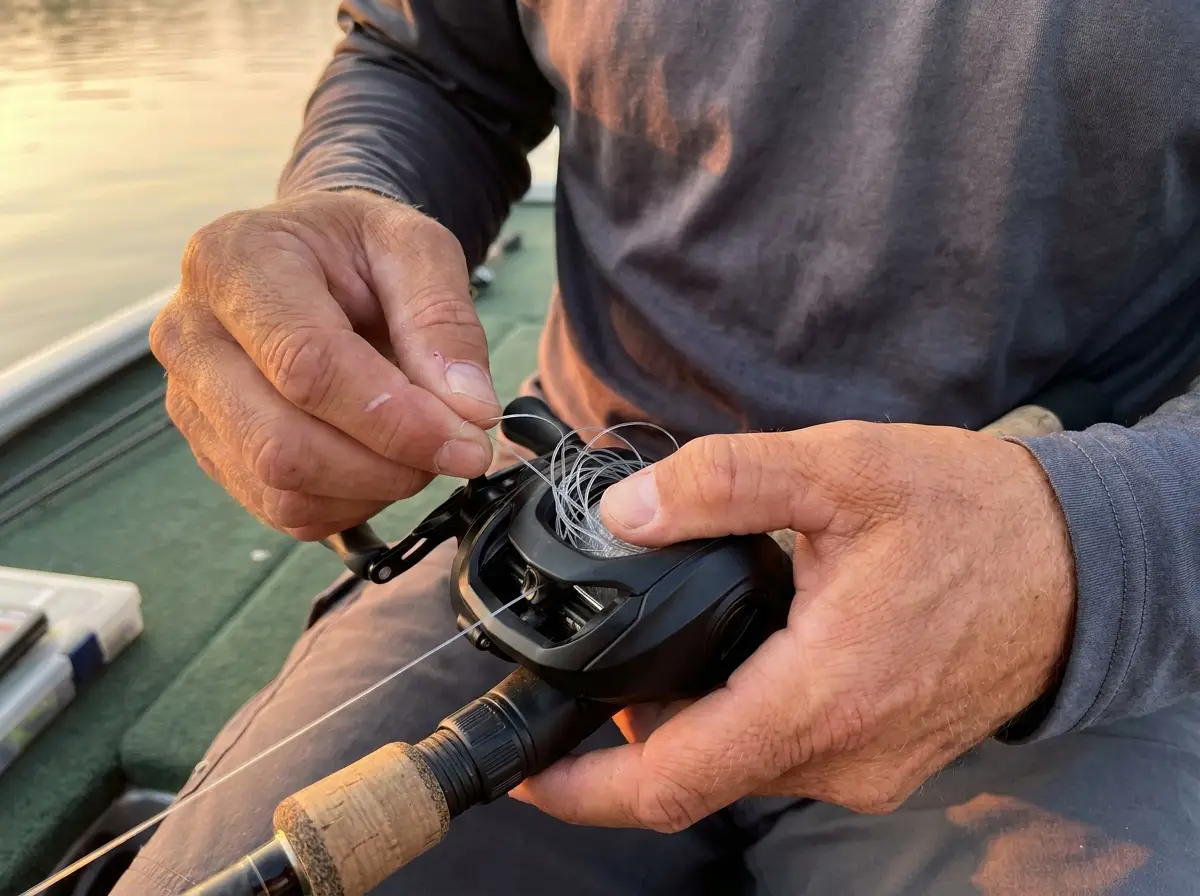
You’re on the water, the fish are biting, and you just threw a perfect cast — except it wasn’t. That sickening crunch of line piling up on the spool, the instant bird’s nest forming before your thumb can react. I’ve been there hundreds of times. After years of fishing baitcasters, I still get backlash. The difference is I can clear most of them in under a minute without cutting a foot of line. Here’s exactly how.
Quick Answer: Here’s how to remove a baitcaster backlash fast:
- Stop — don’t pull or reel. Assess the tangle first.
- Tighten the spool tension knob all the way down
- Press the thumb bar and slowly pull line off the spool
- When the line locks, apply thumb pressure and turn the handle two full rotations
- Press the thumb bar again and continue pulling line
- Once clear, reel line back through your fingers under tension to reseat it
Why Backlash Happens in the First Place
The Physics of a Bird’s Nest
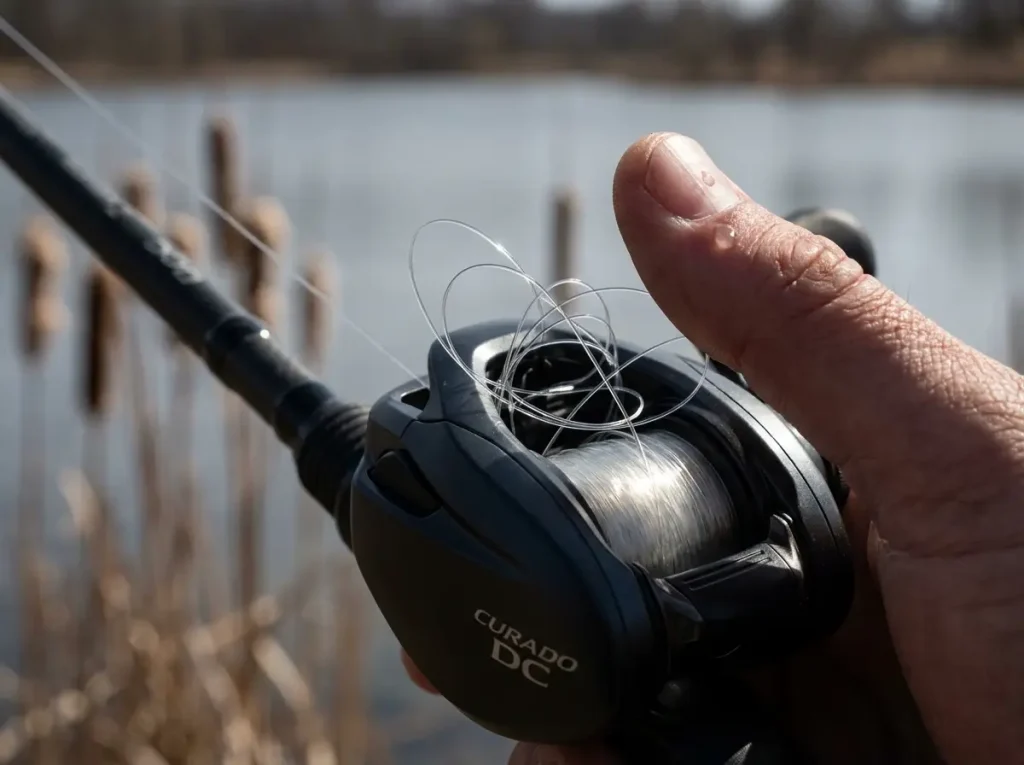
A baitcasting reel works differently from a spinning reel. When you cast, the spool itself rotates to release line. The lure pulls line off the spool, and the spool spins to keep up. The problem starts when the lure slows down — hitting the water, catching wind, losing momentum — but the spool keeps spinning. That mismatch between spool speed and line leaving the reel is what creates backlash.
The spool has mass and momentum. Once it’s spinning, it wants to keep spinning. Your lure decelerates on every cast — it’s just physics. The spool doesn’t know your lure stopped. It keeps pushing line off faster than the lure can pull it, and those extra loops pile up into the mess you’re staring at now. If you want to understand the mechanical differences between baitcasters and conventional reels, the spool dynamics explain why one backlashes and the other doesn’t.
The Three Usual Triggers
Most backlash comes from three situations. First, wind — casting into a headwind slows your lure faster than a calm-air cast, and the spool doesn’t adjust. Second, light lures — a 1/4-ounce lure doesn’t have enough mass to keep tension on the spool through the entire cast, especially at the end. Third, thumbing too late — your thumb is the last line of defense, and a half-second delay is all it takes.
The fourth trigger nobody talks about: line condition. Old fluorocarbon with memory coils wants to spring off the spool. Fresh line lays flat and behaves. If you’re getting more backlash than usual and nothing else changed, check when your line was last replaced. Worn line causes more bird’s nests than most anglers realize.
Why Your First Instinct Makes It Worse
Here’s what everyone does wrong: the backlash happens, frustration kicks in, and you immediately start pulling line hard or engaging the reel handle and cranking. Both of those responses bury the tangle deeper into the spool. Pulling tight compresses the loops together, and reeling on top of a tangle adds line over the knot. Every inch of force you apply before understanding the tangle makes it harder to fix.
The first rule of backlash removal is counterintuitive: do nothing. Stop. Take your thumb off the spool. Don’t pull. Don’t reel. Just look at it.
The 60-Second Fix — Step by Step
Step 1 — Assess and Tighten
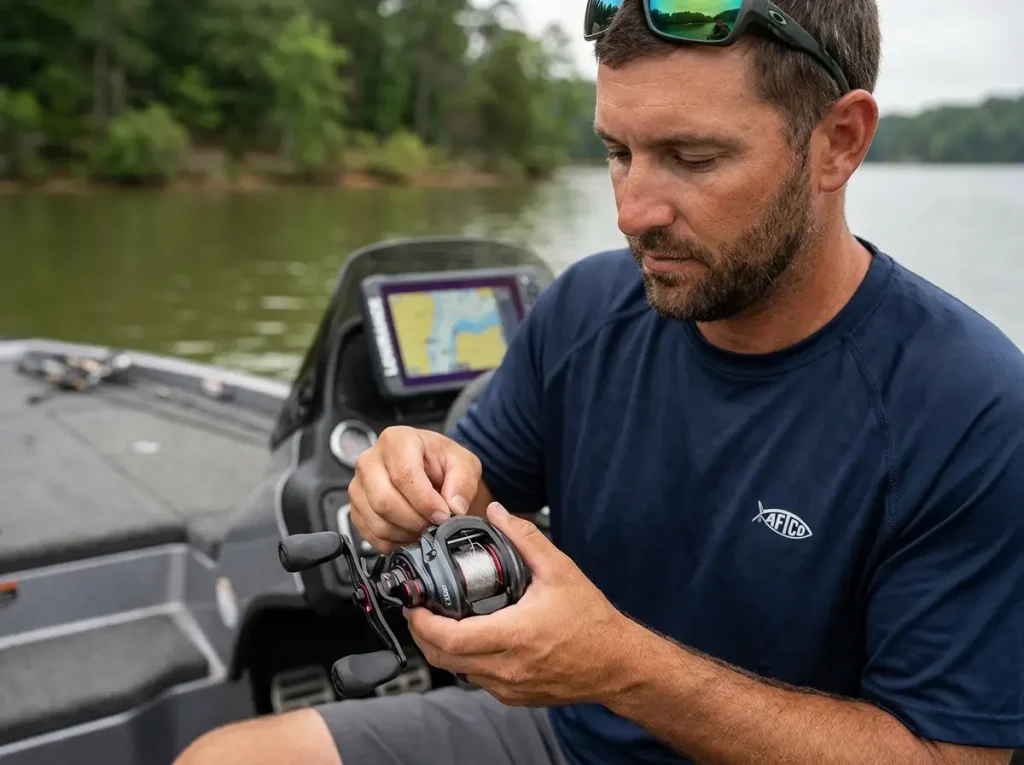
Look at the spool and figure out what you’re dealing with. Is it a light overrun — a few loops lifted off the surface? Or a deep bird’s nest where the line has dug into itself? The answer determines how long this takes.
For a light overrun, you might clear it in 10 seconds by simply pressing the thumb bar and pulling line off with gentle tension. For anything deeper, move to the full method.
Tighten the spool tension knob. Turn it clockwise until the spool can barely move. You want it tighter than you’d ever set it for casting — think of it as a clamp holding the mess in place while you work. This is the foundation of the method Bassmaster Classic champion Ott DeFoe uses, and it works because it stops the tangle from shifting and digging deeper while you pull line free.
Step 2 — Pull, Pause, Pressure
With the tension knob cranked down, press the thumb bar to disengage the spool. Now slowly pull line off the spool. It will come freely for a bit, then lock up where the tangle catches. Stop pulling the instant it resists.
This is where the trick lives. Put your thumb on the spool right where the line is jammed. Press firmly. Now engage the reel handle and turn it slowly — two full rotations. You’re feeding line back onto the spool under controlled pressure, which pushes the knot underneath fresh wraps. It’s like working a knot through fabric instead of yanking it.
Press the thumb bar again and pull. More line should come free. Repeat the cycle: pull until it locks, thumb on the jam, two handle turns, pull again. Most moderate backlashes clear in two or three cycles.
Pro tip: Keep your line hand — the one pulling — at a 45-degree angle from the rod tip, not straight up. This changes the angle the line exits the guides and reduces friction that can mask when the spool is actually free.
Step 3 — The Tag End Trick for Stubborn Tangles
If the pull-pressure-pull cycle hits a hard stop that won’t budge, look at the spool closely. You’ll usually see one or two tag ends — short loops of line sticking up from the tangle at odd angles. These are the locks holding everything together.
Grab the tag end (tweezers help with braided line, fingernails work for fluoro and mono) and pull it gently. Not out — just up and loose. You’re creating slack in the exact strand that’s binding the rest. Once that strand gives, go back to the thumb-and-handle method. The tangle usually releases immediately.
If you can’t find the tag end by sight, feel for it. Run your thumbnail across the spool surface lightly. The loop that snags your nail is the one causing the jam.
Pro tip: Carry a dental pick or a small crochet hook in your tackle bag. For braided line tangles, these tools find and lift tag ends faster than your fingers ever will. A $2 tool saves $20 worth of fluorocarbon every season.
Step 4 — Reseat the Line
This step gets skipped constantly, and it’s why backlash comes back on the very next cast. Once you’ve cleared the tangle, the line sitting on your spool is loose and disorganized. If you just start casting again, you’ll bird’s nest within five throws.
Reel the line back in slowly while pinching it between your thumb and forefinger just above the reel. Apply firm tension — you want the line to lay flat and tight on the spool, wrapping evenly. If you’re on a boat, let out all the free line behind you into the water and reel it back under tension. The water resistance helps pack the line properly.
When It’s Worse Than You Think — Mono/Fluoro vs Braid
Fluorocarbon and Mono Backlash
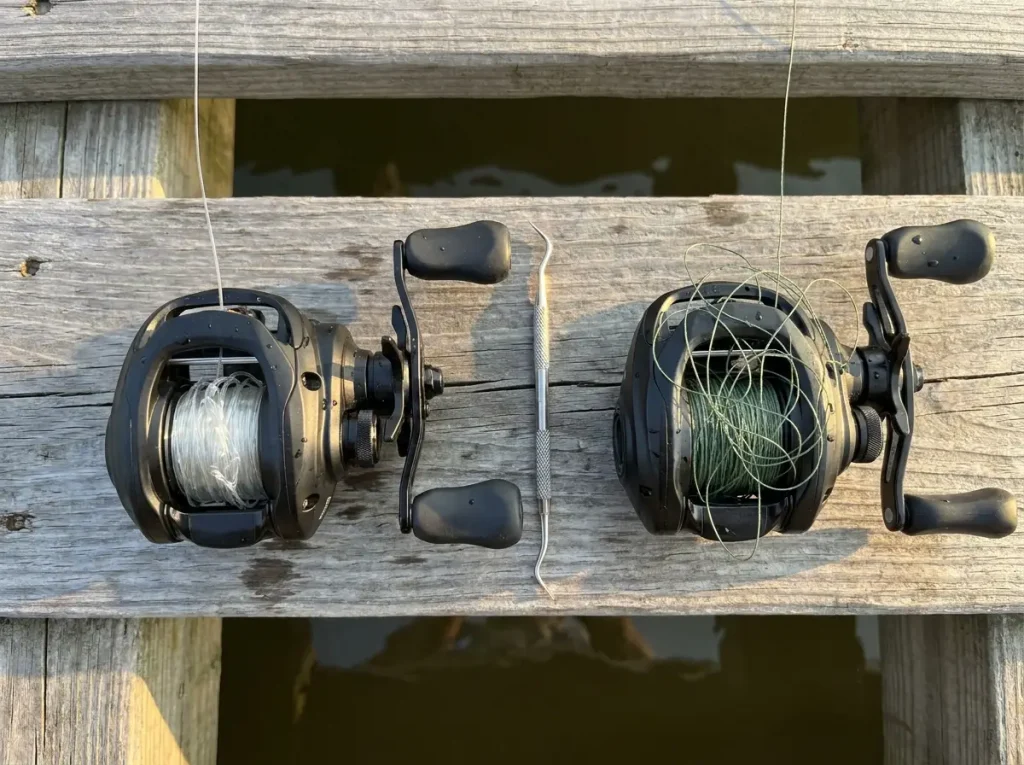
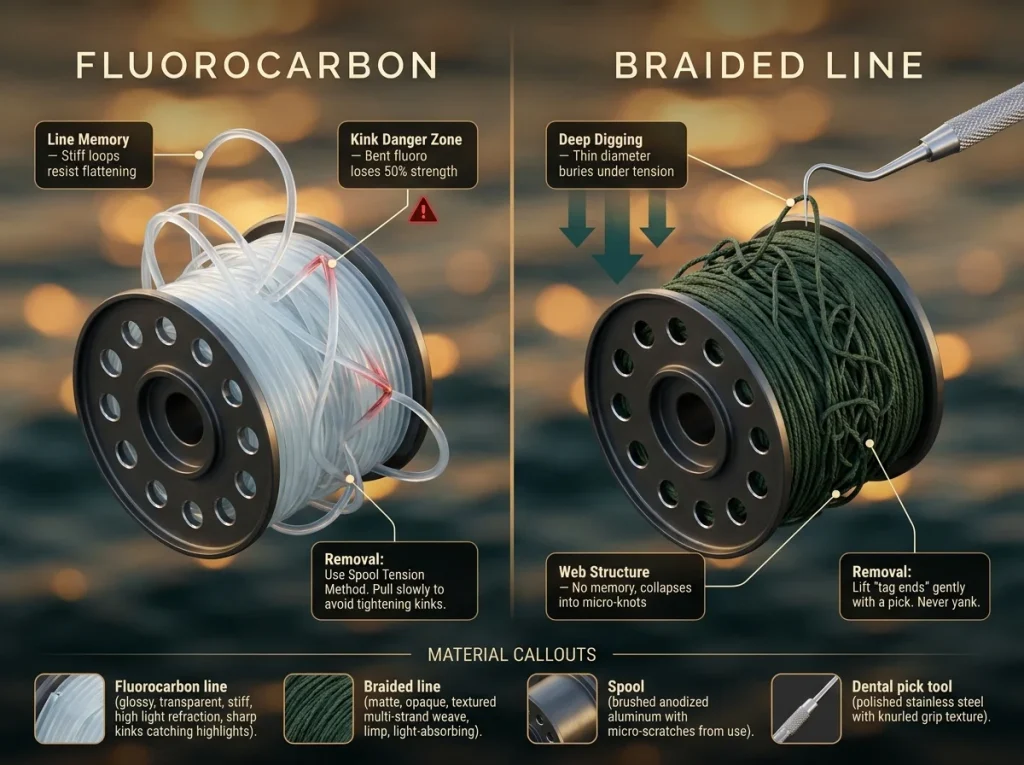
Fluorocarbon and monofilament behave similarly in a backlash, but fluoro is less forgiving. Both lines have memory — they want to hold the shape of the spool — and both create relatively stiff tangles that hold their form when you pull loops free. The tension knob method works well on both.
The problem specific to fluorocarbon: kinking. Every sharp bend in a fluoro backlash creates a weak point. When you clear the tangle and run the line through your fingers, feel for tiny kinks — spots where the line has a hard angle instead of a smooth curve. Each kink reduces the line’s strength significantly. One bad kink in 15-pound fluoro can drop it to eight-pound performance. If you find kinks near your lure end, cut back past them and retie. Understanding how fluorocarbon actually behaves under stress helps you make that judgment call.
Braided Line Backlash
Braided line backlashes look terrifying but are often easier to clear than they appear. Braid is thin, limp, and has zero memory, so the tangles are loose and web-like rather than compressed and rigid. The loops don’t lock against each other the way fluoro does.
The tradeoff: braid digs. Because it’s so thin, braided line buries itself deep into the spool under pressure. If you pulled hard before reading this article, you may have a braid backlash that’s embedded three layers deep. The tension knob method still works, but go slower. Never yank braided line out of a tangle — the thin diameter cuts into adjacent wraps and creates secondary knots that make everything worse.
For braid, the tag end trick is essential. Those small loops are harder to see on thin braid — that’s where the dental pick earns its keep. Lift each tag gently and the web structure of the tangle collapses quickly. Braid backlashes that look catastrophic often clear in 30 seconds once you find the right strand.
Pro tip: If you fish braid on a baitcaster regularly, learn the spool with your fingertips. Run your thumb over the line after every few casts. You’ll feel tiny overruns forming before they become full bird’s nests — and a two-second thumb press fixes what would have been a five-minute tangle.
The Mixed Setup — Braid to Fluoro Leader
Many anglers run braided mainline with a fluorocarbon leader tied with an FG knot or Alberto knot. If the backlash happens at the connection point where braid meets fluoro, you’re dealing with two different line behaviors in the same tangle. The braid portion is loose and webby while the fluoro section is stiff and kinked.
Work the braid side first — it’s more cooperative. Clear the braid loops away from the knot connection, then address the fluoro. If the knot itself got buried in the tangle, it’s often faster to cut above the knot, clear everything, and retie. A fresh knot takes 90 seconds. Fighting a tangled knot connection can burn ten minutes and leave you with a compromised connection you can’t trust.
When to Cut Your Losses and Respool
The Three-Minute Rule
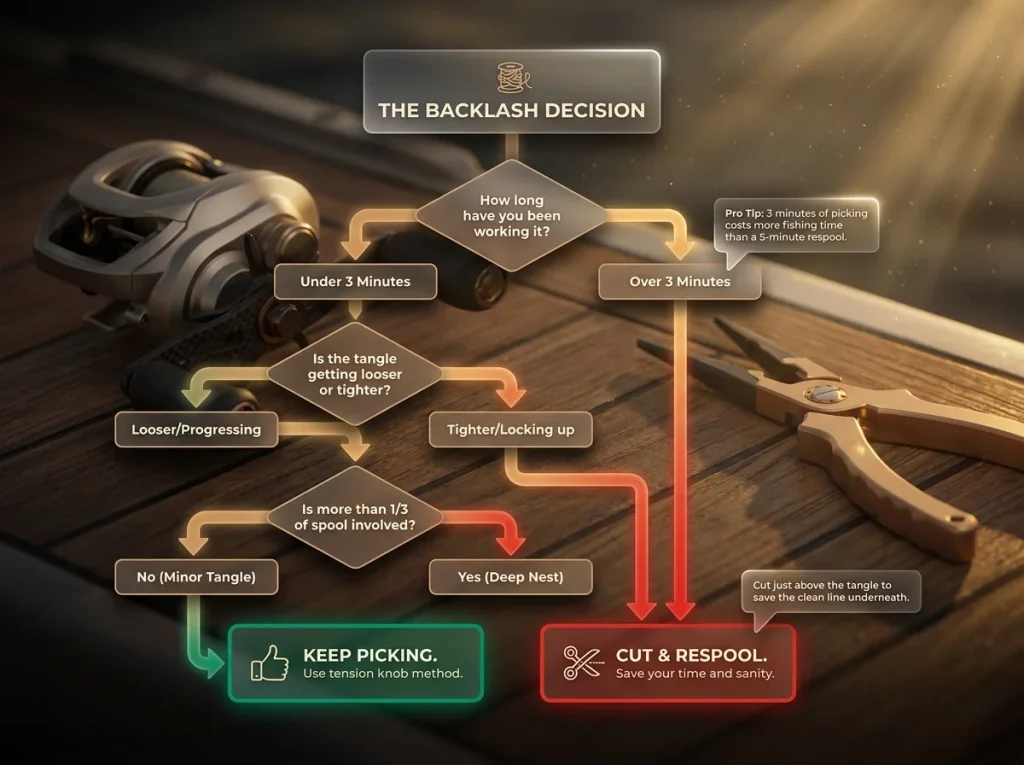
Not every backlash is worth saving. If you’ve worked the tension knob method for three minutes and the tangle isn’t improving — or it’s getting worse — you’re past the point of diminishing returns. Cut it.
Here’s the framework: if the backlash involves more than a third of the line on your spool, or if you can see the line has dug into itself in multiple compressed layers, the time you spend picking it apart costs more than the line you’ll lose. A respool takes five minutes. A bad backlash can eat twenty if you let it.
Tournament anglers keep a pre-spooled backup rod on the deck for exactly this reason. For the rest of us, keeping a spare spool of line in the boat means a bad backlash is a five-minute reset, not a session-ender.
How to Cut Without Wasting Line
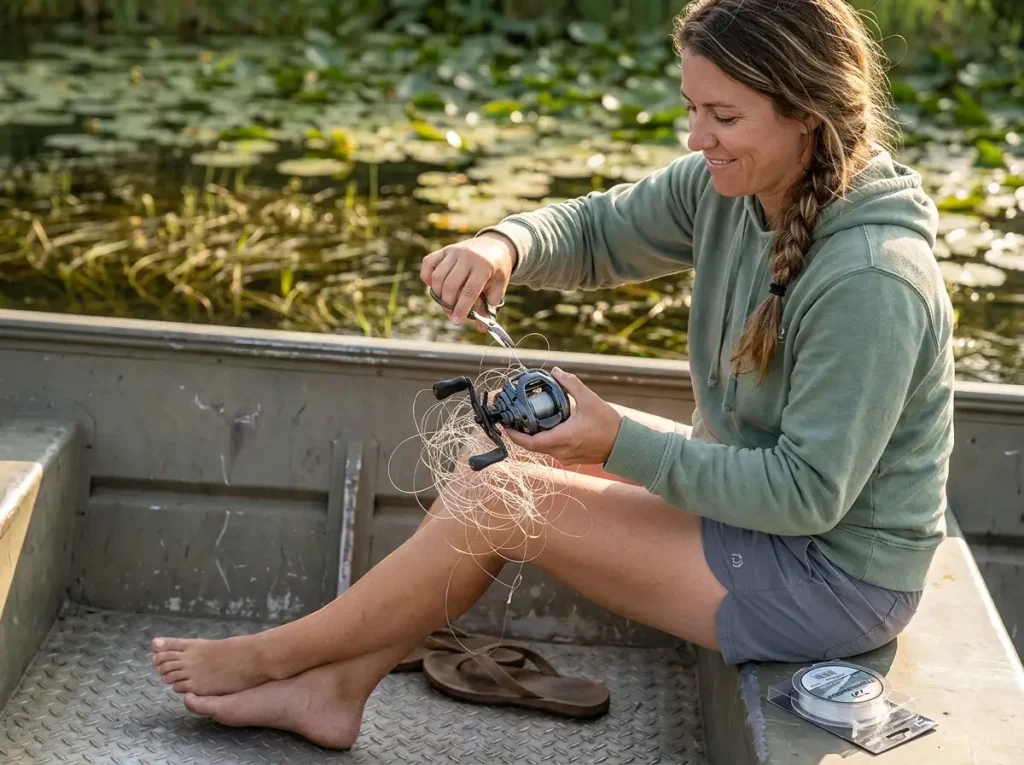
Don’t cut all the way to the spool. Pull line off until you reach clean, untangled line below the bird’s nest. Cut just above where the tangle starts. You lose only the tangled section, not the whole spool.
If you’re fishing fluorocarbon — which runs $15–25 per spool depending on the pound test — this saves real money over the season. Cut the tangle out, tie on your terminal tackle, and keep fishing with the remaining clean line underneath. You’ll have less casting distance until you respool at home, but you’ll still be on the water.
And once you get home, proper disposal of that cut line matters. Fluorocarbon and braid don’t biodegrade. Drop it in a recycling bin or bring it to a tackle shop collection point — never toss it in the water or on the bank.
Stop It Before It Starts — Prevention Settings
The Spool Tension Drop Test
Before your first cast of the day, hold your rod tip up and press the thumb bar. Your lure should fall slowly — about one foot per second — and the spool should stop spinning the instant the lure touches the ground. If the spool keeps spinning after the lure stops, tighten the spool tension knob a quarter turn and repeat.
This is your baseline. It won’t give you maximum distance, but it prevents the worst backlash. As your thumb gets warmed up and your casting stroke finds its rhythm, you can back the tension off a click at a time for more distance. For a deeper breakdown of exactly how to dial in your spool tension, the lure-drop test is just the beginning.
Brake Settings — Magnetic vs Centrifugal
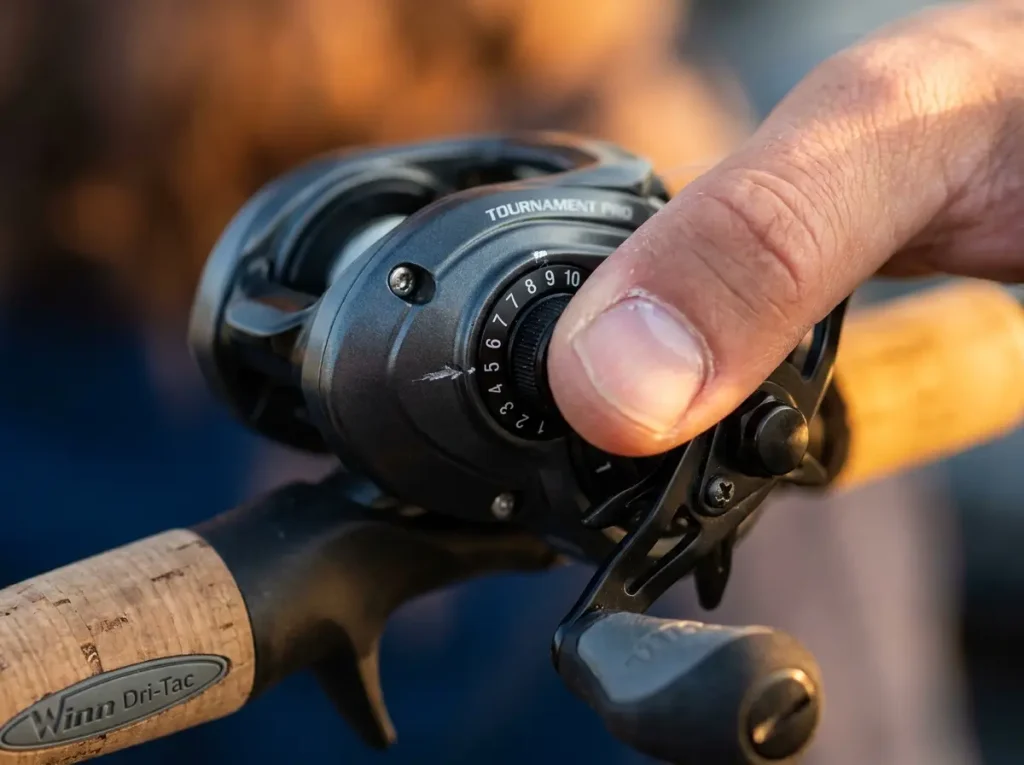
Your reel has a braking system — either magnetic brakes (an external dial) or centrifugal brakes (internal pins you push in or out). Both do the same job: slow the spool at the end of the cast when your lure decelerates.
For magnetic brakes, start at 70–80% (usually 7–8 on a 10-point dial). Make ten clean casts. If zero backlash, drop one setting. Repeat until you get a minor overrun, then bump back up one. That’s your sweet spot for current conditions.
For centrifugal brakes, start with all pins engaged. After ten clean casts, push one pin out (disengage it). Continue the same progression. More pins engaged = more braking = less backlash but less distance.
The key insight most anglers miss: brake settings are condition-dependent. What works for a 1/2-ounce jig on a calm day will backlash with the same lure when casting into wind. Lighter lures need more braking. Headwinds need more braking. Adjust every time conditions change, not once at the start of the day.
Thumb Control — The Skill That Eliminates Backlash
Brakes and tension knobs are training wheels. The real backlash prevention is your thumb. Every experienced baitcaster angler learns to feather the spool during the cast — applying light, variable thumb pressure that matches the lure’s deceleration in real time.
Start by keeping light contact with the spool throughout the entire cast. Not pressing hard enough to slow it noticeably, just touching. As the lure approaches the water, increase pressure gradually and stop the spool completely just before impact. This becomes instinct after a few hundred casts.
The progression is: heavy brakes and lots of spool tension (beginner) → less braking as your thumb improves (intermediate) → minimal braking with full thumb control (experienced). There’s no shortcut. Every angler who’s good with a baitcaster spent time getting bird’s nests before their thumb learned the feel. That’s also why working on casting accuracy fundamentals helps your backlash rate — a consistent casting stroke produces consistent spool behavior.
Pro tip: Practice in the backyard with a casting plug before burning expensive line on the water. Twenty minutes of practice casts with zero stakes teaches your thumb faster than a full day of fishing where backlash comes with tournament pressure.
Conclusion
Backlash is part of baitcaster fishing. It happens to beginners and it happens to pros. The difference is speed: once you learn the tension knob method — tighten, pull, thumb-and-handle, repeat — most bird’s nests clear in under a minute. Know when fluoro kinks mean you need to cut back. Know when braid’s web-like tangles collapse with one pulled tag end. And know when three minutes of picking means it’s time to cut, respool, and get back to fishing.
Set your brakes for current conditions, run the lure-drop test before you cast, and let your thumb do the rest. The backlash you prevent is always better than the one you fix.
Q1 What is the fastest way to fix a baitcaster backlash?
Tighten the spool tension knob all the way, press the thumb bar, and slowly pull line out. When it locks, press your thumb on the jam and turn the handle two full rotations. Repeat until clear. Most moderate backlashes resolve in 30–60 seconds with this method.
Q2 Should you cut the line on a bad backlash?
If you’ve worked a backlash for three minutes with no improvement, cut it. Pull line until you reach clean wraps below the tangle, then cut just above. You keep the untangled line underneath and lose only the bird’s nest — not the whole spool.
Q3 Why does my baitcaster backlash every cast?
Repeated backlash usually means your brakes are too low or your spool tension is too loose for the lure weight and conditions. Run the lure-drop test, increase brake settings, and check if your line has developed memory coils from age or improper storage.
Q4 Does braided line backlash worse than fluorocarbon?
Braid backlashes look worse but are often easier to clear because the thin, limp line doesn’t lock against itself. Fluorocarbon backlashes are stiffer and create kinks that weaken the line. The removal approach differs — braid needs gentle lifting of tag ends, while fluoro responds better to the tension knob method.
Q5 How do you prevent backlash on a baitcaster?
Set your spool tension so the lure falls at one foot per second in the drop test. Start brakes at 70–80% and reduce gradually over ten-cast intervals. Develop thumb control by feathering the spool throughout each cast. Adjust settings whenever you change lure weight or wind conditions.
Risk Disclaimer: Fishing, boating, and all related outdoor activities involve inherent risks that
can lead to injury. The information provided on Master Fishing Mag is for educational and informational purposes
only. While we strive for accuracy, the information, techniques, and advice on gear and safety are not a substitute
for your own best judgment, local knowledge, and adherence to official regulations. Fishing regulations, including
seasons, size limits, and species restrictions, change frequently and vary by location. Always consult the latest
official regulations from your local fish and wildlife agency before heading out. Proper handling of hooks, knives,
and other sharp equipment is essential for safety. Furthermore, be aware of local fish consumption advisories. By
using this website, you agree that you are solely responsible for your own safety and for complying with all
applicable laws. Any reliance you place on our content is strictly at your own risk. Master Fishing Mag and its
authors will not be held liable for any injury, damage, or loss sustained in connection with the use of the
information herein.
Affiliate Disclosure: We are a participant in the Amazon Services LLC Associates Program, an
affiliate advertising program designed to provide a means for us to earn advertising fees by advertising and linking
to Amazon.com. As an Amazon Associate, we earn from qualifying purchases. We also participate in other affiliate
programs and may receive a commission on products purchased through our links, at no extra cost to you. Additional
terms are found in the terms of service.