
In this article
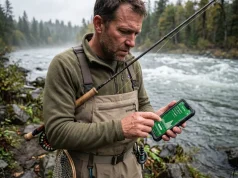
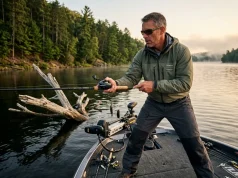
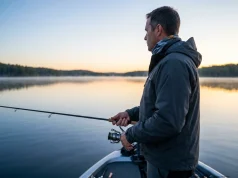
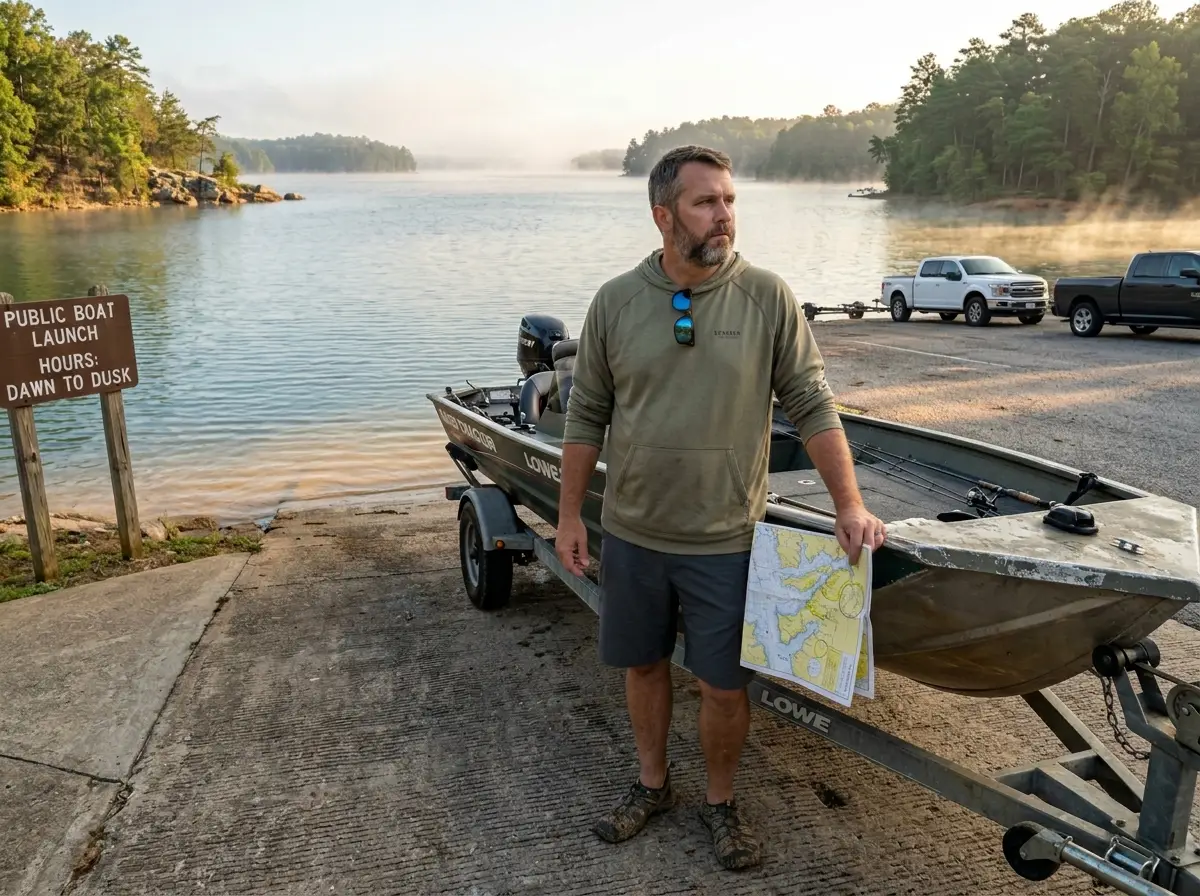
You’ve driven two hours to a lake you’ve never fished. The boat’s in the water, and you’re staring at three thousand acres of open water wondering where to start. I’ve been in that exact spot more times than I’d like to admit — standing at some random ramp in a state I barely know, holding a map that might as well be in another language. After fishing dozens of unfamiliar lakes across the Midwest and Southeast, I stopped guessing and started running a system. Here’s the step-by-step approach that consistently puts fish in the boat from the night before to the mid-day pivot that saves slow mornings.
Quick Answer: Finding fish on unfamiliar water comes down to a repeatable system: research the lake the night before using free digital tools, assess conditions on arrival, run a disciplined first-hour protocol where you idle and mark structure before making your first cast, and pivot fast when the morning plan stops producing. The anglers who catch fish on new water aren’t luckier — they eliminate dead water faster.
Do Your Homework the Night Before You Launch
Google Earth and Satellite Imagery
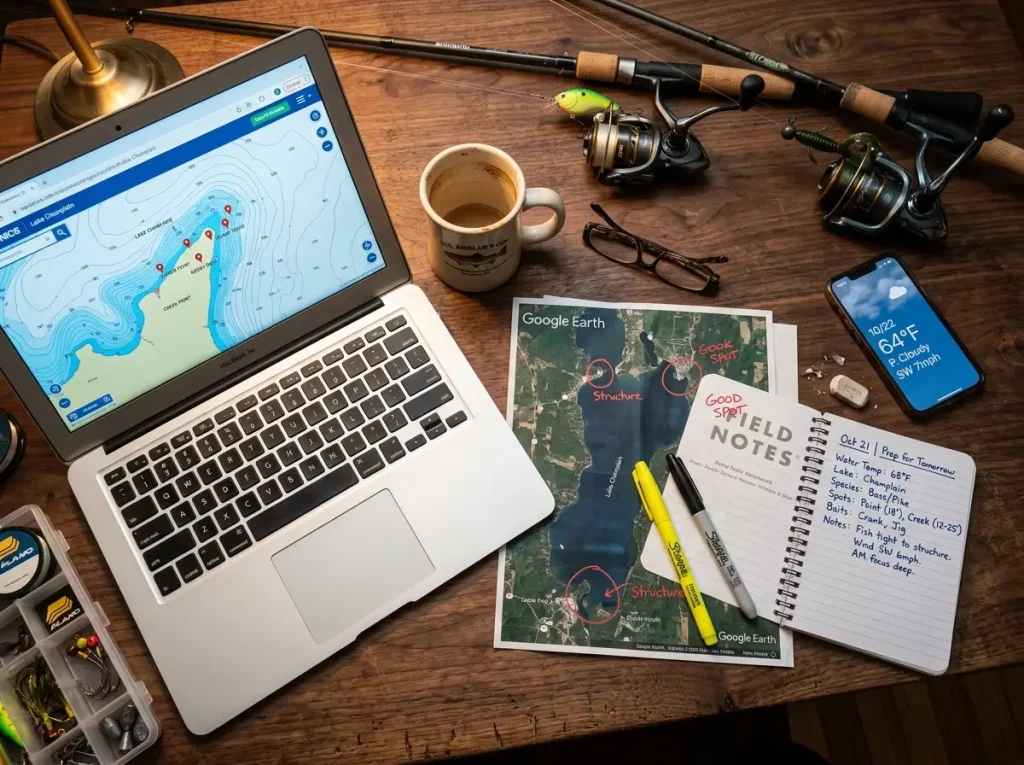
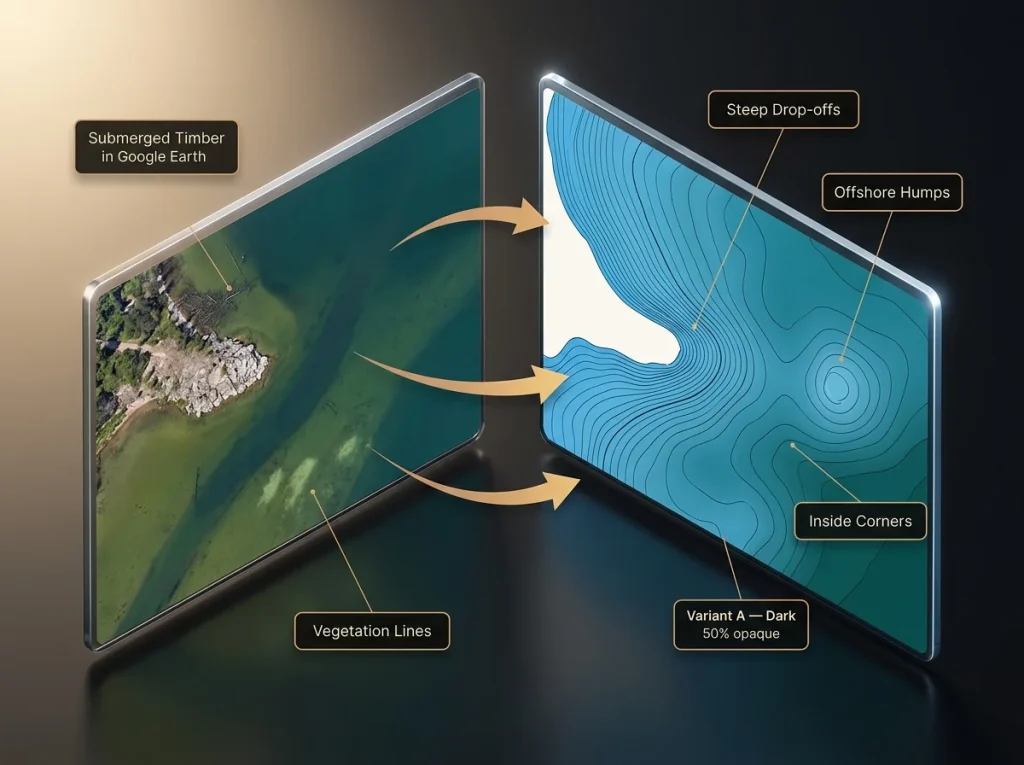
Most anglers pull up to a new lake with nothing but hope and a bag of their favorite lures. That’s fishing with a blindfold on. The night before, spend twenty minutes on Google Earth — it’s free, and it shows you things you’ll never see from the water. Creek channels cutting into the main lake, submerged timber in clear water, rocky points that extend further than you’d guess from shore. Use the satellite imagery to identify the three or four spots with the most structure concentration, and mark them.
Google Earth’s Street View function also lets you virtually visit the boat ramp. You’ll know whether it’s a one-lane gravel slide or a two-lane concrete pad with a dock. That matters at 5:30 in the morning when you’re backing a trailer in the dark.
Contour Maps and the Navionics Webapp
The free tier of the Navionics webapp shows contour lines, drop-offs, humps, and creek channel swings. You’re looking for three patterns that hold fish on any body of water: constrictions where contour lines pinch together, confluences where channels or depth zones intersect, and corners on inside bends of creek channels. If you want to go deeper on reading lake contour maps, we’ve broken down that entire methodology before.
Drop waypoints on the four or five best-looking spots and transfer them to your GPS. That twenty-minute session on the laptop just saved you three hours of blind idling. If you’re comparing charting platforms, both Navionics and C-MAP have free options worth checking.
State DNR Lake Surveys and Stocking Reports
Here’s the part most people skip entirely. Nearly every state publishes free lake survey data — fish population estimates, stocking history, and creel surveys that tell you exactly what anglers are catching and at what sizes. Minnesota’s free lake survey database goes back decades. Wisconsin, Michigan, and most other states have similar systems.
Check what species dominate and at what size classes. That alone tells you whether to rig a medium-heavy rod for five-pound bass or an ultralight for twelve-inch crappie. The data is there. Most anglers just never look.
Pro tip: Don’t just check the target species. Look at the forage base. If the survey shows a strong shad population, start with lures that match shad size and color. You’ve just shortened your trial-and-error by half.
What to Check Before Your First Cast
Water Color, Clarity, and Temperature
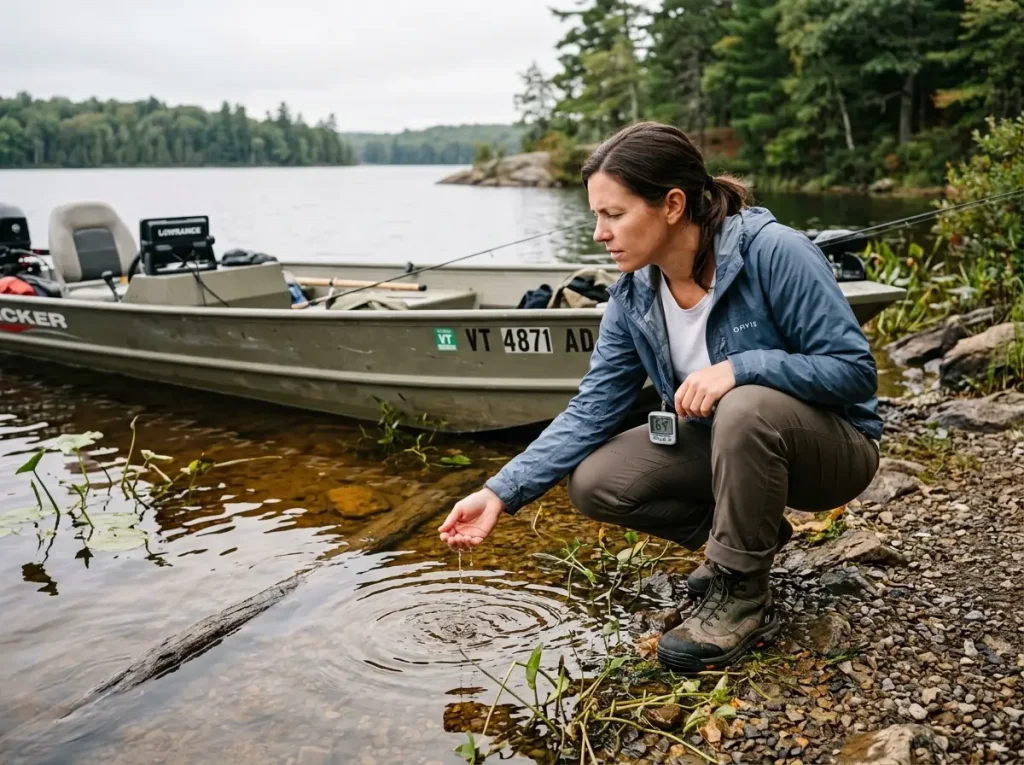
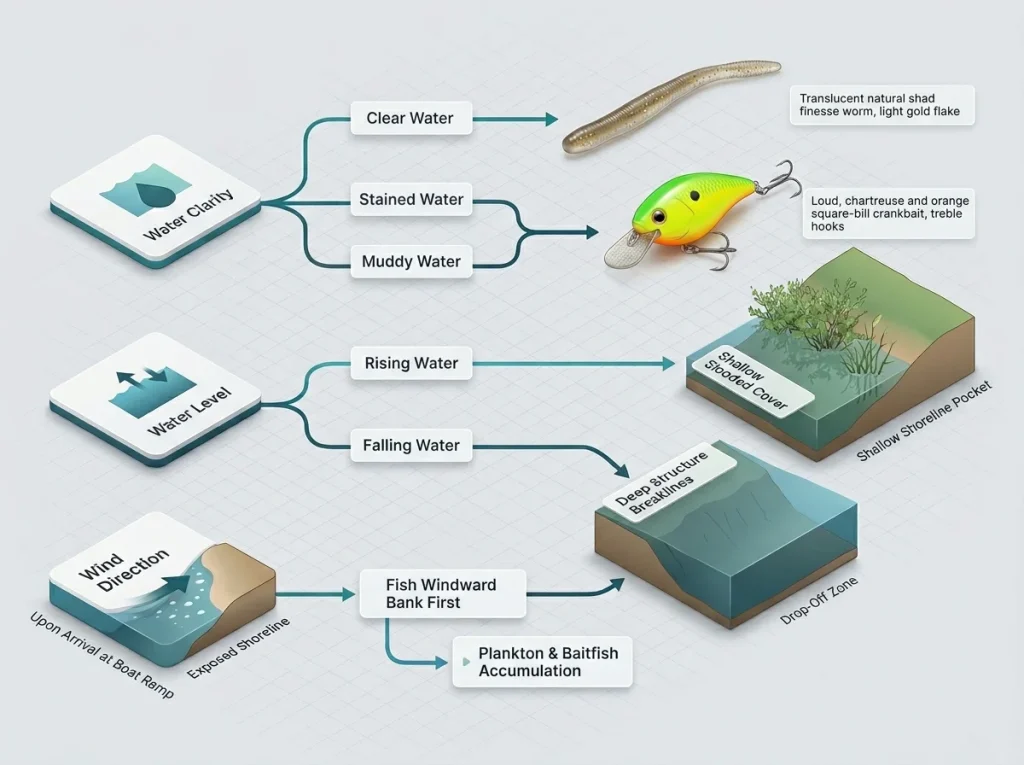
The moment you pull up to the ramp, the lake starts talking. Most anglers don’t listen. Dip your hand in the water. Is it clear enough to see your fingers at arm’s length, or is it stained tea-brown? Water clarity determines everything about your approach. Stained water pushes fish shallower and makes them more aggressive — go louder, go bigger, go brighter. Clear water means finesse, natural colors, and lighter line.
Bring a cheap digital thermometer. Water temperature narrows your search zone faster than any other single variable. Below 50 degrees, fish are sluggish and deep. Between 55 and 70, they’re moving and feeding. Above 75, they’re relating to thermocline depth and shade. That seven-dollar thermometer is worth more than your most expensive lure on an unfamiliar body of water.
Water Level — Rising, Falling, or Stable
This is the variable nobody talks about, and it changes everything. If the water’s been rising, fish push inside the breaks and move shallow — into newly flooded brush, grass, and timber. If the water’s been falling, they pull to the outside of breaks and break lines, staging on deeper structure. Stable water is neutral — fish hold on predictable structure and seasonal patterns apply normally.
You can usually check water level trends online before you go. Most Army Corps of Engineers reservoirs publish daily pool elevations, and USGS water data tracks real-time stream and lake levels across the country. Five minutes of checking saves an hour of fishing the wrong depth.
Wind Direction and What It Moves
Wind isn’t just weather — it’s a conveyor belt. It pushes plankton toward the windward bank. Baitfish follow the plankton. Predators follow the baitfish. On a new lake, fish the downwind side first. If you want the full breakdown on how wind positions fish, we’ve covered the mechanics in detail.
The exception: if the wind has been blowing from the same direction for three or more days, the fish have already adjusted. In that case, try the calm side — less pressure, fewer boats.
Reading Structure Like a Local
Points, Humps, and Saddles
Fish don’t sit in random open water. They relate to structure the way you relate to furniture in an empty room — they need something to orient to. Points are the most predictable fish-holding structure on any lake because they give fish a highway between shallow and deep water. Humps — those underwater hills rising from the basin floor — concentrate fish at predictable depths because they compress the water column.
If you marked these on Navionics the night before, you already know where to start. If you’re fishing blind, look for the most obvious points visible from the surface — the ones where the tree line juts out into the lake. There’s almost always deeper structure extending beyond what you can see. For the full approach on fishing structure points and humps, we’ve walked through the sonar work and casting angles before.
Creek Channels and Feeder Streams
Running water is the first thing to look for on any new fishery. Feeder creeks and inflows are oxygen-rich, they carry food, and they position both bait and predators in predictable patterns. On a reservoir, the old creek channel winding along the bottom acts as a fish superhighway — they follow it between feeding flats and deep resting spots.
Find where the creek channel intersects a point or a flat, and you’ve found a spot with multiple things going for it. That intersection is where fish stack up. One reason is good. Two reasons are better. Three reasons — a point with a feeder creek and a weed edge — and you’ve found the best spot on the lake without ever having been there before.
Shoreline Transitions — Where Shallow Meets Deep
Edges are everything. Where rock meets sand. Where grass meets gravel. Where shallow meets deep. These transition zones are where fish patrol because the change in bottom composition concentrates food and provides ambush cover.
On a new lake, don’t waste time on featureless flats — that’s dead water. Go straight to the most obvious transitions you can find. A steep bank that drops from two feet to fifteen feet in a boat length? That’s a spot. A weed line that ends abruptly at a sand flat? That’s a spot. The area where the riprap under a bridge gives way to natural bottom? Definitely a spot.
Surface Signs That Give Fish Away
Baitfish Behavior and What It Means
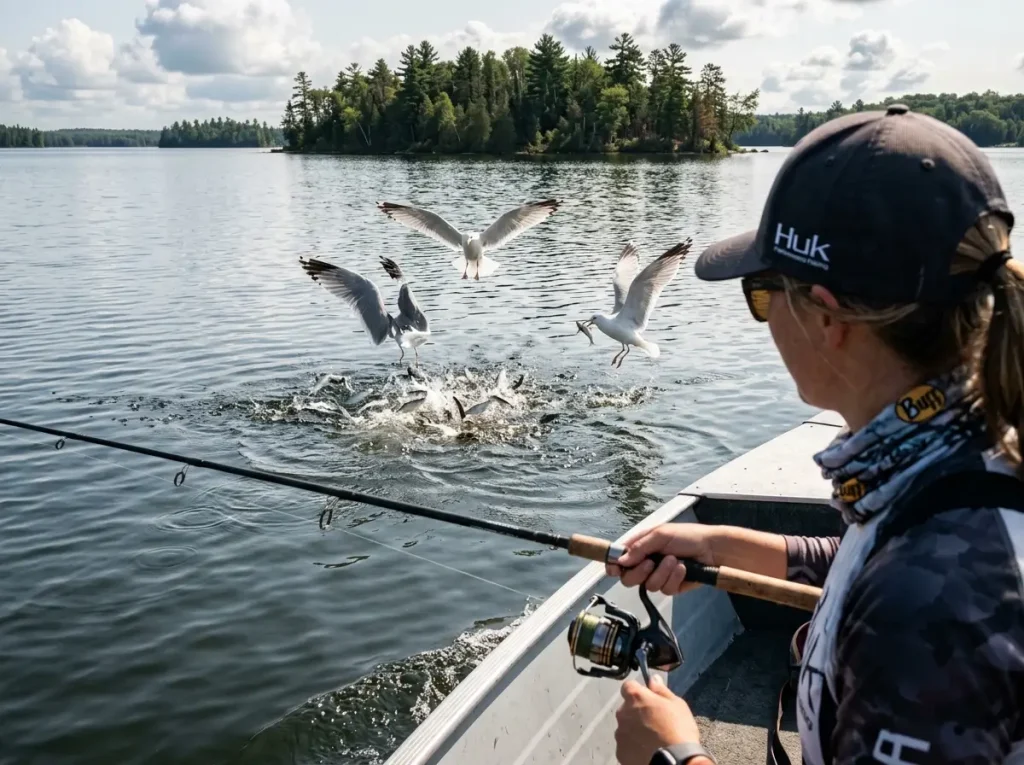
Before fish finders existed, anglers found fish by watching the water. Those skills still work — and on water you’ve never seen, they’re faster than staring at a screen trying to figure out what you’re looking at. Watch for baitfish dimpling the surface in tight schools. When they start jumping frantically, that’s not play — something below is pushing them up.
Cast to the edges of the activity, not the middle. The predators are underneath and around the bait school, picking off stragglers at the margins. Throwing into the center spooks the bait and scatters the school. The edges are where you connect. If you want to understand baitfish migration patterns at a seasonal level, that’s a whole separate topic we’ve covered.
Birds, Bubbles, and Surface Clues
Birds are free fish finders. Gulls and terns circling and diving in a concentrated area mean baitfish below, and baitfish mean predators. A single great blue heron standing motionless on a bank tells you there are small fish there. That’s all you need to know.
Swirls and wakes near shoreline cover mean fish feeding shallow — note the direction of travel and cast ahead of it. Bubbles rising to the surface in rivers mark current seams and eddies where fish sit with minimal effort, waiting for food to drift to them. These are the oldest fish-finding tools we have, and they cost nothing.
Pro tip: Carry polarized sunglasses and actually use them. They cut surface glare and let you see structure, baitfish, and sometimes the fish themselves in shallow water. On a new lake, your eyes are as useful as your electronics — sometimes more.
The First-Hour Protocol Guides Use on Practice Day
Idle First, Fish Second
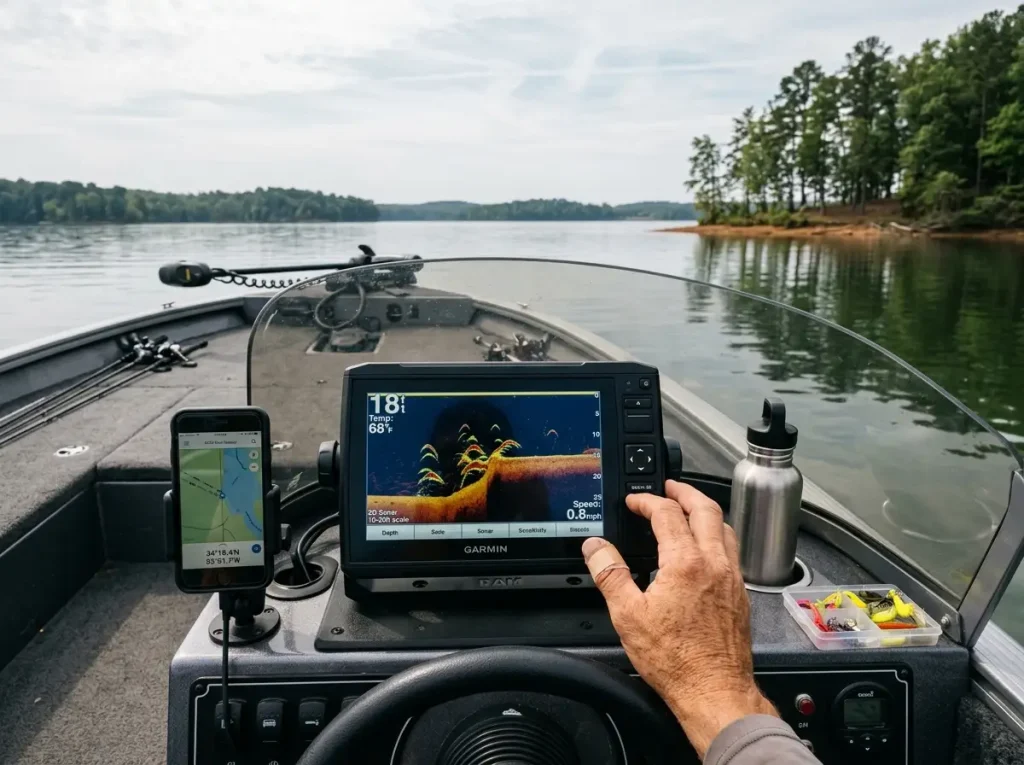
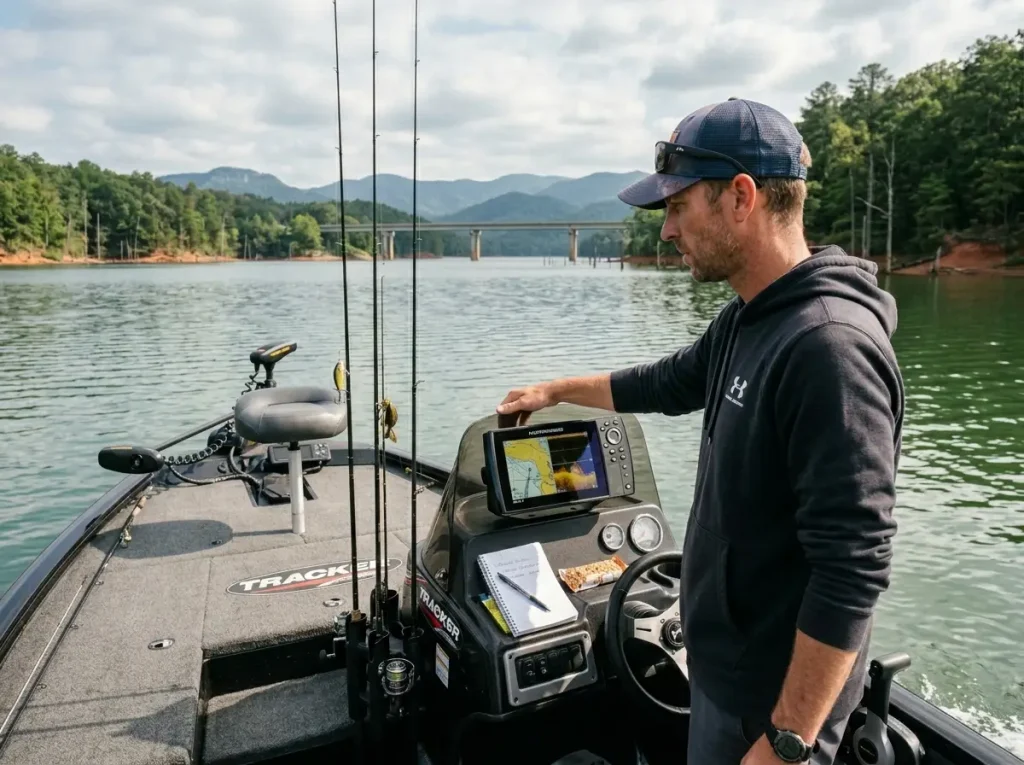
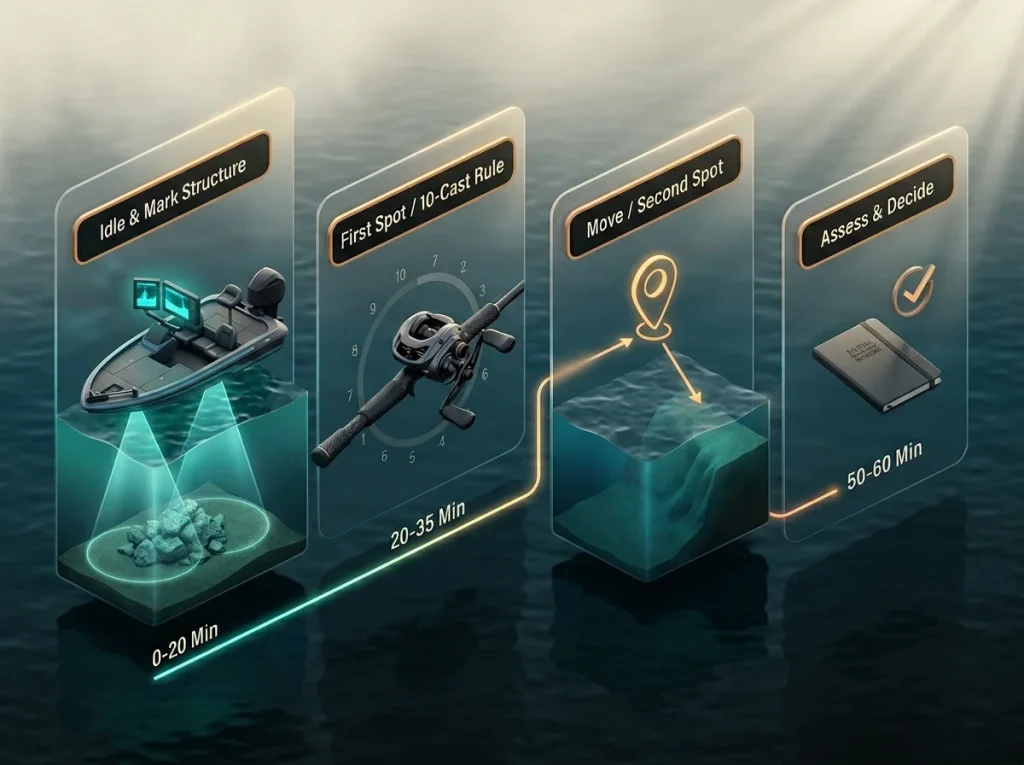
Tournament pros don’t show up to a new lake and start casting. They have a protocol for practice day that most weekend anglers never learn, and it starts with not fishing at all. Idle the main areas for twenty minutes watching your sonar. Mark every piece of structure, every depth change, every baitfish school you see. This is reconnaissance, not recreation.
That twenty-minute investment saves hours of blind casting. You’re building a mental map of the lake in real time, confirming or rejecting the spots you marked from Navionics the night before. Some of those spots will look perfect on paper and hold nothing. Some spots you didn’t notice on the map will light up on sonar. If you’re new to choosing between side and down imaging, side imaging covers more water during this scanning phase.
The 10-Cast Rule
Once you start fishing, discipline matters more than enthusiasm. Give each spot ten to twelve casts with a search bait — a crankbait or spinnerbait that covers water quickly. If nothing shows interest in fifteen minutes, move. Don’t sit. Don’t keep throwing. Don’t convince yourself the fish are “about to turn on.”
The 10-cast rule forces you to cover water instead of camping. On a lake you’ve never fished, information matters more than any single bite. You’re not just fishing — you’re collecting data.
Logging Waypoints Even When Nothing Bites
Here’s the part almost nobody does: log every spot, even the zeros. That waypoint where you caught nothing? It just told you something. Maybe the bottom composition was wrong. Maybe the depth didn’t match the pattern. Maybe the bait wasn’t there. That’s elimination data, and it’s just as useful as finding fish — because it narrows where they actually are.
After four or five stops, you’ve built a rough pattern: what depth range is producing, what structure type is holding bait, and what side of the lake the fish are using. That pattern is worth more than any tip a stranger at the ramp could give you.
Pro tip: Use your phone’s note app or a waterproof notebook. Write down depth, structure type, water color, and what you threw at each stop. When you come back to this lake — and you will — those notes are pure gold.
Talk to the Right People (and Ask the Right Questions)
Bait Shops, Marinas, and Local Diners
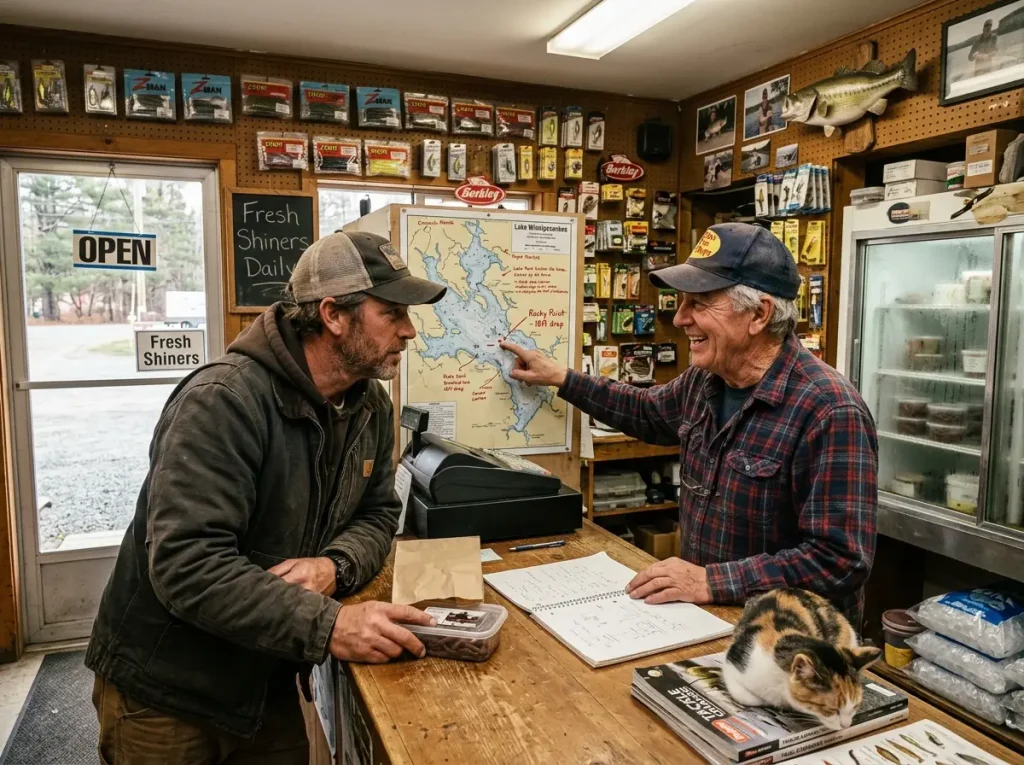
An angler I know spent forty-five minutes eating breakfast at a diner near a lake he’d never fished. He listened to two locals at the counter talk about shad moving into a specific creek arm that week. He fished that creek arm all morning and caught his limit. That’s not luck — that’s paying attention.
Bait shops are intelligence hubs if you know how to read them. Check what’s missing from the racks — the gaps tell you what’s producing right now. If the chartreuse soft plastics are sold out and everything else is fully stocked, that’s a signal louder than any fishing report.
Ask the shop owner or marina staff specific, respectful questions. “What depth are they at this week?” gets a real answer. “Where should I fish?” gets a polite brush-off. Ask about patterns — not spots. Locals won’t give up their best holes to a stranger, but they’ll share general depth ranges, bait choices, and which end of the lake is fishing better.
What to Ask (and What Not To)
Online forums work the same way. State fishing subreddits, BassResource threads, and local Facebook groups often have recent reports with depth, bait, and general areas. Search before you post. Read the last two weeks of reports and you’ll have a better picture than most boat ramp conversations provide.
Don’t post “Going to Lake X tomorrow, where should I fish?” — you’ll get ignored or trolled. Instead, share something: “Heading to Lake X, planning to work the north arm with crankbaits based on the DNR report. Anyone seeing fish shallower or deeper this week?” That shows you’ve done your homework, and people respond to effort.
The Mid-Day Pivot — When Your Plan Stops Working
Read What the Water Is Telling You Now
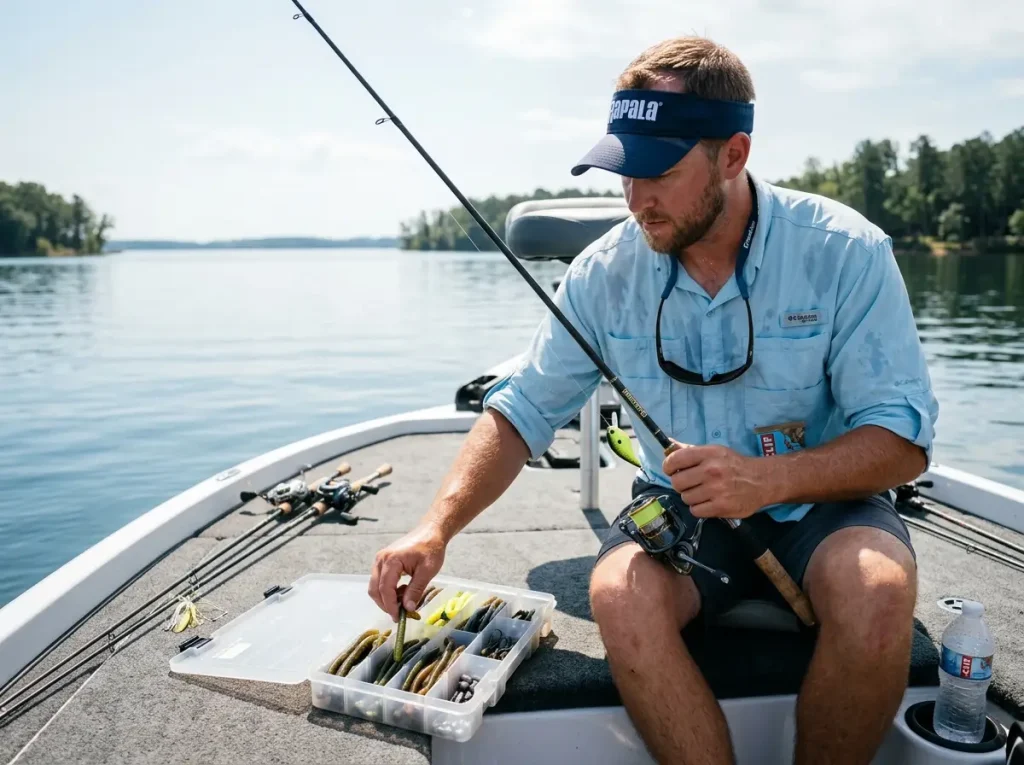
Every plan meets reality eventually. If you’ve fished two hours and have nothing to show for it, the worst thing you can do is keep doing the same thing. Stop fishing. Look around. Has the wind shifted since morning? Did cloud cover appear or disappear? Is the sun now high enough to push fish off the shallow structure you’ve been hammering?
The lake doesn’t care about your plan. It cares about what’s happening right now. Your job at the two-hour mark is to reassess with fresh eyes, not to double down on a theory that isn’t producing. If you want more on adjusting tactics on pressured water, we’ve broken down those decision points in detail.
The Opposite Rule
This is the simplest mid-day fix I know, and it works more often than it should. If you’ve been fishing shallow, go deep. If you’ve been throwing reaction baits, slow down with finesse presentations. If you’ve been on the main lake, try the back of a creek arm. If you’ve been on the sunny side, try the shady side.
The Opposite Rule works because when your initial pattern fails, you’ve usually committed to one end of every spectrum: depth, speed, location, presentation. Flipping all of them at once puts you in completely different water with a completely different approach. Sometimes that’s exactly what was needed.
When to Downsize, When to Move
Before you abandon an area entirely, try one thing first: downsize. Drop from a 3/8 oz jig to a 1/4 oz. Switch from a full-size crankbait to a smaller profile. Go from 12-pound fluorocarbon to 8-pound. Sometimes the fish are right where you expected — they just want something smaller and slower than what you’ve been showing them.
If downsizing doesn’t produce in another twenty minutes, now you move. Go to the spot that “looked wrong” on the map. The one you almost skipped. On unfamiliar water, the spot that doesn’t fit your preconceptions is sometimes the one that produces — because it doesn’t fit anyone else’s preconceptions either.
Conclusion
Three things separate anglers who catch fish on new water from those who come home empty.
First, do twenty minutes of laptop homework the night before. Google Earth, the Navionics webapp, and your state’s DNR database are free — use all three. You’ll pull up to the ramp with a game plan instead of a guess.
Second, run the first-hour protocol: idle and mark structure for twenty minutes, fish each spot with the 10-cast rule, move fast, log everything. Cover water before committing to any single area.
Third, pivot at the two-hour mark if it’s not working. The Opposite Rule alone will save more trips than any single lure in your tackle box.
Next time you pull up to a lake you’ve never fished, run this system before you make your first cast. And come back a second time — because the notes you took on day one are worth more than anything you’ll find online.
Q1 How do you find fish in a lake you have never been to?
Start with pre-trip research using Google Earth and your state’s DNR lake survey database. Identify key structure like points, creek channels, and drop-offs on a contour map, then run a first-hour protocol on the water — idle to mark structure, fish 10-12 casts per spot, and log waypoints as you go.
Q2 What are signs that fish are nearby in a lake or river?
Watch for baitfish jumping, swirls or wakes near shoreline cover, and birds circling or diving. In rivers, bubbles on the surface mark current seams where fish hold. A heron standing motionless on a bank means small fish are nearby — and predators probably are too.
Q3 How do you use a contour map to find fish?
Look for three patterns: constrictions where contour lines pinch together, confluences where channels or depth zones intersect, and corners on inside bends of creek channels. These features concentrate fish by funneling current and compressing the water column into predictable zones.
Q4 What is the best way to scout a new fishing spot?
Spend twenty minutes idling the main areas while watching your sonar to mark structure and baitfish. Then fish your three highest-confidence spots using a search bait with the 10-cast rule — no bites after ten casts, move on and log the waypoint for future trips.
Q5 How do you find fish without a fish finder?
Use polarized sunglasses to spot structure and fish in shallow water. Watch for bird activity, baitfish schools, and surface disturbances. Focus on visible structure — points, docks, laydowns, and creek mouths. Fish the downwind bank where wind pushes the food chain.
Risk Disclaimer: Fishing, boating, and all related outdoor activities involve inherent risks that
can lead to injury. The information provided on Master Fishing Mag is for educational and informational purposes
only. While we strive for accuracy, the information, techniques, and advice on gear and safety are not a substitute
for your own best judgment, local knowledge, and adherence to official regulations. Fishing regulations, including
seasons, size limits, and species restrictions, change frequently and vary by location. Always consult the latest
official regulations from your local fish and wildlife agency before heading out. Proper handling of hooks, knives,
and other sharp equipment is essential for safety. Furthermore, be aware of local fish consumption advisories. By
using this website, you agree that you are solely responsible for your own safety and for complying with all
applicable laws. Any reliance you place on our content is strictly at your own risk. Master Fishing Mag and its
authors will not be held liable for any injury, damage, or loss sustained in connection with the use of the
information herein.
Affiliate Disclosure: We are a participant in the Amazon Services LLC Associates Program, an
affiliate advertising program designed to provide a means for us to earn advertising fees by advertising and linking
to Amazon.com. As an Amazon Associate, we earn from qualifying purchases. We also participate in other affiliate
programs and may receive a commission on products purchased through our links, at no extra cost to you. Additional
terms are found in the terms of service.