
In this article
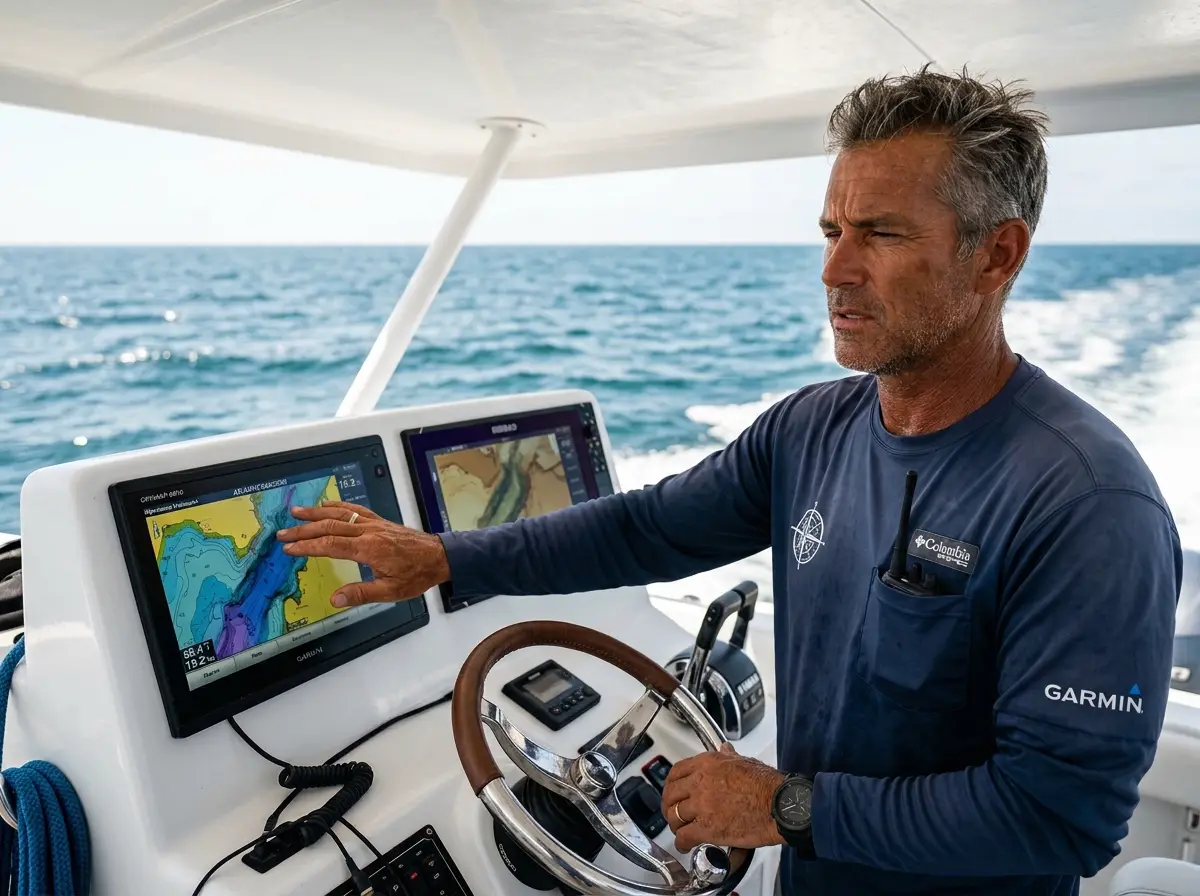
The screen flickered at 22 knots, somewhere over a canyon ridge 40 miles off Cabo. Both MFDs live on my helm — the port unit running C-Map Reveal X, the starboard locked on Navionics Platinum+. I wasn’t comparing them for a magazine piece. I was doing it because I couldn’t trust either one alone after watching the Navionics app delete 5GB of downloaded charts mid-passage the previous season. That morning, the C-Map unit was lagging — rendering stutter on the 4K shaded relief while we were chasing a current seam at speed. At 22 knots, a two-second positioning error is a 100-meter gap. In canyon-edge navigation, that gap matters.
This is not a review. This is an audit. Hardware compatibility, data interpolation physics, subscription economics, and where each system actually breaks — that’s what serious anglers need to make this call.
⚡ Quick Answer: Navionics (Garmin) and C-Map (Navico) are not interchangeable — your MFD brand decides your chart ecosystem before anything else. Navionics cards don’t run on Lowrance or Simrad; C-Map cards don’t run on Garmin. Inside that constraint, C-Map Reveal X delivers superior relief shading for offshore structure identification through its MDOW algorithm, while Navionics leads on inland lake contour density thanks to 12+ million annual sonar log updates. Neither is a complete system alone. The professionals who fish this water hardest run both.
The Chart Ecosystem Map: Who Owns What and Why It Matters
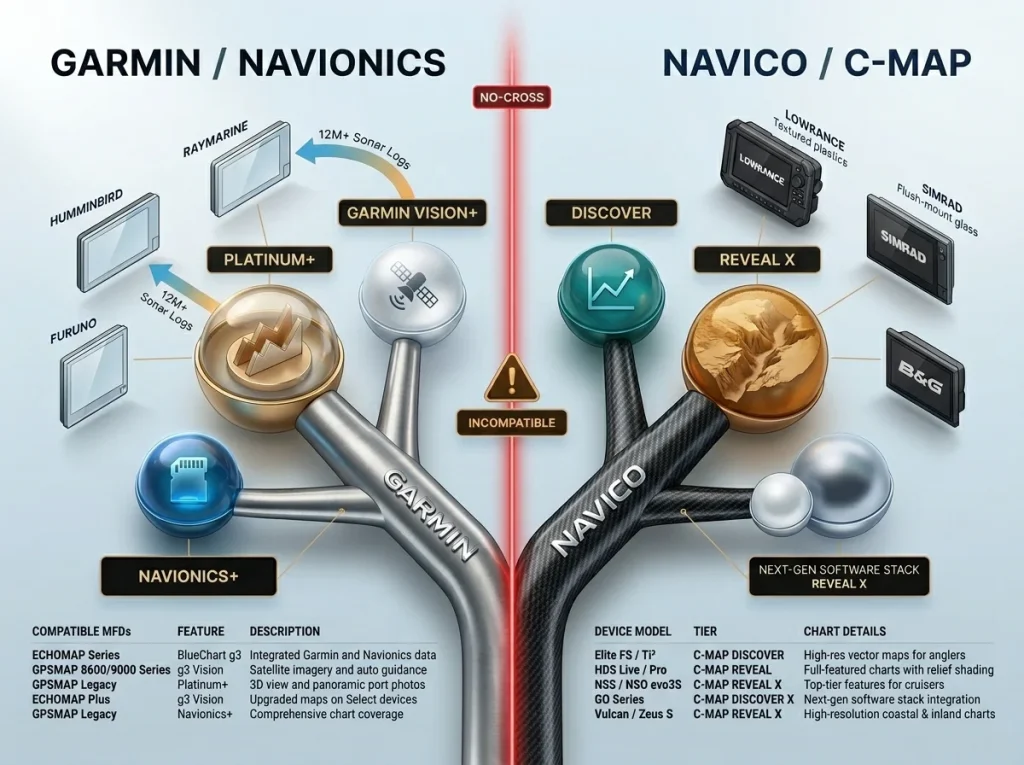
Garmin owns Navionics. Navico owns C-Map. That two-sentence ownership structure controls everything downstream — which card fits your unit, which data gets prioritized, which software team fixes your bugs, and which direction the subscription price is heading.
Garmin acquired Navionics and folded its own cartography into a hybrid stack: Navionics+, Navionics Platinum+, and Garmin Vision+ now pull from both databases. C-Map, sitting inside Navico’s portfolio alongside Lowrance, Simrad, and B&G, is natively optimized for those platforms. C-Map Reveal renders faster and with better fidelity on Simrad NSX and B&G Zeus S hardware than it ever will on a third-party unit — not because of software favoritism, but because Navico engineers its rendering pipeline for its own CPU architecture.
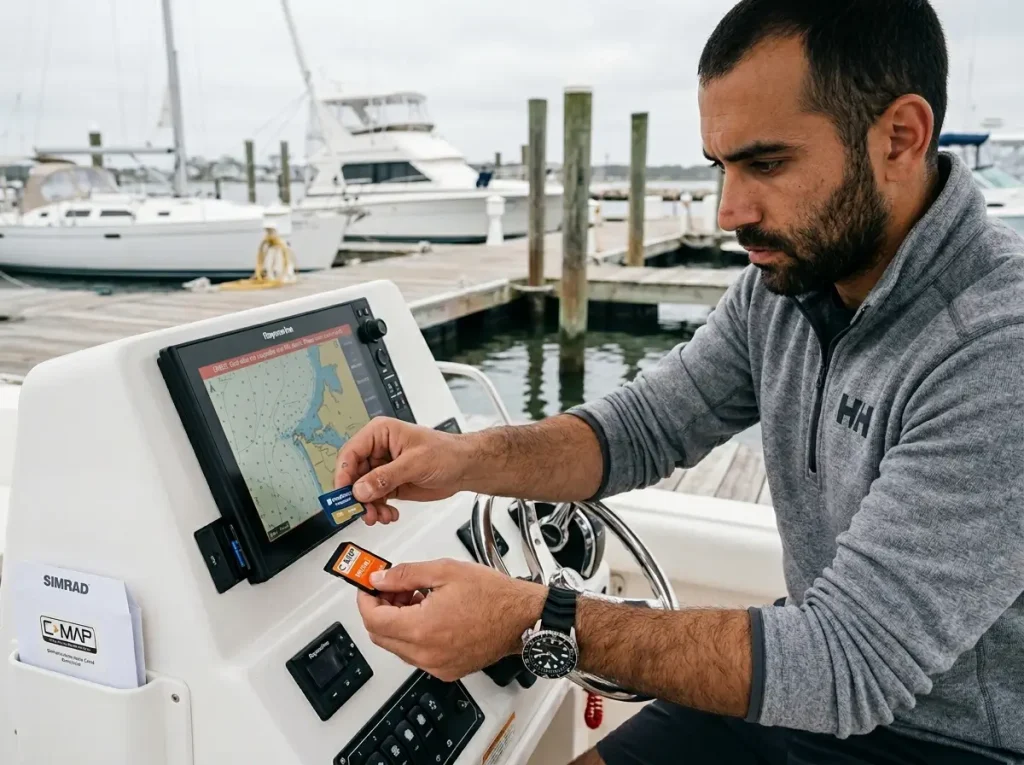
The compatibility matrix is the first decision, not a detail. Navionics microSD cards work on Raymarine, Humminbird, and Furuno units. They do not work on Lowrance, Simrad, or B&G. C-Map microSD cards run on Lowrance, Simrad, and B&G. They do not run on Garmin plotters. Buying the wrong card for your unit is the most expensive and most common mistake in marine electronics — and it happens every day.
If you want to understand which marine GPS units perform best across both ecosystems, hardware brand is the first filter to apply. After that, the chart tiers matter.
The global marine chartplotter market hit USD 8.45 billion in 2025, with Garmin holding 33%+ of market share. That commercial weight translates directly into data investment — Garmin processed over 12 million sonar log updates in 2025 alone. But market share doesn’t run your sounder. Compatibility data does.
Pro tip: Before you buy any chart card, pull the compatibility list for your specific MFD model and firmware version — not just the brand. Some Humminbird units added C-Map support via firmware update. Verify your hardware revision first.
Relief Shading Physics: What The Visuals Actually Tell You
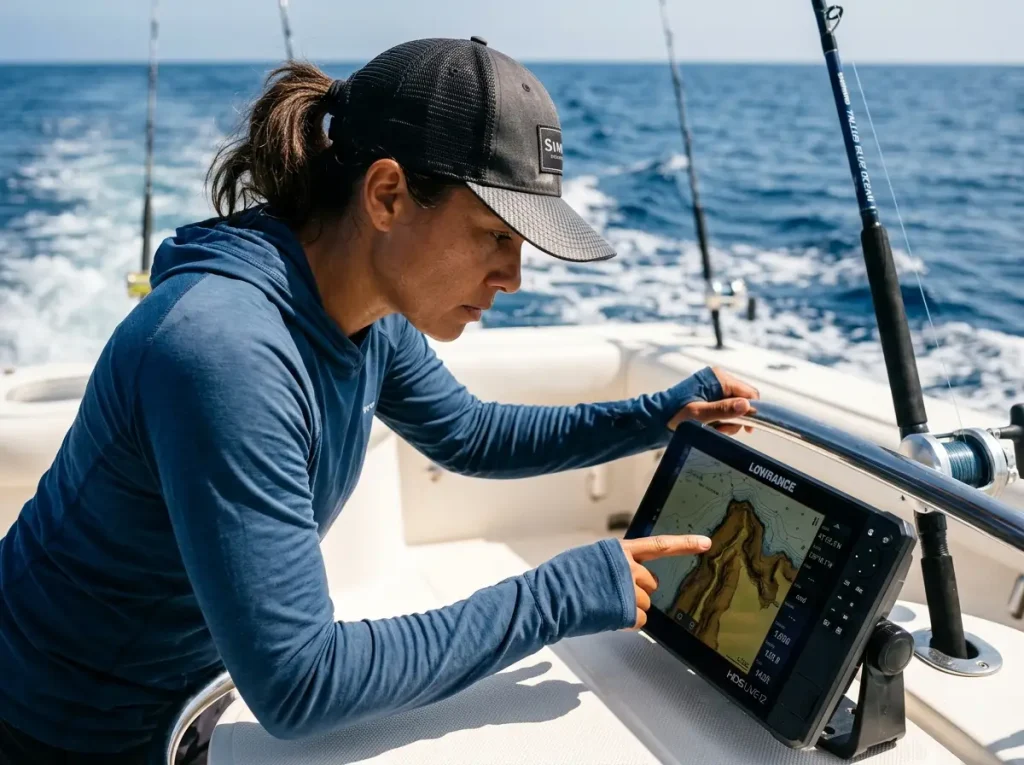
Most anglers see the difference between Navionics Platinum+ and C-Map Reveal X and call it a visual style preference. That’s the wrong read. The difference comes from rendering physics — and understanding it tells you exactly which ledge is holding fish and which one just looks like it might.
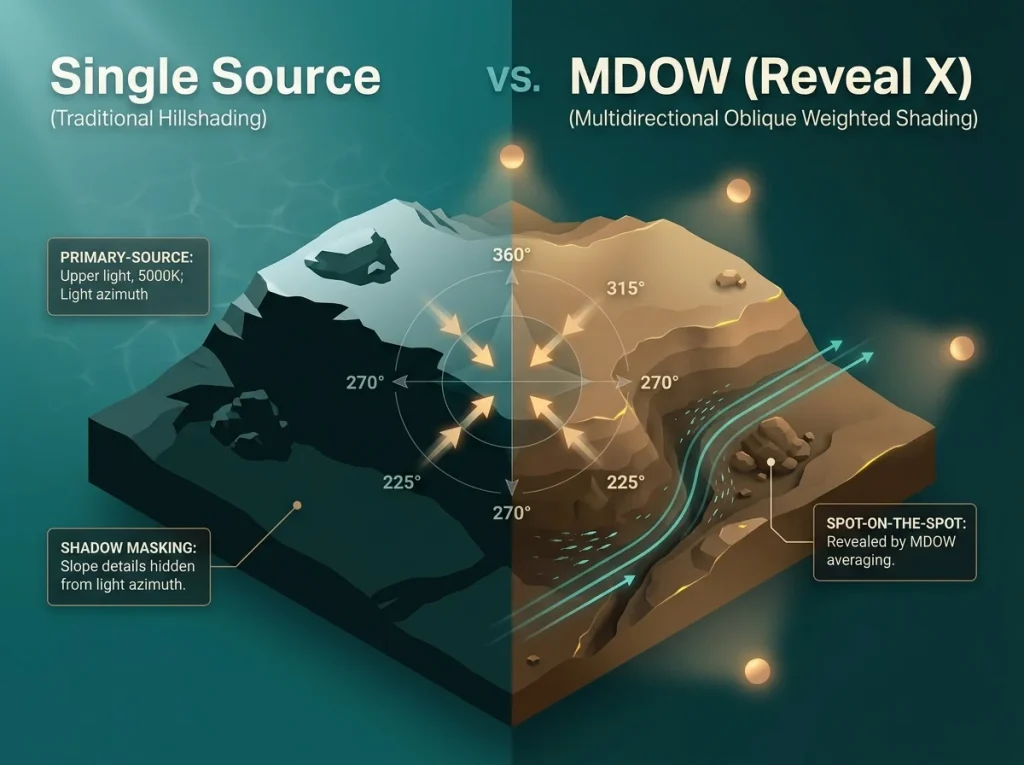
Standard single-source hillshading uses one virtual light direction. Slopes facing away from that light azimuth lose definition entirely — shadow masking. You’re looking at a chart where entire slope aspects simply disappear. For underwater topography, that means ledges running east-west vanish on a north-facing render. The gully between two rockpiles looks flat. The spot-on-the-spot you’re hunting doesn’t appear.
C-Map Reveal X uses the MDOW algorithm — Multidirectional Oblique Weighted shading. Four simultaneous light sources at 360°, 315°, 270°, and 225° are mathematically averaged, which eliminates shadow bias on any slope orientation. The result: narrow gullies show up regardless of which way they face, isolated rockpiles between standard isobath intervals appear as discrete features, and the down-current side of a ledge shows as an identifiable shadow zone rather than blending into surrounding depth.
Navionics Platinum+ takes a different approach. Its cyan-to-deep blue gradient communicates depth zone transitions fast — excellent for high-speed navigation and harbor approaches. The tradeoff is that it can flatten micro-topography where the depth change is gradual. A smooth sandbar shows clearly. A subtle isolated hump between two isobaths might not.
After reading contour patterns that hold fish long enough to trust them, you start reading color language instinctively. On C-Map Reveal, brownish-yellow topography is limestone or shell hard-bottom — ambush predator habitat. As Capt. Ryan Van Fleet of Good Karma Sportfishing puts it: “Everything begins with the limestone bottom.” Dark shadow zones immediately adjacent to bright ridges indicate the steepest structural transitions — where currents accelerate and baitfish stack against the break.
The hydrographic foundation that both platforms build on is defined by NOAA’s National Ocean Service — but how each platform renders that data at the display level is what determines whether you fish the right feature or miss it by 50 yards.
I’ve run both systems over the same canyon structure offshore Cabo three seasons running. The moment C-Map Reveal X started showing a discrete rockpile sitting 15 feet below the surrounding ledge — a feature that reads completely flat on Navionics — I stopped treating the shading difference as cosmetic. That pile holds wahoo. It doesn’t show on a standard vector chart at any zoom level.
How MDOW Shading Works: The Four Light Sources
Single-source shading creates what cartographers call “plastic shading” — a polished, uniform look that misses structural detail on slopes facing away from the light. MDOW eliminates this by averaging four azimuth angles that cover all slope orientations simultaneously. No ledge faces away from all four sources at once. The weighted average means high-prominence features — sharp ridges, isolated rockpiles — show as brighter zones regardless of compass orientation.
The practical consequence: if a structure doesn’t appear on a standard vector chart but shows up on MDOW-rendered Reveal X, it likely sits between the resolution threshold of official survey data. Those are the spots nobody else marks.
Reading the Color Language: Navionics Palette vs. C-Map Relief
Navionics Platinum+ uses its color palette to communicate depth zone awareness at speed. That’s its design intent — at-a-glance readability on a moving vessel. C-Map uses shaded topographic earth tones where brightness indicates structural prominence — lighter areas project upward from the surrounding terrain.
Both have a place. The mistake is treating them as equivalent tools for the same job.
Pro tip: On C-Map Reveal, look for dark shadow zones directly adjacent to bright ridge lines. That contrast indicates the steepest drop. Current accelerates over those transitions, and baitfish concentrate in the thermal refuge below the break.
Micro-Topography Identification: The “Spot-on-the-Spot”
The spot-on-the-spot is the specific micro-feature within a larger reef, wreck, or ridge that holds the most active fish at any given time. Not the general area — the precise rockpile on the down-current side, the isolated boulder at the base of the ledge, the seam where two substrate types meet.
MDOW shading is the only currently available chart rendering technology that reliably shows these features at chart scale. If you’re fishing a general area marked on standard vector charts and not finding fish consistently, the problem might not be the fish. It might be what your chart isn’t showing you.
Data Integrity: Crowdsourced Volume vs. Curated Accuracy
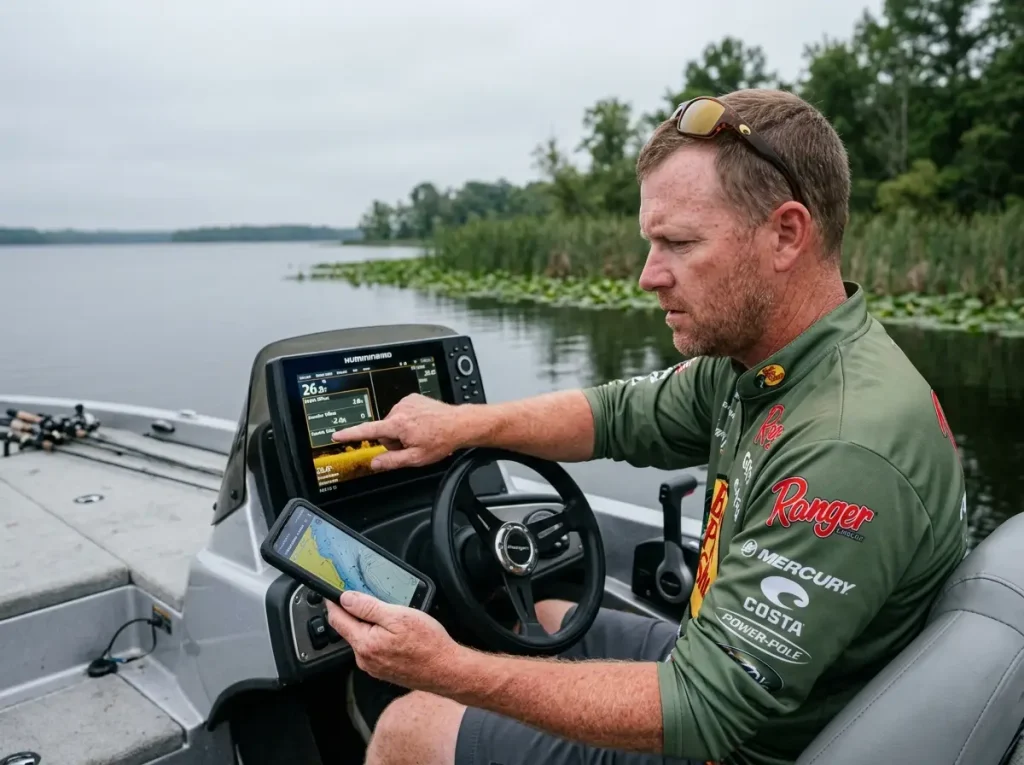
Navionics processed 12 million sonar log updates in 2025. That number dominates inland US lake coverage — no other platform comes close for contour density on waters with heavy recreational boat traffic. The Great Lakes, Florida, Texas reservoirs: Navionics wins on raw resolution.
The problem is what that data is made of. Those 12 million updates come from anglers running their sounders in conditions ranging from dead calm to moving water, at varying tidal heights, on vessels with sounder offset settings that range from correctly calibrated to guesswork. Every uncorrected sounding goes into the database. SonarChart Live interpolates contours from millions of these logs using a spline-based smoothing algorithm — it fills gaps between sparse soundings by mathematical inference.
In densely surveyed US inland waters, the error rate is low enough to trust. In areas with thin crowdsource coverage, the cracks show. In regions like the Glenan Islands, SonarCharts have rendered navigable shallow-water passages as solid land — the “drying tongue” error, caused by uncorrected soundings taken at varying tide heights. Port entrances like Roscoff show non-existent blue channels generated from high-water fishing boat soundings never corrected to chart datum.
C-Map Genesis uses a Kriging interpolation model where a quality control team verifies shoreline geometry before publishing updates. The volume of updates is lower. The integrity check is higher. For Georgian Bay, coastal Pacific, and remote offshore regions where national hydrographic investment is thin and the Navionics crowdsource pool is sparse, C-Map is the more reliable system.
Field calibration matters in both systems. A two-foot draft error on a contributing vessel creates two-foot depth errors in the chart for everyone who downloads that data afterward. Get your sounder offset set correctly — waterline reference, not keel — before contributing to any crowdsourced database.
A chart interpolation error mid-offshore isn’t just inconvenient. That’s why backing up your waypoint data before a chart error wipes your marks is not optional hygiene — it’s part of running a sound navigation system.
Pro tip: In any region where you know the fishery well — your home lake, your regular offshore canyon — cross-reference both platforms against the official government chart before your first trip of the season. Neither system is ground truth.
Hardware Compatibility and MFD Performance Under Load
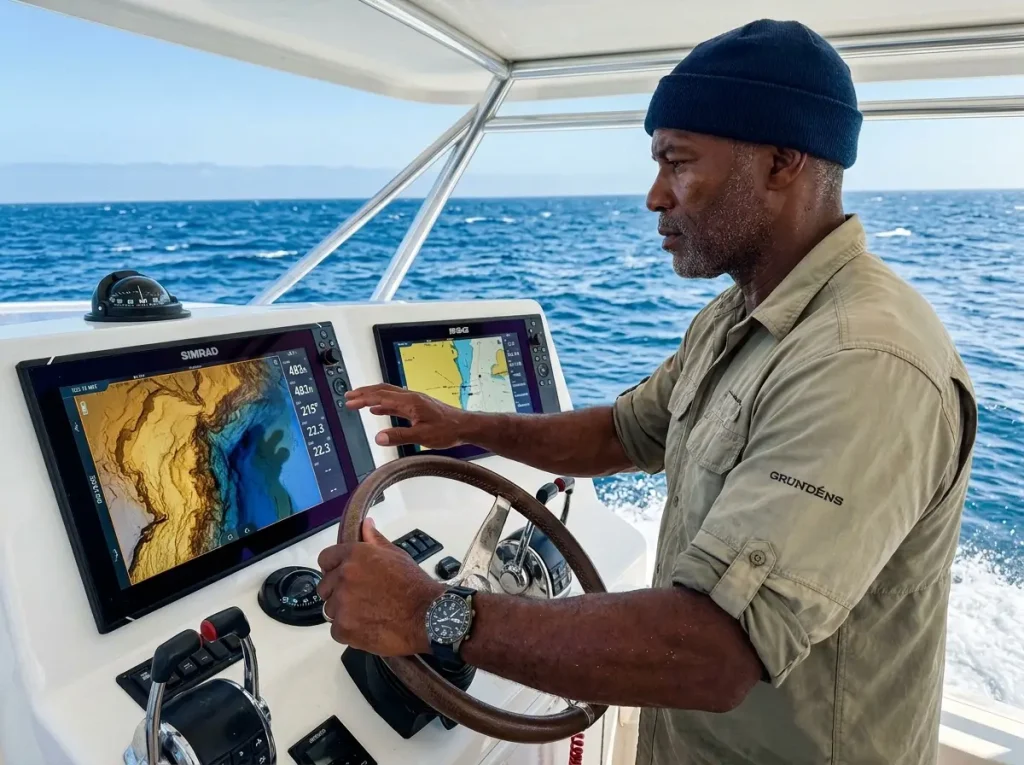
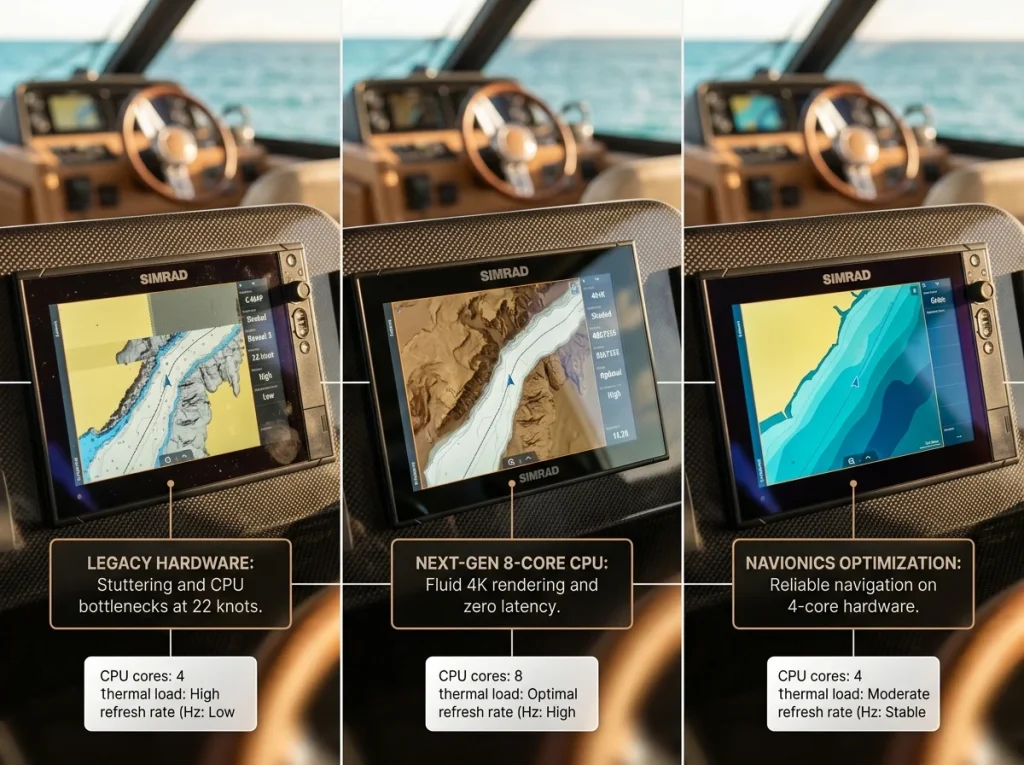
Here’s the thing nobody in the marketing materials mentions: C-Map Reveal X is specifically engineered for 8-core CPU hardware — Simrad NSX, B&G Zeus S. On older 4-core units, Reveal X down-renders to the standard Reveal visual. You’re paying for a shading layer your hardware cannot fully render.
Rendering MDOW shading and 4K satellite overlays places significant CPU load on older Multi-Function Displays. Legacy units like the Simrad GO9 XSE and Lowrance Hook Reveal frequently stutter during high-speed panning on Reveal layers. At 22 knots, a two-second rendering lag produces a 100-meter positioning error. Over a canyon edge, that’s the difference between a clean pass and a problem. Understanding how your NMEA 2000 network load affects MFD processing speed matters here — a heavily loaded NMEA 2000 bus compounds the rendering latency problem.
There’s one more variable that never gets covered: CPU thermal throttling. In tropical environments — Cabo, Southeast Asia, the Gulf in August — MFDs running MDOW shading for eight or more hours experience thermal throttling. The CPU downclocks to prevent overheating, which makes render lag progressively worse through the afternoon, just as the tide turns and the fishing picks up. The 7-12 inch MFD segment (39.7% of the market in 2025) is most susceptible — smaller cooling surfaces combined with high-resolution display demands.
Garmin Navionics chips are preloaded on many Garmin units with a one-year subscription included. That means Garmin hardware runs Navionics Platinum+ with full optimization from day one. Third-party hardware running the same card doesn’t get that advantage.
Compatibility Matrix: Who Runs What
Navionics microSD cards: compatible with Raymarine, Humminbird, and Furuno. Not compatible with Lowrance, Simrad, or B&G. C-Map microSD cards: compatible with Lowrance, Simrad, and B&G. Not compatible with Garmin. Some Humminbird units now support C-Map via firmware update — verify your specific hardware revision and firmware version before purchasing.
Legacy vs. Next-Gen Performance Thresholds
For anglers running pre-2023 MFDs, Navionics Platinum+ typically delivers more consistent real-time performance than C-Map Reveal X, because its rendering demands are lower. The Platinum+ relief shading is effective without requiring 8-core processing power. If your unit stutters at anchor with C-Map Reveal X loaded and zero vessel motion, expect significant performance degradation at speed.
The guides running serious offshore trips in Cabo and the remote Pacific don’t argue about which chart is better. They run both. C-Map Reveal on one screen for high-speed current seam identification and structural targeting; Navionics on the other for autopilot routing and harbor approach. This isn’t a luxury setup — it’s a risk-mitigation protocol. A ruggedized IP68/IP69K tablet running a backup platform is the minimum for remote offshore use.
The thermal throttling issue bit me hard on a long Baja run in July. By 2pm, the render lag on the C-Map screen had gotten bad enough that I switched to Navionics for active navigation and kept the C-Map layer live on the secondary screen just for structure reference. When the hunting gets serious in the late afternoon, that secondary screen is what you’re actually fishing off of — the primary is just keeping you from hitting something.
The Subscription Trap: Financial Risk and the “Brick” Scenario
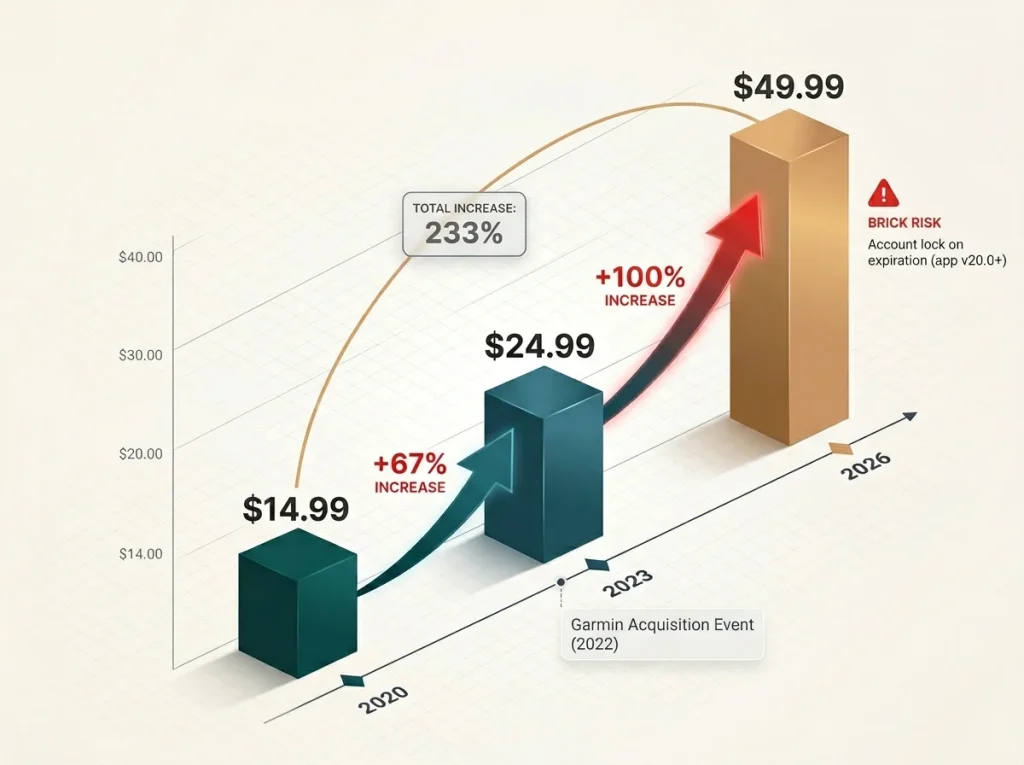
Navionics pricing between 2020 and 2026: from $14.99 to $24.99 to $49.99. That’s a 233% increase over six years. Not gradual inflation — deliberate market repricing following Garmin’s acquisition. The mobile subscription and the chartplotter card subscription are separate products at separate price tiers.
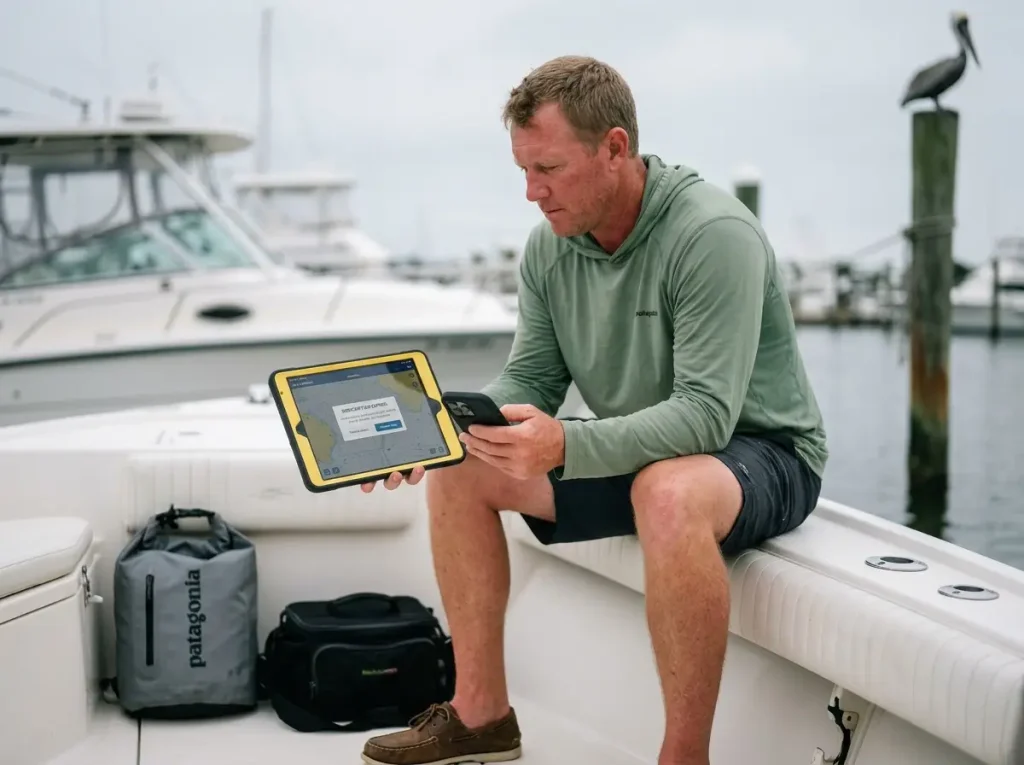
The mechanic that matters operationally: the Navionics Boating app (v20.0+) hides previously downloaded charts the moment a subscription lapses. Your device becomes non-functional for navigation until a new payment of $49.99–$99.99 is processed. The app doesn’t warn you that this will happen. It just happens. This is the “brick risk” in live-aboard and offshore communities — and it’s an accurate description.
User field reports confirm the Navionics app can unilaterally delete up to 5GB of offline chart data mid-voyage and then require a high-speed internet connection to restore data that was previously downloaded and paid for. If you’re at anchor forty miles offshore without connectivity, that chart isn’t coming back until you get to port. Logging out and back in with a different account permanently erases all downloaded charts. It always happens at the worst time.
This is why protecting your waypoint database before a subscription event wipes it belongs on the same checklist as checking your engine oil before departure. The charts and the waypoints are both at risk in the same event.
C-Map chartplotter SD and MSD cards allow continued use of the last-downloaded chart data after subscription expiration. Offline functionality is preserved. For anglers in remote areas without internet access, the card-based subscription carries lower operational risk than the mobile app model. C-Map’s Dynamic Licensing for ENCs operates on 3-month credit windows requiring frequent re-authentication — a different risk profile, but still a consideration for extended offshore deployments.
Pro tip: Keep an expired chart card as a backup. Its last-downloaded state — even if months out of date — is operationally more reliable than a subscription-blocked mobile app with no offline fallback.
The 233% Price Trajectory: What the Numbers Say
The progression: 2020–2022 at $14.99, 2023 at $24.99 (+67%), 2024–2026 at $49.99 (+100%). That’s the rent-seeking model operating at scale, and it shows no signs of reversing.
Chart Card Expiration vs. App Subscription: Different Risk Profiles
Physical SD and MSD chart cards preserve offline functionality after subscription expiration. The mobile app does not. That distinction is the most important operational difference between the two platforms for anglers who fish remote areas, run extended offshore trips, or travel internationally where cellular connectivity is unreliable. Know which one you’re relying on before you leave the dock.
Regional Coverage Gaps: Where Each System Actually Fails
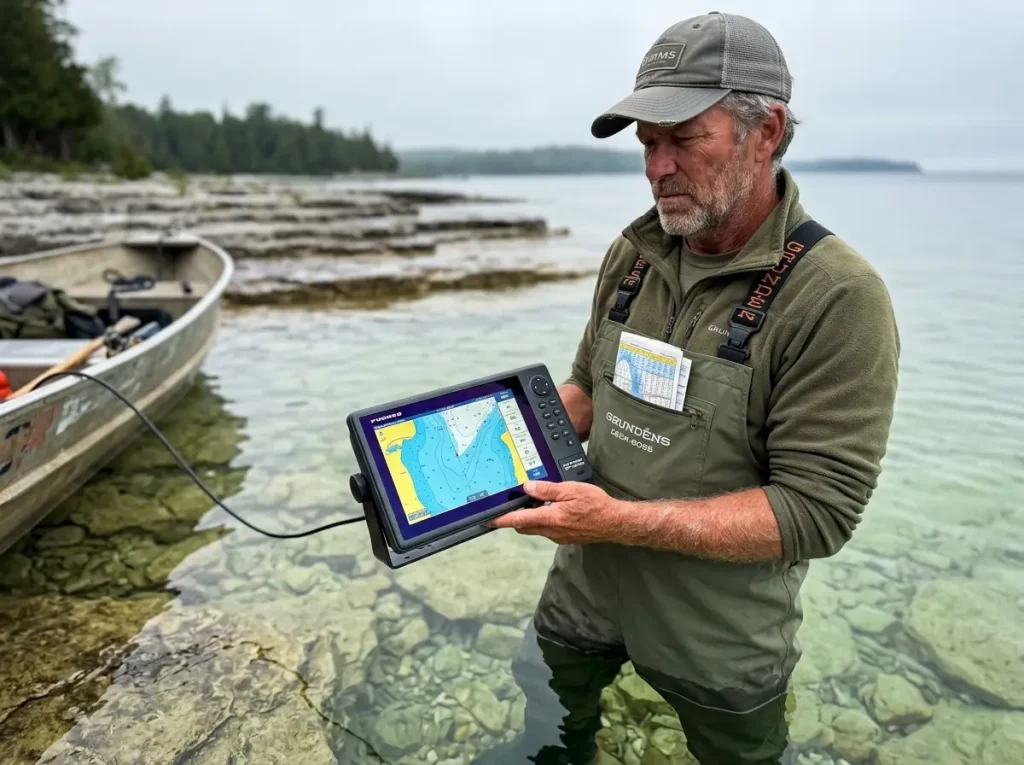
US inland lakes with heavy recreational boat traffic: Navionics wins. The 12 million annual sonar log updates create 1-foot contour resolution that C-Map hasn’t matched on lakes across Florida, Texas, and the Great Lakes basin. SonarChart HD at one-foot resolution on waters where millions of recreational anglers contribute soundings every season is genuinely impressive coverage.
Georgian Bay and coastal Great Lakes: professional guides cite C-Map as more reliable for shoal navigation. The QC-verified shoreline geometry is more trustworthy than mass-interpolated data in an area where a “drying tongue” error means a hull strike.
Remote Pacific and Atlantic blue water: both platforms fall back to official ENC source data — meeting IHO S-44 global hydrographic survey accuracy standards — and performance largely equalizes. At that point, redundancy becomes the deciding factor, not data quality.
Southeast Asia and other regions where national hydrographic investment is limited: C-Map Genesis curated data is more reliable. The Navionics crowdsource pool thins rapidly outside US waters, and the error rate in the spline interpolation rises accordingly.
C-Map carries two coverage advantages that Navionics hasn’t matched. The SAV (Submersed Aquatic Vegetation) layer visually highlights submersed aquatic vegetation where ambush predators concentrate. The bottom hardness acoustic reflectivity overlay distinguishes mud from shell beds at the display level — a functional advantage with a direct fish-catching application for anglers targeting species that key on substrate type.
For supplementing chart cards in coverage-weak areas, mobile fishing apps that complement your chart card setup can fill gaps — but they don’t substitute for verifying your primary chart against official sources before departure.
US Inland Waters: Where Navionics Dominates
Density of data is not the same as accuracy of data. On heavily trafficked inland lakes, the two often converge — more soundings mean better coverage and faster error correction. On smaller, less-traveled lakes, the crowdsource pool thins and calibration errors accumulate. SonarChart Live continues updating in real-time during fishing sessions on compatible units, which is genuinely useful for discovering structure during a day on the water. But real-time updates built on uncorrected soundings are still uncorrected data — use them as leads, not as navigation.
Offshore and Remote Regions: Where C-Map Holds the Edge
C-Map reprocessed 500+ lakes as part of its 2025 North America enhancement program. As C-MAP Product Manager Jakob Svensson put it: the dedicated product team is consistently enhancing charts and sourcing updated data. That curation approach shows most in regions where the Navionics crowdsource model produces thin, unreliable data — coastal Pacific, Southeast Asian fisheries, remote island groups in the Atlantic. If your regular water is outside the continental US, run the C-Map card and verify it against official charts before the first trip.
Conclusion
Three things to take off this water before your next offshore run.
First: your hardware decides your chart ecosystem. That’s not negotiable. Check the compatibility matrix for your specific MFD model and firmware before spending anything on cards.
Second: C-Map wins on structural visibility offshore. Navionics wins on inland data density. Neither statement is absolute — hardware generation, regional crowdsource density, and your specific fishery shift the advantage. The guides who fish both systems simultaneously aren’t doing it out of indecision. They’re doing it because each system fails in a different place.
Third: the subscription model carries real operational and financial risk. Know exactly what happens to your charts when the payment lapses. Before your next trip, check your card’s expiration date, verify your sounder offset calibration, and run your relief shading layer at dock speed for five minutes. If it stutters with the vessel stationary, plan for the latency you’ll face at 22 knots. Then pull the NOAA chart for the same area and compare the delta between what you see on the plotter and what official hydrographic data says. That gap is the real measure of your chart’s reliability.
FAQ
Is C-Map better than Navionics for fishing?
Neither is categorically better — the answer depends on your hardware and your water. C-Map Reveal delivers superior relief shading physics via the MDOW algorithm for offshore structure identification. Navionics Platinum+ delivers higher contour density on US inland lakes due to a larger crowdsource pool. Match the platform to your specific fishery and your MFD brand before anything else.
Do Navionics chips work in Lowrance?
No. Navionics microSD cards don’t work in Lowrance or Simrad units. Loading a Navionics card into a Lowrance unit produces no chart display. Lowrance and Simrad run C-Map natively. This is the most common and most expensive purchasing mistake in marine electronics — it happens to experienced anglers, not just beginners.
What is the difference between Navionics+ and Platinum+?
Navionics+ provides vector chart data with standard contouring and SonarChart HD at one-foot resolution. Navionics Platinum+ adds high-resolution bathymetry with multi-directional light source simulation, 3D views, and daily chart updates. The structural detail difference is significant — but only on hardware capable of rendering the premium shading layer without lag. On a legacy unit, you’re paying the Platinum+ price for Navionics+ visual performance.
What happens to my Navionics charts when my subscription expires?
Physical chart cards (SD or MSD) preserve the last-downloaded data after expiration — offline functionality holds. The Navionics Boating app (v20.0+) hides charts immediately upon expiration, rendering the device non-functional for navigation until a new subscription is purchased. The app behavior is the higher operational risk. Plan for it before it happens offshore.
Can I use Navionics on a B&G plotter?
B&G plotters run on the Navico platform — same parent as Lowrance and Simrad — and natively support C-Map charts. They don’t support Navionics SD card data. B&G units with Wi-Fi connectivity can display the Navionics Boating app on a paired tablet as a secondary reference, but that’s a separate app ecosystem running on a second device, not chart card integration. The hardware compatibility and annual subscription structures of each ecosystem are separate and don’t merge at the MFD level.
Risk Disclaimer: Fishing, boating, and all related outdoor activities involve inherent risks that
can lead to injury. The information provided on Master Fishing Mag is for educational and informational purposes
only. While we strive for accuracy, the information, techniques, and advice on gear and safety are not a substitute
for your own best judgment, local knowledge, and adherence to official regulations. Fishing regulations, including
seasons, size limits, and species restrictions, change frequently and vary by location. Always consult the latest
official regulations from your local fish and wildlife agency before heading out. Proper handling of hooks, knives,
and other sharp equipment is essential for safety. Furthermore, be aware of local fish consumption advisories. By
using this website, you agree that you are solely responsible for your own safety and for complying with all
applicable laws. Any reliance you place on our content is strictly at your own risk. Master Fishing Mag and its
authors will not be held liable for any injury, damage, or loss sustained in connection with the use of the
information herein.
Affiliate Disclosure: We are a participant in the Amazon Services LLC Associates Program, an
affiliate advertising program designed to provide a means for us to earn advertising fees by advertising and linking
to Amazon.com. As an Amazon Associate, we earn from qualifying purchases. We also participate in other affiliate
programs and may receive a commission on products purchased through our links, at no extra cost to you. Additional
terms are found in the terms of service.