
In this article
I watched the three-pound smallmouth trail my swimbait for thirty feet. It wasn’t preparing to strike. It was shadowing the wake, checking the cadence. On heavily pressured lakes, surviving means abandoning the tactics everyone else uses.
You aren’t fishing for the dumb ones anymore. Those ended up in a cooler seasons ago. You are targeting survivors. When you hit the ramp on Saturday, you face a population evaluating every threat based on hard experience. You need a pressure adjustment matrix, forcing drastic tactical adjustments to trick fish that have seen every lure in the catalog.
| Fishing Strategy Comparison | |
|---|---|
| Traditional Approach | Pressured Adjustment |
| Straight Monofilament | Braided Line to Fluorocarbon Leader |
| Brushed Trolling Motors | Brushless Motors (Acoustic Stealth) |
| Steady Cranking | Dead-Sticking and Radical Pauses |
| Constant Forward Sonar Ping | Target Filtering and Stealth Approach |
⚡ Quick Answer: High-pressure waters force you to cut your acoustic and optical footprint. Shrink your lure size to limit water displacement, switch to pure fluorocarbon leaders to beat their vision, and interrupt your retrieve to trigger a reaction. A motionless bait often works better than a perfectly reeled one.
The Biological Reality of “Educated” Fish
The Genetics of Angling Vulnerability
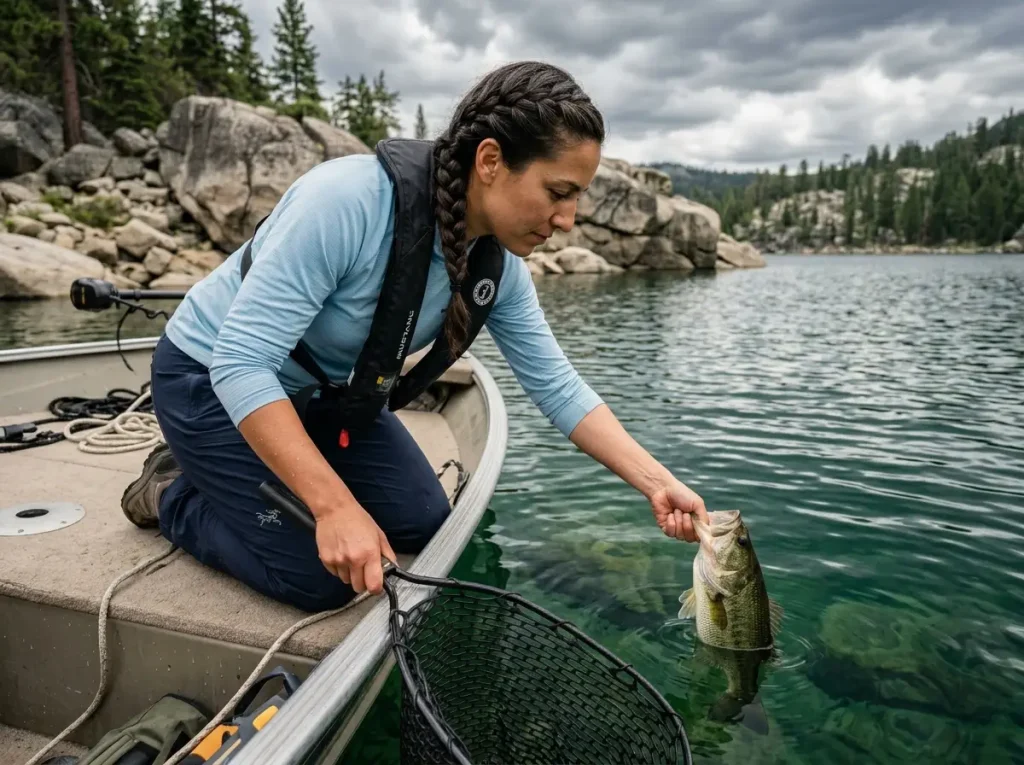
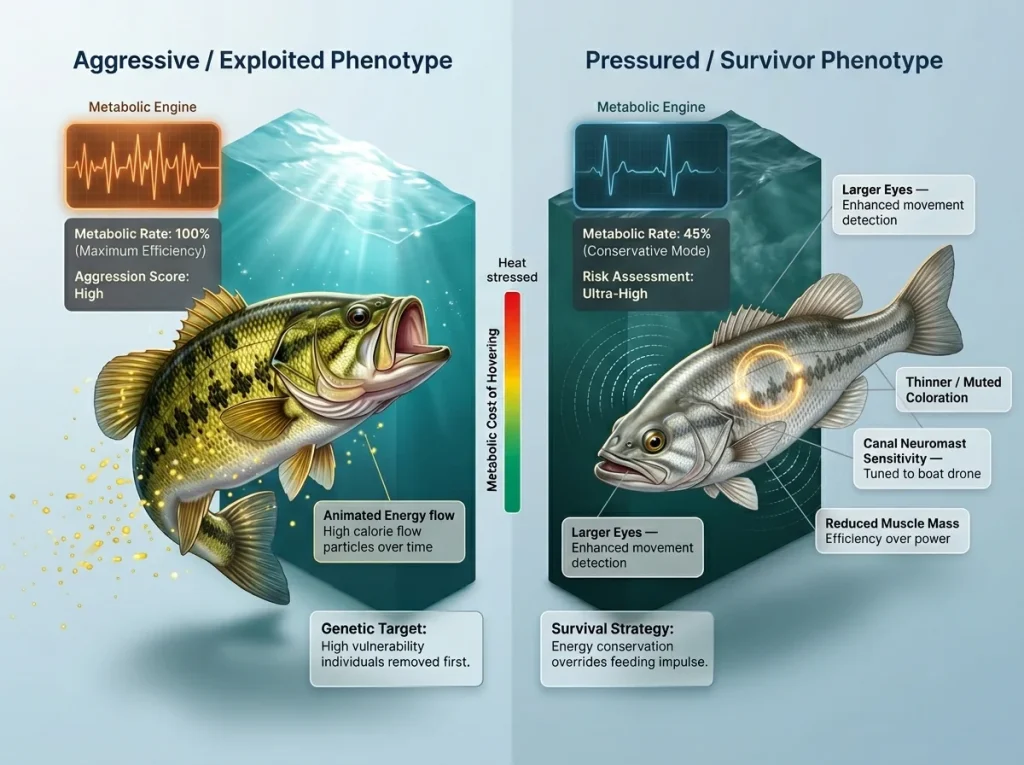
Constant fish conditioning alters the genetic makeup of the population over just a few generations. The aggressive, fast-metabolism fish that smash every loud spinnerbait get removed from the gene pool early.
What gets left behind is a different animal. These survivors exhibit naturally lower metabolic rates and feed with calculated efficiency. If you examine the metabolic rates of exploited populations, you notice a clear physical difference. They conserve energy, refuse risky chases, and analyze the environment. You must make the meal outweigh the risk.
The Energetic Cost of “Hovering”
When the weekend boat traffic fires up, fish suspend in open water. This defensive posture carries a massive metabolic cost. Fish are biologically unstable when sitting still in the middle of a water column. Because of this constant micro-correction fighting, a suspended fish burns up to twice as much energy as a resting fish. When you drag a bait past a suspended bass that has been dodging boat traffic all morning, you are presenting to an exhausted, stressed animal.
Pro-Tip: Stop burning fast lures past suspended fish holding over deep water. Drop a heavy jig straight down through their column instead, forcing a vertical reaction that limits the swimming effort they have to make.
Stress Recovery and the “Off-Bite” Window
Getting dragged into a boat triggers a massive chemical spike. Following a hard fight, the fish absorbs huge amounts of plasma cortisol and lactate. This creates a mandatory physiological shutdown. Its system enters a stress recovery window that often lasts thirty hours. During this period, they are physically incapable of feeding.
When you fish a community lake on Sunday afternoon, a huge percentage of the population is trapped inside this recovery mode. You are fighting biochemistry. The collective stress from boat traffic forces the lake into a holding pattern. Highly pressured waters undergo a quiet reset period around Tuesday afternoon once the resident population clears the lactate from their tissues.
Mechanosensory Defense: Why Your Lure is Too Loud
Neuromast Tuning and Frequency Discrimination
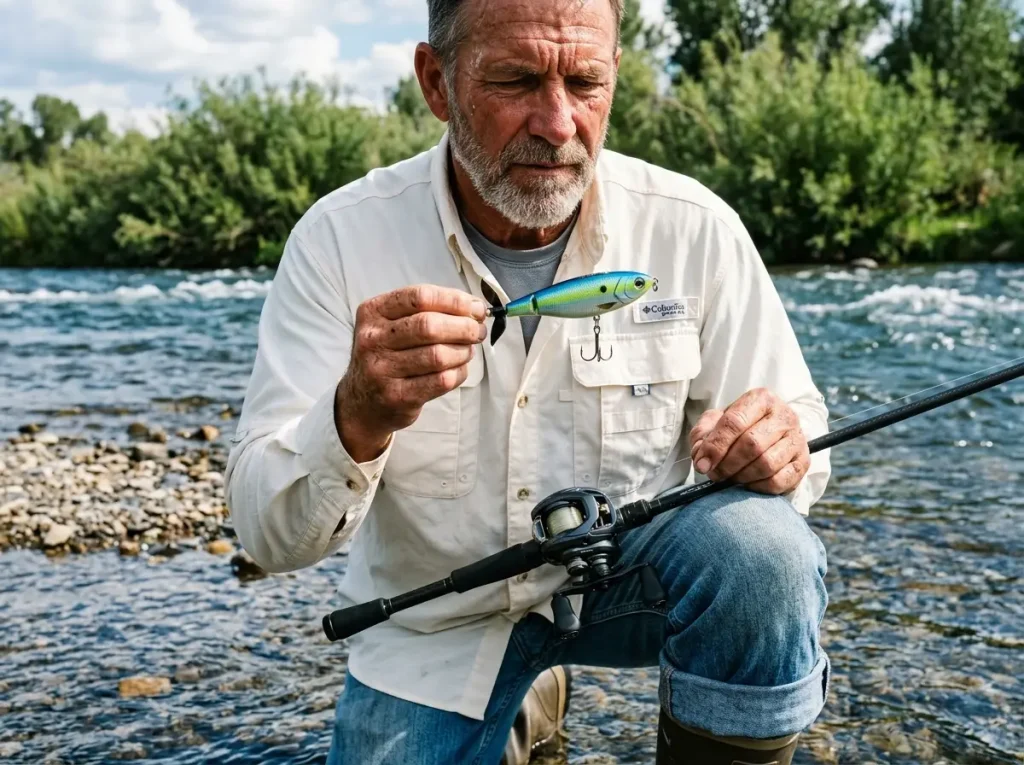
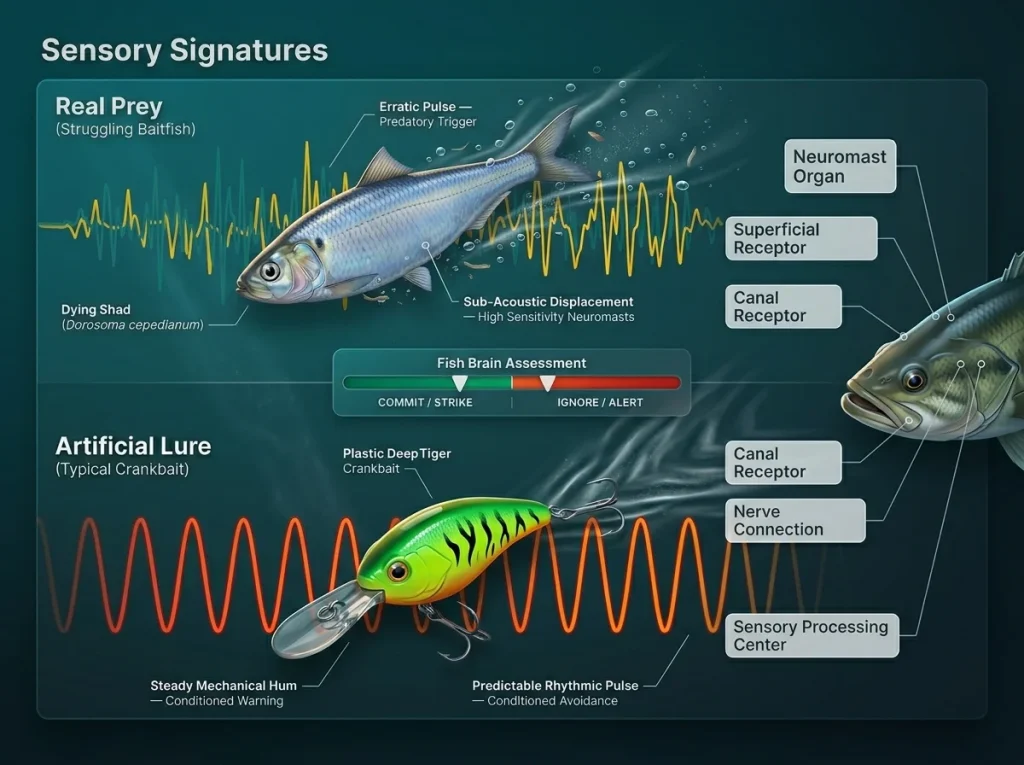
Vision handles the final strike, but lateral line sensitivity dictates the initial approach. Bass and walleye use their lateral line to read the water long before they see the plastic. They divide this input through canal neuromasts and free neuromasts.
Canal neuromasts are tuned to the high-frequency vibrations of struggling prey, while free neuromasts are dialed in for ultra-low vibrations. When an angler throws a rattling crankbait, it screams on frequencies that do not exist in nature. In heavily fished locations, it rings an alarm bell. Educated fish recognize the rhythmic mechanical pulse rate of artificial baits.
Reading Hydrodynamic Lure Fingerprints
Every bait leaves a unique hydrodynamic fingerprint that predators read like a barcode. This vortex trail hangs in the water column long after the lure passes. Real baitfish leave erratic, broken trails. A hard plastic lure carves a perfectly symmetrical, repeating wake every single time.
If you maintain a steady, mechanical retrieve, the lateral line confirms the bait is artificial. The strike zone override happens right at the end. Interrupting that steady rhythm is the absolute only way to break their pattern. Stop the handle, twitch the rod tip hard, halt the bait completely. Breaking the rhythm destroys the perfect vibration signature, tricking the neuromasts into registering a sudden panic response.
Lure Exhaustion and the “Whopper Plopper” Effect
Tactical dominance burns out quickly on public water. When a loud, high-action topwater bait like the Whopper Plopper first hits the market, it pulls violent strikes. Fish have never felt that specific low-frequency churn before, so curiosity overrides caution.
Give that exact same bait three seasons on a crowded lake, and the action crashes. Because the acoustic signature is incredibly loud, nearly every fish hears it constantly. Hundreds of hooked fish learn to associate that exact sound with severe trauma. The sound becomes a deterrent. The lure goes from a top-performing tool to a warning siren.
Optical Discernment: The Physics of Underwater Visibility
Refractive Index: Fluorocarbon vs Monofilament
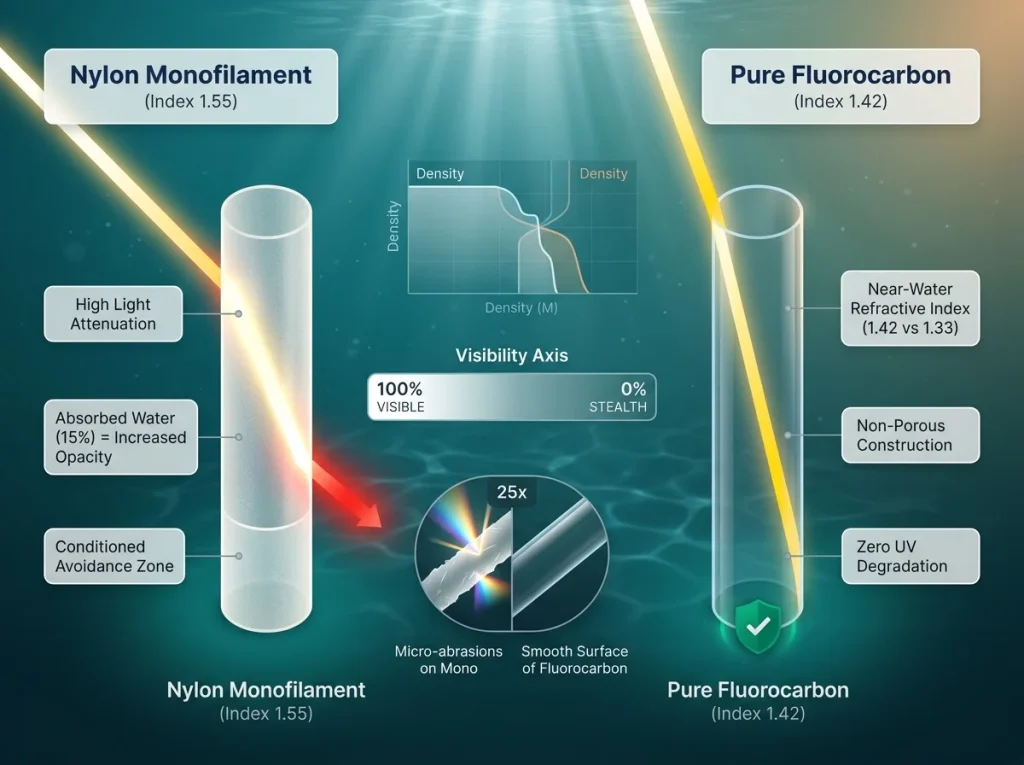
In clear water, visual confirmation seals the deal, and bulky setups fail fast. To truly hide the line, respect how light bends underwater. The trick lies in the material’s refractive index.
Pure water has a refractive index of 1.33. Traditional nylon monofilament sits way higher, between 1.52 and 1.62. Light hits the cheap monofilament and bends sharply, making the line glow brightly against the water background. Quality fluorocarbon, engineered for pure stealth, hits an index right around 1.42. It nearly matches the water itself. When they cannot find the shadow of the line, they alter their fish decision matrix and commit to the meal.
The Dangers of Line UV Degradation
Fluorocarbon aggressively rejects water and fights off the sun. Monofilament acts exactly like a sponge. Throughout a long day out, nylon absorbs up to fifteen percent of its own weight in water. This swelling makes the line thicker, heavier, and significantly more opaque.
The sun also degrades cheap lines. Ultraviolet exposure rots the line right from the outside edge. This light attenuation compromises your breaking strength, and it carves micro-abrasions that catch the sunlight. Quality fluorocarbon is non-porous and ignores UV light.
Pro-Tip: Run your bare fingers down the last three feet of your leader after you drag a solid fish over a tree branch. If you feel any scuffing or roughness at all, cut and retie immediately. Those microscopic nicks catch the sun like a glass prism underwater.
Conditioned Avoidance to Bold Line Signatures
Extensive testing confirms that heavily fished bass develop a rapid, hardened avoidance to specific line colors. Fish easily associate bright fluorescent braided line with the sudden trauma of looking at the inside of a boat. Once they learn that visual cue, they refuse to swim near it.
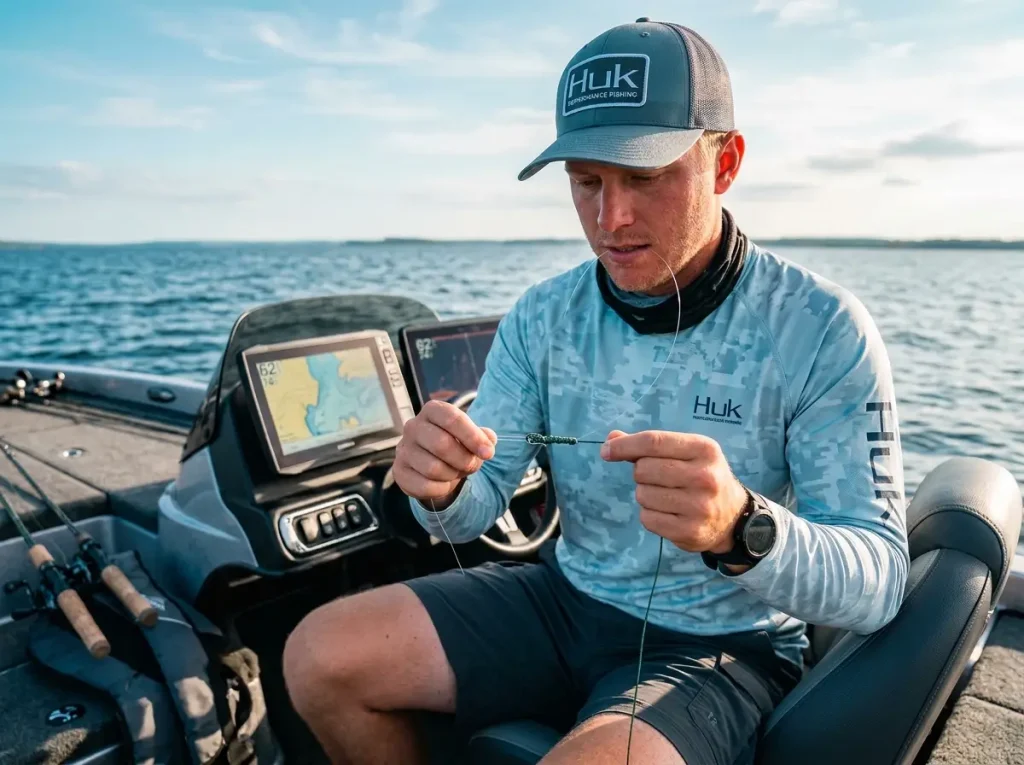
This operant conditioning proves that tying straight neon braid to your hook in clear water is a mistake. Their spectral sensitivity allows them to pick up colors we barely notice underwater. Splicing a ten-foot section of pure fluorocarbon to your braid gives you the brute winching power you want alongside the visual disguise necessary to close the deal.
The Anthropogenic Soundscape: Navigating Pressure Waves
Acoustic Profiles of Trolling Motors
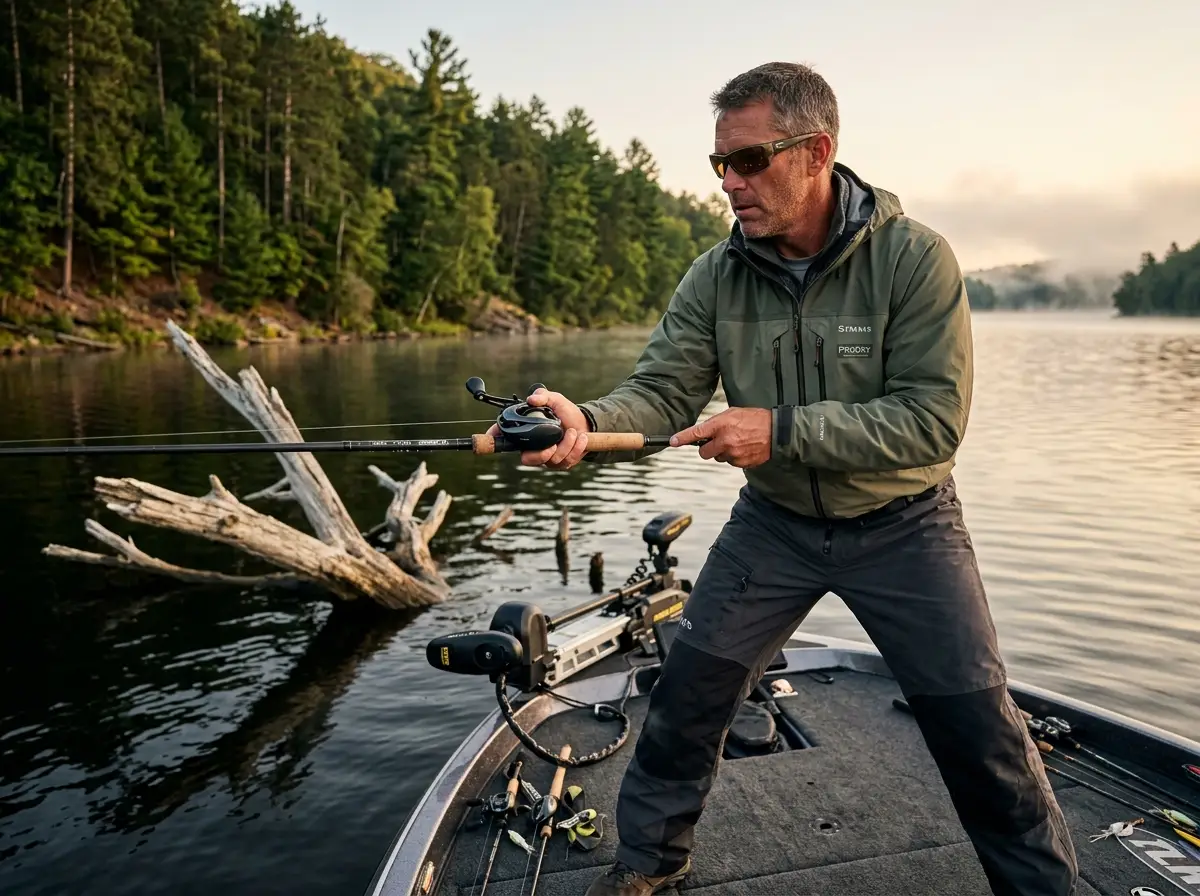
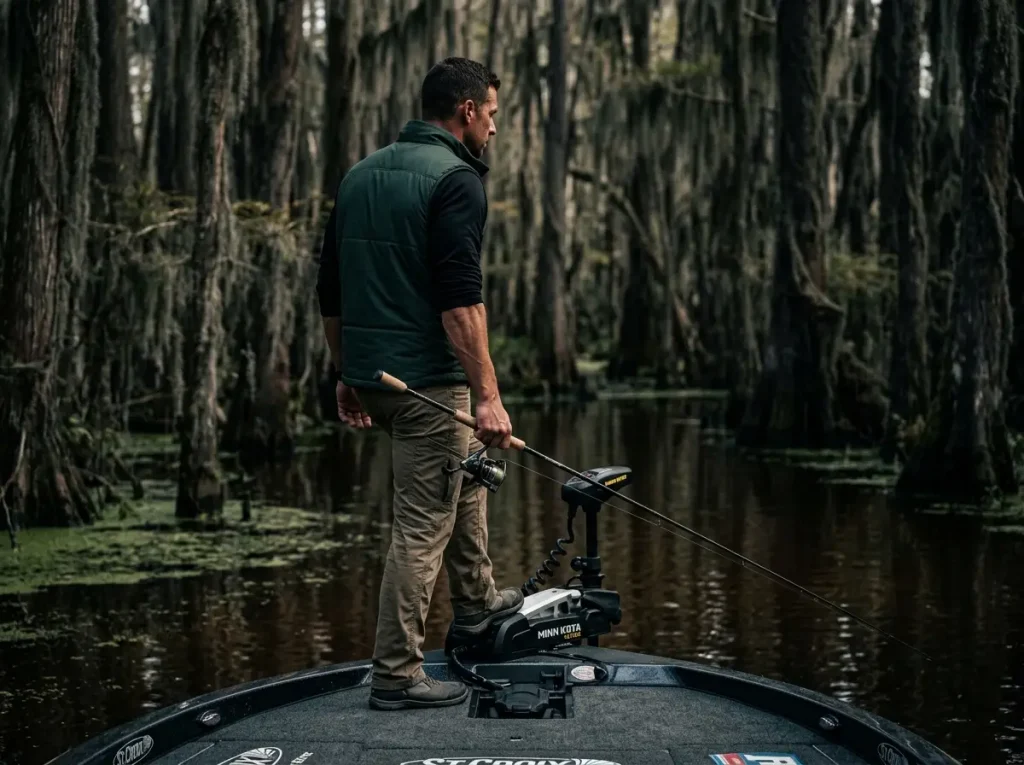
We treat trolling motors as perfectly silent, but they absolute roar to the fish below. The mechanical hum generates low-frequency waves that overlap with the sensory abilities of resting gamefish. Fish track these acoustic signatures of marine equipment across massive distances.
Traditional brushed trolling motors create a loud, metallic vibration that tears through the water. Upgrading to brushless trolling motors entirely eliminates this physical contact point, deleting the angry grinding noise. However, even the quietest motors project a mechanical drone. Utilizing the spot-lock feature indiscriminately—with its constant starting, stopping, and violent corrective thrusts—creates massive, unnatural disturbances.
Live Sonar and the “Sonar Flight” Response
Current transducers run at ultra-high frequencies, but the physical pulse rate generates a distinct pressure wave. We cannot hear those sonar frequencies, but the fish absolutely feel the pressure crushing down on them.
When you point a high-intensity forward facing sonar beam directly at a school of fish holding tight in fifteen feet of water, you are physically hitting them with solid sound waves. On heavily targeted lakes, veteran anglers report watching fish instantly scatter in panic the second the beam sweeps across their position. The sonar itself acts as the trigger for their conditioned panic response.
Re-evaluating Your Approach Distance
In a pressured environment, your thick boat hulls push a solid bow wave that alerts every fish on the bank long before your shadow drops. Different hull materials amplify these decibel levels differently. If you can clearly see the stump holding the fish, the fish knows exactly where you are.
This acoustic barrier requires a fundamental change in casting distance. You have to back out. Making an accurate casting stroke at extreme distances separates the guys who find fish from the guys who actually load the livewell.
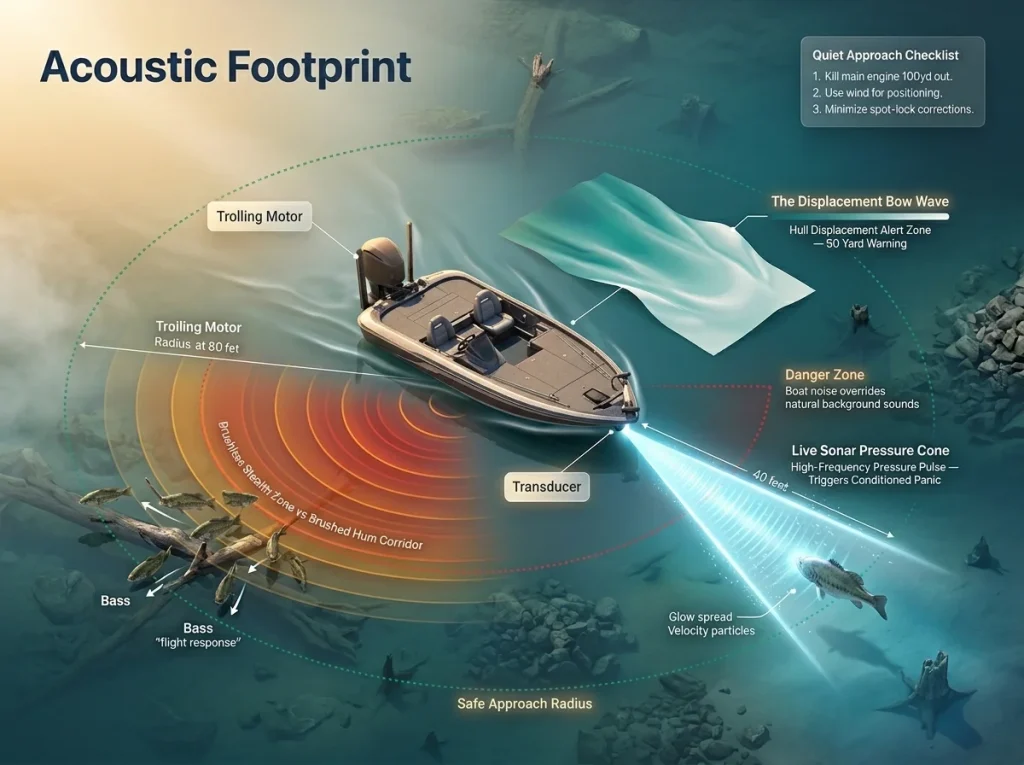
Pro-Tip: Shut down your big engine a long hundred yards out from your primary spot. Let the shifting wind push you into position quietly, and use the trolling motor only to correct your steering angle, never to brake hard.
Tactical Execution: Bypassing the Conditioned Brain
The Science of True “Dead-Sticking”
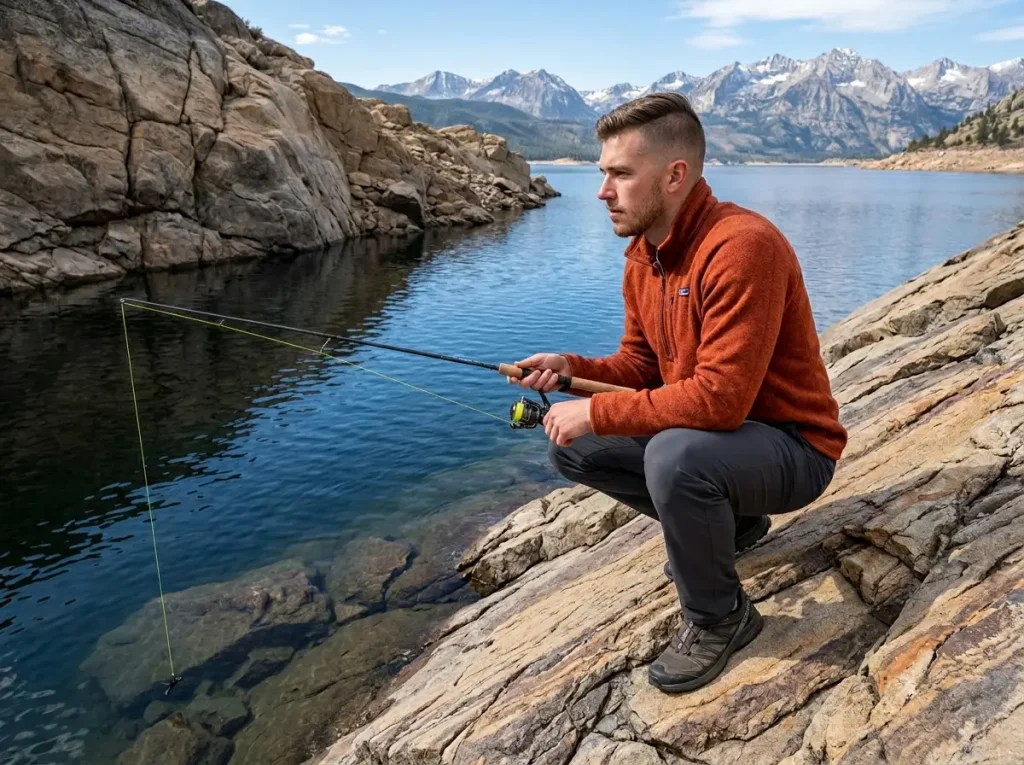
When the bite shuts down cold, you must stop moving your hands. Dead sticking remains the hardest technique for hyper-aggressive anglers to perform, but the results are devastatingly effective. Leaving a soft plastic bait completely motionless on the bare mud removes all artificial regularity from the presentation.
Without that warning hum, the fish relies purely on visual curiosity. The subtle, passive movement of the bait swaying lightly in the natural micro-currents mimics exactly how aquatic invertebrates behave. The bite rarely feels like a solid jolt. It usually registers as a strange, heavy feeling or a slow sideways drift of the braided line. Wait the fish out. They will often stare at a dead Carolina rig for over a full minute.
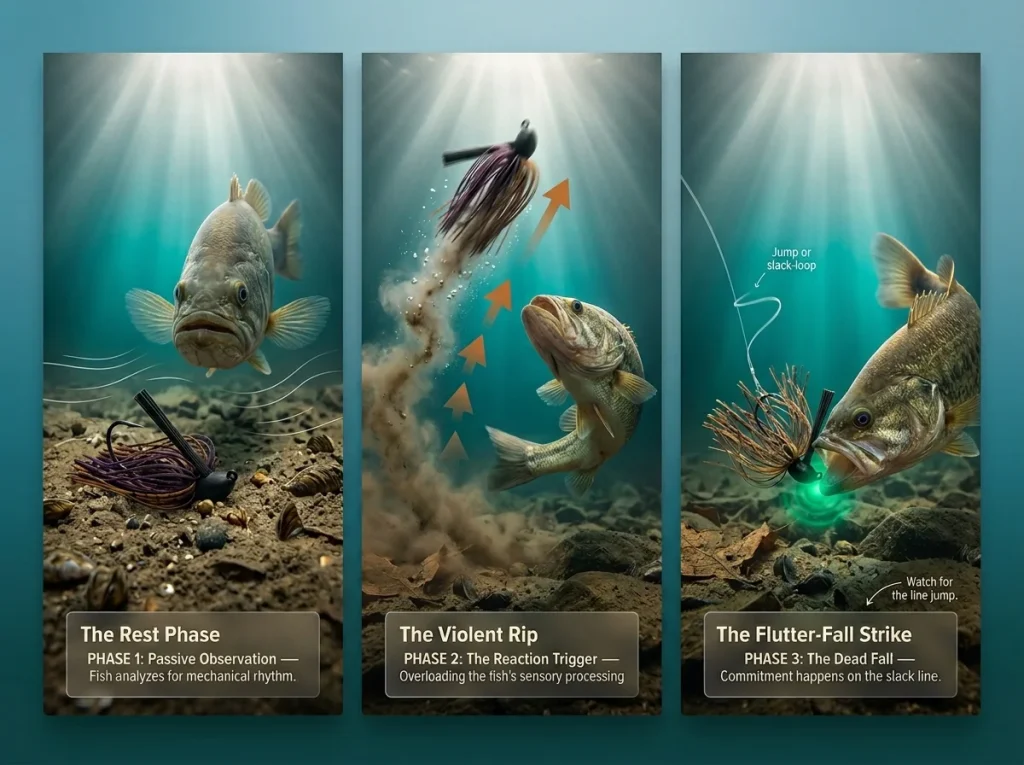
Eliciting Reflex Strikes by “Stroking a Jig”
You can bypass the cautious phase by aggressively overloading the sensory system. Stroking a jig does exactly this on deep ledges. By allowing a heavy jig to settle on the bottom and ripping it violently upward, you create a sudden, massive spike in the water column. The severe change in water pressure shocks the neuro-system.
This aggressive vertical rip moves way too fast for the fish’s brain to process as artificial. The fish must commit instantly to a reaction bite or watch the meal escape. The true genius of the tactic lies entirely in the fall. After the violent physical rip, you must let the jig plummet back down precisely on a fully slack line. The fish almost always grab the hook during this dead fall, generating violent reaction strikes. Keep your eyes glued to where your line enters the water surface. Watch for the falling jig to jump sideways.
Exploiting Micro-Signatures with Finesse Tactics
When high speed retrieves fail completely, slowing down and shrinking your footprint saves the day. Downsizing to true finesse techniques heavily reduces the bait’s surface area. Presenting a small Ned rig or an impossibly tiny drop shot minimizes your true displacement volume.
Building a clean finesse fishing setup with ultra-light fluorocarbon paired with a tiny stickbait from Z-Man drops right onto the target cleanly. Their highly buoyant Elaztech plastic keeps the bait hovering naturally just millimeters off the bottom. The stand-up posture looks wildly defensive and alive. Even better, throwing true flavored baits like Berkley PowerBait locks jaws when they finally commit. This finesse presentations strategy destroys the horizontal bias that fish lock into when viewing spinnerbaits.
The shrinking strike zones on public lakes force your hand. When all variables fail—when the sun is burning high and the high barometric pressure crushes the swim bladder, locking the bass tight to the bottom—shrinking your hydrodynamic signature is your only path forward. Stop fighting the lake conditions with loud, intrusive baits. Whisper to them instead, use natural colors, and let the quiet efficiency of finesse gear bypass the tightest defenses.
Conclusion
Educated fish are not a campfire myth; they are a harsh biological reality shaped entirely by angling pressure. They use their lateral lines to instantly reject mechanical rhythm, and they rely heavily on sharp optical discernment to sniff out thick, degrading lines in the water column. To consistently beat this stubborn conditioning, treat the water as a puzzle. Calculate your acoustic footprint carefully, dial in your line’s refractive index completely, and aggressively substitute brute-force retrieving for targeted finesse drops. Take these precise physical adjustments to your local high-pressure lake tomorrow morning, master the painful process of pressure disambiguation, and turn their brutal conditioning into your advantage.
FAQ
How do you catch bass in heavily pressured water?
Forcefully reduce your lure’s hydrodynamic footprint and incorporate chaotic, highly irregular retrieves. Fish quickly learn to ignore perfectly steady baits, so switch to quiet finesse tactics, mute the colors, and stay far away from the trolling motor button. Making long, accurate casts on ultra-clear fluorocarbon leaders is mandatory to defeat their heightened sensory awareness.
Do fish get used to being caught?
Yes, heavy catch-and-release pressure actively alters the genetic baseline of a local population over time. The boldest, most aggressive fish get removed or severely stressed, leaving behind a highly cautious demographic of survivors. These older bass learn to heavily associate loud sonar pings, thick braided lines, and unnatural lure vibrations with the blunt trauma of a hookset.
What colors work best in pressured lakes?
Natural, completely translucent, and muted tones perform significantly better because they quietly blend into the background instead of shouting across the cove. Bright, neon, or aggressive colors often trigger immediate conditioned avoidance in clear, pressured waters because they create an unnatural stark contrast that an educated fish immediately views as an approaching threat.
Does barometric pressure affect fishing the same way angling pressure does?
No, falling barometric pressure physically alters a fish’s buoyancy and directly affects dissolved oxygen saturation, while angling pressure drives pure behavioral stress and learned avoidance. A severely dropping barometer can temporarily spark an aggressive feeding window, sometimes powerfully overriding the cautious, stubborn habits of a highly educated fish for a few hours.
Risk Disclaimer: Fishing, boating, and all related outdoor activities involve inherent risks that
can lead to injury. The information provided on Master Fishing Mag is for educational and informational purposes
only. While we strive for accuracy, the information, techniques, and advice on gear and safety are not a substitute
for your own best judgment, local knowledge, and adherence to official regulations. Fishing regulations, including
seasons, size limits, and species restrictions, change frequently and vary by location. Always consult the latest
official regulations from your local fish and wildlife agency before heading out. Proper handling of hooks, knives,
and other sharp equipment is essential for safety. Furthermore, be aware of local fish consumption advisories. By
using this website, you agree that you are solely responsible for your own safety and for complying with all
applicable laws. Any reliance you place on our content is strictly at your own risk. Master Fishing Mag and its
authors will not be held liable for any injury, damage, or loss sustained in connection with the use of the
information herein.
Affiliate Disclosure: We are a participant in the Amazon Services LLC Associates Program, an
affiliate advertising program designed to provide a means for us to earn advertising fees by advertising and linking
to Amazon.com. As an Amazon Associate, we earn from qualifying purchases. We also participate in other affiliate
programs and may receive a commission on products purchased through our links, at no extra cost to you. Additional
terms are found in the terms of service.