
In this article
The fish was a personal best largemouth — I had it almost to the net when the lure came flying back at my face. The treble hook was still attached to the split ring. The split ring was still attached to the lure. But the ring had twisted open just enough to let the hook eye slip free, and that was that. No line failure, no knot failure, no bad hookset. A $0.04 piece of wire I’d never thought about.
After enough of those moments you start paying attention to split rings. I’ve since replaced factory rings on almost every lure I fish seriously, and the difference in landed fish is real. This guide covers the sizing system, the material decisions, the replacement technique, and — the part most tackle articles skip — what actually causes ring failure and how ring size changes the way your lure moves.
⚡ Quick Answer: Match your split ring number to the pound test you’re fishing with, not just the lure size — a #4 Owner Hyper Wire (50 lb) handles most bass applications, while saltwater or musky work needs #7 or larger. Factory stock rings on budget lures are often one size too light for serious fishing. Keep reading to find out exactly which size goes on which lure, and why that bent ring in your box is costing you fish.
What Split Rings Actually Do on a Lure
The line-tie problem they solve
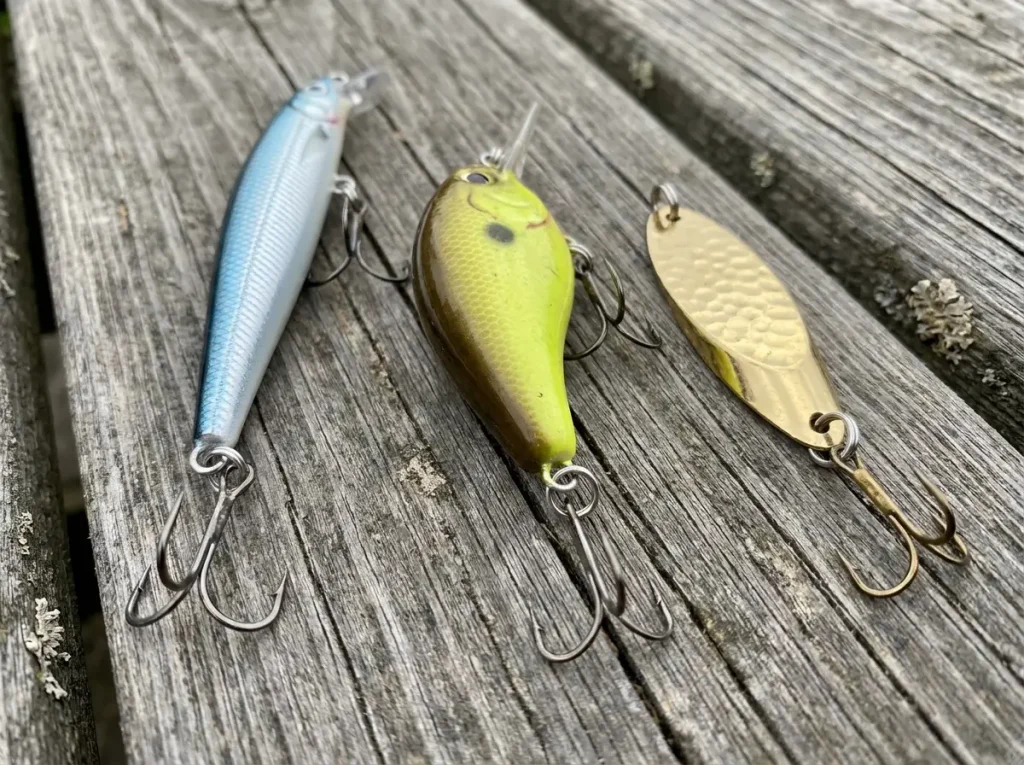
A split ring is a double-coiled wire loop — think tiny keychain ring — that acts as a flexible pivot point between a lure’s attachment eyelet and its hook. Without it, the hook eye would be tied directly to a fixed attachment point, which limits hook movement and increases the chance of a fish levering free during a head shake. The ring lets the hook swing independently, which matters more on some lure types than others.
On jerkbaits and crankbaits, hook swing is the difference between a tap and a solid hookup. When a bass inhales a jerkbait and shakes its head, the treble needs to rotate and find the corner of the mouth. A fixed hook can’t do that. A hook on a properly sized split ring can.
How rings interact with hook movement
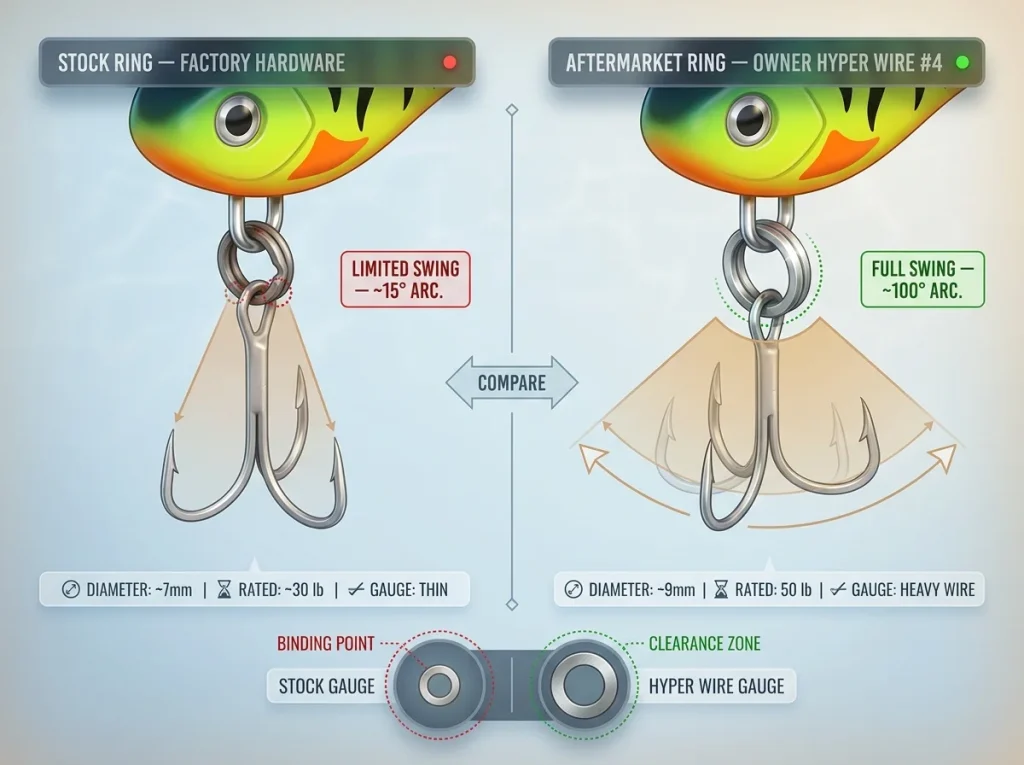
The ring diameter determines how much freedom the hook gets. A ring that’s barely larger than the hook eye gives almost no swing. A ring that’s significantly larger than the hook eye allows the hook to rotate freely — sometimes too freely, which can cause the hook to double back and foul against the lure body on the cast.
There’s a sweet spot for each lure size and style. On a small finesse jerkbait you want maybe 2-3mm of clearance between hook eye and ring diameter. On a big glide bait you can go larger because the hook is heavier and the lure moves slower.
Why the factory hardware isn’t your friend
Stock hardware on lures in the $8-15 range is sized to pass a pull test in a warehouse, not to handle a 5-lb bass running toward structure. Manufacturers keep production costs low, and split rings are one of the line items where cents add up. The rings that ship on most entry-level crankbaits and jerkbaits are typically undersized by one to two sizes relative to what a serious angler would choose.
That’s not a knock on lure makers — it’s just economics. The solution is a $6 pack of quality aftermarket rings and 20 minutes with a pair of pliers. Your crankbait hook upgrade starts with the rings, not the hooks.
The Split Ring Sizing System Decoded
Size numbers, diameter, and pound test explained
Split rings are numbered — typically #1 through #10 or higher for heavy saltwater and musky applications. The number correlates to both diameter and wire gauge, which together determine pound-test strength. Here’s a practical reference based on the Owner Hyper Wire scale, which is the most commonly used benchmark in the US market:
| Size, Diameter, and Rated Strength Specifications | ||
|---|---|---|
| Size | Diameter | Rated Strength |
| #3 | ~8mm | 35 lb |
| #4 | ~9mm | 50 lb |
| #5 | ~10mm | 60 lb |
| #6 | ~11mm | 70 lb |
| #7 | ~12mm | 80 lb |
| #8 | ~14mm | 120 lb |
| #9 | ~16mm | 170 lb |
| #10 | ~18mm | 220 lb |
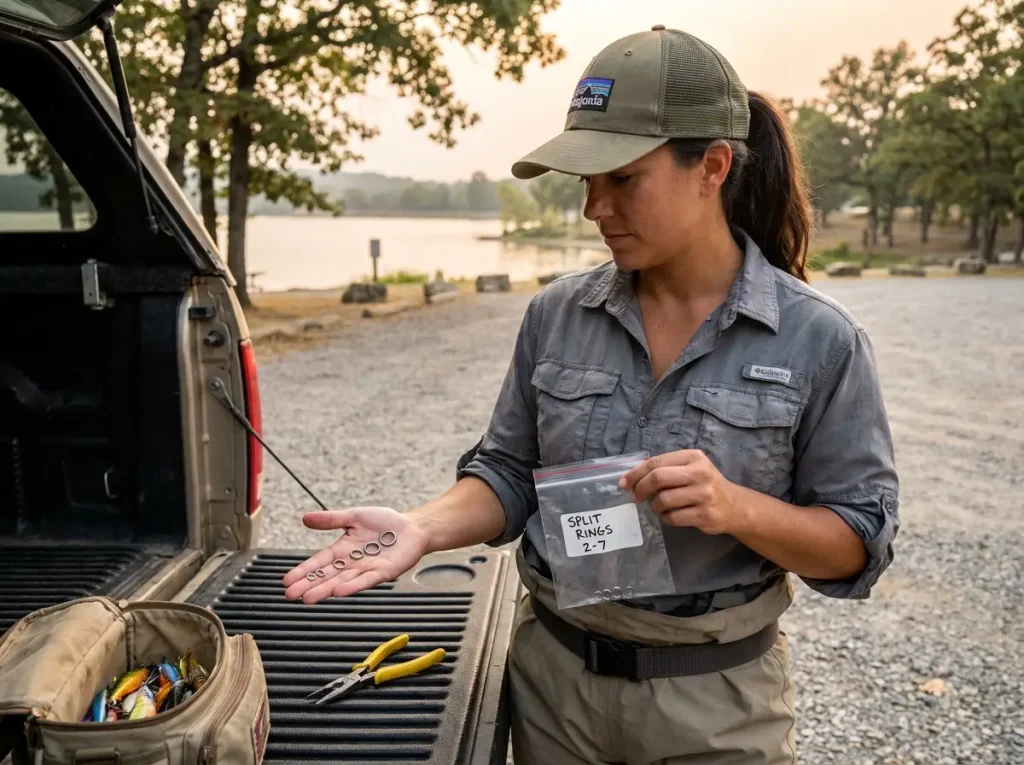
For most freshwater bass fishing with 12-20 lb fluorocarbon or braid, a #4 split ring covers the majority of applications. For pike, #5 or #6 is a safer margin. For musky and heavy inshore saltwater, start at #7 or #8 and go up from there.
The numbering inconsistency problem
Here’s what most guides don’t tell you: a VMC #5 is not the same as an Owner #5. A Spro #5 is not the same as a VMC #5. Every manufacturer uses their own numbering scale. The number alone tells you nothing — you need to check the diameter in millimeters and the rated pound test on the packaging.
This trips up anglers who stock up on “size 5 rings” from multiple brands and assume they’re interchangeable. They’re not. When you find a ring size that works for your most-used lure, buy a bulk pack of that specific brand and model. Mixing brands across a tackle box makes quality control impossible.
Round vs oval ring geometry
Most standard split rings are round. Some brands make oval or elongated rings — the oval geometry is physically stronger because it has less curvature stress at the overlap point, but it limits hook rotation angle compared to a fully round ring. For big game and heavy saltwater applications, the strength gain is worth it. For bass fishing where lure action and hook set angle matter, stick with round rings.
Pro tip: When you’re buying in bulk, hold a ring between your thumb and forefinger and squeeze gently. A well-made ring should feel stiff — you shouldn’t be able to deform it with moderate hand pressure. If it gives easily, put it back.
Matching Ring Size to Your Lure Type
Crankbaits and jerkbaits
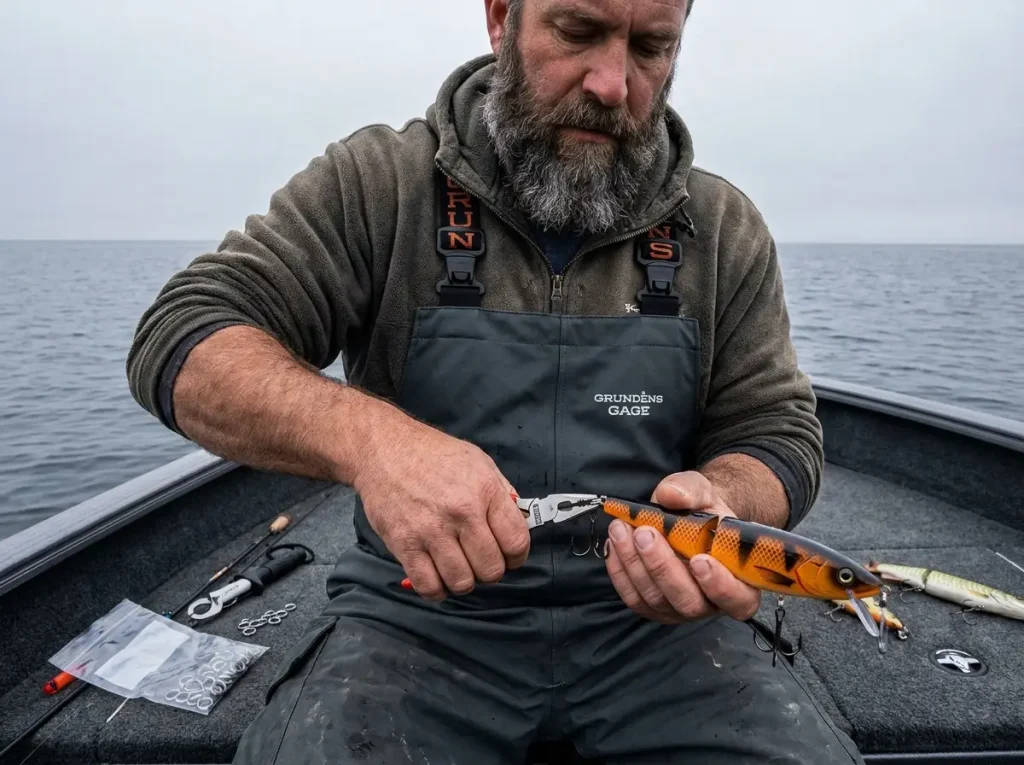
For most crankbait applications from 1/4 oz to 3/4 oz, a #4 ring is the standard. If you’re upgrading to heavier trebles (which you should be — see our guide on crankbait hook upgrades), you may need to step up to a #5 so the hook eye fits through the ring without binding. A hook eye that barely fits onto a ring is a failure point under load.
For jerkbaits, the priority is hook swing — use a round ring and match it to the hook eye, not the lure body size. A 4-inch Lucky Craft pointer might run a #3 ring stock, but bumping to a #4 with a short-shank treble improves the hookup ratio without materially affecting the lure’s action. Your jerkbait cadence stays intact; your hook angle improves.
Topwater lures
Topwater is where ring sizing has the most dramatic effect on lure performance. A ring that’s one size too large on a walk-the-dog bait like a Spook or Sammy throws off the nose-heavy balance the lure needs to walk correctly. The extra weight at the hook hanger changes the pivot point and makes the lure either dig too deep on the pause or fail to track side-to-side.
Match topwater rings as closely as possible to stock. If you’re replacing worn rings, measure the old ring before you toss it. The difference between a #3 and a #4 on the front hook of a topwater can mean the difference between a lure that walks perfectly and one that just kind of flops.
Avoid split rings with surface lures that use wire-through construction — the ring can nose the lure down on the pause, which kills the presentation. On those, you want a direct connection or a loop knot, not a split ring.
Spoons and metal lures
Spoons need rings that allow full 360° rotation. A binding ring on a spoon kills the flutter and flash that makes spoons work. Use a round, well-sized ring — typically a #4 or #5 for most casting spoons — and make sure the hook eye has genuine clearance inside the ring, not just a tight fit. Our breakdown of spoon fishing techniques goes deeper on hardware matching for different spoon types.
Big baits for musky and saltwater
This is where undersizing split rings causes the most expensive mistakes. Standard bass split rings — even quality ones — are not rated for the lateral torque a big musky or large bluefish applies. A 20-lb musky doesn’t break your split ring; it twists it open. The fish generates rotational force that pries the ring open at the overlap point, and the rated pull strength becomes irrelevant.
For musky lures, use #7 or larger Owner Hyper Wire rings (80 lb+) as a starting point. Many dedicated musky anglers run #8 or #9 (120-170 lb) even on medium-sized glide baits because the price of losing a fish is higher than the cost of heavy rings. For heavy inshore and offshore saltwater, match ring strength to your leader, not your lure — if you’re running 80 lb fluorocarbon, your rings should exceed 80 lb.
Pro tip: On big lures, size your ring so the hook eye fits through with some room to spare. If you’re forcing the eye through with pliers, the ring is too small for that hook. A tight fit means the ring will deform under load before the rated strength becomes relevant.
Stainless, Carbon, or Plated — What to Buy
Freshwater vs saltwater considerations
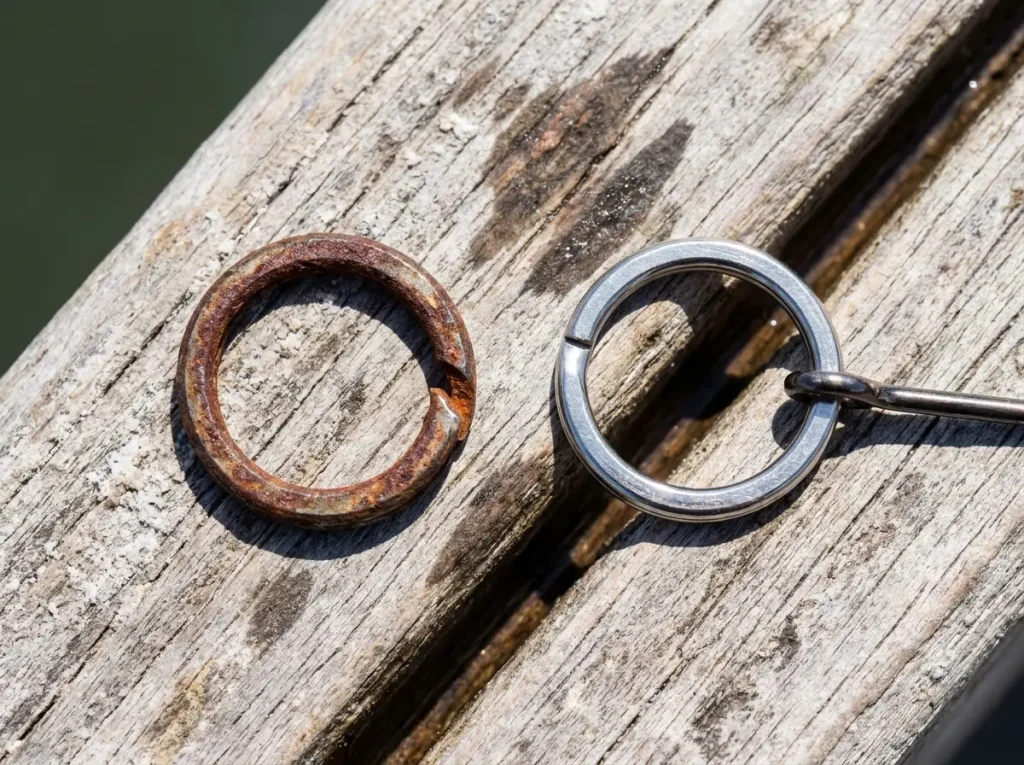
Standard carbon steel rings — the kind that ship on many affordable lures — corrode in saltwater within one outing. A ring that looks fine at the dock after a morning of fishing can show rust spots by that evening. The corrosion starts at the overlap gap where water and oxygen concentrate, and it works inward. By the third or fourth trip, the ring has lost meaningful strength even if it looks intact.
For any saltwater application, stainless steel is the only option worth considering. Grade 316 stainless (sometimes labeled “marine grade”) offers the best corrosion resistance. It costs a bit more, but it won’t turn your tackle box into a rust farm. Your treble hook rust prevention work is wasted if the split ring under the hook is corroding.
For freshwater, carbon steel rings are serviceable if you rinse and dry your lures after each trip. They’ll last a season or two in lakes and rivers. But for anglers who fish multiple days a week, stainless rings in freshwater are worth the small price increase — they won’t add any corrosion risk to hooks during long-term storage.
Material grades that matter
Not all stainless is the same. Grade 304 is the most common and handles freshwater fine, but it can pit in saltwater over time. Grade 316 adds molybdenum to the alloy, which specifically resists chloride corrosion — what you get in salt water. If the packaging doesn’t specify the grade, assume it’s 304.
Plated rings (zinc plated, black chrome plated) are a step up from bare carbon steel in terms of corrosion resistance, but the plating wears at the overlap gap where the wire flexes during use. Once the plating is gone in that spot, you’re back to bare steel exposed to water. For freshwater use they’re fine; for saltwater they’re a false economy.
Pro tip: For coastal or brackish water fishing, bring a small bag of fresh stainless rings every trip. At the end of the day, swap out any ring that looks even slightly off-color. A fresh ring costs 10 cents. Losing a fish to a corroded one costs considerably more.
How to Open and Replace Split Rings
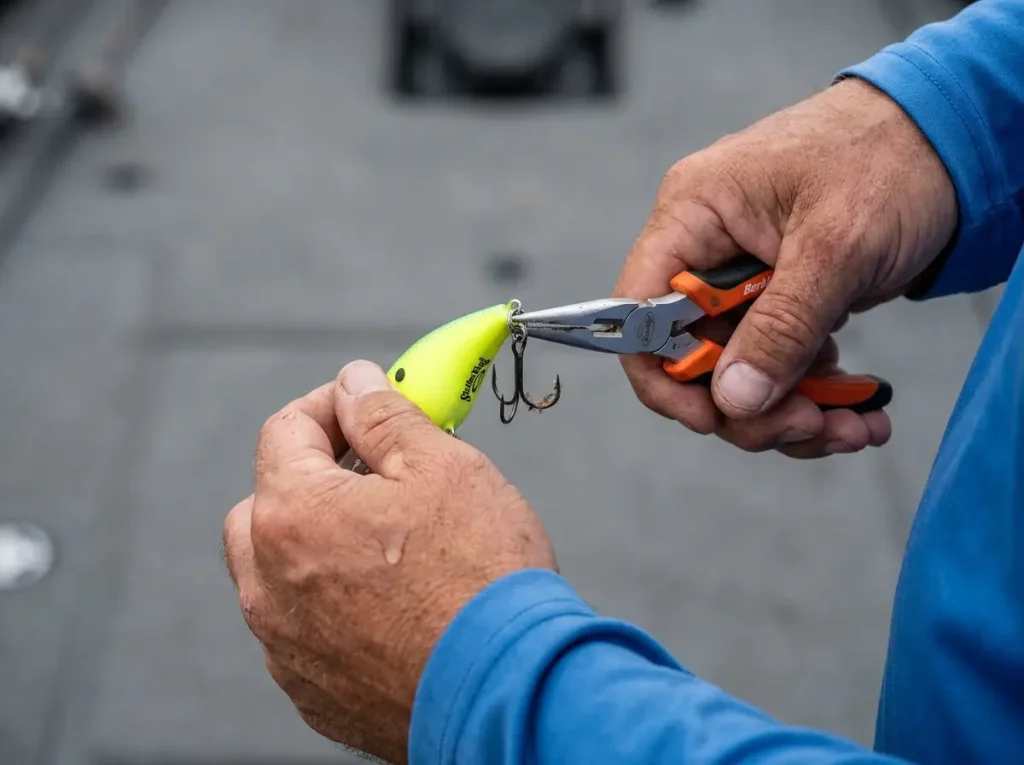
With split ring pliers
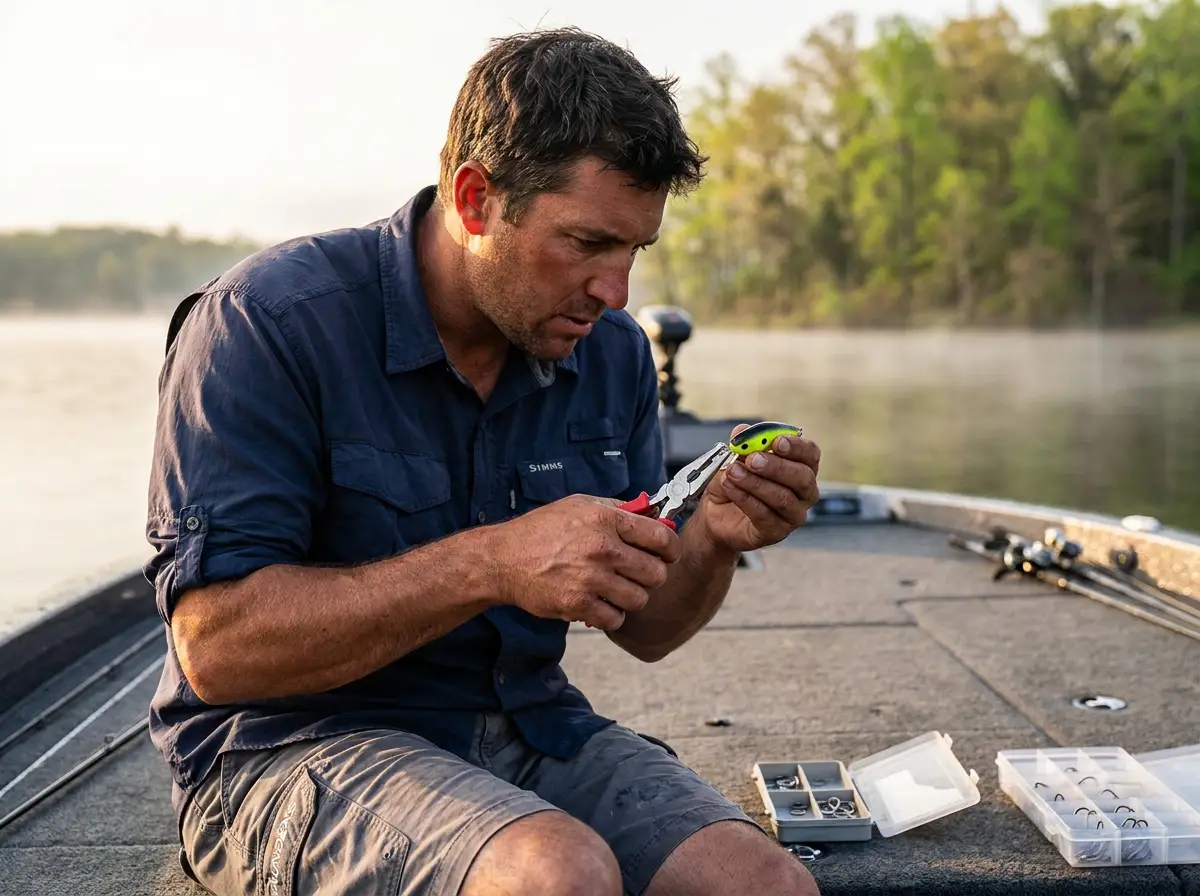
Split ring pliers are the right tool and they’re worth owning. A decent pair costs under $15 and makes ring replacement a 30-second job instead of a 5-minute finger-frustration exercise. The pliers have a small tooth or notch on one jaw that wedges into the ring’s gap and levers it open while you thread the new hook through.
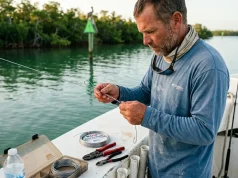
Technique: position the tooth at the gap in the ring’s overlap. Squeeze the pliers to open the ring about 2-3mm. Use your other hand to slide the old hook eye around the ring until it exits, then slide the new hook eye onto the opening and rotate it all the way around. Don’t pry the ring open wider than needed — the more you flex the wire, the weaker it becomes.
For the treble-to-single hook conversion process, the same pliers handle the entire job.
Without pliers
You can open a split ring without dedicated pliers — but it’s slower and harder on your fingers. The fingernail method works: press your thumbnail into the ring’s gap and use it as a lever to walk the hook eye around the ring. A coin, a small flathead screwdriver, or even the back of another hook can serve as a substitute lever if you’re on the water and don’t have pliers.
Step-by-step replacement
- Open the ring at the gap using pliers or fingernail
- Slide the old hook eye around the ring until it exits — don’t pull it straight off, walk it around the coil
- Keep the ring open and slide the new hook eye into the opening
- Walk the new hook around the ring until it’s fully seated in the inside of the coil
- Release the pliers or pressure and check that the ring has returned to its original shape
- Squeeze the ring lightly between your fingers — it should feel stiff and show no gap
Replace rings in good light before the trip, not in the dark on the water when you’re rushed. A ring you install under pressure at 5 AM is one you haven’t properly inspected.
When to Replace and How Ring Size Affects Lure Action
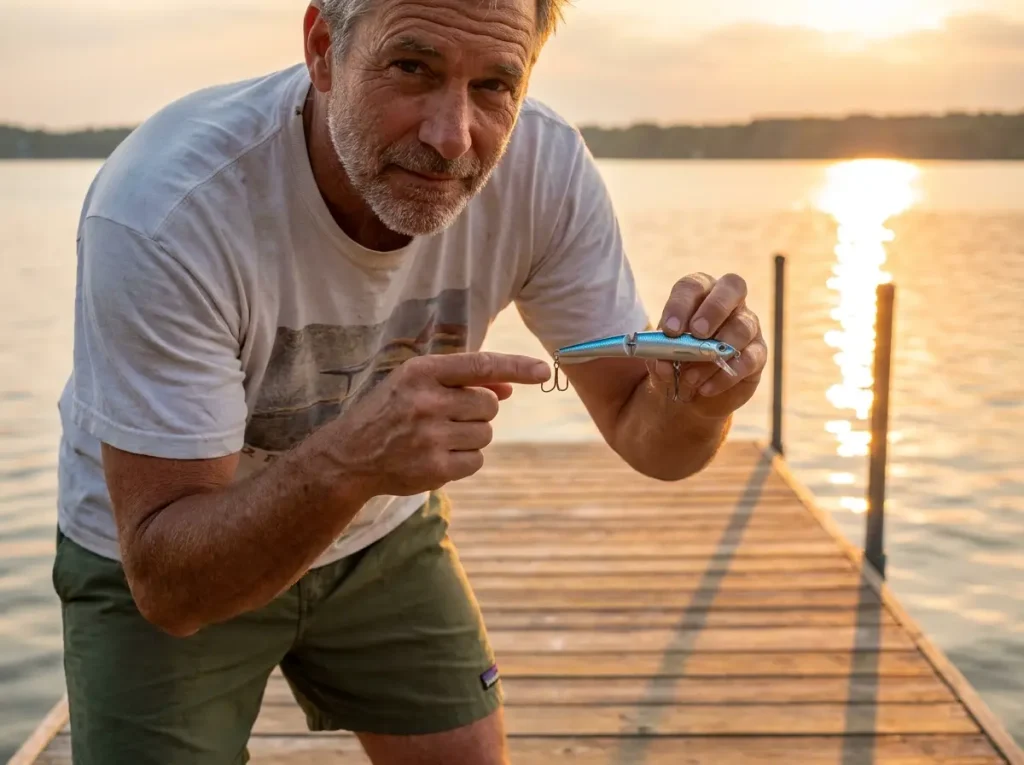
Signs a ring needs to go
You can tell a lot from a split ring before it tells you by losing a fish. Here’s what to look for before every serious trip:
Replace immediately if you see:
- Any visible gap at the overlap that wasn’t there before
- A deformed or oval ring that was originally round
- Rust spotting anywhere on the wire
- A ring that feels soft when you squeeze it between your fingers
- Any ring that’s been straightened — even slightly — by a fish or a snag
Most anglers check their knots and never look at the rings. The ring that’s been through 40 fish and a dozen rock strikes is not the same ring that came out of the package. Give your hard-working lures the same pre-trip inspection you’d give a knot.
The failure mode nobody explains
Split rings are rated for direct pull strength — the force it takes to pull the ring straight open along its axis. What they’re not rated for is lateral torque — the twisting and rotating force a fish applies when it runs perpendicular to your line and shakes its head.
That torque pries the ring open at the overlap point. It doesn’t break the wire; it spreads the coil apart just enough for the hook eye to slip free. This happens at forces well below the stated pull rating, and it’s especially common on big fish that run and turn. The fish that opens your ring isn’t the one that pulls hard — it’s the one that twists.
This is why sizing up rings on big fish lures makes a physical difference. A heavier wire ring has a tighter overlap and more resistance to being pried open. The pound-test rating gives you one number, but the ring’s resistance to torque is what matters in practice. A #7 ring doesn’t just hold more weight than a #4 — the heavier wire is physically harder to spread open under rotational load.
How ring size changes how your lure swims
This one gets ignored in almost every split ring guide: ring diameter affects lure action, not just strength. The ring is part of the lure’s physical system, and changing its size changes the geometry of how the lure moves.
On a crankbait, a ring that’s one size too large at the belly hook hanger shifts weight distribution slightly lower and forward, which can affect running depth and swimming stability. On a suspending jerkbait, a ring that’s heavier than stock can shift the lure from suspend to slow-sink, changing its pause behavior entirely.
These are small effects on most lures, but they’re real. If you’ve upgraded rings and notice a jerkbait that used to suspend now sinking on the pause, the rings are worth checking against stock. Fish hooking mortality research also shows that hook angle at the moment of the strike matters — and the ring size influences that angle.
Pro tip: When you’re upgrading rings on a lure you depend on, go one at a time and test the lure’s action at the boat before you head to the spot. A 10-second action check saves you a confused hour on the water wondering why your best jerkbait is swimming differently.
Conclusion
Split rings are the least glamorous part of your tackle, but they’re a direct link in the chain between you and the fish. Three things worth taking away: size rings for the fish you’re after, not just the lure you’re using — especially for big-fish applications where lateral torque is the real failure mechanism. Use stainless in any saltwater or coastal application without exception. And inspect your working lures before every serious outing — a bent or gapped ring is obvious once you’re looking for it.
Get a pack of quality Owner Hyper Wire or Spro Power Rings in #4, #5, and #7, and a pair of split ring pliers. In one afternoon at the tackle bench you can upgrade every lure that matters. The first fish you land that would have gotten off before that upgrade will make the hour well spent.
FAQ
What size split ring should I use for bass fishing?
A #4 split ring (50 lb test on the Owner Hyper Wire scale) handles most freshwater bass applications with lures in the 1 or 4 to 3 or 4 oz range. If you’re bumping up to heavier hooks, move to a #5 so the hook eye fits without binding on the ring wire.
How do you open a split ring without pliers?
Press your thumbnail into the gap at the ring’s overlap and use it as a lever to walk the hook eye around the coil. A coin, small flathead screwdriver, or the back of another hook can substitute. It works, but split ring pliers — available for $10-15 — make the job cleaner and faster with less risk of distorting the ring.
When should I replace the split rings on my lures?
Replace any ring that shows a visible gap at the overlap, rust spotting, or a deformed shape that’s no longer round. Also replace rings on any lure that’s fought several large fish or been snapped hard against a rock or dock — the wire deforms under stress even when it looks intact. Pre-trip inspection is the habit that keeps fish on the line.
What is the difference between a split ring and a solid ring?
A split ring has an overlapping coil that opens to accept a hook eye — it can be opened and closed with pliers and replaced in the field. A solid ring is welded or fused closed and offers higher strength with no failure point at the gap, but it requires cutting to remove hardware. Solid rings are common in high-end offshore rigging; split rings are the standard for most lure fishing.
Do split rings affect how a lure swims?
Yes. Ring diameter changes the hook’s range of swing motion, and ring weight affects the lure’s balance. Topwater lures are especially sensitive — a ring that’s one size too large can nose the lure down and ruin the walking or popping action. For most lure types, match rings as closely as possible to stock diameter unless you have a specific reason to go larger.
Risk Disclaimer: Fishing, boating, and all related outdoor activities involve inherent risks that
can lead to injury. The information provided on Master Fishing Mag is for educational and informational purposes
only. While we strive for accuracy, the information, techniques, and advice on gear and safety are not a substitute
for your own best judgment, local knowledge, and adherence to official regulations. Fishing regulations, including
seasons, size limits, and species restrictions, change frequently and vary by location. Always consult the latest
official regulations from your local fish and wildlife agency before heading out. Proper handling of hooks, knives,
and other sharp equipment is essential for safety. Furthermore, be aware of local fish consumption advisories. By
using this website, you agree that you are solely responsible for your own safety and for complying with all
applicable laws. Any reliance you place on our content is strictly at your own risk. Master Fishing Mag and its
authors will not be held liable for any injury, damage, or loss sustained in connection with the use of the
information herein.
Affiliate Disclosure: We are a participant in the Amazon Services LLC Associates Program, an
affiliate advertising program designed to provide a means for us to earn advertising fees by advertising and linking
to Amazon.com. As an Amazon Associate, we earn from qualifying purchases. We also participate in other affiliate
programs and may receive a commission on products purchased through our links, at no extra cost to you. Additional
terms are found in the terms of service.