
In this article
The first time I heard a big bass blow up on a topwater at night, I yanked so hard I nearly fell out of the boat. The hook never touched the fish. I cast again, it blew up again, I yanked again. Same result. That fish taught me more in two minutes than I’d learned in a full summer of daytime fishing — and the lesson had nothing to do with lure choice. It was about understanding what summer bass do after dark, and why almost every reflex you’ve built in daylight will work against you at night. This guide covers the five mistakes that cost most anglers their best summer bites, and how to fix each one before you get on the water.
⚡ Quick Answer: Summer bass night fishing in shallow water works because heat pushes bass deep during the day and back to the shallows after sunset to feed. Start before dark, stay shallow, use a slow retrieve with dark-colored vibrating lures, and wait for the weight before you set on a topwater strike. The five mistakes below are where most anglers give fish back.
Why Summer Bass Move Shallow at Night
The thermocline problem that makes summer daytime fishing brutal
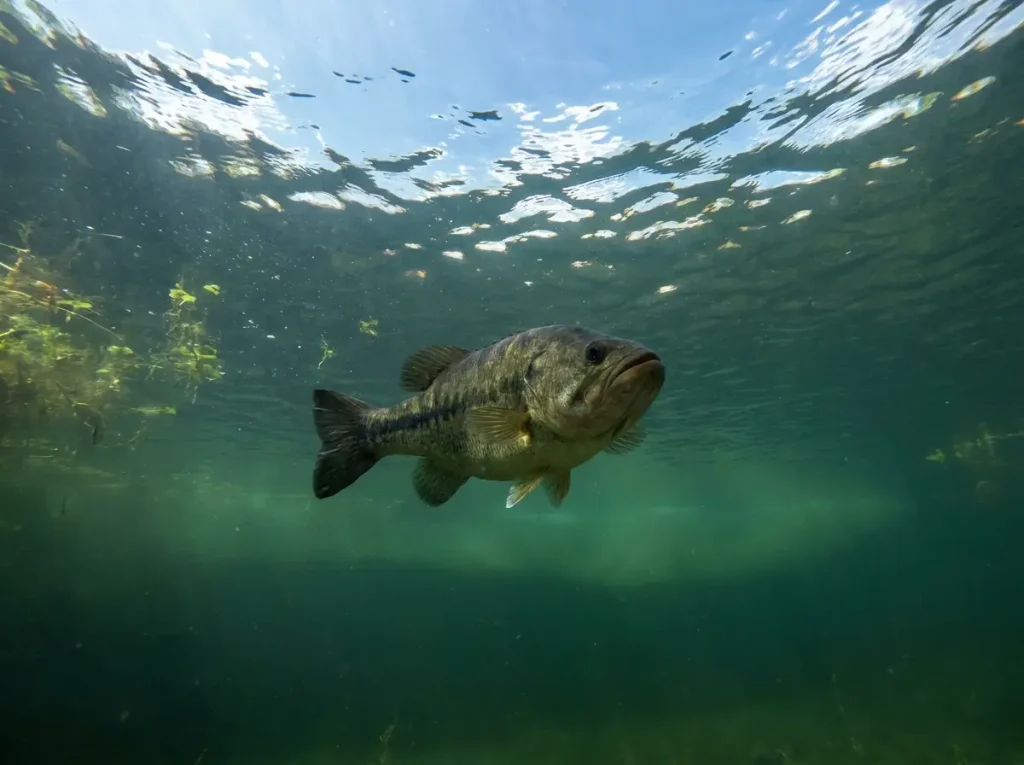
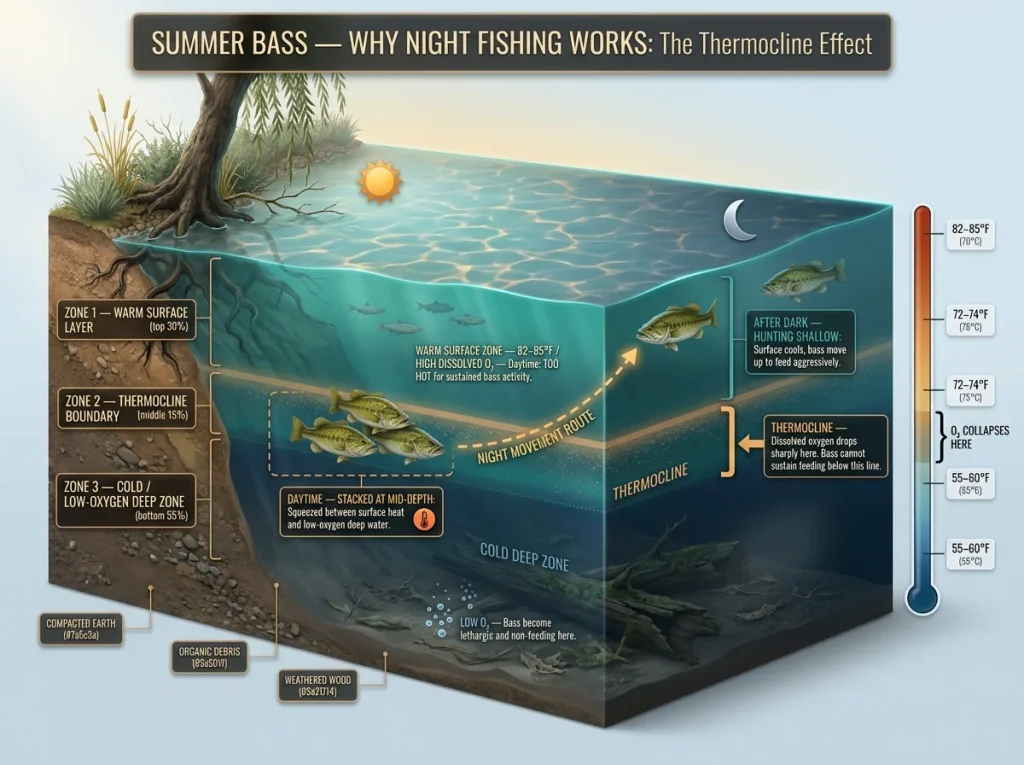
In midsummer — the dog days from late July through August — a freshwater lake stratifies into layers. The upper zone, warmed by the sun, reaches temperatures in the low-to-mid 80s°F. Below a depth called the thermocline, dissolved oxygen drops sharply as the water cools. Bass need both oxygen and comfortable temperatures. During the day, they’re caught between the two: the shallows are too warm and oxygen-depleted, and the deep water lacks the oxygen to support active feeding.
The result is sluggish, tight-lipped fish during summer daylight hours. You can find them stacked at depth on structure, but getting them to commit in the heat of the day is a grind. Most days, the productive windows are before 7 AM and after 8 PM. Night fishing is not a workaround. For serious summer bass, it’s often the only realistic option.
How bass use darkness to move back into the shallows
Bass are built for low-light conditions. Their eyes have a much denser concentration of rod cells than human eyes — the type of cell that processes dim light — which means they can hunt as effectively under moonlight as they can at mid-morning, particularly in clear water. According to research on largemouth bass biology published by the Wildlife Leadership Academy, this visual adaptation makes bass active predators at night rather than resting ones.
But the eyes are only part of the system. The lateral line — a pressure-sensing organ that runs along each side of the body from gill to tail — detects low-frequency water displacement in the range of 1 to 80 Hz. As noted by University of Florida Extension research on fish sensory systems, this allows bass to track moving prey in total darkness. A ribbon-tail worm twitching on the bottom. A spinnerbait blade thumping through 2 feet of water. A frog pushing a small wake across a surface. They feel all of it.
At night, bass move onto the banks, into the shallows, and up onto the flats they avoid all day. The feeding windows are long and the fish are aggressive.
Why “shallow” at night means shallower than you think
When guides and serious bass anglers talk about night fishing being shallow work, they mean it literally. Around 95% of productive night casts target water under 4 feet deep — tight to the bank, on top of points, across flats near channel access. There is almost no such thing as fishing too shallow after dark. A bass that spent its afternoon in 18 feet of water will push up to 18 inches of water at 10 PM if the bank structure is right.
Where to Find Night Bass in Shallow Water
Bank fishing — the primary night pattern
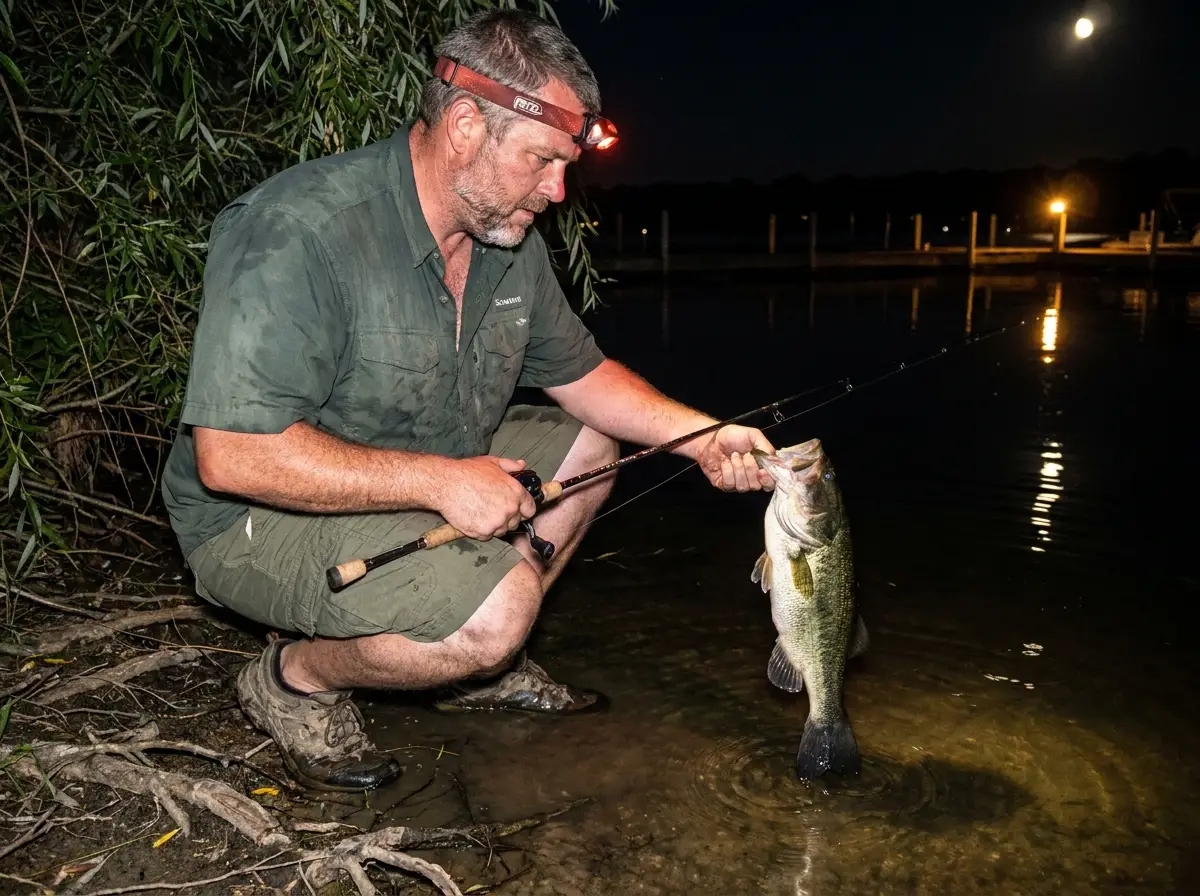
Night fishing is bank fishing. That’s not a simplification. The shallow bank — within casting distance of the shore — is where the food chain concentrates after dark, and where bass position to exploit it.
Work the bank systematically rather than fan-casting open water. Structure on the bank matters: overhanging brush, submerged logs, dock pilings, rock edges, and bank-hugging weed lines all hold fish. The same features that attract bass in daylight attract them at night, but the fish are tighter to the cover and less spooked by an accurate cast that drops near it.
Our breakdown of how to flip and pitch bass out of heavy cover is directly applicable here — the bank pitching game that works in daylight translates well to night, with the adjustment that your presentations need to be even more precise.
Lighted docks — the best night structure most anglers underfish
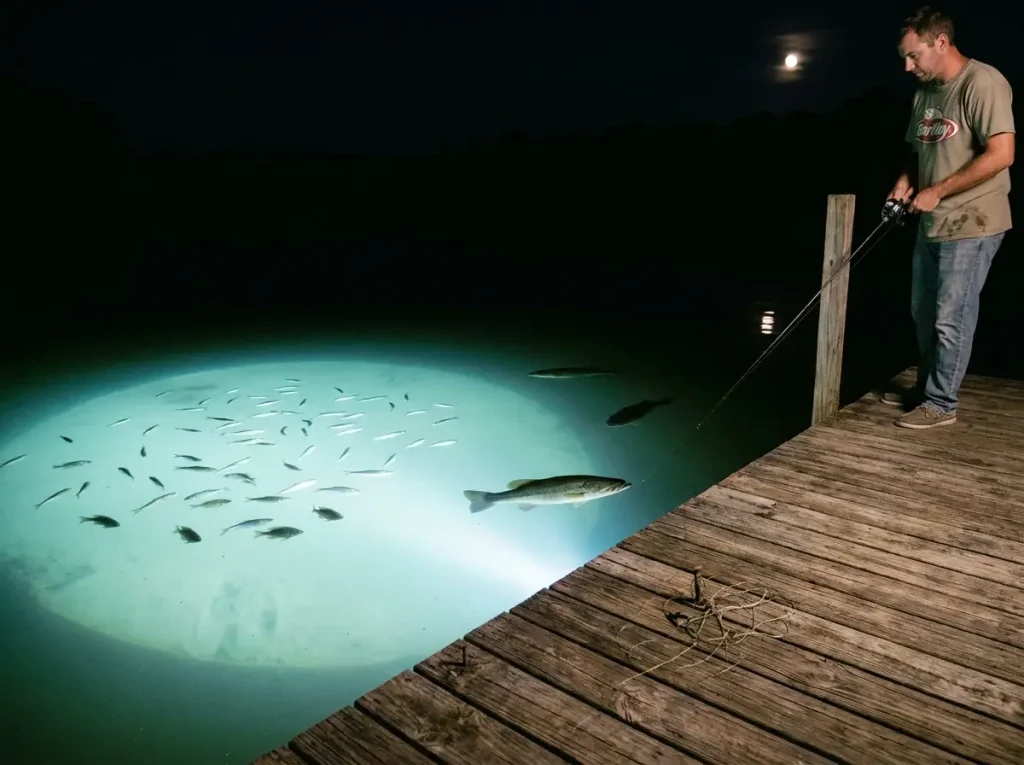
This is where a lot of night fishermen leave fish. An underwater dock light creates a food chain from scratch: the light attracts zooplankton, zooplankton attracts baitfish, baitfish attracts bass. Shad, bluegill, and small perch will suspend in the lit circle within an hour of the light turning on. Bass position at the shadow line — the edge where light meets dark — and ambush baitfish that wander into the transition zone.
Don’t cast into the center of the light. Cast to the shadow edge, let the lure work the boundary, and retrieve parallel to the shadow line. Bass holding in shadow can see everything in the light. Everything in the light is blind to the dark. The fish know this and use it.
Pro tip: If a dock light has been on all night and the baitfish are gone, the bass may have moved on. The freshest, most productive lights are the ones that just came on within the last 90 minutes — the food chain hasn’t had time to be depleted yet.
Points, weed edges, and channel swings near shallow water
Look for structure that gives bass quick access between shallow feeding areas and deeper holding water. A point that drops from 2 feet on top to 10 feet in the channel is a highway bass use to commute between depth and shallows throughout the night. Work the shallow end of the point, not the deep side.
Weed edges are reliable throughout the night. Bass cruise the outer edge of submerged weed beds hunting for crayfish, frogs, and bluegill that hold in the vegetation. A slow retrieve along the weed edge — just fast enough to stay above the grass — is one of the most consistently productive summer night presentations. Understanding how wind direction and windward banks affect baitfish and predator positioning helps you prioritize which weed edges to fish first on any given night.
Timing the Night Bite
Mistake #1 — Starting after dark instead of before it
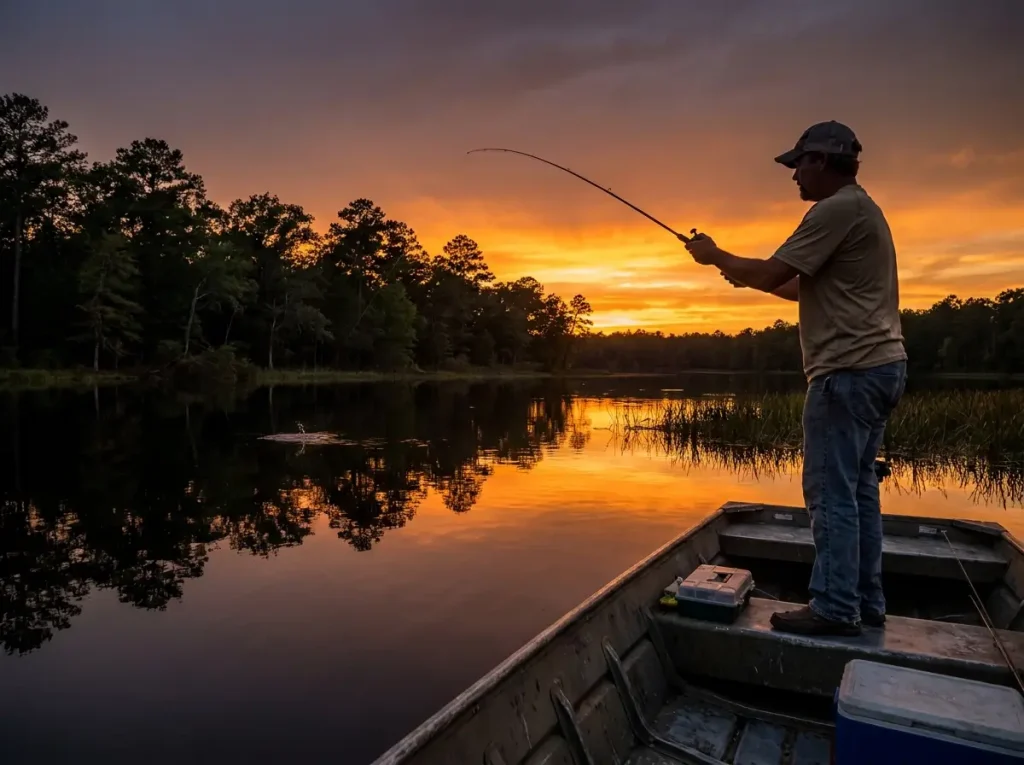
This is the most common and most costly timing error in summer night fishing. Most anglers get off work, eat dinner, load up, and arrive at the ramp after sunset. By then, they’ve already missed the single most explosive feeding window of the night: the last hour before dark.
Bass begin moving shallow before the sun fully sets. The combination of dropping light and cooler surface temperatures triggers feeding activity that often peaks in the 30 minutes before and 60 minutes after sunset. Topwater bites in this window are vicious. The fish haven’t been pressured all day by other boats, the shallows are cooling fast, and everything is moving.
Get to the water an hour before sunset. Use that time to scout the bank, identify the structure you’ll work after dark, and note any obstacles you’ll need to navigate when your headlamp is the only light. The bonus is usually a topwater bite that outfishes the next four hours combined.
Full moon vs new moon — which summer night fishes better
There is a real difference, and it matters for planning.
On full moon nights, ambient light is high enough that bass can see and feed comfortably all night. The fishing can be excellent, but bass may also feed heavily in shallow water during the hours just before dark, burning their appetite earlier in the evening. The best window on a full moon summer night is often 8-10 PM — not midnight.
On new moon nights, the lake is as dark as it gets. Bass feeding shifts more toward the lateral line — vibrating lures and noisy topwaters become more important. The bite often starts later and runs longer into the night because the darkness suppresses the early feeding window that happens on bright evenings.
Neither is universally better. Fish both and track your own results for the bodies of water you fish.
The window that closes after midnight
This varies by lake and season, but on most summer nights the feeding window peaks in the first two to four hours after dark and slows noticeably after midnight. Bass that fed hard from 9 PM to 11 PM are often done for the night by 1 AM. If you’re planning a full night on the water, expect the best fishing in the first half and slower going in the second.
Lure Selection for Night Bass Fishing
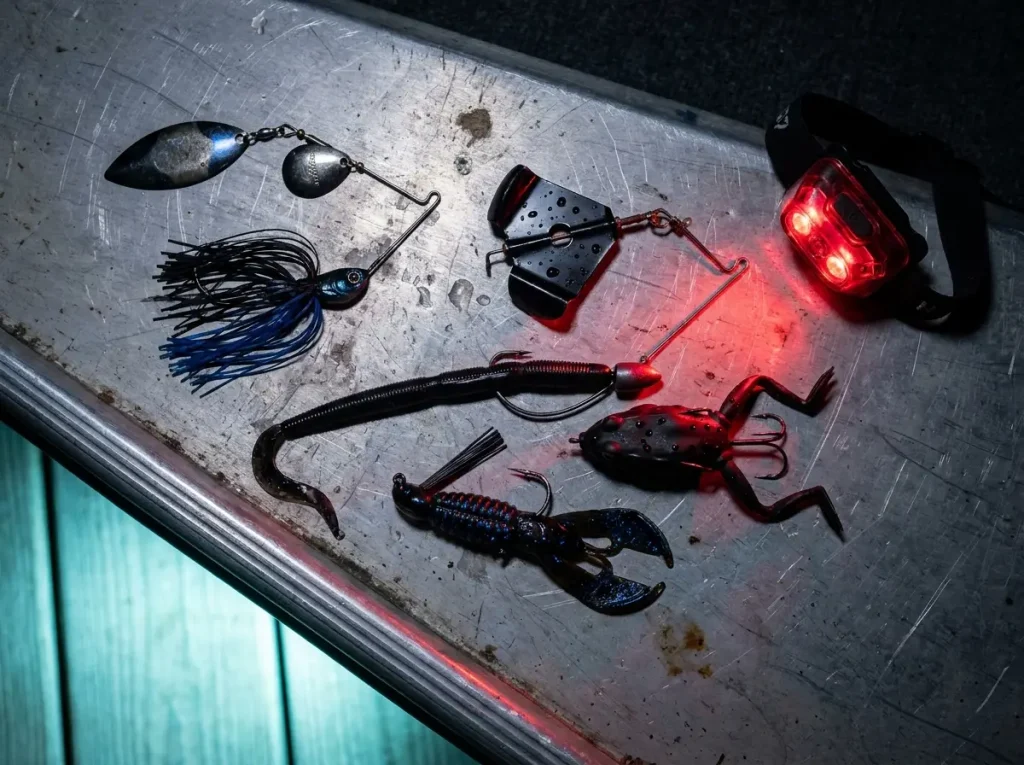
Colorado blade spinnerbait — the vibration machine
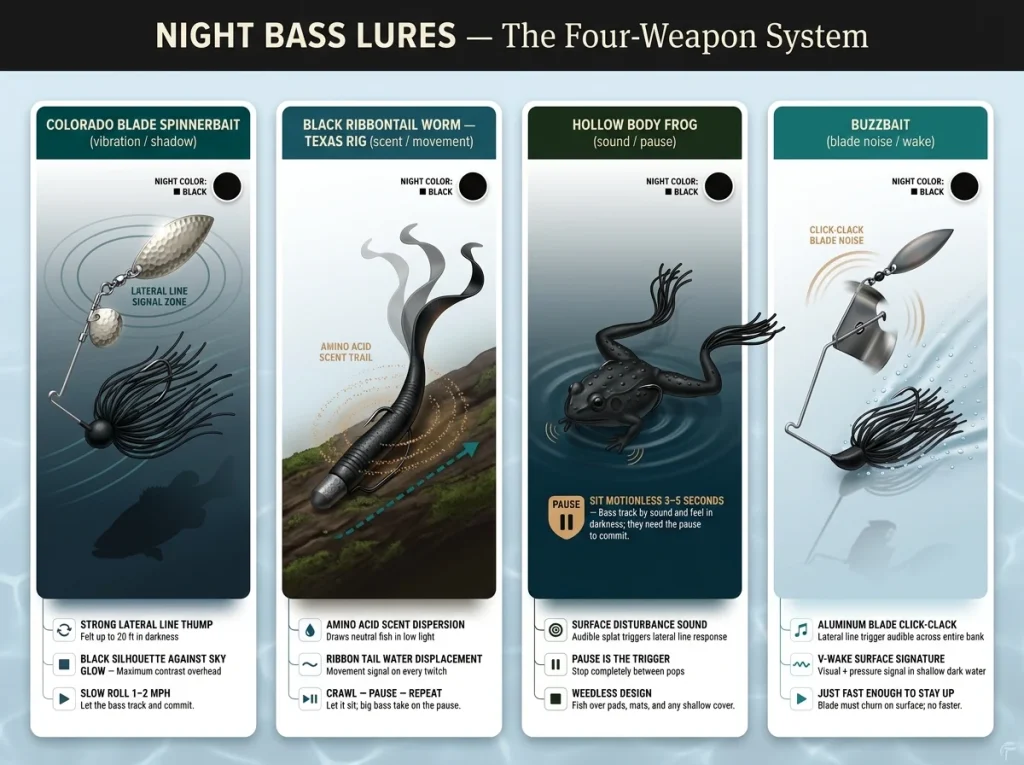
The single-Colorado-blade spinnerbait in 3/4-ounce or 1-ounce is the most reliable night bass lure in most freshwater situations. The large single blade generates a heavy, slow thump with every rotation — a low-frequency pulsing signal that bass can feel with their lateral line from 20 feet away in total darkness.
Black is the correct color. Not chartreuse. Not white. Not natural shad. Black. A black spinnerbait creates the strongest silhouette when viewed from below against any ambient sky glow, which is how bass see lures in the water column at night. Run it slowly and steadily through 2-4 feet of water.
Our soft plastic color selection science by water clarity covers why dark colors outperform natural ones in low-light conditions — the same optical physics apply to spinnerbait skirt color and blade finish at night.
Black ribbontail worm on Texas rig — the slow and consistent producer
A 10-inch black ribbontail worm on a Texas rig with a 3/4-ounce tungsten weight is arguably the most consistent night bass lure over the long term. It’s not glamorous. It doesn’t make noise. But it’s always in the right depth zone, it moves water with the ribbon tail, and it gets picked up by big fish that won’t touch anything else.
Work it with a slow crawl along the bottom — lift it slightly, let it settle, pause, repeat. Bass that are following it at night often take on the pause. If you’re getting short strikes and missing fish, slow down even more and let the worm sit longer between movements. Scented plastics with amino acid impregnation perform measurably better in low-light conditions, as explained in our piece on how fish use olfaction and fluid dynamics to locate bait.
Topwater — frog, popper, and buzzbait for shallow blowups
Topwater is the most exciting night fishing presentation and also the one most anglers mishandle. The hollow body frog is the right tool for fishing over mats and pads in low light — slow it down significantly compared to your daytime retrieve and let it sit motionless for 3-5 seconds between pops. Big bass that are following it in the dark need that pause to commit.
The buzzbait is the night topwater choice for open water along the bank — the blade noise and surface wake give the lateral line something to lock onto across a wider area. Retrieve it just fast enough to keep the blade churning on the surface. The hollow body frog rigging details and hookset timing covered in our frog guide are especially relevant at night when you can’t see the strike and have to fish by feel.
Mistake #2 — Fishing natural colors when you need dark silhouettes
Here is the physics of night lure color: bass see lures primarily as silhouettes against whatever light is in the sky above. Moonlight, dock lights, ambient sky glow — all of it creates a bright ceiling when viewed from underwater. A lure that is dark, opaque, and high-contrast will show up as a clear shadow against that ceiling. A lure in natural shad colors — translucent silver, white, pale blue — blends into the brightness and becomes invisible.
Black, dark blue, and dark purple are the standard night colors for exactly this reason. Green pumpkin, watermelon, and all natural/transparent plastics that work in daylight become nearly invisible to bass at night. If you’re fishing the same lure colors after dark that you use at noon, this is likely costing you fish.
Night Fishing Technique and the Hookset Trap
Slow everything down — the night retrieve rule
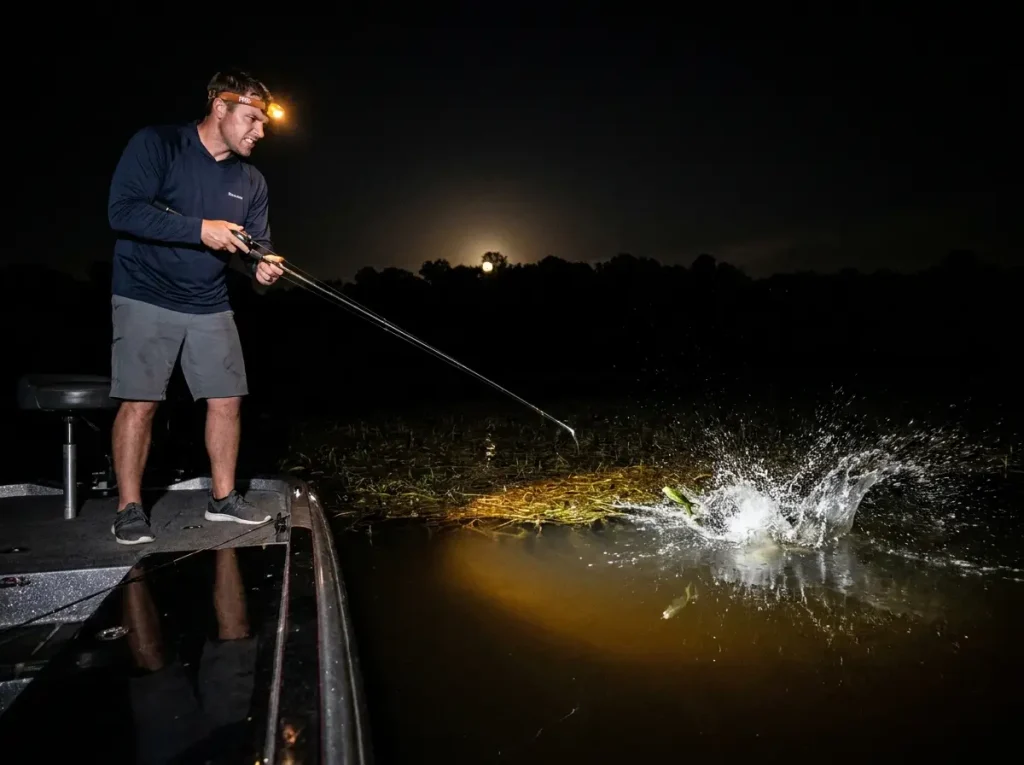
This is the adjustment that connects all the lure selection theory to actual caught fish. At night, bass track a lure primarily by feel, not by sight. A fast retrieve moves the lure through the zone before the fish can fully commit to the strike. A slow, deliberate retrieve gives the bass time to locate the lure with the lateral line, close the distance, and commit.
Slow down every presentation you use at night compared to your daytime speed. The Colorado spinnerbait that you fish at 2 mph during the day should run at maybe 1 mph at night. The ribbontail worm that you hop fast through a laydown should now crawl. Even topwater lures benefit from longer pauses and slower pops. The fish will tell you when you’ve found the right speed — strikes become more confident and the hookup ratio improves.
Fishing pressured lakes at night compounds this — acoustic stealth and slowing your presentation in high-pressure water is doubly important after dark when the lake goes quiet and fish become far more sensitive to unnatural sound.
Mistake #3 — How bass find your lure using their lateral line
Understanding the lateral line changes how you approach lure selection and retrieve. According to University of Florida IFAS research on fish sensory biology, the lateral line detects low-frequency pressure changes (vibrations) in water — the kind created by swimming prey or a blade turning. In clear conditions at night, bass integrate lateral line data with low-light vision. In murky or very dark conditions, the lateral line becomes the primary tool.
🏆 INFORMATION GAIN: This is why lure choice at night is really about frequency, not color. A spinnerbait isn’t chosen at night because of its visual appearance — it’s chosen because the Colorado blade creates a specific vibration frequency that bass can feel across a wide area. A smooth-gliding swimbait that looks beautiful in the water produces almost no lateral line signal and will be nearly invisible to a bass in the dark.
If a lure doesn’t vibrate, thump, splash, or displace water in a noticeable way, it’s working at a significant disadvantage at night. Every lure choice you make should pass the test: can a bass find this without seeing it?
Mistake #4 — The topwater hookset that beginners blow every single time
Back to the beginning. The bass blows up on your topwater. Your arm comes up. The hook doesn’t connect. Here’s why.
When a bass attacks a topwater lure in the dark, it often misses on the first strike — especially with slower-moving frogs and poppers where the fish has to calculate a surface attack without full visual confirmation. If you yank the moment you hear the explosion, one of three things happens: the lure rockets back at your face, you pull the bait out of the fish’s mouth before it closes, or you pull it out of its intended path for a follow-up strike.
The fix: don’t set until you feel weight. When you hear or feel the strike, drop the rod tip slightly, reel down to eliminate slack, and only set when you feel the fish pulling. This requires overriding a reflex that all anglers have. Practice saying “wait” out loud before your first night topwater session. It sounds ridiculous at the dock. It saves fish on the water.
Pro tip: If a bass misses a topwater and you feel nothing solid, stop the lure completely. Let it sit motionless for 3-5 seconds. On a quiet night, you’ll often feel or hear the fish sitting directly under it. Give it one twitch and hold on.
Gear, Safety, and Setup for Night Bass Fishing
Mistake #5 — Not organizing your boat before the light is gone
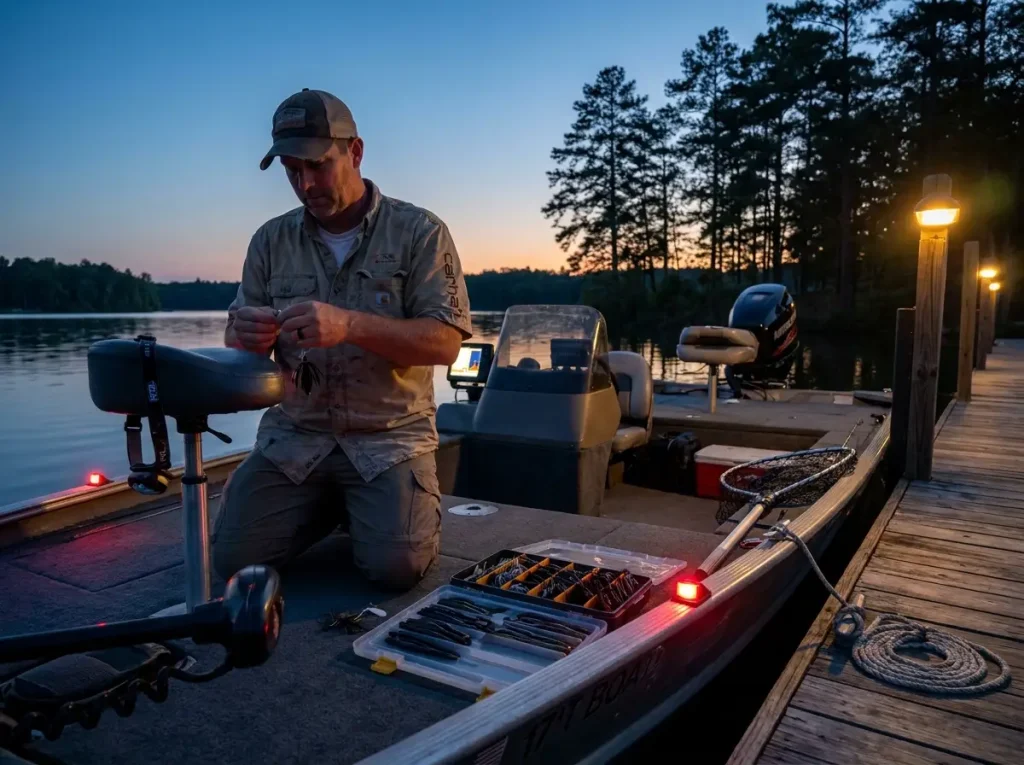
This mistake is unglamorous and almost never mentioned, but it costs more time and fishing quality than any lure choice. Getting to the ramp 20 minutes before sunset and then spending 40 minutes fumbling for tackle in the dark, untangling rods, and re-rigging in the beam of a headlamp is a waste of your prime window.
Do everything in daylight. Rig all your rods before the sun goes down — the spinnerbait, the Texas rig, the frog, the buzzbait. Know exactly where every item is. Put the net where you can reach it with one hand. Know which pocket holds the headlamp. The first hour of night fishing is often the best hour. Don’t spend it running the boat in the dark trying to find your pliers.
Navigation and not getting lost on water you know in daylight
A lake you know perfectly by day becomes disorienting after midnight. The reference points you use automatically — the big cedar at the bend, the dock with the blue light, the channel marker — are all still there, but your brain processes them differently in the dark, especially after a few hours on the water. Running back to the ramp at 2 AM is not the time to discover you don’t actually know where the stumps are.
Run your navigation lights. Carry a second light source. Drive slowly when you need to move. If you’re fishing a new lake at night for the first time, spend an hour on it in daylight first — walk or idle through the areas you plan to fish at night.
Mistake from the water — warm water handling for summer bass
Summer night fishing means 80-degree-plus water temperatures even after dark. A bass that fights hard in that water has used significant oxygen reserves. If you’re releasing fish — which you should be doing with most summer bass — keep them wet, keep the fight short, and complete a proper water revival. Hold the fish upright in the water facing into any available current until it swims away under its own power.
Our guide to warm water fish release and revival protocol covers the specific time thresholds for safe air exposure in high-temperature water. In July and August, those limits are shorter than most anglers realize.
Conclusion
Summer night fishing in shallow water is not complicated, but it is specific. Bass go shallow after dark, feed aggressively, and are catchable in water you’d ignore in the middle of the day. Start before sunset to hit the first window. Stay shallow — bank tight, work the weed edges, find the dock lights. Use dark colors and slow retrieves, and when a bass blows up on your topwater, wait for the weight before you set. Get your boat organized in daylight so you spend your night fishing instead of searching. Do these five things consistently and the dog days stop being a problem.
FAQ
What is the best lure for bass fishing at night?
The single-Colorado-blade spinnerbait in black, 3 or 4 to 1 ounce, is the most reliable all-around night bass lure because the blade generates a strong low-frequency vibration that bass detect with their lateral line in total darkness. A black 10-inch ribbontail worm on a Texas rig is the close second — slower, bottom-oriented, and consistently effective for larger fish throughout the night.
What time of night is best for bass fishing in summer?
The best window is the hour before sunset through about two hours after dark — roughly 8 PM to 11 PM on most summer nights. This is when bass make their initial push to the shallows and are most actively feeding. The bite often slows after midnight, though dock lights and weed edges can hold fish later into the night.
What color lures work at night for bass?
Black, dark blue, and dark purple are the standard night bass colors because they create the highest-contrast silhouette against ambient sky glow when viewed from below. Natural and translucent colors — shad, watermelon, silver — blend into the light and become nearly invisible to bass at night. Match the dark silhouette to the lure type: black spinnerbait skirt, black or dark blue ribbontail worm, black or dark-colored frog.
Is night fishing better on a full moon or new moon?
Both produce fish, but they fish differently. Full moon nights allow bass to see and feed more like they do in low-light daytime conditions, often peaking earlier in the evening around 8-10 PM. New moon nights are darker, which means the lateral line becomes more important — vibrating lures do more work — and the feeding window often runs later. Track your own results per lake; some bodies of water fish dramatically better on one or the other.
How do you set the hook on a night topwater bite?
Wait until you feel the weight of the fish before setting. When you hear or feel the surface strike, resist the reflex to yank — drop the rod tip slightly, reel down to remove slack, and only drive the hook home when you feel the fish pulling against the line. Bass frequently miss topwater lures at night on the first strike. If you feel nothing solid, let the lure sit motionless for several seconds and twitch it once before resuming the retrieve.
Risk Disclaimer: Fishing, boating, and all related outdoor activities involve inherent risks that
can lead to injury. The information provided on Master Fishing Mag is for educational and informational purposes
only. While we strive for accuracy, the information, techniques, and advice on gear and safety are not a substitute
for your own best judgment, local knowledge, and adherence to official regulations. Fishing regulations, including
seasons, size limits, and species restrictions, change frequently and vary by location. Always consult the latest
official regulations from your local fish and wildlife agency before heading out. Proper handling of hooks, knives,
and other sharp equipment is essential for safety. Furthermore, be aware of local fish consumption advisories. By
using this website, you agree that you are solely responsible for your own safety and for complying with all
applicable laws. Any reliance you place on our content is strictly at your own risk. Master Fishing Mag and its
authors will not be held liable for any injury, damage, or loss sustained in connection with the use of the
information herein.
Affiliate Disclosure: We are a participant in the Amazon Services LLC Associates Program, an
affiliate advertising program designed to provide a means for us to earn advertising fees by advertising and linking
to Amazon.com. As an Amazon Associate, we earn from qualifying purchases. We also participate in other affiliate
programs and may receive a commission on products purchased through our links, at no extra cost to you. Additional
terms are found in the terms of service.