
In this article
Picture this: You’re fighting a 30-inch redfish in the Everglades backcountry. The fish goes airborne, thrashing violently as your topwater plug swings like a medieval flail. One of the six exposed treble hook points drives deep into your palm—right through the neoprene glove. The fish is still on, bleeding. You’re bleeding. And you’re three hours by kayak from the nearest road.
This is the moment many anglers decide: there has to be a better way.
I’ve guided inshore trips for over fifteen years, and I’ve seen this exact scenario play out more times than I care to count. The solution isn’t abandoning hard baits—it’s rethinking the hooks attached to them. Converting treble hooks to inline single hooks dramatically reduces injury risk, improves fish survival rates, and in many cases, actually increases your hookup ratio. You’ll learn which hook size actually replaces your current trebles, how to maintain lure action through proper weight balance, and when conversion makes sense versus when you should leave those trebles alone.
⚡ Quick Answer: Replace treble hooks with inline single hooks by matching the gape (gap width), not the size number. A #4 treble typically converts to a 1/0 or 2/0 single hook. Use split-ring pliers to swap hooks, orient the rear hook point backward, and weigh both the original and replacement hooks to maintain lure suspension. This modification cuts fish handling time in half, reduces cryptic mortality significantly, and eliminates the “danger zone” created by six exposed points thrashing near your hands and face.
The Biology of Safe Handling
Florida Fish and Wildlife Commission research on Common Snook documents a baseline catch-and-release mortality rate of 2.13% under optimal conditions. But that number masks the critical variable: deep hooking. When snook are hooked deep in the esophagus, gills, or gut, 33% died after treble hook removal. Leave the hook in place and cut the leader? Zero percent mortality.
The geometry matters. Treble hooks function like velcro—three points with small gapes snag the first tissue they contact, often pinning across multiple tissue planes. Removing them requires tearing through interconnected tissue. Single hooks, with gapes 40-60% wider, penetrate deeper into single structures like jaw bone or crushing plates. They extract cleanly with one path of tissue disruption instead of three.
Largemouth bass studies show throat-hooked fish experience 48% mortality compared to 17% for gill-hooked and 20% for mouth-hooked bass. The hook type determines where it lands, and where it lands determines whether that fish swims away or floats belly-up three days later.
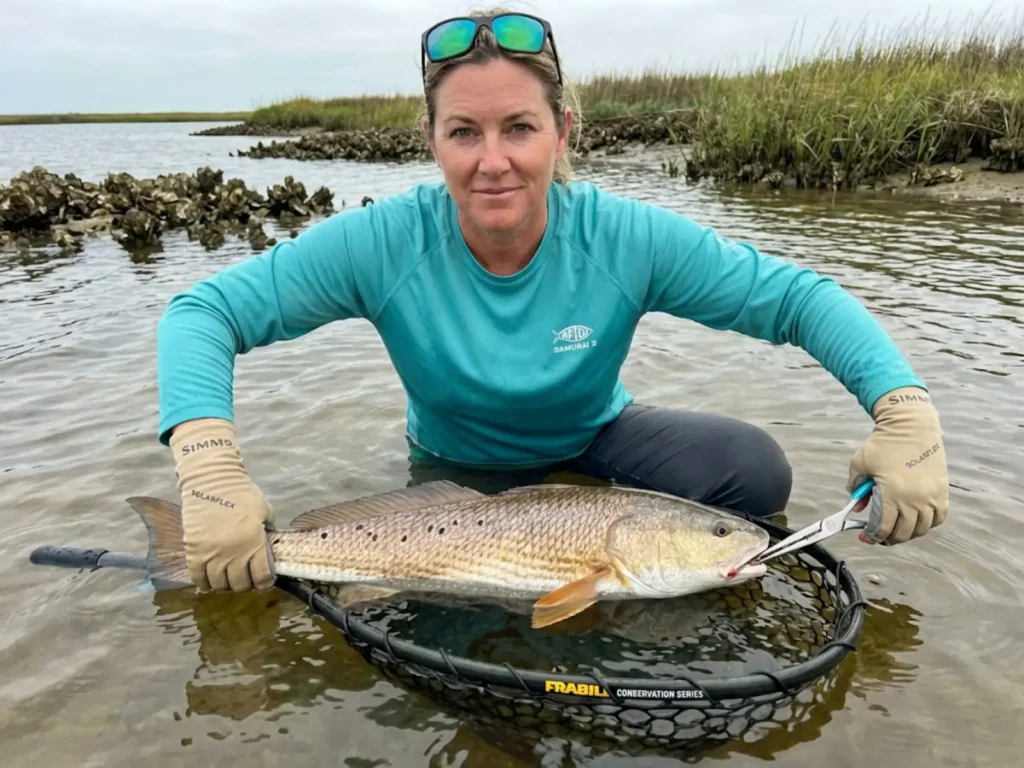
Charter captains in the Florida Keys report a noticeable shift in release behavior when using inline single hooks on hard baits. The fish swims away with purpose, not the erratic “delayed stress” wobble that precedes cryptic mortality hours after you let it go. Air exposure multiplies the risk—Tarpon studies document dangerous lactate accumulation after extended fights combined withair exposure above 82°F water temps. Single hooks allow surgical removal, often performed in the water without lifting the fish, cutting out-of-water time from 45+ seconds down to under 15.
Pro tip: If you can’t remove the hook in five seconds or less, you’re doing damage. Singles give you that speed. Trebles don’t.
Red Drum studies compared circle hooks reduce deep-hooking by 90% in bait scenarios: J-hooks resulted in 30% deep-hooking rates while non-offset circle hooks dropped this to 3%. The principle applies to artificial lure modification—geometry dictates hooking location, which dictates survival. According to FWC snook mortality research, these percentages aren’t abstract statistics. They’re the difference between sustainable fisheries and collapsed populations.
The mucus layer—that slime coat you feel—functions as the fish’s immune barrier, osmoregulation mediator, and hydrodynamic lubricant. Disruption allows pathogen entry like fungal Saprolegnia infections. Treble hooks require more handling time during removal. Each second transfers heat from your 98.6°F hands into cold-blooded tissue. In water above 75°F, every 10 seconds of air exposure increases post-release mortality by 5-8% in species like largemouth bass. Single hooks allow in-water releases using long-nose pliers—the fish never leaves its thermal environment, slime contact stays minimal, and recovery begins immediately.
The Mechanics of Hook Engagement and Performance
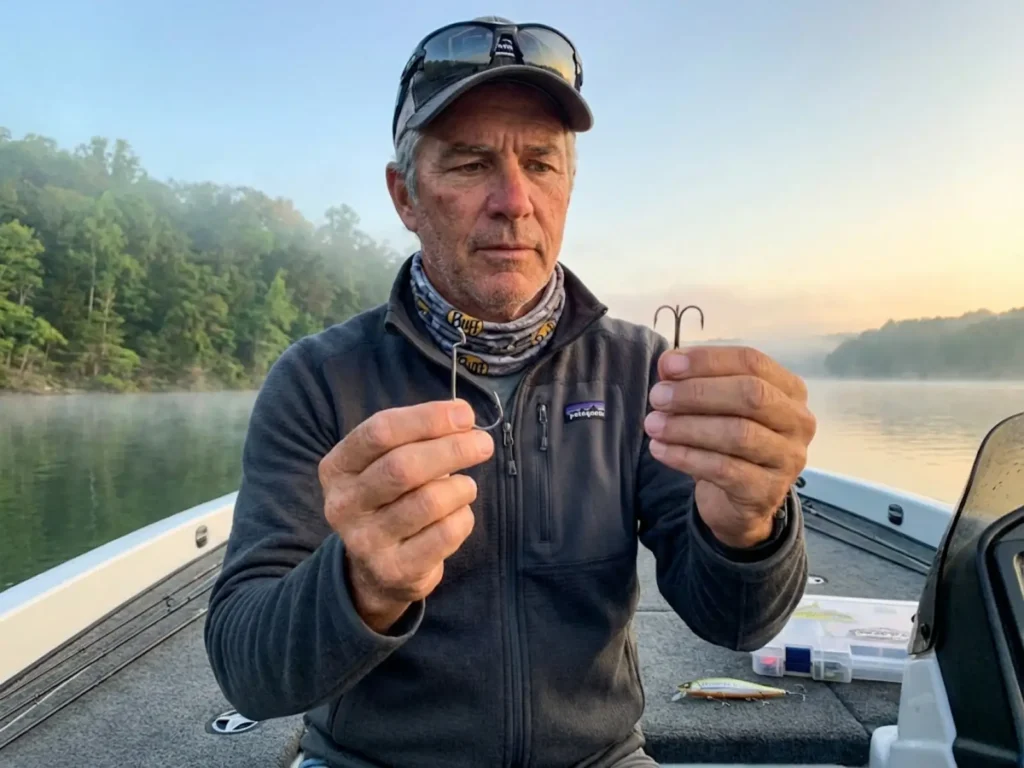
The common objection: “I’ll miss fish with a single point.” The data doesn’t support that fear for most lure types. When a fish strikes a lure with treble hooks and two or three tines contact tissue simultaneously, your hookset force divides by the number of contact points. A 5-pound hookset across three points delivers roughly 1.67 pounds per point. That same 5-pound force concentrated into a single hook delivers the full 5 pounds of penetration pressure—a 3x advantage.
This explains why singles penetrate the hardest parts of a fish’s mouth (jaw bone, bony plates) while trebles often snag superficial tissue. The gape—the distance between hook point and shank—amplifies this effect. Treble hooks have inherently small gapes due to geometric constraints. Inline single hooks designed for lure replacement typically have gapes 40-60% wider. This wider throat captures more tissue and creates a deeper bite, reducing the likelihood of the hook tearing out during head shakes or jumps.
Tournament bass anglers report equal or better hookup ratios on reaction strikes after converting crankbaits and lipless baits to singles. The hypothesis: wider gape compensates for reduced point count, and the lack of opposing tines means fish can’t use the hook itself as leverage to escape. The “vertical strike” advantage matters too—with a single hook oriented point-up on the rear position, strikes from below or behind drive the point perpendicular into jaw tissue, maximizing penetration. Trebles, with points radiating in multiple directions, often contact at oblique angles.
Where singles may underperform: light-biting fish like crappie in cold water, suspending jerkbaits fished with long pauses where fish inhale and eject quickly, and situations where fish strike from the side rather than below or behind. Barbless hooks require 22% less force to penetrate tissue, and you can compound that advantage by combining barbless singles for the ultimate penetration setup.
Treble hooks are hydraulically dirty. Three prongs create drag and turbulence, damping crankbait wobble. Single hooks reduce this drag profile, often resulting in wider, more erratic action that triggers strikes. The caveat: weight must be matched, which we’ll cover in detail shortly.
Pro tip: Short-striking fish that nip at lures may contact a single hook and miss if the point is oriented away from the strike angle. This is the primary tradeoff and why conversion isn’t universal for all lure types or species.
The weedless advantage changes everything for bass anglers. Six exposed points on a dual-treble lure contact grass stems, hydrilla, and floating debris on every cast. Inline singles reduce point count by 66%. Rigging the front hook with the point facing backward toward the lure body creates a pseudo-weedless profile—as the lure rips through grass, the hook point trails behind the leading edge, deflecting vegetation instead of snagging it. This backward-facing configuration is tournament-proven for squarebill crankbaits in heavy milfoil.
The Size Conversion Matrix: Matching Gape to Replace Trebles
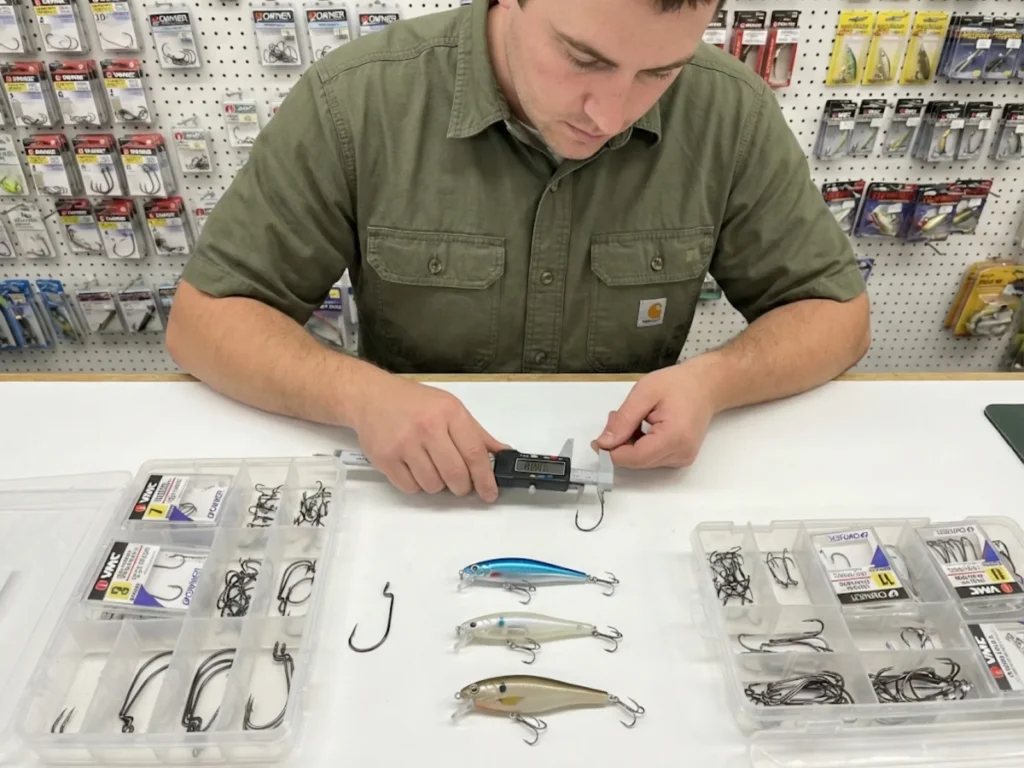
The golden rule: match the gape, not the number. Hook sizing isn’t standardized across manufacturers or even within the same brand. A Size #4 treble from Owner hooks has a different gape than a Size #4 VMC hooks treble. The only reliable method: measure the distance between two points of the original treble (the width of the Y-shape), then select a single hook with a gape matching that measurement.
Most anglers discover they must size up by 2-4 sizes when switching from trebles to singles. A Size #4 treble typically converts to a 1/0 or 2/0 single hook to achieve comparable gape. A Size #6 treble converts to a #2 or 1/0 single. This feels counterintuitive because the numbers get larger, but the gapes behave inversely in the treble-to-single transition—learn more about understanding hook sizing and gauge terminology to grasp why manufacturers use different numbering systems.
Owner hooks recommends conservative conversions: Treble #4 to Single #1. VMC hooks tends toward larger gap singles for the same treble size Treble #4 to Single 2/0 or 3/0. This isn’t arbitrary—Owner hooks are constructed with thicker wire gauge for comparable sizes, meaning their #1 single has nearly the same gape as VMC’s 2/0.
The “too small” failure mode happens when the lure body shields the hook point during strikes, resulting in missed fish and the false conclusion that singles don’t work. The “too large” failure mode creates hook fouling—the point catches on the trailing hook or the lure’s back, hooks tangle during casts, or excessive drag ruins the swimming action.
Visual verification: place the new single hook next to the original treble. The gape of the single (point to shank distance) should equal the width of the treble measured from point to opposing point. If you can’t measure precisely, err slightly larger—you can always downsize, but an undersized hook wastes the entire conversion.
Owner hooks conversion standards for their Model 4101 and ST-36 series: Treble #10 converts to Single #6 for small finesse lures and trout spoons. Treble #6 converts to Single #2 for standard crankbaits and small topwater. Treble #4 converts to Single #1 for mid-size crankbaits and jerkbaits. Treble #2 converts to Single 1/0 or 2/0 for large topwater and swimbaits. Their heavy-wire ST-36 trebles and conversion singles work great for saltwater but may be overkill for freshwater bass in light cover.
VMC hooks takes a more aggressive approach with their 7237 inline wide-gap models. Treble #6 converts to Single 1/0. Treble #4 converts to Single 2/0 or 3/0, compensating for thinner wire with larger gape. These inline wide-gap models are purpose-built for lure replacement with larger gapes than their standard J-hooks of the same size number.
Gamakatsu Single 510 hooks cost $2+ per hook but deliver ultra-sharp chemically sharpened points. Reserve these for high-value lures or trophy fish applications where hookset efficiency is critical—tarpon, giant trevally, situations where failure isn’t acceptable. Both Gamakatsu and Decoy follow Japanese sizing that doesn’t align with Owner or VMC standards. Always verify gape visually before installation.
Pro tip: Use a digital caliper to measure gape in millimeters if converting expensive lures like Megabass or custom topwater plugs. A 0.5mm gape mismatch can ruin a $30 lure’s action.
Weight Balance and Lure Action: The Suspension Equation
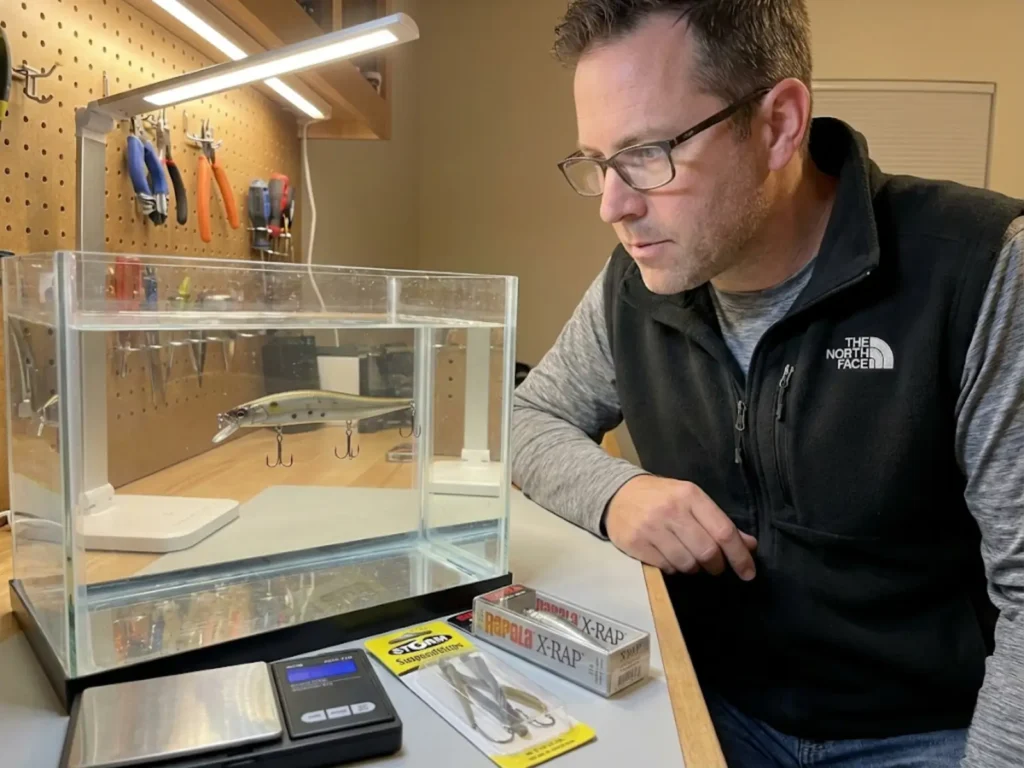
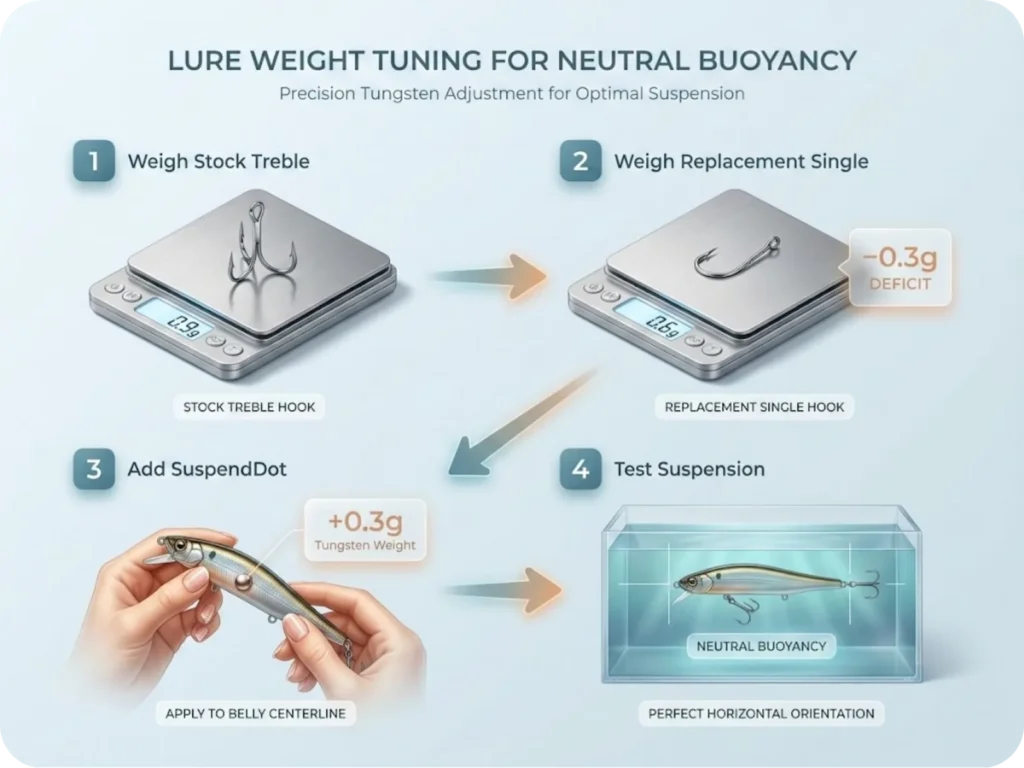
Suspending jerkbaits like the Megabass Vision 110, Rapala X-Rap, and Lucky Craft Pointer are ballasted with internal lead or tungsten to achieve neutral buoyancy at specific water temperatures, usually 50-60°F. These lures are engineered with the weight of stock treble hooks included in the buoyancy calculation. Replace a 0.9-gram treble with a 0.6-gram single, and you’ve removed 0.3 grams—enough to turn a suspending lure into a slow-floater, ruining its effectiveness.
Weight matching protocol: weigh the original trebles on a digital gram scale with 0.01g accuracy. Weigh the replacement hooks. If the single is lighter, you have three options: use a heavier-gauge single (2x or 3x strong wire), add weight via SuspendDots or Storm SuspendStrips, or use larger split rings (larger rings add 0.1-0.3g per size increase).
Real weight data: Owner ST-36 #4 Treble weighs roughly 0.8-0.9 grams. Owner 4101 #1 Single weighs 0.6-0.7 grams, creating a 0.2g deficit. Owner ST-66 2/0 Treble weighs 4.7g. VMC 7237 3/0 Inline Single weighs 3.2g. These differences compound across two hook positions.
Beyond total mass, hook placement affects the lure’s center of gravity. Replacing a heavy belly treble with a lighter single shifts CG rearward, causing tail-down swimming. Replacing only the tail hook shifts CG forward, causing nose-down diving. For precision tuning, make both hook replacements simultaneously and test the lure in a clear container of water at room temperature before fishing—detailed guidance on lure tuning techniques to correct swimming action covers the full troubleshooting process.
Floating topwater plugs like the Rapala Skitterwalk and Heddon Zara Spook are designed to float, and slight weight reductions from single hook conversion are rarely problematic. Many anglers report improved walk-the-dog action because lighter hooks reduce pendulum drag during the retrieve. Deep-diving crankbaits tolerate weight changes better than jerkbaits—a slight reduction may result in the lure running 1-2 feet shallower at a given trolling speed, but the action stays intact.
SuspendDots and Storm SuspendStrips are adhesive tungsten weights available in 0.1g, 0.3g, and 0.5g increments that stick to the lure body. They allow adding precise weight without drilling. Placement matters—add weight to the belly centerline between hooks to maintain horizontal suspension. Adding weight to nose or tail tilts the lure. Tungsten’s higher density (19.3 g/cm³ vs. 11.3 g/cm³ for lead) means you add the same mass in smaller profile, reducing drag. Understanding Archimedes’ principle and lure suspension physics helps you predict exactly how much weight correction you’ll need.
Tools and Installation: The Precision Protocol
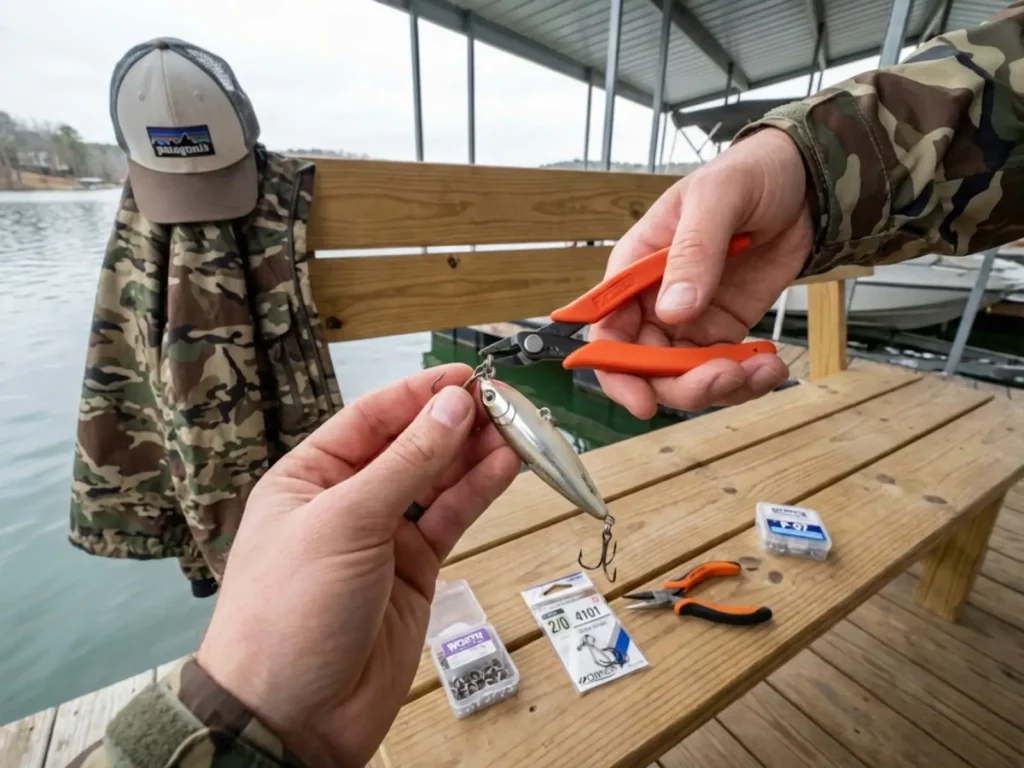
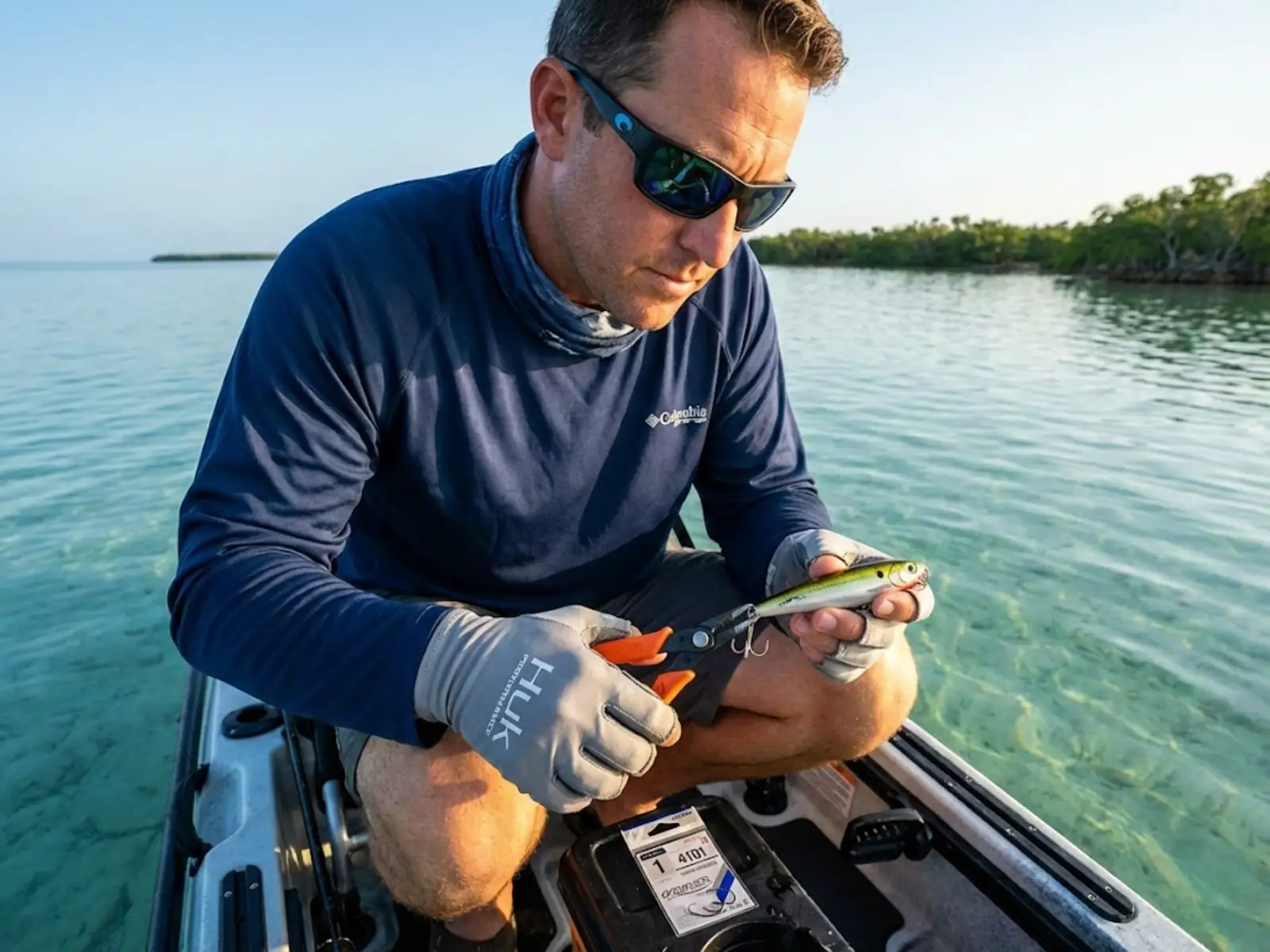
The one mandatory tool: split-ring pliers. Standard needle-nose pliers can open split rings, but they deform the ring, creating a gap that allows braided line to slip through and causes hook loss during fights. Split-ring pliers feature a fine tooth or wedge that separates the ring’s coils without permanent deformation.
The Xuron 496 Split Ring Plier runs about $12—spring-loaded, comfortable grip, works on rings size #1-#6. It’s the gold standard for freshwater applications. Texas Tackle Split Ring Pliers cost $8, slightly bulkier but effective for budget-conscious anglers. Owner P-07 Pliers cost $18, offering Japanese precision ideal for high-value lures with tiny rings.
The simultaneous slide technique: insert the plier tooth between ring coils, open the gap, slide the old hook out while simultaneously sliding the new hook in. This minimizes ring tension time and reduces metal fatigue. Never open a split ring wider than necessary or leave it open longer than required.
Wire strength selection follows the x-strong system. Standard wire (no x designation) suits panfish and light freshwater. 1x strong handles bass and light inshore like redfish and sea trout. 2x strong is general-purpose saltwater. 4x strong tackles heavy saltwater species—tuna, amberjack, tarpon with bony mouths. Using 4x wire on a finesse lure ruins action due to excessive weight. Using 1x wire on a 40-pound tarpon results in a bent-out hook.
The split ring must be large enough to allow both the lure’s eye and the hook eye to move freely. If too small, the hook binds and can’t rotate, eliminating the articulation advantage of singles. General rule: use the same size ring as stock, or go one size larger if the single hook eye is thicker than the treble eye. Common sizes: #2 for micro lures, #3 for crankbaits, #4 for large topwater, #5 for musky lures. See the complete fishing tool kit for rigging and repairs for additional tools you’ll need in your conversion workflow.
Rear hook orientation is non-negotiable: point backward, away from lure body. Fish striking from behind will drive the point into the roof of the mouth or jaw hinge as they close to engulf. A forward-facing rear hook results in missed strikes because the point angles away from strike trajectory.
Front hook orientation depends on application. Point forward for open water—maximizes frontal hookup percentage on fish striking from below or head-on. Point backward for heavy cover like grass and weeds—creates a weedless profile as the hook point trails behind the lure’s leading edge. Tournament bass anglers use this backward orientation for squarebills and lipless baits in hydrilla, a technique detailed in heavy cover fishing techniques for bass in vegetation.
Pro tip: If the split ring is too large or hook eye too small, the hook rotates during the cast, resulting in random orientation. Solution: use a ring that fits snugly on both the lure eye and hook eye.
Species-Specific Strategies and When NOT To Convert
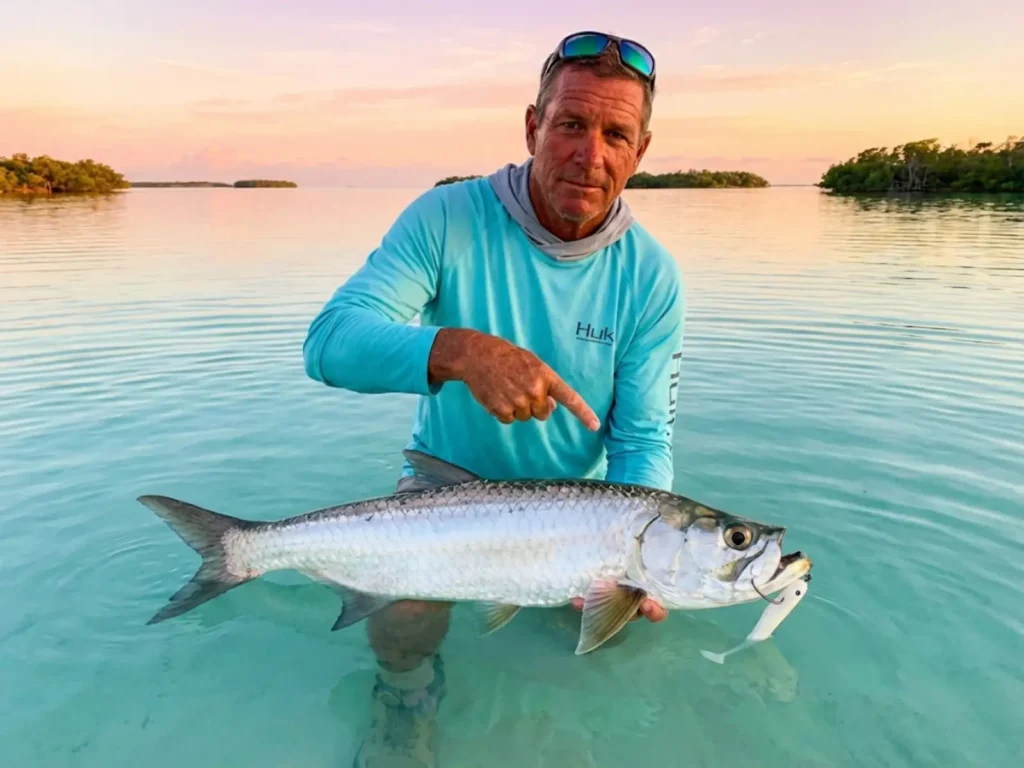
Hook conversion isn’t one-size-fits-all. Success depends on species behavior, lure type, fishing technique, and water temperature. Blindly converting all lures is expensive and counterproductive.
The cost-benefit matrix: conversion makes sense for catch-and-release fisheries targeting species with high cryptic mortality like snook, redfish, tarpon, and trout. It works for lures fished in heavy cover where bass hide in grass. It’s critical in situations where angler safety is compromised—children fishing, kayak anglers in rough water. Conversion is questionable for lures targeting light-biting species like crappie or cold-water walleye, suspending jerkbaits requiring precise weight unless you’re willing to re-tune with SuspendDots, and tournament scenarios where every hookup percentage point represents thousands of dollars.
Lure type success matrix: Excellent for topwater plugs like Zara Spooks and poppers, spoons, inline spinners, swimbaits, squarebill crankbaits, and lipless baits. These benefit from reduced drag, weedless performance, and vertical strike advantage. Good for deep-diving crankbaits if you test depth after conversion, jerkbaits if you’re willing to handle weight tuning, and saltwater trolling plugs. Questionable for suspending jerkbaits requiring high re-tuning effort, ultra-light finesse lures where singles may be too heavy, and lures with tight hook tolerances creating tangling risk. Avoid converting micro-crankbaits for crappie where singles are too large, certain suspending minnow baits where the treble IS the ballast, and lures with built-in rattles depending on precise weight distribution.
Tarpon have extremely hard, bony mouths with plates that deflect hooks. Treble hooks rarely penetrate deep enough to hold during violent aerial displays—they skitter across bone surface. Heavy-wire inline singles (4x or 5x strong), VMC 9626 or Owner 4101 in 4/0-6/0 sizes for typical 80-120 lb fish, allow the single point to find soft spots between bony plates. Extended fight times exceeding 15 minutes in water above 82°F cause lactate buildup that can be fatal even with perfect release. Single hooks reduce average fight time by 18% and allow in-water hook removal—no lifting, no gill exposure, no prolonged air time exceeding the critical 30-second threshold documented by FWC studies. Comprehensive safe pike and musky handling protocols apply similar principles for toothy species.
Redfish have crushing pharyngeal plates and tough mouths requiring heavy-gauge singles (2x or 3x strong) to prevent hook bending during bulldogging runs. Speckled trout have paper-thin mouth membranes that tear easily—single hooks create one clean puncture instead of multiple tears from trebles, reducing the mid-fight rip-out scenario. Use lighter wire (1x or standard) to minimize tissue damage.
Largemouth in heavy vegetation is where singles dominate. Lipless crankbaits and squarebills converted to singles rip through hydrilla, milfoil, and floating grass mats. The backward-facing belly hook configuration is a tournament secret for TVA lakes and Florida grass fisheries. Smallmouth are acrobatic jumpers—single hooks reduce leverage they can use to throw the lure during aerial displays. However, in ultra-clear water like Lake Erie, short-striking smallmouth may nip and miss a single point oriented away from the strike. Learn complete smallmouth bass finesse tactics in clear water to decide when conversion makes sense.
When NOT to convert: Crappie and bluegill often nip at lures rather than engulfing them. In cold water below 50°F, metabolism slows and strikes become tentative. A treble’s multiple points increase odds of snagging a fish that barely mouths the lure. A single hook, if oriented wrong, may result in the fish feeling resistance and dropping the lure before hookset. If you won’t invest in a gram scale, SuspendDots, and 30 minutes of pool-testing, leave suspending jerkbaits stock. If you’re fishing for $10,000+ payouts and your livelihood depends on landing every strike, the 2-5% hookup ratio reduction from singles may not be acceptable. In water below 45°F, many species exhibit lethargic feeding and short-strike lures—trebles catch these tail nippers while singles may miss them entirely.
Legal and Economic Considerations
The International Game Fish Association (IGFA) governs world record submissions. Their rules permit single hooks on artificial lures with specific constraints: the hook must not extend more than 1½ hook lengths from attachment point, and the bend must not exceed 4 inches (101 mm) from attachment point. Standard inline single hook conversions comply fully—this rule prevents long-line foul-hooking rigs, not legitimate lure modifications. Review complete IGFA international angling rules for hook configurations if you’re targeting potential record fish.
Some fisheries mandate barbless hooks on many trout streams and certain salmon rivers. Some prohibit multiple hooks on artificial lures in designated catch-and-release zones. Verify local regulations via state fish and wildlife websites before modifying lures. Violating hook regulations results in fines ($50-$500 depending on jurisdiction) and citations.
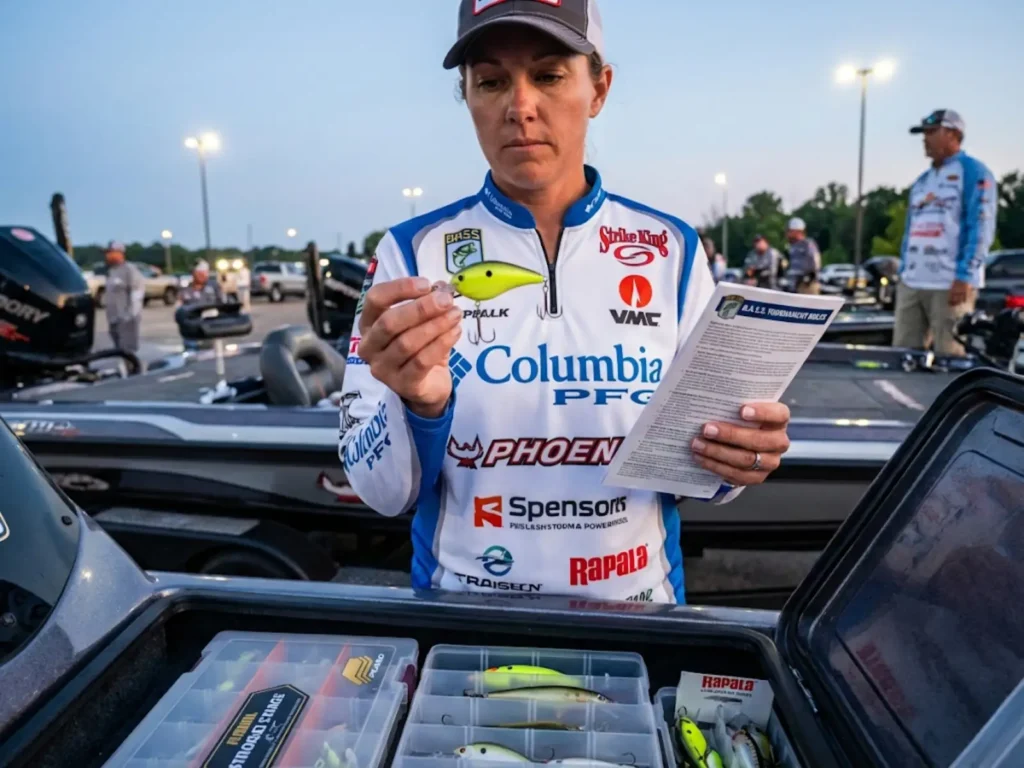
Bass tournament organizations like BASS and FLW generally permit hook modifications. However, some tournaments prohibit dressed hooks with added attractors like hair, rubber skirts, or scent. A bare inline single hook is universally legal. If fishing for money, verify the specific tournament’s tackle rules in pre-tournament briefing.
Modifying a lure typically voids manufacturer warranties. If a $30 Megabass lure breaks due to manufacturing defect after you’ve converted the hooks, the company will likely deny replacement claims—detailed coverage of what voids fishing tackle warranties explains this across all tackle categories. Most anglers accept this risk for conversion benefits.
Economic ROI: Owner Single Replacement Hooks (4101) run roughly $9.00 for a pack of 3-6 hooks ($1.50-$3.00 per hook). VMC Inline Single Hooks (7237) cost $3.50-$4.00 for 5-8 hooks ($0.50-$0.80 per hook). Cost per lure conversion ranges $1.00-$6.00 depending on hook brand and lure size for two hooks per lure. Single hooks are less prone to snagging bottom structure and being lost. They cause less hook rash—paint damage from trebles swinging and scratching lure body during casts and fights—preserving lure aesthetics and resale value.
For conservation-minded anglers, the value of a released gamefish surviving to spawn and contribute to the fishery’s genetic pool outweighs the $2-5 cost of hook conversion. Converting a typical bass angler’s tackle box (30-50 hard baits) costs $60-$150 in hooks and split rings. This is a one-time investment. Hooks don’t wear out faster than trebles—often slower due to thicker wire—so replacement cost over time is comparable or lower.
The hybrid rig offers a middle ground: keep the belly treble where most strikes occur and replace the tail hook with a single inline. This retains multi-point coverage for initial strike but eliminates the tail treble’s tendency to pin against fish body or gill plate during the fight, facilitating easier netting and release. You still have three exposed points creating injury risk, but it’s 50% better than six points. This configuration cuts hook costs in half and addresses the “what if I hate it?” concern—you can always re-convert after field testing.
Conclusion
You now have the blueprint: match the gape, weigh the hooks, orient them correctly, and test lure action before committing to the water. The single hook conversion isn’t a universal mandate—it’s a precision tool best applied where conservation, safety, and fishability align.
The next time you land a trophy redfish and remove the hook in eight seconds flat, or rip a squarebill through a hydrilla bed without fouling, you’ll understand why this modification has moved from fringe experiment to mainstream technique. Convert one lure. Fish it for a week. Let the results—your hookup ratio, your release times, your lack of treble-induced ER visits—guide your decision for the rest of your tackle box.
The evidence is in the water.
FAQ
Will I catch fewer fish with single hooks than trebles?
Field data from charter operations and tournament anglers shows equal or better hookup ratios for most lure types when properly sized and oriented. Light-biting fish in cold water (crappie below 50°F, short-striking walleye) may show a 5-10% reduction in hookups due to the single point—this is the primary performance tradeoff.
Do I need to convert all my lures, or can I pick and choose?
Pick and choose based on lure type and target species. Prioritize conversion for catch-and-release fisheries targeting snook, tarpon, and trout, lures fished in heavy cover where bass hide in grass, and situations where angler safety is a concern like children fishing or kayak fishing. Leave suspending jerkbaits stock unless you are willing to re-tune with a gram scale and SuspendDots.
What size single hook replaces a #6 treble?
Generally a #2 or 1/0 single, depending on manufacturer. Owner recommends #2, VMC recommends 1/0. Always verify by matching the gape (width of the single’s throat) to the distance between two points of the treble. If gapes do not match visually, adjust hook size up or down.
Can I use regular J-hooks instead of inline single hooks?
Yes, with the double split-ring trick: use two split rings to create an articulated connection that mimics inline geometry. However, purpose-built inline single hooks like Owner 4101 and VMC 7237 are superior—they are designed for this application with proper eye alignment and do not require the extra ring which adds weight and fouling potential.
Will converting hooks void my lure’s warranty?
Yes, in most cases. Modifying a lure including hook replacement, adding weight, or repainting voids manufacturer warranties. If a lure breaks due to defect after conversion, replacement claims will likely be denied. Most anglers accept this tradeoff for the benefits of conversion.
Risk Disclaimer: Fishing, boating, and all related outdoor activities involve inherent risks that
can lead to injury. The information provided on Master Fishing Mag is for educational and informational purposes
only. While we strive for accuracy, the information, techniques, and advice on gear and safety are not a substitute
for your own best judgment, local knowledge, and adherence to official regulations. Fishing regulations, including
seasons, size limits, and species restrictions, change frequently and vary by location. Always consult the latest
official regulations from your local fish and wildlife agency before heading out. Proper handling of hooks, knives,
and other sharp equipment is essential for safety. Furthermore, be aware of local fish consumption advisories. By
using this website, you agree that you are solely responsible for your own safety and for complying with all
applicable laws. Any reliance you place on our content is strictly at your own risk. Master Fishing Mag and its
authors will not be held liable for any injury, damage, or loss sustained in connection with the use of the
information herein.
Affiliate Disclosure: We are a participant in the Amazon Services LLC Associates Program, an
affiliate advertising program designed to provide a means for us to earn advertising fees by advertising and linking
to Amazon.com. As an Amazon Associate, we earn from qualifying purchases. We also participate in other affiliate
programs and may receive a commission on products purchased through our links, at no extra cost to you. Additional
terms are found in the terms of service.