In this article
You’re fighting a 10-pound bass, rod bent in a perfect arc, when the reel handle suddenly spins backward. The spool free-wheels, line goes slack, and the fish is gone. Your knuckles sting where the handle cracked them. Your anti-reverse bearing just failed—and you’re three miles from the truck.
This isn’t bad luck. It’s a mechanical failure triggered by a single drop of the wrong lubricant, and it happens to thousands of anglers every season. After maintaining reels for tournament circuits and guiding clients through equipment failures on remote rivers, I’ve seen this exact scenario play out hundreds of times. The good news? You don’t need a reel tech or a replacement clutch assembly to fix it.
By the end of this guide, you’ll understand the exact physics behind anti-reverse failures, diagnose the problem in under 60 seconds using observable symptoms, execute a field repair with $10 in tools, and prevent future failures through science-backed maintenance protocols.
⚡ Quick Answer: The vast majority of anti-reverse reel failures (95%) are caused by grease contamination preventing the roller clutch from locking. You can fix it in 10 minutes with a solvent flush, compressed air dry, and 1-2 drops of synthetic oil. The bearing needs bare metal contact to work—any lubricant film destroys that friction. For budget reels with pawl springs (Shimano FX, etc.), the spring typically breaks or disconnects, requiring either re-hooking or replacement.
The Biology of Failure: How Roller Clutches Lock (And Why They Don’t)
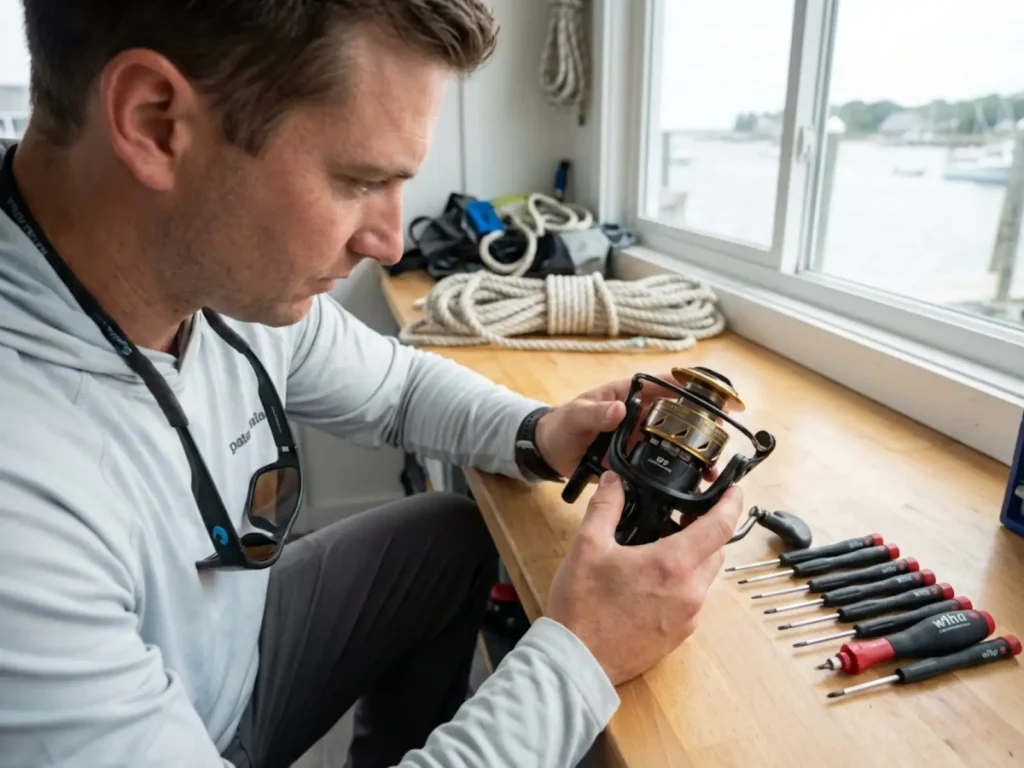
Modern Instant Anti Reverse systems use a Roller Clutch (also called a Sprag Clutch or One-Way Bearing) containing cylindrical steel rollers in a plastic cage. When you crank the handle forward, the rollers rotate freely within the assembly. The moment backward pressure hits—like when you set the hook on a fish—the rollers are forced down a ramped surface in the outer sleeve, wedging tightly against the inner tube.
This lock is 100% dependent on friction. The rollers must achieve metal-to-metal contact to “bite” into the sleeve. No friction equals no lock. The wedging angle (typically 5-7 degrees) creates a mechanical advantage ratio of about 10:1. That means a 10-pound fish generates roughly 100 pounds of clamping force when the system is clean. When it’s contaminated with grease, that fish generates zero resistance.
Tournament anglers describe a failed bearing as feeling like “setting the hook into a free-spooling baitcaster”—instant backward rotation with zero resistance. If rollers are coated in grease or gummed-up oil, they hydroplane on this lubricant film instead of wedging. The physics is identical to a tire hydroplaning on wet pavement. While anti-reverse bearings fail due to contamination, standard ball bearings fail for different reasons—here’s how to diagnose bearing health through spin tests and acoustic analysis.
The Grease Trap: Why “More Lube” Destroys Your Bearings
Grease is a killer for roller clutches. Grease consists of base oil suspended in a thickener matrix (like water in a sponge), with viscosity typically 50-150 times higher than oil. When applied to rollers, grease creates a hydrodynamic film that prevents the metal-to-metal contact required for wedging.
As rollers attempt to lock, they must displace lubricant. Low-viscosity oil (5-10 cSt) displaces in milliseconds. Thick grease (NLGI Grade 2 = roughly 100,000 cSt equivalent) forms a persistent barrier. This is identical to automotive brake fade—when brake fluid boils and creates a compressible vapor layer, pedal pressure no longer translates to pad clamping force.
Bass Resource forum testing showed contaminated bearings required 3-5 handle rotations before locking, versus instant lock when clean and dry. Most reel failures trace to anglers greasing the main shaft during maintenance, expecting it to “work down” to gears. Instead, capillary action draws grease upward into the anti-reverse assembly.
The gap between main shaft and pinion gear is microscopic—less than three thousandths of an inch. Liquids naturally flow into narrow spaces without gravity’s help due to intermolecular forces between the liquid and solid surfaces. Oil applied to the shaft at the bottom of the reel gets drawn up through this tiny gap, migrating directly into the anti-reverse bearing above it. Understanding where grease belongs (gears, drag washers) versus where it’s lethal (bearings, clutches) is covered in our proper reel lubrication protocols that prevent contamination.
Pro tip: Never apply more than one drop of oil to a main shaft, and wipe away any excess before reassemble. Excess oil always migrates upward into the anti-reverse mechanism within 20-30 hours of use.
The Winter Factor: When Cold Freezes Your Bearing Solid
All lubricants thicken as temperature drops, but the rate varies drastically. Standard mineral oils can thicken 10-20x between 70°F and 20°F. Pour Point is the critical spec—the temperature at which oil stops flowing. Standard reel grease often has a pour point around 14°F. According to NOAA’s National Weather Service guidelines on cold weather safety,exposure to freezing temperatures without proper gear protection can cause rapid equipment failure.
At temperatures below freezing, thickened lubricant creates viscous drag that weak springs in the anti-reverse cage cannot overcome to push rollers into locking position. This creates a delayed engagement—the handle spins 1-2 rotations backward before the bearing “catches,” resulting in a hookset failure and lost fish.
Synthetic oils (PAO, synthetic esters) maintain viscosity down to -40°F or lower due to their uniform molecular structure. Ice anglers report that reels work perfectly in the garage at 60°F but fail on the ice at 10°F—this is pure viscosity temperature coefficient at work. For extreme cold, many experts run the bearing completely dry to eliminate viscous drag entirely. Cold weather performance failures extend beyond bearings—here’s our analysis of cold-weather tackle performance across lines, reels, and knots.
The Diagnosis Protocol: 3 Symptoms That Tell You Everything

Free Back-Spin is the most common symptom (85% of all failures). The handle spins backward smoothly and continuously when backward pressure is applied. No resistance, no catching, no grinding—just free rotation. If you remove the rotor and manually rotate the anti-reverse assembly, you’ll feel sluggish, gummy movement instead of crisp, dry clicks.
The root cause is rollers coated in high-viscosity grease or old, sticky oil that prevents friction wedging. The fix is a solvent flush (CRC Electronic Cleaner, Simple Green, or lighter fluid), compressed air dry, and re-lube with 1-2 drops of synthetic oil like Quantum Hot Sauce oil or Ardent Reel Kleen. This failure typically develops over 60-70 hours of use as oil migration occurs from the main shaft, or immediately after an over-greasing maintenance session.
If the bearing fails immediately after maintenance, you or your reel tech introduced grease. If failure is gradual, it’s oil migration from the main shaft. Preventing this failure starts with post-trip reel cleaning protocols that prevent future contamination.
Intermittent Slip accounts for about 10% of failures. The bearing catches and releases unpredictably. The handle might lock for 1 second, then slip for 2 handle rotations, then lock again—feels like a “stutter.” This can be triggered by two root causes: cold weather or partial oil migration.
If failure only occurs in cold weather and resolves when the reel warms up in your pocket, it’s cold-induced thickening. Lubricant has thickened due to temperatures below 32°F, creating viscous drag that delays roller engagement. The fix is to switch to ultra-low viscosity synthetic oil (ISO 22) or run bearing dry. For Daiwa MagSealed reels, do not add oil—send to authorized service.
If failure is progressive and independent of temperature, it’s partial contamination. Flush and re-lube, and reduce oil on main shaft to a single fingertip-applied drop, wiping excess. Walleye anglers targeting pre-spawn fish in 35°F water report this failure mode most frequently—temperature is right at the viscosity cliff.
Zero Resistance is the rarest failure mode (5%), but the most dramatic. The handle spins backward with zero resistance—feels loose, almost sloppy. Often accompanied by a “rattle” or “click” sound that wasn’t there before. A mechanical component has failed. In Shimano FX reels, this is typically the #10138 pawl spring. In other reels, the plastic roller clutch cage may have cracked.
Remove the rotor and visually inspect the anti-reverse assembly. Look for a disconnected or broken spring #10138, or rollers that have fallen out of the cage. For FX Series reels, replace the pawl spring (Part #10138, available for roughly $5 from reel schematic suppliers), which requires opening the reel body side plate.
For roller clutch failures, replace the entire clutch assembly cartridge ($15-$25 for most Shimano/Penn/Daiwa reels). If the reel costs less than $40 and parts plus shipping exceed $15, consider upgrading to a new reel. If the reel value exceeds $100, always repair—the anti-reverse assembly is typically a $15-$25 standardized cartridge that restores the reel to “new” mechanical condition. For $40-$100 reels, consider this your “upgrade opportunity” if you’ve been eyeing better gear.
This failure mode is often instant—it works fine one cast, then fails completely the next. Before ordering parts or opening your reel body, understand reel warranty coverage before attempting DIY repairs—some manufacturers void warranties for user service.
Critical Warnings: When NOT to Open Your Reel
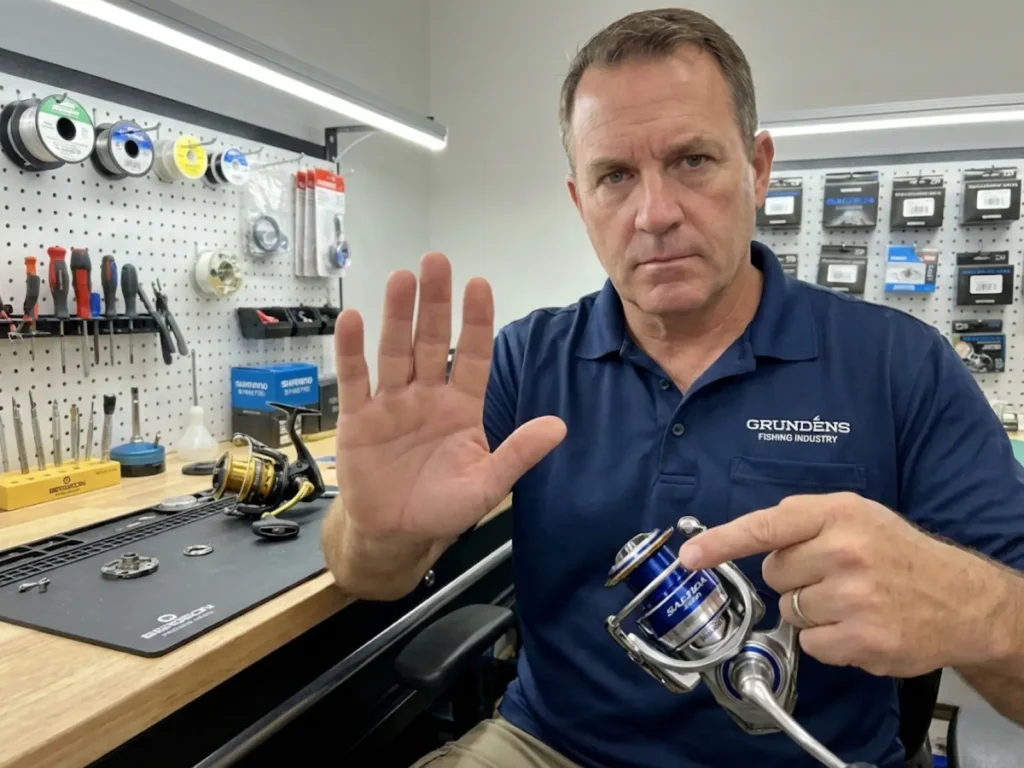
Daiwa‘s MagSealed technology uses a ferrofluid (magnetic fluid) held by a magnetized plate to seal the gap between rotor and body, protecting the roller clutch from water intrusion. The danger is real: touching this seal with a screwdriver, Q-tip, or cloth disrupts the magnetic field or wicks the fluid away, breaking the seal permanently.
Standard solvents (Simple Green, CRC cleaner) dissolve ferrofluid, causing it to run out of the magnetic gap and leaving the reel unprotected. Adding standard reel oil dilutes the ferrofluid, reducing its magnetic susceptibility and destroying waterproof integrity. Affected models include Certate, Saltiga, high-quality reels like the BG MQ variants, and any reel with “Mag-Sealed” in marketing materials.
Do not open or lubricate MagSealed assemblies. If a MagSealed anti-reverse fails, it indicates the seal has been breached. Send to authorized Daiwa service center with proprietary ferrofluid and tooling. Authorized service for MagSealed units typically runs $40-$60, but preserves a $200-$400 reel. DIY troubleshooting attempts often result in total seal failure requiring $100+ parts replacement. For reels you can’t service internally, focus on saltwater reel protection strategies that don’t require opening sealed assemblies.
Older Shimano rear-drag models (Symetre, some Stradic rear-drags) feature a custom, integrated anti-reverse assembly built directly into the reel body or rear drag stack. These units contain loose rollers and springs held in place by tension. When you unscrew the housing cover, components “explode” outward, scattering tiny springs and rollers.
Reassembly requires extreme dexterity, specialized jigs to hold springs under tension, and often multiple failed attempts. Forum users report 2-3 hour reassembly sessions. If your Shimano reel has a rear drag and was manufactured before 2010, assume it has this design. Check reel schematics before disassembly.
Unless you’re an expert with significant mechanical assembly experience, do not disassemble the clutch body itself. Try flushing bearing as a whole unit first. Remove rotor, spray solvent through the assembly without removing it, blow dry with compressed air, re-lube sparingly. Success rate is about 60%. If flush fails, send to professional service center (roughly $30-$50) or replace entire sub-assembly if available as a cartridge part (about $25-$40).
The 10-Minute Field Fix: Flushing Your Roller Clutch
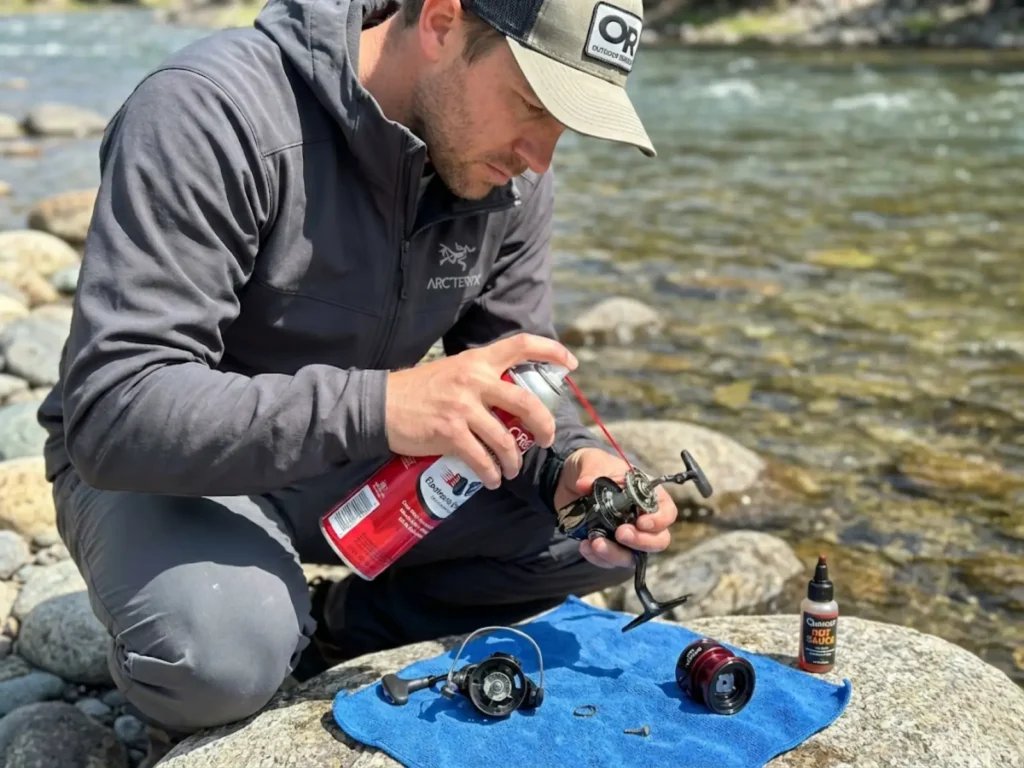
Your repair kit needs CRC Electronic Cleaner ($8, auto parts store), Simple Green diluted 50/50 with water ($6, hardware store), or lighter fluid/naphtha ($5, convenience store). Avoid acetone—it dissolves ABS plastic and Delrin bearing cages, fusing rollers in place or causing cage disintegration.
Pack compressed air (canned air for $6 at office supply stores, or air compressor with blower nozzle) and synthetic reel oil like Quantum Hot Sauce ($10, tackle shop), Ardent Reel Kleen ($8), or TSI 321 ($12, specialty reel shops). Look for ISO 22 viscosity or lower. Use hard-tip foam swabs, not cotton Q-tips—fibers snag in rollers. Optional but recommended is the “Bearing Blaster tool” ($7, automotive section at PepBoys) that prevents roller displacement during air cleaning.
These anti-reverse tools fit perfectly into a comprehensive field repair tool kit essentials for mechanical failures.
Remove spool, clicker washers, and rotor knob (usually 10mm or 12mm, often reverse thread—turn clockwise to loosen). Lift rotor off pinion gear to expose anti-reverse assembly. Before cleaning, loosely replace rotor and spin backward to confirm slippage originates from clutch, not a loose handle or stripped pinion.
Do not remove the clutch cartridge if held by delicate screws—springs can escape. Spray solvent aggressively through the top of the assembly while gently rotating the pinion gear back and forth. The goal is to “blast out” hardened grease and dirt. You should see dirty solvent running out the bottom of the reel body. Flush for 30-60 seconds, or until solvent runs clear.
Hold the reel over a white paper towel to catch runoff—you’ll see brown/black grease contamination, confirming diagnosis.
Pro tip: When blowing out the assembly with compressed air, hold rollers in place with your finger or a plastic tool. High air pressure can launch loose rollers across the room, turning a simple repair into a search-and-rescue mission.
You must remove all traces of solvent. Remaining solvent breaks down new oil and attracts dirt. Apply one drop of synthetic oil to foam swab. Lightly touch the rollers—you want a microscopic film, not a bath. Rollers should look slightly “wet” but not flooded.
For extreme cold (ice fishing below 20°F), run the bearing completely dry to eliminate viscous drag. Corrosion risk is minimal in freshwater freezing conditions.
Reinstall rotor, tighten rotor knob (remember reverse thread on many models), replace spool. Test anti-reverse—lock should be instant and solid. For grease contamination failures, this lubrication protocol has a roughly 95% success rate. For component failures (broken springs), success rate is near zero—parts replacement required.
This flush technique is also part of our seasonal reel maintenance protocols including bearing prep.
Special Case: The Shimano FX Pawl Spring Failure
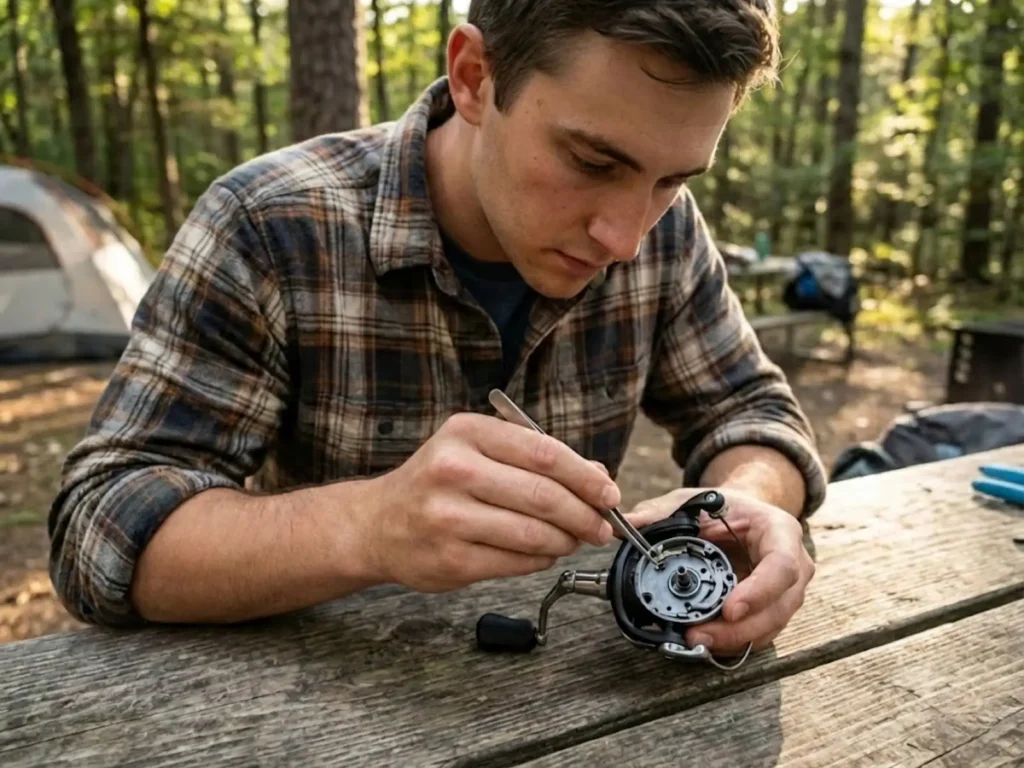
Budget reels (Shimano FX series, Shakespeare, older store brands) use a Toggle Pawl system—a metal arm that pivots to engage teeth on a ratchet gear, not a roller clutch. A tiny wire spring (Part #10138 on FX diagrams) provides tension to push the pawl into engagement. The spring stretches, breaks, or pops off its anchor post due to vibration or shock.
Roller clutch failure feels like a “slip” or “slide.” Pawl spring failure results in zero resistance—handle spins backward freely and smoothly with no attempt to lock. The spring costs roughly $5, but shipping often makes total repair cost exceed the $30-$40 value of these reels.
Remove handle and body screws to access main side plate. Note screw locations—they’re often different lengths. Look for a small metal arm positioned near the pinion gear or main drive gear, often silver or brass-colored. Find the tiny wire spring #10138. Check if it’s connected to both the pawl and the anchor point on the body.
If merely disconnected, carefully re-hook using fine tweezers. If stretched (spring looks “loose” when reconnected) or broken, order replacement. Do not heavily grease this spring. A light film of oil is sufficient. Heavy grease causes the spring to stick, preventing quick pawl engagement.
Before closing the reel, manually test pawl engagement by rotating the drive gear backward—you should feel and hear distinct clicks as teeth engage.
Preventative Maintenance: The Golden Rules
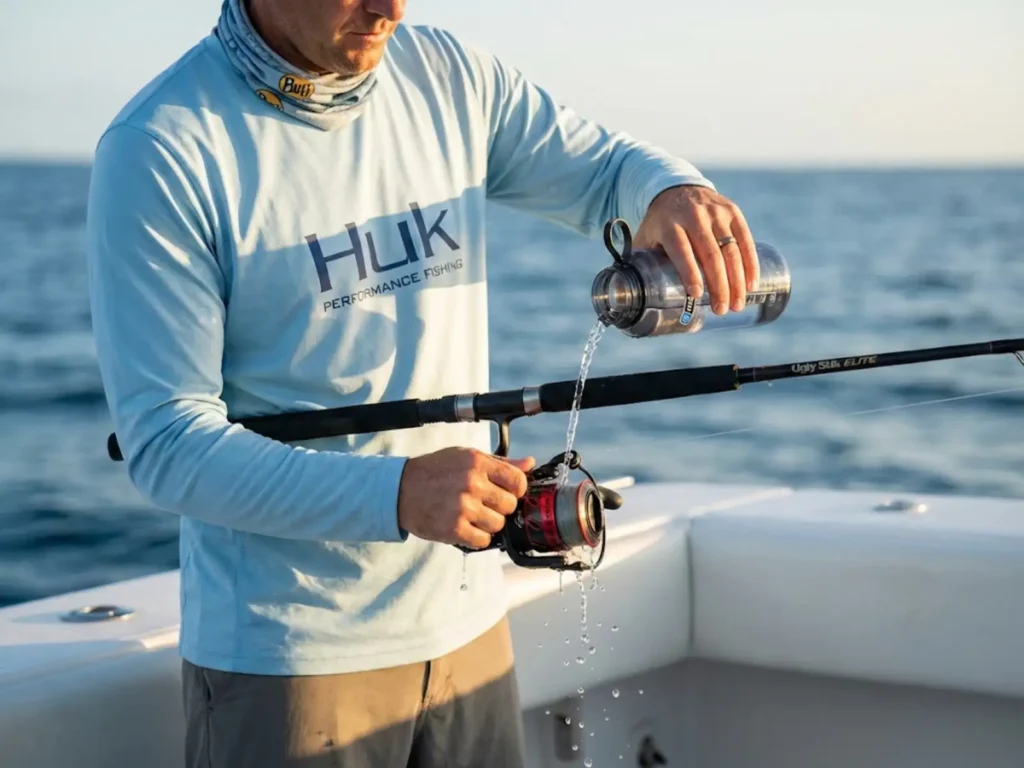
After every saltwater trip, tighten drag (seals drag washers), gently rinse reel with fresh, low-pressure water. Never blast with high-pressure hose—forces salt and water into bearings and the gear case. When storing, loosen drag to prevent washer compression, but keep anti-reverse switch ON—maintains spring tension and prevents seizure during long storage.
Once per season (or every 60-70 fishing hours), remove spool and run clean Q-tip around anti-reverse housing lip. Black residue (aluminum oxide) or green (verdigris) signals flush time. This test catches contamination before total failure, turning a 5-minute flush into a preventative maintenance measure rather than an emergency repair.
This anti-reverse rinse is part of our complete post-trip reel cleaning protocols.
If using spinning reels for ice fishing or sub-freezing conditions, perform “Winterizing Flush” in November before first freeze. Strip all standard grease and oil from anti-reverse bearing and main shaft using solvent flush. Re-lube with ultra-low viscosity synthetic oil (ISO 22 or ISO 10), or run completely dry for extreme cold below 10°F.
Do not winterize MagSealed reels yourself—ferrofluid has specific cold-temperature properties. Use as-is or send to Daiwa service. After ice season ends, flush and re-lube with standard ISO 22-32 oil before returning to open-water fishing. This bearing winterization is part of comprehensive ice fishing gear preparation and safety protocols.
Pro tip: Apply oil to main shaft sparingly—one drop on a fingertip or precision applicator. Wipe away any excess visible on shaft before reassemble. After application, shaft should look barely “wet,” not dripping. Excess oil equals guaranteed migration into bearing within 20-30 hours of use.
Some reel techs apply a single drop to the pinion gear teeth instead of the shaft, allowing gear meshing to distribute lubricant without flooding the shaft.
Conclusion
Your anti-reverse bearing is a precision friction device that lives or dies by contamination control. Ninety-five percent of failures trace to a single drop of the wrong lubricant in the wrong place. You now understand the wedge mechanism physics, can diagnose failure mode in 60 seconds using observable symptoms, and can execute a field flush in 10 minutes with $25 in tools.
For MagSealed and integrated assemblies, you know when to stop before causing irreversible damage.
Before your next trip, run the 30-second Q-tip test on your reels. If you see black or green residue, flush the bearing tonight—it takes 10 minutes and prevents the $200 fish of a lifetime from becoming the one that got away due to a $0.10 contamination problem.
FAQ
Can I use WD-40 to clean my anti-reverse bearing?
WD40 is a solvent and water displacer, not a lubricant. While it can clean parts during flushing, it gums up over time and attracts dirt. If used for cleaning, it must be completely removed and replaced with proper synthetic reel oil before reassemble. Better alternatives are CRC Electronic Cleaner or Simple Green, which leave no residue after evaporation.
Should anti-reverse be on or off when fighting a fish?
Always ON for modern reels. Instant Anti Reverse systems provide instant, solid hooksets and prevent handle back-spin that causes line slack and lost fish. The anti-reverse off technique (back-reeling technique) is only used in specialized river fishing for trout or shad to provide natural drift presentation—and requires manual drag control expertise to prevent break-offs.
Why does my reel spin backwards when I set the hook on ice but works fine in summer?
Cold-induced viscosity thickening. Standard reel lubricants thicken 10-20x between 70°F and 20°F. Below freezing, the lubricant becomes so viscous that weak springs cannot push rollers into locking position quickly enough. Solution: Flush bearing and re-lube with ultra-low viscosity synthetic oil (ISO 22 or lower), or run completely dry for extreme cold below 10°F.
How do I know if I should repair or replace my reel?
If reel value is under $40 and parts plus shipping exceed $15, upgrade to a new reel. If reel value exceeds $100, always repair—the anti-reverse assembly is typically a $15-$25 standardized cartridge that restores the reel to new mechanical condition. For $40-$100 reels, consider this your upgrade opportunity if you’ve been eyeing better gear.
Can I run my anti-reverse bearing dry without lubrication?
Yes, in specific conditions. For ice fishing or extreme cold (below 20°F), running the bearing completely dry eliminates viscous drag and ensures instant locking. In saltwater environments, dry bearings corrode rapidly—light synthetic oil (1-2 drops) provides corrosion protection. In freshwater moderate temperatures (40-80°F), a microfilm of oil optimizes performance. The bearing mechanism works dry—oil is for corrosion protection and spring lubrication, not the locking action itself.
Risk Disclaimer: Fishing, boating, and all related outdoor activities involve inherent risks that
can lead to injury. The information provided on Master Fishing Mag is for educational and informational purposes
only. While we strive for accuracy, the information, techniques, and advice on gear and safety are not a substitute
for your own best judgment, local knowledge, and adherence to official regulations. Fishing regulations, including
seasons, size limits, and species restrictions, change frequently and vary by location. Always consult the latest
official regulations from your local fish and wildlife agency before heading out. Proper handling of hooks, knives,
and other sharp equipment is essential for safety. Furthermore, be aware of local fish consumption advisories. By
using this website, you agree that you are solely responsible for your own safety and for complying with all
applicable laws. Any reliance you place on our content is strictly at your own risk. Master Fishing Mag and its
authors will not be held liable for any injury, damage, or loss sustained in connection with the use of the
information herein.
Affiliate Disclosure: We are a participant in the Amazon Services LLC Associates Program, an
affiliate advertising program designed to provide a means for us to earn advertising fees by advertising and linking
to Amazon.com. As an Amazon Associate, we earn from qualifying purchases. We also participate in other affiliate
programs and may receive a commission on products purchased through our links, at no extra cost to you. Additional
terms are found in the terms of service.