
In this article
You’re miles from the nearest marina, watching a 13-pound bass tear through a school of shad around a flooded oak—when your trolling motor dies. No GPS trails. No marked boat lanes. Just you, a maze of submerged timber, and the sinking realization that you’ve been navigating by memory in a 27,000-acre flooded forest. This isn’t Lake Fork’s reputation catching up with you. It’s the reality every angler faces on a reservoir that demands equal parts preparation and respect.
After two decades of guiding serious anglers through these waters and watching countless clients land trophy bass while others break props on invisible timber, the pattern is clear: success here isn’t about luck—it’s about understanding the biology, vetting the right expertise, and matching your tactics to a fishery that doesn’t forgive assumptions.
Here’s what separates productive Lake Fork trips from expensive mistakes, from decoding seasonal bass patterns to mastering the navigation protocols that keep your lower unit intact.
⚡ Quick Answer: Lake Fork Reservoir produces Texas-record largemouth bass because TPWD stocked Florida-strain genetics before impoundment and enforces a strict 16-24 inch slot limit protecting prime spawners. Success requires GPS navigation through standing timber, understanding thermocline depth restrictions (18-28 feet in summer), and timing trips to pre-spawn staging periods (January-March) when heavy females move to creek channels. Full-time guide rates run $450-650 for eight hours, or DIY anglers can access public ramps and bank fishing spots while learning the patterns.
Understanding Lake Fork’s Trophy Factory
The Florida-Strain Genetic Advantage
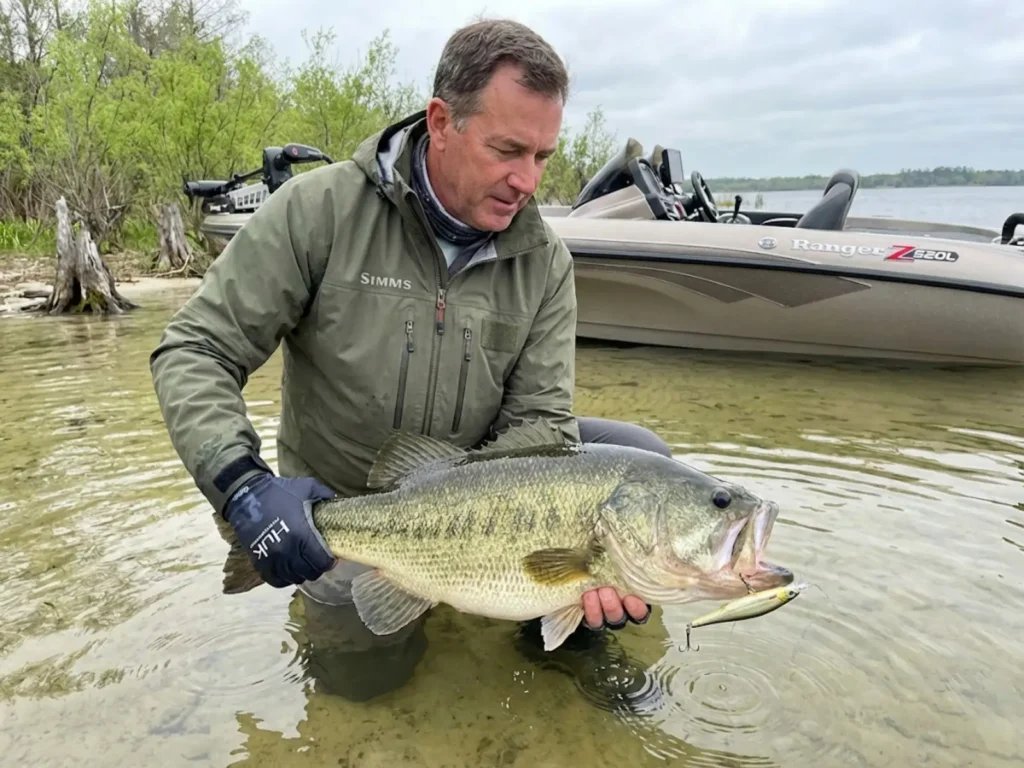
Back in 1978, before the dam closed and water filled the reservoir, Texas Parks & Wildlife made a calculated decision that would define Lake Fork for the next 50 years. They stocked Florida-strain largemouth bass (Micropterus salmoides floridanus) into the ponds that would become the lake bottom, giving the population a genetic head start that northern-strain bass simply can’t match.
The difference shows up in the numbers. Florida-strain fish reach 50% greater maximum weight than their northern cousins—think 18 pounds versus 12—due to faster growth rates and extended lifespans. Where a northern largemouth might peak at 10 years, Florida-strain genetics push that ceiling to 16 years, creating multiple spawning cycles that pack on weight.
That’s why Lake Fork holds 15 of Texas’s top 20 largemouth records, including Barry St. Clair’s 18.18-pound state record caught in January 1992. The 2024 ShareLunker season produced 109 entries from Fork alone—65% of the state’s total 13-pound-plus bass. For comparison, neighboring reservoirs with similar habitat but different genetics struggle to produce fish over 10 pounds with any consistency.
Temperature triggers also run tighter for Florida-strain fish. According to TPWD’s largemouth bass management data, spawning migration starts when water hits 50-55°F, with females bedding at the precise 58-65°F window. Miss that thermal sweet spot by even three degrees, and you’re fishing to ghosts. Understanding how subspecies adaptation shapes angling strategy just as brown trout genetics determine maximum size potential gives you the biological framework to predict where fish will be before you start the boat.
Pro tip: The genetic lottery means a single bite can produce a fish of a lifetime. Unlike northern lakes where a 5-pounder earns photos, Fork anglers routinely release 6-8 lb “slot fish” to target double-digit giants. Adjust your expectations accordingly—catching 20 bass and keeping zero is a successful day here.
The Slot Limit Reality: What It Means for Your Trip
The 16-24 inch slot limit isn’t a suggestion—it’s a Class C misdemeanor carrying a $500 fine if game wardens find a slot fish in your livewell. The regulation mandates immediate release of any bass measuring 16.00″ to 24.00″ (mouth closed, tail pinched on a certified bump board). Your daily bag limit is five bass total, but only ONE may exceed 24 inches. Fish under 16″ can be harvested freely, though most serious anglers practice full catch-and-release.
This creates what biologists call a “glory fishery.” You’ll commonly catch 20-30 bass per day, but only 1-2 might be legal keepers. The best fishing days produce zero harvest—you’ll release trophy-class 6-8 pounders all morning while searching for that rare 10-plus-pound “over” that breaks the slot ceiling.
The science backs it up. Females measuring 18-22 inches produce 10,000-20,000 eggs per spawn—that’s the most fertile size class in the population. Protect those genetics through slot limits, and recruitment rates stay healthy despite tournament pressure and year-round angling. Remove them for the frying pan, and trophy potential collapses within a generation.
Game wardens patrol aggressively during tournaments and holiday weekends. Carry a certified bump board (not a flexible tape measure) and verify measurements immediately upon catch. A 23.75-inch fish that “looks close” to 24 inches will cost you $500 and potential gear confiscation. Since you’ll release 90% of your catches, switching to circle hooks reduces deep-hooking mortality and ensures those slot limit fish survive to spawn.
Navigating the Stump Field: Boat Lanes and GPS Reality
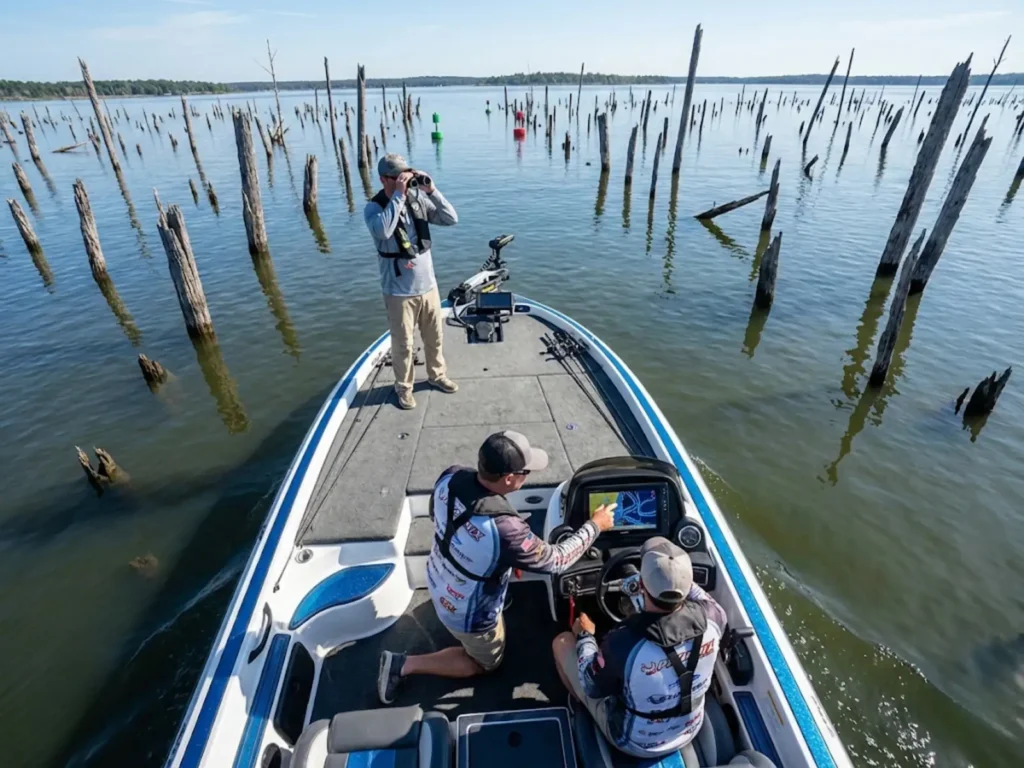
Lake Fork flooded thousands of acres of East Texas hardwood forest without clear-cutting. The timber didn’t disappear—it broke off 1-6 feet below the waterline, creating a minefield that destroys lower units and hulls at speeds above idle. The buoy-marked boat lanes represent the only safe paths to run on plane, and even experienced locals follow digital GPS “BoatLanes” chips overlaid on Garmin or Lowrance plotters.
The physics are unforgiving. At 40 mph, your boat travels 59 feet per second. Human reaction time to spot a stump shadow underwater is roughly 0.5 seconds, giving you maybe 30 feet to respond—impossible when weaving through dense timber. Add variable water levels (the reservoir fluctuates 2-4 feet below the 403.0-foot conservation pool), and “safe” lanes shift unpredictably as timber that was submerged last month now sits 18 inches beneath your prop.
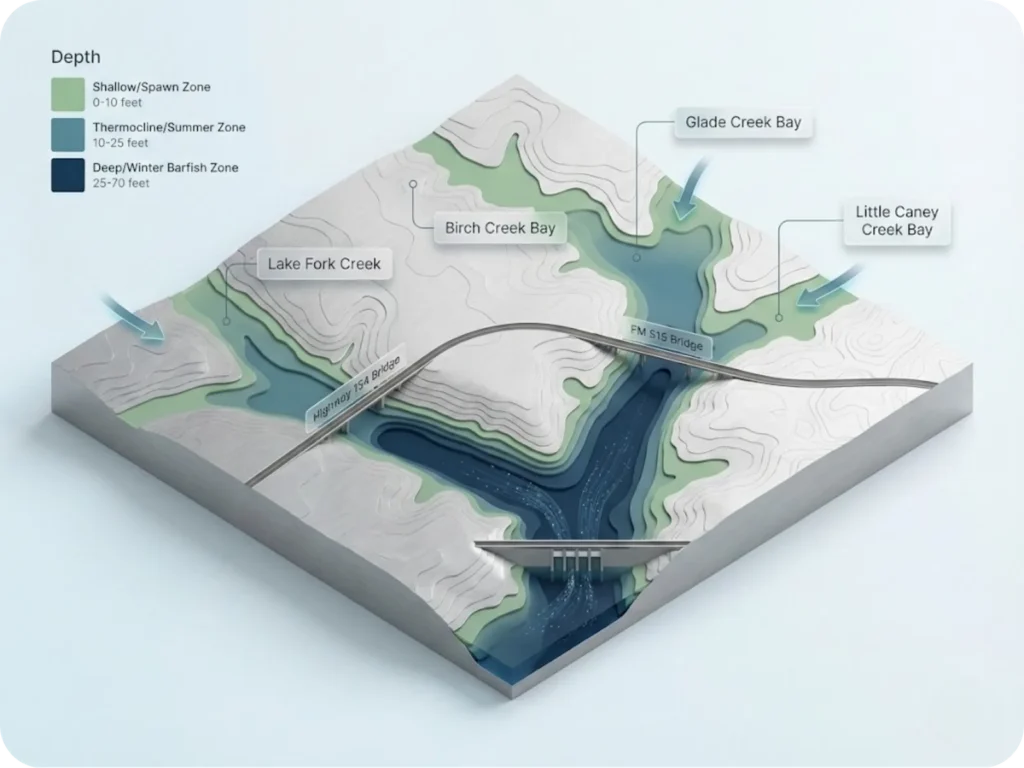
The Y-shaped reservoir is divided by the Highway 154 Bridge (marking East/West sections) and the FM 515 Bridge (West arm). These landmarks serve as critical visual reference points when guides give directions like “fish the East Caney arm” or “target the 515 Bridge pilings.” But visual navigation alone will get you stranded. Invest in dedicated marine GPS units with pre-loaded depth contours before your first trip—the $500 unit pays for itself by avoiding a single prop strike and the three-day wait for parts at the marina.
Relying on visible buoys alone is rookie mistake number one. Wind and current shift buoy positions monthly, and theft or vandalism creates deadly gaps in the marked corridors. Low water conditions expose additional hazards, turning familiar routes into obstacle courses. Solo DIY anglers should never run on plane outside marked lanes—idle speed only, even if it takes 45 minutes to reach your fishing area. Your lower unit isn’t worth the five minutes you save.
Vetting Lake Fork Fishing Guides
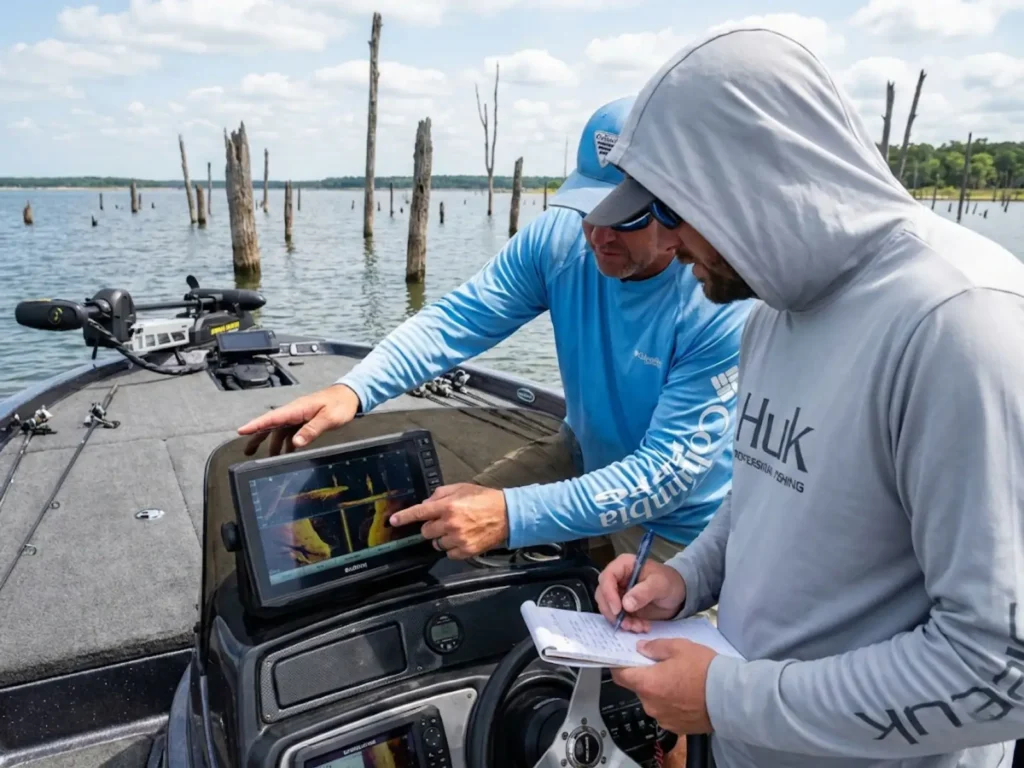
Guide Credential Scorecard: Experience, Equipment, Instruction
When guide service rates run $450-650 regardless of experience level, how do you distinguish a full-time pro from a weekend warrior? Start with days on the water. Legitimate pros like David Vance and James Caldemeyer operate 200-plus days annually versus weekend guides logging 50-80 trips. That gap translates directly to pattern recognition during cold fronts, fall transition periods, and the chaotic lake turnover when recreational guides are guessing and full-timers know exactly where displaced bass relocate.
Equipment reveals commitment level. True pros run Bass Cat, Ranger, or Skeeter bass boats—not aluminum jon boats or pontoons for trophy trips. They maintain Garmin LiveScope or Lowrance ActiveTarget forward-facing sonar systems, and they back their credibility with sponsor relationships: Abu Garcia, Berkley, Mercury. If a guide refuses to disclose his boat model or electronics setup before you book, that’s your signal to keep looking.
Clarify trip objectives before handing over a deposit. Guides like Jason Hoffman offer “Electronics Trips” focused on teaching sonar interpretation rather than guaranteeing fish counts. You’ll spend eight hours learning gain settings, interference rejection, and how to distinguish suspended fish from timber trunks on FFS screens—invaluable if you own LiveScope but frustrating if you expected a cooler full of bass. Corporate packages run differently too; Caldemeyer specializes in large groups with multiple boats, while Crappie Curtis operates a 23-foot G3 pontoon for family comfort over hardcore trophy pursuit.
Red flags include guides guaranteeing limits (impossible with slot limit dynamics), lacking verifiable media appearances (Bassmaster TV, tournament history), or offering suspiciously low rates. Prime pre-spawn dates (January-March) book 6-12 months ahead. Last-minute weekend availability usually signals cancellations or less-demanded time slots. The best guides teach understanding sonar physics beyond just reading fish arches, not just where to point the transducer—that’s the difference between buying fish and buying knowledge.
Seasonal Trophy Bass Patterns
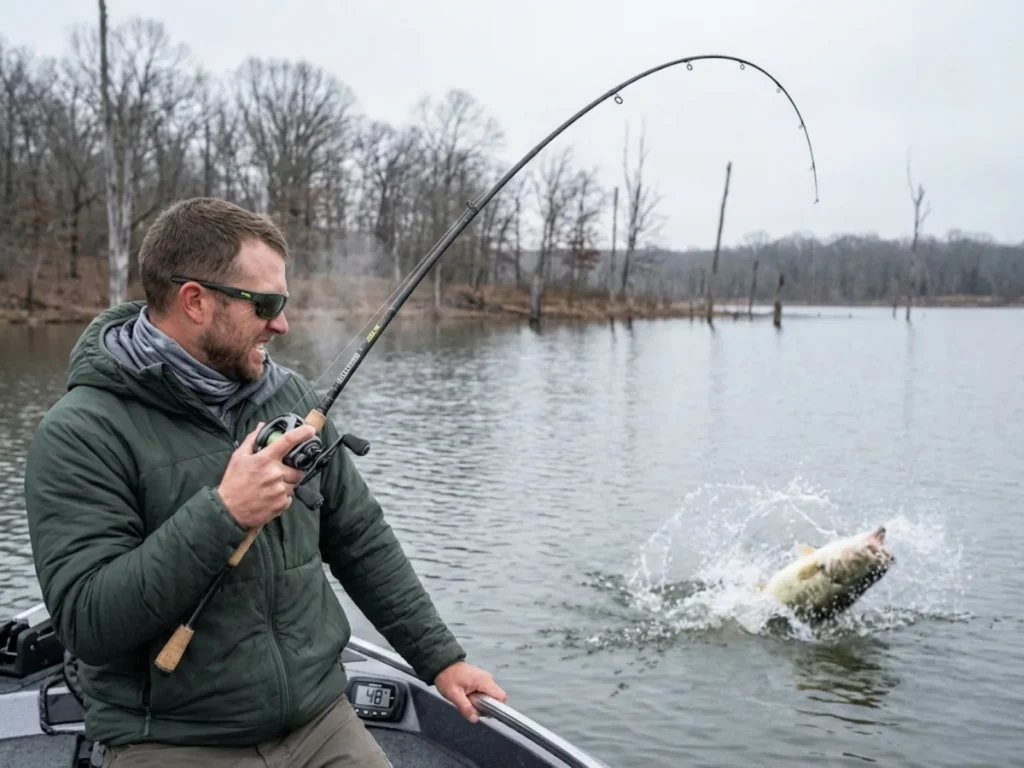
Winter Trophy Hunt (December-February): The 11 AM Bite
Forget the dawn patrol mentality. When water temps drop to 40-55°F, bass metabolism slows so drastically that the traditional sunrise bite becomes a myth. Solar heating is the trigger you need. As the sun climbs from 11:00 AM to 3:00 PM, shallow water and standing timber warm 2-4 degrees, activating baitfish and creating the only reliable feeding window of the day.
Bass suspend in timber 8-15 feet deep during winter, holding motionless for hours like ornaments on a submerged Christmas tree. Forward-facing sonar transitions from luxury to necessity here—traditional 2D sonar shows vertical timber lines that look identical to suspended fish, leaving you casting blind. LiveScope displays the difference in real-time: that’s a stump, that’s a bass watching your lure, that’s a bass turning away because your cadence was wrong.
Suspending jerkbaits dominate this phase. Smithwick Rogue, Berkley Stunna—anything that hangs in the strike zone during 10-15 second pauses between twitches. The fish will stare at a motionless lure for three minutes before committing. Retrieve too fast, and you trigger the “following but not biting” behavior that haunts cold-water anglers. Patience isn’t noble here; it’s mandatory.
As water creeps toward 50-52°F in late January and February, the legendary “Red Trap” pattern kicks in. Crawfish emerge from winter dormancy turning red, and bass key on that color trigger like a light switch. Rip red lipless crankbaits (Rayburn Red, Toledo Gold) out of remaining Hydrilla patches in 3-8 feet of water, pausing occasionally for reaction strikes. Bang the lure off stumps and let it flutter down—those impacts mimic fleeing crayfish.
Deep yellow bass schools (locally called “barfish”) create another winter opportunity biological surveys miss and most content ignores. These 6-inch baitfish stack in massive clouds at 25-35 feet, and trophy largemouth position directly underneath feeding on stragglers. Drop 3/4-ounce flutter spoons or tailspinners through the cloud and let them helicopter down. The bass ambush falling lures passing through their feeding station.
Pro tip: Cold fronts lock jaws for 24-48 hours post-passage. Stable barometric pressure matters more than temperature in winter. Wait for three consecutive days of steady weather, then commit to the midday window when solar heating peaks.
Pre-Spawn Staging (January-March): Creek Channel Migration
Temperature dictates everything during pre-spawn, but it’s not a linear progression. At 50°F, heavy females begin staging in deep creek channel bends (15-25 feet). At 55°F, they slide to secondary points (8-12 feet). At 58°F, they make the final push to spawning flats (2-6 feet). Miss these thermal checkpoints by even three degrees, and you’re fishing water bass vacated two days ago.
Caney Creek arm (East side of the 154 Bridge), Lake Fork Creek arm (West), Birch Creek, Glade Creek—these primary staging zones share a structural signature. Focus on outside channel bends where the creek swing brings deep water (20-plus feet) within 50 yards of shallow flats. Bass use these “highways” to move between winter haunts and spawning zones, stacking on ledges and points like commuters at a subway stop.
Texas-rigged creature baits (Berkley PowerBait Pit Boss, green pumpkin/watermelon red) and football jigs (1/2 to 3/4 ounce) dragged along channel edges produce consistent contact. But when crawfish activity peaks and grass remains from the previous year, nothing matches the violence of a red Rat-L-Trap ripped through vegetation. The strike isn’t a bite—it’s a detonation.
Use 2D sonar to locate the creek channel drop (that contour line shift on your chart plotter), then scan with forward-facing sonar to find suspended schools staging on the ledge. Electronics strategy separates systematic anglers from those just “fishing around.” The fish are there; the question is whether your technology shows you where “there” is.
The amateur mistake: fishing spawning flats in early February when bass remain 200 yards away in 20-foot channel bends. Mapping pre-spawn transition routes with electronics and temperature works whether you’re on Fork or your home lake—the phased migration is universal bass biology, not a Fork-specific quirk.
Summer Deep Structure (May-August): The Thermocline Ceiling
Here’s where Lake Fork’s thermocline behavior differs from highland reservoirs and exposes a knowledge gap that keeps average anglers scanning dead water. The thermal stratification layer establishes with precision between 18-28 feet in mid-summer. Not 15-30 feet like vague online reports suggest—18 to 28 feet, and that’s a hard biological ceiling. Below that depth, dissolved oxygen drops below 2 mg/L (hypoxic conditions), and bass can’t survive there regardless of what your sonar shows.
On traditional 2D sonar, the thermocline appears as a distinct horizontal “hazy band” cutting across your screen at that 20-25 foot mark. Set your depth range to 0-35 feet and look for the line. Any fish marks you see at 35-40 feet aren’t bass—they’re catfish or drum tolerating low-oxygen water. Bass are physically constrained above the thermocline.
Target main lake points, roadbeds, and submerged ridges in the 15-22 foot comfort zone. Deep cranking with Strike King 6XD/10XD or Berkley Dredger crankbaits on 12-15 lb fluorocarbon covers water fast and triggers reaction strikes from scattered fish. The retrieve is exhausting—your forearm will burn after two hours of deep cranking in 95-degree heat—but that’s the price of reaching bass other anglers can’t touch.
Carolina rigs with 3-4 foot leaders and French Fry or Centipede soft plastics work for searching structure when fish won’t chase. Drag slowly, feeling for bottom composition changes (hard to soft, rock to mud), and wait for that tap-tap-weight that signals a pickup.
Night fishing from 9:00 PM to 2:00 AM shifts the equation entirely. Bass move shallow (3-8 feet) chasing shad in the cooler darkness. Black/blue worms and buzzbaits produce violent topwater strikes you never see in daylight. Master using sonar to identify the thermocline and target the oxygenated zone, and you’ll never waste time fishing 40-foot holes in July again.
Fall Transition & Turnover (September-November): The October Lull
When surface temps cool enough to match deep water (typically mid-late October), Lake Fork “burps.” The entire water column mixes during turnover, bringing hydrogen sulfide gas from the oxygen-depleted depths to the surface. You’ll smell it—rotten eggs, sulfur, the chemical signature of decaying organic matter. You’ll see surface foam, bubbles, and degraded water clarity. And you’ll understand why October is called the toughest month on Fork.
Without the thermocline to compress bass into specific depth zones, fish scatter across 5-15 feet searching for stable oxygen. They’re not gone; they’re everywhere and nowhere simultaneously. This is the “October Lull” locals warn about—2-3 weeks of fishing that humbles even full-time guides.
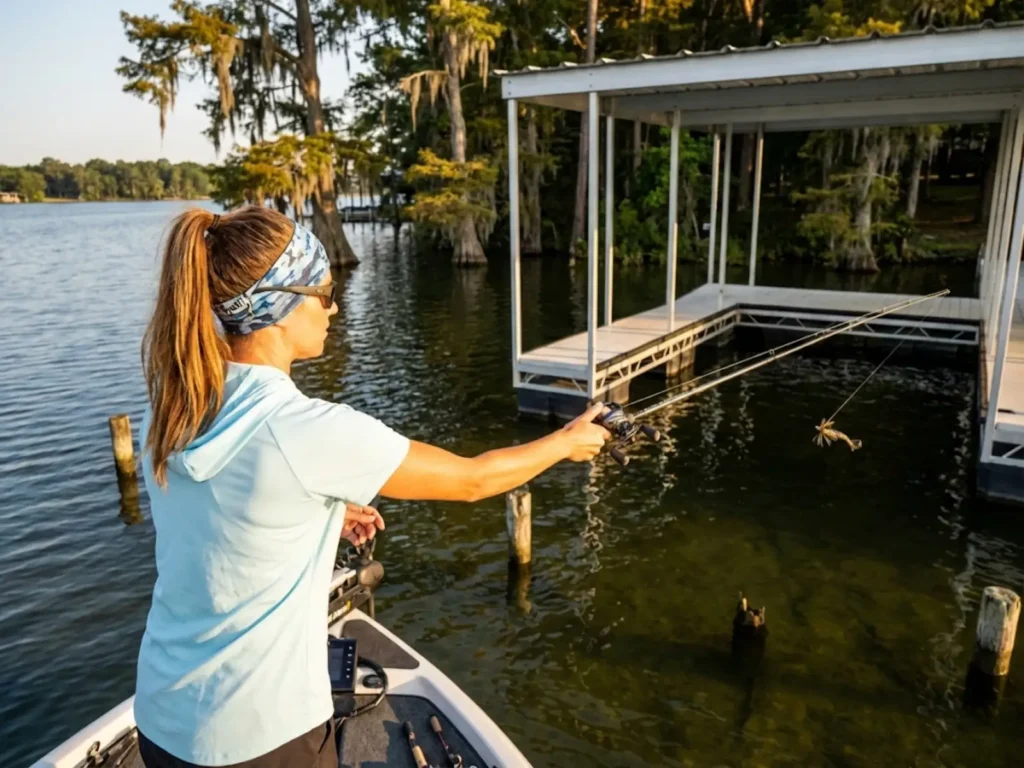
Before turnover hits (early September through mid-October), shallow grass patterns shine. Squarebill crankbaits (Berkley Pitbull, Strike King KVD) deflecting off stumps in 3-8 feet create the erratic action that triggers aggressive fall feeding. Morning topwater with Whopper Ploppers, buzzbaits, and walking baits produces visual strikes that make the entire season worthwhile.
As water cools below 65°F in November, bass return to predictable structure on main lake points and creek channels. The recovery phase sets up winter patterns, and suddenly the lake feels fishable again. This isn’t a mystery—it’s the physics of water density inversion and how it affects fish behavior, happening on every stratified reservoir in the country. Understanding the science helps you adapt rather than blame “bad luck.”
Essential Lake Fork Tactics
Forward-Facing Sonar in Standing Timber
Forward-facing sonar—Garmin LiveScope, Lowrance ActiveTarget, Humminbird Mega Live—fundamentally changed Lake Fork bass fishing after 2018. The problem it solves is simple: traditional 2D sonar can’t distinguish a suspended bass from a vertical tree trunk. Both show up as marks on your screen, forcing you to cast blind and hope.
LiveScope displays a live, video-game perspective where fish and structure separate clearly. You watch bass approach your jerkbait. You see them refuse it. You watch them track it for 30 seconds before striking or turning away. That real-time feedback allows instant lure changes, cadence adjustments, and confirms whether you’re actually fishing to active bass or just exercising your casting arm.
The gear investment runs $1,500-2,500 for a complete system (Garmin LiveScope Perspective or LVS34, mounting hardware, dedicated 12-inch display minimum). The skill curve demands 10-20 hours of on-water time learning to interpret gain settings, interference rejection filters, and distinguishing target sizes. Guides charge $500-600 for full-day “electronics trips” teaching these settings because YouTube videos can’t replicate on-water troubleshooting.
Fishing pressure increased dramatically once FFS eliminated bass’s hiding advantage in timber. The technology arms race made fish more educated and wary. Pre-2018, bass could suspend in timber and go undetected. Post-2018, anyone with LiveScope sees them instantly.
Do you need it? For targeting suspended fish in standing timber during winter? Yes, it’s nearly mandatory. For shallow grass fishing or budget DIY trips? No—traditional Carolina rigs, lipless cranks, and jigs still produce. FFS isn’t magic. It’s an advanced tool requiring you to master traditional sonar fundamentals before investing in forward-facing systems, or risk wasting $2,000 on colorful confusion.
The Barfish Connection: A Rare Pattern Advantage
“Barfish”—yellow bass (Morone mississippiensis)—aren’t just trash fish locals ignore. They’re feeding stations for trophy largemouth. In deep winter and mid-summer, yellow bass school in massive clouds at 25-40 feet. Trophy largemouth position directly underneath these schools, feeding on barfish or the shad they’re chasing. Find the barfish, find the giants.
On 2D sonar, barfish appear as dense “bait balls” or clouds of tightly packed marks. On forward-facing sonar, you see hundreds of small targets with larger, isolated targets (bass) suspended below them. The pattern is unmistakable once you’ve seen it.
Vertical jigging strategy is simple: drop 3/4-ounce flutter spoons (Kastmaster, Hopkins) or tailspinners through the barfish school. Don’t fish to the barfish—fish through them to the predators below. Trophy bass ambush falling lures as they helicopter down past their feeding station.
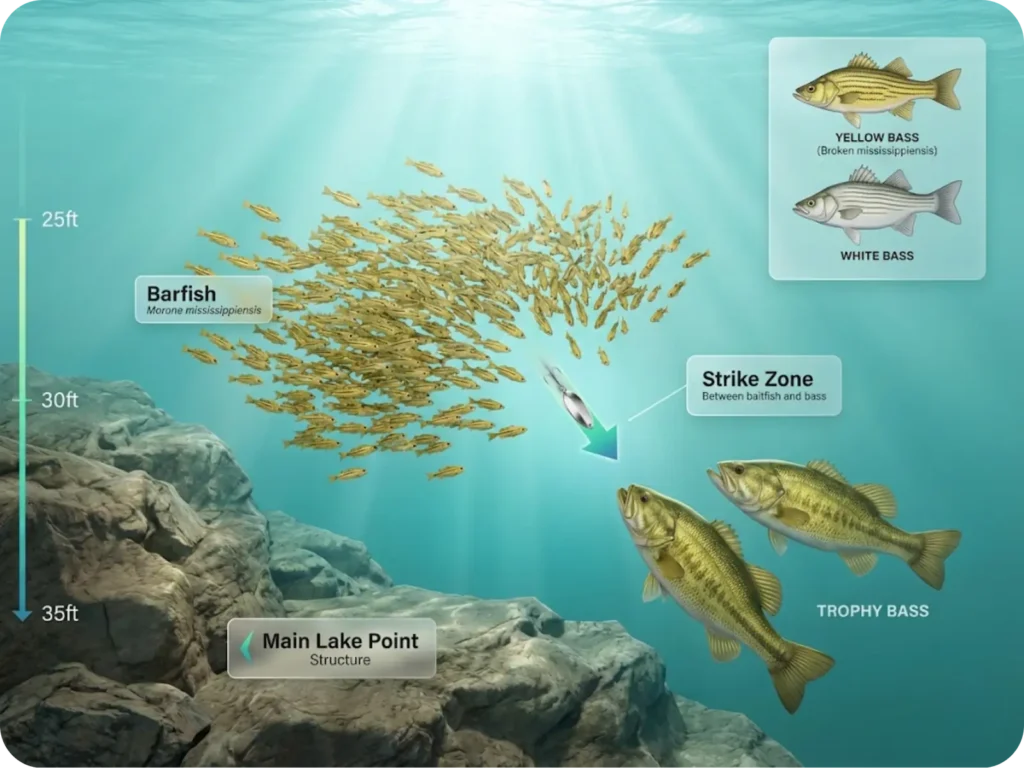
The biological math explains the behavior. A 10-12 pound bass requires 1-2 pounds of food weekly in winter when metabolism slows. A school of 500 barfish provides concentrated calories without the energy cost of chasing scattered threadfin shad across the reservoir. It’s efficient predation.
Why do most competitors miss this? They mention barfish in passing without explaining how to locate them on electronics or why bass use them as ambush points. The pattern peaks in January-February (deep water) and July-August (suspended off main lake points).
Pro tip: Don’t confuse yellow bass (broken horizontal stripes) with white bass (solid unbroken stripes) or hybrid stripers. Species ID matters—white bass and hybrids school differently and don’t create the same predator-prey dynamic with trophy largemouth.
Safety & Logistics
Navigation Hazards & Emergency Protocols
The primary hazard fishing Lake Fork solo isn’t weather or wild animals—it’s submerged timber at 1-6 feet below surface. Running on plane outside marked boat lanes doesn’t create risk; it guarantees $2,000-5,000 in lower unit and hull damage. The repair timeline adds insult: three days minimum waiting for parts at local marinas, effectively ending your trip.
When the lake drops 2-plus feet below the 403.0-foot conservation pool (check Sabine River Authority real-time water level data before launching), hazards that were safe at normal pool become exposed. “Safe” lanes shift unpredictably. What worked last month now puts a stump through your transom.
Wind compounds the danger. Lake Fork’s open layout creates 3-4 foot waves in 15-plus mph winds, especially Northwest blows that fetch across miles of open water. Boats under 18 feet should retreat to protected creek arms when wind builds. Fighting waves while dodging timber is how accidents happen.
Mandatory safety equipment: GPS with BoatLanes chip, VHF marine radio or cell phone in waterproof case, kill switch lanyard (wear it, not clipped to the console), throwable PFD, first aid kit with hook removal tools. If you fish into dusk or dawn, LED navigation lights prevent collisions with other boats running lanes in low light.
Emergency float plan protocol: text someone your launch ramp, estimated return time, and general fishing area (“East Caney arm”) before leaving cell service. Lake Fork’s 315 miles of shoreline makes “I’m somewhere on the lake” useless for rescue coordination.
Dense morning fog (common in fall/winter) demands idle-only speed if visibility drops below 100 yards. Never guess your way through timber in fog. Use GPS to return to the ramp, and accept that the first two hours might be lost to weather. This isn’t Lake Fork paranoia—developing a pre-trip float plan and emergency communication protocol is standard practice for competent anglers fishing any remote water.
Lodging, Ramps & Tournament Avoidance
Public boat ramps (FM 17 – West side free, Highway 154 – Center $5, FM 2946 – North free) serve budget-conscious anglers, but arrive before 6:00 AM on weekends or face 30-minute waits as tournament traffic clogs the docks. Private marina launches (Lake Fork Marina in Alba, Oak Ridge Marina, Pope’s Landing at $10-15 fees) offer better parking, fuel, and bait access.
Lodging near Lake Fork ranges from on-water resorts with boat storage (Fall Farm Inn, Mustang Resort, Burning Stump Lodge) to budget chains 15 miles out (Hampton Inn in Quitman) or Airbnb rentals in nearby Alba. If staying multiple days, paying $20-30 nightly for covered boat storage at marinas prevents trailering hassles and enables pre-dawn launches before ramp crowds arrive.
Lake Fork hosts 80-plus bass tournaments annually. Major events (February-April Saturdays) put 150-250 boats on the water at 7:00 AM sharp, claiming every productive creek channel and main lake point before recreational anglers launch. Check Lake Fork Marina’s online tournament calendar before booking your trip. If 100-plus boats are scheduled, fish after 11:00 AM when tournament anglers vacate primary spots, or pivot to crappie under bridges.
The weekday advantage: Tuesday through Thursday pressure runs 70% lower than weekends. If your schedule allows weekday trips, you’ll experience completely different fishing—less boat traffic, less spooked fish, and available parking at every ramp. It’s the difference between sharing Ray Branch with five boats and having it to yourself.
Conclusion
Lake Fork isn’t just “good fishing”—it’s a biological proving ground that rewards preparation and punishes assumptions. The difference between a $1,500 trip producing a 12-pound ShareLunker and one ending with broken equipment and zero fish always comes down to the same variables: understanding the Florida-strain biology that created the trophy factory, respecting the slot limit that sustains it, navigating the timber maze with GPS humility, and matching tactics to thermocline depth, forage availability, and seasonal migration patterns governing every fish in the reservoir.
Key Takeaways:
Genetics & Regulations Work Together: The Florida-strain stocking created size potential; the 16-24 inch slot limit protects the breeding stock. Neither exists without the other. Remove the regulation, and the genetics collapse.
GPS is Safety, Not Luxury: Spending $500 on navigation technology prevents $5,000 in prop damage and potential injury in standing timber. The BoatLanes chip isn’t optional equipment for serious Fork anglers.
Temperature Dictates Everything: From the winter 11 AM bite to the summer thermocline ceiling at 18-28 feet, water temperature is the master variable. Fish the thermometer, not the calendar, and patterns click into place.
Before your next Lake Fork trip, download the Sabine River Authority lake level data, verify your GPS trails are current, and study the forecast to match techniques to fish metabolism. The lake gives you exactly what you’re prepared to receive—and nothing more.
FAQ
How much does a Lake Fork fishing guide cost for a full day?
Full-day guided trips (8-9 hours) range from $450 to $650 for 1-2 anglers, with an additional $75-$150 fee for a third angler. Half-day trips (4-5 hours) cost $350-$450. All tackle, bait, and expertise are included, though you bring your own food, drinks, and Texas fishing license. Prime pre-spawn dates (January-March) book 6-12 months in advance—last-minute availability usually signals cancellations or less-demanded periods.
What is the Lake Fork slot limit and why does it matter?
Bass measuring 16 to 24 inches must be released immediately with no exceptions. You can keep five bass daily, but only ONE may exceed 24 inches. This regulation protects the most fertile spawning females—18-22 inch fish produce 10,000-20,000 eggs each spawn. Possession of a slot fish carries a $500 Class C misdemeanor fine in Texas, and game wardens patrol aggressively during tournaments and weekends.
What’s the best time of year to catch a trophy bass on Lake Fork?
January through March (pre-spawn phase) offers the highest probability of catching 10-plus pound fish. Females reach maximum weight before spawning, stage in predictable creek channels like Caney Creek and Birch Creek, and actively feed on crawfish as water temps hit 50-58°F. This narrow thermal window triggers concentrated feeding that doesn’t occur during other seasons. Book professional guide service 6-12 months ahead for prime weekend dates.
Can you fish Lake Fork without a boat?
Yes, though options are limited compared to boat access. Bank and wade fishing is available at W.C. Swearingen Recreation Area (public pier near the 154 Bridge), the Highway 154 and FM 515 bridge pilings, and some marina shorelines with permission. Success rates are significantly lower due to limited access to standing timber structure and deep water where trophy fish hold. Target crappie under bridges as a viable shore-fishing alternative to bass fishing.
Do I really need forward-facing sonar (LiveScope) to catch bass on Lake Fork?
Not mandatory, but highly advantageous for targeting suspended fish in standing timber during winter. Traditional 2D sonar struggles to distinguish bass from timber on Lake Fork’s cluttered bottom. Forward-facing sonar provides real-time separation of fish from structure. For shallow grass fishing, budget trips, or crappie targeting, conventional techniques (Carolina rigs, lipless cranks, jigs) remain effective. If you fish Fork seriously 5-plus times annually, FFS investment pays for itself in efficiency and pattern recognition.
Risk Disclaimer: Fishing, boating, and all related outdoor activities involve inherent risks that
can lead to injury. The information provided on Master Fishing Mag is for educational and informational purposes
only. While we strive for accuracy, the information, techniques, and advice on gear and safety are not a substitute
for your own best judgment, local knowledge, and adherence to official regulations. Fishing regulations, including
seasons, size limits, and species restrictions, change frequently and vary by location. Always consult the latest
official regulations from your local fish and wildlife agency before heading out. Proper handling of hooks, knives,
and other sharp equipment is essential for safety. Furthermore, be aware of local fish consumption advisories. By
using this website, you agree that you are solely responsible for your own safety and for complying with all
applicable laws. Any reliance you place on our content is strictly at your own risk. Master Fishing Mag and its
authors will not be held liable for any injury, damage, or loss sustained in connection with the use of the
information herein.
Affiliate Disclosure: We are a participant in the Amazon Services LLC Associates Program, an
affiliate advertising program designed to provide a means for us to earn advertising fees by advertising and linking
to Amazon.com. As an Amazon Associate, we earn from qualifying purchases. We also participate in other affiliate
programs and may receive a commission on products purchased through our links, at no extra cost to you. Additional
terms are found in the terms of service.