
In this article
You’re staring at a map of Lake Michigan with over 20 launch ports on two states’ shorelines, and every charter website says theirs is the best. I’ve fished both shores across enough seasons to see the pattern that most port guides miss — the port doesn’t matter nearly as much as when you show up. Here’s how 9 ports rank by when their bite peaks, what species show up, and which ones deliver the most consistent action.
Quick Answer: The best Lake Michigan salmon ports depend on the season:
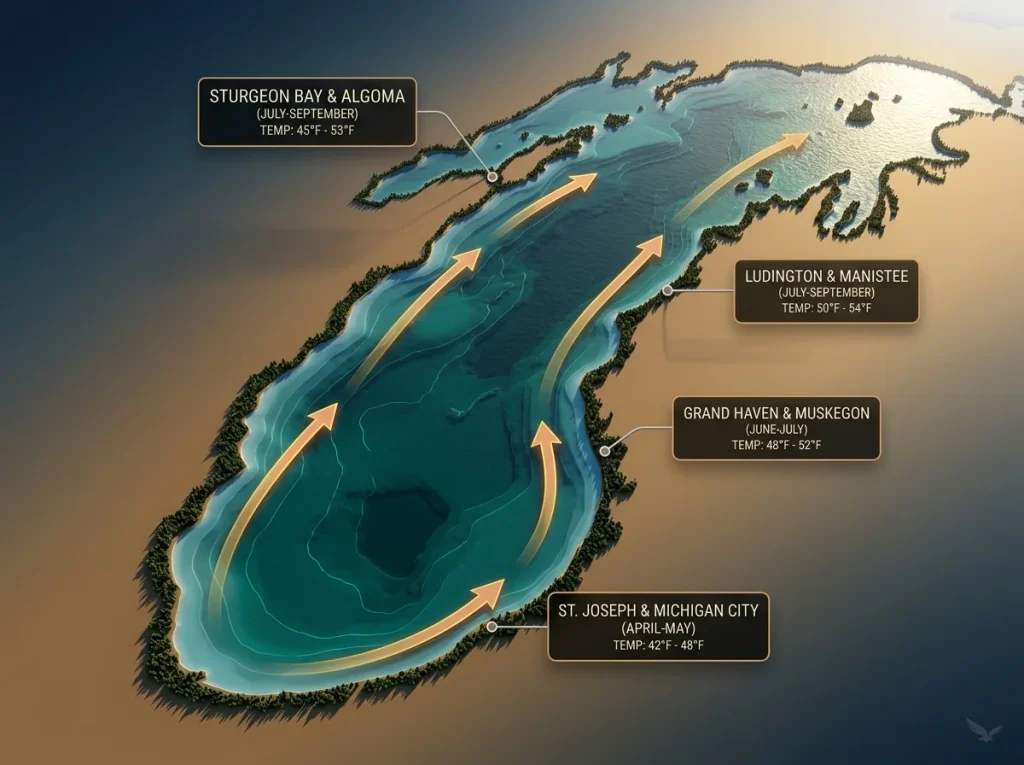
- St. Joseph & Michigan City — April–May spring coho in 20–50 ft
- Grand Haven & Muskegon — June–July transition kings and coho
- Ludington & Manistee — July–September trophy Chinook in 80–150 ft
- Frankfort & Traverse City — August–October coho runs and fall staging
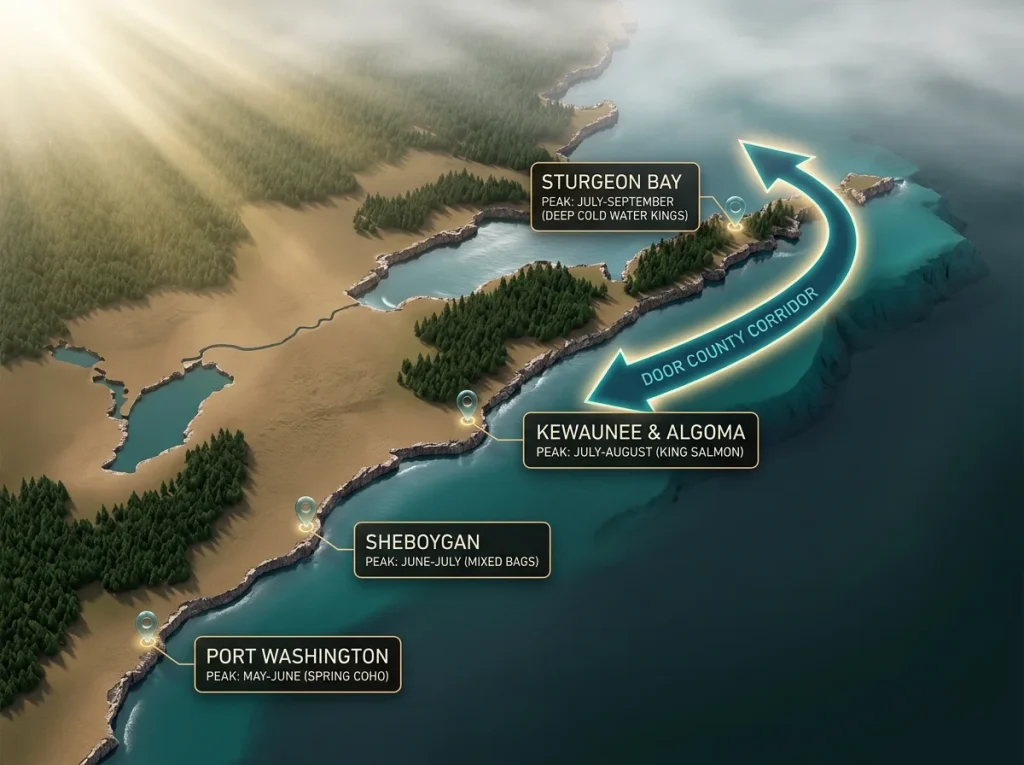
- Kewaunee, Algoma & Sturgeon Bay (WI) — June–September kings in cold Door County water
Why Port Selection on Lake Michigan Follows the Thermocline
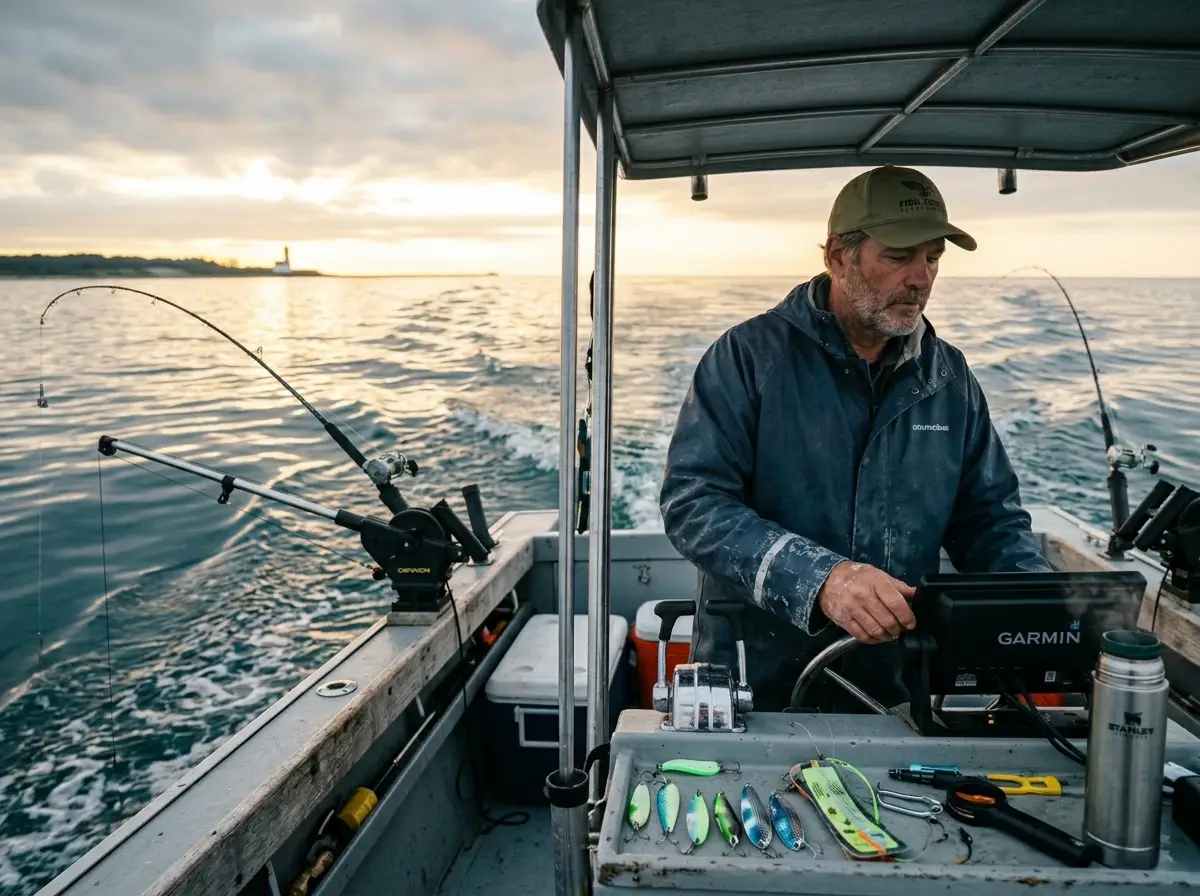
Most guides list ports alphabetically or by popularity. That misses the point entirely. Salmon follow temperature, not geography — and that one fact changes how you plan every trip on this lake.
How Water Temperature Drives Salmon Migration
Chinook salmon hold in water between 45°F and 55°F. That’s not a preference — it’s a metabolic ceiling. Push them above 55°F and their oxygen demand outpaces what warm water delivers. Their food source — alewife, which comprise roughly 99% of a Lake Michigan Chinook’s diet — follows the same thermal band.
The thermocline is where the action concentrates. This boundary layer sits between 40 and 100 feet deep depending on currents, wind, and time of year. Salmon stack along it because that’s where bait holds and water temperatures stay in the low 50s. If you want to understand how how thermoclines control fish depth and feeding, it’s worth studying before your first trip.
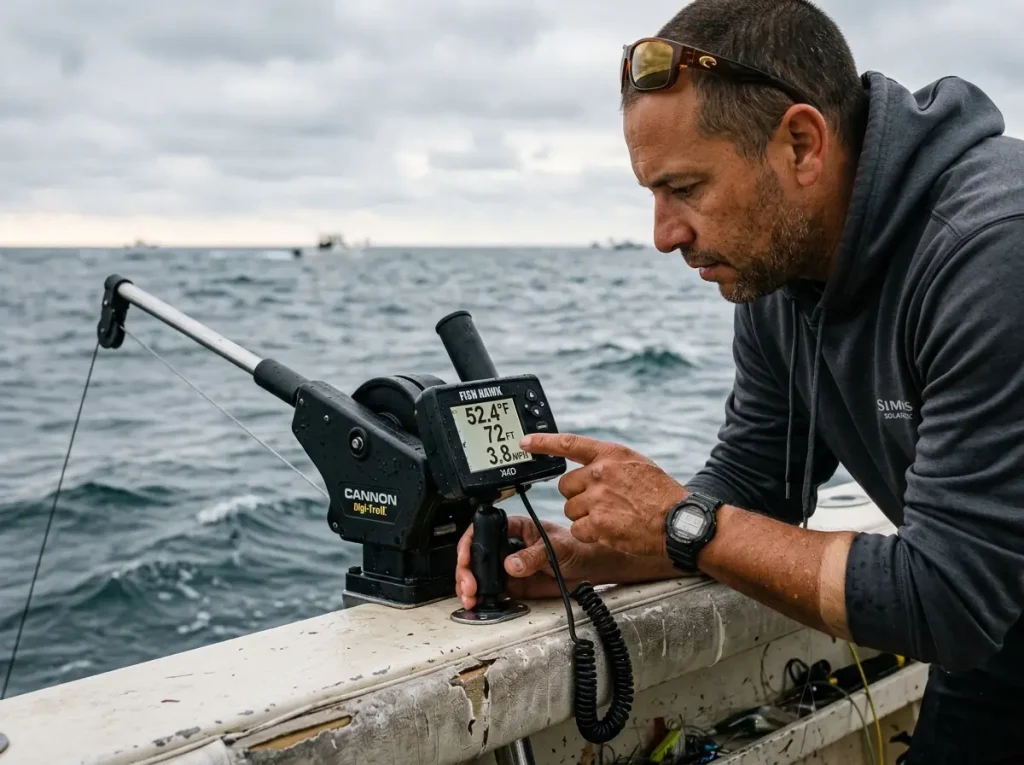
What most anglers miss: the thermocline shifts hourly. Charter captains who run Fish Hawk temperature probes check readings every 10 minutes because a wind shift can push the break 20 feet deeper in an afternoon. MSU Extension’s CoastWatch surface temperature maps give you satellite imagery of surface temps before you launch, but surface temperature readings can mislead you — the fish are below, not on top.
The South-to-North Seasonal Push
Lake Michigan’s southern basin warms first. By April, water near St. Joseph and Michigan City hits the mid-40s while Ludington and Manistee are still in the high 30s. Coho follow that warmth south, stack up, and the spring bite fires.
As summer builds, the thermal band migrates north. By July, the sweet spot sits off Ludington and Manistee. By August, it’s pushing toward Frankfort and the Door County corridor on the Wisconsin side. This south-to-north migration is predictable enough that experienced anglers plan their trips around it — not around which port has the nicest marina.
Using Fish Hawk Probes to Chase the Break
The fastest way to find fish is to find the thermocline. Fish Hawk X4D probes clip to your downrigger cable and transmit real-time temperature and speed data to a display at the helm. Set your spread where the probe reads 50–53°F, and you’re in the zone.
Pro tip: Don’t lock into one depth. Drop a rigger 10 feet below the thermocline and run another 10 feet above it. Salmon move through the break constantly, and bracketing it covers both directions.
Spring Ports: St. Joseph and Michigan City (April–May)
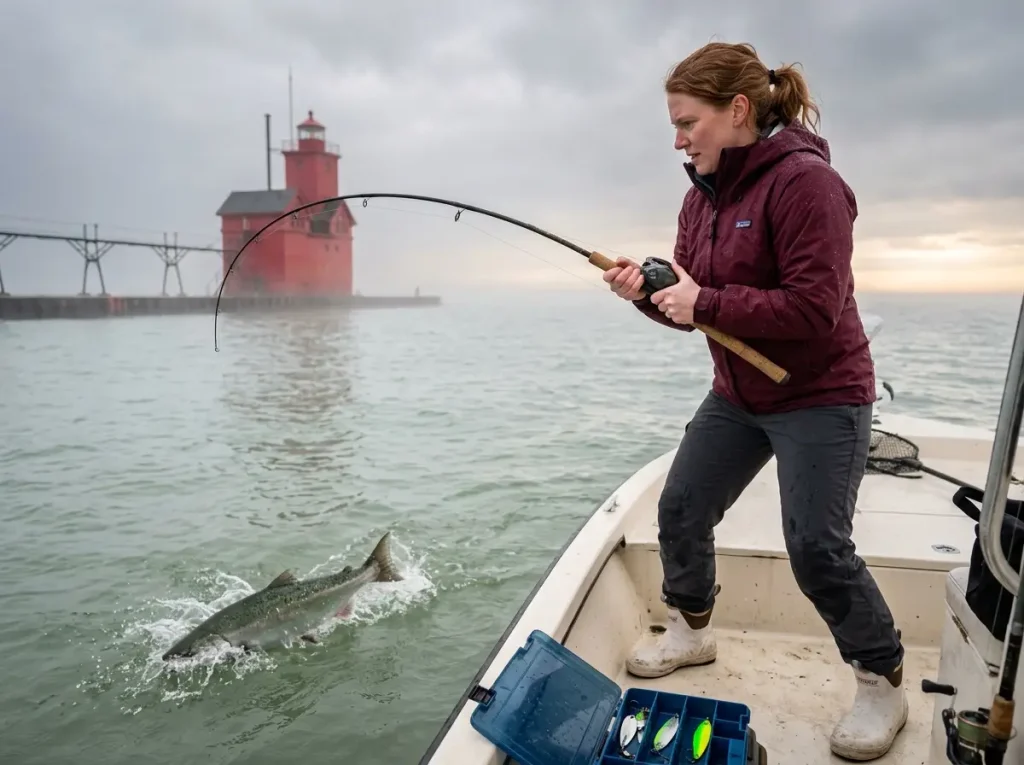
While most anglers wait for the summer king run, the southern basin produces fast coho action two months earlier. These ports get overlooked because the fish are smaller — but 15-fish days in April make up for it.
Why Coho Stack Up in Warmer Southern Water First
Coho salmon tolerate slightly warmer water than Chinook, and they’re aggressive feeders coming out of winter. The St. Joseph River and Trail Creek (Michigan City) pump nutrient-rich water into the nearshore zone, concentrating bait. When water temperature controls fish metabolism and feeding, warmer southern water means coho are active and eating while kings further north are still sluggish.
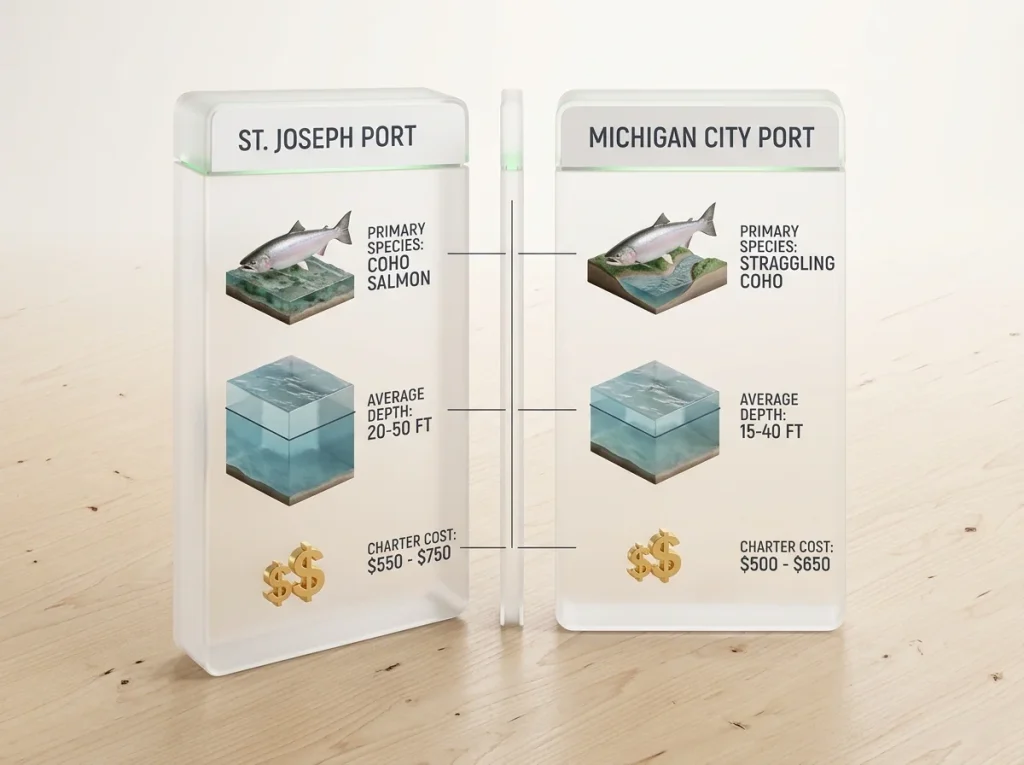
Trolling Shallow in St. Joseph (20–50 Feet)
St. Joseph kicks off the Lake Michigan salmon season. Troll in 20–50 feet with spoons or crankbaits. Bright colors — chartreuse, orange, and silver — produce in the stained spring water.
The bite peaks early morning, and you don’t need a long boat ride to reach fish. Most action happens within a mile of the piers.
Pro tip: Spring coho at St. Joe school tight. When you hook one, circle back immediately — there are probably 50 more in that same column of water.
Michigan City: The Indiana Port Nobody Talks About
Every Lake Michigan guide focuses on Michigan. Michigan City, Indiana sits at the same latitude as St. Joseph and produces the same spring bite. Trail Creek’s warm discharge attracts staging coho, and the port offers cheaper charters and less pressure.
If St. Joe is booked, drive 30 minutes east.
Early Summer Ports: Grand Haven, Holland, and Muskegon (June–July)
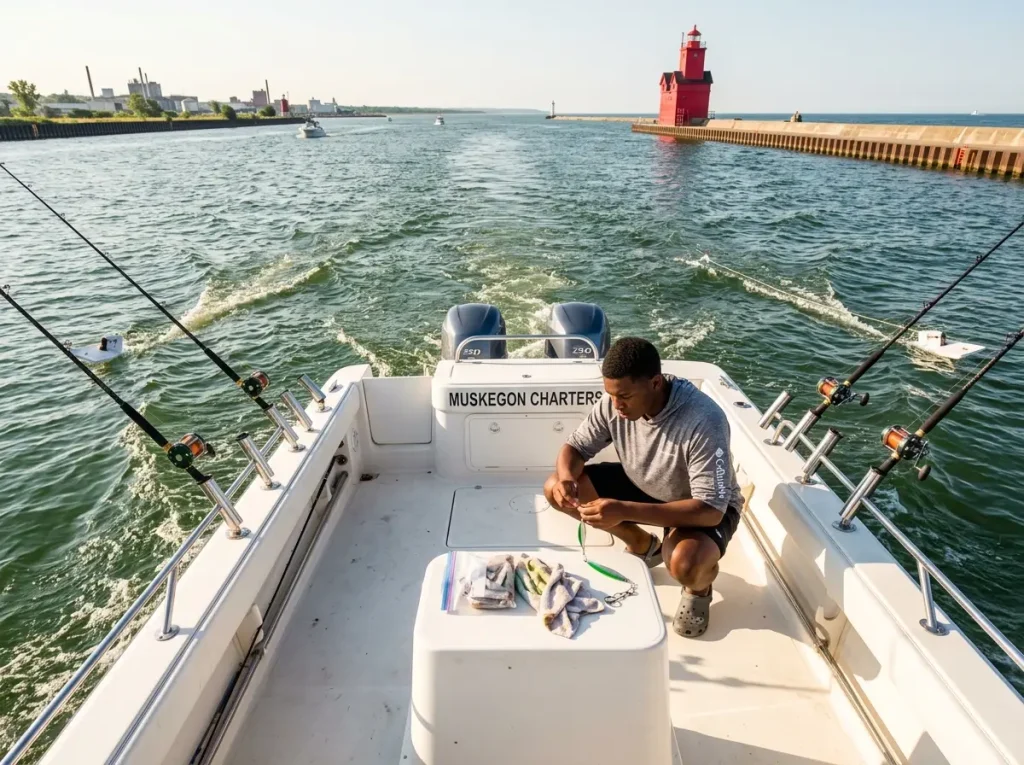
As the thermal band slides north, the middle ports come alive. These are transition fisheries — you’ll catch a mix of late coho, early kings, and the occasional steelhead or lake trout.
Grand Haven and Holland: The Overlooked Middle Ports
Grand Haven and Holland sit between the spring southern ports and the summer northern hotspots. Neither gets the headlines that Ludington does, but both produce solid mixed bags in June. The Grand River system feeds Grand Haven, pulling bait and predators tight to shore. Troll in 60–100 feet with spoon fishing techniques for trolling — green-glow and blue-silver patterns dominate here.
Muskegon: The Urban Port With Big Fish and Calmer Water
Muskegon deserves more credit than it gets. The Muskegon River system creates a nutrient pipeline that holds fish from June through September. Muskegon Lake — a protected harbor — gives smaller boats calm water access, which matters when Lake Michigan is throwing 4-footers.
Mature Chinook averaging 12–18 pounds stage in the harbor by August before pushing up the river. Offshore, troll in 100–200 feet for mixed bags of kings, coho, and steelhead using flasher-fly combos and green-hue spoons.
Peak Season Ports: Ludington and Manistee (July–September)
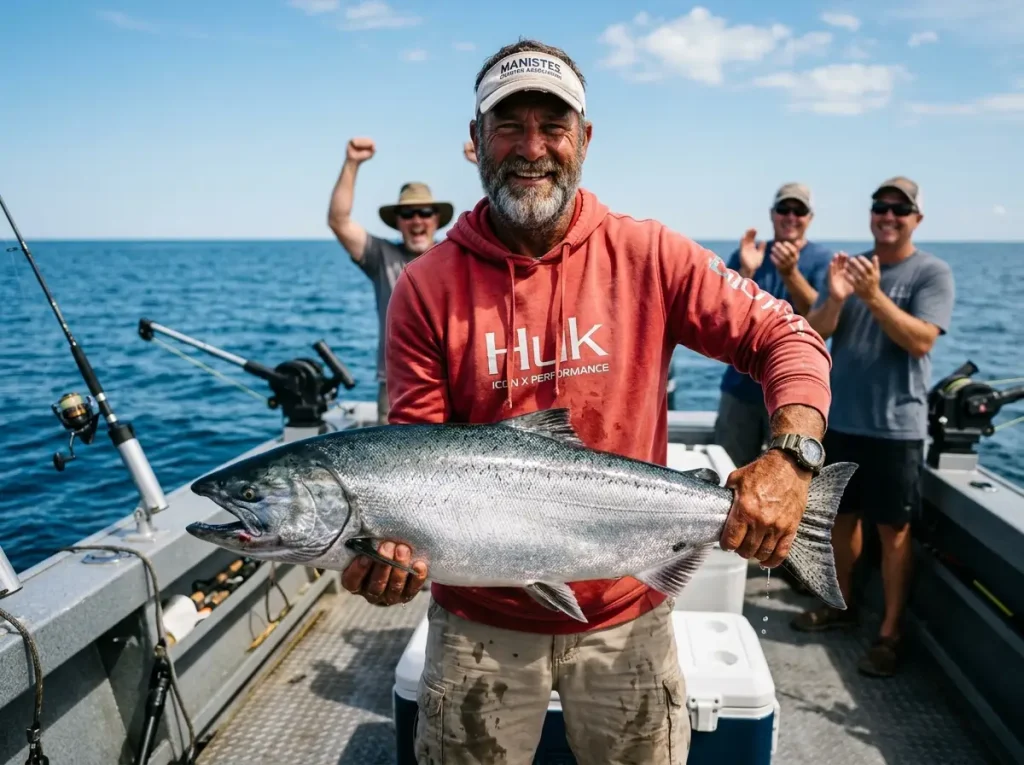
This is the main event. When anglers say “Lake Michigan salmon fishing,” they usually mean these two ports during the summer king run.
Ludington: Why Pere Marquette River Fish Stack Offshore
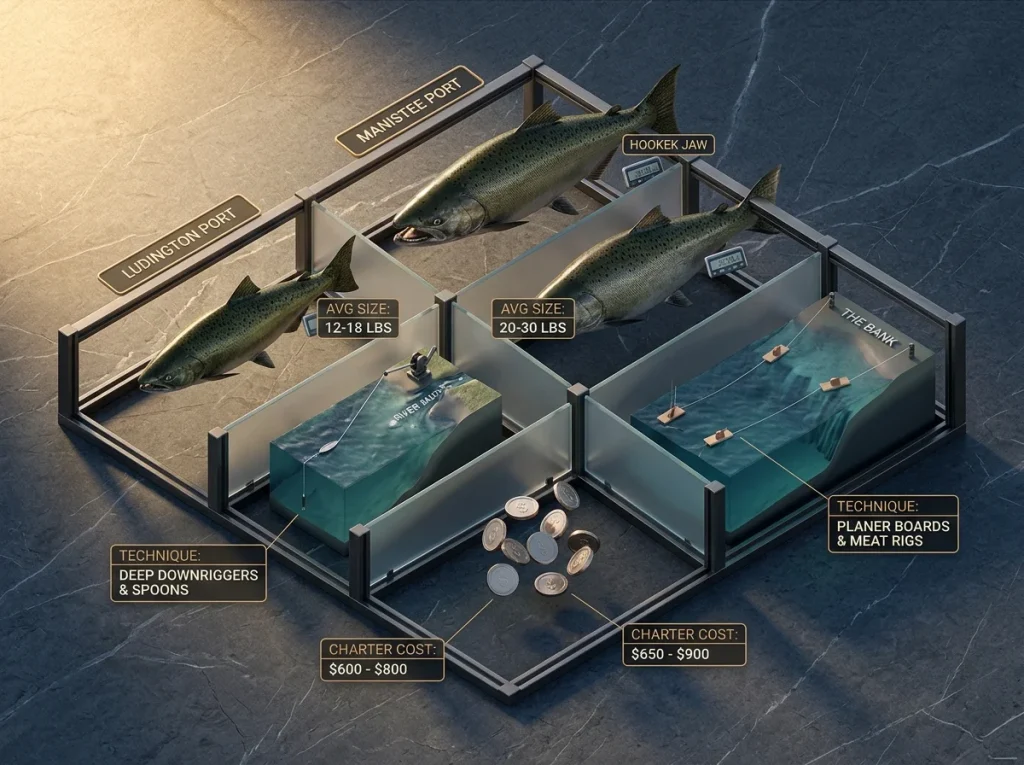
Ludington consistently leads Michigan in catch rates, and the reason is geography. The Pere Marquette River — one of the Great Lakes’ premier salmon rivers — dumps into Lake Michigan right at Ludington. Chinook that will spawn in the Pere Marquette stage offshore for weeks, holding in 50–150 feet of water. That proximity to deep water means a short boat ride to the bite — sometimes under 15 minutes from the harbor mouth.
Troll with downriggers set at 70–80 feet, targeting the thermocline. Choosing the right downrigger for depth control matters here because you’re fishing precise depth bands. Flasher-fly rigs and Michigan Stinger spoons in green-glow and blue-silver produce consistently.
Manistee’s “Bank” and the 30-Pound King Window
Manistee is where trophy hunters go. The Manistee River funnels massive Chinook runs, and the offshore structure known as “the Bank” — a sharp drop-off — concentrates bait and predators. Fish here average bigger than Ludington, with 25–30-pound kings taken regularly in August.
Troll in 80–120 feet near the Bank using planer boards with bright spoons or meat rigs (flasher-fly combos). Dawn trolling produces the biggest fish. Make gradual S-turns instead of running straight lines — you cover more water and find the speed the fish want that day.
Pro tip: Manistee charters for peak season (late July through Labor Day) book 4–6 months in advance. The 2026 Ludington schedule was nearly full by May. Plan accordingly or get stuck with midweek dates.
Charter Booking Reality: Plan 4–6 Months Ahead
Both ports run charter fleets hard during the king run. A half-day trip (5–6 hours) runs $500–$700 for up to 4–6 anglers. Full days push $800–$1,000. The captain provides rods, tackle, and fish cleaning.
You bring food, drinks, sunscreen, and a cooler for your catch. If you’ve never booked a Great Lakes charter, ask about their fish-cleaning policy before you commit — some charge extra.
Northern Michigan Ports: Frankfort and Traverse City (August–October)
When the king run peaks at Ludington and Manistee, the coho run builds further north. These ports reward anglers who fish the fall transition.
Frankfort and Platte Bay: Where Coho Flood In
Frankfort sits near the Betsie River and overlooks Platte Bay, where coho salmon stage in enormous numbers from August through October. The Platte River is one of Michigan’s primary coho stocking sites, and returning fish pile into the bay before heading upstream. Troll in 40–100 feet with J-plugs or crankbaits during low-light conditions. The shorter boat ride — Platte Bay is essentially right outside the harbor — makes this a forgiving port for smaller boats.
Shore anglers can cast from the Frankfort breakwater for late-season coho using glow spoons after dark. The Sleeping Bear Dunes National Lakeshore backdrop doesn’t hurt either.
Traverse City and the Boardman River Fall Run
Traverse City offers a different experience — urban access to a fall salmon run. The Boardman River pulls Chinook and coho through downtown Traverse City from September into November. The lower stretches below the Union Street Dam concentrate fish during peak migration. For Great Lakes tributary fishing tactics, this is one of the most accessible runs in Michigan.
Wisconsin Ports: The Other Half of the Lake (June–September)
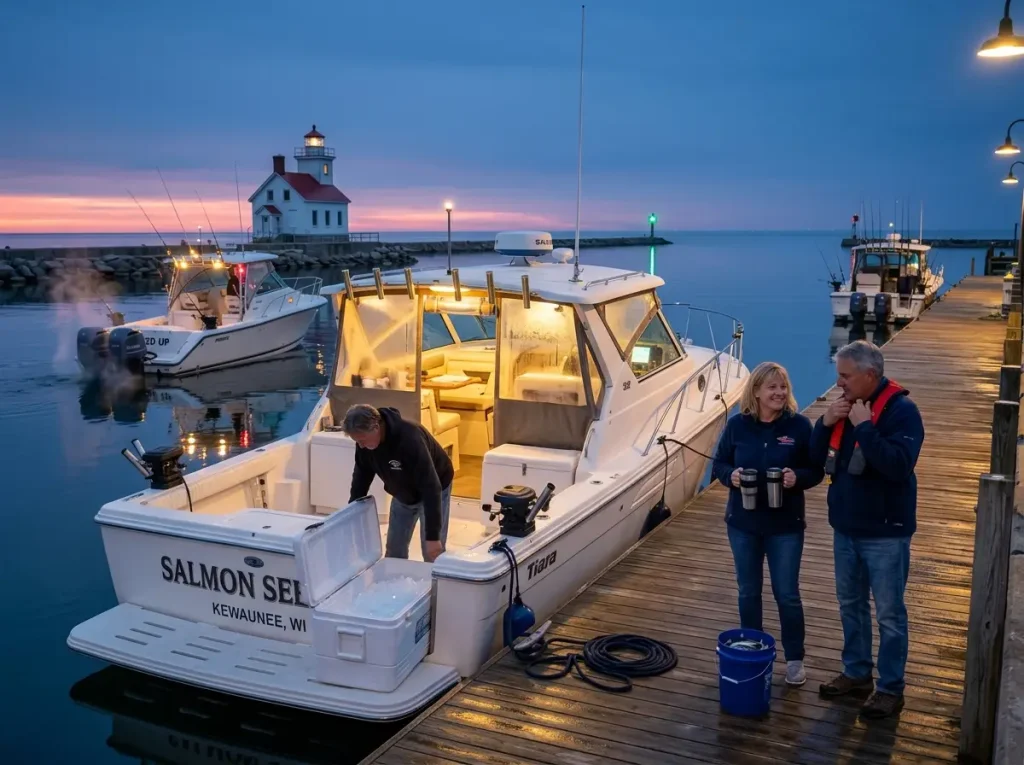
Here’s the gap every other port guide leaves wide open. Lake Michigan has two shores, and the Wisconsin side produces world-class salmon fishing that most Michigan-focused anglers never consider.
Port Washington and Sheboygan: Where Wisconsin Starts Producing
The season starts in Port Washington in May, with coho and early kings staging in the warming southern Wisconsin waters. By June, the bite shifts north to Sheboygan, where offshore trolling in 60–100 feet targets mixed bags. Wisconsin charter rates tend to run 10–15% lower than Michigan’s prime ports for comparable service.
Kewaunee, Algoma, and the Door County Corridor
Kewaunee and Algoma are the Wisconsin workhorses. These ports fish the transition zone where Lake Michigan narrows toward Door County, concentrating migrating salmon into a tighter corridor. From late June through August, kings push through here chasing cold water and bait. Local charter captains know the structure — underwater ridges and drop-offs that hold fish — and these ports see less pressure than Ludington or Manistee.
Sturgeon Bay: Cold Water and Kings All Summer
Sturgeon Bay sits at the tip of the Door County peninsula, where deep cold water stays close to shore all summer. About 4–5 miles out, the lake floor drops sharply — locals call it “the Bank” (same name, different structure than Manistee’s). King salmon hold here from July through September because the water stays in the low 50s even when southern ports are pushing 60°F on the surface.
Pro tip: If Ludington and Manistee charters are booked solid, check Sturgeon Bay and Algoma. You’ll fish the same migrating population of kings — just from the other side of the lake — and you’ll probably pay less per trip.
Pier and Shore Fishing: Budget Salmon at Every Port
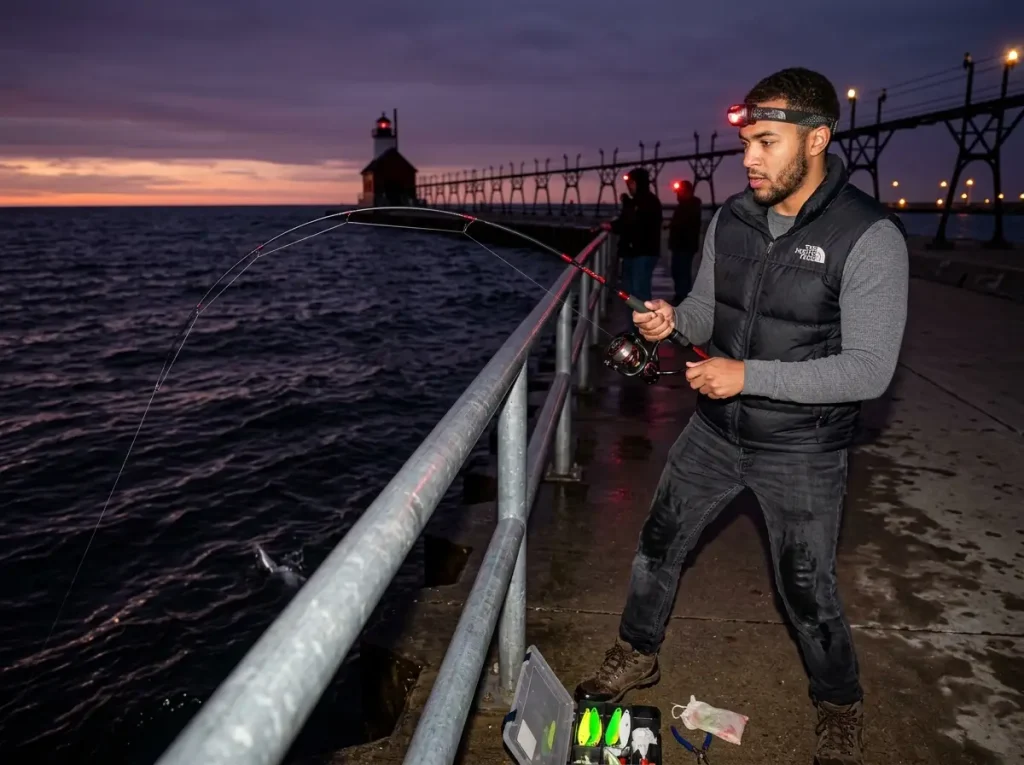
You don’t need a $600 charter to catch Lake Michigan salmon. Every major port has a pier or breakwall that produces fish — especially in fall.
Best Pier Fishing Ports for Salmon (Fall)
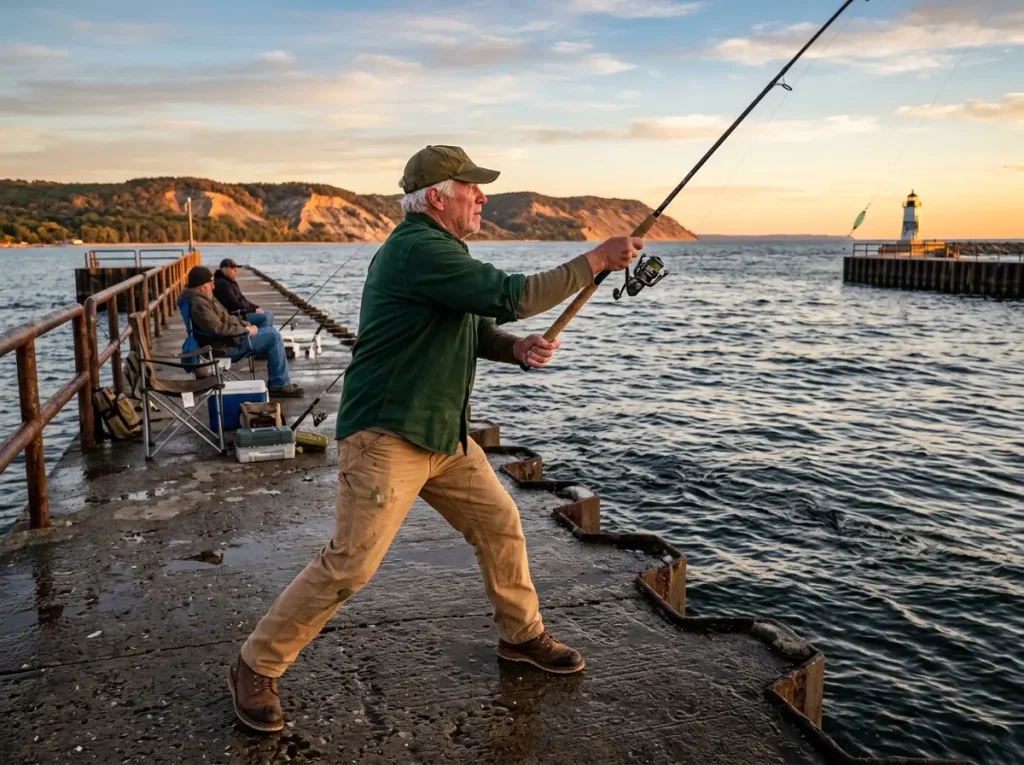
The piers at Ludington, Manistee, Frankfort, Grand Haven, and St. Joseph all produce salmon from September through November. Staging fish hold near the pier pilings and channel mouths before committing to their spawning rivers. Frankfort’s breakwater sits right at the mouth of Platte Bay, where coho stack up thick enough to see from above.
Techniques That Work From Breakwalls
Cast glow spoons after dark — green and chartreuse glow produce best. During daylight, spinners and spawn sacks (skein under a bobber) work in the harbor channels. Use float fishing techniques for salmon and steelhead once fish push into the rivers.
Match your gear to the fight: a 7–8-foot medium-heavy spinning rod, 15–20-pound braided line with a fluorocarbon leader, and a landing net. Pier fish run hard toward structure — if you don’t turn them fast, they’ll wrap you around a piling.
What You Need to Know Before Booking a Trip
Licenses, Regulations, and Harvest Reporting
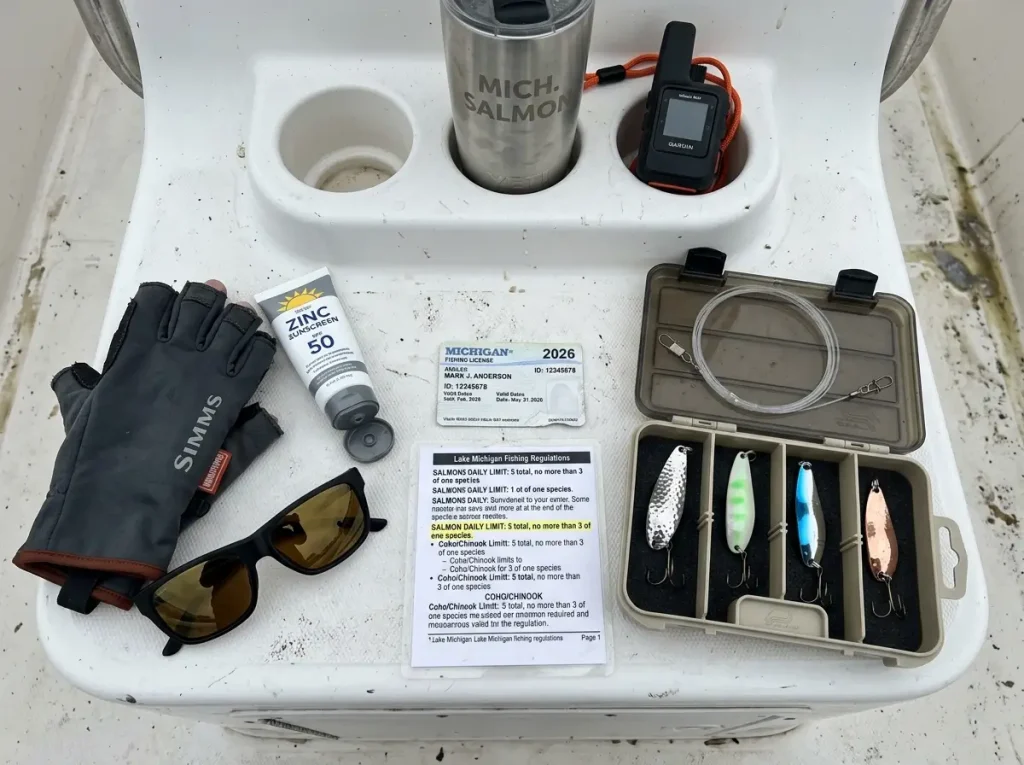
Michigan requires a fishing license plus a Great Lakes stamp for Lake Michigan. Wisconsin has its own license — you can’t use a Michigan license on the Wisconsin shore. Check Michigan DNR fishing regulations for current daily limits, size restrictions, and mandatory harvest reporting. The Great Lakes Fishery Commission’s stocking strategy offers context on why stocking numbers may change — Chinook plants currently sit at 1 million fish per year in Michigan waters, but reductions are being discussed for 2027 as alewife populations thin.
What to Bring on a Charter (And What Not To)
Charters provide rods, tackle, and expertise. You bring sunscreen, layered clothing (Lake Michigan mornings are cold even in July), polarized sunglasses, food, drinks, and a cooler with ice for your catch. Skip the bananas — charter captains are superstitious about that one.
If you hook a bonus steelhead or lake trout during your salmon trip, the captain will tell you how to handle it. Both species share the same water column and hit the same presentations.
Conclusion
The best Lake Michigan salmon port is whichever one lines up with the seasonal thermal migration when you can go. Fish the southern basin in spring for fast coho action, the central Michigan ports in summer for trophy kings, and the northern ports or Wisconsin’s Door County corridor in late summer for consistent offshore fishing with less charter pressure.
Don’t sleep on Wisconsin. Half the lake, comparable fish, lower prices, and fewer boats.
Pick your dates first, then match them to the port where the thermocline — and the fish — will be sitting. That’s the only formula that works every year.
Q1 What is the best month to fish for salmon on Lake Michigan?
August is the most consistent month for Chinook king salmon across both Michigan and Wisconsin ports. Ludington and Manistee peak in late July through September, with 20–30-pound fish staging offshore before their spawning runs. Spring coho fishing in April–May at southern ports offers faster action with smaller fish.
Q2 Where is the best port for king salmon on Lake Michigan?
Manistee produces the largest average king salmon on the Michigan side, with trophy fish regularly exceeding 25 pounds near the offshore structure known as the Bank. Sturgeon Bay, Wisconsin offers comparable fishing with less charter pressure during the same July–September window.
Q3 Can you shore fish for salmon on Lake Michigan?
Yes. Every major port has piers or breakwalls that produce salmon from September through November. Glow spoons after dark, spinners, and spawn sacks under bobbers are the top pier techniques. Frankfort, Ludington, and Grand Haven rank among the best pier fishing ports for fall salmon.
Q4 What depth do you fish for salmon on Lake Michigan?
Target the thermocline, which typically sits between 40 and 100 feet deep during summer. Chinook hold in water between 45°F and 55°F. Use a Fish Hawk temperature probe on your downrigger cable to find the exact break — it shifts hourly with currents and wind.
Q5 Do you need a charter to catch salmon on Lake Michigan?
No, but it helps for offshore trolling. Charters provide the boat, electronics, and local knowledge for $500–$1,000 per trip. Pier fishing costs nothing beyond a license and basic tackle, and river fishing during fall spawning runs gives bank anglers direct access to salmon at every port with a tributary.
Risk Disclaimer: Fishing, boating, and all related outdoor activities involve inherent risks that
can lead to injury. The information provided on Master Fishing Mag is for educational and informational purposes
only. While we strive for accuracy, the information, techniques, and advice on gear and safety are not a substitute
for your own best judgment, local knowledge, and adherence to official regulations. Fishing regulations, including
seasons, size limits, and species restrictions, change frequently and vary by location. Always consult the latest
official regulations from your local fish and wildlife agency before heading out. Proper handling of hooks, knives,
and other sharp equipment is essential for safety. Furthermore, be aware of local fish consumption advisories. By
using this website, you agree that you are solely responsible for your own safety and for complying with all
applicable laws. Any reliance you place on our content is strictly at your own risk. Master Fishing Mag and its
authors will not be held liable for any injury, damage, or loss sustained in connection with the use of the
information herein.
Affiliate Disclosure: We are a participant in the Amazon Services LLC Associates Program, an
affiliate advertising program designed to provide a means for us to earn advertising fees by advertising and linking
to Amazon.com. As an Amazon Associate, we earn from qualifying purchases. We also participate in other affiliate
programs and may receive a commission on products purchased through our links, at no extra cost to you. Additional
terms are found in the terms of service.