
In this article
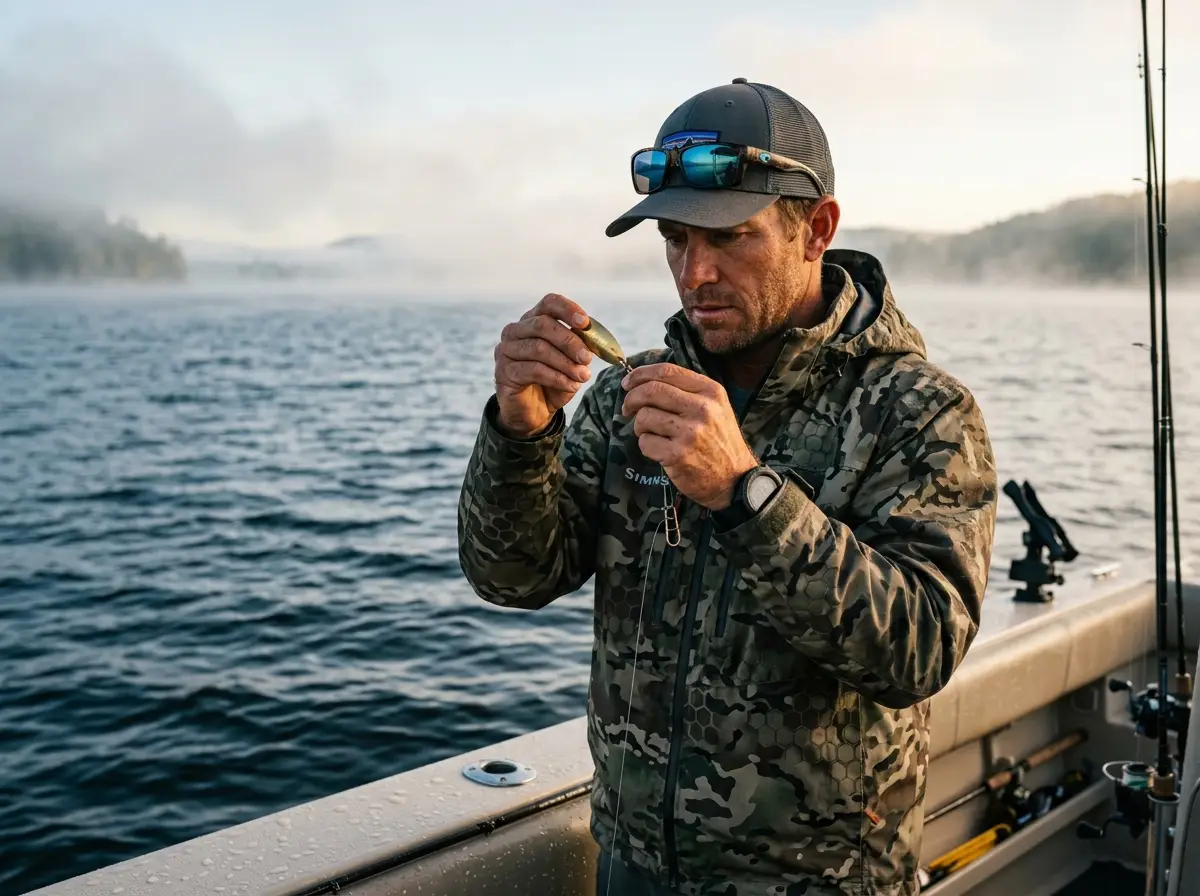
The spoon had been running perfectly for forty minutes. That rhythmic, telegraphed thump through the 20-lb braid told me everything was right. Then nothing. Not a refusal, not a follow. Just dead weight on the retrieve. I reeled it in and found the lure spinning freely on its clip — the rounded snap had fatigued and opened. The fish never had a chance to find it. That day, trolling Lake Superior at 2.4 mph over the thermocline, I learned that a spoon is not a lure. It’s a system of interacting physics. If one variable fails, the whole equation collapses.
Most anglers know spoons work. Few understand why. Manufacturer PDFs give you color charts and speed suggestions. What they don’t give you is the engineering report: camber ratios, alloy densities, Manning’s surface coefficients, or what “blowout” actually does to a fish’s lateral line. That’s what this article covers.
⚡ Quick Answer: Select a spoon geometry (camber ratio and aspect ratio) before choosing weight or color. A spoon with too high a camber ratio will spin instead of wobble at your trolling speed, sending the wrong signal to nearby fish. Use a rounded Duo-Lock snap at the lure, move any swivel 18–36 inches up the line, and calculate actual lure depth using the cosine of your downrigger angle — not your cable counter reading. In cold water, slow down: pike and salmon have a metabolic cost floor that a fast presentation can’t clear.
The Hydrodynamic Architecture of a Spoon
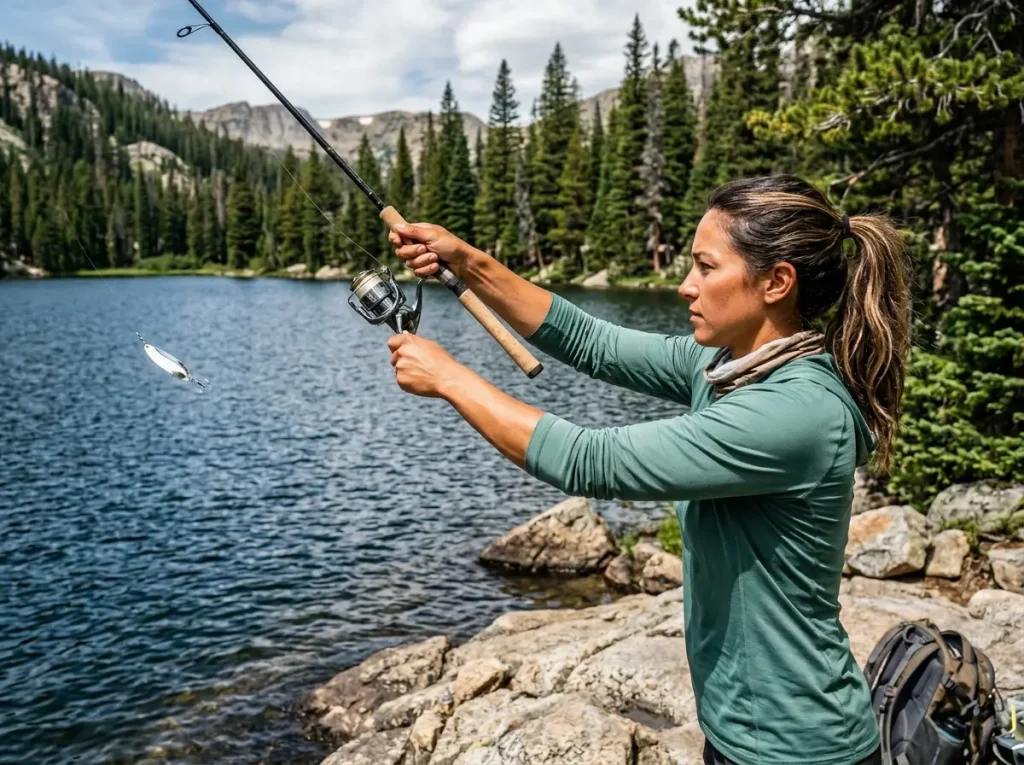
Here’s where most anglers get it wrong: they think “action” is something that happens automatically when you reel in a spoon. It doesn’t. Action is the output of a specific spoon geometry interacting with a specific set of water conditions at a specific speed. Change any one of those variables without adjusting the others, and you don’t get less action — you get no action.
Camber Ratio — The Shape Behind the Wobble
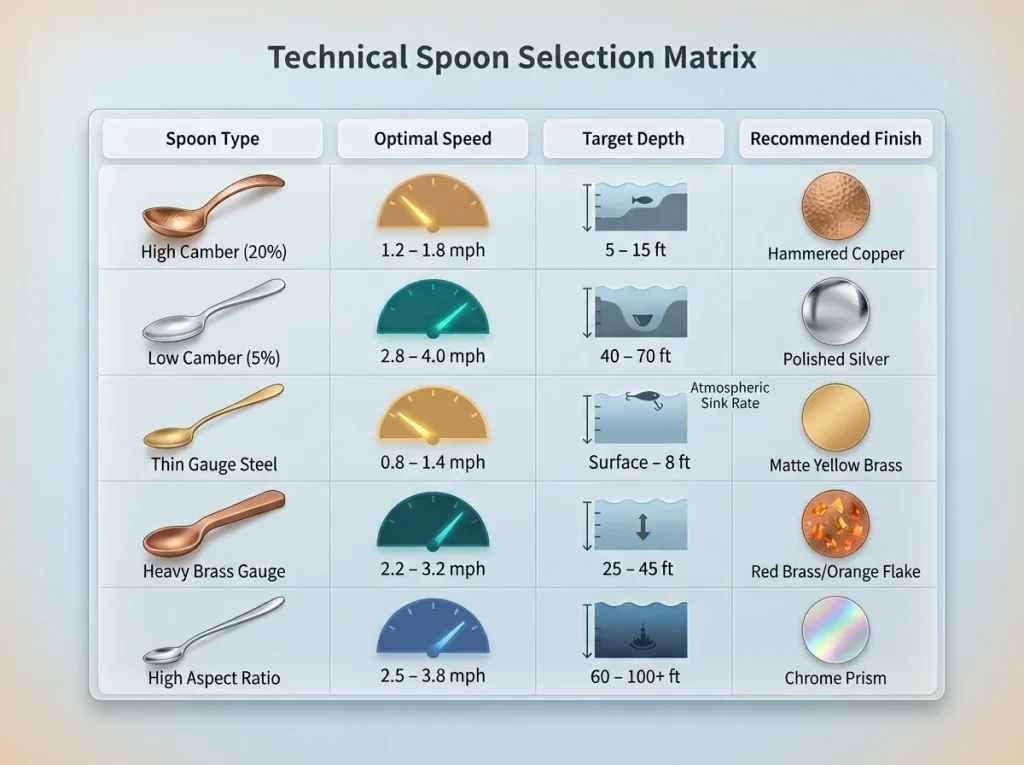
The critical metric is camber ratio: the arc depth of the spoon relative to its chord length. A high camber ratio of around 20% maximizes lift and produces an aggressive, wide wobble. That’s great for slow warm-water retrieves where you need a large displacement target to pull fish off structure. Drop that same spoon into a 3 mph trolling spread and it’ll blow out. A 5% camber ratio, by contrast, holds its line at high speed — less wobble amplitude, more stability. This is the engineering logic behind spoons like the Williams Wabler, which uses a built-in keel to prevent rotation at increased speeds. When maximum camber is positioned at the 10% mark of the longitudinal axis, the spoon “kicks” at lower velocities — which is why certain cold-water profiles fire up sluggish predators when faster-moving options don’t.
The technical nuance here: the same spoon that’s deadly at 1.8 mph can spin at 3.5 mph if its camber ratio is too high for the speed. You don’t need a speed adjustment — you need a different spoon.
Aspect Ratio and Depth Stratigraphy
The aspect ratio (length-to-width) controls depth, not action. Increasing aspect ratio from 0.3 to 2.0 raises the sinking force coefficient from 0.55 to 0.82 — which is why narrow spoons like the Luhr-Jensen Needlefish dive deeper than wide wobblers at the same weight. Oval shapes for mid-column presentations, elongated shapes for thermocline work. Decide your depth target first, then match the shape.
What “Blowout” Actually Is — And Why It Kills Your Bite
“Blowout” isn’t a vague term for “something went wrong.” It has a specific meaning: the spoon stops oscillating and starts rotating. Instead of a rhythmic wobble, it produces a continuous spin. To the rod tip, the difference is a lifeless, smooth drag instead of a pulse. To the fish, the lateral line reads a sensory mismatch — the vibration pattern stops resembling a prey animal — and the fish breaks off the chase within a foot or two. Most anglers who notice this slow down. The correct first move is to check gauge. A thin-stamped steel spoon will always blow before a heavy brass version at the same speed.
For a deeper look at the same bill-angle principles that govern crankbait dive curves, the hydrodynamics of oscillating lure bodies follow a consistent pattern across all lure types.
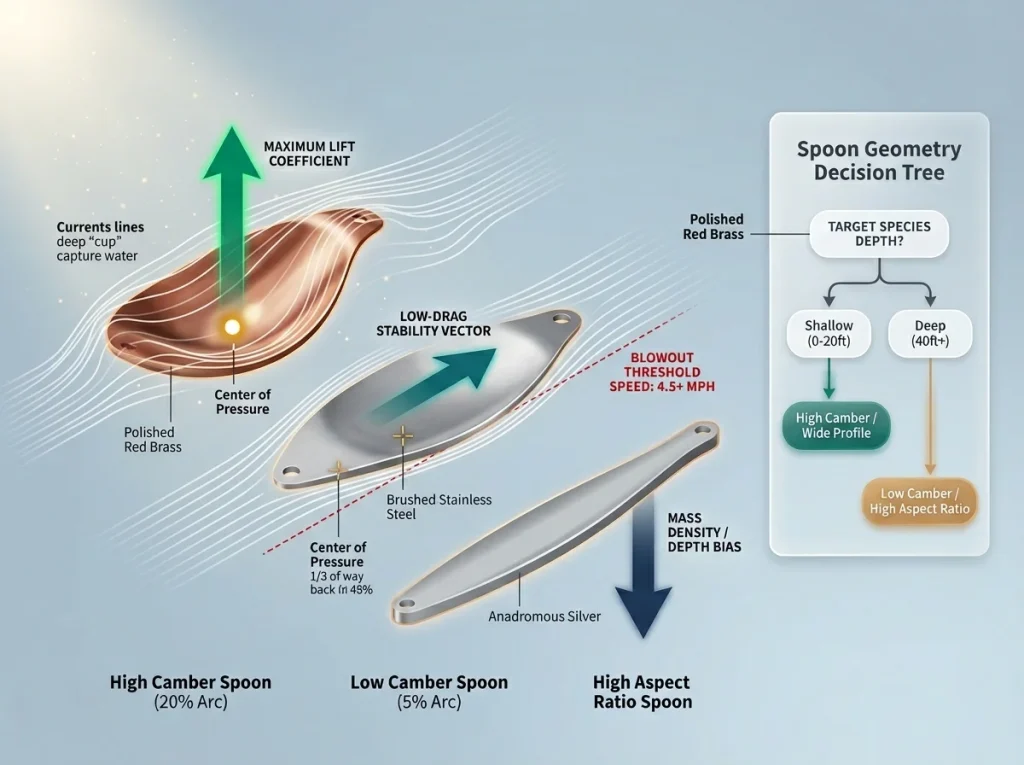
Pro Tip: Match aspect ratio to your depth target before selecting weight. Anglers who use heavier spoons to compensate for the wrong profile are fighting the lure’s natural physics — and usually losing.
Material Science — Alloys, Gauge, and Kinetic Inertia
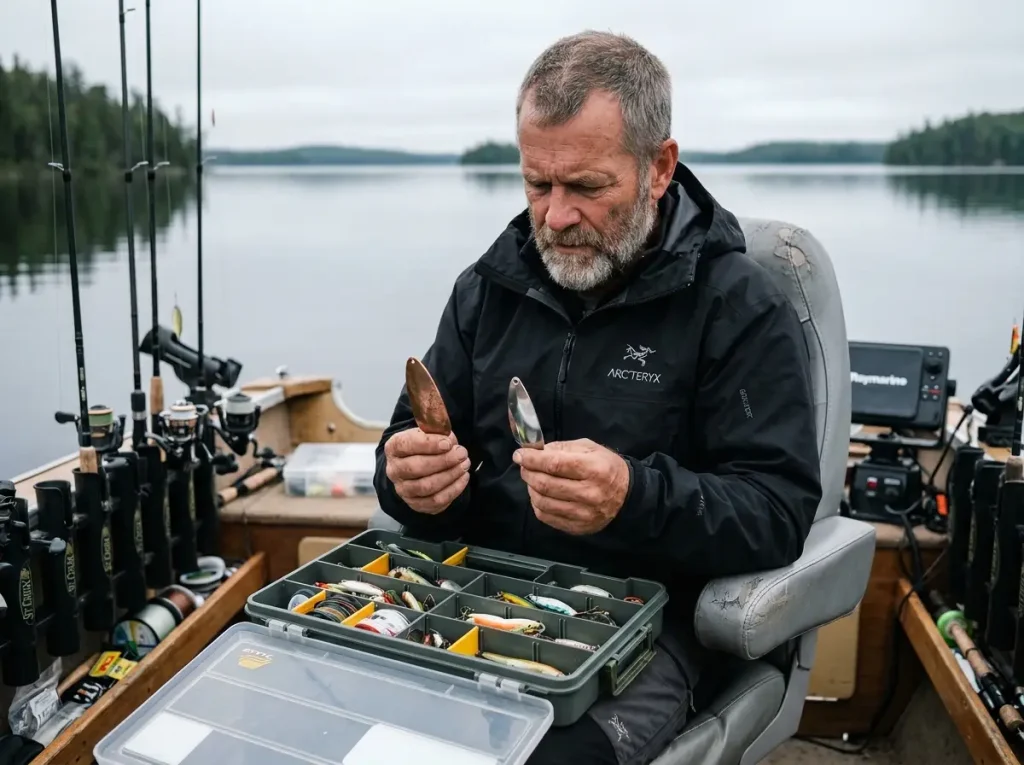
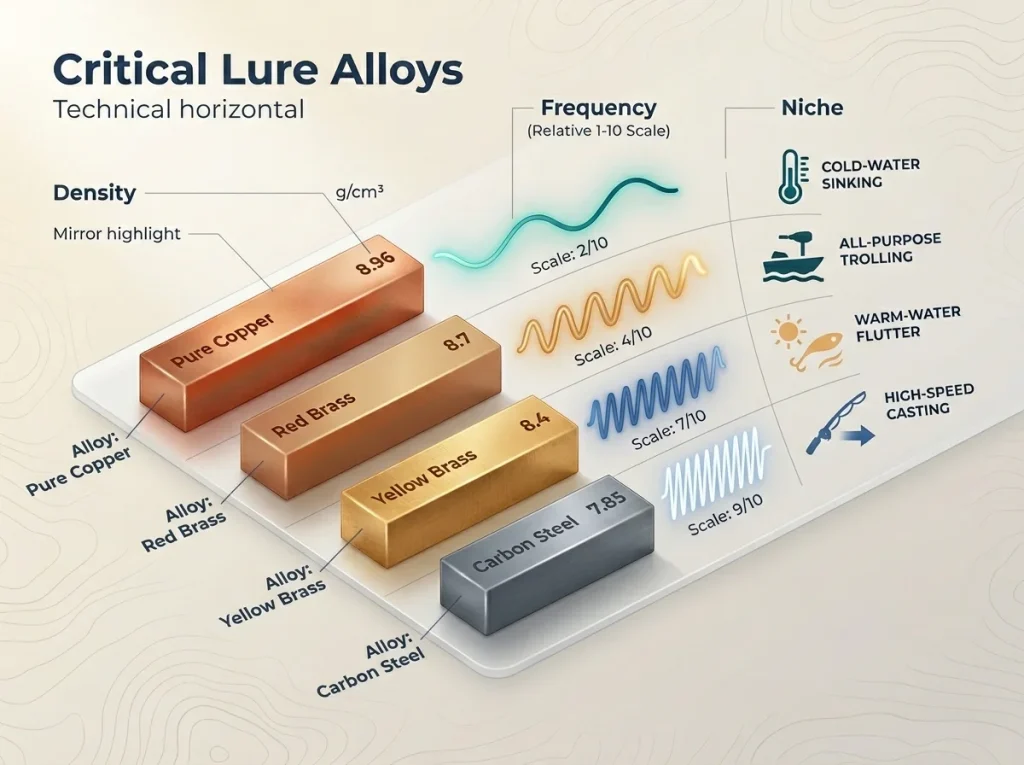
The metal you pick is not a branding decision. It’s a physics decision. Metal alloy density controls two things: how fast the spoon sinks and how fast it vibrates.
Brass vs. Copper vs. Steel — A Density Decision
Pure copper at 8.96 g/cm³ is the densest of the common lure metals. That density lets a copper spoon reach greater depth with a smaller cross-section, because higher mass reduces drag. During trolling turns, copper sinks faster than leadcore, keeping the lure in the strike zone through direction changes. The copper density and its hydrodynamic advantage in trolling applications is documented by the Copper Development Association and carries real engineering weight.
Red brass at 8.7 g/cm³ is more resistant to stress cracks than yellow brass. Yellow brass, around 8.4 g/cm³, is more buoyant — better for slow-flutter casting retrieves where you want the spoon to pause and fall. Carbon steel at 7.8–8.0 g/cm³ produces a higher-frequency vibration with more blowout risk at trolling speed. I’ve watched anglers swap from copper to steel mid-session thinking they needed more action. Steel doesn’t give more action — it gives a different, faster vibration. In cold water, that often shuts the bite down.
The Gauge Factor — Why the Same Profile Fishes Differently
Gauge is the variable spec sheets almost never mention. The Luhr-Jensen Krocodile in heavier gauges stabilizes at constant trolling speed. Thinner-gauge versions of the same profile are engineered for flutter-fall casting. Using a trolling gauge for casting, or vice versa, produces mediocre results regardless of speed. If your spoon blows out at trolling speed and you can’t find a lower-camber version, go up one gauge in the same profile before changing lure shape.
For the depth-control principles behind multi-line freshwater trolling spreads, alloy and gauge selection are among the most underappreciated variables in the whole system.
The Hidden Physics of Surface Texture — Manning’s n on a Fishing Spoon
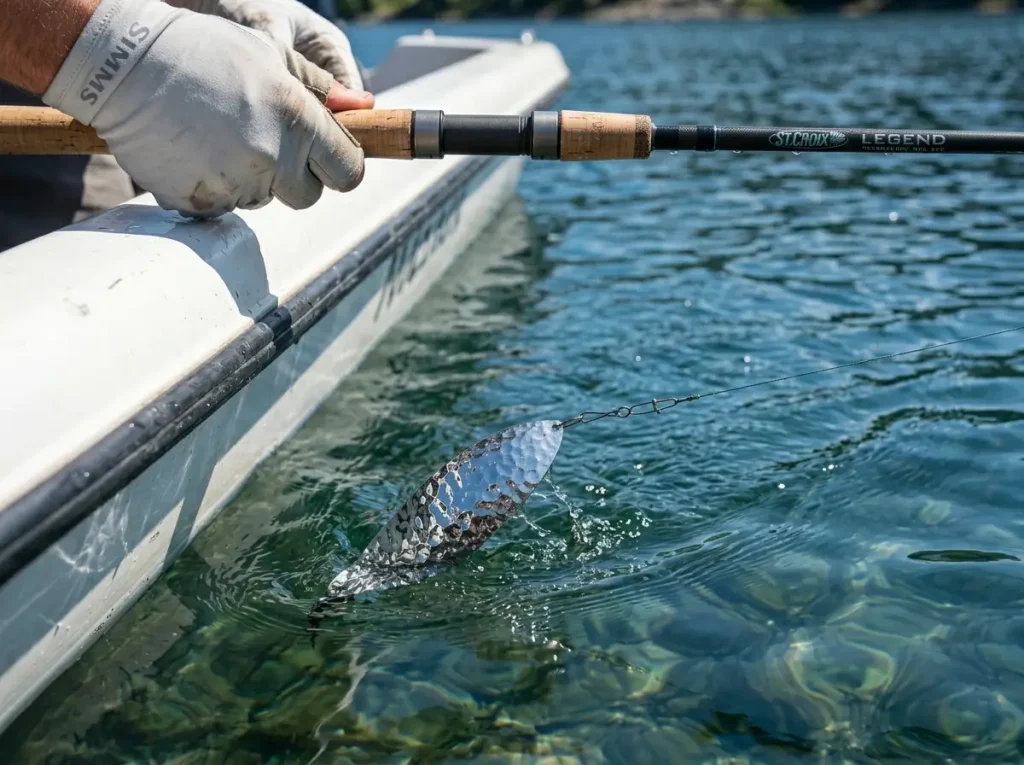
Nobody’s PDF covers this. Most gear marketing skips straight from “hammered finish” to “more action” without explaining the mechanism. Here’s the mechanism.
How Dimples Control Drag at the Spoon Scale
In hydraulic engineering, Manning’s roughness coefficient measures how surface texture resists water flow. Smooth polished brass has an n value around 0.009–0.013. A hammered finish introduces surface irregularities estimated at n = 0.018–0.024. In a large-scale river channel, more roughness means more resistance. At the scale of a fishing spoon, something different happens — the same principle that makes a golf ball fly farther than a smooth ball.
The dimples create a turbulent boundary layer that adheres longer to the spoon’s surface, delaying flow separation at the rear of the lure. The pressure wake behind a smooth spoon destabilizes its wobble at higher speeds. The hammered version’s smaller wake keeps the lure tracking true even when you push the throttle. Research on hydrodynamic lubrication effects in textured metal surfaces confirms that micro-textured surfaces can reduce friction by up to 50% through this mechanism — not marketing copy, physics.
The Micro-Vortex Lateral Line Signal
On top of that structural advantage, as water flows over the dimpled surface, it generates thousands of micro-vortices operating at 1–20 Hz. That frequency band sits squarely in the range of the lateral line’s superficial neuromasts — the cells responsible for near-field, precision detection. A hammered spoon doesn’t just wobble. It produces a layered sensory signal: the primary oscillation from the body plus a constant low-frequency hum from the texture. Smooth spoons broadcast one signal. Hammered spoons broadcast two. This is not the same vibration as the wobble itself — it’s a separate texture-generated signal stacked on top.
At 60 feet in stained water, a mirror-chrome spoon is essentially invisible — it reflects in only one narrow vector. A hammered version is broadcasting in all directions simultaneously. How water turbidity reshapes what fish can actually detect is a subject worth understanding before you make your finish selection.
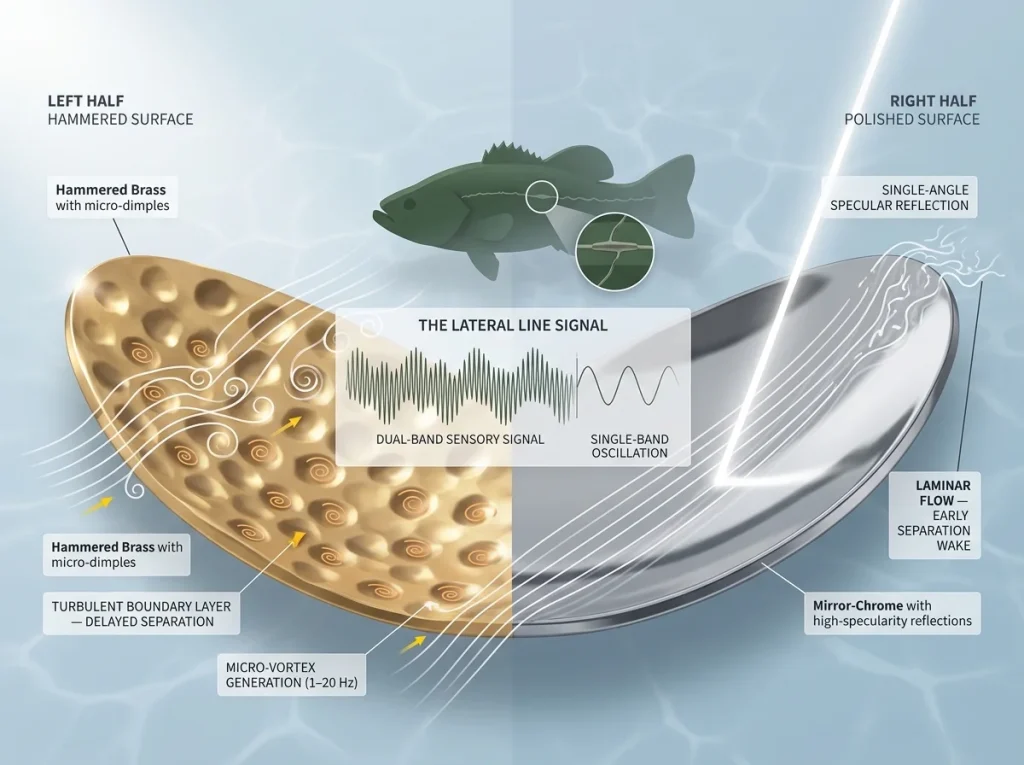
Pro Tip: In zero-visibility night fishing or heavy turbidity, switch to hammered brass or hammered copper before you change depth. The texture generates a signal that color cannot. The fish won’t see the lure — but it’ll hear it.
Optical Physics — Reading the Water’s Light Environment
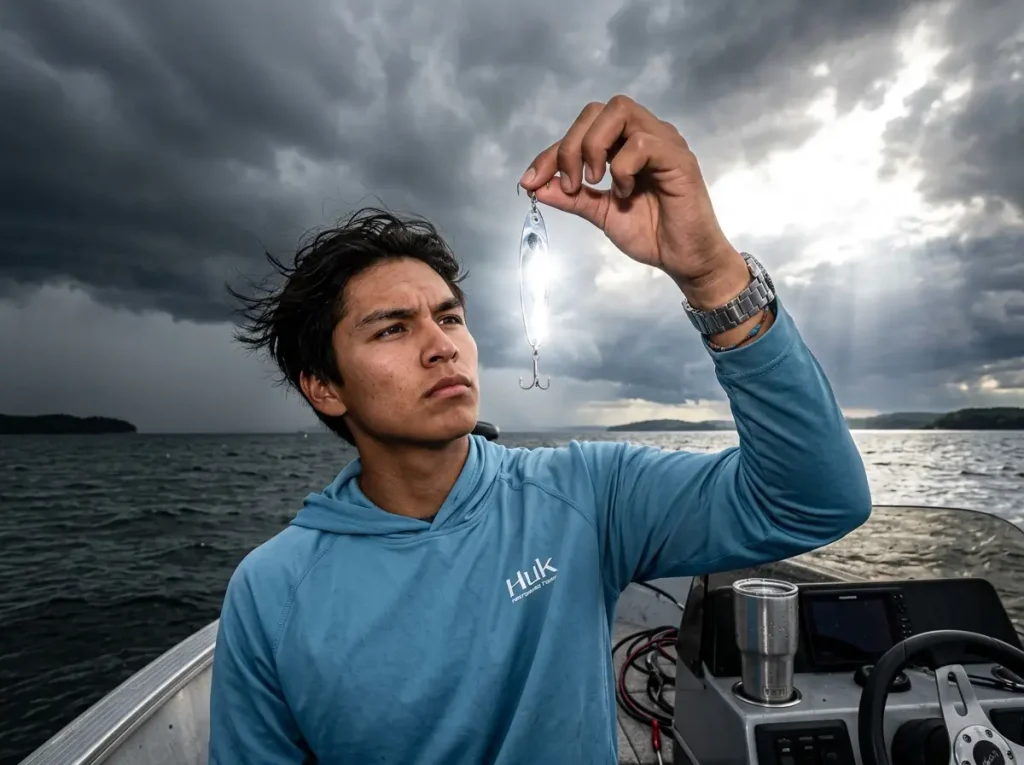
Color selection is the topic the fishing industry monetizes hardest and explains worst. “Silver in clear water, chartreuse in murky water.” That’s not wrong — it’s just incomplete.
The Depth-Color Filtration Table
Silver returns over 90% of all visible light, making it the dominant choice under bright, clear conditions. Gold absorbs blue and violet wavelengths, giving it an advantage in stained water where yellow penetrates better. Copper reflects red-orange — but red and orange disappear within the first 10–20 feet of water. A copper spoon at 40 feet isn’t copper-colored. It’s a dark silhouette. That’s actually useful, once you know it.
Understanding how water depth filters wavelengths and changes lure color perception — documented by the Minnesota DNR — is the foundation for rational metal finish choice. The practical table: red/orange removed by 10–20 ft, yellow by 30–40 ft, green persists to 60–80 ft, blue deepest. Select your finish based on your target depth, not the color on the box.
The “red and white for pike” rule follows the same physics. Red vanishes near the surface, making the white hood the primary contrast element. You’re fishing a white spoon with a dark leading edge — not a red one.
Turbidity — When Contrast Beats Color
In turbid water, fish switch from color discrimination to contrast detection. Metallic finishes generate flash even when matte colors disappear. A hammered finish with its multi-angle refractive index advantage is more detectable than a flat mirror that only reflects in one direction. For how fish visual systems process light attenuation at different depths, the finish decision is geometry, not art. In murky or low-light conditions, contrast and silhouette against available light matter far more than any printed color chart.
Trolling Dynamics — Blowback, Drag Vectors, and Depth Precision
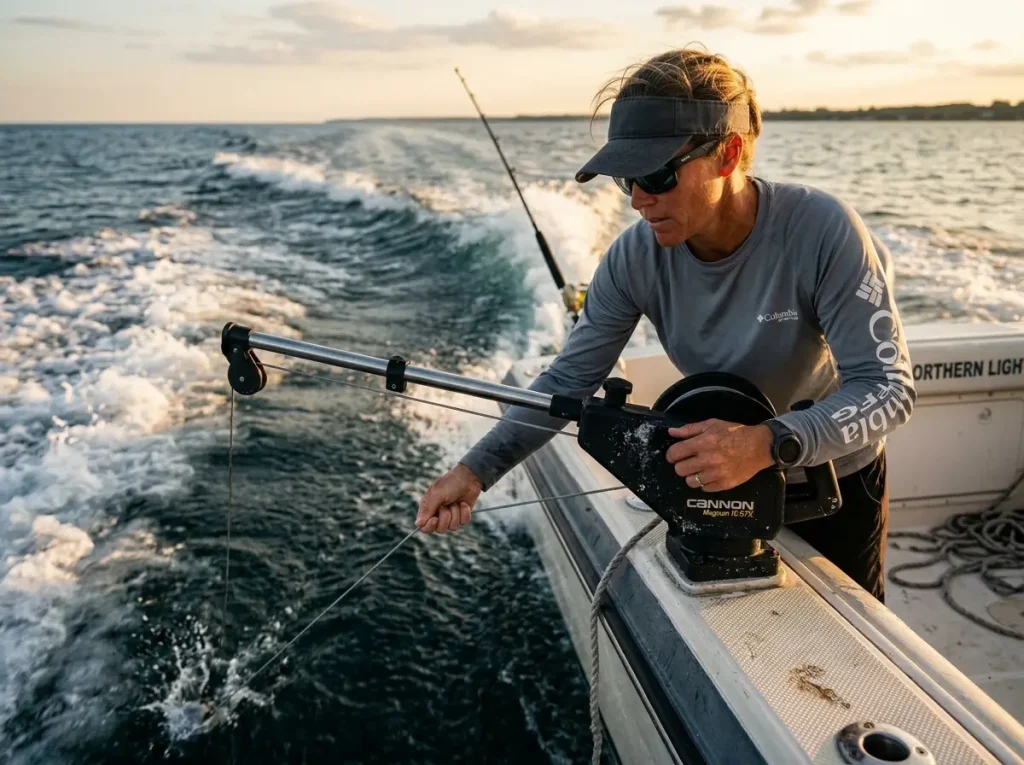
When your downrigger counter reads 100 feet, your lure is not at 100 feet. Not even close, depending on your speed and ball weight.
The Cosine Rule — How to Calculate Actual Lure Depth
Blowback is the horizontal displacement of the downrigger weight caused by water resistance. The faster you troll, the greater the cable angle from vertical — and the shallower your actual depth becomes. Actual depth equals cable length multiplied by the cosine of the cable angle. At a 45-degree angle, 150 feet of cable puts you at roughly 106 feet. To hit 150 feet actual depth, you need 212 feet of cable deployed.
Here’s what that looks like practically: at 2.5 mph with a 12-lb ball, 100 feet of cable achieves about 86 feet of actual depth. At 3.5 mph with the same weight, you’re down to roughly 70 feet. A half-mile-per-hour speed change moves your lure 15 vertical feet without you touching the counter. The downrigger blowback calculations and how they affect actual lure depth from Cannon’s technical documentation are worth bookmarking before your next trolling session.
I trolled three passes over a salmon mark before realizing my counter read 120 feet but I was fishing 85. The fish were at 95. Fifteen feet of miscalculation — because I was doing 3.2 mph and using a 10-lb ball I hadn’t swapped since morning. GPS speed in tenths of a mph isn’t optional. It’s the instrument panel.
Divers, Speed, and the Thermocline Target Window
Dipsy Divers and jet divers work differently from downriggers — they use downward water pressure to pull the spoon to depth — but they’re even more sensitive to terminal tackle choices. Adding a snap swivel to a Jet Diver creates extra drag that kills the spoon’s flutter action. The balance point shifts, and walleye refuse it. That’s not a myth. It’s drag physics.
Analytical anglers use dissolved oxygen readings and temperature readings from electronics to locate the thermocline, then use blowback calculations to ensure the spoon is positioned just above the cold-water transition where baitfish school. The two tools — sonar and depth calculation — have to work together or you’re guessing.
For anglers looking to upgrade their system, selecting a downrigger system capable of maintaining precise depth control in heavy current starts with understanding blowback math — not horsepower ratings.
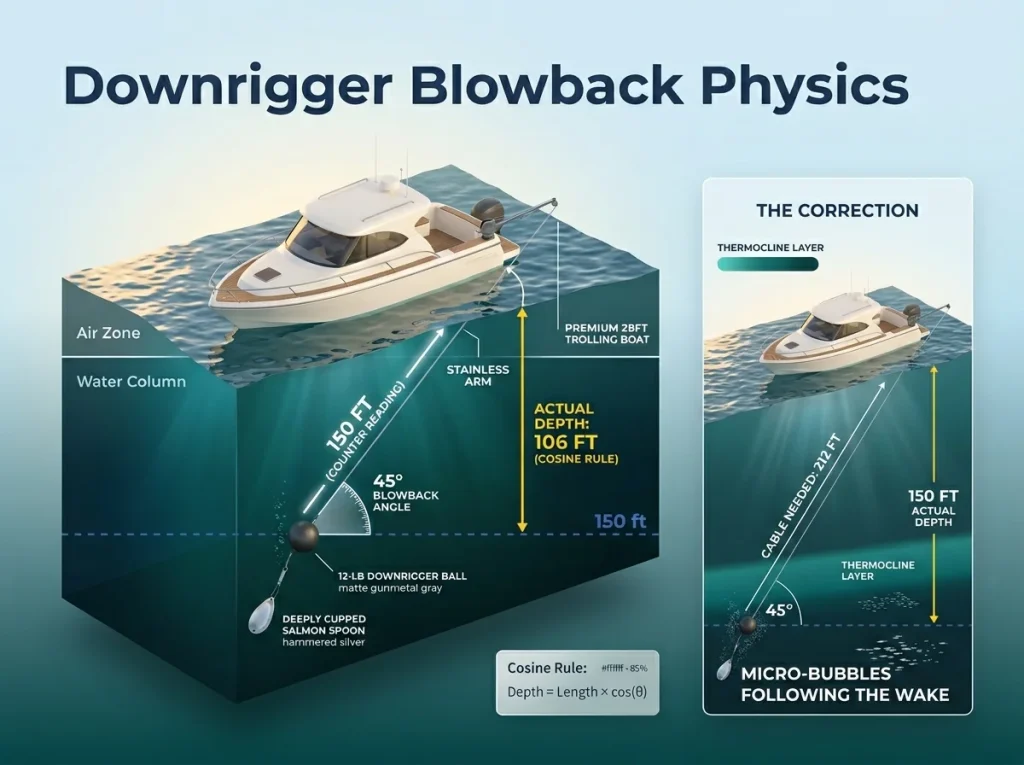
Pro Tip: Mark your downrigger cable at 10-foot intervals. Use a phone level app to measure the real-world blowback angle before each session. Theoretical tables are a starting point — actual field conditions always vary.
Terminal Tackle Physics — Snaps, Swivels, and the Wobble Killer
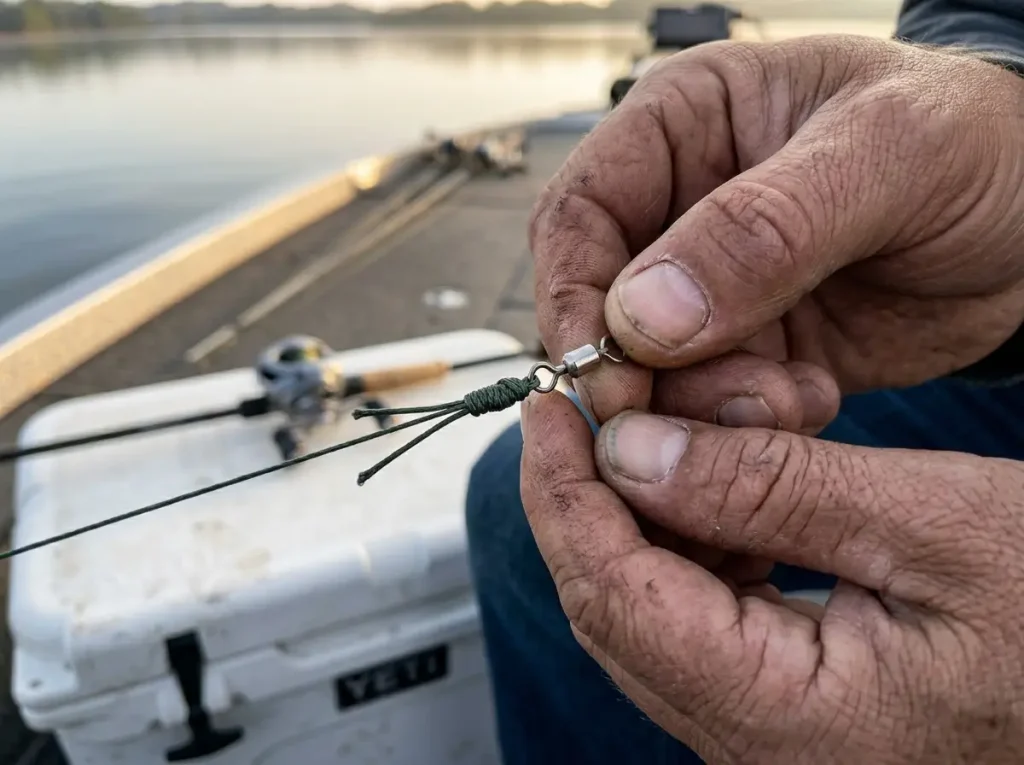
The connection between your line and your spoon is a mechanical hinge. The wrong hinge kills the action before the spoon ever touches the water.
Snap Type Selection — A Hardware Physics Guide
A rounded snap — Duo-Lock style or a crankbait snap — allows the spoon’s attachment eye to rotate through its full oscillation arc. That’s the engineering-correct choice for most casting and trolling applications. The rounded bow gives the lure freedom of movement. A V-shaped cross-lock snap centers the spoon’s weight on a single friction point and restricts the lure to a narrow, constrained path. On a smaller spoon, the wobble disappears entirely.
V-shaped snaps are not all bad — they’re structurally stronger, which makes them appropriate for heavy jerk-spoons and pike or musky work where line pressure is extreme. But for anything under 1 oz in standard presentations, the action trade-off is never worth it.
Managing Line Twist Without Punishing the Lure
Ball-bearing snap swivels at the lure are sold as a line-twist solution. They solve line twist by creating two other problems: suppressed action from the extra hardware mass and a visual distraction next to the hook in clear water. The correct answer is to move the swivel 18–36 inches up the line — away from the spoon. The swivel handles line twist. The rounded snap preserves action. The two functions are separated, and both work properly.
Braided main line is more resistant to torque damage than monofilament, so braid-to-fluorocarbon leader users can often tolerate more rotation before twist becomes problematic — but this doesn’t eliminate the action damage from a swivel placed at the lure itself.
Understanding when snap swivels add value vs. when they’re action-killers on metal lures is terminal tackle knowledge that applies across your entire spread.
A charter captain handed me a magnifying loupe once and showed me exactly how a V-snap was pinching the spoon’s eye during the fight. The wobble change was visible on the side-imaging sonar. That’s the moment I converted every presentation in the spread to rounded snaps.
Direct tie looks clean but creates a fixed, non-rotating connection. As the spoon oscillates, it torques the line directly at the eye, causing progressive twist and eventual weakening. Not recommended for any metal lure, period.
Bioenergetics — Matching Spoon Presentation to the Predator’s Metabolic Window
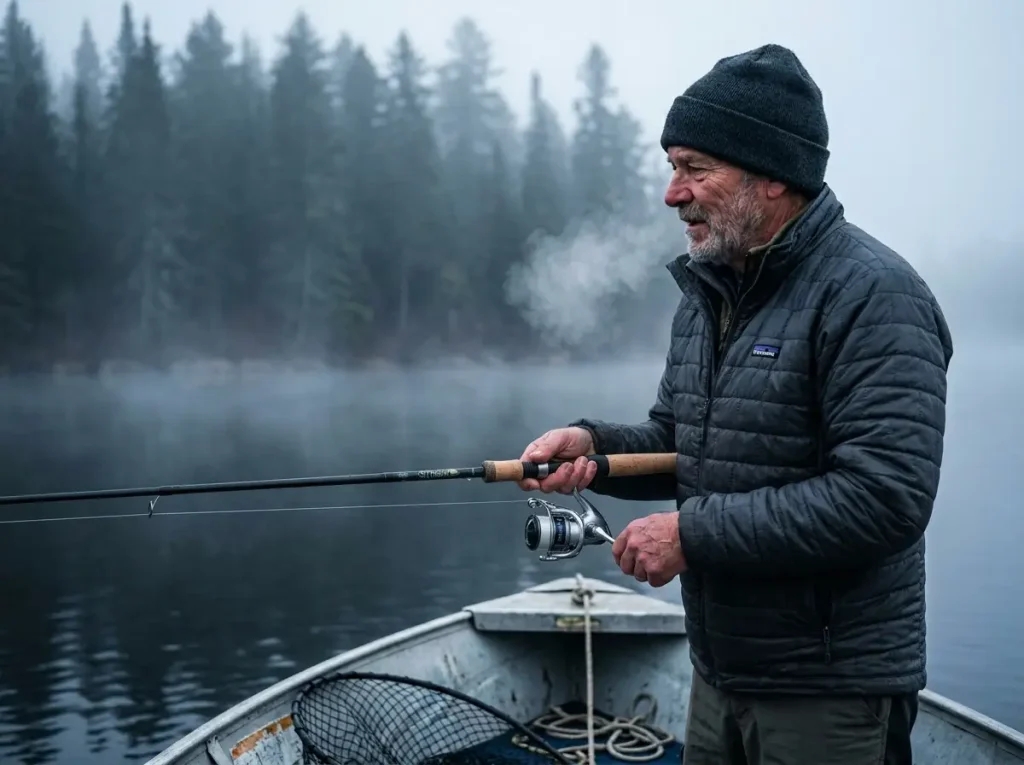
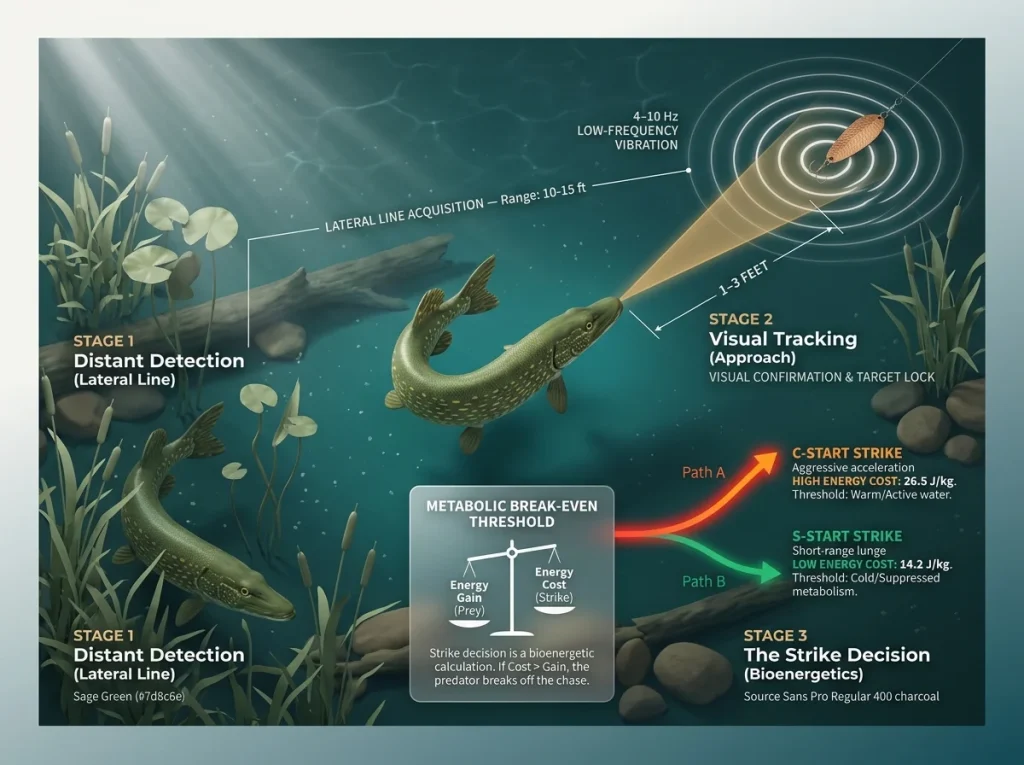
A pike in 48°F water will follow a fast spoon out of instinct and refuse it three feet from the boat. That’s not a leader-shy fish. That’s a fish whose metabolic calculator just said “not worth it.” Slow down half a mph and watch them commit.
The C-Start vs. S-Start Strike Spectrum
Northern Pike (Esox lucius) use fast-starts to capture prey. A C-start costs approximately 26.5 J/kg — a physiologically expensive maneuver. Research on energetics of fast-starts in northern pike and the metabolic cost of predatory strikes from UBC confirms that pike can regulate their resting metabolic rate (RMR) by a factor of 1.8 across seasonal temperature ranges. When water is cold and RMR is suppressed, the energetic cost of a high-speed chase exceeds the projected energy gain. The fish won’t run.
The S-start is a lower-cost alternative strike — shorter range, less acceleration, less metabolic expenditure. If you’re getting follows that break off just before the boat, you’re triggering C-start interest without clearing the energy threshold. The fix is to present a prey item that can be taken with an S-start: slow, close, easy.
Burn-and-Pause — The Sensory Handoff Retrieve
The slow-roll changes that math. A presentation just above minimum wobble speed offers a high-reward, low-cost interception — the predator can use the cheaper S-start and still close the distance. Below 50°F, target 1.5–2.2 mph. Above 65°F, pike and salmon can handle 2.5–3.5 mph.
The burn-and-pause retrieve applies the same logic to casting. The burn generates a lateral line signal at 4–10 Hz. The pause — the flutter-fall — tells the predator: this prey is already stunned. The metabolic cost of the strike drops. At that point, it’s not even a decision. Time your pauses by counting seconds. In cold water, a 3-second pause becomes a 6-second pause in the predator’s thermal processing time. Most anglers kill the pause too early. For the full biological profile of northern pike predatory behavior and habitat seasonality, the metabolic strike-window framework is the most practically useful lens.
Conservation Science — Hook Engineering and Post-Release Survival
The hook on your spoon is a conservation decision as much as a fishing one.
Treble-to-Single Hook Conversion — The Spoon-Specific Protocol
Research from Washington and Alaska on hook size and post-release mortality risk in coho salmon from troll fisheries shows large (6/0) hooks are 1.82 times more likely than small (1/0) hooks to hit high-risk anatomical zones — gills, eyes, throat. Treble hooks compound this: they suppress flutter with their extra weight, and three points rotating freely during a fight can land anywhere.
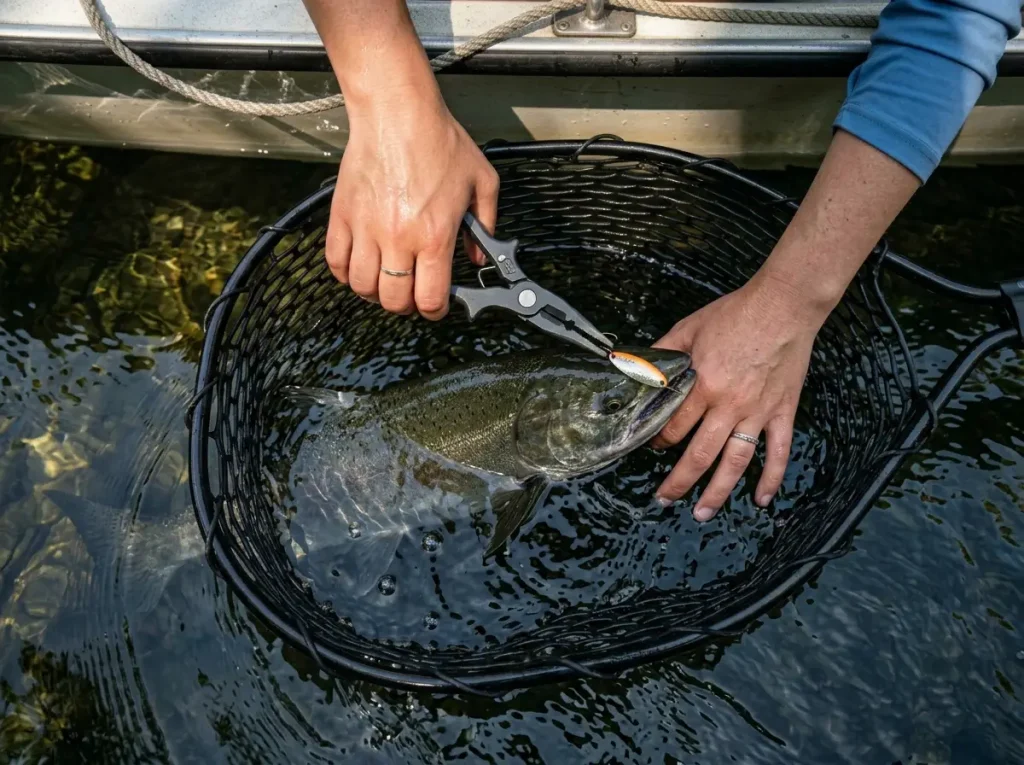
The siwash conversion fixes most of this. A single barbless siwash hook rotates to a consistent position during the fight, reducing gill and eye hook-ups. Match the gap to the original treble’s gap width, not its wire diameter. The wider gap buttons the fish more cleanly too — fewer lost fish, and shorter handling time. I haven’t fished treble hooks on salmon spoons in eight years. That conversion costs me maybe one fish per hundred. It costs those fish nothing.
A lighter single hook also often improves flutter action compared to a heavy treble — the reduced mass lets the lure tail swing more freely through the pause phase. It’s a conservation upgrade and a performance upgrade at the same time.
Air Exposure, Cortisol, and the 60-Second Rule
Gill injury is the single most reliable mortality predictor. If you see active gill wound, retain the fish if legal or release it immediately with aggressive underwater revival. For air exposure, the 60-second rule applies year-round: hold your breath while you unhook and photograph. When you need air, the fish does too. At 72°F water temp, even 30 seconds of air exposure measurably elevates delayed mortality risk.
Crimp barbs before the trip — 30 seconds per hook at the vise cuts average handling time from 20 seconds to under 5. That margin matters most when the water is warm. For the full data on how hook-set location determines survival odds across species, anatomical risk mapping makes the case clearly.
Pro Tip: Crimp barbs before the trip. Barbless hooks remove in under 5 seconds on average. The fish spends less time in the air, you spend less time fussing, and the whole system runs cleaner.
Conclusion
Three things decide whether a spoon produces or sits dead in the water.
First, geometry before weight. Camber ratio and aspect ratio determine the spoon’s safe speed range and target depth. Select the shape for the speed you intend to fish, then match alloy and gauge to the environment. Picking a spoon by weight alone is guessing.
Second, the sensory chain is a system. Fish strike through a three-phase handoff: lateral line at distance, near-field neuromasts during the approach, and vision for the final commit. A spoon that produces the wrong vibration frequency at any phase — because it’s blown out, the wrong finish for the depth, or the wrong speed for the water temperature — gets refused. You may never see the refusal. The fish just disappears.
Third, the system beats the lure. Terminal hardware that suppresses wobble, blowback miscalculations that miss the depth window, and retrieve speeds that exceed the predator’s metabolic threshold can make a perfect spoon invisible. Manage the system — tackle, depth, and speed — and the spoon does the rest.
Next time you’re on the water, GPS troll speed in hand, take 10 minutes before the lines go in to verify actual lure depth using the cosine formula. Adjust one variable at a time. The water isn’t hiding the fish from you — it’s waiting for you to calculate exactly where they are.
FAQ
What is the best speed for trolling spoons?
The right trolling speed depends on the spoon’s camber ratio and the target species’ current metabolic state — not a universal number. As a starting point, 1.8–2.5 mph covers most salmonids in cold water below 55°F. Above 65°F, bump that to 2.5–3.5 mph for pike and warm-water predators. Watch the rod tip: a rhythmic pulse means you’re in the wobble zone, a lifeless drag means you’re spinning.
How do you keep a spoon from twisting your line?
Move your swivel 18–36 inches up the line, away from the spoon. A swivel placed directly at the lure’s eye suppresses action and adds bulk near the hook. With a short fluorocarbon leader between the swivel and the spoon, the swivel handles twist while the lure swings freely on a rounded snap with no drag penalty.
Do you use a swivel with a spoon?
Yes, but placement matters more than the swivel type. Use a ball-bearing swivel 18–36 inches above the spoon on the main line. Connect the spoon itself with a rounded Duo-Lock style snap that allows free oscillation through the full wobble arc. V-shaped cross-lock snaps restrict movement at the eye and should be avoided for spoons under 1 oz.
What color spoon works best for pike?
Finish selection should track depth and water clarity, not species mythology. In clear water above 15 feet, silver or hammered chrome maximizes reflectance. Below 20 feet in stained water, copper and gold produce stronger contrast as dark silhouettes — the fish reads shape, not color. The red and white pike tradition persists because red disappears below 10 feet, leaving the white body as the primary contrast element against a dark leading edge.
Why does a spoon fish better some days than others with the same retrieve?
Almost always a metabolic presentation mismatch. Water temperature shifts the predator’s resting metabolic rate, which directly sets the energetic ceiling for what prey is worth striking. A 50°F to 58°F change can require a 0.5–1.0 mph speed adjustment to match the fish’s updated energy calculus. Check water temp before every session and adjust presentation speed before attributing a slow day to lure color or location.
Risk Disclaimer: Fishing, boating, and all related outdoor activities involve inherent risks that
can lead to injury. The information provided on Master Fishing Mag is for educational and informational purposes
only. While we strive for accuracy, the information, techniques, and advice on gear and safety are not a substitute
for your own best judgment, local knowledge, and adherence to official regulations. Fishing regulations, including
seasons, size limits, and species restrictions, change frequently and vary by location. Always consult the latest
official regulations from your local fish and wildlife agency before heading out. Proper handling of hooks, knives,
and other sharp equipment is essential for safety. Furthermore, be aware of local fish consumption advisories. By
using this website, you agree that you are solely responsible for your own safety and for complying with all
applicable laws. Any reliance you place on our content is strictly at your own risk. Master Fishing Mag and its
authors will not be held liable for any injury, damage, or loss sustained in connection with the use of the
information herein.
Affiliate Disclosure: We are a participant in the Amazon Services LLC Associates Program, an
affiliate advertising program designed to provide a means for us to earn advertising fees by advertising and linking
to Amazon.com. As an Amazon Associate, we earn from qualifying purchases. We also participate in other affiliate
programs and may receive a commission on products purchased through our links, at no extra cost to you. Additional
terms are found in the terms of service.