
In this article
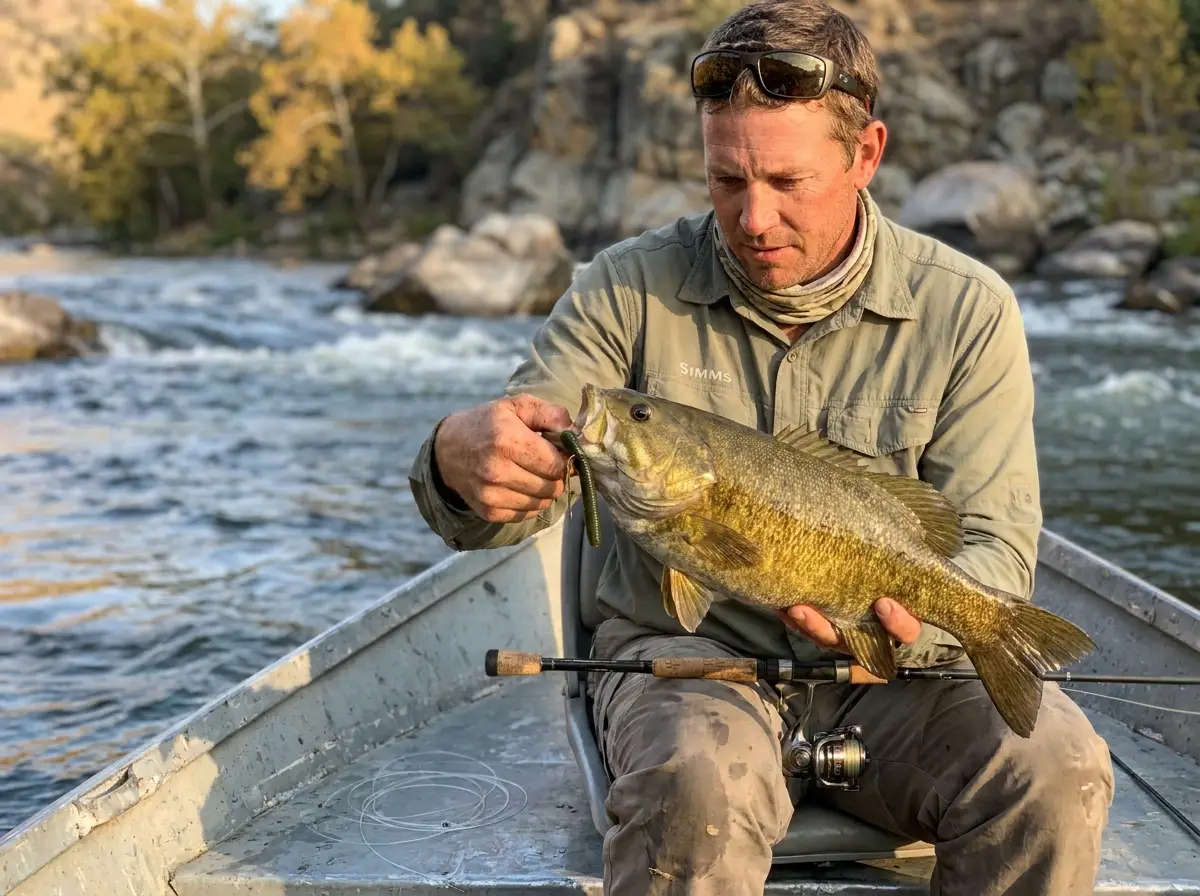
The first time someone tells you to “drag a tube along the bottom,” it sounds almost too simple. You’ve seen the foam containers of green pumpkin plastics, watched confident anglers pull fat smallmouth bass over river boulders on YouTube, and yet — back home, at your spot, nothing happens. The tube goes down. You drag it back. Still nothing.
After years fishing tubes for smallmouth from Great Lakes tributaries to Ozark river systems, I can tell you the problem is almost never the tube itself. It’s the retrieve — and there are seven ways to fish one correctly, each built for a different situation.
Quick Answer: The seven most effective tube jig retrieves for smallmouth bass:
- Drag-and-pause along rocky bottom (the foundation retrieve)
- The jigging hop (sharp rod lifts with slack-line falls)
- The snap retrieve (aggressive pop, spiral fall — baitfish imitation)
- Dead sticking (no movement, extended pause for cold water)
- Downstream eddy drift (current carries the tube to river fish)
- The tumbling retrieve in fast riffles (summer current fishing)
- The shallow swim with rod sweeps (pre-spawn staging areas)
Why Smallmouth Bass Can’t Resist a Tube Jig
The Crayfish Connection
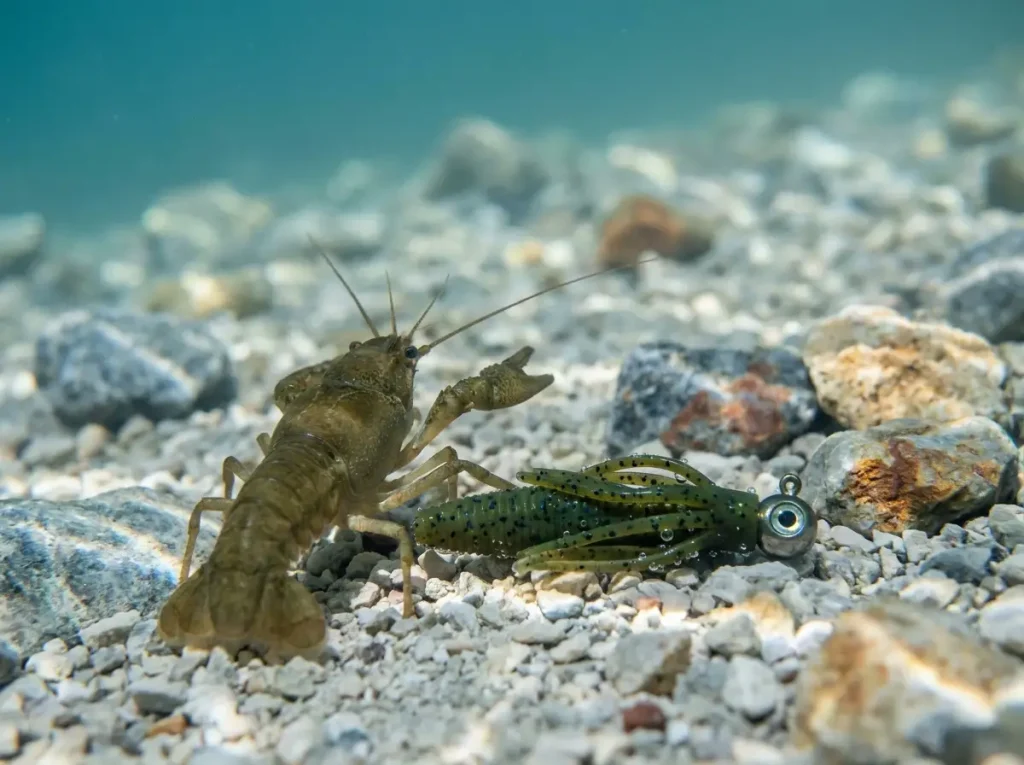
Research from the Virginia Department of Wildlife Resources shows that crayfish can make up 60–70% of a smallmouth bass (Micropterus dolomieu) diet during peak feeding periods. That number stops being abstract once you’ve watched a tube spiral down past a boulder and disappear into a smallmouth’s mouth before it hits bottom.
The hollow body, the tentacle skirt, the weight-forward fall — everything about a tube bait mimics a crayfish backing away from a threat. It’s not just close enough. It’s the real thing as far as a bass is concerned.
Read more about smallmouth bass biology, sensory physiology, and what actually drives their feeding windows — understanding the fish changes how you think about the retrieve.
When Tubes Imitate Baitfish
Not every bite on a tube is a crayfish imitation. When you snap a tube hard off the bottom and bow into the line so it spirals down on slack line, you’re showing a dying baitfish — and smallmouth react differently to that than to a craw dragging. In clear lakes and rivers where round goby (Neogobius melanostomus) have become part of the forage base, this matters even more. A 4-inch tube in smoke or watermelon color spiraling down looks exactly like a goby losing altitude.
What the Hollow Body Actually Does
The hollow interior isn’t just a place to hide the jig head. It creates a slow, wobbling fall even in still water. The tentacles push water and vibrate at frequencies bass detect through their lateral line before they ever see the bait.
On a taut line after a jigging hop, a tube is relatively quiet. On slack line — falling — it comes alive. That’s the part most anglers miss.
Picking the Right Tube Setup
Size and Color by Conditions
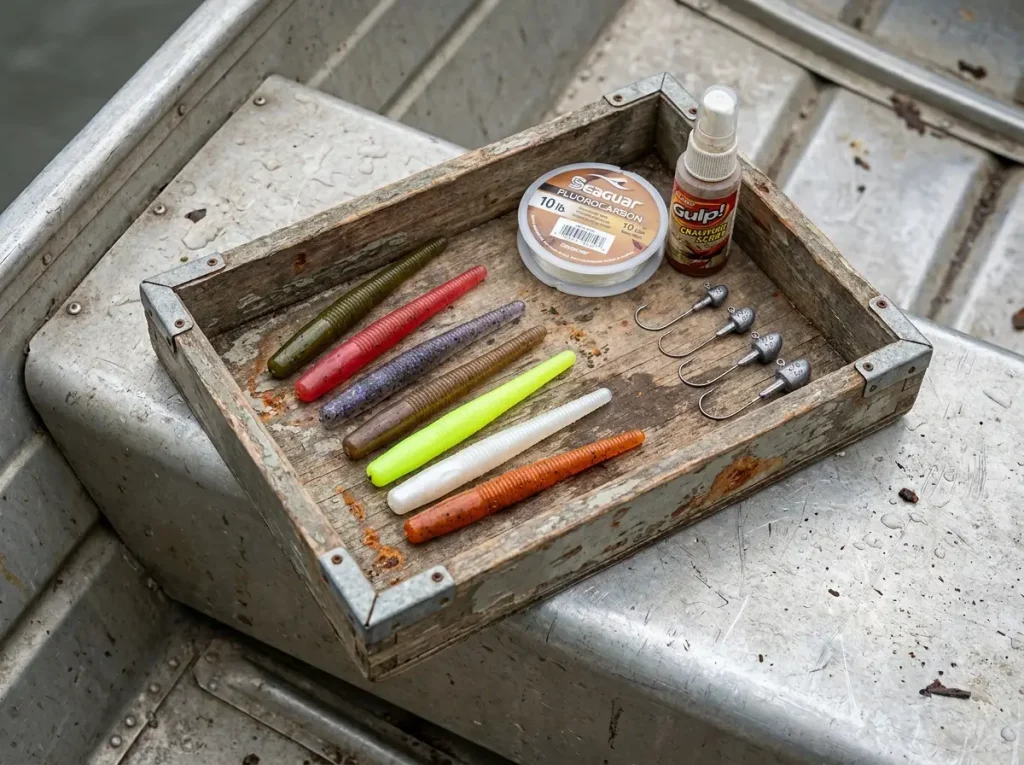
For smallmouth, a 3.5-inch tube is the go-to in most conditions. Drop to 2.5–3 inches during cold fronts or on heavily pressured water. Jump to 4 inches when fish are active and aggressive, or when targeting river smallmouth in warm summer flows where they’re eating larger prey.
Color follows water clarity, not personal preference. In clear water: green pumpkin, smoke, watermelon. In stained water: chartreuse, orange, brown with a chartreuse tail.
The community shortcut: whatever color catches them on your Senko or drop shot, get that color in a tube. Confidence in the color is more than half the equation — you fish it better when you believe in it.
Jig Head Styles and Hook Selection
The insert-style jig head is the standard for a reason — the hook emerges from the top of the tube and the weight sits inside the body, giving a natural horizontal fall. Use a 2/0 hook with a 3.5-inch tube and a 3/0 hook with a 4-inch tube. Wide-gap, chemically sharpened hooks are non-negotiable for smallmouth. These fish jump, and a dull hook gives them exactly the leverage they need to throw it.
For heavy cover or current, a Texas-rigged tube with a bullet weight gives you weedless entry. The Stupid Rig — hook point exposed through the top of the tube — works under docks and overhanging structure where a horizontal, near-weedless presentation pays off. If you’re comparing tungsten versus lead jig heads for smallmouth bass applications, the sensitivity difference at depth is real.
Jig Head Weight by Depth
This single decision kills more tube jig fishing sessions than any technique error. Match weight to depth:
- 0–10 feet: 1/8 oz
- 10–20 feet: 1/4 oz
- 20+ feet: 3/8 oz
In rivers, add one full weight class for any noticeable current. If you can’t feel bottom contact, you’re not fishing the bottom — and smallmouth live on the bottom. Tungsten jig heads transmit bottom feel better than lead at equivalent weights, which makes a genuine difference in 20-plus feet of water.
Pro tip: 3/16 oz is the most versatile weight that doesn’t get covered above — it sits between the standard increments and handles the 8–14 foot range better than either 1/8 or 1/4 in moderate current. Keep a dozen on hand.
The Foundation Retrieve: Drag-and-Pause
Setting Up the Drag
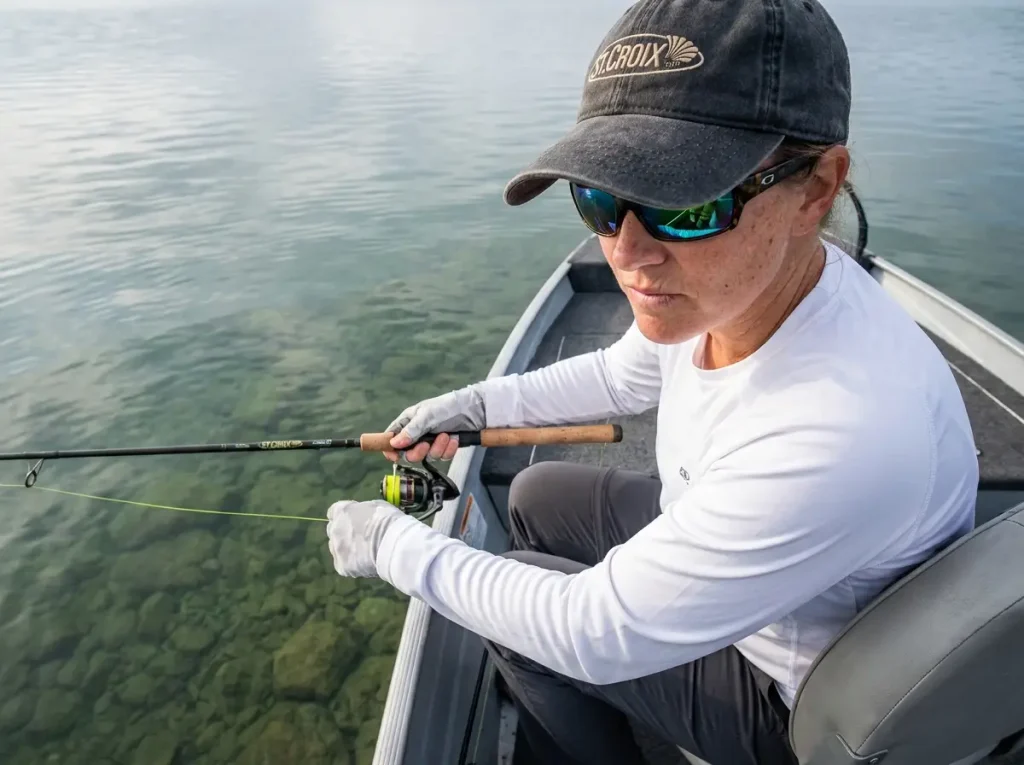
Make a long cast past the structure you’re targeting. Let the tube fall on a completely slack line — this is where many bites happen, especially after a long cast over a drop-off. Once it touches bottom, reel up slack until you have direct contact.
Now drag the tube in 6-inch to 12-inch pulls with your rod, pausing completely after each pull. Reel up slack after the pause, not during the drag. You’re moving the bait with your rod arm, not the reel handle.
Feeling the Bottom and Detecting Bites
High-visibility braid (15–20 lb) connected to a fluorocarbon leader (8–12 lb) gives you two detection systems simultaneously: watch the braid for line movement, and feel bites through the sensitivity of the fluorocarbon. Line watching technique for finesse bites on clear-water smallmouth goes deep on this exact setup and why it outperforms mono on slack-line presentations.
Smallmouth can inhale and exhale a tube bait in under a second. If your line jumps sideways during a pause — that is not current. Set the hook immediately.
When the Drag Beats Every Other Retrieve
Rocky humps and chunk rock shoals are the drag retrieve’s home water. Dragging a tube across a gravel flat at 12–15 feet imitates a crayfish so accurately that even semi-active smallmouth eat it. There’s nothing subtle happening — the tube is right in their face. Don’t try to be creative when the structure and conditions are dialed: slow drag, full pause, repeat until you find the fish.
Three Retrieves That Separate Good Tube Anglers
The Jigging Hop
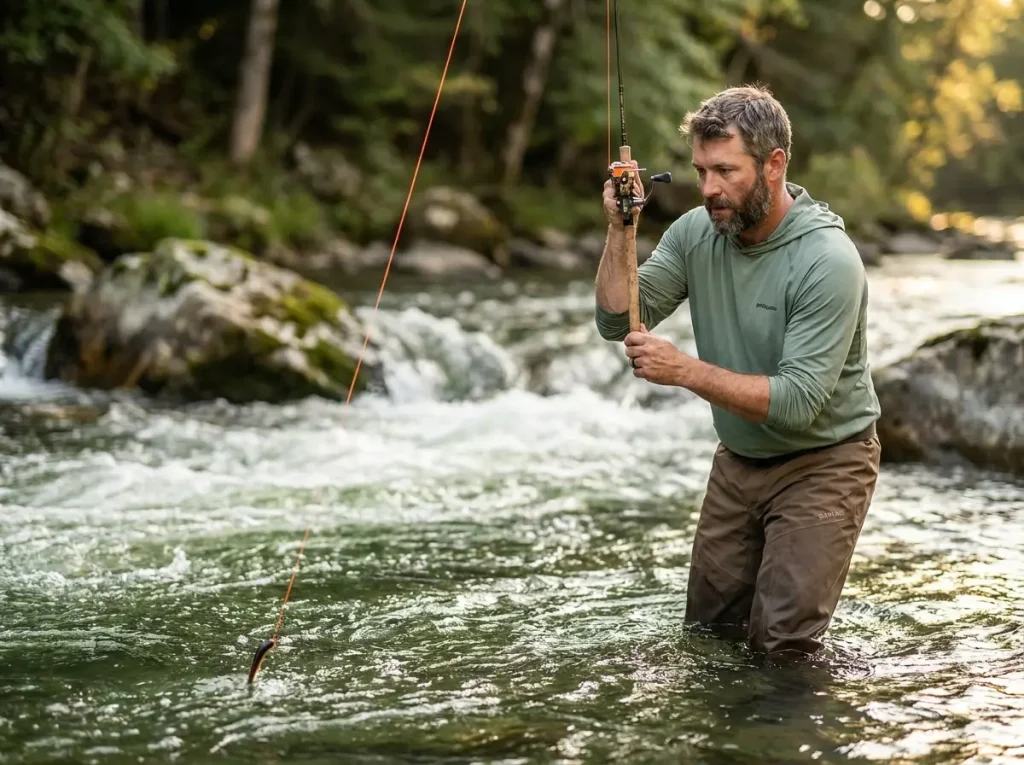
Cast, let the tube fall, take up slack, then lift your rod sharply from the 9 o’clock position to 11 o’clock. Lower the rod and bow into the line as the tube falls back on slack. Most bites come on the fall — keep your rod tip low enough after the hop that you can still set upward when the line twitches. The jigging hop is more aggressive than the drag and works when smallmouth are in active feeding mode, especially during low-light morning and evening windows over rocky structure.
The Snap Retrieve
This is the one that makes smallmouth eat a tube in open water when they’ve ignored your drag for 20 minutes. With the tube on the bottom, snap the rod upward sharply — two to three feet of lift in a fast motion — then immediately bow into it and let the line go completely slack. The tube spirals down like a dying baitfish.
Watch your braid with your full attention. The bite comes before the tube lands.
In lakes with round goby populations, this retrieve on a 4-inch smoky or white tube over deeper structure (18–30 feet) is a legitimate big-fish move that most anglers fishing the same water aren’t doing. The spiral fall is a trigger at depth.
Dead Sticking
Leave the tube alone. Ten seconds. Twenty. Get comfortable staring at the same 6 inches of braid for longer than feels natural. Pre-spawn smallmouth in cold water (48–55°F) have slowed metabolisms and will not chase — but they’ll eat something that requires zero effort. A tube sitting motionless at the edge of a spawning flat is a free meal. Give them time to find it.
Pro tip: When dead sticking cold-water smallmouth, try a single light twitch at 15-second intervals rather than total stillness — one subtle quiver, then back to nothing. It mimics a slightly injured crayfish deciding whether to flee. That quiver gets the bass’s head to turn. The pause gets the bite.
Fishing Tubes in River Current
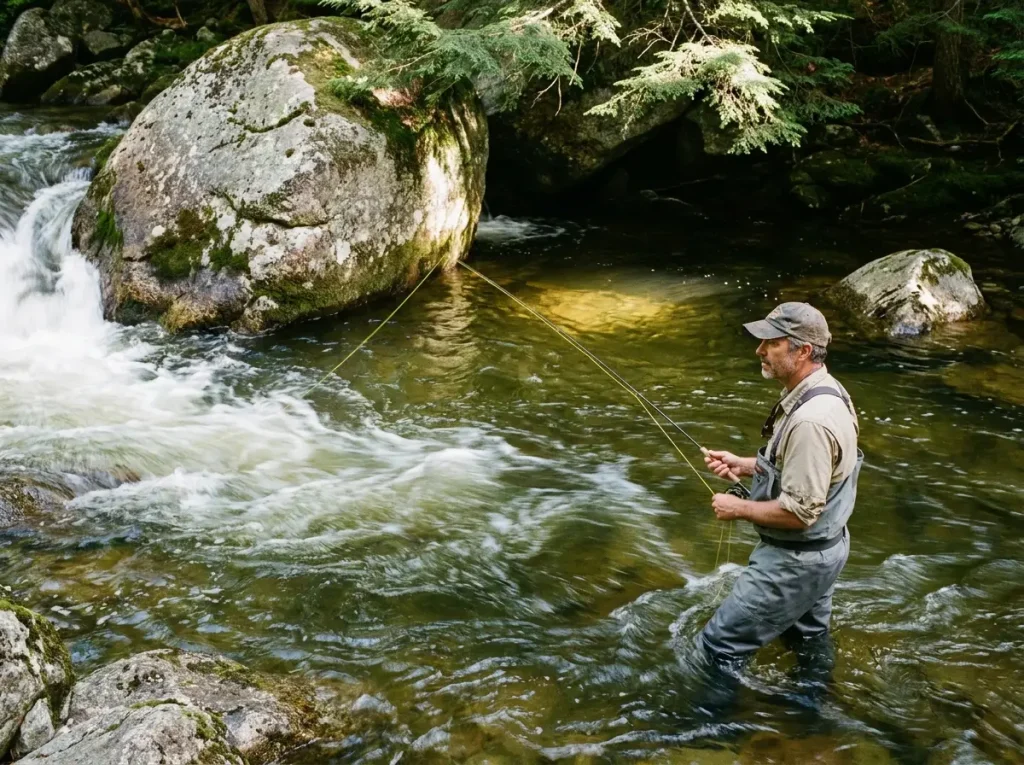
River-specific tube fishing is almost completely absent from most guides on this bait — which is strange, because rivers are where tubes were born and where they still do their best work for river smallmouth.
Where River Smallmouth Set Up
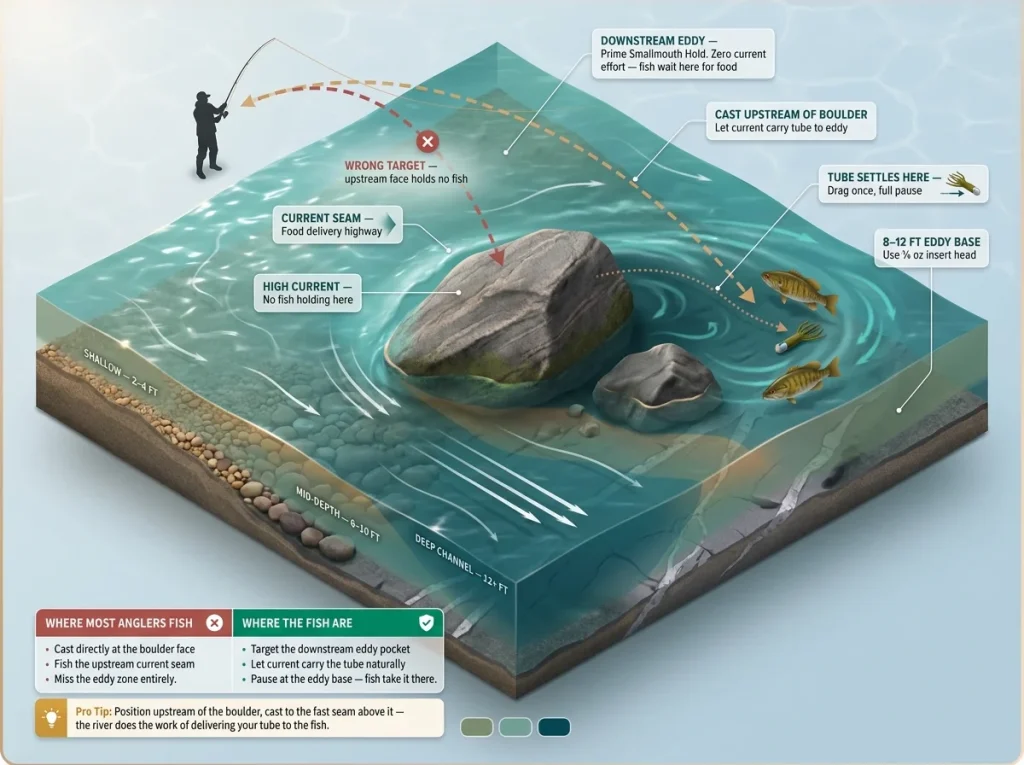
River smallmouth don’t hold in the strongest current. They hold just outside it — on the downstream side of boulders, ledges, and concrete bridge supports where a submerged eddy creates a pocket of slow water behind fast water. That eddy delivers food from upriver without requiring the fish to fight current. Cast to the downstream face of a boulder, not the upstream face, and you’re fishing where the fish actually are.
During high flows, target shoreline eddies that expand when the river rises. During low flows, mid-river boulders and ledge systems hold the most fish.
The Downstream Eddy Presentation
Position yourself upstream or directly across from your target structure. Cast to the fast water just upstream of the boulder, and let current carry the tube naturally to the base of the downstream eddy. Let it settle. One slow drag, full pause. The bass sitting in that eddy watching food drift in will find it — or it won’t, in which case you move to the next boulder.
Don’t over-animate the tube in current. The river is already moving it. Your job is maintaining bottom contact, not adding more action than the water is already providing.
The Tumbling Retrieve in Fast Riffles
Summer smallmouth in fast riffles will eat a tube tumbling naturally through current. Keep the rod tip high, use a 1/4-oz or 3/8-oz insert jig head depending on depth and flow speed, and let the current carry the tube downstream while you hop it off the bottom every few seconds. You’re imitating a crayfish getting flushed — something that genuinely happens in strong current — and the strikes in fast, aerated water are violent. This is also one of the few retrieve situations where a spinning rod’s sensitivity really earns its place over a casting setup.
Pro tip: In fast summer riffles, drop to a 3.5-inch tube in natural brown or green pumpkin. Fast, aerated water creates visual noise — smallmouth in riffles are keying on silhouette and movement more than specific color. Keep it natural.
Adjusting Weight for Current
Add one weight class from the stillwater formula for any noticeable current: if you’d use 1/8 oz in 8 feet of still water, use 1/4 oz in that same depth with moderate flow. In heavy current over 15 feet, don’t be afraid of 3/8 oz or even 1/2 oz. The bait won’t fall as naturally at those weights, but it can’t get to fish holding on the bottom if it’s sweeping two feet off the riverbed the whole retrieve. You need to fish the fish, not the water column above them.
Seasonal Tube Jig Adjustments
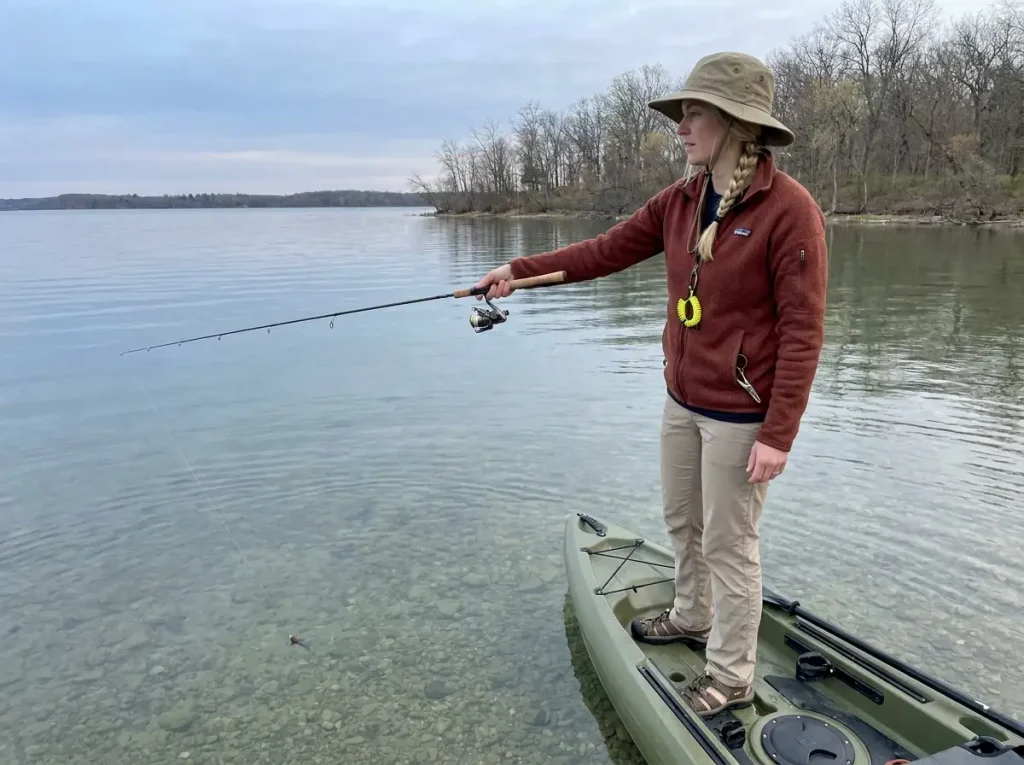
Most tube jig guides treat this bait as a single-technique, year-round proposition. In practice, the retrieve that catches pre-spawn smallmouth in 52°F water will completely miss the same fish in a summer riffle at 70°F. Here’s how to rotate through the year.
Pre-Spawn: Swim It Shallow
When water temps cross 55°F, smallmouth push to pre-spawn staging areas — rocky points, gravel humps, and the upstream edges of spawning flats. This is the season to swim a tube rather than drag it. Use a lighter jig head than you think you need (1/16 oz to 1/8 oz), cast into 3–6 feet of water, and sweep the rod slowly while the tube swims in a horizontal arc.
Occasional pops and brief hesitations during the sweep trigger the reaction strike. These fish are packing on calories before spawning — they’ll move for a meal.
Understanding the pre-spawn bass transition and why temperature triggers matter helps you time this window correctly, which is tighter than most anglers realize.
Post-Spawn and Summer: Slow and Deep
After spawn, smallmouth move to rocky structure in 10–25 feet and mostly stop chasing. A slow drag on a 1/4-oz insert jig head is what works — long casts, thorough bottom coverage, patience. This is also when the snap retrieve earns its place on deep structure in lakes with goby or shad populations. Snap it off bottom, let it spiral down, watch the braid.
Summer warmth pushes fish deeper in lakes and into fast riffles in rivers — two completely different approaches for the same species depending on your water type.
Fall: When the Snap Wakes Them Up
Fall smallmouth are feeding aggressively ahead of winter. The snap retrieve and the jigging hop outperform the slow drag by a significant margin. Fish are in shallower water (8–15 feet), actively keying on baitfish, and they respond to a tube that looks like something dying.
Go up to a 4-inch tube, use a natural shad color — smoke, white, pearl — and cover water quickly. You can fish much more aggressively in fall and still get bit consistently.
Pro tip: In fall, don’t ignore the weedless Stupid Rig for shallow rocky shorelines. A Texas-rigged tube with a 1/4-oz bullet weight snapped through weed edges and allowed to spiral near vegetation — it’s a legitimate big-fish presentation that most tube anglers put away after July.
Conclusion
Three things that immediately improve your tube fishing: move the bait with your rod arm, not the reel; watch your line on every pause because bites on slack-line falls look like a faint twitch; and match your weight to your depth so you’re feeling every rock. The tube is a simple bait. Its range comes from the retrieve, and now you have seven of them for seven different situations. Pick the one that fits the water in front of you and get on the bottom.
For the full picture on targeting smallmouth consistently across water types, this complete smallmouth bass guide covers reading structure, seasonal movements, and tackle selection beyond just the tube.
Q1 What size tube jig is best for smallmouth bass?
A 3.5-inch tube is the most versatile size for smallmouth in most conditions. Drop to 2.5–3 inches during cold fronts or when fish are particularly selective, and jump to 4 inches when smallmouth are feeding actively or when you’re fishing warm summer water where they’re eating larger prey.
Q2 What weight jig head should I use for tube fishing smallmouth?
Match weight to depth: 1/8 oz for 0–10 feet, 1/4 oz for 10–20 feet, and 3/8 oz for 20-plus feet. Add one weight class when fishing river current. The goal is maintaining bottom contact throughout the retrieve — if you can’t feel the bottom, go heavier.
Q3 What color tube jig is best for smallmouth bass?
Green pumpkin works in most conditions and is the safest default. In clear water, use smoke, watermelon, or natural brown. In stained or murky water, go with chartreuse, orange, or brown with a chartreuse tail. Match tube color to what’s already working on your other finesse presentations on that water.
Q4 How do you detect bites on a tube jig?
Use high-visibility braid (15–20 lb) connected to a fluorocarbon leader (8–12 lb). Watch your braid for any sideways movement or sudden jump during the pause. Most bites happen on the initial fall after the cast or on the first full pause. Set the hook immediately on any line movement that doesn’t feel like bottom contact.
Q5 Can you fish a tube jig from shore for smallmouth?
Yes, and it works well from shorelines with rocky structure. Cast parallel to the bank rather than straight out to reduce uphill dragging and snag frequency. Let the tube settle and drag it along ledge edges or rock piles. From shore, expect to lose more jigs than from a boat — bring plenty of extra insert jig heads and budget for it from the start.
Risk Disclaimer: Fishing, boating, and all related outdoor activities involve inherent risks that
can lead to injury. The information provided on Master Fishing Mag is for educational and informational purposes
only. While we strive for accuracy, the information, techniques, and advice on gear and safety are not a substitute
for your own best judgment, local knowledge, and adherence to official regulations. Fishing regulations, including
seasons, size limits, and species restrictions, change frequently and vary by location. Always consult the latest
official regulations from your local fish and wildlife agency before heading out. Proper handling of hooks, knives,
and other sharp equipment is essential for safety. Furthermore, be aware of local fish consumption advisories. By
using this website, you agree that you are solely responsible for your own safety and for complying with all
applicable laws. Any reliance you place on our content is strictly at your own risk. Master Fishing Mag and its
authors will not be held liable for any injury, damage, or loss sustained in connection with the use of the
information herein.
Affiliate Disclosure: We are a participant in the Amazon Services LLC Associates Program, an
affiliate advertising program designed to provide a means for us to earn advertising fees by advertising and linking
to Amazon.com. As an Amazon Associate, we earn from qualifying purchases. We also participate in other affiliate
programs and may receive a commission on products purchased through our links, at no extra cost to you. Additional
terms are found in the terms of service.