

In this article
The line goes slack, then twitches—a subtle, wet, heavy sensation that doesn’t feel like a rock. You sweep the rod, the graphite loads up, and for a split second, you are connected to a living heavyweight. Then, the tension vanishes.
You reel in a pigtail of monofilament where a knot failed, or a straightened hook that couldn’t handle the drag pressure. This failure wasn’t bad luck; it was an engineering error at the most critical point of contact.
Terminal tackle is the interface between the angler’s intent and the aquatic environment. It is not just a collection of accessories to be bought in bulk; it is a kinetic chain where metallurgy, hydrodynamics, and physics determine success. I have spent decades staring at broken lines and bent metal, realizing that success in recreational fishing isn’t just about the bait—it’s about the hardware delivering it.
This guide dismantles the “business end” of your setup. We will move beyond rote memorization of parts to a systems-engineering understanding of how hooks, weights, and connections function as a cohesive end-of-line ecosystem.
What Defines the “Business End” of Your System?
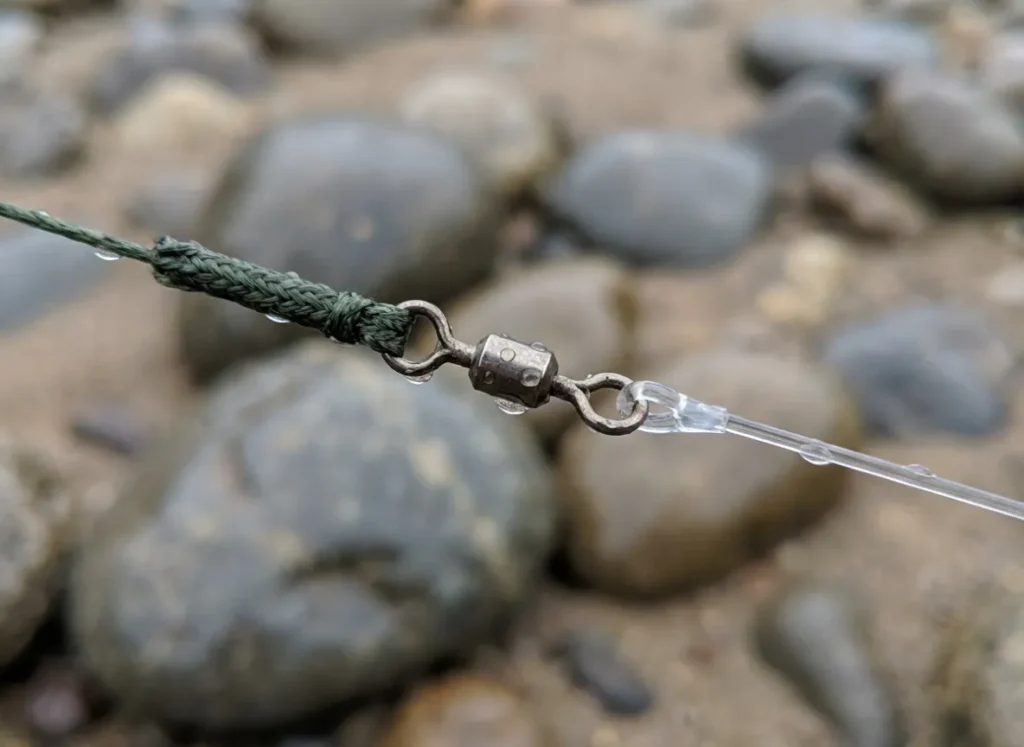
Terminal tackle encompasses every hardware component attached to the terminus of the main line, excluding the artificial lure body itself. This includes hooks, sinkers, swivels, snaps, beads, and leaders found in any comprehensive angler’s toolkit or tackle box.
How Does the Kinetic Chain Function Under Load?
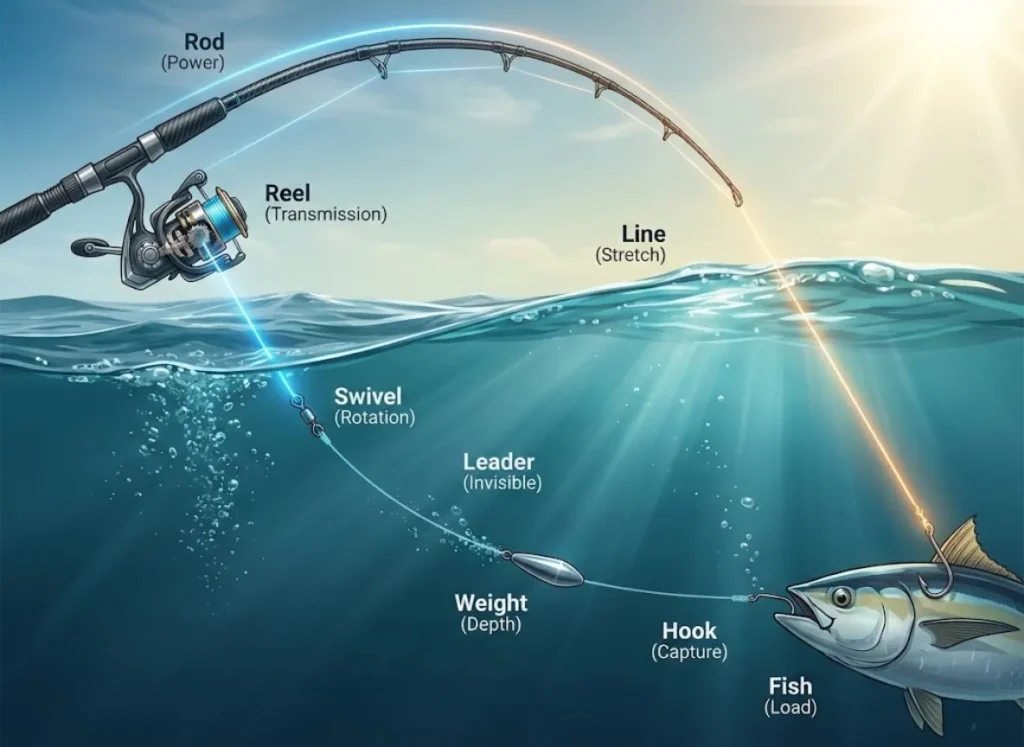
While the rod and reel act as the transmission and retrieval engine, terminal tackle functions as the delivery system. It is responsible for depth control via weights, rotation management via swivels, and eventual capture via hooks.
The governing rule here is the Weakest Link Principle. The system is only as robust as its most fragile component. A 60lb braided main line is rendered useless if connected to a cheap snap that fails at 10lbs of force. Every component must be balanced; a heavy wire hook requires a heavier rod power to drive it home, while a light wire hook requires a lighter drag setting to prevent straightening.
We must also consider hydrodynamic drag. Every component adds resistance in the water column. Bulky, inefficient fishing tackle destroys the natural action of live bait or finesse plastics, signaling “unnatural” to wary predators. Furthermore, modern angling requires adherence to guidelines on tackle materials and wildlife safety, making your material choices a legal and ethical necessity.
Once you view your tackle as a connected system rather than isolated parts, you must ensure selecting the right fishing line is equally optimized to support that hardware.
The Anchor: Engineering the Perfect Hook
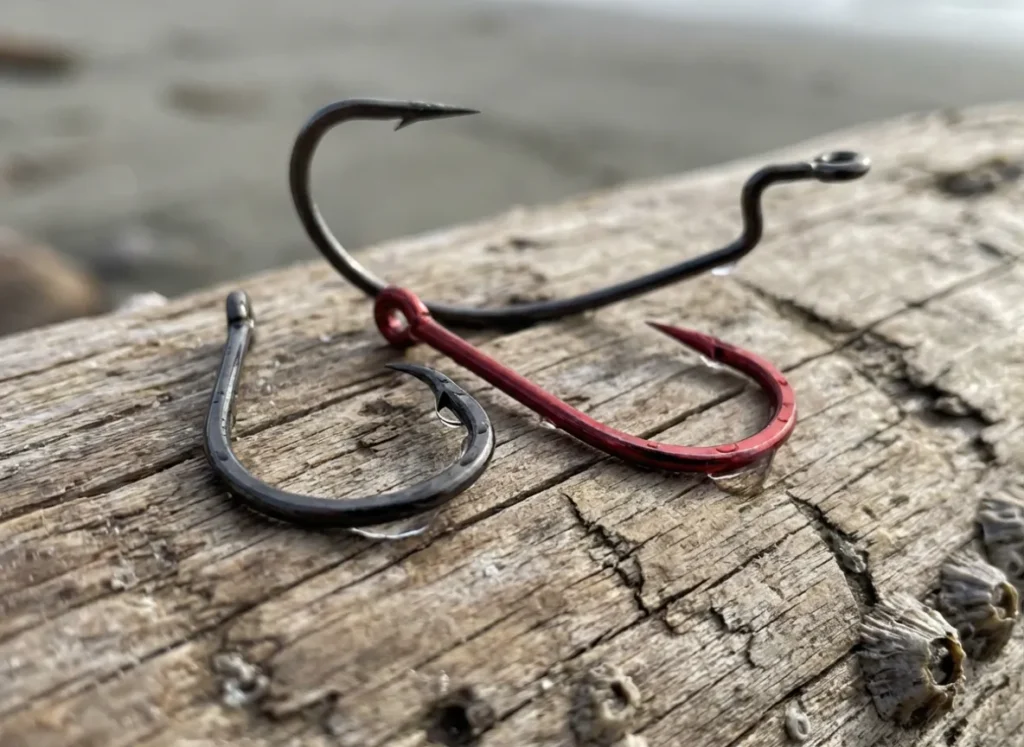
The geometry of a hook dictates its ability to penetrate tissue under specific load angles. It consists of the eye (connection point), shank (lever arm), bend (load distributor), barb (retention wedge), and point (penetrator). The “Gap” or “Gape”—the distance between the point and the shank—is the critical dimension that determines if a fish stays pinned.
How Do Geometry and Sizing Dictate Penetration?
Sizing is often the most confusing aspect for new anglers because two distinct hook sizes scales exist:
- The Integer Scale (Freshwater): This functions inversely. A #32 is microscopic, while a #1 is the largest in this sequence. This scale is standard for panfish, trout, and finesse profile applications (e.g., sizes #10, #6, #2).
- The Aught Scale (Saltwater/Predator): Denoted as “X/0” (pronounced X-aught), this functions directly. A 1/0 is the smallest, ascending to massive 20/0 shark hooks. A 3/0 to 5/0 range is standard for Bass and general inshore fishing.
Beyond sizing, the specific hook type must match the technique. J-hooks require a hard strike to penetrate, while circle hooks are designed for passive corner-hooking, a staple in surf fishing and conservation-minded coarse fishing.
Bass anglers rely on offset worm hooks for Texas rigging and flipping hooks for heavy cover. Finesse applications might demand wacky hooks, neko hooks, or specialized drop shot hooks designed to stand horizontal. For live bait, short-shank baitholder hooks or wide-gap octopus hooks are the standard. While treble hooks are common on hard lures, single bait keeper hooks are preferred for soft plastics.
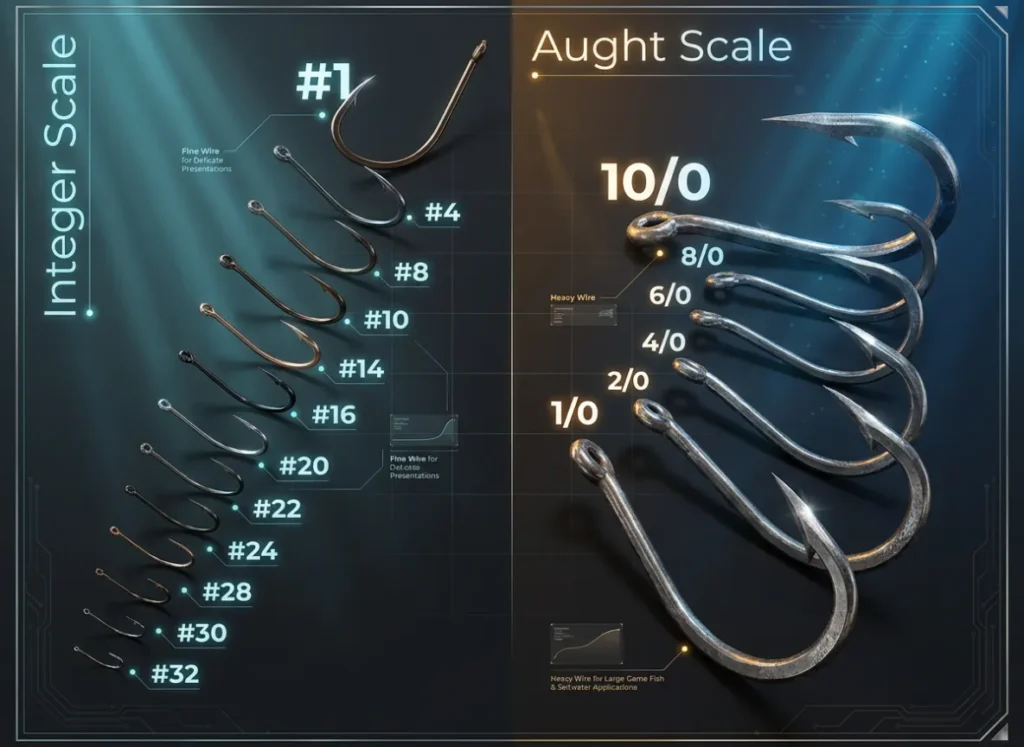
Wire gauge plays a massive role in your success rate. “Fine wire” penetrates easily with light pressure, making it ideal for drop shot hooks and light line. “Heavy wire” (2X, 3X) requires significant force to set but withstands the crushing power of hard-mouthed fish.
Be aware of specific mechanics like the Circle Hook Revolution. Unlike J-hooks, circle hooks have a point bent perpendicular to the shank. You must never strike with a circle hook; simply reel tight. This design is often mandated by specific restrictions on hook sizing and lead weight to protect spawning stocks.
Pro-Tip: Check your hook point every time you snag a rock or catch a fish. Drag the point across your fingernail. If it slides, it’s dull. If it catches and digs in immediately, it’s sharp enough to fish.
For a deeper analysis of the numbers, refer to our data-backed guide to hook sizes.
The Ballast: Weights, Density & Hydrodynamics
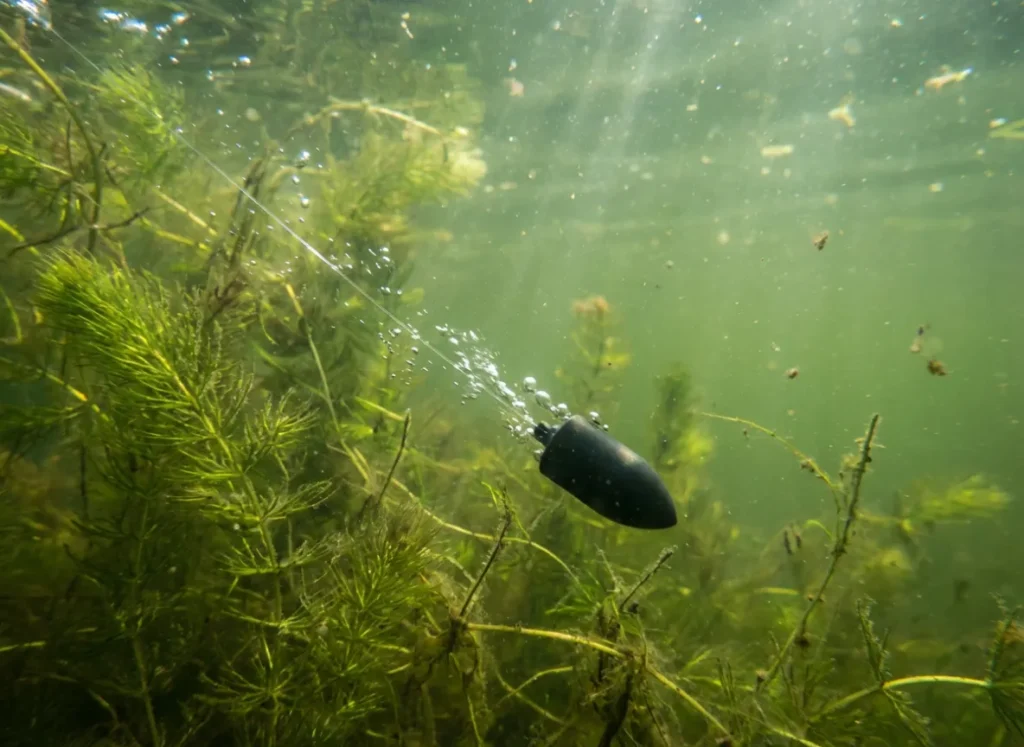
Weights, or sinkers, do more than just take bait down; they dictate how that bait interacts with the bottom composition and current.
Why Are Anglers Transitioning From Lead to Tungsten?
The primary driver is density disparity. Lead has a density of roughly 11.34 g/cm³, while Tungsten is around 19.25 g/cm³. This means a tungsten weight is about 40-50% smaller in volume than a lead weight of the same mass.
This smaller profile allows tungsten to slip through heavy cover, such as weed mats and rock crevices, with significantly less resistance than bulkier lead. It offers a superior finesse profile.
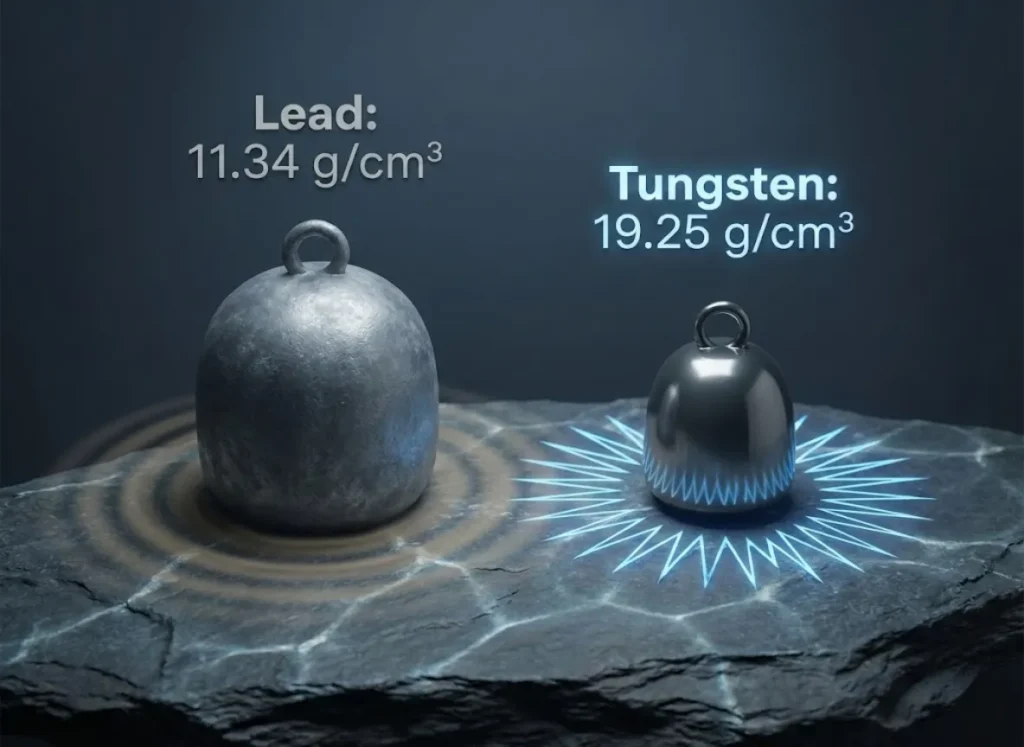
The second factor is acoustics. Tungsten is an extremely hard metal. When it strikes a rock or gravel, it creates a sharp, high-frequency “tick” that transmits clearly up the line. Lead is soft and dampens impact energy, resulting in a dull “thud.” This sensitivity allows you to visualize the bottom through your hands.
Selecting the Right Sinker Shape
Shape dictates function. Split shot is versatile for light modifications, while bullet weights (or worm weights) are essential for sliding through vegetation. When punching thick mats, specialized flipping weights or punching weights are required to penetrate the canopy.
For bottom bouncing, egg sinkers and barrel sinkers act as a sliding sinker, allowing the fish to take the line without feeling resistance. In heavy current or surf, pyramid sinkers and bank sinkers provide an anchoring profile to hold position. Finesse anglers utilize specialized drop shot weights (available as cylinder weights for rocks or teardrop weights for mud) and nail weights to internally balance soft plastics.
Finally, we must address toxicity. Lead is a known neurotoxin. Waterbirds, particularly Loons, ingest small lead weights mistaking them for grit, which leads to fatal poisoning. This biological reality is the foundation for laws protecting wildlife from lead poisoning in states like New Hampshire and New York.
While tungsten is expensive, it is an investment in both performance and conservation. You can explore more options in our guide to modern fishing weights and eco-materials.
The Architecture: Essential Rigging Fundamentals
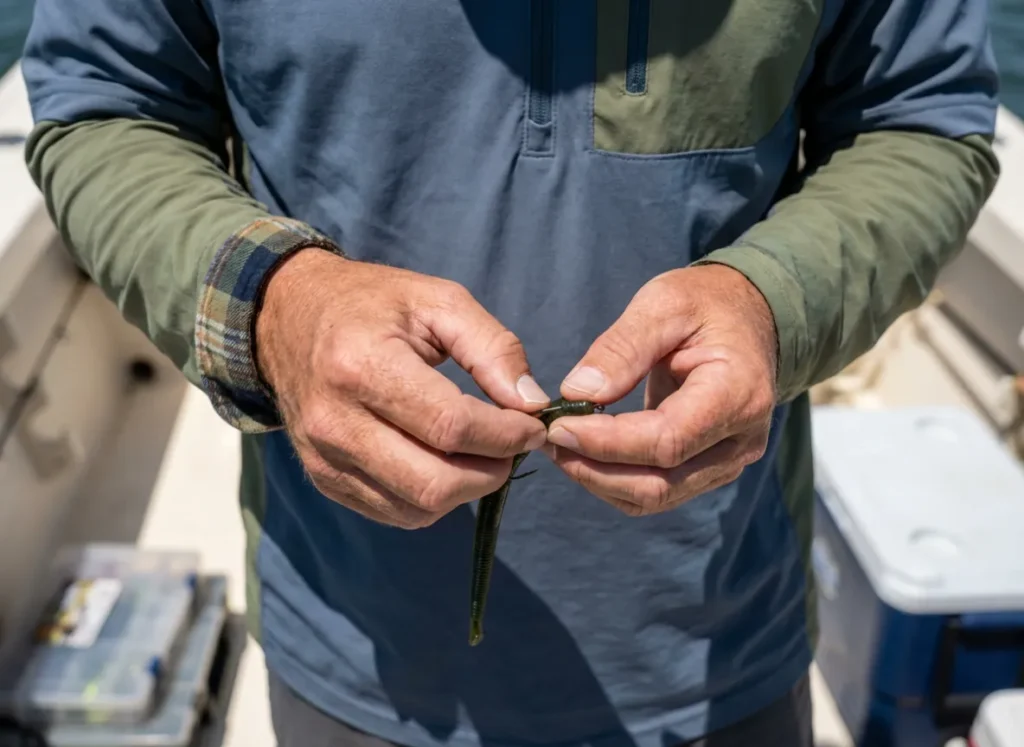
Rigging is the applied physics of fishing. It is how we integrate components to create a presentation that looks natural while remaining functional in a chaotic environment.
How Do We Integrate Components into Functional Rigs?
The Texas Rig is the standard for a weedless setup. You thread a bullet weight onto the line, followed by an offset worm hook tied directly. The hook point is embedded back into the soft plastic bait (“Tex-posed”), creating a streamlined profile that slides through vegetation without snagging.
The Carolina Rig utilizes separation mechanics. A heavy weight drags the bottom, separated from the hook by a barrel swivel and a leader (usually 12-48 inches). This allows the bait to glide naturally and weightlessly above the silt cloud and noise created by the dragging sinker.
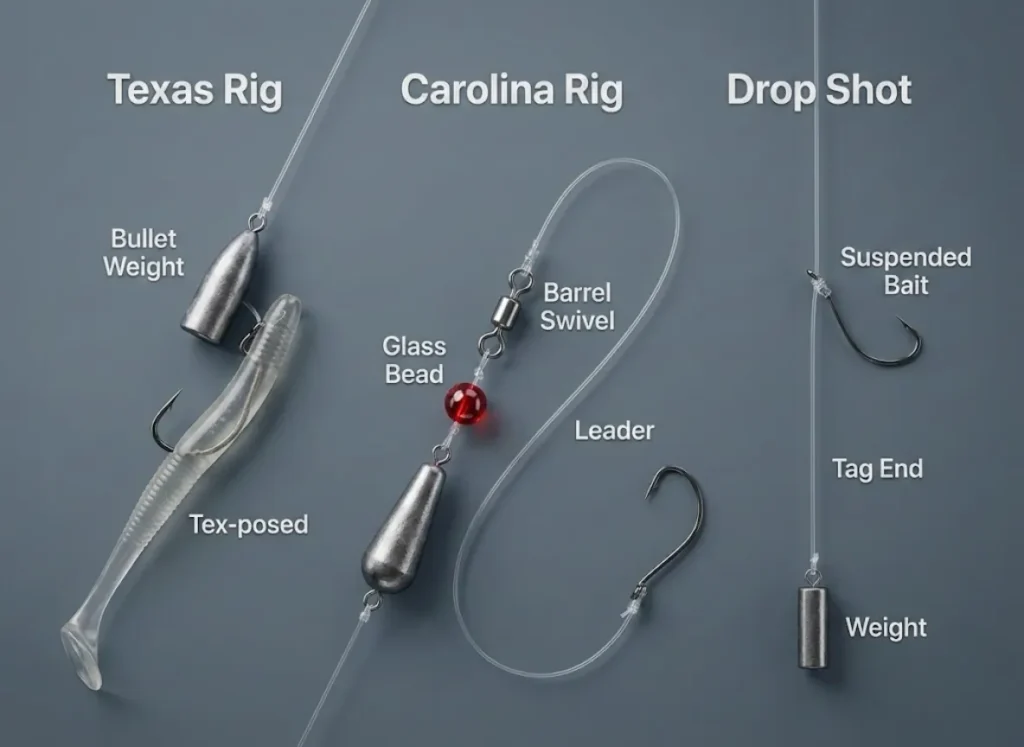
The Drop Shot Rig is designed for vertical finesse. The hook is tied directly to the main line using a Palomar knot with a long tag end. The weight is attached to the bottom of that tag. This suspends the bait at a fixed depth off the bottom, ideal for inactive fish. If you are new to this finesse approach, mastering the drop shot rig is a vital skill for pressured waters.
Swivels, Snaps, and Connections
Swivel mechanics are frequently misunderstood. A standard barrel swivel joins line sections and prevents some twist. However, for high-rotation lures like inline spinners, a high-quality ball bearing swivel is required. Standard wire-on-wire swivels bind under tension, failing at line twist prevention. Complex bait rigs may even require 3-way swivels to branch the line.
Snaps facilitate quick-change utility. Duo-lock snaps are common for light duty, while interlock snaps offer higher strength. Split rings are the heavy-duty connectors used on hard baits. For float fishing, slip bobbers with adjustable bobber stops offer superior depth control compared to old-school fixed bobbers.
When constructing these rigs, many anglers are now utilizing nontoxic alternatives to lead tackle such as tin, bismuth, brass, and steel to ensure state compliance.
Pro-Tip: When fishing a Carolina Rig, place a glass bead between your weight and the swivel. Not only does this protect the knot from the heavy weight, but the “clack” of the metal hitting the glass mimics the sound of crayfish snapping, attracting predators.
Final Thoughts: The System Over the Parts
Terminal tackle is not a random assortment of metal; it is a kinetic system where hook wire gauge, weight density, and swivel mechanics must be balanced against your rod power and target species.
The shift from lead to tungsten offers a quantifiable advantage in sensitivity and hydrodynamic efficiency, while simultaneously safeguarding local wildlife. Choosing the right geometry—whether it’s the cutting point of a chemically sharpened hook or the snag-resistance of a bullet weight—drastically improves your hook-up ratios.
The hallmark of a competent angler is adaptability: the ability to switch from a snag-resistant Texas Rig to a finesse Drop Shot based on what the water tells you. Proper terminal tackle maintenance and tackle box organization ensure these tools are ready when the bite fires.
Ready to refine your setup? Start by auditing your tackle box for lead weights and replacing your most-used sizes with tungsten or tin alternatives.
FAQ – Frequently Asked Questions
What is the difference between a J-hook and a Circle hook?
A J-hook requires the angler to strike (set the hook) to penetrate. A Circle hook relies on the fish turning away to slide the hook into the corner of the mouth (self-setting). Circle hooks are preferred for catch-and-release as they minimize gut-hooking.
Is a fishing lure considered terminal tackle?
Technically, no. Terminal tackle refers to the hardware (hooks, weights, swivels, leaders) used to rig bait or construct a presentation. A lure is generally considered a distinct category, though it contains terminal tackle like split rings and hooks.
Why is fluorocarbon preferred for leaders over monofilament?
Fluorocarbon leaders have a refractive index closer to water, making them nearly invisible. They are also denser and harder, offering higher sensitivity and resistance to slicing. However, mono leaders are superior for topwater applications because they float, whereas fluorocarbon sinks. Wire leaders are essential for toothy predators like Pike.
How do I know what size hook to use?
Match the hook gap to the bulk of your bait—the point must have enough clearance to expose itself when the fish bites. For soft plastics, a 3/0 or 4/0 is standard; for live minnows, a smaller #4 or #2 light wire hook allows the bait to swim naturally.
Risk Disclaimer: Fishing, boating, and all related outdoor activities involve inherent risks that
can lead to injury. The information provided on Master Fishing Mag is for educational and informational purposes
only. While we strive for accuracy, the information, techniques, and advice on gear and safety are not a substitute
for your own best judgment, local knowledge, and adherence to official regulations. Fishing regulations, including
seasons, size limits, and species restrictions, change frequently and vary by location. Always consult the latest
official regulations from your local fish and wildlife agency before heading out. Proper handling of hooks, knives,
and other sharp equipment is essential for safety. Furthermore, be aware of local fish consumption advisories. By
using this website, you agree that you are solely responsible for your own safety and for complying with all
applicable laws. Any reliance you place on our content is strictly at your own risk. Master Fishing Mag and its
authors will not be held liable for any injury, damage, or loss sustained in connection with the use of the
information herein.
Affiliate Disclosure: We are a participant in the Amazon Services LLC Associates Program, an
affiliate advertising program designed to provide a means for us to earn advertising fees by advertising and linking
to Amazon.com. As an Amazon Associate, we earn from qualifying purchases. We also participate in other affiliate
programs and may receive a commission on products purchased through our links, at no extra cost to you. Additional
terms are found in the terms of service.