In this article
I watched a guy at the tackle shop grab a spool of #9 single-strand wire for his king mackerel live-bait rig last month. His goggle-eyes were going to swim like they were dragging a cinder block. He didn’t know that a #9 is .022 inches thick and tests at 105 pounds — complete overkill for a fish that rarely exceeds 40 pounds, and heavy enough to spook every king within casting range. After rigging hundreds of leaders and building spinnerbaits from scratch, I can tell you the gauge number on that spool means everything — and most anglers read it wrong.
Here’s how wire gauge actually works, which sizes match which fish, and why the wrong choice costs you bites before you even get one.
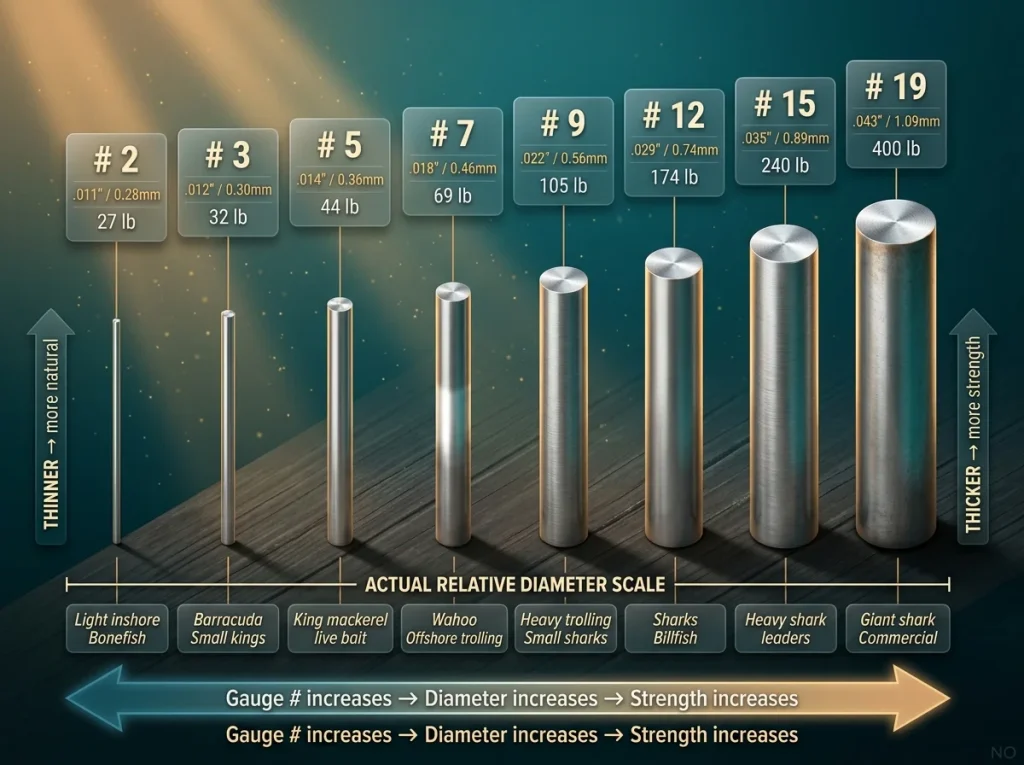
Here’s how the most common fishing wire gauges compare at a glance:
| Leader Wire Gauge Specifications | ||||
|---|---|---|---|---|
| Gauge # | Diameter (in) | Diameter (mm) | Lb Test | Common Use |
| #2 | .011 | 0.28 | 27 | Light inshore, bonefish |
| #3 | .012 | 0.30 | 32 | Barracuda, small kings |
| #5 | .014 | 0.36 | 44 | King mackerel live bait |
| #7 | .018 | 0.46 | 69 | Wahoo, trolling |
| #9 | .022 | 0.56 | 105 | Heavy trolling, small sharks |
| #12 | .029 | 0.74 | 174 | Sharks, billfish |
| #15 | .035 | 0.89 | 240 | Heavy shark leaders |
| #19 | .043 | 1.09 | 400 | Giant shark, commercial |
How Wire Gauge Numbers Actually Work
The Numbering System Decoded
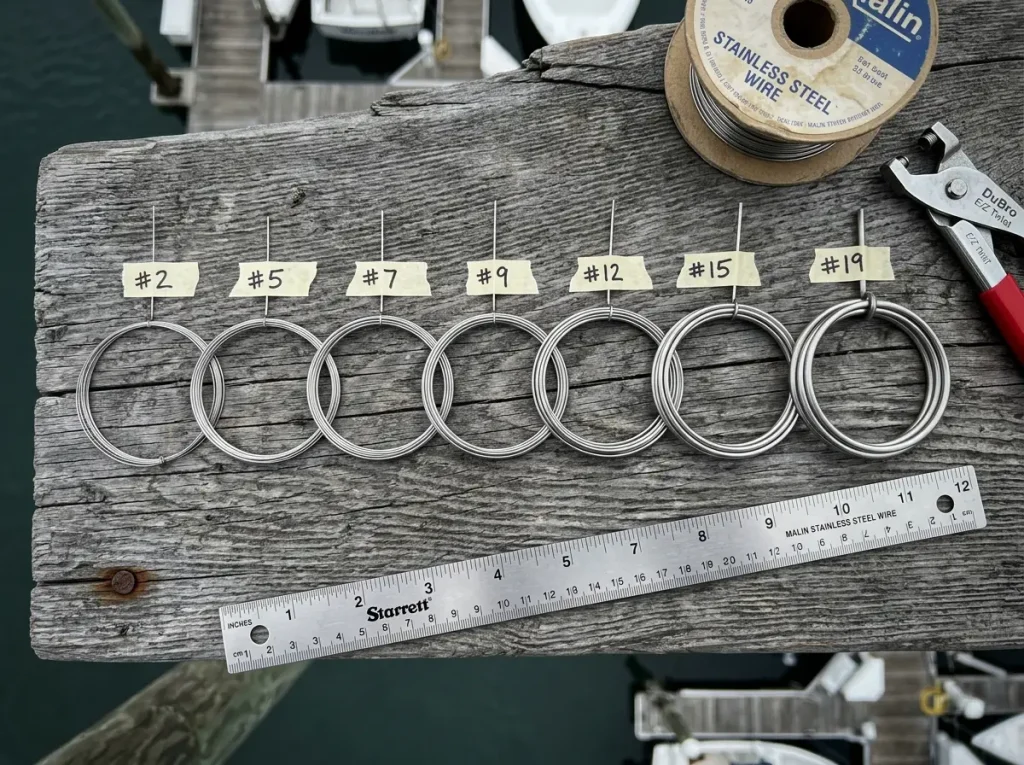
Here’s where most anglers get tripped up: wire gauge numbers go UP as the wire gets THICKER. A #2 wire is the thinnest standard fishing gauge at .011 inches. A #19 is a beast at .043 inches. This runs opposite to what your gut expects — most people assume higher number means heavier because that’s how fishing line works with pound test.
The numbering system comes from the manufacturing process. Each gauge number corresponds to a specific die that draws the wire to an exact diameter. The numbers themselves are arbitrary — what matters is knowing that each step up adds both diameter and strength, but not in equal proportions.
Pro tip: Memorize three gauges and you’ll cover 80% of situations — #5 for inshore live bait, #7 for offshore trolling, and #12 for anything with a jaw bigger than your fist. Everything else is a refinement of those three starting points.
Diameter vs Pound Test — Why Both Matter
Diameter determines two things: how visible the wire is underwater, and how resistant it is to being bitten through. Pound test determines when it snaps under tension. These are related but not interchangeable.
A #5 wire at .014 inches tests at 44 pounds. A #7 at .018 inches tests at 69 pounds. That’s only .004 inches thicker — barely visible difference — but 25 pounds more breaking strength. The relationship isn’t linear because strength increases with the square of the diameter. Double the diameter, quadruple the strength.
This matters because your target species determines which spec matters more. For fish with razor teeth (kingfish, wahoo), diameter and bite resistance matter most. For fish that fight hard but don’t have cutting teeth (some sharks), pound test matters more.
AWG vs Fishing Wire Gauge — Not the Same Scale
Walk into a hardware store and ask for “#5 wire” and you’ll get something completely different. AWG (American Wire Gauge) runs in the opposite direction — higher numbers mean THINNER wire. A #5 AWG is nearly a quarter-inch thick electrical cable. A #5 fishing wire is .014 inches — thin as a heavy sewing needle.
This confusion sends guys to the hardware store thinking they’ll save money. They come back with electrical wire that’s either way too thick or made from soft copper that kinks on the first fish. Fishing-specific wire from manufacturers like AFW, Mason, or Malin is precision-drawn stainless steel tempered to specific hardness. Don’t substitute.
The hook sizing system works similarly counterintuitively — once you learn one confusing numbering scheme in fishing tackle, the others start making more sense.
Single-Strand Wire — When Thinner Is Better
Where Single-Strand Wins
For any given pound-test rating, single-strand wire has the smallest diameter of any leader material. Period. A #5 single strand at .014 inches delivers 44 pounds of strength in a package thinner than most fluorocarbon leaders of equivalent rating. That means less visibility underwater and maximum bite resistance per unit of thickness.
This is why every serious king mackerel live-bait angler uses single strand. When you’re trying to keep a goggle-eye or blue runner swimming naturally on a stinger rig, every fraction of an ounce of hardware drag matters. The bait has to look alive — not like it’s tethered to an anchor.
AFW Tooth Proof is the industry standard for a reason. Their pre-straightening process eliminates the coil memory that plagues cheaper wire, giving you a leader that hangs straight in the water column instead of spiraling like a phone cord.
The Kink Problem (And How to Avoid It)
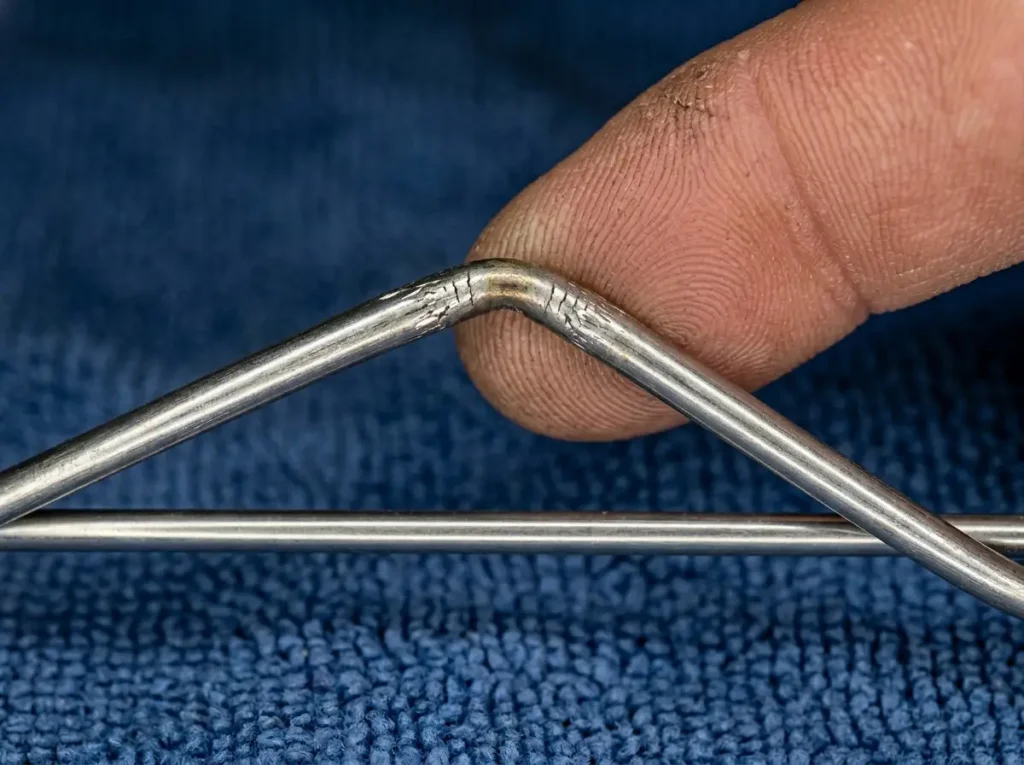
Single strand has one fatal flaw: once it kinks, it’s done. Not weakened — done. The metal at the kink point has exceeded its yield strength and created a permanent stress riser. No amount of straightening repairs it. The next fish that hits will snap it right at that kink.
Kinks happen three ways: a fish rolls and wraps the wire around itself, you close a tackle box lid on the leader, or you form a loop that pinches too tight against a swivel eye. The first one you can’t always prevent. The other two are just carelessness.
Change your single-strand leader after every fish. Not every trip — every fish. If a king mackerel thrashed and twisted, that wire took damage you can’t see. A fresh 18-inch leader costs less than the fish you’ll lose on a compromised one.
The Haywire Twist — The Only Connection That Holds
You can’t crimp single-strand wire reliably. You can’t tie it in a knot. The only connection that holds full-strength is the haywire twist — a specific sequence of crossing wraps followed by barrel wraps that distributes load evenly across the wire’s surface.
The crossing wraps (the “haywire” part) provide the actual holding strength. Each wrap crosses at roughly 45 degrees, locking against the standing wire. The barrel wraps (tight coils after the crossings) keep the tag end from unwinding and provide a clean finish.
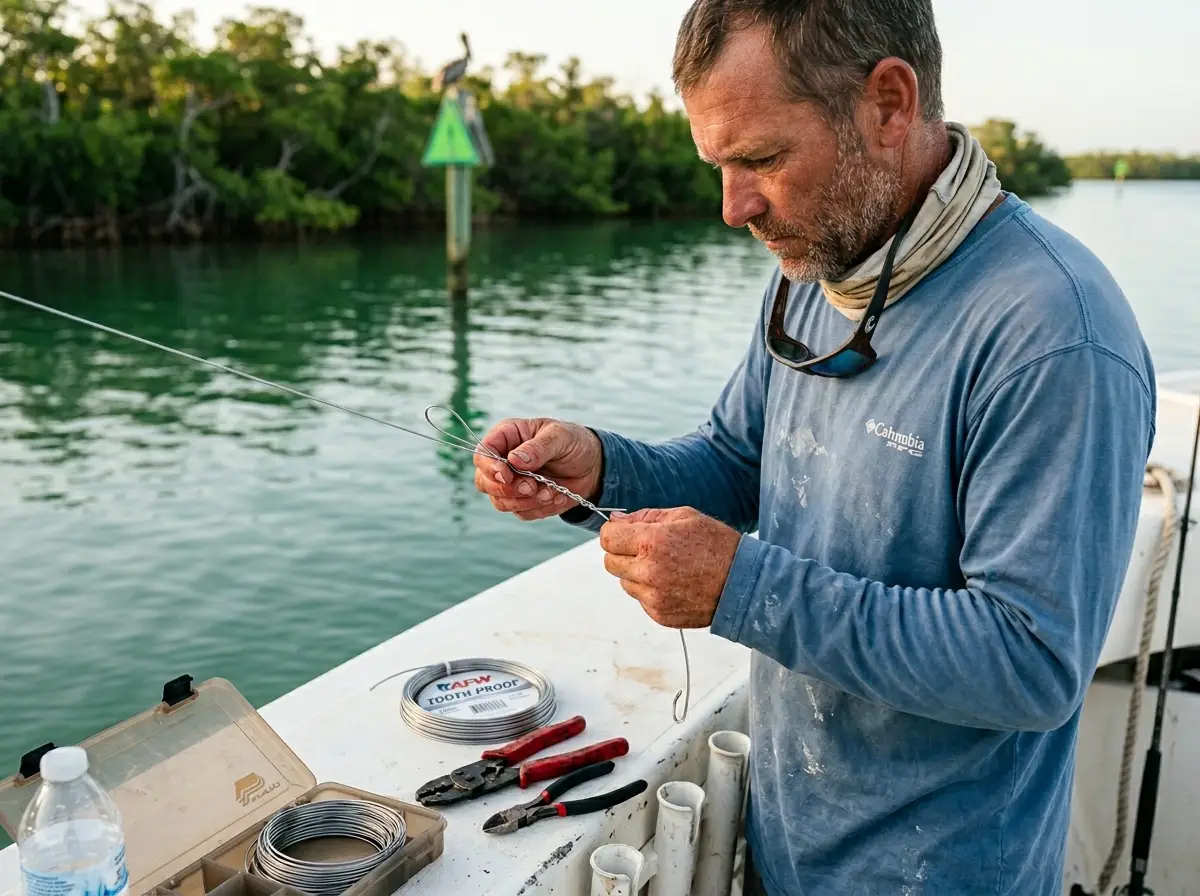
Below #8 gauge, you can form these by hand without too much pain. Above #8, the wire is stiff enough to shred your fingers and fight every bend. That’s where a DuBro EZ Twist tool earns its money — it grips the tag end and lets you spin consistent barrel wraps without bloodied fingertips.
Pro tip: Practice haywire twists at home with #8 wire. It’s stiff enough to hold its shape so you can see what you’re doing, but thin enough that your hands won’t cramp after ten practice leaders.
Here’s a visual walkthrough that shows the hand positioning better than any description:
If you’re still sorting out how to connect wire to your main line, check out these line-to-leader connection methods — the Albright knot works particularly well for wire-to-braid transitions.
Multi-Strand Cable — Flexibility vs Bite Resistance
7-Strand vs 49-Strand — What Changes
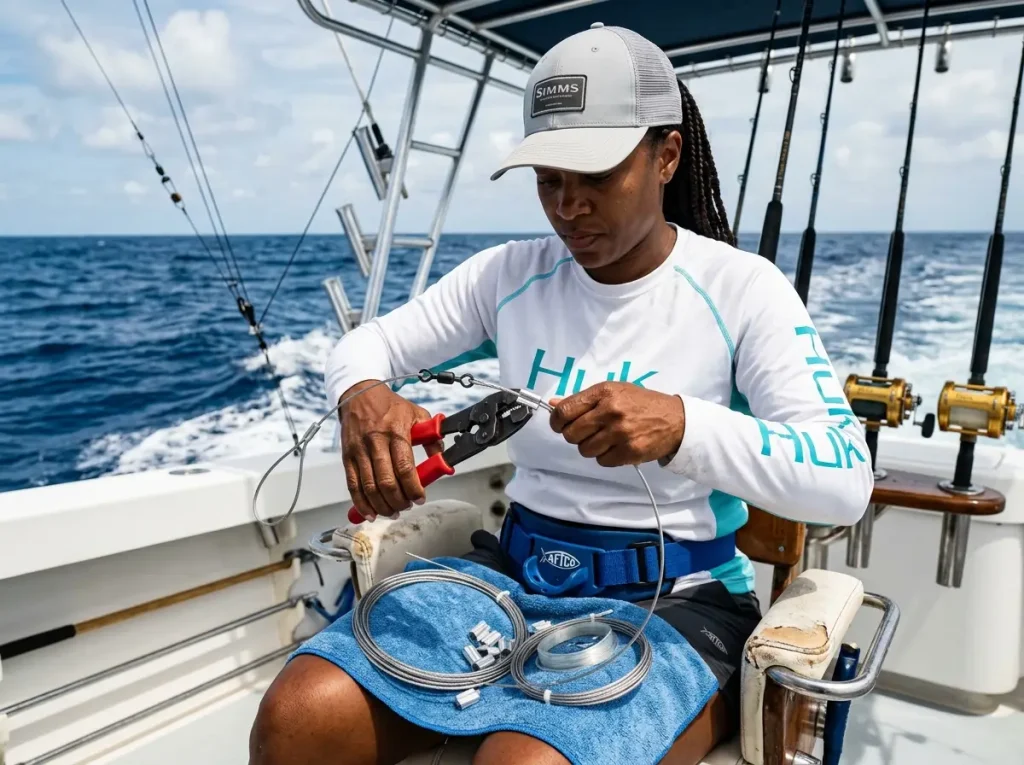
Seven-strand cable takes seven individual wires and twists them together into a single flexible rope. Forty-nine-strand cable takes seven of those 7-strand cables and twists them together again. The math is simple: more strands, more flexibility, less chance of kinking. But more strands also means larger overall diameter for the same pound-test rating, and more surface area for fish teeth to fray individual wires.
Think of it like rope versus steel rod. A single-strand wire is the rod — stiff, strong in one direction, snaps if bent too far. Cable is the rope — flexible in every direction, absorbs shock, but easier to cut through strand by strand.
When Cable Beats Single-Strand
Cable wins in three situations: when fish roll aggressively (pike and musky wrap themselves in your leader like a burrito), when you need to rig fast on a rocking boat (cable crimps in 30 seconds versus haywire twists taking a full minute with cold hands), and when you’re fishing methods that impart constant leader movement (trolling with planers, kite fishing).
The flexibility of 49-strand cable means it never kinks in your tackle box, never develops coil memory, and never fails at a stress point the way single strand does. It just eventually frays — and that’s a failure mode you can see coming if you check it.
The Diameter Trade-Off
Here’s the honest downside: for a given pound test, cable is roughly 30-40% larger in diameter than single-strand wire. A 90-pound cable leader is noticeably thicker than a #9 single-strand testing at 105 pounds. In clear water with spooky fish, that diameter difference translates directly to fewer bites.
Run your cable leaders through your fingers after every toothy fish. Feel for the slight fuzz of a broken individual strand. One or two broken strands in a 49-strand cable isn’t a crisis — the remaining strands redistribute the load. But if you feel three or more, replace it. The cable is telling you it’s dying.
For connecting cable leaders to your rig, learn the proper tying leader connections — double-barrel crimps with proper sleeve sizing make all the difference in cable holding strength.
Matching Wire Gauge to Target Species
Inshore Toothy Fish (Kings, Barracuda, Bluefish)
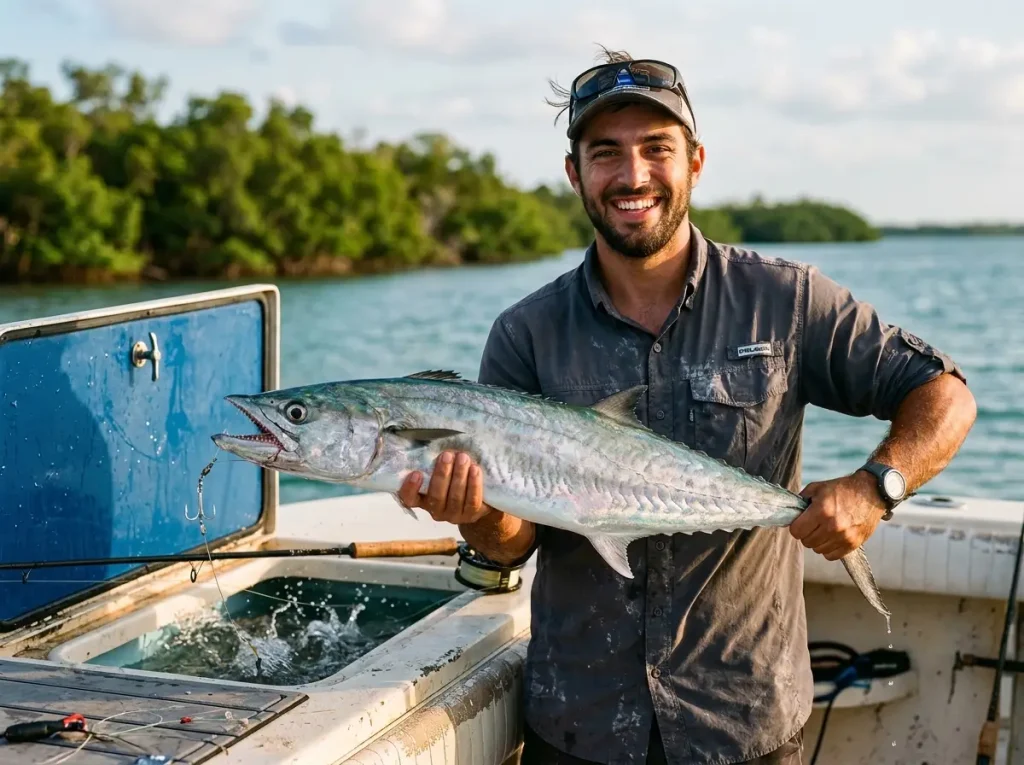
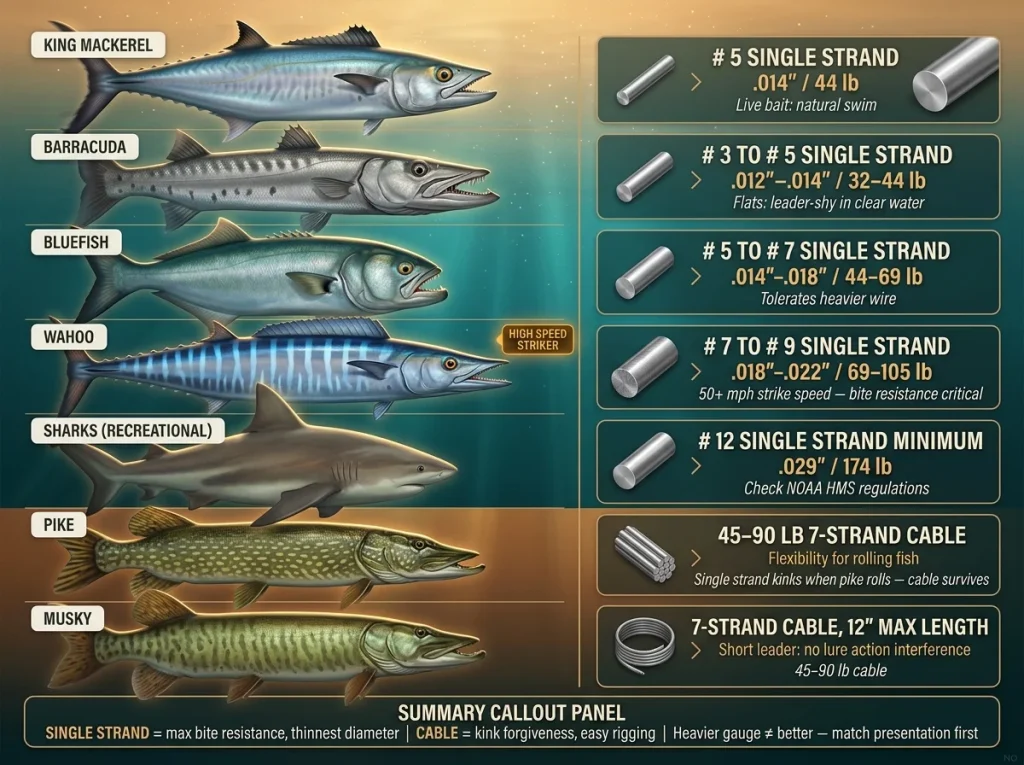
King mackerel on live bait: #5 single strand (.014″ / 44 lb test). This is the standard for a reason. Thin enough that a frisky goggle-eye or threadfin herring swims naturally on a stinger rig, but strong enough that a king’s lateral jaw teeth can’t sever it in one pass. The wire disappears in the water column.
Barracuda: #3 to #5 depending on water clarity. Cuda have some of the sharpest teeth in saltwater, but they’re also the most leader-shy fish you’ll encounter. In gin-clear flats water, a #3 at .012 inches is sometimes the only option that gets bit. Yes, you’ll lose some fish to bite-offs. That’s the trade.
Bluefish: #5 to #7 — these fish don’t spook at hardware and their choppers are relentless. You can afford the thicker gauge because blues don’t care about subtlety.
Offshore Predators (Wahoo, Sharks, Billfish)
Wahoo: #7 to #9 single strand for trolling. Wahoo hit at speeds exceeding 50 mph and have teeth designed to sever prey in a single pass. The #7 gives you .018 inches of bite resistance at 69 pounds — enough for most encounters. Step up to #9 (.022″ / 105 lb) if you’re fishing areas known for 80+ pound fish.
Sharks (recreational): #12 single strand minimum. And know your regulations — NOAA’s HMS compliance guides specify non-offset circle hooks and other gear requirements for recreational shark fishing in Atlantic waters.
Freshwater Toothy Fish (Pike, Musky)
Pike and musky present a unique problem: they roll. A musky hooked at the boat will spin, wrap your leader around its body, and kink single-strand wire in seconds. This is why most serious musky anglers use 45-90 pound 7-strand cable — it survives the rolling, stays flexible across multiple fish, and crimps easily with standard tools.
Pro tip: For musky, use the shortest wire leader you can — 12 inches maximum. Longer leaders interfere with lure action on figure-eight retrieves at boatside. The extra length doesn’t add protection because musky teeth are concentrated at the jaw, not along the body.
If you’re targeting musky specifically, you’ll want to understand their gear and tactics and how leader choice fits into the larger presentation system.
Wire Gauge for Lure Building
Spinnerbait and Buzzbait Wire Sizing
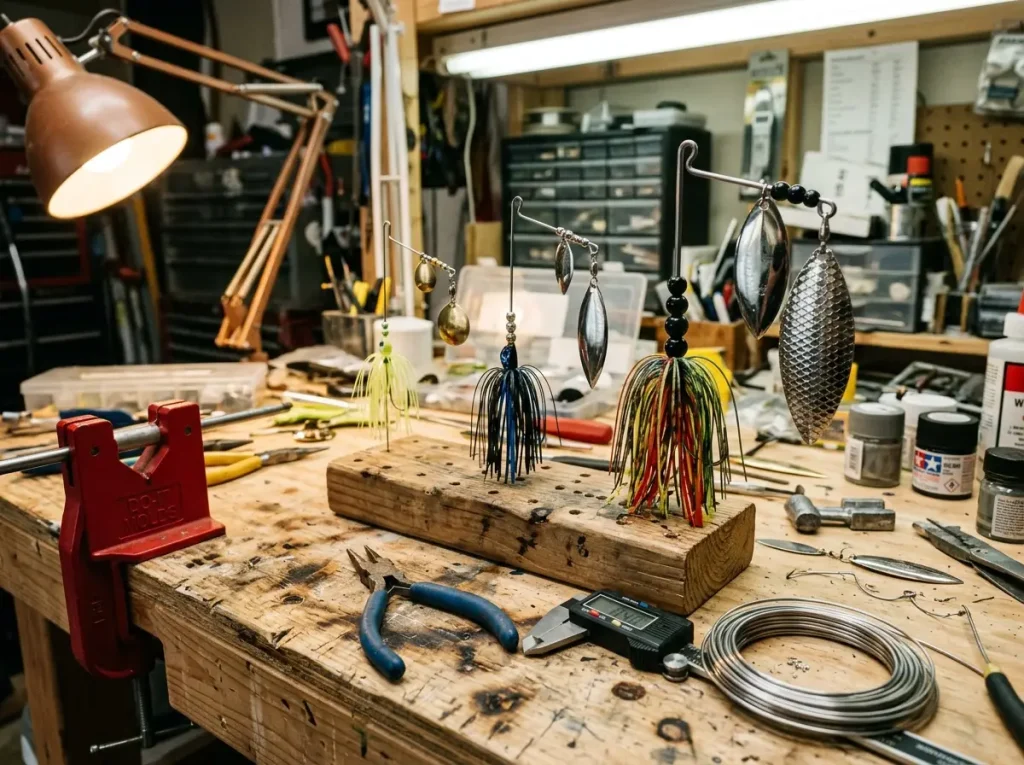
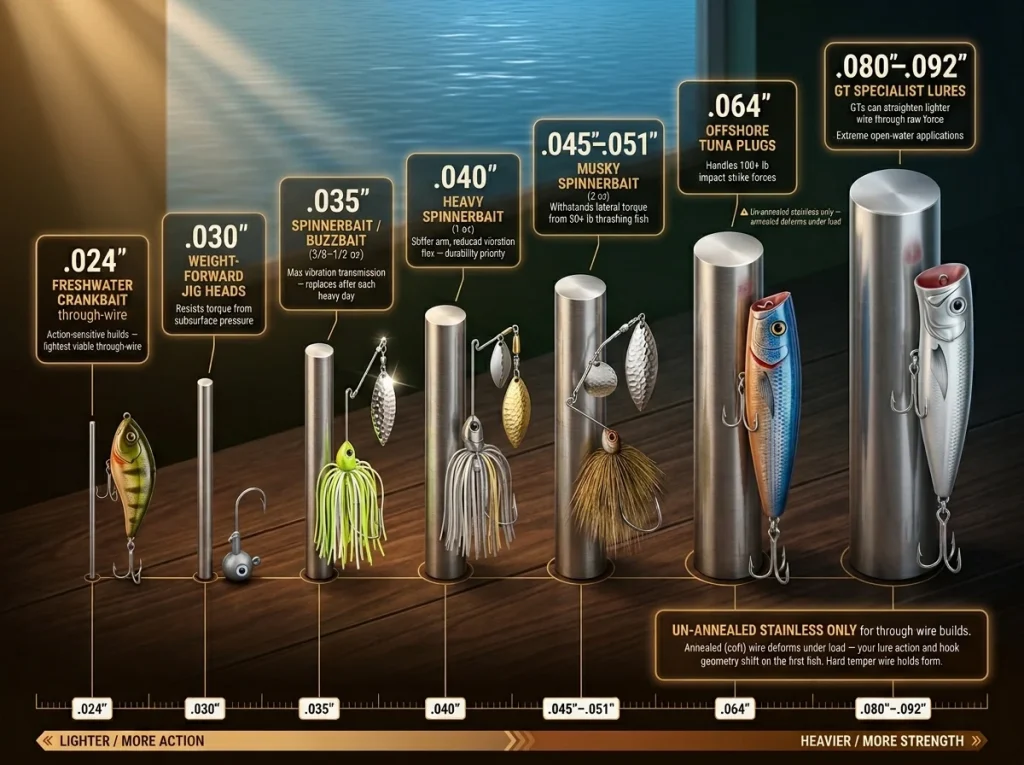
If you build your own spinnerbaits, wire gauge controls everything about how that bait fishes. The standard sizing runs like this: .035 inches for 3/8 to 1/2 ounce baits, .040 inches for 1-ounce baits, and .045 to .051 inches for 2-ounce musky spinnerbaits.
These aren’t arbitrary. The wire diameter determines how much the frame flexes under blade rotation, which directly controls how much vibration reaches your rod tip. Lighter wire flexes more, transmits more “thump.” Heavier wire stays rigid, mutes the vibration.
Tournament bass guys building .035″ spinnerbaits accept that they’ll rebuild the wire frame after a single hard fishing day. The wire fatigues where it bends around the line tie and head mold. That’s the trade for maximum vibration sensitivity — you feel every blade rotation, but the bait has a shelf life.
Through-Wire Construction for Hard Baits
Through-wire refers to running a continuous wire shaft through the body of a hard bait — crankbaits, topwaters, jerkbaits — so the hooks connect directly to each other rather than to the lure body. This prevents fish from ripping free by breaking the plastic or wood.
The gauge depends entirely on target species: .024 inches for lightweight freshwater crankbaits where action sensitivity matters, .030 inches for weight-forward jig heads, .064 inches for tuna plugs that need to handle 100+ pound strikes, and .080 to .092 inches for GT (giant trevally) specialist lures where the fish can straighten lighter wire through sheer force.
Use un-annealed stainless steel for through-wire. Annealed wire is softer and deforms too easily once a fish loads it — your carefully tuned lure action goes sideways the moment a strong fish torques the internal frame.
How Wire Gauge Affects Lure Action
The relationship between wire gauge and lure action isn’t straightforward. In spinnerbaits, thinner wire lets the blade arm oscillate independently from the head, creating that erratic wobble that triggers reaction strikes. But thinner wire also means the blade arm deflects more on impact with cover — hit a stump with a .035″ spinnerbait and the arm bends permanently.
There’s genuine debate among builders about whether thinner wire truly transmits more vibration or just lets the arm flex more (which you feel as vibration). The practical consensus from guys who fish these things daily: lighter wire = more feel at the rod tip, but at the cost of durability. Pick your priority based on conditions.
For understanding how blade types interact with water clarity and pair with your wire choice, that’s a whole separate decision tree — but wire gauge is the foundation everything else sits on.
Titanium vs Stainless Steel — The Cost-Benefit Reality
What Titanium Gets You
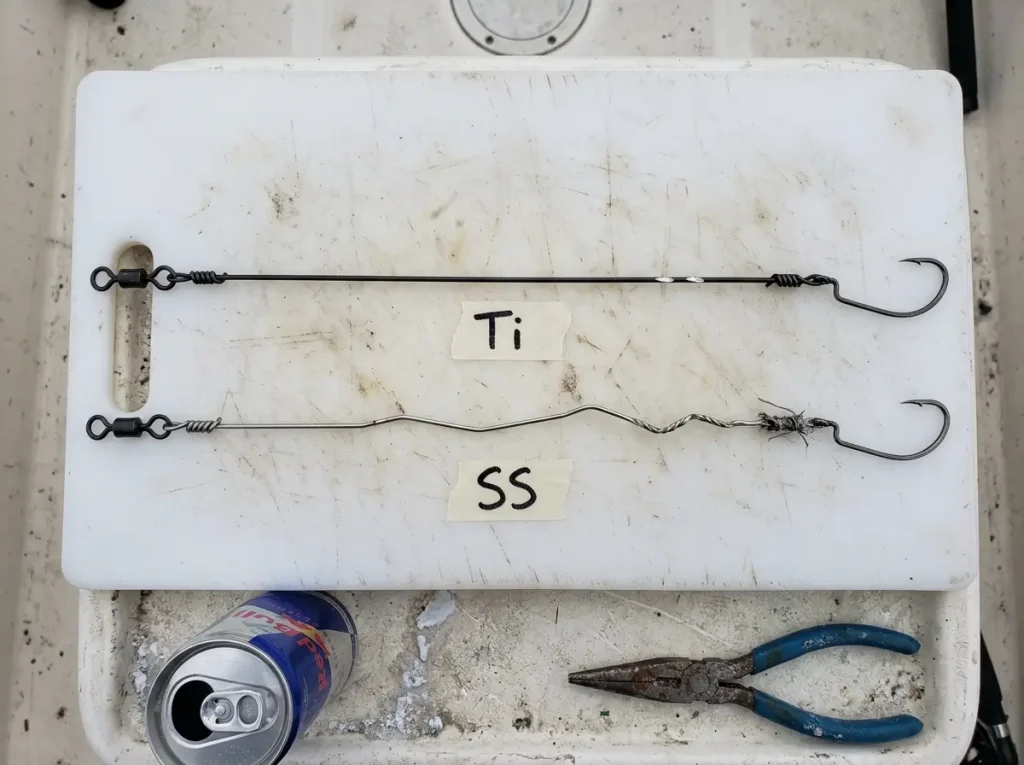
Titanium wire doesn’t kink. Not “resists kinking” — genuinely does not develop permanent kinks under normal fishing conditions. You can twist it, coil it, let a fish wrap it, straighten it out, and keep fishing. This single property makes titanium leaders reusable across dozens of fish where stainless single-strand gets replaced after every one.
Titanium is also lighter per foot than stainless, carries no coil memory, and maintains consistent strength throughout its usable life. There’s no gradual weakening from micro-kinks accumulating over a session — either it works or something cut through it.
When Stainless Steel Still Wins
Stainless wins on pure bite resistance at equivalent diameter. Titanium is softer than hardened stainless — fish teeth that glance off a #5 Tooth Proof leader might score or nick titanium of similar diameter. For maximum protection against the most aggressive biters (wahoo, large barracuda), stainless remains the safer bet.
Stainless also wins when leaders get lost. If you’re trolling offshore and losing two or three leaders per trip to cutoffs, paying $8 each for titanium replacements hurts a lot more than $1.50 stainless leaders going overboard. Wire strength matters in hook selection too — the leader is only as strong as the weakest point in your terminal tackle system.
The Math on Long-Term Cost
One titanium leader: roughly $8. One stainless leader: roughly $1.50. If you’re replacing stainless after every fish caught (as you should with single strand), titanium breaks even at about 6 fish per leader. Most inshore anglers catch well more than that per trip — making titanium the cheaper option over a full season for live-bait kingfish, barracuda, and bluefish applications.
Where the math breaks down: offshore trolling where leaders vanish to cutoffs regardless of material, and musky/pike fishing where you’re using cable anyway (titanium cable exists but costs absurd amounts at heavy gauges).
Pro tip: Buy one titanium leader for your live-bait rod and keep stainless for everything else. The live-bait rod sees the most leader changes per trip, so that’s where titanium’s reusability saves the most money and rigging time.
Conclusion
Wire gauge numbers go up as wire gets thicker — #2 is your thinnest at .011 inches, #19 is industrial strength at .043 inches. Now that you know the scale, you’ll never grab the wrong spool again.
Match gauge to your presentation first, species second. Too-heavy wire on live bait costs you more fish than too-light wire ever will — a dead bait catches nothing regardless of how strong your leader is.
Pick your material based on how you fish: single strand for maximum bite resistance in the thinnest package, cable for ease of use and kink forgiveness, titanium for reusability when you’re burning through stainless leaders every cast. Grab a spool of #5 and #9 single strand plus some 7-strand cable in 60-pound test — that covers 90% of toothy situations you’ll encounter.
Q1 What gauge wire is best for fishing leaders?
Number 5 single strand at 44 pounds and .014 inches handles most inshore toothy fish including king mackerel and barracuda while staying thin enough for natural bait presentation. Move to #7 or #9 for wahoo and offshore trolling where strike forces run higher and visibility matters less.
Q2 What is the difference between single strand and multi-strand fishing wire?
Single strand is one solid piece of drawn stainless steel — it has the thinnest diameter and best bite resistance for its pound test but kinks permanently if bent past its yield point. Multi-strand cable braids multiple wires for flexibility and kink resistance at the cost of larger diameter and reduced bite protection.
Q3 Does wire gauge affect bait action?
Heavy gauge wire weighs down live baits and restricts their natural swimming movement. A #9 wire on a small baitfish acts like an anchor — the bait exhausts quickly and looks unnatural. Drop to #3 through #5 for live bait to let the fish swim freely.
Q4 What wire gauge for spinnerbait making?
Standard sizes run .035 inches for 3 or 8 to 1 or 2 ounce baits, .040 inches for 1-ounce spinnerbaits, and .045 to .051 inches for 2-ounce musky baits. Lighter wire gives more vibration and blade feel at the rod tip but fatigues and bends out faster.
Q5 Can I use hardware store wire for fishing leaders?
Hardware store stainless varies in hardness and often kinks on first contact with a fish. Fishing-specific wire from AFW, Mason, or Malin is precision-drawn to controlled temper for consistent flexibility, accurate pound-test ratings, and reliable haywire twist formation. The few dollars saved aren’t worth the lost fish.
Risk Disclaimer: Fishing, boating, and all related outdoor activities involve inherent risks that
can lead to injury. The information provided on Master Fishing Mag is for educational and informational purposes
only. While we strive for accuracy, the information, techniques, and advice on gear and safety are not a substitute
for your own best judgment, local knowledge, and adherence to official regulations. Fishing regulations, including
seasons, size limits, and species restrictions, change frequently and vary by location. Always consult the latest
official regulations from your local fish and wildlife agency before heading out. Proper handling of hooks, knives,
and other sharp equipment is essential for safety. Furthermore, be aware of local fish consumption advisories. By
using this website, you agree that you are solely responsible for your own safety and for complying with all
applicable laws. Any reliance you place on our content is strictly at your own risk. Master Fishing Mag and its
authors will not be held liable for any injury, damage, or loss sustained in connection with the use of the
information herein.
Affiliate Disclosure: We are a participant in the Amazon Services LLC Associates Program, an
affiliate advertising program designed to provide a means for us to earn advertising fees by advertising and linking
to Amazon.com. As an Amazon Associate, we earn from qualifying purchases. We also participate in other affiliate
programs and may receive a commission on products purchased through our links, at no extra cost to you. Additional
terms are found in the terms of service.