
In this article
You trusted the number on the tag. Forty-eight hours of ice, it said, so you packed a good box of mahi whole and ran the rest of the day without a second thought. Then you opened the bag at the dock and the smell told you the whole catch was a loss, even with ice still sitting right there. Ask around any boat ramp and you will hear that same story, because a cold bag and a fresh catch are not the same thing. The best fishing cooler bags keep your catch fresh by doing two jobs at once, holding cold and letting you chill fish fast, and this guide covers both the bags worth buying and the handling that actually keeps fillets edible.
Why a Cooler Bag Full of Ice Still Lets Fish Spoil
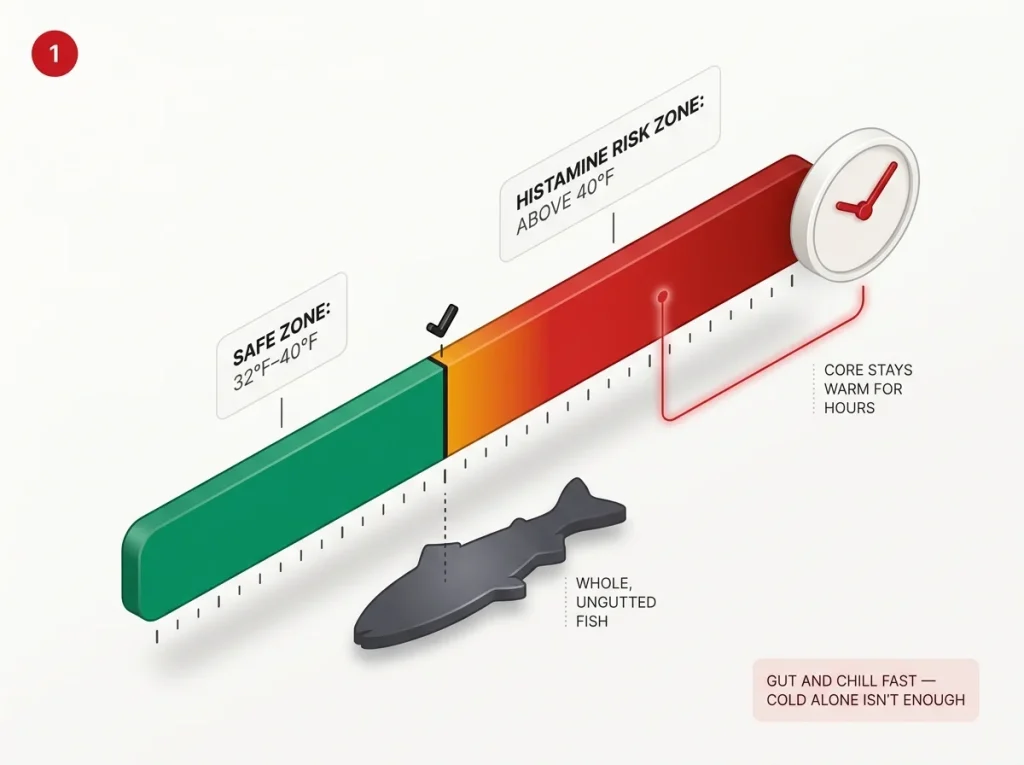
Here is where most anglers get it wrong. A beer only has to stay cold. A fish is a biological clock the second it dies, and bacteria and enzymes keep working from the inside out even while it sits on ice. Your bag can hold cold air beautifully and still hand you soft, off-tasting fillets if the fish itself never chilled fast enough at the core.
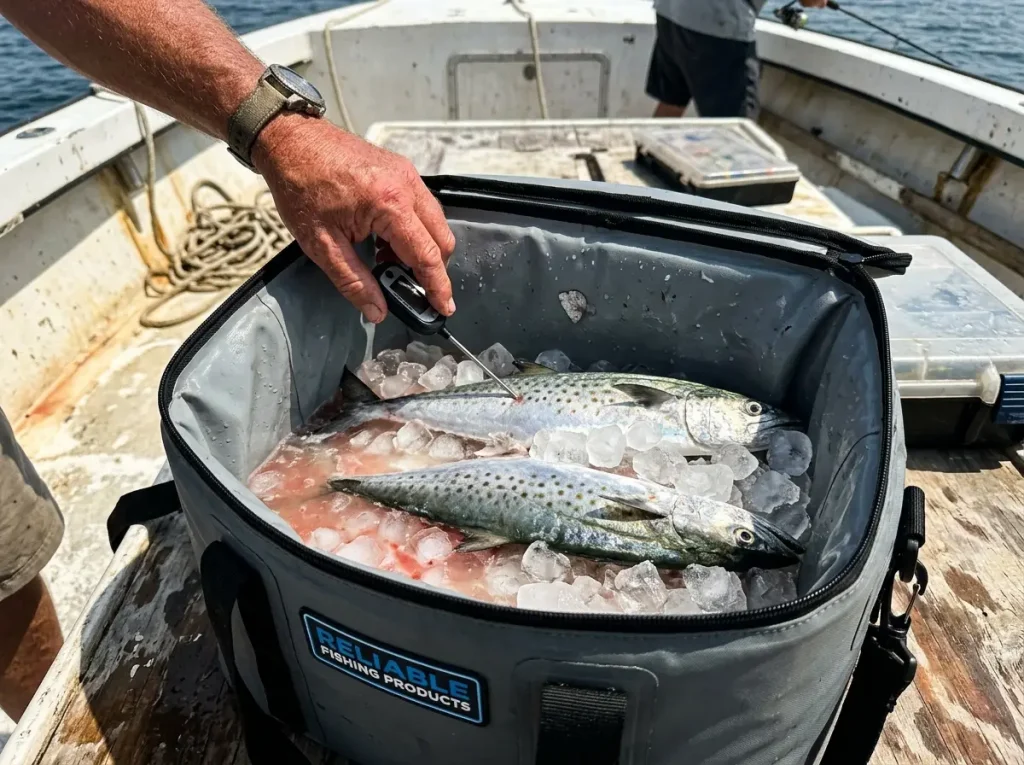
The insulated fish bag is only half the job. The other half is how quickly you drop the fish’s internal temperature, because that is what stops spoilage, not the ice sitting an inch away from a warm belly cavity.
The nastiest version of this is scombroid poisoning. In warm-held tuna, mackerel, mahi, bluefish, amberjack, and bonito, bacteria produce histamine, and once it forms, no amount of washing, freezing, or cooking removes it. The fish becomes unsafe even when it looks and smells fine, which lines up with the FDA’s own findings on scombrotoxin poisoning and decomposition. That is why guides gut and slurry big fish the moment they hit the deck instead of waiting for the bite to slow down.
The safe zone is near-freezing, as close to 32°F as you can get and never above 40°F. Cold is not the target. Near-freezing and fast is. Anyone who has opened a bag of whole, ungutted fish after a hot morning knows the smell of getting this wrong, and the ice sitting on top does not save it.
The Real Ice-to-Fish Ratio and How to Build a Slurry
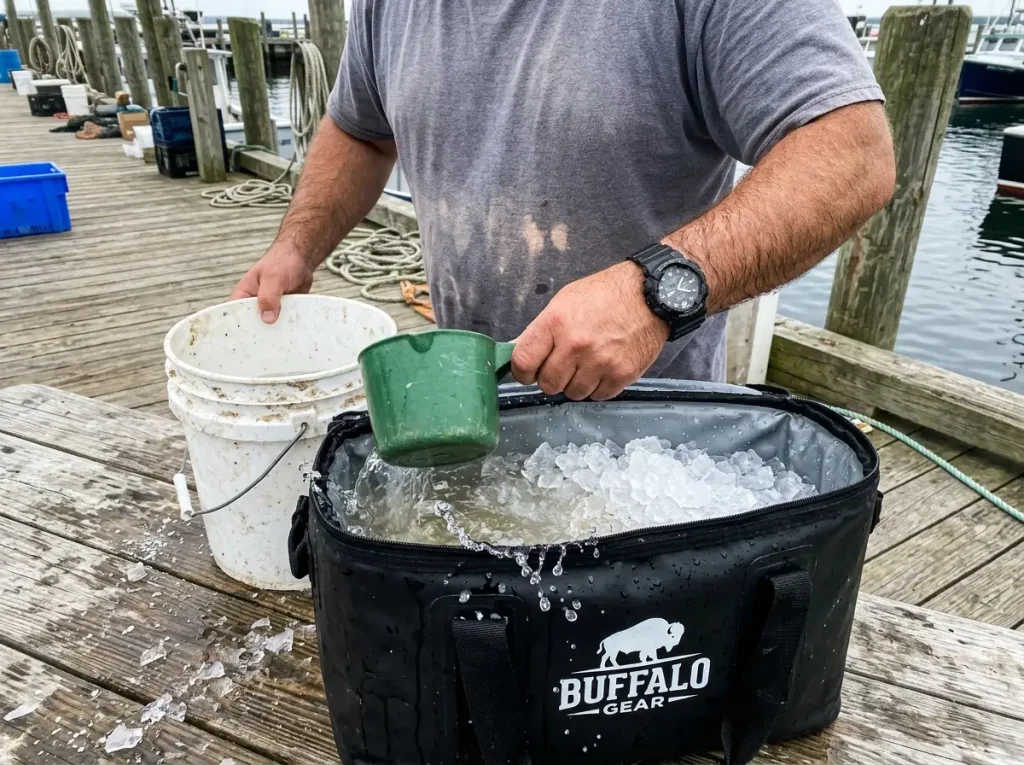
Forget “pack it in ice.” The ice-to-fish ratio that actually works is roughly two parts ice to one part fish by volume as a floor, and more on a hot full day. Cheap bags lose the ice race by hour 24, so you err heavy, not light.
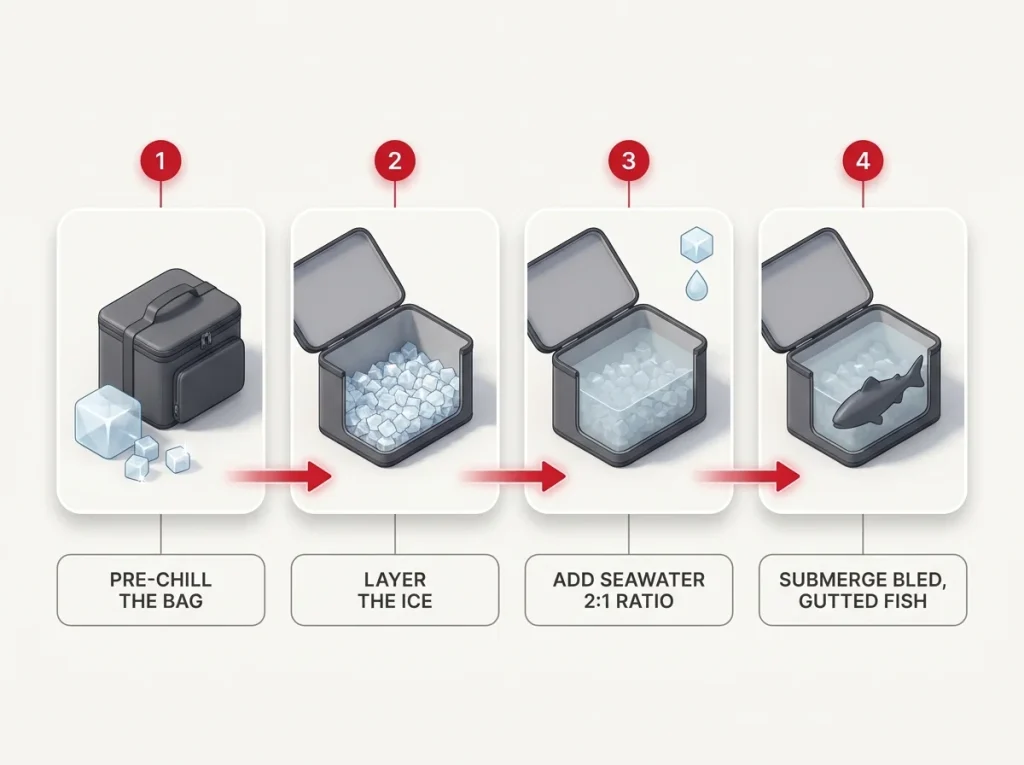
An ice slurry beats dry cubes every time. Mix about two parts crushed ice to one part seawater, or a five to ten percent salt brine, and the water drops below 32°F because salt lowers the freezing point. That slush reaches a fish’s core far faster than cubes packed loosely around it, which is exactly why offshore crews swear by it. This matches NOAA’s guidance on properly storing and handling seafood, which calls for burying fish in ice immediately or using a slush right after the catch.
The offshore sequence is simple and not optional: spike or bleed and gut the fish first, drop it in the slurry for 15 to 30 minutes, then keep it iced for at least four to six hours before you fillet. Gutting first is what lets the cold reach the belly cavity instead of fighting warm organs that hold heat.
The most common slurry mistake is dumping whole, ungutted fish into a bag of dry cubes and calling it done. The belly cavity stays warm for hours that way. Build the slush before the first cast, and a bag with a drain plug lets you dump meltwater without unzipping and spilling the cold air.
Soft Bag or Hard Cooler and When Each One Wins
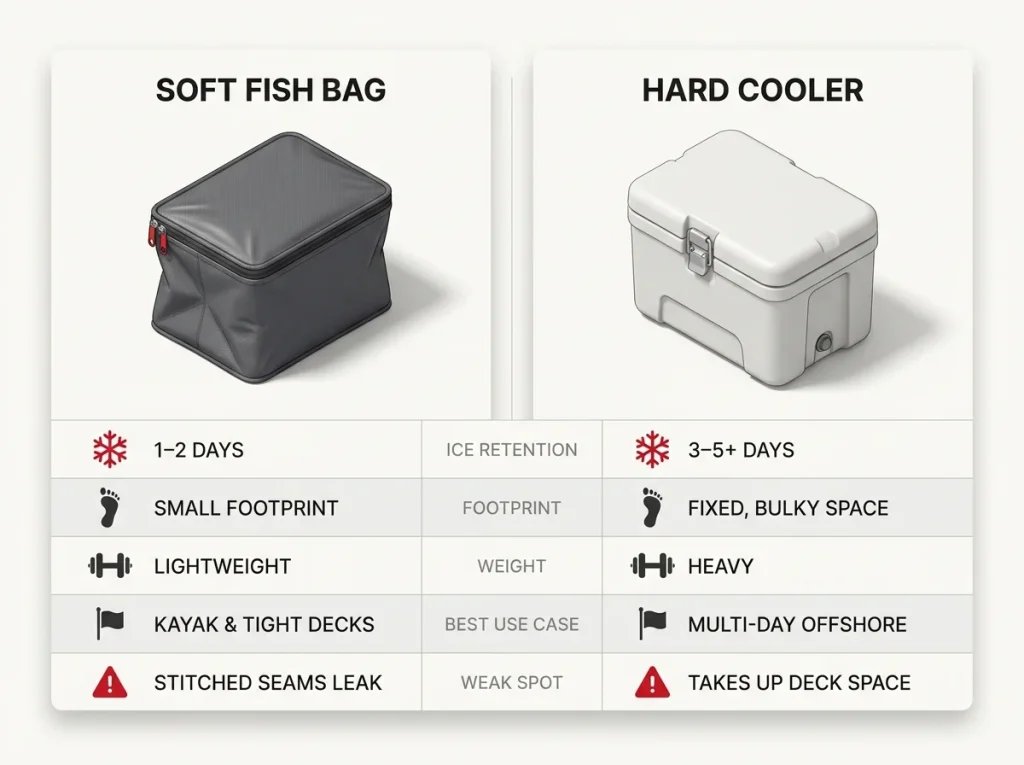
The internet splits this into two camps that never talk to each other, and it leaves you guessing. Here is the honest version. A soft-sided cooler wins when space and weight matter, like kayak fishing where deck room is scarce, packing out from a hike-in spot, or freeing up the boat’s hard cooler for drinks. It folds flat when empty and drapes over odd catch shapes.
A hard-sided cooler wins when ice life is everything. On a multi-day offshore run chasing big pelagics, a rotomolded box holds ice longer than any soft bag, full stop. If you need days of retention, a soft bag is the wrong tool, and no marketing claim changes that.
Plenty of anglers run both, and that is the smart answer more often than not: the soft fish bag for the catch, the hard cooler for drinks and backup ice. It is not an either-or. Preserving fish does not always mean a bag, either, and there are days when keeping fish on a stringer in the water makes more sense than hauling a cooler at all.
One honest note before you spend money: if you fish inshore for a couple hours and bring home two or three fish, you may not need a dedicated bag at all. More on sizing to your real catch further down.
Bag Anatomy That Actually Matters: Seams, Liners, Drains
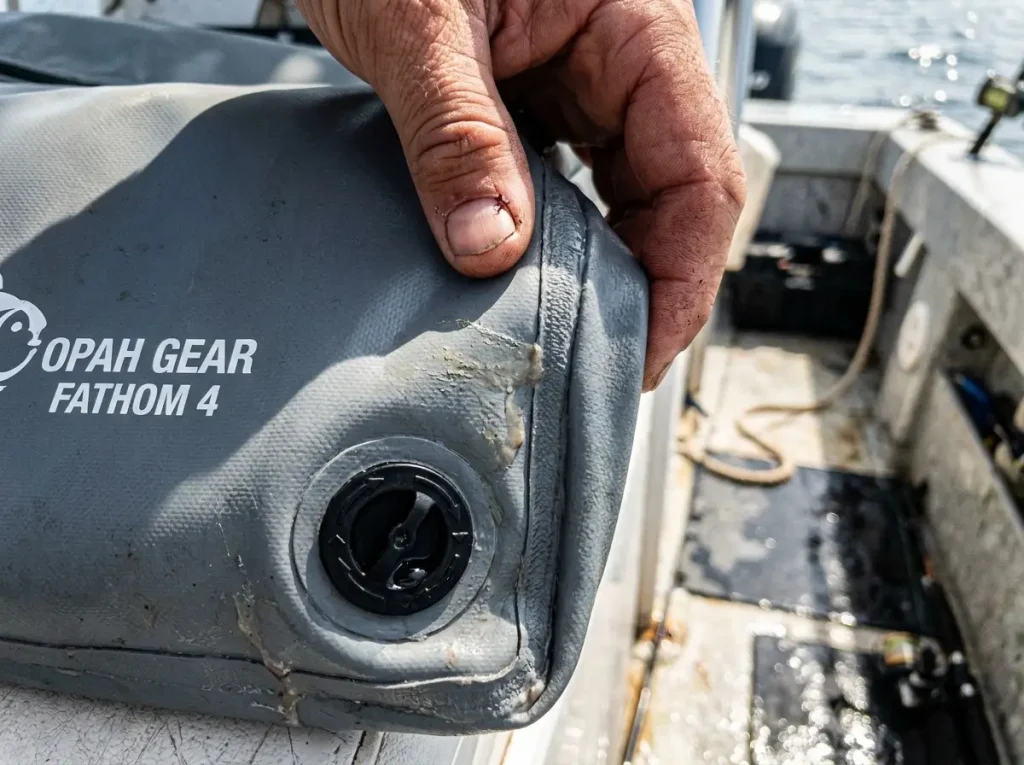
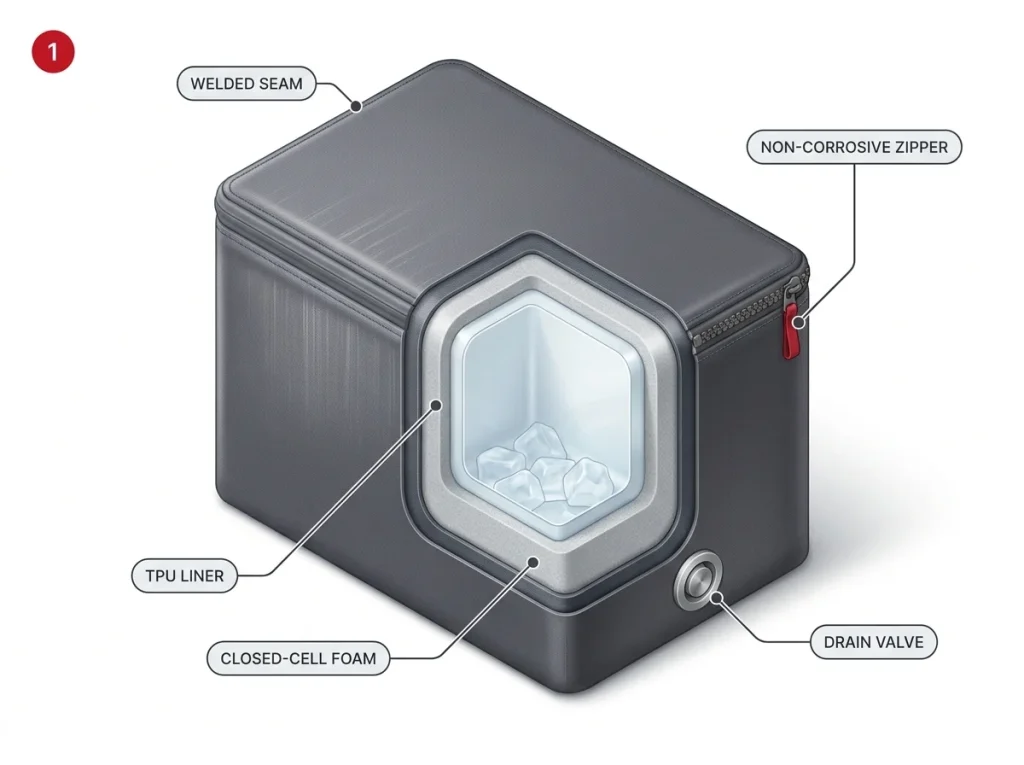
Turn a bag inside out before you trust it. The seam is the tell. RF-welded seams and heat-welded construction, the kind THKFISH and Buffalo Gear use, hold up under slime and fish gunk trip after trip. Stitched seams are the named failure point, the spot owners report weeping fish slime without a single obvious puncture. Welded construction is what makes a bag genuinely waterproof under a load of slurry, not just splash-resistant.
The liner matters almost as much. A TPU liner or a non-stick lining wipes clean and shrugs off odor. Cheap vinyl-coated polyester and bare PVC hold smell and stain, and you will notice by mid-season. Look at insulation too: half-inch closed-cell foam or a pearl-cotton core is what actually drives the ice-retention number on the tag.
A drain plug earns its spot. It lets you dump meltwater without opening the bag and dumping the cold air along with it, which is a small hardware detail with an outsized effect on ice life.
Read the listing for the words “welded” or “RF-welded,” not just “leakproof.” Anglers report buying stitched bags on the label alone, then being told by the maker’s own support to seal the seams at home with 3M 5200 marine sealant. That is a fix that should not be necessary out of the box.
Species-Specific Prep: Bait, Oily Fish, and Big Pelagics
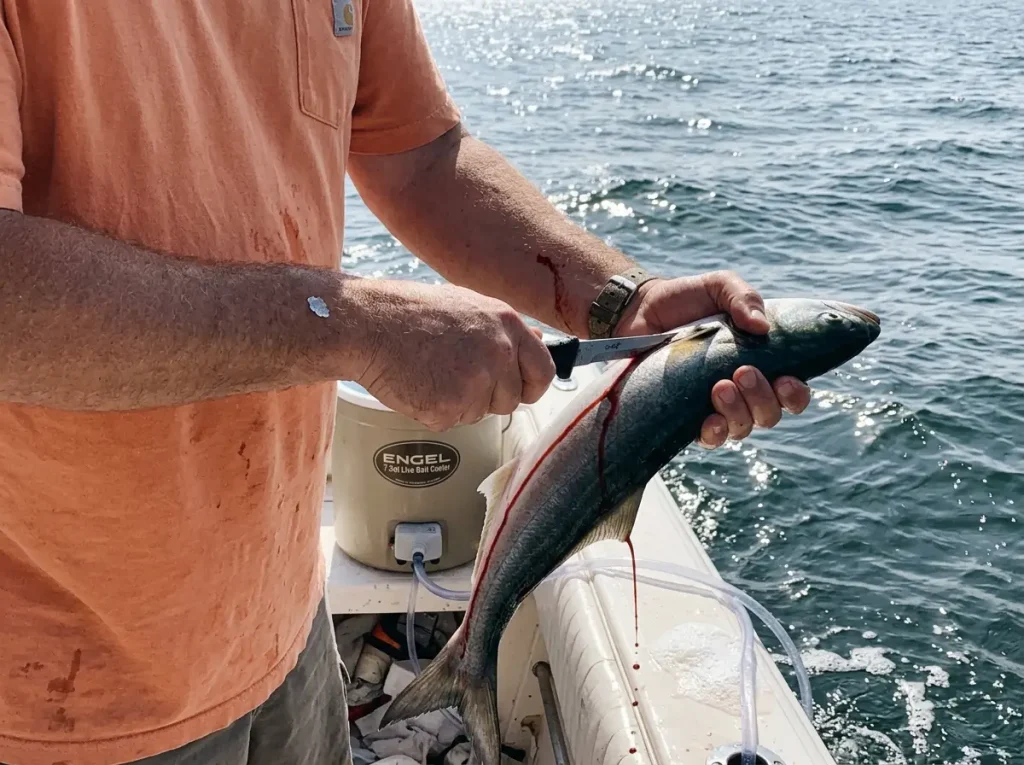
“Fish” is not one category, and treating it like one is how good catches go bad. Oily fish like mackerel and bluefish spoil fastest and carry the highest histamine poisoning risk, so bleeding the catch and dropping it in slurry has to happen immediately, not when the spot slows down.
Big pelagics like tuna and mahi need gutting fish before they go on ice, so the slush chills the belly cavity instead of stalling against warm organs. It starts the moment the fish is aboard, and landing the fish cleanly with a good net is what buys you the seconds to bleed it right.
Bait wants the opposite of a fish bag. It needs aeration, not direct ice contact, and direct ice finishes off live bait fast. For a day of live bait, running a livewell for live bait keeps it lively far better than any insulated bag can. Round-bodied fish and flat fish also pack differently, so know your target before you buy a shape and size.
The order is what separates edible pelagics from mushy ones: bleed, then slurry, then ice. Do it in that order, every single time.
Sizing Your Bag to What You Actually Catch
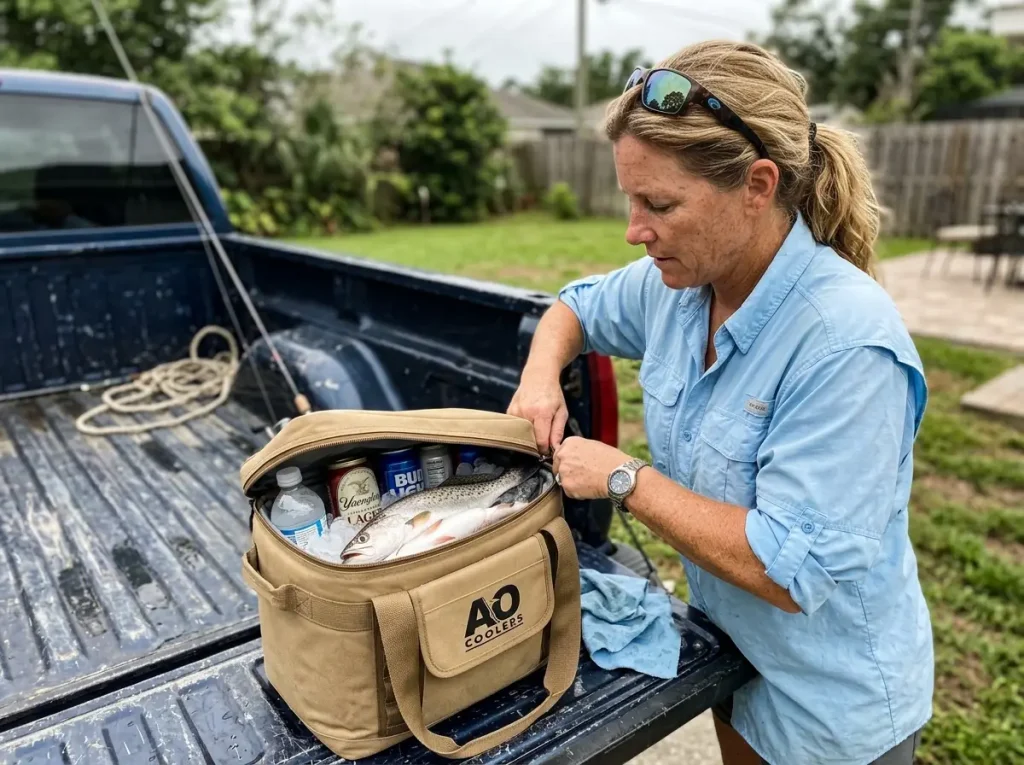
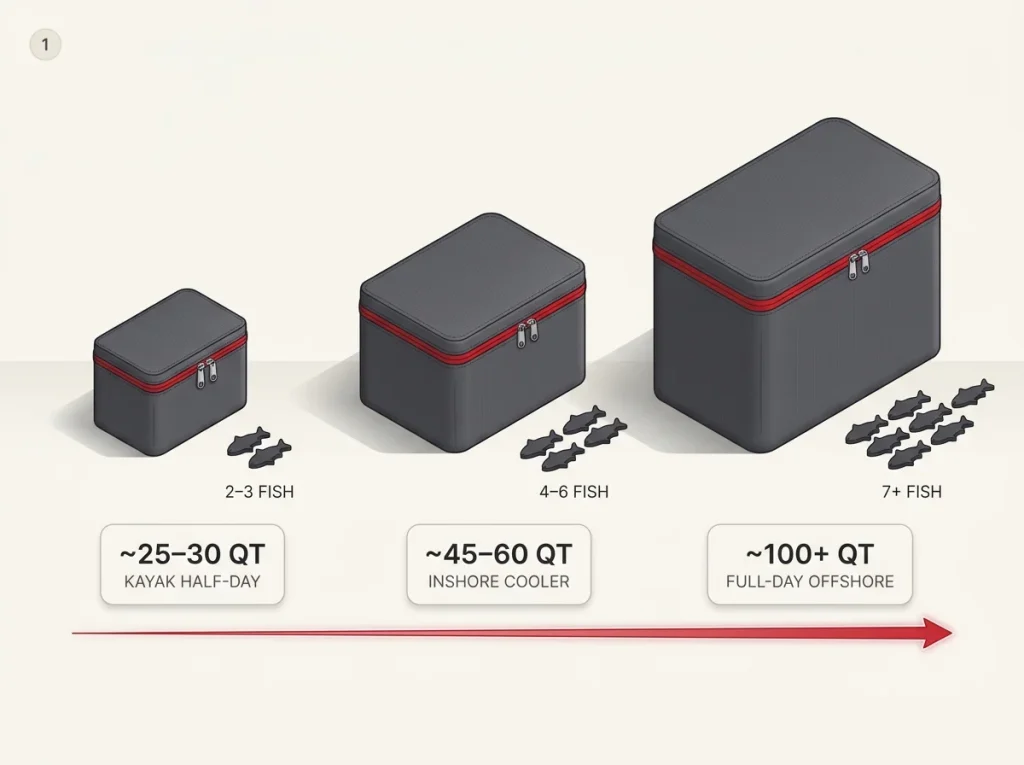
Buy for a normal day, not your best day ever. An oversized bag wastes ice and eats deck space, and a bag that never fills all the way costs you cold every trip. Match the capacity to the haul you realistically bring home.
Portability changes by platform. Kayak anglers live inside tank-well and hatch limits, so fold-flat construction and a shoulder strap matter more than raw volume, and packing gear onto a kayak safely means every inch counts. Boat anglers care about deck footprint. Hike-in anglers care about empty weight.
If you fish inshore and bring home a couple of trout or reds, a dual-purpose soft cooler you already trust for drinks may be all you need, no dedicated fish bag required. The AO Coolers Original Soft Cooler 48-Can (check price on Amazon) is the honest pick here, with a TPU liner and a rated 24 hours of ice at 120°F, so it handles a modest catch and a six-pack in one bag.
Sizing up runs the other way for offshore. When a full day means a mixed box of pelagics, you size for days of ice, not hours, and that usually means stepping into hard-cooler territory or the biggest soft bags on the market.
The Best Fishing Cooler Bags Worth Buying
Here is the short list, the bags worth putting your own catch in, sorted by how you fish rather than a single generic “best.” A cooler bag is one piece of a larger on-the-water kit, so if you are still filling out your complete fishing tools and accessories kit, slot this in alongside your pliers, scales, and net. Seam type, insulation, and honest ice-retention notes are called out for each.
Best Overall: Buffalo Gear Insulated Fish Cooler Bag 40x18in
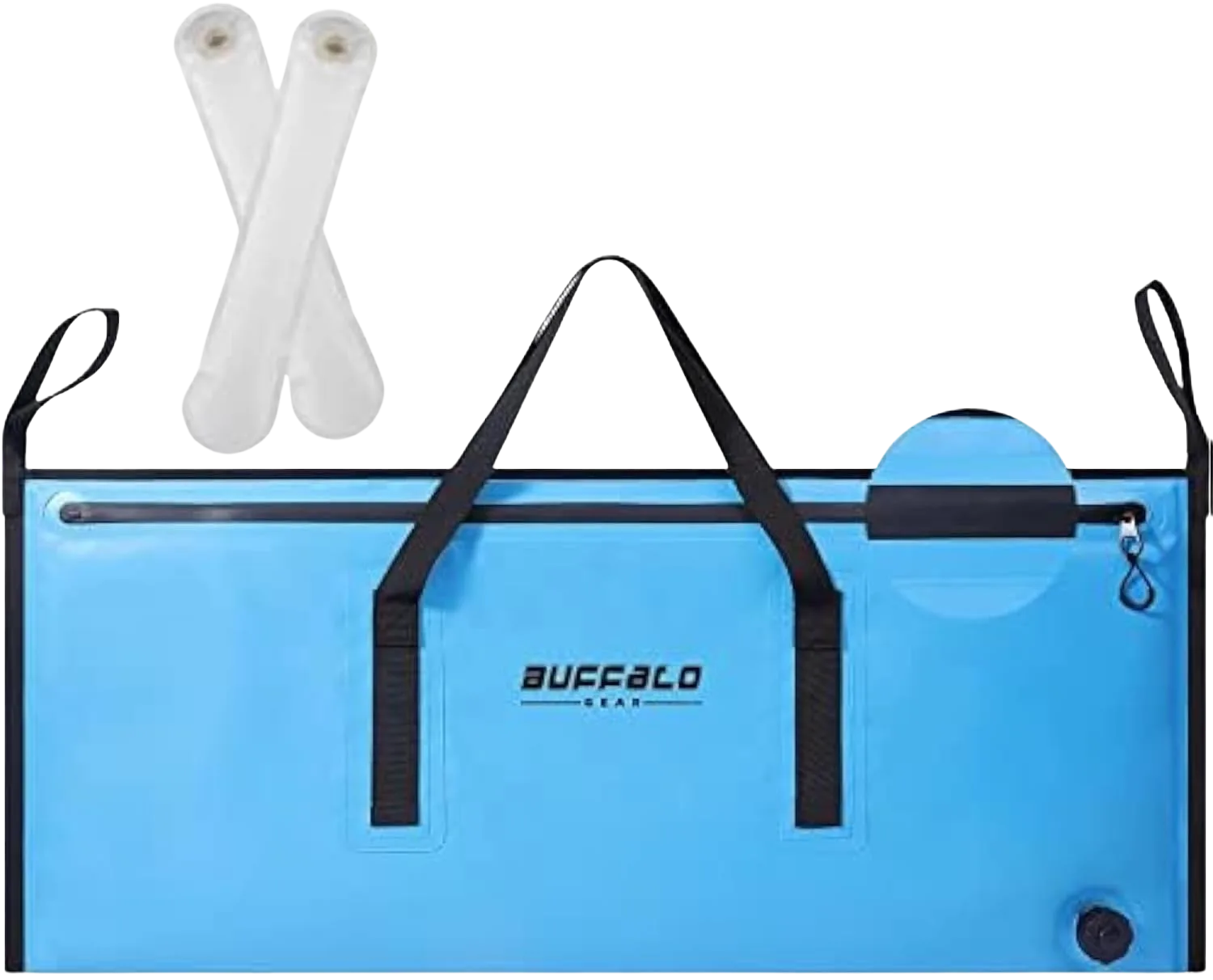
This is the one I would hand a friend who wants a single bag to cover most trips. The welded seams are the reason it earns “best overall,” because seam type predicts multi-season durability better than price alone. It is mid-range money for construction that shrugs off the exact abuse that ruins cheaper bags. If you want a smaller, lighter option from the same maker, the Buffalo Gear 26L flat-bottom covers short trips for less.
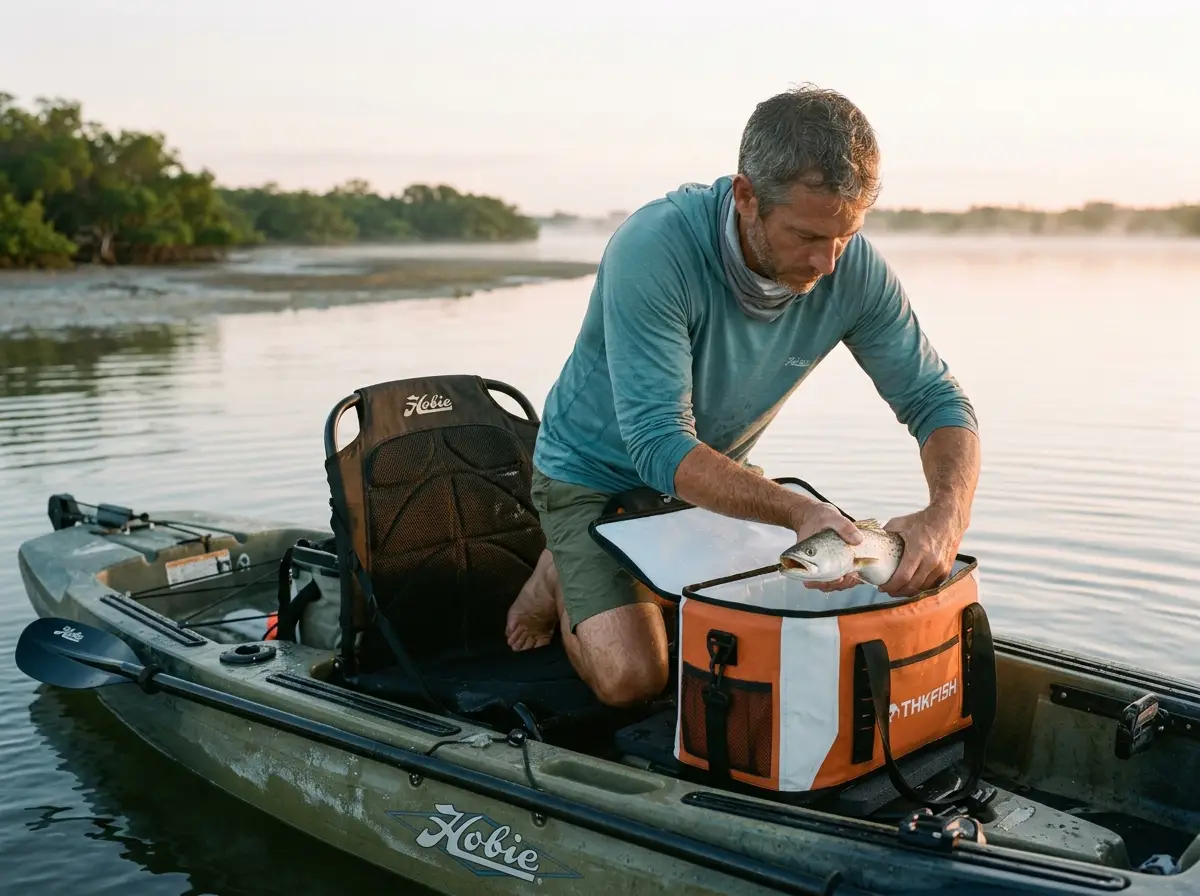
Best for Kayak Anglers: THKFISH Insulated Fish Cooler Bag 40x16in
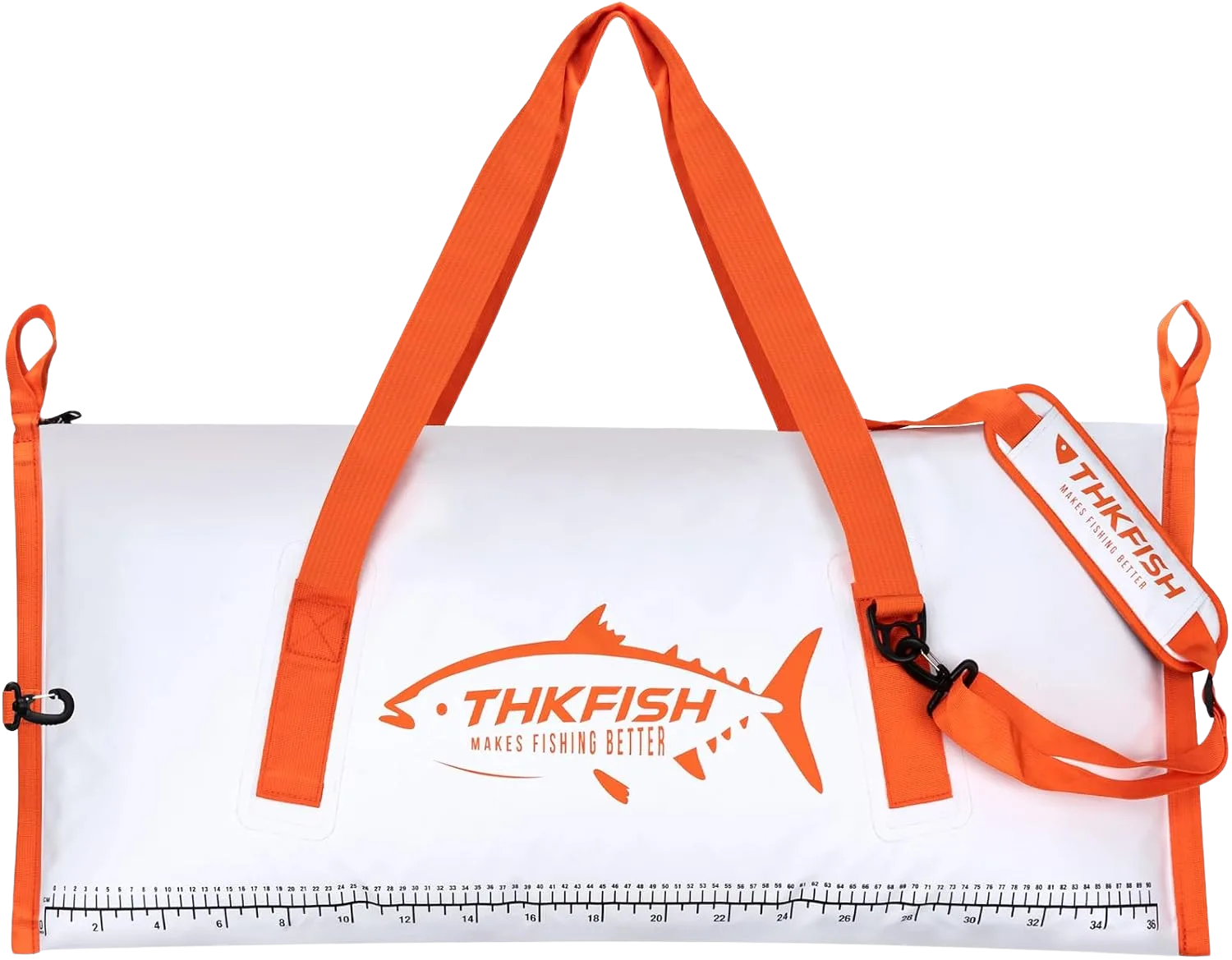
For kayak anglers, the win is welded construction in a size that actually fits behind the seat or in the tank well. You get the seam quality that matters without the bulk of a 40×18 offshore bag. It lies flat enough to stow when empty, which is the detail kayak fishers care about most.
Best for Offshore and Big Catches: Kuuma Heavy Duty 210 Quart
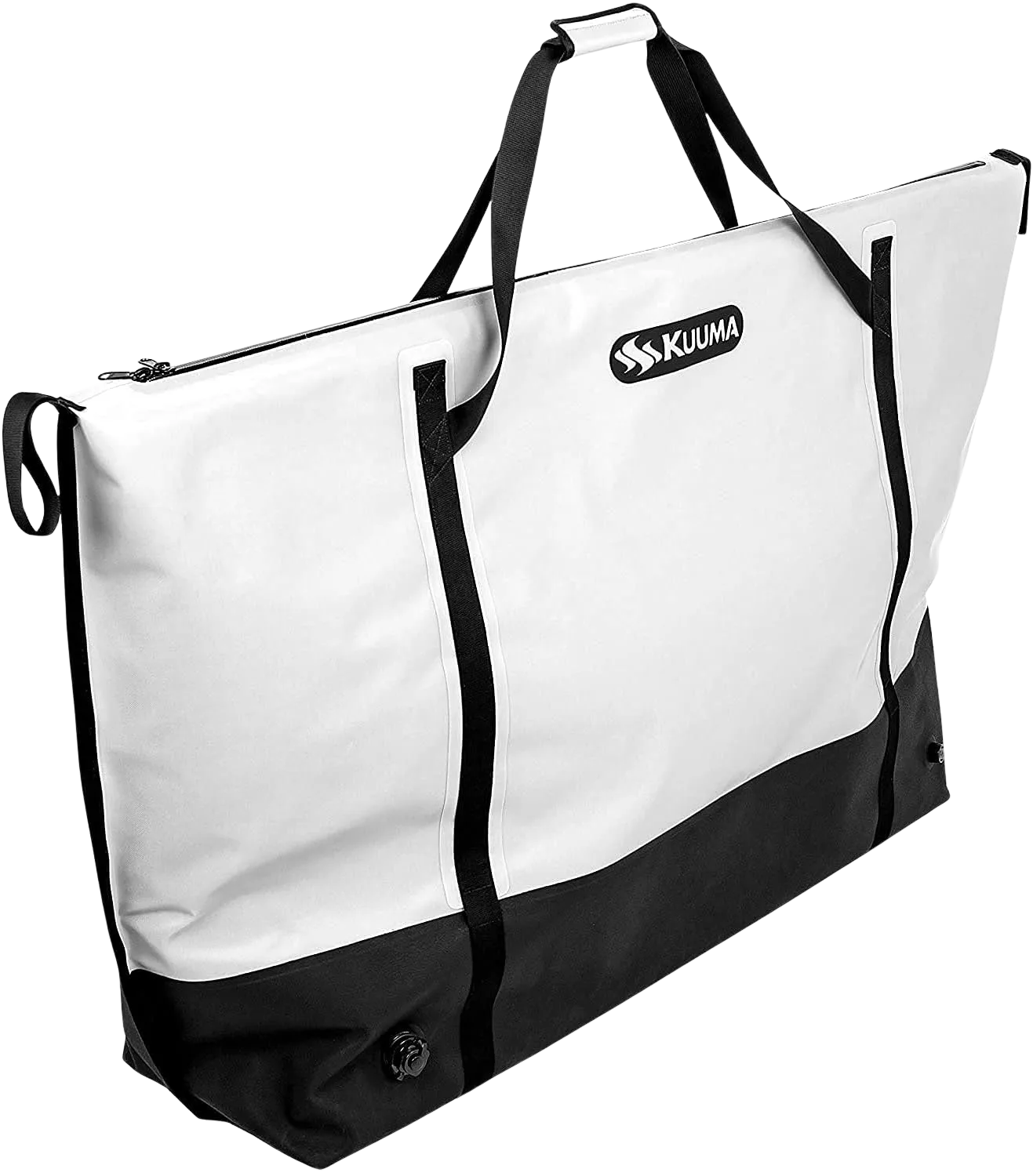
When the trip means a full box of pelagics, capacity and drainage win, and this is the bag built for that job. The drain plug matches the offshore slurry routine perfectly, since you can pull meltwater off the bottom without breaking the cold seal up top. It is premium money, so if 210 quarts is more than you need, the Kuuma 80 Quart uses the same construction in a smaller size.
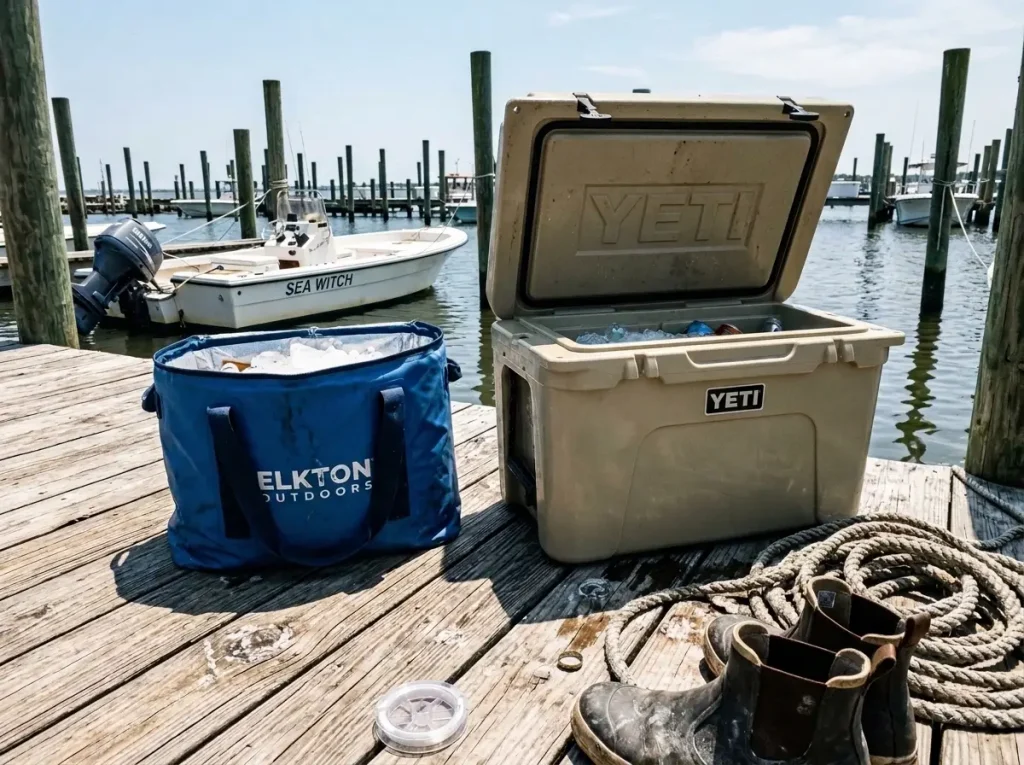
Best Budget: Elkton Outdoors 60L Insulated Fish Cooler Bag
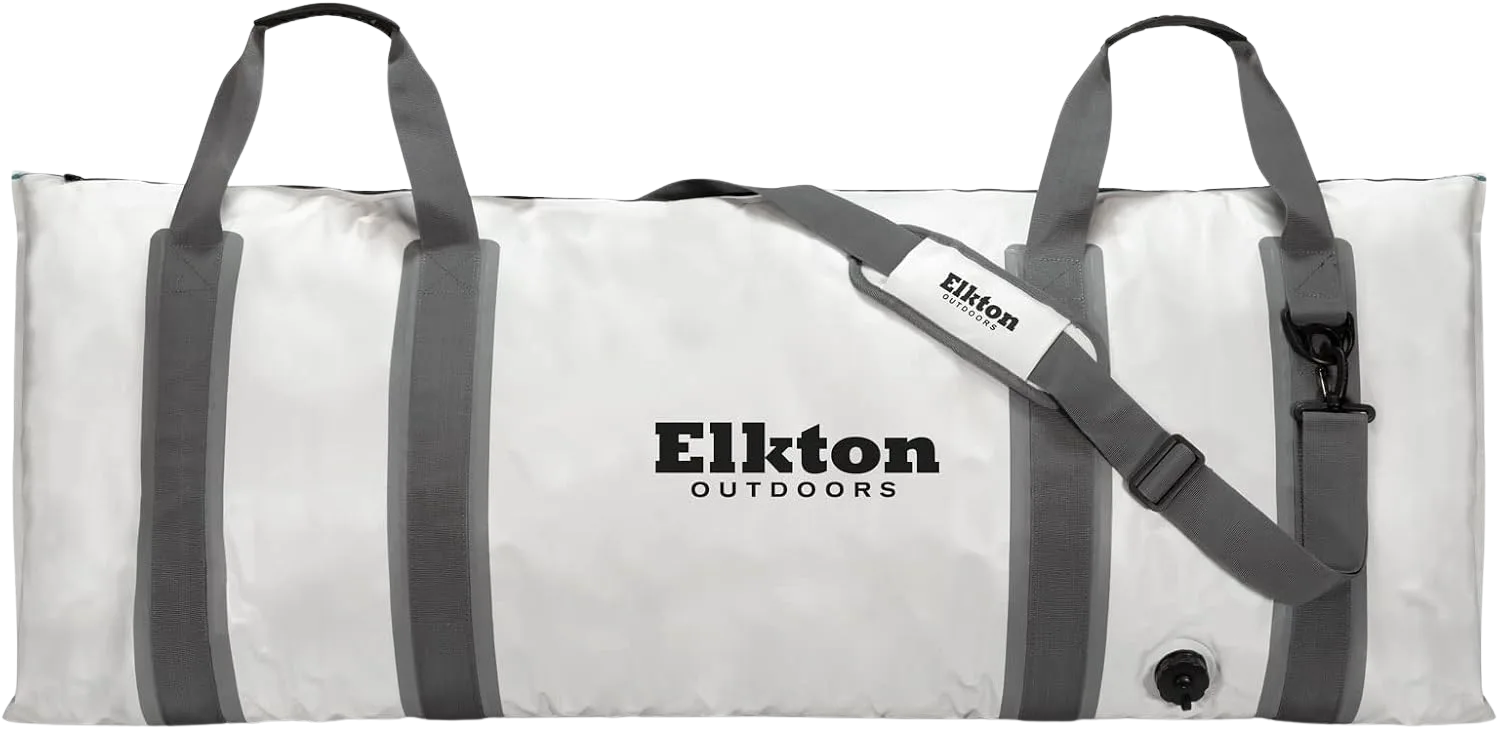
The budget slot comes with honest limits, which the next section covers in detail. For light inshore use and infrequent trips, this Elkton holds its own and keeps a modest catch cold. Just go in knowing a budget bag is a budget bag, and match your expectations to short days rather than multi-day hauls.
Best for Boat Deck Stability: MORXPLOR Leakproof Flat-Bottom Bag
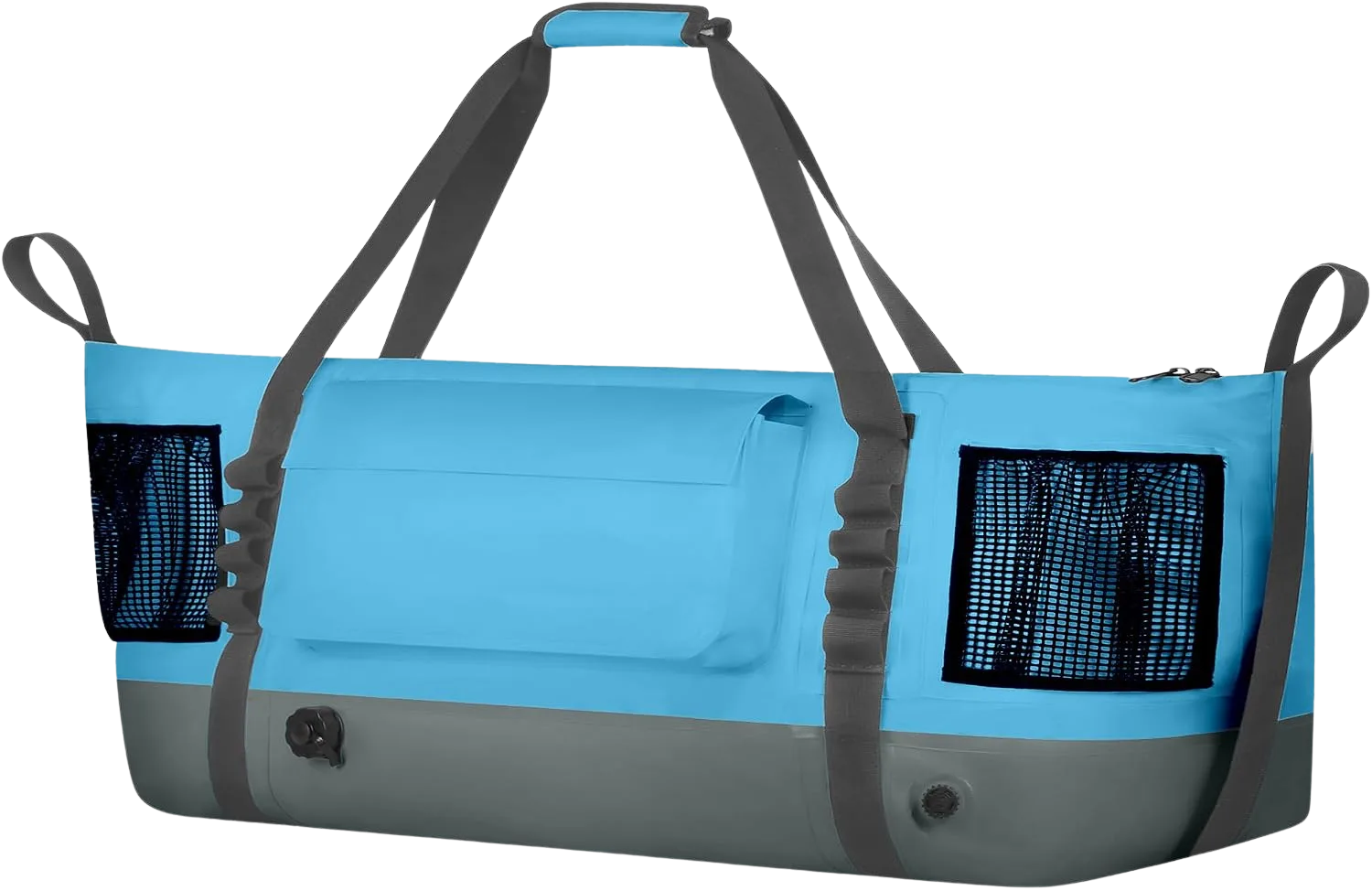
Anyone who has watched a round-bottom bag tip over and spill slush across the deck understands why the flat bottom matters. It holds its shape loaded or empty, which keeps your fish and your footing where they belong. The size range means you can run a small one on a kayak and a big one on the boat without changing brands.
Best Premium and Tournament: Opah Gear Fathom 4
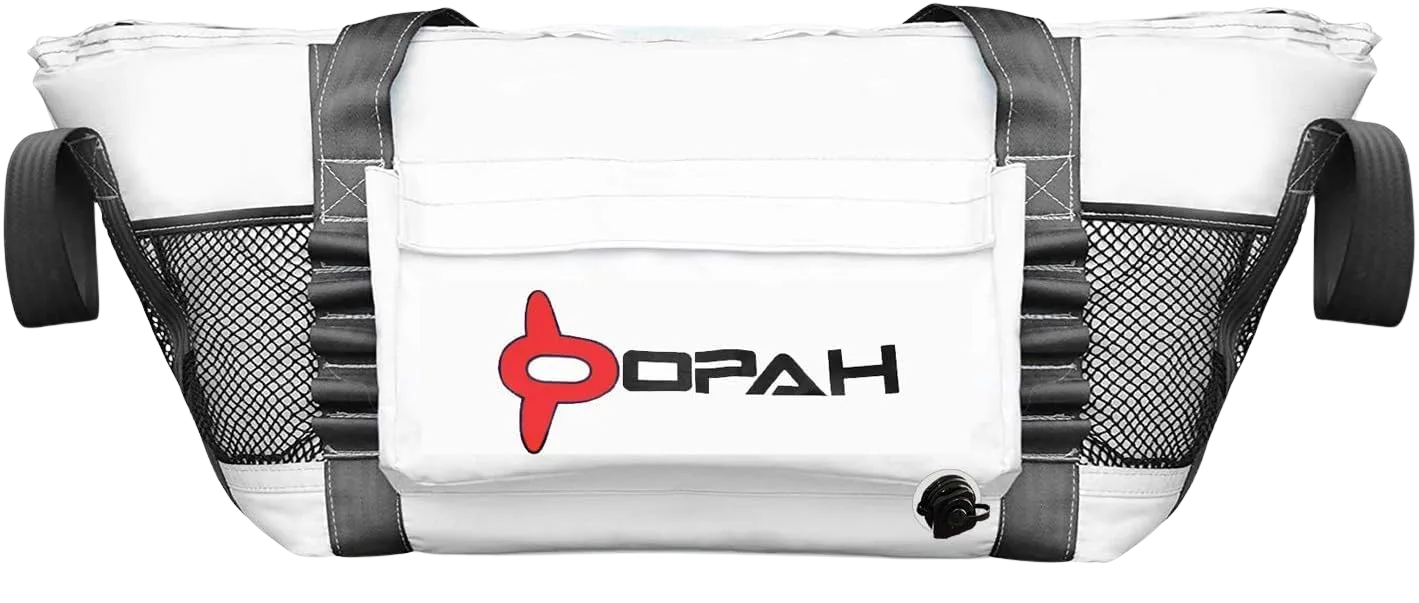
This is the splurge, and it earns it for anglers who fish hard and want a bag sized to a specific class of fish. The species-matched sizing means the Fathom 4 fits salmon-class fish without a lot of wasted air space to cool. If it is more bag than you need, the smaller Fathom 3 drops the size and the price while keeping the same build.
Best Compact and Inshore: Reliable Fishing Products Kill Bag 18×36
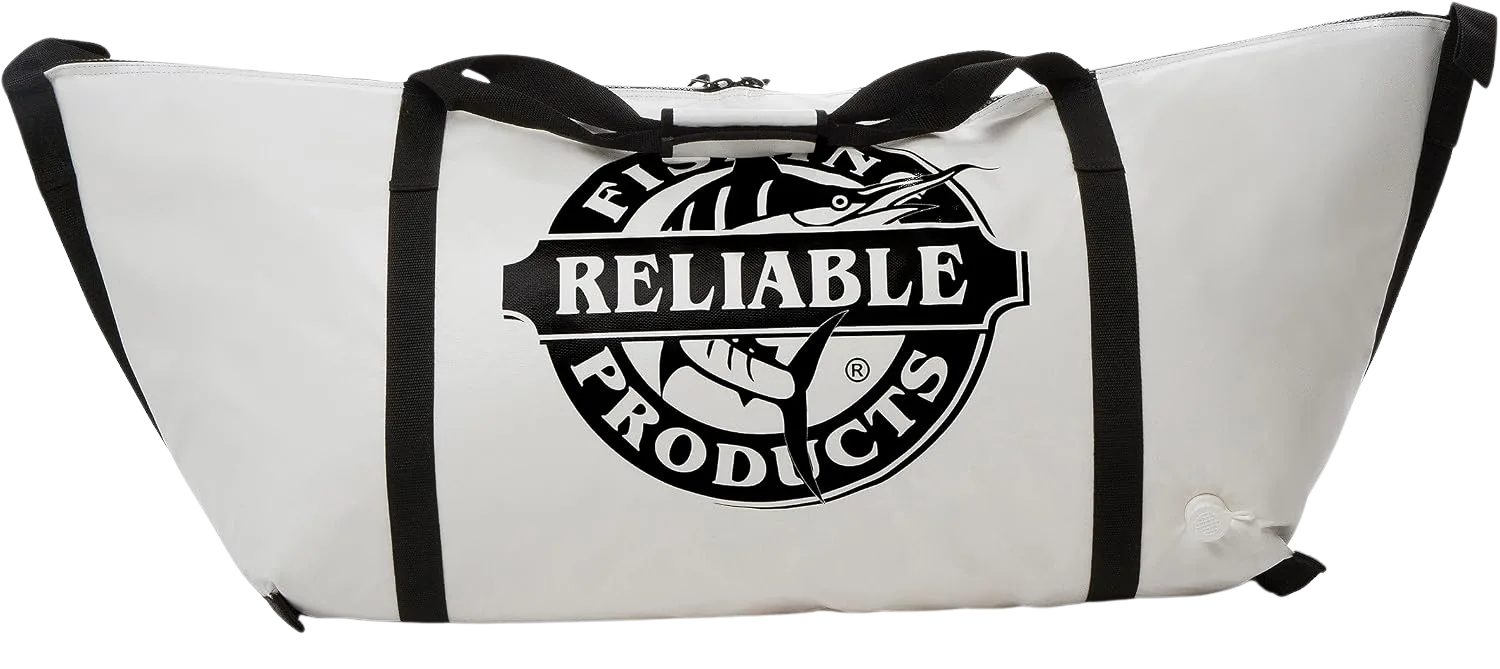
For inshore anglers who want a proven brand without hauling a giant bag, this compact Reliable does the job. It is a good honest illustration of the stitched-versus-welded choice, since it is a stitched model from a maker anglers have trusted for years. Keep it rinsed and dried, watch the seams, and it will handle plenty of inshore seasons.
Where Budget Bags Actually Fail
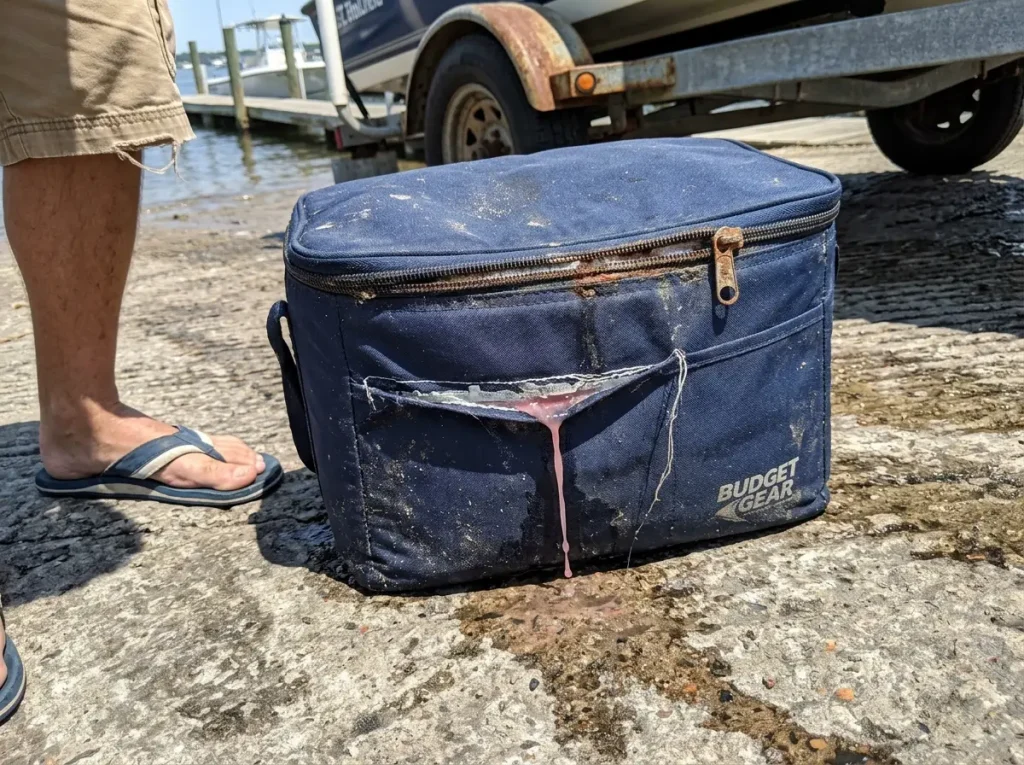
Nobody tells you where the cheap bag lets you down, so here it is straight. The real failure is at the stitched seams, which weep fish slime and gunk under sustained wet contact. That is a construction issue, not user error, and it shows up right when you have a messy box of fish.
Thin or uneven insulation is the second problem. A budget bag often loses the ice race at hour 24, exactly when a full day needs it most. Zippers that are not corrosion-resistant seize after saltwater exposure, and flimsy handles give out under a loaded bag.
None of that means budget is always wrong. For short inshore trips, light loads, and occasional use, a cheap bag is genuinely fine, and this fits the broader pattern of where budget fishing gear wins and where it fails. The trick is matching the price to honest expectations. Buy cheap for easy days, not for the offshore run you have been planning all season.
Pre-Chilling and Your Trip-Day Routine
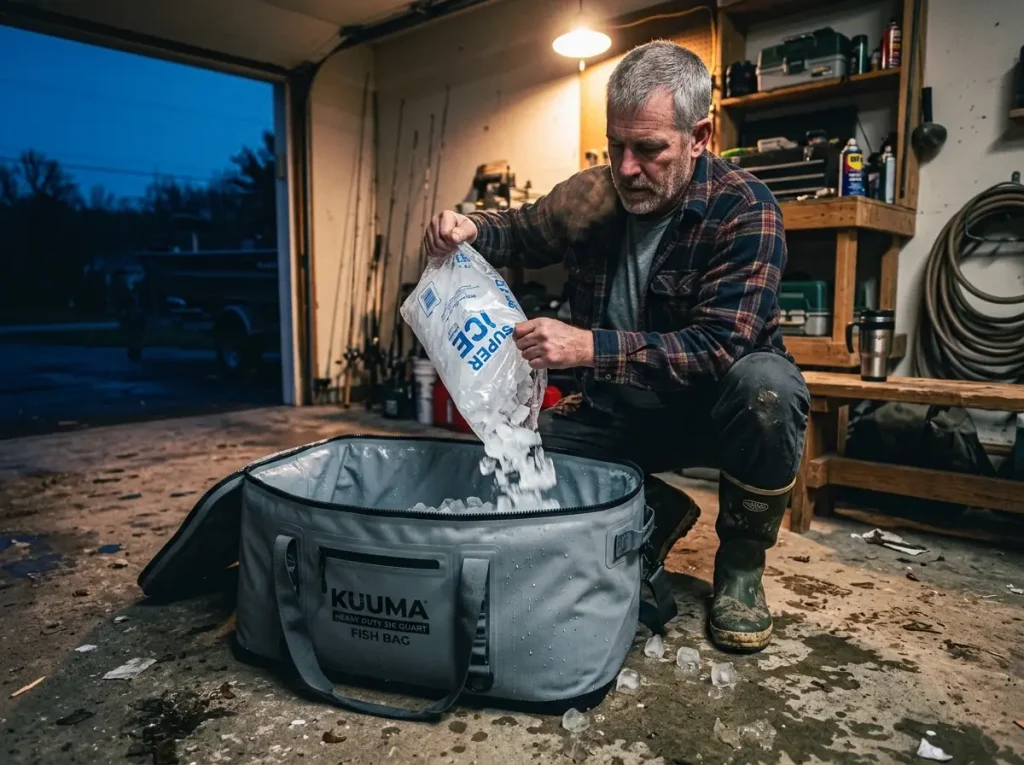
The unglamorous routine is what makes a bag’s rated ice life real instead of theoretical. Pre-chilling the bag for about 12 hours before you load it is the step almost everyone skips, and skipping it burns the first hours of ice before you even launch.
The trip-day sequence is worth memorizing: pre-chilled bag, base layer of ice or slurry, fish bled and gutted, topped with more ice, and drained as meltwater builds. Keep the bag closed and shaded, because every unzip dumps cold air, so plan your access before you are elbow-deep in a bite.
Independent testers pre-chill for 12 hours and run a two-to-one ice-to-contents ratio, and that is the same protocol that makes a rated ice number honest. Do it the night before with a sacrificial bag of ice you dump in the morning, and your real fishing ice starts the day already cold.
After the trip, get the fish to fillet or freeze promptly, because a bag buys you hours, not indefinite time. That final handoff matters as much as the chilling, and it lines up with the FDA’s standards for selecting and serving fresh seafood safely. When you get home, cleaning and filleting your catch right away is the natural last step in the gut, chill, and fillet chain.
Cleaning and Storage So Your Bag Lasts
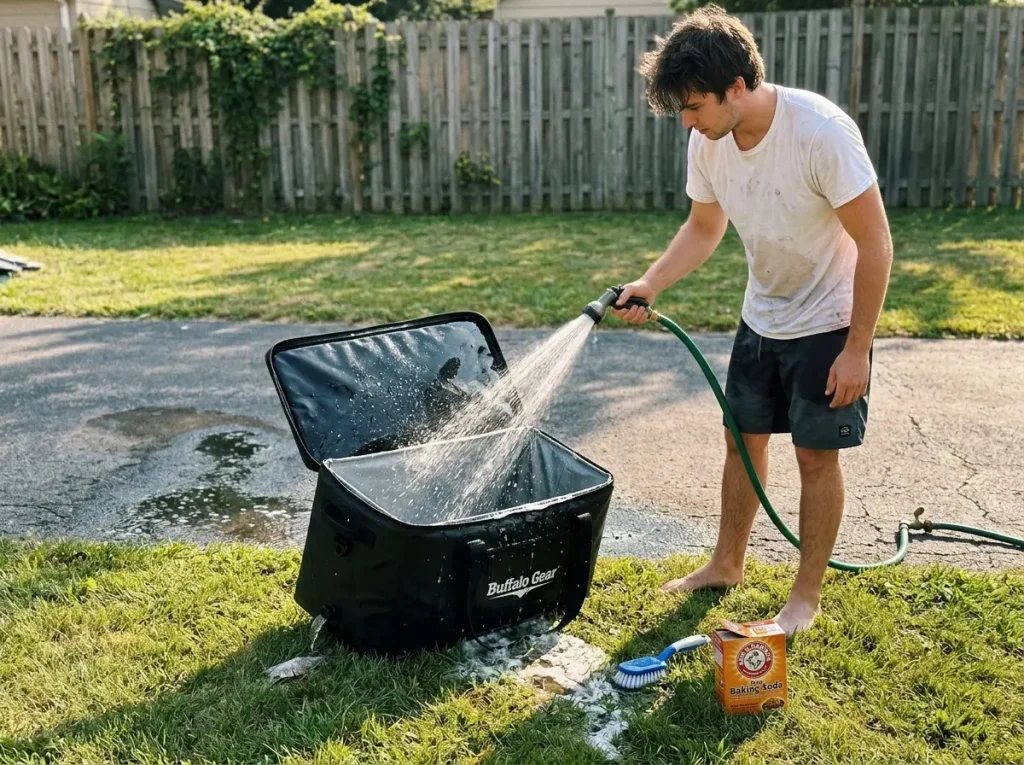
The bag that keeps fish fresh only stays that way if you do not leave it funky in the garage. Rinse it with fresh water and mild soap after every trip. A non-stick or TPU liner wipes clean in seconds, while bare PVC takes more scrubbing to get right.
Knock down odor with a baking-soda or diluted-vinegar wipe-down, then dry the bag fully open before storing it so mildew never gets started. Store it flat or loosely folded, out of direct sun, since UV degrades vinyl and coatings over the seasons.
A well-maintained welded-seam bag lasts many seasons, and that longevity is exactly what justifies paying up front. Post-trip is also when the right fillet knife earns its place, turning a well-chilled catch into clean fillets before cleanup. Leaving a damp, zipped bag in a hot truck is how a good bag starts to smell permanently, so air it out every time.
Conclusion
Three things decide whether your catch makes it home right. First, a cold bag is not the same as safe fish, so chill fast and build a slurry instead of trusting cubes alone. Second, buy for how and where you fish, whether that is kayak, offshore, or inshore, and read the seams before you read the marketing. Third, budget bags are fine inside honest limits, but welded seams are worth paying for if you fish hard.
Build your slurry before the first cast on your next trip, and check the difference in the fillets that night.
Frequently Asked Questions
01How long can you keep fish fresh in a fishing cooler bag?
With a proper slurry and enough ice, most fish hold fresh-caught quality for a full fishing day and often into the next. That assumes the fish was bled, gutted, and kept near 32°F. A bag buys you hours, not days.
02What is the difference between a fish kill bag and a regular cooler?
A kill bag is a soft, insulated, leak-resistant bag shaped for fish that folds away when empty. A hard cooler holds ice longer but takes fixed space. Soft wins for kayaks and tight decks, hard wins for multi-day offshore trips.
03Should you gut and bleed fish before putting them on ice?
Yes, especially for oily fish and big pelagics. Bleeding and gutting first lets the ice or slurry chill the belly cavity fast and cuts scombroid risk. The order is bleed, then slurry, then ice.
04Can a soft-sided fish cooler bag keep ice as long as a hard cooler?
Usually no. A quality soft bag holds ice for a long day, but a rotomolded hard cooler wins on multi-day retention. Pre-chilling and a two-to-one ice ratio narrow the gap for single-day trips.
05How do you get the fish smell out of a cooler bag?
Rinse it, then wipe it down with baking soda or diluted vinegar and dry it fully open before storing. A non-stick or TPU liner cleans up far easier than bare PVC, so the liner choice matters for odor.
Risk Disclaimer: Fishing, boating, and all related outdoor activities involve inherent risks that
can lead to injury. The information provided on Master Fishing Mag is for educational and informational purposes
only. While we strive for accuracy, the information, techniques, and advice on gear and safety are not a substitute
for your own best judgment, local knowledge, and adherence to official regulations. Fishing regulations, including
seasons, size limits, and species restrictions, change frequently and vary by location. Always consult the latest
official regulations from your local fish and wildlife agency before heading out. Proper handling of hooks, knives,
and other sharp equipment is essential for safety. Furthermore, be aware of local fish consumption advisories. By
using this website, you agree that you are solely responsible for your own safety and for complying with all
applicable laws. Any reliance you place on our content is strictly at your own risk. Master Fishing Mag and its
authors will not be held liable for any injury, damage, or loss sustained in connection with the use of the
information herein.
Affiliate Disclosure: We are a participant in the Amazon Services LLC Associates Program, an
affiliate advertising program designed to provide a means for us to earn advertising fees by advertising and linking
to Amazon.com. As an Amazon Associate, we earn from qualifying purchases. We also participate in other affiliate
programs and may receive a commission on products purchased through our links, at no extra cost to you. Additional
terms are found in the terms of service.