

In this article
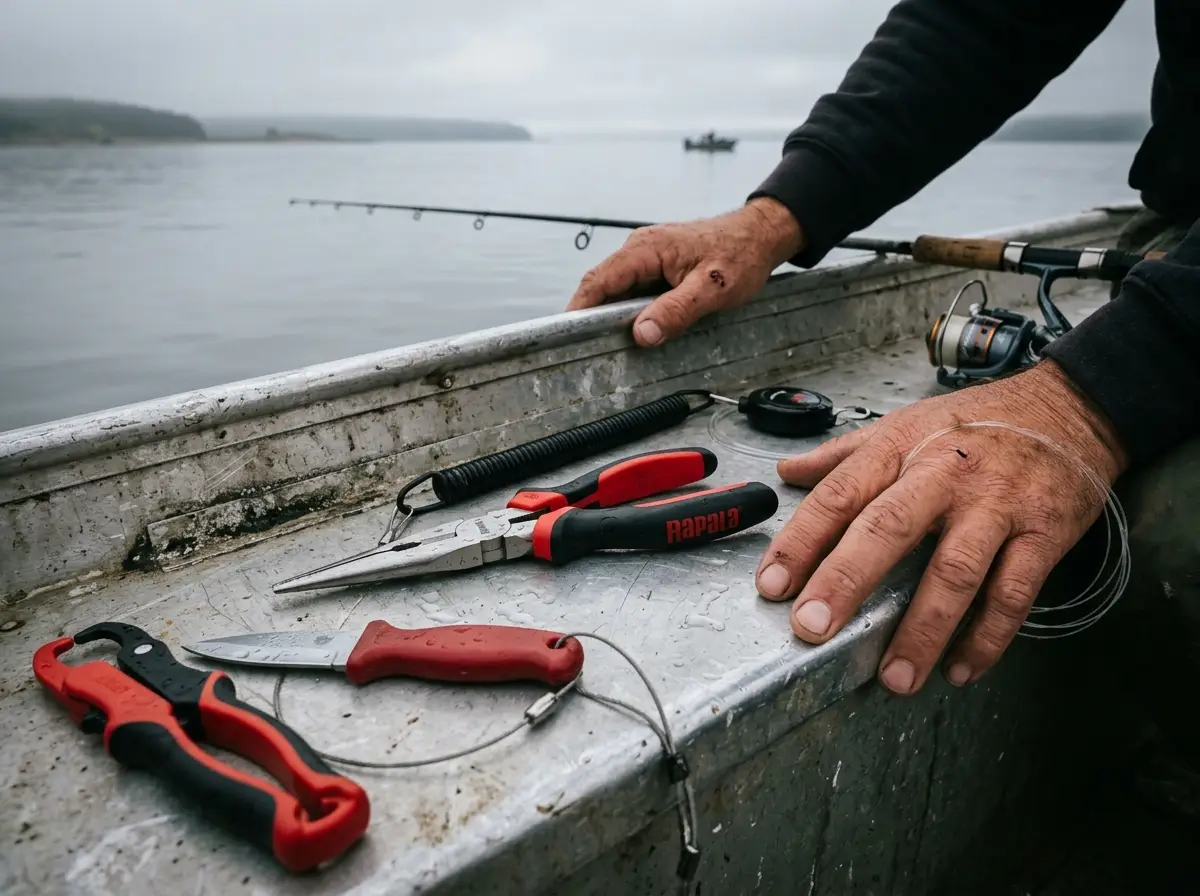
A fish is thrashing on the deck, the hook set deep past the jaw, and you’re patting four pockets for the one tool you actually need. That fumble, not the brand stamped on your pliers, is what costs you the fish and its odds of swimming away. The honest answer to “just pliers, or a whole kit?” has almost nothing to do with which model wins a roundup and everything to do with how, where, and how often you fish. This is the decision layer that sits above every buying guide, so you sort out what you need before you spend a dime on which.
Here’s the short version, matched to how you actually fish.
| How You Fish | What You Actually Need | Why |
|---|---|---|
| Casual freshwater, panfish and bass | One good multi-function plier | Cuts line and pops jaw-set hooks in one tool |
| Toothy or deep-hooked fish | Plier plus a dedicated hook remover | A long reach saves gut-hooked fish a plier can’t |
| Kayak or surf, no dry storage | Compact all-in-one kit on a retractor | Everything clipped and one-handed beats best-of-each |
| Frequent saltwater or big fish | Standalone plier plus separate braid cutter | Your highest-use task earns a best-in-class tool |
The Real Question — Just Pliers, or a Small Kit?
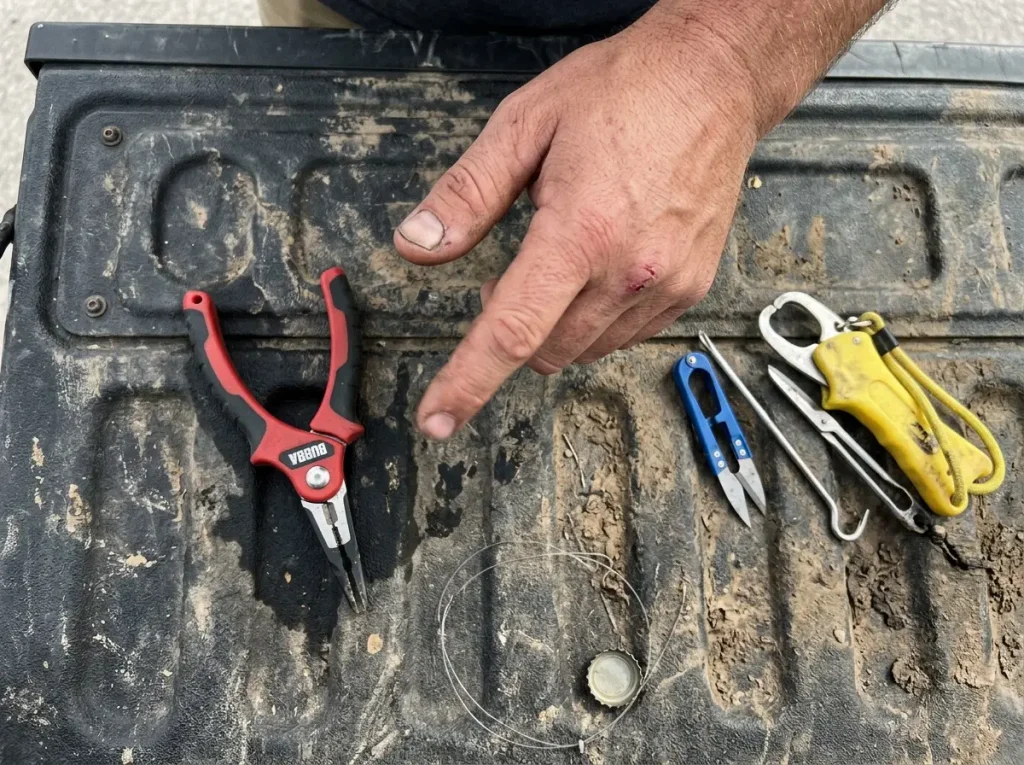
Everybody types “best fishing pliers” into the search bar. Almost nobody has the wrong brand. What most anglers actually get wrong is the number of tools they carry. There’s a drawer in a lot of tackle bags full of three or four half-seized pliers, each one bought on a frustrated drive home after the last pair failed. That drawer is the real problem this article solves.
You’ve got two honest paths, and neither is wrong. One is a single quality plier that cuts line and backs out hooks, so you carry one thing and stop thinking about it. The other is a small kit: a plier, a dedicated line cutter, and a hook remover or disgorger for the fish that swallow deep. The trick is knowing which camp you’re in before you buy, not after.
That scattered-drawer pattern even has a name among anglers who’ve lived it. Call it tackle-box drawer creep: you buy one tool at a time, in the moment, until you’ve quietly outspent the kit you swore you didn’t need. Deciding on purpose is cheaper than deciding by accident, every time.
One thing worth saying up front, because it undercuts every product link below. No tool at all beats the wrong tool if grabbing it means the fish sits on the deck longer. Speed of release matters more than gear, and a peer-reviewed review of catch-and-release mortality backs that up. If you want the whole category laid out end to end, our full rundown of fishing tools and accessories covers every piece; this piece is just about deciding how many of them you truly need. If you’re still kitting out from scratch, it’s also worth seeing how little gear you actually need to start before you buy in bulk.
When Your Fishing Actually Needs More Than Pliers
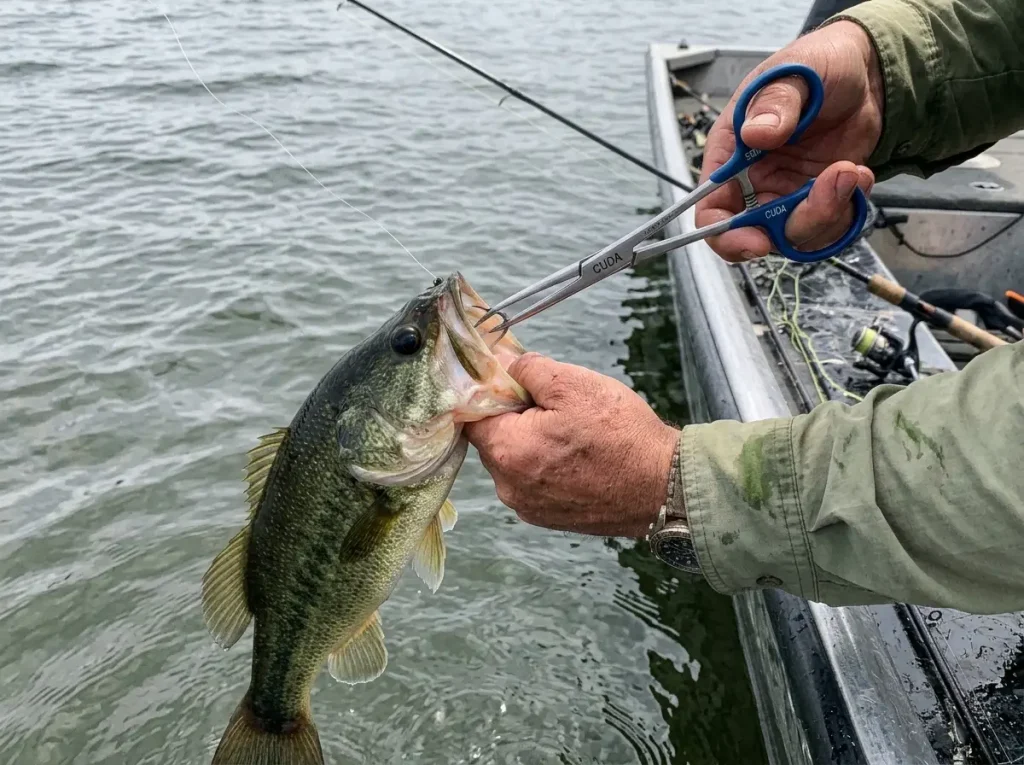
Here’s the test that cuts through it. A lip-hooked bluegill and a gut-hooked striped bass are two completely different problems. One needs a quick twist and a nudge. The other needs a tool that physically reaches somewhere your fingers and a stubby plier can’t.
The numbers make the case better than any sales pitch. A fish hooked cleanly in the jaw or mouth almost always lives, with mortality under one percent. A deep-hooked striper runs closer to twenty percent mortality within a week, and NOAA’s research on catch-and-release and discard mortality lays out why that gap is so wide. A dedicated hook remover with real reach, a long forceps or needle-nose style, isn’t about convenience there. It’s the difference between that fish swimming off and floating.
So run yourself through it honestly. If you fish casual freshwater, panfish and bass on artificials, one quality multi-function plier genuinely covers hook removal, line cutting, and the occasional light crimp. You don’t need more, and buying more just gives you a drawer to lose things in. But if you chase toothy or large species, work leaders with a crimper, or fuss with split-ring swaps, those are jobs a single plier does badly. That’s where a dedicated cutter or a split-ring plier earns its keep.
The beginner-versus-veteran split falls out of this naturally. Start with one plier you won’t fight with, and only graduate to separate best-in-class tools once a specific task, braid cutting or deep unhooking, becomes the move you make most trips. If one good plier is your answer, our guide to the fishing pliers worth buying walks through materials and sizing so you pick once and don’t come back. And for the bigger fish that make you want a hook remover, the right landing net cuts handling time more than any plier upgrade will.
Anglers who fish salt a lot land on the same setup: buy one standalone plier well, then add a cheap separate braid cutter for the task you do most. A plier’s built-in cutter chews braid; a dedicated blade slices it, and that’s the cut you make forty times a day.
Where You Fish Decides Your Kit
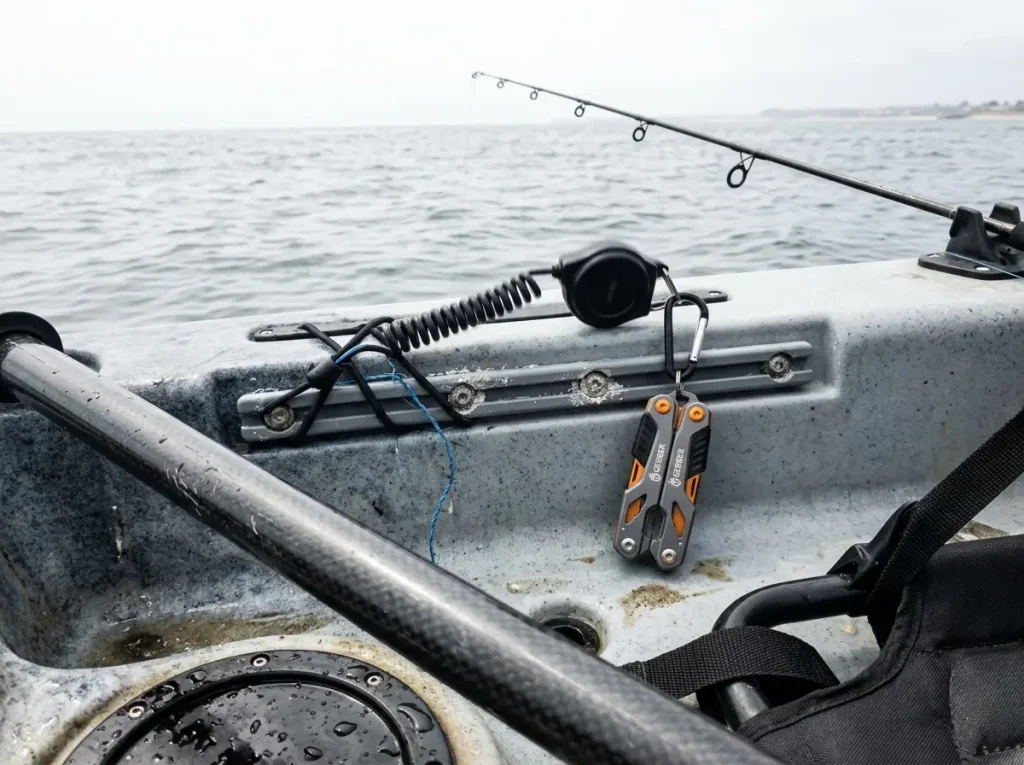
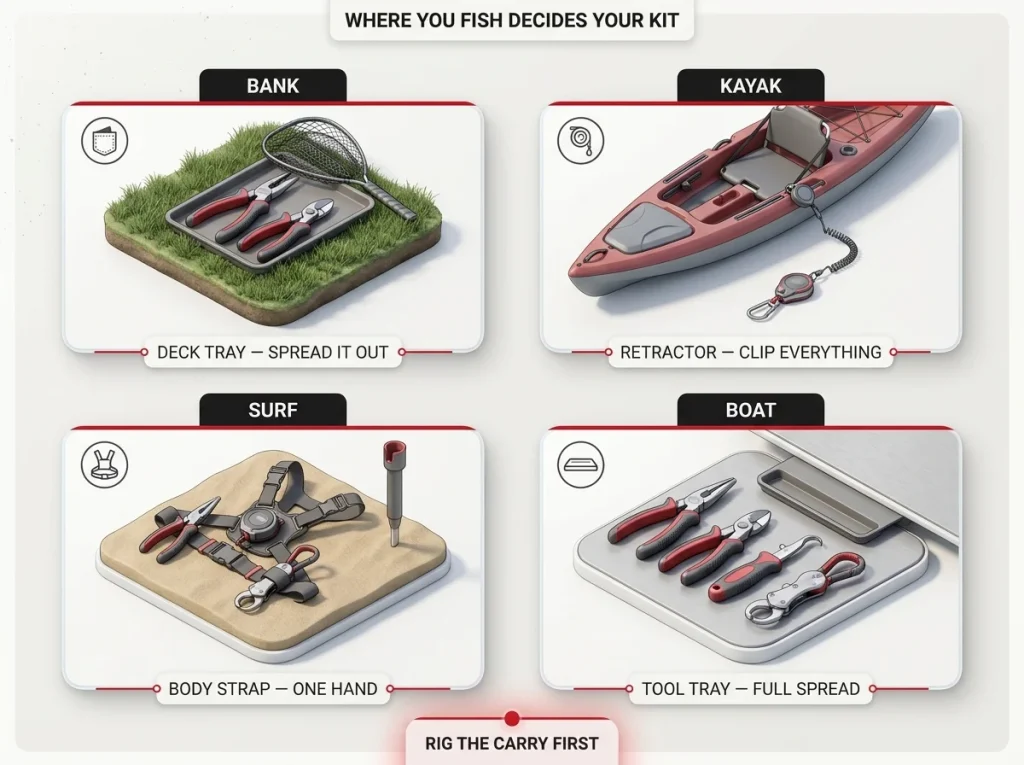
Now flip the whole thing on its head, because the fish often aren’t what makes the call. The water does. On a boat you can spread six tools across the deck and grab whatever you need. On a kayak you’ve got no dry storage and one free hand, and suddenly “grab-and-go” beats “best of each” by a mile.
That’s not a preference, it’s geometry. Multi-tools get recommended for travel, kayak, and surf fishing specifically for the times when it isn’t convenient to carry a spread of separate tools. On a kayak with no rod locker and no truck bed to set things on, every tool clipped to a retractor, a zinger in fishing slang, and reachable one-handed is worth more than owning the single finest version of each. The gear you can’t reach in the moment might as well be at home.
Bank and boat flip that logic. You’ve got storage, you’ve got a flat surface, you’ve got time to swap tools without a fish sliding back into the water. That’s exactly where a dedicated premium plier plus a separate cutter makes sense, because the friction that kills a kit-vs-standalone argument on a kayak just isn’t there. Cold-weather and ice fishing add their own wrinkle: bulky gloves mean you want a larger grip and a lanyard, so a dropped tool doesn’t disappear down the hole.
Kayak and surf anglers will tell you the retractor matters more than the tool hanging off it. A great plier you have to dig for loses to a mediocre one already in your hand. Rig the carry system first, then pick what clips to it.
The kayak case runs deeper than tool choice, and it’s worth understanding kayak fishing’s real risks before you load up a small boat with sharp gear. The mobility problem shows up the same way when you’re surf fishing from the beach, walking a mile of sand with everything strapped to you. And if you want the retractor done right, we broke down how to rig a tool retractor that won’t fail, because the clip usually gives out before the cord does.
Kit vs Buying Tools Separately — The Honest Take
Time for the straight answer nobody selling you a kit wants to give. An all-in-one kit isn’t a scam, and it isn’t the premium play either. It’s a convenience trade, plain and simple. You’re paying for one purchase and a built-in way to carry it, not for the best version of each tool inside.
Do the math on it and the picture gets clear. A name-brand kit runs about what one mid-tier standalone titanium plier costs on its own. So “kit or pliers” usually isn’t a budget question at all. It’s a do-I-already-own-the-other-tools question. If your bag is empty, a kit fills it in one shot for the price of a single nice plier. If you already own a plier you like, a kit is mostly redundant metal.
The catch, and it’s a real one, is that the bundled hook remover is often the weakest piece in the set. The tool that matters most on a deep-hooked fish is sometimes the one the kit skimps on to hit its price. You’re trading roughly eighty percent of the best standalone performance per tool for the convenience of one buy and a tidy carry system. For a lot of anglers that’s a smart trade. For the one task you do constantly, it usually isn’t.
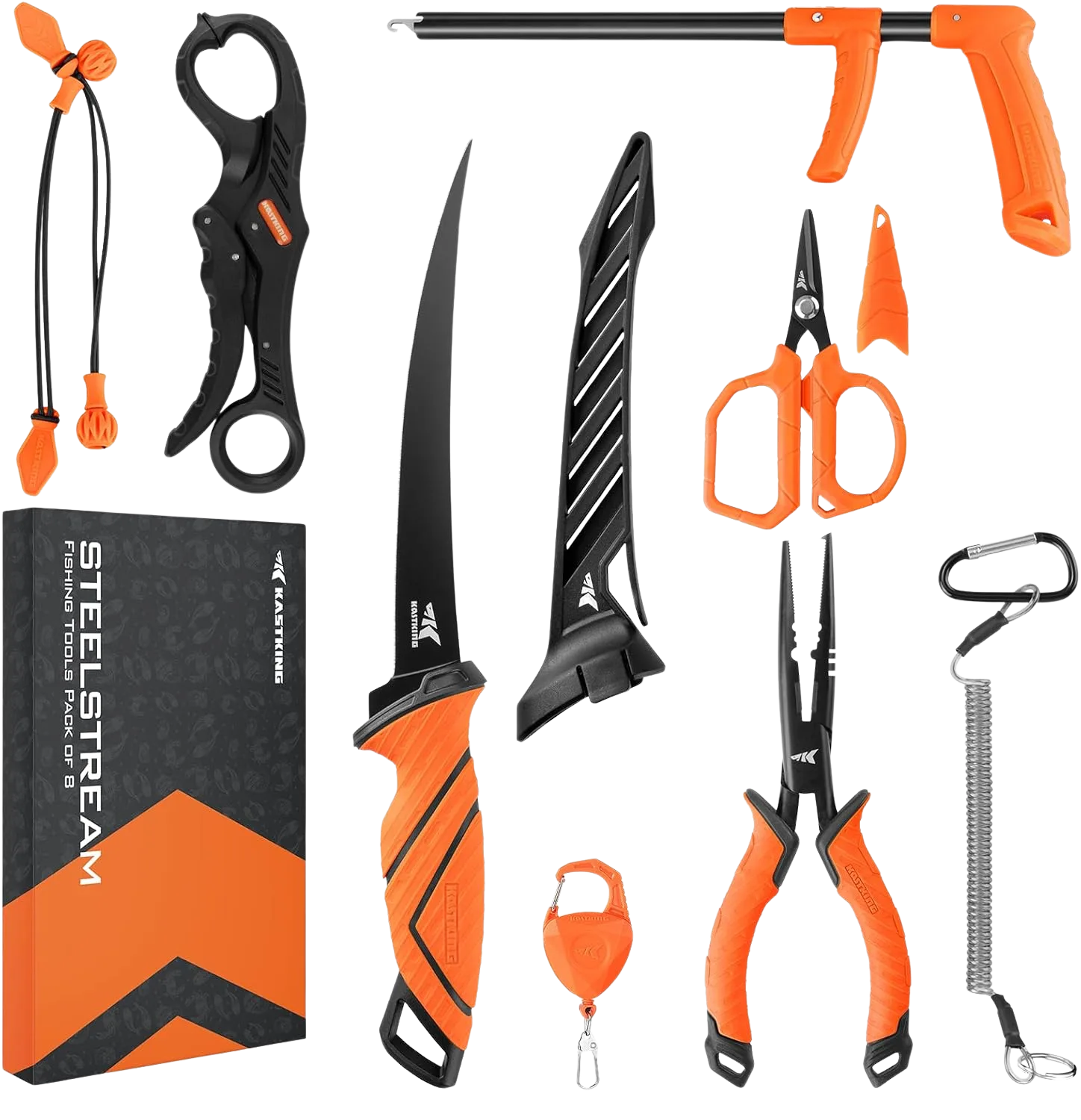
If you want a nicer-finish take on the same idea, the EGO FireSteel Fishing Tool Kit (check it on Amazon) bundles a plier, utility shears, a lip gripper, and a fillet knife, each in its own sheath. It’s the name-brand alternative for readers who like the one-buy approach but want a step up in build. Either way, once you know the kit route is yours, our breakdown of which fishing tools actually earn a spot tells you what belongs in the bag beyond the pliers.
The Habit That Matters More Than Which Option You Pick
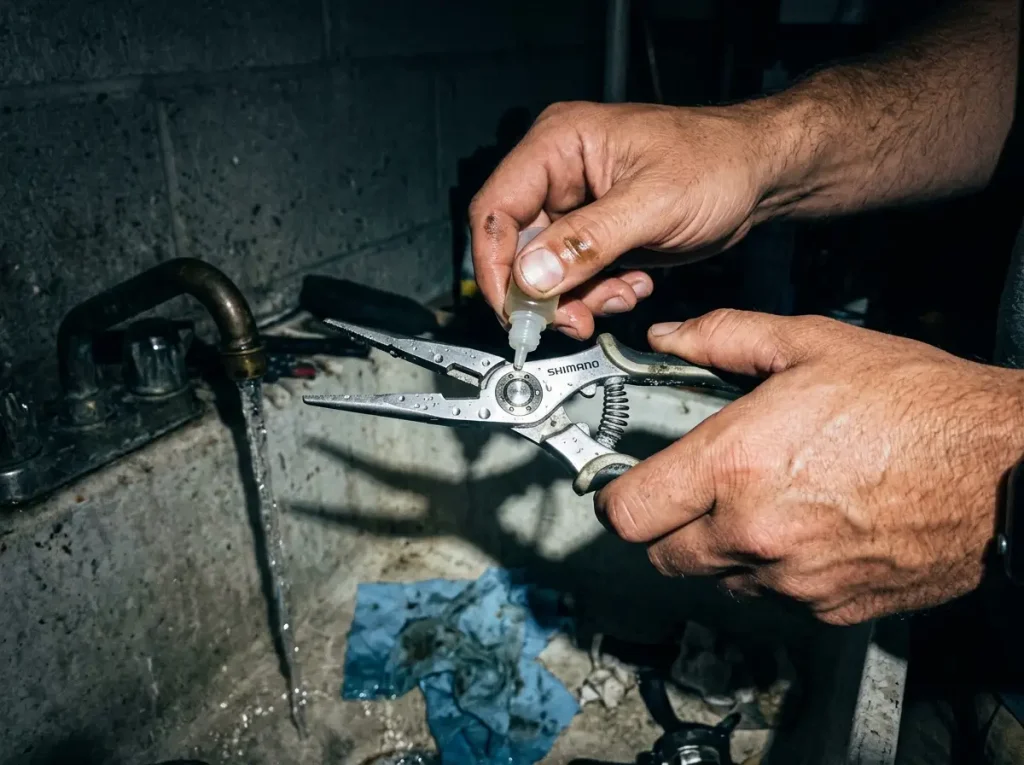
Here’s the part that outranks every decision above, and almost nobody tells you. The reason those drawer pliers seized shut isn’t the metal grade. It’s that they went back in the bag wet and salty, trip after trip, until the pivot locked up for good. Every buying guide warns you that cheap pliers rust at the hinge. None of them tell you the fix.
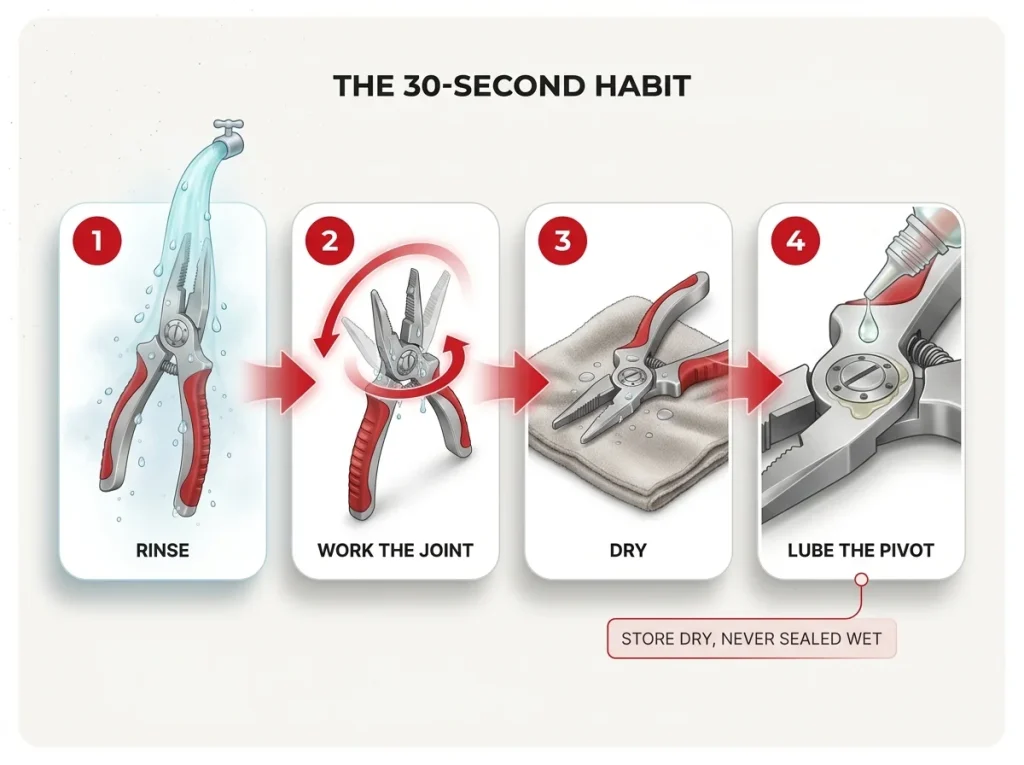
The routine takes thirty seconds. Rinse the tool in fresh water after every saltwater trip, work the joint open and closed a few times under the water, dry it off, then put a single drop of light reel oil or a corrosion blocker on the pivot and the spring. That’s it. Do that and a plain stainless steel or aluminum plier will outlast a neglected titanium one at the only place that actually fails, the hinge. No plier is truly rust-proof without the habit, whatever the box claims.
That’s the quiet truth that makes the whole premium pliers versus budget pliers argument smaller than it looks. The habit matters most for saltwater pliers, since salt finds the pivot fast, while a freshwater setup rinsed of mud and grit forgives a little more neglect. Material buys you a second line of defense, not a free pass. A corrosion-resistant pivot on a good plier helps, and if you want to weigh those materials, our guide to corrosion-resistant pliers built for salt covers what survives. But maintenance is the first line, and it applies to whichever path you chose. A kit’s spring-loaded plier and a standalone both die at the same neglected joint.
Store tools dry, not sealed wet. A zipped-up sheath with a damp plier inside is a little corrosion chamber. Let it air-dry first, then stow it. That one change saves more pliers than any coating on the market.
The Bottom Line
The decision was never about the brand on the box. It’s about the number of tools your fishing actually demands: one good plier for casual water, a small kit when species or scenery force your hand. Where you fish often decides more than what you’re chasing, so match your carry to your water before you match it to the fish. And whatever you land on, the thirty-second rinse-and-lube habit will outlast the price tag every time.
So before your next trip, dump out what you carry and lay it on the tailgate. Cut it down to what your water and your fish honestly need, clip it where you can reach it, and keep it rinsed. It’s the kind of call you’d talk through with a buddy at the boat ramp, and now you can make it in about a minute. That’s the whole game.
Frequently Asked Questions
01Do you really need fishing pliers and a separate line cutter?
For casual freshwater, no. A good multi-function plier cuts line and removes hooks fine. If braid cutting is your most frequent job, a dedicated cutter pays off, because plier cutters chew braid instead of slicing it.
02How do you keep fishing pliers from rusting shut?
Rinse them in fresh water after every saltwater trip, dry them, and put a drop of light lube on the pivot and spring. That thirty-second habit prevents the seized hinge that kills most pliers, regardless of the metal.
03Are all-in-one fishing tool kits worth it?
They’re worth it when you value one purchase and a built-in carry system over owning the best version of each tool, which makes them ideal for kayak and surf anglers. If one task dominates your fishing, buy that tool standalone instead.
04What size fishing pliers should I get?
A 7-inch plier handles most freshwater and inshore work. Go longer, around 8.5-inch, for toothy fish so your hand stays clear of teeth, and drop to a 6.5-inch short reach for tight finesse work where control matters more than length.
05What tools do beginners actually need besides pliers?
Usually just two, a line cutter and a way to handle the fish like a lip gripper or net. Everything else is situational. Our guide to what a beginner tackle box actually needs keeps the list honest.
Risk Disclaimer: Fishing, boating, and all related outdoor activities involve inherent risks that
can lead to injury. The information provided on Master Fishing Mag is for educational and informational purposes
only. While we strive for accuracy, the information, techniques, and advice on gear and safety are not a substitute
for your own best judgment, local knowledge, and adherence to official regulations. Fishing regulations, including
seasons, size limits, and species restrictions, change frequently and vary by location. Always consult the latest
official regulations from your local fish and wildlife agency before heading out. Proper handling of hooks, knives,
and other sharp equipment is essential for safety. Furthermore, be aware of local fish consumption advisories. By
using this website, you agree that you are solely responsible for your own safety and for complying with all
applicable laws. Any reliance you place on our content is strictly at your own risk. Master Fishing Mag and its
authors will not be held liable for any injury, damage, or loss sustained in connection with the use of the
information herein.
Affiliate Disclosure: We are a participant in the Amazon Services LLC Associates Program, an
affiliate advertising program designed to provide a means for us to earn advertising fees by advertising and linking
to Amazon.com. As an Amazon Associate, we earn from qualifying purchases. We also participate in other affiliate
programs and may receive a commission on products purchased through our links, at no extra cost to you. Additional
terms are found in the terms of service.