
In this article
You are braced against the current, both hands on a fish, and your nippers are gone. The tether let go at the clip, not the cord, and they are already ten feet downstream and sinking. Anyone who wades a lot ends up with the same short list of gear that actually holds and gear that quietly disappears, and a tool lanyard retractor system for wading lives right at the top of that list. The trick is knowing which specs matter, which ones are marketing noise, and where a cheap zinger turns into a hazard once you are standing in moving water. This guide covers the types, the numbers worth checking, the wading-specific failures nobody warns you about, and honest picks by how often and where you actually wade.
What a Tool Lanyard Retractor System Actually Is
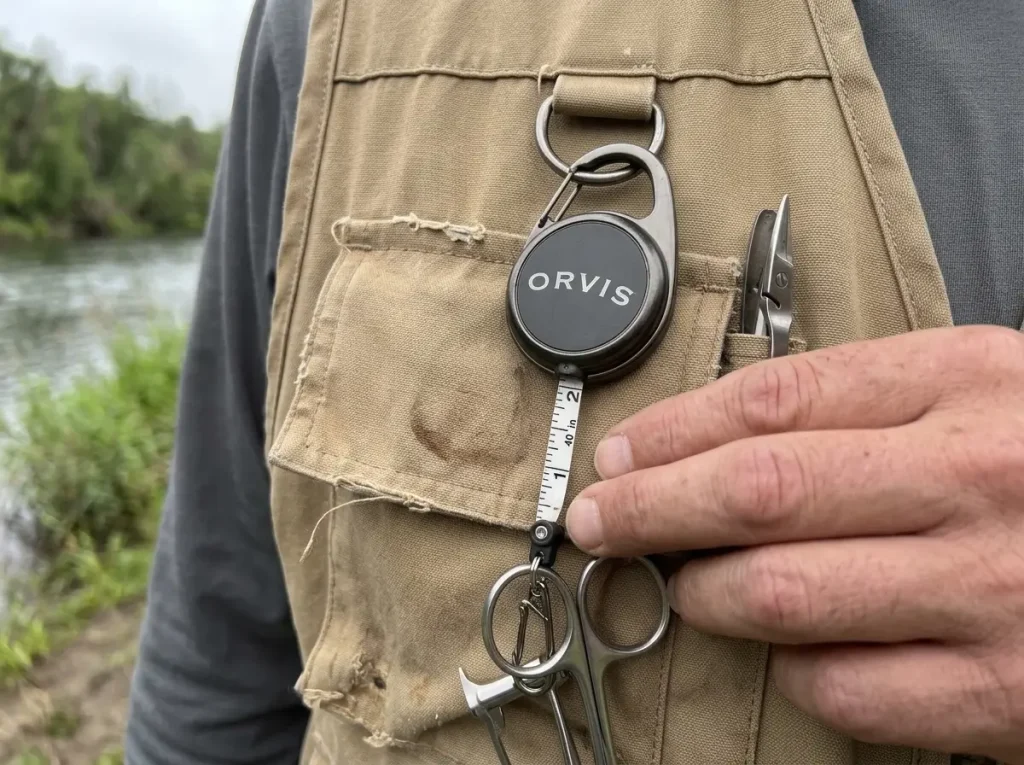
It is the thing clipped to every guide’s vest that most beginners never think about until they drop a good pair of forceps in three feet of moving water. At its simplest, a retractor is a clip, a spring-loaded retractable cord, and a spool housing. You pull the tool out to use it, let go, and the cord snaps it back to dock close against you.
On the water, nobody calls it a retractor. The word anglers actually use is zinger, and the two terms mean exactly the same thing. Retractor is what it says on the packaging, zinger is what gets said at the launch.
What it solves for wading specifically is reach and retention. When both hands are busy and you cannot bend down into the current, a tethered tool stays exactly where your hand expects it. The anchor point where a tool seats between uses gets called the tool dock, and a good setup keeps every dock within a natural reach.
You know your rig is dialed in when you stop thinking about your tools entirely. They are just there when your hand goes for them, snap back when you let go, and never end up in the river. If you want to see where a retractor fits in the broader picture, our overview of where a retractor fits in your whole on-water tool kit lays out the full system.
Types of Retractors and Which Fits Wading
Guides pick a retractor type for a reason, and it usually comes down to how the cord behaves when you actually spin, reach, and net a fish in current. Here are the styles worth knowing.
Fixed-Pin Zingers, the Classic
This is the simplest and cheapest design: a round housing, a fixed pin, and a straight retractable cord. It works fine for a single light tool like nippers. The catch is that the pin and clip are also the first parts to fail, which is the theme of the next section.
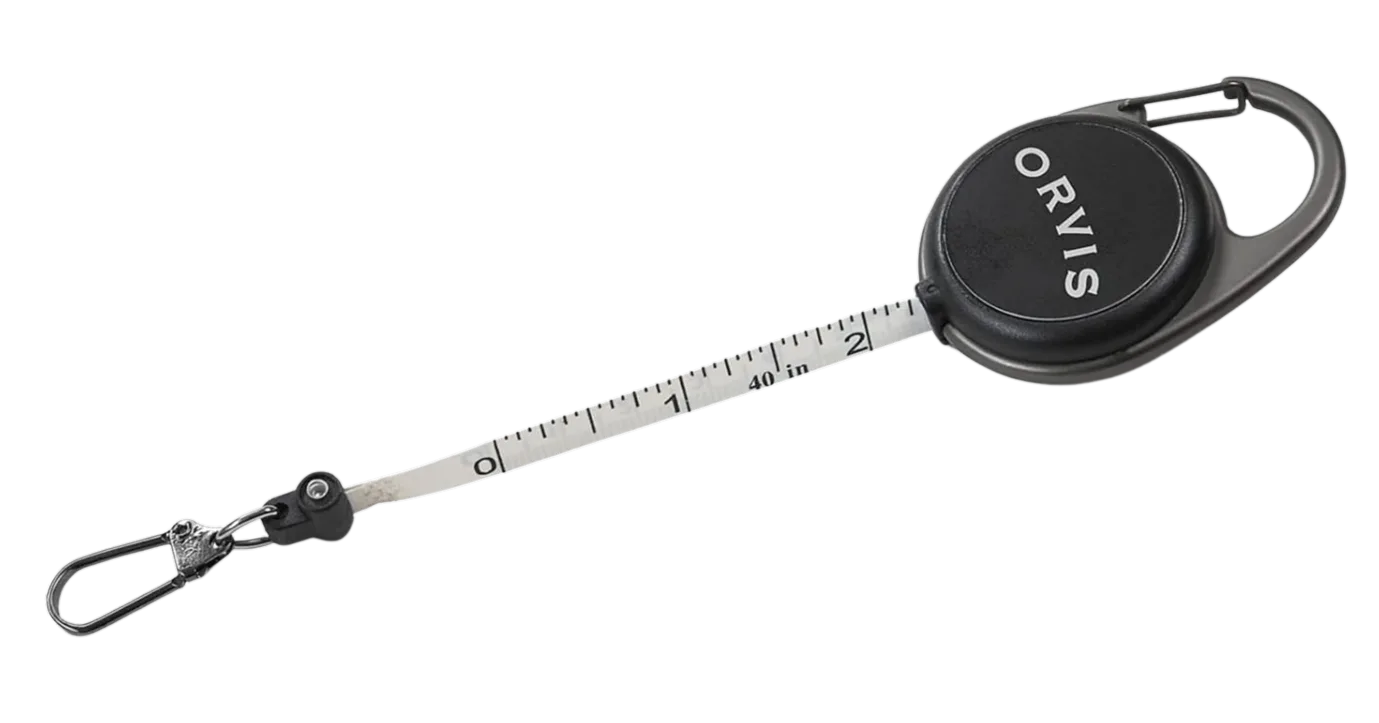
Swivel and 360-Degree Retractors
A swivel retractor lets the cord rotate freely at the mount, so it does not twist or birdnest when you turn to net a fish. In current, that matters more than it sounds. You pivot downstream, reach across your chest, and the cord simply follows instead of kinking up. The 360-degree swivel is the single upgrade most wading anglers actually notice day to day.
Mounts and Multi-Tool Designs
Beyond the cord, the difference is how the unit attaches: a carabiner clip, a threaded stud mount, a belt clip, or a back clip. Carabiner styles move between packs easily, threaded studs sit flush and low, and back clips ride tight against a vest. Magnetic-front and dual designs let one anchor point hold two small tools or release a net cleanly, which we get into when we cover setup.
What to Look For — Cord Length, Breaking Strength, and the Part That Actually Fails
Everybody reads the breaking-strength number and ignores the little pin holding the whole thing to their vest. That pin is exactly what lets go first. Here is how to read the specs that matter and skip the one that fools most buyers.
Cord Length
Retractor cord length clusters between 18 and 36 inches across the market. For wading, shorter is usually better. An 18 to 24 inch cord keeps tools tucked against you and cuts down on swing, so nothing bounces at knee level and catches the current. A 36 inch cord buys you more one-handed reach, but every extra inch is more line dangling where fast water can grab it.
Breaking Strength, Honestly
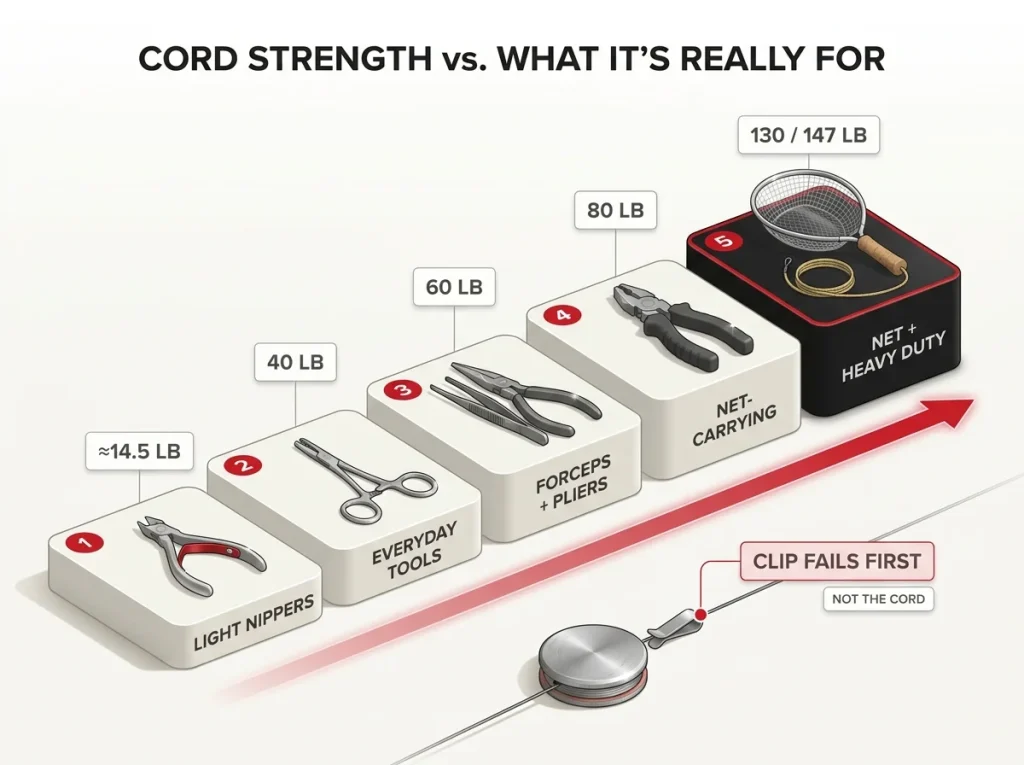
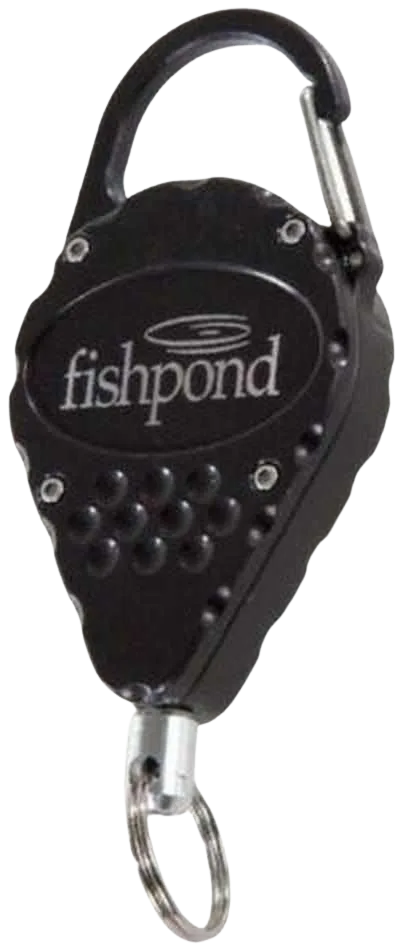
Breaking strength runs a wide range. Budget three-packs sit around 14 pounds, which is fine for light nippers and nothing else. Mid-tier units land at 40 to 80 pounds, and premium cords like the Fishpond Arrowhead’s 130-pound-test line rate out to a 147-pound breaking point. That top end is what handles a net or a hard yank from a fish without complaint.
The Clip Is the Real Failure Point
Here is what the spec sheets bury. Talk to enough anglers and the pattern is always the same: retractors break whether they were cheap or expensive, and almost always at the pin or clip connecting to the vest, not on the cord. The line rating is the number every listing brags about, and it is the number that matters least. Scrutinize the hardware instead. Look at how the clip is built, whether the pin is riveted or crimped, and how the swivel seats. That is where your money either buys longevity or does not.
Before you trust a new zinger with an expensive tool, hang your whole rig and give the clip a few hard tugs at the pin. If there is any wobble or play where it meets the vest, that is your future failure point talking. Better to find it in the driveway than mid-river.
The braided steel cord and aramid fiber cord options resist abrasion better than plain nylon cord, and a stainless or aluminum housing shrugs off the grit-and-salt problem that seizes painted steel. The back-clip style below shows one common mounting approach.
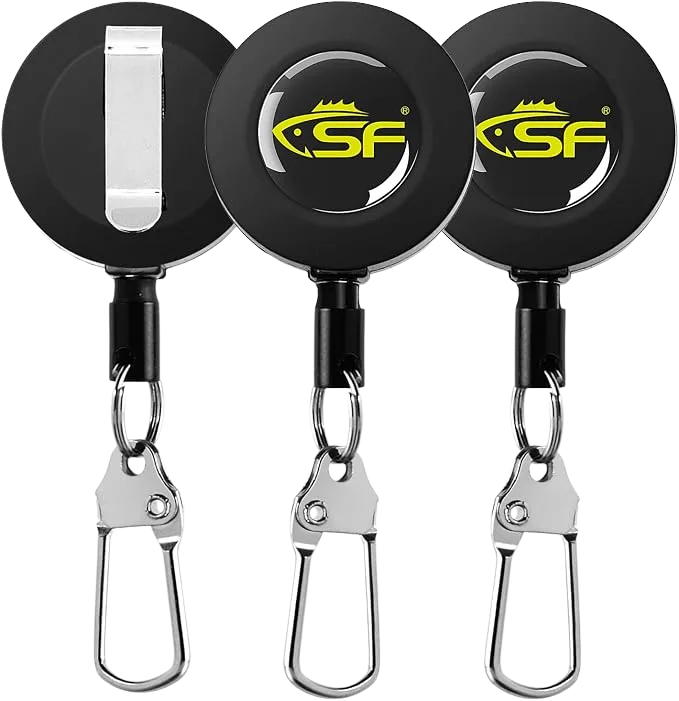
If you want to see the hardware quality difference up close, this hands-on look at a premium retractor’s housing and clip mechanism makes the point clearly.
Wading-Specific Hazards a Swinging Retractor Creates
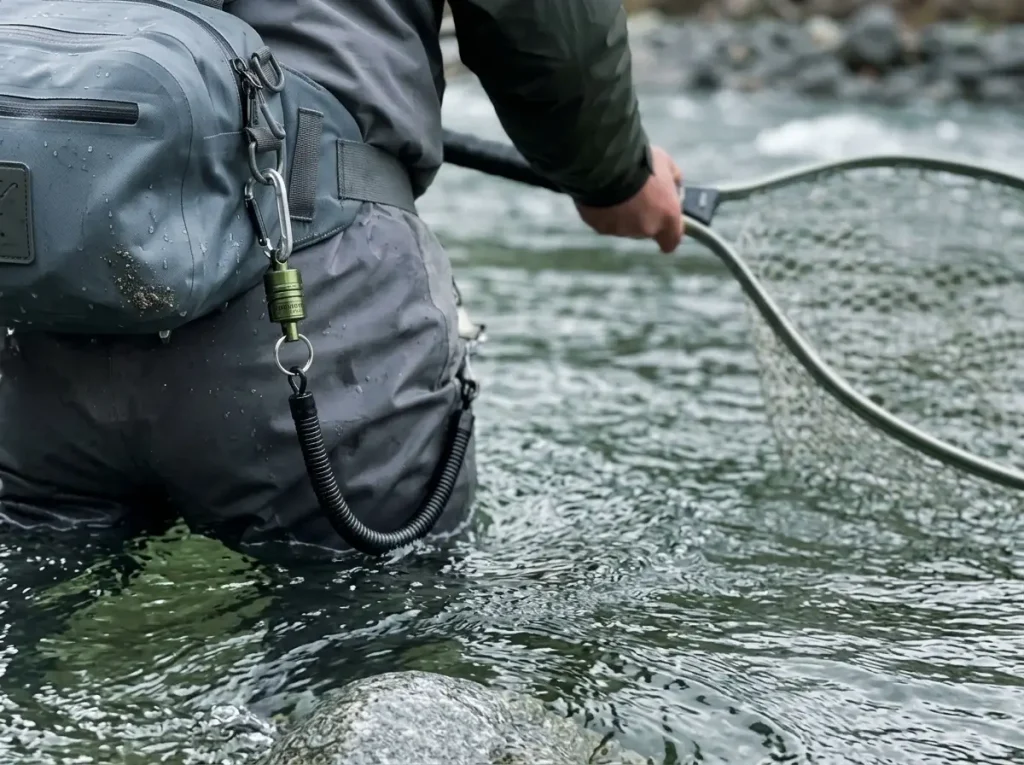
On dry land, a dangling zinger is a mild nuisance. Knee-deep in current, it becomes loose gear that can catch water, snag structure, or turn a loaded net into a problem downstream. This is the part almost every retractor guide skips, and it is the part that matters most once you are actually standing in the river.
The Sea-Anchor and Swing Problem
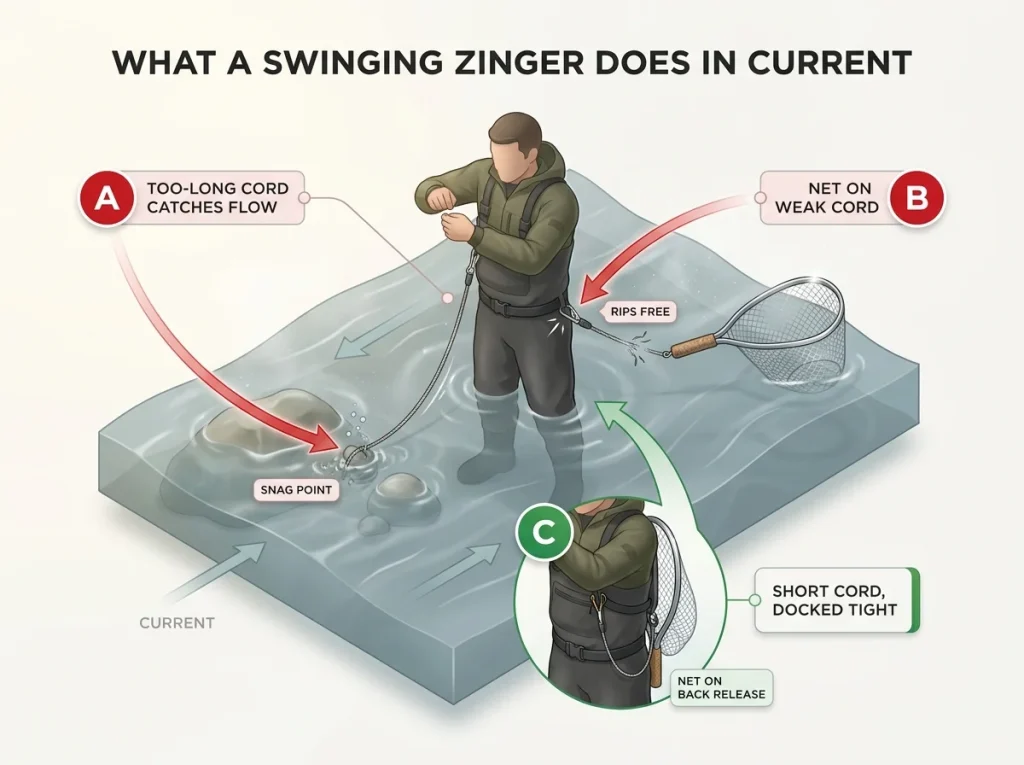
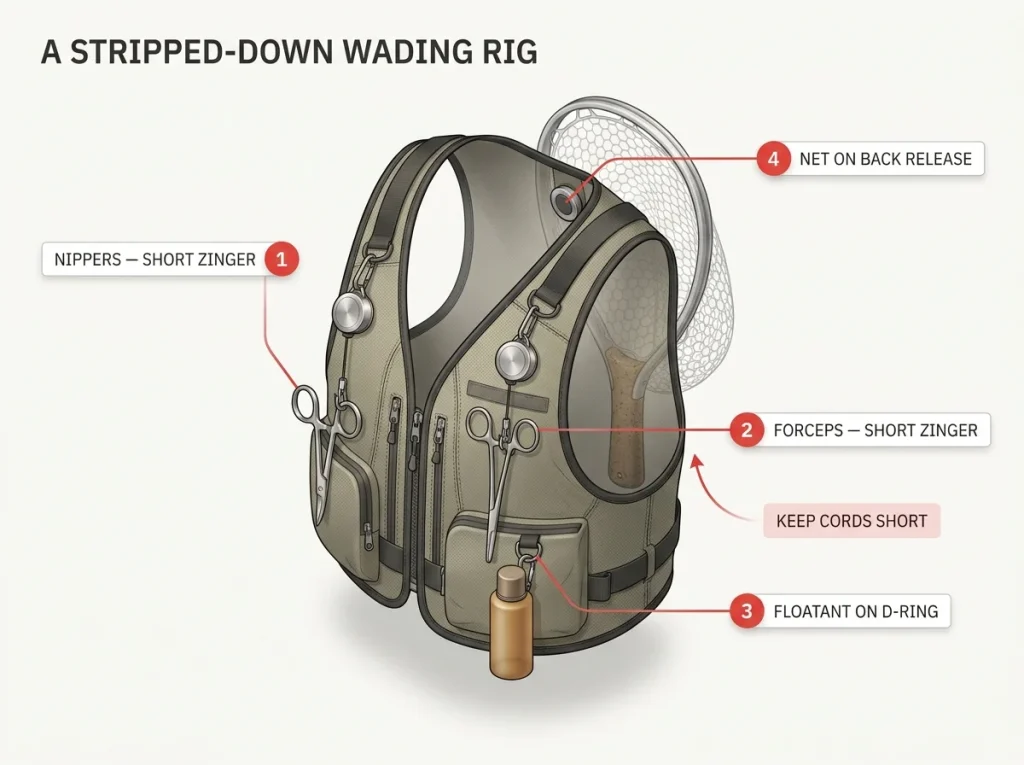
A long cord bouncing at knee level does the same thing to you that a wading belt worn wrong does: it catches flow. It is the same sea-anchor effect that makes a wading belt matter in the first place. A zinger swinging free in fast water grabs current, snags on submerged rock, and adds drag exactly where you least want it. The fix is boring but real: keep cords short and tools docked tight when you are moving through current.
Submersion, Sand, and Grit
Drop a spool underwater in a sandy run and grit works its way into the housing. That is where cheap mechanisms seize, and it ties directly into the corrosion story in the next section. A sealed, tight-tolerance housing survives submersion far better than an open pin-clip that scoops sand every time you wade deep.
The Net-as-Strainer Risk
Here is the one that actually carries consequences. A landing net hung on an underrated retractor can rip free in current and become a strainer problem for whatever is downstream. As the National Park Service’s river guidance points out, anything attached to you in moving water needs a way to come free fast. A standard tool zinger was never built to carry a net’s weight through repeated netting cycles, and when it fails, it is usually the net that goes missing. A dedicated magnetic net release, or a quick-release clip on the net tether, sidesteps that failure mode entirely.
One-Handed Reality
Picture the worst version: the barb is buried in your palm, both hands are occupied, and your retractor will not extend far enough to reach the tool you need, or it snaps back and yanks it away mid-use. There is also the eye-poke hazard of unsecured forceps swinging loose when you lean in close to a fish. That is not a rare hypothetical, it is the exact scenario that makes cord length and smooth extension a real consideration. When it happens, knowing how hook removal from your own skin works matters as much as the gear.
Saltwater and Flats Wading vs Freshwater, the Corrosion Reality
The trout angler who wades a few times a season and the flats angler standing in salt every week are not buying the same tool, no matter what the spec sheet claims. Corrosion is the line between them.
How Salt Kills a Spool
Salt crystallizes inside tight-tolerance housings and seizes the spring and bearings once it dries. It is the same saltwater corrosion failure that ruins reel drag systems, just on a smaller scale. A retractor used in salt and never rinsed will gum up and stop retracting inside a single season, and no cord rating on the label prevents it.
Stainless vs Painted Housings
This is where the price jump earns itself. A freshwater-only angler can run a cheap painted spool for years and never notice. A flats or surf angler needs a stainless steel or aluminum housing, or they are replacing the unit every season. The corrosion resistance is the one spec that genuinely justifies spending up for salt.
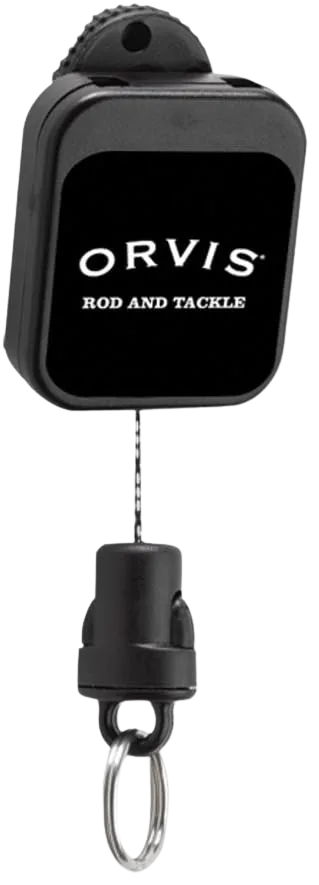
Rinse your retractor in fresh water after every salt trip, same as you would a reel. Salt working into the spool housing is what kills the spring, not the cord, so a ten-second freshwater dunk at the end of the day buys you seasons of extra life.
The same salt-seizes-the-spring problem shows up in reels, and the fix is identical. Our walkthrough on rinsing a reel after saltwater applies the exact same logic to a bigger mechanism.
What to Attach and How to Set Up Your Retractor System
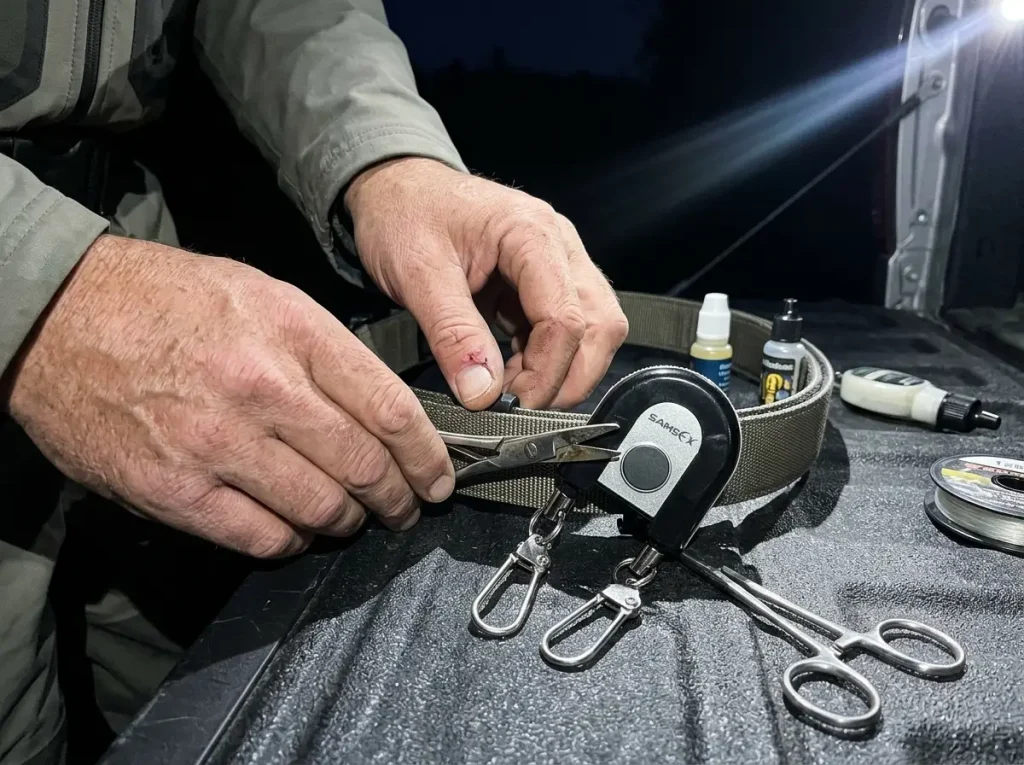
Most people overload their vest and end up fighting their own gear. A stripped-down wading rig usually runs about ten anchor points with only two of them on zingers. The goal is fast access to the few tools you actually reach for, not a wall of dangling hardware.
What Belongs on a Retractor
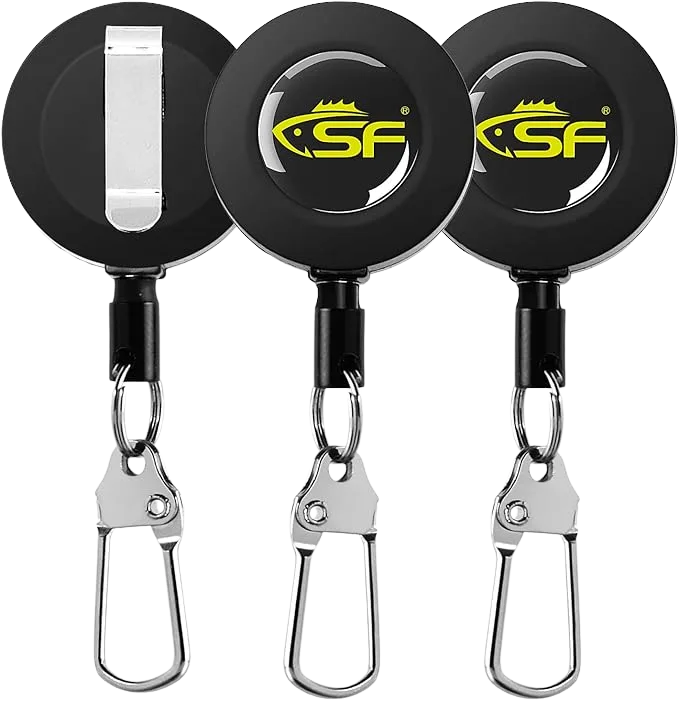
Light tools ride well on a zinger: nippers, forceps or hemostats, and a floatant holder. Heavy items do not. A landing net, in particular, belongs on a dedicated release or a corded net keeper built for the load, not a general tool zinger. A dual magnetic-front unit like the SAMSFX Fly Fishing Zinger Retractor (check it on Amazon) lets a single anchor point carry two small tools, which keeps a crowded belt from turning into a tangle.
How Many Retractors
Two is usually the right number. The common minimalist config of ten total anchor points with two on retractors exists because more than that starts working against you. Every extra zinger is another cord to swing, snag, and track. Keep the count low and the layout deliberate.
A lot of veteran anglers skip spring zingers for forceps entirely. Tie about two feet of heavy nylon cord straight from the forceps to a vest D-ring and tuck them in a chest pocket. No spring to wear out, nothing to snap back, and it outlasts most commercial retractors by years.
Where to Mount
Where the retractor rides depends on your carry system, whether you run a chest pack or a vest. Mount tools on a D-ring where your hand naturally lands, keep cords short so nothing swings in current, and put the net release at the back where it is out of the way until you need it. Match the tools to the core tools worth keeping within reach and skip the rest.
Budget vs Premium — When to Actually Spend Up
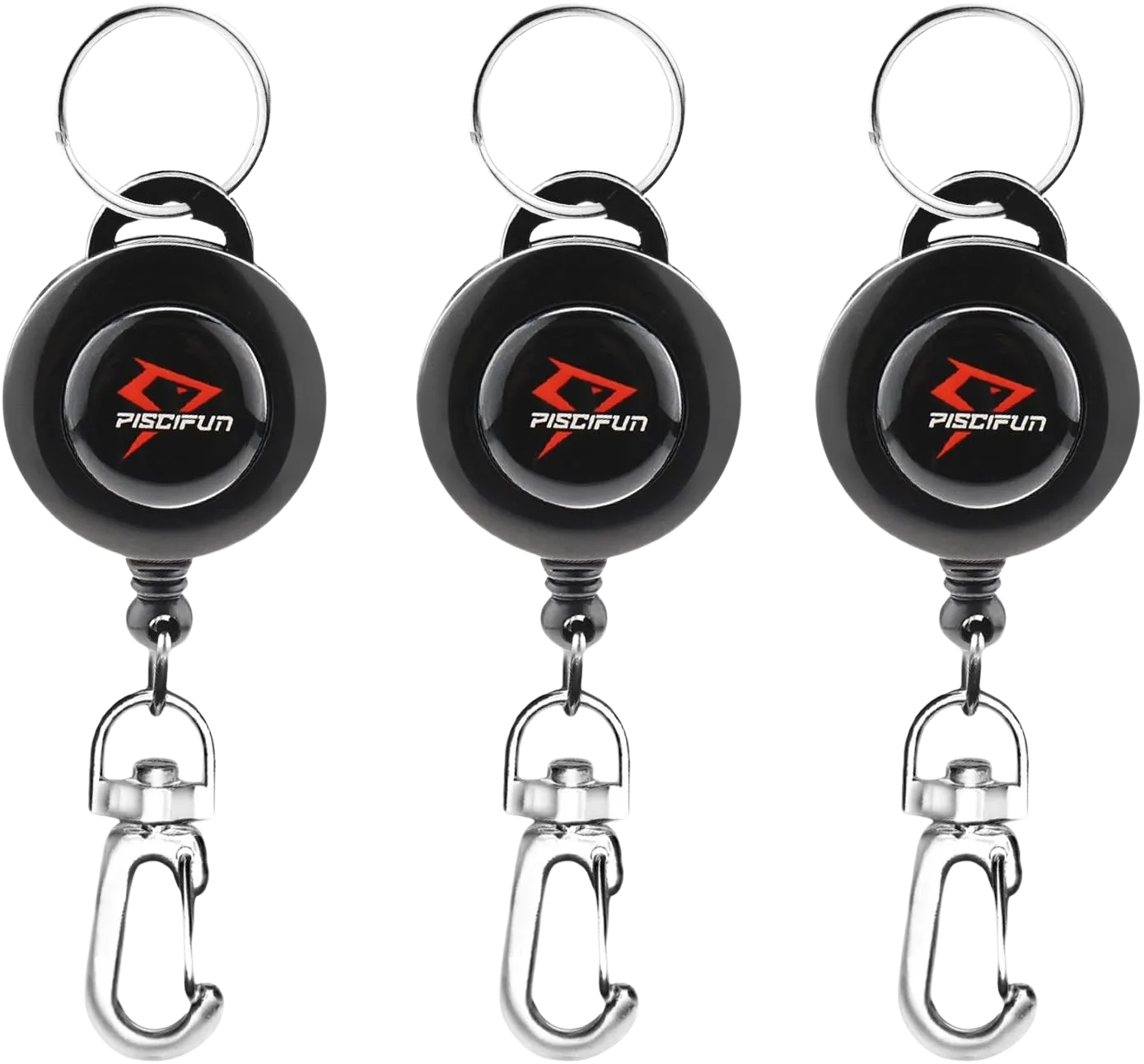
The cheap three-pack is genuinely fine for a lot of anglers, and a quiet waste for others. Here is the honest line between them.
When the Budget Multipack Is Enough
If you wade a few times a season in freshwater with light nippers and forceps, a budget three-pack is the right call, not a compromise. You are not carrying a net on it, you are not standing in salt, and the duty cycle is low. Spending premium money there buys you nothing you will feel.
When Premium Earns It
Spend up when you wade often, carry a net on the system, or fish salt and flats. Daily use burns through cheap springs, net weight demands real hardware, and salt demands corrosion resistance. That is the exact combination where a premium retractor pays for itself instead of just costing more.
The Honest Truth About Springs
No retractor is forever. Most zingers fail eventually because they run on a spring, and springs give out. That reframes the whole decision: you are not buying a lifetime tool, you are matching spend to how hard you will actually use it. Buy cheap for light seasonal use, buy premium for heavy or salty use, and expect to replace either one someday.
Top Picks by Use Case
This is not a best-of-everything list. The right retractor for a weekend trout wader is the wrong one for a flats guide, so the picks below are sorted by how and where you fish. If you carry a net, pair it with the right net for how you wade before you decide which release to run.
Best Premium — Fishpond Arrowhead Retractor
Best Budget — SF Fly Fishing Zinger Retractor (3-Pack)
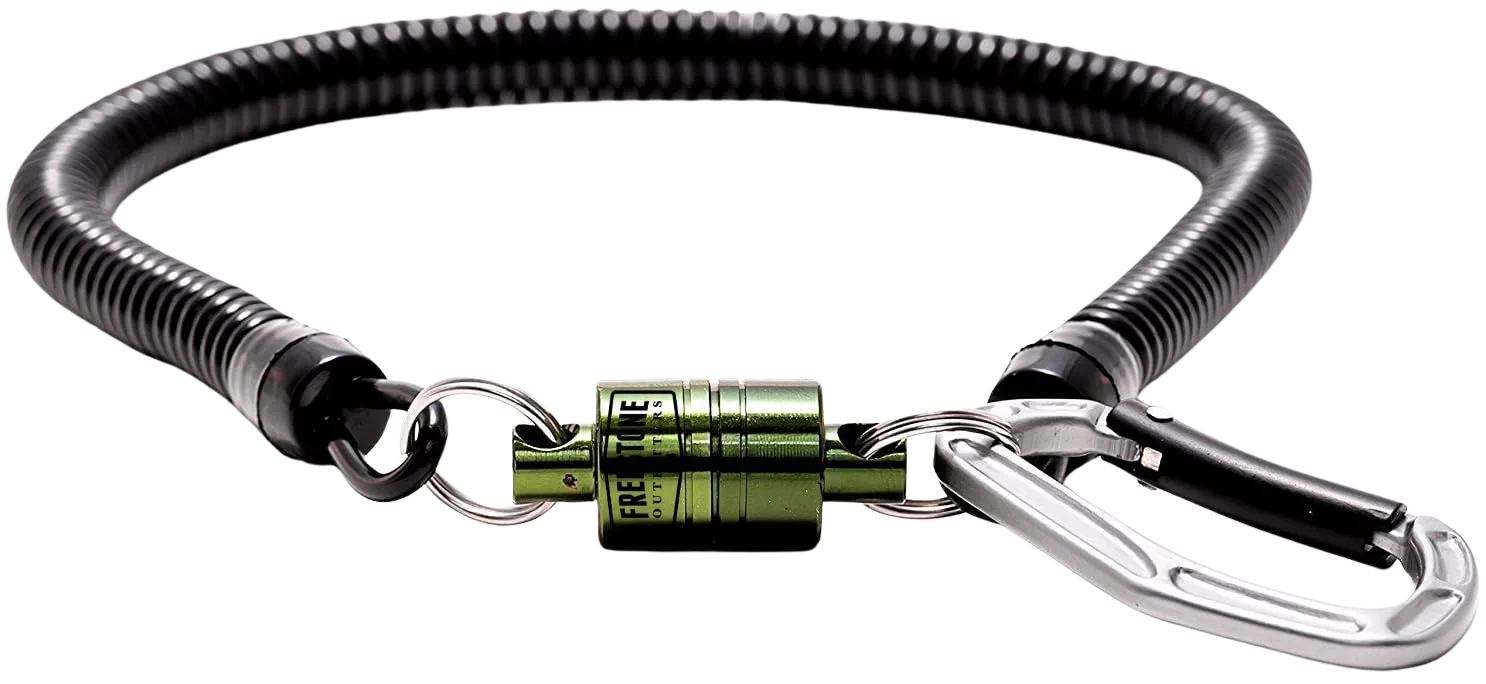
Best Magnetic Net Release — Freestone Outfitters
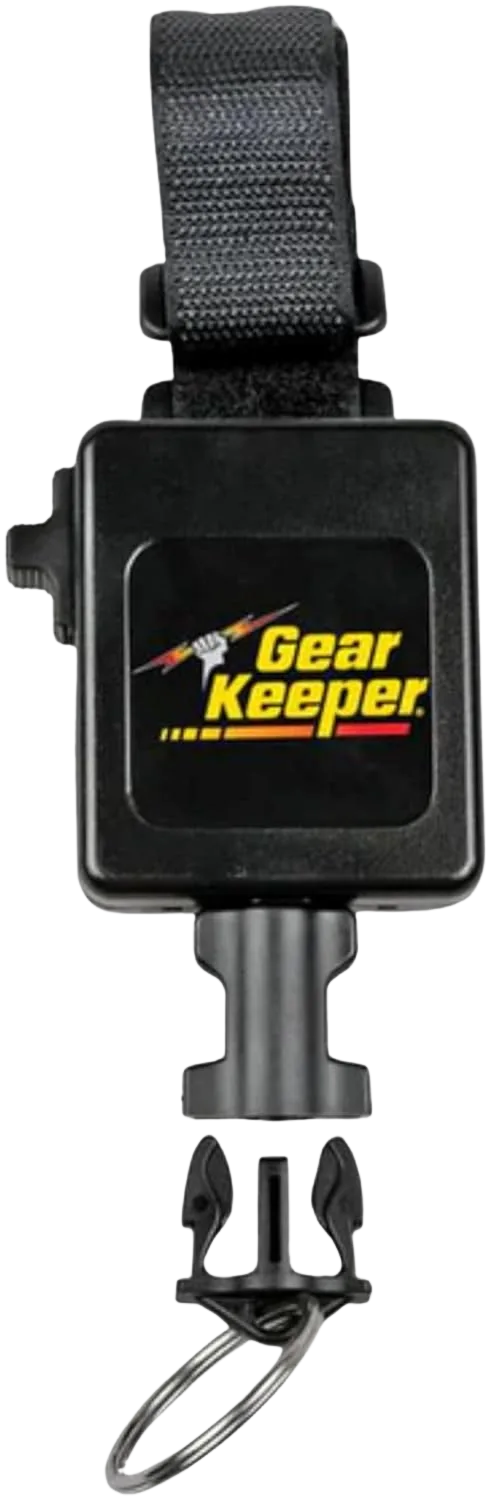
Best Corded Net Keeper — Gear Keeper Fly Fishing Net Retractor
Conclusion
Three things carry the whole decision. First, the clip and pin fail before the cord does, so buy hardware quality and the right cord length instead of chasing the biggest strength number. Second, in current a short-docked cord and a proper net solution keep loose gear from becoming a hazard. Third, match your spend to how often and where you wade, because the budget pack is honest for occasional freshwater and premium only earns it on the salt and for nets.
Before your next wade, clip your tools on and step into the current at the launch. Watch what swings, where the cords catch, and how far you have to reach. Fix the cord length right there, standing in ankle-deep water, instead of finding out mid-river with a fish on and a tool already gone.
Frequently Asked Questions
01What is the difference between a zinger and a retractor?
Nothing, they are the same tool. Retractor is the catalog term and zinger is what anglers actually say on the water. Both mean a spring-loaded, clip-on cord that lets a tool retract and dock close to you.
02How long should a wading tool retractor cord be?
For wading, 18 to 24 inches is the sweet spot, long enough to use a tool one-handed and short enough that it will not swing and catch current at knee level. Save 36-inch cords for boat or bank use where dangling gear is not a snag risk.
03How much weight can a fishing retractor hold?
Cord breaking strength runs from about 14 pounds on budget three-packs to 147 pounds on premium units. The cord is rarely what fails though, the clip or pin gives out first, so hardware quality matters more than the raw strength number.
04Can you carry a landing net on a tool retractor?
Not on a standard tool zinger, it is not built for the repeated load and the net usually rips free eventually. Use a dedicated magnetic net release or a corded net keeper instead, both are made for that weight and duty cycle.
05Do retractors work for saltwater and flats wading?
They do, but salt seizes cheap spool mechanisms within a season. Choose a stainless or aluminum housing and rinse it in fresh water after every trip the same way you would a reel, which is what keeps the spring from crystallizing shut.
Risk Disclaimer: Fishing, boating, and all related outdoor activities involve inherent risks that
can lead to injury. The information provided on Master Fishing Mag is for educational and informational purposes
only. While we strive for accuracy, the information, techniques, and advice on gear and safety are not a substitute
for your own best judgment, local knowledge, and adherence to official regulations. Fishing regulations, including
seasons, size limits, and species restrictions, change frequently and vary by location. Always consult the latest
official regulations from your local fish and wildlife agency before heading out. Proper handling of hooks, knives,
and other sharp equipment is essential for safety. Furthermore, be aware of local fish consumption advisories. By
using this website, you agree that you are solely responsible for your own safety and for complying with all
applicable laws. Any reliance you place on our content is strictly at your own risk. Master Fishing Mag and its
authors will not be held liable for any injury, damage, or loss sustained in connection with the use of the
information herein.
Affiliate Disclosure: We are a participant in the Amazon Services LLC Associates Program, an
affiliate advertising program designed to provide a means for us to earn advertising fees by advertising and linking
to Amazon.com. As an Amazon Associate, we earn from qualifying purchases. We also participate in other affiliate
programs and may receive a commission on products purchased through our links, at no extra cost to you. Additional
terms are found in the terms of service.